Give your indoor cat a brighter lounging spot with window hammock setups designed for sunshine, bird watching, small spaces, quiet rooms, and easy access.
Save This Idea on Pinterest

11 Cat Window Hammock Ideas
Save to PinterestCat window hammocks can turn an unused pane of glass into a comfortable perch without adding another bulky piece of furniture to the room. The best setup depends on your cat’s size, confidence, age, preferred room, and how safely they can reach the hammock.
These 11 ideas cover sunny windows, multi-cat homes, compact apartments, senior cats, washable setups, quieter rooms, and changing daylight. Whatever style you choose, follow the hammock manufacturer’s mounting instructions, check attachments regularly, and use only a stable setup on a secure closed window. A lower perch or floor-level alternative may suit cats that cannot comfortably jump to a high hammock.
Quick List
- Sunny Window Hammock Setup for Cats Who Love Warmth
- Double-Layer Window Hammock for Multi-Cat Homes
- Corner Window Hammock for Small Apartment Cats
- Wide-Window Hammock Setup for Large Adult Cats
- Low-Mounted Window Hammock for Senior Indoor Cats
- Washable-Cover Window Hammock for Easy Cat Cleanup
- Quiet Bedroom Window Hammock for Shy Indoor Cats
- Bird-Watching Window Hammock for Curious Indoor Cats
- Minimal Window Hammock Setup for Modern Cat Rooms
- Adjustable Window Hammock for Changing Sunlight Through the Day
- Low-Clutter Window Hammock Corner for Compact Cat Spaces
1. Sunny Window Hammock Setup For Cats Who Love Warmth
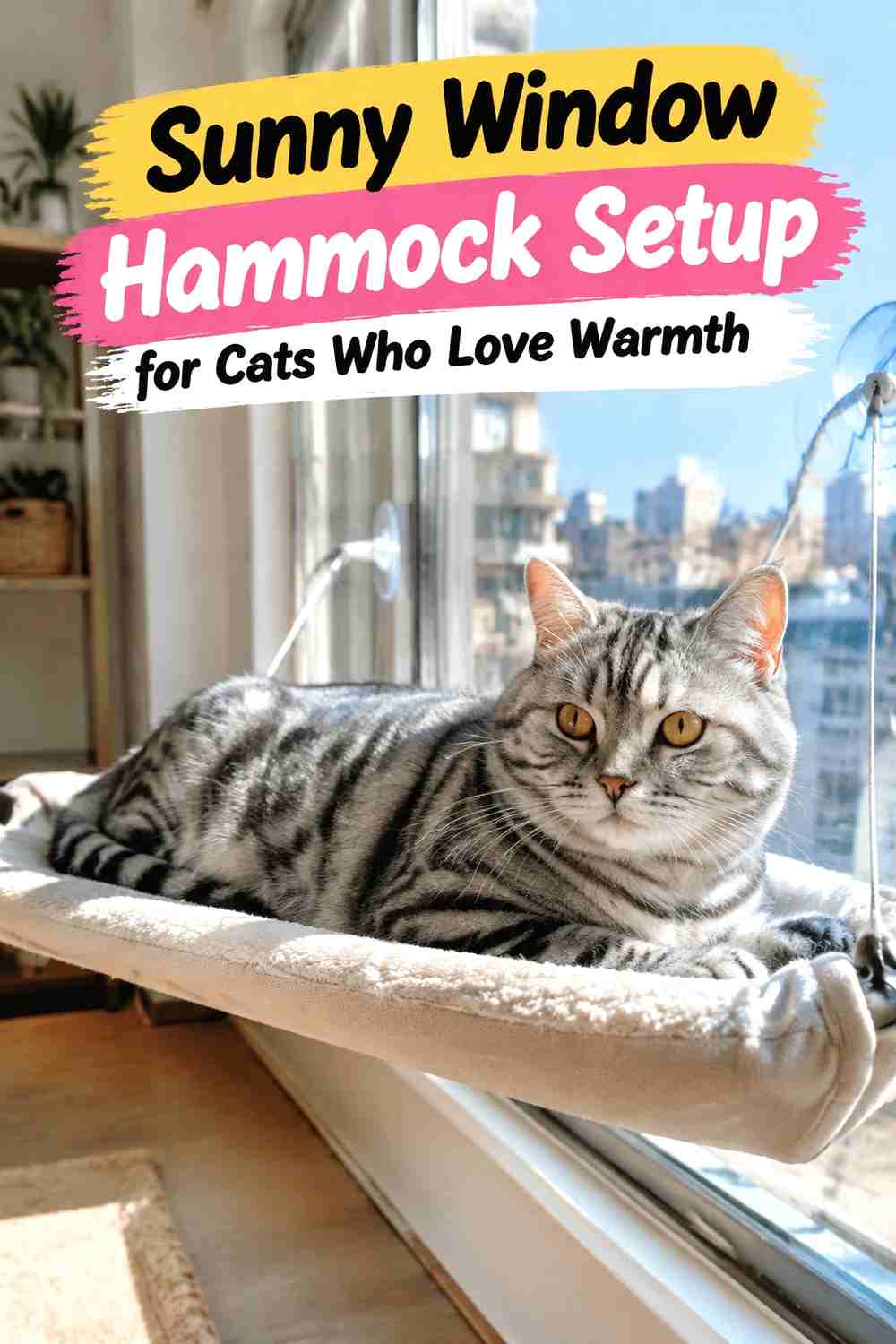
A sunny window hammock gives a cat that naturally seeks warm resting spots a dedicated place to stretch out in daylight. Choose a secure window that receives comfortable sun for part of the day, then mount the hammock according to its instructions and test every attachment before allowing access. Keep the window fully secure and make sure nearby furniture provides a sensible route up and down rather than requiring an awkward leap. Watch how warm the spot becomes during peak daylight, especially behind glass, and give your cat access to cooler resting areas elsewhere. A simple washable pad can add comfort if the hammock design supports one without affecting stability.
Comfort & Safety
Check the surface temperature and direct sun throughout the day. Your cat should always be able to leave the hammock freely and choose a cooler location.
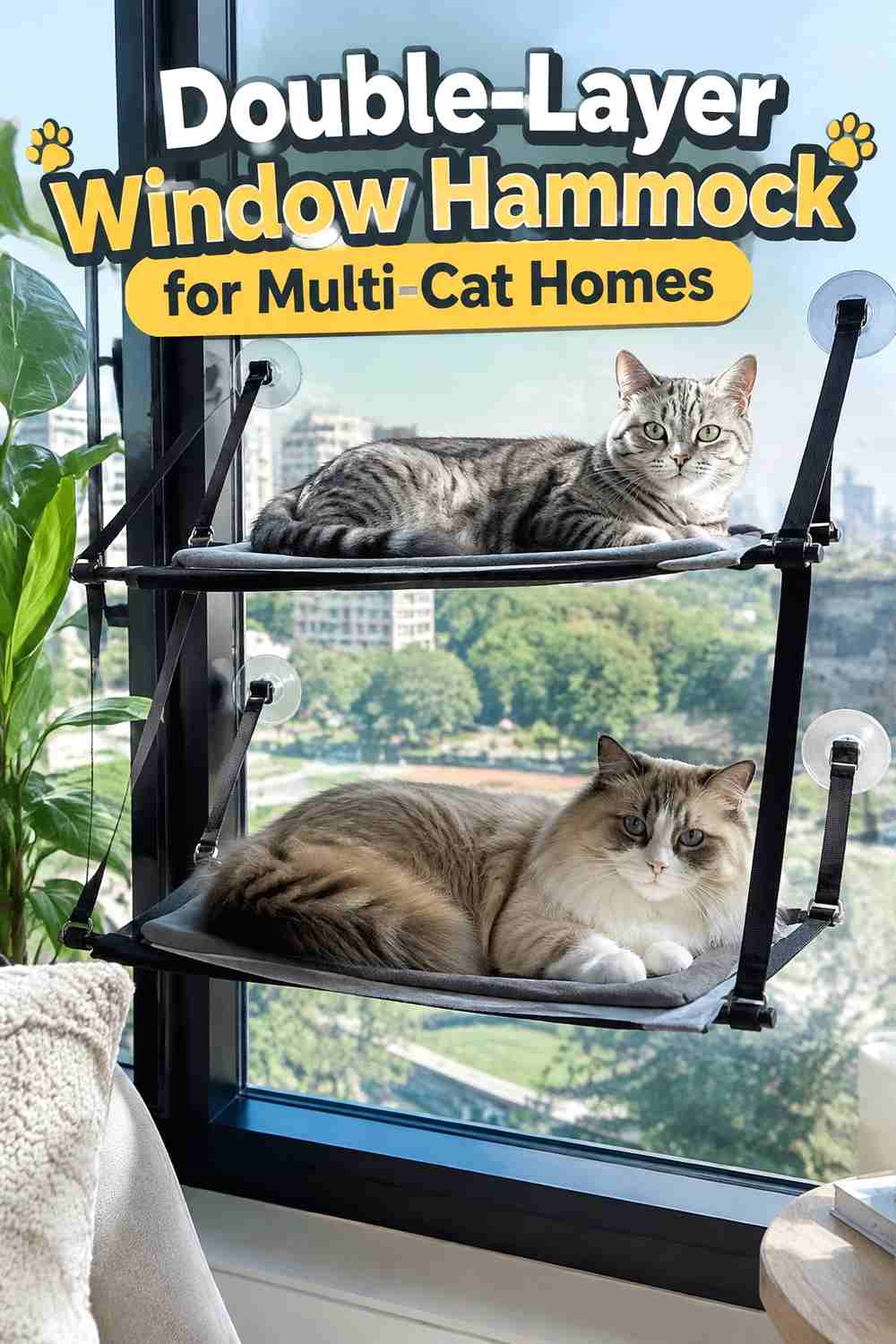
2. Double Layer Window Hammock For Multi Cat Homes
You May Also Like


A double-layer window hammock can create two distinct resting levels when more than one cat enjoys the same window. Choose a unit designed to support the intended load and mount it exactly as directed rather than improvising an extra tier. The upper and lower levels should provide enough clearance for each cat to enter, turn, and leave without climbing over the other. Watch how your cats share the area before assuming they will use both levels peacefully; some pairs may prefer completely separate windows or perches. Keep another resting option nearby so no cat has to compete for access. Regularly inspect suction cups, cables, fabric, seams, and frame connections for wear.
Best For
This idea suits compatible cats that already rest near one another. Forced sharing is unnecessary if one cat repeatedly blocks or displaces the other.
3. Corner Window Hammock For Small Apartment Cats

A corner window hammock uses vertical space efficiently when a small apartment cannot accommodate another cat tree or floor bed. Place it on a secure window beside an open wall corner, leaving the floor below clear enough for normal household movement. A nearby stable cabinet, low perch, or other appropriate access point can make the route easier without filling the room with furniture. Keep cords, blinds, and dangling curtain ties away from the hammock so they do not become tangled around the cat. This layout works best when the corner already receives useful daylight but is not part of a busy doorway. Periodically remove the hammock for window cleaning and inspect all mounting surfaces before reinstalling it.
Space & Placement
Choose a corner that preserves the apartment’s walking route. Avoid squeezing the hammock behind curtains or furniture that makes entry and exit awkward.
4. Wide Window Hammock Setup For Large Adult Cats

A wide-window hammock gives a larger adult cat more room to turn, stretch, and rest without hanging over a narrow frame. Choose a hammock specifically rated and sized for the cat rather than assuming a standard compact perch will be comfortable. Mount it on clean, suitable glass and test the complete structure firmly before use. The platform should remain level when the cat shifts position, and the access route should not require jumping from an unstable chair or narrow ledge. Keep the area underneath free of fragile decor in case bedding or loose items fall. Inspect support cables, fabric tension, frame joints, and mounting points frequently because larger cats place more load on the setup.
Setup Notes
Measure both the window and your cat’s usual resting length before choosing a design. Stability is more important than fitting the widest possible hammock into the glass.
5. Low Mounted Window Hammock For Senior Indoor Cats

A low-mounted window hammock can give some senior cats a view without requiring a large vertical jump. Position the hammock closer to a stable floor-level step, low bench, or secure perch so the route up and down is gradual. Keep the surrounding surface non-slip and avoid rearranging the access path frequently once your cat is comfortable with it. Choose a hammock that remains firmly supported at the lower mounting position and leave an easier bed nearby in case the cat prefers not to climb at all. Senior cats vary widely in mobility, so watch the individual rather than assuming a hammock is always appropriate. New difficulty jumping or moving should be discussed with a veterinarian.
Comfort & Safety
Prioritize easy access and predictable footing. If your cat hesitates repeatedly, a window bed or low platform may be a better choice than a suspended perch.
6. Washable Cover Window Hammock For Easy Cat Cleanup
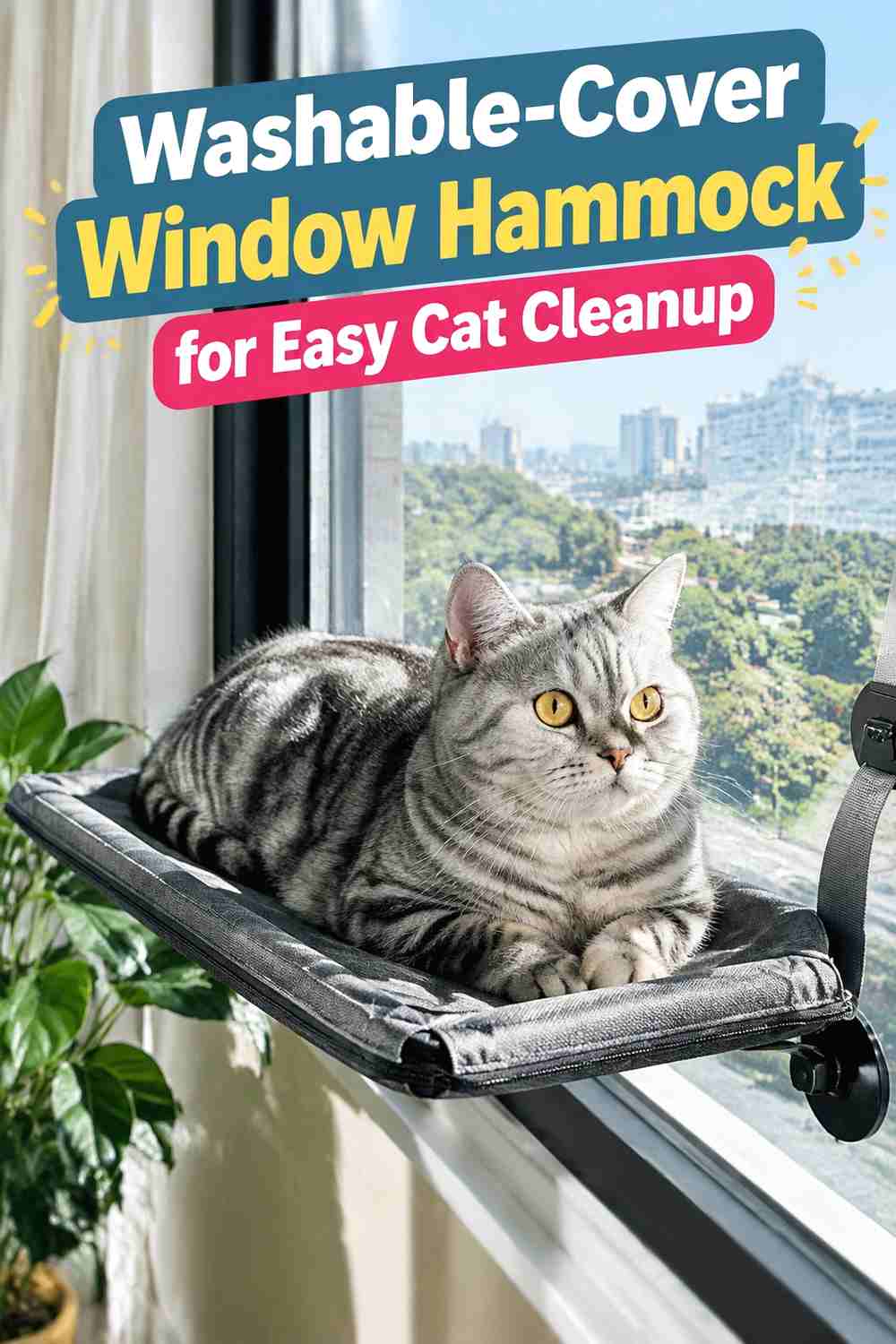
A hammock with a removable washable cover makes routine fur and dirt cleanup much simpler, especially for cats that use the perch every day. Choose a design where the fabric can be removed without dismantling unstable parts or stretching the frame. Keep a second clean cover if you want the hammock available while the first one is being washed and dried. Follow care instructions so fabric does not shrink or change shape enough to affect the fit. Before reinstalling the cover, inspect seams, attachment loops, and support points for damage. Vacuum loose fur from the surrounding window area as needed and wipe the mounting glass before reattaching suction components.
Cleaning Notes
Never reinstall damp fabric. A fully dry cover is easier to fit correctly and less likely to leave moisture against the frame or window area.
7. Quiet Bedroom Window Hammock For Shy Indoor Cats
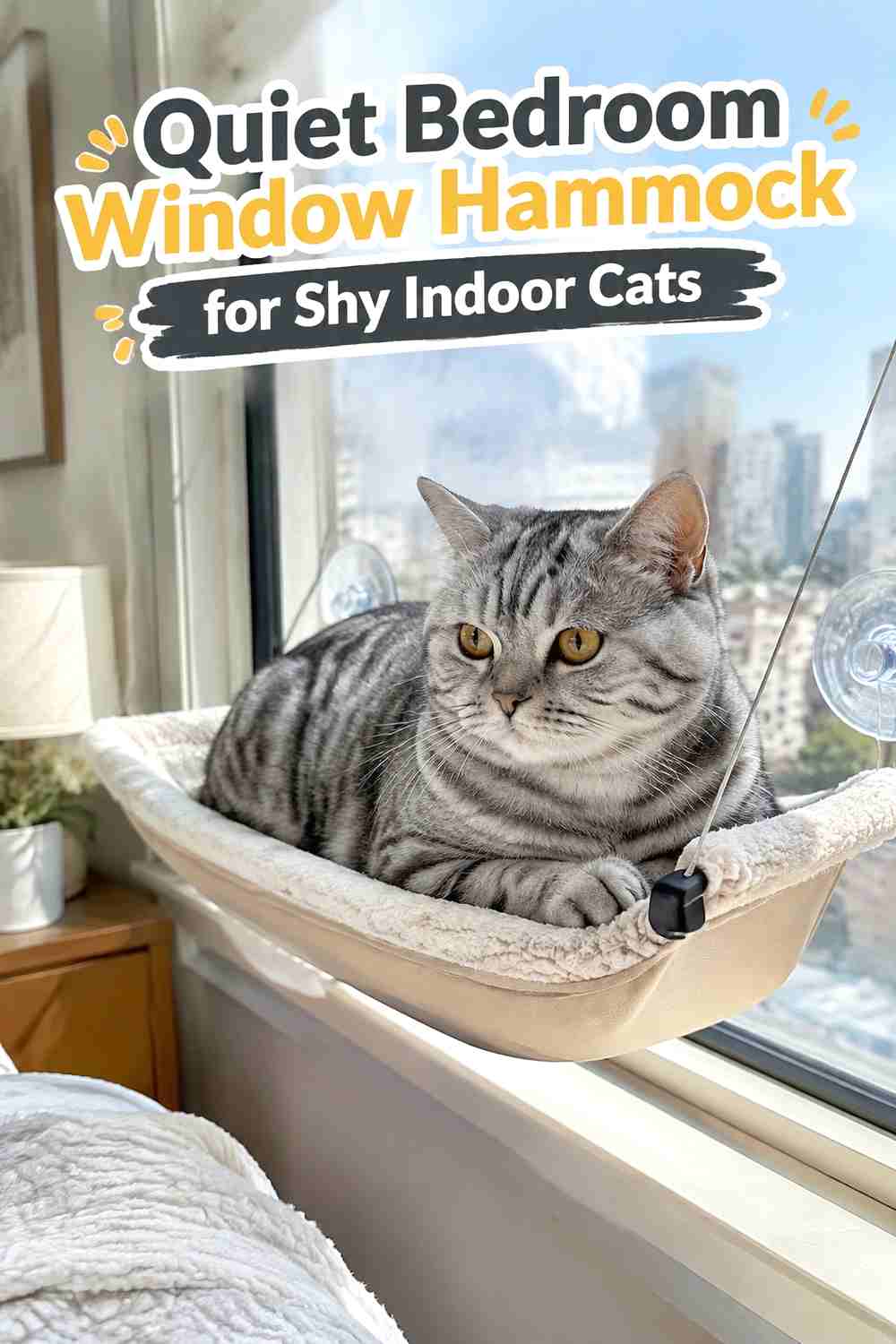
A bedroom window hammock can create a quieter lookout spot for a cat that prefers distance from busy living rooms, visitors, or household traffic. Choose a secure window in a room the cat already uses comfortably rather than moving them into an unfamiliar space just for the view. Keep the route to the hammock clear and avoid placing it beside a frequently slammed door, loud fan, or cluttered dresser. Curtains should be secured so the cat can enter without becoming tangled. This setup can be especially useful when the bedroom receives soft daylight and the cat already naps there. Let the hammock remain optional; some shy cats may prefer the bed or floor nearby on busier days.
Best For
This layout suits cats that consistently choose quieter rooms for resting. Keep another familiar hiding or sleeping option available in the same space.
8. Bird Watching Window Hammock For Curious Indoor Cats

A bird-watching window hammock gives a curious indoor cat a comfortable place to observe outdoor movement through secure glass. Pick a window with a clear view of trees, sky, or normal neighborhood activity, then mount the hammock where the cat can settle without pressing against blinds or screens. Keep the window closed and secure rather than relying on an insect screen to contain the cat. A nearby stable access route makes the perch easier to reach, while an open path away prevents the area from becoming cramped. Watch whether your cat seems relaxed or repeatedly frustrated by outdoor animals; if the window increases agitation, a calmer view may be more suitable.
Use & Maintenance
Keep the glass reasonably clean so the view stays clear, and inspect the hammock hardware whenever you clean around the window.
9. Minimal Window Hammock Setup For Modern Cat Rooms

A minimal window hammock setup keeps the cat perch visually simple while preserving open floor space around it. Choose a streamlined hammock that fits the window without extra hanging toys, signs, or decorative accessories nearby. Neutral bedding can blend into the room, but it should remain washable, properly fitted, and compatible with the hammock design. Keep the window area clear of breakable objects, trailing cords, and unstable side tables that the cat might use as an awkward launch point. This style is especially useful in rooms where cat furniture needs to coexist with clean modern decor. The setup can stay attractive without sacrificing function as long as stability, access, and the cat’s comfort remain the priorities.
Pro Tip
Let the cat be the visual focus. One secure hammock usually looks cleaner and works better than surrounding the window with unnecessary pet-themed decor.
10. Adjustable Window Hammock For Changing Sunlight Through The Day

An adjustable window hammock can help you respond to changing daylight when one part of the window becomes too sunny, shaded, or warm at different times. Use a design intended to be repositioned rather than repeatedly modifying fixed hardware. Each time you move it, clean the mounting area as needed, reattach every support carefully, and test the hammock before allowing the cat back onto it. Keep the new position close to a familiar access route so the cat does not suddenly face a difficult jump. This idea works best for owners willing to check the setup regularly rather than moving it casually and assuming the suction or supports remain secure.
Use & Maintenance
Treat every repositioning like a fresh installation. Recheck glass contact, frame stability, cables, and fabric tension before the cat uses the hammock again.
11. Low Clutter Window Hammock Corner For Compact Cat Spaces
You May Also Like




A low-clutter hammock corner combines one secure window perch with only the access furniture your cat actually needs. Keep the floor below open, use a small stable step or low perch if required, and move unrelated baskets, décor, or cords somewhere else. This approach is useful in compact rooms because it creates a clear cat zone without adding a large tower or several competing beds. Choose a window away from narrow door swings and busy walkways so the cat can jump down without landing directly in household traffic. The uncluttered arrangement also makes it easier to inspect the hammock and clean fur from the window area. Add more equipment only if it solves a real access or comfort problem.
Space & Placement
Preserve a clear landing zone beneath or beside the hammock. Compact does not need to mean crowded, especially around an elevated resting place.
How to Choose the Right Idea
Start with your cat’s size, age, confidence, and usual resting habits. A large cat needs a broader, appropriately rated hammock, while a senior or less agile cat may need a lower position and a gradual access route. Multi-cat homes may require duplicate perches instead of one shared hammock.
Next, assess the window itself. Choose secure glass with enough mounting area, comfortable daylight, and no unsafe access to an open window. Watch how strong sun changes through the day and keep cooler alternatives available.
Finally, consider maintenance. Removable covers, easy-to-clean glass, accessible mounting points, and uncluttered landing areas make the setup easier to inspect. Stability and comfortable access should always matter more than achieving a particular decorative look.
Final Thoughts
A good cat window hammock turns unused vertical space into a practical resting and observation spot without overwhelming the room. The best version is one your cat can reach comfortably, leave easily, and use without unstable mounting or window hazards.
Start with one secure hammock in a window your cat already enjoys. Once you see how they use it, you can adjust the height, cover, location, or access route rather than adding several perches at once.
FAQs
1. Are suction-cup window hammocks safe for cats?
They can be suitable when the product is appropriate for your cat, installed exactly as directed, and checked regularly. Clean mounting surfaces and inspect suction cups, cables, fabric, and frames for wear.
2. Where should I put a cat window hammock?
Choose a secure closed window with a comfortable view, suitable daylight, and a safe route up and down. Avoid busy doorways, dangling blind cords, and awkward landing areas.
3. Can senior cats use window hammocks?
Some can, especially when the hammock is mounted lower with an easy access route. Others may be more comfortable with a stable window bed or low platform instead.
4. Can two cats share one window hammock?
Only if the hammock is designed for the combined load and both cats are comfortable sharing. Separate perches are often better when cats compete for the same spot.
5. How often should I check a cat window hammock?
Check the mounting points and fabric regularly and whenever you clean, move, or reinstall the hammock. Stop using it if suction cups, cables, seams, or the frame show damage.
CTA
Save these cat window hammock ideas for your next indoor cat setup, and choose the window spot that best matches your cat’s size, age, and lounging style.
