Give your indoor cat a comfortable front-row seat to sunny naps, neighborhood movement, and outdoor views with these practical window perch ideas.
Save This Idea on Pinterest

11 Cozy Cat Window Perch Ideas
Save to PinterestA cat window perch can turn an ordinary window into a useful resting and observation spot without taking over the room. The right setup depends on your cat’s size, confidence, mobility, sleeping style, and how easily they can reach the window.
These ideas include compact hammocks, wide shelves, senior-friendly benches, multi-cat layouts, renter-friendly options, and easy-clean cushions. Whatever style you choose, prioritize stable support, secure windows or screens, good traction, comfortable access, and enough room for your cat to change position naturally.
Quick List
- Cozy Padded Window Sill Perch for Indoor Cats
- Suction Cup Window Hammock for Small-Space Cat Homes
- Low Window Bench Perch for Senior Indoor Cats
- Wide Wooden Window Shelf Perch for Larger Indoor Cats
- Double-Level Window Perch Setup for Multi-Cat Homes
- Fold-Down Window Perch for Compact Cat-Friendly Apartments
- Window Basket Perch for Cats Who Love Cozy Naps
- Quiet Corner Window Perch for Shy Indoor Cats
- Easy-Clean Window Perch with a Washable Cat Cushion
- Renter-Friendly Freestanding Window Perch for Indoor Cats
- Step-Up Window Perch for Kittens and Senior Cats
1. Cozy Padded Window Sill Perch For Indoor Cats
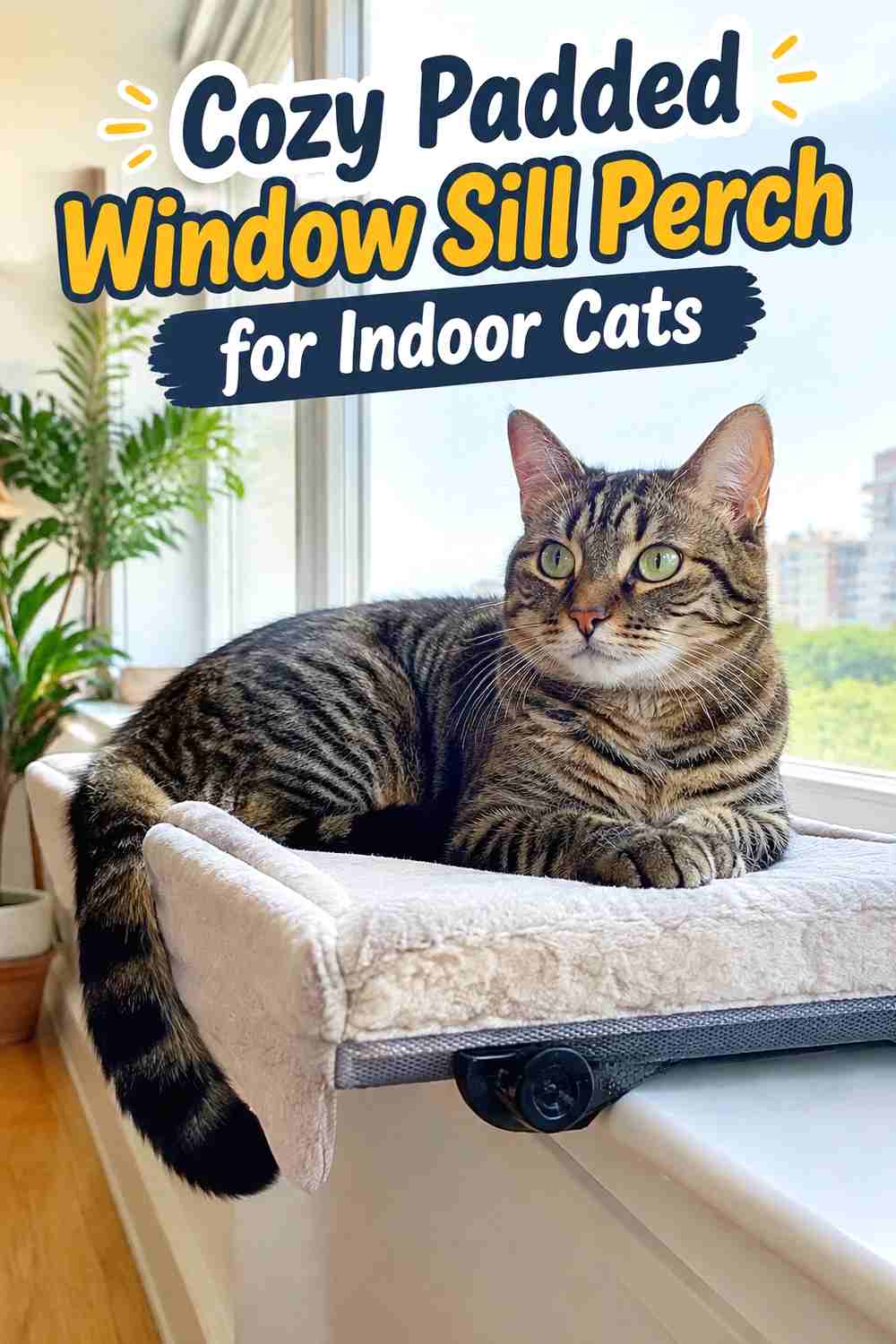
A cozy padded window sill perch turns a sufficiently deep, secure sill into a simple resting place for an indoor cat. Add a low-profile cushion or fitted mat with a non-slip underside so the surface feels softer without reducing stability. This option works especially well when the window is already easy for your cat to reach from the floor, a nearby chair, or another stable surface. Keep the cushion narrow enough that it does not hang awkwardly over the edge, and avoid blocking window hardware that needs regular access. Check the area for drafts and strong direct heat, and make sure the window remains securely closed or safely screened whenever your cat uses the perch.
Setup Notes
Choose padding that stays flat rather than bunching when your cat turns around. A removable cover makes fur and dust easier to manage.
Best For
This simple setup suits cats that already enjoy sitting on broad window sills and do not need an elevated platform.
2. Suction Cup Window Hammock For Small Space Cat Homes
You May Also Like


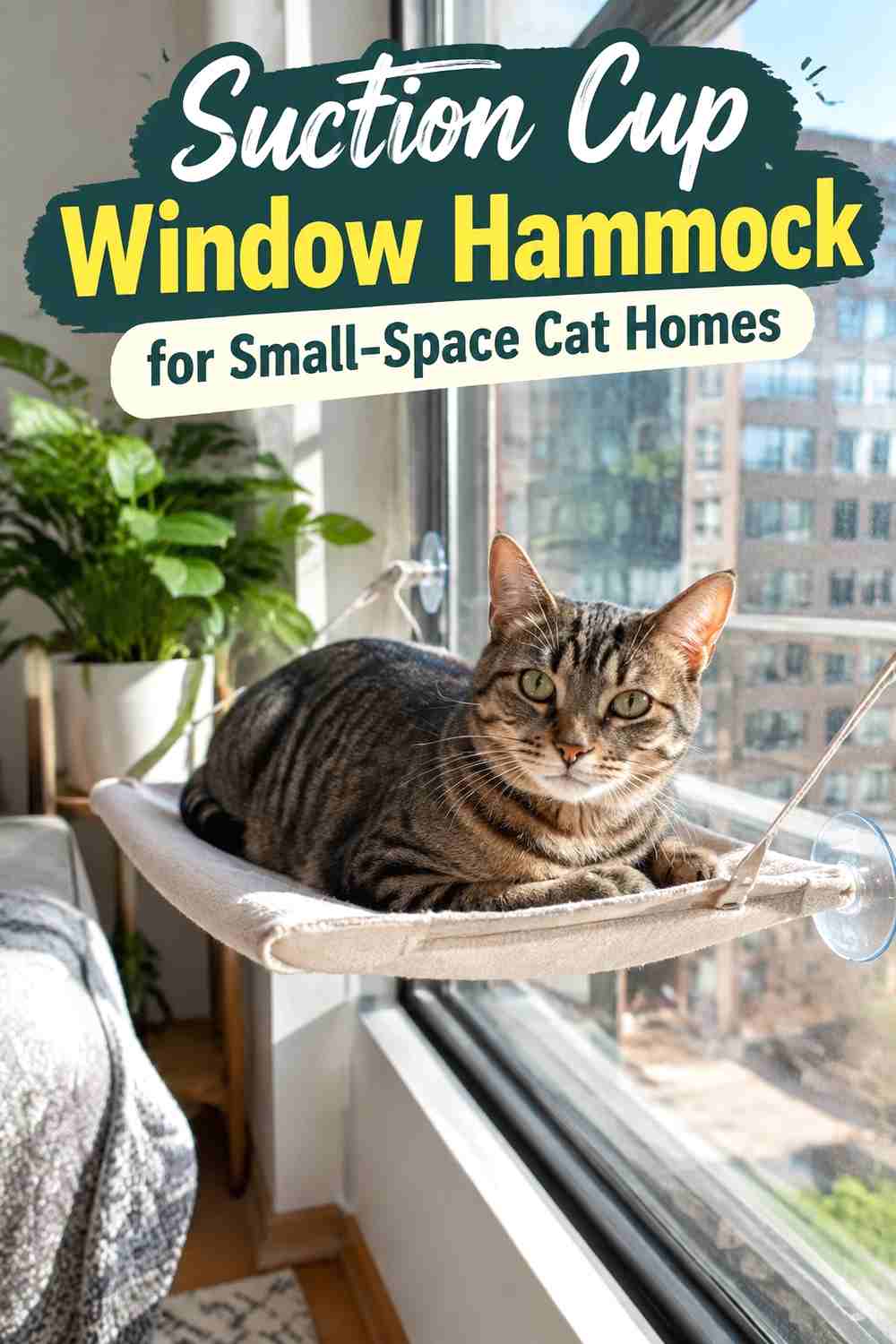
A suction cup window hammock creates an elevated resting spot without using valuable floor space, making it appealing for compact apartments and small rooms. Position it on clean, smooth glass where your cat has a comfortable route up and down rather than expecting them to make a difficult jump. The hammock should remain level and firmly attached when your cat shifts weight, stretches, or turns around. Follow the manufacturer’s installation and weight guidance, clean the contact surfaces as directed, and inspect every attachment regularly. Avoid placing furniture with sharp edges directly beneath the perch, and do not assume a previously secure suction cup will stay reliable indefinitely without checking it.
Space & Placement
A quiet window away from swinging doors and busy walkways can make the hammock more inviting while keeping the approach clear.
Use & Maintenance
Recheck the supports after cleaning the window, repositioning the hammock, or noticing any movement, sagging, or loss of suction.
3. Low Window Bench Perch For Senior Indoor Cats
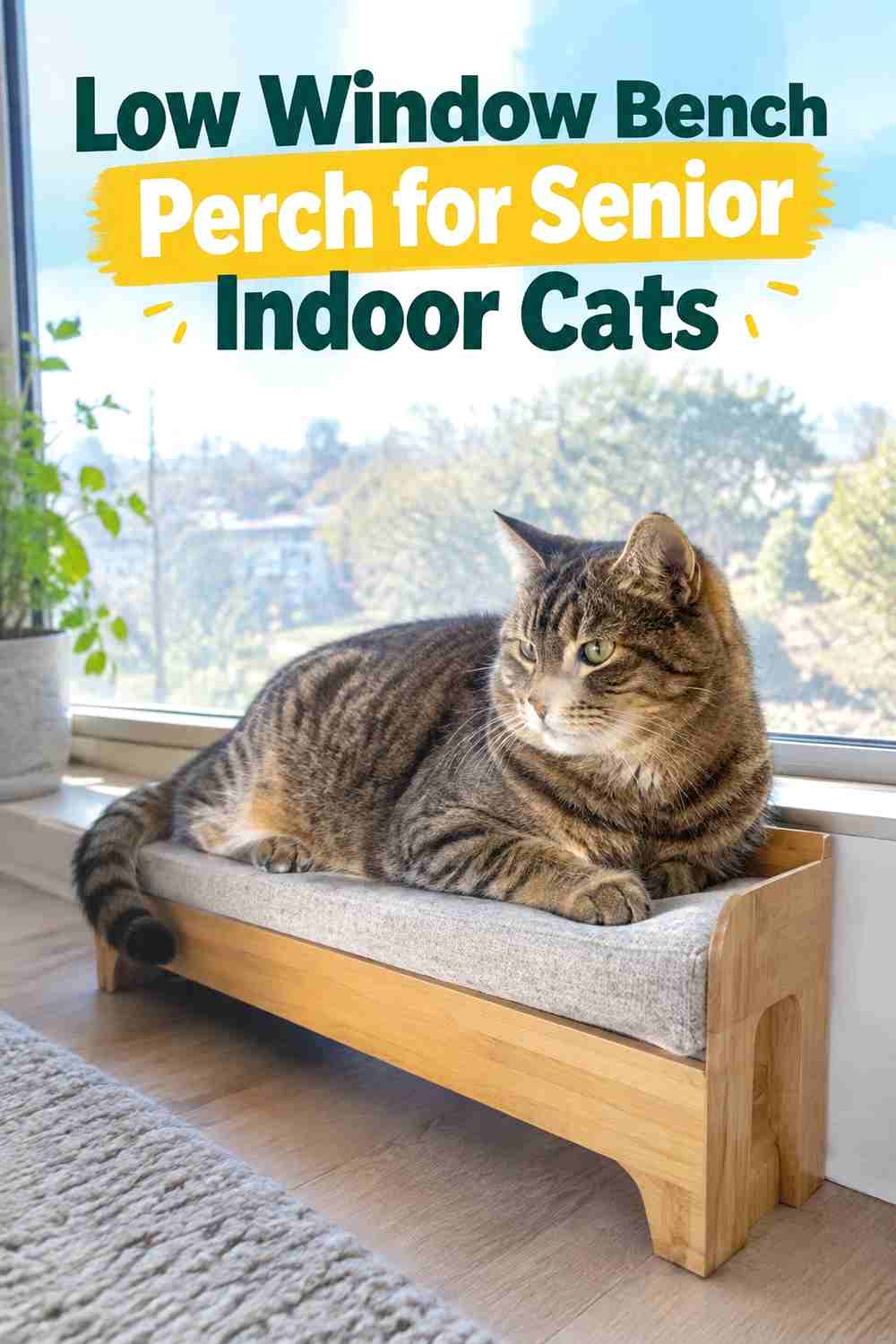
A low window bench perch gives senior indoor cats access to a view without requiring a high jump onto a narrow sill. Place a stable bench, low platform, or sturdy piece of cat furniture beside a window and top it with a non-slip resting pad. The surface should provide enough room for your cat to sit, lie down, and turn comfortably without balancing near an edge. This layout can also suit cats that simply prefer broad, solid surfaces to suspended hammocks. Keep the route to the bench predictable and free from slippery rugs or clutter. Because mobility differs from cat to cat, watch how easily your cat approaches, steps up, settles, and climbs back down.
Pet Type & Life Stage
This setup may suit older cats or less confident jumpers that still enjoy window time but prefer easier access.
Comfort & Safety
Prioritize traction and a stable base. If jumping or movement suddenly becomes difficult or painful, discuss the change with a veterinarian.
4. Wide Wooden Window Shelf Perch For Larger Indoor Cats
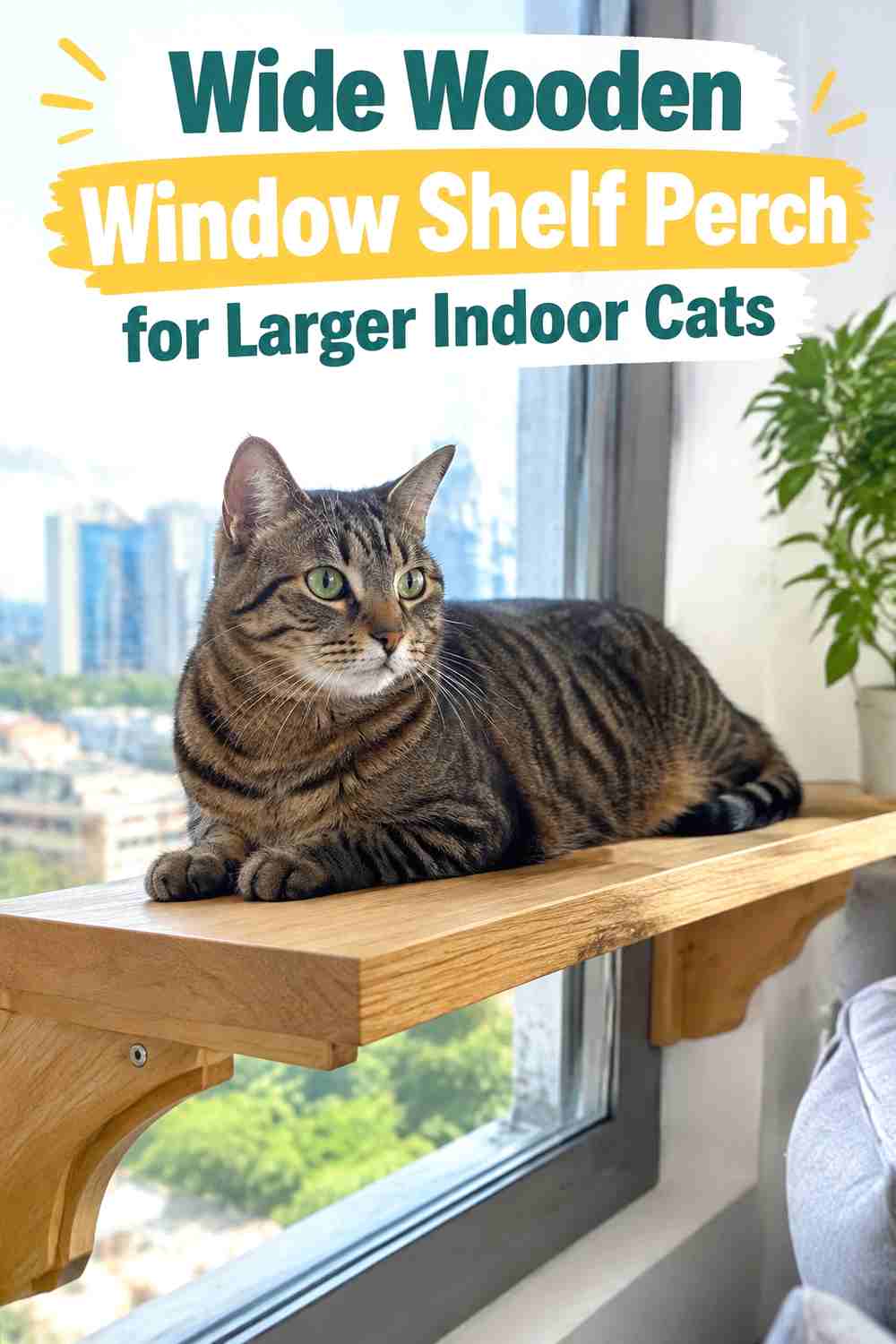
A wide wooden window shelf perch offers larger indoor cats more room to stretch out than a narrow sill or compact hammock. The platform should be securely supported, level, smooth, and deep enough for your cat to change position without hanging uncomfortably over an edge. Add a thin non-slip mat or fitted cushion for traction, especially if the wood has a polished finish. This type of perch works well when wall installation is appropriate and the supporting structure can safely handle regular use. Avoid improvised brackets or unstable shelving, and keep the area below clear enough for a comfortable approach. Periodically check the shelf, supports, padding, and surrounding wall for looseness or wear.
Setup Notes
A broad resting surface is more useful than decorative extra height. Secure installation matters more than making the perch visually elaborate.
Best For
Consider this style for larger cats, long-bodied cats, or pets that like lying fully stretched while watching the window.
5. Double Level Window Perch Setup For Multi Cat Homes
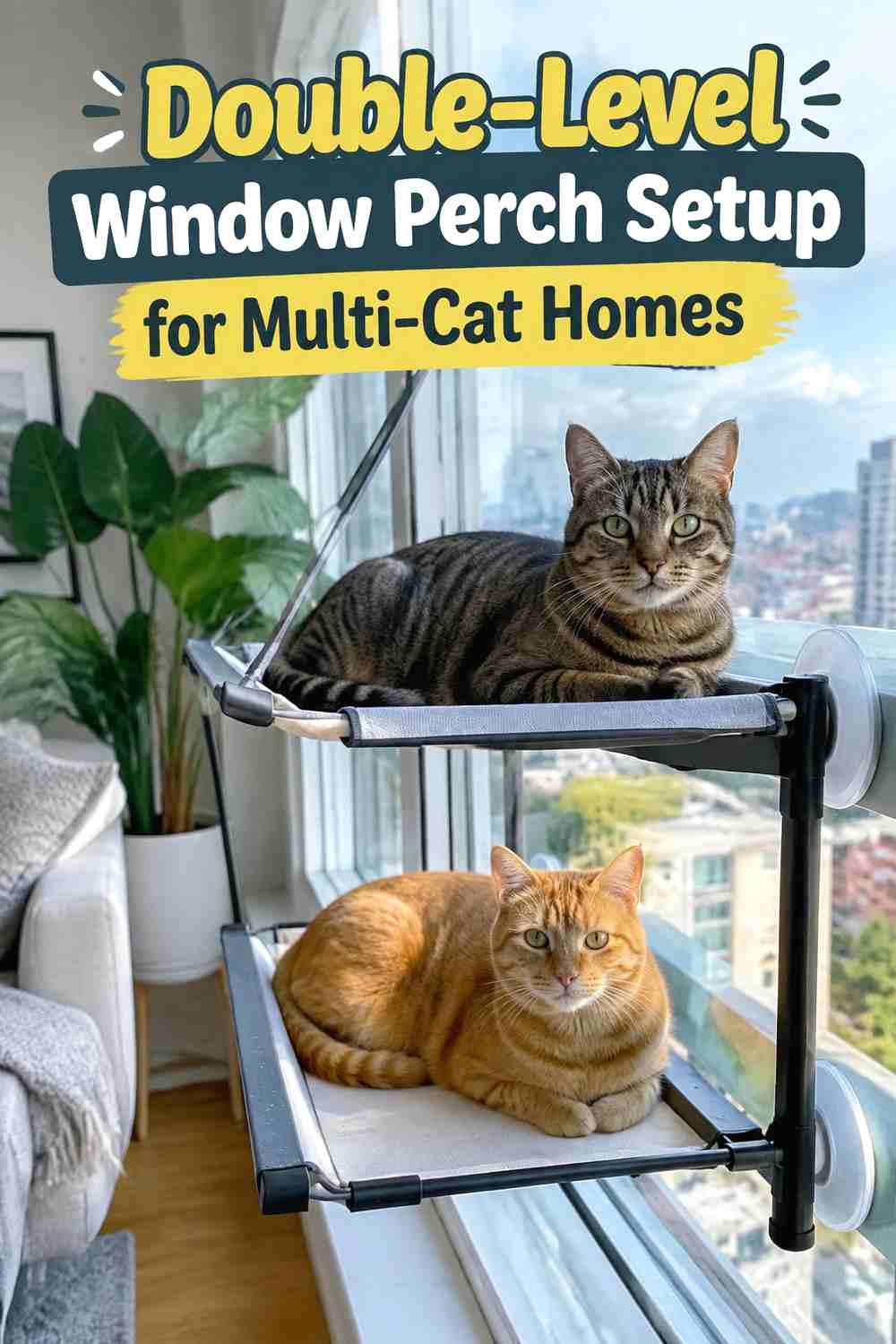
A double-level window perch gives two cats separate viewing and resting options instead of requiring them to share one small platform. Arrange two secure perches at different heights with enough spacing for each cat to enter, leave, sit, and turn without blocking the other. The layout works best when both levels have comfortable access routes rather than forcing one cat to pass directly through another cat’s space. Keep the platforms stable and provide other resting locations elsewhere in the room so the window does not become the only desirable resource. If one cat consistently guards the area or prevents another from approaching, increase spacing or use separate windows rather than assuming they will eventually share comfortably.
Space & Placement
Stagger the levels so cats can see outside without sitting directly over one another or interfering with each other’s landing areas.
Best For
This arrangement can work well in multi-cat homes where both cats enjoy window watching but prefer some personal space.
6. Fold Down Window Perch For Compact Cat Friendly Apartments
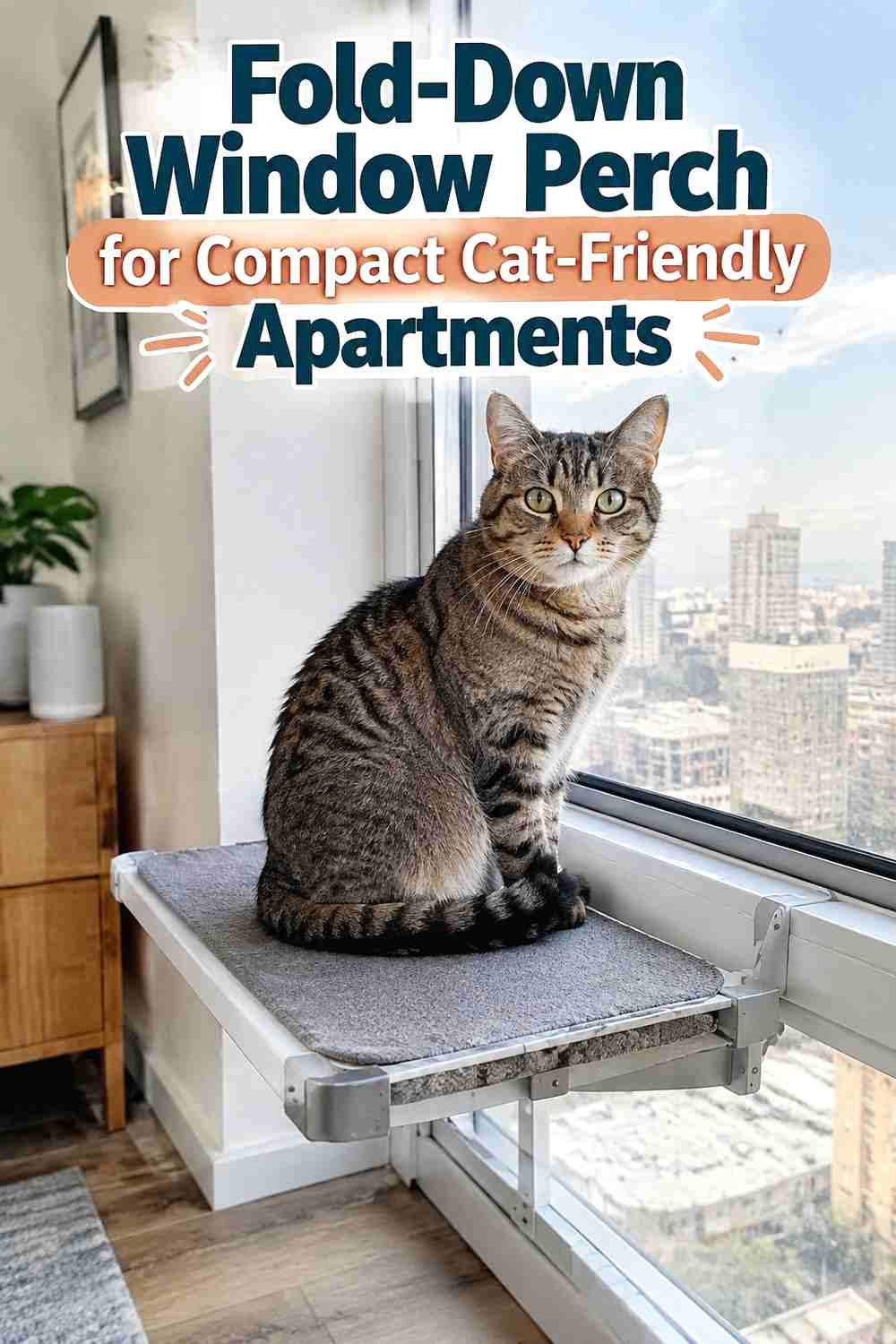
A fold-down window perch provides a usable cat resting platform when needed while allowing a compact room to feel less crowded at other times. Install it beside a suitable window where the open platform sits level, stable, and clear of furniture that could interfere with folding or access. A thin non-slip pad can make the surface more comfortable without creating bulky layers that prevent the perch from closing properly. This idea is most practical when the folding mechanism locks securely in its usable position and cannot collapse under normal movement. Always check hinges, supports, and locking points before your cat climbs onto it, and keep paws away from the mechanism whenever you raise or lower the platform.
Use & Maintenance
Remove loose fur from hinges and inspect moving parts periodically. Stop using the perch if it develops wobbling, stiffness, or unreliable locking.
Space & Placement
This style is especially useful near windows in bedrooms, home offices, or apartments where permanent projecting shelves would restrict movement.
7. Window Basket Perch For Cats Who Love Cozy Naps

A window basket perch combines an outdoor view with a more enclosed resting shape for cats that like curling up during naps. Use a sturdy, securely supported basket-style bed with a flat, stable base and enough interior room for your cat to reposition comfortably. Add a washable pad rather than overfilling the basket with deep bedding that can reduce usable space or make the surface uneven. Place the perch where your cat gets natural light without being trapped in intense direct sun for long periods, and make sure they can leave whenever they want. Avoid decorative baskets with loose woven pieces, sharp ends, or handles that could catch paws during climbing or stretching.
Why It Works
Raised sides can give the resting area a snug feel while still allowing your cat to look through the window.
Cleaning Notes
Vacuum loose fur regularly and wash the removable pad as needed. Replace damaged woven material before loose pieces become tempting to chew.
8. Quiet Corner Window Perch For Shy Indoor Cats
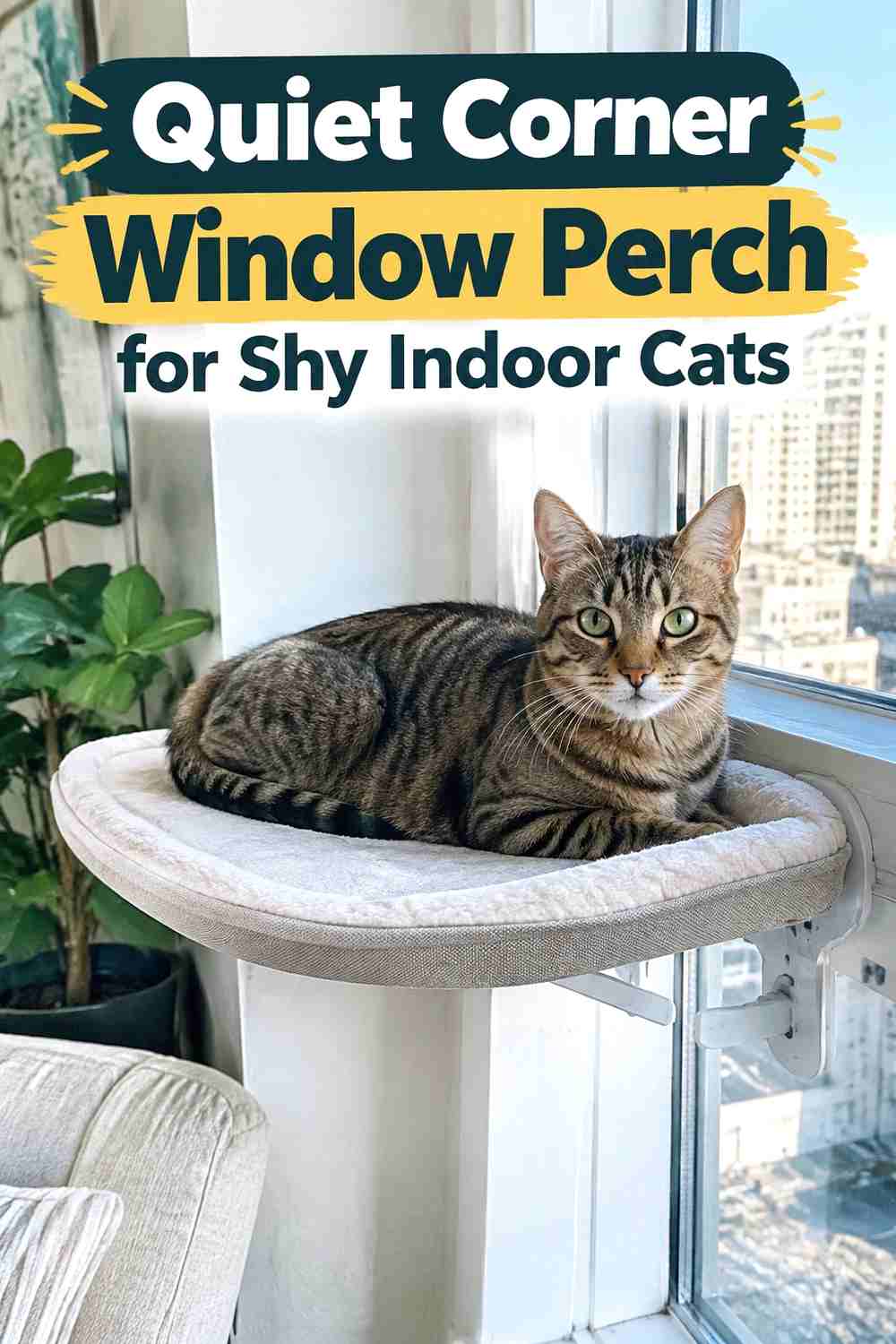
A quiet corner window perch gives a shy indoor cat a viewing spot away from the busiest parts of the home. Choose a window in a low-traffic room or calm corner, then position a stable perch where your cat can observe outside while still having an easy retreat route. A partially sheltered side, nearby cat bed, or familiar furniture can make the location feel less exposed without blocking the view. Avoid placing the perch beside noisy appliances, frequently opened doors, or areas where people constantly pass close by. Let your cat discover the space at their own pace instead of repeatedly placing them on it, and keep another familiar resting spot available if the window area feels too stimulating.
Space & Placement
Corners in bedrooms, quiet offices, or calm living-room areas can work well when the approach remains open and predictable.
Pro Tip
Use familiar bedding or a regularly used mat on the perch at first so the new location smells and feels less unfamiliar.
9. Easy Clean Window Perch With A Washable Cat Cushion
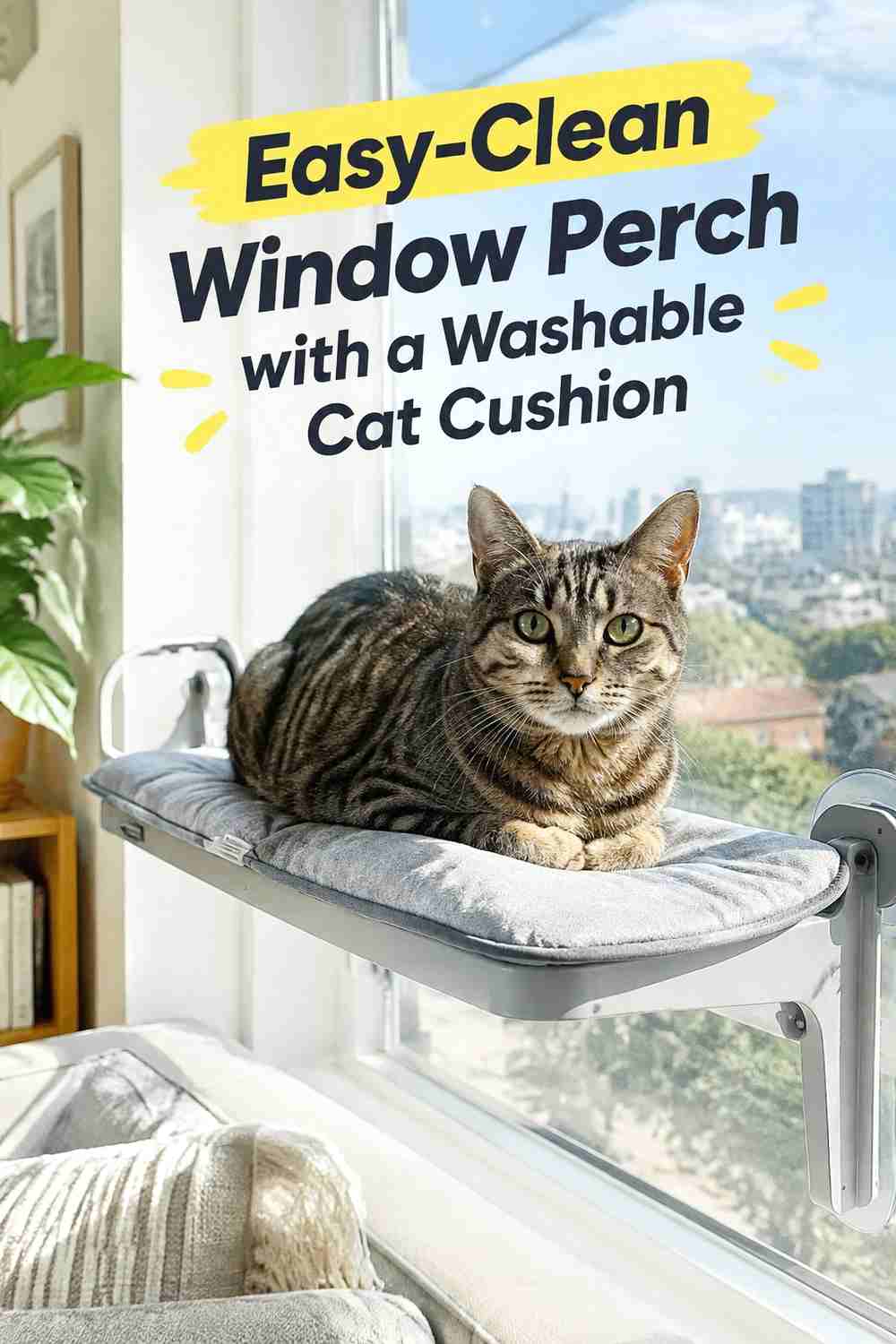
An easy-clean window perch with a washable cat cushion is practical for homes where fur, dust, paw marks, and everyday mess collect quickly. Start with a stable perch made from a wipeable surface, then add a fitted cushion with a removable, washable cover. The cushion should stay flat and secure when your cat jumps up, turns around, or pushes against it during grooming. Keeping the padding removable also makes it easier to inspect the platform underneath for dirt or wear. Choose a setup that can be cleaned without repeatedly dismantling structural supports. Regular maintenance matters around windows because condensation, dust, and direct sunlight can affect both fabrics and surfaces over time.
Cleaning Notes
Keep a second cover available if you want the perch usable while the first one is being washed and fully dried.
Use & Maintenance
Wipe the base regularly and check cushion fasteners, seams, and non-slip backing for wear before putting everything back in place.
10. Renter Friendly Freestanding Window Perch For Indoor Cats
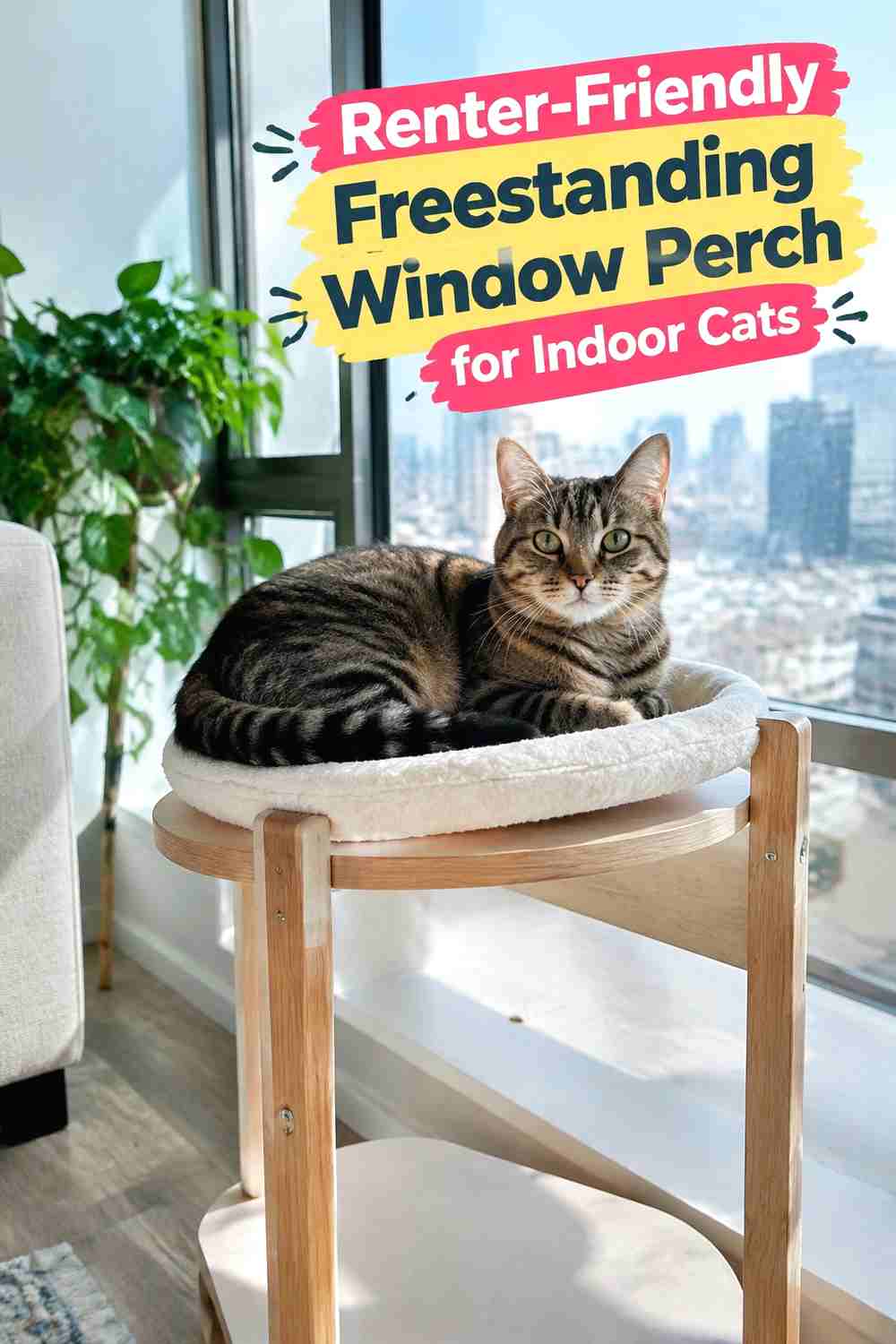
A renter-friendly freestanding window perch uses stable floor-supported furniture instead of permanent wall mounting. Position a sturdy cat tower, bench-style perch, or purpose-built window stand close enough to the glass for a clear view while leaving room for curtains, blinds, and window hardware to operate safely. The base should remain stable when your cat jumps on or off, and the top platform should provide good traction. This setup is flexible because it can move to a different room or home without leaving mounting holes behind. Avoid balancing ordinary lightweight furniture against the window solely to create height, and keep blind cords or other dangling window coverings secured away from the resting area.
Best For
This option suits renters, people who rearrange rooms frequently, or anyone who wants a window perch without permanent installation.
Space & Placement
Measure available floor space before choosing the setup so the base does not create an awkward obstacle in a narrow walkway.
11. Step Up Window Perch For Kittens And Senior Cats
You May Also Like



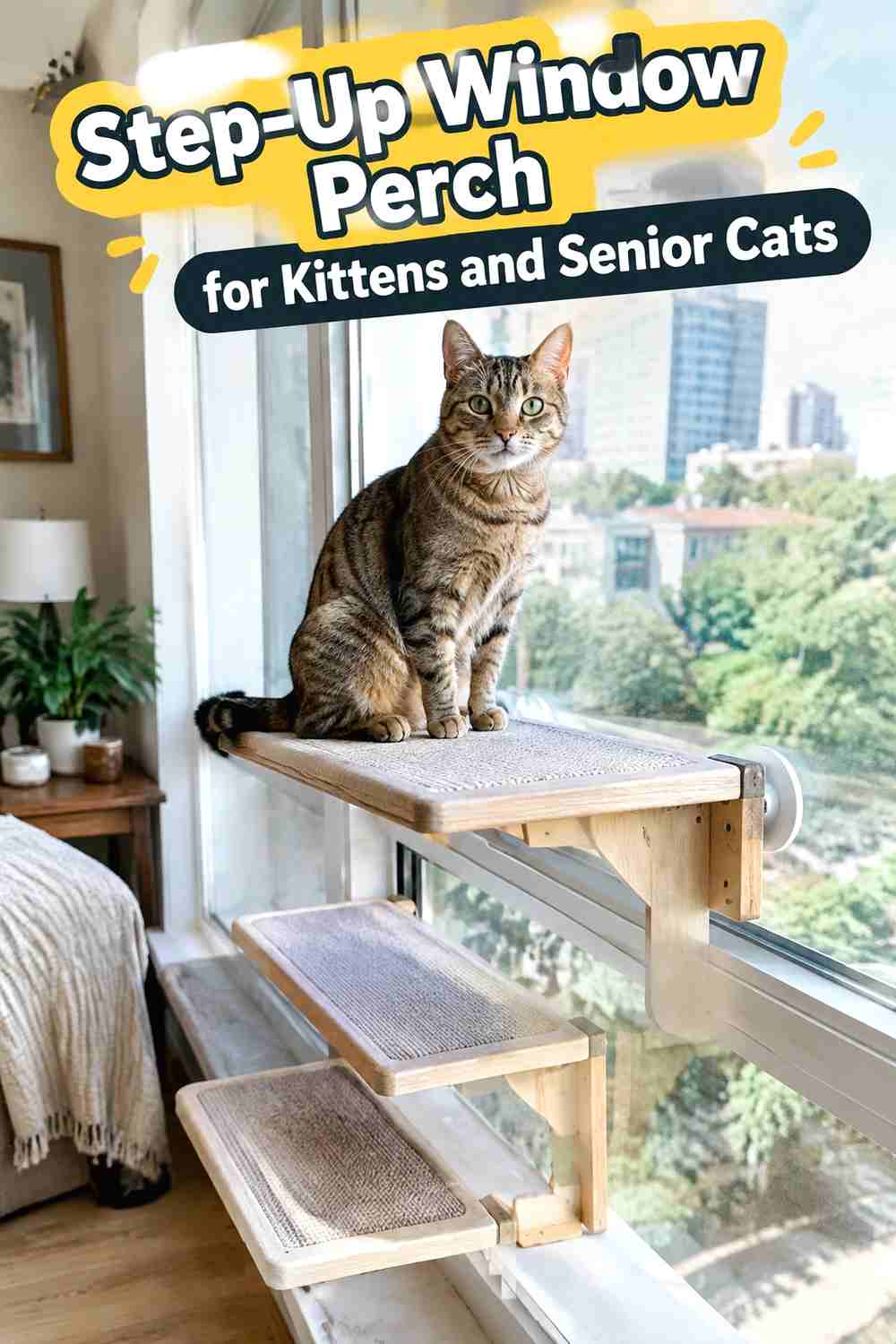
A step-up window perch creates a gradual route to the window for kittens, senior cats, or any cat that finds one large jump inconvenient. Arrange a secure low step, intermediate platform, and final resting perch so each level has good traction and a clear landing area. Keep the route simple rather than building a complicated staircase, and make sure separate pieces cannot slide apart during use. For kittens, avoid tiny gaps, unstable lightweight boxes, or heights that invite risky climbing. For older cats, watch whether the spacing still feels comfortable over time and adjust the layout when needed. The final perch should remain large enough for resting rather than functioning only as a narrow destination.
Setup Notes
Use stable, non-slip surfaces and place each step where your cat can see the next landing point clearly.
Pet Type & Life Stage
This arrangement can make window access easier for growing kittens and some senior cats, but individual confidence and mobility should guide the final layout.
How to Choose the Right Idea
Start with how your cat naturally approaches windows. A confident jumper in a small apartment may enjoy a secure window hammock, while a larger cat may be more comfortable on a broad shelf. Senior cats and less agile pets often benefit from lower platforms or gradual step-up access.
Your available space matters too. Freestanding perches are useful when permanent mounting is not an option, while fold-down designs can reduce clutter in compact rooms. Multi-cat households may need more than one resting surface so cats are not forced to compete for the same view.
Also compare cleaning needs, sunlight, drafts, window security, traction, and the stability of the supporting surface. Whatever style you choose, your cat should be able to enter, rest, turn around, and leave comfortably.
Final Thoughts
The best cat window perch is one your cat can reach easily and use comfortably without balancing on an unstable or cramped surface. Start with your cat’s preferred sleeping position, body size, mobility, and favorite window.
A simple padded sill may be enough for one cat, while another may benefit from a wide platform, low bench, or multi-level setup. Prioritize stability and comfortable access first, then add cushions, baskets, or space-saving features that suit your home.
FAQs
1. Where is the best place to put a cat window perch?
Choose a secure window with an unobstructed view, a comfortable approach, and enough surrounding space for your cat to get on and off safely. Quieter windows can be better for cats that dislike heavy household traffic.
2. Are suction cup window perches suitable for every cat?
Not necessarily. Suitability depends on the specific perch, glass surface, installation, and the cat using it. Follow the product’s instructions and weight guidance, and inspect every attachment regularly.
3. How can I make a window perch more comfortable?
A fitted non-slip cushion or washable mat can add softness without making the platform unstable. Keep padding flat and make sure it does not reduce the usable resting area.
4. What type of window perch works well for senior cats?
Low benches, broad platforms, and step-up arrangements may make access easier because they reduce the need for large jumps. Adjust the setup to your individual cat’s mobility and confidence.
5. Can two cats share one window perch?
Some cats may comfortably share a large space, but others prefer separate resources. In multi-cat homes, providing multiple perches or viewing spots can reduce the need to compete for one small platform.
CTA
Save your favorite cat window perch ideas and choose a setup that fits your cat’s favorite view, comfort needs, and available space.
