Keep wet-weather days interesting with indoor dog activities built around sniffing, searching, training, gentle movement, problem-solving, and relaxing between games.
Save This Idea on Pinterest

15 Rainy Day Dog Activity Ideas
Save to PinterestRainy days can limit normal outdoor routines, especially when heavy rain, muddy ground, or uncomfortable weather makes extended backyard or walking time impractical. Indoor activities give dogs different ways to use their nose, interact with you, move around safely, or work through a simple challenge without needing a large room.
These 15 ideas range from low-space scent games and food puzzles to tug, hallway fetch, training, toy searches, and a simple indoor obstacle course. Choose activities based on your dog’s size, age, energy, confidence, play habits, available floor space, and how much supervision or cleanup you want.
Quick List
- Indoor Towel Treat Puzzle for Rainy Day Dogs
- Living Room Hide-and-Seek Game for Rainy Day Dogs
- Easy Muffin Tin Puzzle for Rainy Day Dog Enrichment
- Hallway Fetch Game for Dogs Stuck Inside on Rainy Days
- Indoor Snuffle Mat Search for Bored Rainy Day Dogs
- Simple Training Session for Rainy Day Dog Mental Exercise
- Cardboard Box Treasure Hunt for Rainy Day Dogs
- Gentle Indoor Tug Game for Rainy Day Dog Play
- Rainy Day Toy Rotation Station for Indoor Dogs
- Indoor Obstacle Course for Active Dogs on Rainy Days
- Treat Cup Shell Game for Rainy Day Dogs
- Supervised Cardboard Shredding Activity for Rainy Day Dogs
- Window Watch Rest Spot for Calm Rainy Day Dogs
- Indoor Scent Trail Game for Curious Rainy Day Dogs
- Find-the-Toy Search Game for Rainy Day Dogs
1. Indoor Towel Treat Puzzle For Rainy Day Dogs
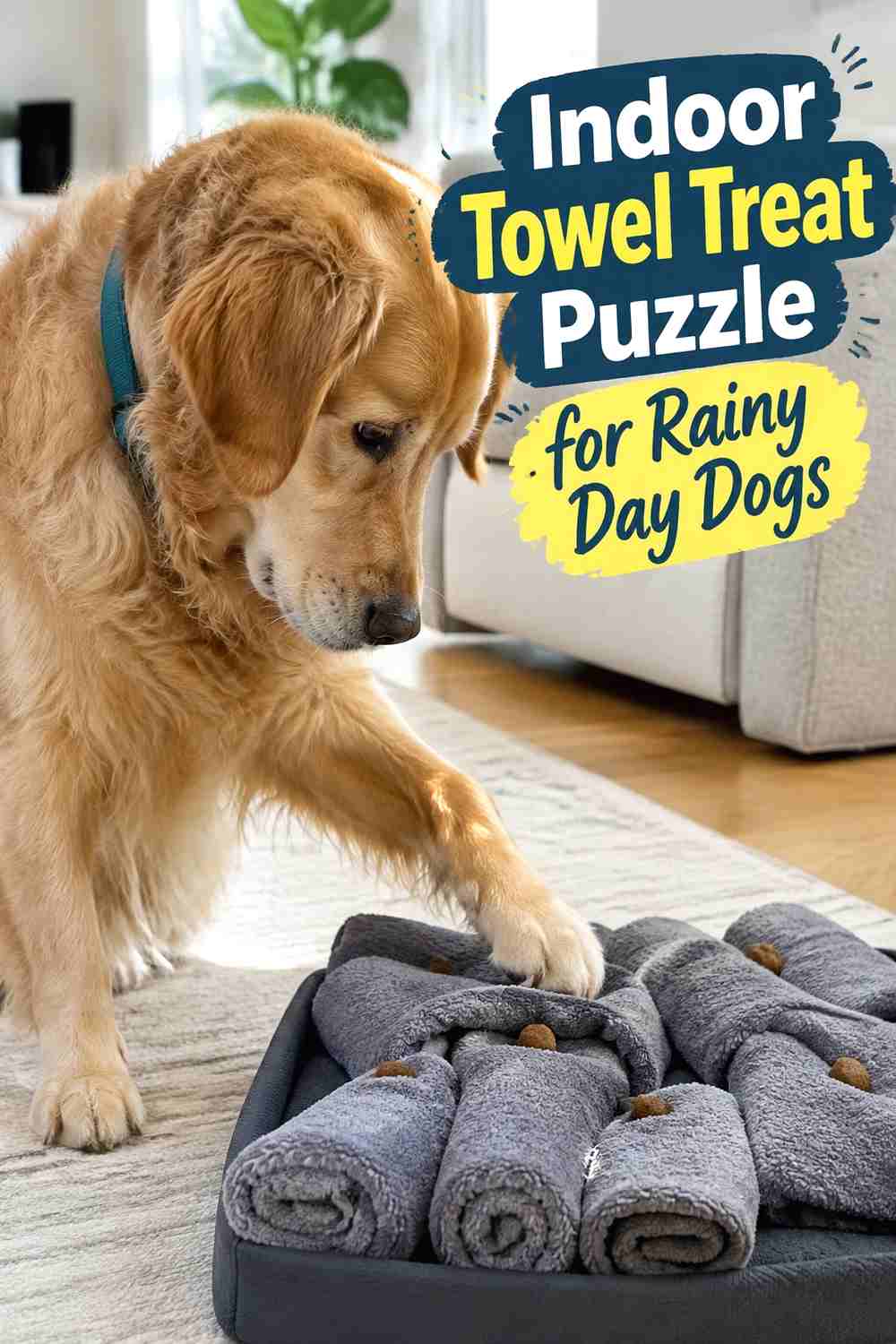
An indoor towel treat puzzle turns a simple household towel into a rainy-day sniffing activity. Lay a clean towel flat, scatter a few suitable treats or pieces of your dog’s normal food across it, then loosely roll or fold the fabric so your dog has to investigate each layer. Keep the first attempt easy by leaving some rewards near the outer edges.
Set the towel on a non-slip floor with enough room for your dog to paw and nose it without pushing furniture around. Once the game ends, shake out crumbs and wash the towel when needed. Supervise dogs that tend to chew fabric, and put the towel away if the activity changes from searching to tearing.
Setup Notes
Start with a loose roll and make the folds slightly more complicated only after your dog clearly understands how to find the hidden rewards.
2. Living Room Hide And Seek Game For Rainy Day Dogs
You May Also Like

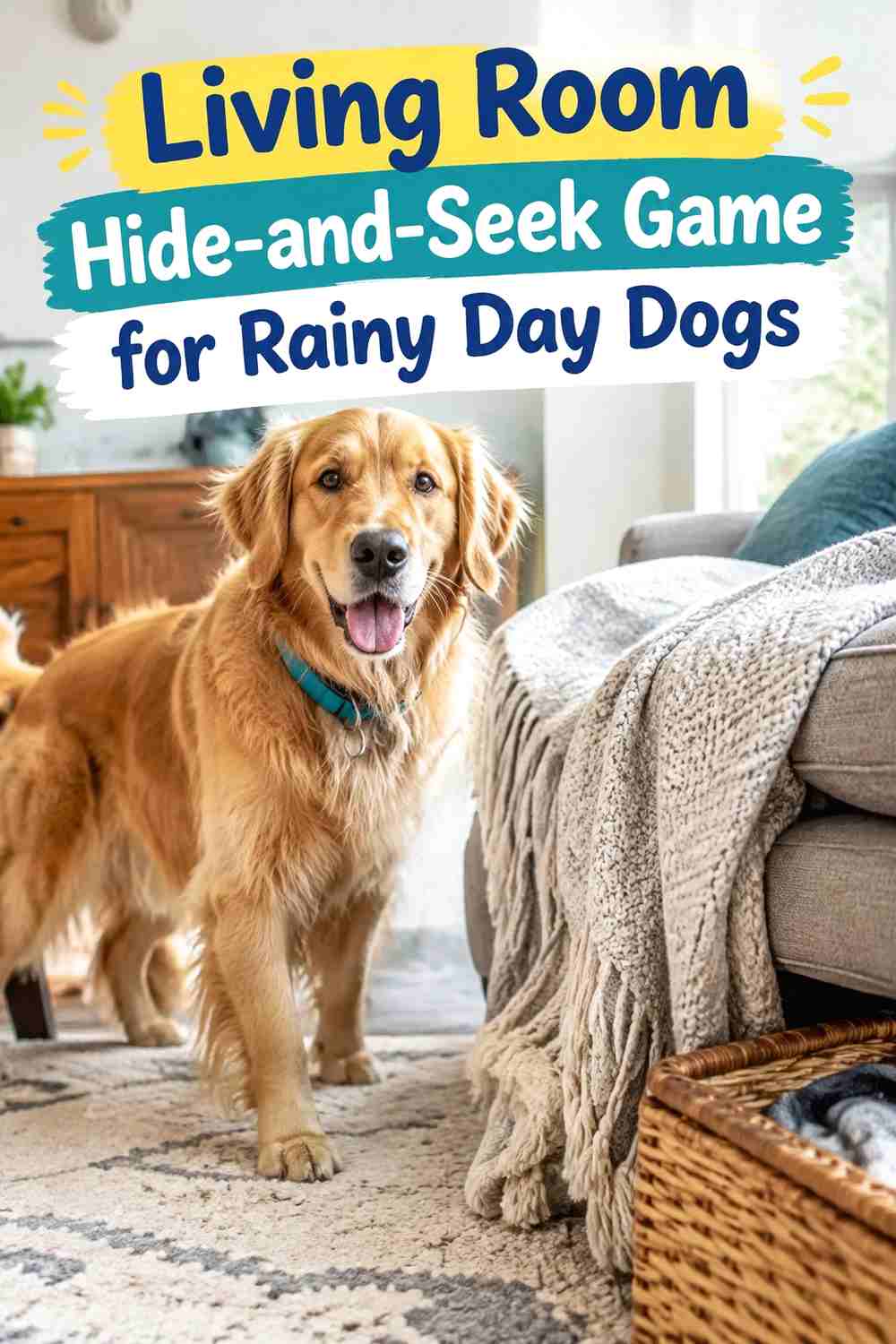
A living room hide-and-seek game turns familiar indoor space into an interactive rainy-day search. Ask your dog to wait with another household member, then hide somewhere easy such as behind an open doorway or beside a sofa. Call your dog once and let them search for you using sight, sound, and scent.
Begin with obvious hiding places so the game stays fun rather than confusing. As your dog learns the routine, try nearby rooms or quieter hiding spots while keeping doors, stairs, and pathways safe. Avoid squeezing behind unstable furniture or encouraging frantic running across slippery floors. This activity requires almost no equipment and works particularly well for dogs that enjoy following family members around the house.
Best For
Hide-and-seek suits social dogs that enjoy owner interaction and can comfortably move through the home without navigating cluttered or unsafe areas.
3. Easy Muffin Tin Puzzle For Rainy Day Dog Enrichment
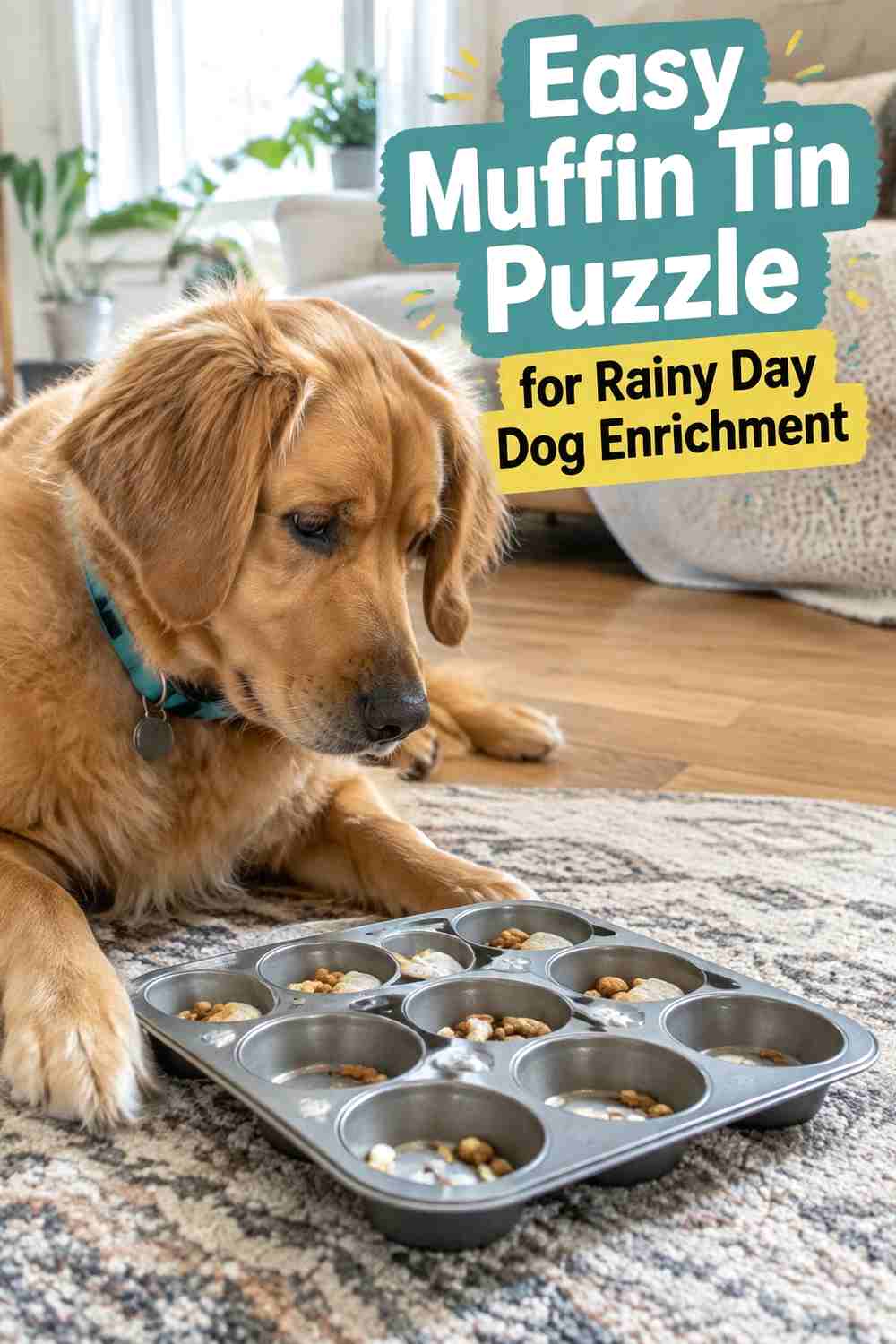
An easy muffin tin puzzle adds a simple problem-solving activity to a wet afternoon indoors. Place a few treats or pieces of normal food in selected muffin cups, then cover some compartments with dog-safe balls that are too large for your dog to swallow. Leave several cups uncovered during the first round so the goal is easy to understand.
Set the tin on a stable surface with good traction to keep it from sliding across the floor. Dogs can sniff, nudge, or lift the covers to reach the rewards underneath. Adjust the number of covered compartments instead of automatically adding more food when you want to change the difficulty. Wash the tin afterward and inspect any reusable balls before the next session.
Pro Tip
Move the hidden rewards to different compartments each time so the puzzle changes without requiring a new setup or more complicated equipment.
4. Hallway Fetch Game For Dogs Stuck Inside On Rainy Days

A hallway fetch game gives dogs that enjoy retrieving a controlled indoor option when outdoor play is limited by rain. Choose a clear hallway or long room, remove shoes, bags, breakable objects, and loose rugs, then use a soft toy that is easy for your dog to pick up. Keep throws low and short instead of bouncing toys toward walls or furniture.
Good traction matters more than distance indoors. If your dog skids when turning or stopping, choose another surface or switch to a slower activity. You can also pause between throws and ask for a calm return rather than creating nonstop running. This setup works best for dogs that already understand fetch and remain manageable in a confined space.
Space & Placement
Keep both ends of the fetch lane clear and avoid throwing toward stairs, glass doors, sharp furniture corners, or busy household walkways.
5. Indoor Snuffle Mat Search For Bored Rainy Day Dogs
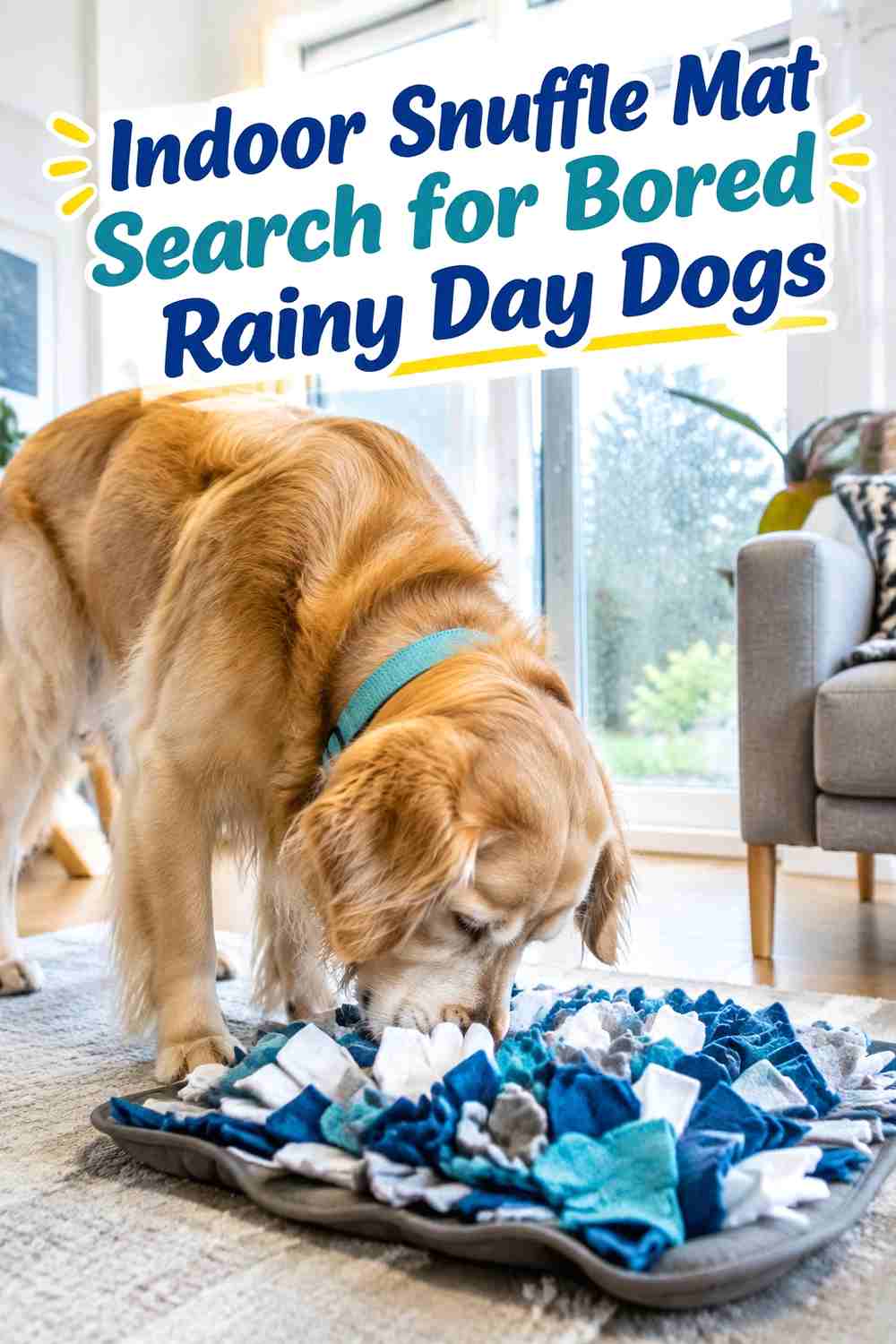
An indoor snuffle mat search gives bored rainy-day dogs a compact activity centered on sniffing rather than speed. Scatter small suitable treats or pieces of regular food through the fabric folds, leaving several easy to see if your dog is new to the mat. Place it on a dry, non-slip floor and allow your dog to search at their own pace.
Avoid packing food so deeply that your dog becomes frustrated and starts grabbing or tearing the mat. Once the search is finished, shake out remaining crumbs and clean the mat according to its material. Store it between sessions if your dog tends to chew fabric or the base. Changing the hiding pattern can keep the activity interesting without increasing the amount of food used.
Use & Maintenance
Let the mat dry fully after washing, and check fabric strips or backing regularly for loose pieces before putting it down again.
6. Simple Training Session For Rainy Day Dog Mental Exercise

A simple indoor training session can turn a rainy afternoon into focused one-on-one time without requiring much space. Choose one or two familiar skills, such as coming to a mat, touching your hand, waiting briefly, or responding to a known cue, and practice them in a quiet room with few distractions.
Keep the session clear and manageable instead of introducing several new behaviors at once. Use rewards that already fit your normal routine, and stop while your dog is still interested rather than pushing through obvious distraction or frustration. Training can also be broken into short moments across the day instead of one long block. Make sure the floor provides secure footing whenever the skill involves turning, walking, or changing position.
Why It Works
Rainy days provide a convenient chance to practice familiar household skills in a controlled environment where distractions can be adjusted easily.
7. Cardboard Box Treasure Hunt For Rainy Day Dogs
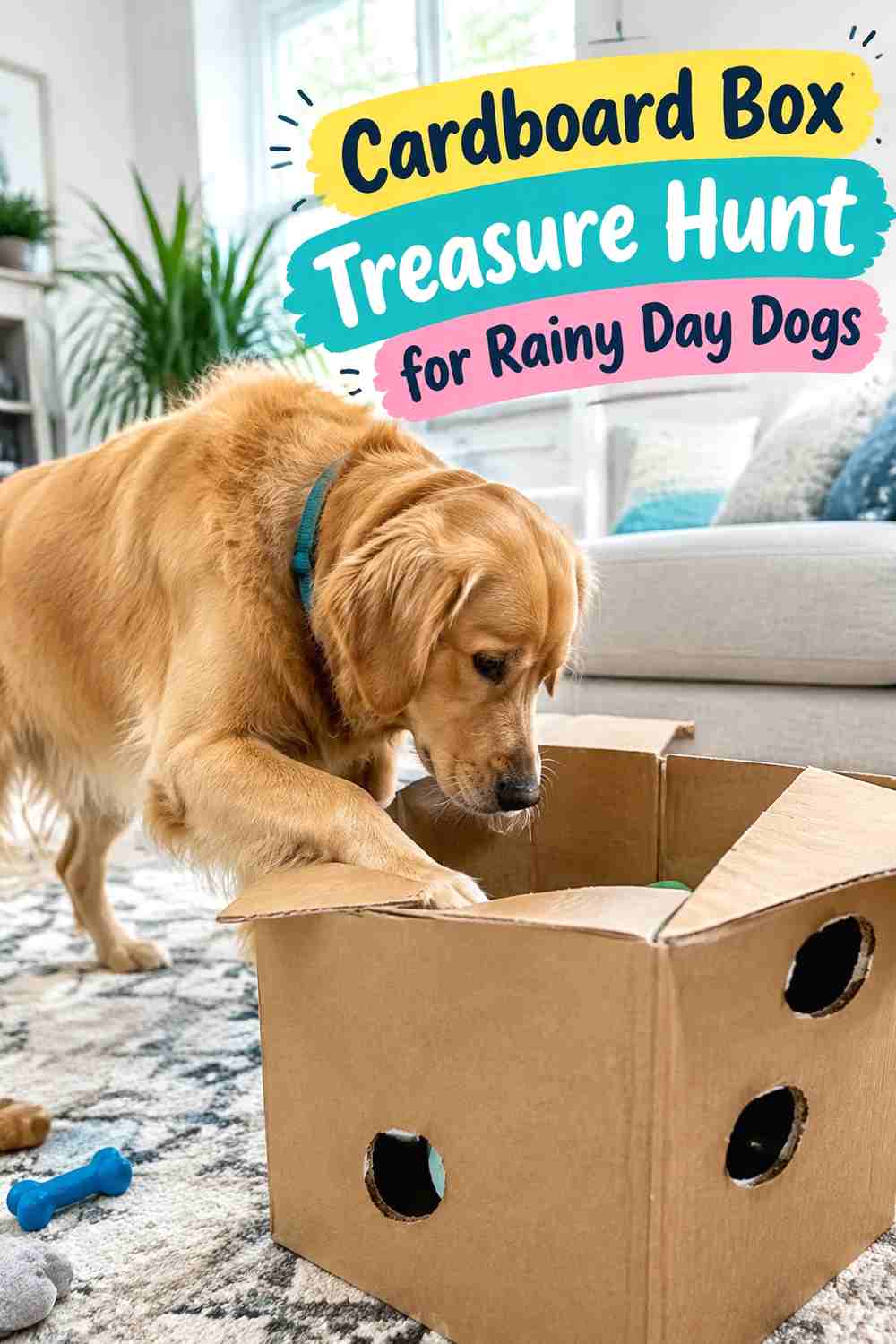
A cardboard box treasure hunt creates an indoor sniffing and exploration game from clean packing materials. Use a sturdy open box, remove tape, staples, labels, and plastic, then add loosely crumpled plain paper or several smaller open boxes. Hide a few suitable treats between the layers so your dog can nose through the setup.
Make the first search easy by leaving some rewards partially visible. Place the box on a floor that is simple to sweep afterward, because enthusiastic dogs may scatter paper around the room. Watch how your dog handles the cardboard and remove the setup if they begin swallowing pieces instead of searching or gently tearing. When the session ends, collect scraps immediately rather than leaving the box available unsupervised.
Cleaning Notes
Use fresh, dry cardboard and discard pieces that become soggy, heavily crushed, dirty, or difficult to separate from leftover food crumbs.
8. Gentle Indoor Tug Game For Rainy Day Dog Play
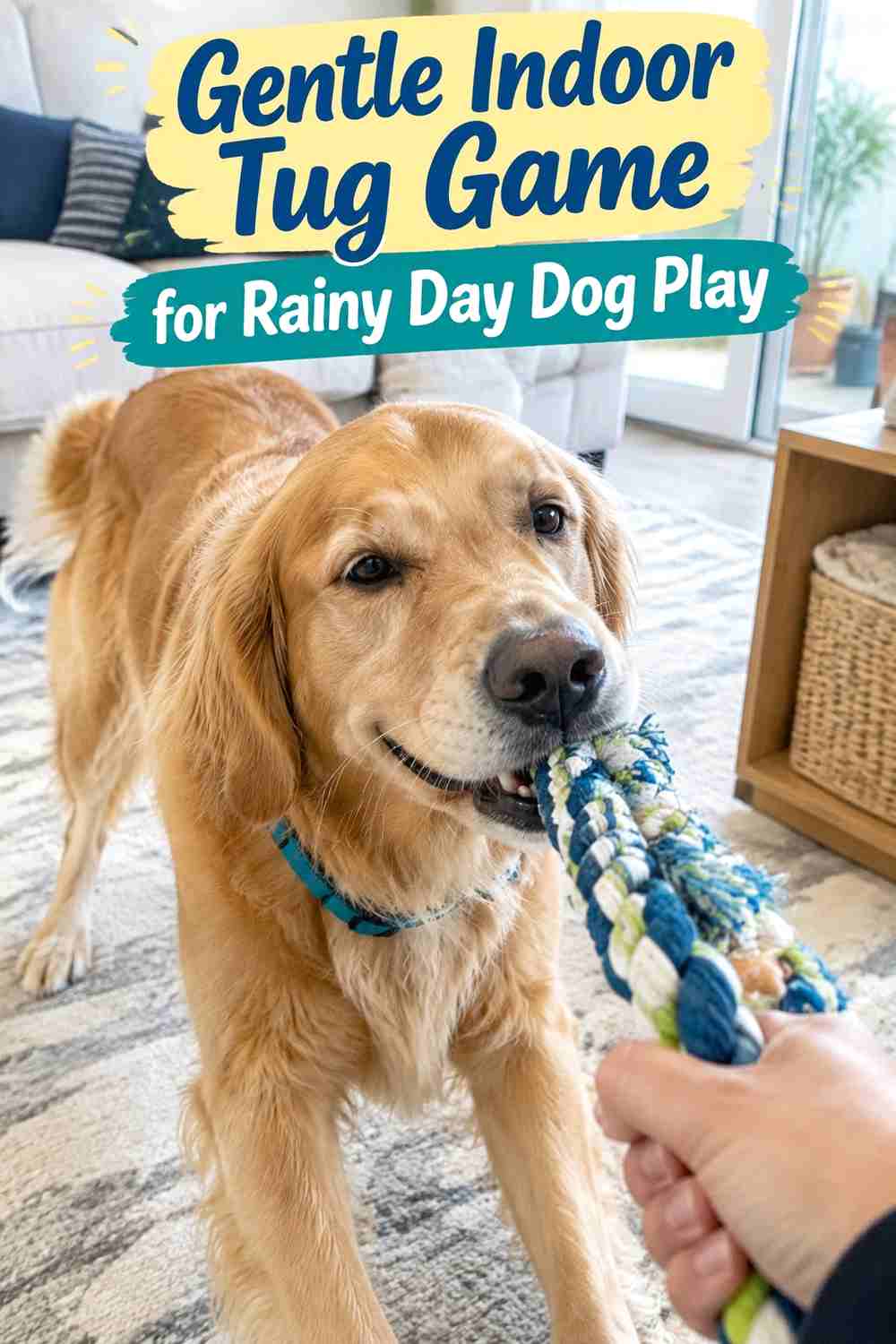
A gentle indoor tug game provides direct owner interaction when rain keeps normal outdoor play short. Choose a sturdy tug toy appropriate for your dog and play in an uncluttered room with secure footing. Hold the toy low enough for a natural posture and move it side to side in controlled motions instead of sharply jerking upward.
Build pauses into the game so excitement does not continually increase. You can briefly stop the toy, reset your position, and then resume when both you and your dog are ready. Avoid tugging near tables, fragile décor, or narrow spaces where either of you could bump into furniture. Check the toy for loose threads, cracks, or torn sections before storing it after the session.
Comfort & Safety
Keep your dog’s paws on the floor and avoid lifting or swinging them by the toy. Stop if the play becomes difficult to manage safely indoors.
9. Rainy Day Toy Rotation Station For Indoor Dogs
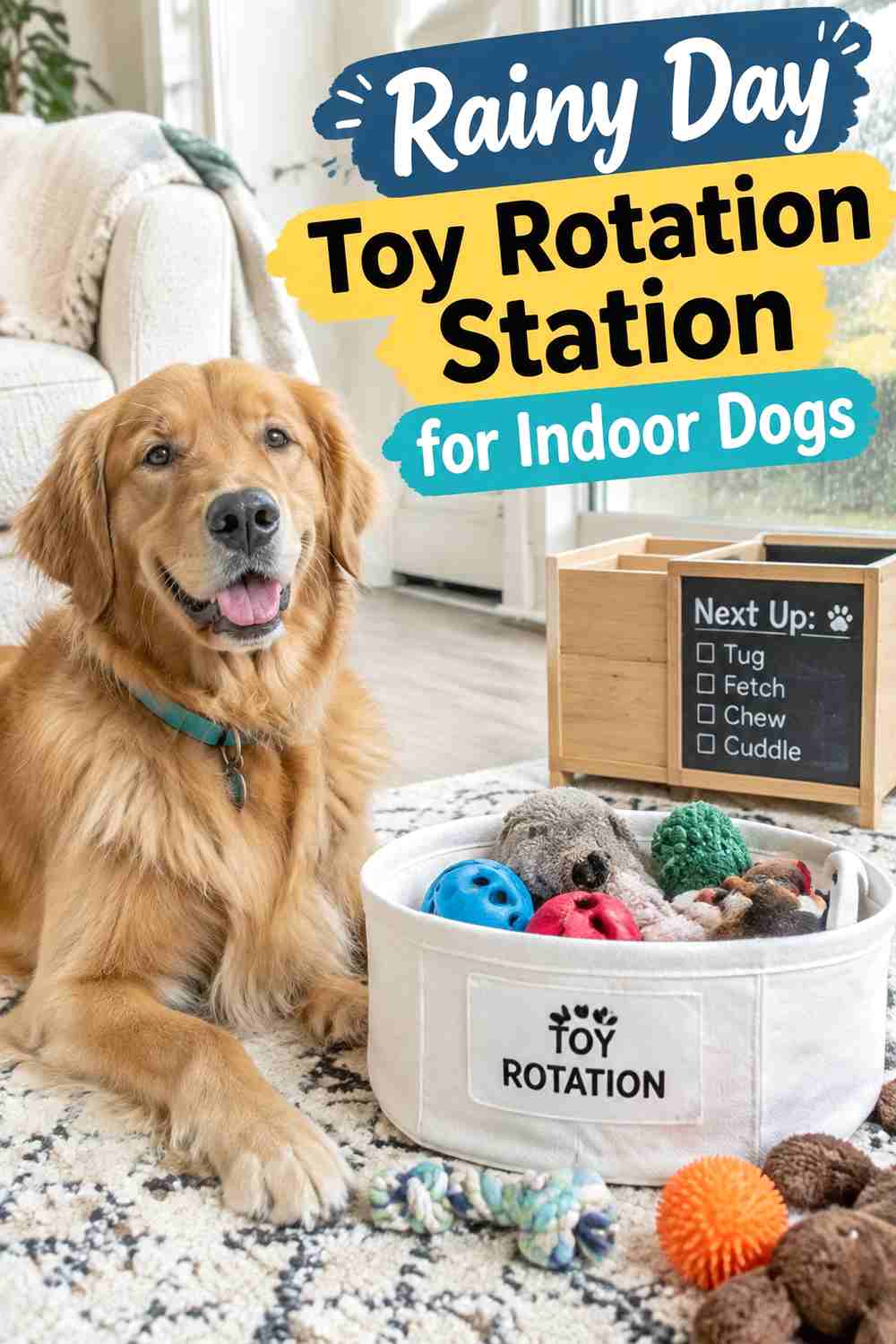
A rainy day toy rotation station makes familiar indoor toys easier to manage and can bring attention back to items that have been ignored. Store most toys in a closed bin or cabinet, then place only a small selection in an accessible basket for the day. Mix different play styles, such as one soft carry toy, one tug toy, and one interactive option.
Rotating toys does not require buying more; the goal is simply to change what is available at one time. Check each toy while moving it in or out of storage and retire anything damaged. Keep wet or dirty toys separate until cleaned and fully dry. This system also reduces floor clutter during days when dogs and people are spending more time indoors together.
Use & Maintenance
Swap a few toys rather than replacing the entire selection every day. A simple rotation is easier to maintain and lets you notice which options your dog actually chooses.
10. Indoor Obstacle Course For Active Dogs On Rainy Days
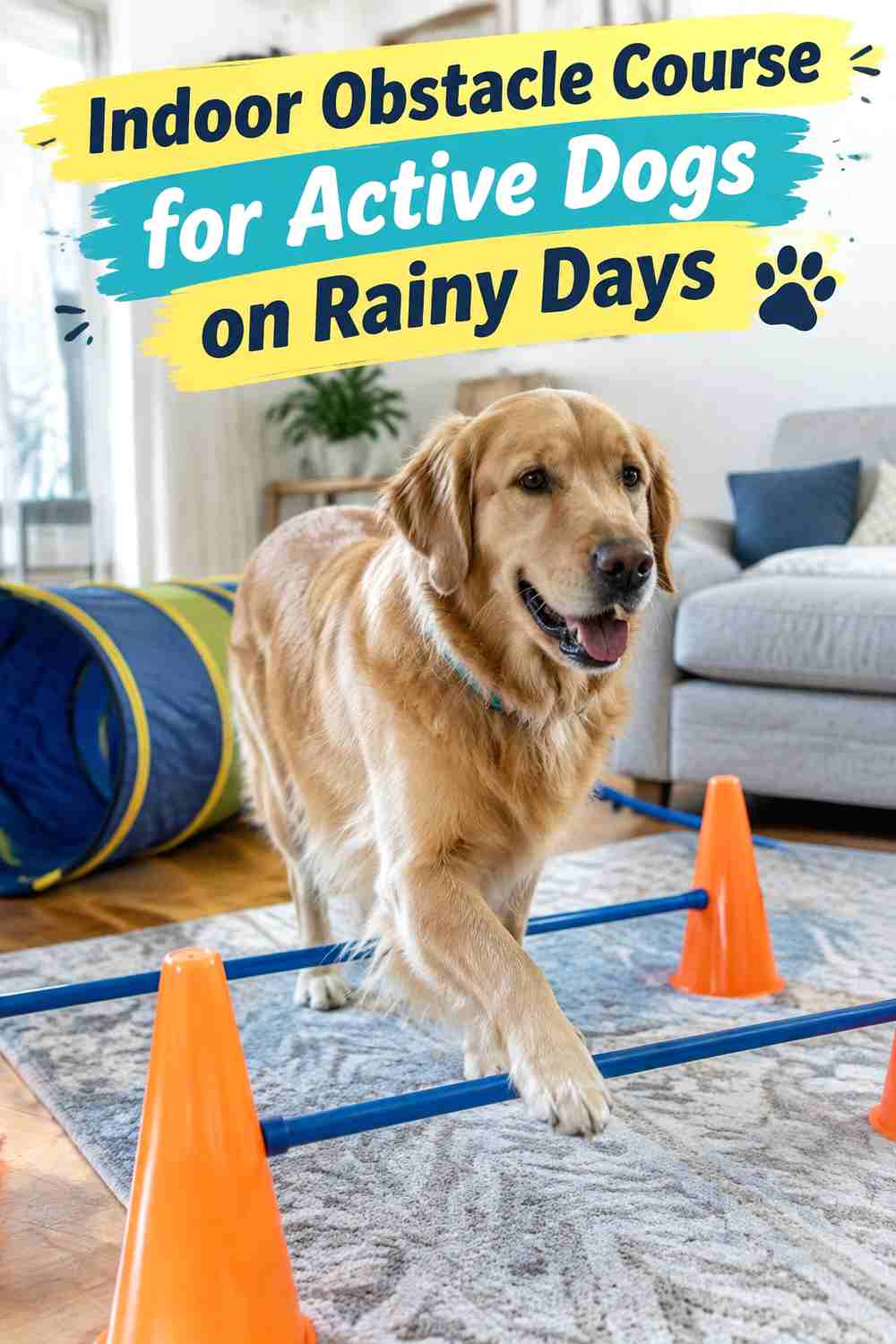
An indoor obstacle course gives active dogs a structured way to move through a room without relying on long-distance running. Arrange wide cones to walk around, a stable mat to pause on, and a very low object to step over. Leave generous space between each element so your dog can approach, turn, and step away comfortably.
Guide your dog through slowly at first rather than encouraging speed. Household furniture should not be used if it can slide, tip, or force awkward jumping. Keep the course entirely ground-level for dogs that are young, older, uncertain, or not suited to elevated obstacles. The layout can change between sessions by moving the same few objects, which adds variety without filling the home with permanent equipment.
Setup Notes
Introduce each obstacle separately before combining them into a route. Remove any piece that makes your dog hesitant or causes slipping.
11. Treat Cup Shell Game For Rainy Day Dogs
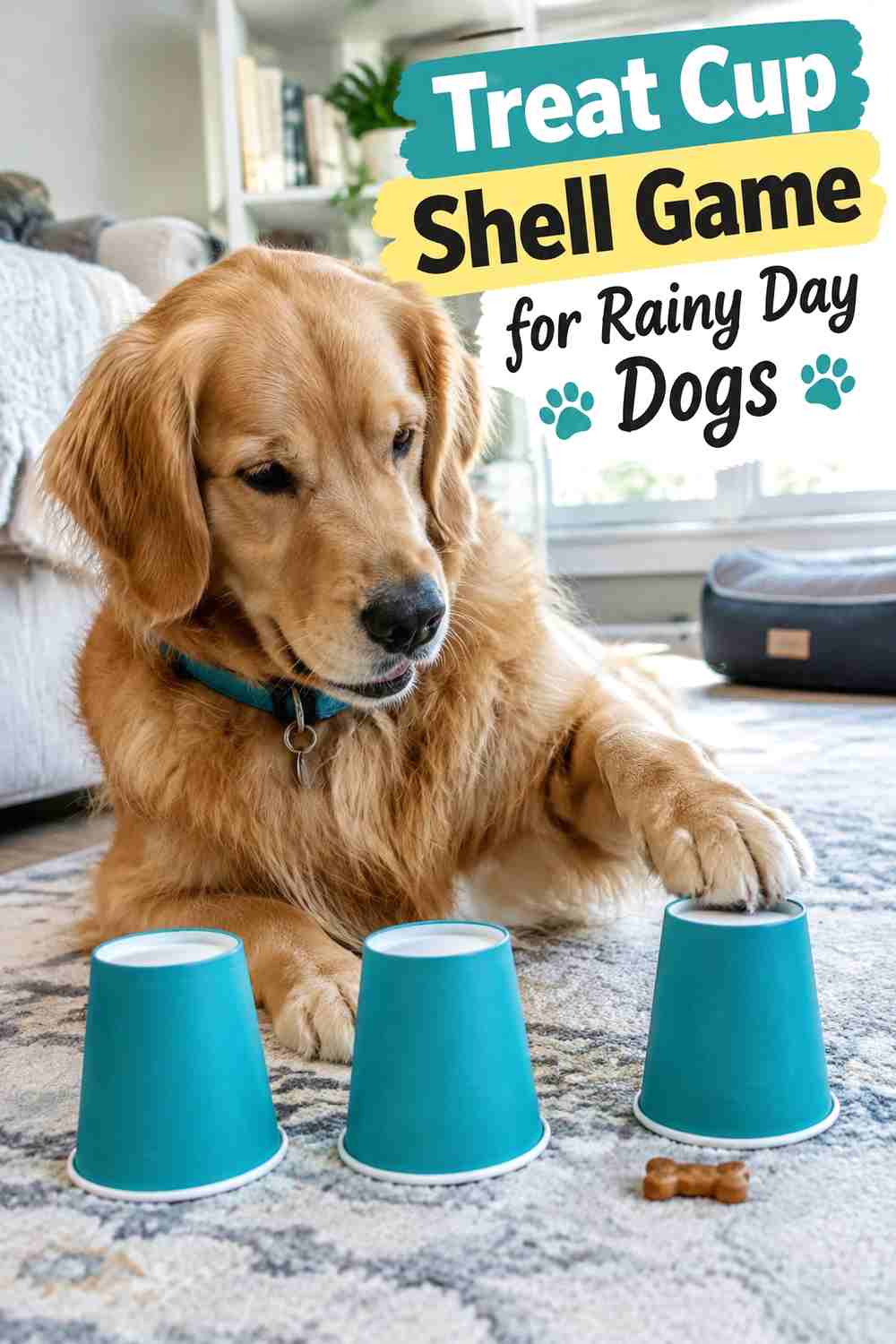
A treat cup shell game is a compact rainy-day activity that asks your dog to investigate which container hides the reward. Place one suitable treat under one of two or three sturdy cups, let your dog watch at first, then encourage them to sniff or indicate the correct location. Lift the cup once they make a clear choice.
Keep the containers large and durable enough that they are not easily swallowed or crushed. Beginners do not need fast shuffling; simply changing which cup contains the reward is enough. As your dog understands the game, move the cups slightly before allowing the search. Use a non-slip surface and remove the cups afterward if your dog wants to chew them rather than continue the puzzle.
Best For
This is useful for small homes because it requires very little floor space and can be reset quickly between short rounds.
12. Supervised Cardboard Shredding Activity For Rainy Day Dogs
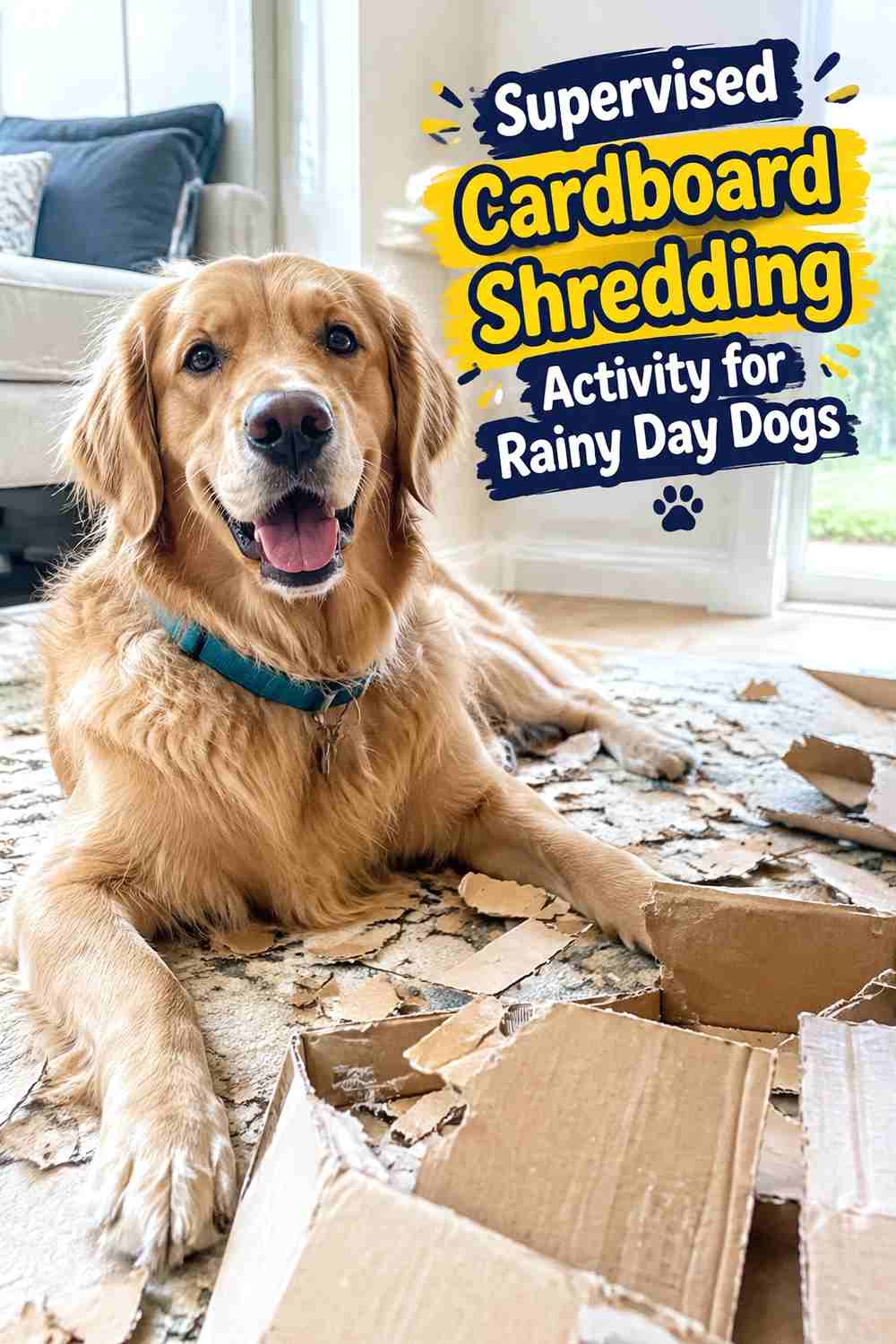
A supervised cardboard shredding activity gives dogs that enjoy ripping material a temporary indoor outlet on wet-weather days. Use a shallow box filled with clean plain cardboard and loosely crumpled paper, with tape, staples, glossy coatings, plastic windows, and other non-cardboard parts removed. You can hide a few suitable treats between layers to encourage searching before shredding.
Set the activity on an easy-to-clean floor because scraps can spread quickly. Watch closely to see whether your dog tears and drops pieces or repeatedly tries to swallow them. Dogs that ingest cardboard should use a different activity. End the session when the material becomes heavily shredded, then gather every loose piece so the remains do not turn into unsupervised chewing material later.
Cleaning Notes
A smaller box is usually easier to manage indoors than a large pile. Keep a recycling bag nearby so cleanup happens as soon as play ends.
13. Window Watch Rest Spot For Calm Rainy Day Dogs
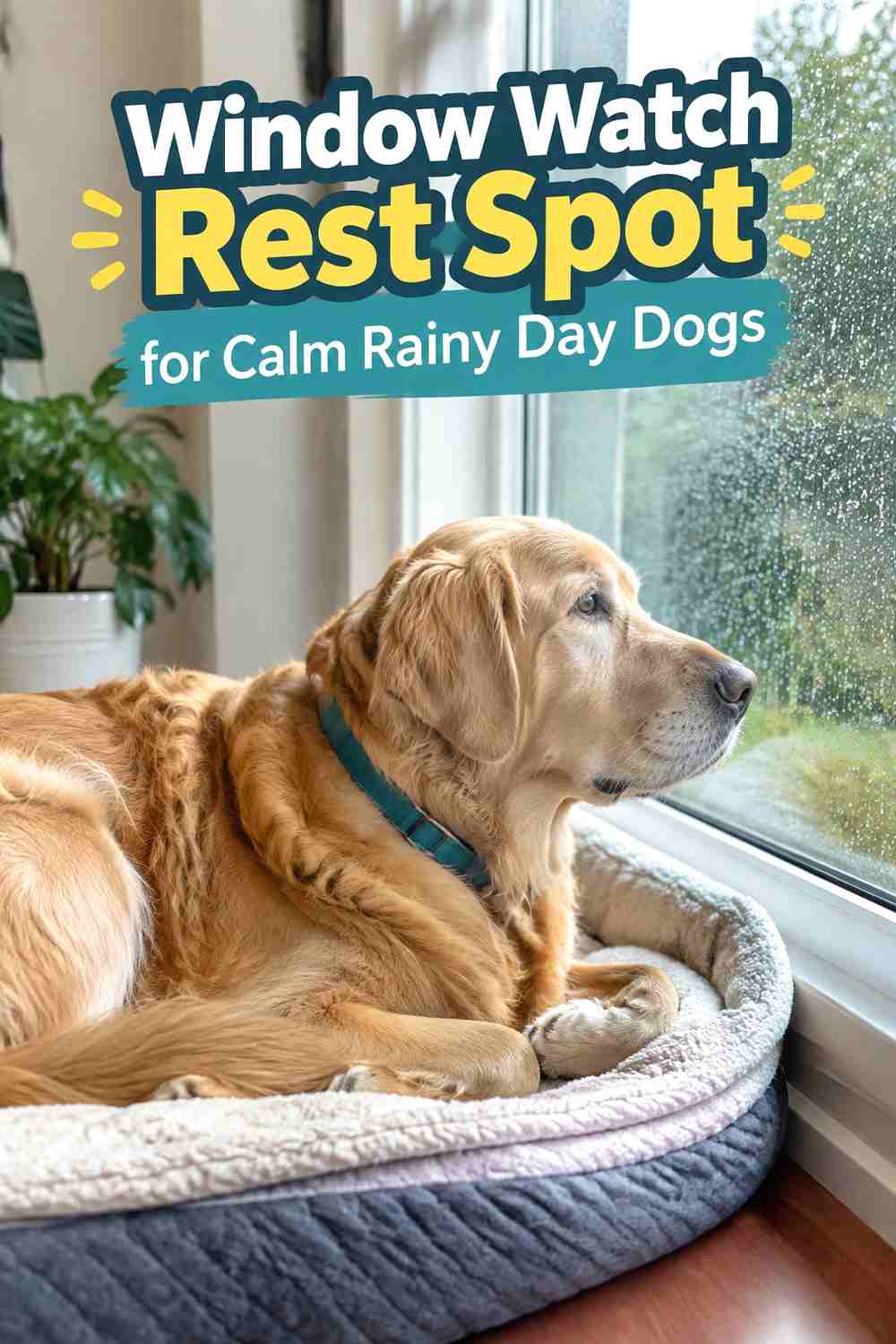
A window watch rest spot gives calmer dogs something to observe between more active rainy-day games. Place a stable bed or washable mat near a secure closed window where your dog can comfortably watch rain, people, or outdoor movement without climbing onto unstable furniture. Keep the area away from drafts and make sure cords, blinds, and small objects are out of reach.
This is less about vigorous activity and more about giving the day another predictable option. Some dogs may settle and watch quietly, while others become overly excited by movement outside. If barking or pacing increases, move the resting spot farther from the window or choose a quieter location. Keep the area comfortable, uncluttered, and easy to leave whenever your dog wants.
Best For
This setup suits dogs that naturally enjoy observing outdoors and can do so without becoming repeatedly frustrated or overstimulated by what they see.
14. Indoor Scent Trail Game For Curious Rainy Day Dogs
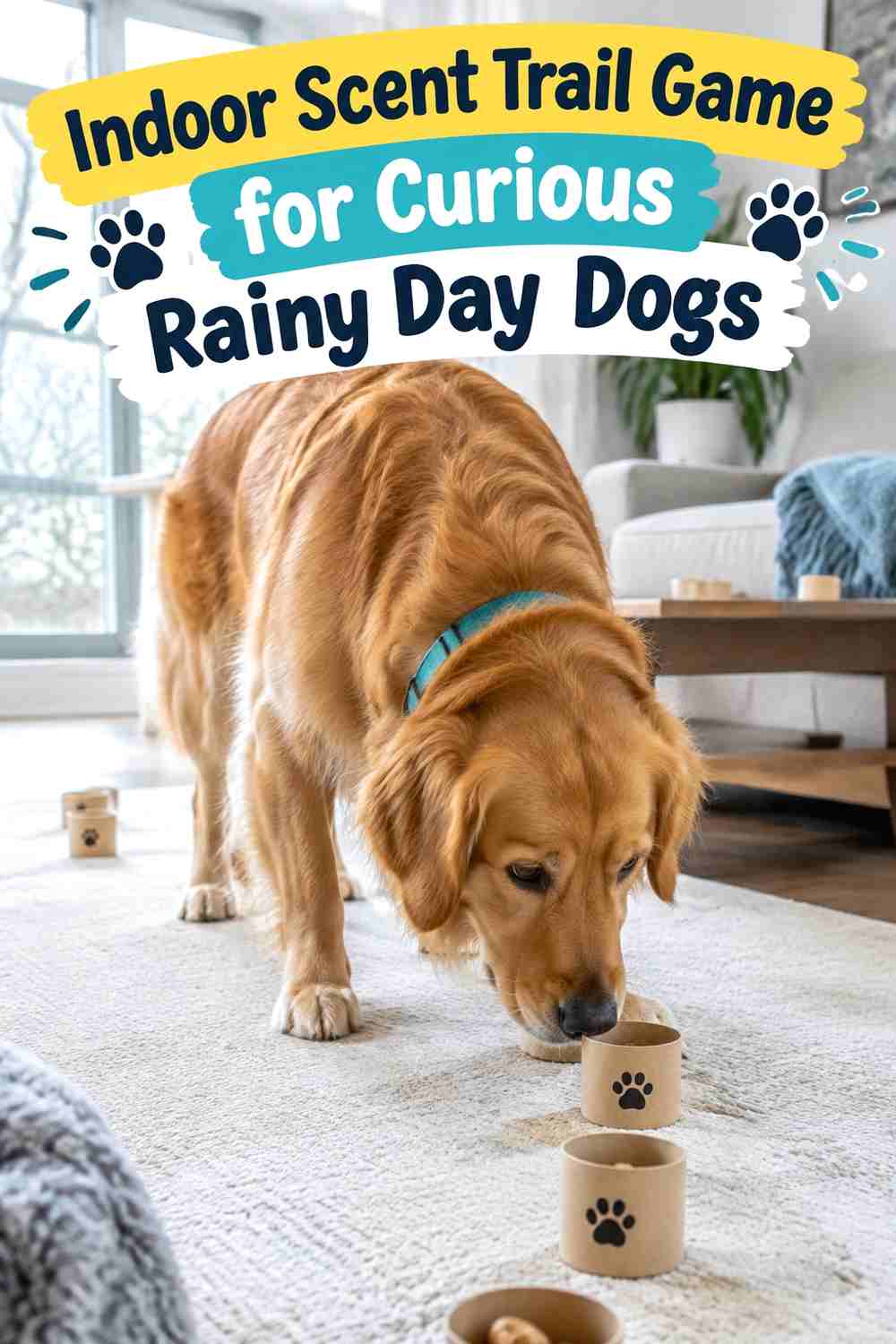
An indoor scent trail game encourages curious dogs to follow a simple route through the home using their nose. Place a few suitable treats or pieces of regular food in a short line across one room, making the first several easy to see and smell. Lead the trail around a safe furniture edge or toward a final toy once your dog understands the idea.
Avoid hiding food near electrical cords, cleaning supplies, houseplants, trash bins, or tight spaces where you do not want your dog searching. Increase the challenge by spacing rewards farther apart or changing the route rather than adding large quantities. Keep the first trails short enough that your dog reaches the end successfully and can clearly understand what the activity is asking them to do.
Pro Tip
Use familiar rooms first. Once your dog understands the game, an occasional turn into an adjoining room can make the trail feel new without making it confusing.
15. Find The Toy Search Game For Rainy Day Dogs
You May Also Like




A find-the-toy search game turns one familiar dog toy into a rainy-day indoor challenge without using food for every round. Start by showing your dog a favorite toy, then place it somewhere obvious a short distance away and encourage them to find it. Once the game makes sense, use slightly less visible locations around the same room.
Choose safe hiding places at floor level rather than putting toys behind unstable furniture or somewhere your dog must climb. Keep doors to unsuitable areas closed so the search stays controlled. If your dog loses interest, make the next hide easier rather than repeatedly directing them around the room. Rotating which toy becomes the search target can also change the game without adding more equipment.
Why It Works
The activity combines movement, searching, and interaction while allowing owners to adjust difficulty simply by changing how visible the toy is.
How to Choose the Right Idea
Match the activity to what your dog already enjoys doing. Dogs that rely heavily on their nose may prefer scent trails, snuffle mats, towel puzzles, or treasure hunts. Dogs that enjoy owner interaction may respond better to tug, hide-and-seek, training, or find-the-toy games. Active dogs can use a clear hallway fetch lane or simple obstacle course when the indoor surface provides reliable traction.
Space and cleanup matter too. Cup games and training sessions suit compact homes, while cardboard activities need more cleanup space. Consider age, body size, confidence, chewing habits, and how easily your dog becomes excited indoors.
Rotate activities instead of trying to use all 15 in one day. Keep setups simple, supervise cardboard, fabric, food puzzles, and chewable materials where relevant, and stop or adjust an activity if your dog becomes frustrated, starts swallowing pieces, or cannot move comfortably.
Final Thoughts
Rainy-day dog activities work best when they offer several different experiences rather than trying to replace every outdoor routine with nonstop indoor movement. Sniffing, searching, training, interactive play, and quiet observation can all contribute useful variety.
Pick two or three activities that suit your dog and your available space, then rotate them as needed. A simple game your dog understands and enjoys is usually more useful than a complicated setup that takes longer to prepare than to use.
FAQs
1. What are easy rainy day activities for dogs in small homes?
Towel puzzles, shell games, simple training, find-the-toy searches, and short scent trails all require relatively little floor space and can be adjusted to suit compact rooms.
2. How can I keep my dog occupied indoors without constant treats?
Try hide-and-seek, tug, toy searches, toy rotation, calm window watching, or familiar training using whichever rewards already fit your routine. Not every indoor activity needs food.
3. Can senior dogs enjoy rainy day indoor activities?
Yes, but choose setups that match the individual dog’s comfort and mobility. Ground-level sniffing, easy searches, quiet training, and comfortable observation areas may be more suitable than fast games or obstacles.
4. What should I do if my dog gets frustrated with a puzzle?
Make the activity easier by exposing more of the reward, reducing the number of steps, or demonstrating the basic action. If frustration continues, switch to a different activity rather than making the puzzle harder.
5. How can I reduce mess during indoor dog activities?
Choose one easy-to-clean play area, use trays or mats under food puzzles, keep cardboard activities contained, and put toys or materials away immediately after each session.
CTA
Save these rainy day dog activity ideas for the next wet forecast and rotate a few favorites to keep indoor days more interesting.
