Give an older dog more variety with gentle sniffing, searching, problem-solving, training, and exploration activities that are easy to adjust around their comfort.
Save This Idea on Pinterest
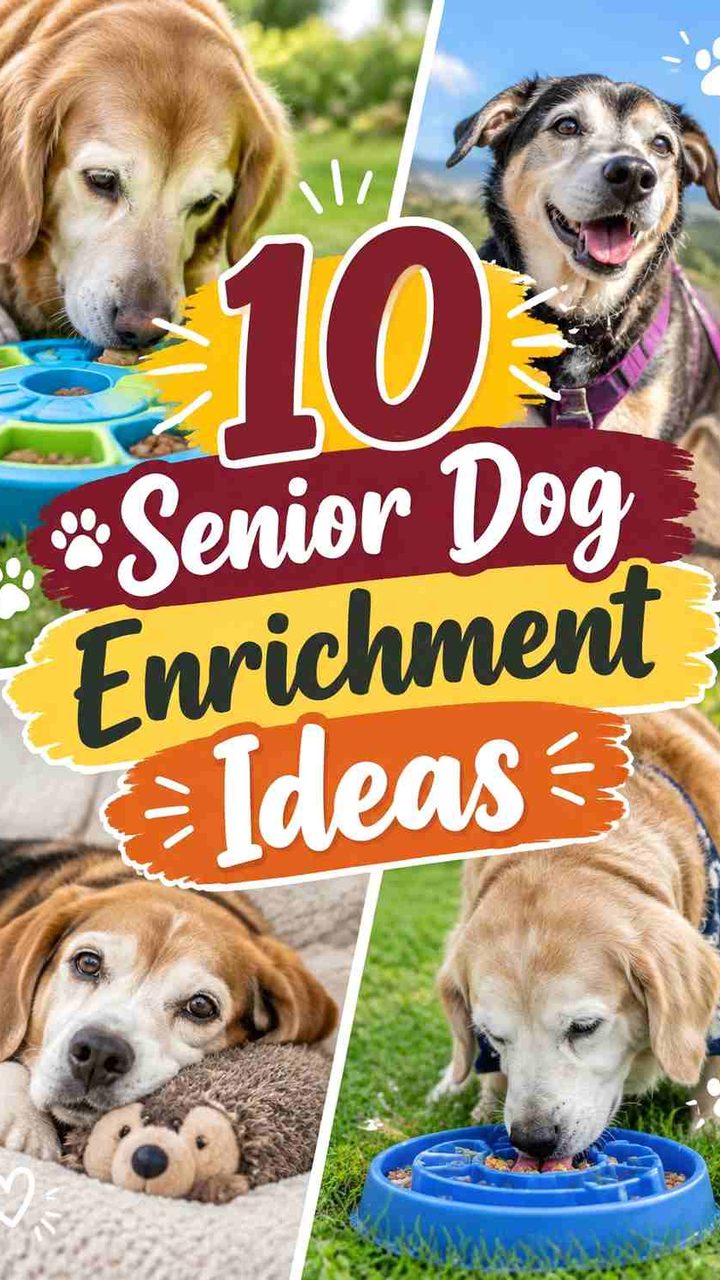
10 Senior Dog Enrichment Ideas
Save to PinterestSenior dog enrichment works best when the activity fits the individual dog rather than assuming every older pet needs the same slower routine. Some senior dogs remain enthusiastic about searching and training, while others prefer shorter activities, predictable layouts, easy access, or more time between rounds.
These 10 ideas focus on ground-level setups, sniffing, simple choices, familiar toys, and manageable movement. You can simplify or expand each one depending on your dog’s interest, confidence, energy, and mobility. If your dog develops sudden behavior changes, pain, unusual fatigue, or new mobility problems, discuss those changes with a veterinarian rather than treating enrichment as a solution.
Quick List
- Easy Snuffle Mat Search for Senior Dogs at Home
- Gentle Towel Treat Puzzle for Senior Dog Enrichment
- Low-Impact Indoor Scent Trail for Curious Senior Dogs
- Find-the-Toy Search Game for Senior Dogs Indoors
- Simple Cardboard Box Treasure Hunt for Senior Dogs
- Calm Hand-Target Training Game for Senior Dogs
- Easy Treat Cup Choice Game for Senior Dogs
- Gentle Backyard Sniffing Route for Senior Dog Enrichment
- Ground-Level Texture Trail for Senior Dogs at Home
- Rotating Toy Basket for Easy Senior Dog Enrichment
1. Easy Snuffle Mat Search For Senior Dogs At Home
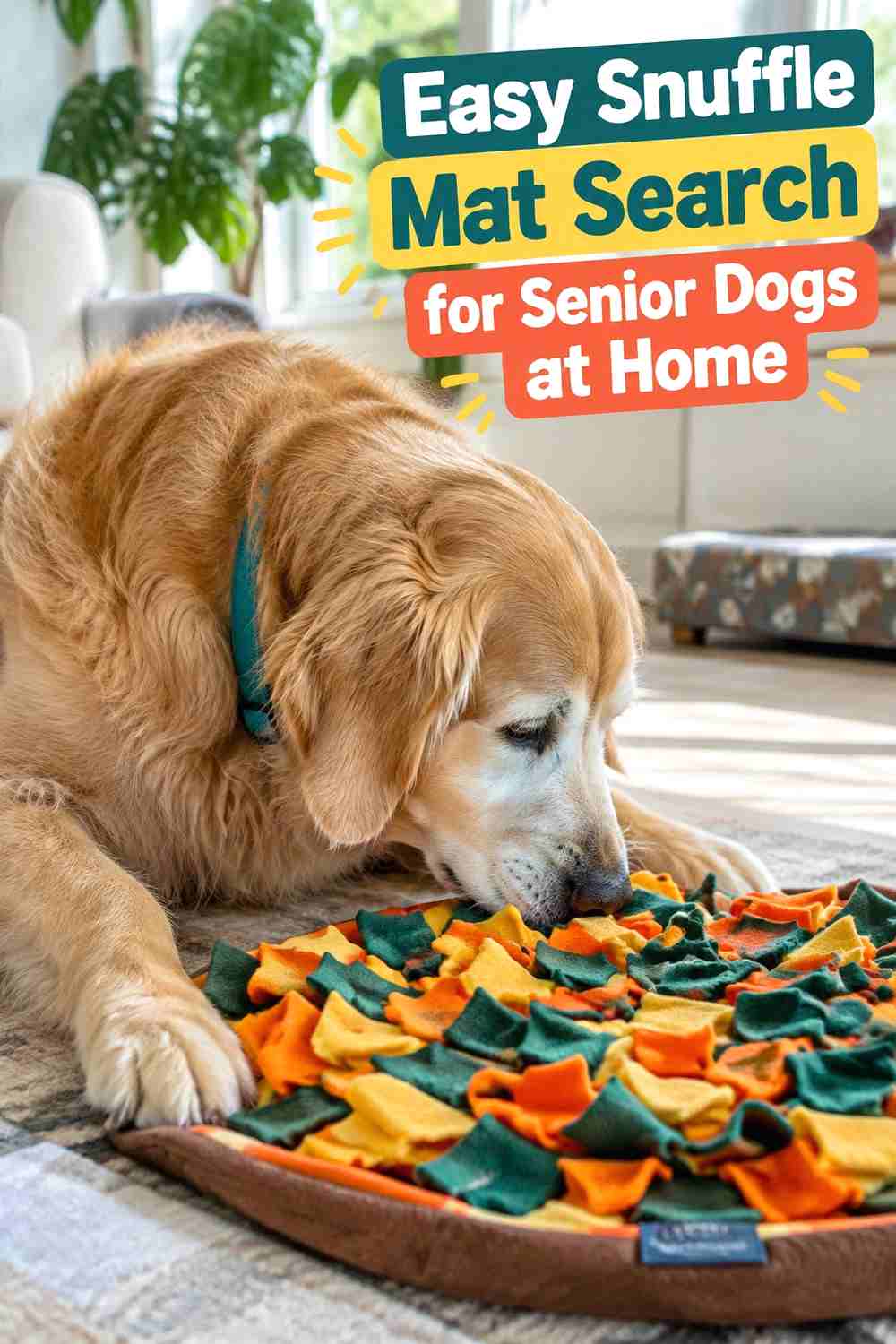
An easy snuffle mat search lets a senior dog investigate food at ground level without needing to climb, jump, or move quickly. Scatter a few suitable treats or pieces of the dog’s normal food near the tops of the fabric folds so the first search is straightforward. Place the mat on a dry, non-slip surface where your dog can approach from whichever side feels comfortable.
Keep the session simple if your dog loses interest quickly, and avoid burying rewards so deeply that searching becomes frustrating. Shake out crumbs afterward and wash the mat when needed. If your dog chews fabric or the backing instead of sniffing, remove the mat after the search rather than leaving it available unsupervised.
Best For
This suits senior dogs that still enjoy food-search activities but benefit from a compact, ground-level setup with little travel between rewards.
2. Gentle Towel Treat Puzzle For Senior Dog Enrichment

You May Also Like

A gentle towel treat puzzle uses loose fabric folds to create a simple nose-led challenge for an older dog. Lay a clean towel flat, place a few suitable treats or pieces of normal food across it, then loosely fold or roll sections so rewards remain easy to uncover. Keep the towel spread out rather than tying it into a tight knot that requires forceful pulling.
Place the setup on a non-slip floor and let your dog work from a standing or comfortable lowered position without rushing. If the puzzle seems confusing, open several folds and leave the rewards partly visible. When the activity ends, shake out crumbs and wash the towel as needed. Supervise closely if your dog is inclined to chew or swallow fabric.
Setup Notes
Use fewer, wider folds for an easier puzzle. The activity can become slightly more challenging later by overlapping sections without creating a tight bundle.
3. Low Impact Indoor Scent Trail For Curious Senior Dogs

A low-impact indoor scent trail encourages a curious senior dog to follow a short, easy route through a familiar room. Place several suitable treats or pieces of normal food in visible or lightly hidden spots along a clear pathway, keeping each stop reasonably close to the next. Use rugs or other secure flooring if smooth surfaces make walking less comfortable.
Keep the first route straight and predictable, then add a gentle turn around furniture once your dog understands the game. Avoid stairs, tight gaps, electrical cords, slippery areas, or locations that require stretching underneath furniture. The trail does not need to cover the whole house to be interesting; changing the route occasionally can provide variety while keeping the physical demands modest.
Space & Placement
Choose a familiar room with clear walking space and easy turnaround points. Keep bowls, clutter, and moving household traffic away from the search route.
4. Find The Toy Search Game For Senior Dogs Indoors
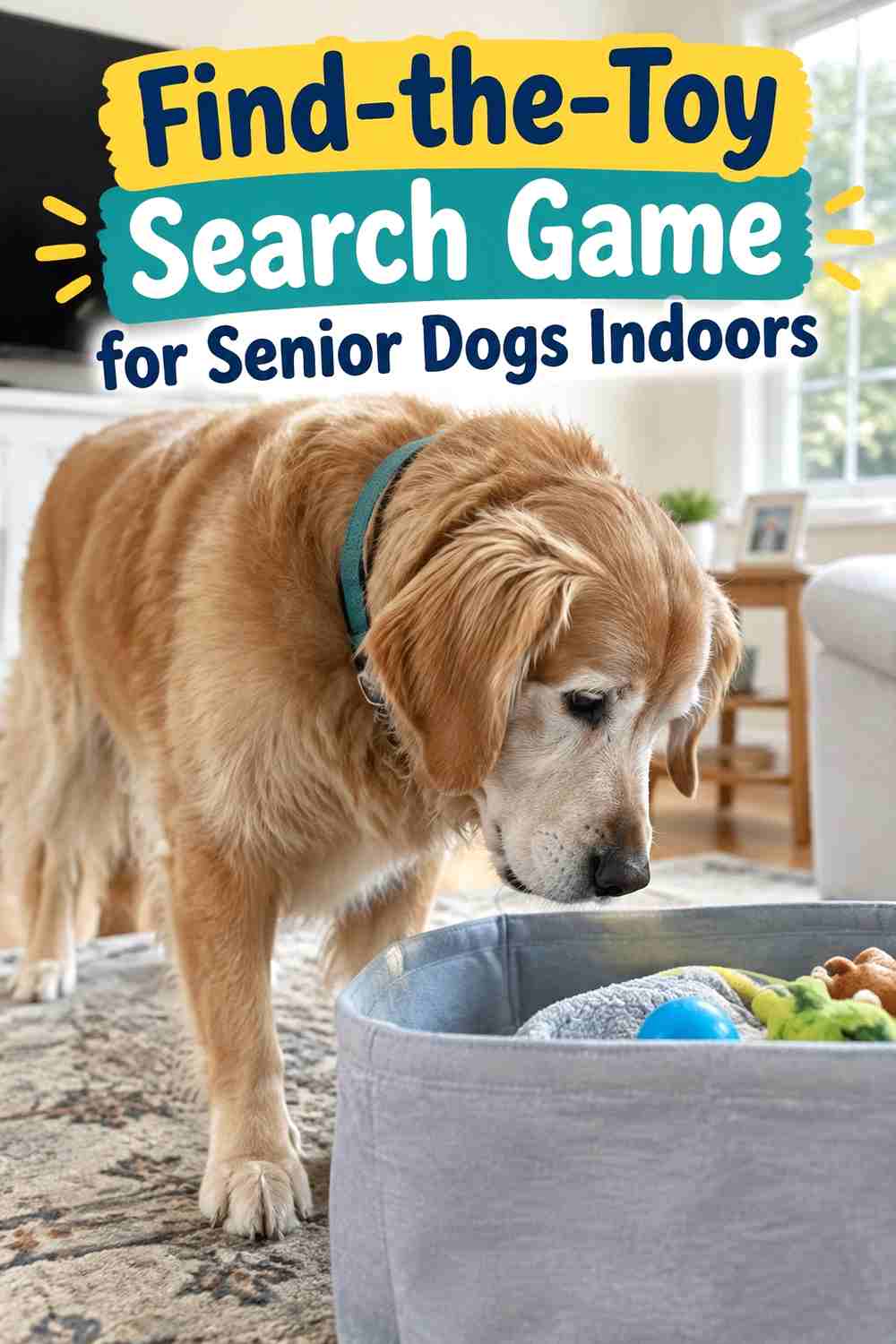
A find-the-toy game gives senior dogs a familiar object to search for without requiring food in every activity. Start with a favorite soft toy, show it to your dog, then place it somewhere obvious at floor level a few steps away. Encourage the search and let your dog investigate independently before offering help.
As the game becomes familiar, partially hide the toy beside a chair leg, near a bed, or behind an open doorway while keeping access easy. Avoid putting it under furniture that requires crawling, stretching, or difficult turning. If your dog walks away or seems confused, make the next hide much easier. The activity works especially well when the search remains short, successful, and built around a toy your dog already recognizes.
Pro Tip
Use the same search cue each round if your dog knows one, and change the hiding place rather than making the toy itself unfamiliar.
5. Simple Cardboard Box Treasure Hunt For Senior Dogs
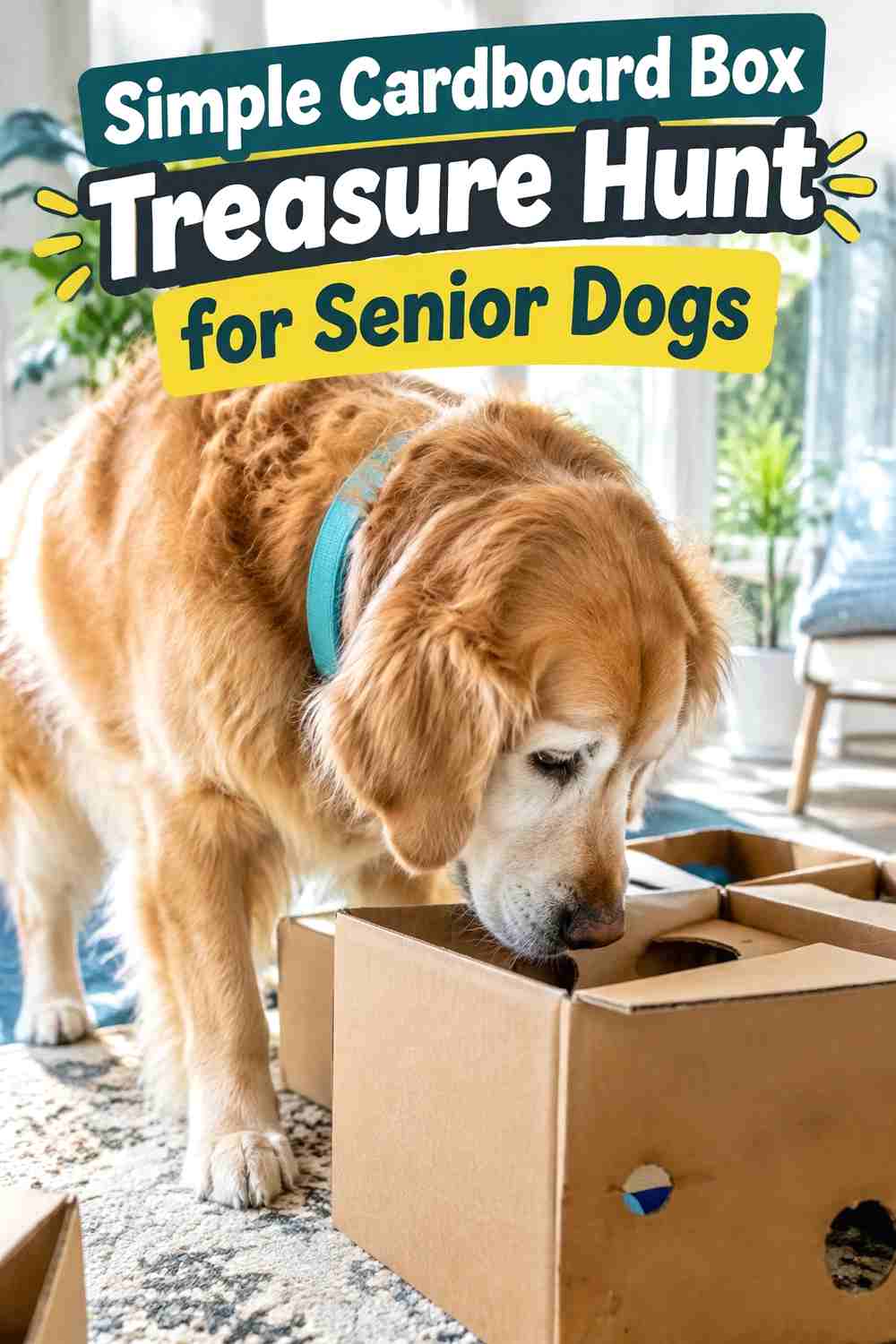
A simple cardboard box treasure hunt creates a low-entry sniffing game using a shallow, open container. Choose a clean box with tape, staples, plastic, and loose labels removed, then add a few loosely crumpled sheets of plain paper. Place suitable treats where your dog can find them without climbing into the box or pushing through dense material.
A shallow setup is easier to approach from the side and can be placed on a secure floor where it will not slide. If your dog is new to box games, leave several rewards fully visible before tucking others lightly between paper folds. Remove the activity if cardboard eating replaces searching. Afterward, collect torn pieces promptly so they do not remain available for unsupervised chewing.
Cleaning Notes
Use fresh, dry cardboard and replace the box once it becomes damp, heavily crushed, dirty, or difficult for your dog to investigate comfortably.
6. Calm Hand Target Training Game For Senior Dogs
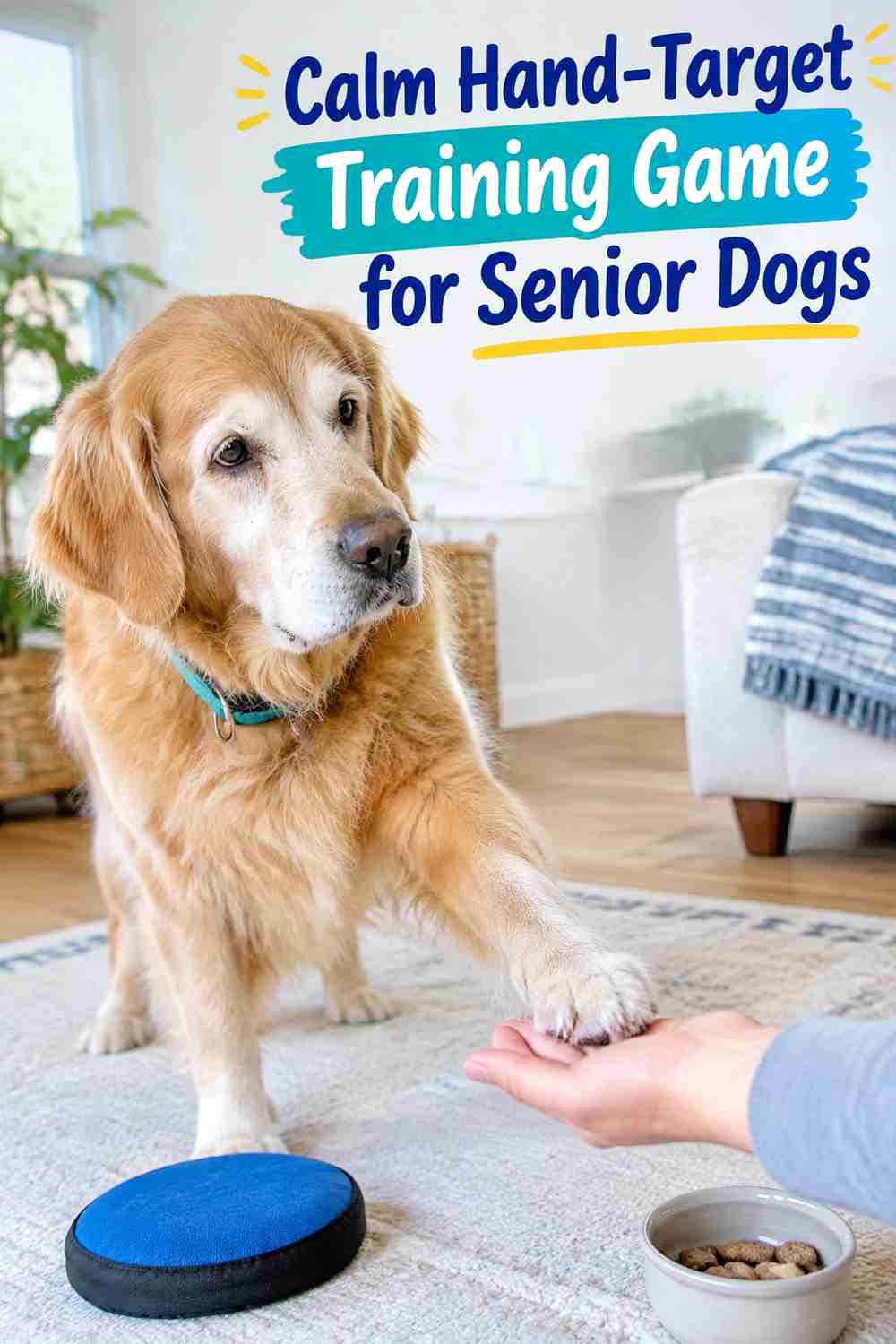
A calm hand-target game provides simple interaction without needing an obstacle course or large indoor space. Hold an open palm a short distance from your dog’s nose and reward them for gently moving toward or touching it if they already understand or comfortably learn the behavior. Keep your hand close enough that the dog does not need to stretch, jump, or make sharp turns.
Once the basic touch is easy, move your hand slightly to one side or a step away to create a small, controlled change. Keep sessions brief and stop before attention fades. The activity can be done beside a bed or mat, making it easy to adjust for dogs that prefer less movement. Avoid repeatedly asking for positions or motions that appear uncomfortable.
Why It Works
The game combines attention, choice, and owner interaction while allowing the amount of movement to stay very small and easy to modify.
7. Easy Treat Cup Choice Game For Senior Dogs

An easy treat cup choice game creates a small problem-solving activity that can be done from one spot. Place a suitable treat under one of two sturdy cups, let your dog watch where it goes, then allow them to sniff and indicate a choice. Lift the selected cup rather than requiring your dog to knock containers over.
Keep the cups on a non-slip mat and space them far enough apart that the choice is visually clear. Once your dog understands the game, switch which cup hides the reward or gently move their positions. There is no need for fast shuffling or complicated guessing. Choose cups that are too large to swallow and remove them if your dog begins chewing the material rather than investigating the hidden reward.
Best For
This activity works well for senior dogs that enjoy food puzzles but are more comfortable staying in one small, predictable area.
8. Gentle Backyard Sniffing Route For Senior Dog Enrichment
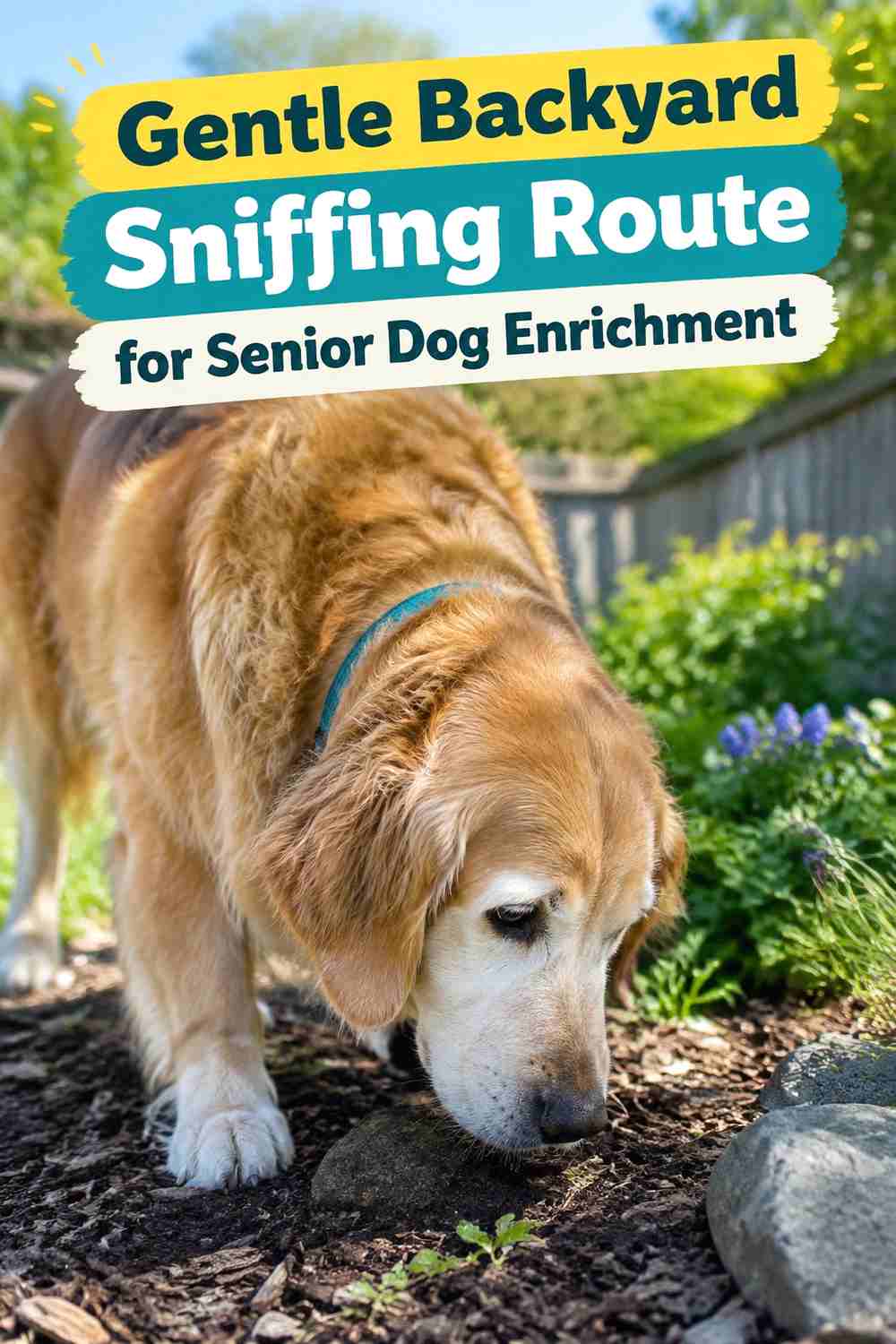
A gentle backyard sniffing route turns a familiar outdoor space into a slow exploration activity. Choose a short path across comfortable ground and let your senior dog investigate grass, safe planters, familiar corners, and other interesting scents at their own pace. The goal is not distance or speed; the route simply creates several easy places to stop and explore.
Keep the path clear of holes, sharp debris, hot surfaces, garden chemicals, and obstacles that require jumping or squeezing through. Provide shade and water when weather makes them relevant, and shorten the route if your dog chooses to stop earlier. You can occasionally place a familiar toy or a few suitable treats along the way to vary the experience without rebuilding the yard.
Comfort & Safety
Use level, secure footing where possible and let your dog choose the pace. Weather, surface conditions, and individual comfort should determine whether the outdoor session stays brief.
9. Ground Level Texture Trail For Senior Dogs At Home
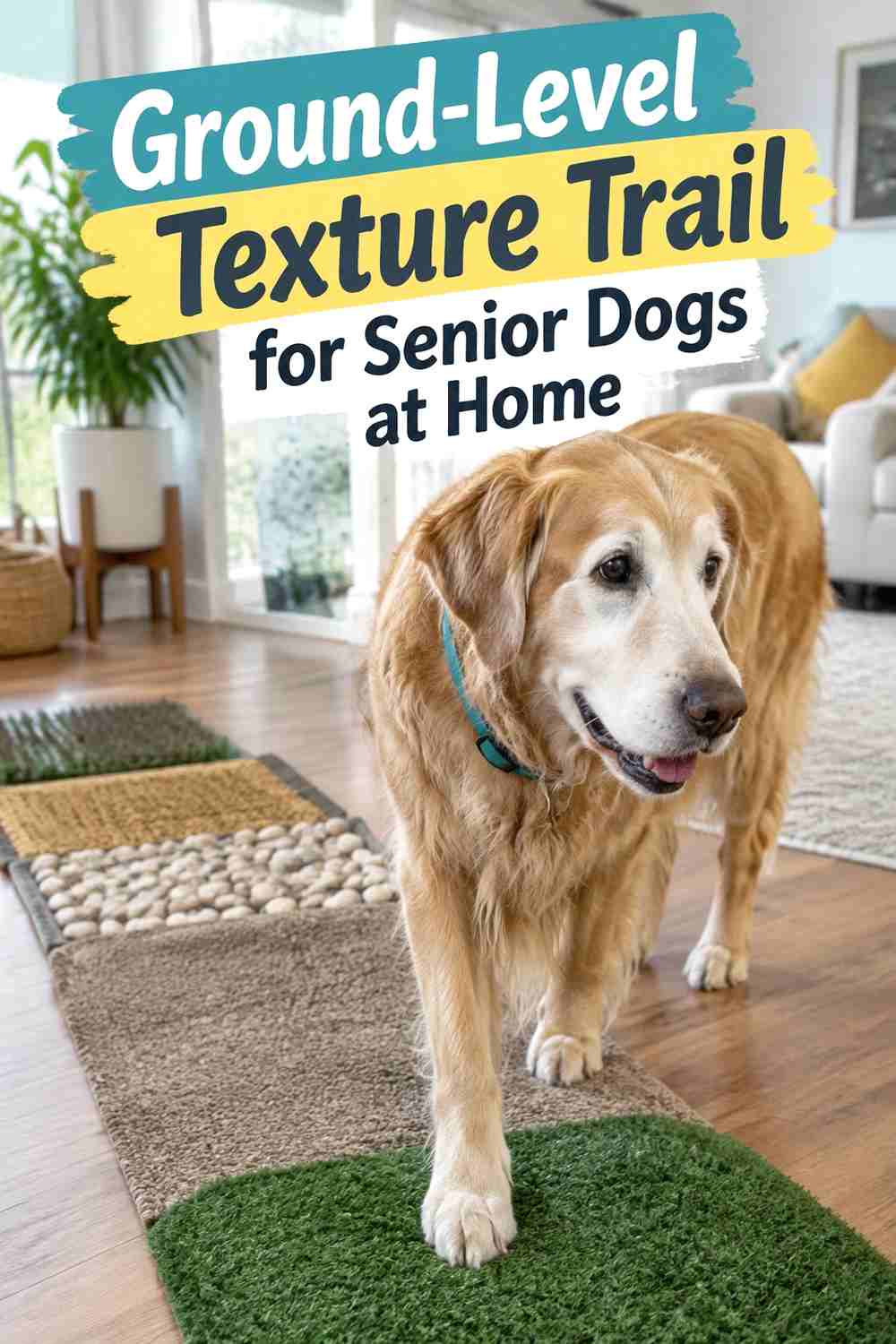
A ground-level texture trail lets a senior dog explore several stable surfaces without climbing onto raised equipment. Arrange a washable mat, low-pile rug, folded towel, and another secure flat surface in a short line with clear gaps between them. Let your dog approach each texture voluntarily and reward calm investigation if that fits your normal routine.
Every surface should lie flat and resist sliding, bunching, or curling under the paws. The purpose is gentle exploration, not forcing the dog to balance on unstable objects. Start with two familiar surfaces before adding anything new, and keep an open path beside the trail so your dog can walk around it. Remove any material that causes hesitation, slipping, or repeated attempts to avoid the area.
Setup Notes
Choose broad, flat textures rather than narrow stepping targets. Keeping the trail simple makes it easier for your dog to enter, turn around, or leave whenever they want.
10. Rotating Toy Basket For Easy Senior Dog Enrichment
You May Also Like




A rotating toy basket makes familiar enrichment easier to access without covering the floor with every toy your senior dog owns. Keep most toys stored away, then place two or three comfortable favorites in a low, stable basket or open bin that is easy to approach. Include different options, such as a soft carry toy, a gentle tug item, or a simple interactive toy your dog already understands.
Rotate the selection periodically instead of constantly introducing unfamiliar objects. This can help you notice which toys your dog still chooses and which ones are being ignored. Inspect each item before returning it to the basket and remove anything torn or damaged. Position the basket where reaching it does not require navigating stairs, tight corners, or slippery flooring.
Use & Maintenance
Keep the selection small and predictable. Wash suitable toys as needed, let them dry fully, and return only intact items to the active rotation.
How to Choose the Right Idea
Choose senior dog enrichment based on the dog in front of you, not age alone. Consider current energy, mobility, confidence, eyesight and hearing changes you already know about, chewing habits, food interest, floor traction, and how long your dog comfortably stays engaged.
Dogs that enjoy sniffing may prefer a snuffle mat, scent trail, backyard route, or treasure hunt. Dogs that still seek interaction may enjoy hand targeting or find-the-toy games, while dogs that prefer familiar routines may respond better to a simple rotating toy basket.
Keep activities easy to enter and easy to leave. Ground-level setups, stable surfaces, short routes, and predictable layouts can make adjustments simpler. If a dog suddenly avoids familiar movement, seems painful, or shows a notable change in behavior or mobility, veterinary guidance is more appropriate than simply changing the enrichment activity.
Final Thoughts
Senior dog enrichment does not have to be complicated or physically demanding. A short sniffing game, familiar search, simple choice activity, or easy toy rotation can add useful variety while respecting an older dog’s individual pace.
Start with one activity your dog already seems likely to enjoy, keep the first version simple, and adjust based on how willingly and comfortably they participate.
FAQs
1. How long should a senior dog enrichment activity last?
There is no single ideal length for every older dog. Keep the activity short enough that your dog remains comfortable and interested, and stop when they choose to disengage or appear tired.
2. Are food puzzles suitable for senior dogs?
They can be for some dogs when the puzzle is easy to access and not overly difficult. Use simple ground-level setups and avoid requiring forceful pawing, climbing, or prolonged frustration.
3. What enrichment works for senior dogs with limited mobility?
Low-movement options such as easy sniffing games, hand targeting, simple cup choices, toy searches in one room, or a rotating toy basket may be easier to adapt.
4. How can I make enrichment easier for an older dog?
Reduce the search area, keep rewards visible, use familiar objects, provide secure footing, remove unnecessary obstacles, and keep everything at ground level when practical.
5. Should enrichment replace walks for senior dogs?
Enrichment and outdoor routines serve different purposes. Adjust walks and activities to the individual dog, weather, and comfort, and seek veterinary advice when mobility or health concerns affect normal routines.
CTA
Save these senior dog enrichment ideas and try one gentle, easy-to-adjust activity that fits your dog’s favorite way to explore.
