Turn a small apartment into a more interesting cat-friendly space with simple climbing, hunting, hiding, window-watching, and interactive play setups.
Save This Idea on Pinterest

12 Apartment Cat Enrichment Ideas for Small Spaces
Save to PinterestApartment cats can enjoy plenty of enrichment without a large home, dedicated cat room, or complicated permanent installations. The key is using the space you already have in different ways, including windows, floor areas, quiet corners, hallways, and stable vertical surfaces.
These ideas cover active play, observation, food puzzles, climbing, hiding, sensory exploration, and toy rotation. Compare each option with your cat’s age, confidence, mobility, play style, and available apartment space, and keep cords, unstable furniture, small swallowable objects, and unsecured windows away from enrichment areas.
Quick List
- Cozy Window Perch Bird-Watching Spot for Apartment Cats
- Compact Cat Tree Climbing Zone for Small Apartments
- Cardboard Box Maze for Curious Indoor Apartment Cats
- Easy Food Puzzle Station for Apartment Cat Enrichment
- Rotating Toy Basket Setup for Bored Apartment Cats
- Paper Bag Hide-and-Pounce Game for Indoor Apartment Cats
- Hallway Chase Route for Active Cats in Apartments
- Quiet Covered Hideaway Nook for Shy Apartment Cats
- Low Furniture Climbing Route for Confident Apartment Cats
- DIY Crinkle Box Sensory Activity for Curious Apartment Cats
- Interactive Wand Play Corner for Energetic Apartment Cats
- Multi-Zone Enrichment Corner for Small Apartment Cat Homes
1. Cozy Window Perch Bird Watching Spot For Apartment Cats

A cozy window perch gives an apartment cat a compact observation station without using much floor space. Choose a broad, stable sill, securely installed perch, or sturdy piece of cat furniture positioned beside a safely closed or secured window. Add a thin non-slip cushion so your cat can sit, stretch, or nap while watching birds, pedestrians, leaves, or changing daylight outside. Make sure there is an easy route up and down rather than requiring an awkward leap from distant furniture. The perch should stay stable when your cat turns around or pushes against it. Check for excessive drafts or intense direct sun, and keep blind cords and dangling window coverings away from the area.
Space & Placement
A window overlooking normal outdoor movement can provide visual variety even when the apartment itself is quiet.
Comfort & Safety
Secure the window or screen appropriately and make sure the resting surface offers enough traction for comfortable movement.
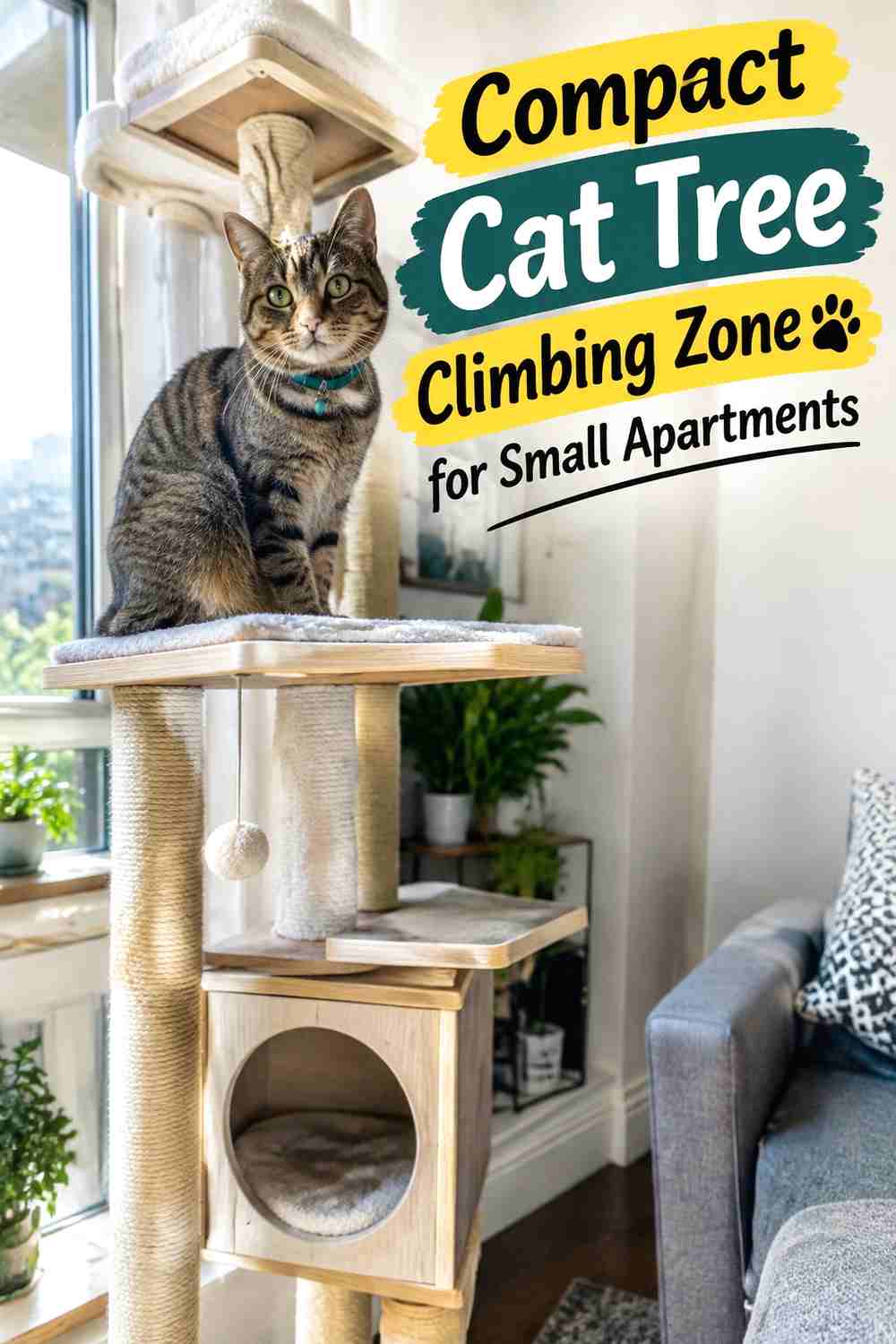
2. Compact Cat Tree Climbing Zone For Small Apartments
You May Also Like


A compact cat tree creates vertical enrichment while keeping most of the apartment floor available for people and furniture. Look for a stable design with several usable levels rather than many tiny platforms that are difficult for your cat to turn around on. Position it near a wall or window where climbing leads to an interesting view, but leave enough surrounding clearance for safe jumping and landing. The base should remain steady when your cat moves quickly between levels. A scratching surface, broad resting platform, and one sheltered area can make the same structure serve several purposes without adding more separate items to the room. Vacuum fur regularly and check posts, fabric, and connections for wear.
Best For
This setup works well for cats that naturally seek higher resting places or regularly climb ordinary furniture.
Use & Maintenance
Tighten loose components when needed and replace damaged scratching material before exposed fasteners or unstable sections become a problem.
3. Cardboard Box Maze For Curious Indoor Apartment Cats

A cardboard box maze turns inexpensive household packaging into a temporary exploration area for a curious apartment cat. Arrange several clean boxes on the floor with wide entrances facing different directions, creating short tunnels, peekaboo openings, and alternate routes rather than stacking them into an unstable tower. Leave some boxes open so your cat can choose between enclosed and exposed spaces. A familiar toy can be moved past an opening to add a hunting element without filling the maze with extra objects. Remove staples, loose tape, plastic labels, and torn cardboard first. Because the layout is temporary, you can flatten the boxes after play and create a different arrangement another day.
Setup Notes
Keep the maze low and stable, with more than one clear exit so your cat never feels trapped inside the arrangement.
Cleaning Notes
Recycle boxes once they become damp, crushed, heavily shredded, or covered with loose pieces.
4. Easy Food Puzzle Station For Apartment Cat Enrichment

An easy food puzzle station creates focused enrichment in a very small footprint, making it practical for apartments where open play space is limited. Place one suitable puzzle feeder, treat-search toy, or simple food-search mat on a washable, non-slip surface away from litter and busy walkways. Start with food easy to reach so your cat understands the activity before you make the search more challenging. Use part of your cat’s normal food when appropriate rather than automatically adding extra snacks. Some cats prefer rolling puzzles while others enjoy searching through soft surfaces, so observe which style keeps your cat engaged without frustration. Pick up the puzzle afterward and remove leftover crumbs.
Best For
This setup can suit food-motivated cats that enjoy sniffing, pawing, rolling, or investigating small compartments.
Cleaning Notes
Clean food-contact surfaces frequently and allow washable puzzle materials to dry fully before the next use.
5. Rotating Toy Basket Setup For Bored Apartment Cats

A rotating toy basket keeps an apartment cat’s play area organized while preventing every toy from becoming part of the permanent floor clutter. Store most toys in a closed or inaccessible container and leave only a few suitable options available at one time. Mix play styles when possible, such as a soft batting toy, a lightweight chase toy, and one sturdy object your cat can wrestle with. Swap several items periodically instead of purchasing something new whenever interest drops. The basket itself should stay outside your cat’s reach if it has handles, loose woven pieces, or materials they like to chew. Inspect toys during each rotation so worn parts are noticed before they detach.
Use & Maintenance
Retire toys with loose stuffing, frayed cords, cracked pieces, or small attachments instead of returning them to the rotation.
Pro Tip
Change only part of the selection at once so your cat still has familiar favorites alongside less recently seen toys.
6. Paper Bag Hide And Pounce Game For Indoor Apartment Cats

A paper bag hide-and-pounce game creates a temporary hunting station that takes almost no apartment space to store. Use a plain paper shopping bag with the handles completely removed, place it on its side, and leave the opening unobstructed. Some cats enjoy sitting inside while watching a toy move past the entrance, while others prefer batting the bag or investigating the crinkling sound. Move a supervised wand or paper ball outside the bag to encourage stalking and pouncing without reaching directly into your cat’s hiding spot. Avoid plastic bags and discard the paper bag when it becomes heavily shredded. Cats that become uneasy around rustling sounds may prefer a quiet cardboard box instead.
Best For
This idea can appeal to cats that naturally hide before pouncing on toys or enjoy investigating enclosed floor-level spaces.
Comfort & Safety
Remove handles before play and supervise cats that tear or chew paper so loose pieces are not swallowed.
7. Hallway Chase Route For Active Cats In Apartments

A hallway chase route turns a narrow apartment space into a simple interactive play lane for an active cat. Clear shoes, bags, cords, slippery rugs, and other obstacles, then roll a lightweight cat-safe toy along the floor or guide a wand toy in short controlled movements. A hallway can provide useful distance without requiring a large living room, but the game should remain predictable enough that your cat can stop or change direction without crashing into furniture. Keep doors secured so they cannot suddenly swing into the path. Alternate quick movement with pauses and successful catches rather than making your cat chase continuously. Store wand toys after use instead of leaving strings accessible.
Space & Placement
Choose the clearest hallway section and leave both ends free from clutter so your cat has room to slow down and turn.
Pro Tip
Rolling toys along the floor can create satisfying chase movement without encouraging unnecessary high jumping in a narrow space.
8. Quiet Covered Hideaway Nook For Shy Apartment Cats

A quiet covered hideaway nook gives a shy apartment cat a predictable retreat away from doors, visitors, appliances, and other high-traffic areas. Use a covered cat bed, open carrier with comfortable bedding, or sturdy box placed in a calm corner where your cat can enter and leave freely. Keep the opening facing into the room rather than directly toward a busy walkway so the space feels sheltered without becoming isolated. Avoid repeatedly reaching inside or pulling your cat out, because the usefulness of a hideaway depends on the cat being able to control access. A familiar washable mat can make the area more inviting, while keeping decorations and unnecessary loose objects out of the nook simplifies cleaning.
Space & Placement
Bedroom corners, quiet home offices, or sheltered living-room edges often work better than areas beside frequently opened doors.
Best For
This setup may suit cautious cats that prefer observing household activity from a protected position before joining in.
9. Low Furniture Climbing Route For Confident Apartment Cats
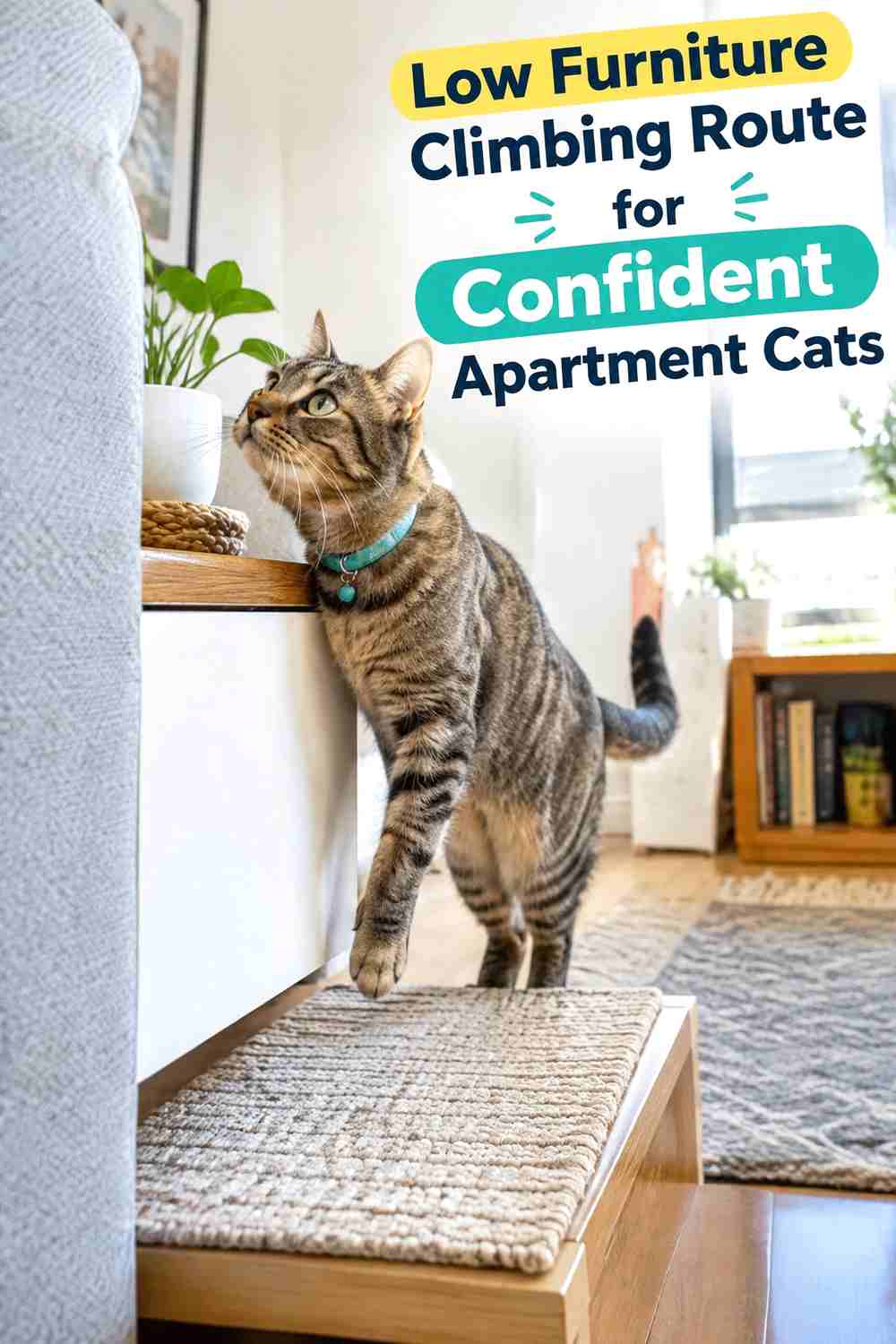
A low furniture climbing route uses stable apartment furniture to create several connected observation levels without installing permanent wall shelves. Position a sturdy bench, low cat tree, or broad ottoman near another secure surface so a confident cat can step or make short jumps between them. Keep each landing area clear and add non-slip material to smooth surfaces where needed. The route should never depend on lightweight chairs, folding furniture, stacked boxes, or anything likely to shift under the cat’s weight. This idea works best when it improves access to an interesting destination such as a window or favorite resting place. Keep fragile decorations and electrical items completely out of the climbing path.
Setup Notes
Plan the route around wide, stable landing areas rather than trying to create as many levels as possible.
Pet Type & Life Stage
Confident adult cats may enjoy this layout, while kittens, seniors, or cats with reduced mobility may need lower and simpler access.
10. Diy Crinkle Box Sensory Activity For Curious Apartment Cats
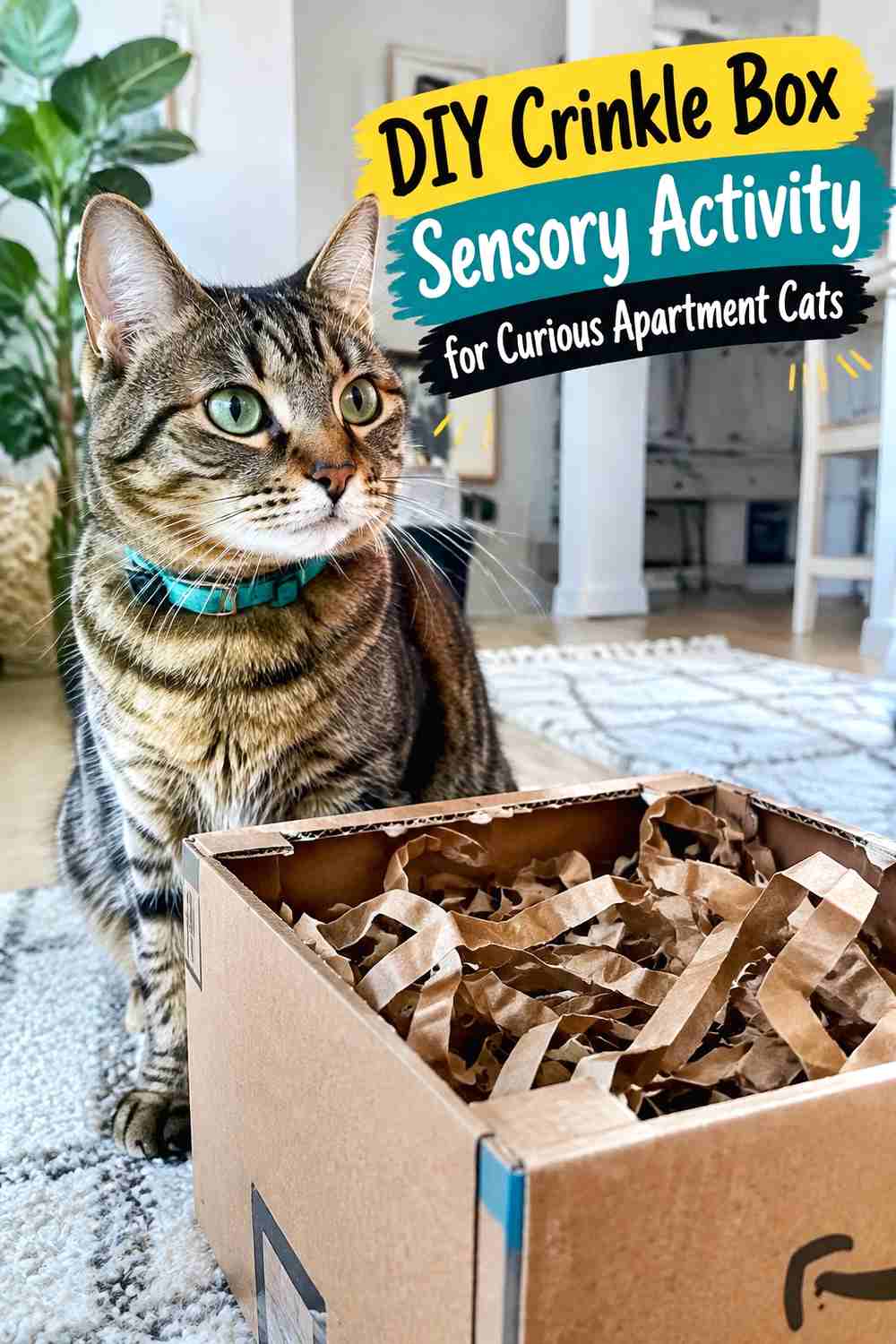
A DIY crinkle box sensory activity combines sound, texture, and searching in one compact floor-level setup. Place several loose sheets of clean kraft packing paper inside a shallow cardboard box, leaving enough open space for your cat to step, dig, and move the paper around. Add a familiar toy beneath one loose fold if your cat enjoys searching, but avoid tiny objects or complicated hidden pieces. Some cats become interested in the rustling immediately, while others may find it too noisy, so let your cat approach voluntarily. Use plain paper rather than plastic packaging, and supervise cats that shred or eat paper. Flatten or recycle the box when the setup is no longer in use.
Best For
This can suit curious cats that enjoy pawing through paper, investigating boxes, or responding to gentle rustling sounds.
Use & Maintenance
Replace damp or badly shredded paper and keep tape, foam packaging, plastic film, and staples completely out of the box.
11. Interactive Wand Play Corner For Energetic Apartment Cats

An interactive wand play corner gives an energetic apartment cat a defined place for stalking, chasing, and catching without requiring a huge room. Choose an uncluttered section of floor with good traction and move a suitable wand toy around furniture edges, across the floor, and briefly out of sight. Vary the pace with slow stalking periods, short bursts of movement, pauses, and successful catches so the game does not become one endless chase. Keep jumps controlled and avoid directing your cat toward shelves, glass tables, or slippery surfaces. Because strings, ribbons, and attached pieces can create problems when left unattended, store the wand securely after each session and inspect it regularly for fraying or loose parts.
Space & Placement
Even a small living-room corner can work when the floor is clear and your cat has room to turn and pounce comfortably.
Use & Maintenance
Check strings, attachments, and handles before play and retire damaged wand toys rather than attempting temporary fixes with loose tape or knots.
12. Multi Zone Enrichment Corner For Small Apartment Cat Homes
You May Also Like



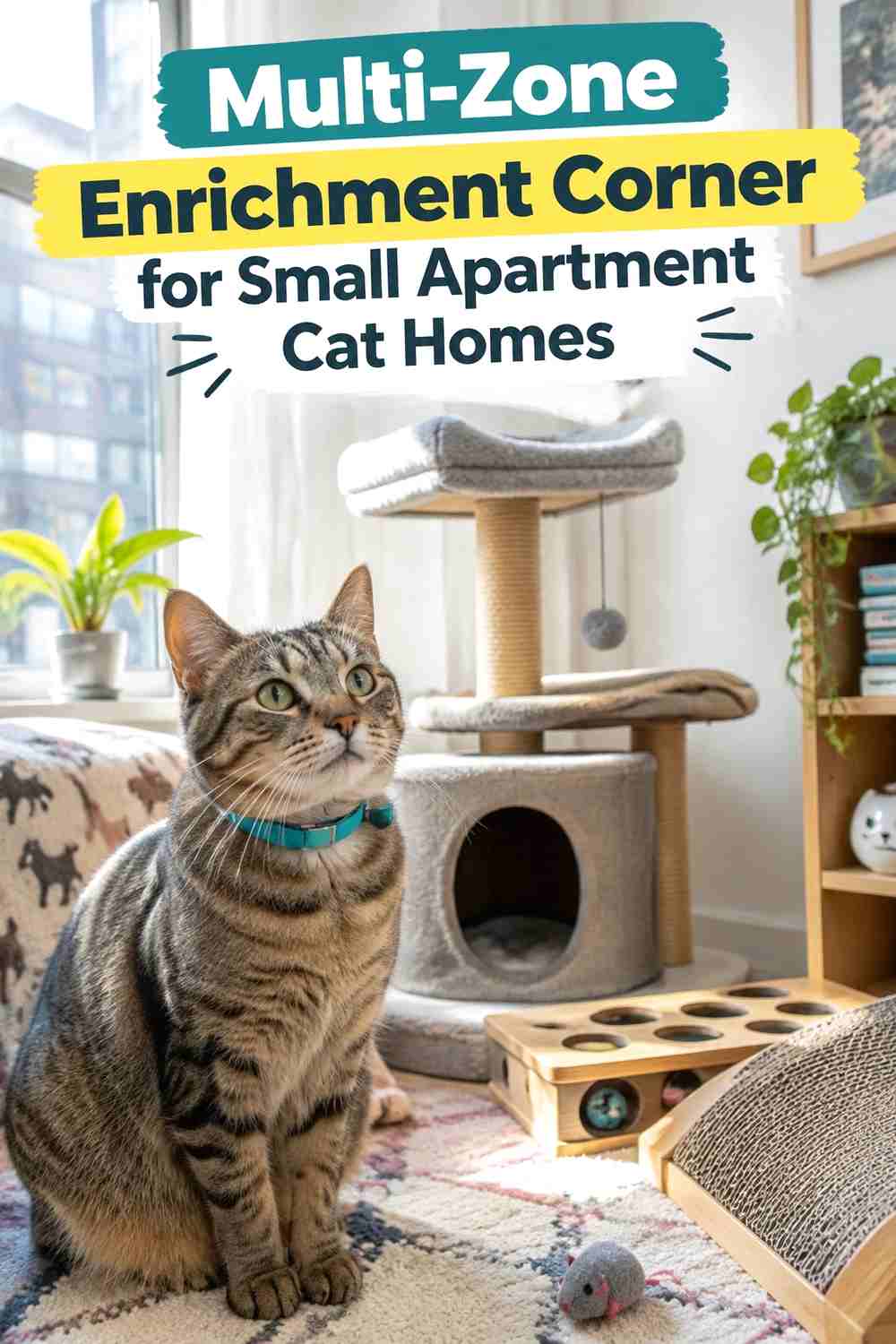
A multi-zone enrichment corner combines several compact activities without spreading cat supplies throughout the apartment. Use one area for vertical access, another small floor section for toys or a puzzle, and a quiet resting spot nearby. A compact cat tree, washable mat, toy rotation basket kept out of reach, and covered bed can create distinct choices while occupying one coordinated part of the room. Leave open pathways between each zone so your cat can move naturally rather than navigating clutter. You do not need to keep every activity available simultaneously; rotate puzzles and interactive toys while leaving stable resting and climbing resources in place. This approach works best when each item has a clear purpose.
Space & Placement
Using one wall or room corner can preserve the center of a small apartment for normal household movement.
Pro Tip
Think vertically before adding more floor items. A stable climbing option can increase usable cat space without making the apartment feel crowded.
How to Choose the Right Idea
Start with the way your cat already uses your apartment. Cats that spend time looking outside may get the most value from a secure window perch, while cats that regularly climb furniture may appreciate a stable cat tree or low climbing route. Cats that stalk toys can benefit from hallway chase games or wand play, and cautious cats may prefer covered hideaways.
Apartment size matters, but available floor space is only one factor. Windows, quiet corners, vertical space, and clear hallways can all become useful enrichment areas without permanent remodeling.
Also consider age, mobility, chewing habits, cleanup, noise, owner involvement, and supervision. Choose stable, easy-to-maintain setups and rotate temporary activities rather than filling every available corner with toys.
Final Thoughts
Apartment cat enrichment is less about having a large home and more about giving your cat different ways to use the space you already have. A window, hallway, cardboard box, compact cat tree, or quiet corner can each serve a different purpose.
Start with the activity that best matches your cat’s current habits, then add variety gradually. Keeping the setup uncluttered, stable, and easy to rotate can make enrichment more practical for both your cat and your apartment.
FAQs
1. How can I enrich my cat in a very small apartment?
Use vertical space, secure window views, compact puzzle stations, hallway play, rotating toys, and quiet hiding spots. You do not need to keep every enrichment activity available at once.
2. Do apartment cats need climbing opportunities?
Many cats enjoy elevated spaces, but the setup should match the individual cat. A stable compact cat tree, broad window perch, or low furniture route can provide climbing options without requiring permanent wall installations.
3. How can I keep cat enrichment from making my apartment cluttered?
Choose a few permanent resources and rotate temporary toys or puzzles. Store unused items out of reach and use compact vertical furniture where appropriate instead of covering the floor.
4. What enrichment works well for a cat that is not very active?
Window watching, simple food puzzles, quiet hideaways, and gentle toy searches can provide interest without requiring intense running or jumping. Adjust everything to your cat’s mobility and preferences.
5. Are cardboard and paper enrichment activities safe for cats?
They can be useful for supervised play when clean and free from tape, staples, handles, plastic, and small loose pieces. Remove the setup if your cat begins swallowing shredded material.
CTA
Save your favorite apartment cat enrichment ideas and create a small rotation that fits your cat’s play style and your available space.
