Turn ordinary towels, boxes, mats, and outdoor spaces into varied sniffing activities that encourage dogs to search, explore, and work at their own pace.
Save This Idea on Pinterest
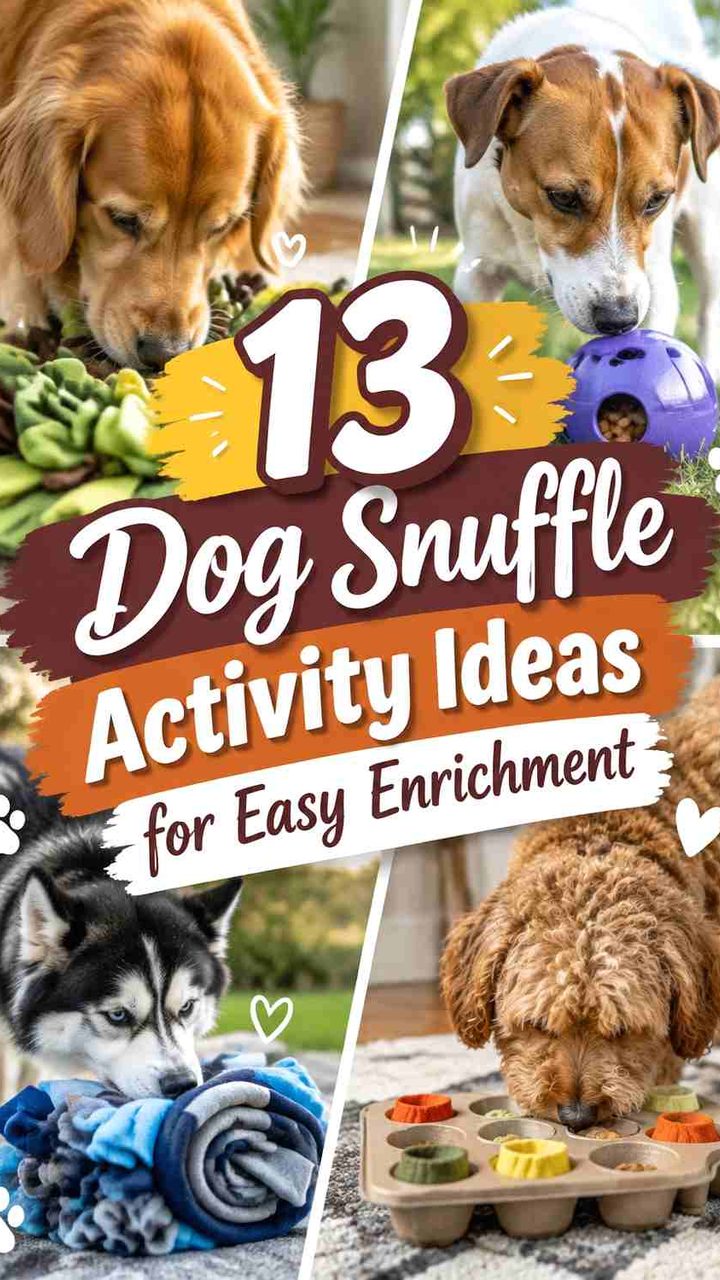
13 Dog Snuffle Activity Ideas for Easy Enrichment
Save to PinterestDog snuffle activities give dogs a simple way to use their noses while searching through different textures, containers, and spaces. The ideas below range from easy beginner searches to larger room trails and more involved puzzle-style setups.
Choose activities based on your dog’s size, confidence, play style, and experience with food-search games. Keep the first attempt easy, use part of your dog’s usual food or suitable treats where appropriate, supervise homemade materials, and simplify the search if your dog starts chewing the setup or becomes frustrated.
Quick List
- Classic Fleece Snuffle Mat Search for Food-Motivated Dogs
- Easy Rolled Towel Snuffle Game for Beginner Dogs
- Muffin Tin Snuffle Search for Curious Indoor Dogs
- Cardboard Box Snuffle Hunt for Dogs Who Love Rummaging
- Blanket Fold Snuffle Search for Easy Indoor Dog Enrichment
- Fleece Strip Basket Snuffle Activity for Small-Space Dogs
- Paper Packing Snuffle Box for Supervised Indoor Dog Play
- Snuffle Trail Around One Room for Active Indoor Dogs
- Outdoor Grass Snuffle Scatter for Dogs Who Love Sniffing
- Upside-Down Cup Snuffle Search for Curious Indoor Dogs
- Laundry Basket Snuffle Hunt with Rolled Dog Towels
- Multi-Station Snuffle Circuit for Dogs Needing More Variety
- Fabric Pocket Snuffle Board for Experienced Puzzle Dogs
1. Classic Fleece Snuffle Mat Search For Food Motivated Dogs

A classic fleece snuffle mat lets a food-motivated dog search between soft fabric strips for scattered pieces of their regular food or suitable treats. Start by placing several pieces near the top of the fleece so the search is obvious, then hide them slightly deeper once your dog understands the activity. Set the mat on a dry, non-slip floor where it cannot slide while your dog noses through it. The goal is searching rather than pulling or shredding the fleece, so supervise the first sessions closely. When the activity ends, pick up the mat instead of leaving it available as a chew toy, and shake out crumbs before storing it.
Setup Notes
Begin with loosely spaced hiding spots. Packing food deep into every section can make a first session unnecessarily difficult.
Cleaning Notes
Follow the mat’s care instructions and let it dry completely before the next use so food residue and moisture do not build up.
2. Easy Rolled Towel Snuffle Game For Beginner Dogs
You May Also Like


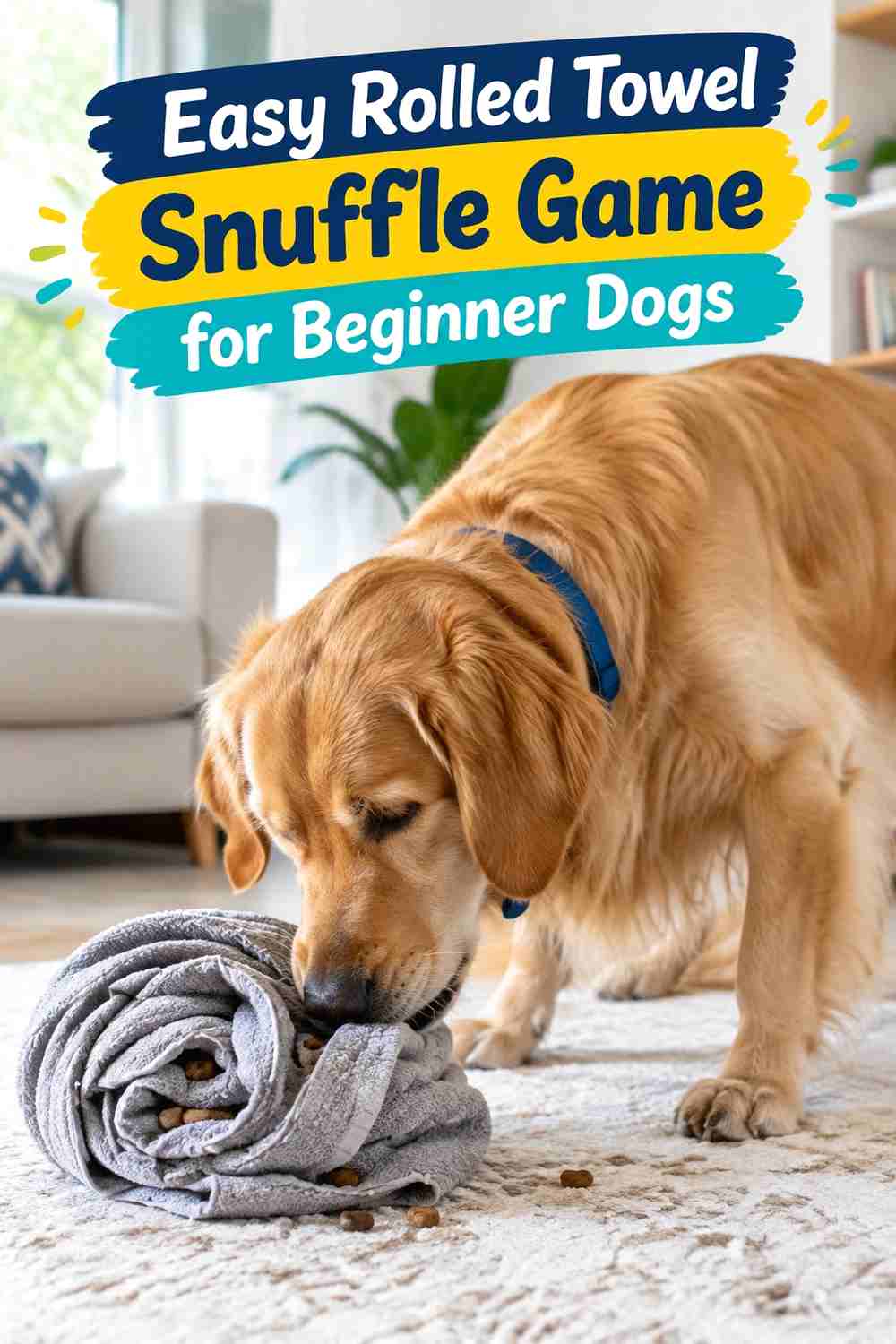
An easy rolled towel snuffle game is a simple introduction for dogs that have never tried a searching activity. Lay a clean towel flat, scatter a few pieces of regular food across it, then loosely roll the towel so some pieces remain easy to smell and reach. Encourage your dog to investigate without showing them exactly where every piece is hidden. A loose roll is important because the dog should be able to nose it open rather than struggle with a tightly wrapped bundle. Use an older towel you do not mind getting wrinkled, supervise dogs that chew fabric, and stop the activity if the towel starts being pulled apart instead of unrolled.
Best For
This setup works especially well for beginners because the difficulty can be changed simply by making the roll looser or tighter.
Use & Maintenance
Shake out crumbs afterward and wash the towel when needed. Retire it from snuffle use if seams or fabric become badly damaged.
3. Muffin Tin Snuffle Search For Curious Indoor Dogs

A muffin tin snuffle search turns an ordinary sturdy muffin pan into a small indoor scent-search station. Place a few pieces of food in several cups, then loosely cover some compartments with large soft fabric pieces that your dog can nose aside. Leave other cups uncovered during the first attempt so the purpose of the game is immediately clear. Set the tin on a non-slip mat to prevent noisy sliding across the floor, especially for dogs that push enthusiastically with their noses. Avoid tiny fabric scraps or objects that could be swallowed, and supervise the activity so the dog searches the compartments rather than picking up or chewing the pan.
Space & Placement
A kitchen or other easy-clean floor works well because scattered crumbs can be collected quickly after the search.
Pro Tip
Change which cups are covered from session to session instead of increasing difficulty by making every compartment hard to access.
4. Cardboard Box Snuffle Hunt For Dogs Who Love Rummaging
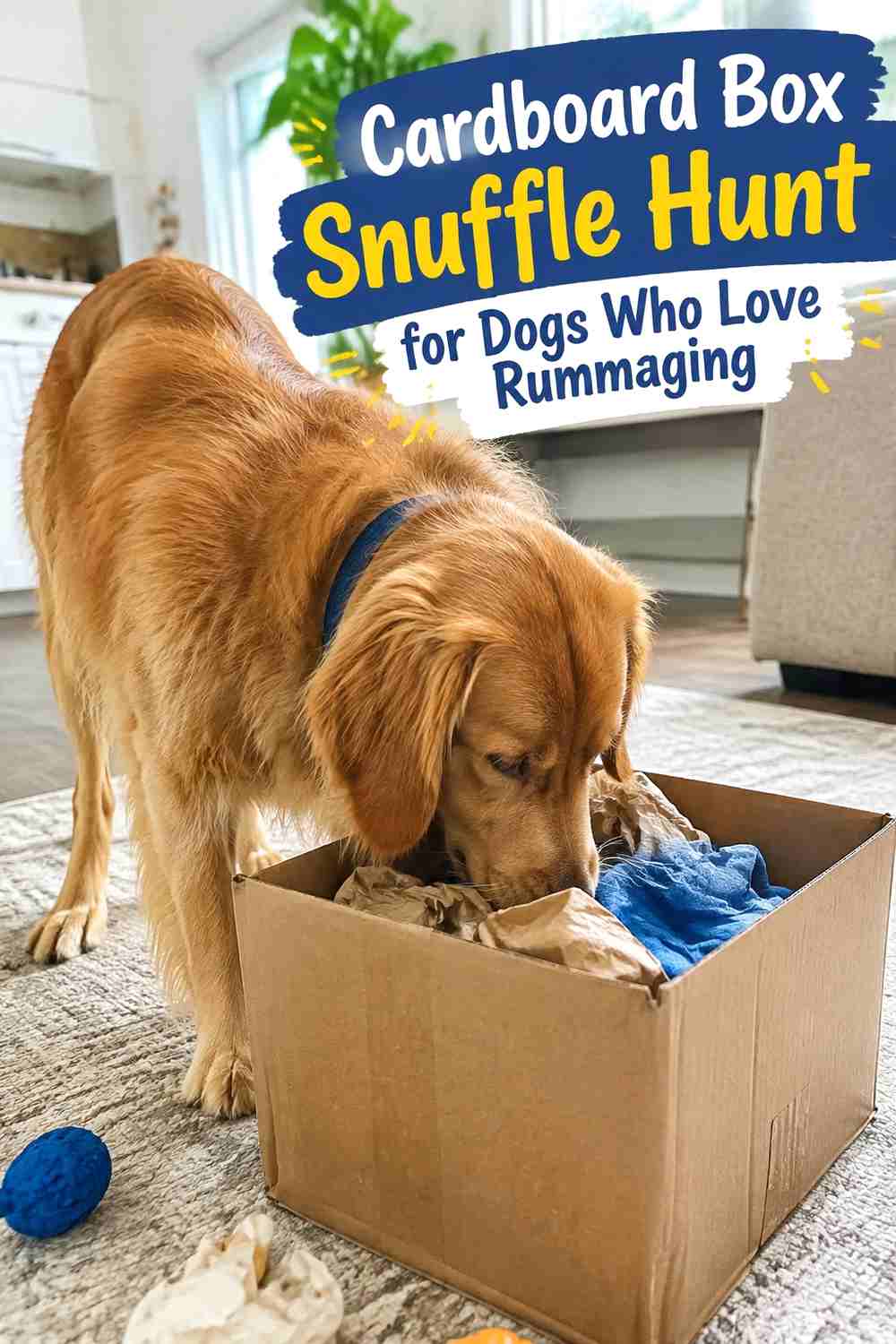
A cardboard box snuffle hunt gives dogs that enjoy rummaging a larger area to investigate with their noses. Use a clean, shallow box and loosely fill it with crumpled plain paper, cardboard tubes, or other large lightweight materials that can be moved around safely. Scatter a small amount of regular food among the layers so your dog searches through different levels rather than finding everything on top. Remove tape, staples, labels that peel easily, and damaged cardboard before beginning. Because some dogs prefer shredding boxes to searching them, keep this activity supervised and remove the setup if your dog starts swallowing paper or cardboard instead of moving it aside.
Why It Works
The loose layers create multiple scent pockets and encourage the dog to investigate different parts of the box instead of one obvious hiding place.
Cleaning Notes
Recycle damaged materials after use and replace anything damp, heavily torn, or covered with food residue.
5. Blanket Fold Snuffle Search For Easy Indoor Dog Enrichment
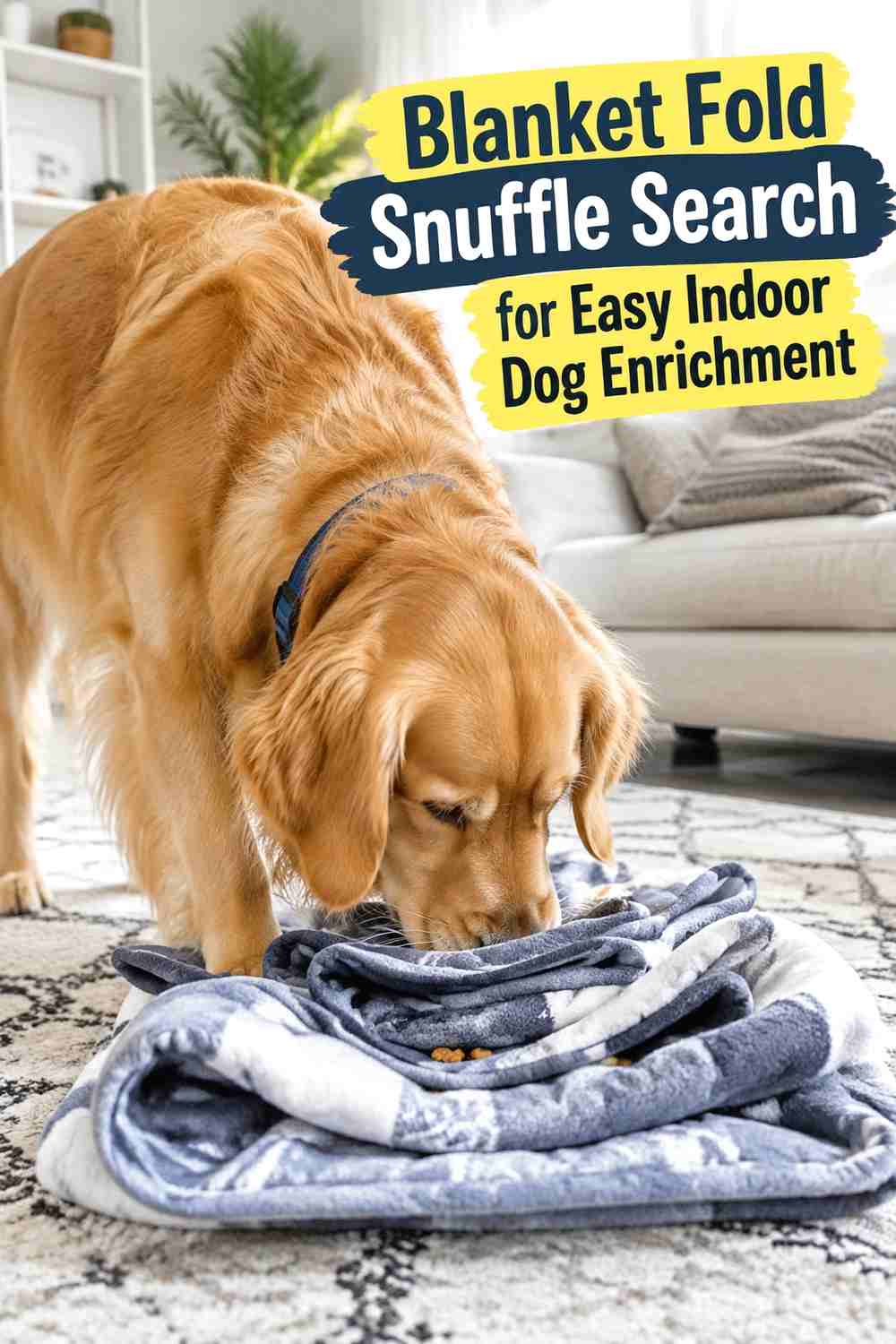
A blanket fold snuffle search creates an easy indoor activity without requiring a dedicated puzzle toy. Spread a clean blanket on the floor, place several pieces of food across the surface, and make loose folds that create simple hiding areas. Let your dog work around the blanket using their nose to open folds and locate each piece. For beginners, keep most rewards close to the surface; experienced dogs can search through slightly deeper folds. Avoid tightly tying or twisting the blanket, since the goal is accessible sniffing rather than forcing the dog to pull hard. This setup is especially convenient when you want an activity that can be folded away immediately afterward.
Best For
It suits dogs that enjoy gentle nose work but become frustrated by enclosed puzzles or complicated containers.
Use & Maintenance
Use a washable blanket and inspect it for pulled threads or torn areas before reusing it for another supervised search.
6. Fleece Strip Basket Snuffle Activity For Small Space Dogs
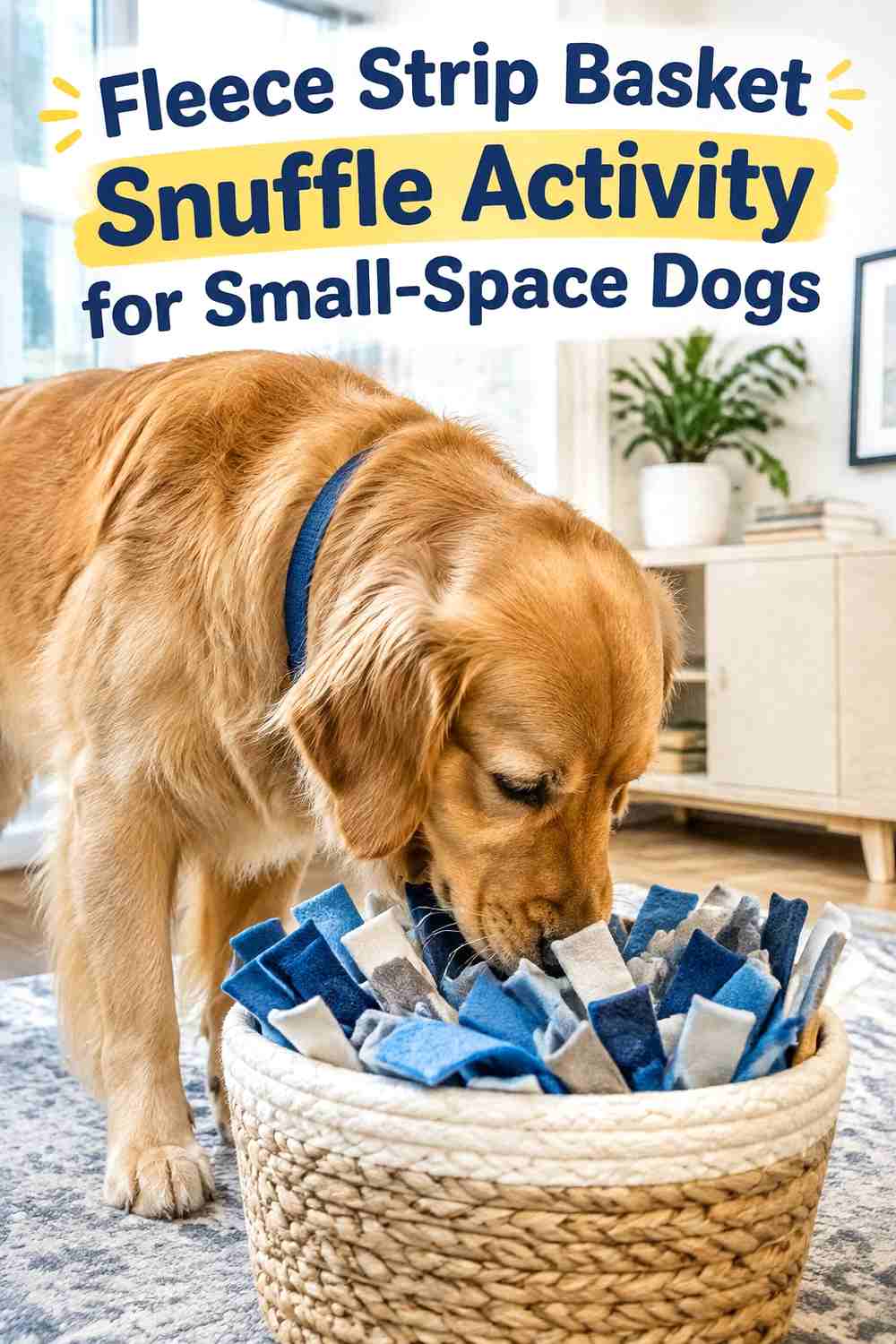
A fleece strip basket snuffle activity creates a compact searching station that fits easily into a small apartment or limited play area. Choose a stable, shallow basket without sharp edges and fill it loosely with broad fleece strips. Scatter food between different layers so your dog can nose through the fabric without needing to tip the entire container over. Keep the basket on the floor and make sure the opening gives your dog comfortable access rather than forcing their head into a cramped space. This setup can be reset quickly by fluffing the fleece and changing the hiding positions. Watch for chewing, especially around fabric edges or basket parts, and store everything after the session.
Space & Placement
Place the basket on a washable mat in a quiet corner where your dog has room to approach it from more than one side.
Cleaning Notes
Wash fleece pieces as needed and discard strips that become frayed, stretched, or small enough to create a swallowing risk.
7. Paper Packing Snuffle Box For Supervised Indoor Dog Play
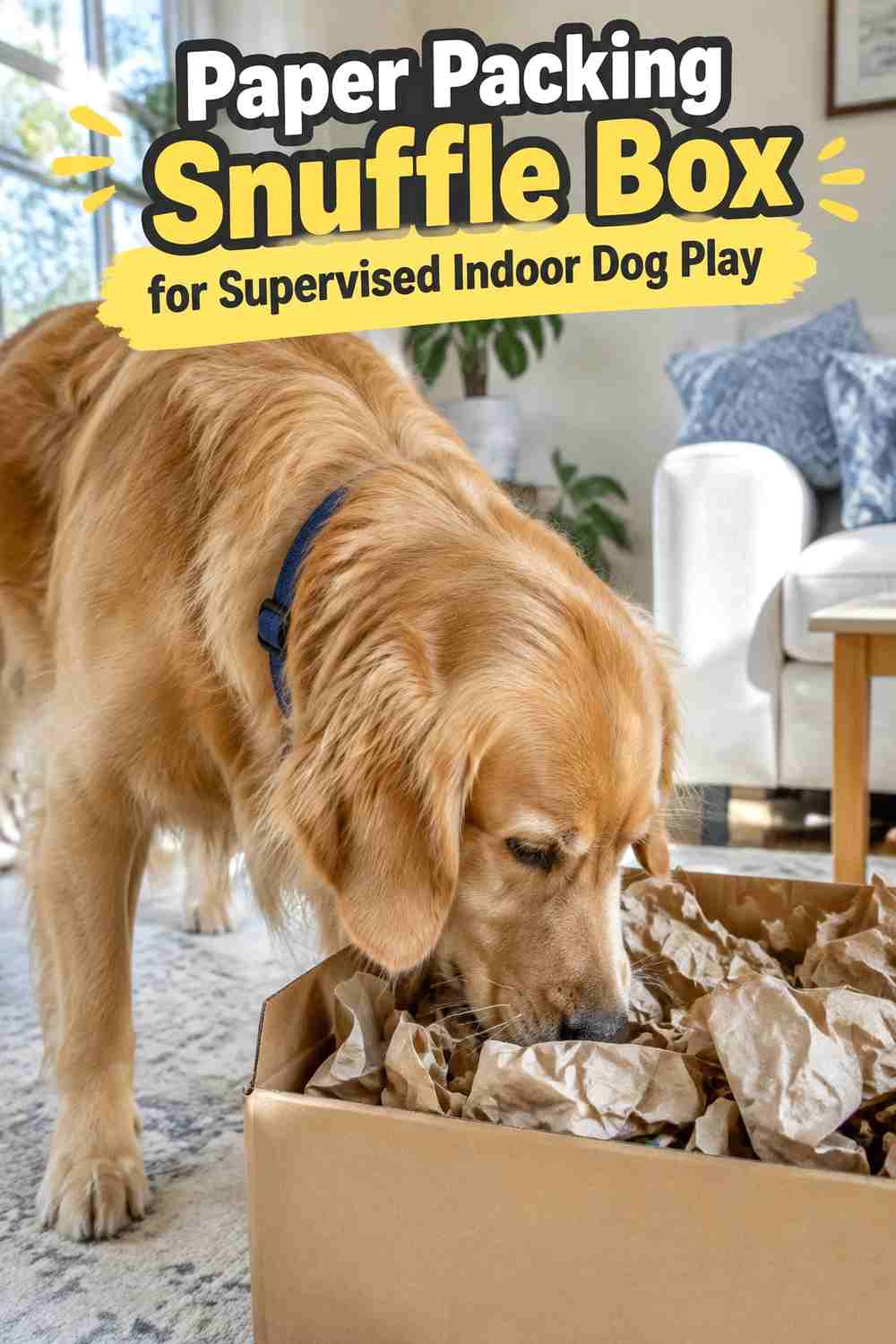
A paper packing snuffle box uses clean kraft packing paper to create a noisy, movable search area for supervised indoor play. Place loose sheets of paper in a wide cardboard box, lightly crumpling them to create pockets rather than compressing everything into a dense pile. Hide a few food pieces between the layers and leave one or two visible when introducing the game. Dogs can push, lift, and nose through the paper as they follow the scent. This activity is best for dogs that investigate materials without immediately eating them. Skip plastic packaging, tape, foam pieces, and other small packing materials, and remove torn paper promptly if your dog starts chewing or swallowing it.
Pet Type & Life Stage
Confident adult dogs that enjoy rustling materials may find this especially engaging, while noise-sensitive dogs may prefer a quieter towel or fleece activity.
Comfort & Safety
Keep the box shallow and stable, and give your dog the option to walk away rather than encouraging continued interaction with unfamiliar noises.
8. Snuffle Trail Around One Room For Active Indoor Dogs
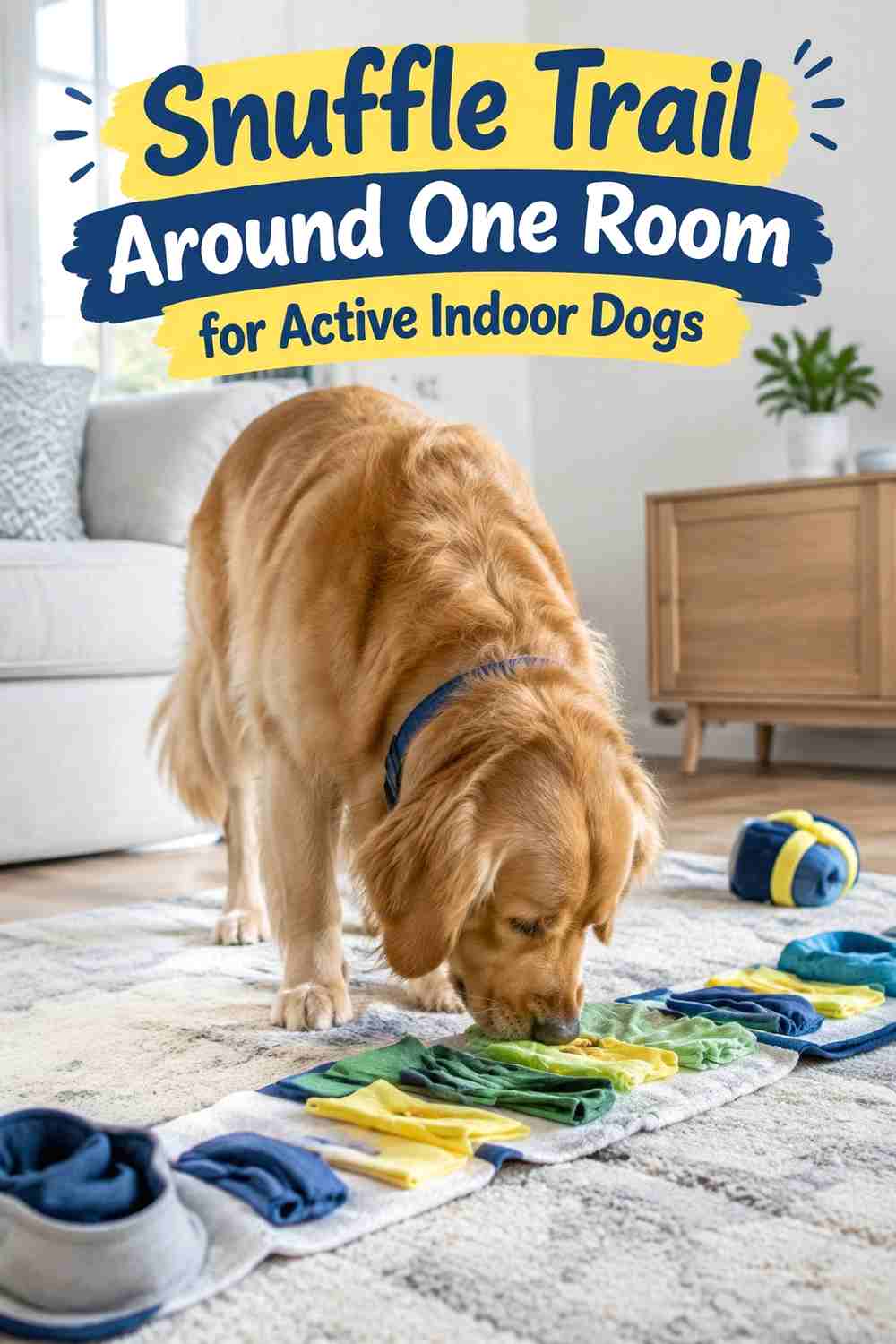
A snuffle trail around one room expands scent searching beyond a single mat or container. Place small search points around an uncluttered room using accessible locations such as beside a chair leg, near a mat, or inside an open cardboard box. Keep every hiding place at floor level and easy enough to discover with sniffing rather than climbing or moving furniture. Begin with a short trail and let your dog work from one scent point to the next at their own pace. This activity adds movement while still keeping the focus on searching. Count or remember your hiding spots so no food is accidentally left behind after the session.
Setup Notes
Clear toys, loose cords, and unnecessary clutter first so your dog can follow the trail without squeezing into awkward spaces.
Pro Tip
Change the route rather than simply adding more food. A new sequence can provide variety while keeping the basic activity familiar.
9. Outdoor Grass Snuffle Scatter For Dogs Who Love Sniffing
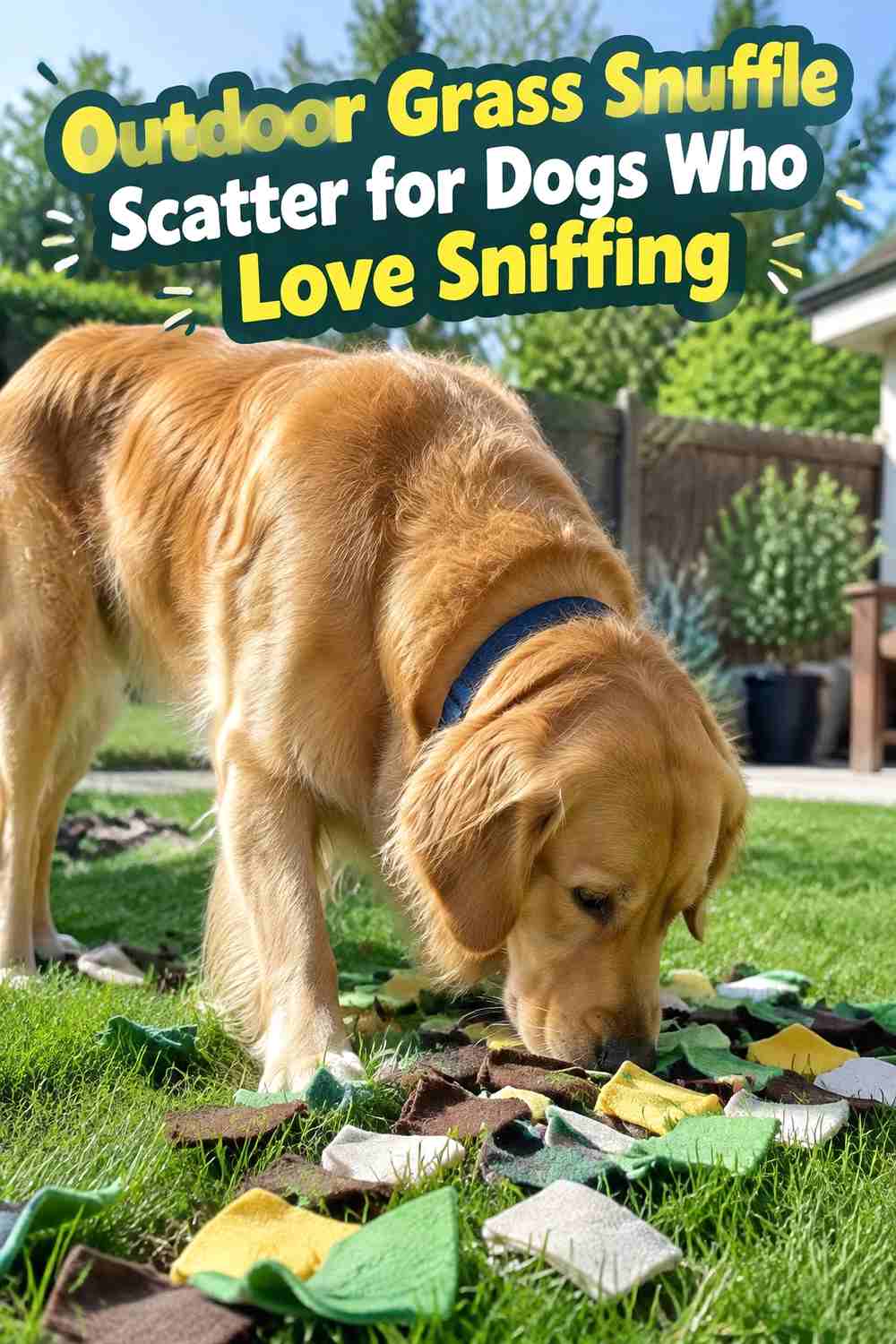
An outdoor grass snuffle scatter turns a familiar yard into a broad scent-search area for dogs that naturally enjoy sniffing. In a secure space, scatter a small amount of regular food across clean, short grass and let your dog locate the pieces gradually rather than pointing each one out. Start in a small patch so the search remains manageable, then use a slightly wider area as your dog becomes familiar with the game. Check the ground first for debris, animal waste, sharp objects, or anything else you would not want your dog investigating. Avoid areas recently treated with lawn chemicals, and choose another activity when weather or ground conditions make outdoor searching impractical.
Best For
This option suits dogs that already spend time comfortably in a secure yard and enjoy following scents along the ground.
Use & Maintenance
Keep the activity area modest enough that you can inspect it before and after the search and notice any uneaten food.
10. Upside Down Cup Snuffle Search For Curious Indoor Dogs

An upside-down cup snuffle search encourages a curious dog to sniff several simple hiding places and decide which ones contain food. Place a few sturdy, lightweight cups upside down on a non-slip floor and hide food under only some of them. During the first session, leave one cup slightly tilted so the dog can easily discover how the game works. The dog can then sniff around the remaining cups and gently nudge the correct ones. Choose cups large enough that they are not mouth-sized toys, and avoid brittle materials that could crack if pushed. If your dog becomes focused on grabbing or chewing the cups, switch to a softer snuffle activity.
Why It Works
Not every hiding place contains a reward, so the dog has a reason to investigate each cup with their nose before moving on.
Setup Notes
Space the cups apart instead of clustering them tightly, giving your dog room to circle and sniff without knocking everything over at once.
11. Laundry Basket Snuffle Hunt With Rolled Dog Towels

A laundry basket snuffle hunt combines several loose towel rolls in one contained search area. Use a low, sturdy basket with smooth openings, place clean dog towels inside, and loosely roll or fold each towel around a few easy-to-find food pieces. Your dog can move between the towels, sniff different rolls, and nose them open one at a time. Keep the basket shallow enough for comfortable access and avoid handles or openings where a collar, paw, or jaw could become caught. This activity is useful when you want more search points than one towel provides but still prefer washable materials. Supervise closely if your dog tends to grab and shake fabric.
Cleaning Notes
Shake out crumbs after every session and wash any towels that become damp or heavily soiled before putting them back into the basket.
Best For
This setup can suit medium and larger dogs that need more room than a small tabletop-style puzzle provides.
12. Multi Station Snuffle Circuit For Dogs Needing More Variety

A multi-station snuffle circuit combines several familiar search activities around one safe room rather than presenting a single large puzzle. Set up three or four simple stations, such as a fleece mat, loose towel fold, shallow box, and open basket, with a few food pieces distributed between them. Space the stations apart so your dog has to move, sniff, and decide where to search next. Keep each individual task easier than usual because the variety itself adds complexity. This approach is useful after your dog already understands the separate activities. Avoid creating a crowded obstacle course, and remove any station that encourages chewing, frustration, or rough handling instead of sniffing.
Space & Placement
Use an uncluttered room with clear walking routes between stations and enough space for your dog to turn comfortably.
Pro Tip
Rotate one station at a time between sessions. Changing everything at once can make it harder to tell which activities your dog actually enjoys.
13. Fabric Pocket Snuffle Board For Experienced Puzzle Dogs
You May Also Like



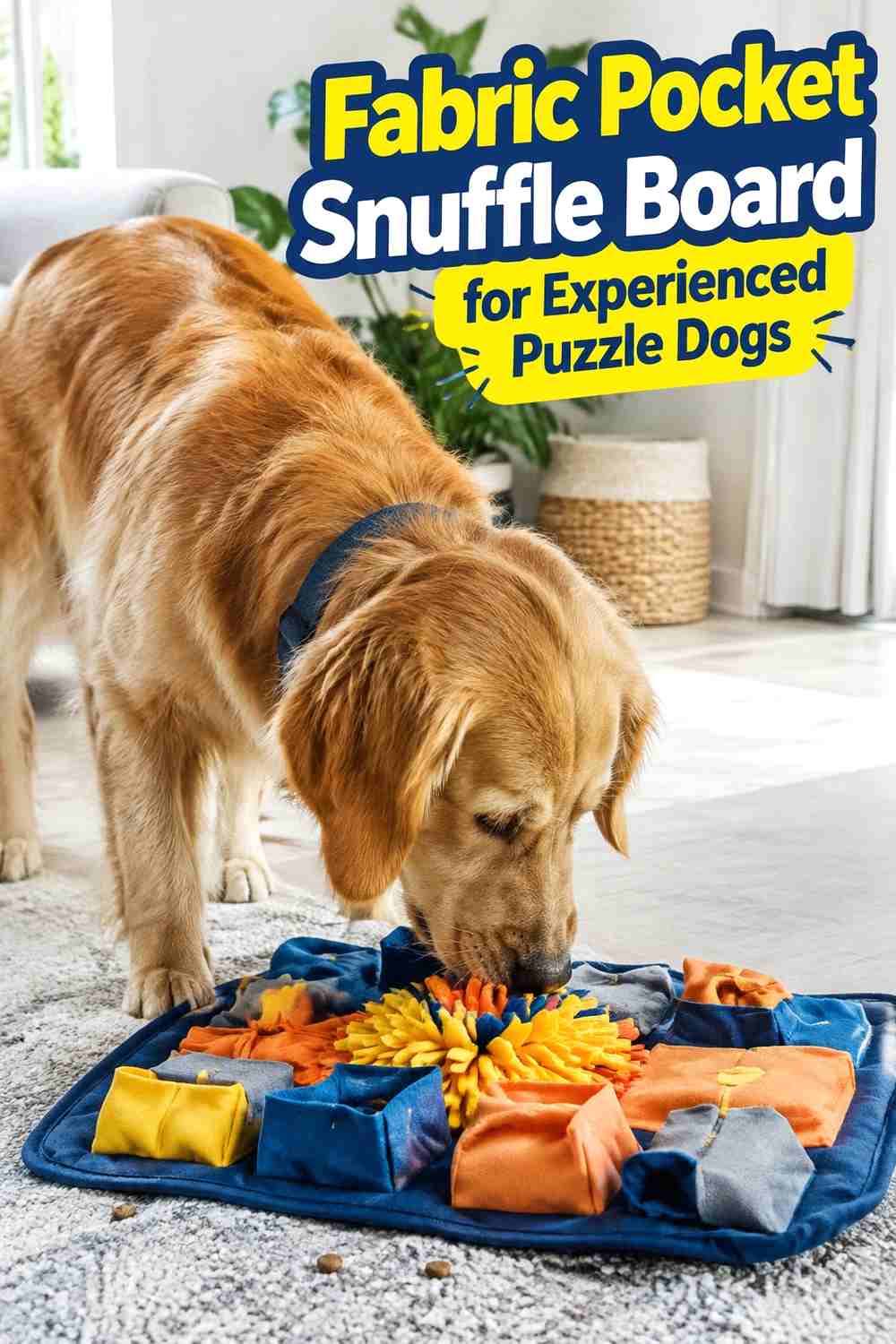
A fabric pocket snuffle board offers a more detailed search for dogs already comfortable with simpler snuffle games. Use a sturdy, non-slip base with securely attached broad fabric pockets or flaps, then place food in a mixture of obvious and slightly concealed locations. Start with several pockets partly open so your dog can solve them by sniffing and nudging rather than pulling hard at the fabric. Once the pattern is familiar, vary which pockets contain food instead of making the closures tighter. This activity needs close inspection because repeated pawing and nosing can loosen stitching over time. Remove the board if threads, stuffing, fasteners, or damaged fabric become exposed.
Pet Type & Life Stage
This style is better suited to dogs that already understand basic food-search activities and remain calm when a reward takes a little longer to find.
Use & Maintenance
Check seams and attachments before each session, wash compatible fabric sections as needed, and store the board after play instead of leaving it available for chewing.
How to Choose the Right Idea
Match the activity to your dog’s experience first. Beginners usually do better with visible food on a loosely rolled towel, open snuffle mat, or simple blanket folds. Dogs that already understand searching may enjoy boxes, room trails, several stations, or fabric pockets with less obvious hiding places.
Size and play style matter too. A larger dog may need broad containers and more floor space, while a compact basket or small mat can work well in an apartment. Dogs that routinely chew paper or fabric need closer supervision and may be better suited to sturdier setups.
Consider cleanup, available space, owner involvement, and how quickly your dog becomes frustrated. A useful snuffle activity should remain achievable. Make it easier when your dog loses interest, starts using force, or stops searching with their nose.
Final Thoughts
Dog snuffle activities can be as simple as a towel on the floor or as varied as several search stations around a room. Start with an easy setup that matches your dog’s natural interest in sniffing, then change the hiding pattern, texture, or location as they gain experience.
You do not need to make every game harder. Rotating a few safe, familiar activities can provide plenty of variety while keeping setup and cleanup manageable.
FAQs
1. What is a good first snuffle activity for a beginner dog?
A loosely rolled towel or fleece snuffle mat is a simple starting point because food can remain partly visible. Make the first search easy enough for your dog to understand without needing help at every step.
2. Can I use my dog’s regular food for snuffle activities?
Regular food can be used in many snuffle setups when it suits your dog’s normal feeding routine. Avoid adding unnecessary extra food simply to make the activity longer, and seek veterinary guidance when your dog has specific dietary or medical feeding requirements.
3. How can I make a snuffle game more difficult?
Hide food slightly deeper, increase the search area, change hiding locations, or combine several familiar stations. Increase only one aspect at a time so the activity remains understandable rather than frustrating.
4. What should I do if my dog starts chewing the snuffle materials?
End the activity and remove the setup if your dog begins tearing or swallowing fabric, paper, cardboard, or other materials. A sturdier or simpler supervised search may be a better fit.
5. Do snuffle activities need to be done indoors?
No. A secure yard with clean grass can provide a simple outdoor search area when weather and ground conditions are suitable. Indoor mats, towels, boxes, and trails are useful alternatives when outdoor play is inconvenient.
CTA
Save your favorite dog snuffle activity ideas and rotate a few simple setups to give your dog fresh sniffing challenges at home.
