Turn cardboard, paper, and soft fabric into simple homemade cat toys that add chasing, pouncing, wrestling, exploring, and puzzle play indoors. Indoor cats can enjoy plenty of variety without a cabinet full of expensive toys. These DIY cat toy ideas use common household materials to create different types of play, from fast chasing games to slower food puzzles and hiding activities. The best option depends on how your cat prefers to play, how much owner involvement you want, and whether your cat tends to chew or tear homemade materials. Start with simple setups, supervise new toys, and remove anything that becomes damaged, loose, or small enough to swallow.
Save This Idea on Pinterest

9 Easy DIY Cat Toy Ideas for Fun Indoor Play
Save to PinterestQuick List
- Easy Cardboard Box Tunnel Toy for Curious Indoor Cats
- DIY Toilet Paper Roll Puzzle Toy for Food-Motivated Cats
- Simple Paper Ball Chase Toy for Active Indoor Cats
- DIY Fleece Kicker Toy for Cats Who Love Wrestling
- Easy Egg Carton Puzzle Toy for Curious Indoor Cats
- DIY Paper Bag Hide-and-Pounce Toy for Indoor Cats
- Simple Fleece Wand Toy for Interactive Cat Play
- DIY Crinkle Paper Box Toy for Sound-Loving Cats
- Easy Cardboard Peekaboo Box Toy for Playful Indoor Cats
1. Easy Cardboard Box Tunnel Toy For Curious Indoor Cats
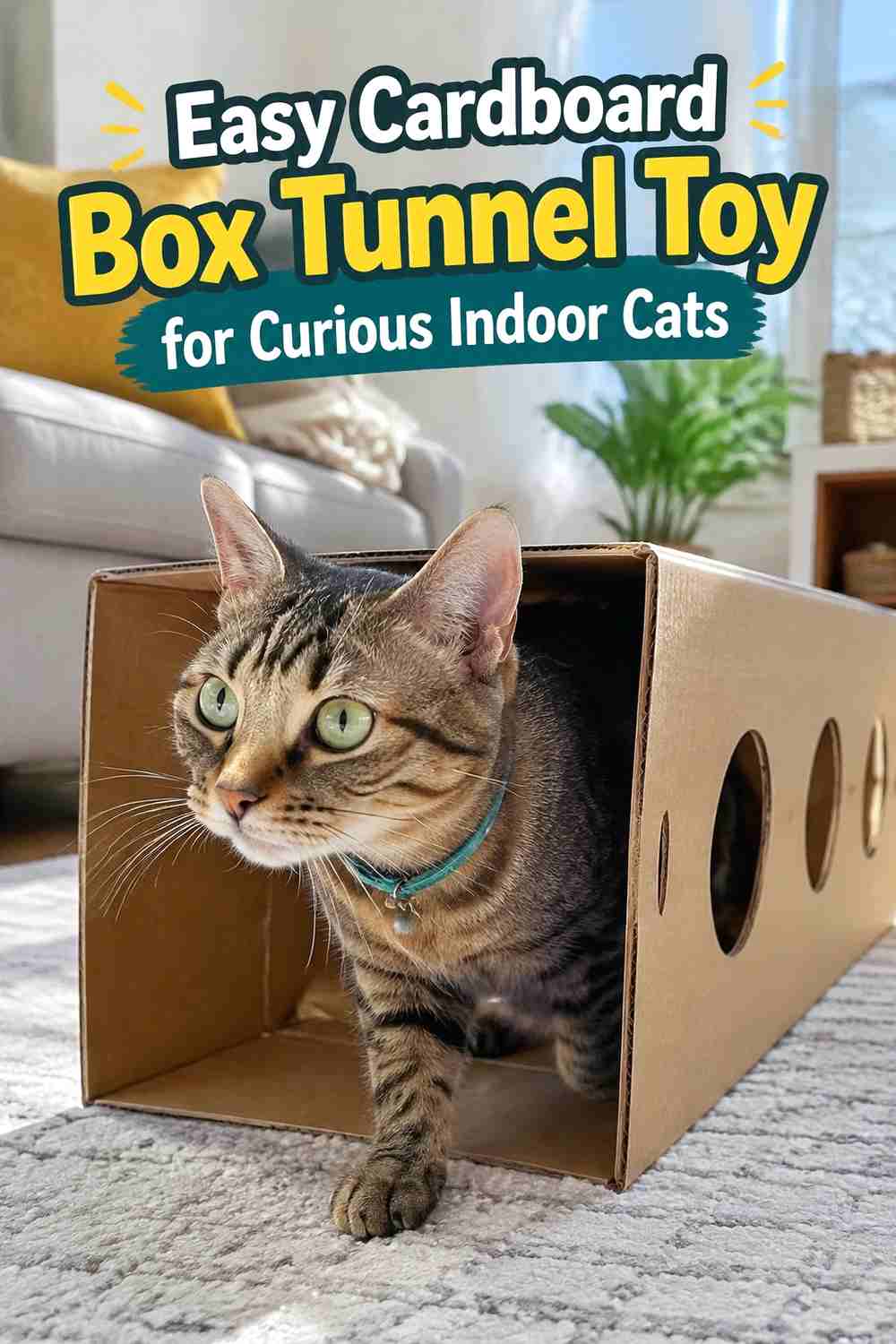
Turn two or three sturdy cardboard boxes into a low tunnel that gives an indoor cat somewhere to explore, stalk, hide, and dash through. Open both ends of each box and position them in a short connected route on the floor rather than building a tall structure. A few side openings can make the tunnel more interesting because your cat can peek out or reach toward a toy moving past. Keep the cardboard free from staples, dangling tape, and loose pieces. This idea works especially well for cats that enjoy enclosed spaces, and you can change the arrangement occasionally instead of making the tunnel permanently larger.
Setup Notes
Place the tunnel on a dry, non-slip floor with clear entrances and exits. Wide openings are generally more inviting than cramped holes.
Use & Maintenance
Flatten and recycle boxes once they become damp, heavily scratched, crushed, or torn into loose pieces.
2. Diy Toilet Paper Roll Puzzle Toy For Food Motivated Cats
You May Also Like



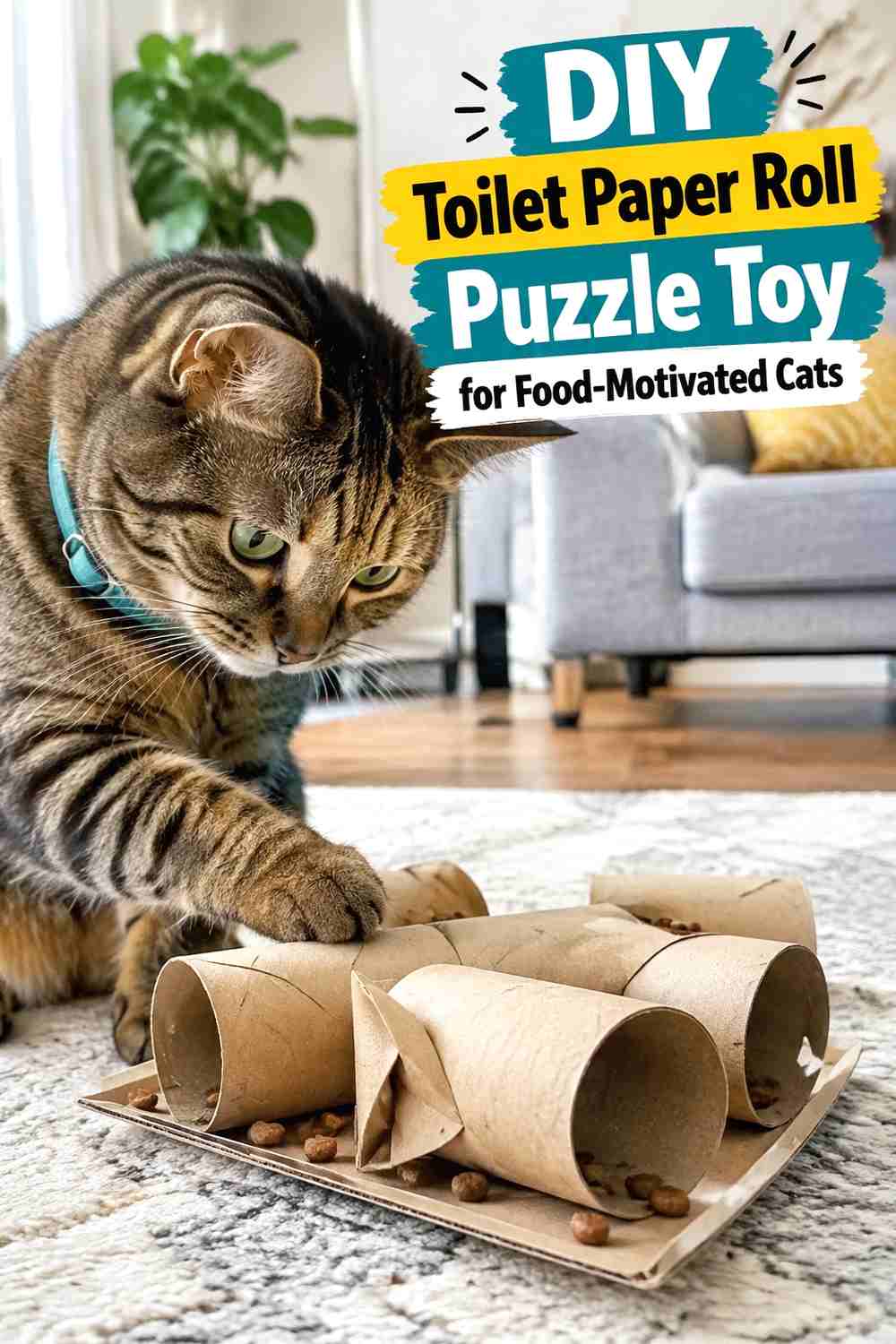
A clean cardboard toilet paper roll can become a simple rolling puzzle for cats that enjoy working for a few pieces of their regular food or treats. Fold the ends partly inward, leaving openings large enough for pieces to fall out when the roll is pushed across the floor. Your cat can sniff, bat, and roll it until something drops. Keep the first version easy rather than sealing the openings too tightly, since an overly difficult puzzle may simply be ignored. Use the toy on a hard floor or washable mat for easier cleanup, and collect it after play if your cat starts chewing the cardboard instead of manipulating it.
Best For
This works well for curious cats that already enjoy batting lightweight objects and are motivated by food.
Pro Tip
Start with wide openings. You can slightly narrow them later if your cat solves the puzzle quickly.
3. Simple Paper Ball Chase Toy For Active Indoor Cats

Crumple a clean sheet of plain paper into a lightweight ball for a quick chase game across an open indoor floor. The uneven shape creates unpredictable little bounces and changes of direction when a cat bats it, which can make a very simple object surprisingly engaging. Make the ball large enough that your cat cannot comfortably swallow it, and avoid staples, tape, rubber bands, foil, or other additions. Try rolling it past your cat rather than directly at them, then let them decide whether to pursue it. Paper balls are easy to replace, so discard them once they become soggy, flattened, torn apart, or covered in loose pieces.
Space & Placement
A hallway or uncluttered room gives the ball room to move without disappearing immediately under furniture.
Cleaning Notes
Pick up torn paper after the game and use a fresh sheet for the next play session.
4. Diy Fleece Kicker Toy For Cats Who Love Wrestling
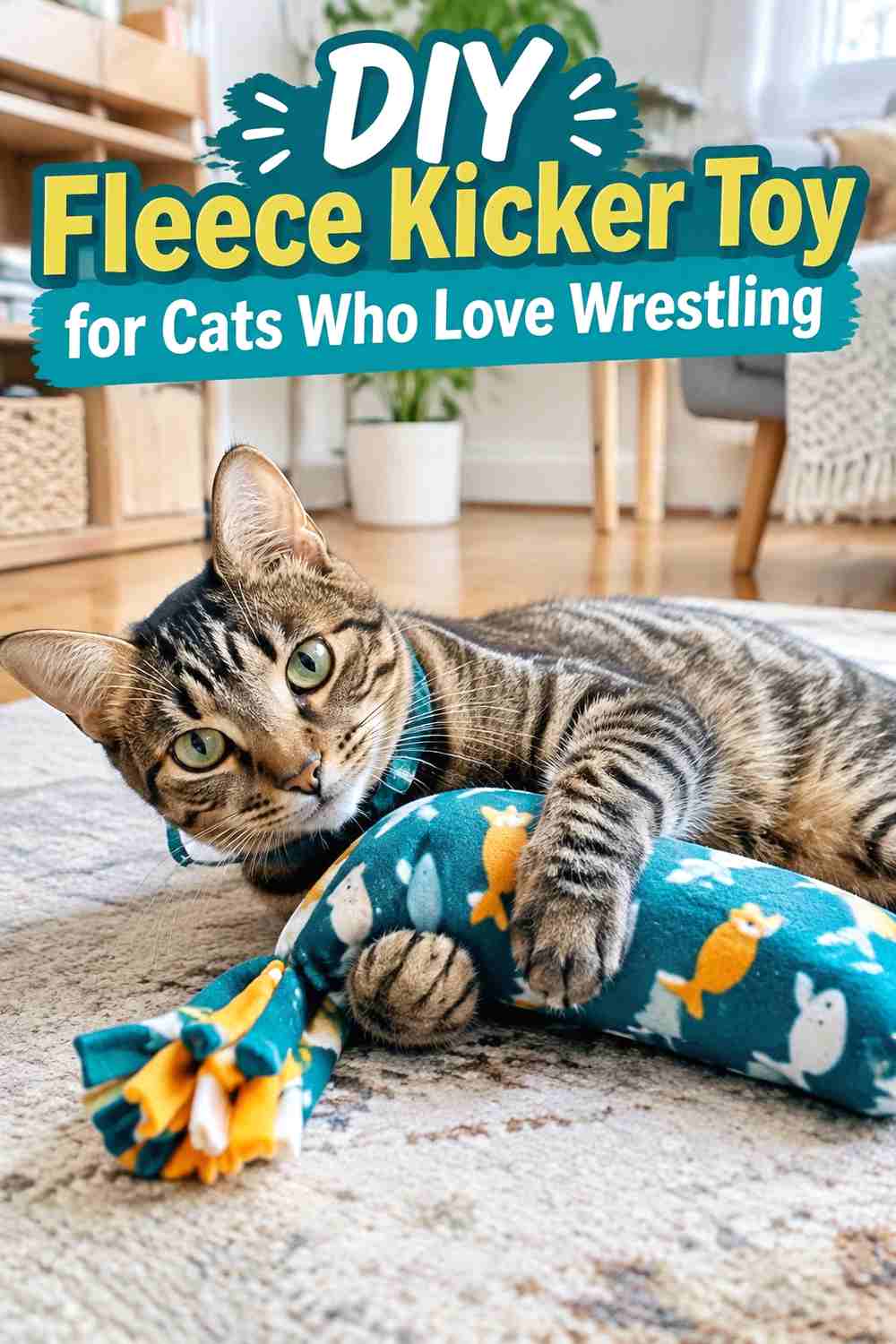
A soft fleece kicker gives cats that like grabbing and rabbit-kicking a larger homemade toy they can hold against their body. Cut two matching pieces of sturdy fleece, sew the edges securely, and fill the center with larger clean fabric scraps before closing the final opening. The finished toy should feel flexible rather than rigid, with no buttons, beads, strings, or glued decorations. Make it substantial enough for your cat to grip with the front paws while kicking with the back feet. Check the seams regularly, especially if your cat plays roughly, because exposed stuffing or loose threads are signs that the kicker should be repaired or removed.
Pet Type & Life Stage
This style often suits active adult cats that naturally wrestle with soft toys. Gentler players may prefer lighter batting toys instead.
Comfort & Safety
Avoid long fringe and decorative attachments. Store the kicker if your cat begins pulling fibers or opening the seams.
5. Easy Egg Carton Puzzle Toy For Curious Indoor Cats
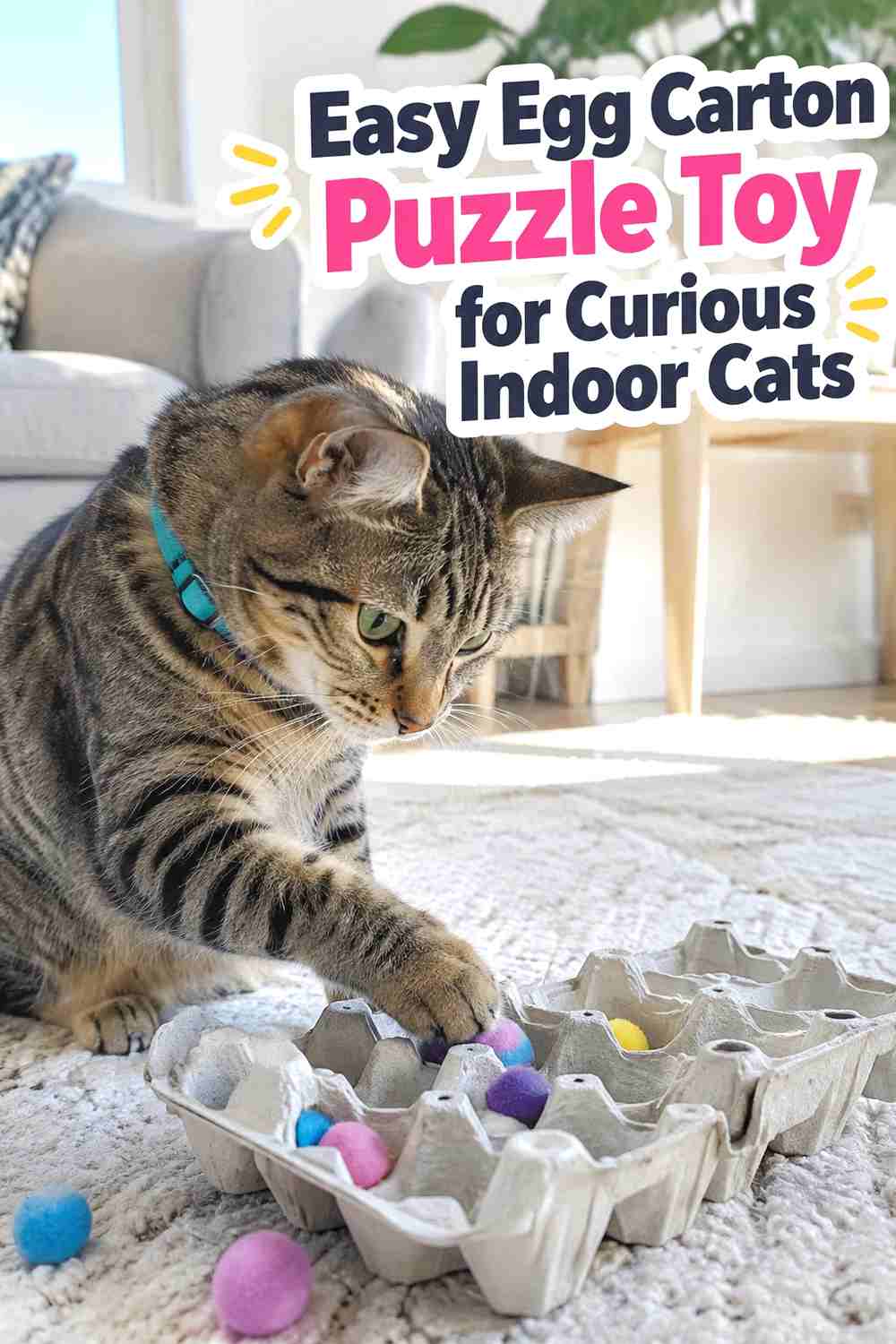
A clean, dry paper egg carton can create a low-cost puzzle by turning its individual cups into hiding spots for a few pieces of your cat’s regular food or treats. Leave several cups uncovered at first so your cat quickly understands that investigating the carton leads to a reward. Later, loosely place small crumpled paper pieces over some compartments to add a little searching without making the activity frustrating. Use only a clean paper carton with no sharp edges or food residue. Put it on a washable surface, and supervise cats that like shredding cardboard so the puzzle remains an activity rather than something they chew apart.
Setup Notes
Begin with food visible in several compartments. Increase the challenge only after your cat comfortably investigates the open carton.
Cleaning Notes
Discard cartons that become damp, dirty, greasy, or badly torn instead of trying to keep them in regular rotation.
6. Diy Paper Bag Hide And Pounce Toy For Indoor Cats
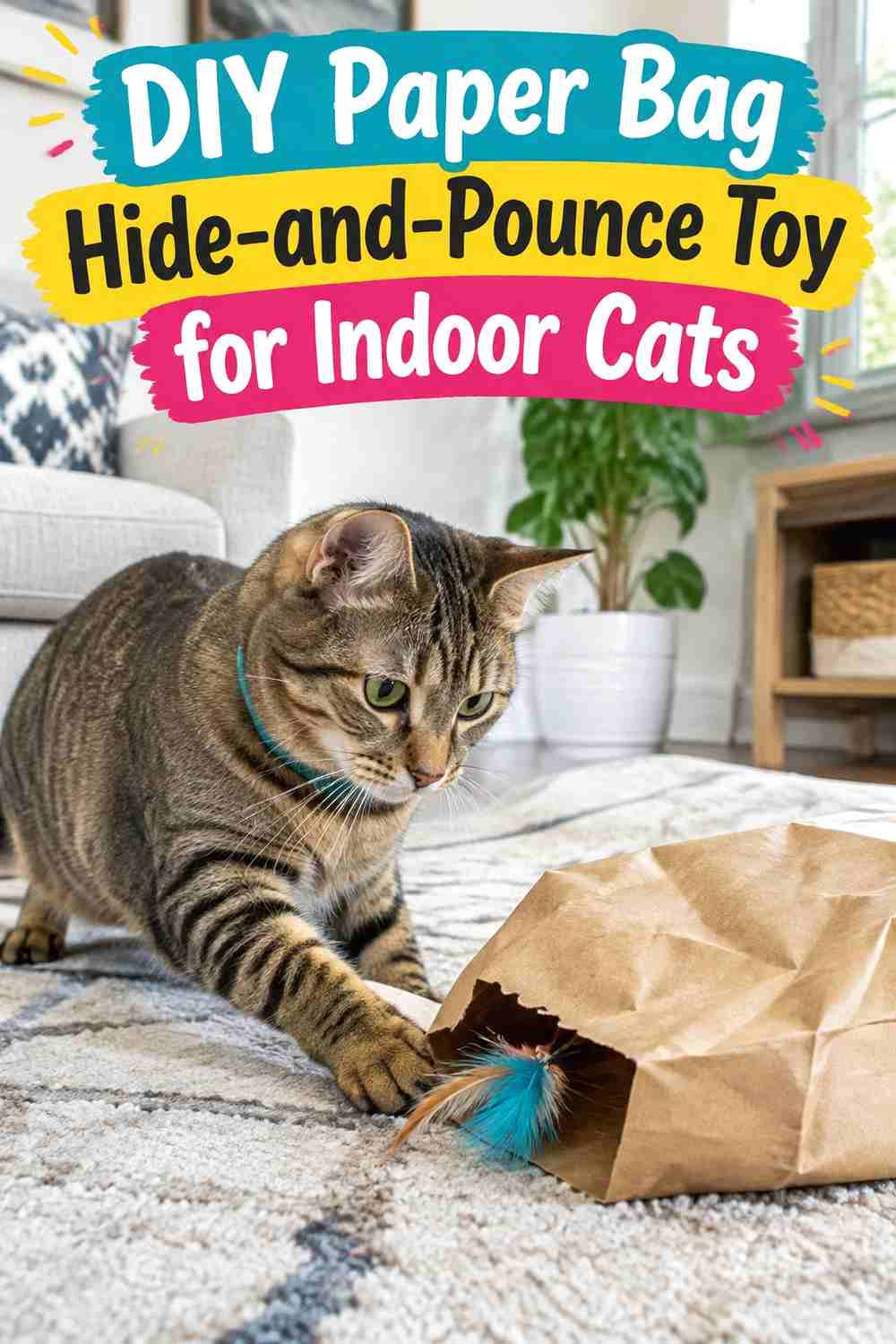
A plain paper shopping bag can become a simple hiding and pouncing station when it is laid on its side with the opening facing into the room. Remove handles completely before offering the bag, then smooth it open so your cat can enter and leave without becoming tangled. Some cats enjoy sitting inside while watching a paper ball or wand toy move past the entrance, turning the bag into part of an interactive ambush game. Use the bag on floor level only and keep the area around it uncluttered. Replace it when the paper becomes heavily torn, and avoid plastic bags because they are not appropriate substitutes for this setup.
Best For
This idea suits cats that naturally investigate boxes, tunnels, and covered hiding spots before pouncing on moving toys.
Comfort & Safety
Always remove handles first. Stop using the bag if your cat becomes tangled, frightened, or starts swallowing torn paper.
7. Simple Fleece Wand Toy For Interactive Cat Play
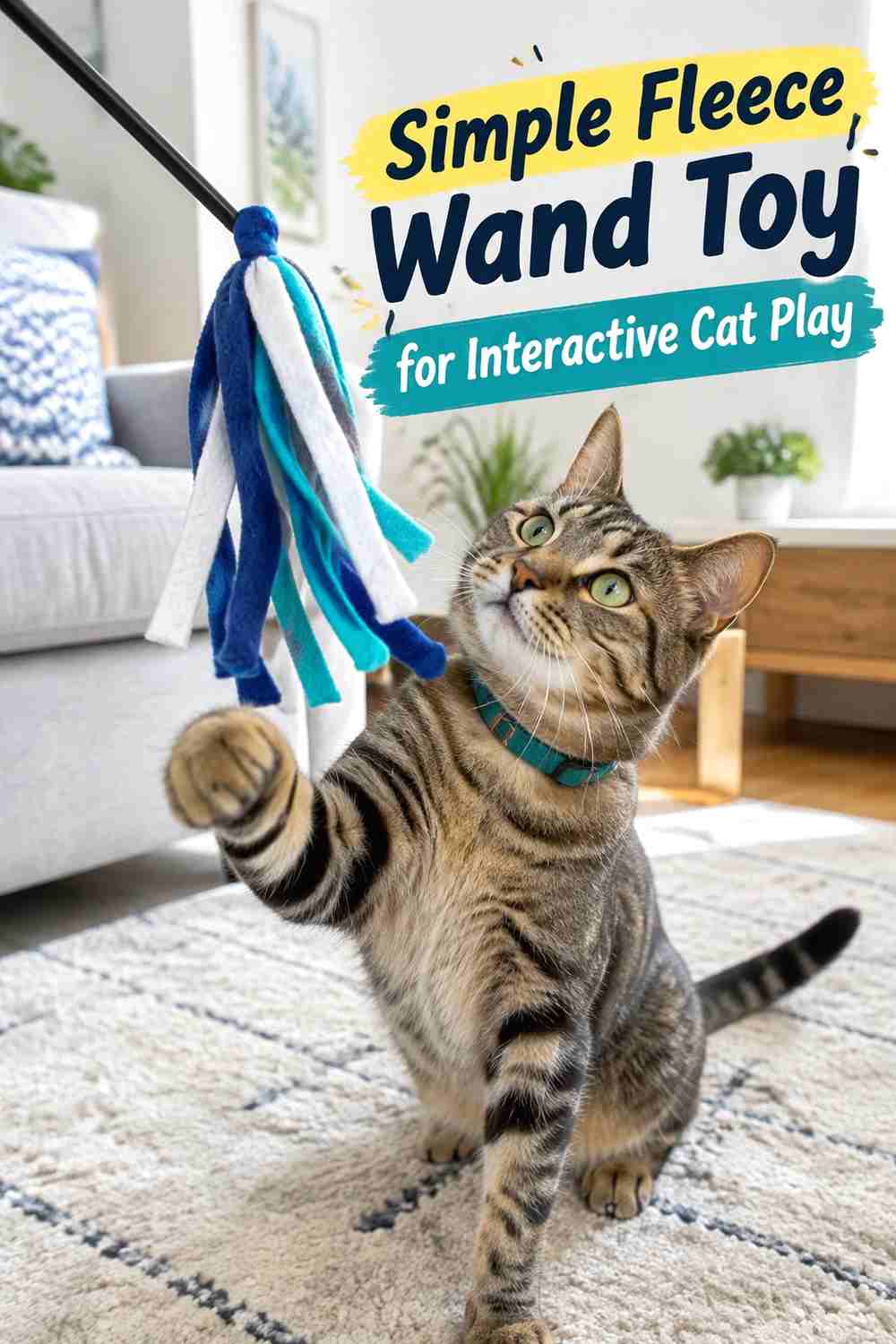
A homemade fleece wand lets you control the movement of the toy, making it useful for cats that enjoy stalking and chasing something that changes speed and direction. Secure a broad strip of sturdy fleece to a smooth wand or handle so there are no exposed sharp points, loose fasteners, or tiny decorations. Drag the fleece along the floor, pause behind furniture, and occasionally let your cat catch it rather than keeping it permanently out of reach. Keep the action low and controlled instead of encouraging risky leaps. Because this is an interactive toy with fabric attached to a handle, put it away after play rather than leaving it accessible when nobody is supervising.
Why It Works
Owner-controlled movement lets you vary slow stalking, quick chases, pauses, and successful catches during one short game.
Use & Maintenance
Check the attachment and fleece before every session. Retire the toy if the material frays or the handle becomes damaged.
8. Diy Crinkle Paper Box Toy For Sound Loving Cats

Place several loose sheets of clean kraft packing paper inside a shallow cardboard box to create a noisy exploration area for cats that enjoy rustling sounds. Keep the paper loosely crumpled rather than tightly packed so your cat can step, dig, burrow, and move pieces around naturally. You can occasionally roll a paper ball across the surface to add a chasing element without changing the basic setup. This toy is easy to reset by fluffing the paper and replacing flattened sheets. Skip plastic packing film, tape, staples, and tiny packaging pieces. Cats that dislike sudden noises may prefer a plain cardboard box, so let your cat choose whether the crinkly version is appealing.
Space & Placement
Set the box in a quiet floor-level location where crinkling will not startle sleeping pets or create a busy walkway.
Use & Maintenance
Replace damp or shredded paper and recycle the entire setup when the cardboard box becomes weak or heavily damaged.
9. Easy Cardboard Peekaboo Box Toy For Playful Indoor Cats
You May Also Like



A shallow cardboard box with several smooth openings can become an interactive peekaboo game for cats that enjoy watching, waiting, and pouncing. Cut openings large enough for comfortable paw access, then move a paper ball or supervised wand toy from one opening to another while your cat tries to catch it. Keep every cut edge smooth and remove loose cardboard scraps before play begins. Unlike a regular hiding box, this setup depends on movement outside your cat’s direct view, so it works best when an owner participates. Keep the box low and stable, and stop using it once repeated scratching makes the openings ragged or creates detachable pieces.
Best For
This setup can appeal to cats that enjoy ambushing toys from behind furniture or reaching into boxes to investigate movement.
Pro Tip
Vary the pause between appearances instead of moving the toy continuously. Brief still moments can make the game more interesting.
How to Choose the Right Idea
Start with your cat’s usual play style. Cats that chase moving objects may enjoy paper balls or a fleece wand, while cats that like wrestling may get more use from a kicker. Curious cats that enjoy searching can try the toilet paper roll or egg carton puzzles, and cats drawn to enclosed spaces may prefer tunnels, bags, or boxes. Also consider your home’s flooring, cleanup needs, and how closely you can supervise. Homemade cardboard and paper toys are convenient but need regular inspection because chewing, moisture, and rough play can quickly change their condition. Introduce one or two toys at a time rather than placing everything out together. Rotating simple options can help keep familiar materials interesting without creating unnecessary clutter.
Final Thoughts
The most useful DIY cat toy does not need to be complicated. Choose a simple idea that matches how your cat already likes to chase, hide, wrestle, investigate, or search. Start easy, watch how your cat interacts with the materials, and adjust or remove anything that becomes damaged. A small rotation of well-chosen homemade toys can provide more variety than leaving every option available all the time.
FAQs
1. Are homemade cat toys safe for unsupervised play?
It depends on the toy and the cat, but many homemade toys are better used with supervision. Fabric attachments, paper, cardboard, loose fibers, and food puzzles should be inspected regularly and removed if damaged.
2. How often should I replace cardboard cat toys?
Replace them whenever they become wet, crushed, heavily shredded, dirty, or covered with loose pieces. There is no need to keep a damaged toy simply because the cat still shows interest in it.
3. What household materials work well for DIY cat toys?
Clean cardboard boxes, cardboard tubes, plain paper, paper egg cartons, kraft packing paper, and sturdy fleece can all be useful when prepared without staples, loose tape, sharp pieces, or small decorations.
4. What if my cat ignores a new DIY toy?
Try simplifying the setup, moving it to a quieter location, or introducing it during a time when your cat is already interested in play. Some cats also prefer certain play styles and may simply choose a different idea.
5. Can kittens use these DIY cat toy ideas?
Several can be adapted for kittens, but keep setups simple, floor-level, and closely supervised. Avoid small pieces, loose fibers, difficult puzzles, and anything a kitten could chew apart or swallow.
CTA
Save your favorite DIY cat toy ideas and try one with materials you already have at home.
