Give a curious puppy more ways to sniff, explore, search, play, and solve simple problems with easy enrichment activities you can rotate at home.
Save This Idea on Pinterest
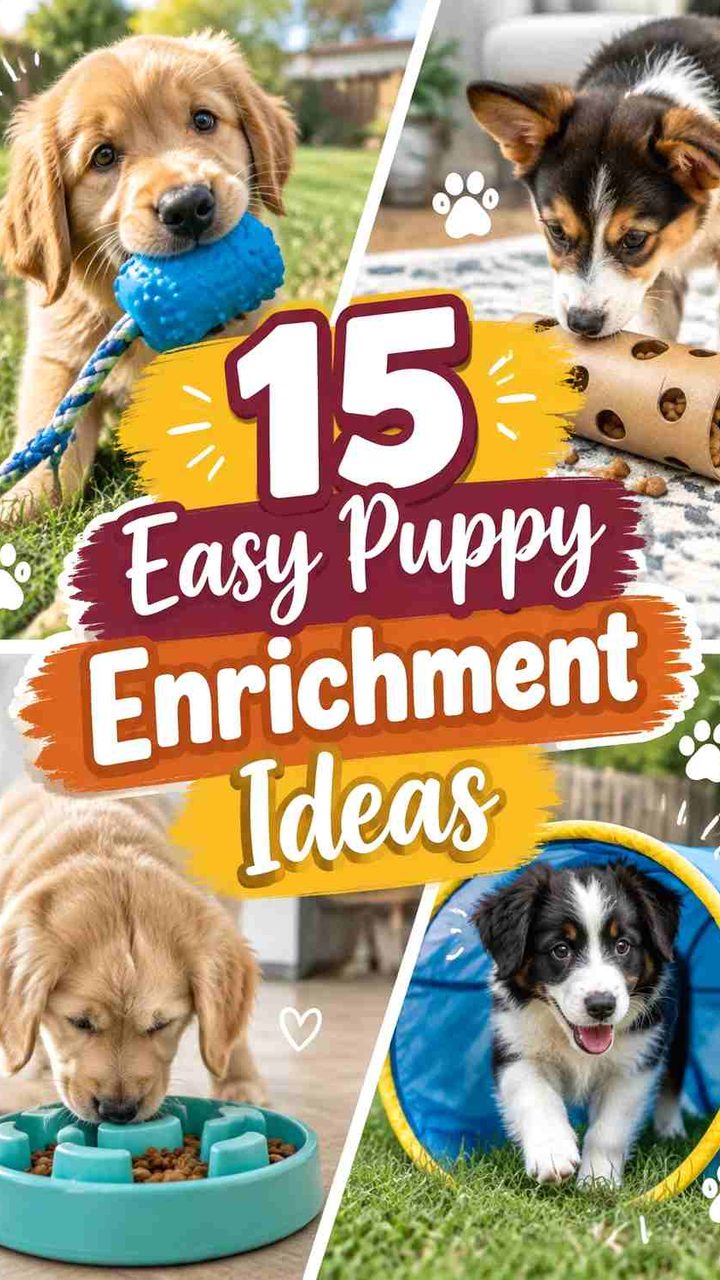
15 Easy Puppy Enrichment Ideas
Save to PinterestPuppy enrichment works best when activities are simple enough for a young dog to understand and short enough to stay enjoyable. These ideas include sniffing games, beginner puzzles, interactive play, texture exploration, gentle movement, and quieter activities for times when you want something less energetic.
Choose setups that fit your puppy’s age, size, confidence, chewing habits, and attention span. Introduce unfamiliar materials gradually, keep homemade activities supervised, and make the game easier if your puppy starts chewing the setup, loses interest, or seems frustrated instead of exploring.
Quick List
- Easy Towel Snuffle Search for Curious Young Puppies
- Cardboard Box Treasure Hunt for Supervised Puppy Enrichment
- Gentle Fleece Tug Game for Interactive Puppy Play
- Scatter Feeding Search Game for Food-Motivated Puppies
- Simple Cup Puzzle Game for Beginner Puppy Enrichment
- Indoor Texture Walk for Curious Young Puppies
- Easy Blanket Burrow Game for Curious Indoor Puppies
- Find-the-Toy Hide-and-Seek Game for Playful Puppies
- Low Indoor Obstacle Course for Confident Young Puppies
- Cardboard Tube Search Game for Supervised Puppy Play
- Name-and-Find Toy Game for Simple Puppy Brain Work
- Laundry Basket Exploration Game for Curious Young Puppies
- Calm Lick Mat Activity for Quiet Puppy Enrichment
- Easy Indoor Scent Trail for Curious Young Puppies
- Multi-Station Puppy Enrichment Circuit for Everyday Variety
1. Easy Towel Snuffle Search For Curious Young Puppies
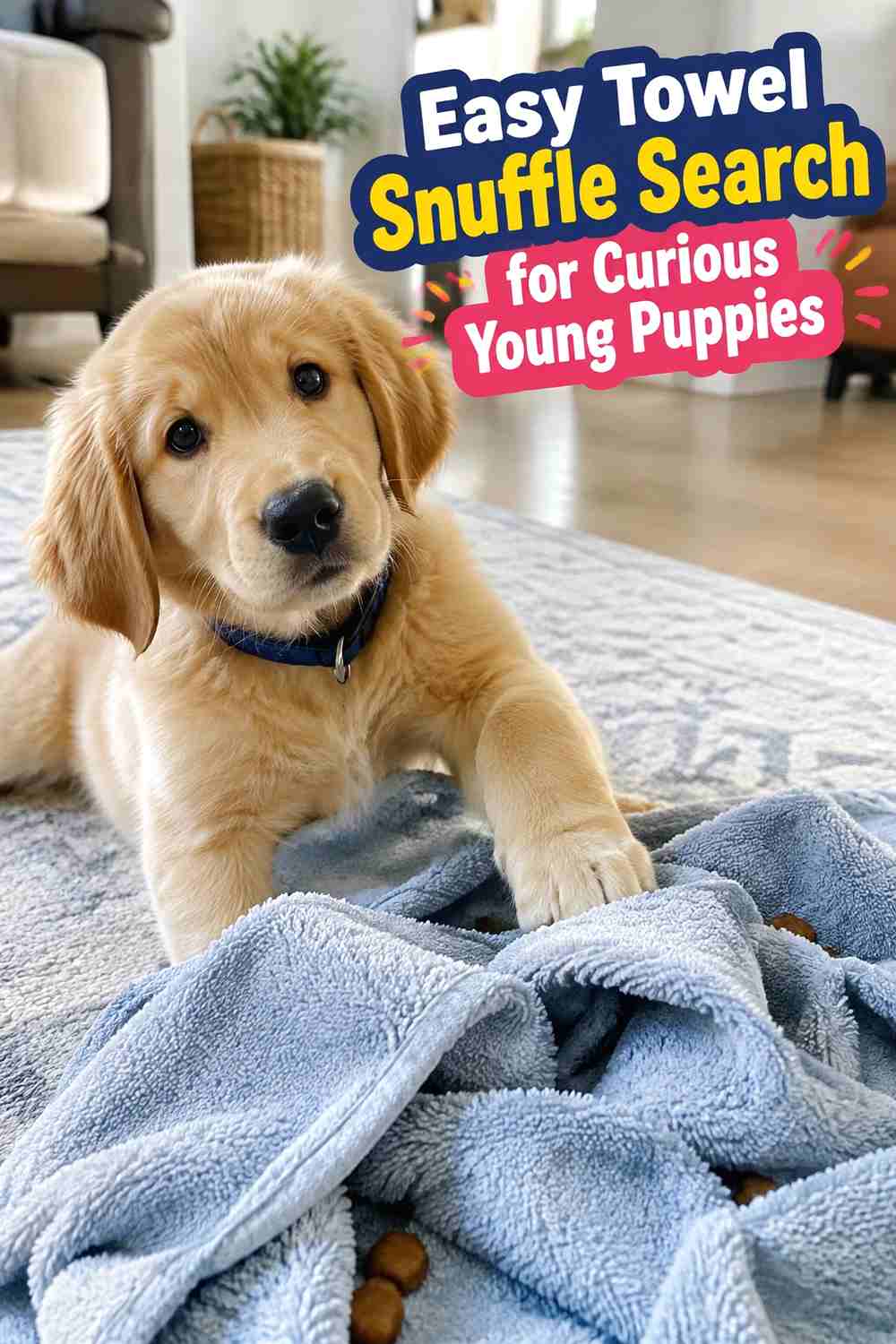
An easy towel snuffle search gives a young puppy a simple introduction to using their nose to find hidden food. Lay a clean towel flat, scatter a few pieces of regular food across it, and make loose folds that leave several pieces easy to discover. Let your puppy sniff and nose through the fabric instead of pointing out every hiding place. Keep the first setup very open so success comes quickly, then add slightly deeper folds once the game is familiar. Use the towel on a non-slip floor and supervise puppies that like chewing fabric. End the activity if your puppy starts pulling threads or shaking the towel rather than searching through it.
Setup Notes
Begin with shallow folds and visible food. The goal is easy exploration, not a difficult puzzle.
Cleaning Notes
Shake out crumbs after use and wash the towel as needed before storing it completely dry.
2. Cardboard Box Treasure Hunt For Supervised Puppy Enrichment
You May Also Like

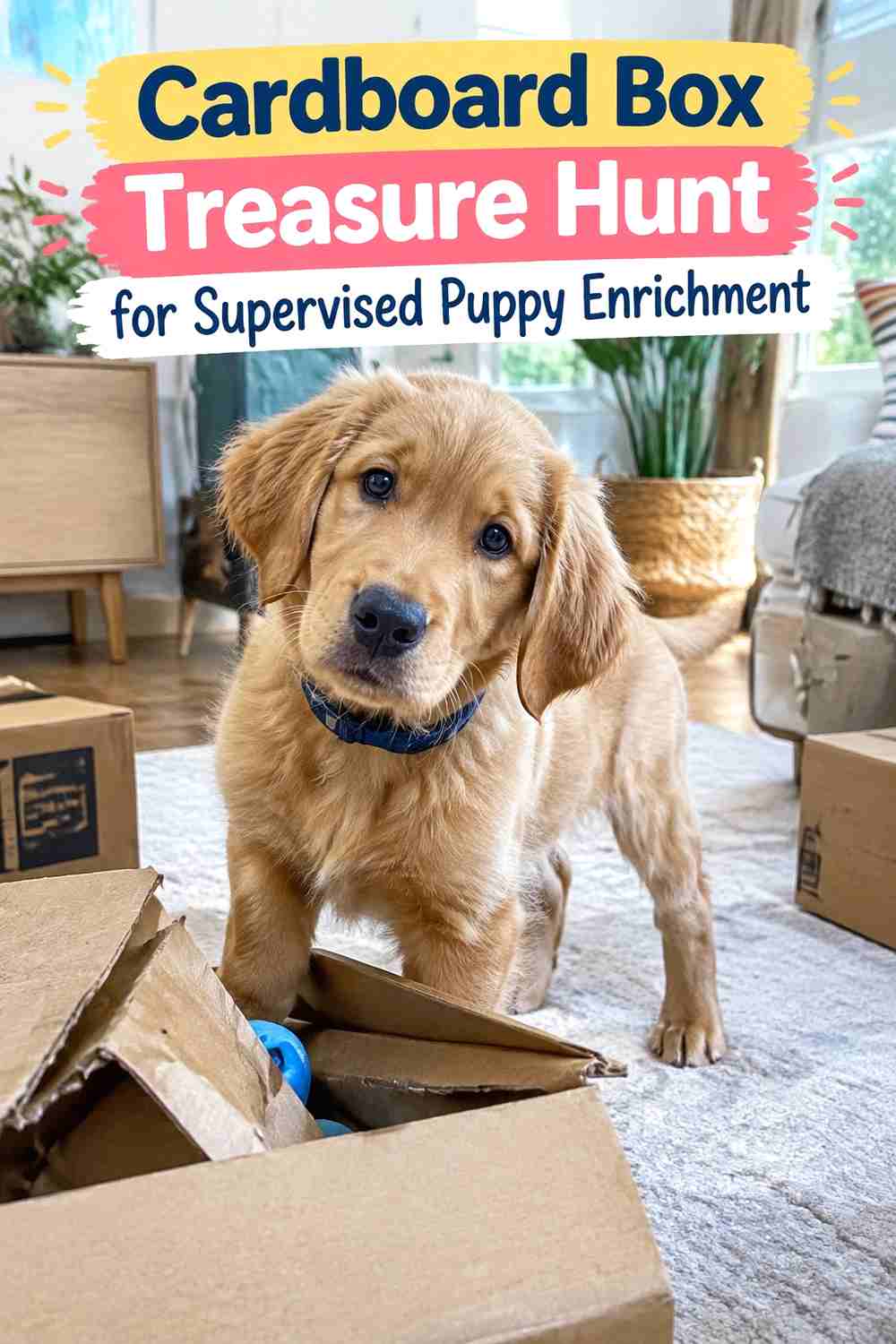
A cardboard box treasure hunt gives a puppy a contained place to sniff, investigate, and move lightweight objects while searching. Use a clean, shallow box and add loose sheets of plain paper, large cardboard tubes, or a familiar toy, then place a few pieces of food in easy-to-reach spots. Keep the contents sparse at first so your puppy can see and smell what is happening without diving into a deep pile. Remove staples, tape, plastic packaging, and small pieces before starting. This activity needs supervision because many puppies will eventually switch from searching to chewing. If cardboard or paper starts being torn into swallowable pieces, remove the box and try a sturdier enrichment option.
Best For
This idea suits puppies that enjoy investigating containers and moving objects with their noses or paws.
Use & Maintenance
Recycle damaged cardboard after the session and replace anything damp, dirty, or heavily shredded.
3. Gentle Fleece Tug Game For Interactive Puppy Play
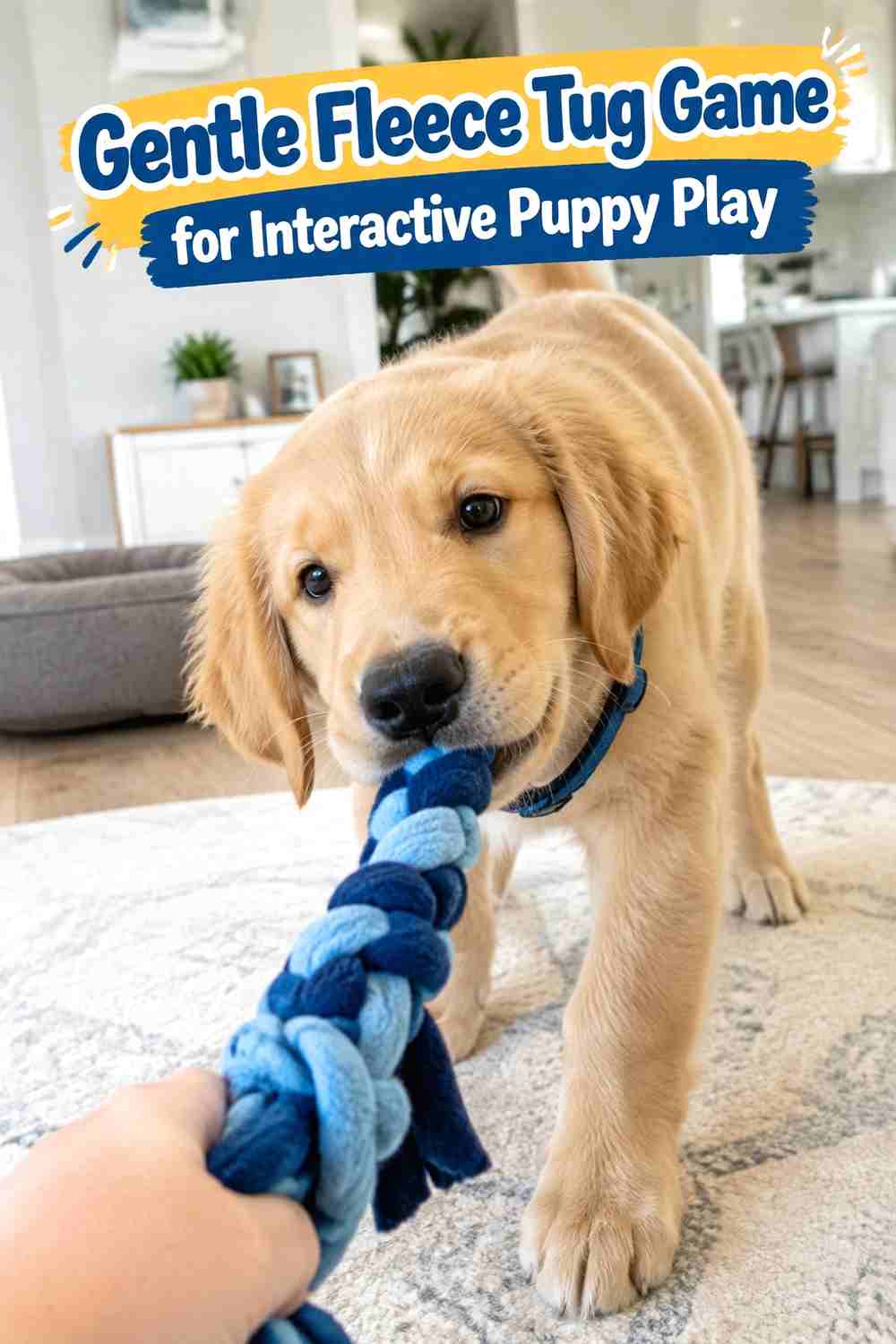
A gentle fleece tug game adds owner involvement to enrichment and gives a playful puppy something soft to grab, follow, and release. Use a sturdy fleece tug that is appropriately sized for your puppy and keep the movement low rather than swinging the toy overhead. Let the puppy take hold, use light side-to-side movement, and include frequent pauses so the game does not become frantic. Avoid jerking upward or pulling hard against a young puppy’s mouth and neck. The toy should stay part of an interactive game rather than becoming an unsupervised chew item. Check the fleece frequently because enthusiastic puppy teeth can loosen knots, stretch fabric, or create frayed edges.
Comfort & Safety
Keep your movements controlled and let your puppy reposition naturally instead of lifting or dragging them with the toy.
Pro Tip
Short pauses during tug can keep the game organized and make it easier to restart with your puppy’s attention.
4. Scatter Feeding Search Game For Food Motivated Puppies
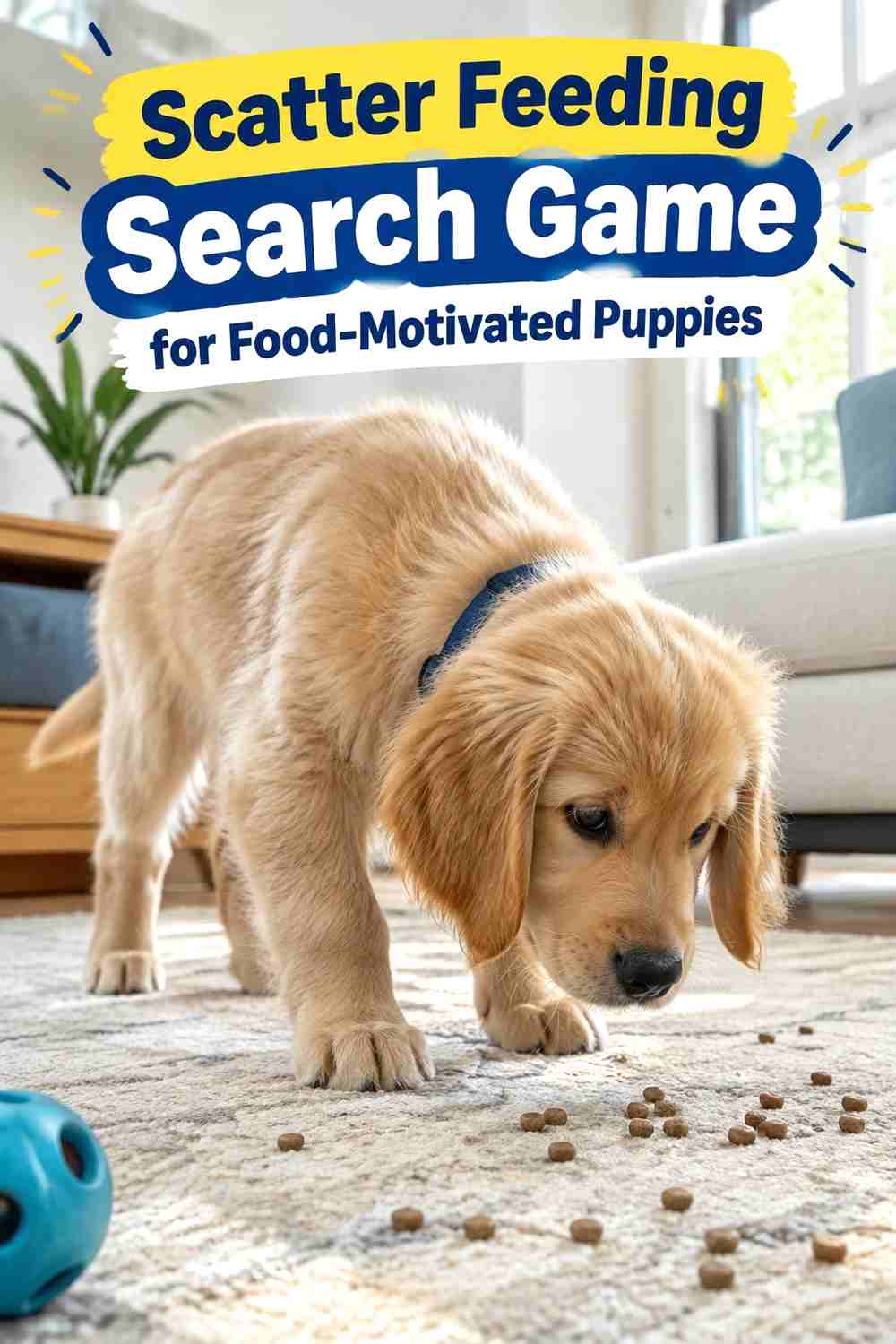
A scatter feeding search turns part of a puppy’s normal food into an easy sniffing activity rather than placing everything in one spot. Scatter pieces across a clean mat or small section of floor, leaving plenty of space between them so your puppy can move from one scent to the next. Start with an obvious, compact search area before spreading pieces more widely. This works well when you want enrichment without extra homemade materials that might become chew targets. Keep the floor free from household debris, and remember where you placed the food so nothing is left behind. Puppies with special feeding requirements should follow the guidance provided by their veterinarian.
Best For
Food-motivated puppies that already enjoy sniffing the ground can usually understand this activity quickly.
Space & Placement
Choose an easy-clean, uncluttered area away from cords, small objects, and furniture gaps where food could become trapped.
5. Simple Cup Puzzle Game For Beginner Puppy Enrichment
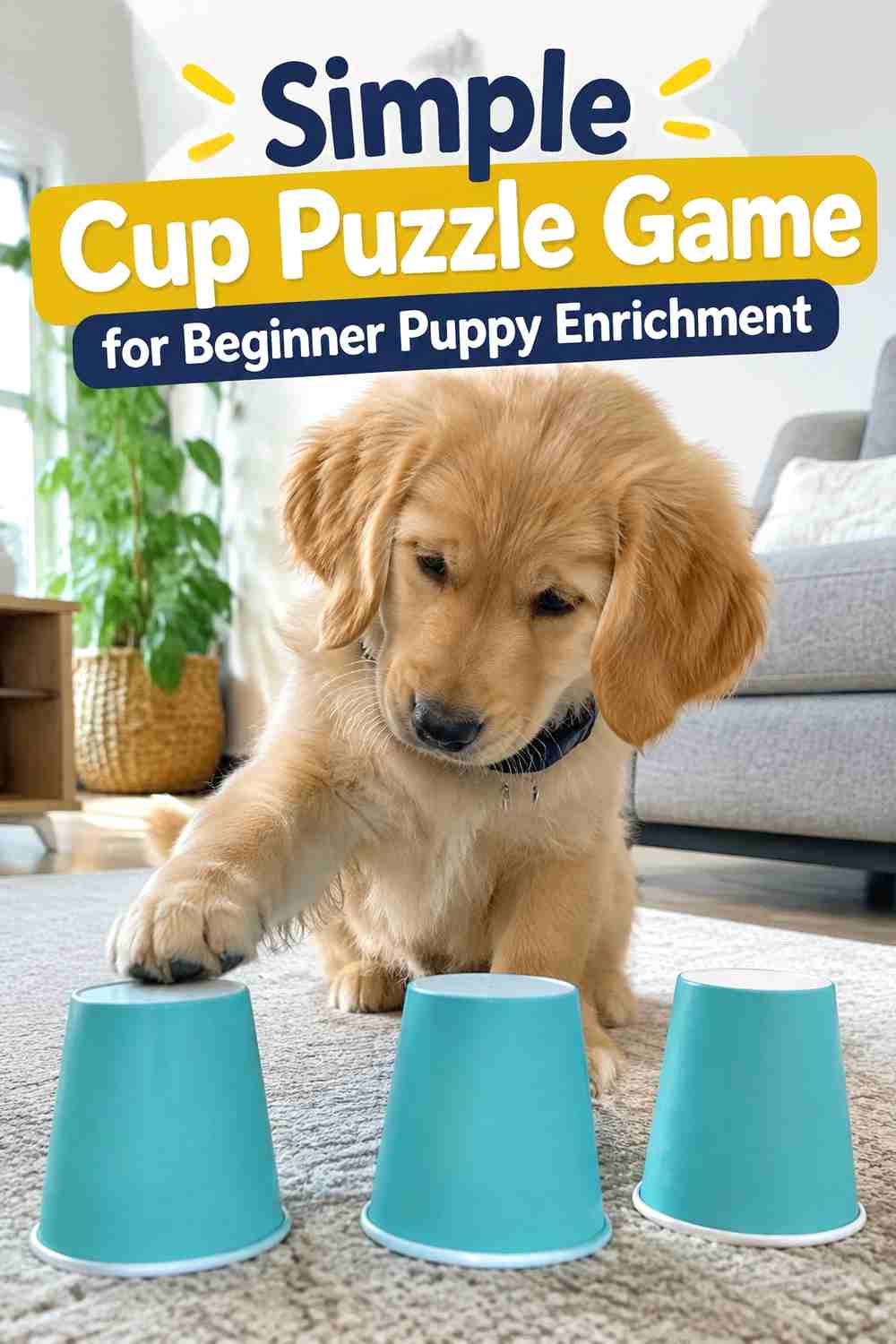
A simple cup puzzle encourages a beginner puppy to investigate several easy hiding places with their nose. Set a few sturdy, lightweight cups upside down on a non-slip mat and hide food beneath only one or two. Leave one cup slightly tilted during the first attempt so the puppy can smell and reach the reward without struggling. Once the idea makes sense, place the cups flat and allow gentle nudging to reveal what is underneath. Space them well apart so your puppy has room to circle and sniff. Avoid brittle cups or anything small enough to be carried away and chewed, and stop the game if your puppy becomes more interested in biting the containers than searching.
Setup Notes
Use only a few cups at first. Adding more hiding places is an easy way to increase variety later.
Why It Works
The puppy has to investigate rather than immediately seeing which location contains the reward.
6. Indoor Texture Walk For Curious Young Puppies

An indoor texture walk lets a curious puppy explore several ordinary surfaces in a controlled, low-pressure setup. Arrange flat items such as a towel, bath mat, smooth cardboard sheet, and firm blanket across the floor with small gaps between them. Let your puppy walk, sniff, pause, or step away at their own pace rather than guiding them across every surface. Keep everything flat and non-slip so the activity is about texture, not balancing. Avoid noisy, unstable, sharp, or slippery materials, and introduce only a few surfaces at one time. This simple setup can be changed easily by rearranging familiar textures instead of constantly adding unfamiliar objects.
Comfort & Safety
Never force your puppy onto a surface they are avoiding. Give them a clear route around every item.
Space & Placement
Use an open floor area where mats cannot slide into furniture or bunch under your puppy’s paws.
7. Easy Blanket Burrow Game For Curious Indoor Puppies

An easy blanket burrow game creates a soft exploration area where a puppy can sniff around loose folds and search for a familiar toy. Spread a lightweight blanket on the floor, make a few broad folds or small raised sections, and partially tuck a toy where it remains easy to find. Let your puppy investigate without wrapping them inside the blanket or creating tight tunnels. The setup should stay open enough that your puppy can step away immediately. This works best with puppies that already enjoy nosing under bedding rather than those that become frustrated by covered objects. Supervise closely because chewing, pulling, and swallowing loose fabric threads can quickly turn a simple enrichment game into an unsuitable activity.
Best For
This can suit curious puppies that enjoy pushing their noses under soft bedding or searching for partly hidden toys.
Use & Maintenance
Choose a washable blanket and retire it from enrichment use if seams or loose threads become damaged.
8. Find The Toy Hide And Seek Game For Playful Puppies

A find-the-toy hide-and-seek game helps a playful puppy search for something familiar instead of relying on food every time. Begin with a favorite puppy-safe toy placed partly behind a cushion or beside a piece of furniture while your puppy watches. Encourage them to investigate, then celebrate calmly when they locate it. Once the game is understood, hide the toy just out of direct view in an easy, accessible spot. Keep every location at floor level and avoid spaces that require climbing, squeezing behind furniture, or reaching near cords. Using the same toy for several sessions can make the task clearer before you begin switching between different objects.
Setup Notes
Make the first hiding places obvious. Difficulty should increase through visibility, not through unsafe access.
Pro Tip
Let your puppy see part of the hiding process at first so they understand what they are being invited to search for.
9. Low Indoor Obstacle Course For Confident Young Puppies
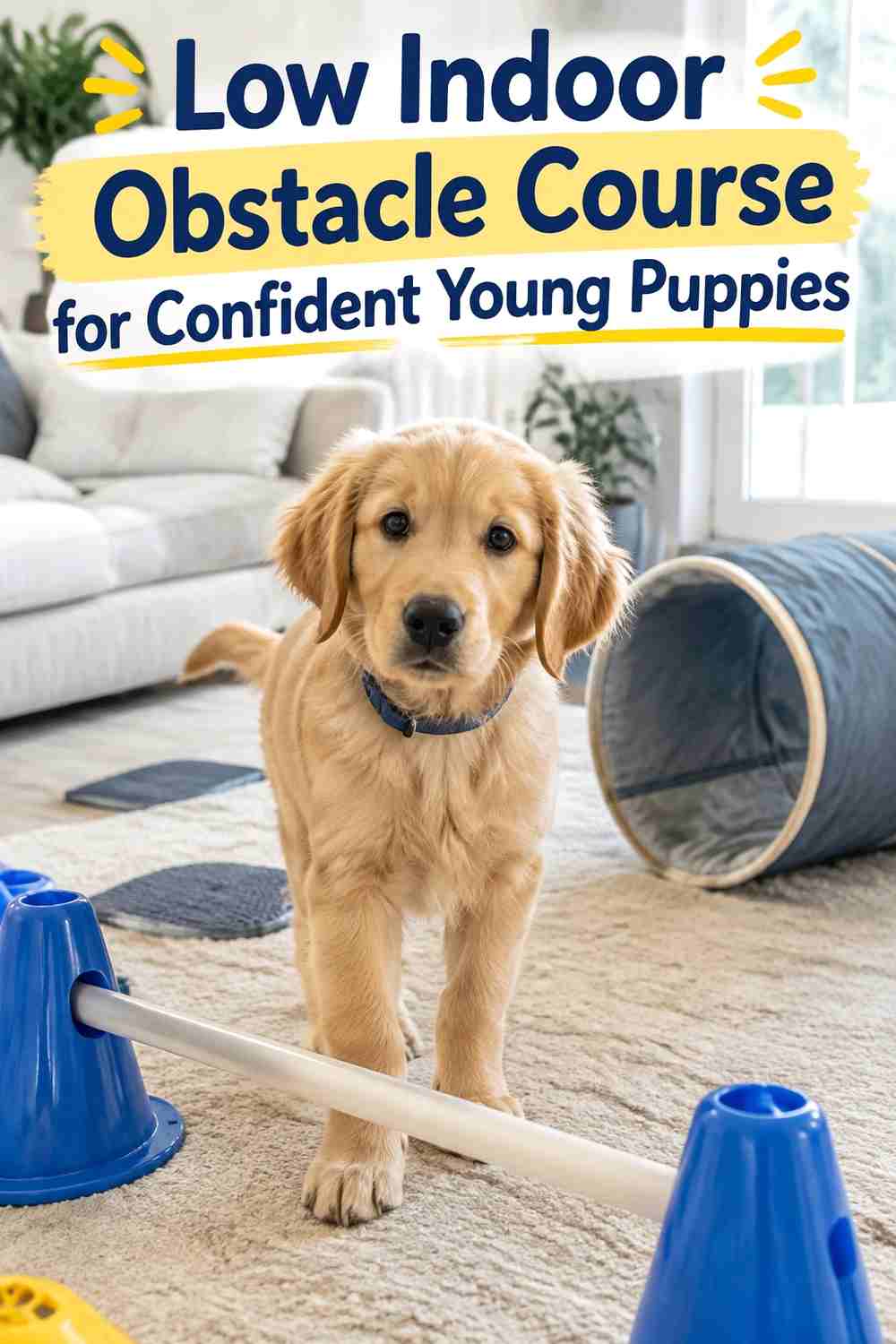
A low indoor obstacle course gives a confident puppy a chance to move through a simple sequence of safe floor-level challenges. Arrange wide pathways around cushions, place a low stable pole on the floor to step over, and create a broad route between sturdy household objects. Keep everything low and easy rather than encouraging jumps, sharp turns, or balancing on unstable furniture. Guide your puppy slowly with a toy or reward and let them skip any section they hesitate to approach. A few simple stations are enough for a young dog. Clear slippery rugs, cords, and breakable items first, and reset anything that shifts during use so the course stays predictable.
Space & Placement
An open living room or hallway can work well when the route is uncluttered and the floor provides good traction.
Comfort & Safety
Keep obstacles low, stable, and optional. Avoid repetitive jumping or anything that pushes a growing puppy beyond comfortable movement.
10. Cardboard Tube Search Game For Supervised Puppy Play
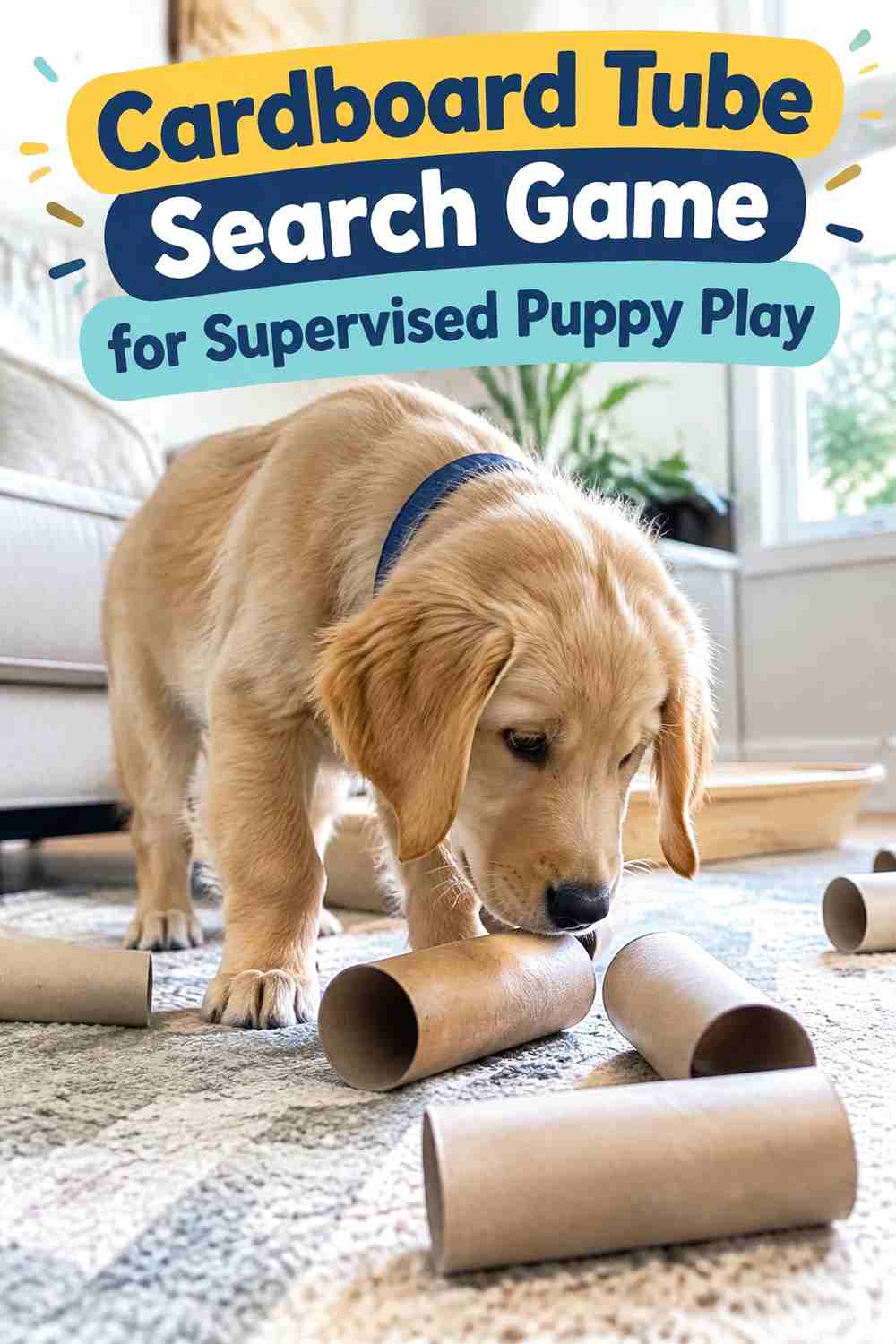
A cardboard tube search game uses several large clean tubes as simple scent containers for a supervised puppy activity. Place the tubes loosely inside a shallow box or across a non-slip mat, then put a few pieces of regular food inside some while leaving others empty. Keep the ends open so rewards can roll out easily when your puppy noses the tubes. This is less complicated than sealing or folding the cardboard, making it more suitable for a beginner. Watch closely because puppies may quickly decide that the cardboard itself is the toy. Remove damaged tubes before torn pieces become small enough to swallow, and avoid tubes with glue residue, plastic lining, or sharp edges.
Why It Works
The puppy gets several similar objects to investigate but has to use scent to discover which ones contain food.
Cleaning Notes
Discard tubes after they become damp or chewed and wipe the surrounding search area after food-based play.
11. Name And Find Toy Game For Simple Puppy Brain Work
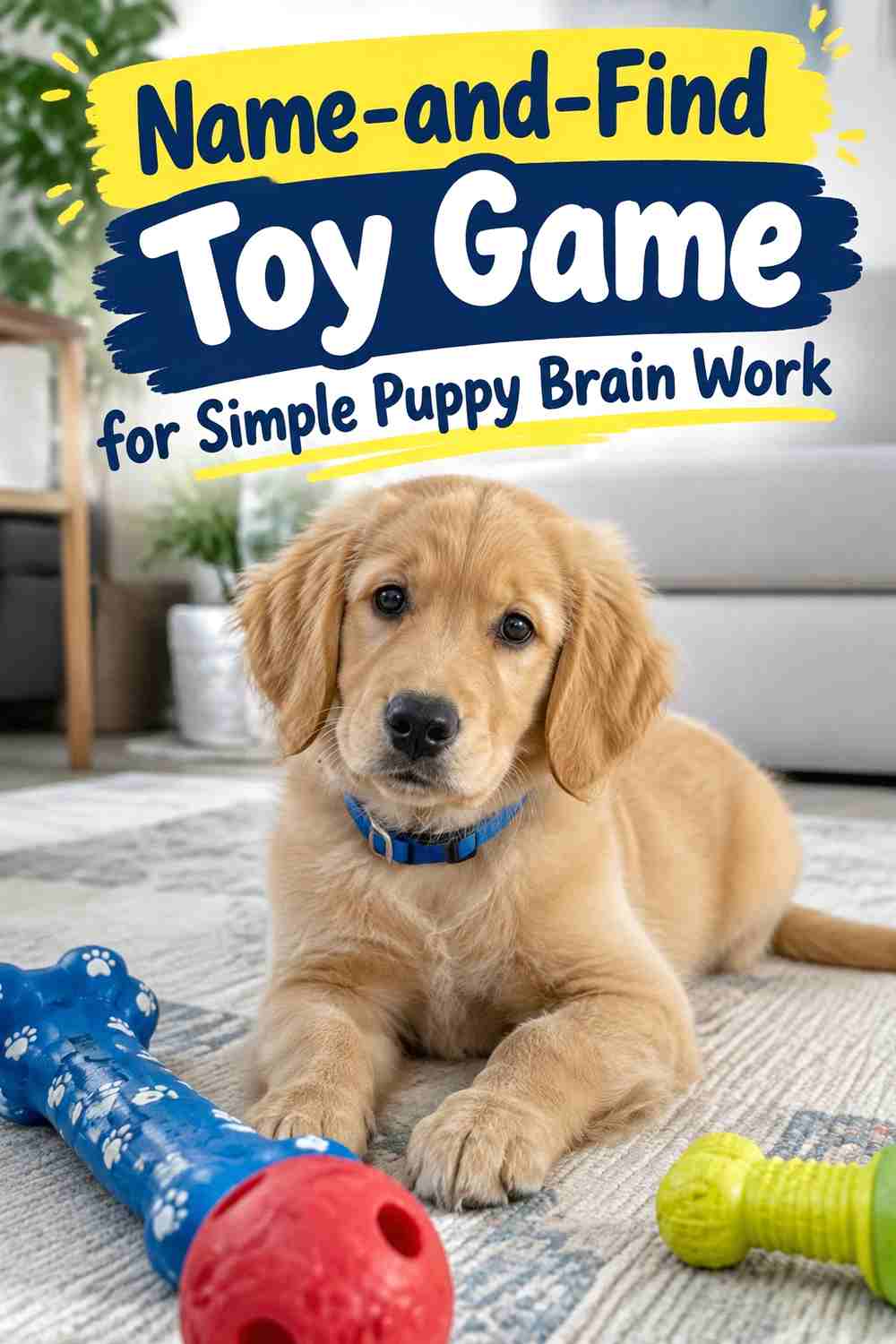
A name-and-find toy game combines simple listening with an easy search for a familiar object. Choose one favorite toy and consistently use a short name for it during play. Place the toy nearby, say the name once, and encourage your puppy to move toward or investigate it. After several easy repetitions, place the same toy a little farther away or partly out of sight. Keep the activity light rather than turning it into a long training session, and stop while your puppy is still interested. One named object is enough at first; introducing several names too quickly can make the game confusing. Use toys that are suitable for your puppy’s size and normal play style.
Best For
This activity suits puppies that already show interest in carrying, retrieving, or following familiar toys around the room.
Pro Tip
Use the same toy and word consistently before adding a second object with a different name.
12. Laundry Basket Exploration Game For Curious Young Puppies

A laundry basket exploration game gives a curious puppy a defined space filled with a few large, familiar objects to sniff and investigate. Use a low, sturdy basket with smooth sides and place items such as rolled towels, a familiar toy, and a soft mat inside. Set the basket on the floor and let your puppy explore from outside rather than encouraging them to climb into it. You can hide a few pieces of food between the larger items once your puppy understands the setup. Avoid baskets with openings that could catch a paw, jaw, collar, or tag. Keep the contents simple and remove anything your puppy begins tearing, swallowing, or carrying away to chew.
Setup Notes
Use only a few large objects at a time so your puppy can investigate without digging through an overcrowded container.
Comfort & Safety
Keep access open and never trap or surround your puppy with the basket or its contents.
13. Calm Lick Mat Activity For Quiet Puppy Enrichment
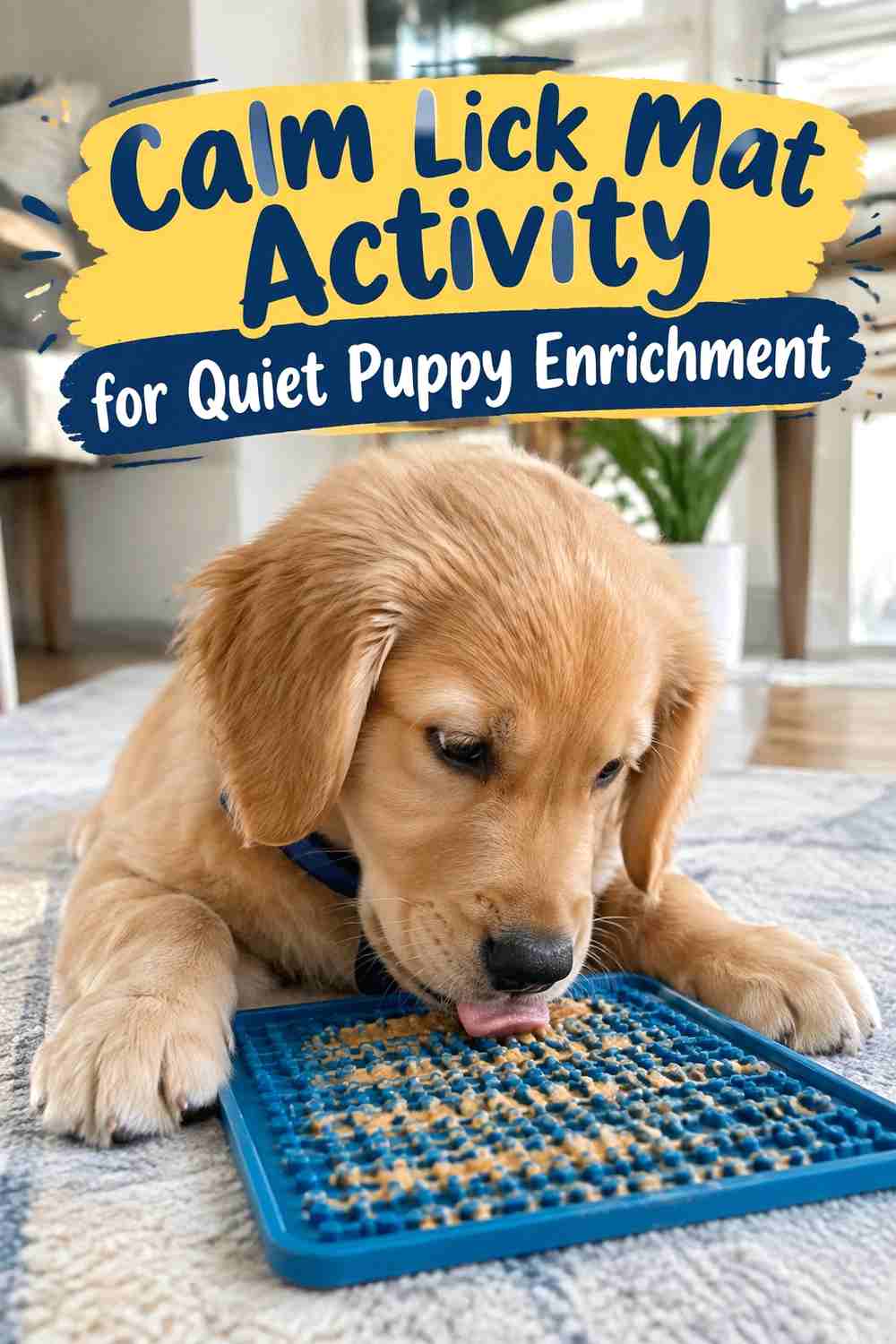
A calm lick mat activity provides a quieter form of puppy enrichment when you want less running, tugging, or rummaging. Spread a thin layer of an appropriate part of your puppy’s normal food across a clean lick mat and place it on a stable, washable surface. Start with an easy coating instead of filling every groove deeply so the activity stays straightforward. Supervise the session and remove the mat when the food is gone, especially if your puppy tends to chew flexible materials. Clean it thoroughly before reuse and inspect the surface for damaged edges. If your puppy follows a special diet or feeding plan, use only foods approved for that individual puppy.
Best For
This option can suit times when your puppy is interested in food but a high-energy activity is not practical.
Cleaning Notes
Wash food residue from grooves after every use and allow the mat to dry fully before storing it.
14. Easy Indoor Scent Trail For Curious Young Puppies

An easy indoor scent trail gives a curious puppy a small route to follow with their nose. Place a few pieces of regular food in a simple line around one uncluttered room, using obvious floor-level locations rather than difficult hiding places. Begin with short distances between pieces so your puppy naturally moves from one scent point to the next. As the activity becomes familiar, vary the route around safe furniture edges or across a mat. Keep track of every location so no food remains hidden afterward. Clear the room of loose cords, tiny objects, and anything your puppy should not investigate, and avoid placing rewards under heavy furniture or in tight spaces.
Space & Placement
A small room works well because the search remains manageable and you can monitor every hiding point.
Pro Tip
Change the route before increasing the number of rewards. A different path can create variety without making the game much harder.
15. Multi Station Puppy Enrichment Circuit For Everyday Variety
You May Also Like



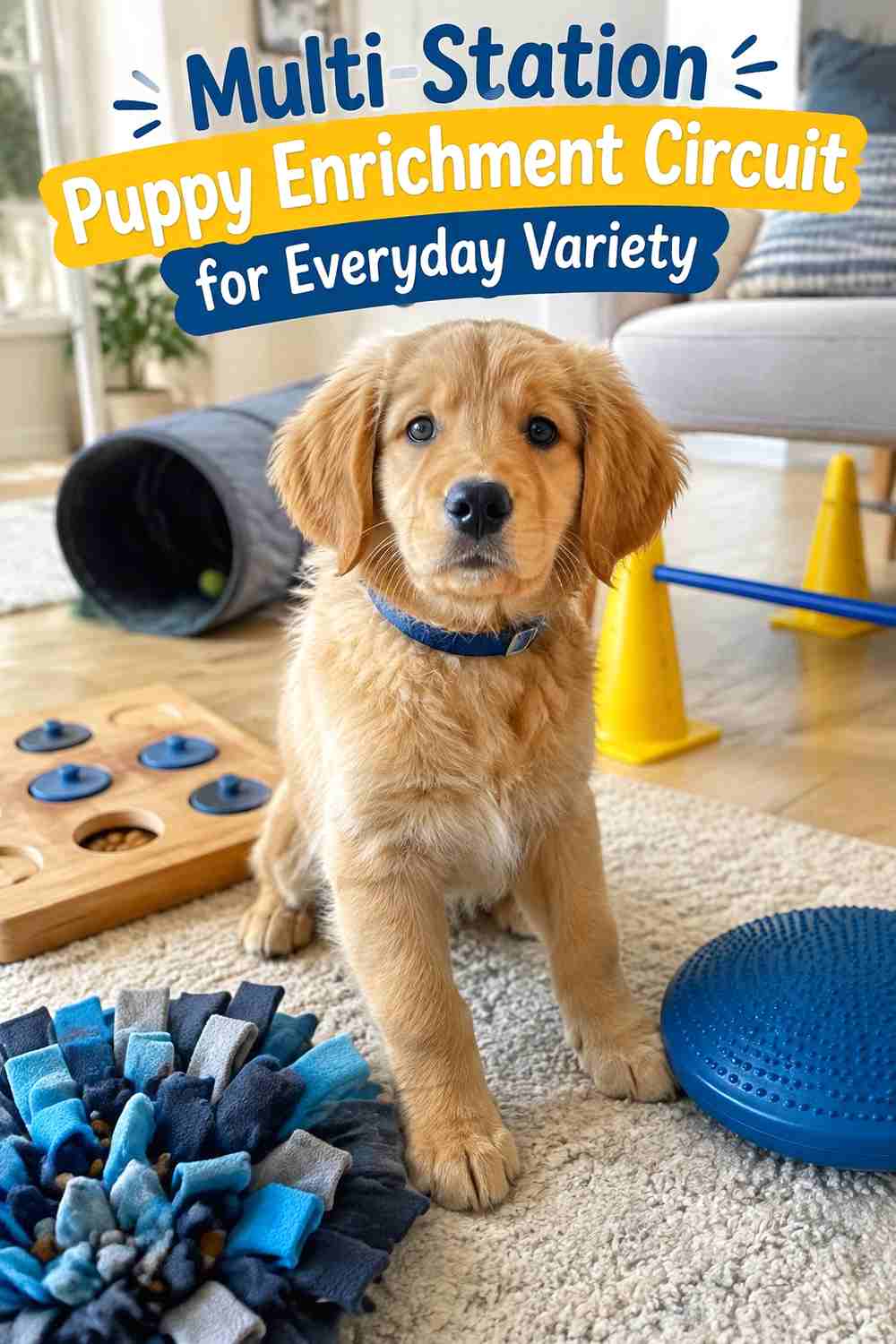
A multi-station puppy enrichment circuit combines several familiar activities into one flexible session without making any single task too difficult. Set up three simple stations around a room, such as a towel sniff search, a familiar toy hunt, and a low texture area. Leave clear walking space between them and let your puppy investigate in any order instead of directing them through a strict sequence. Keep each station easier than usual because the changing activities already add variety. This setup works best after your puppy has tried the individual games separately. If excitement rises too quickly or your puppy starts chewing materials, reduce the number of stations and return to one calm activity at a time.
Setup Notes
Three simple stations are usually more practical than filling the room with many competing objects and smells.
Use & Maintenance
Rotate one station between sessions and put materials away afterward so the circuit feels fresh without creating permanent clutter.
How to Choose the Right Idea
Start with your puppy’s age, confidence, chewing habits, and current attention span. Very young or inexperienced puppies usually do best with loose towel folds, visible food searches, familiar toy games, and uncomplicated sensory setups.
Consider energy level and owner involvement too. Tug and hide-and-seek require active participation, while a lick mat or towel search can create a quieter activity. Puppies that chew fabric, paper, or cardboard need particularly close supervision and may do better with sturdier, simpler options.
Available space also matters. Small homes can use compact puzzles and scent trails, while larger rooms may suit low obstacle routes or multi-station circuits. Whatever you choose, keep the challenge achievable and change the activity when your puppy loses interest, becomes frustrated, or starts using the materials in an unsafe way.
Final Thoughts
Puppy enrichment does not need to be complicated. A towel, familiar toy, safe floor space, or simple search game can create plenty of variety when the activity matches your puppy’s current skills.
Begin with one easy idea, observe how your puppy interacts with it, and rotate different types of sniffing, movement, problem-solving, and quiet enrichment over time. Simple setups are often easier to supervise, clean, adjust, and repeat.
FAQs
1. What enrichment activity is easiest for a young puppy?
A loose towel snuffle search, simple scatter search, or familiar toy hunt is a good starting point because the puppy can understand the activity quickly without solving a complicated puzzle.
2. How can I tell if a puppy enrichment game is too difficult?
If your puppy walks away repeatedly, becomes frustrated, starts biting the setup, or stops searching and begins using force, simplify the activity by making rewards or toys easier to find.
3. Can puppies use cardboard for enrichment?
Cardboard can be used for supervised activities with puppies that investigate without swallowing it. Remove tape, staples, sharp edges, and damaged pieces, and stop the game if the puppy begins eating the material.
4. Do puppy enrichment activities always need food?
No. Tug games, toy searches, texture exploration, low obstacle routes, and object investigation can all provide enrichment without using food.
5. How often should I change puppy enrichment activities?
There is no need to introduce something completely new every day. Rotating a small group of familiar activities and changing the setup, location, or difficulty can provide useful variety without overwhelming a young puppy.
CTA
Save your favorite puppy enrichment ideas and rotate a few simple activities that match your puppy’s age, confidence, and play style.
