Create an indoor puppy play area that gives your young dog room to move, explore, sniff, chew appropriate toys, and settle without taking over your whole home.
Save This Idea on Pinterest
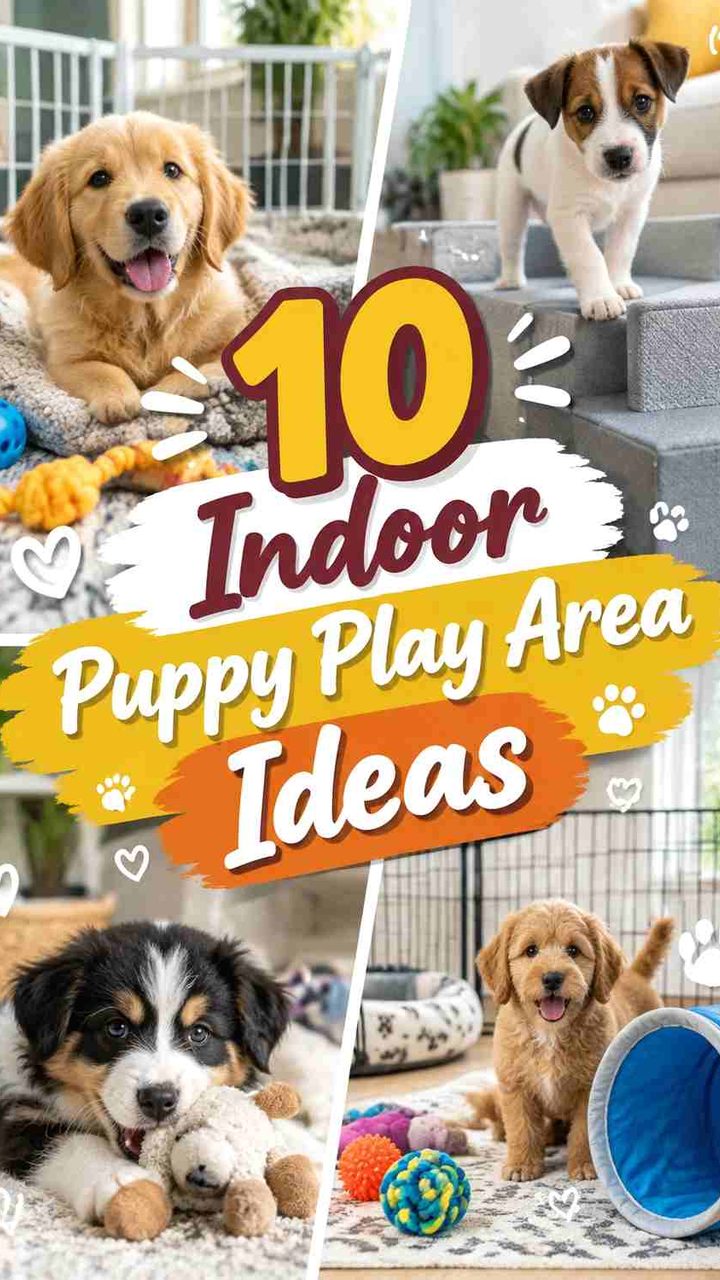
10 Indoor Puppy Play Area Ideas
Save to PinterestA useful indoor puppy play area should match your puppy’s age, size, confidence, energy, and chewing habits. Some puppies need an open mat for interactive games, while others benefit from a defined pen, puzzle corner, tunnel, or quieter enrichment station.
The ideas below range from compact setups to multi-zone spaces. Focus on stable surfaces, simple layouts, washable materials, age-appropriate toys, clear walking routes, and easy supervision. Remove loose cords, cleaners, medicines, tiny objects, and anything your puppy may chew or swallow before turning part of a room into a play space.
Quick List
- Soft Washable Floor Mat Play Zone for Indoor Puppies
- Secure Puppy Pen Play Area for Everyday Indoor Fun
- Toy Rotation Corner for Curious Puppies in Small Homes
- Snuffle and Puzzle Station for Food-Motivated Indoor Puppies
- Gentle Tug and Fetch Zone for Active Indoor Puppies
- Cozy Tunnel Exploration Area for Curious Young Puppies
- Easy-Clean Kitchen Play Zone for Messy Puppy Activities
- Quiet Enrichment Corner for Calm Indoor Puppy Play
- Low Obstacle Course Area for Confident Young Puppies
- Multi-Zone Puppy Play Area for Everyday Indoor Variety
1. Soft Washable Floor Mat Play Zone For Indoor Puppies
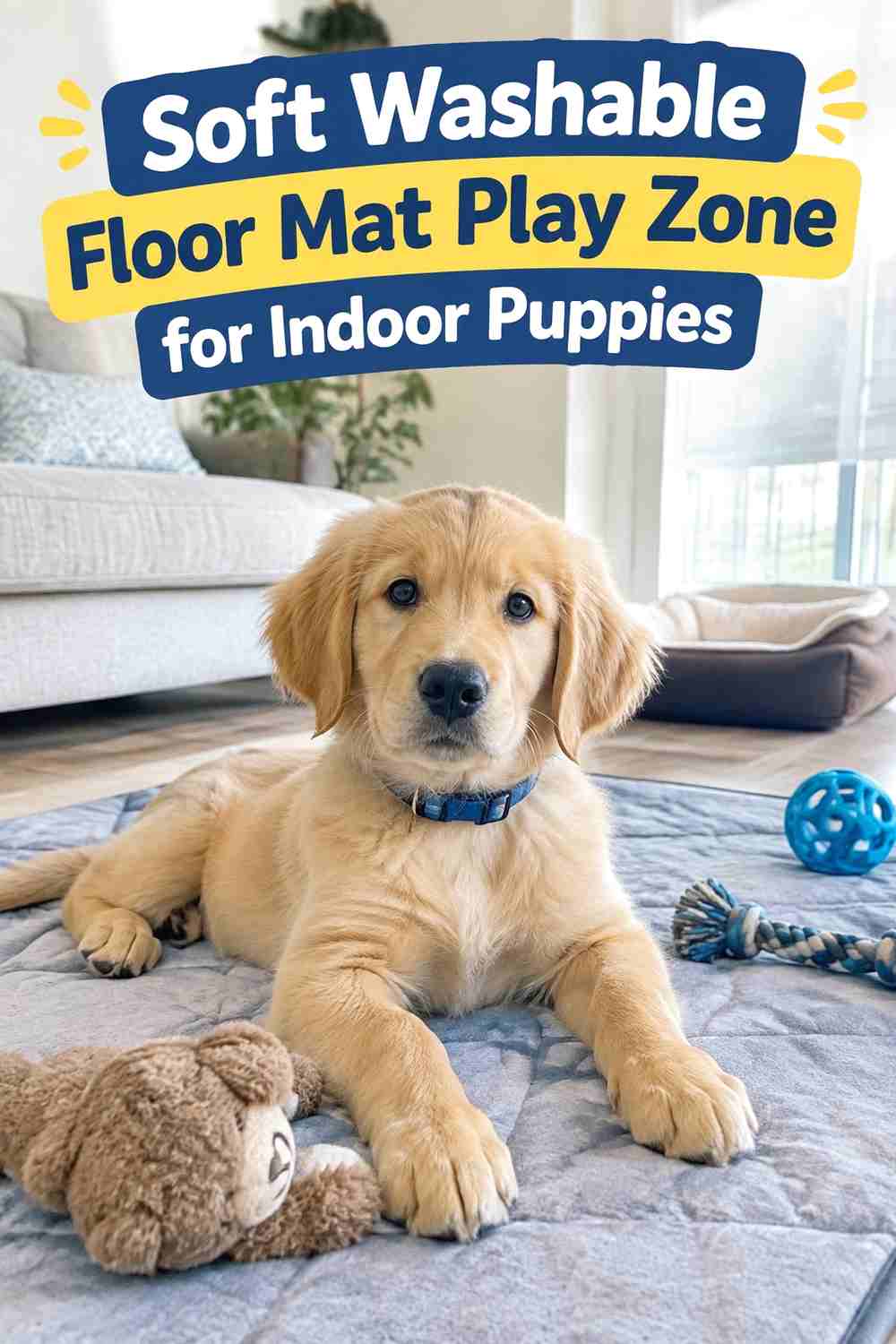
A soft washable floor mat play zone creates a simple everyday space where a puppy can play with toys, interact with you, and explore without spreading everything across the room. Choose a large mat with good traction and enough space for your puppy to turn, lie down, and move comfortably. Add only a few age-appropriate toys rather than covering the surface with clutter. This layout works especially well in living rooms because the mat visually defines the puppy area while remaining easy to move or clean. Keep chewable household objects outside the boundary, and inspect the mat regularly if your puppy scratches, digs, or bites fabric edges.
Space & Placement
Place the mat away from door swings, electrical cords, heaters, and busy walkways where people may repeatedly step through the play area.
Cleaning Notes
Choose a washable or wipeable surface and clean spills promptly so the area stays practical for regular puppy use.
2. Secure Puppy Pen Play Area For Everyday Indoor Fun
You May Also Like



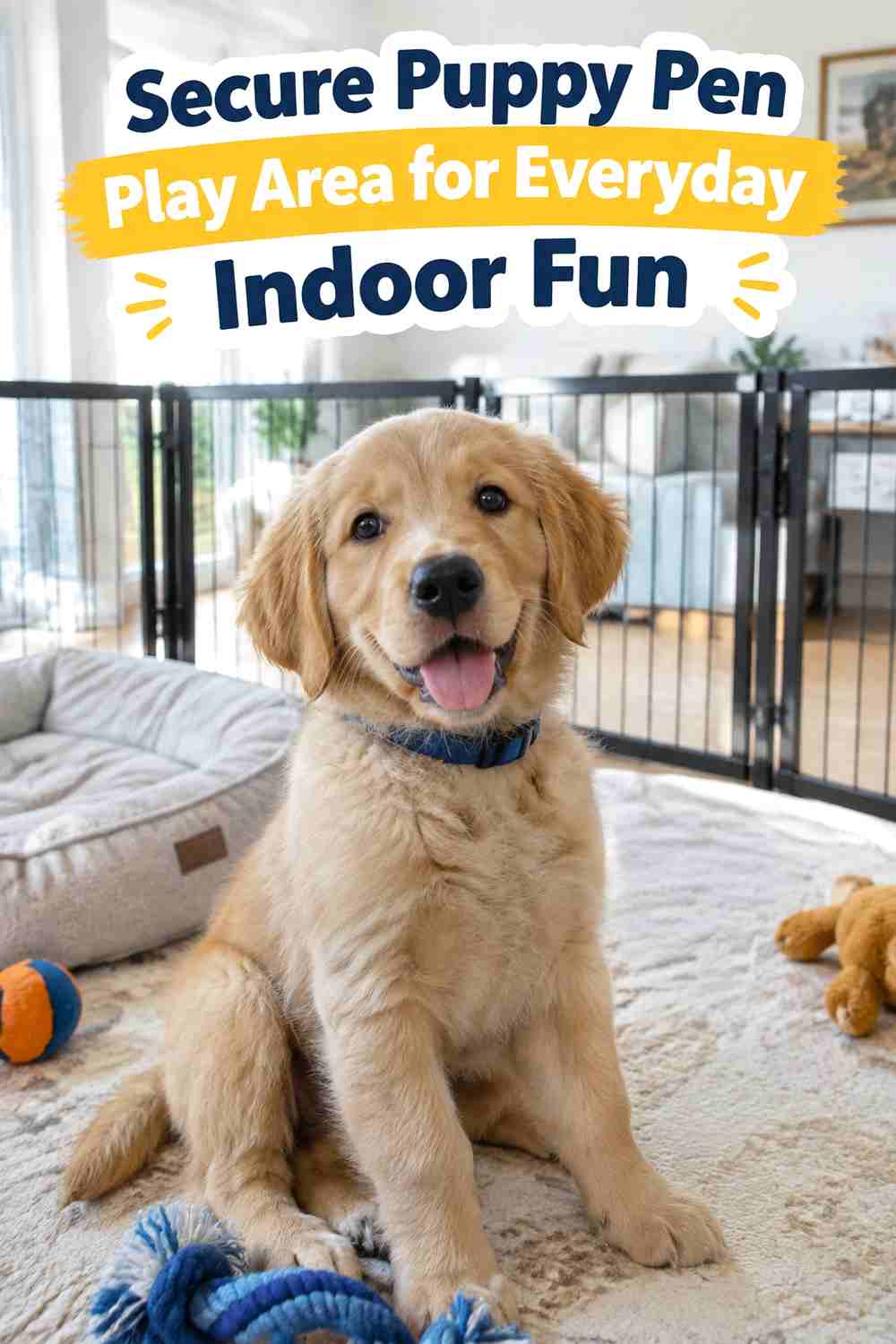
A secure puppy pen creates a clearly defined indoor play area that can hold a few toys, a resting mat, and simple supervised enrichment without giving a young puppy access to an entire room. Position the pen on a stable, non-slip floor and leave enough open space inside for normal movement rather than filling every corner. Check that panels, gates, and connections remain secure and that there are no gaps where paws or jaws could become trapped. A pen works best as a managed puppy space, not as a place to pile up every toy at once. Remove collars or attachments if they could catch on the enclosure, and keep unsafe household items outside reach.
Setup Notes
Use a simple layout with one comfortable resting area and a small rotation of toys so the pen stays easy to monitor and reset.
Comfort & Safety
Make sure the puppy cannot climb unstable objects placed beside the panels or reach cords, curtains, or furniture through the enclosure.
3. Toy Rotation Corner For Curious Puppies In Small Homes
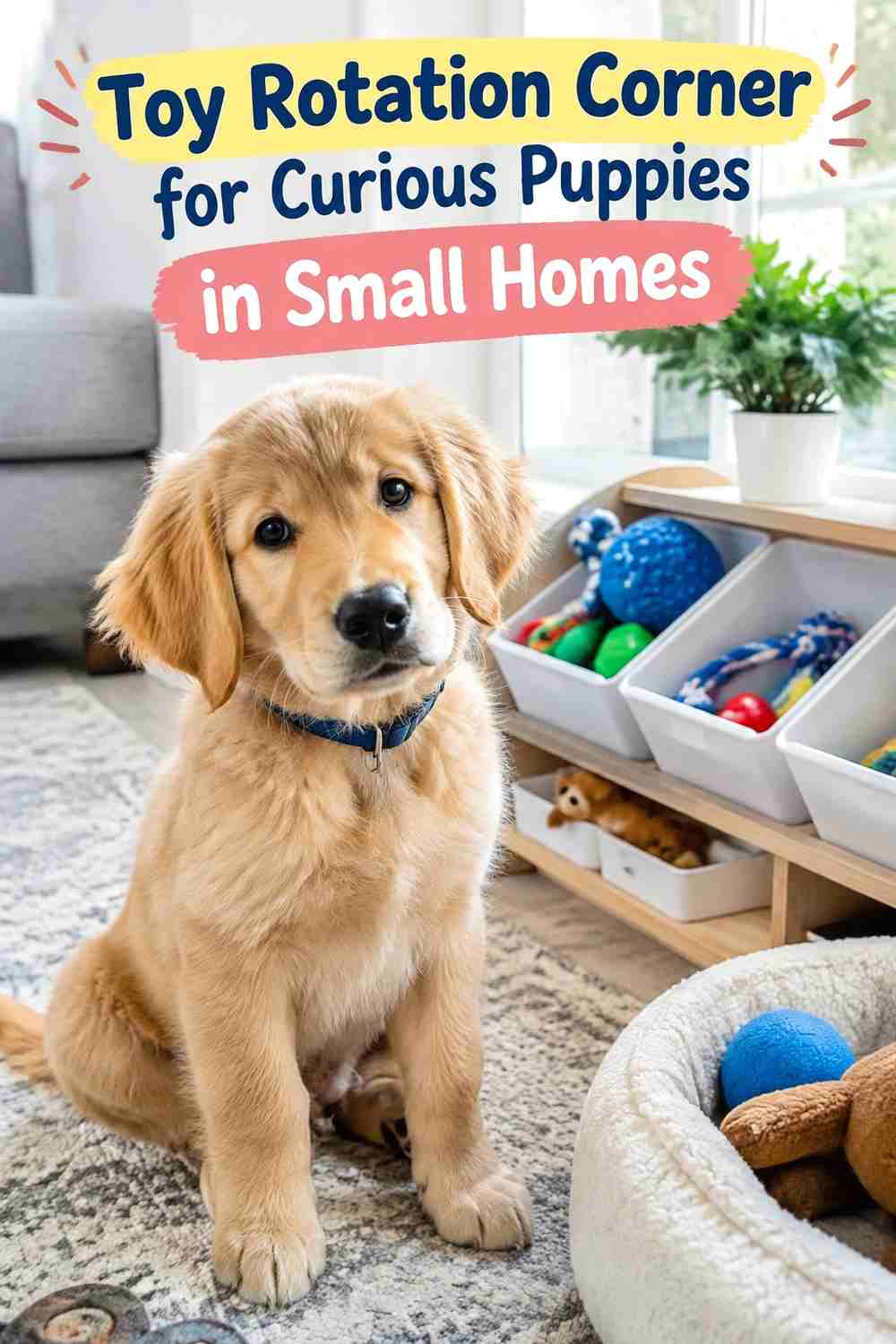
A toy rotation corner gives a curious puppy a compact play area without requiring permanent floor space for a large collection of toys. Use a washable mat or small rug in one quiet corner, then offer two or three puppy-safe toys at a time. Store the remaining toys somewhere inaccessible and swap a few choices periodically instead of leaving everything available every day. This approach keeps the floor less cluttered and makes it easier to notice damaged toys before they become a problem. Include different play types, such as one chewable toy, one soft interactive toy, and one simple puzzle when appropriate. Keep the storage container itself out of reach if your puppy likes chewing baskets or bins.
Best For
This setup suits apartments, bedrooms, and other small spaces where a full puppy room or large exercise pen is impractical.
Use & Maintenance
Inspect toys during each rotation and remove anything with loose stuffing, damaged seams, cracked pieces, or parts that may detach.
4. Snuffle And Puzzle Station For Food Motivated Indoor Puppies

A snuffle and puzzle station creates a focused play area for puppies that enjoy searching for part of their regular food. Place a snuffle mat, simple beginner puzzle, or loosely folded towel on a non-slip washable surface, then keep the surrounding area free from unrelated toys. Start with easy-to-find food so your puppy understands the activity without becoming frustrated. One puzzle at a time is usually enough for a young dog. Supervise closely, especially with fabric or homemade materials, because puppies may switch from sniffing to chewing. Once the activity ends, pick up the puzzle and shake or wipe away crumbs instead of leaving food-based enrichment permanently available.
Setup Notes
Keep difficulty low at first by leaving several food pieces partly visible and using only simple folds or open compartments.
Cleaning Notes
Wash food-contact surfaces regularly and let mats or fabric pieces dry completely before storing them for the next session.
5. Gentle Tug And Fetch Zone For Active Indoor Puppies

A gentle tug and fetch zone gives an active indoor puppy a clear space for short interactive games without turning the whole room into a running course. Choose an uncluttered area with good traction and enough distance for a toy to travel along the floor. Use a soft tug or puppy-safe fetch toy and keep movement controlled rather than encouraging sharp turns, high jumps, or long indoor sprints. Remove coffee tables, loose rugs, breakable objects, and other obstacles from the immediate play path. Tug should stay low and gentle, while fetch distances can remain short. Stop before your puppy becomes overly excited or starts crashing into furniture, and switch to a quieter activity when needed.
Space & Placement
Hallways or open living-room sections can work when the floor is non-slip and doors, stairs, and furniture hazards are controlled.
Pro Tip
Roll toys along the floor instead of throwing them high, which keeps the game more predictable in an indoor space.
6. Cozy Tunnel Exploration Area For Curious Young Puppies
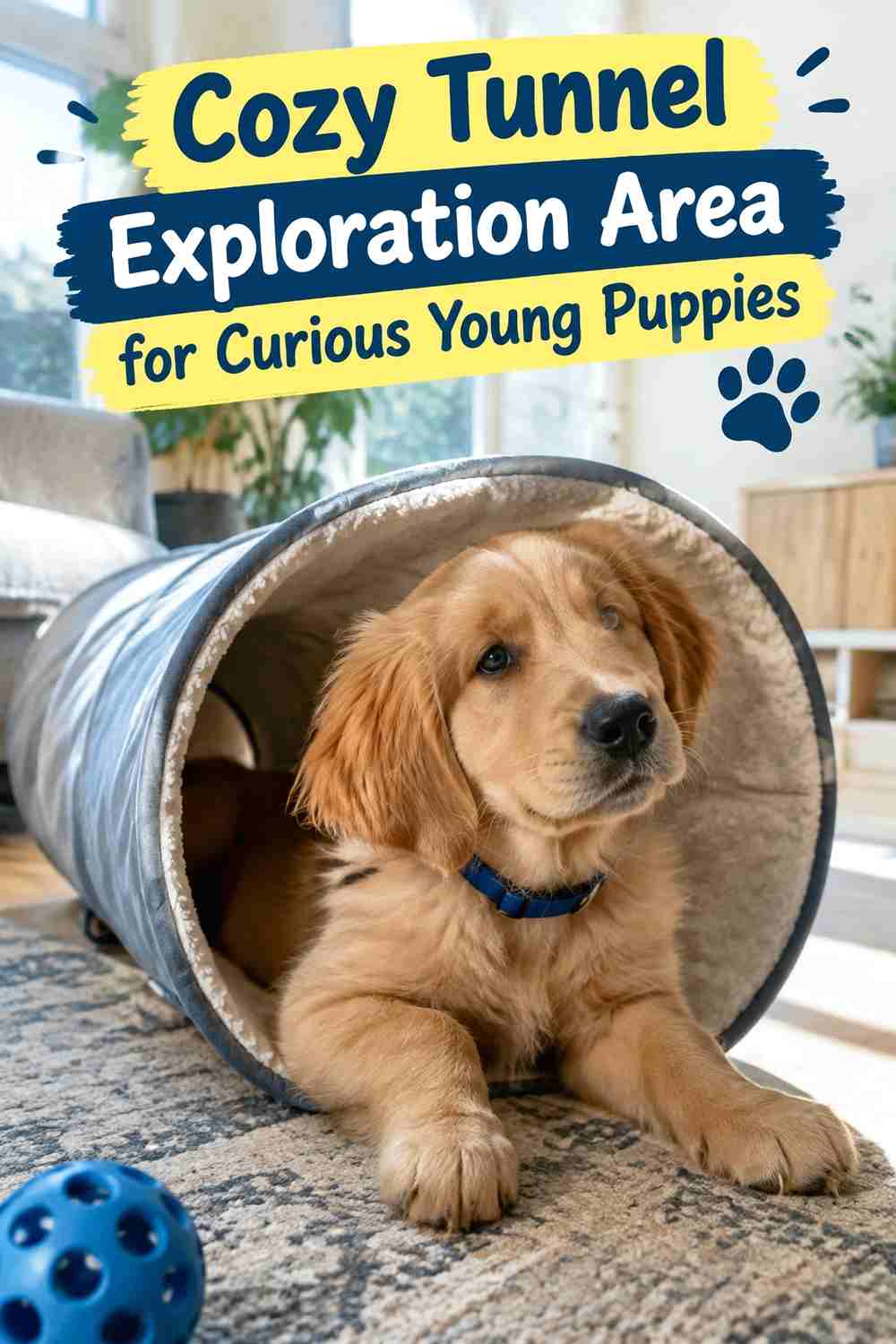
A cozy tunnel exploration area gives a curious puppy a simple place to crawl through, sniff around, and investigate from different angles. Use a stable puppy-safe fabric tunnel or a wide open-ended setup that stays at floor level and does not collapse around the puppy. Place a familiar toy near one entrance at first so exploration feels optional rather than forced. Keep both ends clear and avoid blocking the exit with furniture, baskets, or people. This type of play area is best for puppies that willingly investigate enclosed spaces. If your puppy starts chewing fabric supports or becomes hesitant inside the tunnel, remove it and try a more open play setup instead.
Best For
This idea can suit confident puppies that enjoy moving through boxes, under chairs, or around other safe floor-level spaces.
Comfort & Safety
Always provide a visible exit and inspect the tunnel for torn fabric, exposed supports, or loose pieces before each use.
7. Easy Clean Kitchen Play Zone For Messy Puppy Activities

An easy-clean kitchen play zone is useful for puppy activities that involve food, licking, water, or materials likely to create crumbs. Choose a quiet section of hard flooring away from active cooking areas, hot appliances, trash bins, cleaners, and food preparation traffic. Add a non-slip washable mat, then use the space for a lick mat, simple food puzzle, or supervised water-friendly toy. Keep the setup compact so spills can be noticed and cleaned quickly. Kitchens can contain many puppy hazards, so cabinet access, cords, dropped food, and cleaning products need careful control. When the activity is finished, remove enrichment items and return the area to a clean, uncluttered floor.
Cleaning Notes
Wipe spills and food residue promptly, and wash reusable mats before dried-on food collects in grooves or seams.
Space & Placement
Choose an edge of the room that stays clear of hot surfaces, meal preparation, and frequent foot traffic.
8. Quiet Enrichment Corner For Calm Indoor Puppy Play
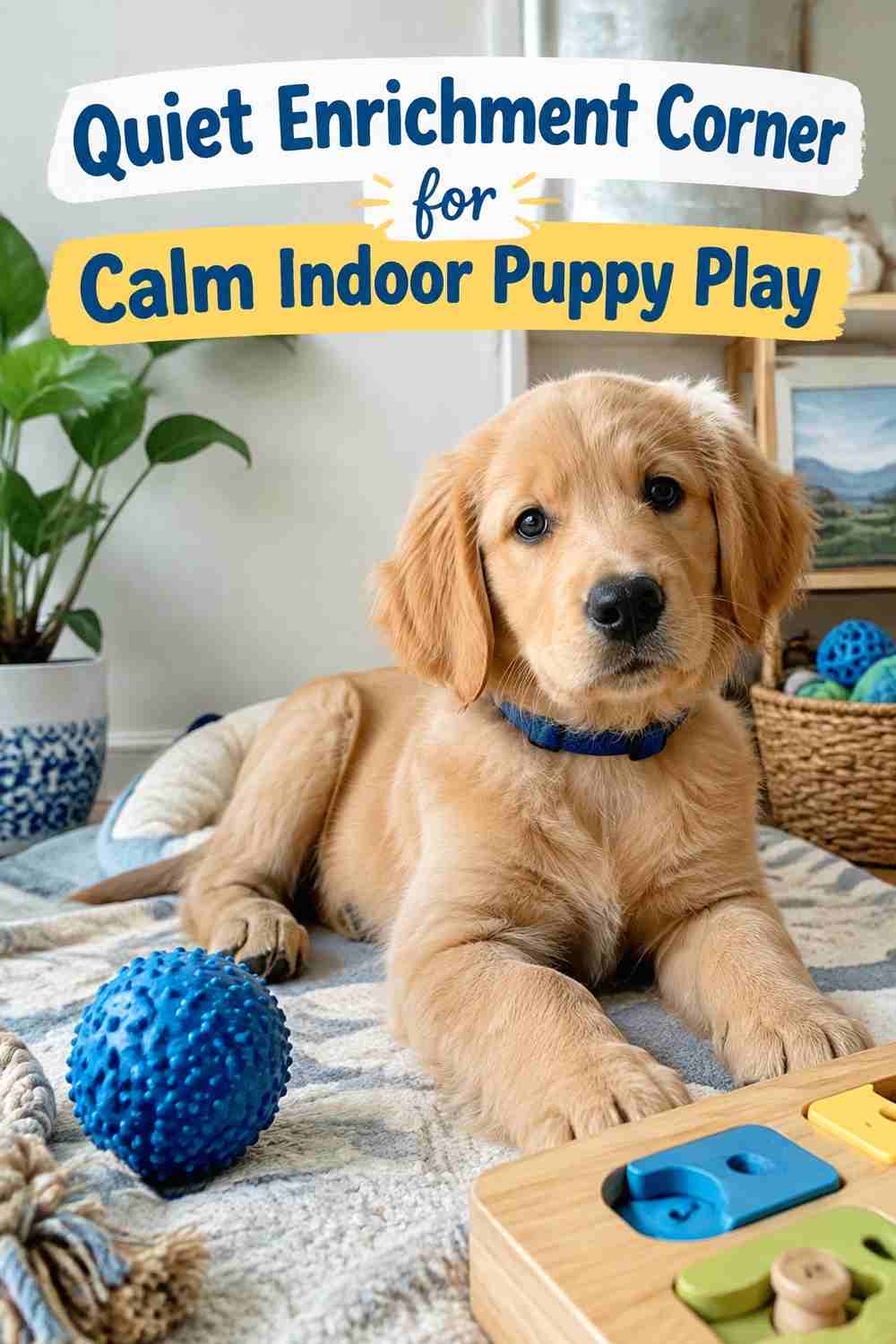
A quiet enrichment corner gives a puppy a lower-energy option for times when running or rough play is not the best fit. Set up a comfortable mat in a calm part of the room and offer one simple activity, such as a suitable chew toy, lick mat, or easy food puzzle. Keep the area away from televisions, doorways, and household traffic if possible so the puppy is not constantly interrupted. This should remain an optional play and settling space rather than somewhere the puppy is repeatedly placed against their preference. Rotate activities without overcrowding the corner, and remove food-based items after use. A predictable layout can also make cleanup and supervision easier for owners.
Best For
This area can be useful during quieter parts of the day or for puppies that become overstimulated by busy multi-toy play spaces.
Setup Notes
Use a comfortable, non-slip mat and leave enough open floor around it for your puppy to approach or move away freely.
9. Low Obstacle Course Area For Confident Young Puppies

A low obstacle course area adds gentle movement and exploration for a confident puppy without relying on jumping or elevated equipment. Arrange broad pathways around cushions, flat mats with different textures, and a low stable object that can be stepped over rather than leaped across. Keep every element close to floor level and leave generous landing space between stations. Guide your puppy slowly with a toy or reward, but allow them to skip anything they are unsure about. The course should encourage careful movement rather than speed. Avoid slippery surfaces, unstable household furniture, tall platforms, and repetitive jumping, especially while a puppy is still growing and learning how to coordinate their body.
Setup Notes
Start with two or three easy elements and add variety by rearranging them instead of making obstacles higher.
Comfort & Safety
Stop using any station that slides, tips, or makes your puppy hesitate repeatedly, and keep the route clear of hard furniture edges.
10. Multi Zone Puppy Play Area For Everyday Indoor Variety
You May Also Like



A multi-zone puppy play area combines several simple functions in one room while keeping each activity easy to understand. Create separate floor-level areas for active toys, sniffing or puzzles, and quieter resting or chewing, with clear open space between them. You do not need large furniture or permanent dividers; washable mats can visually separate each zone while remaining easy to move. Keep the total number of toys modest so the puppy can choose an activity without facing a cluttered floor. This setup works best when every zone has a purpose and can be reset quickly. Rotate individual toys or puzzles instead of constantly redesigning the entire room, and remove damaged items as soon as you notice them.
Space & Placement
Arrange zones around the edges of the room so the center remains open for safe movement and easy supervision.
Use & Maintenance
Reset each zone after play, wipe surfaces as needed, and keep storage, cords, household chemicals, and small objects completely outside puppy access.
How to Choose the Right Idea
Choose an indoor puppy play area based on your puppy’s age, size, confidence, energy level, and chewing habits. A very young puppy may do best with a simple mat, pen, or quiet enrichment corner, while a confident puppy may enjoy a tunnel or low obstacle setup.
Your home layout matters just as much. Small apartments benefit from toy rotation corners and compact puzzle stations, while a larger room may support separate active and quiet zones. Easy-clean flooring is especially useful for food puzzles, licking activities, and messy play.
Also consider how much supervision each setup needs. Fabric tunnels, cardboard, food puzzles, and chewable materials require regular checking. Keep pathways clear, choose non-slip surfaces, and simplify the area whenever clutter starts making supervision or cleanup harder.
Final Thoughts
A good indoor puppy play area should be easy for your puppy to use and easy for you to supervise, clean, and reset. Start with one simple zone rather than filling a room with equipment.
As your puppy grows, you can rotate toys, change activities, or add another defined area for sniffing, interactive play, or quiet enrichment. Stable surfaces, manageable clutter, and age-appropriate activities matter more than creating an elaborate setup.
FAQs
1. What should I put in an indoor puppy play area?
Start with a non-slip washable surface and a small selection of age-appropriate toys. Depending on the setup, you can add a simple puzzle, chew toy, tunnel, resting mat, or supervised interactive game.
2. Where is the best place for an indoor puppy play area?
Choose a spot away from stairs, electrical cords, cleaners, heaters, breakable items, and heavy foot traffic. The area should also be easy for you to see and supervise.
3. How can I create a puppy play area in a small apartment?
Use a compact mat, toy rotation corner, small pen, or puzzle station instead of dedicating an entire room. Store unused toys elsewhere and rotate them to keep floor clutter low.
4. Should a puppy play area stay set up all day?
Not every activity needs to remain available. Basic resting and toy areas can stay in place, while food puzzles, tug toys, tunnels, and homemade enrichment are often better brought out for supervised sessions and stored afterward.
5. How do I keep an indoor puppy play area clean?
Choose washable mats, wipeable flooring, and toys that can be cleaned easily. Pick up crumbs after food activities, wash soiled fabrics, and regularly remove damaged toys or shredded materials.
CTA
Save your favorite indoor puppy play area ideas and build a simple setup that fits your puppy, your space, and your everyday routine.
