Turn an ordinary backyard into an engaging dog obstacle course with simple stations for stepping, weaving, exploring, pausing, and moving at a comfortable pace.
Save This Idea on Pinterest

10 Dog Backyard Obstacle Ideas
Save to PinterestA backyard obstacle course gives dogs a structured way to interact with familiar outdoor space without requiring elaborate equipment. These ideas include low jumps, weaving stations, tunnels, platforms, ramps, and sensory challenges that can be arranged individually or combined into a longer course.
The best setup depends on your dog’s size, confidence, energy, experience, and comfort with unfamiliar surfaces or objects. Start with one easy obstacle, keep the equipment stable, and let your dog investigate without pressure. Once individual stations feel familiar, you can link several together and change the order occasionally to keep the backyard activity interesting.
Quick List
- Low Jump Bar Backyard Obstacle for Active Dogs
- Backyard Weave Pole Course for Focused Dog Play
- DIY Tunnel Run Obstacle for Backyard Dog Enrichment
- Stepping Platform Balance Course for Backyard Dogs
- Garden Cone Slalom Course for Energetic Backyard Dogs
- Low Ground Pole Step-Over for Backyard Dog Courses
- Backyard Pause Box Station for Calm Course Transitions
- Ground-Level Hoop Walk-Through for Backyard Dog Courses
- Gentle Low Ramp Obstacle for Backyard Dog Courses
- Mixed-Surface Sensory Path for Backyard Dog Enrichment
1. Low Jump Bar Backyard Obstacle For Active Dogs

A low jump bar creates a simple backyard obstacle that lets an active dog step or hop over a clearly visible barrier. Keep the bar low enough that the movement looks comfortable rather than turning the activity into a high-jumping challenge. Lightweight equipment that can fall away rather than trap a leg is preferable to a rigid barrier.
Place the obstacle on level grass with open landing space on both sides. Introduce it slowly by walking beside your dog and rewarding an easy crossing. Dogs that hesitate can begin by stepping over a pole resting directly on the ground. Skip jumping for dogs that appear uncomfortable with the movement or have mobility concerns.
Setup Notes
Keep the approach and landing area free of garden tools, holes, slippery surfaces, and nearby furniture. Avoid placing the jump where your dog has to turn sharply immediately afterward.
Best For
This station suits confident, active dogs that already move comfortably around the yard and enjoy following simple movement cues.
2. Backyard Weave Pole Course For Focused Dog Play
You May Also Like

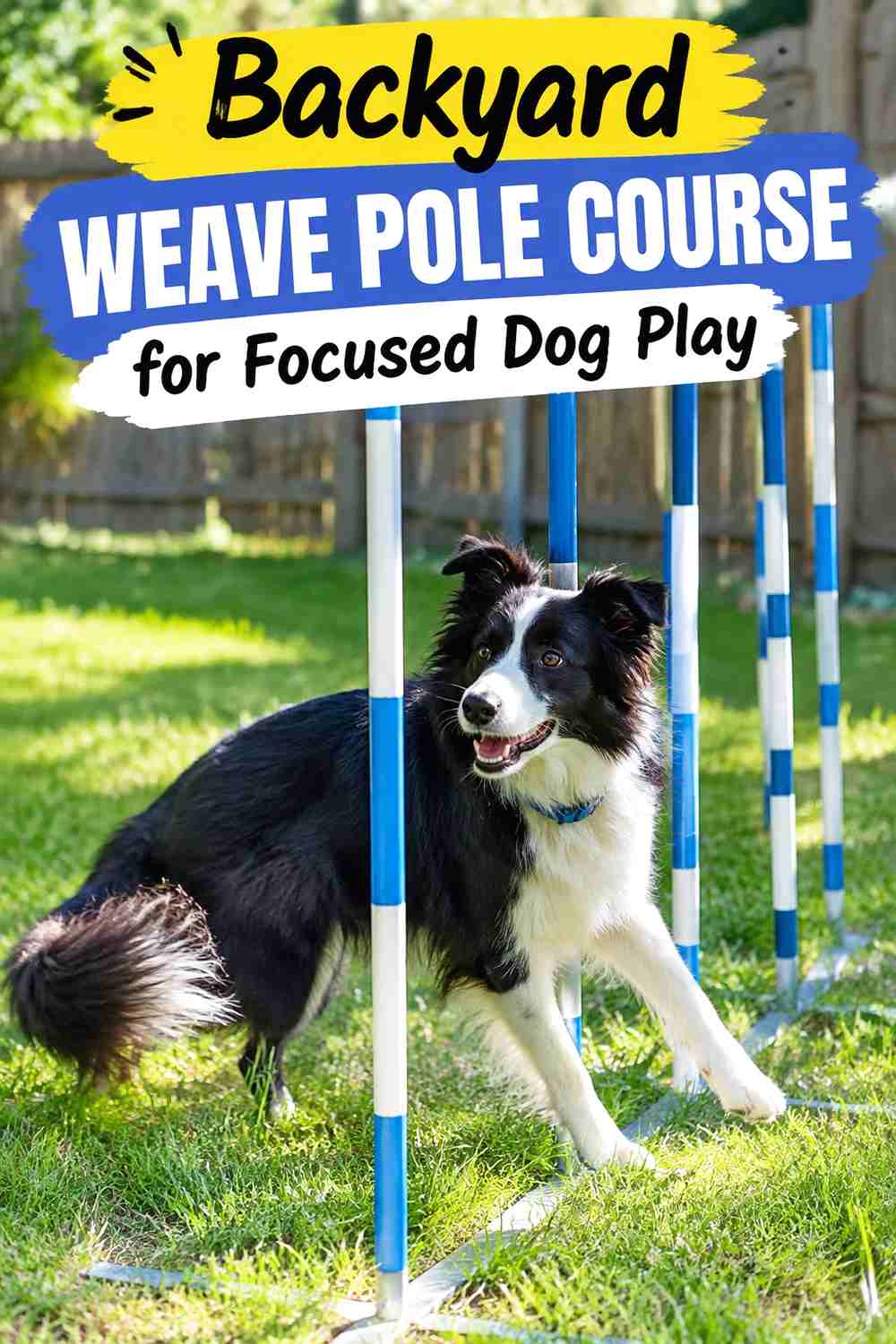
A backyard weave pole course creates a winding path where your dog moves around a short row of upright markers. Instead of expecting polished agility-style weaving immediately, space the poles generously and guide your dog through a loose S-shaped route at a comfortable walking pace.
Use stable markers that are visible without creating sharp edges or hard collision points. At first, a treat or favorite toy can help guide the route, but keep the movement relaxed rather than rushing. As your dog understands the pattern, gradually reduce the amount of guidance. If tight turns cause hesitation, increase the spacing and make the path easier rather than insisting on a narrow weave.
Space & Placement
Set the poles on flat ground with enough room at both ends for an easy entrance and exit.
Pro Tip
Change the number or spacing of the poles occasionally so the station feels fresh without becoming confusing.
3. Diy Tunnel Run Obstacle For Backyard Dog Enrichment

A DIY tunnel run gives a backyard course a clear start-to-finish obstacle that many curious dogs enjoy exploring. Use a pet-safe play tunnel or another wide, stable tunnel designed so the dog can move through without squeezing, snagging, or brushing against sharp material.
Begin with the tunnel completely open and straight so your dog can see through to the other side. Encourage investigation from either entrance rather than pushing or pulling the dog inside. A hesitant dog may first be rewarded for approaching, sniffing, or placing only the front paws inside. Once the straight tunnel is familiar, you can reposition it slightly while keeping both entrances easy to find and the interior clear.
Comfort & Safety
Secure lightweight tunnels against rolling or blowing away, especially on breezy days. Stop if the dog appears worried about the enclosed space.
Use & Maintenance
Shake out grass and debris after use, and let damp fabric dry fully before folding it for storage.
4. Stepping Platform Balance Course For Backyard Dogs

A stepping platform course uses several broad, low, stable surfaces that a dog can walk onto and off one at a time. Arrange the platforms as separate stations rather than creating a high elevated path, leaving enough space for the dog to step naturally between them.
Choose platforms with firm footing and nonslip tops, and place them on level ground so they do not rock. Introduce one platform first and reward calm investigation before adding more. Dogs can walk across the sequence slowly, pause briefly on individual platforms, or simply practice placing all four paws on one surface. If a dog repeatedly steps around the platforms, make the route easier and reduce the number of stations.
Best For
This setup can work well for dogs that enjoy slower, deliberate course activities rather than fast running or jumping.
Cleaning Notes
Brush away dirt and leaves regularly, and check the undersides for moisture, wobbling, or wear before each session.
5. Garden Cone Slalom Course For Energetic Backyard Dogs
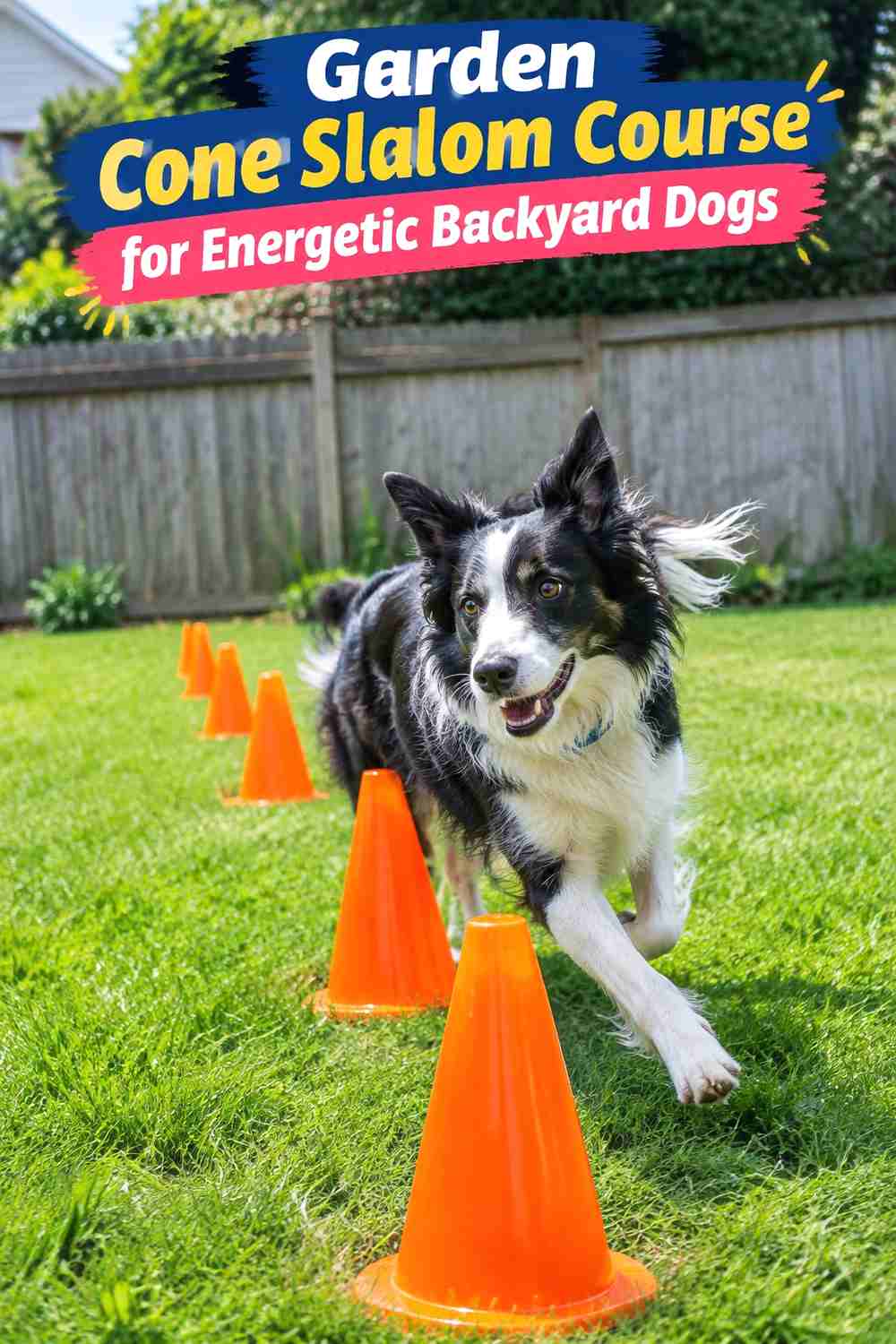
A garden cone slalom turns a row of lightweight markers into an easy backyard direction-change challenge. Place the cones in a loose line and guide your dog around them in alternating directions, keeping the turns broad enough for comfortable movement.
This obstacle is especially flexible because you can shorten the route, widen the spacing, or use only a few cones for beginners. Walk beside your dog at first instead of expecting independent weaving. For more variety, use the same cones to create a curved path or a simple out-and-back route on another day. Keep the course away from garden beds, exposed stakes, hoses, and other objects that could make the path cramped or distracting.
Setup Notes
Choose visible cones that sit securely on the grass but are light enough not to become hard obstacles if bumped.
Pro Tip
Move the cones between sessions instead of leaving one permanent pattern, which makes the same equipment more versatile.
6. Low Ground Pole Step Over For Backyard Dog Courses

A low ground pole step-over asks a dog to walk carefully across a short series of poles without needing to jump. Arrange the poles flat on the grass or slightly raised only when you have stable, purpose-suitable supports that cannot roll or collapse unpredictably.
Start with generous spacing that matches your dog’s natural walking stride rather than forcing awkward steps. Walk alongside the poles and let your dog look down and choose each foot placement. Dogs that rush can be guided through more slowly, while hesitant dogs may begin with only one or two poles. Because the activity depends on careful footing, remove the station if wet grass, mud, or shifting equipment makes the route slippery or unstable.
Pet Type & Life Stage
Adjust the number and spacing of poles for the individual dog rather than expecting puppies, small dogs, adults, and older dogs to use one identical layout.
Use & Maintenance
Check that every pole stays in position during the session and reset anything that has rolled or shifted.
7. Backyard Pause Box Station For Calm Course Transitions
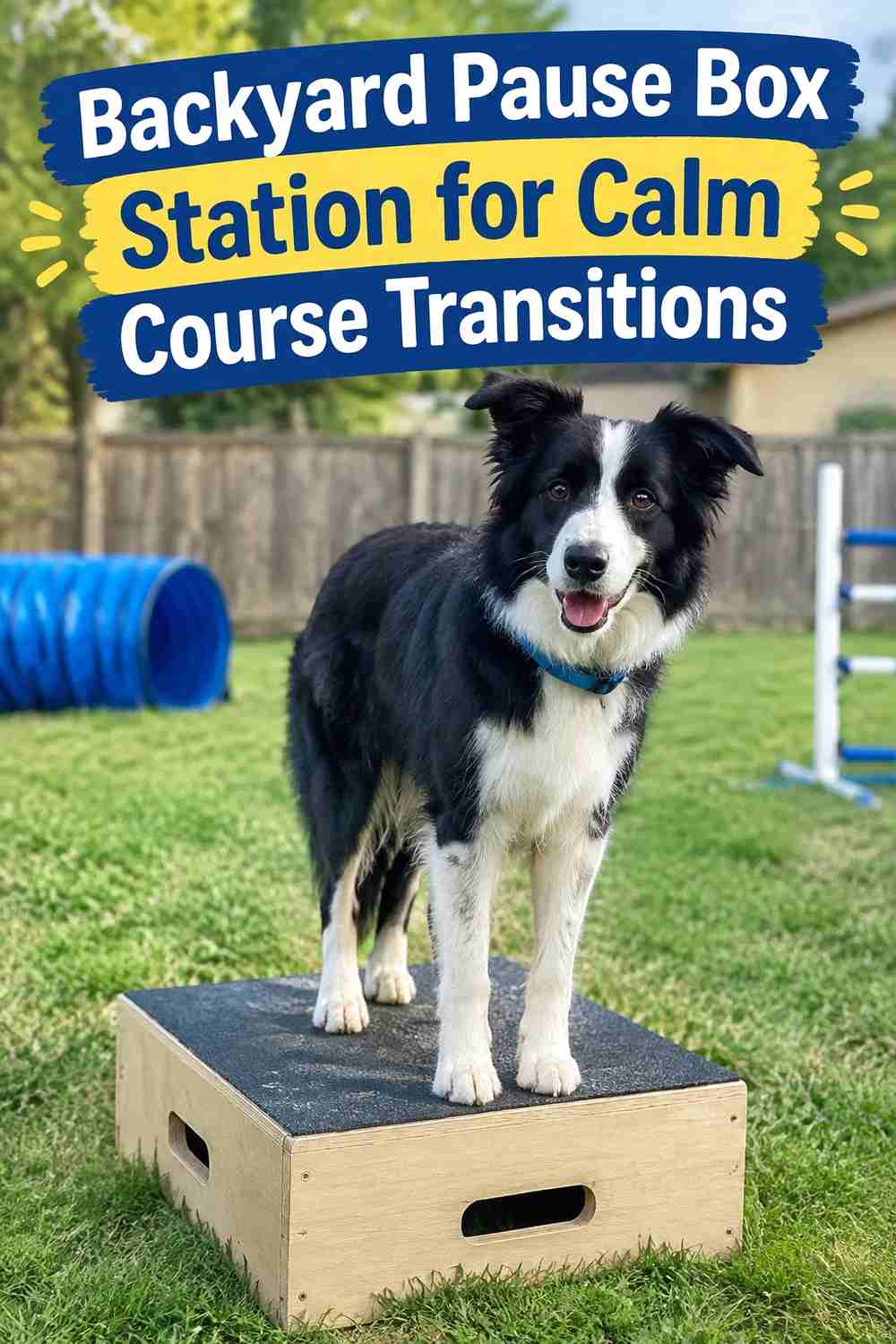
A backyard pause box creates a clearly marked station where a dog briefly stops between more active obstacles. Use a flat mat, low platform, or visible ground marker large enough for the dog to stand comfortably without balancing on an edge.
Guide your dog onto the station, pause for a moment, then continue to the next obstacle. The goal is simply to create a predictable transition point, not to require a long stay. This works especially well between faster elements such as a tunnel and a cone route because it changes the rhythm of the course. Keep the station easy to recognize and place it where your dog has plenty of room to approach and leave without sharp turns.
Why It Works
The pause station adds variety by mixing movement obstacles with a simple controlled stop, giving the course a clearer sequence.
Space & Placement
Keep it on level ground and separate it from food bowls, resting areas, and busy gates so its purpose remains easy to understand.
8. Ground Level Hoop Walk Through For Backyard Dog Courses
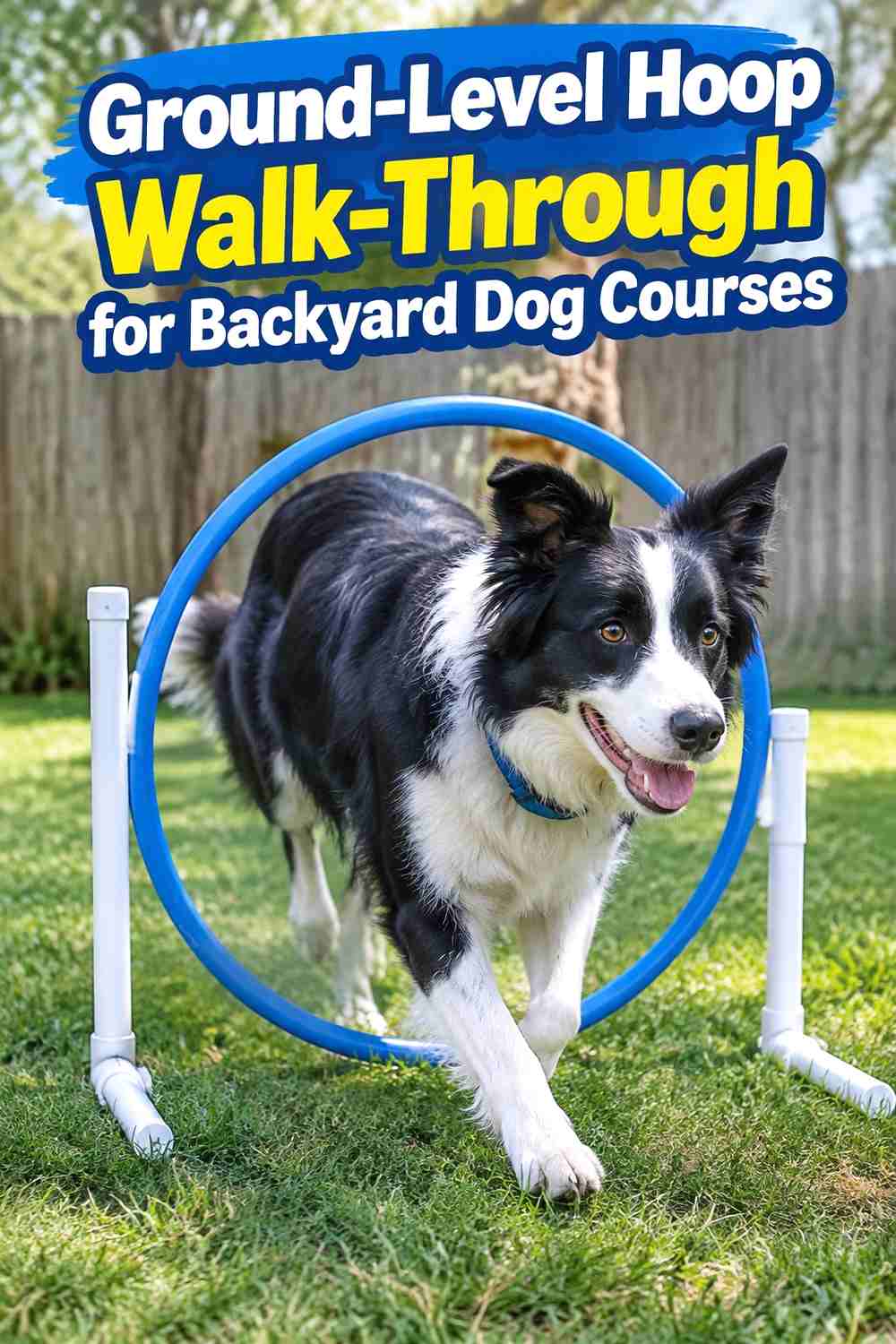
A ground-level hoop walk-through gives dogs a clear visual opening to move through without asking them to leap. Secure a large hoop or similar pet-safe frame vertically with its lowest edge at ground level, leaving enough open space for your dog’s body and tail to pass comfortably.
Introduce the obstacle from a straight approach so the opening is obvious. You can stand on the far side and encourage your dog forward, rewarding calm movement through the center. Never force a hesitant dog through the frame or make the opening unnecessarily narrow. Once the obstacle feels familiar, place it between two simple stations to create a natural transition in a longer backyard course.
Comfort & Safety
The frame should remain stable without sharp attachments, loose cords, or protruding supports. Remove it if wind or uneven ground makes it wobble.
Best For
This is a useful alternative for dogs that enjoy course navigation but are better suited to walking obstacles than jumping ones.
9. Gentle Low Ramp Obstacle For Backyard Dog Courses

A gentle low ramp adds a small change in elevation to a backyard obstacle course while keeping the movement slow and controlled. Use a broad, stable ramp with a gradual incline, secure footing, and enough width for your dog to walk naturally without balancing near an edge.
Introduce the ramp from the lower end and allow your dog to investigate before asking for a full crossing. Some dogs may be comfortable placing only their front paws on it at first, which is a reasonable starting point. Keep the ramp dry and position it on firm, level ground so it cannot shift under the dog’s weight. A dog that repeatedly avoids the incline may simply prefer another obstacle.
Comfort & Safety
Avoid steep, narrow, slick, or elevated ramps. Dogs with mobility concerns should use activities suited to their individual needs rather than being encouraged over uncomfortable equipment.
Use & Maintenance
Inspect the walking surface and supports regularly for loose parts, splinters, moisture, or worn traction.
10. Mixed Surface Sensory Path For Backyard Dog Enrichment
You May Also Like



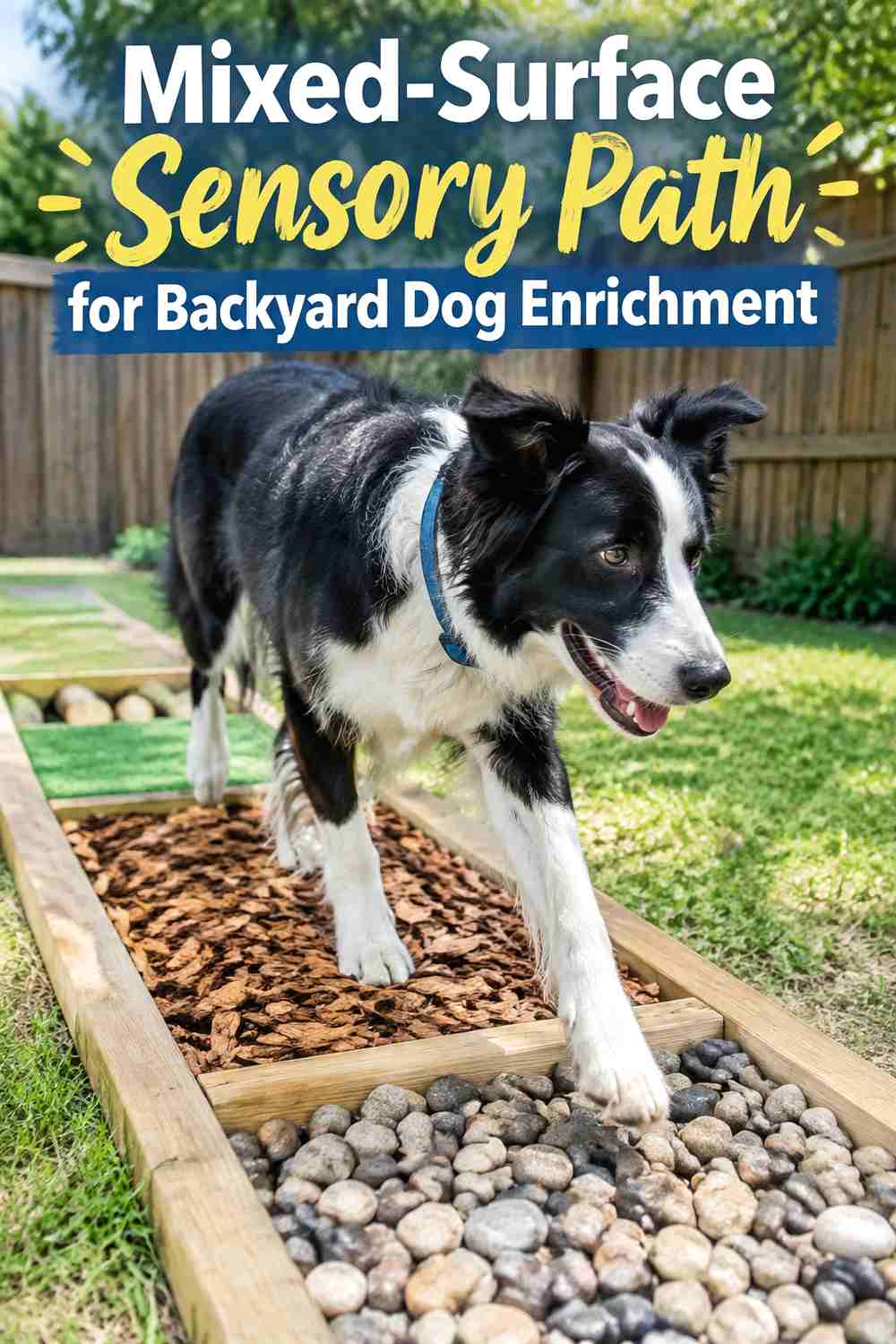
A mixed-surface sensory path lets a dog walk across several safe textures arranged in a simple backyard route. You might use sections such as grass, a sturdy outdoor mat, a shallow tray containing large smooth pet-safe items that cannot be swallowed, or another stable surface designed for comfortable footing.
Keep each section broad enough for natural steps and introduce the textures one at a time. Let your dog sniff, pause, or walk around a surface rather than forcing contact. The goal is exploration, so there is no need to complete every section in one session. Avoid sharp, hot, slippery, unstable, or tiny loose materials, and check outdoor surfaces before use because sun, rain, and dirt can quickly change their condition.
Best For
This station suits curious dogs that enjoy investigating changes in texture, scent, and footing at their own pace.
Cleaning Notes
Shake out washable mats and clean trays after use so mud, standing water, insects, and yard debris do not accumulate.
How to Choose the Right Idea
Choose backyard obstacles according to how your dog naturally likes to move. A fast, confident dog may enjoy a low jump, tunnel, and cone route, while a dog that prefers slower exploration may be happier with stepping platforms, ground poles, a pause station, or a mixed-surface path.
Body size matters because openings, platform surfaces, pole spacing, and turning room should feel comfortable rather than cramped. Age, confidence, mobility, and previous experience also affect which obstacles make sense. Puppies and inexperienced dogs generally benefit from simpler layouts and close supervision, while older dogs may need lower-impact options with secure traction and easy access.
Also consider your yard. Flat ground, shade, dry footing, storage space, and easy cleanup can make a simple course more practical than elaborate permanent equipment. Start with two or three stations and add more only when your dog uses them comfortably.
Final Thoughts
The most useful dog backyard obstacle course is not necessarily the biggest one. A few stable, well-spaced stations can create plenty of variety when you change the sequence, direction, or difficulty gradually.
Begin with the obstacle your dog seems most curious about, keep sessions positive and pressure-free, and adjust the setup whenever footing, weather, confidence, or comfort changes.
FAQs
1. Can I make a dog obstacle course in a small backyard?
Yes. Use compact stations such as cones, a pause mat, one ground pole, or a short walk-through hoop. Rotate obstacles instead of setting up the entire course at once.
2. Does my dog need agility training to use backyard obstacles?
No. These ideas can be introduced as simple enrichment activities. Begin with easy walking obstacles and guide your dog through each new setup gradually.
3. How should I introduce a nervous dog to an obstacle?
Let the dog investigate from a comfortable distance and reward calm interest. Make the obstacle simpler, wider, lower, or more open rather than forcing interaction.
4. Can I leave backyard obstacle equipment outside all the time?
It is usually better to inspect, clean, and store movable equipment when practical. Weather can make surfaces slippery, weaken materials, or shift lightweight obstacles.
5. How can I keep the obstacle course interesting?
Change the station order, reverse the direction, use fewer obstacles, or rotate different setups between sessions. Small layout changes can provide variety without constantly buying new equipment.
CTA
Save these dog backyard obstacle ideas for your next outdoor activity day, and mix your favorite stations into a course that fits your dog and your space.
