Turn unused upper-wall space into an engaging cat route with ceiling walkways designed around stable footing, easy access, resting points, and safe ways down.
Save This Idea on Pinterest

15 Cat Ceiling Walkway Ideas
Save to PinterestCat ceiling walkways can add useful vertical territory for confident indoor cats while keeping more of the floor open. The strongest layouts include broad landing areas, predictable transitions, good traction, and more than one practical way to enter or leave the elevated route.
These 15 ideas cover compact rooms, windows, cat trees, multi-cat households, quiet bedrooms, rest platforms, and continuous loops. High-level cat furniture needs especially secure mounting to appropriate structural support, and custom installations may warrant a qualified installer. Keep fragile objects, ceiling fixtures, fans, cords, and unsafe gaps away from the route, and provide lower alternatives for cats that are young, senior, hesitant, or less agile.
Quick List
- Wall-to-Ceiling Cat Walkway for Smooth Vertical Transitions
- Perimeter Ceiling Walkway Loop for Active Indoor Cats
- Window-to-Ceiling Walkway for Curious Indoor Cats
- Corner Ceiling Bridge Walkway for Compact Cat Rooms
- Wide Landing Platform Along a High Cat Walkway
- Ceiling Walkway With Cozy Resting Shelf for Cats
- Double-Route Ceiling Walkway for Multi-Cat Homes
- Small Apartment Ceiling Walkway for Vertical Cat Space
- Gentle Ramp Access to a High Cat Ceiling Walkway
- Quiet Bedroom Ceiling Walkway for Shy Indoor Cats
- Cat Tree-to-Ceiling Walkway for Easy High Access
- Non-Slip Ceiling Walkway Surface for Confident Cat Climbing
- Ceiling Walkway With Multiple Rest Stops for Indoor Cats
- Looped Ceiling Cat Route With Two Safe Exit Paths
- Minimal Ceiling Walkway Design for Modern Cat Homes
1. Wall To Ceiling Cat Walkway For Smooth Vertical Transitions
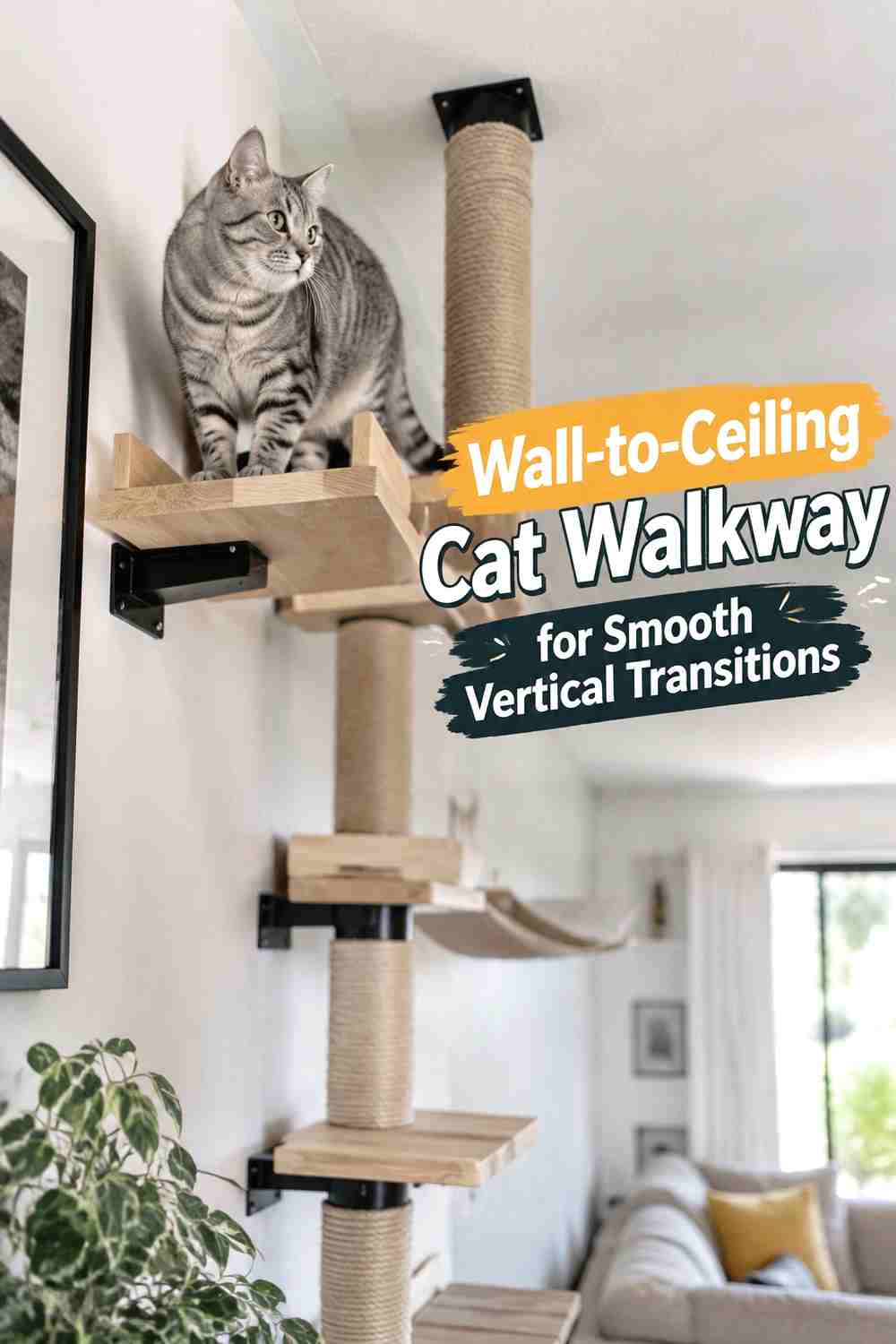
A wall-to-ceiling walkway uses a series of securely mounted wall platforms to create a gradual transition into a higher horizontal route. Instead of asking your cat to make one dramatic jump, arrange the access path so each landing has a clear purpose and enough room for stable footing. The final wall platform should meet the ceiling walkway naturally rather than leaving an awkward gap that requires twisting or scrambling. Add traction to smooth surfaces and keep shelves away from doors, fans, tall lamps, and breakable decor. Observe how your cat travels both upward and downward because the descent can reveal problems the ascent does not. The entire system should remain rigid when the cat launches, lands, or turns.
Setup Notes
Test every platform and connection before allowing access. If a custom route cannot be securely fastened to appropriate structural support, use professional installation rather than relying on decorative wall anchors alone.
2. Perimeter Ceiling Walkway Loop For Active Indoor Cats

You May Also Like


A perimeter walkway creates a continuous elevated route along part of the room instead of ending at one isolated shelf. This setup can suit active, confident cats that already enjoy high furniture and moving between elevated resting spots. Build in broader turning or pause areas so the cat is not expected to navigate one narrow strip without relief. Keep the path clear of ceiling fans, hanging lights, curtain hardware, and doors that could create sudden obstacles. A continuous route is most useful when there are practical access points at more than one location, allowing the cat to choose where to descend. Avoid filling the walkway with decorative items; the open surface itself is the useful feature.
Why It Works
A loop gives the cat movement choices instead of creating a dead-end perch. It also distributes resting and viewing opportunities around the room rather than concentrating everything at one point.
3. Window To Ceiling Walkway For Curious Indoor Cats
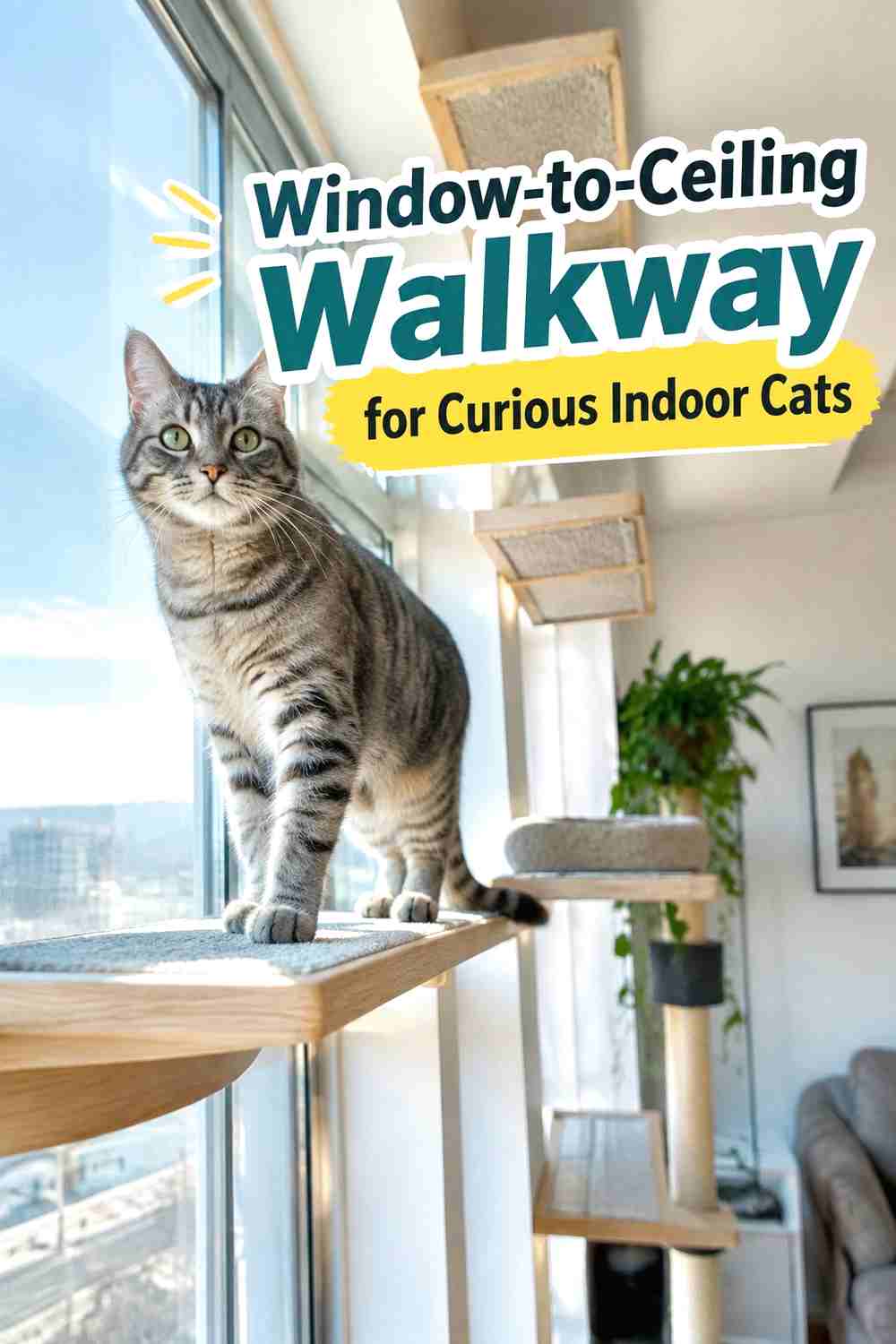
A window-to-ceiling route links a secure viewing area with a higher walkway, giving curious indoor cats a path between bird-watching and elevated movement. Start with a stable window perch or wall platform beside a securely closed window, then create gradual steps toward the upper route. Keep blind cords, curtain ties, and window hardware away from the climbing line. The walkway should not encourage the cat to jump onto an unsecured window ledge or screen. Check direct sun and heat at the window end, since conditions can change during the day even when the ceiling route remains comfortable. A second exit away from the window makes the layout easier to use without forcing the cat to retrace every step.
Space & Placement
Keep the window section broad enough for resting and turning. The transition upward should begin beside the perch rather than directly above the cat’s head.
4. Corner Ceiling Bridge Walkway For Compact Cat Rooms
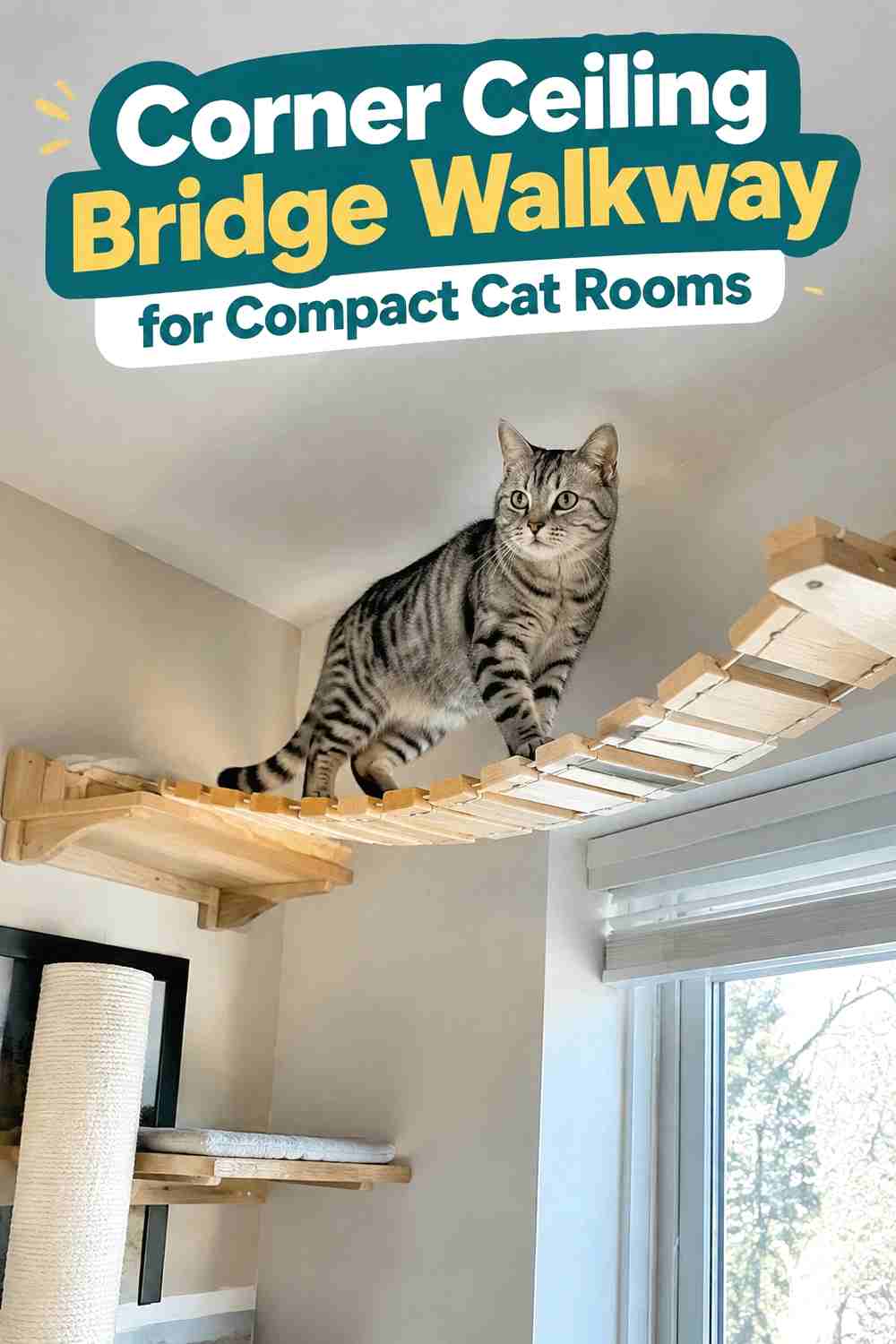
A corner ceiling bridge can connect two walls while using very little floor space, making it practical for compact cat rooms or apartments. Run the elevated route around a corner using a broad turning platform rather than forcing the cat to negotiate a sharp angle on a narrow board. Build the access route along one wall and provide a separate descending route if the room allows it. Keep the corner free of tall unstable furniture that might become an unintended shortcut. Because cats often accelerate around familiar routes, every section should remain rigid and provide reliable traction. This idea works especially well when the lower part of the room needs to stay open for a desk, bed, or other household furniture.
Pro Tip
Treat the corner as a landing zone, not simply a bend. Extra turning space can make the entire route easier to navigate in both directions.
5. Wide Landing Platform Along A High Cat Walkway
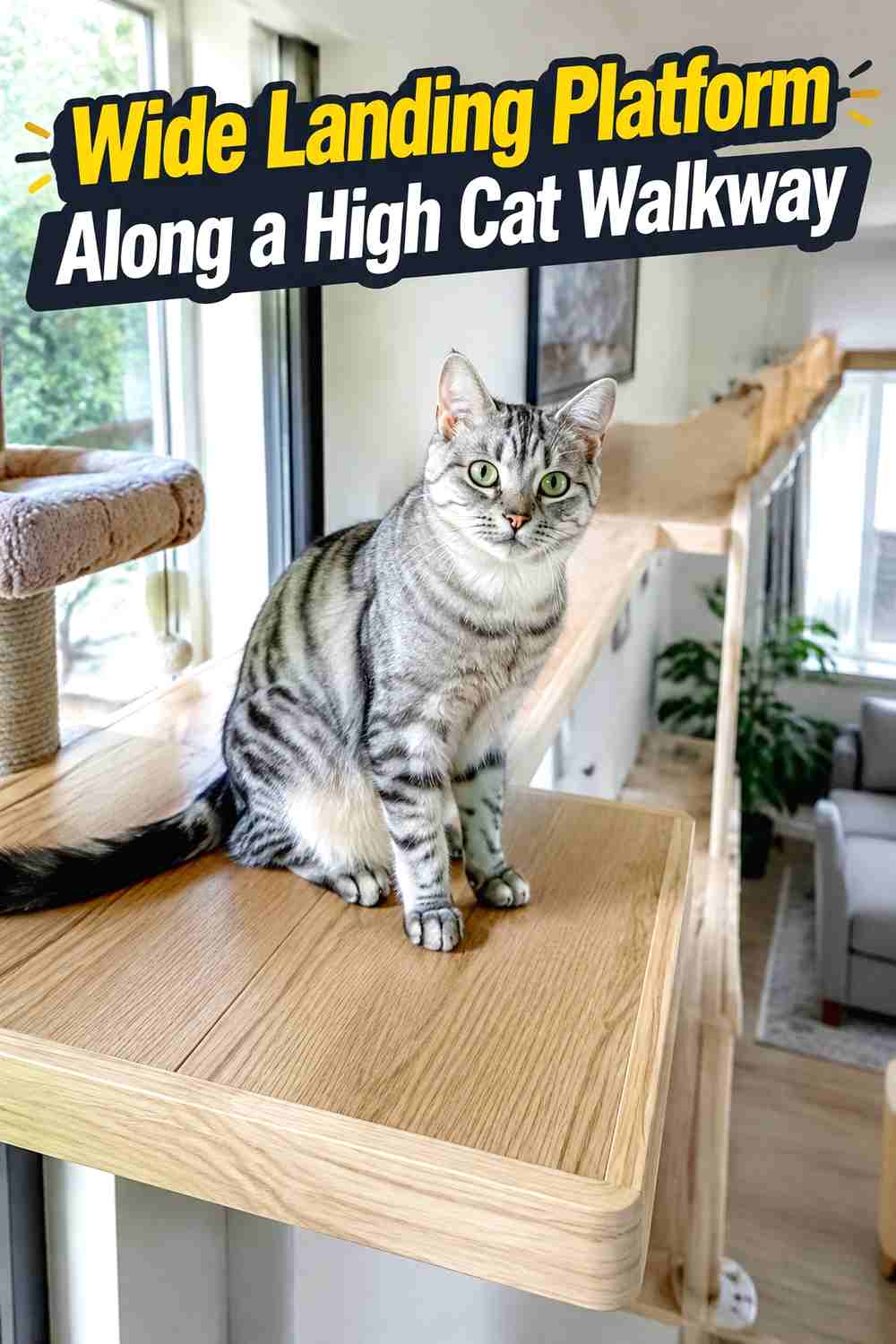
Adding a wide landing platform gives your cat a place to stop, turn around, stretch, or decide where to go next without balancing on the main walkway. Position the platform where two route sections meet or where the cat naturally pauses to look across the room. A stable washable pad can add traction and make the space more comfortable, provided it cannot slide or bunch. Keep the platform completely clear of plants, frames, storage baskets, or objects that reduce usable surface area. This idea is particularly useful for larger cats or layouts that include direction changes. The landing should feel like a genuine platform rather than an enlarged decorative shelf with little room for normal feline movement.
Pet Type & Life Stage
Broad landings are useful for adult cats of many sizes, but cats with limited mobility may still be better suited to lower elevated furniture rather than a ceiling-height route.
6. Ceiling Walkway With Cozy Resting Shelf For Cats
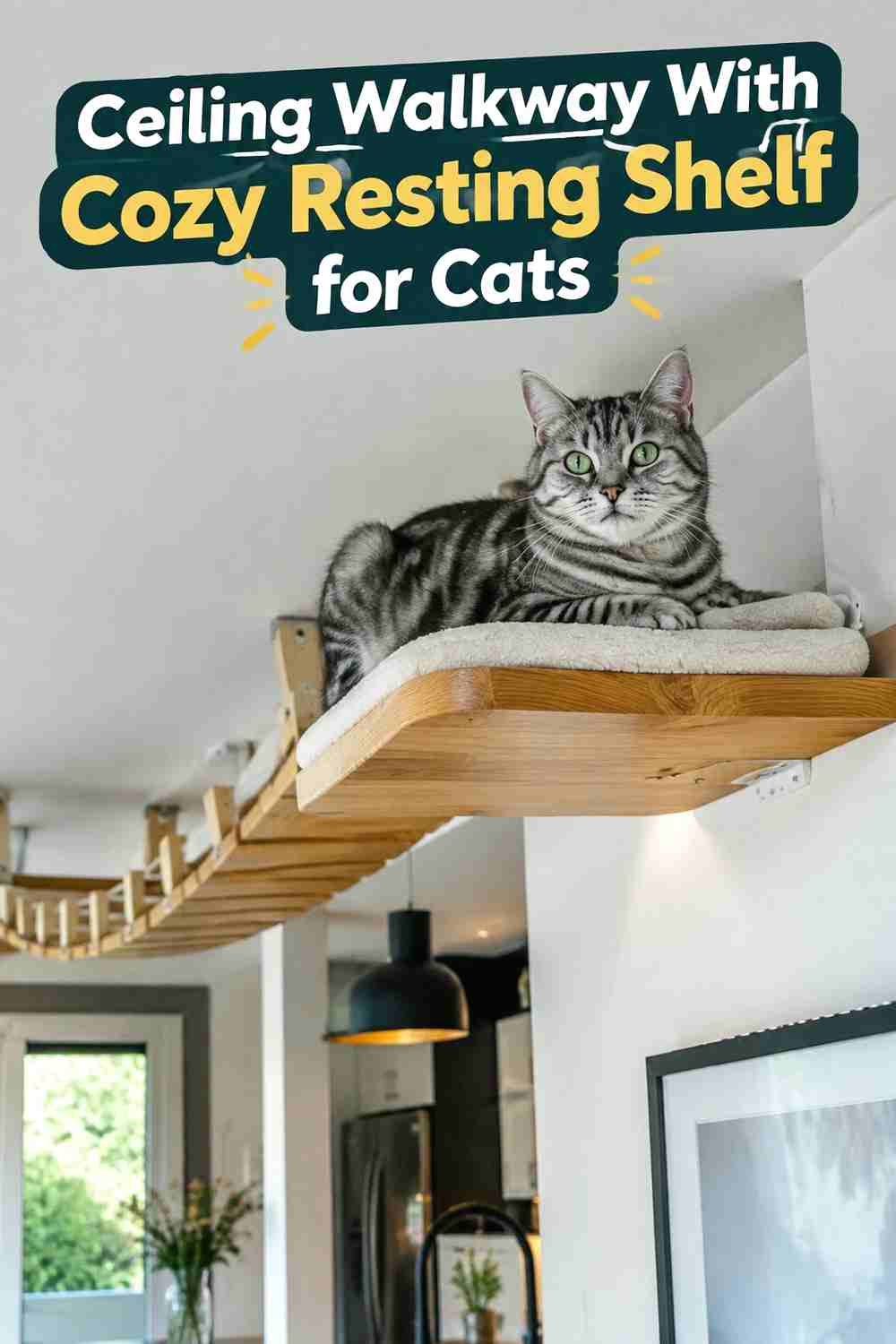
A ceiling walkway with a dedicated resting shelf combines movement with a larger perch where your cat can settle instead of continuously walking. Place the rest shelf slightly off the main traffic line so a lounging cat does not block the entire route. Use a low-profile washable surface for grip and comfort while keeping the edges and mounting hardware easy to inspect. The shelf should be large enough for relaxed sitting, curling, or lying without paws hanging awkwardly over the side. Avoid adding loose blankets that can slide during takeoff. If the room has windows or family activity below, orient the perch toward a view your cat already enjoys rather than choosing placement only for visual symmetry.
Comfort & Safety
Keep the resting area stable and uncluttered. The cat should be able to leave in more than one direction whenever possible rather than becoming trapped behind another pet.
7. Double Route Ceiling Walkway For Multi Cat Homes
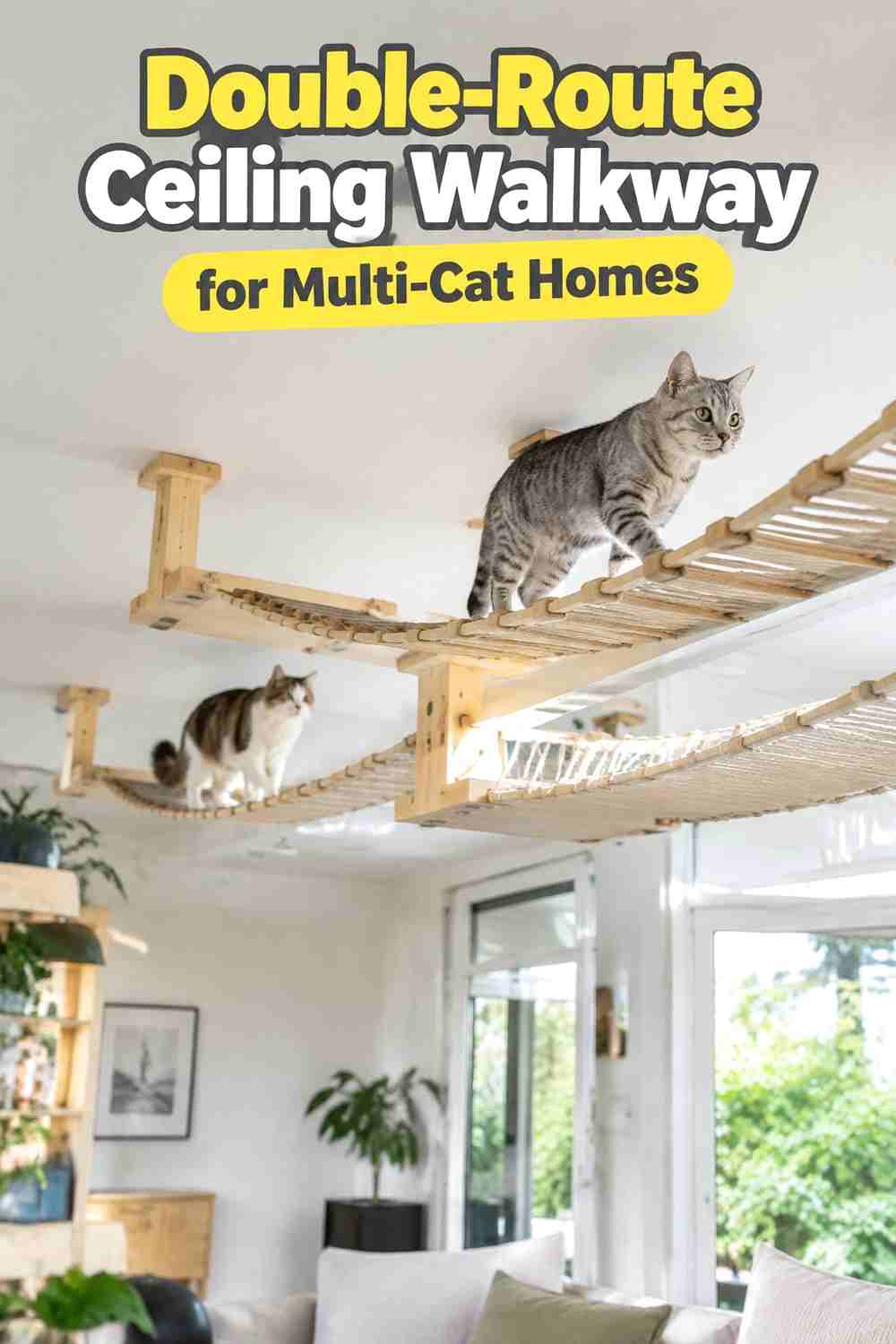
A double-route ceiling walkway gives multiple cats more than one elevated path instead of forcing them through a single narrow corridor. Create parallel or branching routes with separate access points and more than one desirable resting platform. This can reduce bottlenecks, but only when both routes are genuinely usable and not connected through one unavoidable choke point. Watch how your cats share vertical territory before assuming that extra height will resolve conflict. Some cats prefer entirely separate climbing areas. Keep each route structurally secure and provide clear paths to the floor so one cat cannot block another from leaving. Multi-cat designs should prioritize choice and spacing rather than an elaborate symmetrical appearance.
Space & Placement
Plan exits before adding extra walkway length. Each cat should have a realistic way to descend without passing another cat on a narrow elevated section.
8. Small Apartment Ceiling Walkway For Vertical Cat Space

A ceiling walkway can be especially useful in a small apartment because it adds cat territory without occupying much additional floor area. Keep the design focused: one dependable access route, one horizontal run, one resting platform, and a clear exit may be more useful than a complicated network. Position the walkway away from entry doors, kitchens, ceiling fans, and other busy or hazardous zones. Use existing wall height while preserving open walking space below. Closed storage on the floor can replace tall unstable furniture that cats might otherwise use as an unofficial launch point. In rentals, installation requirements and building rules matter, so avoid makeshift mounting that cannot safely support dynamic movement.
Best For
This setup suits confident indoor cats in compact homes where floor space is limited but appropriate high structural mounting is available.
9. Gentle Ramp Access To A High Cat Ceiling Walkway
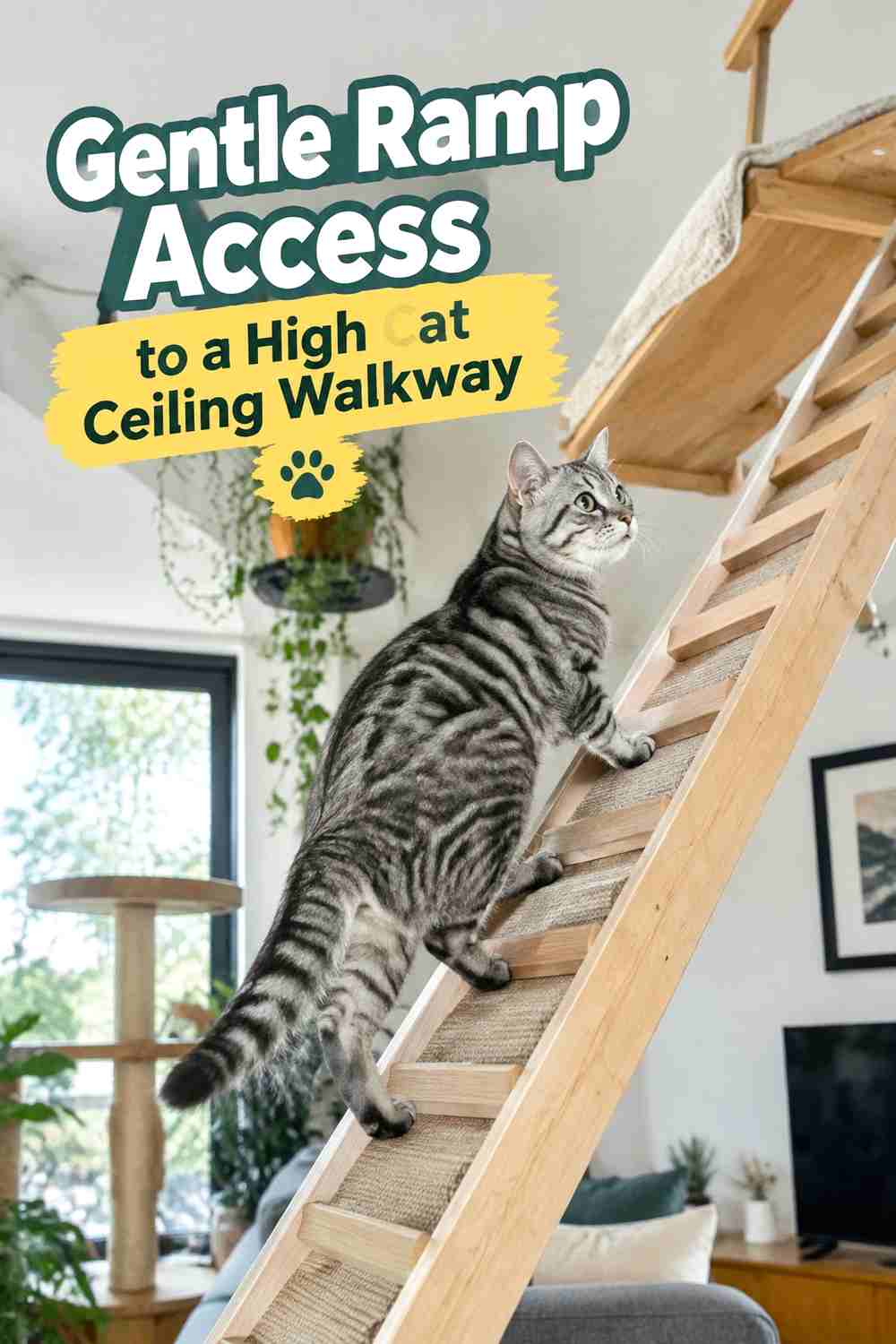
A ramp can provide a more gradual route toward a ceiling walkway when closely spaced jumping shelves are not the best fit for the room. Use a securely mounted ramp with reliable traction so the cat can walk upward without slipping backward. The angle should allow natural movement rather than forcing a scramble, and both ends need stable landing platforms. Keep the ramp clear of dangling toys or cords that could interfere with footing. This setup may help some cats that prefer continuous surfaces, but a ramp does not automatically make a ceiling walkway suitable for seniors or cats with mobility limitations. Watch whether your individual cat uses the route comfortably before expanding the system.
Comfort & Safety
Traction is essential on inclined surfaces. If your cat hesitates, slips, or repeatedly chooses another route, a lower perch or shorter platform sequence may be a better fit.
10. Quiet Bedroom Ceiling Walkway For Shy Indoor Cats

A bedroom ceiling walkway can give a shy indoor cat elevated space in a room that already feels predictable and calm. Keep the route away from the door swing and position resting areas where the cat can observe without being directly above frequent foot traffic. A simple ascent beside a stable cat tree or wall-platform sequence can make access easier than jumping from bedroom furniture. Keep the route clear of lamps, curtain cords, frames, and storage placed on top of wardrobes. This idea works best when the bedroom is already part of the cat’s normal territory rather than being introduced solely for the walkway. Maintain familiar floor-level hiding and resting choices so elevated space remains optional.
Best For
This setup may suit cats that consistently choose quieter rooms. Elevated access should supplement familiar safe spaces rather than replacing them.
11. Cat Tree To Ceiling Walkway For Easy High Access

A sturdy cat tree can serve as the first stage of a ceiling route when its upper platform aligns naturally with a securely mounted wall or ceiling walkway. Position the tree so the transfer requires a short controlled step or jump rather than a long gap. The tree itself must remain stable under climbing, and the upper platform should offer enough room for the cat to prepare for the transition. Avoid using lightweight trees that wobble or shift when the cat launches. This setup is practical because the lower climbing structure already provides several intermediate heights and scratching areas. Leave enough separation from household furniture so the route remains intentional instead of encouraging unpredictable leaps between surfaces.
Setup Notes
Observe the transfer point from both directions. If the cat lands sideways, stretches excessively, or uses nearby furniture instead, the alignment needs improvement.
12. Non Slip Ceiling Walkway Surface For Confident Cat Climbing

Adding secure traction to a ceiling walkway can make takeoffs, landings, and direction changes more predictable on smooth wood or laminate surfaces. Use low-profile material that stays firmly attached and does not curl, bunch, or slide under a cat’s paws. The traction layer should be easy enough to inspect and clean because high surfaces still collect fur and dust. Cover active walking areas and key landings rather than leaving slick gaps between pads. This upgrade improves footing but cannot compensate for loose mounting, overly narrow platforms, or difficult access. Check the surface periodically for claw damage and replace sections that begin lifting at the edges.
Use & Maintenance
Vacuum or wipe walkway surfaces regularly and inspect attachment points while cleaning. Any loose traction material should be fixed before the cat uses the route again.
13. Ceiling Walkway With Multiple Rest Stops For Indoor Cats

A long ceiling route becomes more usable when several wider rest stops break up the path. Add stable platforms at direction changes or natural viewing points so your cat can pause without occupying a narrow walking section. One rest area might face a window, another the main room, and another the access route, giving the cat several choices instead of one prized perch. Keep each platform free of breakable decor and use secure washable traction where needed. Multiple stops can be especially useful in larger rooms because the cat does not need to travel the entire route every time. The system should still include direct, practical ways down rather than making every rest stop dependent on the same exit.
Why It Works
Rest platforms turn a walkway into usable vertical territory rather than a simple bridge. They also help prevent one lounging cat from blocking the complete route.
14. Looped Ceiling Cat Route With Two Safe Exit Paths

A looped route gives your cat a continuous elevated circuit with at least two practical ways back to lower levels. One exit might connect to wall steps while another reaches a stable cat tree, allowing the cat to choose based on location or household activity. Keep the loop broad enough at turns that the cat does not have to reverse on a narrow edge. This design can be useful for confident cats that enjoy movement, but every segment should remain structurally supported and easy to inspect. Avoid creating sections directly over fragile furniture or areas where a fall could involve hard obstacles. A loop should improve choice, not simply add more height and complexity.
Comfort & Safety
Test both exit routes as carefully as the main walkway. An easy ascent with an awkward descent still creates a poorly balanced setup.
15. Minimal Ceiling Walkway Design For Modern Cat Homes
You May Also Like



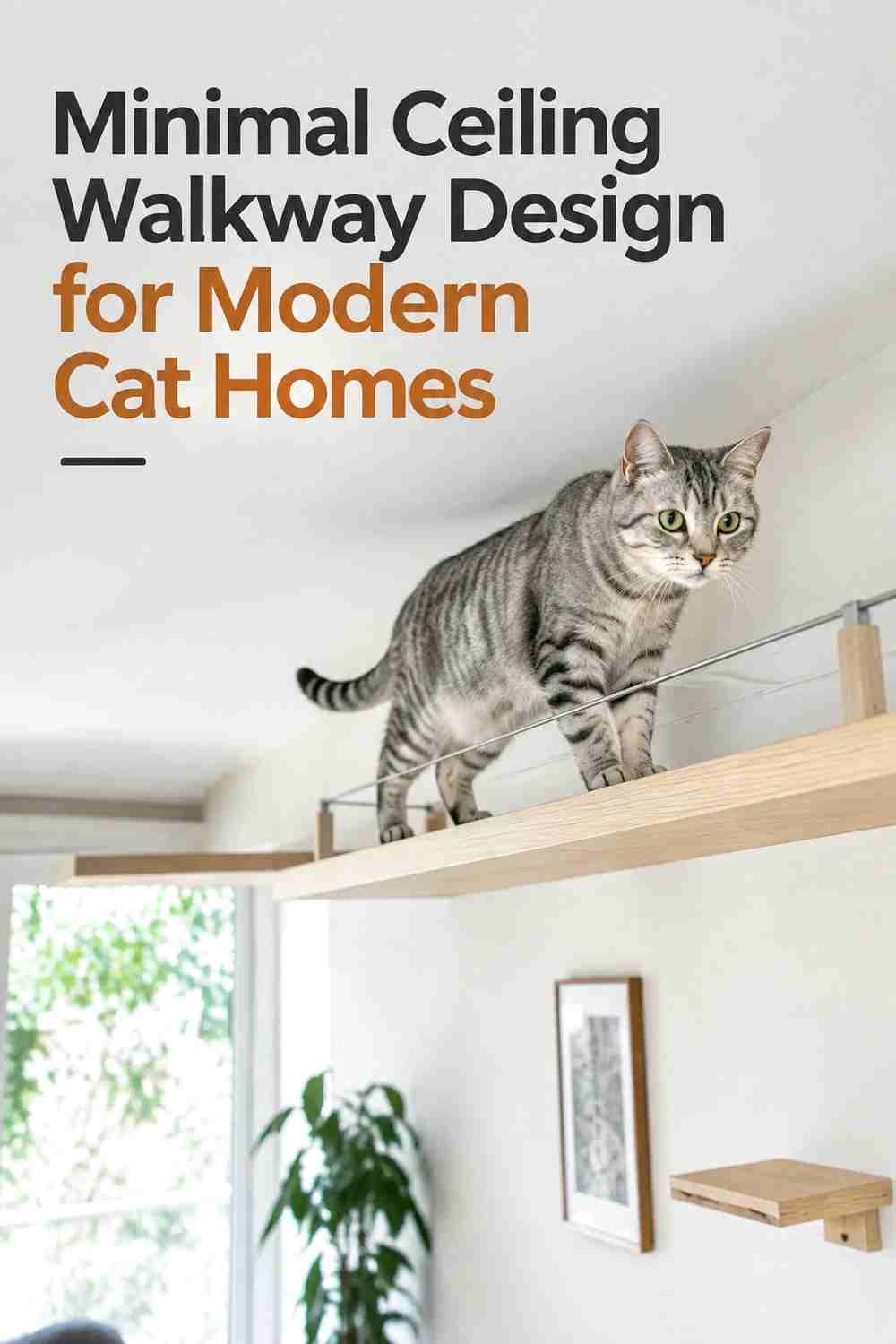
A minimal ceiling walkway uses a small number of clean platforms and one simple horizontal route instead of filling the room with complex bridges. Choose materials and finishes that coordinate with the home while keeping platform width, traction, structural mounting, and usable access more important than appearance. One wall-step sequence, one long walkway, and one broad resting shelf can create meaningful vertical space without visual clutter. Keep decorative objects off the active surfaces and hide only hardware that remains fully secure and inspectable. This style works well in modern interiors because the cat furniture feels integrated rather than added as an afterthought, yet the route still needs to function naturally for the individual cat.
Pro Tip
Design around the cat’s movement first and the room’s symmetry second. A slightly asymmetrical route can be much easier for the cat to use.
How to Choose the Right Idea
Start with your cat’s age, size, confidence, and current climbing habits. A confident adult that already seeks high furniture may enjoy a ceiling loop or window route, while a hesitant, senior, or less agile cat may be better served by lower wall shelves, a cat tree, or floor-level alternatives.
Next, evaluate the room itself. Ceiling fans, hanging lights, windows, door swings, fragile furniture, and unsafe gaps can rule out otherwise attractive layouts. High walkways also need dependable structural attachment rather than decorative mounting methods.
Finally, plan the entire journey, not just the highest platform. Good designs include traction, broad landings, resting areas, and safe ascent and descent routes. Multi-cat households benefit from multiple exits and more than one desirable elevated resting spot.
Final Thoughts
A successful cat ceiling walkway is less about maximum height and more about creating a stable, understandable route your cat can use naturally. Secure mounting, wide landings, dependable traction, and sensible exits make the setup more useful than an elaborate maze of narrow shelves.
Start with one access route and one resting platform, then watch how your cat moves. Their actual behavior will show whether the next improvement should be another landing, a second exit, more traction, or simply leaving the setup as it is.
FAQs
1. Are ceiling walkways safe for cats?
They can be appropriate for some confident cats when every section is securely mounted to suitable structural support, provides stable footing, and includes safe access and exit routes. Unstable decorative shelving is not a substitute.
2. How does a cat get onto a ceiling walkway?
Common access options include securely mounted wall platforms, a stable cat tree, or a traction-covered ramp. The route should use manageable transitions rather than one unusually large jump.
3. Are ceiling walkways suitable for senior cats?
Not always. Some senior cats may prefer lower platforms or gradual routes, while others may no longer be comfortable at ceiling height. New mobility difficulty should be discussed with a veterinarian.
4. Can two cats share one ceiling walkway?
They can if both are comfortable sharing elevated space, but multi-cat setups are more practical with multiple routes, rest platforms, and exits so one cat cannot block the other.
5. What should I keep away from a cat ceiling walkway?
Keep ceiling fans, hanging lights, cords, fragile objects, unstable furniture, unsafe window access, and narrow dead ends away from the route. Preserve clear landing and descent areas.
CTA
Save these cat ceiling walkway ideas for your vertical cat-space plan, and start with the safest route that fits your cat, room, and mounting options.
