Keep dog toys feeling fresh and manageable with smart rotation stations that make swapping, cleaning, organizing, and reintroducing favorites much easier.
Save This Idea on Pinterest

12 Dog Toy Rotation Station Ideas
Save to PinterestDog toy rotation stations make it easier to keep only a useful selection of toys available while storing the rest for later. Instead of letting every ball, tug, puzzle, and chew pile up in one basket, these setups organize toys by week, activity, location, cleaning status, or individual dog.
The right system depends on how many toys you own, how often your dog plays with them, your available storage space, and how much maintenance you want. Some stations provide quick everyday access, while others keep reserve toys completely out of sight. You can also combine ideas—for example, keeping a small daily basket downstairs while storing the next rotation in a closed cabinet.
Quick List
- Low Open Basket Toy Rotation Station for Everyday Dogs
- Labeled Weekly Toy Bins for Easy Dog Rotation
- Dog Puzzle Toy Shelf Station for Easy Enrichment Rotation
- Rolling Cart Toy Station for Flexible Dog Play Areas
- Small-Space Drawer Rotation Station for Apartment Dog Toys
- Wash-and-Dry Toy Station for Cleaner Dog Rotations
- Chew Toy Rotation Caddy for Dogs Who Get Bored
- Outdoor Toy Rotation Tote for Backyard Dog Play
- Multi-Dog Split Bin Rotation Station for Separate Toys
- Seasonal Dog Toy Swap Box for Fresh Play Options
- Grab-and-Go Toy Tray for Quick Daily Dog Rotations
- Hidden Reserve Toy Cabinet for Longer Dog Rotation Cycles
1. Low Open Basket Toy Rotation Station For Everyday Dogs

A low open basket creates a simple everyday rotation station where only a small selection of dog toys stays available at once. Choose a sturdy basket with smooth edges and place it in the room where your dog normally plays. Add a varied mix, such as one soft toy, one ball, one tug toy, and another familiar favorite rather than filling the basket to the top. Store the remaining toys elsewhere and swap several when the current selection starts receiving less attention. An open basket works best for dogs that can safely choose their own toys without shredding or swallowing basket material. Keeping the selection limited also makes nightly cleanup faster and helps you notice damaged toys before they disappear into a large pile.
Best For
This setup suits owners who want an uncomplicated rotation system with no detailed schedule or sorting method.
Use & Maintenance
Check the basket during each swap and remove torn toys, loose pieces, or items that are no longer appropriate for unsupervised access.
2. Labeled Weekly Toy Bins For Easy Dog Rotation

You May Also Like

Labeled weekly bins turn dog toy rotation into a predictable system that requires very little daily decision-making. Divide the toys into several balanced groups and place each group in its own closed or dog-inaccessible bin. Rather than organizing every container by toy type, give each bin a useful mixture so the dog receives balls, tug toys, soft toys, and other suitable favorites during each rotation. Bring out one bin at a time and return the previous group before opening the next. The schedule does not have to change on a strict seven-day cycle; the labels simply make it easy to remember which group comes next. Leave heavily used favorites in regular circulation if removing them would make the system unnecessarily complicated.
Setup Notes
Store reserve bins somewhere your dog cannot open them, especially when they contain toys intended only for supervised play.
Pro Tip
Use simple labels such as Rotation A, B, and C if you prefer flexibility instead of tying each bin to a particular week.
3. Dog Puzzle Toy Shelf Station For Easy Enrichment Rotation

A dedicated puzzle toy shelf keeps interactive dog toys organized separately from ordinary balls, plush toys, and tugs. Place cleaned puzzle toys on a shelf or inside a cabinet that the dog cannot access independently, then select one appropriate option when you want a more involved play session. Grouping these toys together makes it easier to see which puzzles have been used recently and which have been sitting untouched. Rotate between familiar options rather than constantly increasing difficulty, since a frustrating puzzle is not automatically more enriching. After each use, empty any remaining food or loose material and follow the toy’s cleaning instructions before returning it to storage. Damaged puzzle pieces or loose components should be removed from circulation.
Use & Maintenance
Keep cleaned and ready-to-use puzzles separate from toys waiting to be washed so unfinished cleanup does not get overlooked.
Best For
This station is useful for households with several interactive toys that otherwise become scattered across cabinets or mixed into general toy baskets.
4. Rolling Cart Toy Station For Flexible Dog Play Areas

A rolling cart creates a movable dog toy rotation station that can follow play between a living room, home office, hallway, or other indoor area. Use separate shelves or secure containers for current toys, reserve toys, and owner-supervised items so everything has a clear place. The cart can stay tucked away when not needed and roll closer during play or cleanup. Choose a stable design that will not tip easily, and keep wheels locked whenever the cart is parked. Toys your dog should not access independently belong on higher shelves or inside closed containers rather than within easy grabbing distance. This system works especially well when you do not have room for a permanent toy cabinet in every part of the home.
Space & Placement
Park the cart away from stairs, doorways, and narrow walkways where it could become an obstacle for people or pets.
Pro Tip
Keep one empty container on the cart for toys that need inspection or cleaning before they return to the next rotation.
5. Small Space Drawer Rotation Station For Apartment Dog Toys
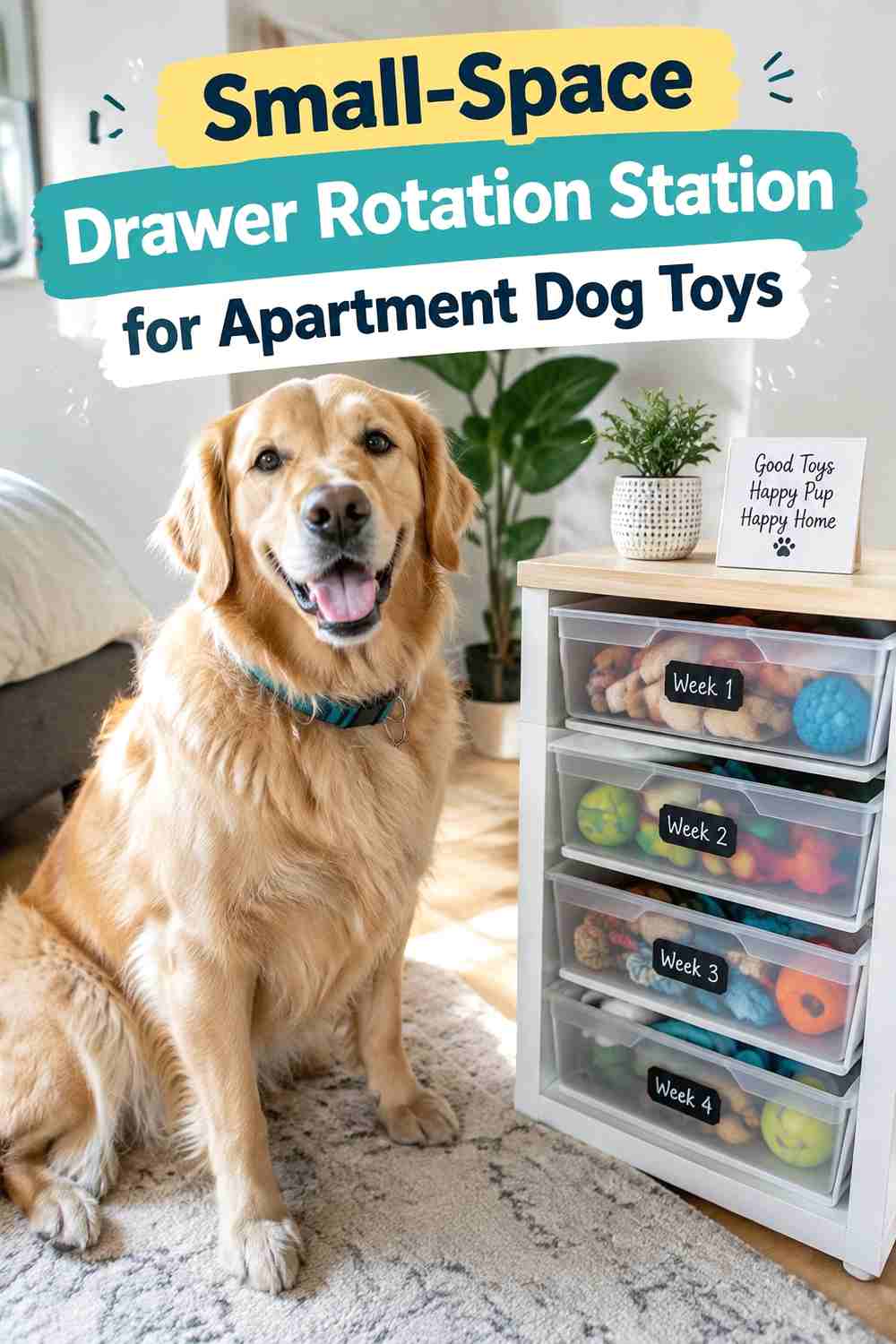
A drawer rotation station hides dog toys neatly in a small home while keeping the next selection easy for the owner to reach. Dedicate one deep drawer or several divided drawers to toys, using simple sections for current backups, later rotations, and smaller accessories. Keep only a modest number of toys in the dog’s regular play area and swap them from the drawer as needed. This approach reduces visible clutter without requiring extra floor space for bins or shelving. Make sure the drawer closes securely if your dog knows how to nose or paw cabinetry open. Avoid packing toys while damp, and do not use the same drawer for pet toys and household items that would be unsafe if accidentally pulled out.
Best For
Apartment dwellers and owners with limited floor space can use this system without adding another piece of storage furniture.
Cleaning Notes
Vacuum loose fur and debris from the drawer periodically, and return only dry toys so trapped moisture does not build up.
6. Wash And Dry Toy Station For Cleaner Dog Rotations

A wash-and-dry station gives used dog toys a clear place to go before they return to storage. Set up a washable container for toys waiting to be cleaned and a separate ventilated area for items that are drying. This prevents muddy balls, damp fabric toys, and slobbery play items from going straight back into a clean rotation basket. Follow each toy’s care instructions because rubber, rope, plush, and electronic toys may need different cleaning methods. Once everything is completely dry, inspect seams, surfaces, and attached parts before moving the toy back into the reserve supply. Keeping this station near a utility room, mudroom, or other easy-clean area can make the routine much easier to maintain.
Space & Placement
Choose a location your dog cannot raid while dirty or drying toys are temporarily out of normal storage.
Use & Maintenance
Empty the station regularly rather than letting it become permanent storage for items that were supposed to be cleaned or inspected.
7. Chew Toy Rotation Caddy For Dogs Who Get Bored
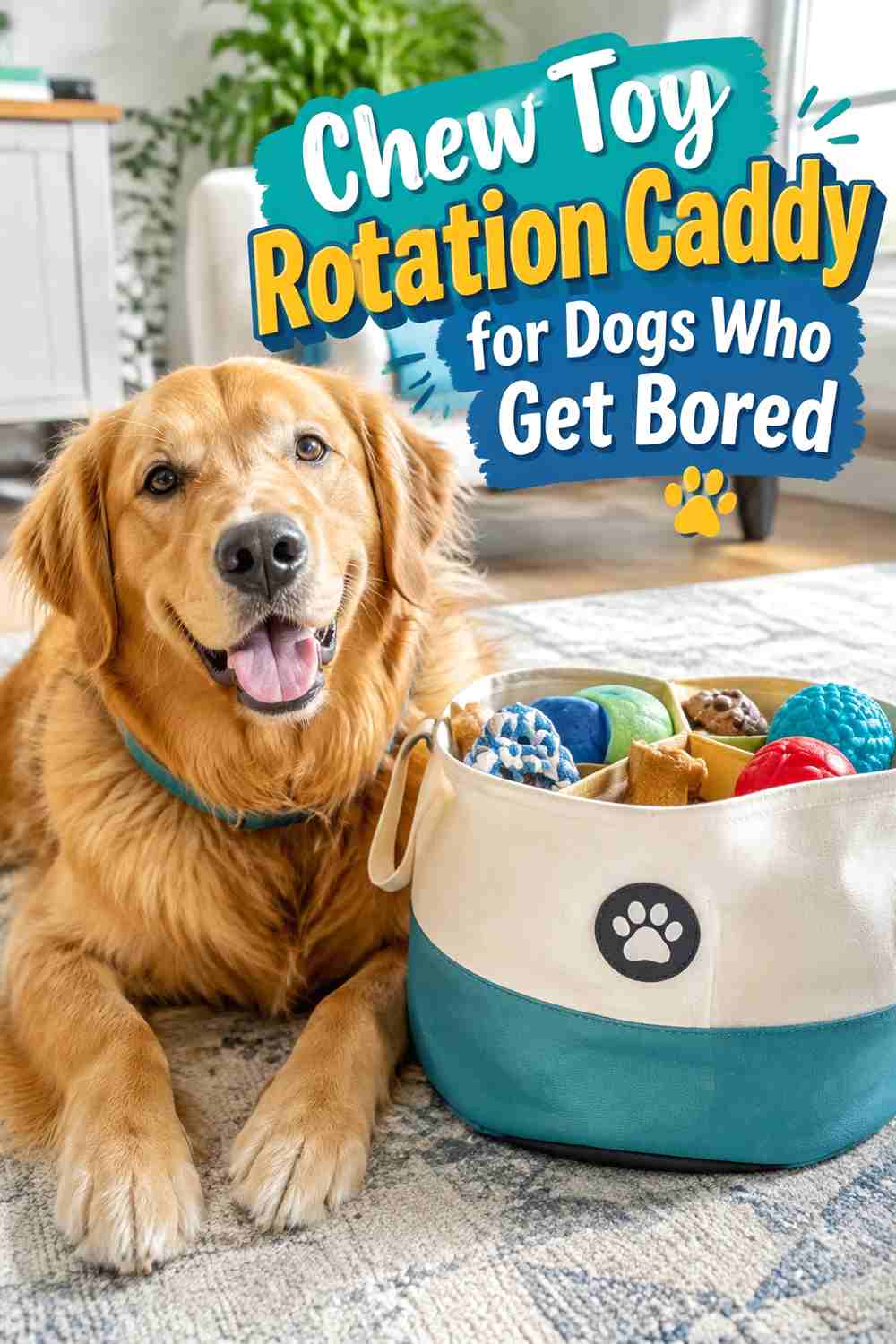
A chew toy rotation caddy keeps several appropriate chew options organized while preventing every item from remaining on the floor indefinitely. Divide the caddy into a small current selection and a reserve section, then switch options when your dog begins ignoring familiar choices. Different shapes and textures can create variety, but every item still needs to suit the individual dog’s size and chewing style. Inspect chew toys closely during each rotation because heavy use can change their condition quickly. Items that become damaged, break apart, or develop loose pieces should leave the rotation rather than simply moving into storage. Keep the caddy itself outside the dog’s reach if any contents require supervision instead of unrestricted access.
Best For
This system can help owners keep track of multiple chew toys instead of discovering forgotten pieces under furniture or mixed into plush toys.
Pro Tip
Rotate a few suitable choices rather than presenting an overflowing caddy, which makes condition checks and cleanup much easier.
8. Outdoor Toy Rotation Tote For Backyard Dog Play

An outdoor toy rotation tote keeps balls, tug toys, retrieving toys, and other backyard play items together without leaving them scattered across the lawn. Use a sturdy, easy-clean container and bring out only the toys suited to that day’s activity. After play, collect everything before mowing, watering, or leaving the yard for an extended period. Outdoor toys can pick up dirt, moisture, and plant debris quickly, so inspect them before returning them to indoor storage. A covered porch, mudroom, or garage-access area can work well for the tote as long as temperature, moisture, and accessibility are suitable for the stored materials. Avoid treating the tote as permanent outdoor storage if rain or direct sun can damage the contents.
Cleaning Notes
Let wet toys dry before closing them inside the tote, and shake off grass or loose dirt after backyard sessions.
Use & Maintenance
Periodically swap a few indoor-safe favorites with suitable outdoor toys to refresh the selection without buying more equipment.
9. Multi Dog Split Bin Rotation Station For Separate Toys
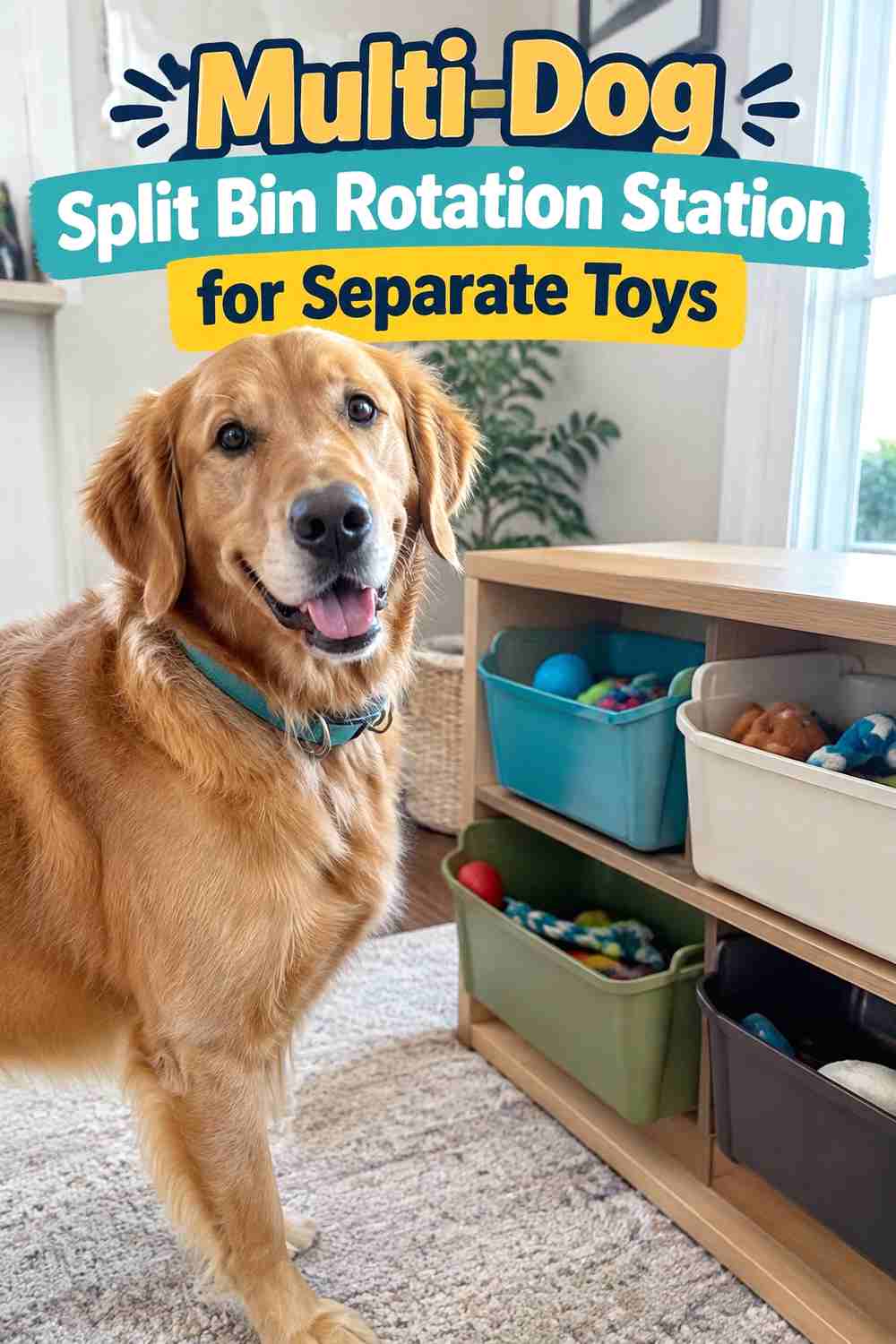
A multi-dog split bin station keeps each dog’s toys organized separately when sharing everything is not practical. Give each dog a labeled section or container for preferred toys, size-specific items, or toys that should be used under different levels of supervision. A third bin can hold shared items when the dogs comfortably use them together. Separate storage is especially useful when one dog destroys toys quickly, another prefers gentle plush play, or their toy sizes differ. Rotation time also becomes easier because you can refresh each dog’s selection independently instead of replacing the entire household supply at once. Do not assume dogs need to share high-value toys, and supervise interactions when possession of particular items creates tension.
Setup Notes
Place clearly separated containers where owners can reach them easily while keeping restricted toys unavailable between sessions.
Best For
This approach suits homes where dogs have noticeably different play styles, toy sizes, or access rules.
10. Seasonal Dog Toy Swap Box For Fresh Play Options

A seasonal swap box stores dog toys that are useful only during certain weather, holidays, or times of year. Summer water toys, outdoor retrieving items, washable warm-weather toys, or occasional themed plush toys can stay out of the everyday rotation until they are relevant again. Before packing anything away, clean and dry it completely and inspect it for wear. When the next season arrives, review the box before returning items to use instead of automatically putting every stored toy back into circulation. This longer rotation can make familiar toys seem less routine while also freeing everyday storage space. Avoid keeping items solely because they fit a theme if they are damaged, impractical, or no longer suit your dog.
Use & Maintenance
Label the box clearly and store it somewhere dry, secure, and separate from household chemicals or other unsafe supplies.
Pro Tip
When opening a seasonal box, trade out several current toys instead of simply adding the entire stored collection to the existing pile.
11. Grab And Go Toy Tray For Quick Daily Dog Rotations
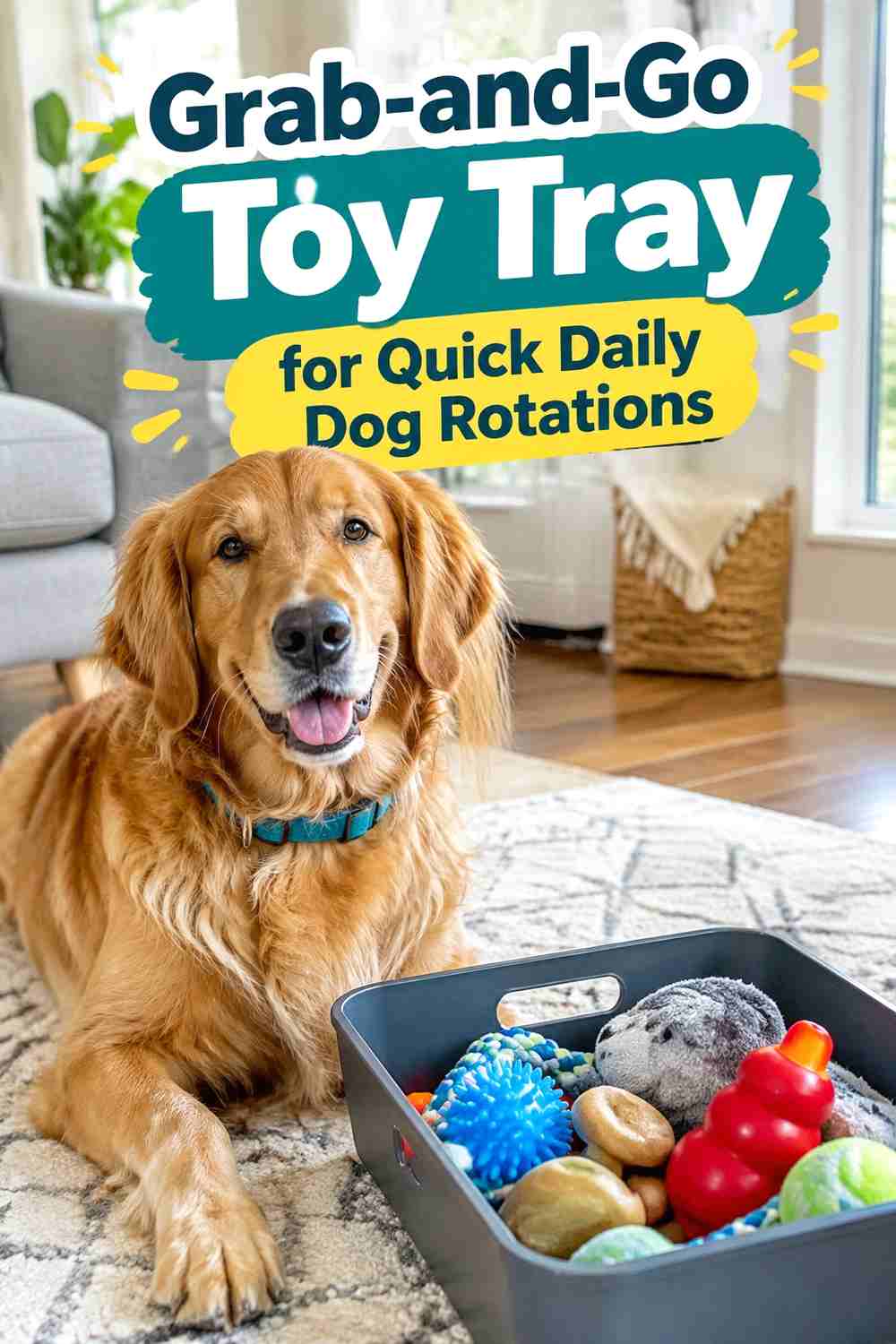
A grab-and-go toy tray creates a small daily selection that can be changed in seconds. Each morning or before a play period, choose a few toys from the larger reserve and place them on a lightweight tray or shallow owner-accessible container. The tray makes it easy to carry the day’s options between rooms and gather them again afterward. Because the selection is intentionally small, you can notice quickly which toys your dog chooses repeatedly and which receive little attention. At the end of the day, return clean toys to the reserve, move dirty items to the wash station, and choose a slightly different combination next time. Keep the tray itself out of reach if it is not designed as a dog-safe play object.
Best For
This idea works well for busy owners who want rotation benefits without maintaining multiple large bins or a detailed schedule.
Pro Tip
Include one familiar favorite alongside less frequently used toys so each daily selection has both novelty and predictability.
12. Hidden Reserve Toy Cabinet For Longer Dog Rotation Cycles
You May Also Like




A hidden reserve cabinet keeps most dog toys completely out of sight while a smaller active selection stays available elsewhere. Use shelves, baskets, or divided containers inside the cabinet to organize reserve toys by type, supervision needs, or rotation group. Because the dog does not constantly see or smell the entire collection, reintroduced toys may attract renewed interest after time away. This setup is particularly useful for owners with many toys who want living spaces to remain uncluttered. During each swap, inspect what is going into storage as carefully as what is coming out. Keep cleaning products, medicines, small household objects, and other unsafe supplies in a different secured area rather than sharing the dog toy cabinet.
Space & Placement
A hallway cupboard, mudroom cabinet, or closed section of pet-room storage can work as long as the dog cannot open it independently.
Use & Maintenance
Review the reserve occasionally and remove toys your dog consistently ignores, has outgrown, or can no longer use safely.
How to Choose the Right Idea
Start with the amount of storage space you actually have and the number of dog toys you realistically want to keep. A small open basket or daily tray may be enough for a modest collection, while multiple bins or a reserve cabinet can make a larger supply easier to manage.
Your dog’s play style matters too. Dogs that destroy toys quickly need a system that makes inspection easy, while puzzle-heavy collections benefit from separate cleaning and storage. Multi-dog households may need individual bins rather than one shared rotation. If your dog opens baskets, drawers, or cabinets, owner-controlled storage becomes more important.
Also consider maintenance. A complicated weekly system is not useful if you will not keep up with it. Choose a station that makes swapping, cleaning, drying, and putting toys away easier in your normal routine. The simplest sustainable system is usually more useful than an elaborate setup that becomes cluttered after a few weeks.
Final Thoughts
A good dog toy rotation station does more than hide clutter. It gives current toys a clear place, keeps reserve toys organized, and creates a natural point for checking what needs cleaning, repairing, replacing, or putting away.
Start with one simple system that fits your home, then add separate puzzle, cleaning, outdoor, or multi-dog stations only when they solve a real organization problem.
FAQs
1. How many dog toys should I put out during one rotation?
There is no universal number. Keep enough variety for your dog’s normal play while leaving part of the collection in reserve. A smaller, manageable selection is easier to inspect and rotate.
2. How often should I rotate my dog’s toys?
Rotate them when the current selection is receiving less attention or when changing the mix fits your routine. You do not need to follow a strict daily or weekly schedule.
3. Should my dog’s favorite toy be removed during rotation?
Not necessarily. A frequently used comfort or play favorite can remain available while less important toys rotate around it, provided the toy is still in suitable condition.
4. Should puzzle toys be stored separately from regular dog toys?
Separate storage can be useful because puzzle toys often require preparation, cleaning, and owner involvement. Keeping them together also makes rotation easier to track.
5. What should I do with damaged toys during a rotation?
Inspect the item rather than returning it automatically to storage. Toys with unsafe damage, loose pieces, or significant wear should be removed from use instead of saved for another cycle.
CTA
Save these dog toy rotation station ideas and choose one simple setup that can make your next toy swap faster, tidier, and easier to maintain.
