Turn sturdy bookshelves into useful vertical cat spaces with safer routes, wide landing zones, traction, quiet perches, and layouts for different ages and homes.
Save This Idea on Pinterest

13 Cat Bookshelf Climbing Ideas
Save to PinterestCat bookshelf climbing setups can add vertical space without filling the room with another large piece of cat furniture. The safest ideas start with securely anchored furniture, clear landing areas, enough shelf depth for the individual cat, and routes that do not require risky leaps.
These 13 ideas cover active cats, seniors, larger cats, multi-cat households, shy cats, compact apartments, and book-filled rooms. Keep breakable objects, unstable book stacks, cords, and small loose items away from climbing routes. Shelves intended for cats should stay stable under movement, and lower alternatives are often better for kittens, seniors, or cats that hesitate at height.
Quick List
- Staggered Bookshelf Step Route for Active Indoor Cats
- Top-Shelf Window Perch for Cats Who Love Height
- Corner Bookshelf Climbing Path for Small Cat Rooms
- Wide Shelf Landing Zones for Large Adult Cats
- Low-Step Bookshelf Route for Senior Indoor Cats
- Non-Slip Shelf Pads for Safer Cat Climbing
- Open Cubby Climbing Wall for Curious Indoor Cats
- Double-Route Bookshelf Setup for Multi-Cat Homes
- Bookshelf-to-Cat-Tree Transition for Easy Climbing
- Quiet Bedroom Bookshelf Path for Shy Indoor Cats
- Minimal Bookshelf Climbing Setup for Modern Homes
- Book-Protected Shelf Zones for Climbing Cats
- Small Apartment Vertical Bookshelf Route for Indoor Cats
1. Staggered Bookshelf Step Route For Active Indoor Cats
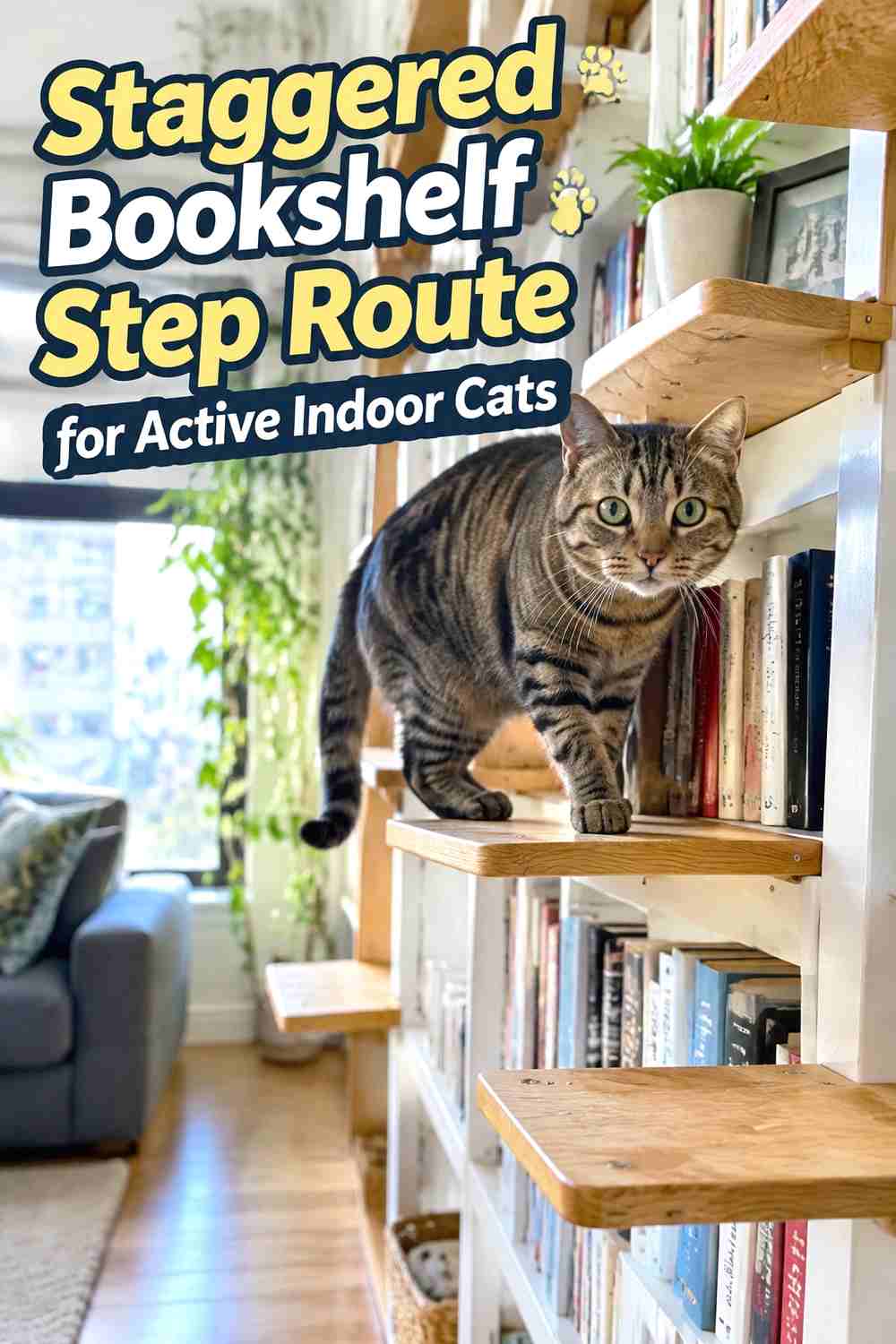
A staggered bookshelf route turns several open shelf sections into a gradual climbing path instead of asking an active cat to jump directly from floor level to the top. Clear alternating shelf areas at different heights, making each landing wide enough for the cat to place all four paws and turn comfortably. Secure the bookshelf to the wall before encouraging climbing, and use stable traction pads where smooth wood or laminate feels slippery. Keep books firmly contained in sections that are not part of the route so nothing shifts under a landing paw. The path should lead to a usable perch or resting area rather than ending at a cramped decorative shelf with no easy way down.
Setup Notes
Watch your cat use the route before changing spacing. If they repeatedly skip a landing or hesitate between levels, adjust the path instead of encouraging a larger jump.
2. Top Shelf Window Perch For Cats Who Love Height
You May Also Like


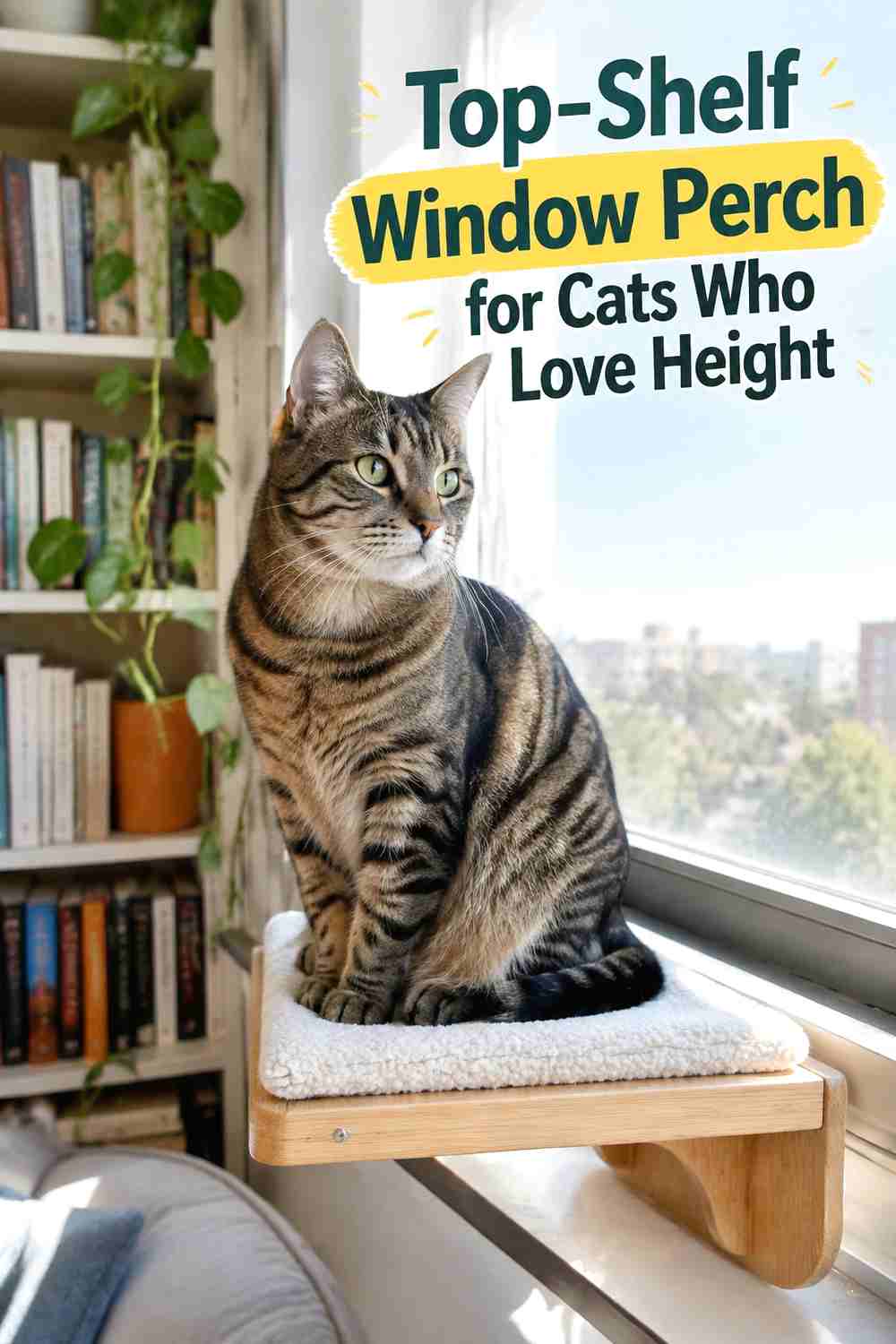
A top-shelf window perch combines a secure bookshelf route with an elevated viewing spot for cats that naturally seek high places. Position an anchored bookshelf near a secure closed window, then leave a broad top section clear enough for resting rather than balancing. Add a washable non-slip pad so the surface is more comfortable and provides better grip when the cat arrives. The climbing route below should include practical intermediate landings instead of relying on one large leap from furniture. Keep blind cords, curtain ties, plants, and breakable window decor out of reach. Check how warm the perch becomes in direct sunlight and make sure the cat can move to a cooler resting place whenever needed.
Comfort & Safety
Do not use a narrow bookshelf top as a perch simply because it is high. The surface should be stable, usable, and large enough for natural resting positions.
3. Corner Bookshelf Climbing Path For Small Cat Rooms
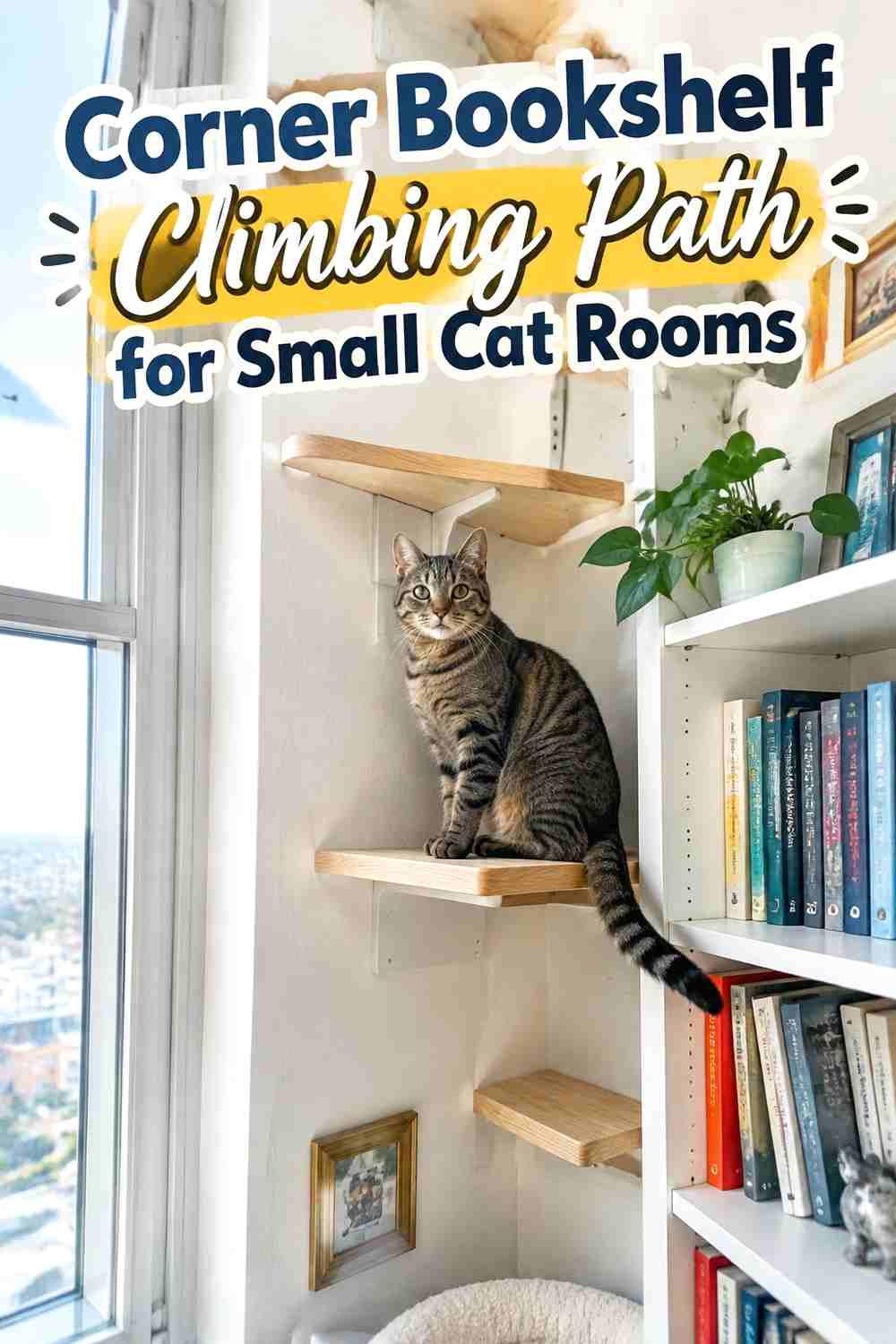
A corner bookshelf route can create vertical climbing space without using much of the room’s central floor area. Arrange two securely anchored shelving units or one corner unit so the cat can move upward through staggered open sections instead of jumping across a wide gap. Keep the inner corner clear enough for turning and avoid placing decorative objects where a tail or paw could knock them down. Traction pads on the main landings can help on smooth shelving. This layout works particularly well in compact bedrooms or offices where a full cat tree would interrupt the walkway. Leave one clear route back down rather than creating a top perch that requires the cat to reverse through a tight space.
Space & Placement
Keep the lowest landing easy to approach from the floor. Do not place the route directly behind a swinging door or in a spot where people repeatedly brush past it.
4. Wide Shelf Landing Zones For Large Adult Cats

Large adult cats need more usable shelf area than a decorative cubby may provide, so build the climbing route around broad, stable landing zones. Clear full sections rather than expecting a bigger cat to balance beside rows of books, and check that each shelf and the overall unit are intended to support the load. Anchor the furniture securely and avoid flexible shelves that bow under pressure. A wide landing should let the cat arrive, turn, and choose the next step without backing awkwardly toward an edge. Add secure traction if the surface is slick. Keep the highest resting point especially spacious because larger cats often stretch out instead of curling into a compact pose.
Pet Type & Life Stage
This approach suits larger or heavier adult cats that are comfortable climbing. Cats with reduced mobility may need lower, closer steps regardless of body size.
5. Low Step Bookshelf Route For Senior Indoor Cats
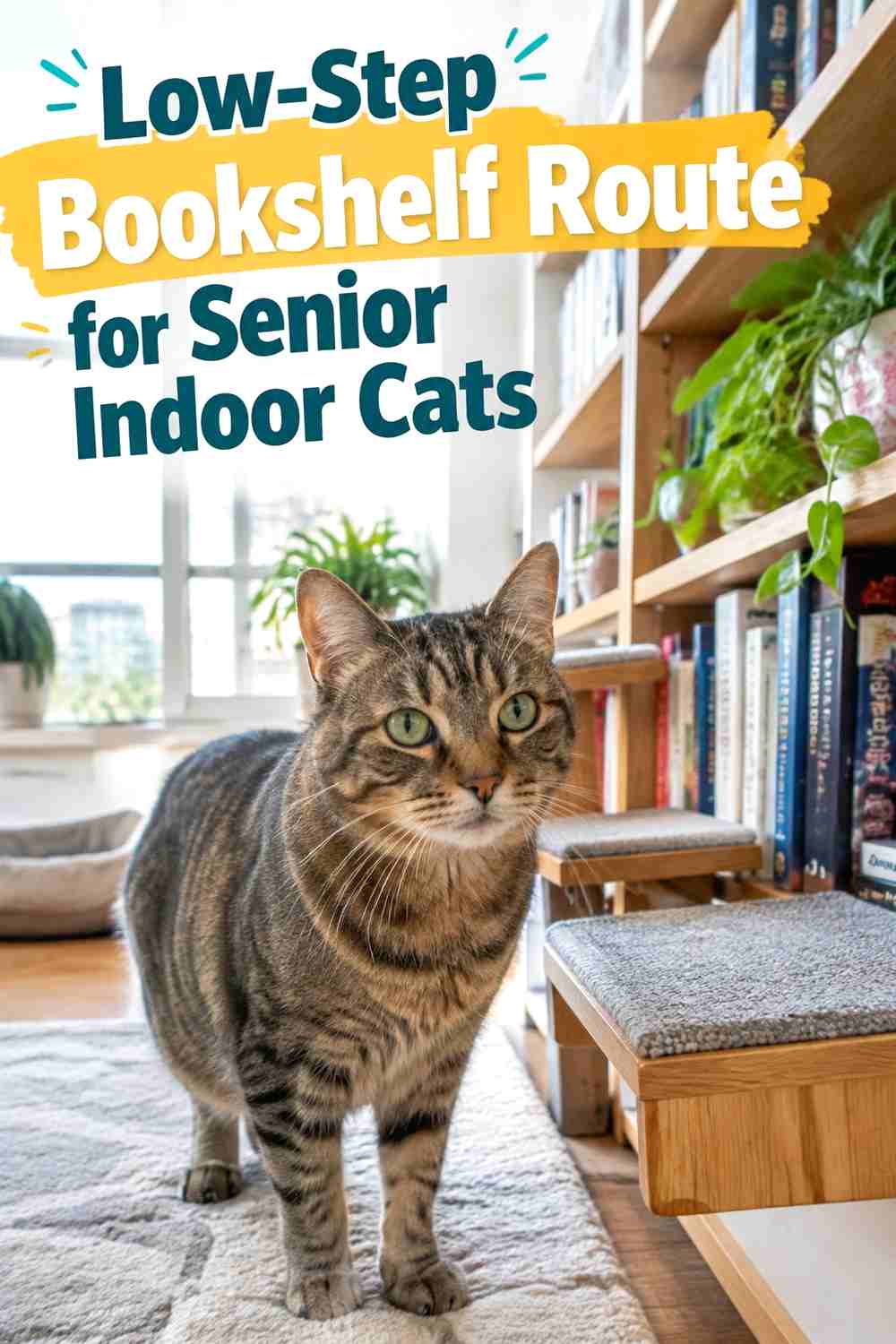
A low-step bookshelf route keeps vertical enrichment closer to floor level for senior cats that still enjoy climbing but prefer shorter transitions. Use the lowest few shelves as broad stepping points, with a stable bench or low cat platform if another transition is needed. Avoid requiring a senior cat to reach the top of the bookcase just to enjoy the setup; a comfortable mid-level perch may be enough. Non-slip surfaces and predictable spacing matter more than height. Keep the route free of loose rugs, cords, and clutter around the base so approaching and leaving are simple. If your cat suddenly stops jumping, appears stiff, or struggles with familiar movements, veterinary guidance is more appropriate than simply adding more steps.
Comfort & Safety
Let your cat choose the highest level they use comfortably. A lower stable perch is more useful than an impressive route the cat avoids.
6. Non Slip Shelf Pads For Safer Cat Climbing
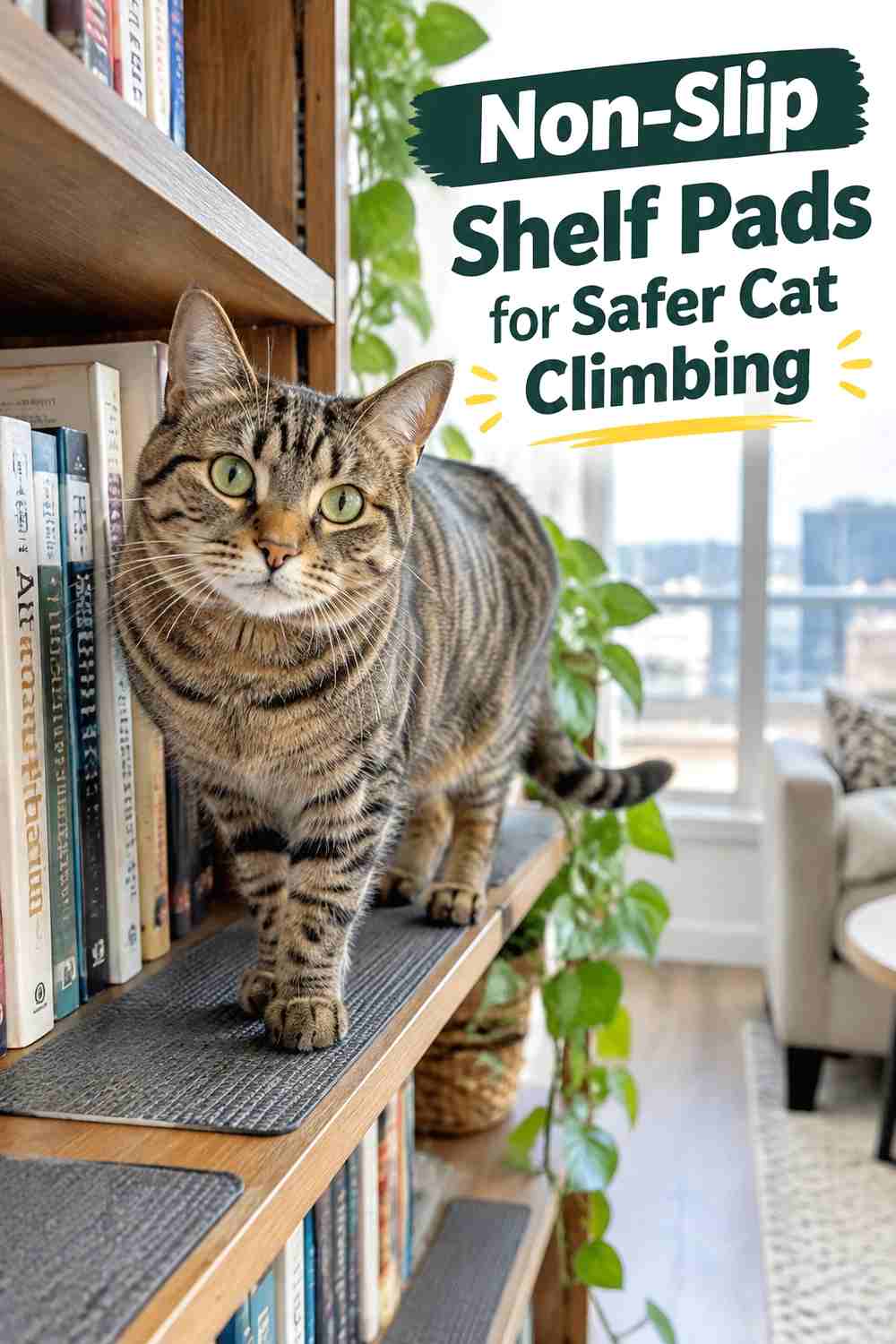
Non-slip shelf pads can improve traction on smooth bookcases where a cat’s paws otherwise slide during takeoff or landing. Cut or choose pads that fit fully within designated cat zones and secure them so edges cannot bunch, curl, or shift underfoot. Use low-profile materials rather than thick loose cushions that make landings unstable. The pads should also be removable enough for routine vacuuming or washing, since fur and dust collect quickly on climbing surfaces. Adding traction does not make an unstable bookshelf safe, so anchor the furniture first and confirm that every shelf remains solid. This upgrade is especially useful on laminate, painted wood, or other slick surfaces where the cat already uses the shelving.
Use & Maintenance
Check pads regularly for lifted corners, claw damage, or sliding. Replace worn pieces before they become obstacles on the route.
7. Open Cubby Climbing Wall For Curious Indoor Cats
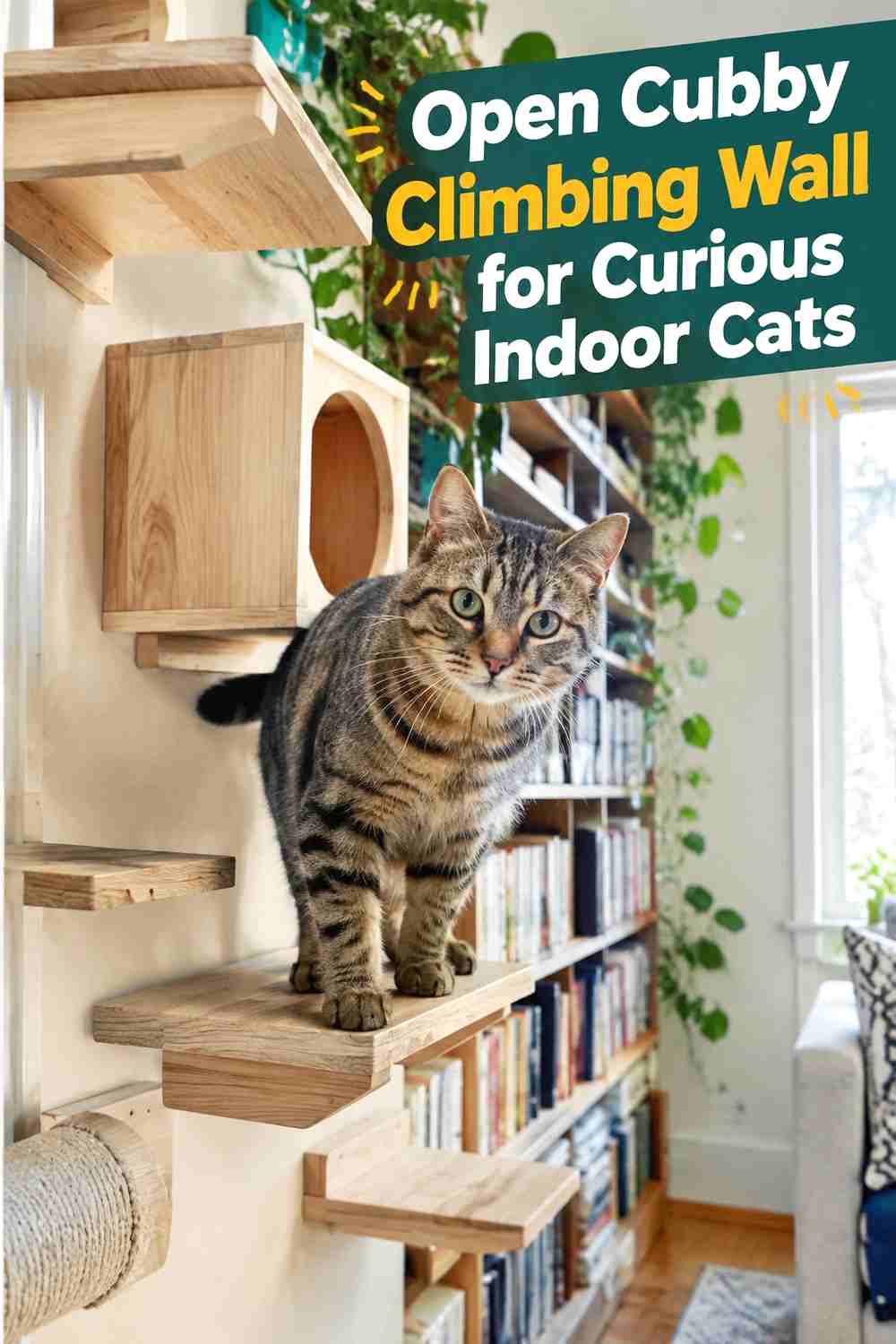
An open cubby bookcase can double as a climbing wall when several compartments are intentionally left clear for feline movement. Create a connected sequence of empty cubbies instead of clearing random boxes with no obvious route between them. Each opening should allow the cat to enter, turn, and exit without squeezing past books or decor. Anchor the entire unit to the wall and keep heavy books or storage bins in sections that cannot shift into the cat’s path. A few washable pads can make selected cubbies more comfortable for pausing. This idea works well for curious cats that enjoy moving through enclosed and open spaces, but avoid very small compartments that encourage awkward twisting or trapped-feeling routes.
Why It Works
Open cubbies create both climbing transitions and short resting stops within one piece of furniture. The route can also be changed by clearing different safe compartments over time.
8. Double Route Bookshelf Setup For Multi Cat Homes
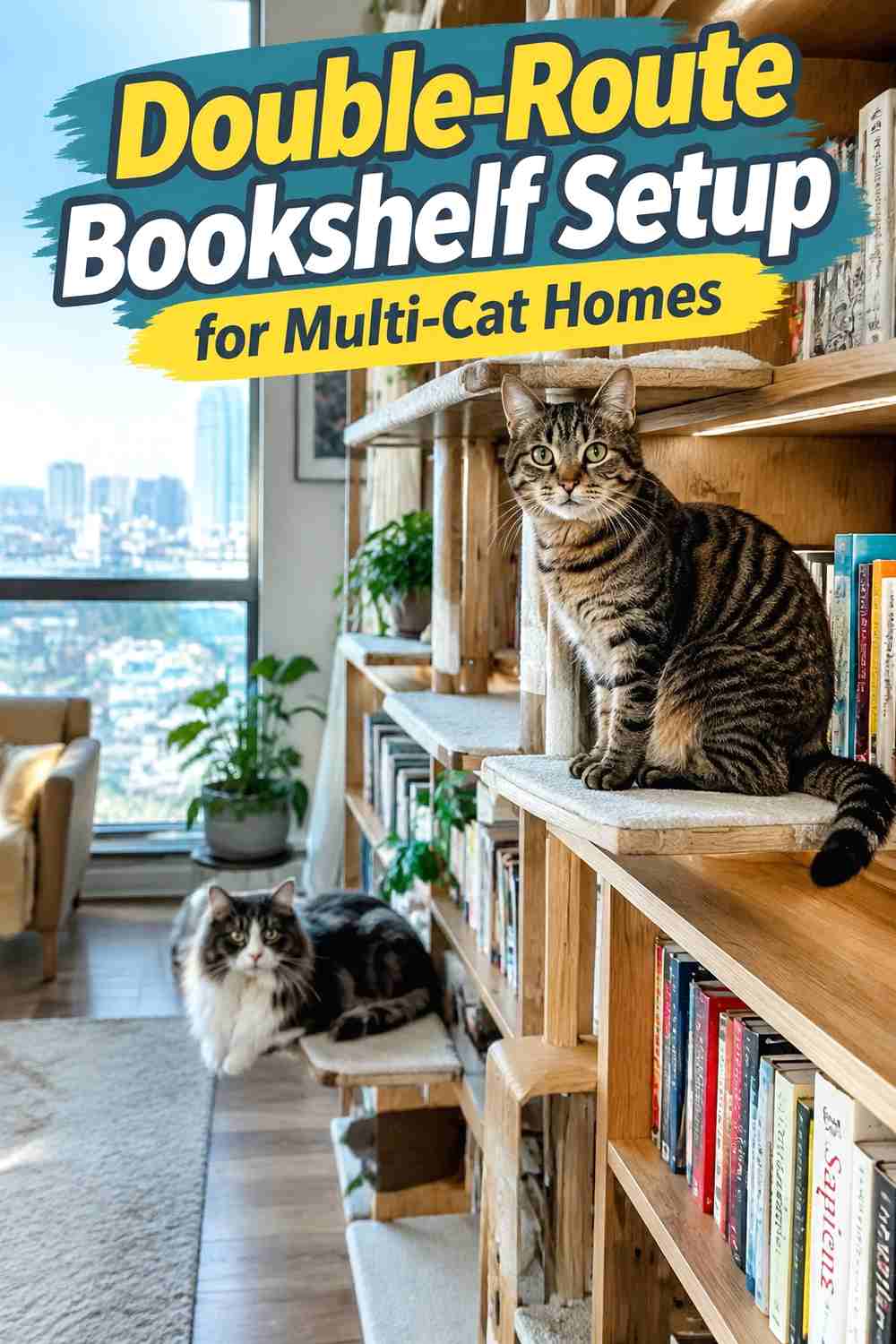
A double-route bookshelf setup gives two cats more than one way to move up and down instead of forcing them through the same narrow path. Use separate staggered landing sequences on opposite sides of a securely anchored unit, or combine two stable bookcases with distinct access points. Provide more than one comfortable perch so one cat cannot control the only desirable top spot. Keep routes wide enough for turning and avoid dead ends where one cat could block another. This layout works best for cats that already share vertical space comfortably; if one regularly chases or displaces the other, separate climbing furniture may be better. Duplicate traction pads and landing zones so both routes remain equally usable.
Space & Placement
Make sure both routes reach the floor independently. A cat should not have to pass another cat on a narrow shelf to leave the setup.
9. Bookshelf To Cat Tree Transition For Easy Climbing
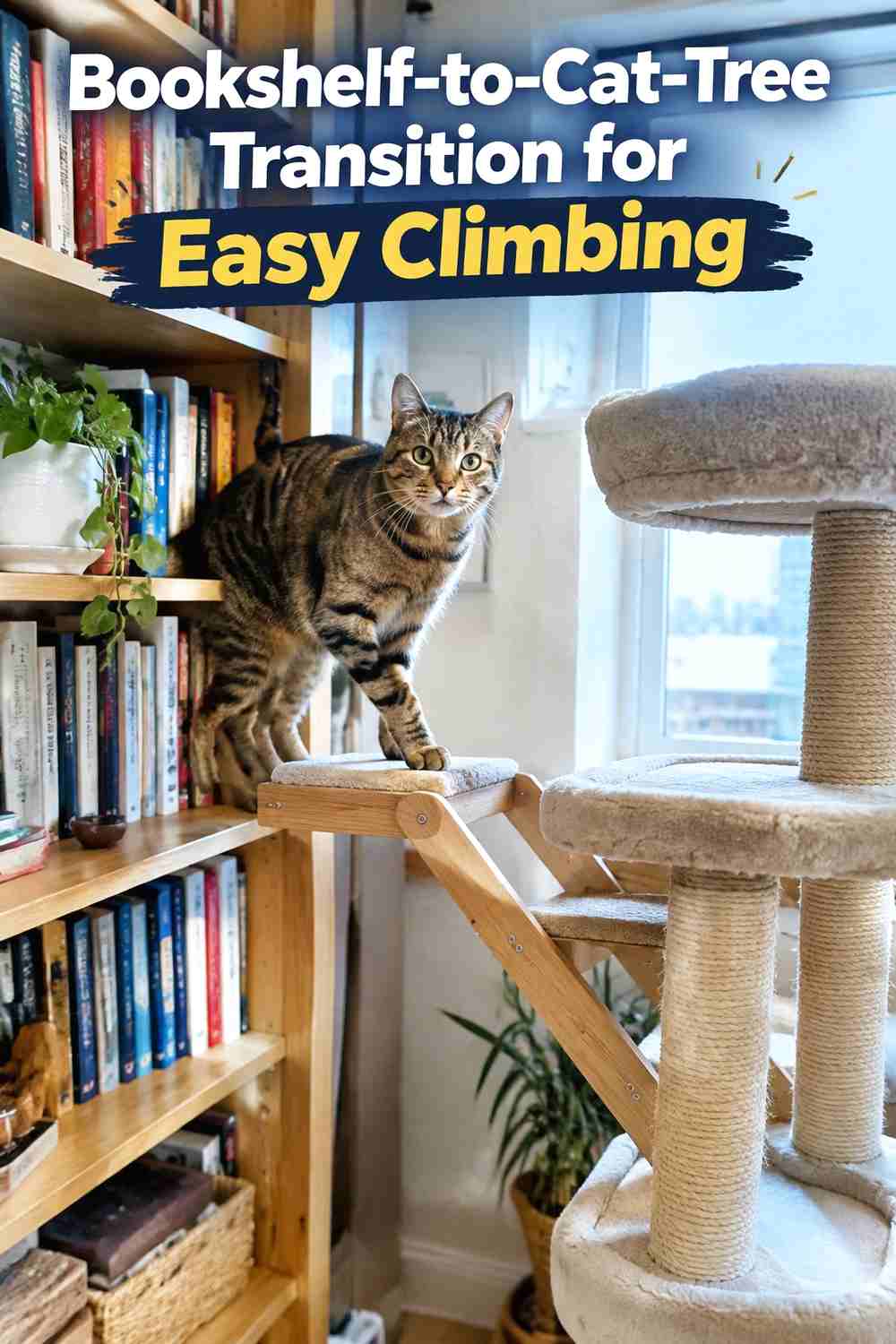
Place a stable cat tree beside an anchored bookshelf to create a more gradual transition between dedicated cat furniture and higher shelving. Align one broad cat-tree platform with a cleared bookshelf landing so the cat can step or make a short controlled transfer rather than a long horizontal jump. Keep enough space between the units that neither shifts or rubs against the other during use. The bookcase route should still have clear shelves and traction rather than expecting the cat tree to solve every access problem. This hybrid setup is useful when the existing bookshelf is too tall to start comfortably from the floor but has good upper-level space. Avoid positioning the tree where it blocks drawers, doors, or household walkways.
Setup Notes
Observe the transfer point closely during the first few uses. If the cat stretches, scrambles, or lands sideways, the spacing needs adjustment.
10. Quiet Bedroom Bookshelf Path For Shy Indoor Cats
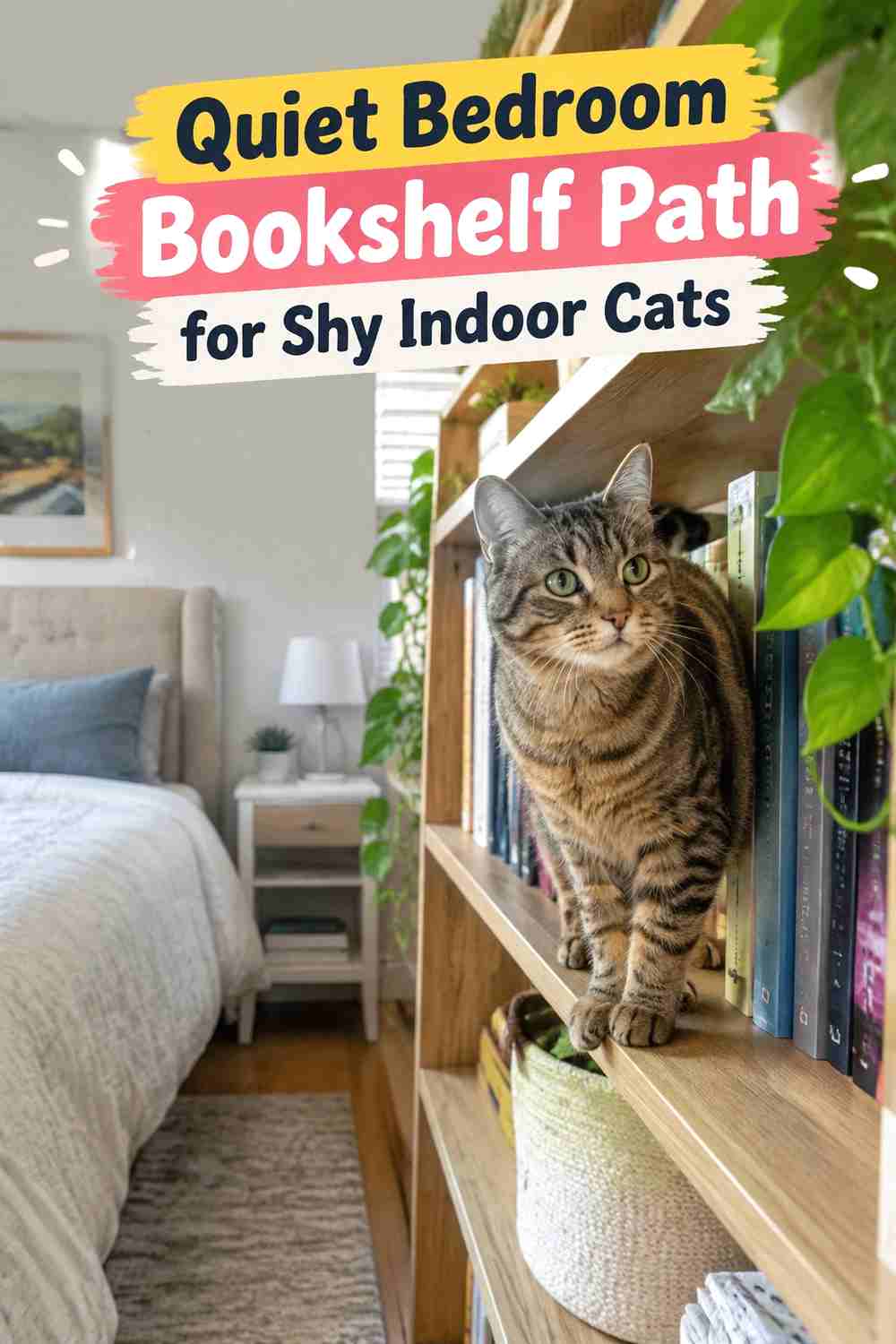
A bedroom bookshelf route can provide vertical space in a quieter room for cats that consistently avoid busy living areas. Clear several connected shelf zones and add a comfortable mid- or upper-level resting pad where the cat can observe the room without sitting directly in household traffic. Anchor the bookshelf securely and remove breakable decor, dangling cords, and unstable stacks from the route. Keep the climbing path separate from the door swing so sudden entrances do not startle the cat while elevated. This setup works best when the bedroom is already part of the cat’s normal territory rather than being introduced solely as a climbing room. Leave familiar floor-level hiding and resting choices available too.
Best For
This idea may suit shy or easily startled cats that prefer predictable low-traffic rooms. The bookshelf should supplement existing safe spaces rather than replace them.
11. Minimal Bookshelf Climbing Setup For Modern Homes
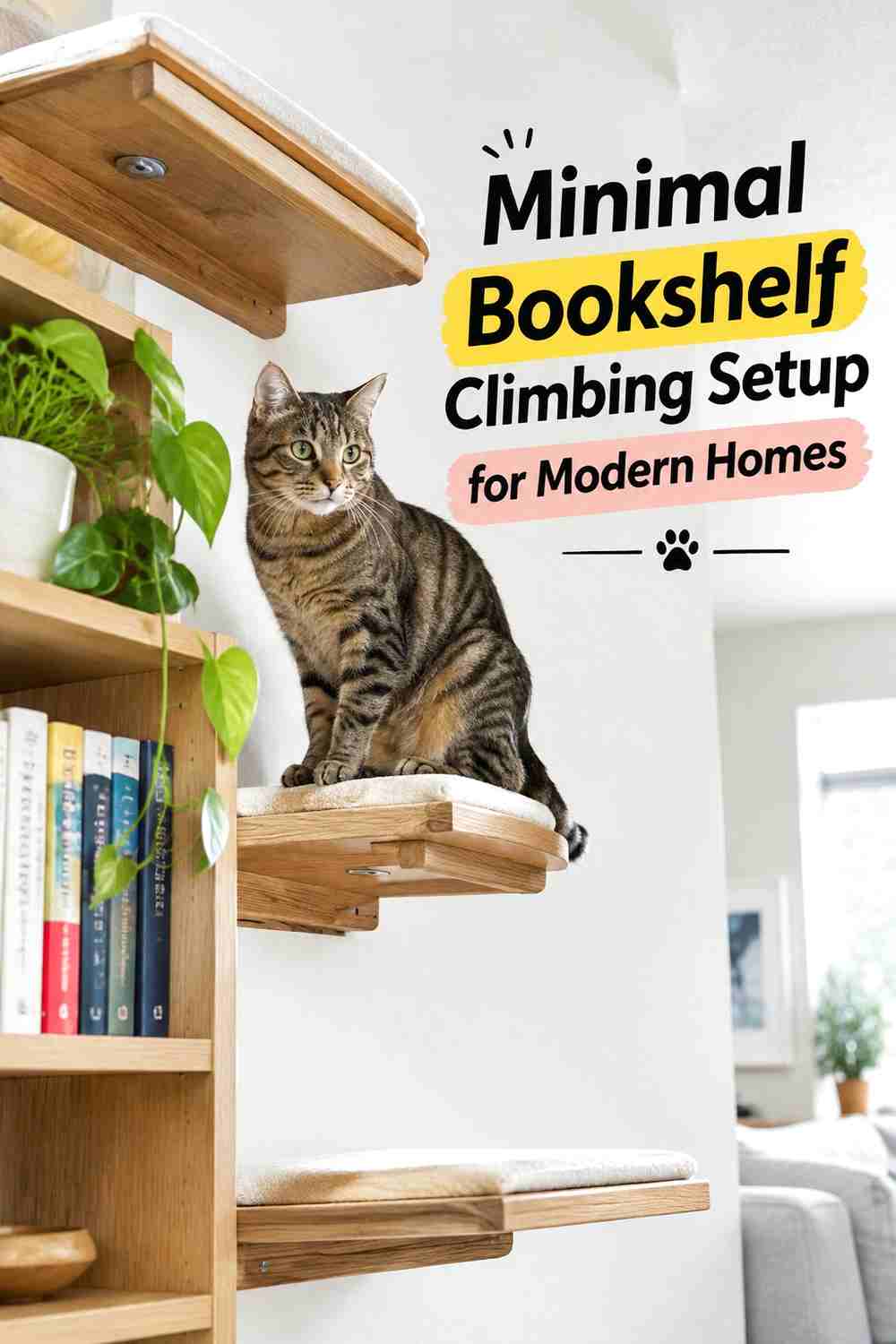
A minimal bookshelf climbing setup reserves only a few clean, purposeful landing zones instead of turning every shelf into cat territory. Choose one anchored bookcase with a clear lower step, a middle transition, and a generous upper resting shelf. Keep books tightly organized in the remaining sections using stable bookends or enclosed storage so the climbing route stays obvious. Neutral washable traction pads can blend with the furniture without adding visual clutter. Skip decorative plants, framed objects, and loose accessories along the active path. This approach works especially well in modern rooms where open space matters aesthetically, while still giving the cat useful vertical access. Every cleared shelf should have a practical role rather than existing only for appearance.
Pro Tip
Start with three dependable levels. Add another landing only if the cat actually needs a shorter transition or an additional resting choice.
12. Book Protected Shelf Zones For Climbing Cats
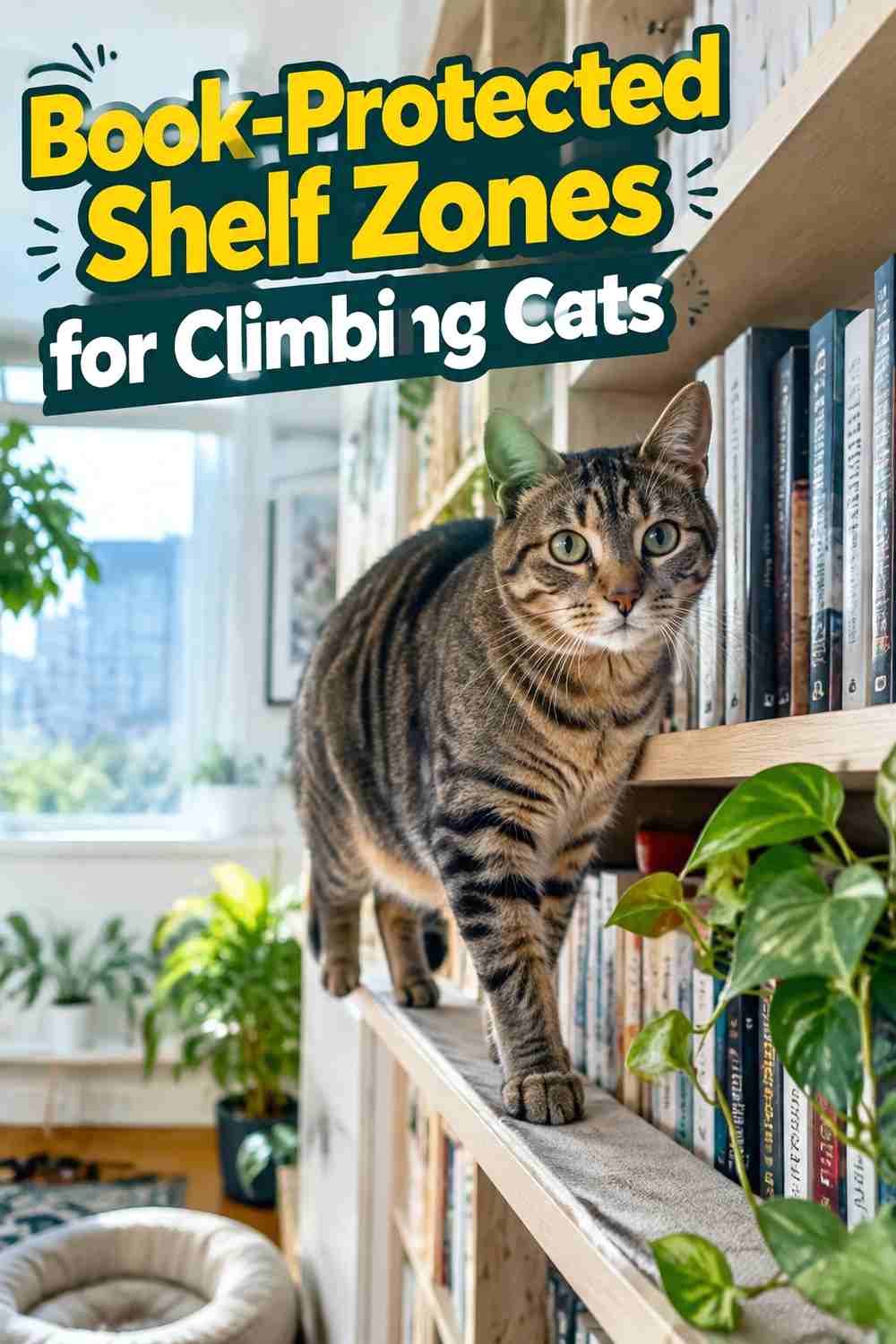
Book-protected shelf zones separate cat landings from your actual book storage so paws, tails, and shifting covers do not compete for the same space. Dedicate full shelf sections to climbing and use secure bookends, cabinet doors, or separate cubbies to contain books nearby. Avoid leaving a narrow strip of shelf in front of book spines and expecting the cat to walk along it safely. Heavy volumes should sit where they cannot fall into the climbing route if bumped from another level. This idea suits book lovers who want cats to use the furniture without constantly rearranging shelves. It also makes cleaning easier because cat hair stays concentrated on designated pads and open areas instead of settling across every row.
Use & Maintenance
Check bookends and stored items after energetic climbing sessions. If anything repeatedly shifts toward the landing zone, reorganize that shelf rather than resetting it each time.
13. Small Apartment Vertical Bookshelf Route For Indoor Cats
You May Also Like



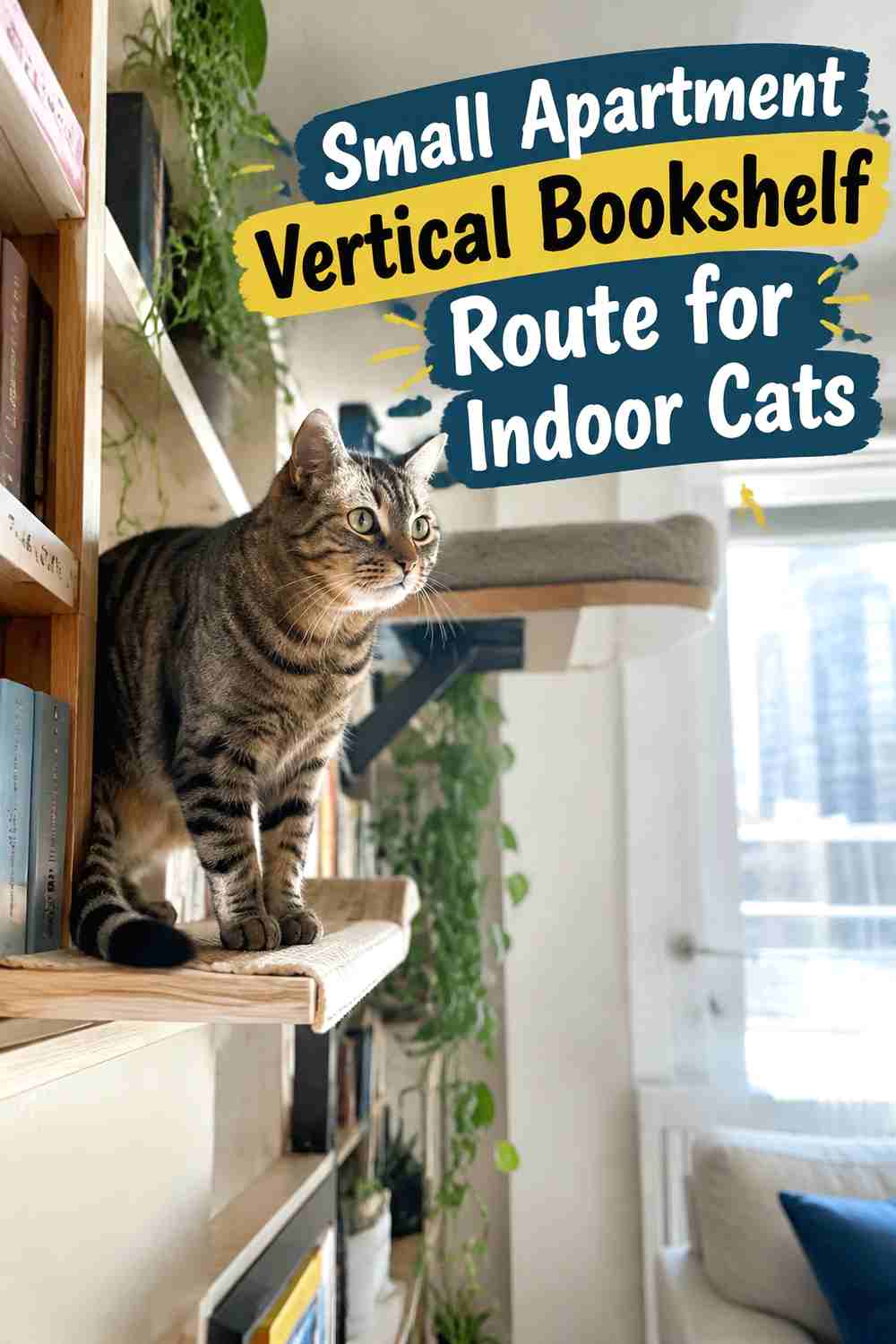
A vertical bookshelf route can provide substantial climbing space in a small apartment while using almost no additional floor area. Choose one tall, securely anchored unit and create a clear sequence of landings that climbs upward within the bookshelf footprint. Keep the base area open, use non-slip surfaces on key shelves, and provide a broad resting zone before the highest point. Store household items in closed bins or separate shelves rather than mixing loose objects into the cat’s path. This setup can replace the need for several scattered climbing pieces, but only if the route remains comfortable in both directions. Avoid positioning the bookcase beside unsecured windows, balconies, or furniture that encourages unsafe leaps across the room.
Space & Placement
Use wall height without sacrificing a safe landing zone on the floor. Compact rooms still need clear space for the cat to descend without colliding with furniture.
How to Choose the Right Idea
Start with your cat’s age, body size, confidence, and current climbing habits. Active adults may enjoy staggered routes and high perches, while senior cats often need lower transitions, secure footing, and easier alternatives. Larger cats need broader landings and furniture that can comfortably support their movement.
Next, evaluate the bookshelf itself. It should be securely anchored, structurally sound, and free of unstable shelves. Clear complete landing zones instead of expecting cats to balance beside books, plants, frames, or storage boxes.
Finally, plan both ascent and descent. A climbing setup is only useful when the cat can move down just as comfortably as they move up. Multi-cat homes may need duplicate paths, while small apartments benefit from one carefully designed vertical route.
Final Thoughts
A cat-friendly bookshelf does not require clearing every book or turning the room into a climbing gym. A few stable landings, good traction, secure anchoring, and a clear route can create useful vertical space while preserving the shelf’s main purpose.
Start with the safest lower levels and watch how your cat moves. Their actual route will show whether you need a wider landing, another step, a quieter perch, or an easier way down.
FAQs
1. Can a regular bookshelf be used for cat climbing?
Only if it is structurally suitable, securely anchored, and has clear shelf areas large enough for safe landings. Decorative or unstable bookcases should not be treated as climbing furniture.
2. How do I keep books safe when my cat climbs shelves?
Dedicate full shelf sections to the cat instead of leaving narrow walking strips in front of books. Secure remaining books with stable bookends or store them in separate compartments.
3. How can I make bookshelf shelves less slippery for my cat?
Use securely fitted non-slip pads or another low-profile traction surface that cannot bunch or slide. Check the material regularly for claw damage or lifted edges.
4. Are bookshelf climbing setups suitable for senior cats?
Some senior cats may enjoy lower bookshelf routes with short transitions and good traction. Cats with reduced mobility may prefer a low perch or cat tree instead of a tall climbing route.
5. How do I make a bookshelf climbing route work for two cats?
Provide more than one route and more than one desirable resting spot when possible. Avoid narrow dead ends where one cat can block another from moving up or down.
CTA
Save these cat bookshelf climbing ideas for your next indoor cat setup, and start with the safest route that fits your cat, furniture, and available space.
