A cat playroom does not have to be an extra bedroom filled with cat furniture. In a small home, it may be one wall, a window corner, the space beneath a table, or several compact play zones that can be packed away when they are not being used.
Save This Idea on Pinterest

10 Cat Playroom Ideas for Small Homes: Space-Saving Setups
Save to PinterestThe most useful setups make limited square footage work harder. Vertical routes add climbing space without taking over the floor. Foldable toys create temporary activity zones. Scratching and puzzle stations give cats different things to do instead of filling the room with more versions of the same toy.
These 10 cat playroom ideas for small homes focus on distinct activities while keeping walking paths, storage, cleaning, and everyday household use in mind.
1. Turn One Corner Into a Vertical Climbing Zone
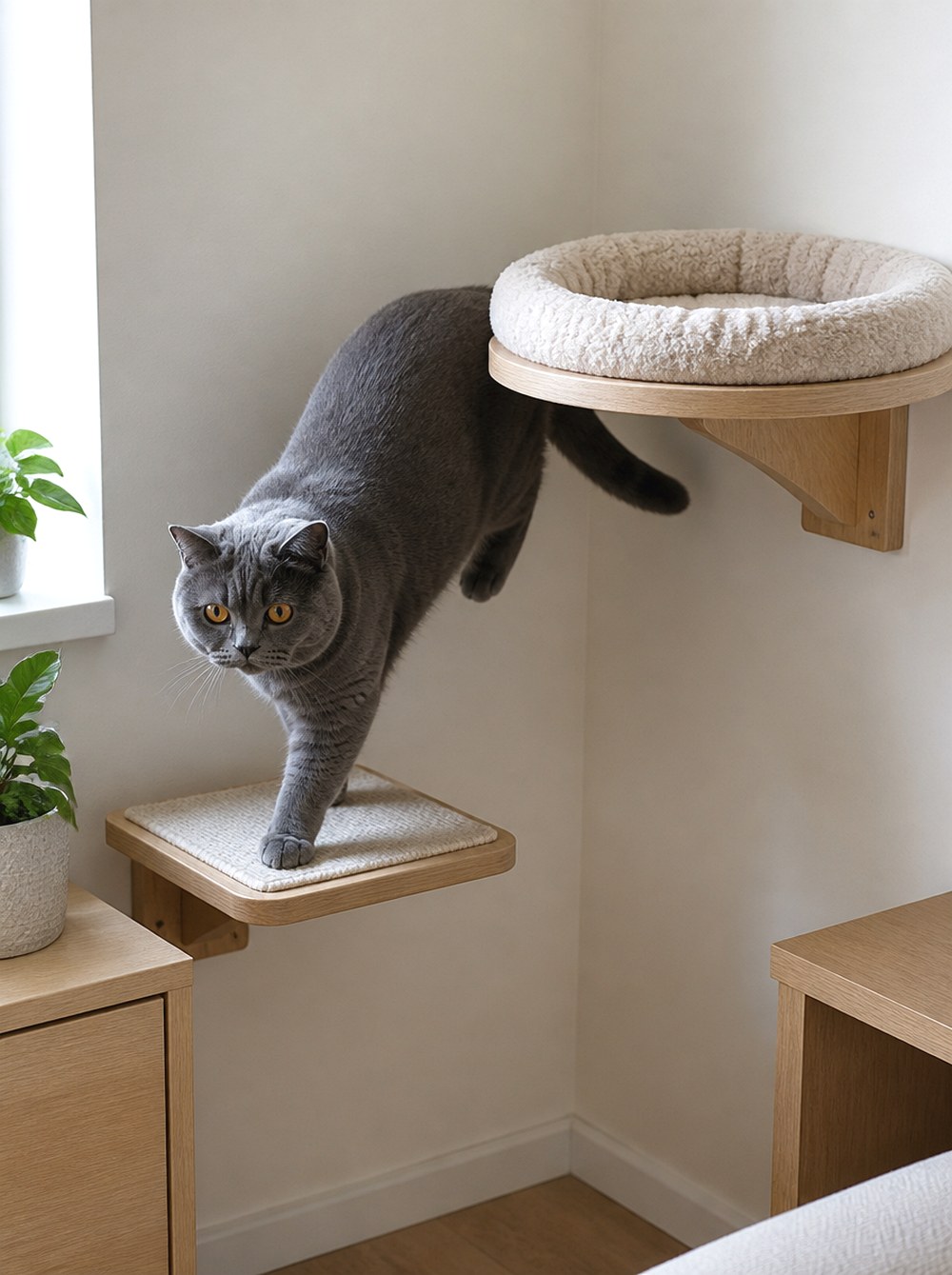
When floor space is scarce, a clear section of wall can provide more usable cat territory than another piece of freestanding furniture. A compact climbing corner might combine two or three staggered platforms with one larger resting perch near the top.
Arrange the route so your cat can move upward in manageable jumps rather than having to leap from the floor directly to a high shelf. The lowest platform can begin beside a small cabinet or other stable launch point if that fits the room.
Keep the route relatively contained instead of spreading shelves across every wall. That helps the climbing area feel intentional and leaves the rest of the room visually calmer.
Wall-mounted cat furniture needs to be securely installed for the expected load and the wall construction. Platforms should have enough usable surface for the cat to land and turn comfortably. Avoid placing fragile decorations, cords, or unstable furniture beneath the route.
2. Build a Window-Watching Station
A good window can become part of the playroom without adding another activity to the floor.
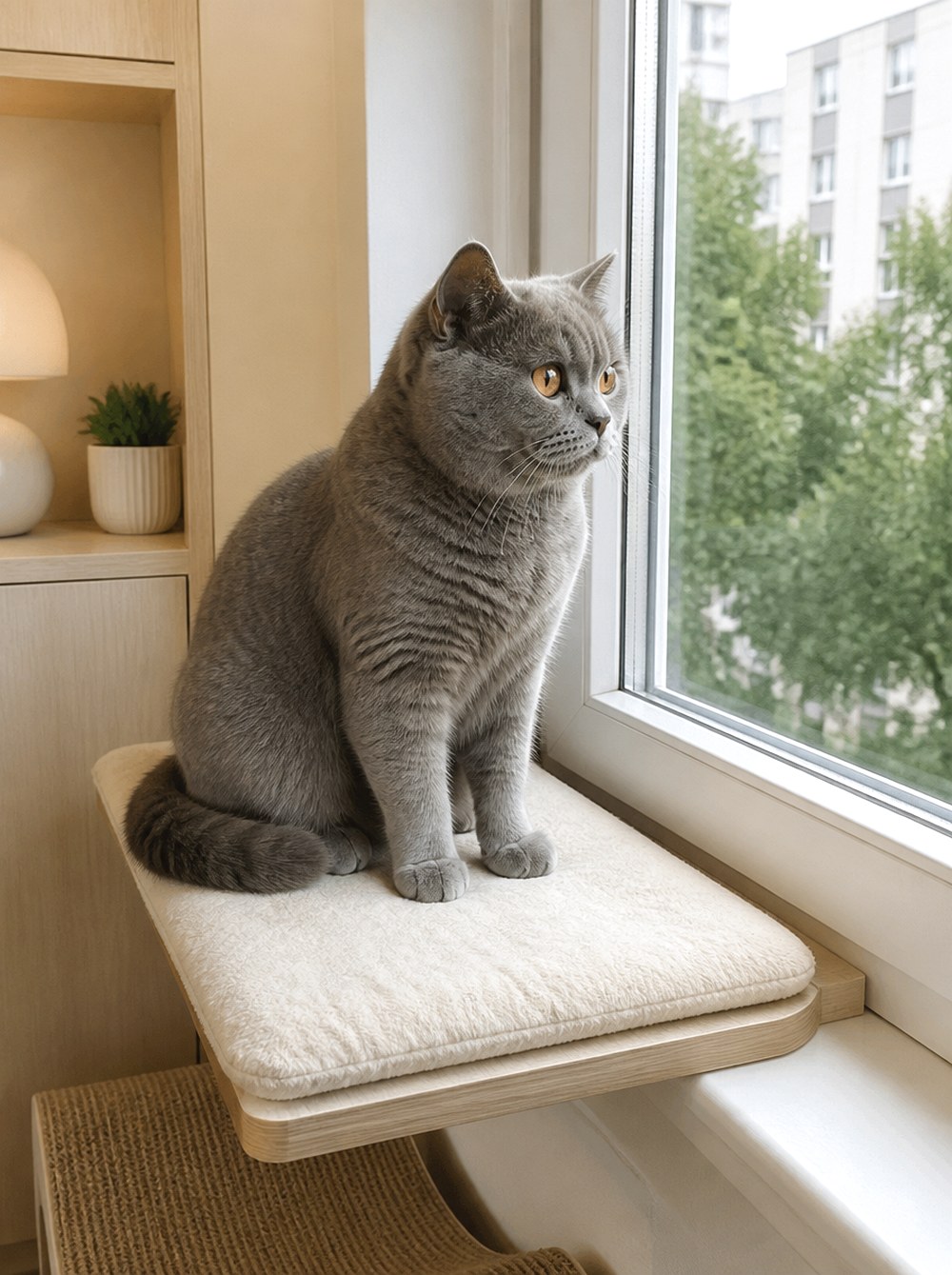
Use a stable window perch, broad sill, or securely positioned piece of furniture that lets your cat sit comfortably and look outside. The visual movement of pedestrians, leaves, birds at a distance, and changing daylight can make the spot interesting even when nobody is actively playing with the cat.
A small scratch pad or resting mat nearby can turn the window into a more complete activity zone without crowding it.
Keep windows secure. A regular insect screen should not automatically be treated as fall protection, and a cat should not be able to push through an open or poorly secured window. Also check that blind cords or similar hanging loops are inaccessible.
For a narrow apartment, this setup works particularly well because the same square footage can serve as human seating or storage when the perch is positioned thoughtfully.
You May Also Like


3. Use a Fold-Flat Tunnel for Temporary Floor Play
You do not need to keep every play object out all day.
A collapsible cat tunnel can create a temporary playroom in the middle of a living area and then fold away when the household needs the space. Position it where your cat can enter from either end rather than wedging it into a dead-end corner.
During interactive play, roll or toss an appropriate cat toy past an opening to encourage stalking and dashing through the tunnel. You can also leave the tunnel available briefly as a hiding and exploration space.
This setup is especially useful in studios and multipurpose living rooms because the floor returns to normal afterward.
Inspect fabric tunnels regularly for damaged wire, loose material, or torn components. If the tunnel contains dangling attachments, supervise their use and remove damaged pieces.

4. Create a Puzzle-Feeding Nook
A small playroom can include activities that involve thinking and searching rather than only running and jumping.
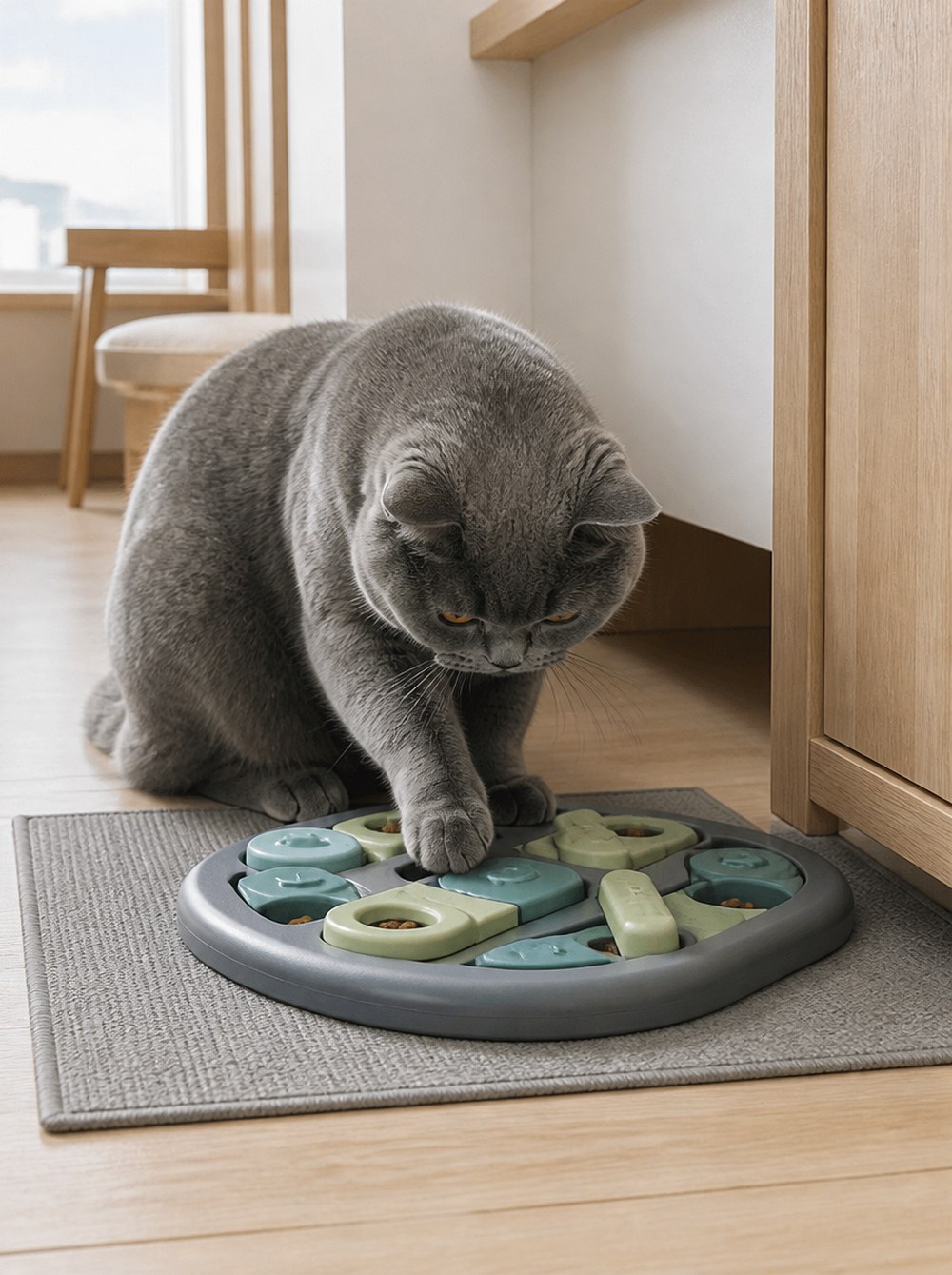
Set aside a washable mat or tray-sized area for an appropriate cat food puzzle. Choose a design your cat can operate without loose pieces that could be chewed or swallowed. Start with an accessible setup rather than making food difficult to obtain immediately.
If you use regular cat food in the puzzle, account for it as part of the cat’s normal daily food rather than automatically adding extra food on top of meals.
A puzzle nook can fit beside a kitchen cabinet, near a feeding area, or at the end of a hallway. Because it uses so little space, it is also useful when vigorous play is inconvenient.
Wash food-contact surfaces regularly according to the product instructions and remove a puzzle if it becomes cracked or damaged.
5. Make the Scratching Post Part of the Play Zone
Scratching furniture does not have to occupy a separate section of the home. A well-positioned scratcher can act as one anchor of the play area.
For a narrow room, a tall vertical scratcher with a modest footprint can use space efficiently. If your cat strongly prefers horizontal scratching, a low cardboard or fiber scratch pad may tuck beside a wall or beneath the edge of a console.
Place the scratcher where your cat already spends time instead of hiding it behind furniture. Cats need enough room to stretch and use it naturally.
A freestanding vertical model should be stable enough that it does not wobble or topple during vigorous scratching. Replace worn components when they become loose or structurally unreliable.
The useful distinction here is that the scratching station provides a dedicated physical outlet without requiring another pile of toys.

6. Use the Space Beneath a Table as a Hide-and-Pounce Den
The underside of a sturdy desk, side table, or console is often unused territory.
Instead of adding a bulky enclosed cat house, place a low cat bed, open-sided fabric cube, or appropriately sized cardboard hide inside that protected space. The result gives your cat a place to retreat, watch the room, and emerge during play.
A hideout works best when the cat has a clear entrance and exit. Avoid packing storage around it so tightly that the cat becomes boxed in.
You can occasionally move a toy across the open area outside the hide to support stalking behavior during supervised interactive play. When play ends, remove string-style or wand toys rather than leaving them tangled around furniture.
This idea turns space that already exists into part of the playroom, making it particularly useful in one-bedroom apartments and compact home offices.

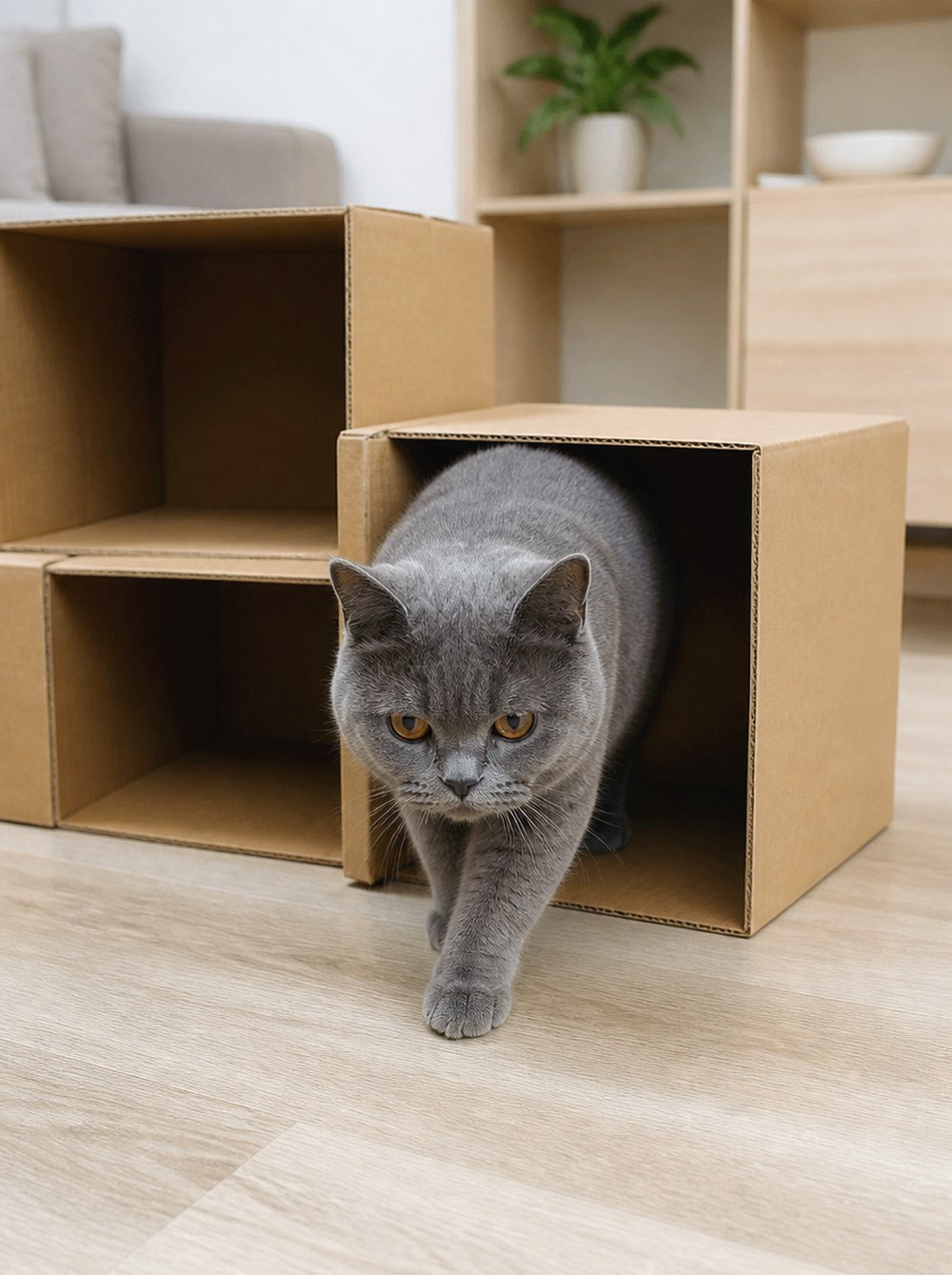
7. Assemble a Modular Cardboard Exploration Course
Cardboard can create an activity area without committing permanent floor space.
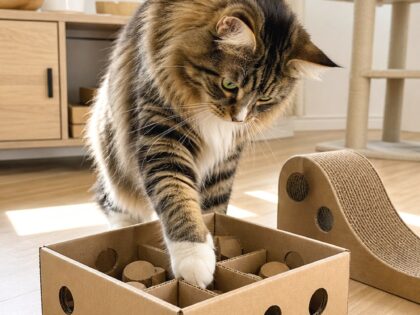
Use a few clean, sturdy boxes large enough for your cat to enter and turn around comfortably. Arrange them as separate caves or connect open passages so the cat can investigate different routes. Changing the arrangement occasionally makes the setup different without buying another piece of furniture.
Keep the design uncomplicated. A few roomy boxes are more practical than an elaborate maze that becomes difficult to inspect or clean.
Remove staples, loose tape, plastic packaging, handles, and other pieces that could be chewed, snagged, or swallowed. Replace cardboard that becomes damp, heavily damaged, or unstable.
When guests arrive or the room needs to be cleared, the boxes can be flattened or recycled, which is one reason this works so well for temporary playrooms.
8. Keep One Clear Chase Lane
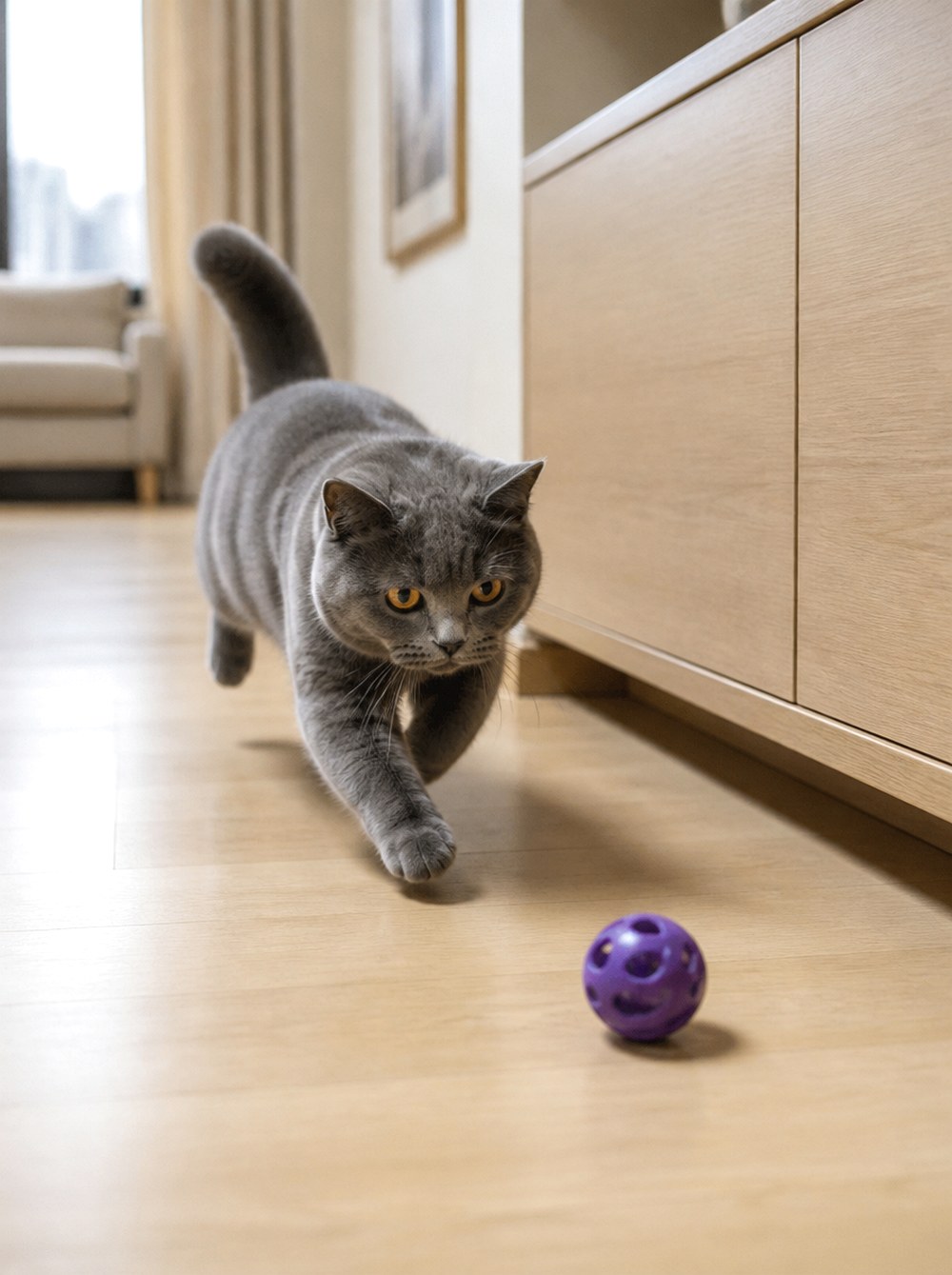
Cats do not need an entire room to have space for active play. Sometimes a short unobstructed route is more useful than several square feet covered with toys.
Look for a naturally clear path along a hallway, between a sofa and wall, or across one side of the living room. Keep that lane free from fragile objects, loose cords, slippery clutter, and furniture with sharp obstacles.
During an interactive session, move an appropriate toy through the open route so your cat can stalk, chase, pause, and change direction. The goal is not to fill the lane with equipment; the empty space is the feature.
This is one of the easiest ways to make a small home feel more playable without making it look more crowded. Once the activity finishes, the route remains an ordinary household walkway.
9. Add a Compact Resting Perch Above the Busy Zone
A playroom should also give a cat somewhere to stop participating.
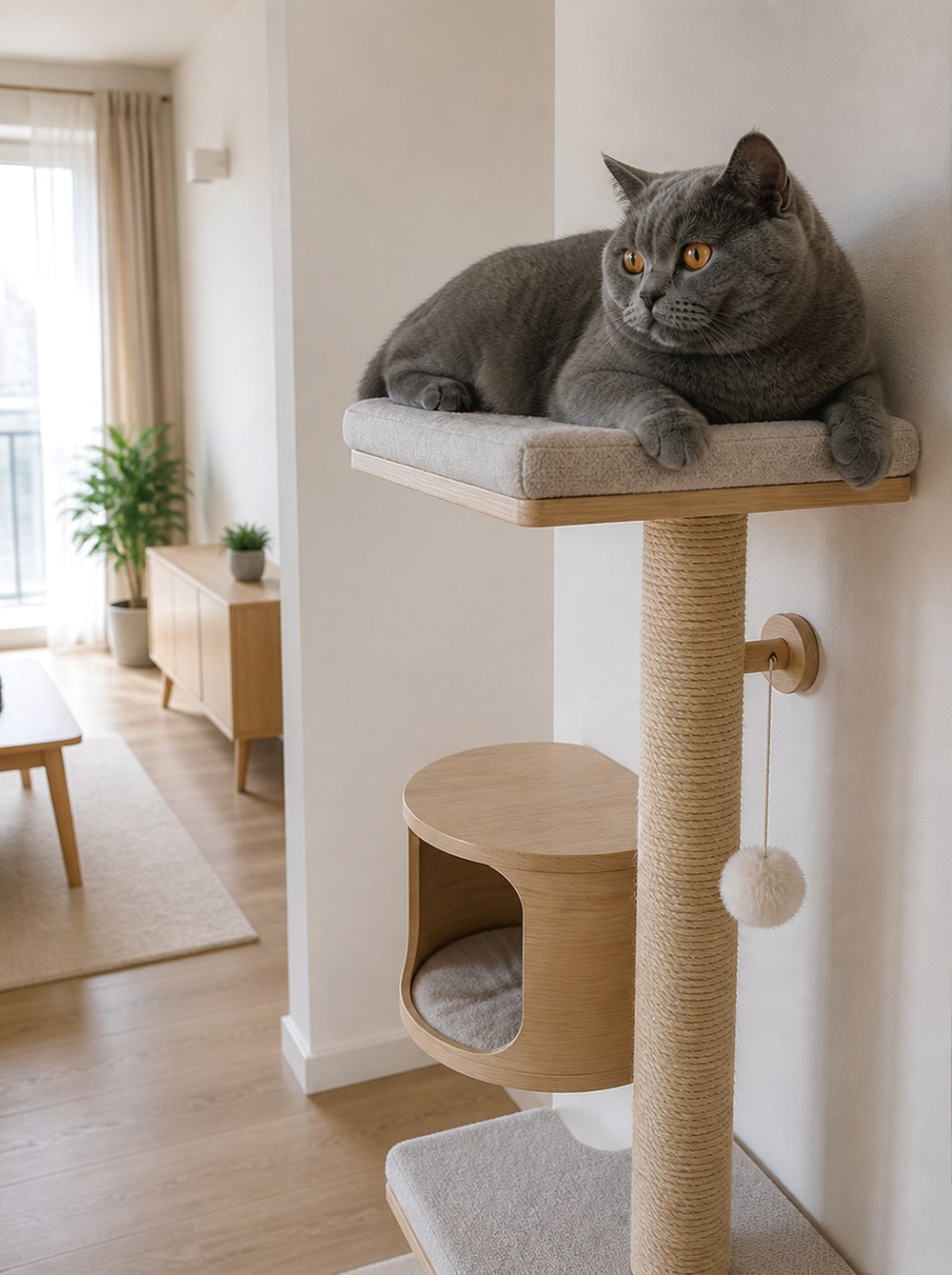
In a small home, that resting place can be integrated into space already being used. A secure perch on top of suitable cat furniture, a stable window-adjacent platform, or a purpose-built wall bed can give your cat an elevated place to observe without occupying another patch of floor.
Position the rest spot away from constant foot traffic. It should feel like a destination rather than another obstacle along a climbing route.
This is especially helpful when the play area shares a room with work, television, cooking, or other household activity. The cat can remain near the action while choosing not to be in the middle of it.
Make sure elevated resting furniture is stable, appropriately secured, and easy for the individual cat to access.
10. Use a Closed Toy-Rotation Station Instead of Leaving Everything Out
A small cat playroom can become cluttered quickly if every toy stays on the floor.
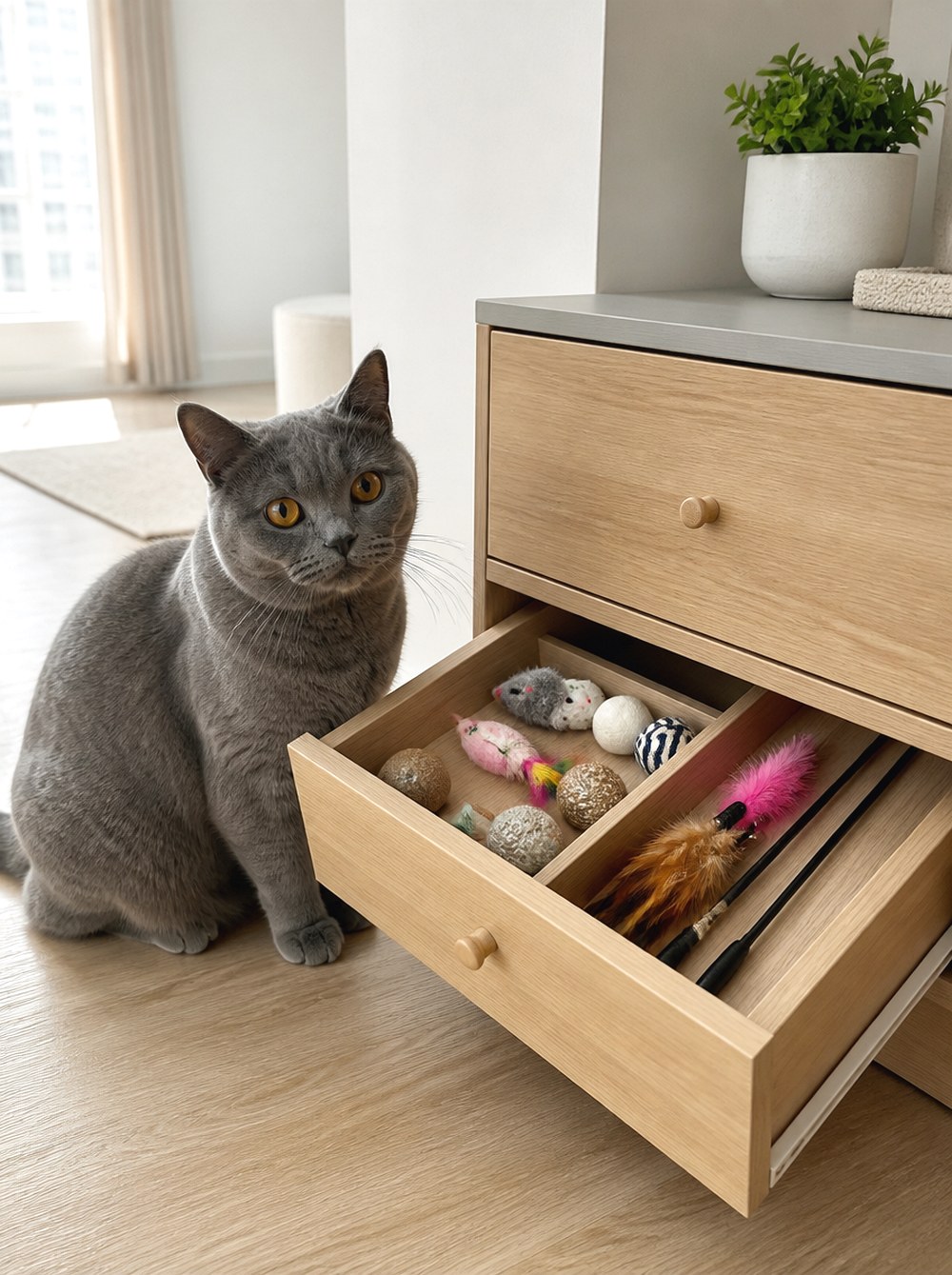
Give the play area one dedicated storage point, such as a lidded bin inside a cabinet, a secure drawer, or a small closed basket placed where your cat cannot pull out unsafe items independently. Keep only a limited selection of suitable toys available at one time and rotate them periodically.
The benefit is not just tidiness. Rotation lets you change the play environment without continually adding more objects to the home.
Separate toys that require supervision, including string or wand-style toys, from items considered appropriate for independent access. Check toys as you put them away and discard damaged pieces rather than returning them to storage.
A storage station also makes resetting the room quick: pick up loose toys, inspect them, return them to their designated place, and leave the main floor clear.
You May Also Like


How to Combine the Ideas Without Crowding the Room
A small cat playroom usually works better when you choose a few complementary zones instead of installing all 10 ideas at once.
For example, a compact apartment setup might combine:
- A vertical climbing corner for height
- A window perch for observation
- A scratching station for a dedicated physical outlet
- A fold-flat tunnel for temporary active play
- A closed cabinet for toy rotation
That combination provides several different kinds of activity while keeping most of the floor available.
Think about how your particular cat already uses the home. A cat that spends hours near the window may get more value from improving that area than from installing an elaborate wall route. A cat that likes hiding may use an under-table den frequently. A cat that enjoys short bursts of running may benefit most from keeping one chase lane uncluttered.
Age, mobility, confidence, and individual play style matter too. High jumps and steep routes may not suit every cat. Adjust platform heights, access points, and activity intensity to what your cat can comfortably manage.
Keep the Playroom Flexible
The strongest small-home setup is rarely the one with the most cat furniture. It is the one that gives the cat distinct choices without making the household harder to live in.
Use permanent space for the features your cat relies on most, such as a secure scratching or climbing area. Let tunnels, boxes, puzzles, and interactive toys provide temporary variety. Keep circulation paths clear, store supervised toys safely, and inspect the setup as items wear.
If your cat suddenly stops jumping, playing, eating normally, using the litter box normally, or shows other abrupt changes in activity or behavior, a playroom adjustment should not be treated as a substitute for veterinary guidance.
Start with one underused area of your home and give it a clear purpose. A single useful corner can become a surprisingly capable cat playroom.
