A cat feeding area does not need an entire corner of the kitchen. In a small apartment, studio, or compact house, a good setup can fit into a narrow strip of wall, an unused furniture cubby, or a few inches of otherwise wasted floor space.
Save This Idea on Pinterest

12 Cat Feeding Station Ideas for Small Spaces
Save to PinterestThe goal is not simply to hide the bowls. A useful feeding station should give your cat enough room to eat comfortably while keeping food, scoops, mats, and cleanup supplies from spreading across the room. It should also be stable, washable, and easy for you to reach every day.
The 12 cat feeding station ideas below use different kinds of overlooked space, from corners and cabinet ends to pull-out surfaces and compact storage towers.
Start With the Space Your Cat Actually Needs
Before choosing a storage solution, watch where your cat naturally feels comfortable eating. Avoid squeezing bowls into a spot where doors swing past, people constantly step over the cat, or another pet can block the only exit.
For a compact station, prioritize:
- A stable surface that does not slide during meals
- Enough open space for your cat to approach and turn around naturally
- Washable bowls and a removable mat or tray
- Food storage that closes securely
- Easy access for wiping crumbs and spills
- Separation from the litter box and household cleaners
You do not have to keep food and water in the exact same arrangement, either. If your cat consistently uses a water bowl more readily somewhere else, a separate drinking spot may suit your home better.
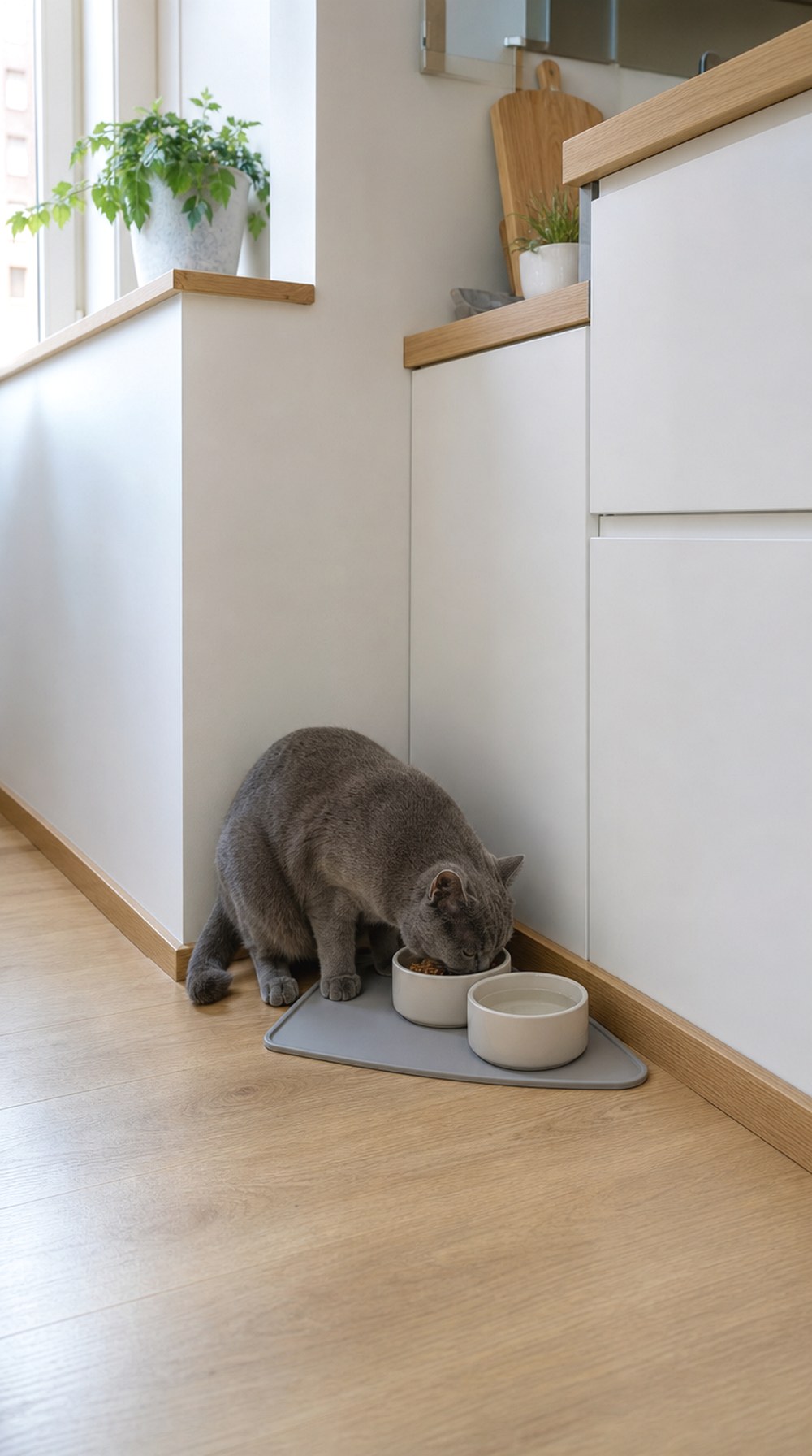
1. Turn an Empty Corner Into a Triangle Feeding Zone
Corners often stay unused because standard rectangular furniture does not fit them well. A compact feeding tray positioned diagonally can turn that dead space into a defined meal area without adding furniture.
Use a washable mat or shallow tray just large enough for the bowls. Store food elsewhere if adding a container would make the corner crowded. This works particularly well beside kitchen cabinets or at the end of a quiet dining area.
2. Install a Low Wall-Mounted Feeding Ledge
When floor space is limited, a securely mounted ledge can create a permanent feeding surface without the footprint of a freestanding bowl stand.
Choose a smooth, washable surface and have it installed firmly into suitable wall supports. The ledge should sit at a comfortable feeding height for your individual cat rather than forcing an awkward stretch.
A slightly raised outer edge can help contain small spills, while a removable mat makes cleanup easier. Keep the area beneath the ledge open so you can wipe the floor.

You May Also Like


3. Use a Fold-Down Feeding Shelf for Meal Times
A fold-down shelf can disappear against the wall when it is not needed. It is especially useful in a very narrow kitchen where even a permanent ledge would interfere with walking space.
The shelf needs sturdy hardware and a positive locking mechanism that keeps it fully open during feeding. Never fold or release it while your cat is near the moving parts.
Keep bowls on a separate removable tray rather than leaving them on the shelf while it is folded. After the meal, remove the bowls, wipe the surface, and close it once the cat has moved away.

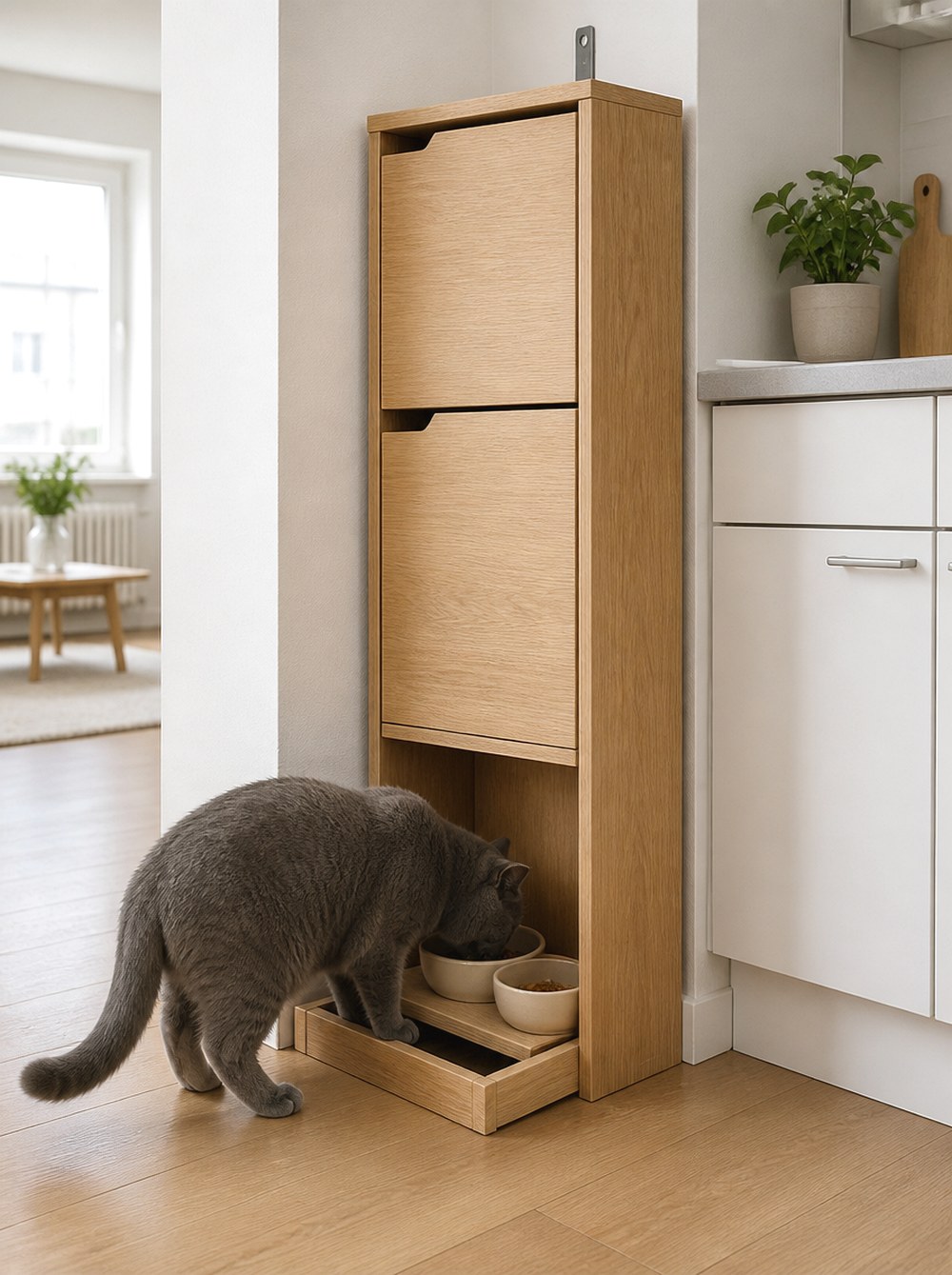
4. Build a Pull-Out Feeding Tray Into a Lower Cabinet
A shallow pull-out tray can give bowls their own surface at meal time and slide away afterward. It is a good option when floor bowls interfere with a narrow kitchen walkway.
The tray should extend fully and lock or remain stable rather than rolling inward while the cat eats. Bowls should sit in recessed holders or on a nonslip insert.
This type of installation is best treated as a feeding surface rather than permanent bowl storage. Remove and wash the bowls separately, and keep the track free of crumbs.

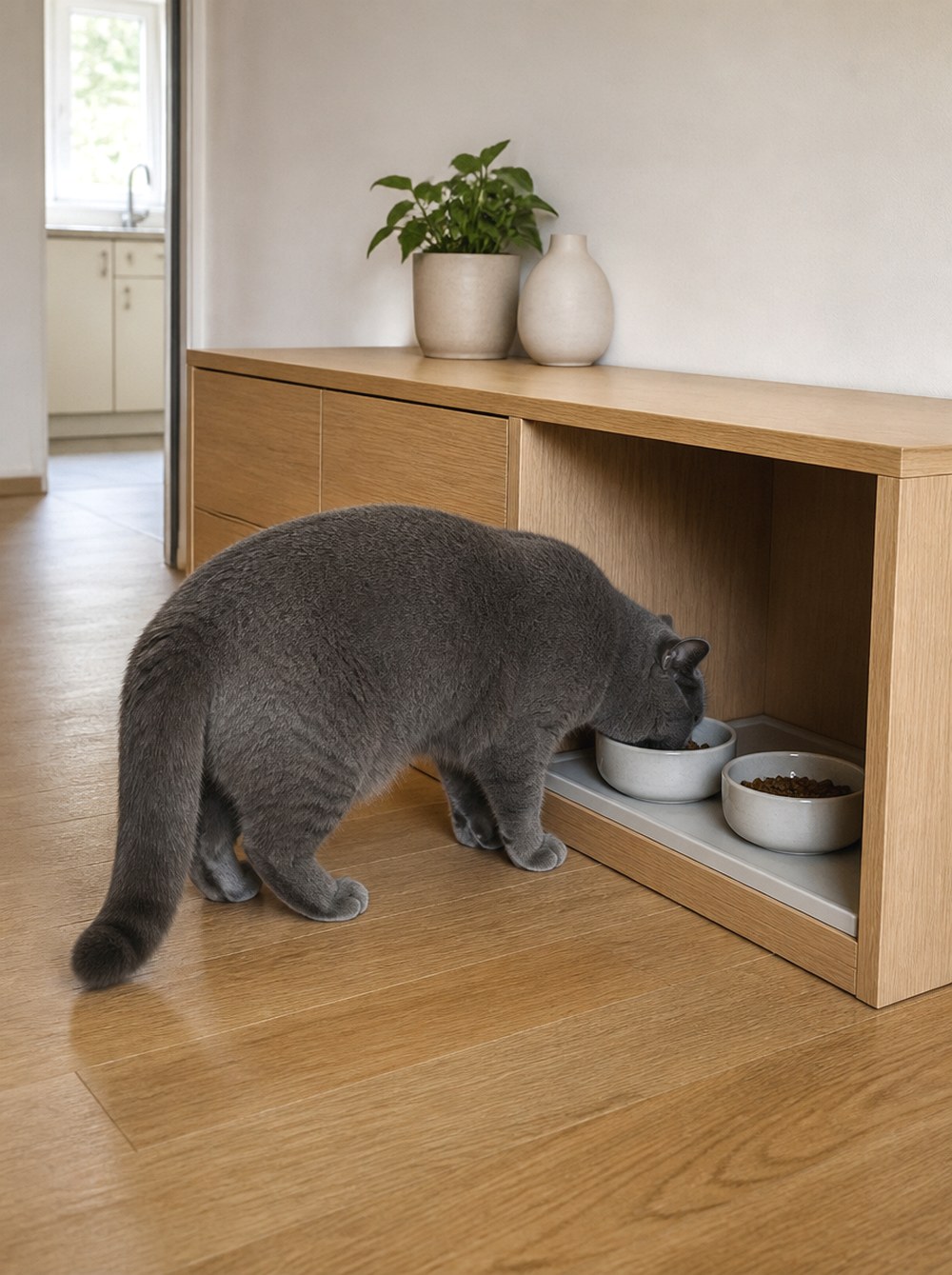
5. Give the Lower Shelf of a Console Table a Second Job
A slim console table can serve two purposes without taking additional floor space. Keep household items on top and turn the open lower shelf into a sheltered feeding station.
This works best with a table deep enough that your cat can comfortably reach the bowls without crouching beneath a low crossbar. The structure should be sturdy and should not wobble when bumped.
Place the bowls on a removable waterproof tray rather than directly on wood or another moisture-sensitive surface.

6. Use the End of a Kitchen Island
The short end of a kitchen island or peninsula can become a feeding zone without competing with the main food-preparation area.
A shallow fitted shelf, low recessed niche, or neatly positioned mat can define the cat’s space. If you add a shelf, make sure it does not project far enough to create a shin-level obstacle in the walkway.
Keeping bowls at the end rather than in the center of the kitchen can also make meal cleanup more contained.

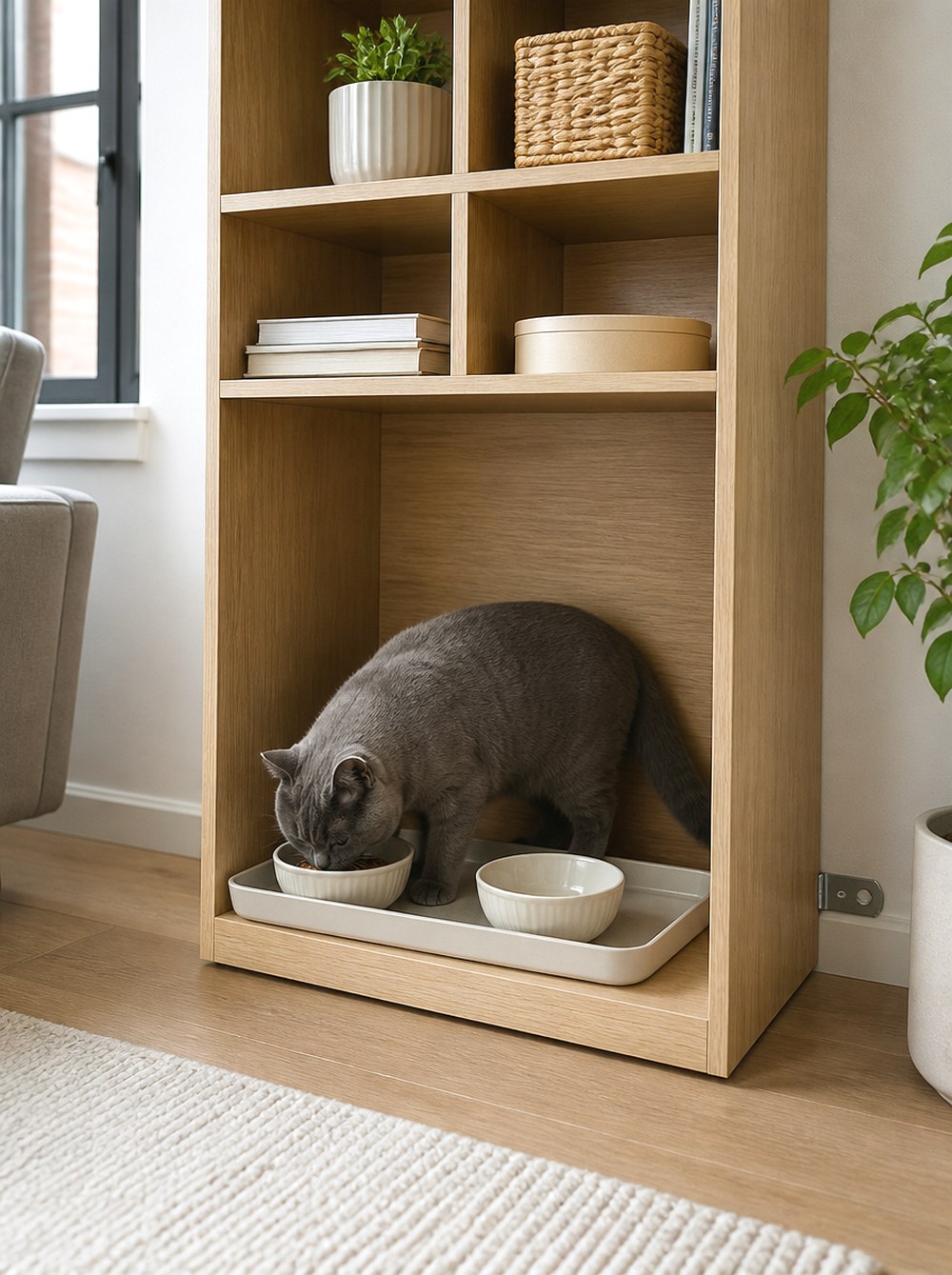
7. Convert One Anchored Bookcase Cubby
If a bookcase already occupies valuable wall space, one large lower cubby can sometimes become the feeding area instead of adding another piece of furniture.
Choose a cubby with enough height and depth for unrestricted head movement. Put bowls on a washable insert that can be removed after spills.
Most importantly, anchor the bookcase securely to the wall. Food containers and heavier supplies should not be stacked where they could fall into the feeding space.
8. Create a Feeding Niche at the End of a Storage Bench
A storage bench can handle blankets, household items, or cat supplies while a small open section at one end serves as the feeding zone.
This arrangement works well when a bench already belongs in the dining area or along a wall. The feeding opening should face into a calm area rather than directly into a busy walkway.
Line the bottom with a waterproof removable tray so spilled water cannot soak into upholstered or wood surfaces.
9. Combine Food Storage and Bowls in a Slim Vertical Tower
When you have very little width but some unused vertical space, a narrow feeding tower can keep the entire routine together.
Use the lowest open section for the feeding tray and closed compartments above for sealed food, clean bowls, or feeding accessories. A tall narrow unit must be designed or secured so it cannot tip.
Avoid packing the upper shelves with unnecessary supplies. The main advantage is keeping the footprint small, not storing every cat item in one place.
10. Put a Portable Feeding Tray in a Cabinet Between Meals
Renters and people who do not want permanent fixtures can use a portable tray as the entire station.
Choose a rigid tray with a nonslip surface and raised edge. Set it in the same quiet feeding spot at meal times, then wash or wipe it and store it vertically inside a nearby cabinet.
This gives your cat a predictable meal location without permanently occupying the floor with bowls and mats. It also makes deep cleaning underneath straightforward.

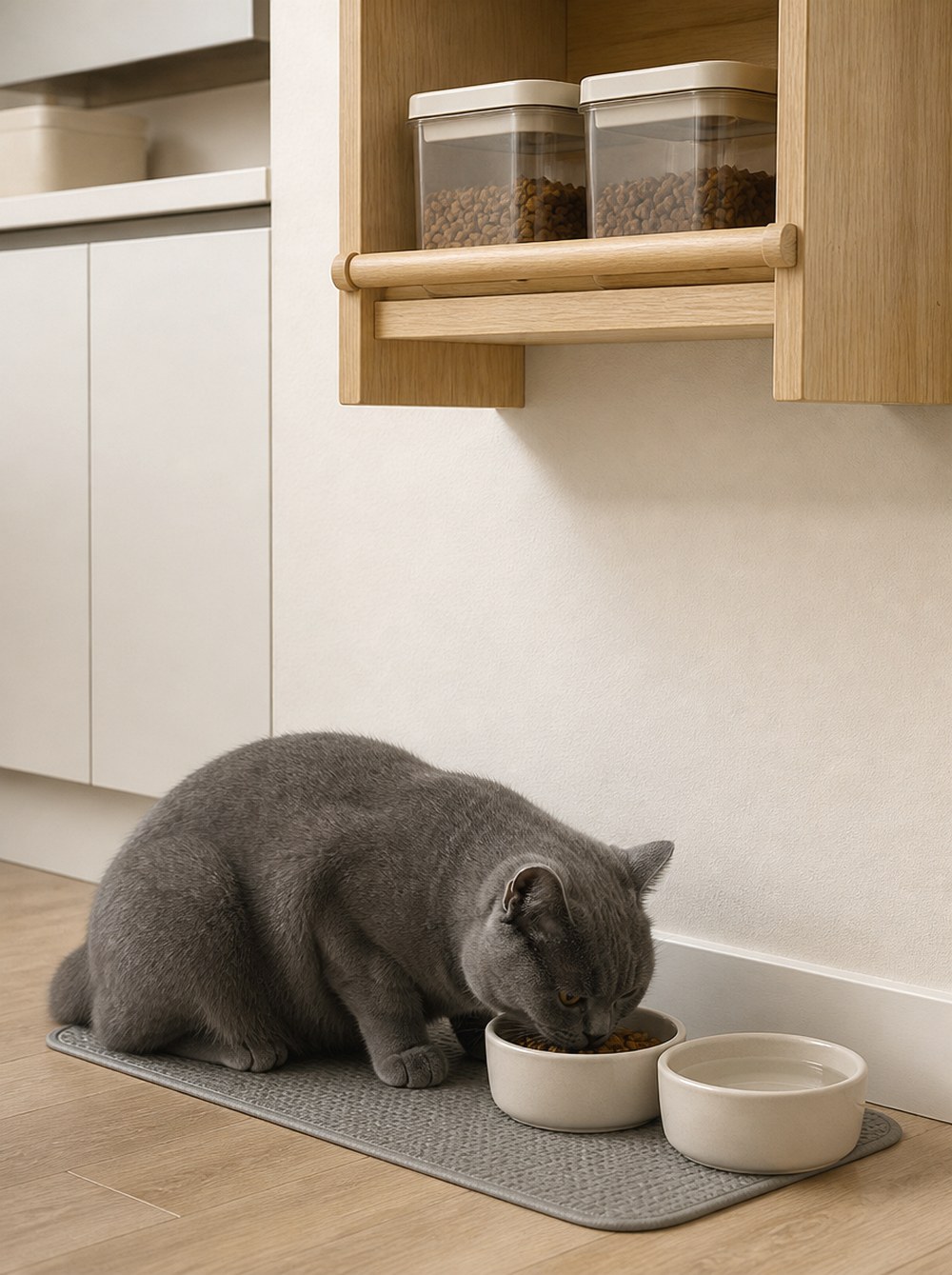
11. Pair a Wall Rail With a Tiny Floor Feeding Footprint
Sometimes the bowls are not the real space problem—the supplies surrounding them are. Moving food storage, scoops, and clean accessories onto secure wall storage can leave only the feeding mat on the floor.
Install a shallow rail or closed wall cabinet above and slightly beside the station rather than directly where containers could fall onto your cat. Keep food sealed and make sure hooks, cords, clips, or small pieces are not dangling within reach.
The result is a compact vertical zone without forcing your cat to eat from an enclosed cubby.
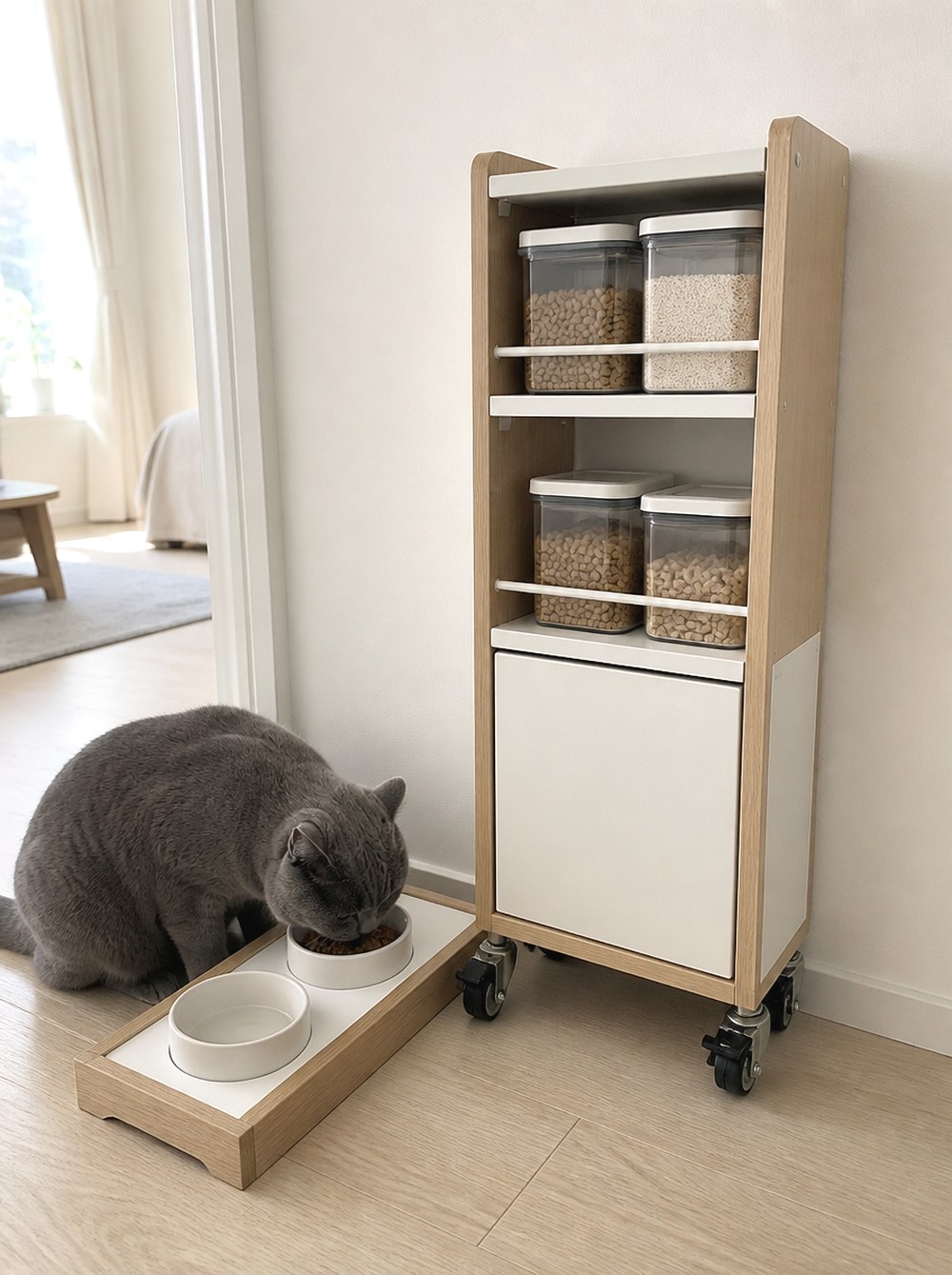
12. Make a Locked Rolling Cart the Whole Feeding Hub
A narrow rolling cart can work when the best feeding spot changes during the day or when you need supplies to move out of the way for cleaning.
Choose a stable cart with locking casters. Store sealed food and feeding supplies on the upper levels, while keeping a removable feeding tray on the lowest accessible section or beside the locked cart during meals.
Do not let the cart roll while your cat is eating. It should be parked and locked before bowls are placed down.
You May Also Like


Match the Station to the Space You Already Have
The most useful small-space feeding station usually replaces wasted space rather than creating a new storage zone. An empty corner may need nothing more than a fitted mat, while a narrow kitchen may benefit from a pull-out or fold-down surface. If you already own a console, bench, bookcase, or cart, adapting that piece can make more sense than buying dedicated pet furniture.
Whichever setup you use, keep your cat’s comfort ahead of the storage goal. The station should remain stable, accessible, and easy to clean. Avoid creating a cramped enclosure just to make the bowls less visible.
Watch how your cat uses the new location during the first several meals. If your cat repeatedly hesitates to approach, appears uncomfortable eating there, or avoids the station, reconsider the placement. A sudden appetite change or other unexplained change in eating behavior deserves veterinary attention rather than simply another feeding-station arrangement.
