A good cat photo corner does not need to look like a miniature studio. In most homes, the best setup is a comfortable place your cat already wants to visit, paired with flattering light and a background that does not compete for attention.
Save This Idea on Pinterest
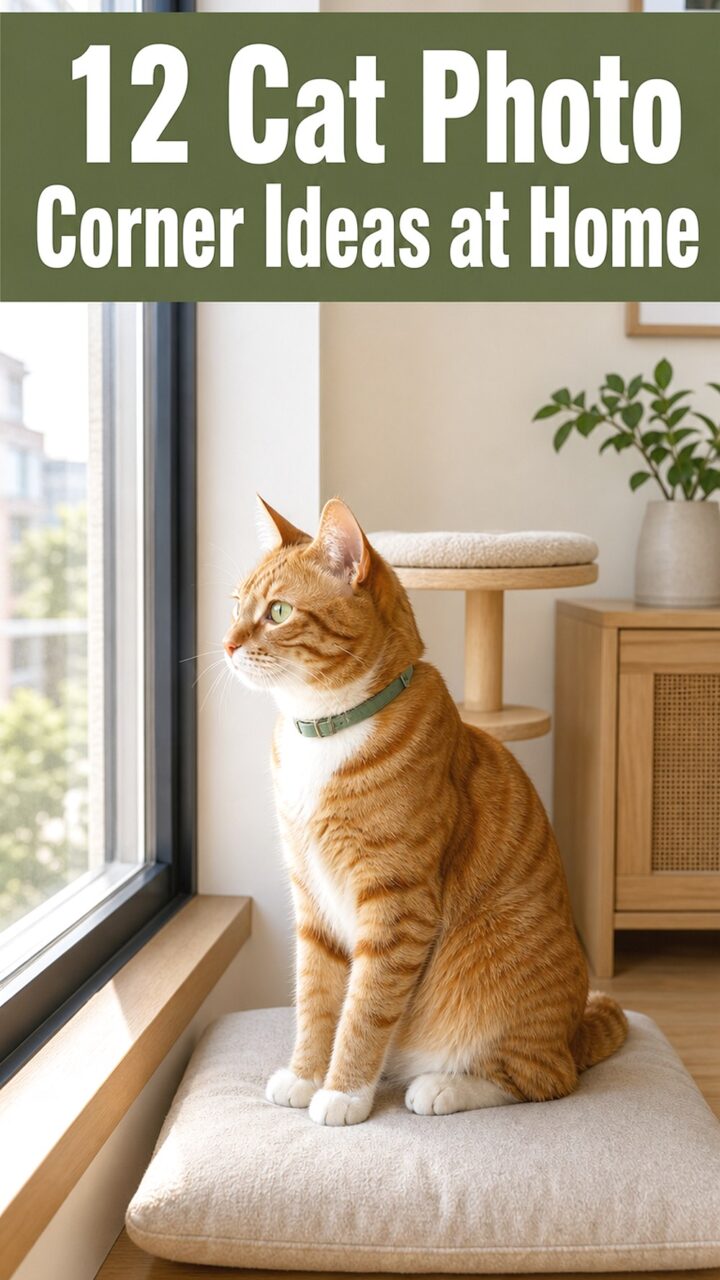
12 Cat Photo Corner Ideas at Home for Better Everyday Pictures
Save to PinterestThe trick is to build the photo spot around normal cat behavior. A window ledge can work for a cat that watches birds. A sturdy bench may suit a cat that likes being slightly elevated. A floor cushion can be better for a cat that prefers stretching out instead of posing.
These 12 cat photo corner ideas at home range from almost no-setup options to more intentional backdrops. You can choose one permanent corner or create a few different spots depending on the light, season, and mood you want in the picture.
Start With the Corners Your Cat Already Uses
Before rearranging a room, notice where your cat naturally settles. A voluntary resting spot usually produces more relaxed photographs than a decorative corner the cat has no reason to visit.
Look for three things: comfortable footing, uncluttered background space, and usable daylight. Then improve what is already there rather than trying to make your cat stay in an unfamiliar setup.
1. Turn a Bright Window Seat Into a Portrait Spot
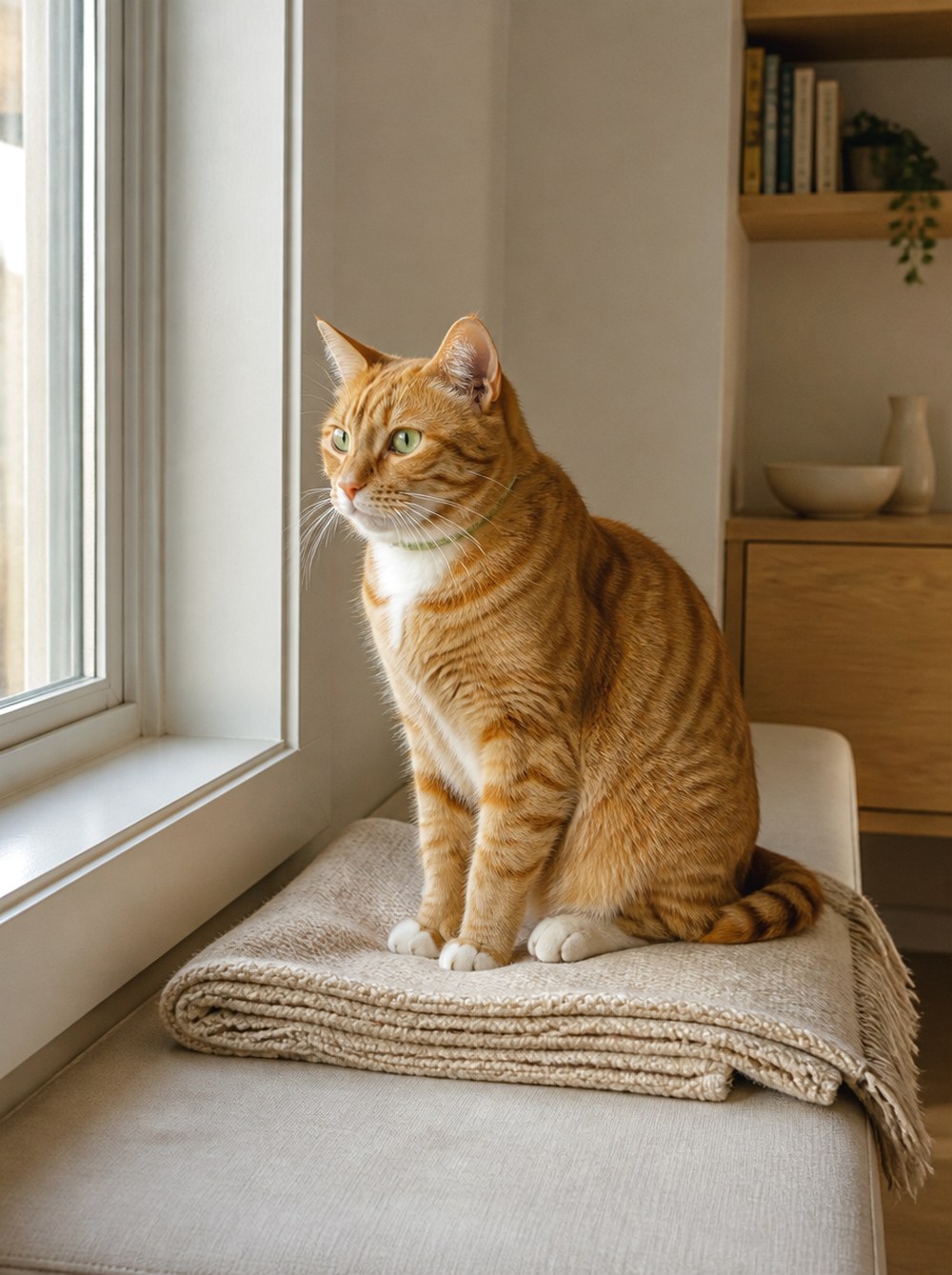
A window can provide both a reason for your cat to stay in place and soft directional light for the photograph. If the sill or window seat is wide enough for comfortable sitting, add a washable neutral cushion or folded throw to make the surface more inviting.
Photograph from slightly beside the window rather than directly into it. This lets the daylight illuminate the cat’s face while keeping the background quieter.
Avoid dangling blind cords, unstable decorations, or an open unscreened window. The photo corner should remain usable as a normal resting place after the camera is put away.
2. Use a Plain Wall and Low Wooden Bench
You May Also Like


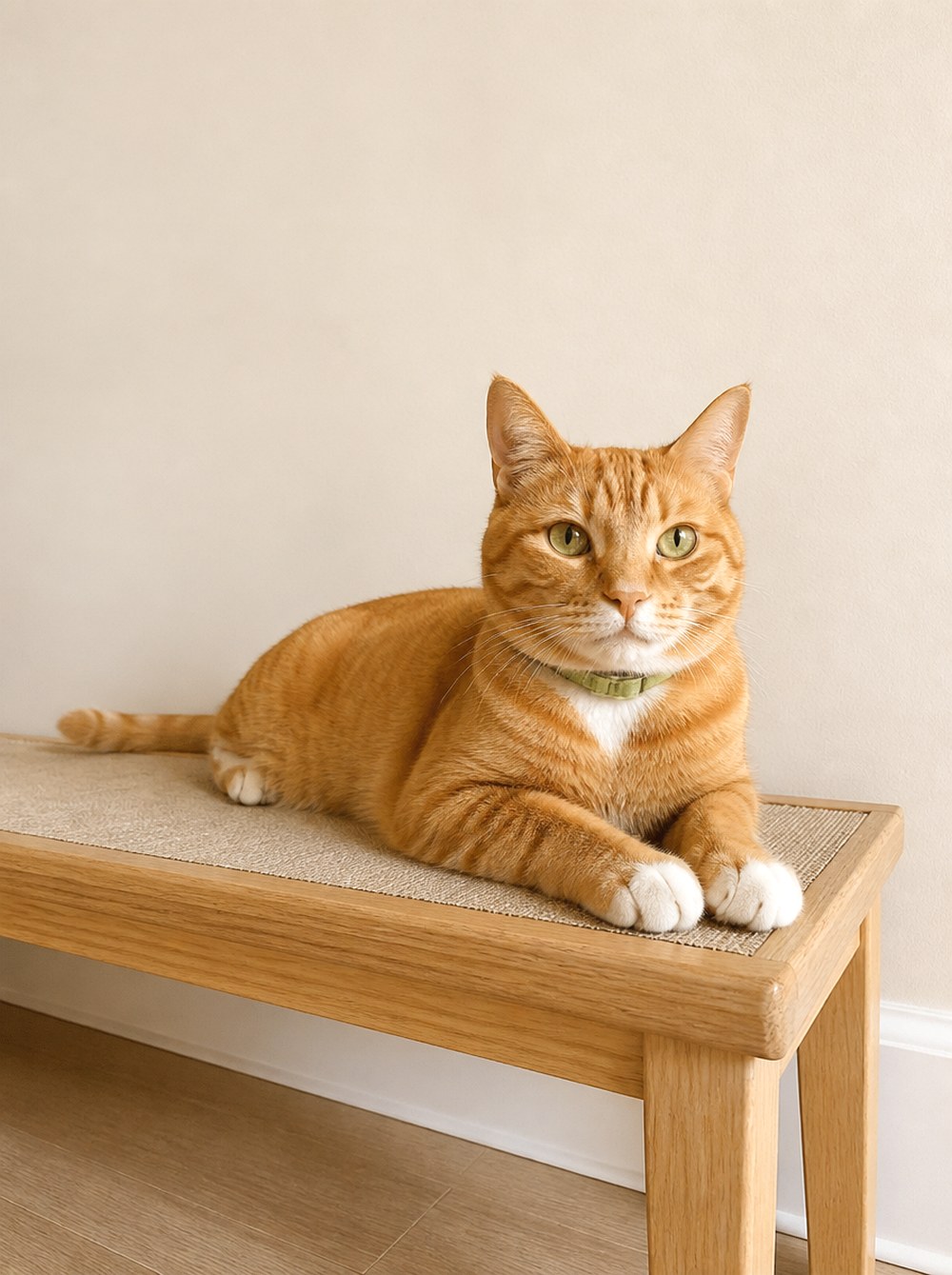
For a clean portrait with fewer distractions, a plain wall is hard to beat. Place a low, stable bench against it and add a nonslip mat or thin cushion if the surface is slick.
This setup works especially well when you want the cat—not the room—to be the visual focus. Cream, pale gray, muted beige, or another quiet wall color can give striped fur plenty of definition without creating a busy scene.
Leave some open wall around the cat in your camera frame. That negative space can make even a casual phone photo feel more intentional.
3. Create a Floor-Cushion Corner for Lounging Photos
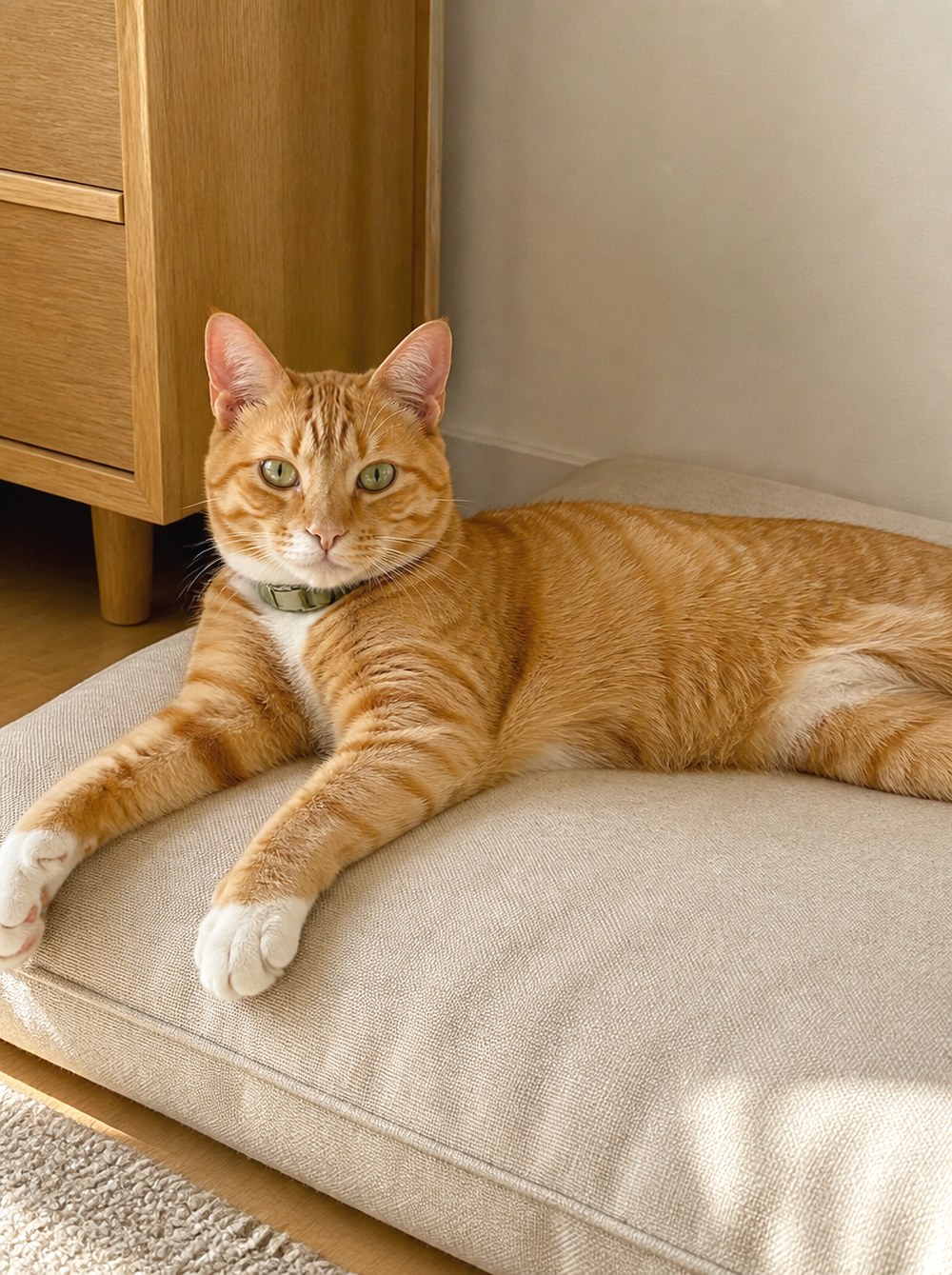
Not every cat prefers a perch. If yours often sprawls on the floor, make that behavior part of the composition.
A broad, flat cushion in a patch of indirect daylight gives the cat enough room to curl, stretch, roll onto one side, or tuck the paws underneath. Those natural changes in posture can create more varied photos than repeatedly trying to capture a sitting pose.
Choose a washable cover without tassels or loose trim. Position the cushion a short distance from a plain wall so you can photograph from floor level without showing half the room behind it.
4. Dedicate One Level of a Cat Tree to Photos
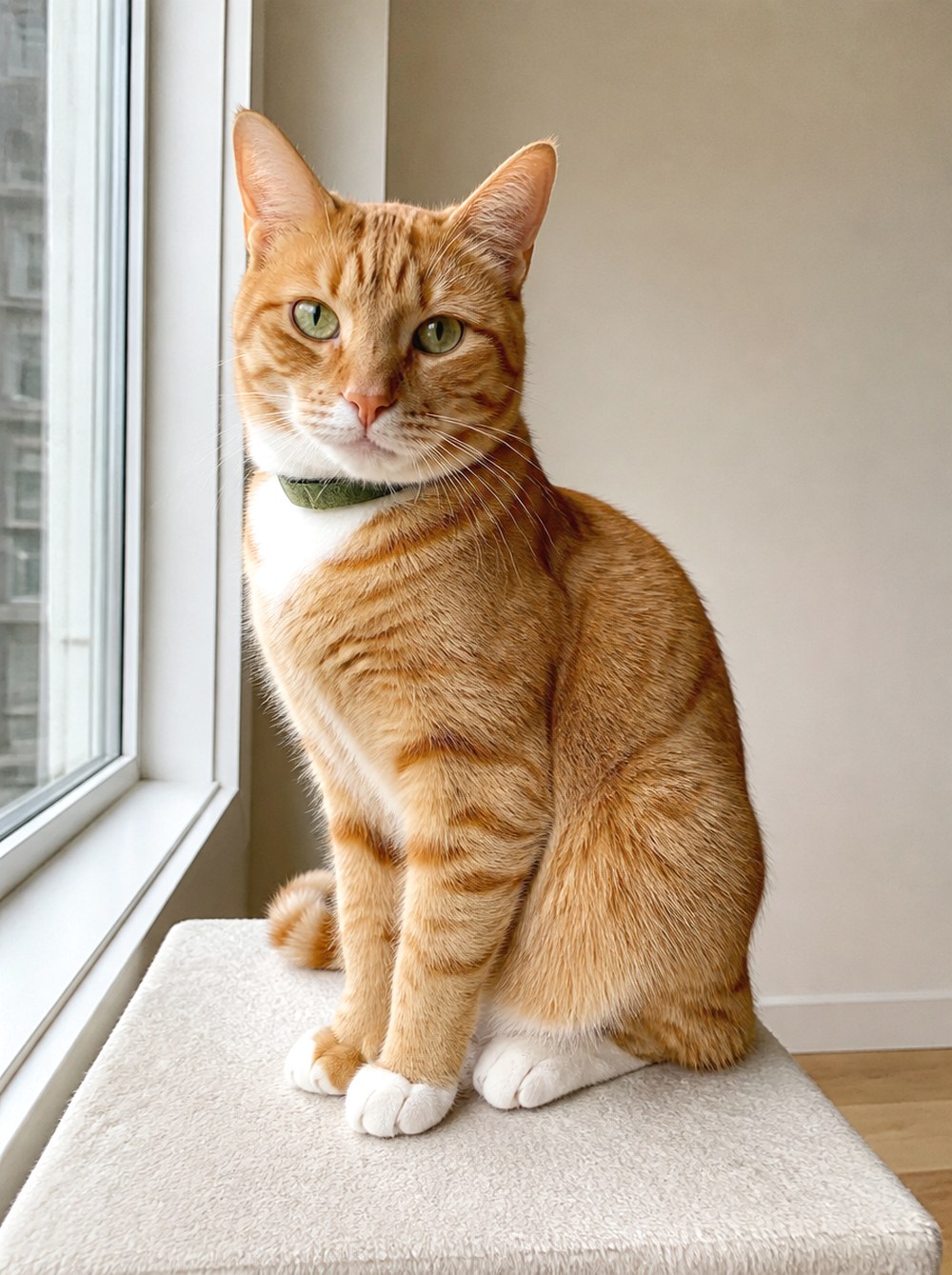
If your cat already climbs a cat tree every day, one platform can become a reliable photography location without creating a separate piece of furniture.
Position the tree so a favorite level receives good natural light and has a relatively plain background behind it. When taking the picture, crop closely enough that the platform reads as a perch rather than showing every post and level of the structure.
A stable platform is particularly useful for cats that prefer observing the room from above. Do not move the tree simply for a photo if relocating it makes the base unstable or blocks the cat’s normal climbing route.
5. Make the End of a Hallway Work as a Clean Backdrop
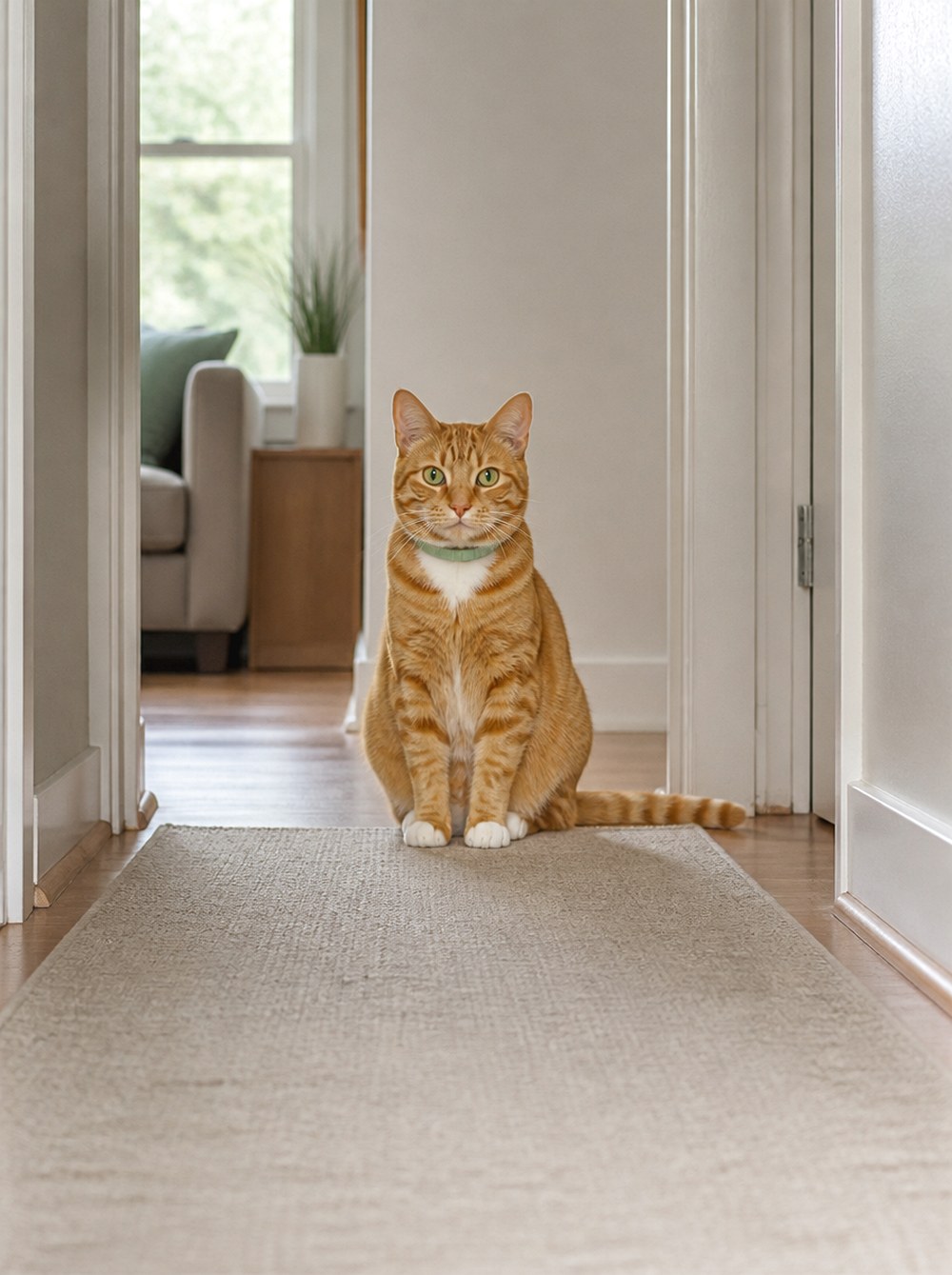
A hallway gives you something many small rooms cannot: distance between the cat and the camera. That extra space can create a softer background when you photograph from farther away or use a phone’s portrait mode carefully.
Keep the far end visually quiet. A short nonslip runner can define the sitting area while adding texture beneath the cat.
This corner is especially useful for eye-level photos. Kneel or place the camera close to floor height instead of photographing down from standing height. The lower viewpoint makes the cat more prominent and reduces the amount of floor filling the frame.
6. Set Up a Bedside Blanket Nook
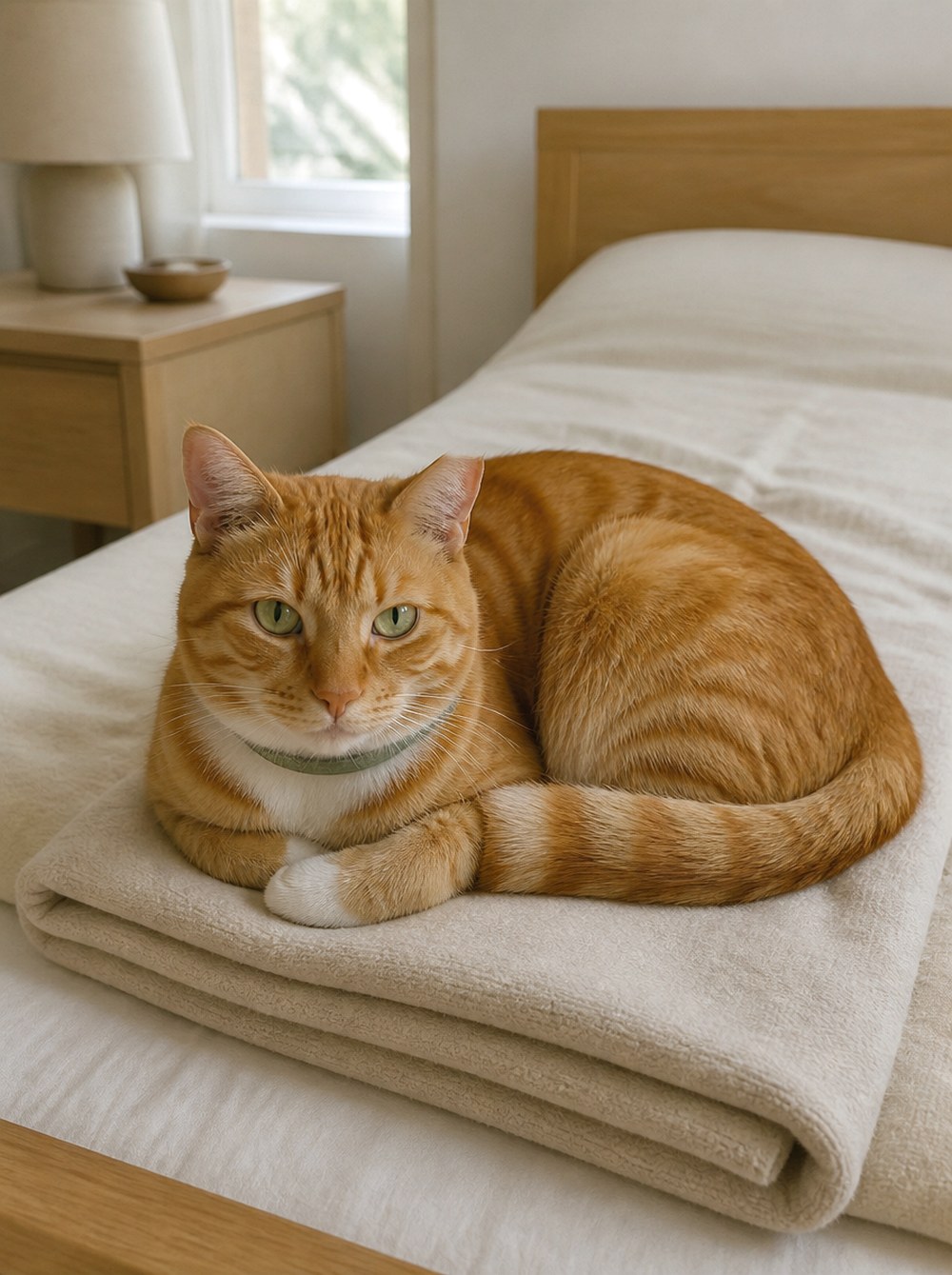
A cat that already spends part of the day on the bed gives you an easy opportunity for softer, quieter photographs.
Reserve one corner of the bed for a plain blanket that contrasts slightly with the coat. A medium-light neutral fabric helps an orange tabby stand apart while still keeping the scene calm.
This setup is useful for curled sleeping poses, tucked paws, grooming moments, and relaxed close-ups. Make the bed normally rather than surrounding the cat with decorative props. Keeping the scene familiar is more likely to preserve the cat’s natural behavior.
7. Use a Sturdy Window-Side Stool for a Compact Setup
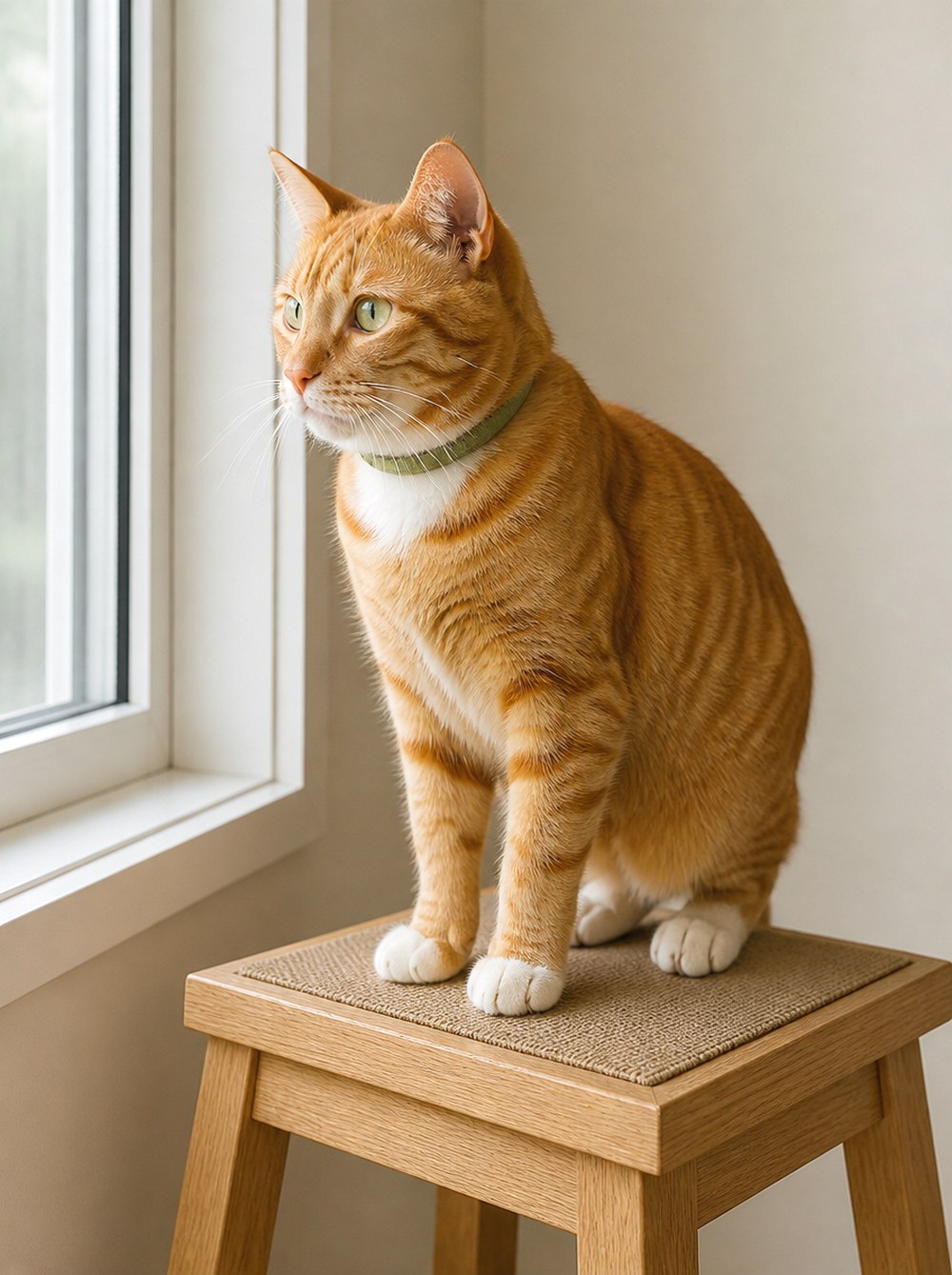
A broad stool can create a small photo station when you do not have room for a bench or dedicated pet bed. It also raises the cat closer to window height, which can improve lighting and simplify the camera angle.
Use only a stool with a wide, stable top and secure footing. A nonslip surface is preferable to bare polished wood.
Rather than placing the cat on the stool for the photograph, make the stool an appealing everyday perch and see whether the cat adopts it. A setup that becomes part of the room tends to produce better spontaneous pictures.
8. Build a Quiet Reading-Corner Photo Spot
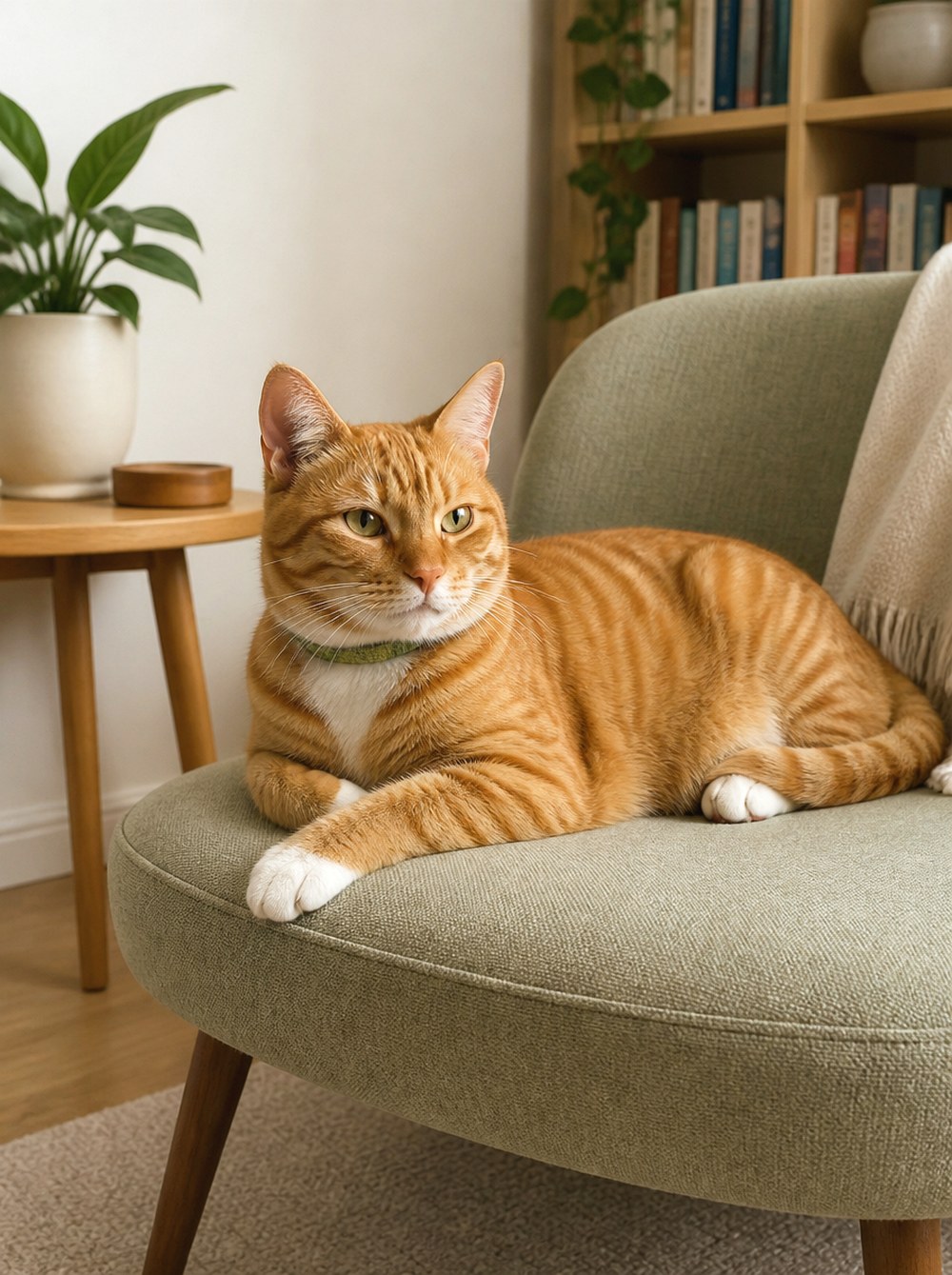
A reading chair can provide a useful combination of height, texture, and a familiar household setting. If your cat frequently claims the chair, keep the surrounding area intentionally calm.
A single chair, a plain wall, and a secure bookshelf in the background are usually enough. Avoid piles of books, cables, or decorative objects that turn the photograph into a clutter hunt.
For a more intimate image, photograph across the arm of the chair while the cat settles into the seat. The chair itself can frame the body without requiring extra props.
9. Use an Open Cube Shelf as a Framed Nook
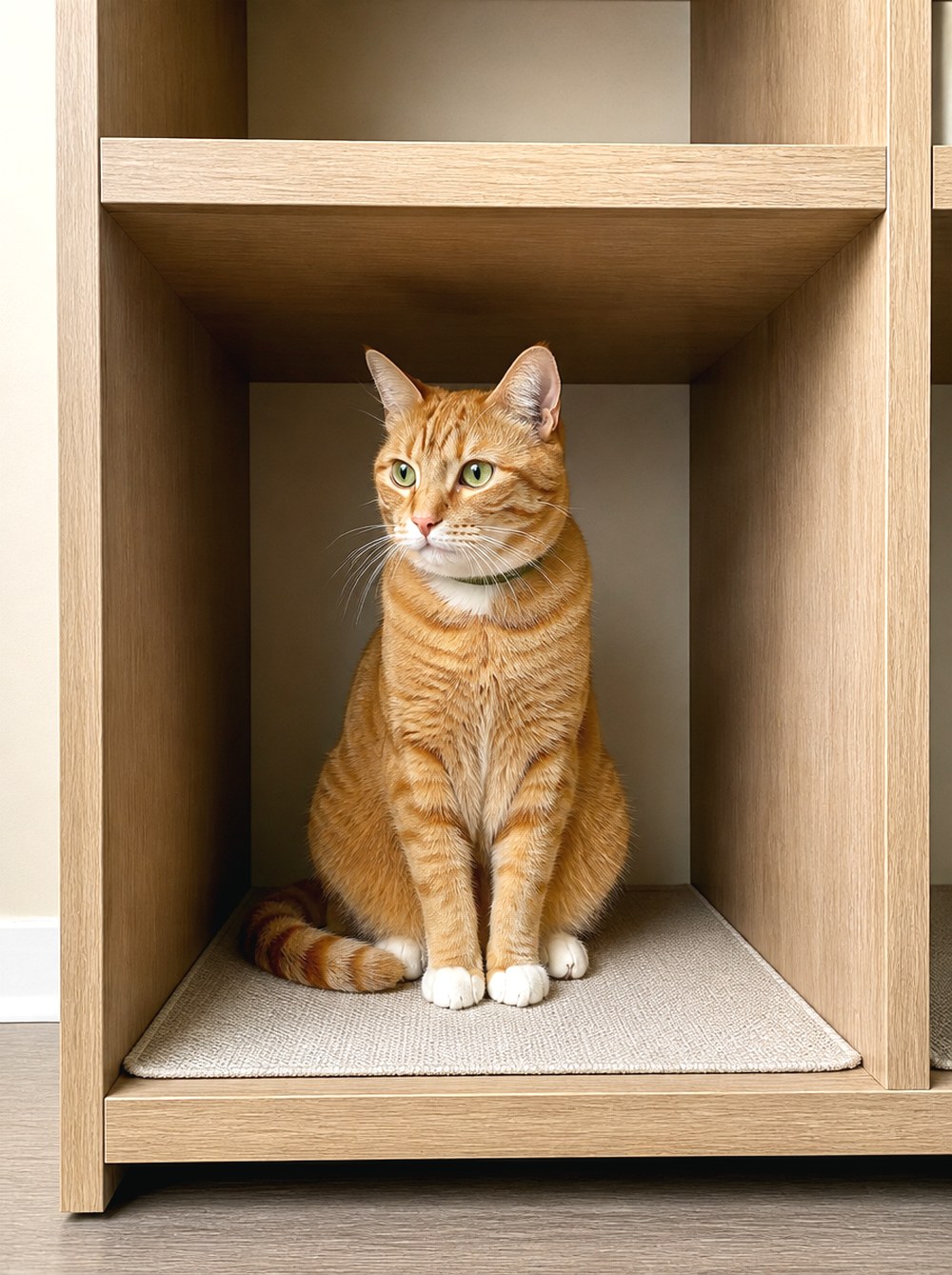
An empty shelf compartment can act like a ready-made frame around the cat. It works best with a large, low cube that gives the cat enough space to enter, sit, turn, and leave freely.
Remove storage boxes and decorative objects from the chosen compartment, then add a fitted nonslip mat. Keep the opening completely unobstructed.
If you try this idea, the shelving unit should be securely anchored and stable. Never encourage climbing onto furniture that could tip. The visual appeal comes from the clean rectangular frame around the cat, not from placing the cat at an unsafe height.
10. Photograph a Favorite Cardboard Box Against a Clean Wall
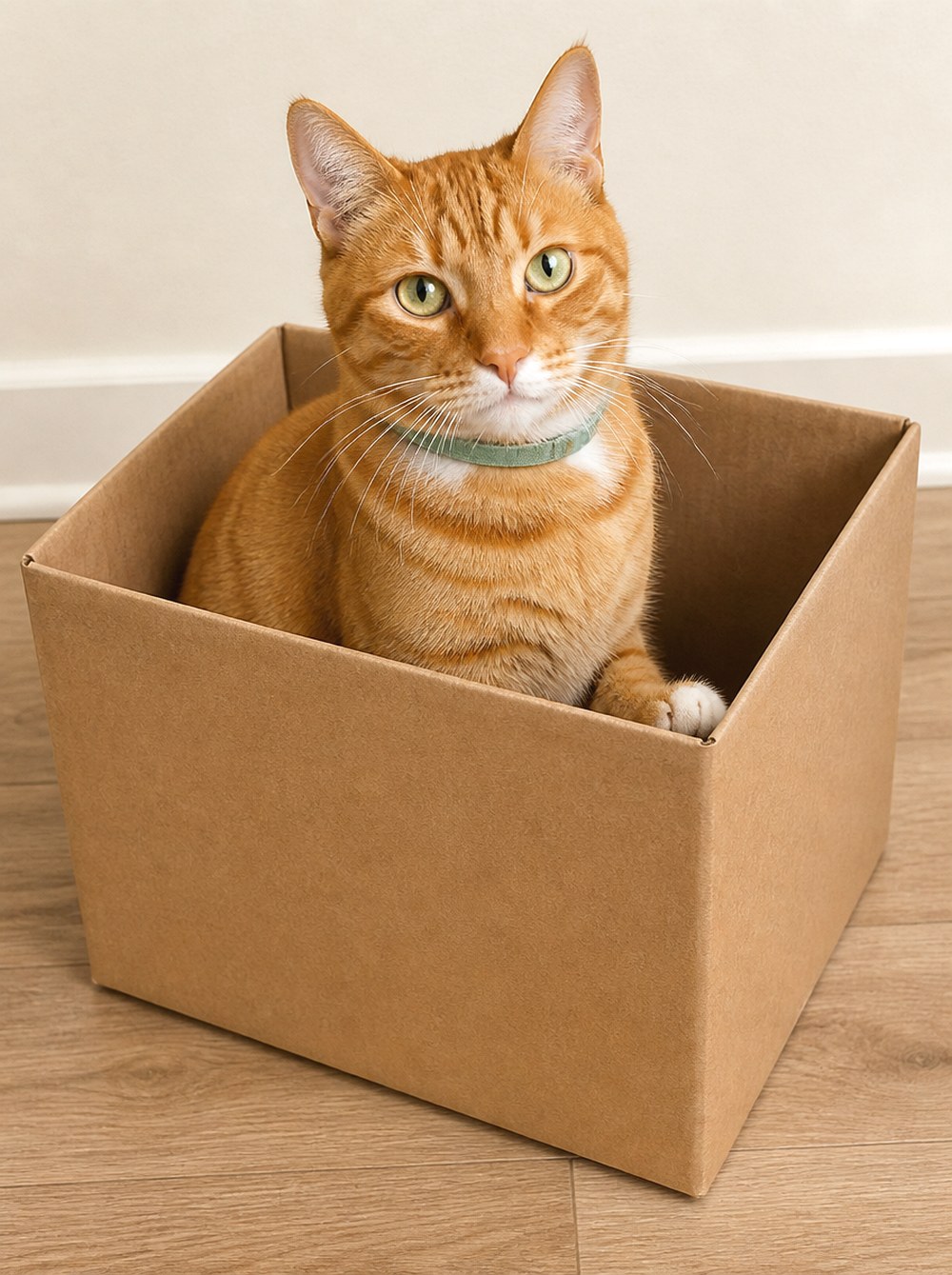
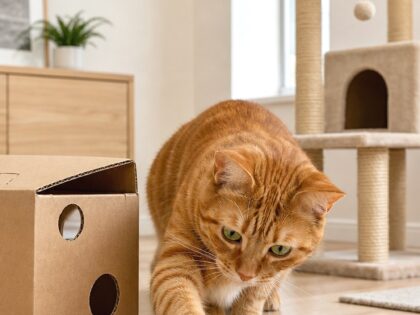
A cardboard box gives a photo corner personality without requiring decorative styling. If your cat routinely investigates deliveries, save a clean box that is large enough for comfortable sitting.
Remove packing tape loops, staples, labels that may distract from the image, and any loose material that could be chewed or swallowed. Replace the box once it becomes badly torn.
Set it a short distance from a plain wall and let the cat enter voluntarily. Photographing slightly above the rim can capture the face and front paws, while a floor-level angle emphasizes the shape of the box around the cat.
11. Make a Seasonal Corner With One Safe Background Element
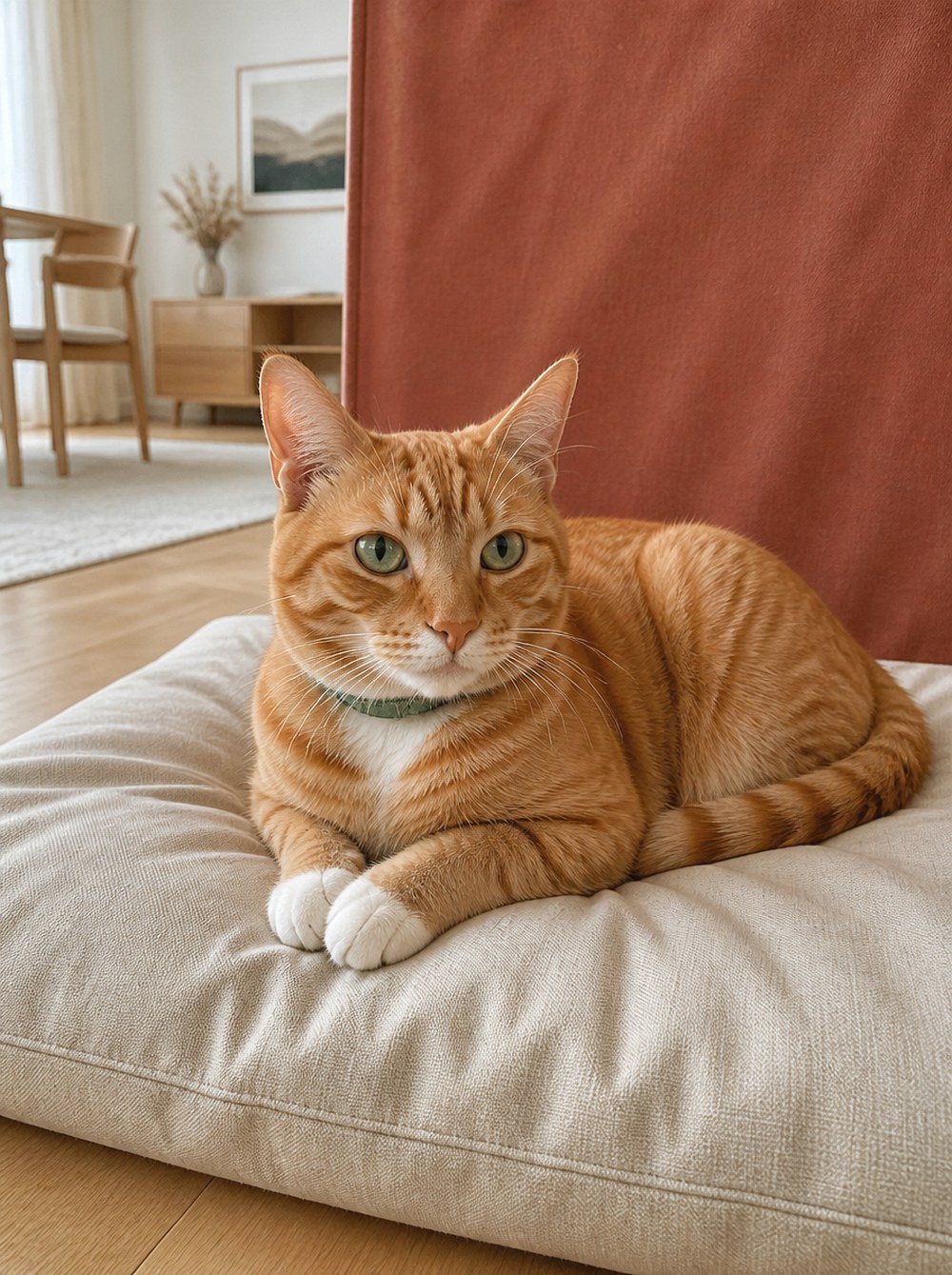
Seasonal photographs do not need a collection of themed decorations. One color or texture change is often enough.
For autumn, that could mean a rust-colored background. Winter might use a warm cream textile, while spring could use a pale muted backdrop. Keep the cat’s cushion or perch consistent so the corner remains familiar.
Skip candles, string lights, breakable ornaments, artificial berries, loose ribbons, and plants of uncertain safety. A restrained backdrop gives the photograph a seasonal feel without turning the space into something your cat needs to navigate.
12. Create a Movable Photo Corner With a Backdrop Board
You May Also Like


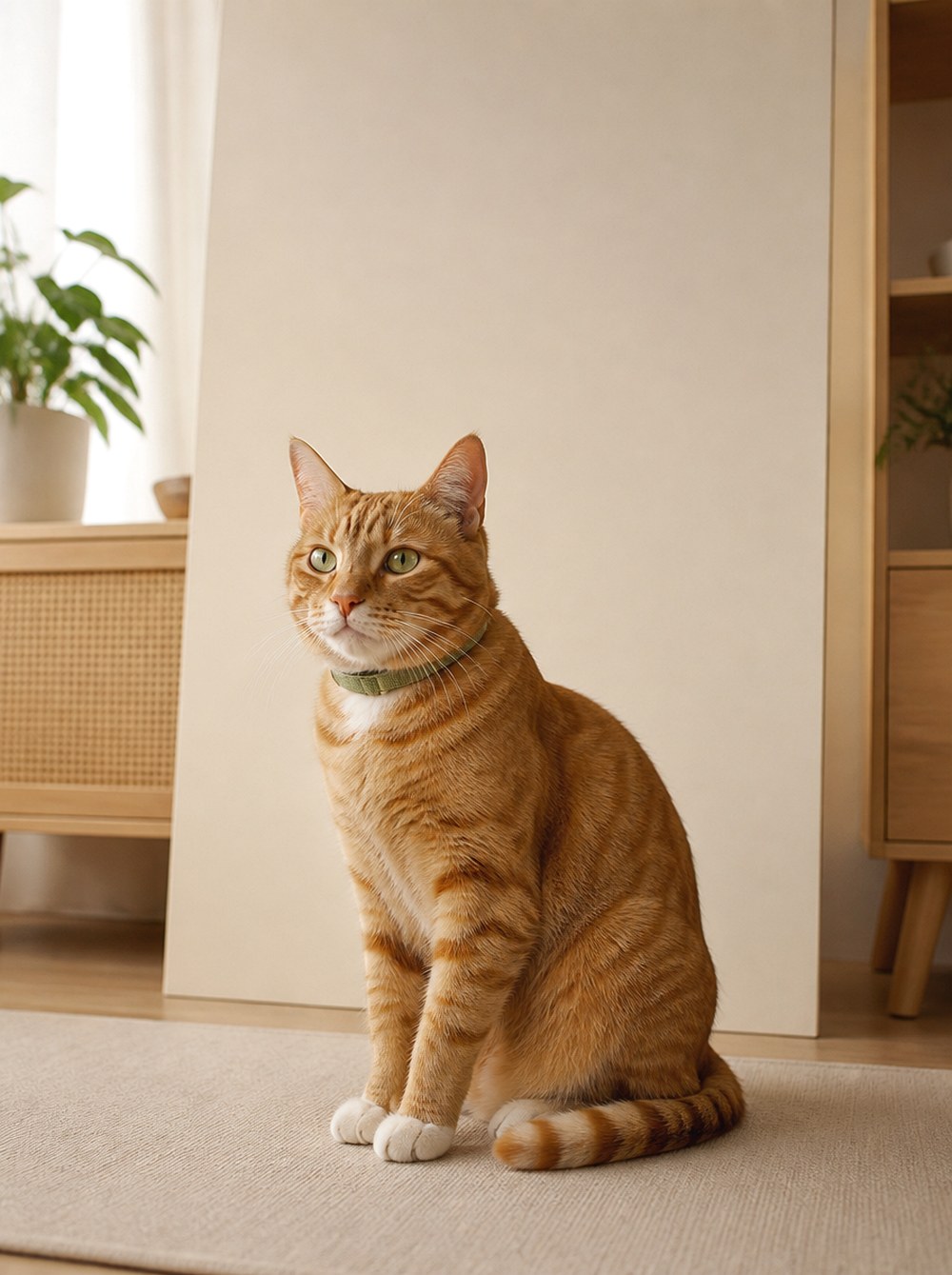
If your home’s best daylight moves from room to room, a movable background can be more practical than dedicating one permanent space.
A large matte board in a quiet neutral color can hide distracting household details when placed behind a favorite floor mat or cushion. Move the setup near good indirect window light, then remove it when you are finished.
The board needs to be supported securely so it cannot tip toward the cat. Keep stands, clamps, and other hardware inaccessible. This option works best as a supervised temporary setup rather than something left assembled in a walkway.
Make the Corner Work Without Forcing the Photo
The most useful cat photo corner is one your cat can ignore, enter, or leave at any time. Instead of trying to hold attention for a long session, keep your phone or camera nearby and photograph normal behaviors as they happen.
A few adjustments can improve almost any setup:
- Clear distracting objects from the background before the cat arrives.
- Use indirect window light when possible instead of aiming a harsh light directly at the cat.
- Photograph near the cat’s eye level for a more natural perspective.
- Leave enough room for the cat to turn and exit comfortably.
- Use washable, nonslip fabrics on smooth furniture.
- Keep treats, toys, or other attention-getters optional rather than relying on them to force a pose.
- Stop if the cat appears uncomfortable or repeatedly tries to leave.
You also do not need all 12 setups. One bright resting place and one clean-background option can provide plenty of variety.
Which Photo Corner Should You Try First?
Choose the setup that matches behavior you already see.
A window watcher may take immediately to the window seat or cat-tree perch. A cat that prefers low resting places may look more comfortable on the floor cushion or cardboard box. For uncluttered portraits, try the plain wall and bench or movable backdrop board. In a smaller home, the stool, hallway, or open shelf nook can create a distinct photo area without giving up much floor space.
Start by changing only one thing in a familiar spot—perhaps adding a plain cushion or clearing the background. Once your cat uses that area normally, the photographs are likely to look much more natural than a heavily staged setup.
