Turn ordinary cardboard boxes into playful cat enrichment stations filled with safe things to sniff, paw, search, scratch, chase, and investigate indoors. Busy boxes for cats can turn simple cardboard containers into changing enrichment setups without taking over the whole room. These 15 ideas include food searches, paper rummaging, batting games, scratchable surfaces, toy hunts, and low-cost puzzles that can be adjusted for different play styles. Choose a shallow, sturdy box that your cat can enter or reach into comfortably, then match the contents to how your cat normally plays. Keep strings, staples, tape, plastic packaging, and small swallowable pieces out of the setup. Homemade busy boxes should also be supervised when they contain loose paper, cardboard tubes, fabric, or food.
Save This Idea on Pinterest

15 Busy Box Ideas for Cats
Save to PinterestQuick List
- Easy Cardboard Treat Search Busy Box for Indoor Cats
- Crinkle Paper Rummaging Busy Box for Curious Cats
- Toilet Paper Tube Treat Puzzle Busy Box for Cats
- Ball-and-Box Batting Game for Playful Indoor Cats
- Egg Carton Snack Hunt Busy Box for Small Cats
- Large Fleece Strip Sniffing Busy Box for Gentle Cats
- Cardboard Divider Maze Busy Box for Clever Cats
- Hidden Toy Peekaboo Busy Box for Bored Indoor Cats
- Paper Cup Pawing Busy Box for Food-Motivated Cats
- Familiar Toy Scent Busy Box for Curious Indoor Cats
- Large Paper Ball Chase Busy Box for Active Cats
- Layered Packing Paper Busy Box for Rainy-Day Cats
- Cardboard Scratch-and-Search Busy Box for Indoor Cats
- Multi-Box Treasure Hunt for Confident Indoor Cats
- Rotating Toy Busy Box for Easily Bored Indoor Cats
1. Easy Cardboard Treat Search Busy Box For Indoor Cats

An easy cardboard treat search is a simple first busy box for cats that have never used homemade enrichment. Choose a shallow open box and place several familiar treats around the base where your cat can see and smell them immediately. Add two or three loosely crumpled pieces of plain paper, hiding only one treat beneath a paper edge at first. As your cat becomes more confident, spread the rewards farther apart or cover a few more without packing the box tightly. Keep the box stable on the floor so it does not slide while your cat reaches inside. Remove leftover food and torn cardboard after the session, especially if your cat likes chewing rather than searching.
Best For
This setup is useful for beginners, cautious cats, and owners who want a busy box that takes only a few minutes to prepare.
2. Crinkle Paper Rummaging Busy Box For Curious Cats

You May Also Like


A crinkle paper rummaging box gives curious cats a lightweight surface they can nose through, paw aside, and climb around. Loosely fill a shallow cardboard box with large sheets of plain packing paper that have been gently crumpled rather than compressed into hard balls. Tuck a few familiar toys or treats between the upper layers so something interesting appears as the paper moves. Leave plenty of open space for paws and avoid filling the box above the rim. The sound and movement change every time your cat touches the paper, which can make repeated investigations feel different. Remove plastic packaging, tape, labels, staples, and heavily shredded paper before they become part of the game.
Use & Maintenance
Flatten and recycle damaged paper after play, and refresh the box with clean sheets when the contents become dirty, damp, or too torn.
3. Toilet Paper Tube Treat Puzzle Busy Box For Cats
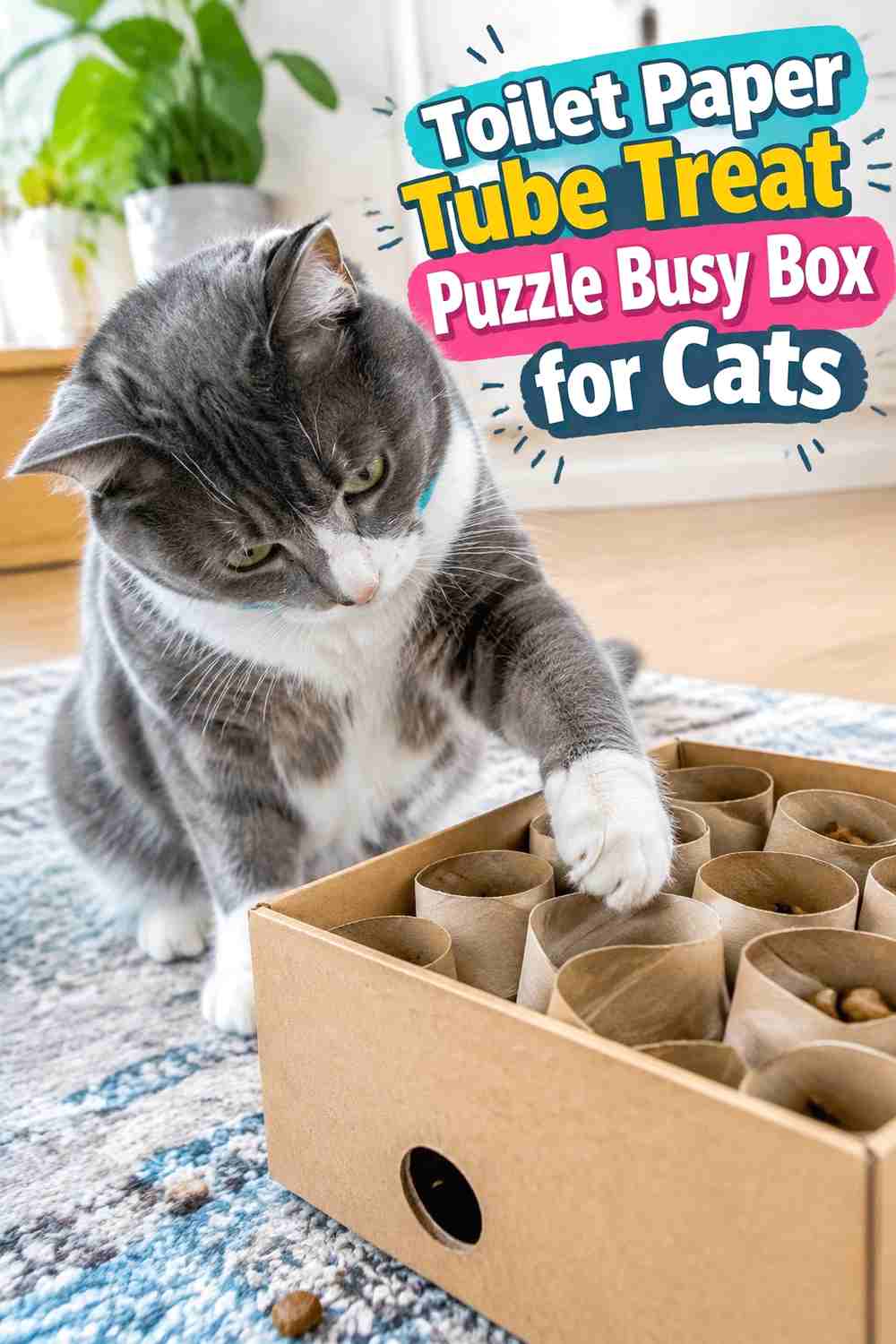
A toilet paper tube treat puzzle turns several clean cardboard tubes into upright hiding spaces inside a busy box. Stand the tubes close together in a shallow box so they support one another, then place treats in a few openings while leaving others empty. For a beginner, keep the rewards near the top where they are easy to smell and reach with a paw. Once your cat understands the setup, use a mixture of empty and rewarding tubes so each opening needs to be checked. The tubes should remain open rather than folded shut, making retrieval possible without tearing. Supervise the game and discard any tube that becomes soggy, flattened, or heavily chewed.
Setup Notes
Use clean plain cardboard tubes without adhesive residue, attached paper, or plastic coating, and keep the overall arrangement low and stable.
4. Ball And Box Batting Game For Playful Indoor Cats
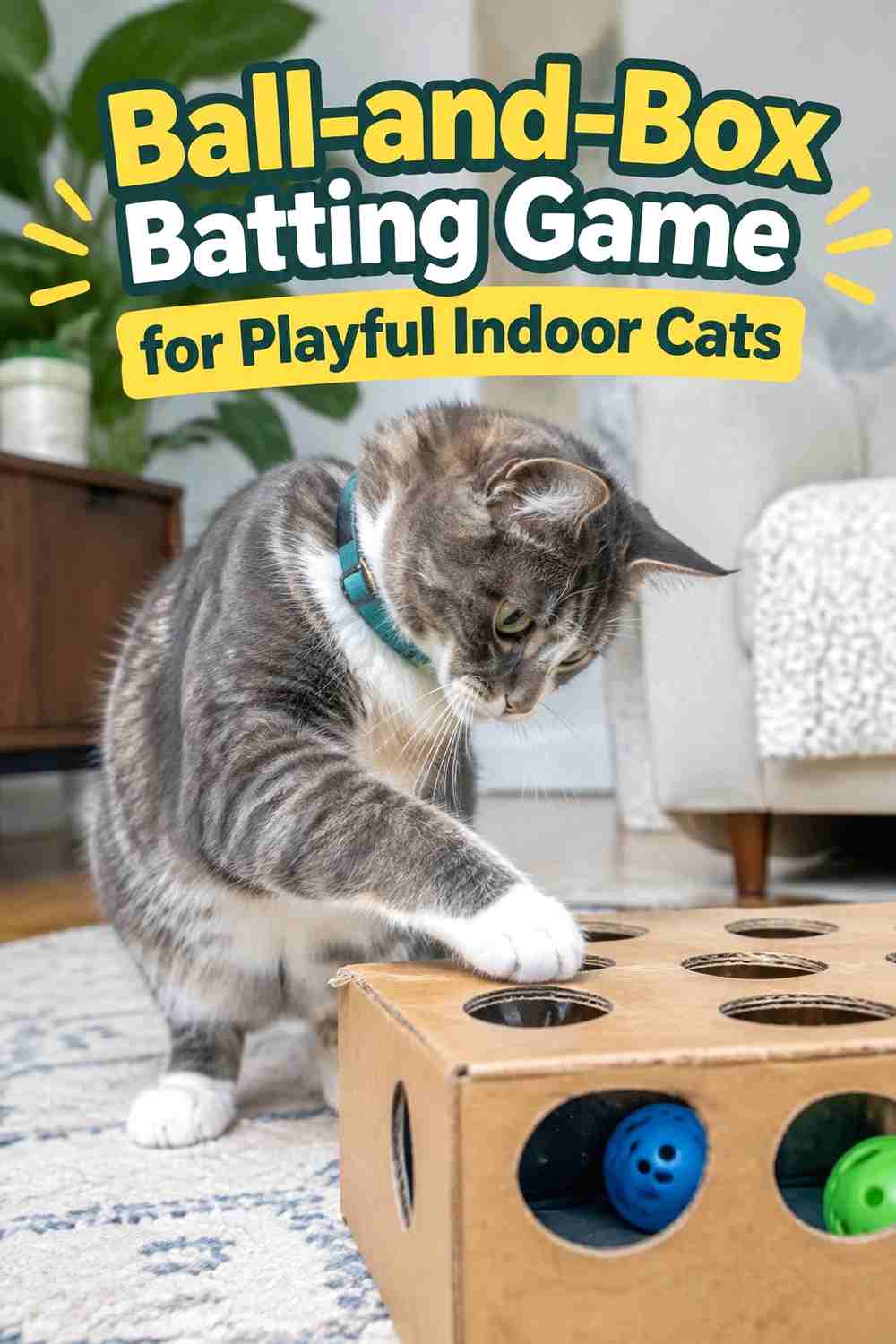
A ball-and-box batting game creates a contained chase area where a playful indoor cat can swat a larger lightweight ball without sending it across the room. Choose a wide shallow box with low sides and place one or two cat-safe balls inside, leaving plenty of empty space for movement. The box edges redirect the balls when your cat paws them, creating quick changes in direction. You can occasionally add a large crumpled paper obstacle to alter the path, but avoid crowding the box. Use balls that are too large to swallow and inspect them for damage before each session. Put the box away if your cat starts chewing pieces from the cardboard rather than batting the toys.
Best For
This busy box suits cats that enjoy fast paw movements, chasing toys across the floor, and games that respond immediately to touch.
5. Egg Carton Snack Hunt Busy Box For Small Cats

An egg carton snack hunt adds a compact food-search puzzle to a larger cardboard busy box. Place a clean paper egg carton inside the box with the lid fully open, then put a familiar treat in only a few of the individual wells. Small cats can sniff across the carton and reach into each shallow section with a paw or nose. Begin without covers so the rewards are easy to locate. Later, loosely place large pieces of plain paper over selected wells to add a little difficulty without sealing them. Avoid foam or plastic cartons, and remove the setup if your cat starts eating the cardboard. Replace the carton once it becomes crushed, wet, or difficult to clean.
Cleaning Notes
Dry treats create less residue than soft foods in a disposable cardboard carton. Check every well for crumbs before storing or recycling it.
6. Large Fleece Strip Sniffing Busy Box For Gentle Cats
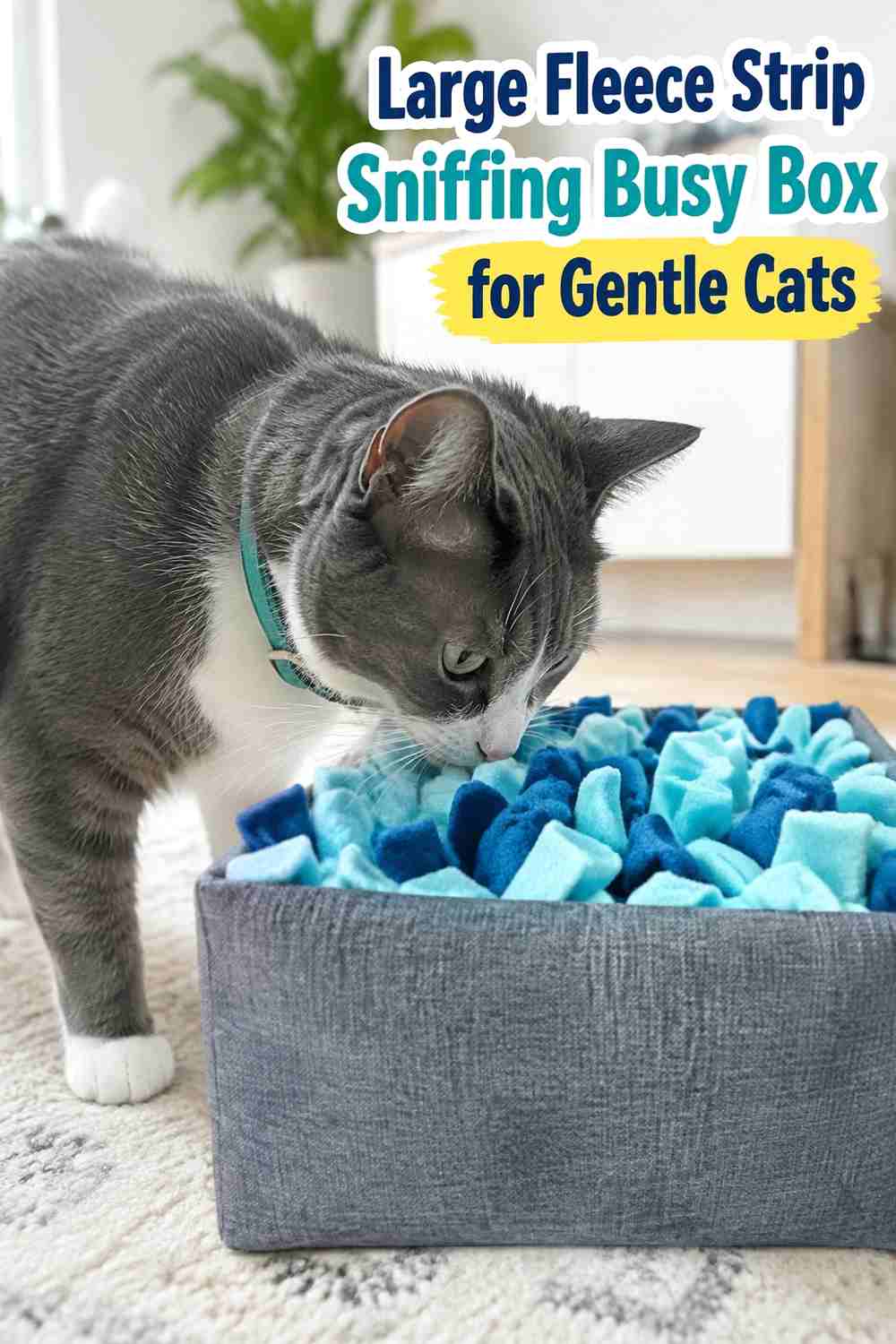
A fleece strip sniffing box creates soft folds where a gentle cat can investigate hidden treats without digging through noisy paper. Cut or fold clean fleece into several broad pieces large enough that they cannot be mistaken for tiny toys, then arrange them loosely across a shallow box. Place treats between a few open folds while leaving other areas empty. Keep the fleece spread out rather than tying knots, braiding narrow strands, or making tight bundles. Cats that enjoy quiet sniffing can work around the fabric with their nose and paws while remaining in one small area. Supervise closely and remove the setup if your cat chews fabric, pulls off fibers, or attempts to swallow pieces.
Comfort & Safety
Use smooth, intact fleece without loose threads, buttons, elastic, or decorative attachments, and wash it when food residue begins to collect.
7. Cardboard Divider Maze Busy Box For Clever Cats

A cardboard divider maze transforms one open box into several small search sections. Cut sturdy cardboard strips tall enough to create low internal walls, then arrange them into simple channels while keeping every section wide enough for comfortable paw access. Place treats or familiar toys in two or three compartments so your cat needs to investigate different routes rather than reaching into one open space. Start with only a few dividers and large openings. If your cat understands the game, rearrange the walls between sessions or leave some compartments empty. Make sure each divider sits securely without sharp edges, exposed staples, or tape your cat can pull loose. Replace bent pieces before the maze collapses inward.
Pro Tip
Change the divider pattern instead of constantly adding more obstacles. A new layout can refresh the activity while keeping the difficulty manageable.
8. Hidden Toy Peekaboo Busy Box For Bored Indoor Cats
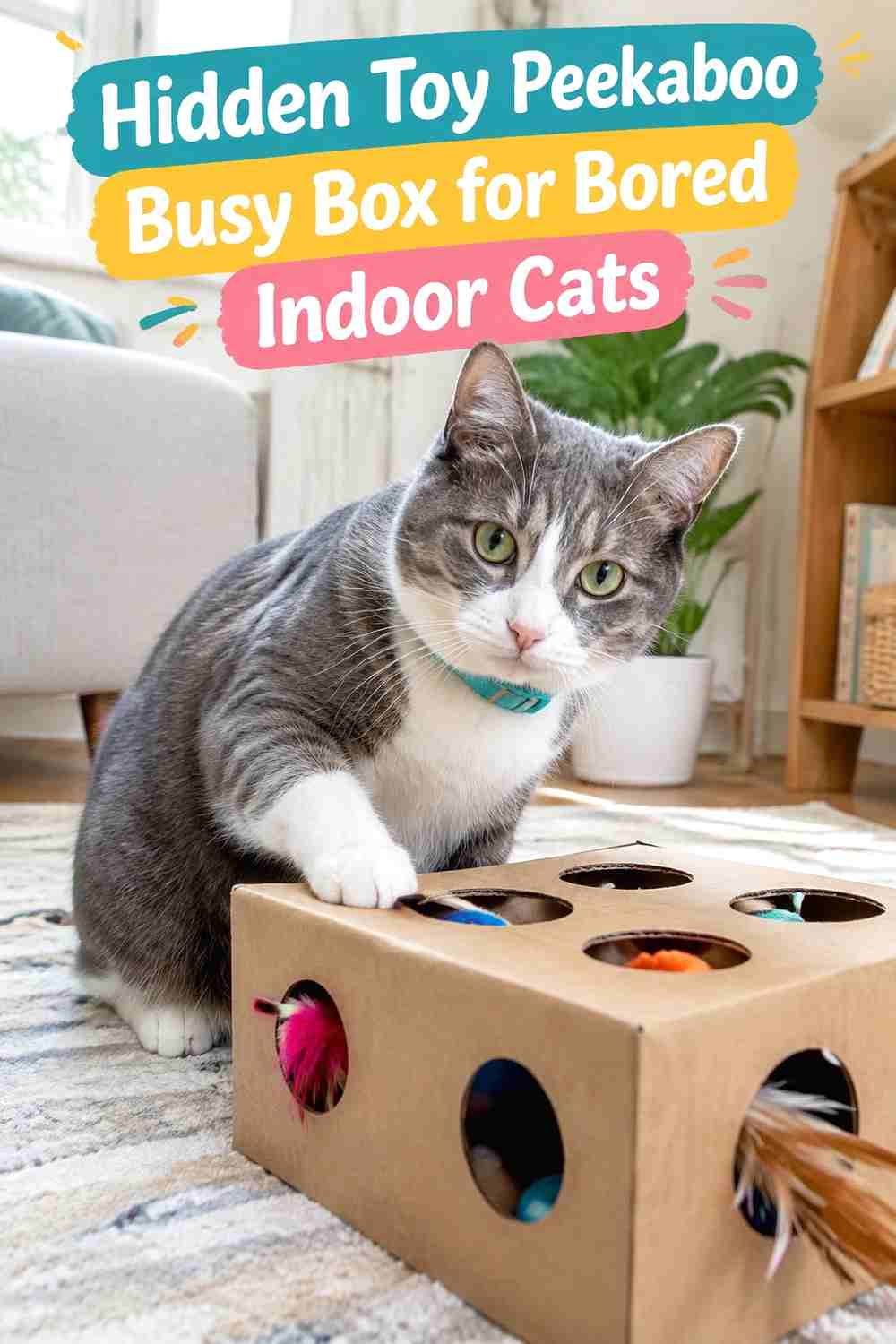
A hidden toy peekaboo box encourages an indoor cat to search for a familiar toy that appears and disappears behind lightweight barriers. Place a favorite sturdy toy in a shallow box, then position a few large cardboard panels or loose paper folds around it so only part of the toy remains visible. Let your cat reach through the gaps, uncover the toy, and bat it into another section. For an easier setup, expose most of the toy. Later, hide it behind a single divider while keeping an obvious access route. Avoid string toys, ribbons, feathers that shed easily, or anything with detachable pieces when using a box this way. Reset the layout once interest begins to fade.
Why It Works
Partial visibility gives the cat a clear target while the changing barriers make the familiar toy behave differently from ordinary floor play.
9. Paper Cup Pawing Busy Box For Food Motivated Cats

A paper cup pawing box uses several open cups as small scent and food-search stations. Lay sturdy unwaxed paper cups on their sides inside a shallow cardboard box and place treats in only some of them. A food-motivated cat can sniff each opening, reach inside with a paw, or roll the cup slightly to release the reward. Keep the first few cups widely spaced so the task is easy to understand. Later, add more empty cups or change their direction. Do not crush or tightly close the openings, and avoid plastic cups that could crack when bitten. Remove damaged paper cups promptly, since torn edges and soggy cardboard make the setup less practical for reuse.
Best For
This idea works well for cats that readily investigate food scents and enjoy reaching into open containers instead of digging through deeper material.
10. Familiar Toy Scent Busy Box For Curious Indoor Cats
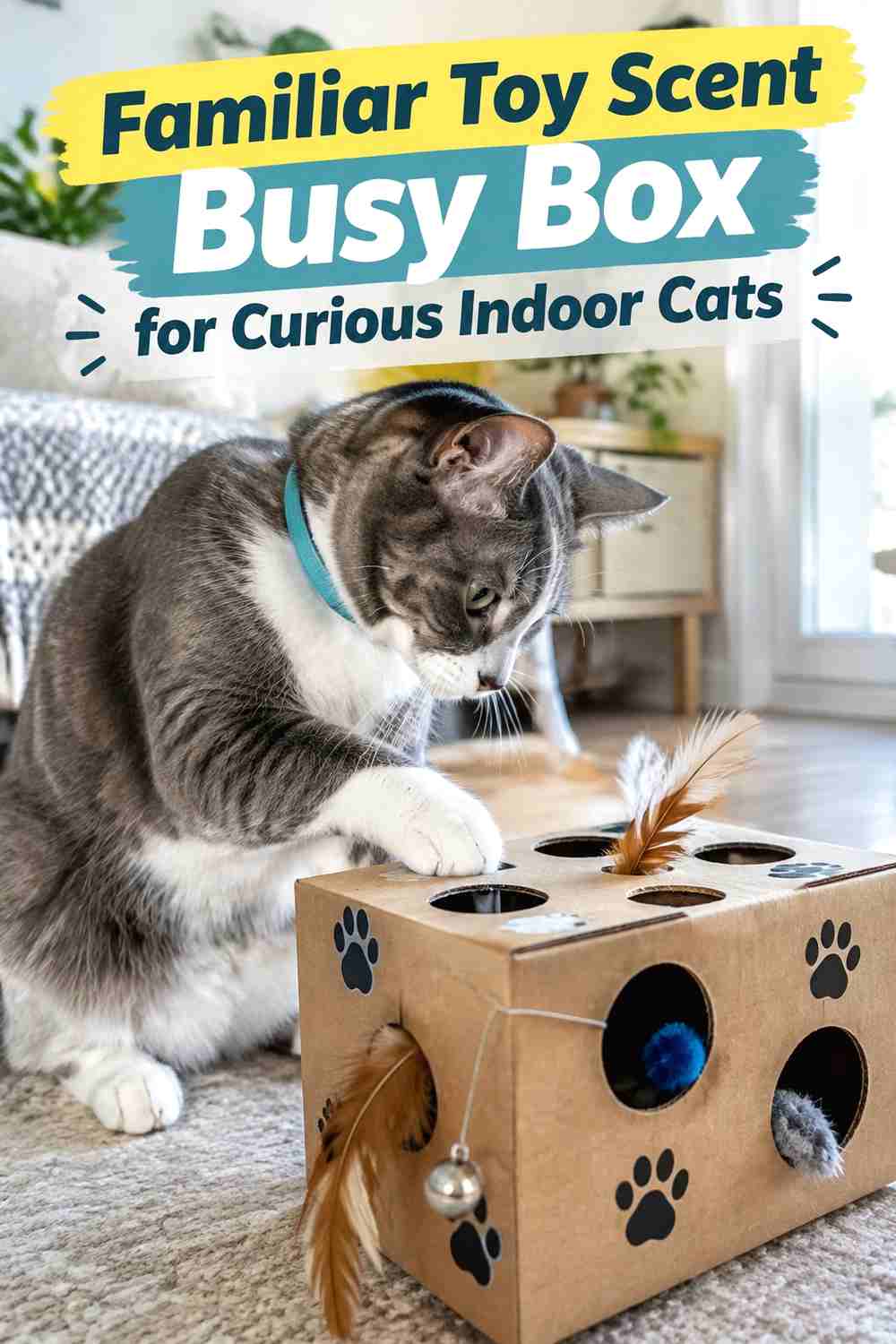
A familiar toy scent box makes the cat search for objects it already recognizes instead of relying entirely on food. Place two or three well-used cat toys inside a box and partially cover them with loose paper or broad cardboard dividers. Leave one toy exposed during the first round, allowing your cat to see how the search works. On later attempts, make the toys less visible while keeping them easy to reach. Because the objects already carry familiar household and play scents, curious cats may spend time sniffing before pawing them free. Use sturdy toys without loose strings or small detachable parts, and rotate which toy is hidden so the same box does not become completely predictable.
Pro Tip
Keep the hiding material simple and change the toy rather than adding strong fragrances. Familiar scent is enough to create a clear search target.
11. Large Paper Ball Chase Busy Box For Active Cats
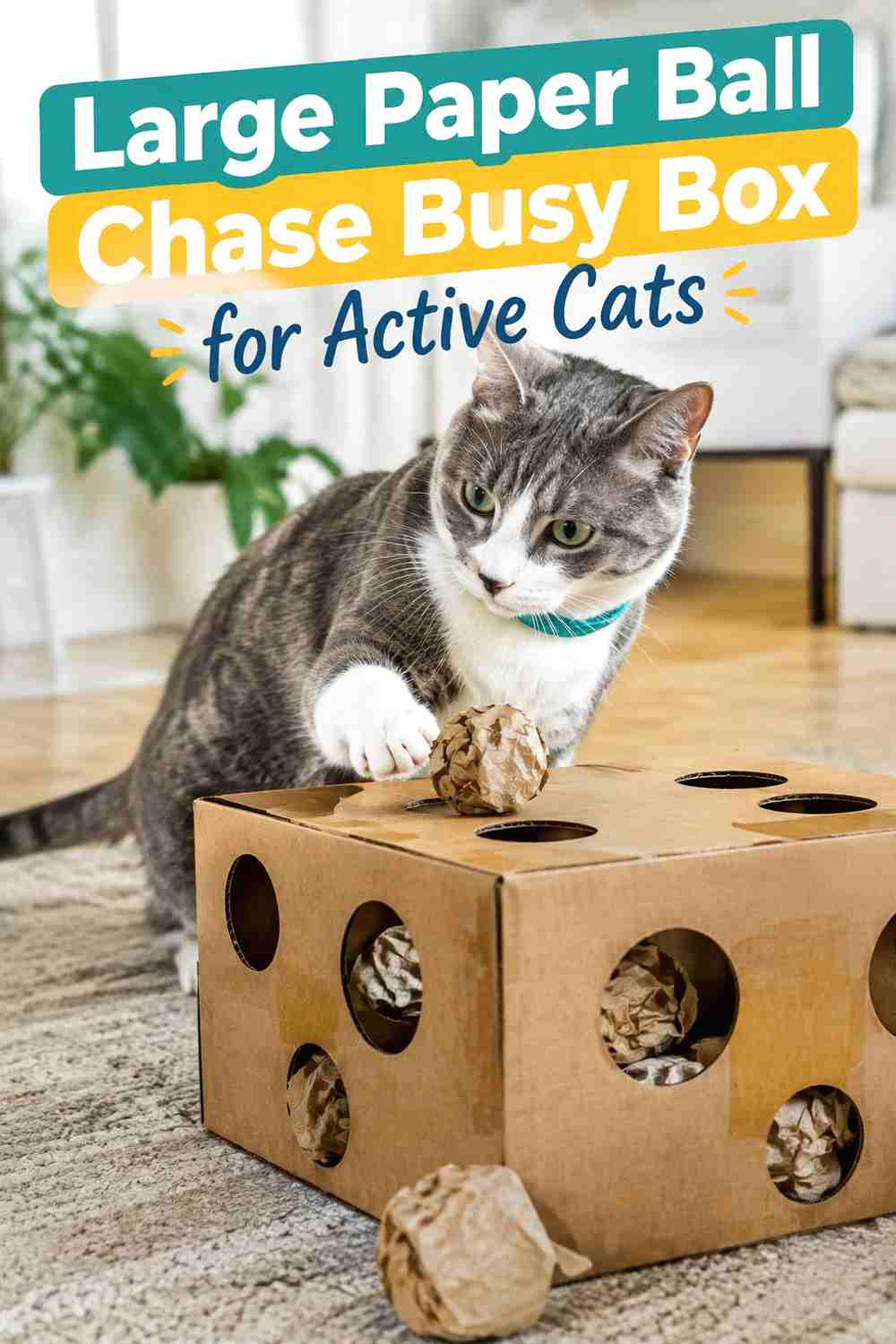
A large paper ball chase box creates a noisy, lightweight batting game for cats that like active paw play. Crumple plain packing paper into two or three loose balls that are clearly too large to swallow, then place them in a wide shallow box. The balls bounce irregularly against the cardboard sides when your cat swats them, producing quick movement without requiring much room. Keep the paper loosely formed rather than tightly compressed, and remove tape, printed labels, or plastic before making the balls. You can hide one familiar treat beneath a ball occasionally to add a sniffing element. Replace any paper ball that becomes wet, tightly shredded, or small enough to create a swallowing concern.
Space & Placement
Set the box on a clear section of floor where energetic batting will not push it into furniture, stairs, bowls, or fragile household objects.
12. Layered Packing Paper Busy Box For Rainy Day Cats
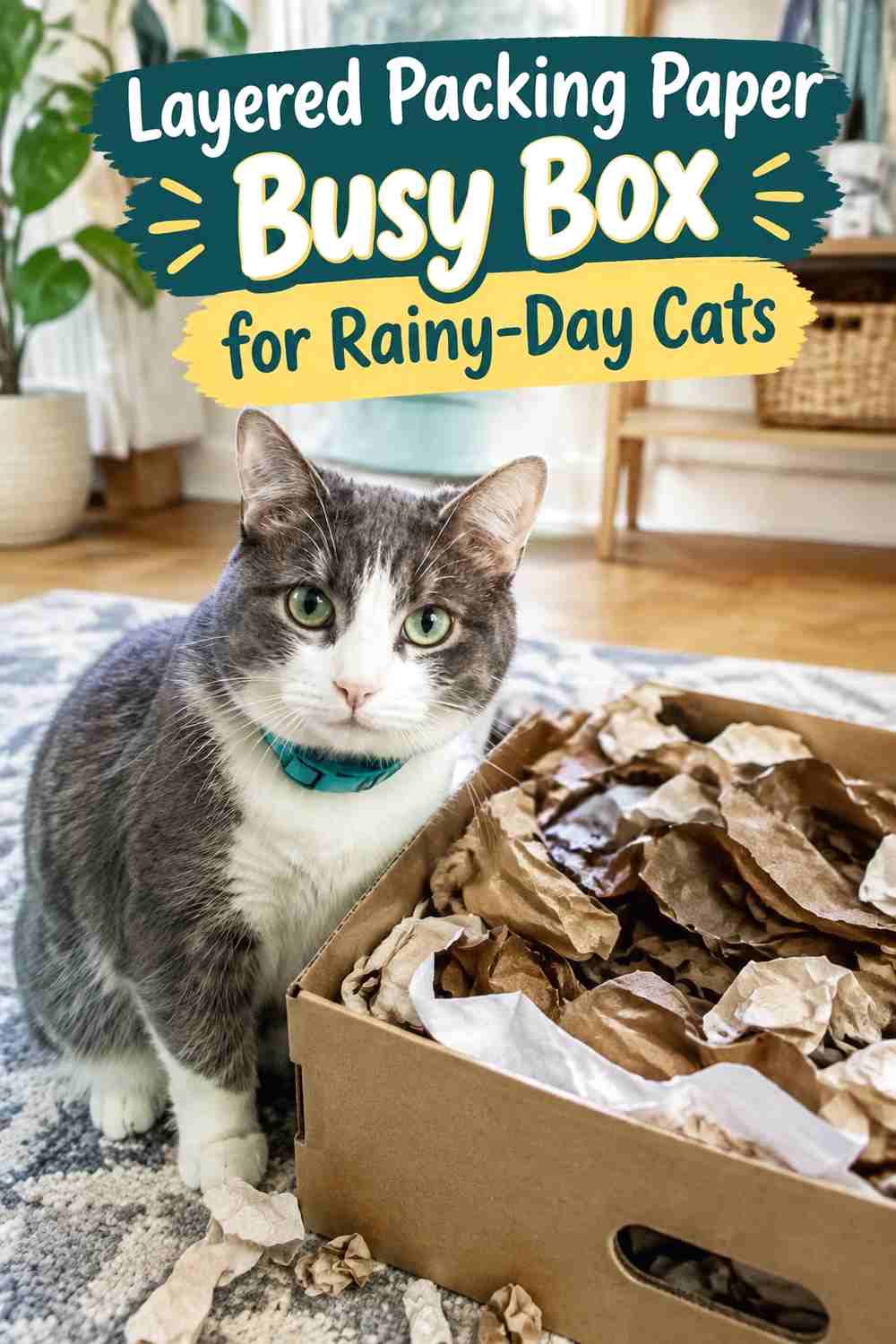
A layered packing paper box creates a deeper rummaging activity for rainy days when your cat is spending more time indoors. Place several large sheets of clean plain paper loosely across a wide cardboard box, creating overlapping layers with open gaps between them. Hide a few treats or sturdy toys in different levels, keeping some close to the surface and others beneath one sheet. Your cat can paw, step, sniff, and push through the layers while the paper changes shape around each search. Avoid packing the material densely, since an easy exit and visible open areas make the box more comfortable to explore. Remove shredded pieces after play and flatten the paper before deciding whether it is suitable for another session.
Use & Maintenance
Refresh only the damaged sheets instead of rebuilding the whole box. This keeps setup quick while preventing excessive paper scraps from accumulating around the room.
13. Cardboard Scratch And Search Busy Box For Indoor Cats

A scratch-and-search busy box combines a flat cardboard scratching surface with several easy treat or toy hiding spots. Fit a corrugated cardboard scratch pad securely into the base of a shallow box, leaving enough open room around the edges for your cat to stand and turn. Place a few treats beside the pad or tuck a sturdy toy partly behind a loose cardboard divider. The cat can investigate, scratch, and search within the same contained area without needing a complicated puzzle. Do not hide food inside torn corrugation where crumbs become difficult to remove. Inspect the scratcher regularly and replace it once loose cardboard pieces begin breaking away faster than you can clean them.
Cleaning Notes
Lift the scratch pad out periodically, shake away loose cardboard dust and crumbs, and wipe or replace the outer box when it becomes heavily worn.
14. Multi Box Treasure Hunt For Confident Indoor Cats
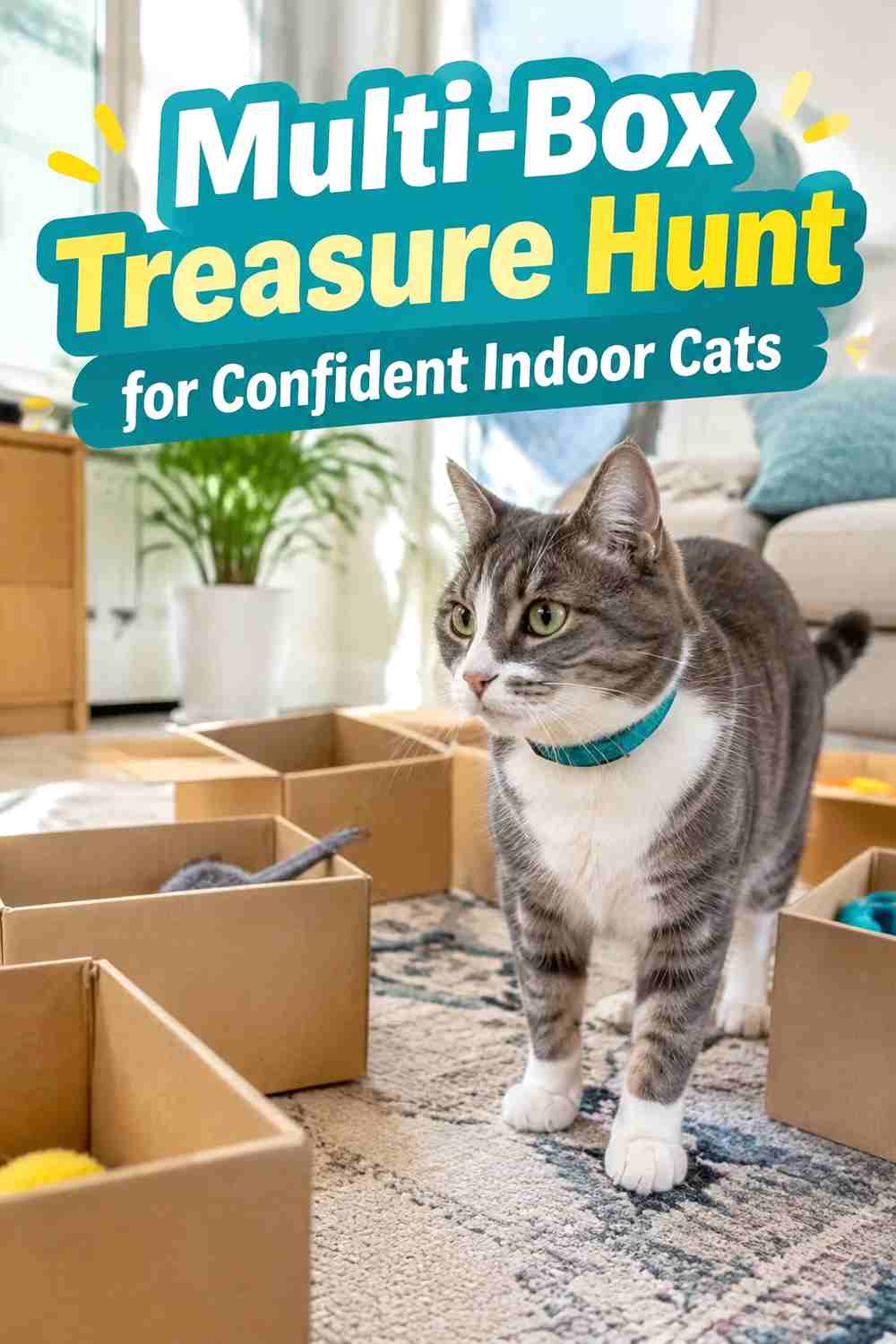
A multi-box treasure hunt spreads the busy-box idea across several containers so a confident cat has more than one place to investigate. Arrange three open cardboard boxes around one safe room and give each a different simple feature: loose paper in one, a sturdy toy in another, and a few treats in the third. Keep every box visible during early sessions so the cat can move between them easily. Once the routine is familiar, change the contents or positions rather than making any single box difficult to enter. This format adds movement and choice without requiring tall structures or jumping. Keep walking routes clear, and remove boxes that become crushed, unstable, or heavily chewed.
Best For
This setup may suit confident cats that already enjoy investigating boxes and lose interest when enrichment stays in one fixed location.
15. Rotating Toy Busy Box For Easily Bored Indoor Cats
You May Also Like



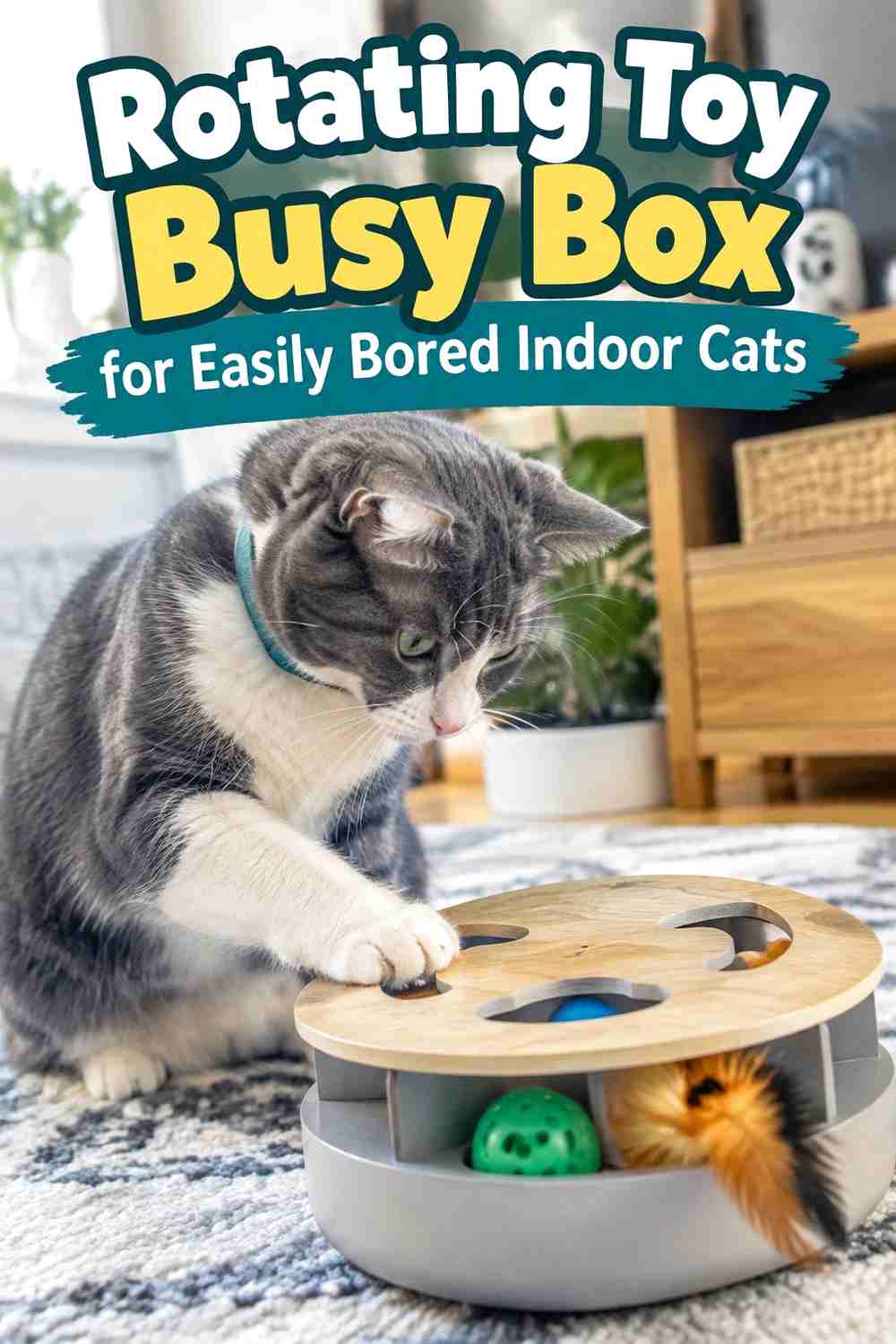
A rotating toy busy box keeps the cardboard base familiar while changing only a few contents between sessions. Start with a shallow box containing two sturdy toys and one simple element such as crumpled paper, a cardboard divider, or an open tube puzzle. After a few uses, remove one toy and replace it with something different rather than filling the box with more objects. This creates novelty without clutter and makes it easier to notice which textures or play styles your cat actually prefers. Store unused toys separately so the entire collection is not always available. Inspect each item before returning it to the box, especially toys that have been bitten, scratched, or repeatedly batted against the cardboard.
Use & Maintenance
Rotate a small number of safe items at a time, clean out crumbs and torn material between sessions, and retire anything that develops loose or damaged parts.
How to Choose the Right Idea
Start with how your cat naturally approaches play. Food-focused cats may engage quickly with treat searches, egg cartons, cups, or tube puzzles, while active cats may prefer paper balls and batting games. Cats that investigate slowly may enjoy fleece, packing paper, or familiar-toy searches with plenty of open space. Box size matters too. Your cat should be able to reach the activity comfortably without becoming wedged between high sides or crowded materials. Kittens and cautious cats generally benefit from shallow, uncomplicated layouts, while confident adults may enjoy dividers or several boxes spread around a room. Also think about chewing habits, cleanup, and supervision. Paper and cardboard are inexpensive but wear out quickly. Fabric needs washing and close monitoring. Rotating a few simple materials is usually more practical than filling one box with many objects at once.
Final Thoughts
A useful cat busy box does not need to be complicated. Start with a sturdy box and one clear activity, then notice whether your cat prefers sniffing, batting, scratching, rummaging, or searching. Rotating the contents gradually can keep the setup interesting while making cleanup and supervision much easier.
FAQs
1. What size box works best for a cat busy box?
Choose a stable box large enough for your cat to reach inside comfortably or step into without getting stuck. Shallow sides are especially useful for beginners, kittens, or cautious cats.
2. Can I leave a homemade busy box out all day?
Simple empty cardboard boxes may stay available, but setups containing treats, loose paper, fabric, tubes, or movable toys are better checked regularly and supervised when those materials could be chewed or swallowed.
3. How can I introduce a busy box to a cautious cat?
Begin with an open box containing one familiar toy or a few visible treats. Avoid surrounding your cat, placing the box in a noisy walkway, or immediately filling it with unfamiliar textures.
4. What should I do if my cat only chews the cardboard?
Remove damaged pieces and try a different enrichment style if chewing becomes the main activity. A sturdy commercial toy, scratcher, or supervised search game without loose cardboard may be a better fit.
5. How often should I change a cat busy box?
There is no required schedule. Change one or two elements when your cat stops investigating, the materials wear out, or you want to offer a different type of play without making the setup overly complicated.
CTA
Save your favorite busy box ideas and rotate a few simple setups to give your indoor cat fresh ways to explore, search, and play.
