Turn everyday puppy play into simple brain games that encourage sniffing, choosing, searching, remembering, and problem-solving without complicated equipment. Puppy brain games work best when they are easy enough to understand and short enough to match a young dog’s attention span. These 10 ideas include scent searches, object choices, toy finding, simple movement challenges, and interactive games you can adjust as your puppy gains confidence. Use familiar rewards, introduce one new challenge at a time, and allow your puppy to solve the activity without constant correction. Keep household materials large, stable, and closely supervised, especially when cardboard, towels, cups, or other chewable items are involved.
Save This Idea on Pinterest

10 Puppy Brain Game Ideas
Save to PinterestQuick List
- Easy Treat Trail Brain Game for Curious Puppies
- Muffin Tin Sniff-and-Find Puzzle for Playful Puppies
- Towel Fold Treat Search for Indoor Puppy Enrichment
- Which-Hand Treat Choice Brain Game for Puppies
- Cardboard Box Treasure Hunt for Curious Puppies
- Favorite Toy Find-It Brain Game for Young Puppies
- Simple Cup Shuffle Treat Game for Clever Puppies
- Puppy Hide-and-Seek Recall Game for Indoor Play
- Name-and-Touch Toy Learning Game for Puppies
- Mini Obstacle Choice Course for Confident Puppies
1. Easy Treat Trail Brain Game For Curious Puppies

An easy treat trail gives a curious puppy a clear starting point for using the nose and following a simple search path. Place several familiar treats or pieces of regular food in a loose line across a safe room, spacing them far enough apart that your puppy needs to sniff between finds. Keep the first trail visible and short so success comes quickly. Once your puppy understands the game, curve the trail around a chair or leave slightly larger gaps between rewards. Avoid hiding food in difficult places during early sessions. The goal is gentle problem-solving, not creating a test your puppy cannot finish. Keep the route away from stairs, cords, slippery clutter, and household items that invite chewing.
Best For
This works especially well for puppies new to enrichment because the activity has an obvious direction and requires almost no equipment.
2. Muffin Tin Sniff And Find Puzzle For Playful Puppies
You May Also Like


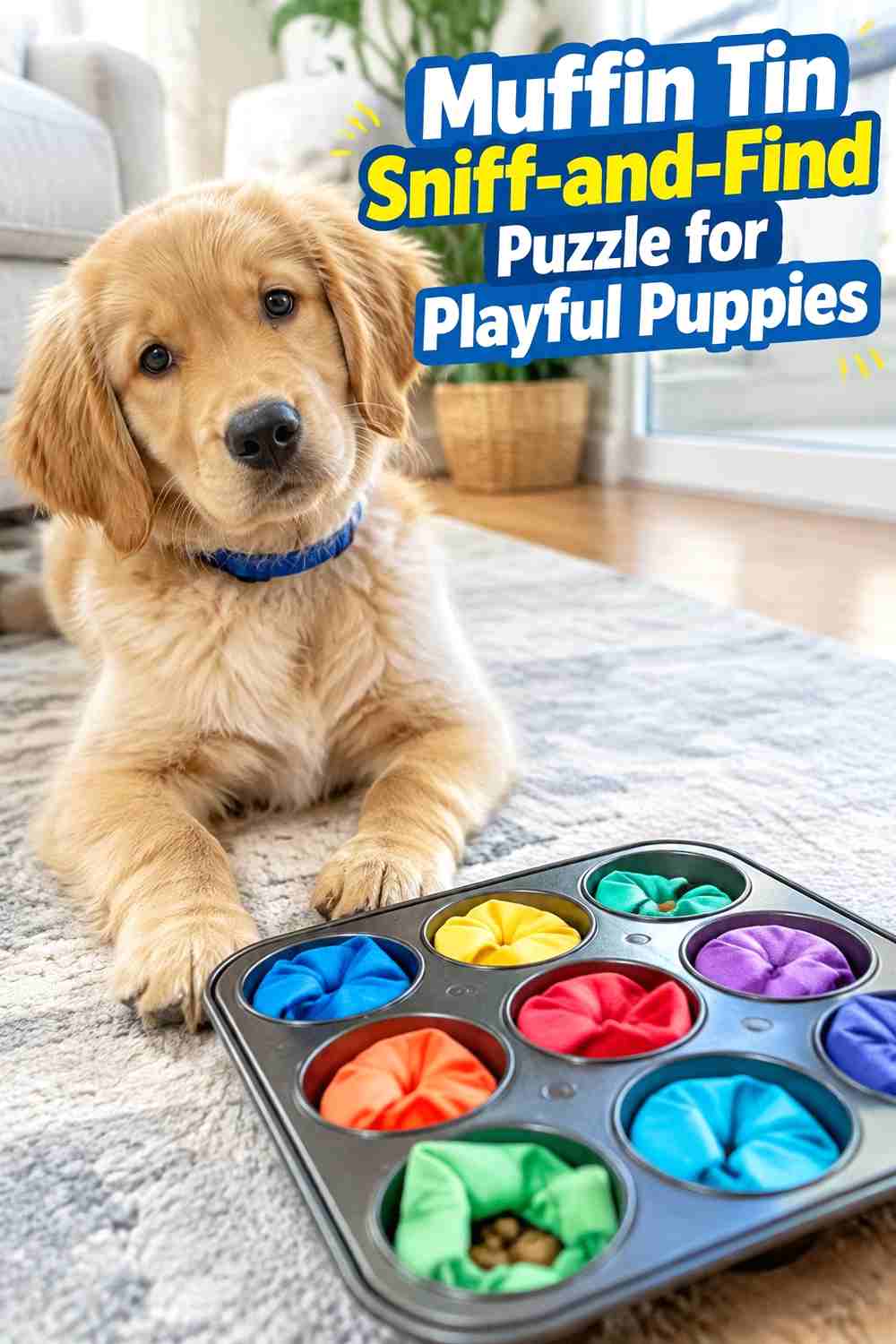
A muffin tin creates several small search locations that encourage a playful puppy to investigate with the nose before grabbing a reward. Put treats in a few wells and leave the others empty, allowing your puppy to sniff across the uncovered tray first. When that version becomes easy, loosely cover selected wells with sturdy balls that are far too large to swallow. Your puppy can nudge the covers aside to discover what is underneath. Keep the tray on a non-slip mat so enthusiastic paws do not send it across the floor. Remove the setup if your puppy becomes more interested in chewing the balls or tray than finding the food.
Setup Notes
Begin uncovered, then add only a few movable covers. Increasing difficulty gradually is usually more useful than filling every muffin well at once.
3. Towel Fold Treat Search For Indoor Puppy Enrichment
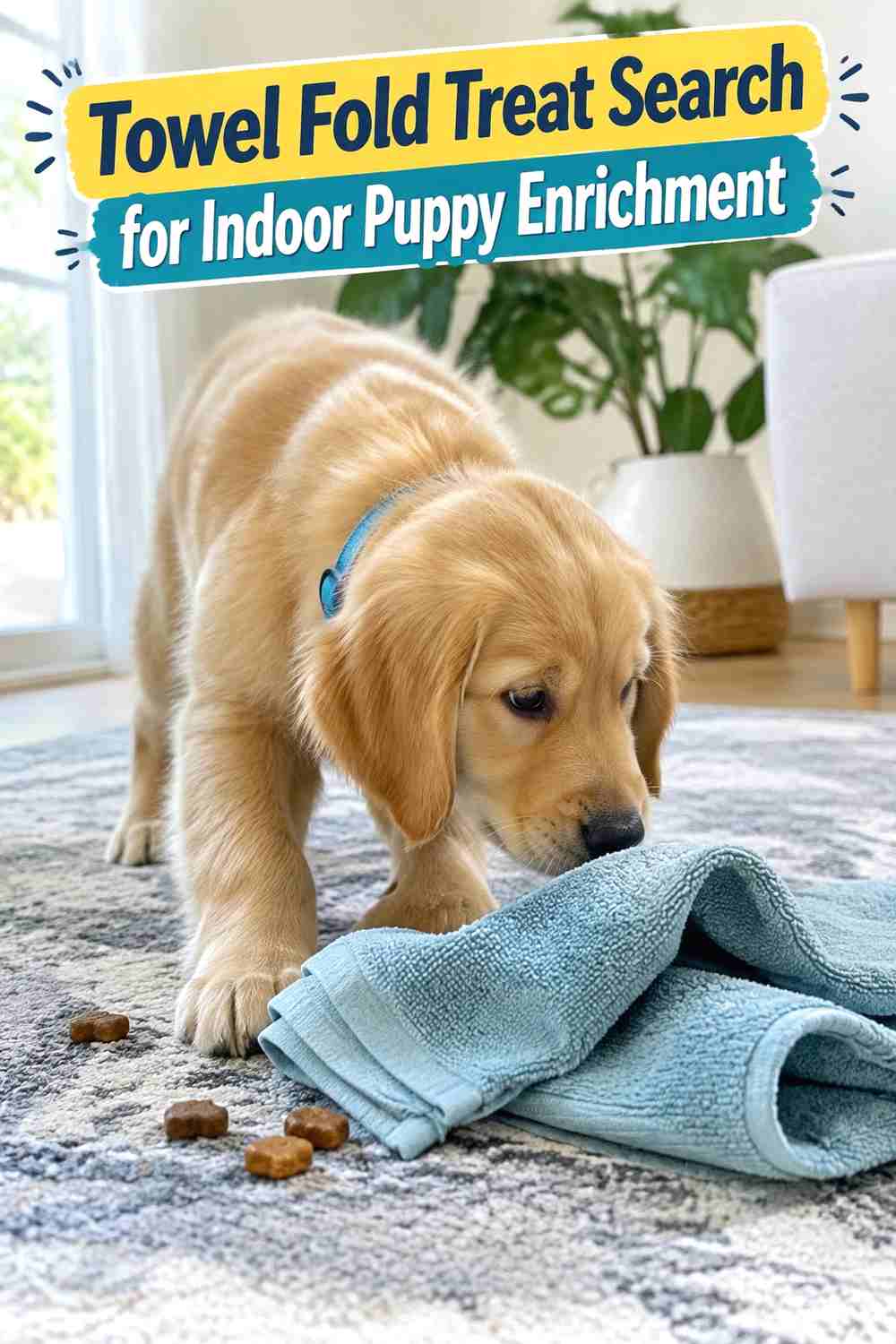
A towel fold search turns a clean household towel into a soft indoor puppy puzzle. Lay the towel flat, place a few treats across it, and make broad, loose folds so some rewards remain partly visible. Let your puppy sniff along the fabric and use the nose or paws to uncover each piece. For a first attempt, keep most treats close to the edges. Later, add one or two empty folds so your puppy needs to investigate more carefully. Avoid knots or tightly wrapped bundles, which can quickly turn a beginner game into a frustrating tugging session. Supervise closely, and put the towel away if chewing or fabric pulling replaces searching.
Cleaning Notes
Shake out crumbs when the game ends and wash the towel regularly so old food residue does not build up between sessions.
4. Which Hand Treat Choice Brain Game For Puppies

The which-hand game gives puppies a simple choice without requiring extra equipment. Place a familiar treat in one hand, close both fists loosely, and hold them low enough for your puppy to sniff comfortably. Allow your puppy to investigate and open the rewarding hand when attention clearly settles there. Early rounds should be easy, and you can occasionally let your puppy see which hand receives the treat. Switch sides rather than repeatedly rewarding the same position. Avoid pushing your fists toward your puppy or demanding a particular pawing or sitting response; sniffing and choosing are enough. This game works best in brief rounds so excitement stays manageable and the choice remains clear.
Why It Works
The puppy needs to compare two similar options and use scent rather than simply grabbing a visible reward.
5. Cardboard Box Treasure Hunt For Curious Puppies

A cardboard box treasure hunt provides several easy hiding places inside one contained area. Choose a shallow, clean box and add a few large pieces of loosely crumpled plain paper, then place familiar treats between the upper layers. Let your puppy sniff, push, and investigate until each reward is found. Start with very little paper so the food is obvious. If your puppy becomes confident, add another layer or a second open cardboard container inside the first. Remove tape, staples, plastic packaging, and loose labels before play. Puppies often explore objects with their mouths, so supervise closely and end the session if shredding and swallowing cardboard becomes more interesting than searching.
Use & Maintenance
Discard damp or heavily torn cardboard after the game and rebuild the puzzle with clean materials rather than storing a chewed setup.
6. Favorite Toy Find It Brain Game For Young Puppies

A favorite toy find-it game helps a young puppy search for something familiar instead of relying only on food. Begin by showing your puppy a well-known toy, then place it a short distance away where it remains easy to see. Encourage investigation and reward the find with a little play or another familiar reward. After a few successful rounds, position the toy partly behind a chair leg, beside a box, or around a nearby corner. Keep every hiding place at floor level and easy to access. Use the same toy during early sessions so the target stays consistent, and avoid toys with loose strings, damaged seams, or detachable pieces.
Pro Tip
Increase hiding difficulty slowly. A partly visible toy is more useful for a beginner than a perfectly hidden toy your puppy does not yet know to search for.
7. Simple Cup Shuffle Treat Game For Clever Puppies

A simple cup shuffle introduces a puppy to tracking one rewarding location as objects change position. Place two sturdy, unbreakable cups upside down on the floor and let your puppy watch as you hide a treat beneath one. Move the cups only a short distance at first, then allow sniffing to determine where the reward is. When your puppy understands the game, add a third cup or make the shuffle slightly less obvious. Keep movements slow so the activity stays understandable rather than becoming a guessing game. Choose cups too large to fit inside your puppy’s mouth, and avoid brittle plastic that could crack if bitten. Stop if cup chewing takes over.
Best For
This can suit puppies that already enjoy easy food searches and are ready for a small visual-and-scent choice challenge.
8. Puppy Hide And Seek Recall Game For Indoor Play

Indoor hide-and-seek turns finding a familiar person into a simple puppy brain game. Start by stepping a few feet away while your puppy watches, then call once from behind an open doorway or large piece of furniture. When your puppy finds you, reward the success with calm praise, a treat, or a brief play moment. Gradually use less visible hiding places in the same safe room before expanding into another connected area. Keep the game easy enough that your puppy does not become worried or wander into unsafe spaces. Avoid hiding near stairs, behind unstable objects, or inside closed rooms. One person should supervise the puppy’s route when needed.
Space & Placement
Use uncluttered rooms with open walking paths, and close access to areas containing cords, small objects, cleaners, or other puppy hazards.
9. Name And Touch Toy Learning Game For Puppies
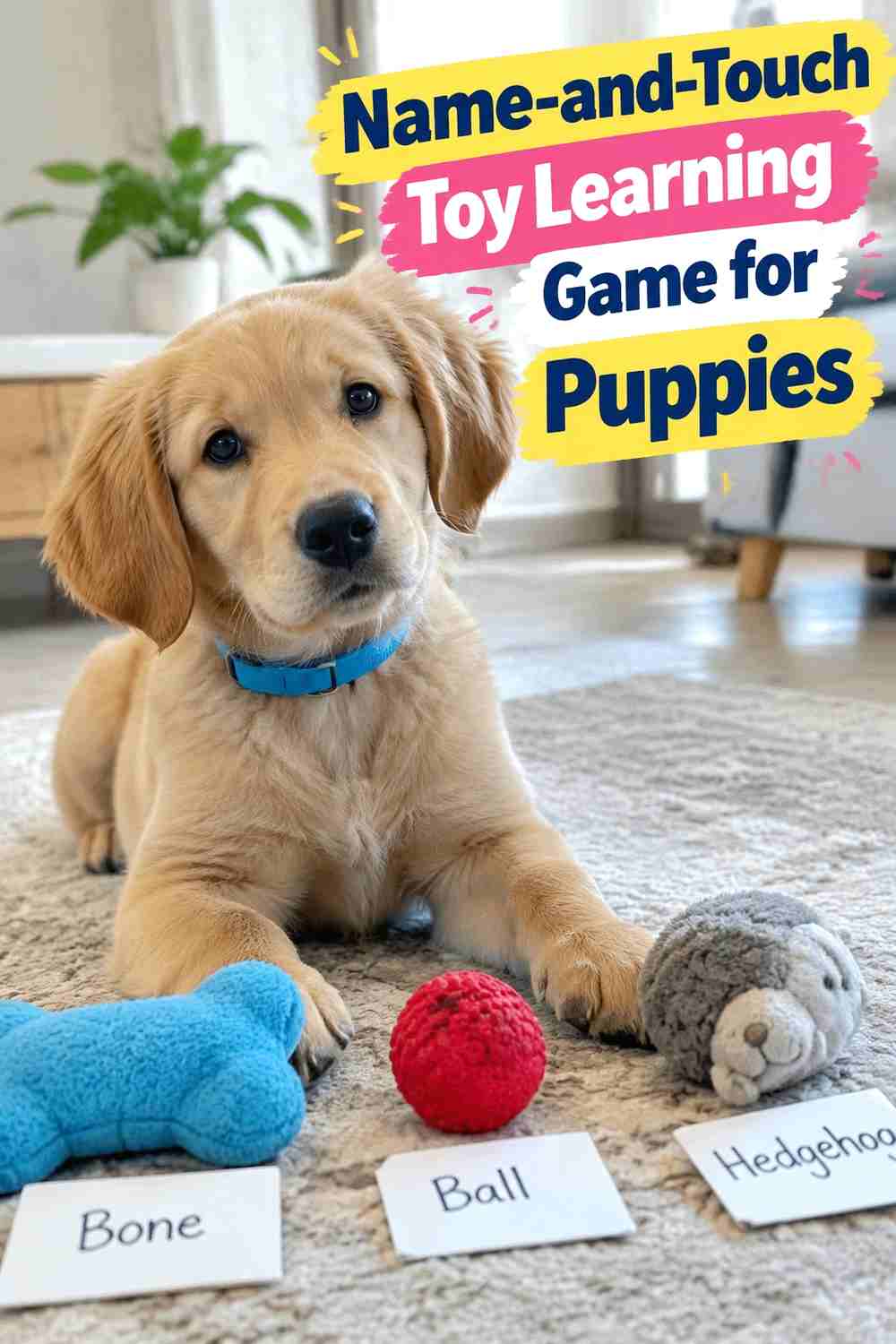
A name-and-touch game helps a puppy begin associating one familiar word with one specific toy. Place a favorite sturdy toy on the floor, say its chosen name once, and reward your puppy for approaching, sniffing, or touching it. Repeat with the same object across several brief sessions before introducing another toy. Once the association looks familiar, place the named toy beside one different toy and see which object your puppy investigates. Keep the early choices simple rather than presenting an entire toy basket. The goal is not perfect identification; it is giving your puppy an understandable pattern to explore. Use durable toys without loose pieces and put them away when the short game ends.
Pet Type & Life Stage
Young puppies usually benefit from one object and one name at a time, with plenty of repetition before extra choices are introduced.
10. Mini Obstacle Choice Course For Confident Puppies
You May Also Like



A mini obstacle choice course creates gentle problem-solving through movement without asking a puppy to jump or climb. Arrange a few safe floor-level items such as an open cardboard box to walk around, a rolled towel to step beside, and two widely spaced chairs that create a simple route. Place a treat or favorite toy at the end and let your puppy choose how to navigate the setup. Keep everything stable, low, and easy to avoid. Rearranging the same items can create a new course without adding more equipment. If your puppy hesitates, simplify the path instead of pulling or pushing through it. Avoid slippery surfaces, narrow gaps, elevated platforms, and unstable objects.
Comfort & Safety
The course should encourage comfortable walking, sniffing, and choosing. Skip jumping challenges and anything that requires awkward climbing or balancing.
How to Choose the Right Idea
Start with your puppy’s age, confidence, play style, and attention span. A new or cautious puppy may do best with treat trails, open muffin tins, and easy towel folds, while a more confident puppy may enjoy cup choices, toy searches, or a simple obstacle route. Watch how your puppy interacts with household materials. If towels become chew toys, switch to a search that does not use fabric. If cardboard is immediately shredded and swallowed, use cups, toys, or interactive games instead. Puppies that become overexcited around food may benefit from slower toy-based games. Space and owner involvement matter too. Hide-and-seek and toy naming require you to participate, while treat trails and simple puzzles can be set up quickly. Whatever you choose, make the first version easy and increase only one part of the challenge at a time.
Final Thoughts
The best puppy brain games are simple enough to understand but varied enough to stay interesting. Start with easy searches and choices, notice what your puppy naturally enjoys, and build from there. Short, successful games are usually more useful than complicated setups that create frustration or encourage chewing.
FAQs
1. How long should a puppy brain game last?
Keep sessions short enough that your puppy stays interested and comfortable. End while the activity is still going well rather than waiting for attention to disappear completely.
2. Can I use regular puppy food instead of treats?
Yes, many food-based games can use part of your puppy’s usual food if the pieces work with the setup. Follow any feeding guidance already recommended for your puppy.
3. What if my puppy cannot solve a brain game?
Make the reward more visible, reduce the number of choices, or remove one layer of difficulty. A simpler successful attempt is more useful than repeatedly presenting the same frustrating challenge.
4. Are cardboard and towel puzzles safe for puppies?
They can be useful under close supervision for puppies that search rather than swallow the materials. Stop the activity if your puppy begins eating cardboard, fabric, paper, or other parts of the setup.
5. How can I make puppy brain games harder over time?
Change one feature at a time. Add an empty hiding spot, increase the search distance slightly, partially cover a reward, or introduce one extra choice instead of making several changes at once.
CTA
Save your favorite puppy brain game ideas and rotate a few simple activities to keep indoor play varied, practical, and easy to adjust.
