Easter photos with a cat do not need a complicated set, a costume, or a basket full of decorations. In fact, the best photos often come from giving your cat a comfortable place to sit, using soft spring colors, and letting one or two Easter details appear in the background.
Save This Idea on Pinterest
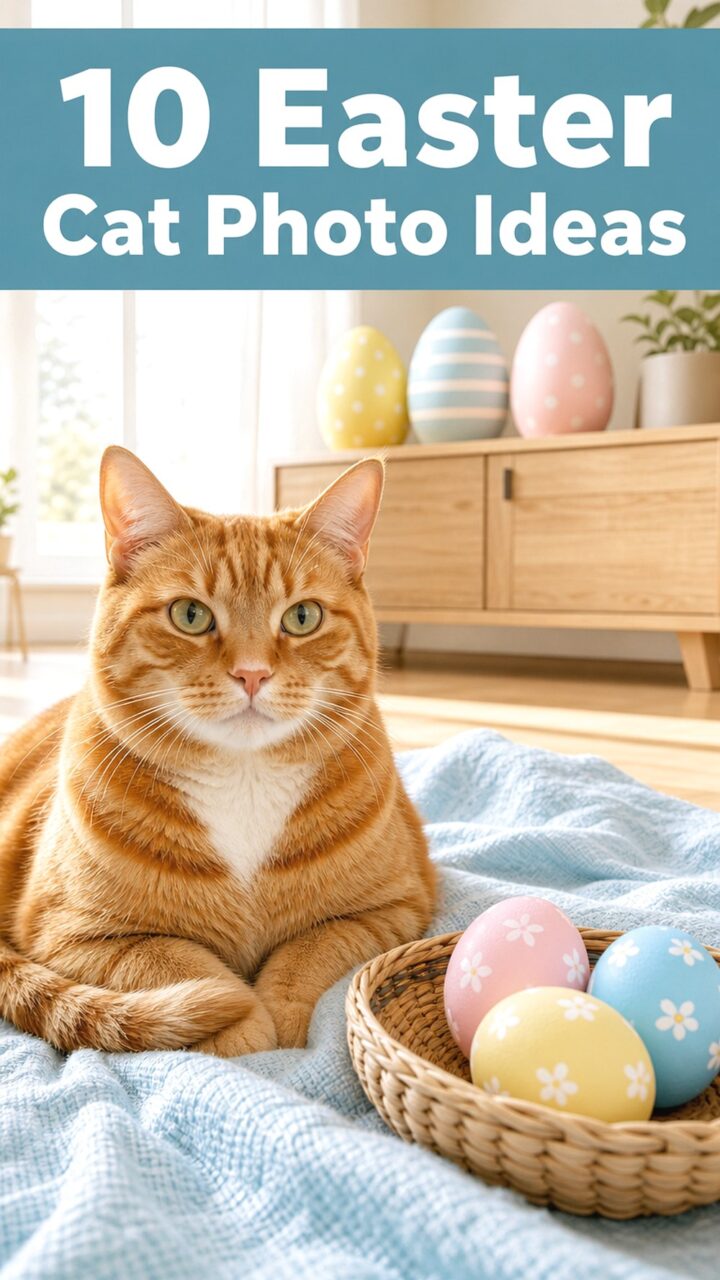
10 Easter Cat Photo Ideas for Cute, Safe Spring Photos
Save to PinterestThe goal is to build the scene around behavior your cat already enjoys: curling up in a basket, watching the window, exploring a box, walking through a tunnel, or settling onto a favorite blanket. That makes the photo feel more natural and reduces the need to keep repositioning your cat.
These 10 Easter cat photo ideas range from cozy portraits to playful action shots, with setups that can be created indoors using controlled, cat-safe props.
Before You Build an Easter Photo Setup
Keep the session centered on your cat rather than the decorations. Choose a familiar room, use natural daylight when possible, and prepare the background before bringing your cat into the scene.
Several common Easter decorations are poor choices around cats. Skip real lilies entirely; even small exposures can be dangerous to cats. It is also sensible to avoid other potentially toxic plants and flowers, plastic Easter grass, loose ribbon, string, small decorative pieces, chocolate, candy, and anything your cat could swallow or chew.
For decorative color, use a plain blanket, securely positioned paper backdrops, or large props kept beyond your cat’s reach. Supervise cardboard, fabric, and other chewable materials, and remove them if your cat starts biting or tearing them.
Most importantly, do not force a pose. A short photo session while your cat is relaxed will usually produce better expressions than trying to keep an uninterested cat on a set.
1. Cozy Easter Basket Portrait
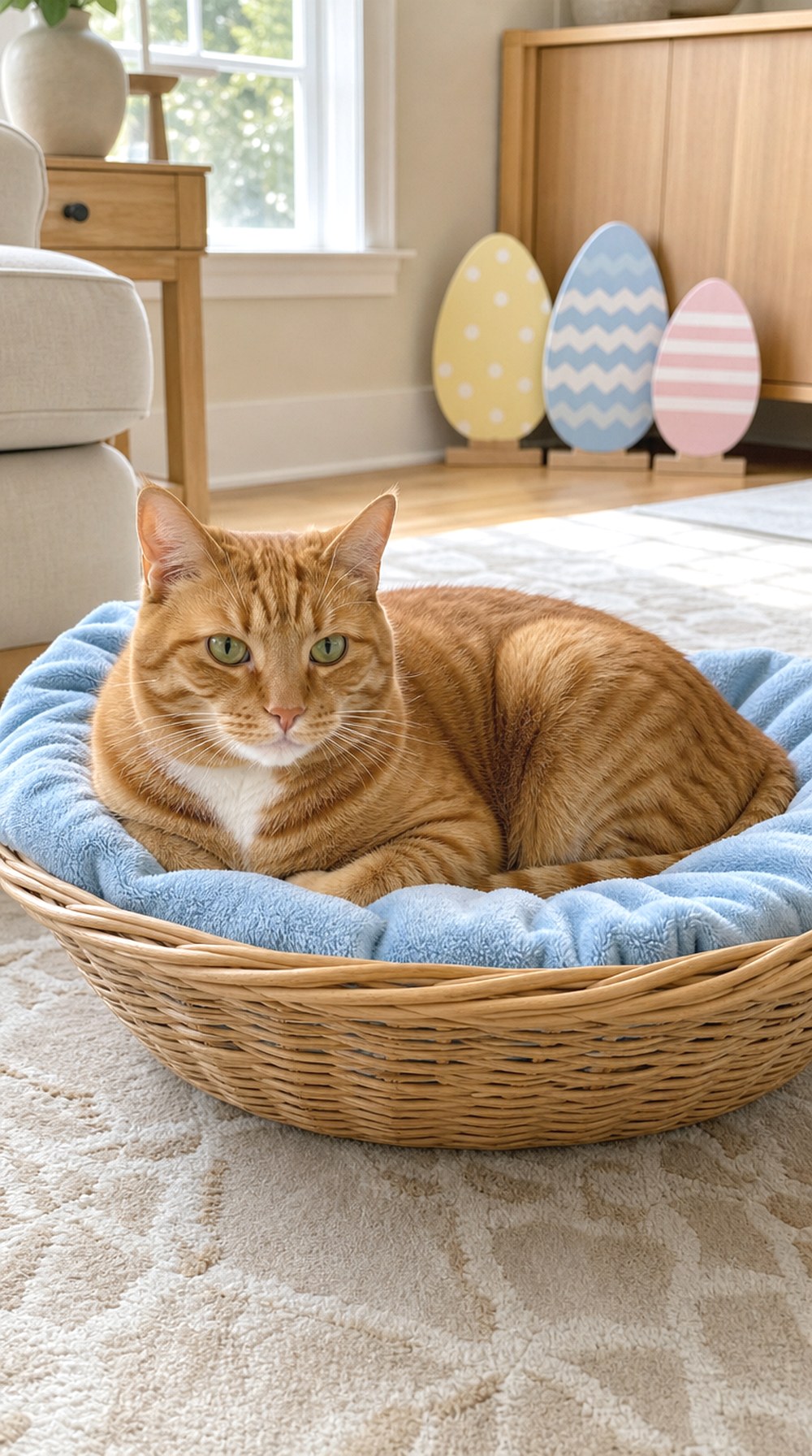
A basket gives an Easter photo an immediate seasonal feel without needing many extra props. Choose a broad, shallow basket that sits flat on the floor and is large enough for your cat to turn around comfortably. Line it with a familiar folded blanket rather than plastic Easter grass.
Instead of placing your cat in the basket repeatedly, leave it in a favorite resting area and allow curiosity to do the work. If your cat already enjoys baskets, you may get everything from an upright portrait to a curled-up sleeping shot.
Keep the background restrained. A pastel wall or blanket and a few large decorative eggs positioned safely beyond reach are enough to establish the Easter theme.
For a stronger portrait, bring the camera down near your cat’s eye level rather than photographing from standing height.
2. Spring Window-Watching Photo
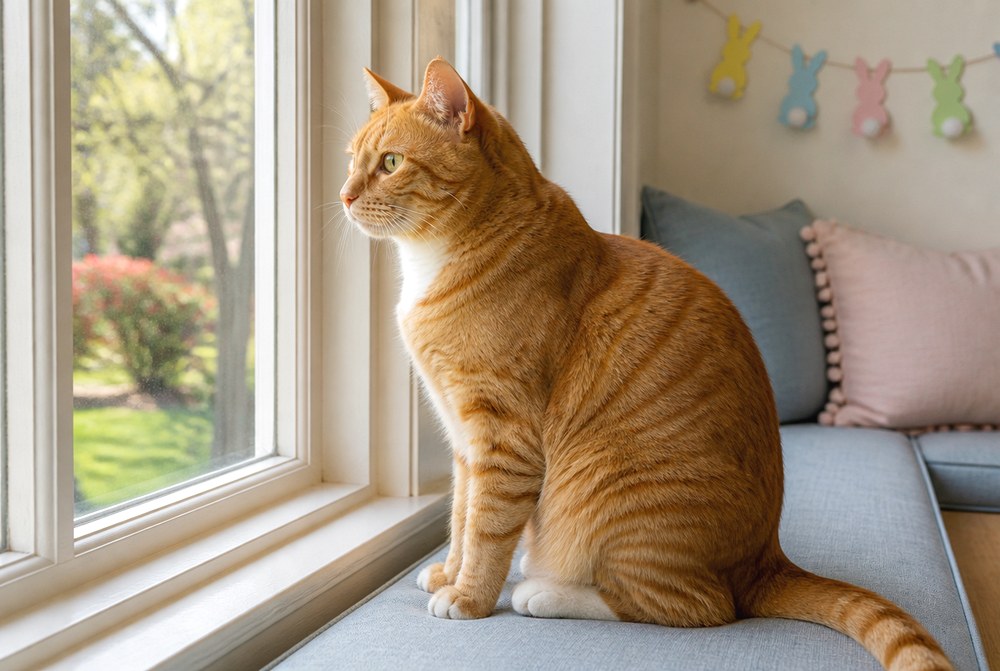
If your cat regularly sits at a window, use that habit instead of creating a formal pose. A window portrait can capture alert ears, whiskers lit from the side, and the quiet concentration cats show while watching outdoors.
Place a pastel cushion or folded blanket on the normal sitting spot, provided it does not make the surface unstable. Keep Easter decorations in the room behind the cat rather than crowding the sill. A softly blurred paper garland secured well out of reach can provide enough seasonal color.
Try photographing from slightly behind the cat for a peaceful silhouette, then move to the side for a profile portrait. Expose for the cat’s face rather than the bright window so the markings remain visible.
You May Also Like


3. Bunny-Ear Shadow Portrait
You can suggest a bunny theme without putting anything on your cat’s head. Create a pair of bunny-ear-shaped shadows on the wall behind your cat using a paper cutout positioned near a light source and completely outside the cat’s reach.
Let your cat sit naturally on a stool, cushion, or favorite floor spot while the shadow lands on the background rather than directly on the cat. The effect is playful but still allows your cat to look like a cat.
This idea works particularly well with a plain cream wall because the silhouette is easy to recognize. Take several frames as your cat looks toward the camera, turns sideways, or glances up at the moving light.

4. Pastel Blanket Morning Portrait
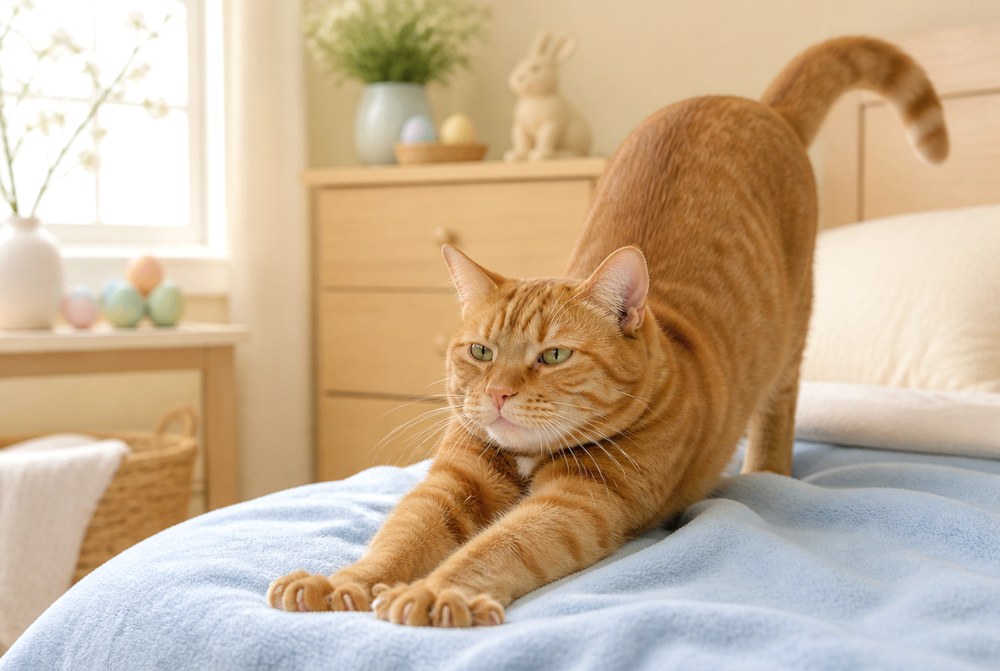
For a very low-prop setup, make the color palette do most of the work. Place a soft pastel blanket on a bed, couch, or padded window bench your cat already uses.
Photograph your cat while stretching, settling down, grooming, or simply sitting on the blanket. Pale blue, muted yellow, soft peach, or gentle lavender can give the scene a spring look without filling the frame with Easter objects.
A small seasonal decoration can appear far in the background, but it does not need to be sharp. Using a wide aperture or portrait mode can soften the background and keep attention on your cat’s face.
This is also a good option for cats that become suspicious as soon as unfamiliar props appear.
5. Peek-Through Easter Egg Frame
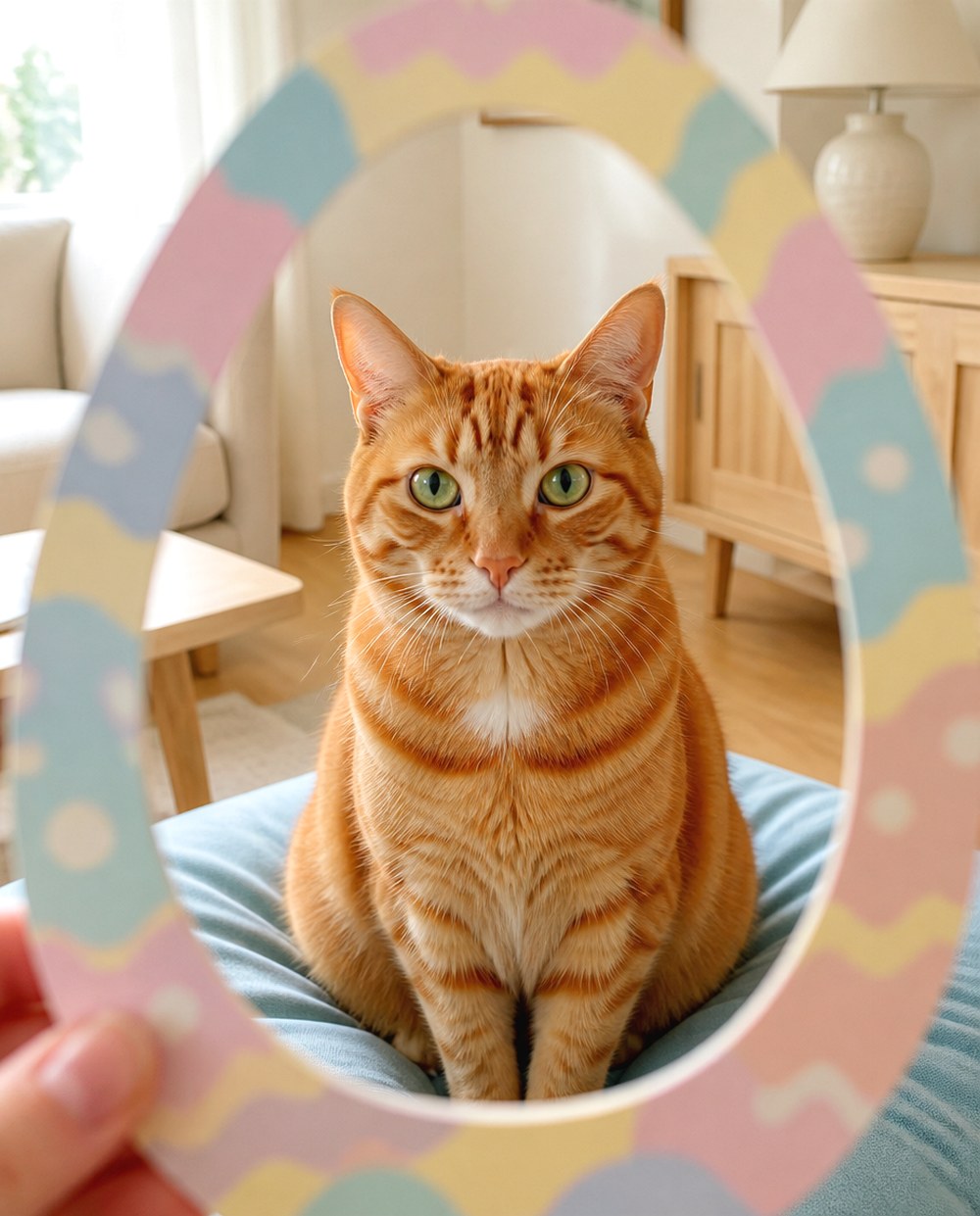
An oversized egg-shaped frame can turn a plain portrait into a more graphic Easter photo. Cut the center from a large piece of sturdy cardboard, then decorate the outer edge with nontoxic paper colors.
The safest way to use it is for a person to hold the frame several feet in front of the cat while photographing through the opening. Your cat never needs to wear, stand inside, or interact with the cardboard.
Focus through the opening while your cat sits on a familiar chair or blanket. Moving the frame closer to the camera makes the colored edge appear larger and can create an attractive blurred border around your cat’s face.
Remove the cardboard if your cat gets close enough to chew it.
6. Easter Gift Box Explorer
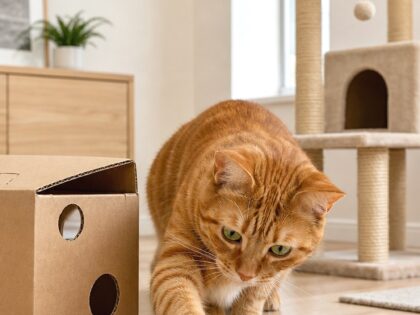
Cats and empty cardboard boxes are often a better match than cats and elaborate holiday props. Use a clean, open box large enough for your cat to enter comfortably and remove tape, staples, ribbon, handles, or loose packaging.
Cover only the outside with securely attached pastel paper if you want it to resemble an Easter gift. Leave the interior plain and unobstructed.
Photograph your cat peeking over the edge, stepping inside, or looking out from the opening. Because the activity involves normal exploration rather than a held pose, you can get a wider range of expressions.
Supervise the box throughout the session, especially if your cat likes chewing cardboard.

7. Pastel Play-Tunnel Action Shot
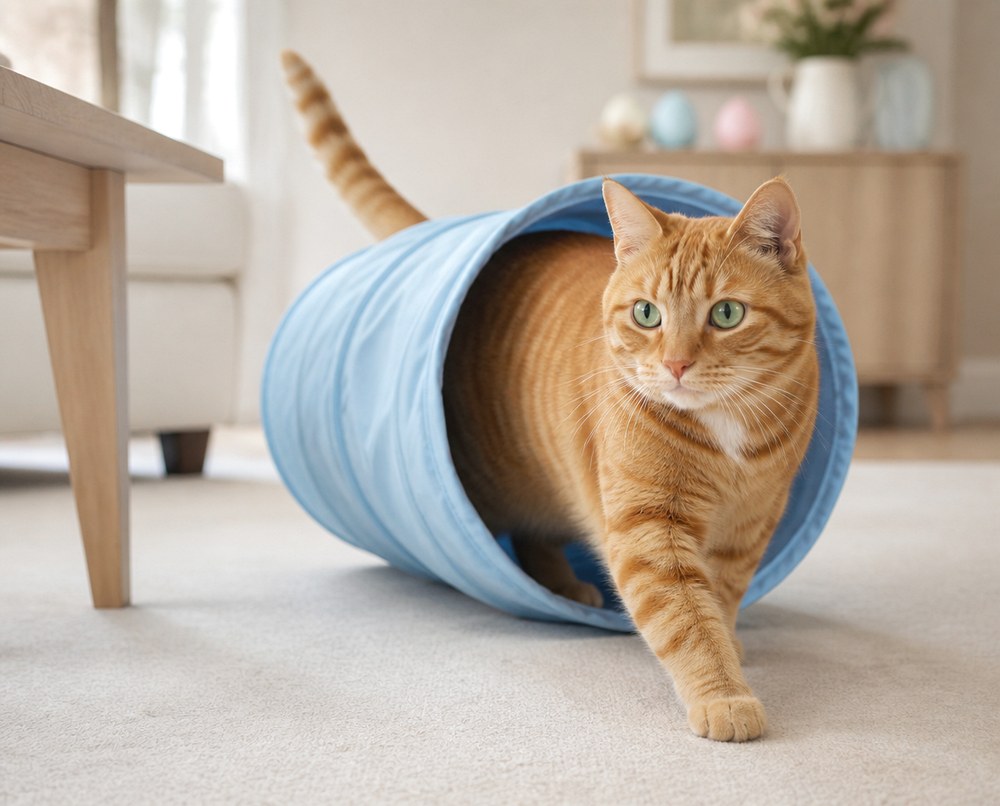
For a cat that would rather play than pose, turn the photo session into an action setup. Use your cat’s familiar fabric play tunnel on a clean floor and place a pastel blanket underneath or behind it for Easter color.
Position yourself near one end and photograph your cat emerging from the tunnel. A burst of movement, forward-facing ears, or one paw stepping out can make the image feel much more lively than a seated portrait.
Avoid adding eggs or loose decorations near the tunnel entrance, where they could interfere with running. The tunnel itself should remain the main object.
Use a brighter room so you can choose a faster shutter speed and reduce motion blur.
8. Easter Treat Puzzle Moment
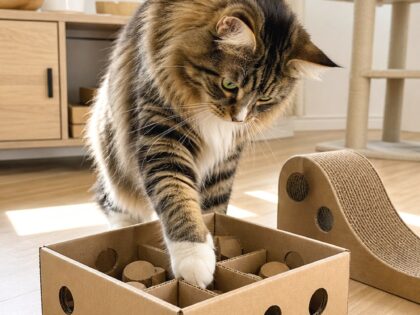
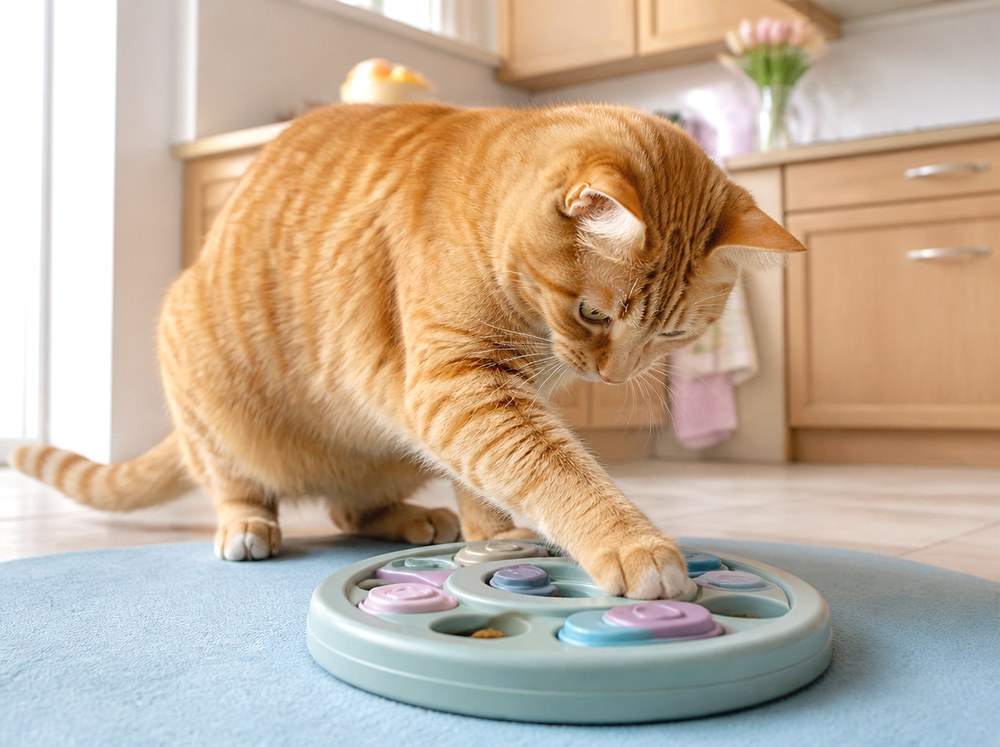
Food can provide a natural point of focus if your cat is comfortable eating during a photo session. Use a familiar cat food puzzle or lick-safe feeding accessory rather than hiding treats inside homemade plastic eggs.
Place the feeder on a washable pastel mat and photograph from a low diagonal angle. You can capture your cat investigating the puzzle, using a paw, or pausing to look toward the camera.
Use part of your cat’s normal food allowance instead of adding a large amount of extra food for the sake of the photo. If your cat has dietary restrictions or a prescribed feeding plan, keep the session consistent with that plan.
The Easter theme can come from the background and color palette rather than the food itself.
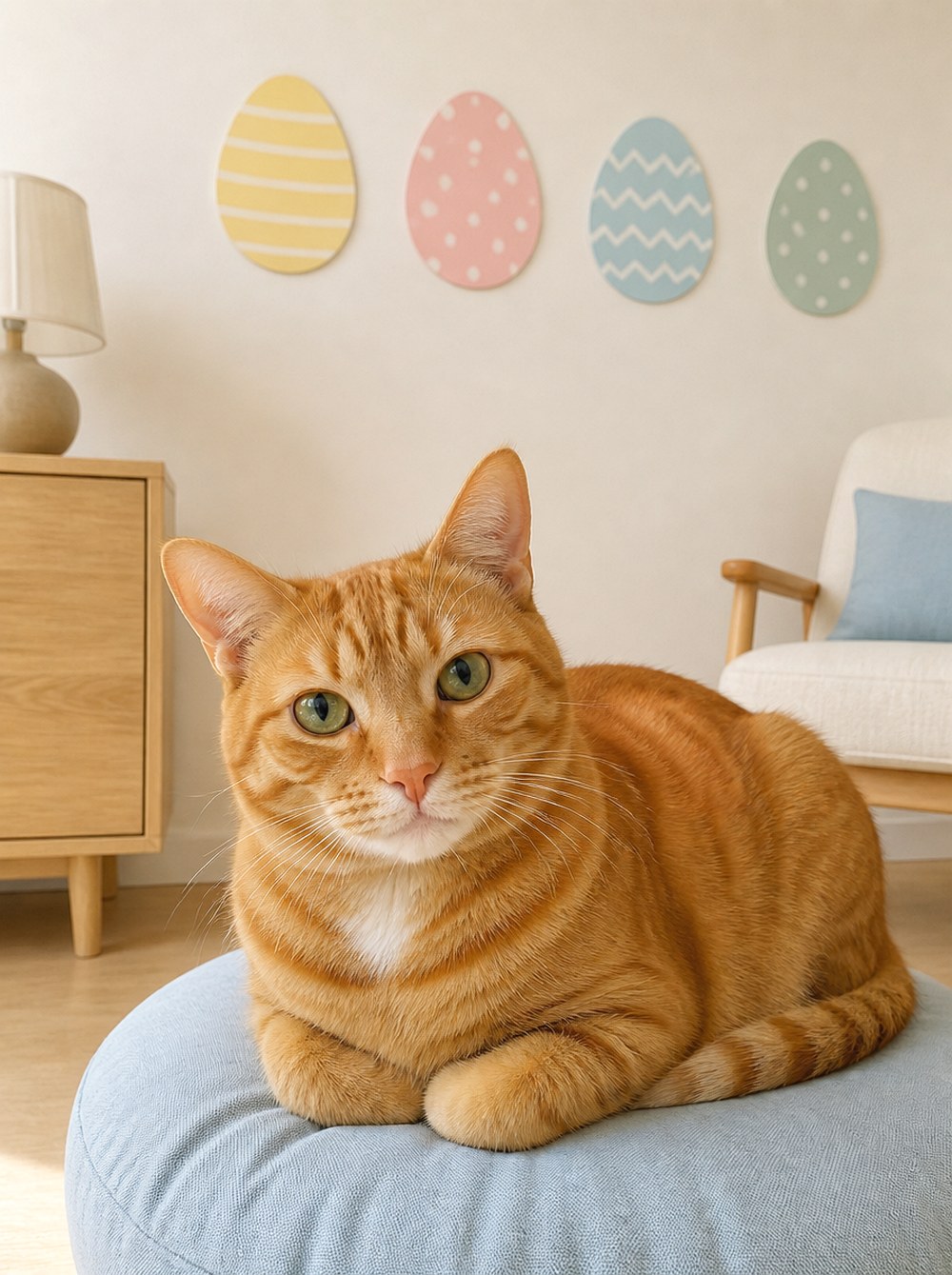
9. Minimal Easter Backdrop Portrait
You do not need to fill the floor with props to make an Easter backdrop. Instead, decorate the wall behind your cat while keeping the immediate sitting area clear.
A securely attached pastel paper banner or a few large flat paper egg shapes can create a recognizable background. Mount them high enough and firmly enough that your cat cannot pull them down.
Place a familiar stool, cat bed, or cushion several feet in front of the backdrop. That distance helps the decorations soften slightly in the photo while your cat stays sharp.
This arrangement is useful when you want a cleaner, more polished portrait for a card or social post without asking your cat to interact with anything seasonal.
10. Close-Up Easter Bokeh Portrait
Finish with a portrait where the Easter decorations barely need to be recognizable. Put your cat near a bright window and position large pastel decorations far behind the sitting area.
When you focus closely on the eyes, the background colors can blur into soft circles and patches. The result feels seasonal without looking like a staged holiday set.
For the strongest close-up, keep the camera roughly level with your cat’s face and focus on the nearer eye. Watch for the moment your cat looks toward the window or camera rather than trying to hold its chin in a particular position.
This style is especially useful if your cat tolerates only short sessions because the setup requires almost no interaction with props.
You May Also Like


Make the Photo Session Work With Your Cat
A good setup still depends on timing. Try taking photos when your cat is already awake and interested in the room rather than interrupting deep sleep or chasing your cat around the house with a camera.
Prepare the scene first. Check that nothing can roll toward your cat, tip over, snag a paw, or be chewed. Then invite your cat into the area using a familiar routine, toy, or approved food reward if appropriate.
Once your cat arrives, work quickly. Instead of repeatedly repositioning your cat, move yourself. Try eye level, a slight side angle, a close-up, and one wider frame while your cat remains in roughly the same spot.
Watch the ears, tail, posture, and attempts to leave. If your cat walks away, hides, becomes agitated, or starts chewing the set, the session is finished. You can always keep the backdrop assembled and try again during another naturally calm period.
Also check the scene carefully before using the final image. Easter decorations can look harmless in a photo while being inappropriate within reach of a cat. Keep lilies and other hazardous plants out of the home, and keep chocolate, candy, plastic grass, strings, ribbons, small ornaments, and breakable decorations away from the photo area.
Start With the Place Your Cat Already Loves
You do not need all 10 Easter cat photo ideas to get a good picture. Pick the one that requires the least change to your cat’s normal routine.
A basket-loving cat may settle immediately into the first setup. A window watcher may give you a better portrait without any props nearby. An active cat might look far more natural running through a play tunnel than sitting beside decorations.
Build the Easter details around that behavior, keep the session short, and let spring colors and a clean background carry most of the theme. The result is more likely to look like your cat rather than a cat that has been placed inside a holiday display.
