A pet does not need an entire room to have a comfortable place of their own. In a small apartment, a well-planned corner can hold the things you use every day without making the living room, entryway, or bedroom feel crowded.
Save This Idea on Pinterest
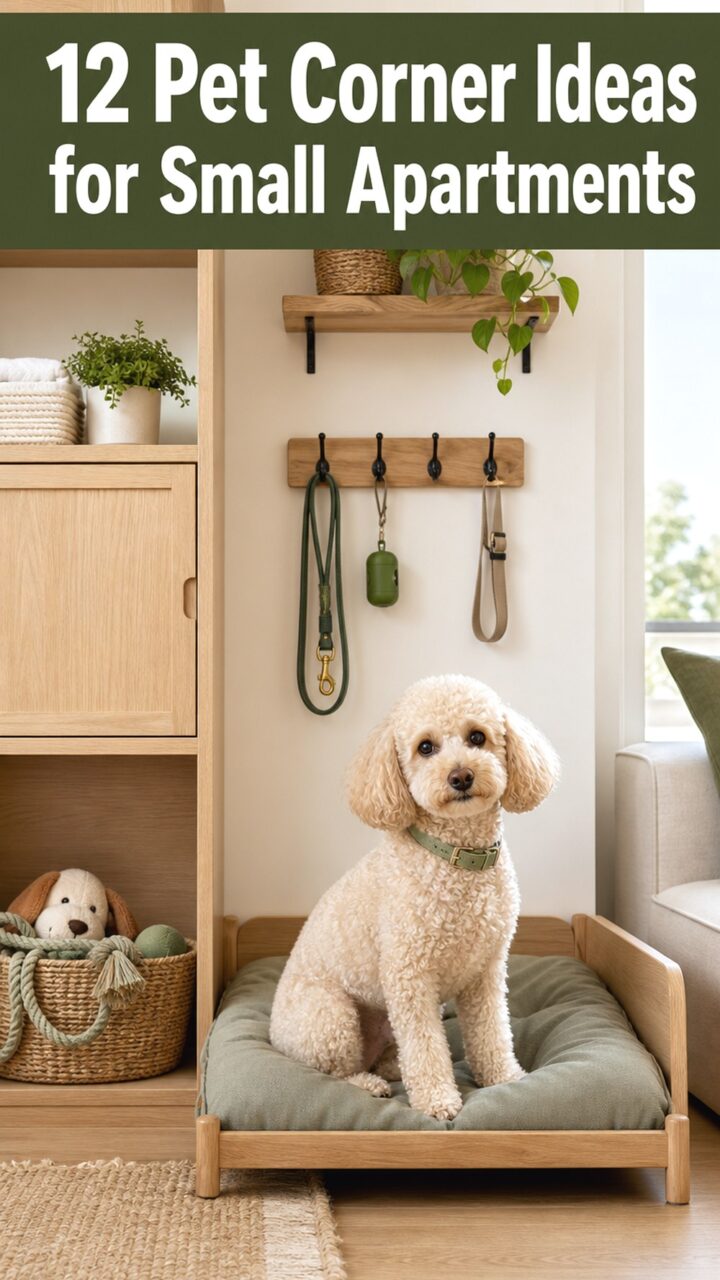
12 Pet Corner Ideas for Small Apartments That Save Space
Save to PinterestThe most useful pet corners do more than squeeze a bed into unused floor space. They solve a specific problem: scattered toys, nowhere to hang a leash, bulky food containers, messy grooming supplies, or a bed that constantly gets moved out of the way.
These 12 pet corner ideas for small apartments use walls, furniture gaps, shallow storage, and overlooked spaces to create practical setups without sacrificing much floor area.
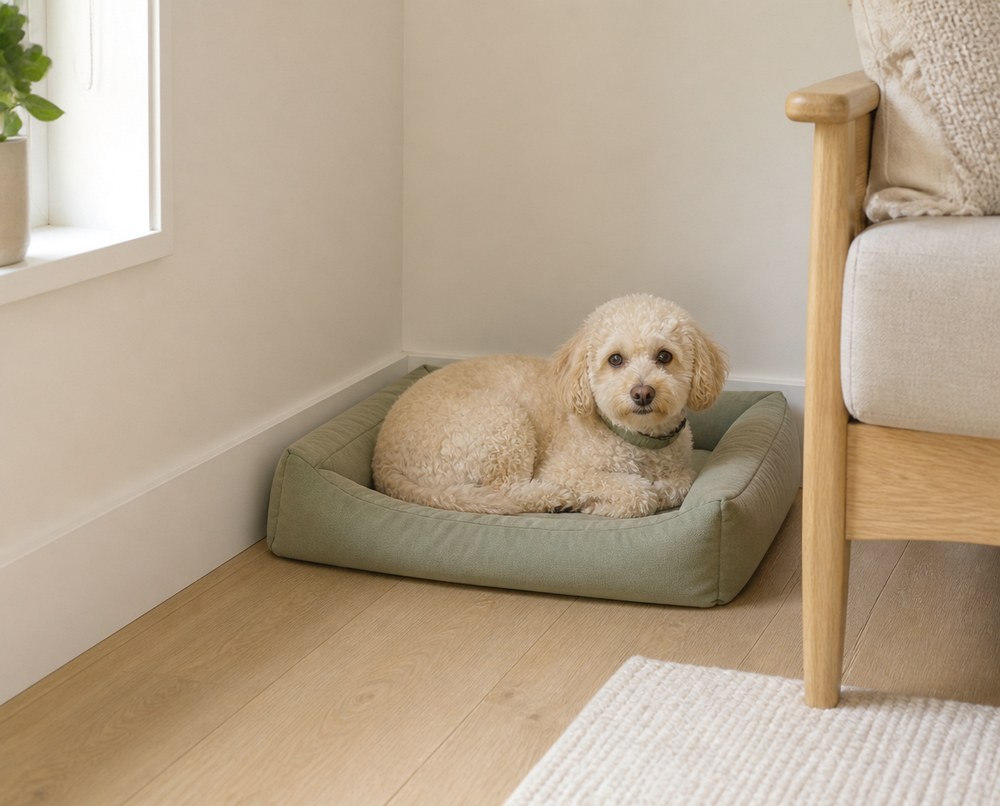
1. Turn an Empty Living Room Corner Into a Rest Station
An unused corner beside a sofa or armchair can become a dedicated sleeping spot without changing the rest of the room.
Choose a bed that fits fully inside the available footprint rather than sticking into the main walking path. A rectangular or corner-shaped bed often uses space more efficiently than an oversized round one.
Place one small washable mat beneath the bed if you want to protect flooring or make cleanup easier. If your pet likes privacy, positioning the bed beside a sofa can provide a slightly sheltered feeling without enclosing the area.
Avoid placing the bed directly beside a heater, busy doorway, dangling electrical cords, or anything your pet could pull down.
This setup works especially well when your pet already chooses the same living room area for naps. Instead of convincing them to use a completely different location, you are organizing a space they naturally prefer.
2. Use a Slim Console for an Entryway Pet Station
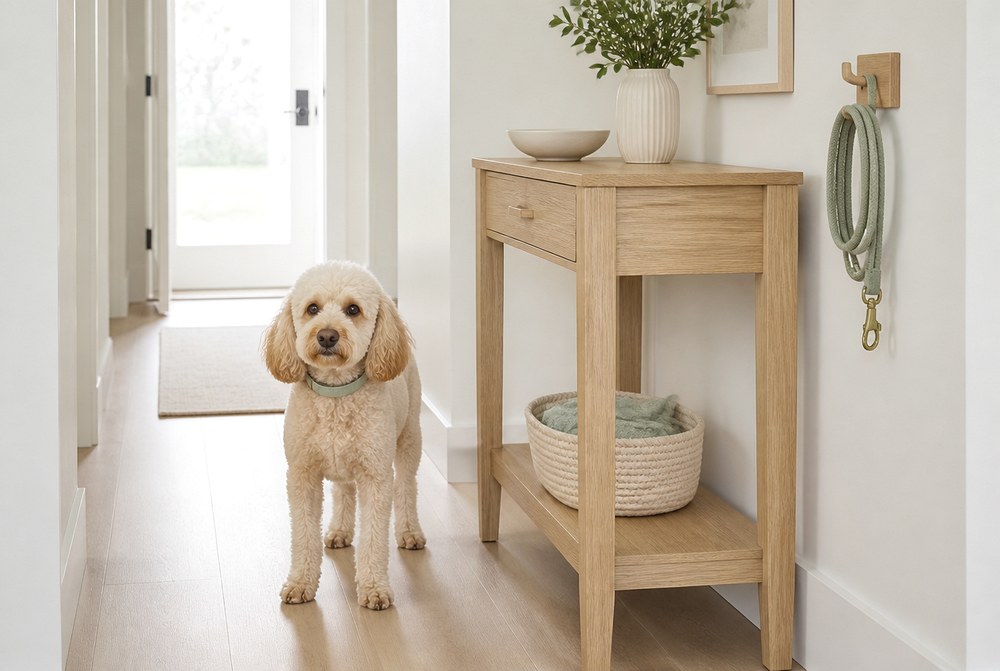
The entryway is often where leashes, waste bags, towels, and harnesses accumulate. A narrow console can turn those loose supplies into one organized station.
Choose a shallow piece of furniture that does not interfere with the door. Store daily walking items in a small drawer or closed basket, while less frequently used supplies can go on a lower shelf.
Hooks mounted securely above the console can hold a leash or harness, but keep loose straps positioned so your pet cannot become tangled in them.
A small washable towel basket is useful near the door during rainy or muddy weather.
The goal is not to store every pet item here. Keep this station focused on the things you actually reach for when leaving or returning home.
You May Also Like



3. Build a Feeding Corner Into the End of a Cabinet Run
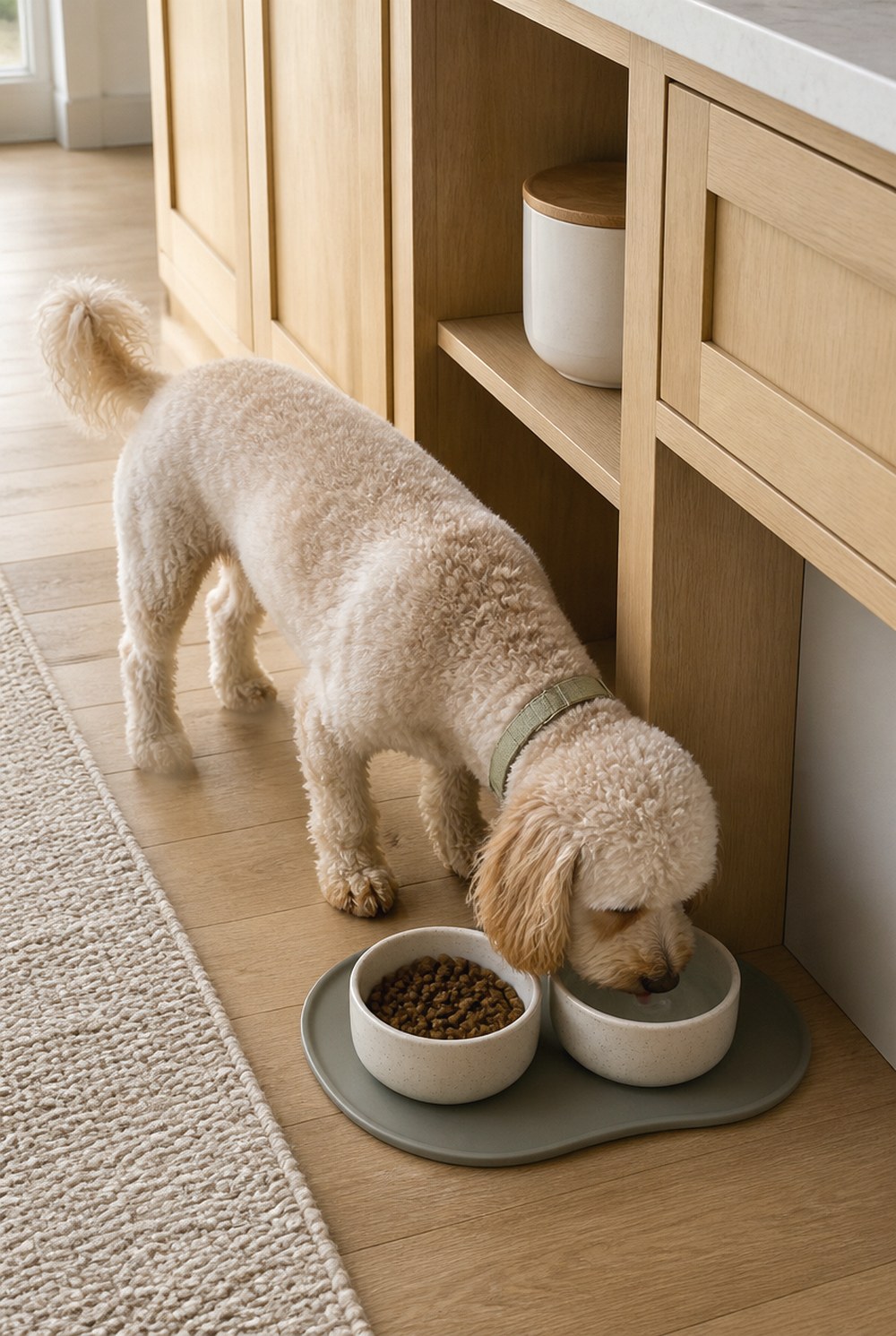
Food and water bowls can become tripping hazards when they are placed wherever floor space happens to be available.
Instead, look for a recessed area at the end of a kitchen cabinet run, sideboard, or pantry wall. A washable mat can define the feeding zone and catch splashes without taking up much room.
Choose bowls sized appropriately for your pet and leave enough space for comfortable standing. Water should remain readily available according to your pet’s needs.
Store food somewhere dry and secure rather than leaving an open bag next to the bowls. A sealed container inside a nearby cabinet keeps the floor area cleaner and prevents unsupervised access.
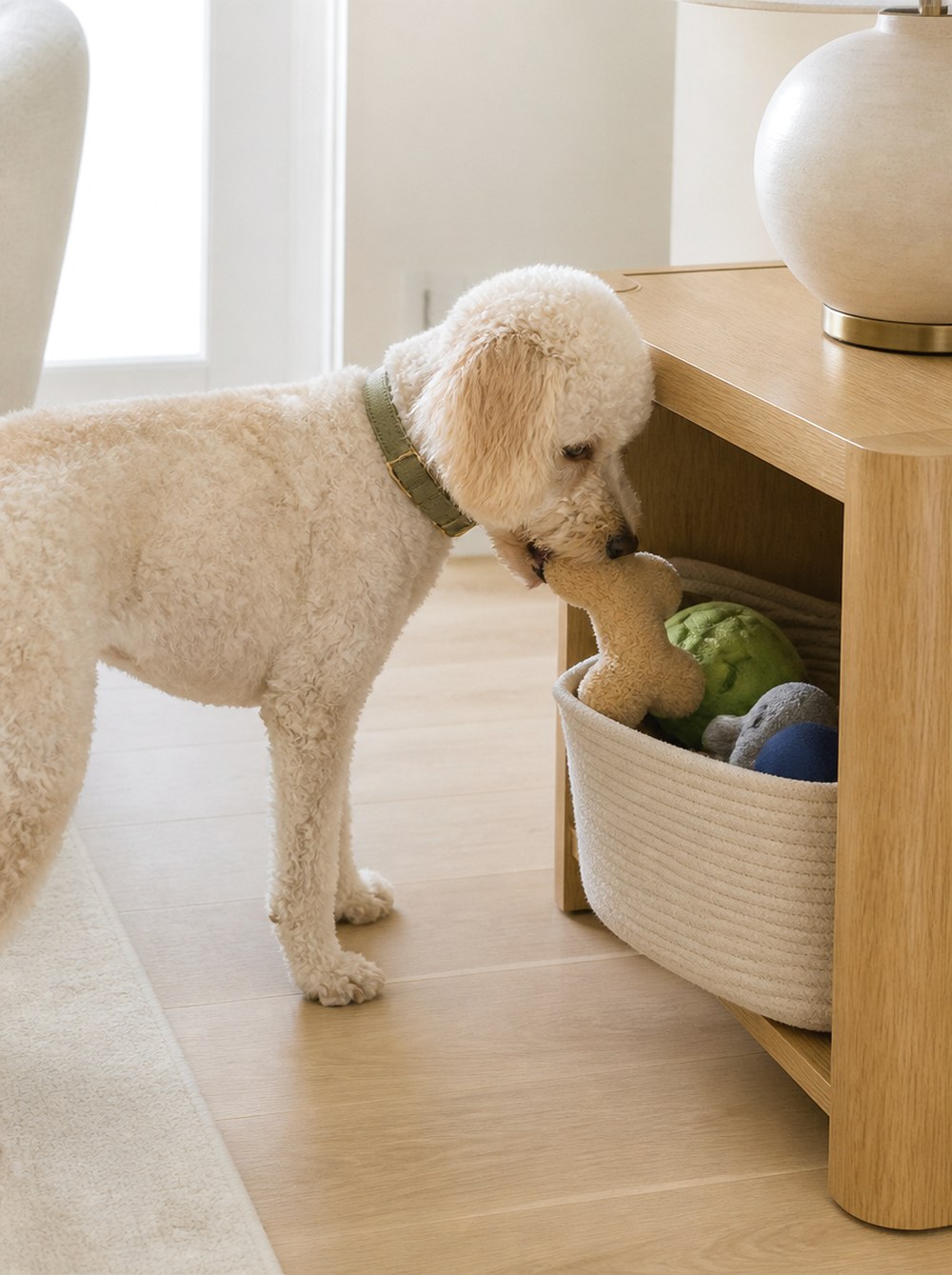
4. Slide a Low Toy Basket Under a Side Table
Pet toys do not necessarily need their own large storage bin.
If your side table has open space underneath, place a low basket there instead. This keeps toys contained while using floor area that would otherwise be empty.
For pets allowed to select their own toys, choose a stable container with smooth edges and an opening they can safely reach. Avoid handles, loose fibers, or damaged woven materials that could be chewed or swallowed.
Rotate some toys into closed storage rather than filling the basket to the top. A smaller selection is easier to maintain and makes it simpler to notice worn items that should be removed.
5. Turn the Space Beside a Bookcase Into a Vertical Supply Zone
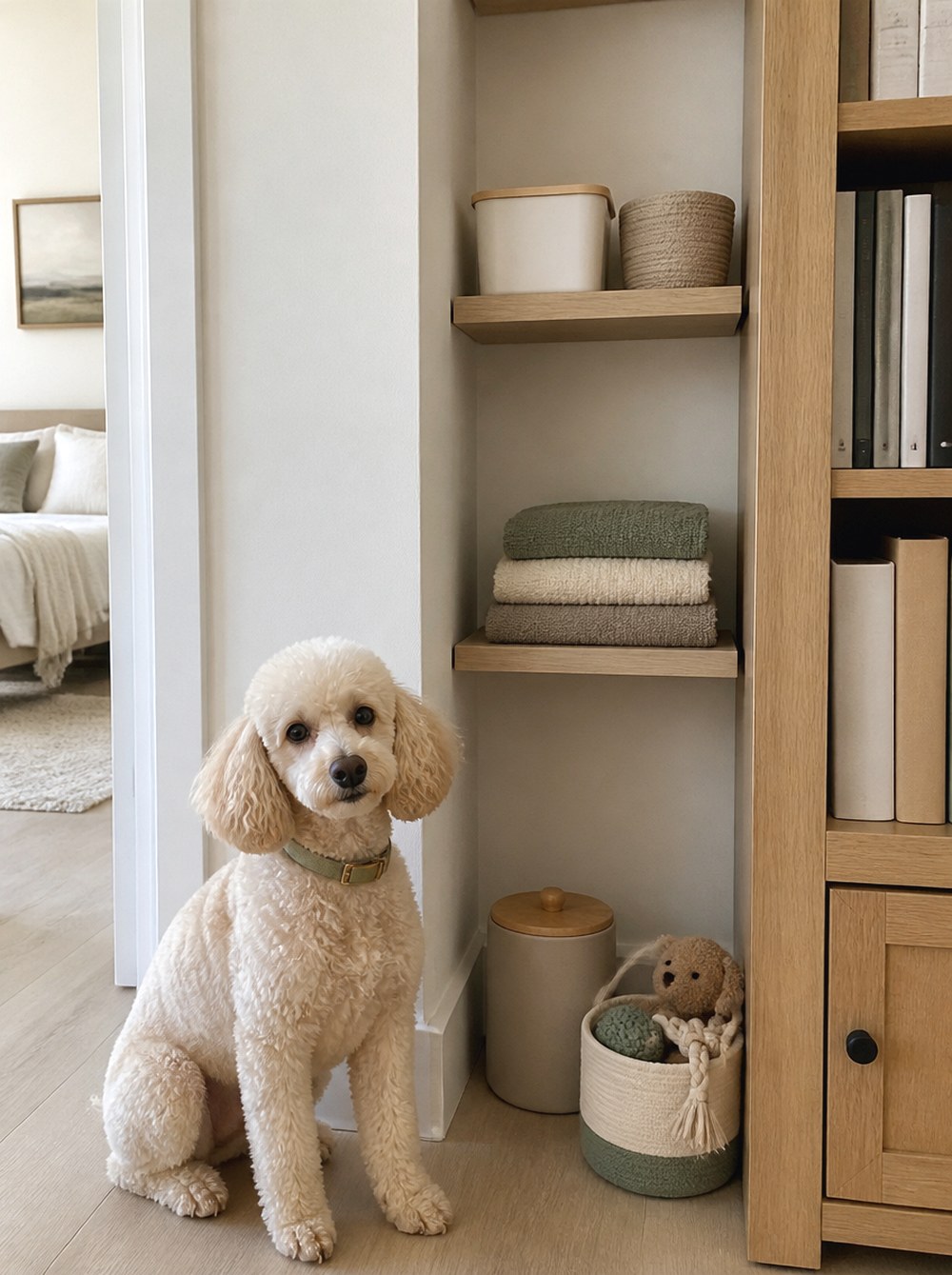
A narrow strip of wall beside a bookcase may be too small for another piece of furniture, but it can still provide useful storage.
Install a compact wall organizer or a few secure shelves for lightweight pet supplies. Keep medicines, cleaners, grooming tools, small objects, and anything chewable well out of reach.
Lower areas can hold a closed bin for bulky items such as spare towels. Frequently used owner-handled supplies can go higher.
Do not overload narrow shelves, and make sure mounted storage is properly secured. Nothing should be positioned where your pet could bump it and cause items to fall.
6. Give a Window Corner a Compact Lookout Bed
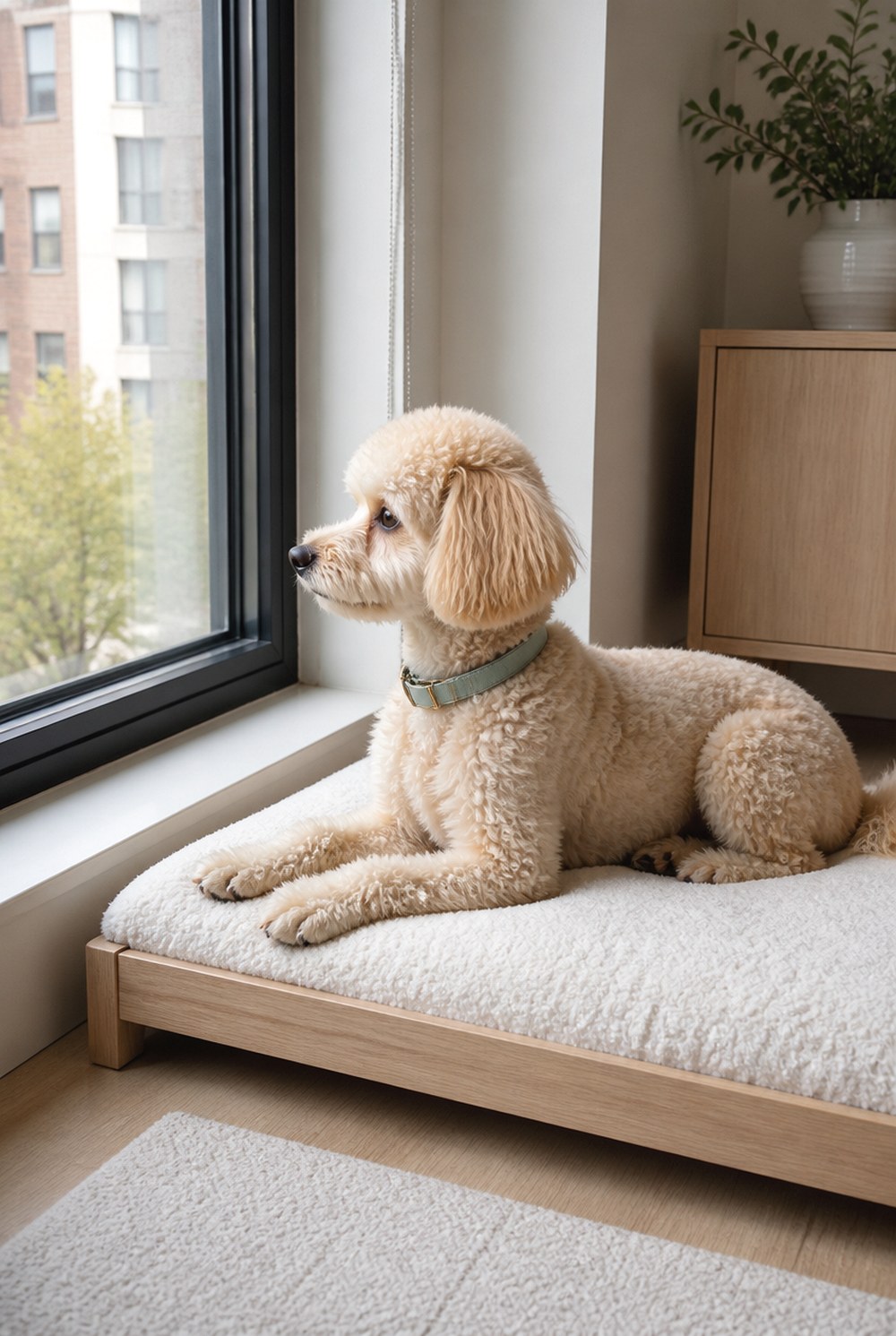
Pets that enjoy watching outdoor activity may appreciate a resting place near a secure window.
Position a small bed beside the window rather than filling the area with a large platform. A low bench can also work if it is stable, appropriately sized, and safe for your pet’s mobility.
Make sure screens, windows, blinds, and cords are secure. Loose blind cords should never hang where a pet can become tangled.
Consider temperature as well. Strong afternoon sun can make a window area much warmer than the rest of the apartment, so another resting spot should remain available.
7. Hide Grooming Supplies Inside an Ottoman
Dual-purpose furniture is particularly useful when a small apartment has little room for dedicated storage.
A storage ottoman can provide seating or a footrest while holding brushes, towels, nail-care tools, and other grooming items inside.
Use a small internal container so sharp or small tools remain separated and inaccessible to your pet. Everything should be dry before being stored.
Choose an ottoman with a stable lid and construction appropriate for your household. Avoid anything that could unexpectedly close on a curious pet.
This is a good example of a pet corner that does not need to look like pet storage at all.

8. Use the End of a Hallway for a Narrow Pet Nook
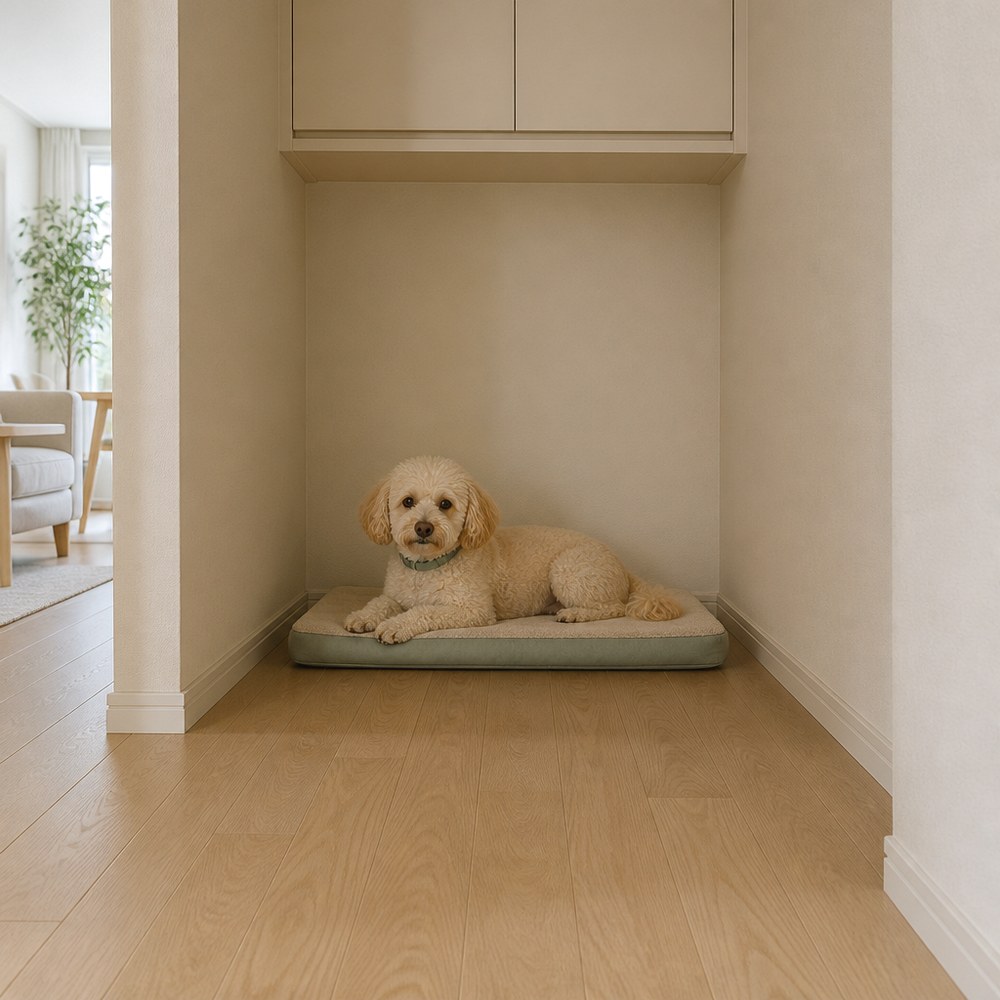
Some apartments have a short dead-end hallway or recessed wall that cannot accommodate regular furniture.
That can be enough space for a narrow bed and one wall-mounted storage piece.
Measure the location carefully. The pet setup should never reduce a required walkway or block access to doors, closets, electrical panels, or exits.
Keep the nook visually light. One bed and one storage element will usually work better than trying to fit a bowl, toys, grooming supplies, food, and walking equipment into the same small area.
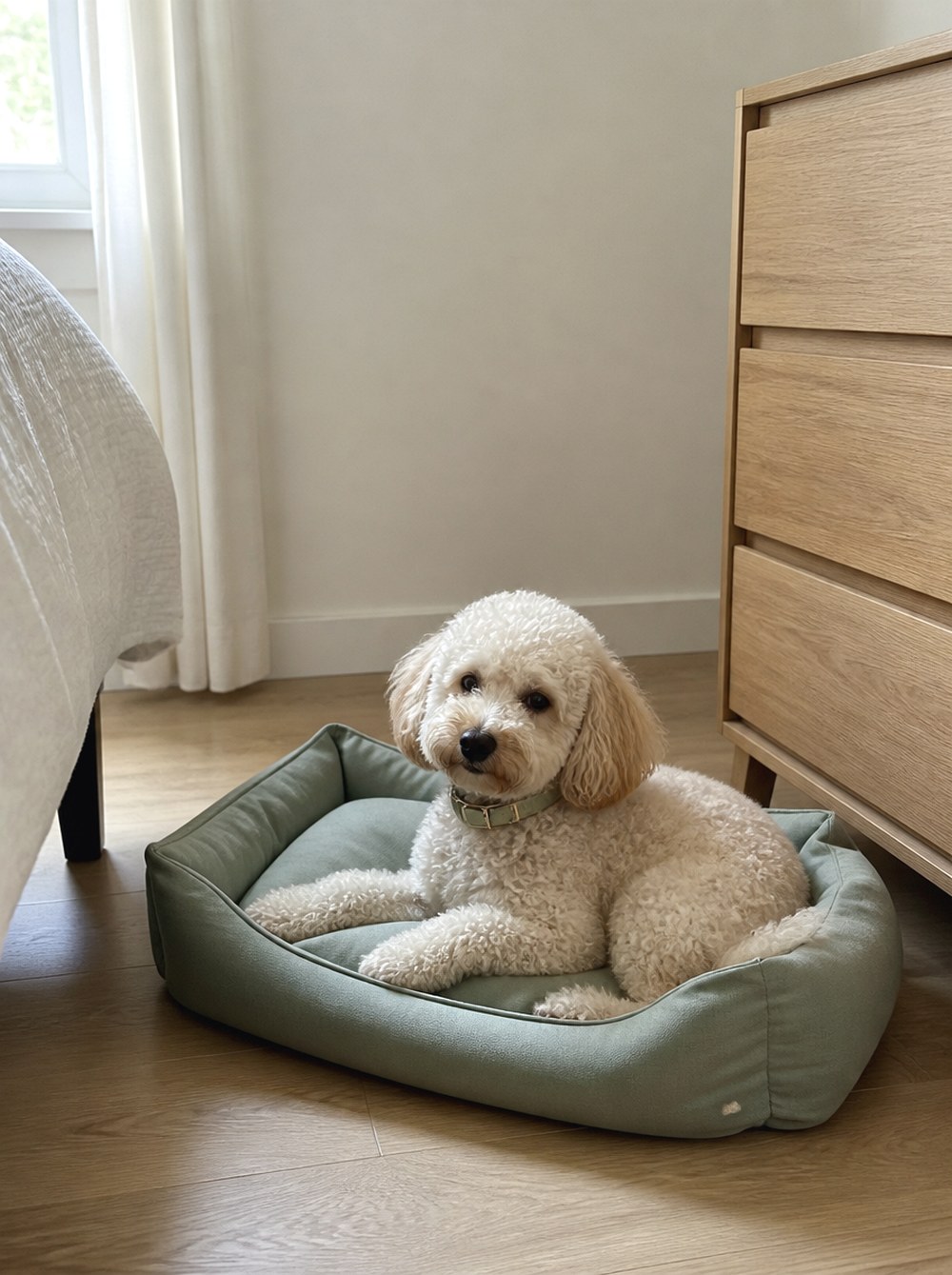
9. Create a Bedside Pet Corner for Nighttime
If your pet sleeps in the bedroom, give their bed a consistent location instead of moving it around each evening.
A narrow space beside a dresser can work if it is away from doors and nighttime foot traffic. Keep the floor around the bed clear so you are less likely to trip when getting up in the dark.
A washable bed cover is useful in compact rooms where fabric surfaces collect hair quickly.
Avoid piling storage above the sleeping area. Heavy shelves, unstable objects, or items that can fall should not be positioned directly over your pet’s bed.
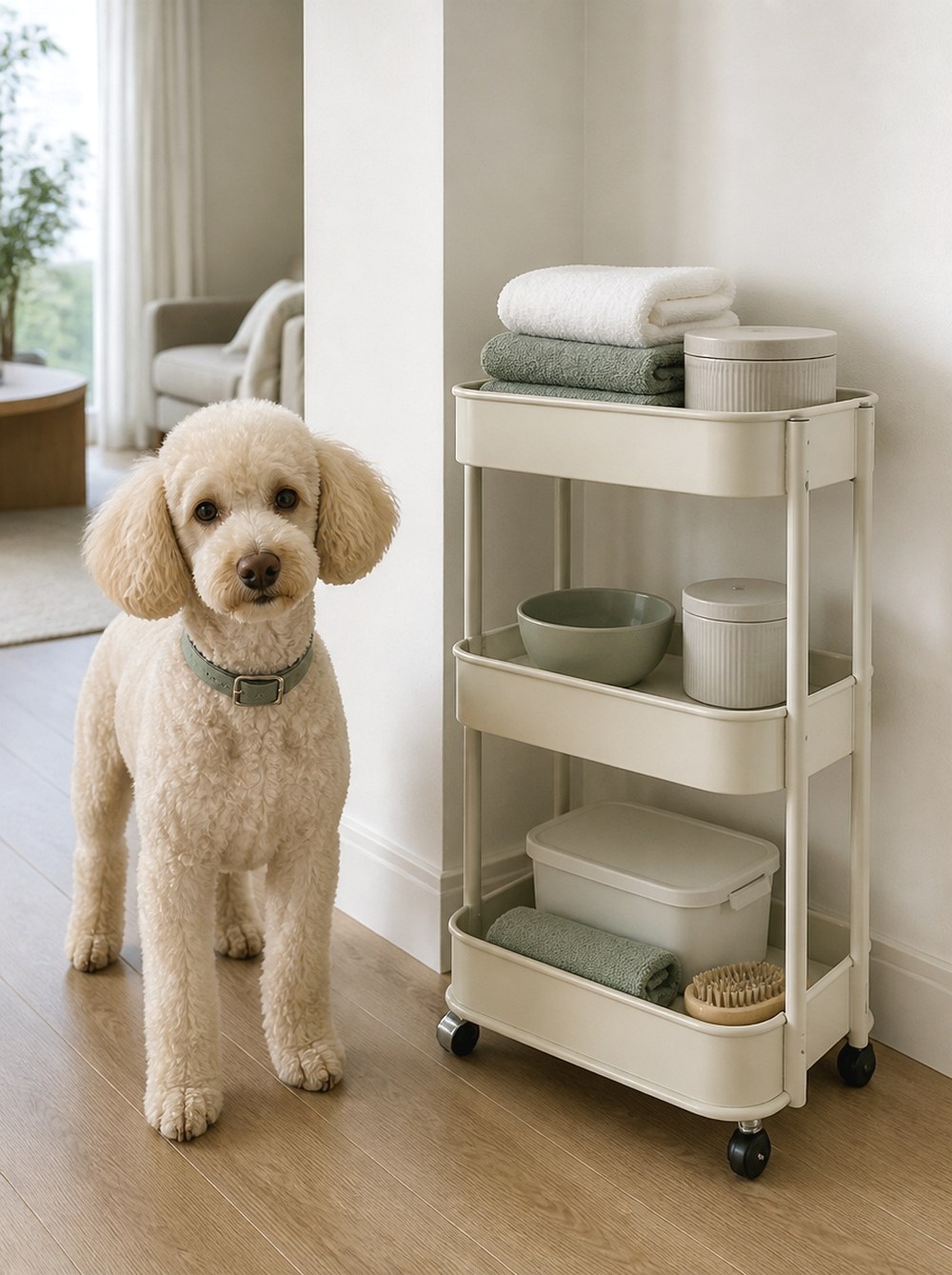
10. Add a Rolling Pet-Supply Cart to a Flexible Corner
A compact rolling cart can work well when pet supplies need to move between rooms.
It is particularly useful for items such as clean towels, sealed grooming supplies, spare bowls, or cleanup materials. Organize each level by task instead of filling the cart with unrelated items.
Use containers with secure lids where appropriate, and keep medicines and cleaning products somewhere inaccessible rather than on an open cart.
When the cart is parked, lock the wheels if the design allows it or position it where it cannot roll into your pet.
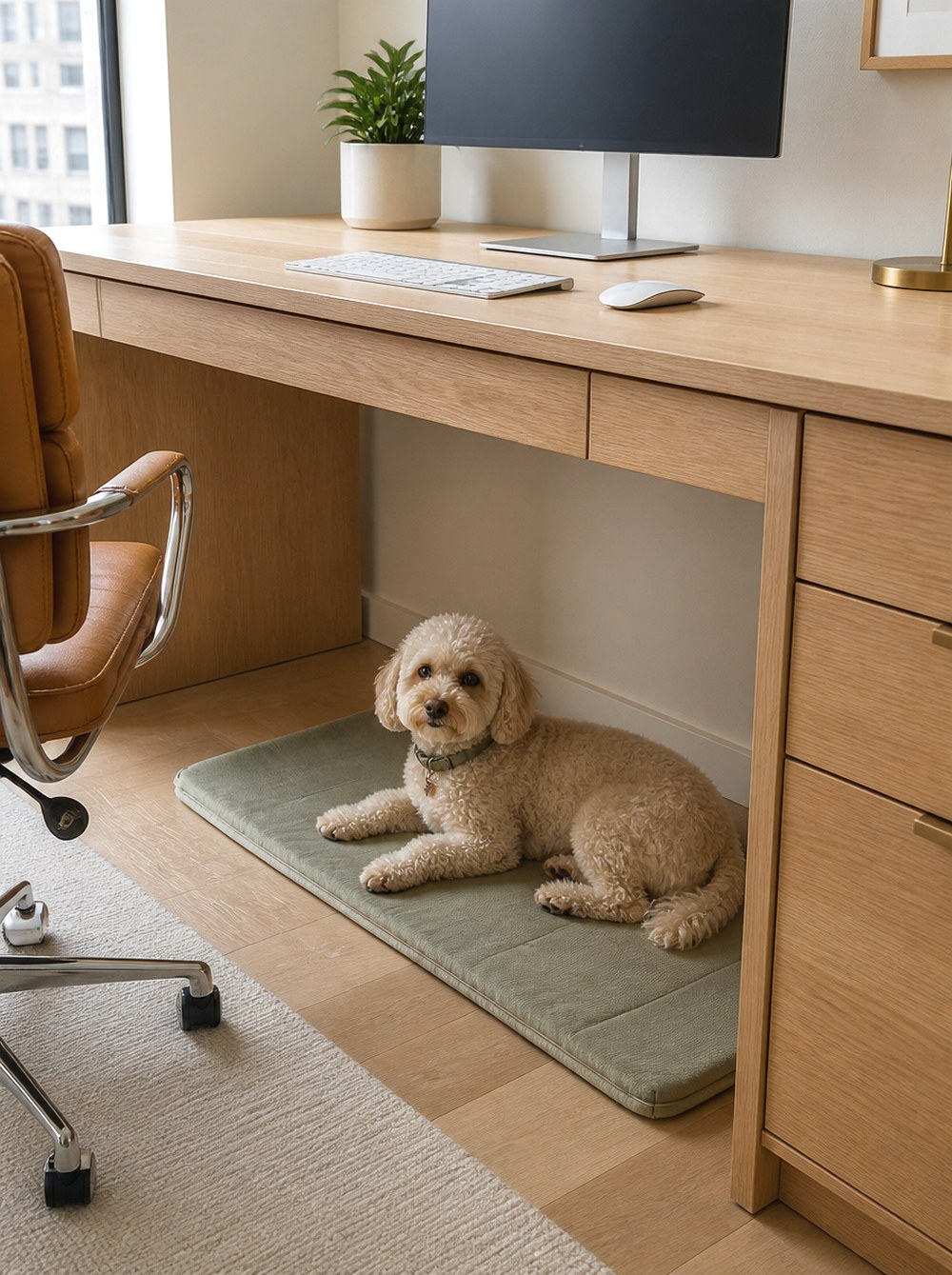
11. Make a Small Under-Desk Retreat
A desk can create an overlooked sheltered space, especially in apartments where the home office shares a living room or bedroom.
If there is adequate room for both your legs and your pet, place a thin washable mat or appropriately sized bed along one side under the desk.
Cable management matters here. Power cords, charging cables, extension cords, and small electronics should be secured completely out of your pet’s reach.
Do not force this setup if the desk is cramped. Your pet should be able to enter, turn, lie down, and leave without being squeezed between furniture.
For pets that like staying near their person during work hours, this can be more appealing than a separate corner across the room.
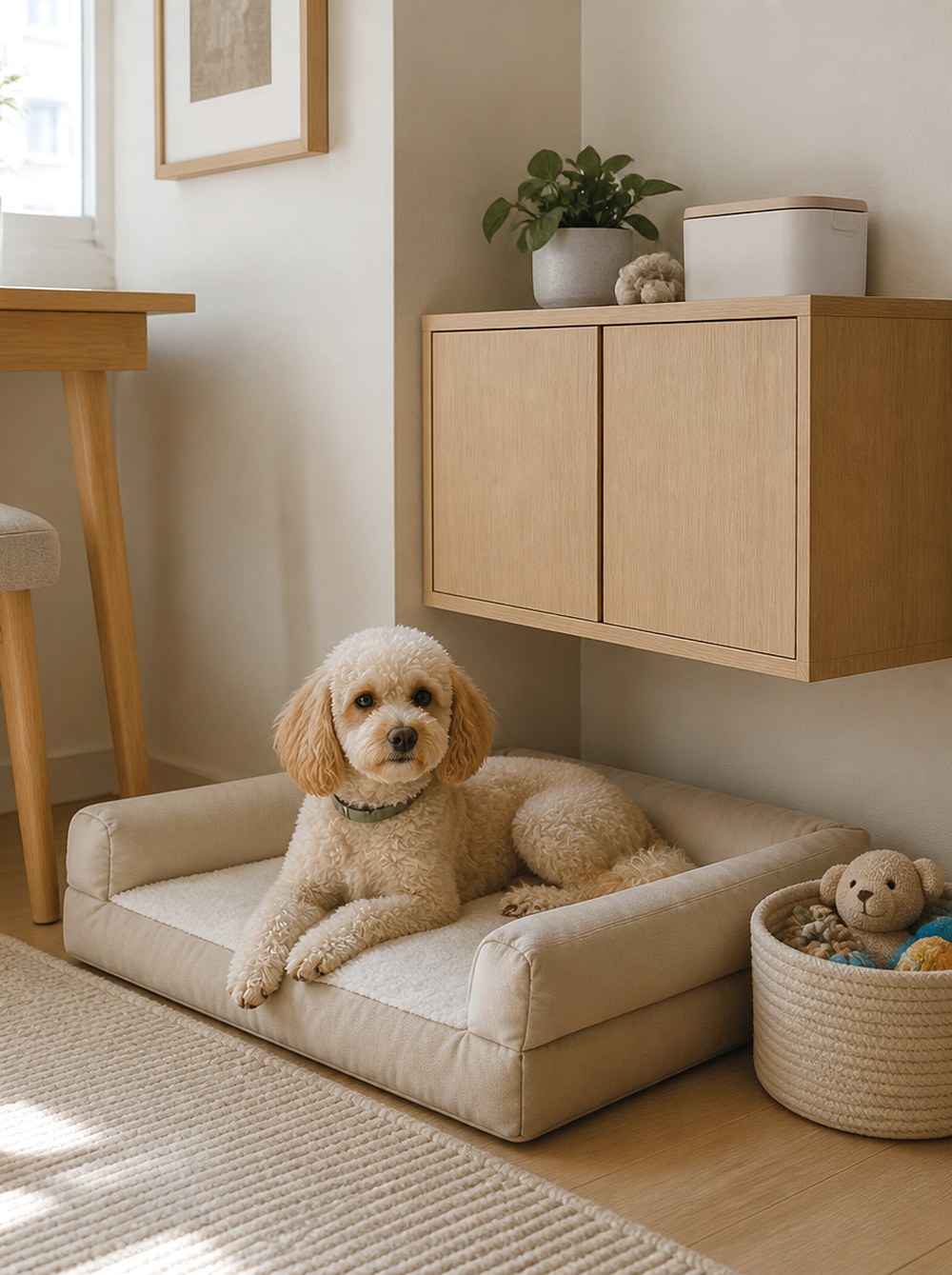
12. Build One Complete Pet Corner With Closed Storage Above
When you have only one location available for pet supplies, combine resting and storage vertically.
Place the bed on the floor and install secure closed cabinets or sturdy shelving on the wall nearby—not directly over the sleeping pet if items could fall. Use the storage for spare toys, towels, walking equipment, and other supplies that do not need to remain on the floor.
Closed storage keeps a multipurpose room visually calmer than several open baskets.
Keep everyday items within convenient reach for you while making sure food, small objects, grooming tools, medicines, cleaners, and chewable materials remain inaccessible to your pet.
This works particularly well in a studio apartment because the entire setup can occupy one defined strip of wall.
You May Also Like



How to Choose the Right Corner for Your Apartment
The best location is usually not the largest empty space. It is the spot that supports a task you already do there.
If leashes constantly end up on the kitchen counter, organize an entryway station. If toys spread across the living room, use under-table storage. If your pet naps beside your desk every afternoon, make that existing preference more comfortable instead of building a separate nook they may ignore.
Before buying new furniture, check four things:
- Traffic: Your pet should not have to sleep, eat, or play in the main walking path.
- Access: Your pet should be able to use their bed, water, or permitted toys comfortably.
- Safety: Secure shelves, cords, small objects, cleaners, medicines, and anything that could fall or be swallowed.
- Cleaning: Washable mats, removable bed covers, and wipeable containers make a compact corner easier to maintain.
Small apartments usually benefit from restraint. One well-organized pet zone is often more useful than several baskets and pieces of pet furniture scattered throughout the home.
Make the Corner Fit Your Pet, Not Just the Floor Plan
A young, active pet may use a toy station more than a dedicated lounging nook. A quieter adult pet may benefit more from a comfortable bed away from household traffic. Older pets or pets with mobility limitations may need floor-level access and should not have to jump onto benches or platforms to reach their usual resting area.
Watch how your pet already uses the apartment for several days. Their preferred sleeping spots, observation areas, and routes through the home can tell you where a pet corner is most likely to work.
Once you have chosen the location, start with the item that solves the biggest problem—perhaps a bed, feeding mat, toy basket, or leash station. Add storage only when it has a clear purpose. That approach keeps a small pet corner useful without allowing it to become another source of apartment clutter.
