Turn an unused corner into a cozy cat retreat with soft beds, quiet hideaways, window views, easy-clean textiles, and layouts matched to your cat’s habits.
Save This Idea on Pinterest

14 Cozy Cat Corner Ideas
Save to PinterestA cozy cat corner works best when it reflects where and how your cat already likes to rest. Some cats want an open bed where they can watch the room, while others prefer enclosed spaces, sunny windows, slightly raised surfaces, or quiet spots close to their owner.
These 14 cozy cat corner ideas cover different room layouts, sleeping styles, ages, and space constraints. As you choose a setup, consider bed size, entry height, stability, room traffic, sunlight, floor traction, washable materials, and access routes. Keep cords, medicines, cleaners, fragile decor, and small objects away from the corner so comfort does not come at the expense of practicality.
Quick List
- Cozy Window-Side Bolster Bed Corner for Indoor Cats
- Quiet Reading Nook Cat Corner with Soft Floor Bed
- Enclosed Cat Cave Corner for Privacy-Loving Indoor Cats
- Small-Space Cat Corner with Bed and Vertical Storage
- Cozy Bedroom Cat Corner Beside the Owner’s Bed
- Sunny Corner Cat Tree with Soft Resting Perch
- Low Bench Cat Corner with a Washable Cushion
- Under-Desk Cat Corner for Calm Workday Naps
- Cozy Blanket Nest Corner for Cats Who Love Burrowing
- Senior-Friendly Cat Corner with Low Bed and Easy Access
- Minimalist Cat Corner with Neutral Bed and Toy Basket
- Multi-Cat Cozy Corner with Separate Beds and Resources
- Quiet Hallway Cat Corner with Compact Hideaway Bed
- Seasonal Cozy Cat Corner with Washable Layered Textiles
1. Cozy Window Side Bolster Bed Corner For Indoor Cats

A window-side bolster bed gives an indoor cat a soft resting spot with a view of outdoor activity. Place a washable bed beside a securely closed window or on a wide, stable low surface your cat can reach comfortably. Raised sides can suit cats that like curling against an edge while still keeping the front open for easy entry. Leave enough space for the cat to turn and step away without squeezing between furniture. Monitor strong afternoon sun so the corner does not become overly warm, and secure blind cords completely. If birds or neighborhood activity make your cat restless instead of relaxed, move the bed slightly farther from the glass.
Space & Placement
Choose a window area with stable footing, a clear exit route, and no narrow ledges.
Cleaning Notes
Vacuum the bolster seams regularly because fur tends to collect where the cushion meets the raised sides.
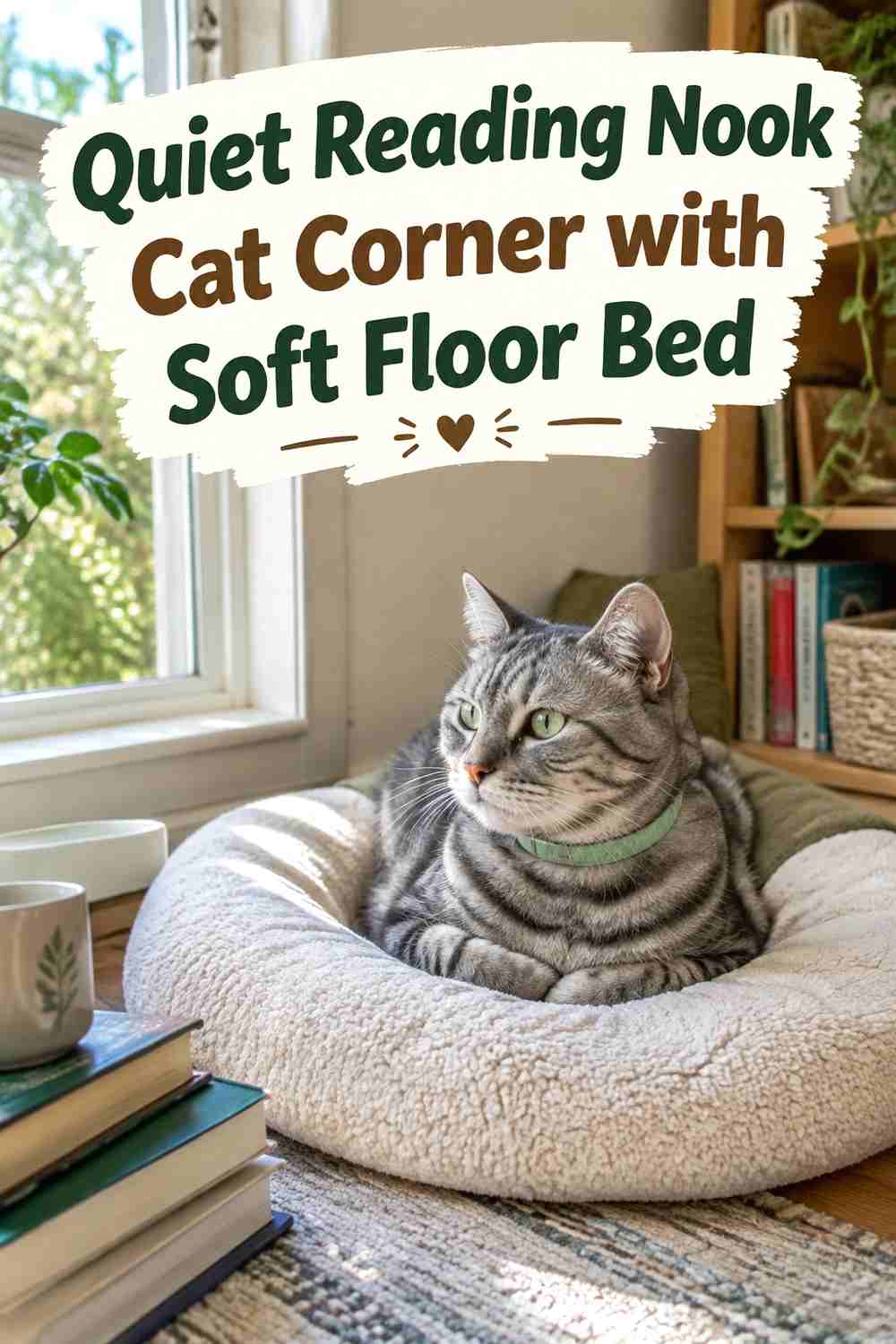
2. Quiet Reading Nook Cat Corner With Soft Floor Bed
You May Also Like


A reading nook cat corner pairs a soft floor bed with a calm place near a chair, bookshelf, or other quiet seating area. This setup works especially well for cats that like staying close to people without being directly handled while they rest. Position the bed away from moving chair legs and keep enough floor space around it for easy entry and stretching. A low bolster or padded mat can provide comfort without making the nook feel crowded. Store charging cables, bookmarks, small decor, and reading accessories beyond reach if your cat likes batting or chewing objects. Keep the arrangement simple so the bed remains the most inviting part of the corner.
Best For
This idea suits cats that regularly settle nearby while you read, work, or relax.
Pro Tip
Use one familiar blanket on the bed instead of adding decorative pillows your cat may ignore or knock aside.
3. Enclosed Cat Cave Corner For Privacy Loving Indoor Cats

An enclosed cat cave gives privacy-loving cats a sheltered place with one clear entrance and a soft interior. Put the cave in a low-traffic corner where the opening faces the room rather than directly toward a busy doorway. Choose a design that keeps its shape instead of collapsing around the cat, and make sure the entrance is wide enough for comfortable turning and exit. A removable inner cushion makes fur and debris easier to clean. Some cats explore enclosed beds immediately, while others need time, so leave the cave in place and let your cat investigate voluntarily. Avoid stuffing extra blankets inside if they make the entrance narrow or interfere with ventilation.
Best For
Cats that already nap inside boxes, under blankets, or behind furniture may appreciate this type of setup.
Comfort & Safety
Avoid cave beds with loose strings, unstable frames, or detachable decorations that invite chewing.
4. Small Space Cat Corner With Bed And Vertical Storage
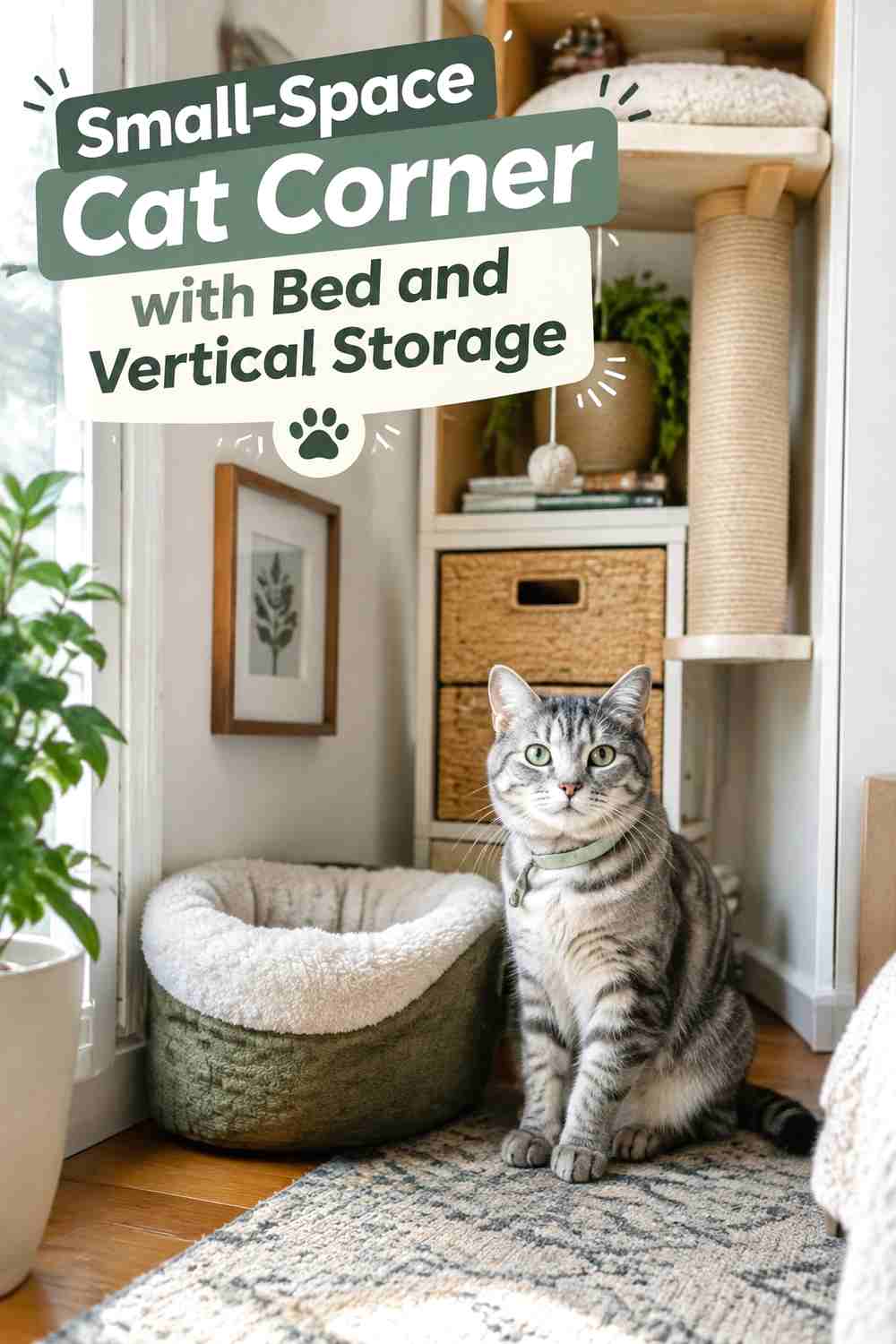
A small-space cat corner keeps the floor focused on rest while moving supplies into secure vertical storage. Place a compact bed against a wall, then use a closed wall cabinet or sturdy shelving nearby for spare blankets, grooming supplies, and backup toys. Frequently used toys can stay in one low basket if they are safe for independent play. The important part is leaving enough floor around the bed for your cat to stretch and move without navigating clutter. Shelves should be securely mounted and should not hold heavy objects directly over the sleeping area. Medicines, cleaners, cords, and small accessories belong in closed storage where the cat cannot reach them.
Best For
This layout works well in apartments, offices, and small bedrooms where every section of floor matters.
Use & Maintenance
Keep only everyday essentials near the bed and move rarely used supplies elsewhere before the corner becomes crowded.
5. Cozy Bedroom Cat Corner Beside The Owners Bed
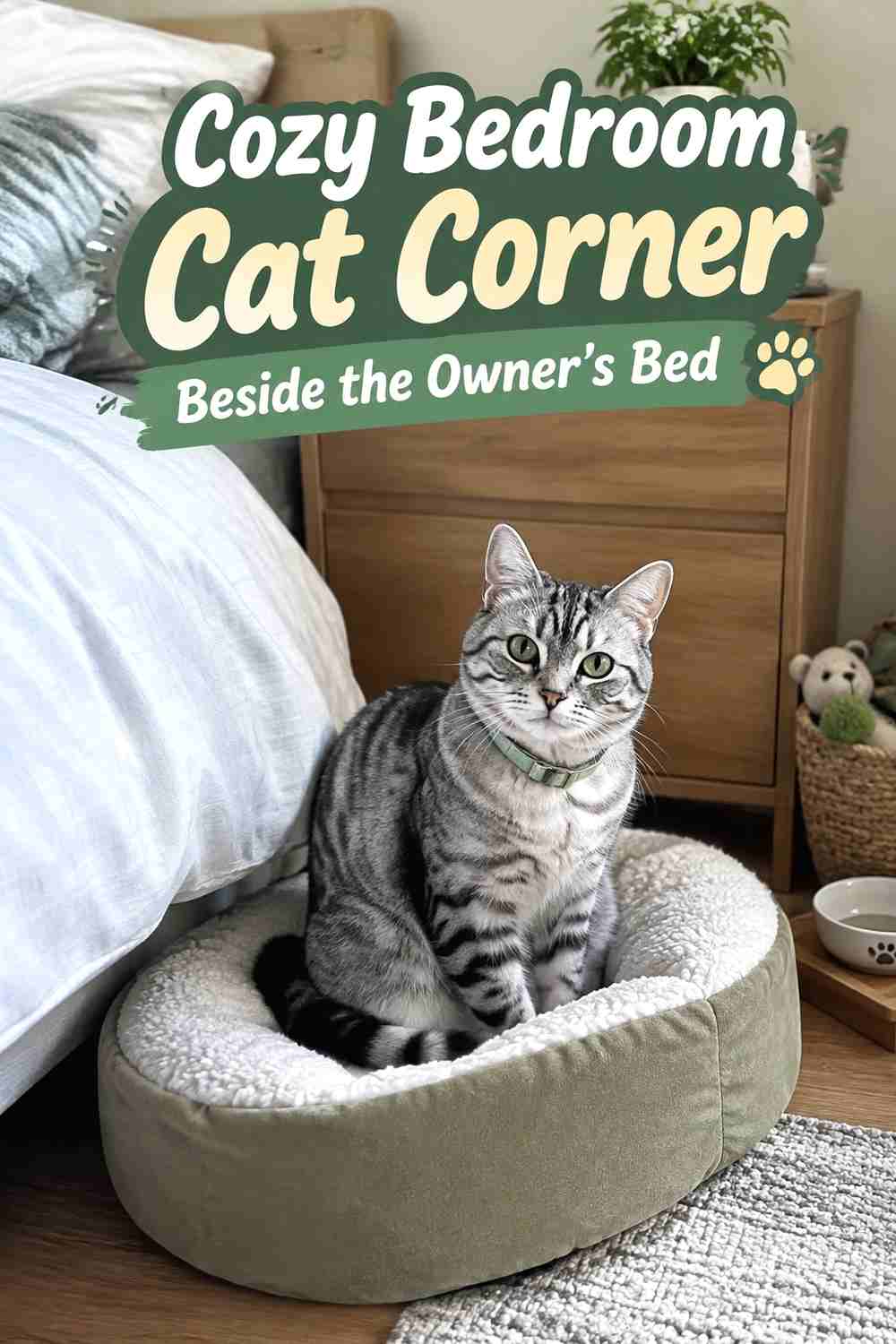
A bedroom cat corner beside your bed gives a social cat a predictable nighttime resting place without requiring them to sleep on the bed itself. Position a soft cushion or low bolster against a clear wall or beside a stable nightstand, leaving enough space for both you and your cat to move safely in low light. Keep charging cables, medications, jewelry, and other small bedside objects well out of reach. A familiar blanket can make the corner more inviting without changing the cat’s routine dramatically. Avoid squeezing the bed into a narrow gap where your cat cannot turn comfortably. If your cat prefers different sleeping spots during the night, keep access to those areas open.
Space & Placement
Choose a side of the room where the cat bed will not become a nighttime trip hazard.
Pro Tip
Keep the layout consistent once your cat starts using the corner regularly.
6. Sunny Corner Cat Tree With Soft Resting Perch

A cat tree placed in a sunny corner combines a resting area with a secure elevated viewpoint. Choose a sturdy tree with a broad base, good traction, and a perch large enough for your cat to sit or lie down comfortably. Position it near natural light without blocking walkways or forcing the cat to jump across furniture to reach it. A removable washable pad on the favorite perch can add softness and make fur cleanup easier. Check how warm the area becomes during peak sun and provide a cooler floor-level option nearby. Kittens, seniors, and less agile cats may need lower platforms with shorter, easier transitions between levels.
Pet Type & Life Stage
Choose the platform height and spacing according to your cat’s size, confidence, and mobility.
Comfort & Safety
Recheck the base and joints regularly so the tree remains stable when your cat jumps or stretches.
7. Low Bench Cat Corner With A Washable Cushion
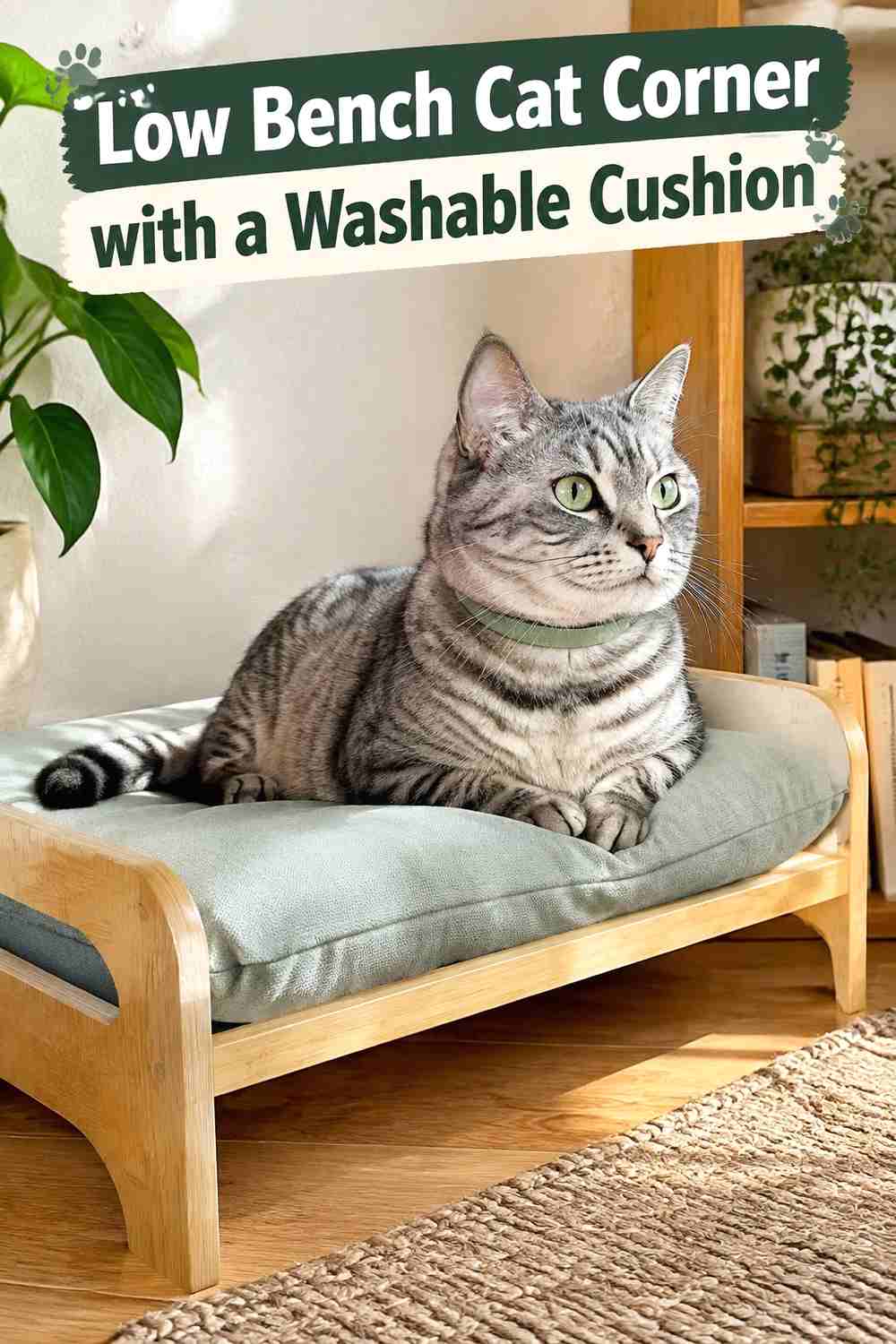
A low bench can create a slightly raised cat corner without the height of a full wall perch or tall cat tree. Use a broad, stable bench with enough room for the entire cushion to sit flat and away from the edges. A non-slip layer beneath the cushion can keep it from shifting when your cat jumps up or changes position. This setup works well along a bedroom wall, beneath a secure window, or in a quiet living room corner. Keep fragile decor off the bench so the surface stays dedicated to resting. Cats that have difficulty jumping should have an easy lower option rather than being encouraged to use raised furniture.
Space & Placement
Leave the area in front of the bench clear so your cat has an uncomplicated approach and landing space.
Cleaning Notes
Lift the cushion during cleaning to remove fur and dust that collect underneath.
8. Under Desk Cat Corner For Calm Workday Naps
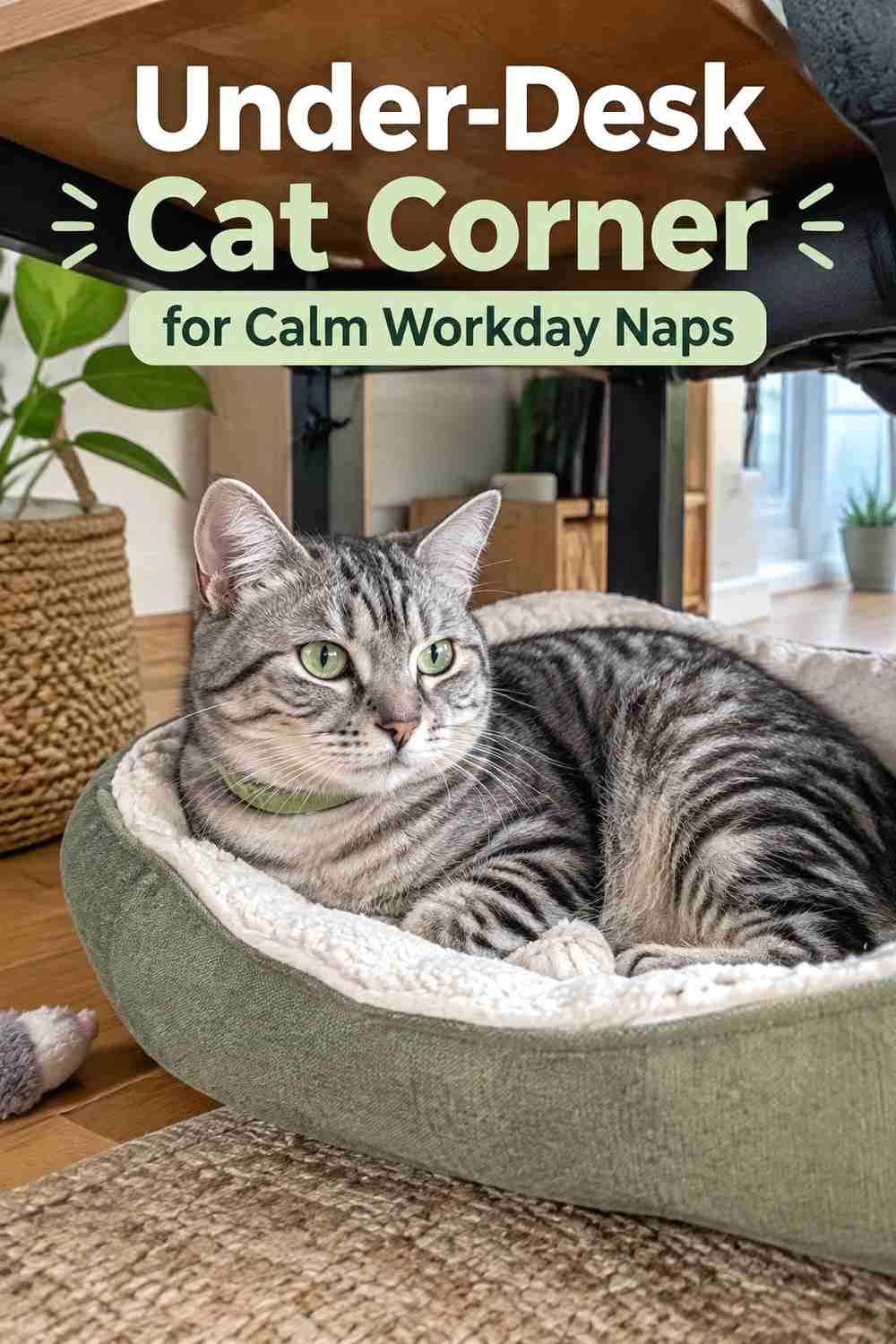
An under-desk cat corner gives a cat a quiet place to nap near you while keeping the main workspace uncluttered. Place a low bed or padded mat to one side beneath the desk, away from rolling chair wheels, footrests, and the area where your legs move most often. Route power cords and chargers securely outside the cat’s reach, especially if your cat likes pawing or chewing cables. The space should stay open enough that your cat can leave easily rather than feeling boxed in. This idea works particularly well for cats that already settle near you during work hours and simply need a softer, more defined place than the bare floor.
Space & Placement
Keep at least one easy exit route open and avoid placing storage boxes around the bed.
Pro Tip
Watch where your cat naturally naps first, then position the bed in that part of the desk area.
9. Cozy Blanket Nest Corner For Cats Who Love Burrowing
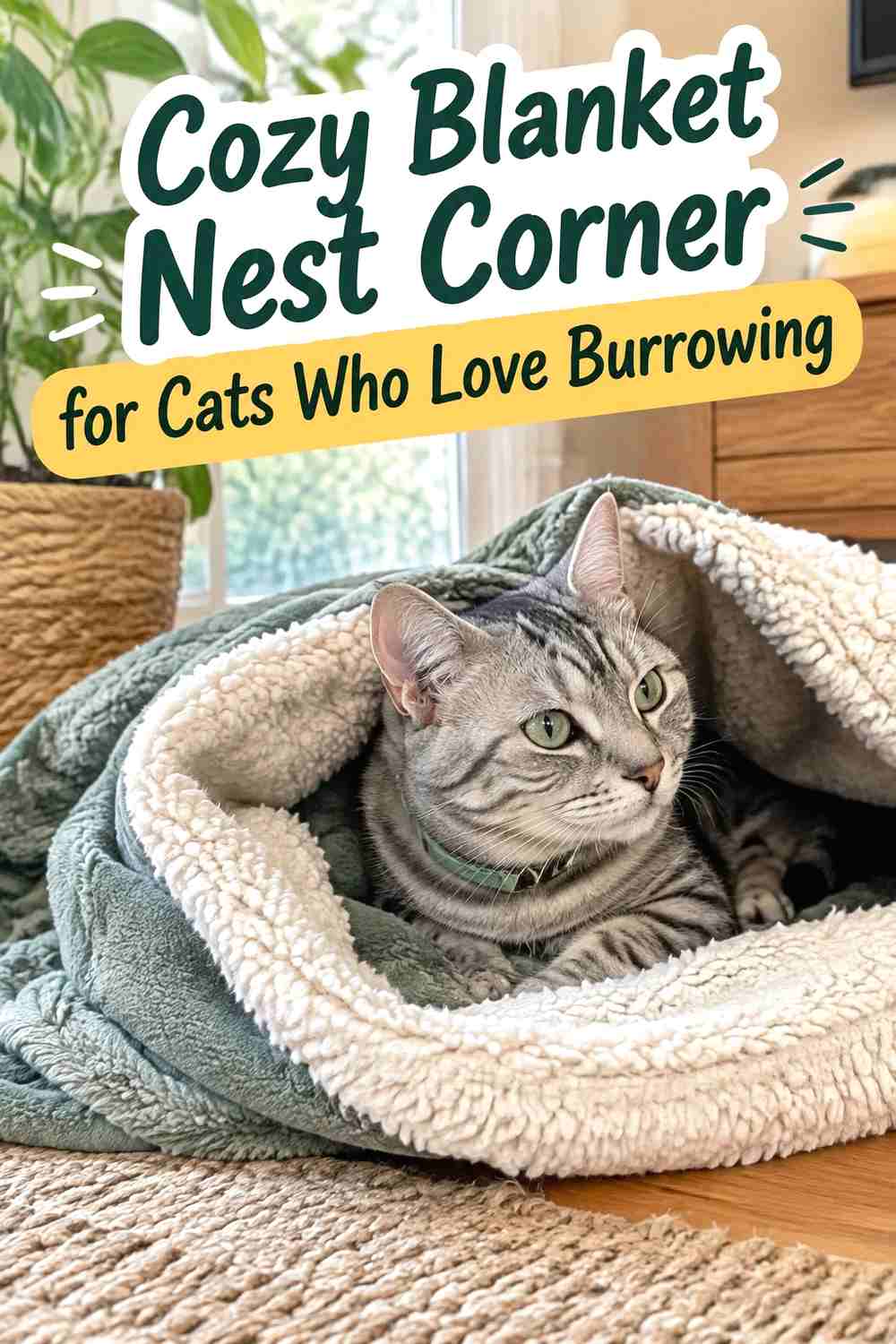
A blanket nest corner gives cats that love kneading and burrowing a flexible resting spot they can rearrange themselves. Start with a stable low bed or padded mat, then add one or two lightweight washable blankets in loose layers. Leave the blankets relaxed rather than tightly tucking them around the cat, and avoid heavy piles that make it difficult to move underneath or exit. Choose fabrics without loose fringe, dangling threads, or decorative pieces that can catch claws or encourage chewing. This setup can be adjusted with the seasons by removing a layer when the room is warmer. It also refreshes quickly because the blankets can be shaken out and washed separately.
Best For
This idea suits cats that repeatedly knead blankets, tuck themselves into bedding, or seek soft layered fabrics.
Use & Maintenance
Replace any blanket that develops torn edges, long pulled threads, or damage that cannot be kept tidy.
10. Senior Friendly Cat Corner With Low Bed And Easy Access

A senior-friendly cat corner prioritizes easy entry, predictable placement, and secure footing. Choose a supportive bed with a low or open front and place it directly on a stable non-slip surface so your cat does not need to jump to rest. Keep the route between the bed, water, litter area, and favorite rooms clear of baskets, cords, and unstable rugs. Avoid frequently relocating the corner once your cat uses it comfortably. Older cats vary in mobility, so observe how easily your cat lies down, stands, and changes position before deciding which bed shape works best. Sudden mobility changes or signs of pain deserve veterinary attention rather than only a room adjustment.
Pet Type & Life Stage
This setup is designed for senior cats but can suit any cat that prefers simple floor-level access.
Comfort & Safety
Keep the surrounding floor dry, uncluttered, and easy to navigate.
11. Minimalist Cat Corner With Neutral Bed And Toy Basket

A minimalist cat corner combines one comfortable bed with a small toy basket and leaves the surrounding space deliberately uncluttered. Choose a neutral bed that suits your cat’s normal sleeping style, then keep only a few safe toys in a low basket nearby. Backup toys, grooming supplies, and cleaning items can stay in closed storage elsewhere. This setup is practical in visible living spaces because it looks tidy without adding decorative objects the cat may knock over or chew. The open floor also makes vacuuming easier and gives your cat room to stretch or reposition. If the basket becomes a target for scratching or chewing, replace it with a sturdier closed storage option.
Best For
This idea suits small homes and owners who prefer simple organization with quick daily cleanup.
Cleaning Notes
Fewer floor-level objects make it easier to vacuum fur and wipe around the bed regularly.
12. Multi Cat Cozy Corner With Separate Beds And Resources

A multi-cat cozy corner works best when each cat has its own bed and enough space to settle without forced sharing. Arrange separate beds along a wide wall or in different corners of the same room, leaving open routes between them. One cat may prefer an enclosed cave while another chooses an open bolster, so the beds do not need to match. Provide additional resting options elsewhere in the home if one cat repeatedly controls the shared area. Toy baskets and water resources may also need duplication depending on how the cats interact. The goal is to create nearby choices, not to make multiple cats sleep side by side for the sake of a coordinated look.
Space & Placement
Give each cat a route into and out of the area without requiring close contact with another resting cat.
Pro Tip
Observe each cat’s preferred sleeping location before deciding where individual beds should stay.
13. Quiet Hallway Cat Corner With Compact Hideaway Bed

A quiet hallway corner can become a compact cat retreat when the space sits outside the main walking route. Use a small cave bed or low bolster tucked against the wall, making sure people can pass without stepping around the cat. This idea works best at the end of a wide hallway or in an unused alcove rather than a narrow passage between busy rooms. Keep shoes, bags, cords, and household storage away from the resting area so the corner does not become cluttered. A removable cushion makes cleaning easier in a hallway where dust may collect quickly. If the area receives constant foot traffic, choose a calmer room instead.
Best For
This setup suits homes with a genuinely quiet hallway alcove or unused end space.
Cleaning Notes
Vacuum around and behind the bed often because hallway dust and loose fur can accumulate quickly.
14. Seasonal Cozy Cat Corner With Washable Layered Textiles
You May Also Like




A seasonal cat corner changes the texture and weight of bedding without changing the basic location your cat already trusts. Use a familiar bed as the base, then add a lightweight cotton layer during warmer periods or a soft fleece blanket when the room feels cooler. Keep the color palette seasonal if you enjoy decorating, but avoid adding loose ornaments, strings, artificial greenery, or small themed accessories around the cat. The corner should still function exactly like a normal resting space after the decorative update. Washable layers make it easy to remove fur and refresh the look without replacing the entire bed. Watch your cat’s choices and remove extra warmth if they start seeking cooler surfaces.
Use & Maintenance
Rotate textiles according to actual room conditions rather than the calendar alone.
Comfort & Safety
Keep decorative seasonal items on walls or inaccessible furniture instead of inside the cat’s sleeping area.
How to Choose the Right Idea
Start with where your cat already sleeps. A cat that spends hours beside the window may be happiest with a bolster bed or stable cat tree there, while a cat that regularly hides under blankets may prefer a cave or layered nest.
Consider age, mobility, confidence, and sleeping style. Senior cats generally benefit from easy floor-level access, while agile cats may enjoy stable low benches or climbing furniture. Small rooms can use vertical storage to preserve floor space, and multi-cat homes should provide separate resting choices rather than relying on one shared bed.
Cleaning matters too. Removable covers, washable blankets, accessible floor space, and simple layouts make a cozy corner easier to maintain. Choose comfort and usability first, then add decoration around the setup.
Final Thoughts
A cozy cat corner does not need to be elaborate. The most useful setup usually combines a resting shape your cat already likes with a quiet location, clear access, stable surfaces, and materials you can clean easily.
Start with one corner your cat naturally chooses, add a suitable bed or perch, and adjust the setup based on how your cat actually uses it.
FAQs
1. Where is the best place for a cozy cat corner?
Choose a place your cat already visits for rest, such as a quiet bedroom edge, secure window area, office corner, or calm living room nook.
2. What should I put in a cat corner?
Start with an appropriately sized bed, mat, cave, or perch. You can add a familiar blanket and a few safe toys while keeping the area uncluttered.
3. How can I make a cat corner work in a small apartment?
Use a compact bed and move spare supplies into secure vertical or closed storage. Avoid filling the limited floor space with unnecessary decor.
4. Do senior cats need a different type of cozy corner?
They may benefit from low-entry beds, stable flooring, clear pathways, and fewer jumps. The exact setup should match the individual cat’s mobility and preferences.
5. Can two cats share the same cozy corner?
They may choose to, but separate beds and alternative resting locations give each cat more control over space and reduce the need for forced sharing.
CTA
Save your favorite cozy cat corner ideas and create a comfortable little retreat around the places and sleeping styles your cat already prefers.
