Keep cat collars neat, visible, and easy to rotate with practical storage for everyday styles, seasonal designs, spare tags, and multi-cat collections.
Save This Idea on Pinterest

14 Cat Collar Storage Ideas for Organized Pet Gear
Save to PinterestCat collar storage is easier when everyday collars, decorative styles, seasonal options, and spare accessories each have a predictable place. Small collars can quickly become tangled or disappear beneath larger pet supplies when everything is dropped into one general-purpose basket.
These 14 ideas include drawers, bins, hanging organizers, travel storage, keepsake boxes, and compact multi-cat systems. Choose a setup based on how many collars you own, how often you switch them, and how much cabinet or closet space is available. Keep stored collars dry, clean, and outside your cat’s unsupervised reach, especially when they have loose tags, bows, or other chewable attachments.
Quick List
- Shallow Drawer Dividers for Everyday Cat Collar Storage
- Labeled Lidded Bins for Organized Cat Collar Collections
- Clear Pocket Organizer for Small Cat Collars and Accessories
- Pegboard Cat Collar Station With Labeled Mini Baskets
- Soft-Lined Tray for Special Cat Collars and Bow Ties
- Seasonal Rotation Box for Holiday and Halloween Cat Collars
- Color-Coded Collar Bins for Organized Multi-Cat Homes
- Compact Travel Pouch for Spare Cat Collars and Tags
- Hanging Closet Organizer for Cat Collars and Pet Gear
- Keepsake Photo Box for Outgrown or Sentimental Cat Collars
- Small Cabinet Shelf System for Hidden Cat Collar Storage
- Entryway Drawer Station for Everyday Cat Collar Accessories
- Stackable Clear Boxes for Compact Cat Collar Collections
- Rolling Pet Cart With Closed Cat Collar Storage
1. Shallow Drawer Dividers For Everyday Cat Collar Storage

Shallow drawer dividers keep everyday cat collars visible without letting straps, tags, and breakaway buckles tangle together. Use narrow sections so each collar can lie loosely coiled or flat rather than being piled several layers deep. One compartment can hold currently used collars, while another keeps simple spare styles and replacement identification accessories together. A shallow entryway, bedroom, or pet-supply drawer works better than a deep container because you can see everything as soon as it opens. Return only clean, dry collars to the drawer and remove pieces that are frayed or no longer fit. If your cat can open drawers or reach dangling items, choose a drawer with secure closure.
Setup Notes
Leave one divider section partly empty so newly washed collars have a place to return without overcrowding the system.
2. Labeled Lidded Bins For Organized Cat Collar Collections

You May Also Like


Labeled lidded bins work well when you own enough cat collars to separate them by purpose, season, or frequency of use. Use small containers rather than oversized tubs so a handful of collars do not disappear beneath unrelated pet supplies. Categories such as everyday, seasonal, photo accessories, and backups are usually simple enough to maintain. A secure lid keeps curious cats from pulling out straps or chewing decorative pieces while also protecting stored collars from dust. Place the bins on a closet or cabinet shelf where labels remain easy to read. Before storing a collar long term, clean it appropriately, allow it to dry completely, and check that attached tags or bows are secure.
Best For
This approach suits larger collar collections and owners who prefer hidden storage instead of displaying every accessory.
3. Clear Pocket Organizer For Small Cat Collars And Accessories

A clear pocket organizer makes individual cat collars easy to see without requiring drawer space. Hang it inside a closet or on the back of a storage door, keeping the lower pockets above your cat’s reach if straps or tags might attract chewing. Give each pocket one collar or a small matching set rather than stuffing several items together. Clear fronts make it easy to spot a color or pattern before opening the pocket, which is useful when rotating seasonal styles. Reserve separate pockets for spare breakaway collars, removable bows, and identification accessories. Avoid adding heavy objects that pull the organizer away from the door, and check that the hanging hardware does not interfere with normal closing.
Space & Placement
Use the highest pockets for rarely used accessories and keep the most frequently rotated collars at comfortable hand height.
4. Pegboard Cat Collar Station With Labeled Mini Baskets

A pegboard station provides flexible cat collar storage when you want small categories visible in one organized area. Use shallow mini baskets for folded collars and separate hooks only for lightweight accessories that cannot slip down within your cat’s reach. The pegboard works best inside a pet closet, utility room, or cabinet area where the cat does not have unsupervised access to hanging straps. Labels can separate everyday collars, seasonal patterns, bows, and spare identification pieces. Keep the lower board clear rather than filling every peg with small items. Because the arrangement can change easily, you can add or remove baskets as your collection grows without replacing the entire storage system.
Use & Maintenance
Check that baskets and hooks remain secure, and remove anything that begins hanging loosely from the organizer.
5. Soft Lined Tray For Special Cat Collars And Bow Ties

A soft-lined tray keeps dressier cat collars, removable bow ties, and photo accessories separated from everyday gear. Choose a shallow divided tray that fits inside a closed drawer or cabinet, then assign each section to one accessory so delicate fabric does not become crushed beneath heavier supplies. This setup is useful for velvet-look collars, decorative breakaway designs, or pieces used mainly for seasonal photos. Keep the tray dry and brush away shed fur before it builds up in corners. Decorative accessories with loose threads, damaged elastic, or lifting embellishments should be repaired or retired before the next use. Since these pieces are not needed daily, closed storage protects them without adding visible clutter.
Best For
Choose this idea for a smaller collection of special-occasion collars that benefit from flatter, gentler storage.
6. Seasonal Rotation Box For Holiday And Halloween Cat Collars
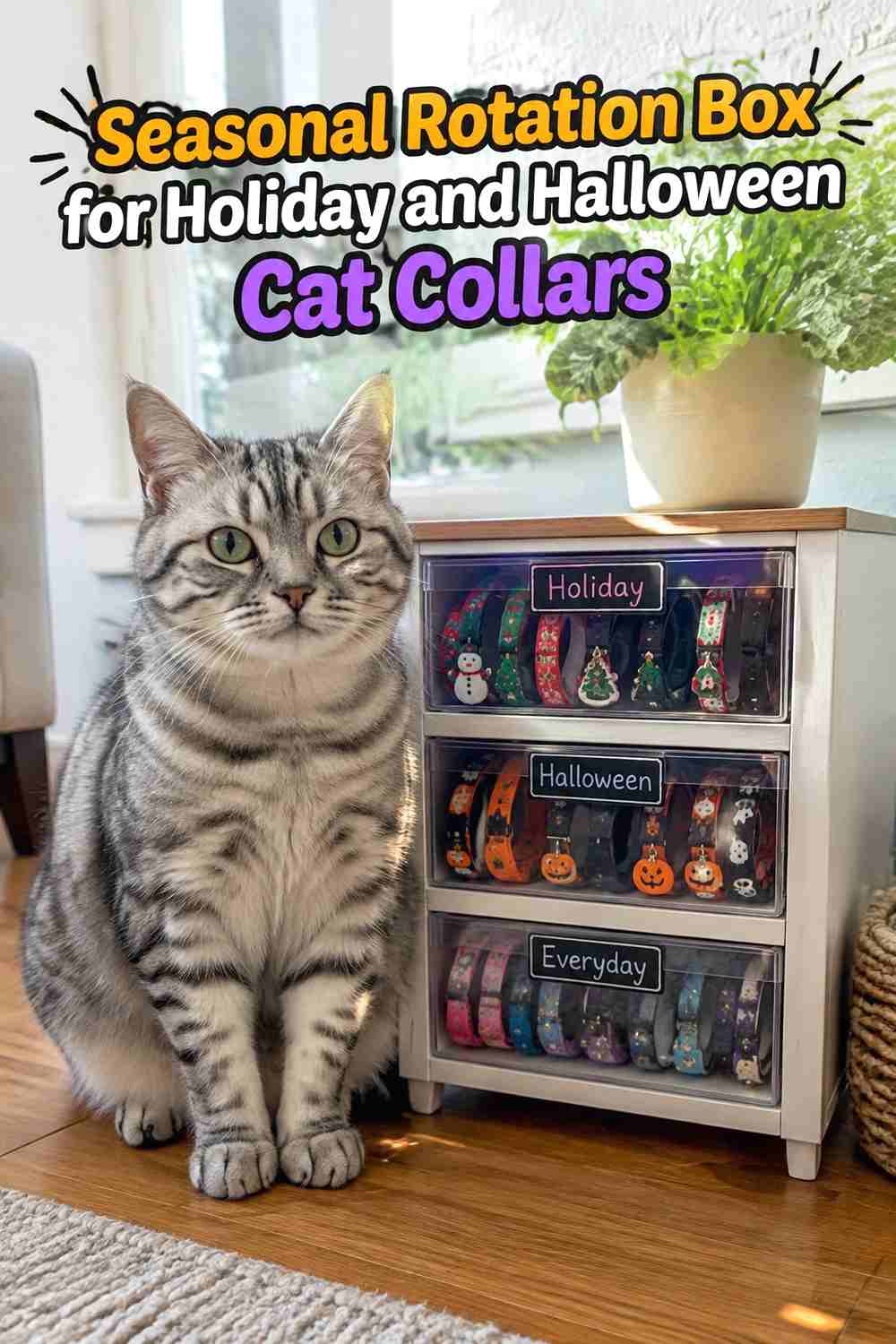
A seasonal rotation box keeps holiday and Halloween cat collars from occupying prime everyday storage all year. Use one compact lidded box with labeled sections or small fabric pouches for autumn, winter, spring, and other seasonal styles. Before putting a collar away, make sure it is clean, completely dry, and still in good condition. When the season changes, move only a few current options into the everyday drawer and return the previous set to the box. This rotation makes it easier to notice which collars are actually used and prevents decorative pieces from becoming tangled together. Store the box in a closet or cabinet rather than somewhere your cat can pull at straps through an open container.
Use & Maintenance
Review fit, buckle condition, and loose decorations every time a seasonal collar returns to regular use.
7. Color Coded Collar Bins For Organized Multi Cat Homes
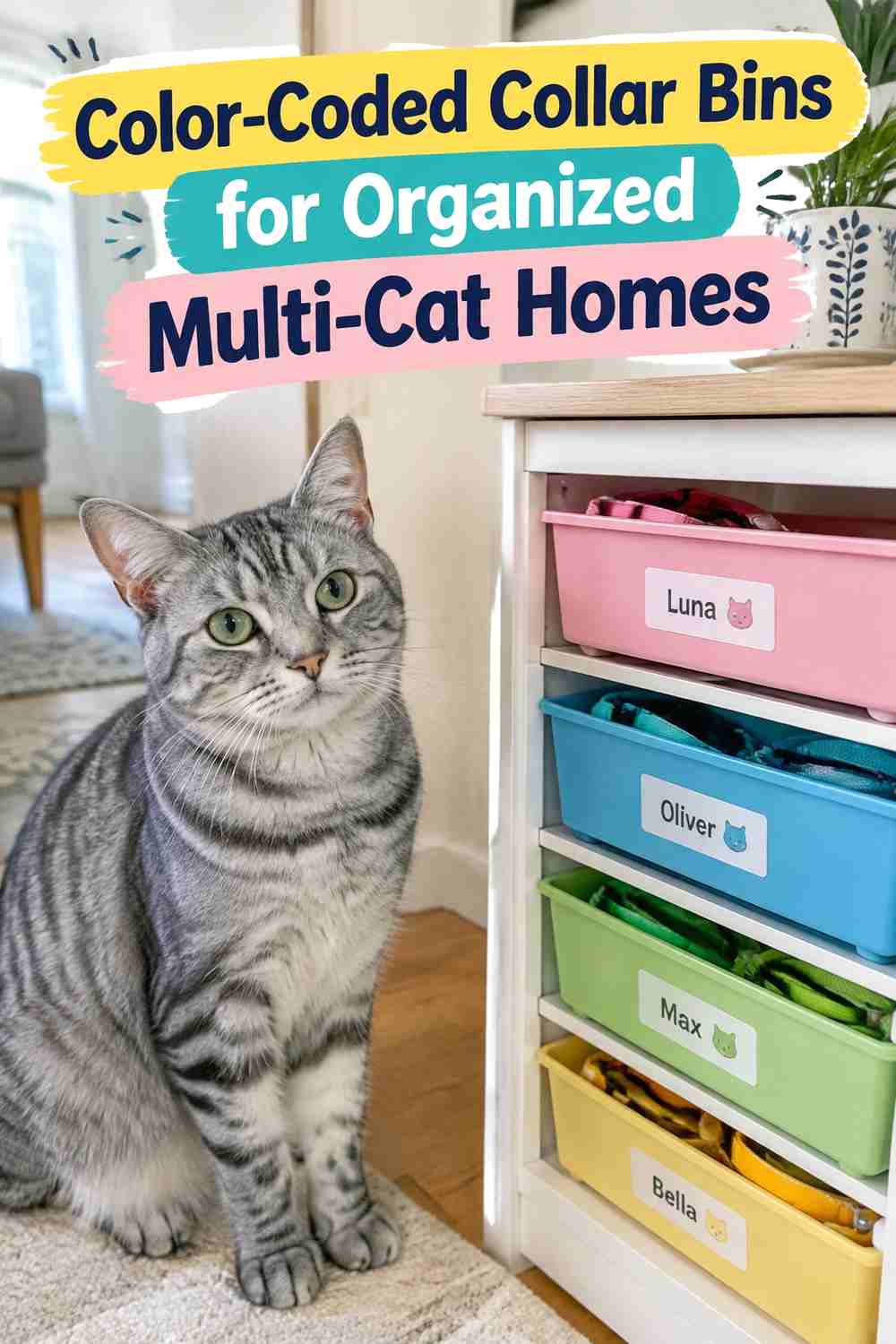
Color-coded bins make it easier to keep several cats’ collars from becoming mixed together. Assign each cat a small bin color, label, or symbol and store that cat’s spare collars and compatible accessories together. This is especially useful when cats wear different sizes or when one cat uses a collar style that should not be swapped with another. Keep the bins in the same order on a secure shelf so household members can return collars correctly without guessing. Avoid relying only on similar-looking straps, since fit can differ even when two cats appear close in size. In shared homes, the system also makes it easier to see which cat needs a replacement collar or updated accessory.
Best For
This layout suits multi-cat households where separate gear prevents mix-ups and keeps each animal’s supplies easier to maintain.
8. Compact Travel Pouch For Spare Cat Collars And Tags

A compact travel pouch keeps spare cat collars and identification accessories together when you travel, move, or temporarily stay away from home. Choose a zippered pouch with small internal sections so collars remain separate from loose tags or paperwork. Store one suitable spare collar rather than carrying an entire collection, and keep the pouch inside luggage or a pet travel bag where your cat cannot chew it. Before a trip, check that the spare collar still fits and that any identification information you rely on is current. After returning home, empty the pouch, remove dirt or loose fur, and put travel gear back into regular storage instead of letting the bag become a permanent miscellaneous container.
Pro Tip
Keep a short travel checklist inside the pouch so the spare collar is reviewed rather than forgotten between trips.
9. Hanging Closet Organizer For Cat Collars And Pet Gear
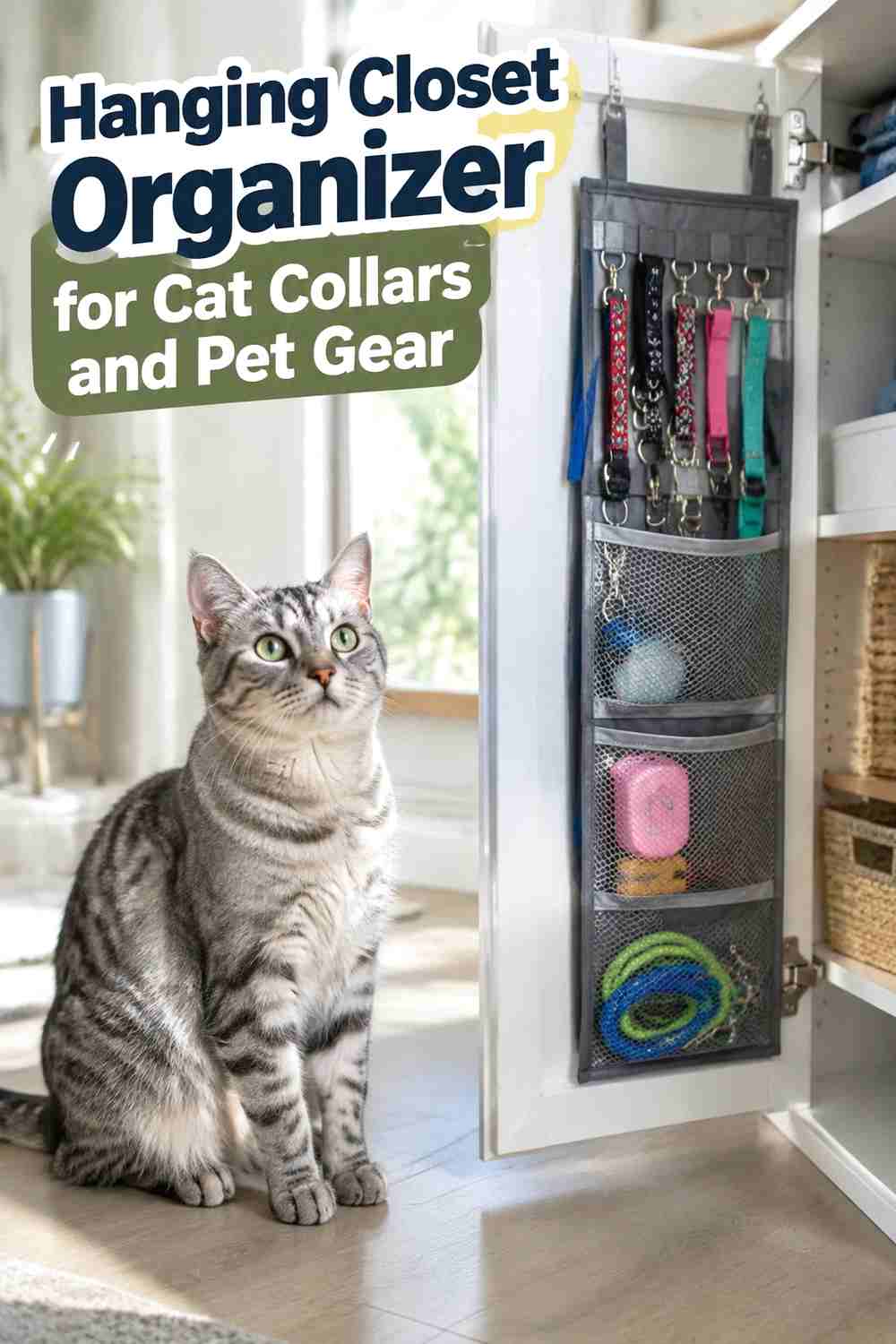
A hanging closet organizer gives cat collars their own vertical storage without using another drawer or cabinet. Choose an organizer with shallow fabric shelves or zipped compartments, then reserve one section for collars and neighboring sections for compatible pet accessories. Roll or lay collars loosely instead of compressing them under bulky blankets or toys. This setup works best inside a closet that closes securely, especially if your cat likes exploring hanging fabric or straps. Keep heavier pet supplies on lower structural shelves rather than overloading a lightweight hanging unit. Because everything stays together vertically, the organizer is useful in apartments where floor storage is limited and an existing closet needs to handle several pet-care categories.
Space & Placement
Place collar sections near eye level and keep large bedding or heavy supplies lower so they do not collapse onto smaller accessories.
10. Keepsake Photo Box For Outgrown Or Sentimental Cat Collars

A keepsake photo box gives retired cat collars a separate home instead of allowing sentimental pieces to crowd everyday storage. Use an archival-style or clean lidded box and place outgrown, commemorative, or meaningful collars inside only after they are dry and free from dirt. Small paper labels can record dates or memories without requiring collars to remain on display. This storage should stay clearly separate from active gear so an old collar is not accidentally returned to use when it no longer fits or functions properly. Avoid keeping damaged collars simply because they look similar to current ones unless they are unmistakably marked as keepsakes. A compact box also makes sentimental storage intentional rather than letting old accessories accumulate indefinitely.
Why It Works
Separating memories from usable gear keeps everyday collar choices practical while preserving pieces you genuinely want to keep.
11. Small Cabinet Shelf System For Hidden Cat Collar Storage

A small cabinet shelf system hides cat collars and related accessories while keeping categories easy to reach. Use shallow trays or narrow bins on adjustable shelves, with collars stored above heavier pet supplies so nothing crushes them. Closed doors reduce visual clutter and prevent curious cats from pulling at straps, tags, or fabric decorations. Put daily collars near the front and seasonal or backup pieces higher or farther back. Avoid mixing collars with household cleaners, medicines, or sharp grooming tools unless those items are secured in separate inaccessible compartments. Wipe shelves periodically and remove loose fur that drifts inside. This approach works well when you want one polished pet-care cabinet rather than several visible organizers.
Best For
Choose closed cabinetry when you prefer a minimal room appearance or have a cat that investigates open baskets and hanging accessories.
12. Entryway Drawer Station For Everyday Cat Collar Accessories
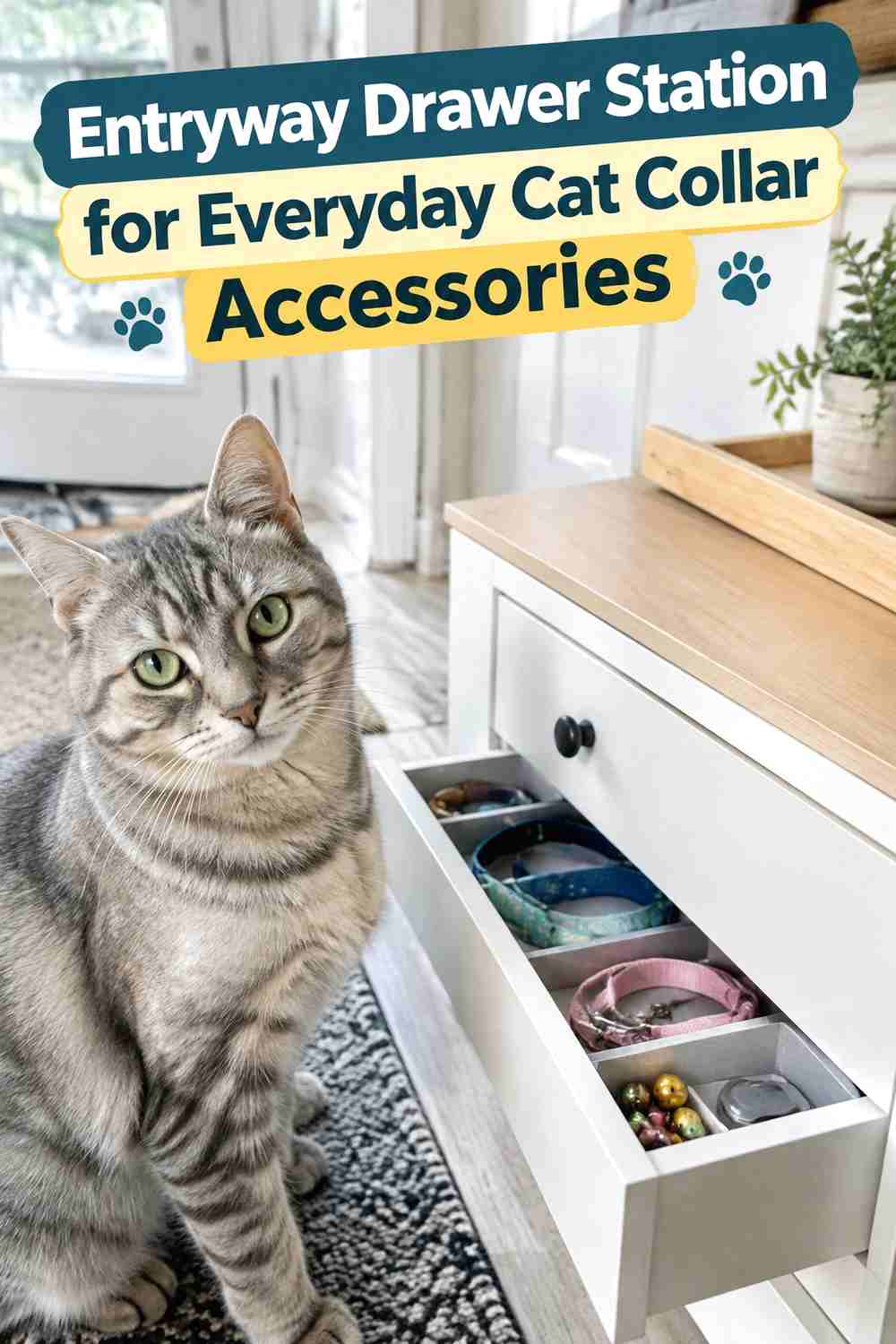
An entryway drawer station keeps frequently used cat collars and small accessories close to the door without leaving them exposed. Use a shallow drawer with dividers for a spare breakaway collar, identification accessories, and any supervised seasonal pieces you regularly switch. This location can be useful before carrier trips or outings because the needed gear is easy to find while remaining hidden from the cat. Avoid turning the drawer into a general household catchall for keys, coins, mail, and pet items, since small objects quickly make collar storage messy. Return collars only after they are dry and inspect buckles or attachments while putting them away. Keep medications and unsafe items in separate secured storage.
Pro Tip
Limit the drawer to current-use gear and move rarely worn collars into seasonal or backup storage elsewhere.
13. Stackable Clear Boxes For Compact Cat Collar Collections

Stackable clear boxes let a growing cat collar collection use vertical shelf space without becoming difficult to inspect. Choose small boxes with secure lids and assign one category to each container, such as everyday collars, seasonal prints, and photo accessories. Because the sides are transparent, you can identify contents without repeatedly opening every box. Keep the most frequently used container on top or at the easiest shelf level instead of rebuilding the stack whenever you need one collar. Do not overfill boxes until straps press against lids or buckles become bent. Store only clean, dry accessories, and wipe the containers occasionally so shed fur and dust do not collect around the edges.
Space & Placement
Use a shallow stack that remains stable and accessible rather than building a tall tower that must be dismantled for every collar change.
14. Rolling Pet Cart With Closed Cat Collar Storage
You May Also Like



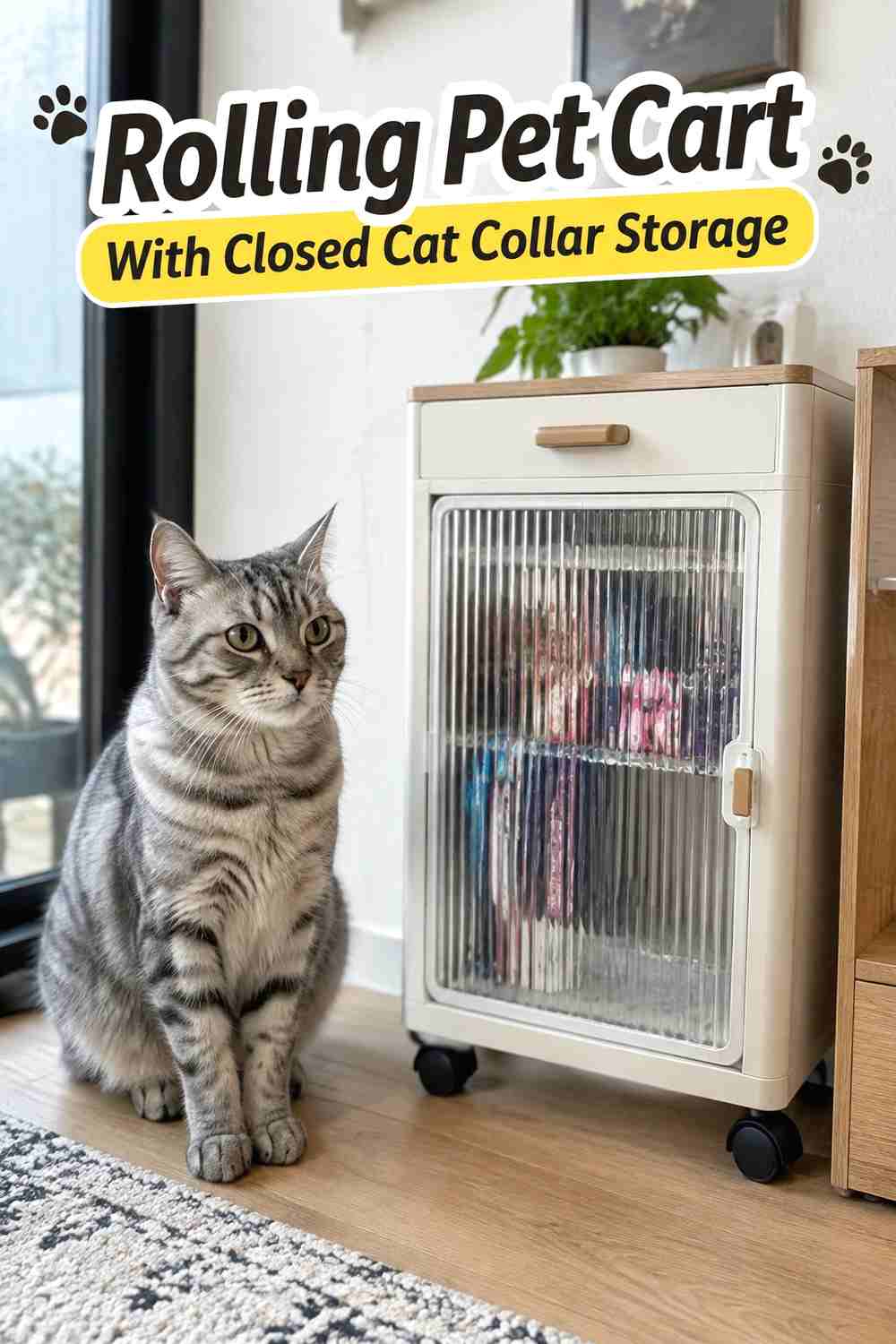
A rolling pet cart can organize cat collars alongside other routine supplies while still moving between a bedroom, entryway, or pet-care area. Choose a stable cart with at least one closed drawer or lidded bin for collars so straps do not hang from open rails where the cat can reach them. Reserve one compartment for current collars and another for backups, while heavier supplies stay on the lowest level for stability. Locking wheels or a secure parked position help prevent unexpected movement. This setup is useful when the home lacks a dedicated pet closet, but keep medicines, sharp tools, and unsafe products in separately secured storage rather than an easily accessible open cart.
Use & Maintenance
Return the cart to one regular location after use so mobile storage does not become harder to find than a fixed cabinet.
How to Choose the Right Idea
Start with the size of your cat collar collection. A few everyday collars may need only a divided drawer or small tray, while larger seasonal collections are easier to manage with labeled bins or stackable boxes.
Think about how often you switch collars. Daily or frequently used pieces belong in easy-access storage, while holiday, photo, and sentimental collars can sit farther back. Multi-cat households benefit from separate, clearly identified sections so sizes and accessories do not get mixed.
Your cat’s behavior matters too. Open hooks and hanging straps may be tempting to cats that climb, chew, or pull at objects, making closed drawers, cabinets, or lidded boxes a better choice.
Finally, keep active gear separate from keepsakes and damaged collars. Clean and dry collars before storage, check breakaway buckles and attachments regularly, and avoid filling containers so tightly that inspection becomes difficult.
Final Thoughts
Cat collar storage works best when small accessories are divided into simple categories rather than collected in one crowded bin. A shallow drawer, lidded box, closet organizer, or compact cabinet can be enough to keep everyday and seasonal collars easy to find.
Choose the setup that fits your collection and your cat’s curiosity level. Keeping collars clean, dry, secure, and separated from retired pieces makes rotation easier without adding unnecessary clutter.
FAQs
1. What is the easiest way to store cat collars?
A shallow divided drawer or small lidded box is an easy option because collars can stay separated, visible, and protected from dust or curious cats.
2. How should I store seasonal cat collars?
Clean and dry seasonal collars before placing them in a labeled lidded container. Rotate only the current seasonal options into your everyday storage area.
3. How can I organize collars for multiple cats?
Give each cat a separate labeled or color-coded bin, drawer section, or pouch. This helps prevent mixing collars that may differ in size or fit.
4. Should cat collars be hung on hooks?
They can be stored on secure hooks when the area is inaccessible to the cat, but closed storage is often simpler for cats that pull at dangling straps or accessories.
5. What should I do with old cat collars?
Discard unsafe or badly damaged collars unless you want to preserve one as a clearly separated keepsake. Do not return an outgrown or unreliable collar to everyday use.
Save your favorite cat collar storage ideas and create a simple system that keeps everyday, seasonal, and special collars neat, secure, and easy to find.
