Keep pet walking gear tidy and ready to grab with smart leash storage that controls tangles, wet gear, clutter, and everyday entryway mess.
Save This Idea on Pinterest

12 Pet Leash Storage Ideas for Organized Homes
Save to PinterestPet leash storage works best when the gear you use most often stays easy to reach without becoming a pile near the door. A good setup should separate leashes from harnesses, keep damp equipment from closed storage, and prevent pets from chewing straps or pulling gear down.
These 12 ideas cover hooks, drawers, baskets, benches, pegboards, mudroom cubbies, and multi-pet stations. Some maximize vertical space, while others hide equipment completely, so you can choose a system based on your entryway size, walking routine, number of pets, and preferred level of visible storage.
Quick List
- Wall-Mounted Hook Rail for Everyday Pet Leash Storage
- Entryway Pegboard Station for Pet Leashes and Harnesses
- Over-the-Door Organizer for Small Pet Walking Essentials
- Labeled Basket System for Backup Pet Leashes and Gear
- Drawer Divider Storage for Compact Pet Leash Organization
- Mudroom Cubby Station for Wet Pet Leashes and Harnesses
- Separate Leash and Harness Hooks for Faster Pet Walks
- Storage Bench Pet Leash Station for Clutter-Free Entryways
- Pet Walking Command Center With Leash and Bag Storage
- Seasonal Leash Rotation Hooks for Weather-Ready Pet Walks
- Slim Vertical Leash Rack for Small Apartment Entryways
- Color-Coded Leash Station for Organized Multi-Pet Homes
1. Wall Mounted Hook Rail For Everyday Pet Leash Storage
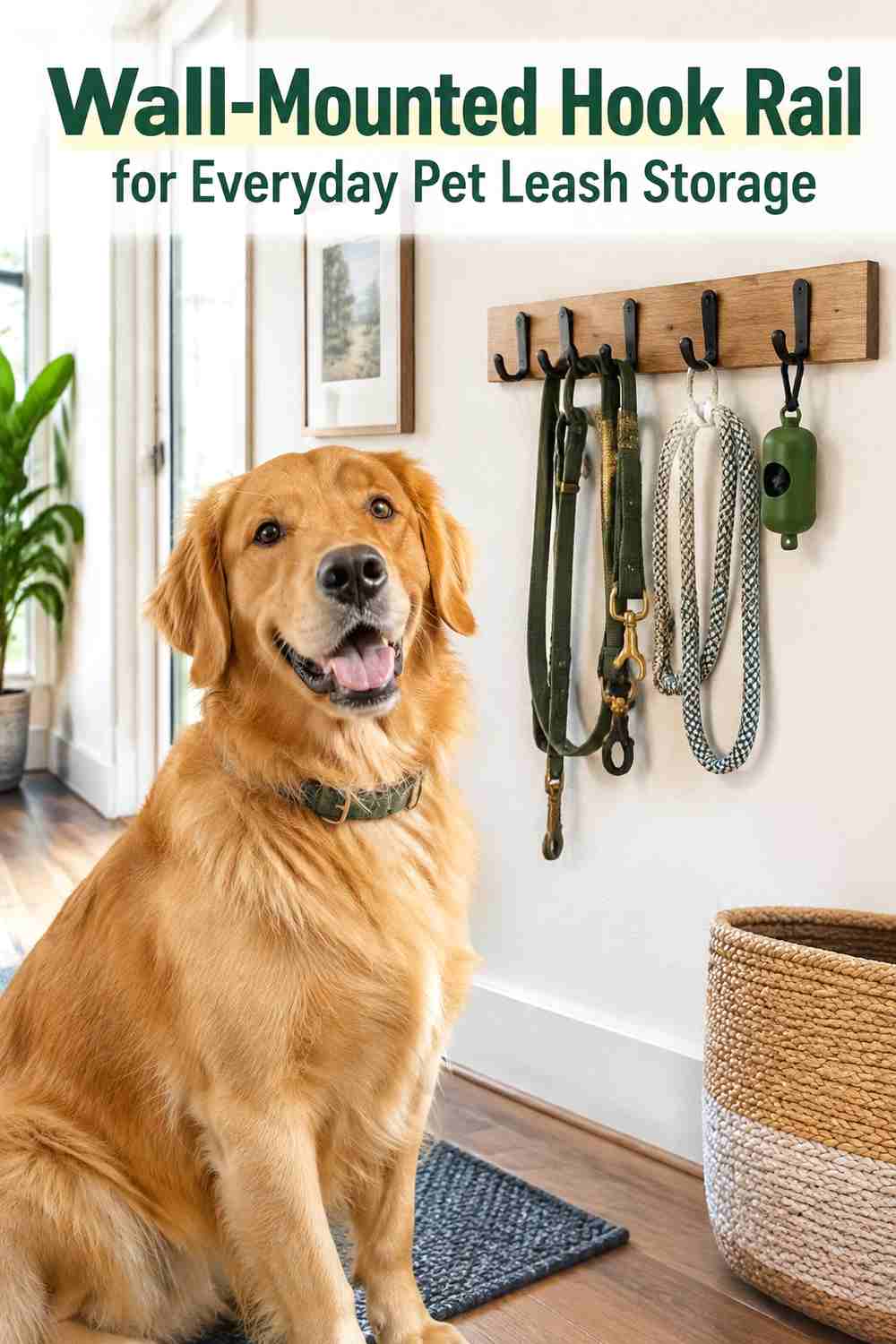
A wall-mounted hook rail keeps everyday pet leashes visible, untangled, and ready to grab before a walk. Mount the rail near the entrance you normally use and give each leash enough space that clips and straps do not overlap into one knot. Frequently used harnesses can hang on neighboring hooks if the rail is strong enough, while backup gear belongs elsewhere. Choose hooks with rounded edges and install the rail securely so normal pulling does not loosen it. Keep the setup above your pet’s reach if dangling straps encourage chewing or tugging. When a leash comes home wet, let it dry in a ventilated spot before returning it to the rail.
Setup Notes
Reserve one empty hook for temporary gear so new or damp items do not immediately crowd the everyday leashes.
2. Entryway Pegboard Station For Pet Leashes And Harnesses

You May Also Like


An entryway pegboard creates a flexible leash station that can change as your walking gear changes. Use sturdy pegs or hooks for leashes and harnesses, then add a small approved basket for lightweight items such as waste-bag rolls or a collapsible bowl. Keep the lower portion uncluttered so your pet cannot pull down straps or small supplies. Pegboard works especially well when several items need separate locations but you do not want multiple organizers around the doorway. Arrange frequently used gear at comfortable reaching height and backup pieces higher up. Check hooks periodically for movement, since repeatedly lifting heavy harnesses from loosely fitted pegs can make an otherwise tidy system less secure.
Why It Works
The adjustable layout lets you change hook spacing without rebuilding the entire storage area whenever your pet gear collection changes.
3. Over The Door Organizer For Small Pet Walking Essentials
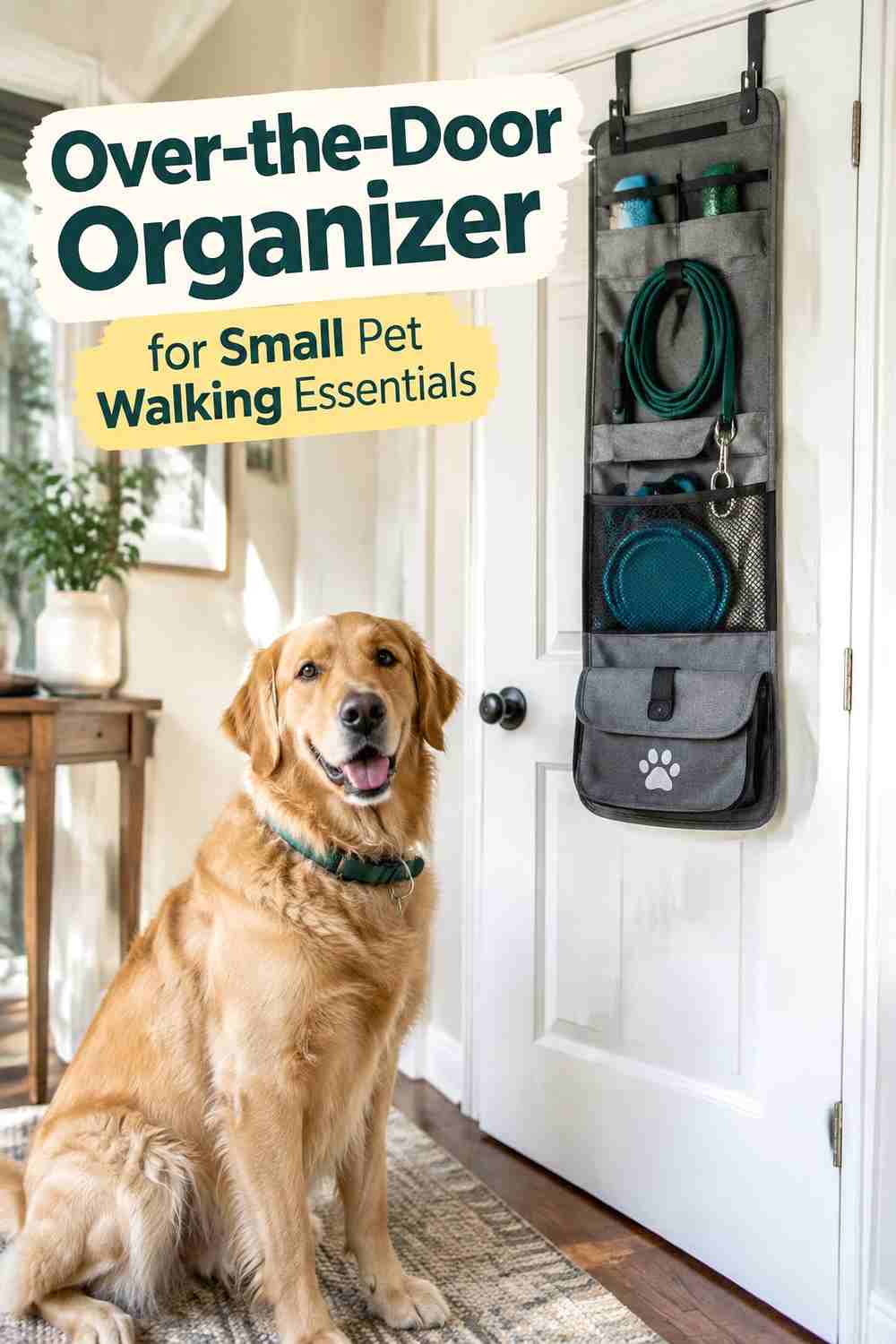
An over-the-door organizer makes use of vertical space when an entryway has no room for another cabinet or basket. Use larger pockets for rolled leashes, folded bandanas, clean paw towels, and other lightweight walking accessories while keeping the most frequently used leash on an easier hook if needed. Clear pockets can make supplies faster to identify, while fabric pockets create a cleaner visual appearance. Keep heavier objects elsewhere so the organizer does not interfere with the door. The bottom pockets should not contain chewable or swallowable items if your pet can reach them. Check that the hanging hardware allows the door to close smoothly without damaging the frame.
Best For
This setup suits apartments, shallow closets, and narrow entryways where floor space is more limited than door space.
4. Labeled Basket System For Backup Pet Leashes And Gear
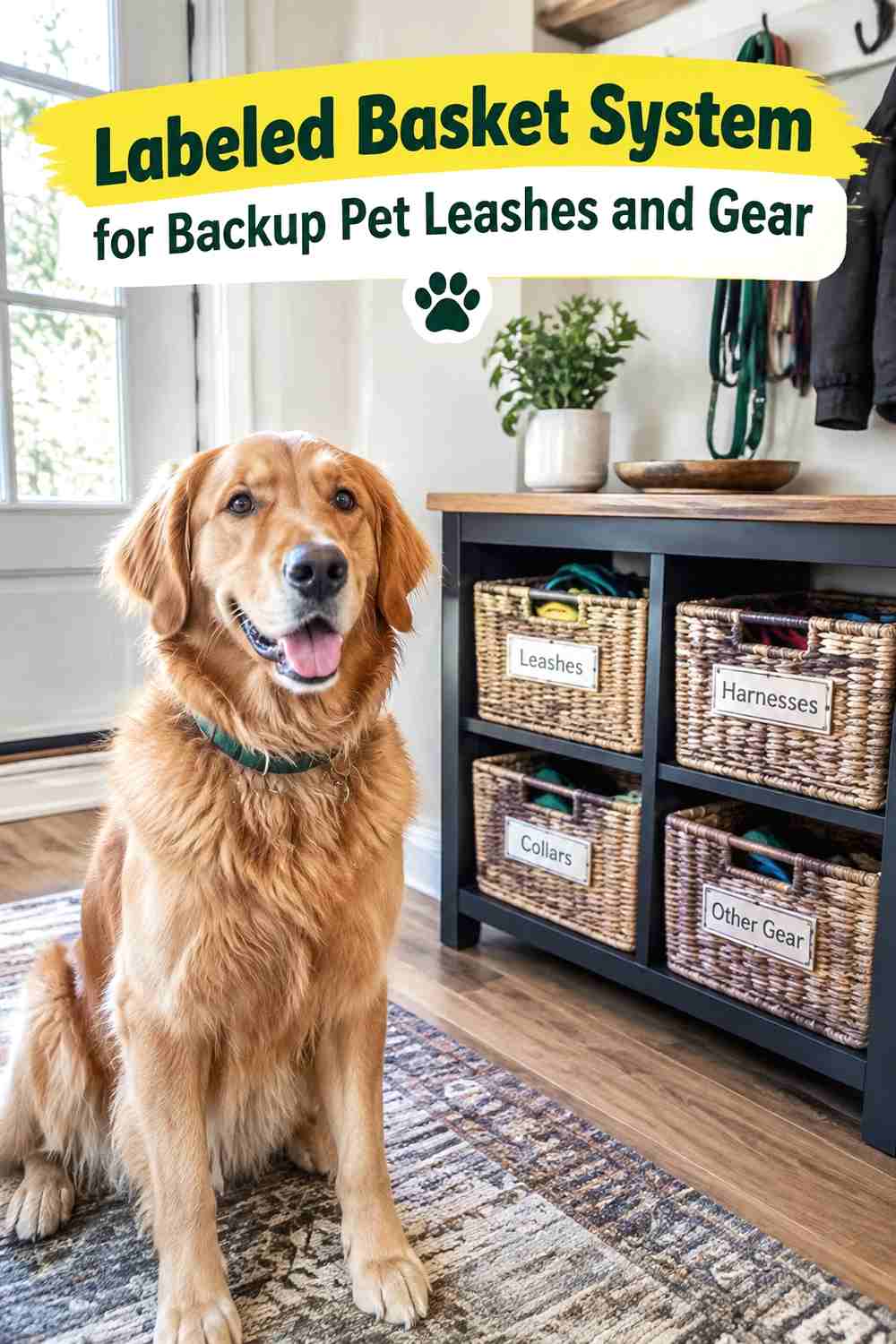
A labeled basket system keeps backup leashes, long lines, spare harnesses, and occasional walking gear from mixing with the equipment you use every day. Assign one basket to each category rather than filling a single container with every strap and clip you own. Coil leashes loosely before storing them so they remain easier to remove without tangling. Place the baskets on a shelf or inside a cabinet where your pet cannot pull straps out for chewing. Labels such as “backup leashes,” “rain gear,” and “travel walks” are usually more useful than overly specific labels that stop working as supplies change. Review the baskets periodically and remove worn or duplicated items you no longer use.
Use & Maintenance
Only store clean, dry gear in enclosed baskets so damp straps and muddy hardware do not create odor or extra cleaning.
5. Drawer Divider Storage For Compact Pet Leash Organization
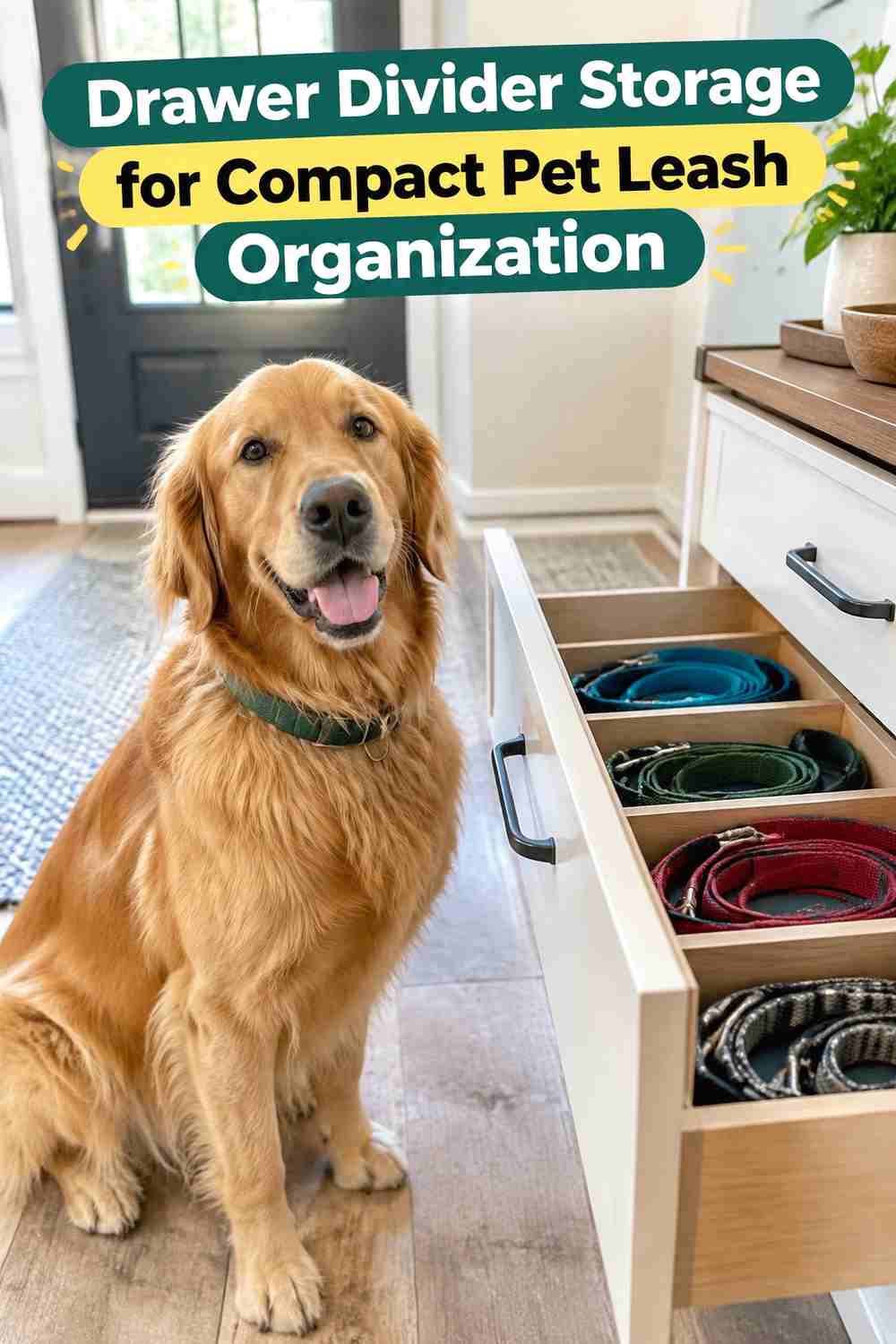
Drawer dividers can hide leash clutter completely while keeping smaller walking supplies separated. Use one long compartment for coiled leashes, another for harnesses, and smaller sections for waste-bag rolls or reflective accessories. This works best in an entryway console or mudroom cabinet where the drawer is close to the door. Avoid stuffing it so tightly that clips catch every time the drawer opens. Damp leashes should dry before going inside, and sharp grooming tools or medicines should not share an easily accessible pet-supply drawer. A shallow drawer is often easier to manage than a deep one because everything remains visible rather than disappearing under several layers of straps.
Pro Tip
Coil each leash in the same direction before storing it so the drawer stays easier to reset after busy walks.
6. Mudroom Cubby Station For Wet Pet Leashes And Harnesses

A mudroom cubby station is useful for walking gear that often comes home damp, muddy, or covered with outdoor debris. Give leashes and harnesses an open hook or ventilated section where they can dry before being moved into closed storage. Keep washable pet towels nearby and place a wipeable tray or mat underneath to catch moisture from dripping gear. Avoid storing wet straps in a closed basket, which makes cleanup harder later. The cubby should sit outside the main door swing and leave enough room for people and pets to enter safely. Once equipment is dry, return extras to their normal storage location so the mudroom does not gradually become an overcrowded gear pile.
Cleaning Notes
Wipe the tray and hooks regularly, and wash dirty straps according to their care instructions before storing them long term.
7. Separate Leash And Harness Hooks For Faster Pet Walks
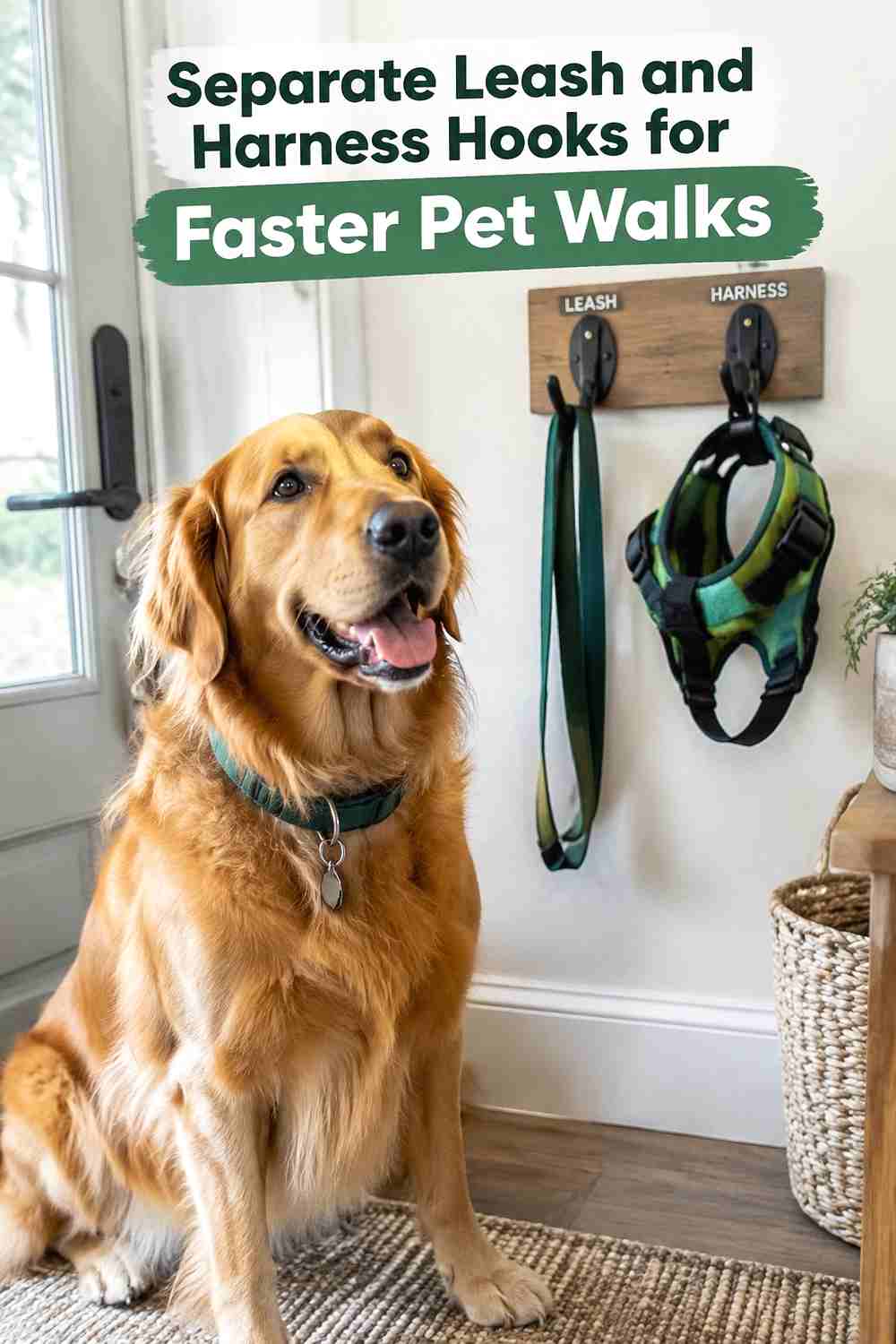
Separate hooks for leashes and harnesses make departure routines faster because you can see both pieces without untangling them. Mount one row for leashes and another for harnesses, or assign a paired set of hooks to each walking setup. This is especially useful if your pet alternates between different harnesses for ordinary walks, low-light outings, or wet weather. Keep hooks clearly spaced and high enough that hanging straps do not become chew toys. When returning from a walk, inspect clips and webbing as you hang everything back up instead of letting worn gear disappear into storage. If one item is wet, move it to a drying area rather than placing it over clean equipment.
Why It Works
Separating the two gear types removes one sorting step from daily walks and makes missing equipment much easier to notice.
8. Storage Bench Pet Leash Station For Clutter Free Entryways
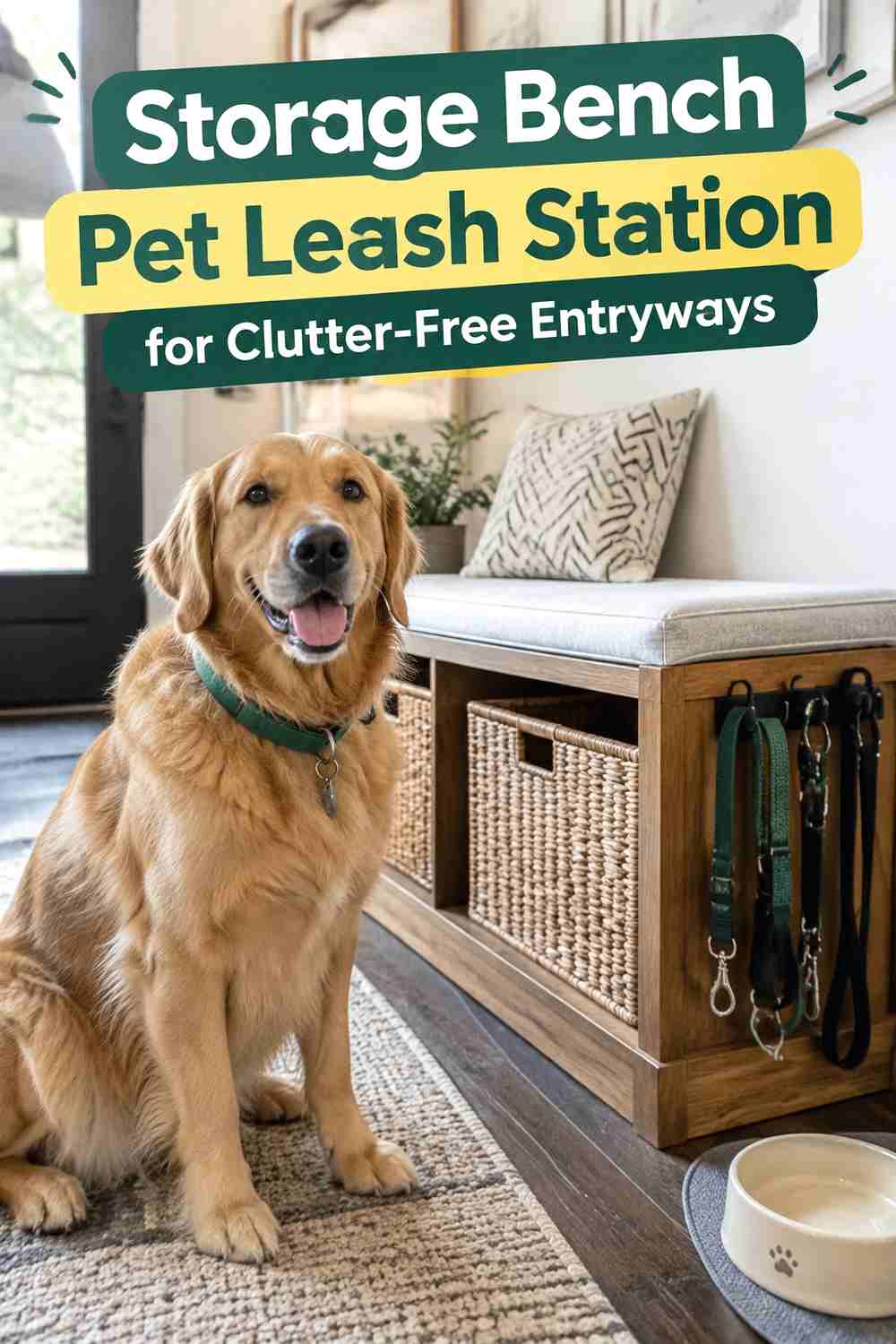
A storage bench can hide backup pet leashes while providing a useful place to sit when putting on shoes before walks. Keep frequently used gear in a shallow internal bin or drawer so you are not digging beneath bulky household items each time you leave. A separate compartment can hold clean towels or seasonal walking accessories. Make sure the lid or drawer operates safely and cannot drop unexpectedly while your pet is nearby. Wet gear should dry before going inside the enclosed bench. If the bench has open lower cubbies, avoid leaving dangling straps where curious pets can pull them out. The best setup combines practical seating with storage rather than filling every compartment with pet supplies.
Space & Placement
Keep enough open floor area in front of the bench for your pet to wait comfortably without standing in the doorway.
9. Pet Walking Command Center With Leash And Bag Storage
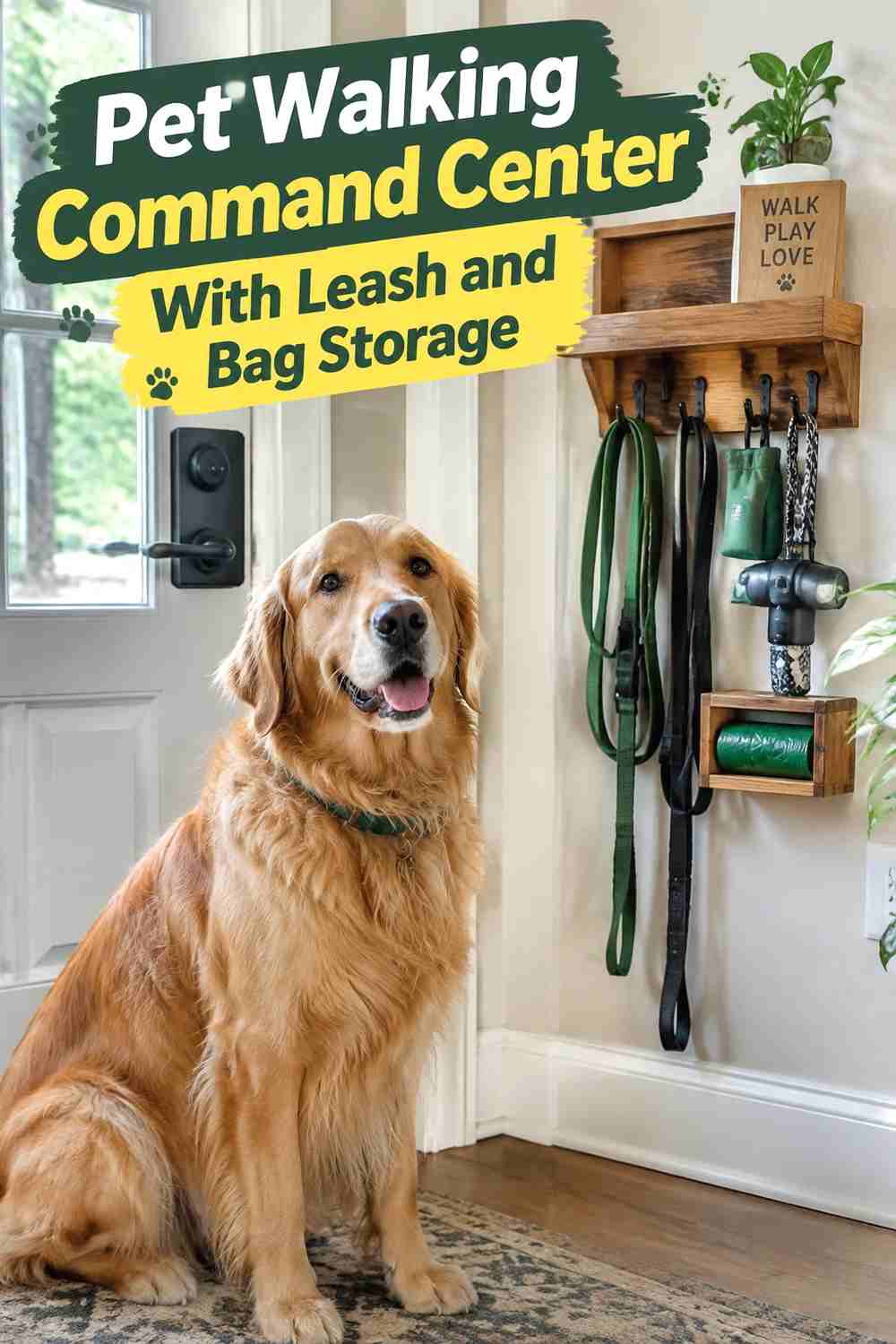
A pet walking command center combines leashes, harnesses, waste bags, towels, and other routine supplies in one organized zone. Use hooks for long items, a small shelf or bin for sealed supplies, and a simple checklist or note area only if it genuinely helps your household. The station should sit near the usual exit without narrowing the walking route. Keep medicines, keys, cleaners, and small objects securely separated from anything your pet can reach. Avoid overloading the command center with unrelated household mail and clutter, which quickly hides the walking gear again. A compact setup is usually easier to maintain than an elaborate wall filled with decorative labels and containers.
Best For
This idea works well for households that want one predictable place for everything needed immediately before and after a walk.
10. Seasonal Leash Rotation Hooks For Weather Ready Pet Walks
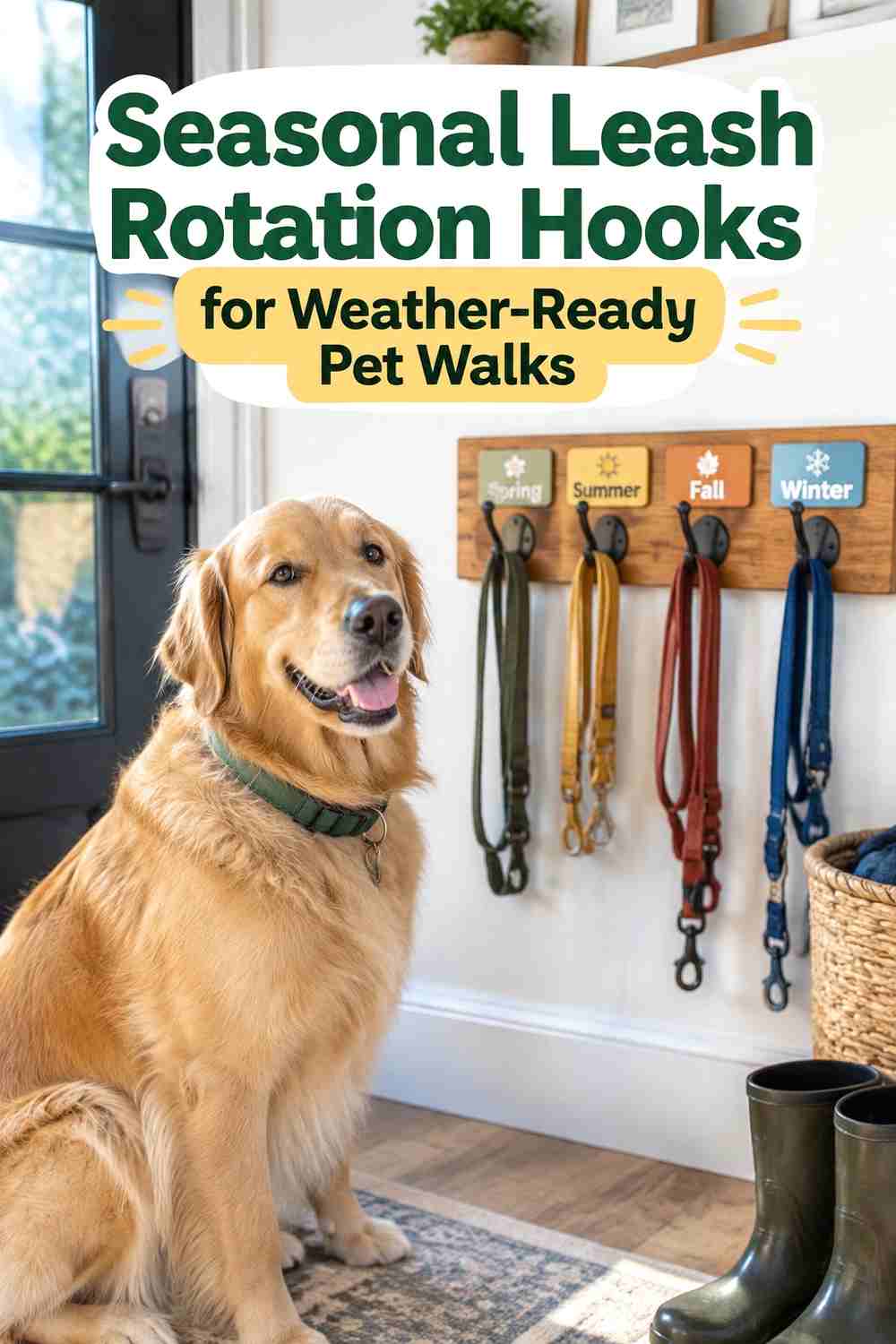
Seasonal leash rotation hooks keep only the most useful walking equipment accessible for current conditions. During rainy periods, a water-resistant leash and easy-clean harness can stay on the main hooks while lightweight or less frequently used gear moves into backup storage. In darker seasons, reflective accessories can take the easiest position. Rotating gear reduces crowding without requiring you to get rid of equipment that still serves a purpose. Clean and dry everything before storing it for the season, and check fit and condition when it returns to regular use. This system works particularly well when your entryway has limited hook space and several specialized leashes would otherwise remain tangled together year-round.
Use & Maintenance
Review the active hooks when the weather changes instead of letting seasonal pieces accumulate until every hook is full.
11. Slim Vertical Leash Rack For Small Apartment Entryways
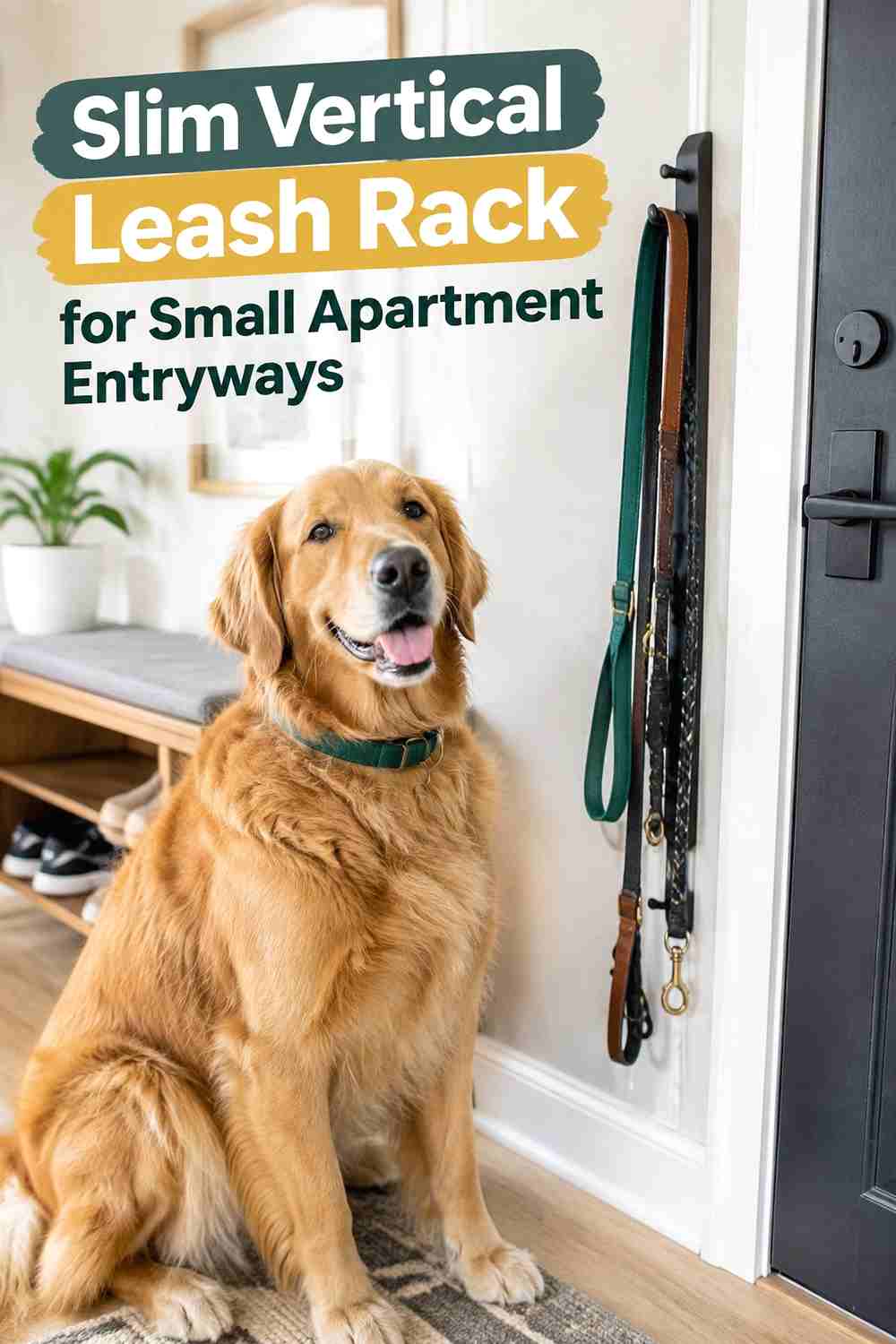
A slim vertical rack makes leash storage possible even when the entryway wall is narrow. Arrange several hooks in a single vertical line, placing the most frequently used leash around comfortable hand height and backups above or below it. This layout uses very little width compared with a long horizontal rail, which can be helpful beside a closet door or narrow hallway. Space hooks far enough apart that clips do not constantly catch on the leash beneath them. Secure the rack according to its mounting requirements and keep lower straps above chewing reach. For a cleaner look, limit the rack to walking equipment and move toys, grooming tools, and other pet supplies somewhere else.
Best For
Choose this arrangement for apartments and narrow hallways where a conventional entryway organizer would project too far into the space.
12. Color Coded Leash Station For Organized Multi Pet Homes
You May Also Like


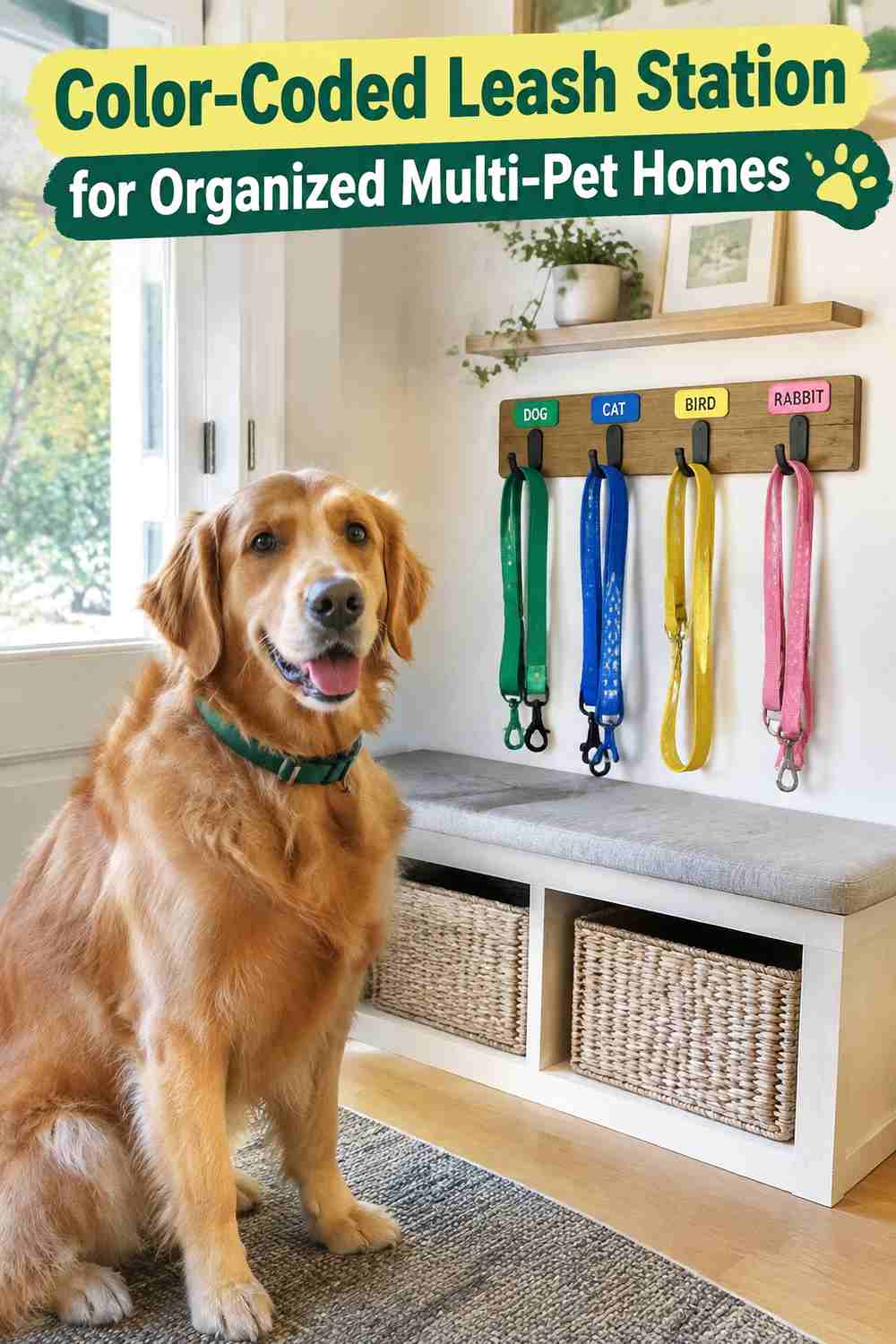
A color-coded leash station helps multi-pet households identify each animal’s walking gear quickly without forcing everyone to share the same hooks. Assign each pet a color through labels, hook markers, or the gear itself, then keep that pet’s leash and harness together in one section. Leave enough space between sections that straps do not cross and tangle. If pets need different equipment for different situations, keep backups in labeled bins rather than adding several items to the everyday hooks. Never assume pets can share harnesses simply because they are similar in size; fit each animal appropriately. The visual system should make departures easier while maintaining separate, predictable resources for each pet.
Setup Notes
Keep each pet’s section consistent so anyone in the household can return gear to the correct place after a walk.
How to Choose the Right Idea
Start with where your walks actually begin. If you always leave through one entryway, everyday leashes should be stored there rather than in a distant closet that adds an extra step.
Next, consider how much gear you own. One or two leashes may only need a simple hook rail, while multiple harnesses, seasonal equipment, and supplies may justify a pegboard, bench, or command center.
Think about wet-weather routines too. Mudrooms and ventilated hooks work better for damp equipment than closed drawers and baskets. Let wet straps dry before enclosed storage.
For small homes, use vertical space through slim racks, door organizers, and wall hooks. Multi-pet households benefit from separate, clearly marked sections. Whatever system you choose, keep hanging straps out of chewing reach and reserve secure closed storage for medicines, cleaners, sharp tools, and other unsafe items.
Final Thoughts
Pet leash storage does not need to be complicated. A well-placed hook, drawer, basket, or small entryway station can prevent tangles and make daily walks easier to start.
Choose a setup that matches the number of pets, amount of equipment, and space you actually have. Keep the everyday gear easiest to reach, move backups elsewhere, and build in a sensible place for wet or dirty straps before they return to storage.
FAQs
1. What is the easiest way to store pet leashes?
A sturdy hook or hook rail near your usual exit is one of the simplest options because it keeps frequently used leashes visible and untangled.
2. How should I store wet leashes after a walk?
Let wet leashes dry in an open, ventilated location before placing them in drawers, baskets, or closed cabinets.
3. How can I store leashes in a small apartment?
Use vertical space with a slim hook rack, over-the-door organizer, wall rail, or small pegboard instead of adding floor-level furniture.
4. What is the best way to organize leashes for multiple pets?
Give each pet a separate section and use color coding or clear labels. Keep each pet’s leash and harness together so gear is easy to identify.
5. Should harnesses and leashes be stored together?
They can be stored together if they remain untangled and easy to identify. Separate hooks often make daily walks faster when you use several different pieces of gear.
Save your favorite pet leash storage ideas and create a simple walking-gear station that keeps everyday supplies organized, dry, and ready to use.
