A dog bed can take up a surprising amount of floor space when every square foot of your home already has a job. The solution is not necessarily buying the smallest bed you can find. A better approach is to place the bed where your dog can settle comfortably without turning it into an obstacle for everyone else.
Save This Idea on Pinterest
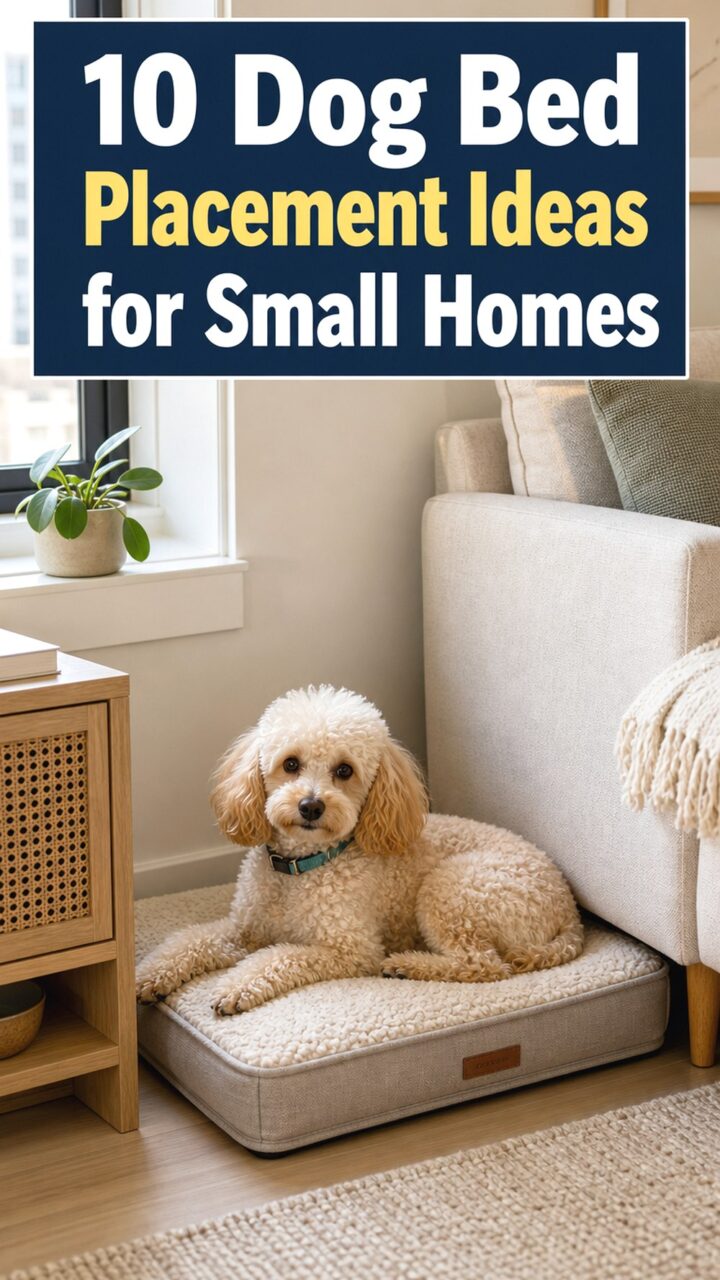
10 Dog Bed Placement Ideas for Small Homes: Space-Saving Spots
Save to PinterestIn a small home, the most useful spots tend to share three qualities: they sit outside the main walking path, give the dog enough room to get on and off the bed easily, and are close enough to household activity that the dog actually wants to use them.
These ten dog bed placement ideas make use of wall edges, furniture footprints, overlooked recesses, and other spaces that often go unused.
Before You Pick a Spot
Watch where your dog naturally chooses to nap before rearranging the room. A dog that regularly sleeps near the sofa may not appreciate having its bed moved to a secluded bedroom just because that corner is empty.
Also check the practical details. The bed should not block a doorway, emergency exit, cabinet, heating vent, or frequently used drawer. Keep it away from dangling electrical cords, unstable furniture, cleaning supplies, and anything your dog might chew.
For a small home, a rectangular or oval bed that fits closely against a wall is often easier to position than an oversized round bed.
| Placement | Works Well When | Check Before Using |
|---|---|---|
| Beside the sofa | Your dog likes being near people | Leave a clear walking lane |
| Under an open side table | Floor space is very limited | Confirm full standing clearance |
| Beneath a wall console | You have unused wall space | Keep cords and decor out of reach |
| Bedroom corner | Your dog sleeps near you | Avoid closet and bathroom traffic |
| Beside a desk | You work from home | Keep chair wheels and cables clear |
| Open closet alcove | Closet space is underused | Maintain ventilation and access |
| Window recess | Your dog enjoys daylight | Avoid excessive heat or drafts |
| Dead-end hallway | The end serves no other purpose | Do not obstruct doors or exits |
| Open bench cubby | Furniture can serve two purposes | Check dimensions and stability |
| Dining nook edge | Your dog wants family proximity | Stay outside food-prep traffic |
1. Beside the Sofa, Tight to the Wall
The strip of floor beside a sofa is one of the most practical places for a dog bed because it keeps your dog near household activity without putting the bed in the center of the room.
Push the bed toward the wall rather than letting it float beside the sofa. This creates a defined resting zone and preserves as much open floor as possible. It works especially well with a slim rectangular bed whose long side follows the sofa.
Before committing to the location, walk through the room as you normally would. Make sure people can move between the sofa, coffee table, and doorway without stepping over the edge of the bed.
This spot is particularly useful for dogs that settle more readily when they can see their people.

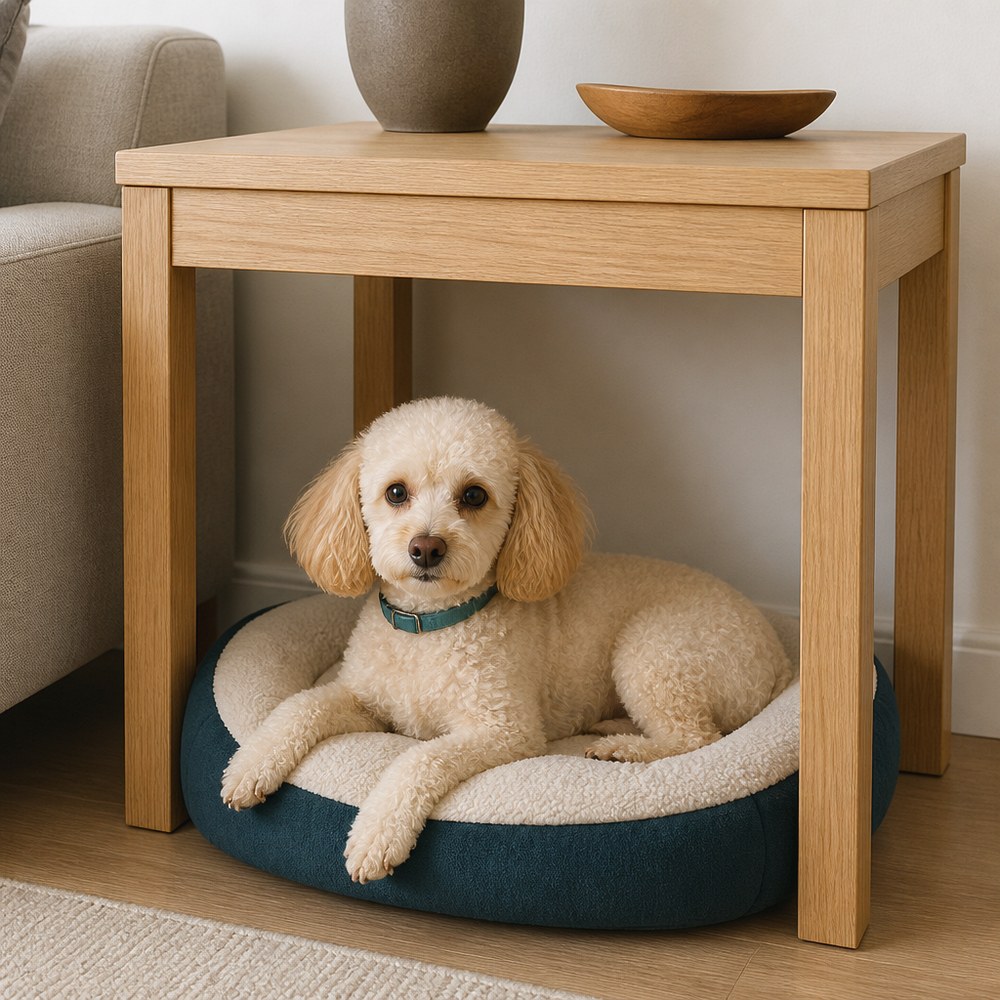
2. Under an Open Side Table
A side table with a wide, completely open base can let the dog bed occupy space that is already part of the furniture footprint.
This works best for a small dog and a table that provides generous clearance on every side. Your dog should be able to stand normally, turn around, and leave without ducking under a low shelf or squeezing between table legs.
Choose a sturdy table that cannot tip if bumped. Keep lamps, charging cables, decorative objects, and other tempting items safely managed above and away from the dog’s reach.
The result can function almost like a little alcove while keeping additional floor space from being claimed by the bed.
You May Also Like


3. Beneath a Wall-Mounted Console
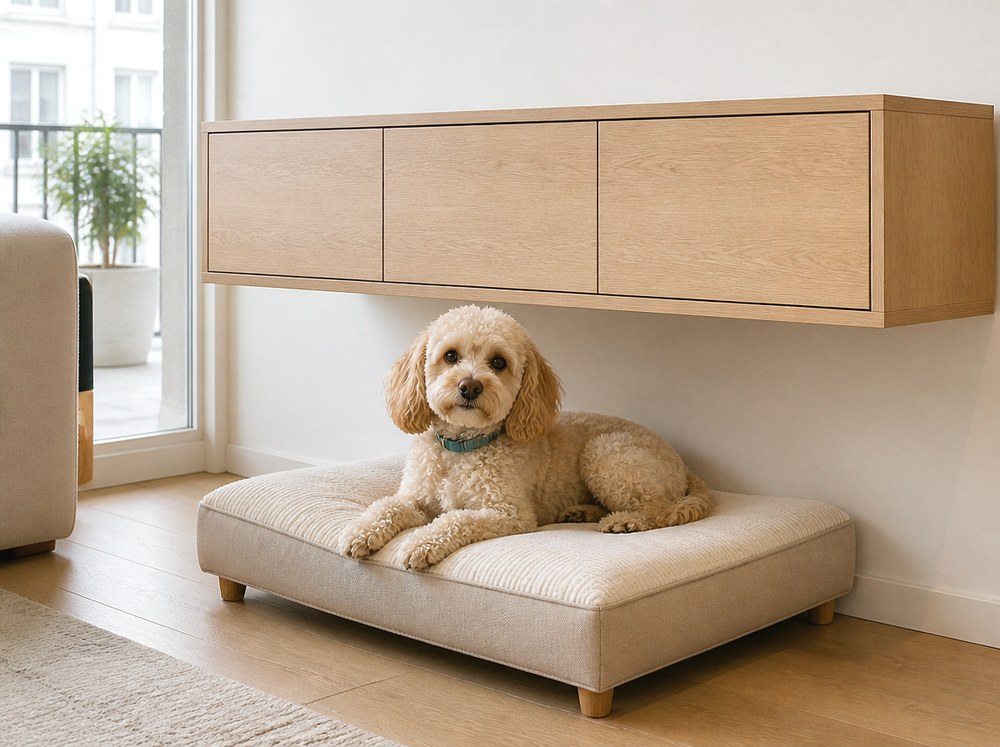
A floating console can leave a useful strip of floor underneath it. Instead of filling that area with baskets or decorative storage, it can become a compact resting place.
Measure from the floor to the underside of the console before placing the bed there. There should be ample space for your dog to stand comfortably rather than merely enough room for the dog to lie down.
This placement is especially effective along a living-room or bedroom wall where the console already defines an otherwise unused zone.
If the console holds electronics, route cables securely so the dog cannot reach or become tangled in them. Avoid storing breakable or heavy objects above the bed where they could be knocked down.
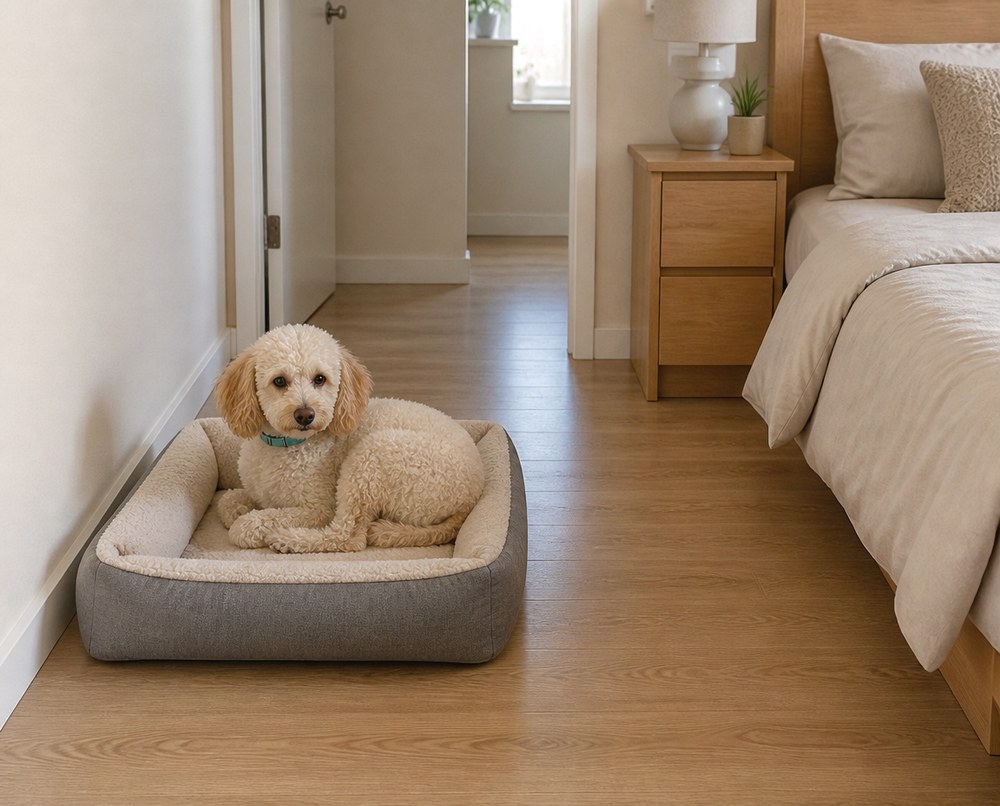
4. Use a Quiet Bedroom Corner
Bedrooms often have a corner that is too small for another piece of furniture but large enough for a dog bed.
A corner placement keeps two sides of the bed against walls, which can make the footprint feel much less intrusive. It also gives a dog that sleeps near its owner a dependable nighttime resting place without putting the bed directly beside the main walking route.
Look at how you move through the room in the dark. Avoid positioning the bed between the bed and bathroom, closet, or doorway if that route gets frequent nighttime use.
If the corner becomes a collection point for laundry, shoes, or bags, keep those items elsewhere so your dog’s sleeping space stays accessible.
5. Create a Resting Spot Beside Your Desk
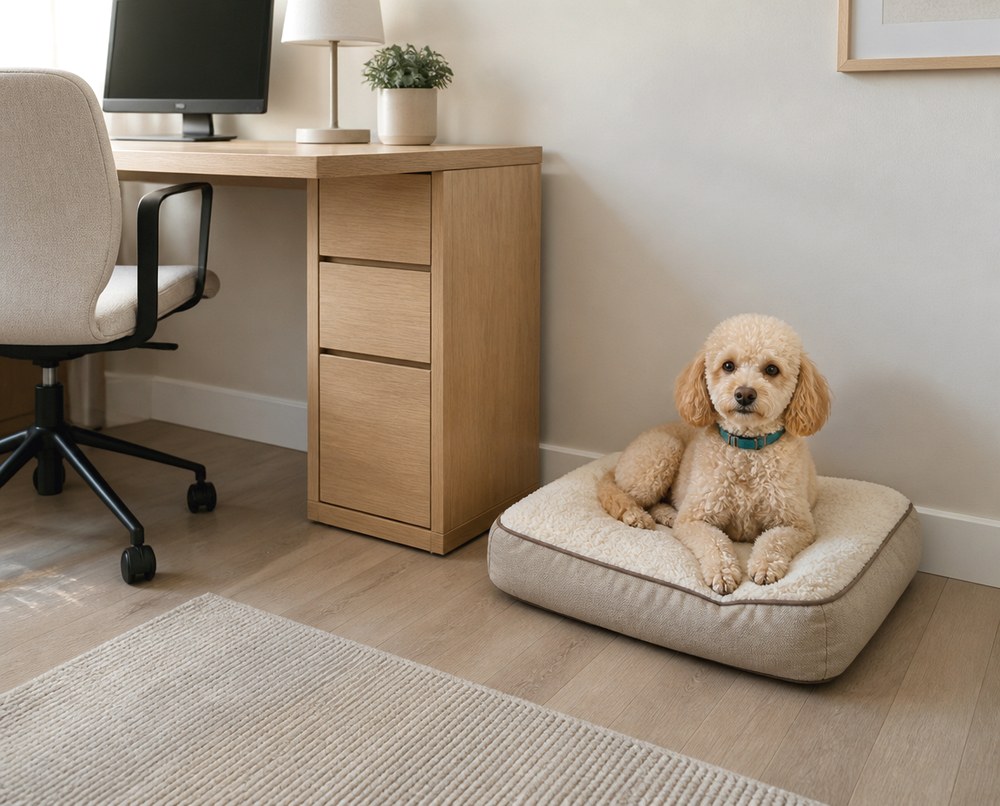
If you work from home, placing the bed beside the desk can give your dog company without sacrificing a separate section of the living room.
Position the bed against the wall on the side of the desk that does not hold your chair. The important distinction is beside the workspace rather than underneath rolling chair wheels or directly behind your seat.
Secure power and charging cables out of reach. The dog should have a clear path away from the desk without crossing through cords.
This arrangement can be especially useful when a dog tends to lie at your feet anyway. Giving that behavior a designated location keeps the workspace more organized and reduces the chance of accidentally stepping backward onto the dog.
6. Turn an Open Closet Alcove Into a Dog-Bed Nook
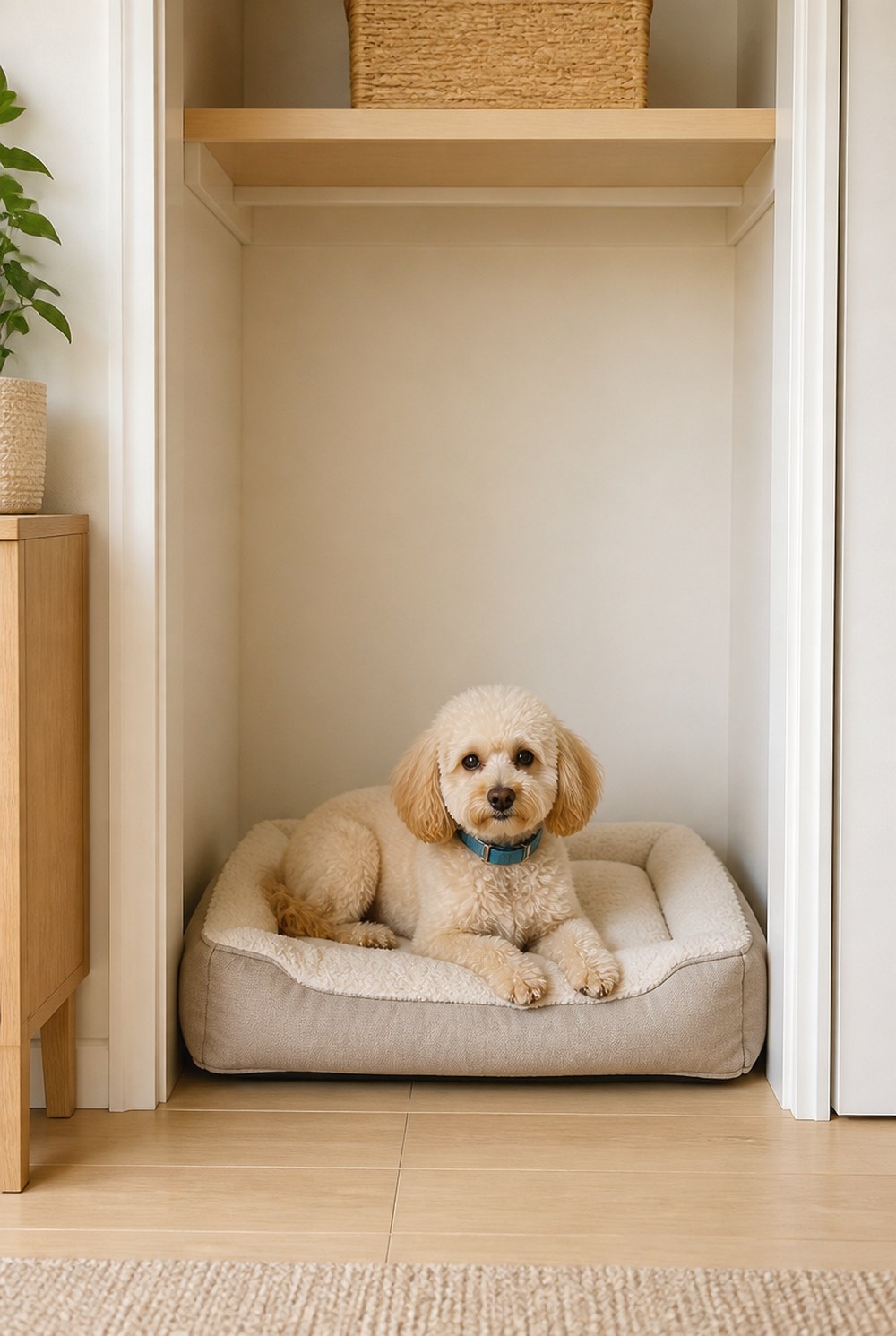
An underused closet can provide valuable floor space, particularly when the closet is shallow or no longer needed for everyday storage.
An open alcove works better than shutting a dog inside a closet. Keep the entrance fully accessible and maintain normal airflow. The dog should be able to enter and leave whenever it wants.
Remove shoes, plastic bags, household chemicals, small objects, and hanging items that could fall within reach. A washable bed placed on the cleared closet floor may be all the setup you need.
This idea works especially well when reclaiming a closet would prevent the bed from occupying a much busier living area.
7. Use the Floor Beneath a Window Recess
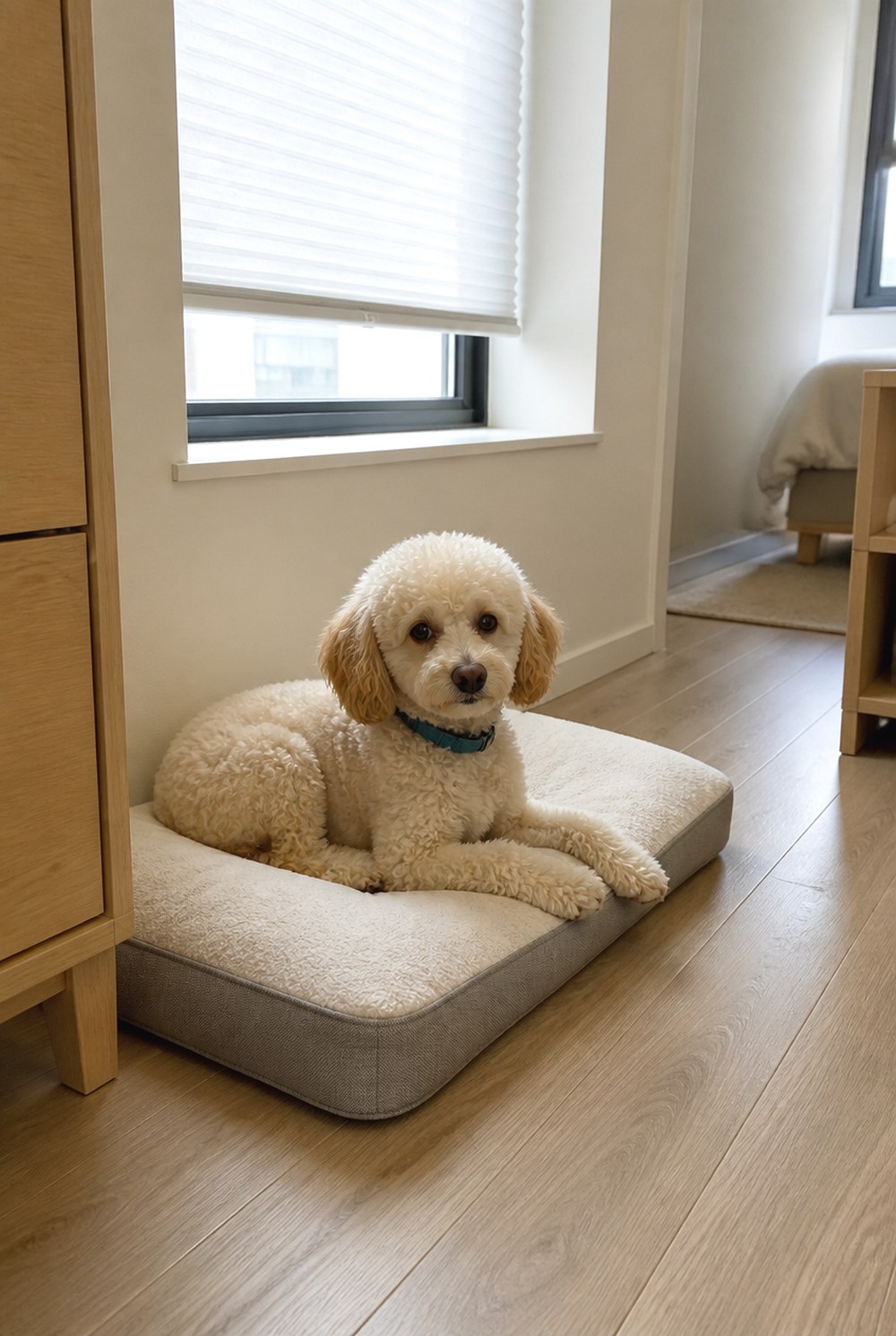
A shallow window recess can turn an otherwise awkward strip of wall into a useful resting zone.
This placement suits dogs that naturally seek bright rooms or enjoy watching household activity from a comfortable spot. Choose a low bed that fits within the width of the recess without extending into the walkway.
Temperature matters here. Strong afternoon sun can make a window area much warmer than the rest of the room, while poorly insulated windows may become chilly in winter. If the location becomes uncomfortable at certain times of day, move the bed or provide an alternative resting place elsewhere.
Keep blind and curtain cords completely inaccessible.
8. Claim the End of a Dead-End Hallway
Some small homes have a short hallway ending at a blank wall. If that end does not contain a doorway, cabinet, utility panel, or emergency exit, it can accommodate a dog bed without taking space from the main rooms.
The key is keeping the bed entirely at the unused end rather than letting it project into the passage.
This setup can provide a little more quiet than a living-room placement while still allowing the dog to hear and see nearby household activity.
Skip this idea if people must step around the bed to reach another room. A resting area should not create a tripping hazard, particularly at night.

9. Fit the Bed Into an Open Bench Cubby
A sturdy built-in bench with a large open lower compartment can perform two jobs at once: seating above and a resting nook below.
This is not a matter of squeezing a bed into an ordinary storage cubby. The opening must be deliberately large enough for your dog to enter, turn around, stand normally, and exit without brushing against the top or sides.
Check that the bench is stable and that the compartment contains no hinges, sharp hardware, removable bins, or stored objects that could shift toward the dog.
A made-to-fit washable bed or mat can help use the full width without extending beyond the bench.
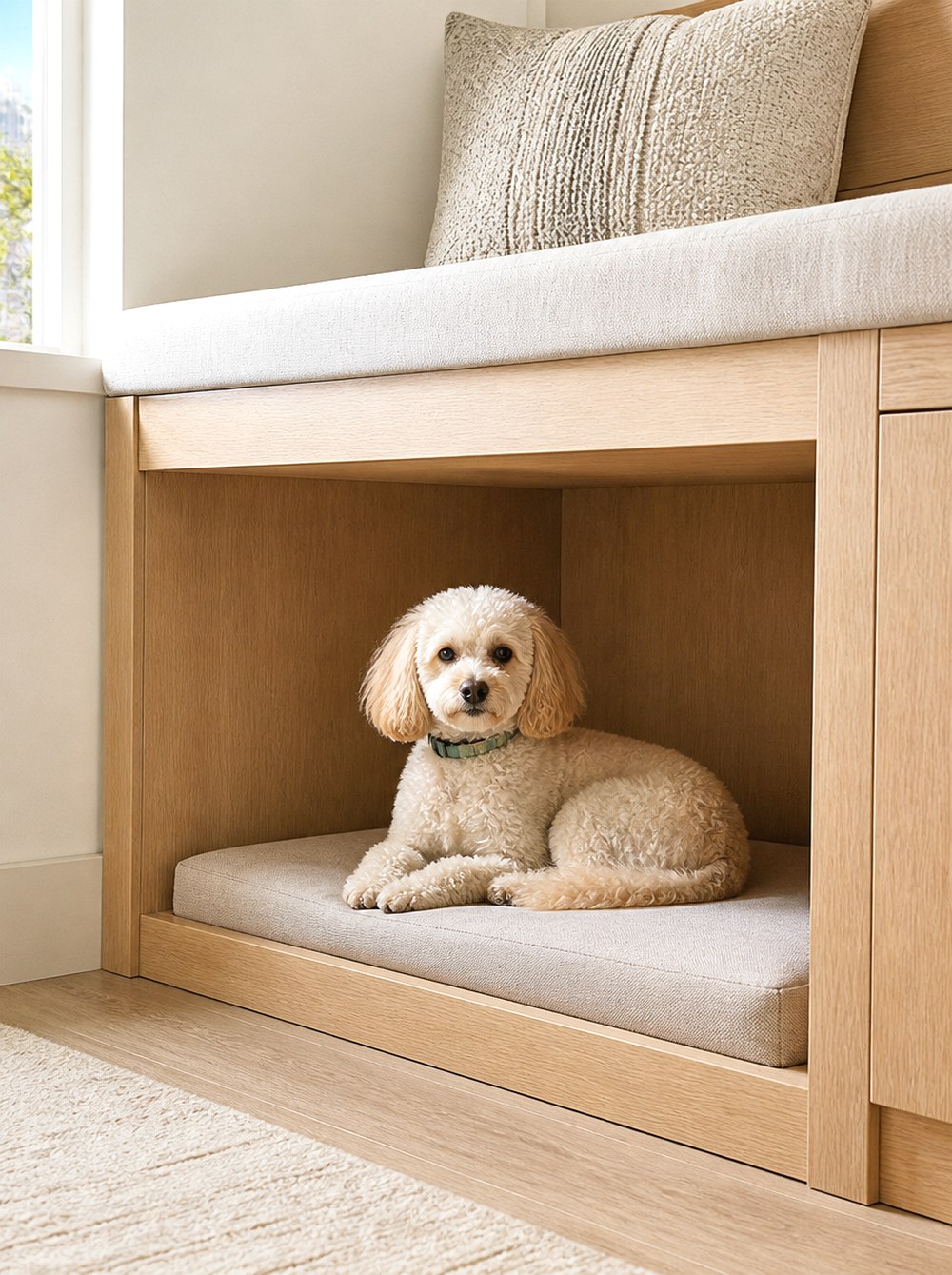
10. Place the Bed at the Quiet Edge of a Dining Nook
In an open-plan small home, the dining area can sometimes offer a better dog-bed location than the crowded living room.
Look for a wall-side edge of the dining nook that sits outside the route between the kitchen, table, and other rooms. A low bed against that wall lets the dog remain close during family time without lying beneath chairs or in the middle of food-preparation traffic.
Avoid placing the bed directly beside a hot oven, dishwasher door, trash container, or frequently opened cabinet. It should also be far enough from dining chairs that nobody pulls a chair onto it.
This is a useful option when your dog wants to be near people but the sofa area has almost no spare floor space.
You May Also Like



Make the Placement Work for Your Dog, Not Just the Floor Plan
The most space-efficient location is not useful if your dog consistently chooses somewhere else. After placing the bed, give your dog time to discover it and observe what happens over the next several days.
If the bed stays unused, consider what is different about the places your dog prefers. The chosen spot may be too isolated, too warm, too exposed to household noise, or simply too far from where people spend their time.
You can also make a small-home setup more flexible by choosing a lightweight bed that is easy to move. A dog might rest beside your desk during working hours and prefer a bedroom corner overnight.
Whatever location you choose, keep the bed dry, accessible, and appropriately sized. Wash its removable cover according to its care instructions and check the bed periodically for torn fabric, exposed filling, or damaged fasteners, especially if your dog likes to chew bedding.
For most homes, the best place to start is beside a wall near the room where you spend the most time. That gives you a practical balance between conserving space and giving your dog a resting place it is likely to use.
