Make your Christmas tree easier to manage around a curious cat with stable placement, protected cords, simpler ornaments, and practical pet-friendly zones.
Save This Idea on Pinterest

10 Cat Christmas Tree Safe Setup Ideas
Save to PinterestCats may investigate Christmas trees by sniffing branches, batting ornaments, exploring the base, or climbing nearby furniture for a better view. A safer setup starts with stability and clear access around the room, then reduces tempting details such as dangling cords, fragile ornaments, loose ribbons, and clutter around the lower branches.
These 10 ideas approach the problem in different ways, from weighted bases and raised ornaments to barriers, alternate cat perches, and easier-to-clean layouts. Choose the adjustments that match your cat’s habits, room size, tree type, and normal activity instead of assuming every household needs the same level of restriction.
Quick List
- Weighted Christmas Tree Base Setup for Curious Indoor Cats
- Cord-Protected Christmas Tree Setup for Playful Indoor Cats
- Shatter-Resistant Ornament Zone for Cat-Friendly Christmas Trees
- Raised Ornament Placement for Cats Who Bat Decorations
- Low Pet Gate Barrier Around a Cat-Safe Christmas Tree
- Minimal Lower-Branch Decor for Cat-Friendly Christmas Tree Setups
- Tree Skirt-Free Base Setup for Cats Who Hide Underneath
- Alternative Cat Perch Beside the Christmas Tree Viewing Area
- Wall-Corner Christmas Tree Setup for Homes With Active Cats
- Easy-Clean Christmas Tree Zone for Shedding Indoor Cats
1. Weighted Christmas Tree Base Setup For Curious Indoor Cats

Start with a broad, stable tree stand that keeps the Christmas tree upright when a curious cat brushes past the trunk or investigates the lower branches. Place the tree on a flat surface and avoid balancing the base on thick rugs, uneven boards, or decorative platforms that can shift. If the stand is lightweight, choose a sturdier alternative or add stability around the base in a way that remains inaccessible to the cat. Keep presents and decorations from hiding the stand completely so you can inspect it throughout the season. A secure base matters even when your cat has never climbed a tree before, because normal play and sudden movement can still bump the setup.
Setup Notes
Test the tree gently after decorating to make sure the stand does not rock or slide.
Pro Tip
Keep furniture that could act as a jumping launch point farther from the tree when practical.
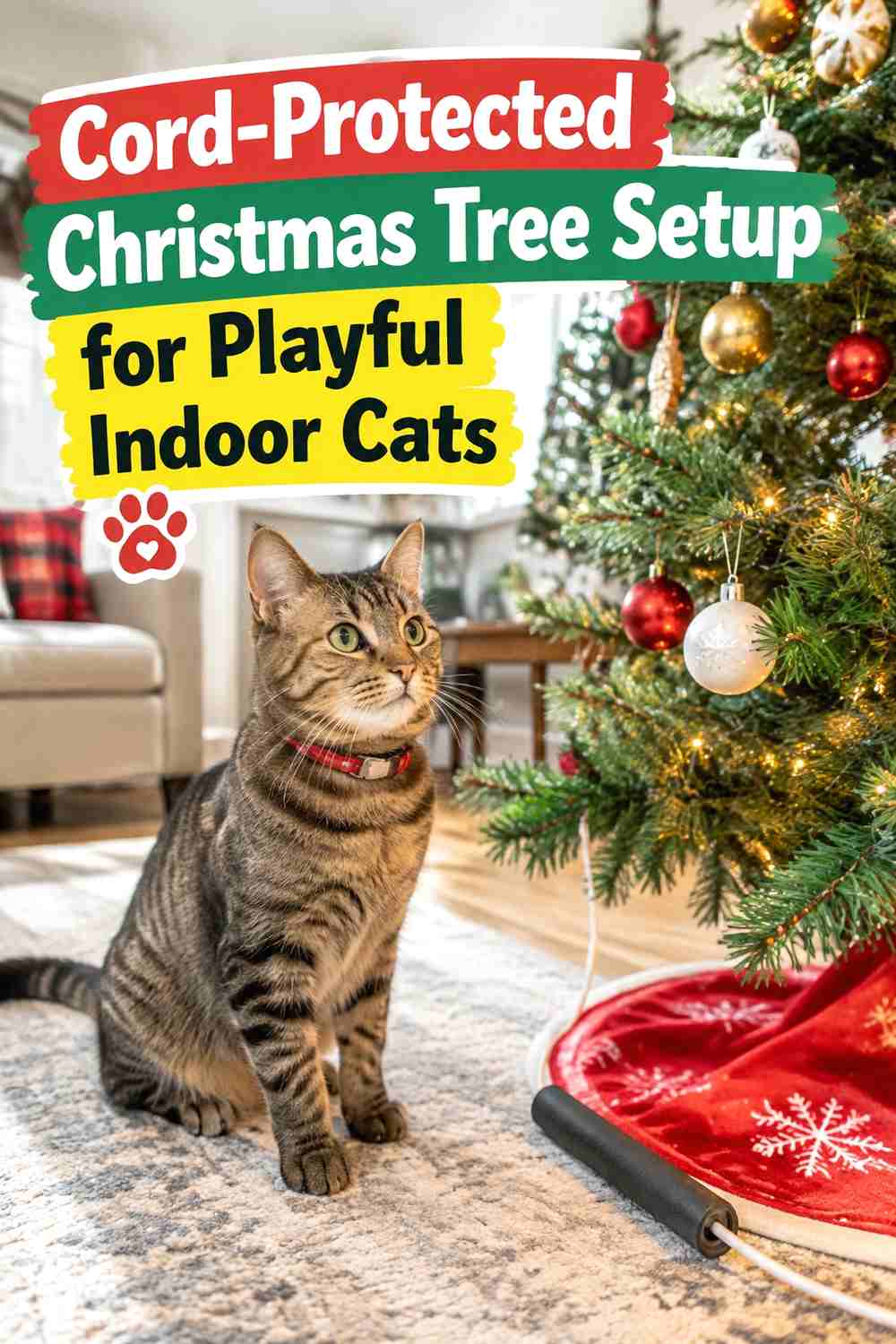
2. Cord Protected Christmas Tree Setup For Playful Indoor Cats
You May Also Like


Route Christmas tree light cords where your cat cannot easily reach, chew, or pull them across the floor. Keep excess cable bundled outside the pet’s access area and position plugs behind furniture or another secure barrier rather than leaving loops beside the tree. Avoid running cords through common play routes or under loose rugs where damage becomes harder to notice. If your cat repeatedly targets electrical cords, a simpler unlit tree or fewer lights may be easier to manage. Check accessible sections regularly for tooth marks, fraying, or loose connections, especially after moving presents or cleaning around the tree.
Comfort & Safety
Unplug lights when they are not in use or when the tree area cannot be monitored appropriately.
Use & Maintenance
Recheck cord placement whenever the tree or nearby furniture is moved during the season.
3. Shatter Resistant Ornament Zone For Cat Friendly Christmas Trees
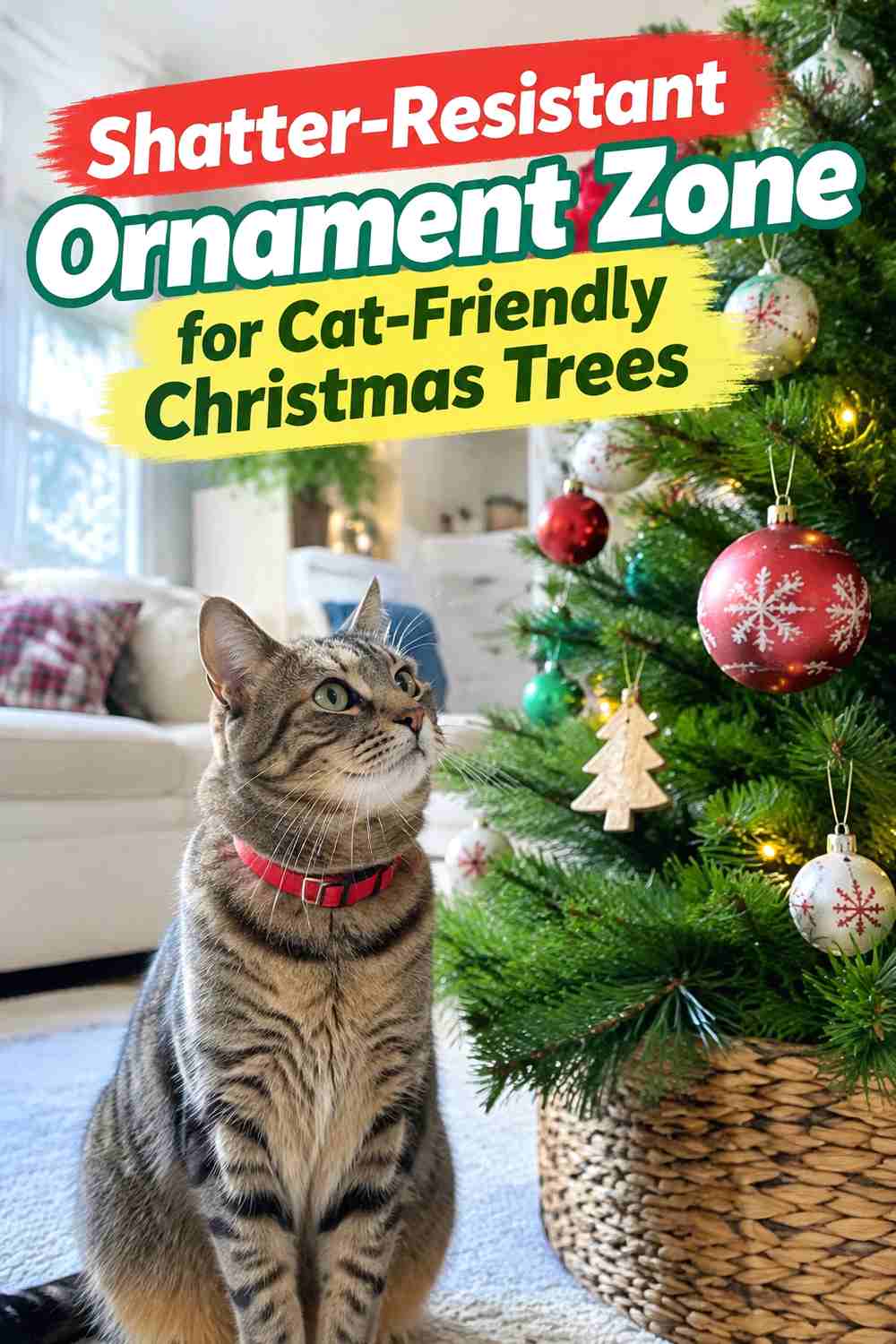
Use lightweight, shatter-resistant ornaments on the lower and middle parts of the tree where a cat is most likely to reach. Fabric, wood, felt, or sturdy unbreakable decorations can be easier to manage than fragile glass pieces that may break when knocked down. Attach ornaments securely rather than leaving long hooks or loose hanging loops within pawing range. Keep especially valuable or delicate decorations higher on the tree or use them elsewhere in the room. Even safer ornaments should not crowd every branch, because a dense cluster of moving objects can invite batting and make fallen pieces harder to notice.
Best For
This setup suits cats that occasionally tap decorations but do not constantly climb into the tree.
Cleaning Notes
Pick up fallen ornaments promptly and inspect damaged pieces before rehanging them.
4. Raised Ornament Placement For Cats Who Bat Decorations
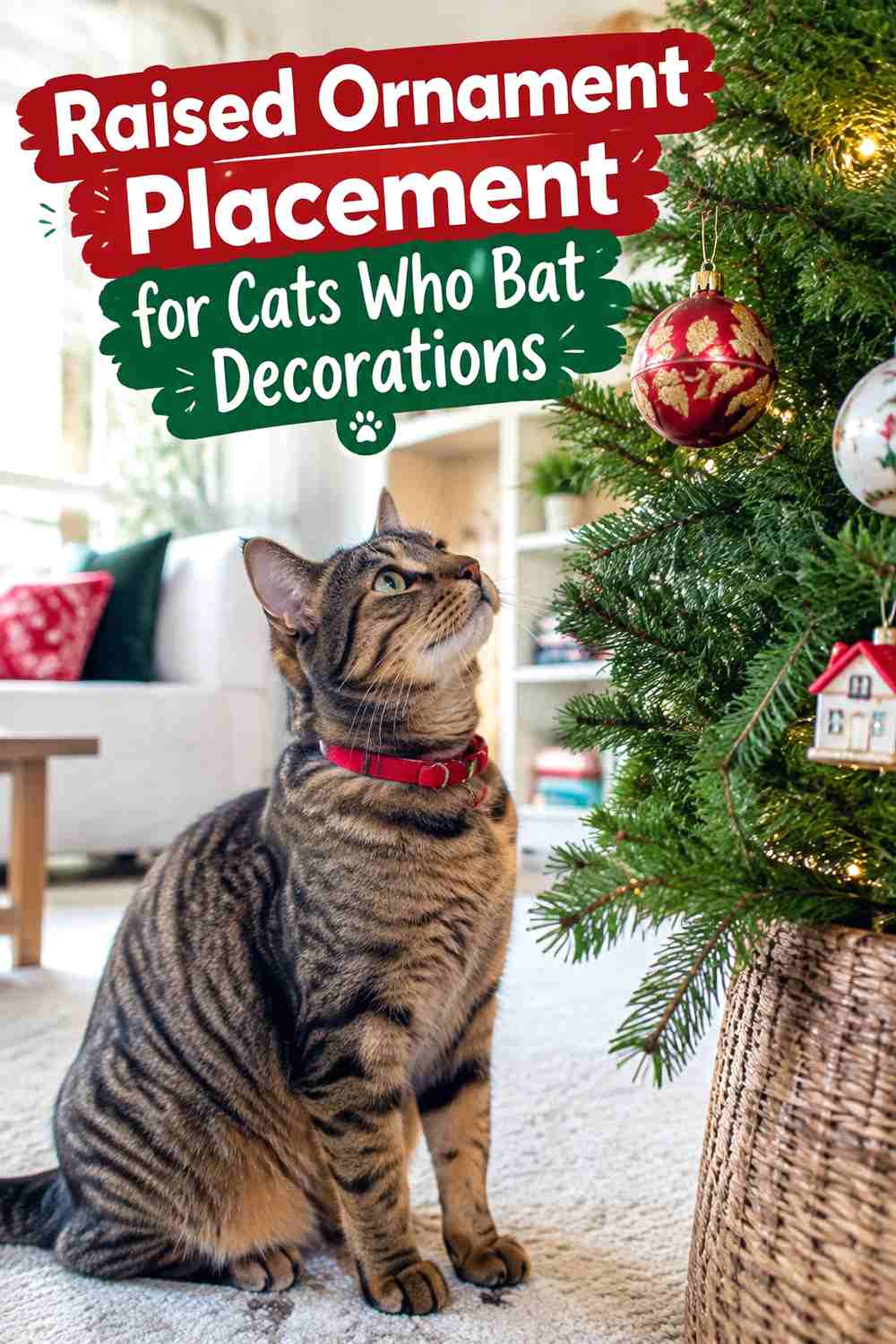
Decorate primarily on the upper half of the tree if your cat likes swatting at anything hanging near floor level. Leaving the lowest branches mostly bare creates a visual buffer and reduces the number of moving objects directly within paw reach. Place larger, securely attached ornaments higher up and keep ribbon tails, tinsel, bells, and long dangling decorations off the lower section. The tree can still look full by concentrating color and texture through the middle and upper branches. If your cat stretches upward or climbs nearby furniture, adjust the height again rather than assuming a decoration is safe simply because it is above the floor.
Setup Notes
Decorate after observing how high your cat can comfortably reach from the floor and nearby furniture.
Why It Works
Reducing movement at cat level can make the base of the tree less visually tempting.
5. Low Pet Gate Barrier Around A Cat Safe Christmas Tree
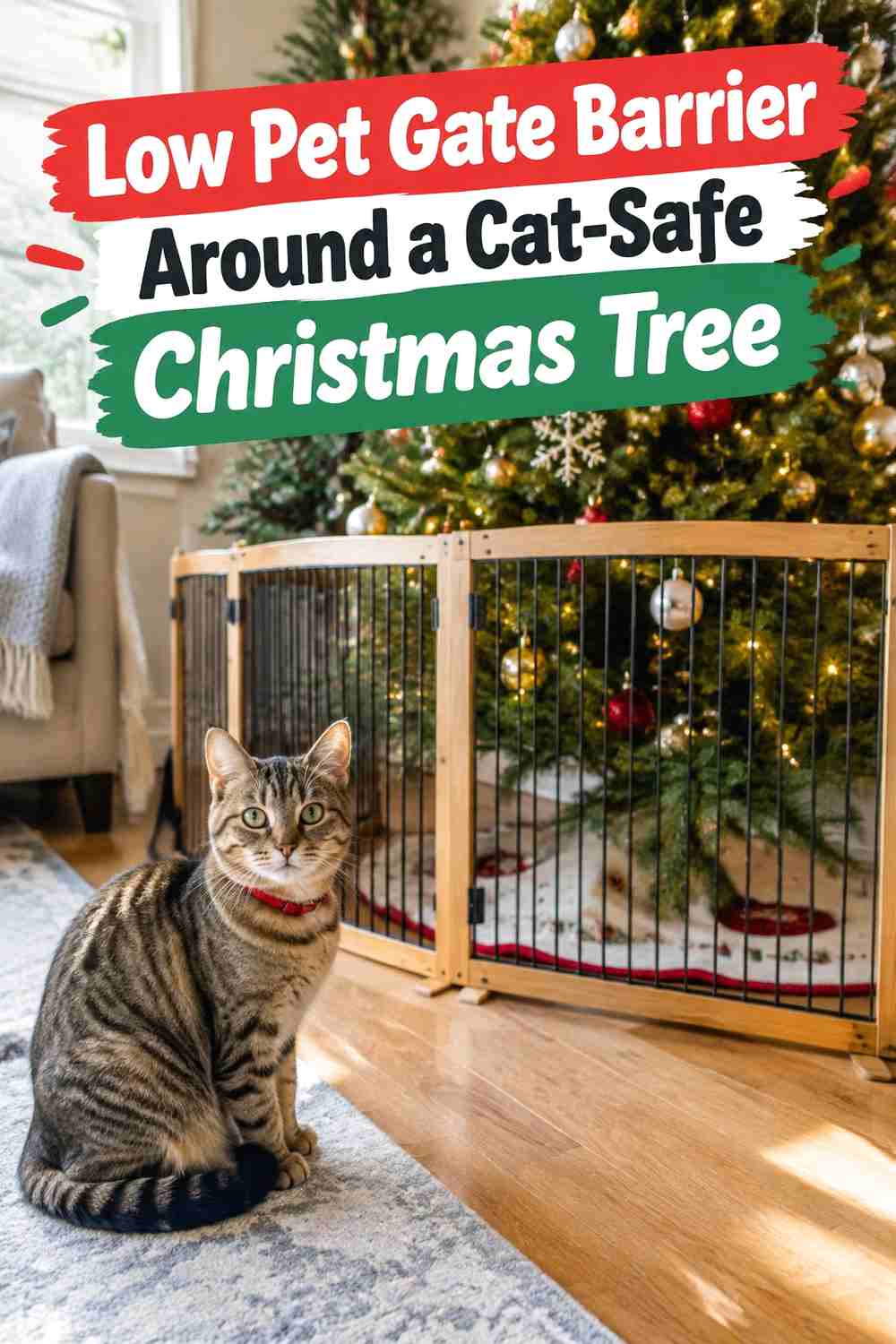
A low, stable pet barrier can create extra distance around a Christmas tree when your cat persistently investigates the trunk, ornaments, or light cords. Arrange the barrier far enough from the branches that the cat cannot simply reach through and continue playing with decorations. Choose a sturdy design that cannot collapse inward if bumped, and keep entry points easy for adults to use without leaving the gate unsecured. This approach works best when the barrier does not block normal household walkways or trap the cat in a narrow area. Some athletic cats may jump over low barriers, so observe how your individual cat responds before relying on one.
Space & Placement
Leave enough clearance around the gate for comfortable human movement and safe access to outlets or watering points.
Best For
This can help in homes where the cat repeatedly returns to the tree despite simpler decorating changes.
6. Minimal Lower Branch Decor For Cat Friendly Christmas Tree Setups
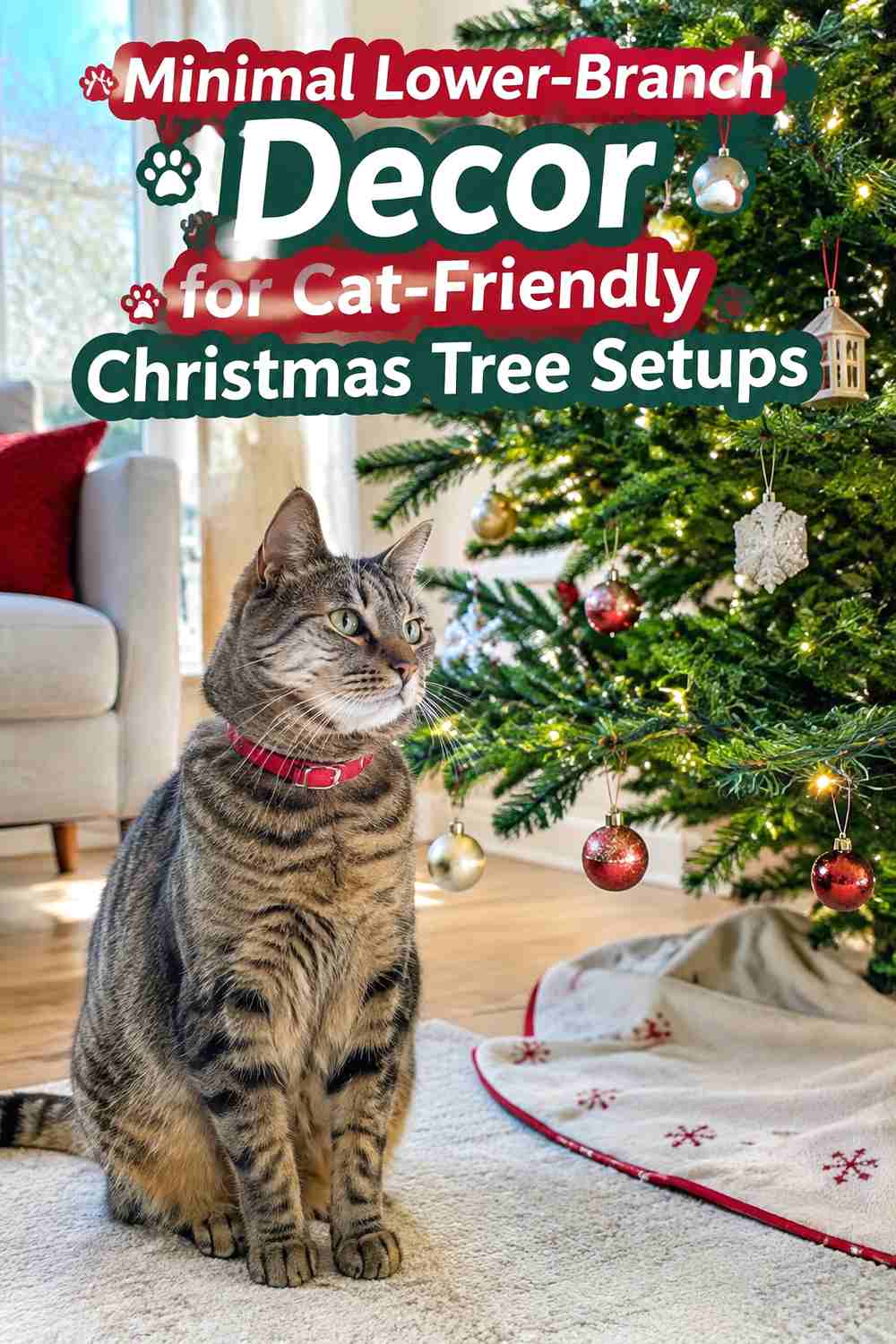
Keep the bottom portion of the tree intentionally simple with few or no ornaments, ribbons, bells, or dangling decorations. A mostly bare lower section can still look finished when the upper tree carries the stronger decorative theme. This setup also makes it easier to notice fallen needles, chewed pieces, or other debris around the base. If you use artificial branches, check that exposed tips and wires remain in good condition. For real trees, keep the area tidy and monitor any fallen material. Pair the minimal lower section with a simple tree collar or unobtrusive base cover rather than adding piles of decorative fabric at floor level.
Why It Works
Fewer moving decorations near the floor mean fewer obvious targets for playful paws.
Use & Maintenance
Do a quick visual check around the base each day and remove anything that has fallen or shifted.
7. Tree Skirt Free Base Setup For Cats Who Hide Underneath
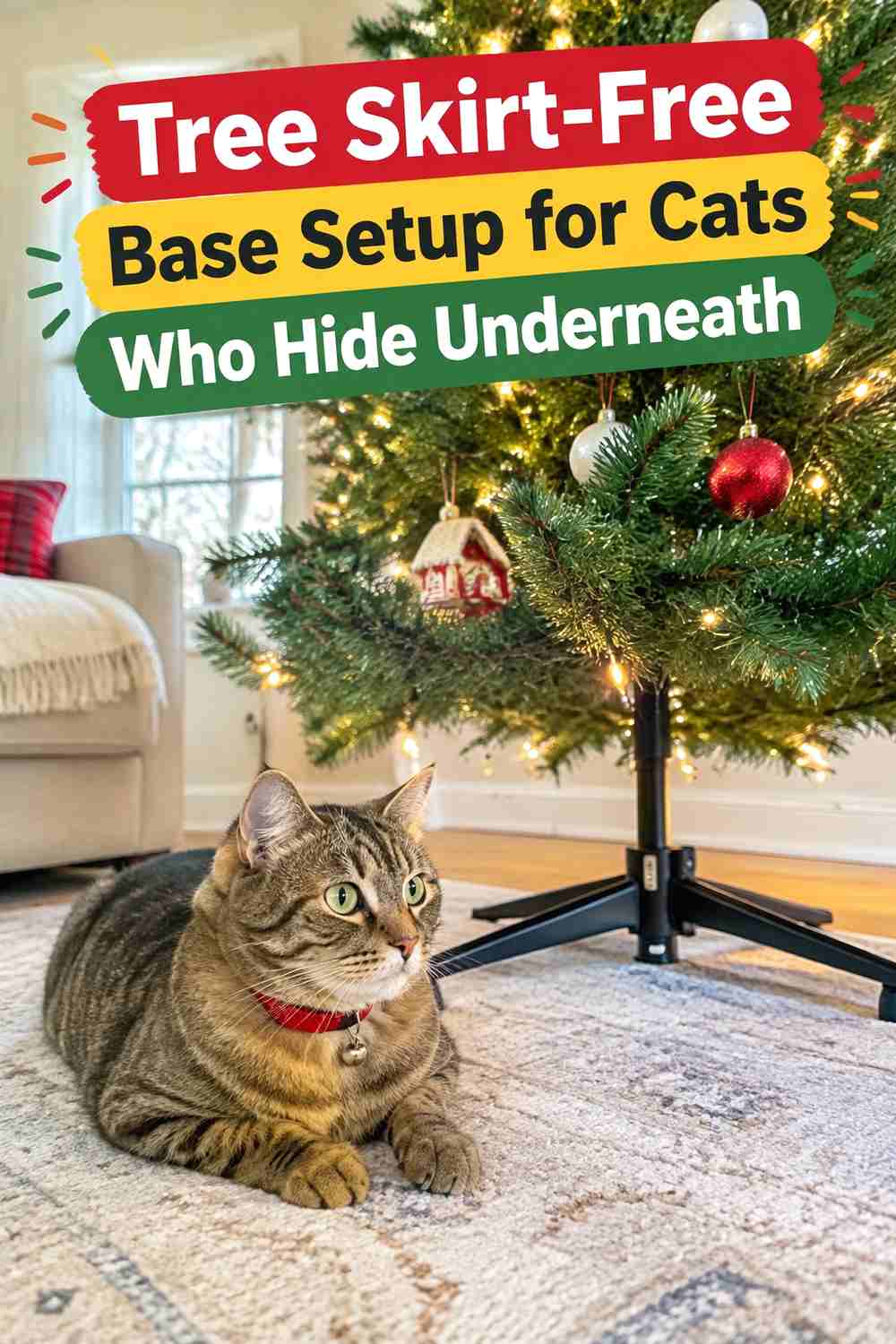
Skip a loose tree skirt if your cat regularly crawls underneath fabric, pounces on folds, or uses the skirt as a hiding place. Leaving the base uncovered or using a secure rigid tree collar can reduce one more source of movement around the trunk. This also makes it easier to inspect the stand, clean fallen needles, and see whether your cat has been chewing or pawing at anything near the base. Keep wrapped gifts from becoming a substitute hiding tunnel by leaving enough open floor to see what is happening. If your cat enjoys covered resting spots, provide an appropriate hide or bed elsewhere in the room.
Best For
This idea suits cats that turn fabric around the tree into a play zone.
Pro Tip
Offer a separate cardboard hide or covered cat bed away from the tree to redirect that preference.
8. Alternative Cat Perch Beside The Christmas Tree Viewing Area
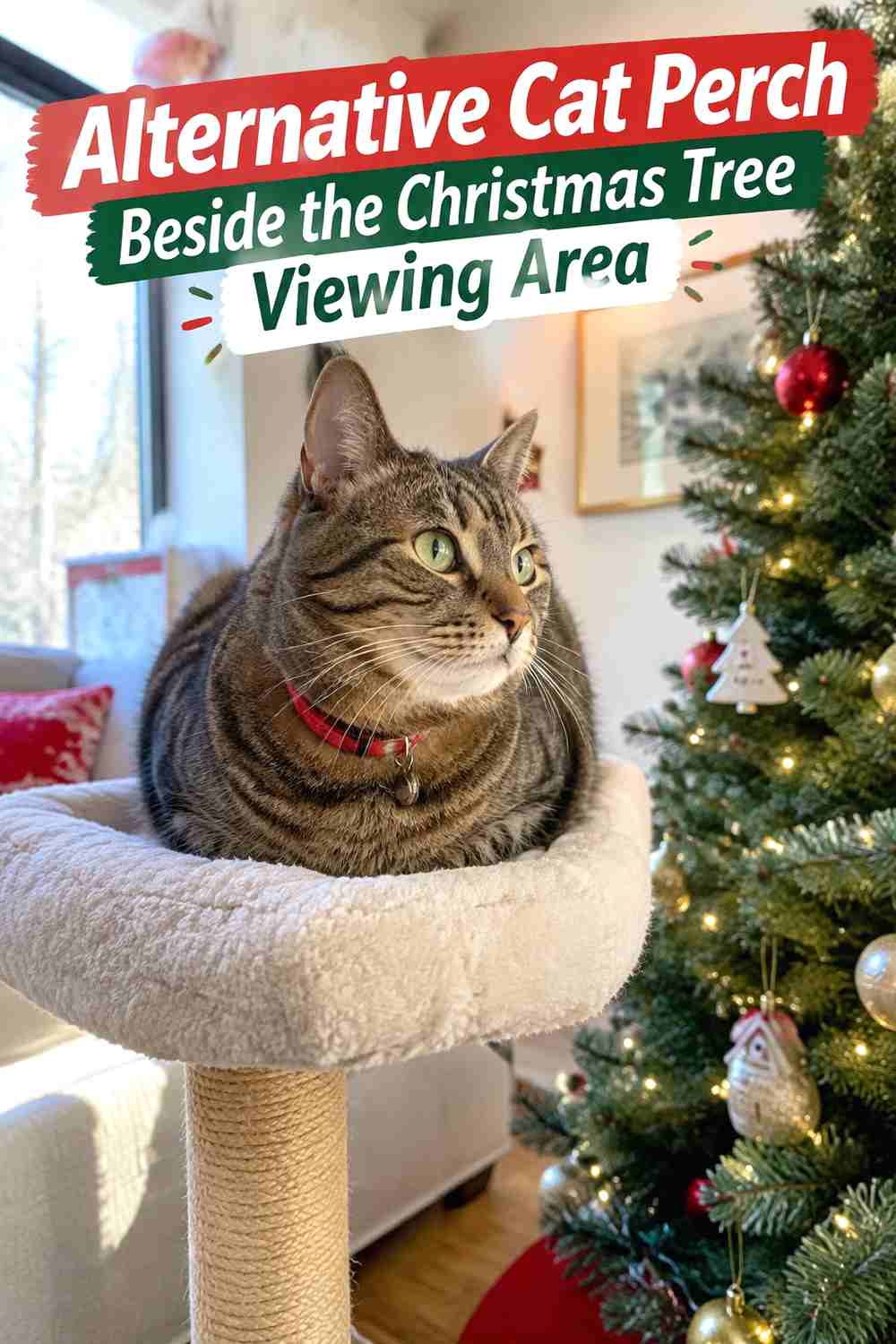
Give your cat a separate perch or bed with a good view of the Christmas tree so it has somewhere appropriate to observe the activity without sitting under the branches. Position the perch far enough away that your cat cannot jump directly from it into the tree, but close enough to remain interesting. A window seat, sturdy cat tree, or familiar chair can work depending on the room. Keep the perch comfortable and uncluttered rather than decorating it with loose holiday accessories. This setup does not guarantee the cat will ignore the tree, but it can provide another attractive place to watch people, lights, and movement.
Space & Placement
Avoid placing the alternate perch directly beside the tree or at the same height as tempting branches.
Why It Works
Cats often seek height and observation points, so providing a separate one can make the room more functional.
9. Wall Corner Christmas Tree Setup For Homes With Active Cats
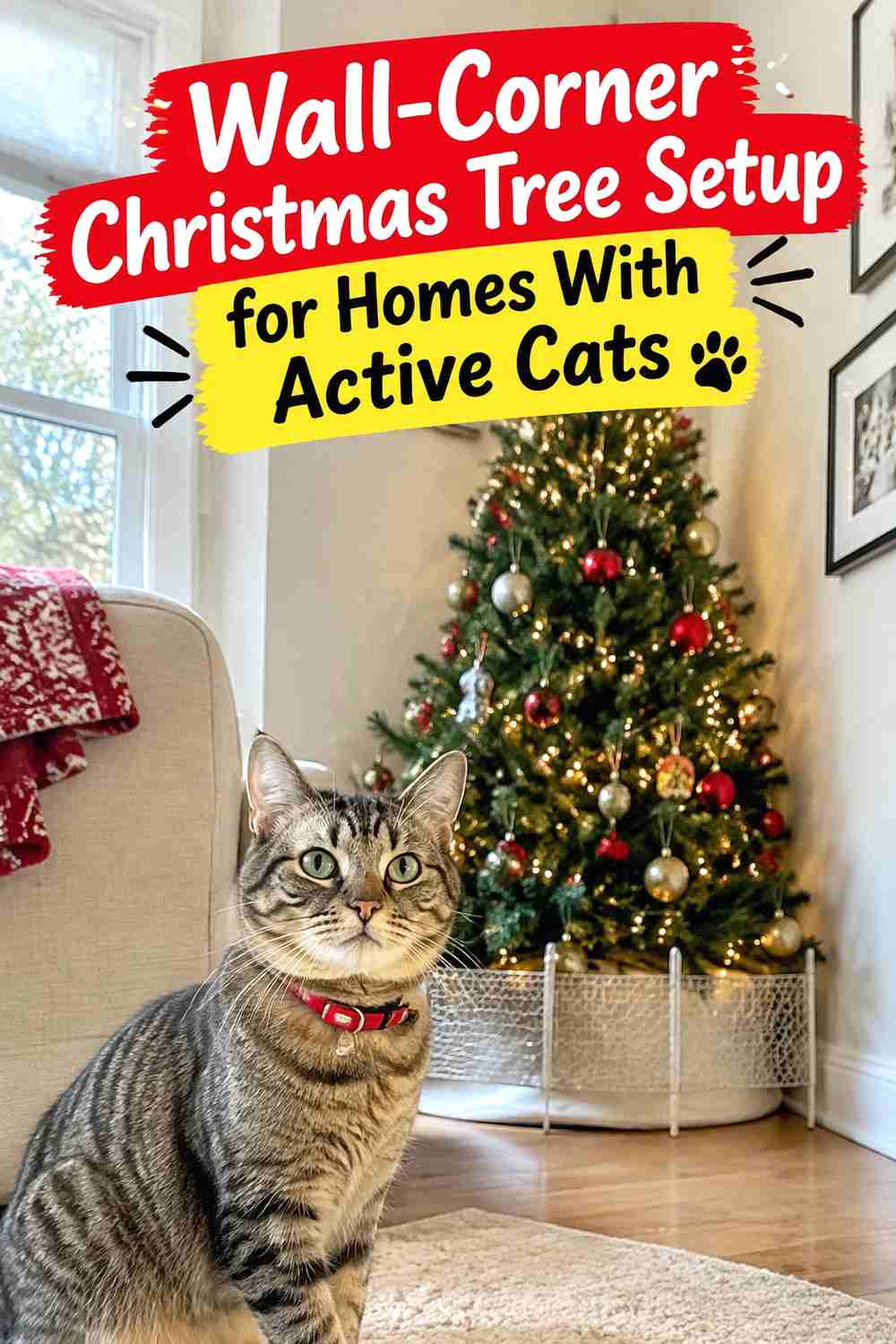
Place the Christmas tree in a room corner when the layout allows, using the walls to reduce the number of open sides a cat can approach. Keep enough clearance for branches, lights, and airflow rather than pressing the tree tightly against walls or curtains. A corner can also make cord routing simpler because outlets and excess cable may be easier to keep behind furniture or barriers. Do not place climbable shelves, bookcases, or chairs beside the tree if they create an easy launch point into the branches. This arrangement works particularly well in smaller rooms where controlling access from every side would otherwise be difficult.
Space & Placement
Choose a corner that does not block doorways, heating vents, or normal walking paths.
Pro Tip
Use the open-facing side for your strongest decorations and keep the wall-facing side simpler.
10. Easy Clean Christmas Tree Zone For Shedding Indoor Cats
You May Also Like



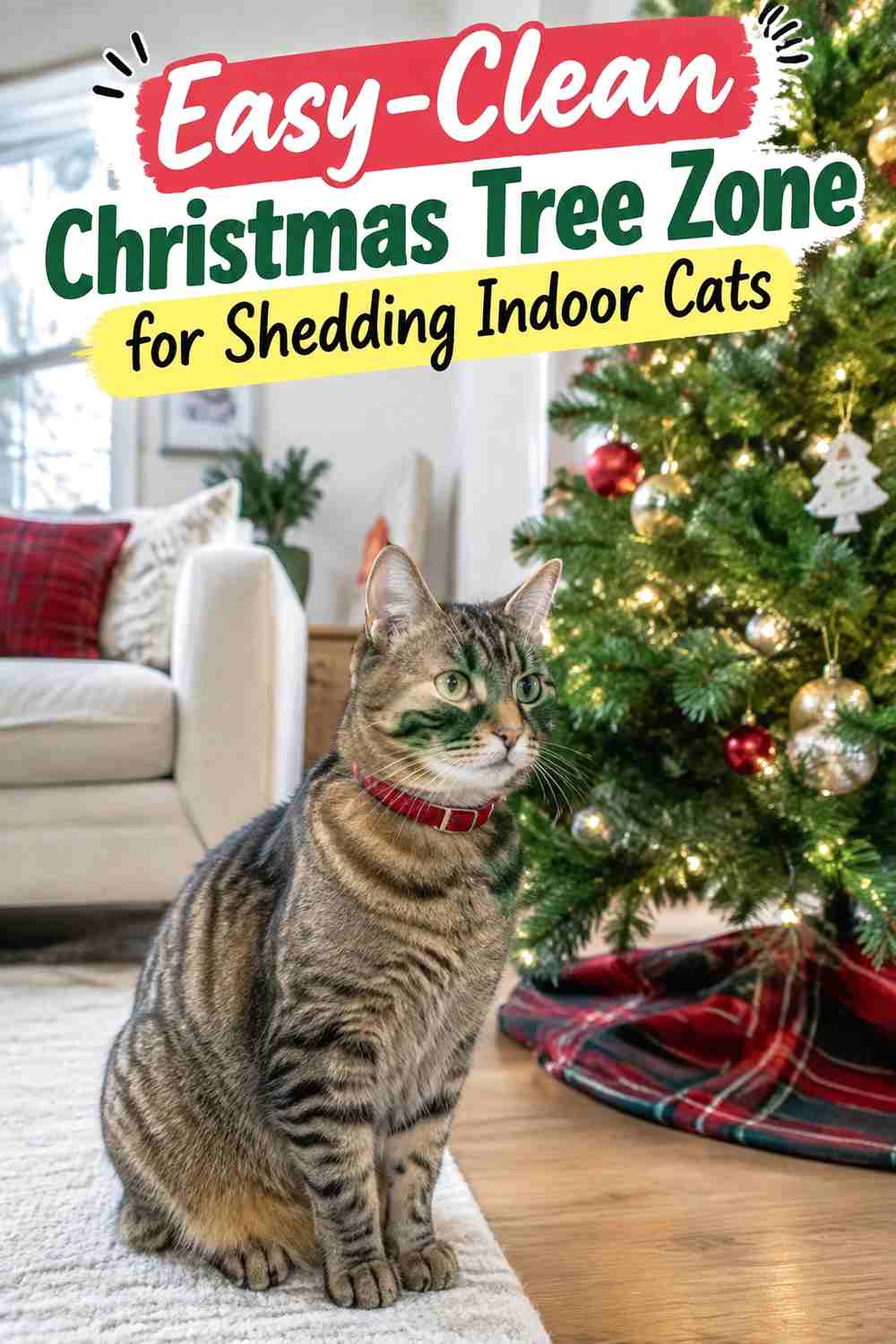
Create a clear, easy-to-clean zone around the Christmas tree by keeping the floor free from extra baskets, fabric piles, and small decorative props. A simple washable mat or bare hard floor makes it easier to remove fur, fallen needles, litter tracked from paws, and dropped ornament pieces. Store gift bags and wrapping supplies elsewhere rather than stacking them around the trunk. Keeping the base visible also helps you notice moved cords or damaged decorations more quickly. This setup is especially practical for heavily shedding cats and busy households because routine cleaning does not require moving a large seasonal display every time.
Cleaning Notes
Vacuum or sweep around the base regularly and check underneath nearby furniture for fallen decorations.
Use & Maintenance
Return cords, gifts, and decorations to their designated places after cleaning instead of letting clutter accumulate around the tree.
How to Choose the Right Idea
Start with your cat’s actual behavior around the tree. A cat that only bats a low ornament may need nothing more than raised decorations and shatter-resistant pieces, while a persistent climber or cord chewer may require more distance, stronger barriers, and a simpler tree layout.
Room size matters too. Corner placement can help in small spaces, while larger rooms may allow a separate cat perch and wider buffer zone around the tree. Keep electrical cords protected, avoid loose tinsel and ribbon, use stable tree hardware, and remove damaged decorations promptly. If your cat repeatedly reaches a particular item, change the setup rather than relying on repeated correction. Practical prevention is usually easier to maintain throughout the season.
Final Thoughts
A cat-safe Christmas tree setup does not have to look bare or overly restricted. Start with a stable tree, protect the electrical parts, and reduce the most tempting items near cat level. Then add only the decorations your household can realistically monitor and maintain. A simpler setup that stays secure is more useful than an elaborate one that requires constant intervention.
FAQs
1. Should I anchor my Christmas tree if I have a cat?
A very stable base is important in any home with an active cat. If your setup still shifts or tips easily, additional secure anchoring may be worth considering based on the tree and room layout.
2. Are glass ornaments a good choice around cats?
Fragile glass ornaments are harder to manage if a cat can reach them. Shatter-resistant decorations are generally more practical for lower branches.
3. Where should I put Christmas tree lights with a cat?
Keep cords as inaccessible as possible, avoid loose loops on the floor, and route plugs and excess cable away from normal cat play areas.
4. What can I use instead of a loose Christmas tree skirt?
A rigid tree collar, minimal base cover, or uncovered stand can work better for cats that crawl under or pounce on fabric.
5. Can a cat perch help keep my cat away from the Christmas tree?
It may help by providing a separate viewing spot, especially for cats that like observing activity from a comfortable height. Keep the perch far enough away that it does not become a launch point into the tree.
Save these 10 cat Christmas tree safe setup ideas for your holiday decorating plans, and share them with another cat owner preparing a festive home.
