A cat does not need a large home to have an interesting day. In a small apartment, the bigger challenge is making the available space do more than one job.
Save This Idea on Pinterest

Small Apartment Activities for Cats: 10 Ways to Keep Indoor Cats Busy
Save to PinterestA few square feet can become a hunting area in the morning, a climbing route later in the day, and a quiet observation spot in the afternoon. The key is to vary how your cat uses the space, rather than filling the apartment with more toys.
Good small apartment activities for cats include short bursts of chasing, food-searching games, vertical movement, training, exploration, and calm observation. Rotate them instead of offering everything at once. That keeps the apartment manageable while giving your cat different reasons to move, investigate, think, and settle.
For Cats Ready to Move
These activities make use of short distances and vertical space. They work particularly well when a cat has a burst of energy but there is no large room available for running.
1. Build a Short Wand-Toy Hunting Circuit
You can create an engaging chase without racing a toy from one end of the apartment to the other. Instead, move a wand toy through several small “hunting zones.”
Let the toy disappear briefly behind the sofa, move along the edge of a rug, pause beside a cardboard box, or dart around a cat tree. Those changes in direction can make a compact play area more interesting.
Try several short chases rather than one long session. Give your cat opportunities to stalk, pounce, and actually catch the toy before starting another round. Constantly keeping the toy out of reach can make the game less satisfying.
Store wand toys and strings securely when the session ends. String-like materials should not be left available for unsupervised chewing or swallowing.

2. Turn a Hallway Into a Chase Lane
A narrow hallway can provide useful running space because it encourages movement in a straight line without requiring a large room.
Roll or toss a suitably sized cat toy a short distance along the floor, then allow your cat to chase it at their own pace. A lightweight cat ball that is too large to swallow is preferable to tiny household objects.
Clear shoes, bags, electrical cords, and anything else your cat could hit during a fast turn. Slippery floors may also make energetic chasing uncomfortable, particularly for older cats. A secured runner can provide better footing if appropriate for the space.
This activity can be especially handy before a period when you need the apartment to be quieter.

You May Also Like


3. Make One Corner a Vertical Climbing Route
When floor space is scarce, height becomes useful territory.
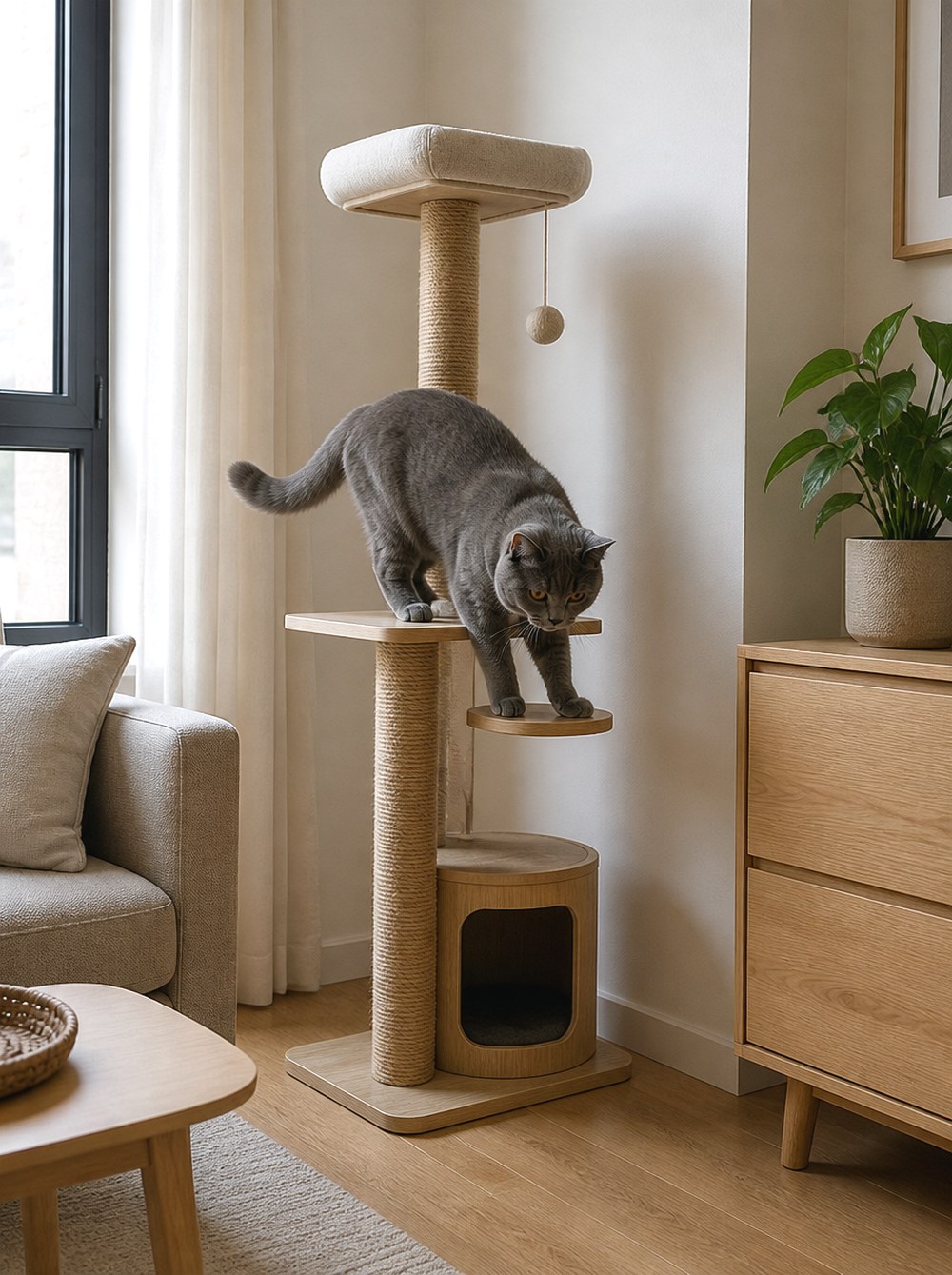
A stable cat tree beside a sturdy piece of cat-safe furniture can create several levels within a small footprint. The goal is not to make the apartment crowded with climbing equipment. One well-positioned vertical station may offer a low perch, a higher lookout, and a resting platform.
Choose equipment that does not rock or tip when your cat jumps onto it. Wall-mounted shelves can also add vertical space, but they need to be securely installed and suitable for the cat’s weight and movement.
For renters who cannot alter walls, a sturdy floor-standing tower may be more practical.
When Your Cat Wants to Hunt and Investigate
Physical activity is only part of apartment enrichment. Activities that require searching and problem-solving can make familiar rooms feel less predictable.
4. Set Up a Tiny Food Search
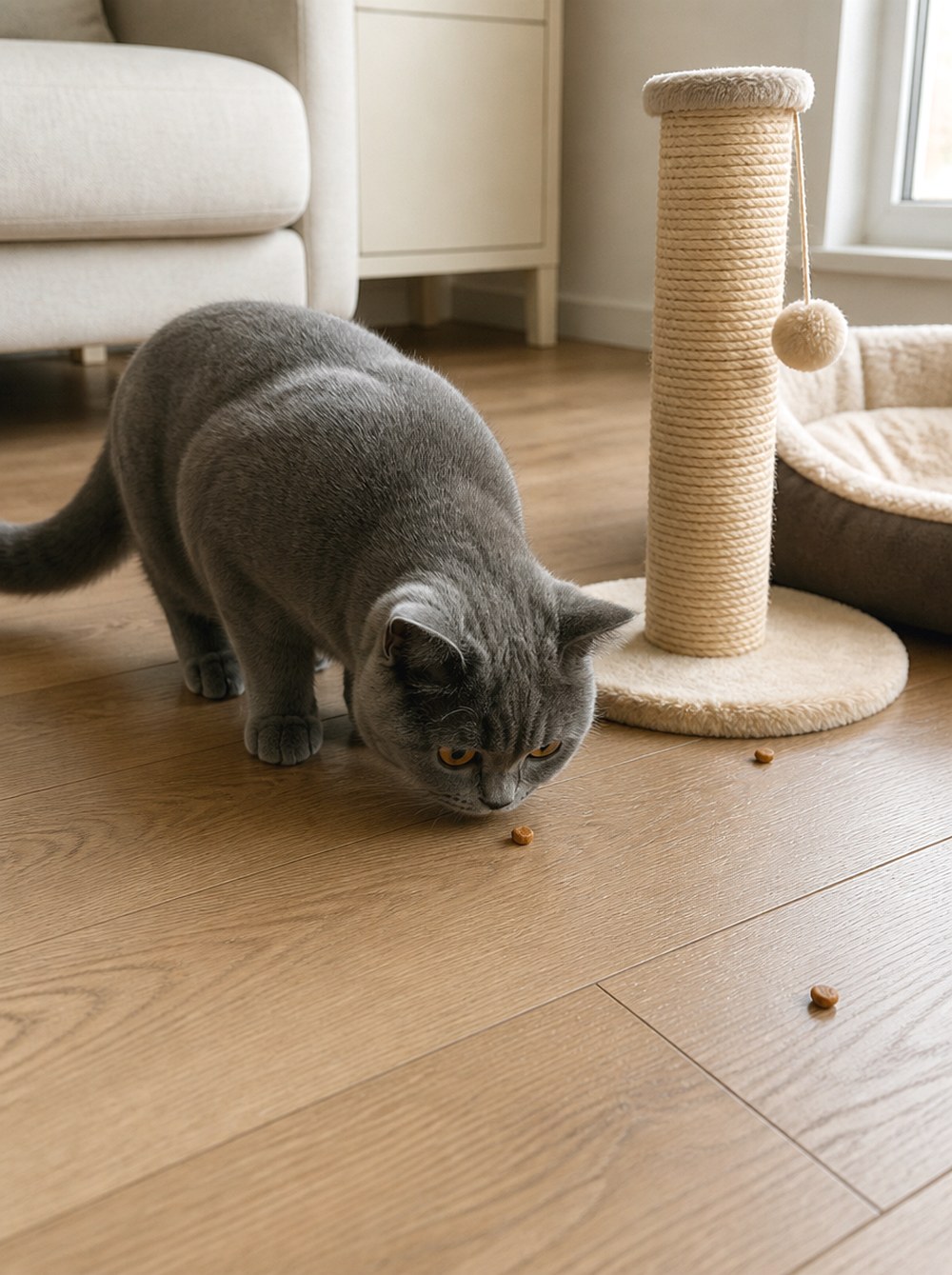
Instead of putting every piece of an appropriate food portion in one location, hide a few pieces in several easy-to-find spots.
For example, place them beside a cat bed, near a scratching post, or on an accessible level of a cat tree. Start where your cat can see or smell the food easily. Once they understand the game, use slightly less obvious locations.
Keep the search within safe, clean areas. Do not put food near cleaners, houseplants, electrical equipment, or gaps where your cat could become stuck.
Food-search games should use food from an appropriate daily allowance rather than automatically adding a large quantity of extra treats.
5. Use a Puzzle Feeder for Part of a Meal
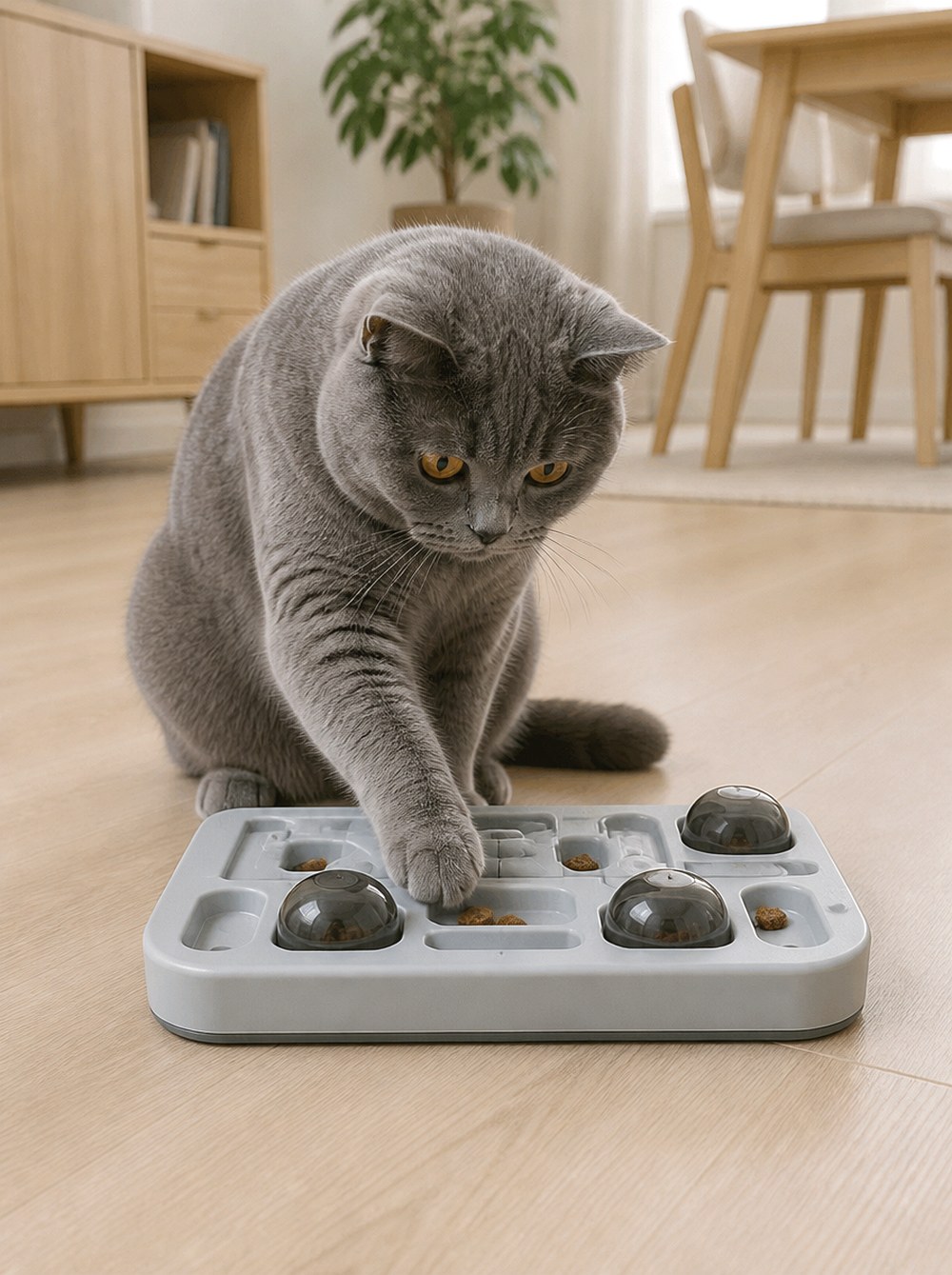
A puzzle feeder turns eating into a task without requiring additional floor space for long periods. It can be placed down for a session and stored afterward.
Choose a puzzle designed for cats and begin with a configuration that allows food to come out without too much effort. A puzzle that is immediately frustrating is unlikely to provide useful enrichment.
Some cats prefer pawing food from compartments. Others enjoy rolling or sliding mechanisms. Watch how your cat approaches the puzzle rather than assuming the most complicated option is the best one.
Wash food-contact surfaces regularly according to the product’s care instructions and check the puzzle for damaged or loose pieces.
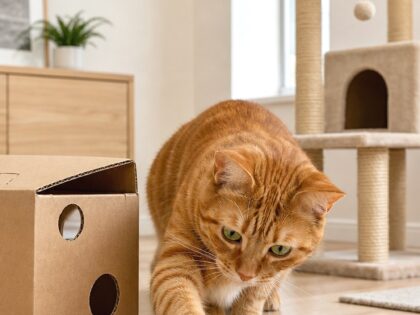
6. Create a Cardboard Exploration Zone
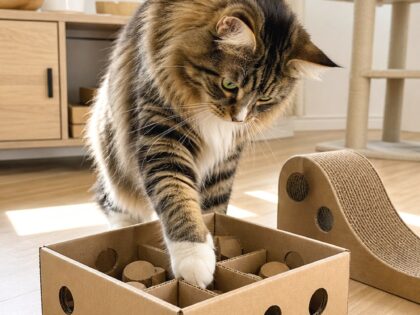
A clean cardboard box can temporarily change a familiar room without adding permanent furniture.
Place one sturdy box on the floor with an opening large enough for your cat to enter and turn around comfortably. You might occasionally change its orientation or place a familiar toy nearby so the setup does not always look identical.
Remove staples, tape, plastic, sharp edges, and loose pieces that could be chewed or swallowed. Replace the box once it becomes heavily damaged.
Using only one or two boxes at a time also prevents a small apartment from becoming an obstacle course for the humans living there.

7. Teach a Short Target-Touch Game
Training can be surprisingly well suited to tiny homes because it needs almost no floor space.
One beginner activity is teaching a cat to approach and touch a designated target, such as a purpose-made training target. Reward the behavior you want in small steps, keeping the session brief enough that your cat remains interested.
Once your cat understands the task, you can use the target to encourage a few steps from one safe location to another. This combines attention and light movement without requiring frantic exercise.
Never force your cat into position or continue when they walk away. A voluntary session is more useful than turning training into a contest of persistence.

Quiet Activities That Still Add Variety
Not every activity needs to involve running. Watching, sniffing, investigating, and settling in a strategically chosen location can also make indoor life more varied.
8. Create a Secure Window-Watching Spot
A window can provide changing sights that the apartment itself cannot.
Place a stable cat perch or sturdy piece of suitable furniture near a securely closed window. From there, your cat may watch pedestrians, leaves, weather, or outdoor wildlife while remaining safely indoors.
Check that screens and window fittings are secure. A standard insect screen should not automatically be assumed to withstand a cat leaning or pushing against it, so physical access to an open window needs careful management.
A window station becomes particularly useful in a studio apartment because it adds visual variety without taking over another room.

9. Rotate a Foldable Cat Tunnel Into the Room
A tunnel does not need to live on the floor all week.
Bring out a cat-safe foldable tunnel for a play period, then store it when your cat loses interest. The changing appearance of the room can make the tunnel more noticeable than if it remains in the same position indefinitely.
Some cats enjoy running through it during wand play, while others prefer sitting inside and observing. Let your cat choose how to interact rather than pushing them through.
Inspect fabric, seams, and attached pieces regularly. Stop using the tunnel if wire, torn fabric, or loose components become exposed.

10. Finish With a Slow Toy Search Under a Blanket Edge
For a lower-energy game, make a familiar toy seem temporarily mysterious.
While supervising, move a sturdy cat toy slowly along the outside edge of a lightweight blanket or beneath a small section where your cat can clearly reach it. The movement can encourage watching, stalking, and a few deliberate pounces without requiring much room.
Keep your hands away from the target area so your cat is not encouraged to attack fingers or feet through fabric. Use a toy large and durable enough for safe play, and end the activity if the fabric becomes damaged or your cat begins chewing pieces from it.
This can work well as a transition from active play toward a quieter part of the day.
You May Also Like


You Do Not Need All 10 Activities Every Day
In a small apartment, rotation usually works better than keeping every activity available at once.
A practical day might include a brief wand-toy session in the morning, a puzzle feeder for part of a meal, access to a window perch during a quiet period, and another short interactive activity later. On another day, the tunnel or cardboard box can replace one of those options.
Try to notice what each activity asks your cat to do. If today’s activities have all involved chasing, tomorrow’s mix could include climbing, searching, and training instead.
Older cats or cats with limited mobility may prefer shorter distances, lower climbing surfaces, and slower games. Kittens may need more frequent supervised play and more careful management of anything they might chew. If your cat suddenly becomes much less active, appears painful or weak, has breathing difficulty, repeatedly vomits, stops eating normally, develops bathroom changes, or shows a marked behavior change, contact a veterinarian rather than assuming boredom is the cause.
The goal is not to make a small apartment feel like a giant playground. It is to give the same space several useful purposes. Start with two or three activities your cat willingly engages with, then rotate in others as you learn which kinds of movement and exploration hold their attention.
