Cozy tunnels, soft curtains, simple boxes, and clever corner shelters can give a guinea pig enclosure more comfortable places to retreat and explore.
Save This Idea on Pinterest
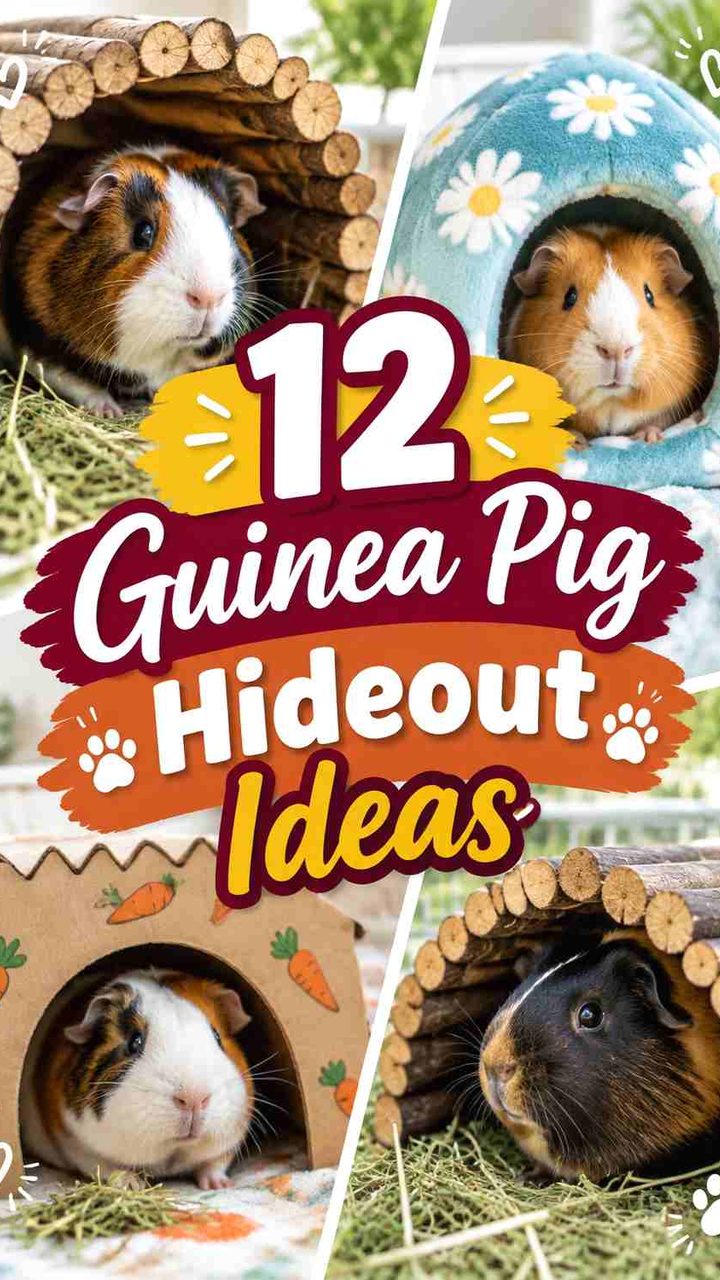
12 Guinea Pig Hideout Ideas
Save to PinterestGuinea pig hideouts work best when they provide a sheltered resting spot without crowding the enclosure or creating awkward dead ends. The right design depends on your guinea pig’s size, chewing habits, enclosure layout, and whether the space is shared with another guinea pig.
These ideas include washable fabric options, sturdy wooden shelters, inexpensive cardboard designs, compact corner setups, and flexible multi-pig layouts. As you compare them, look at entrance size, stability, ventilation, cleaning needs, floor space, and how easily each hideout can be checked for wear.
Quick List
- Cozy Fleece Curtain Hideout for Shy Guinea Pigs
- Sturdy Wooden Arch Hideout for Everyday Guinea Pig Resting
- Two-Door Cardboard Box Hideout for Easy Guinea Pig Enrichment
- Woven Grass Hut Hideout for Natural Guinea Pig Chewing
- Corner Canopy Hideout for Small Guinea Pig Enclosures
- Washable Fleece Tunnel Hideout for Cozy Guinea Pig Naps
- Low Platform Hideout for Space-Saving Guinea Pig Enclosures
- Fabric Cube Hideout with Soft Liner for Guinea Pigs
- Ceramic Tunnel Hideout for Easy-Clean Guinea Pig Resting
- Modular Panel Hideout for Flexible Guinea Pig Play Areas
- Double-Entrance Hideout for Guinea Pig Pairs and Groups
- Rotating Seasonal Hideout Station for Curious Guinea Pigs
1. Cozy Fleece Curtain Hideout For Shy Guinea Pigs

A fleece curtain hideout creates a soft sheltered corner without using a bulky enclosed house. Hang a short fleece panel over a low, stable frame so the guinea pig can walk underneath and rest behind the fabric while still having an easy route back into the enclosure. The curtain should be short enough that it does not bunch heavily around the feet or block movement.
This style is especially practical when you want a quieter-looking retreat that can be removed for washing. Check the fleece regularly for chewing, loose threads, damp spots, and trapped hay. If your guinea pig repeatedly pulls or damages fabric, switch to a sturdier shelter rather than leaving frayed material available.
Best For
This setup can suit guinea pigs that enjoy partially covered resting places but still like to watch activity around the enclosure.
Cleaning Notes
Shake out hay daily and wash the fleece whenever it becomes soiled or damp.
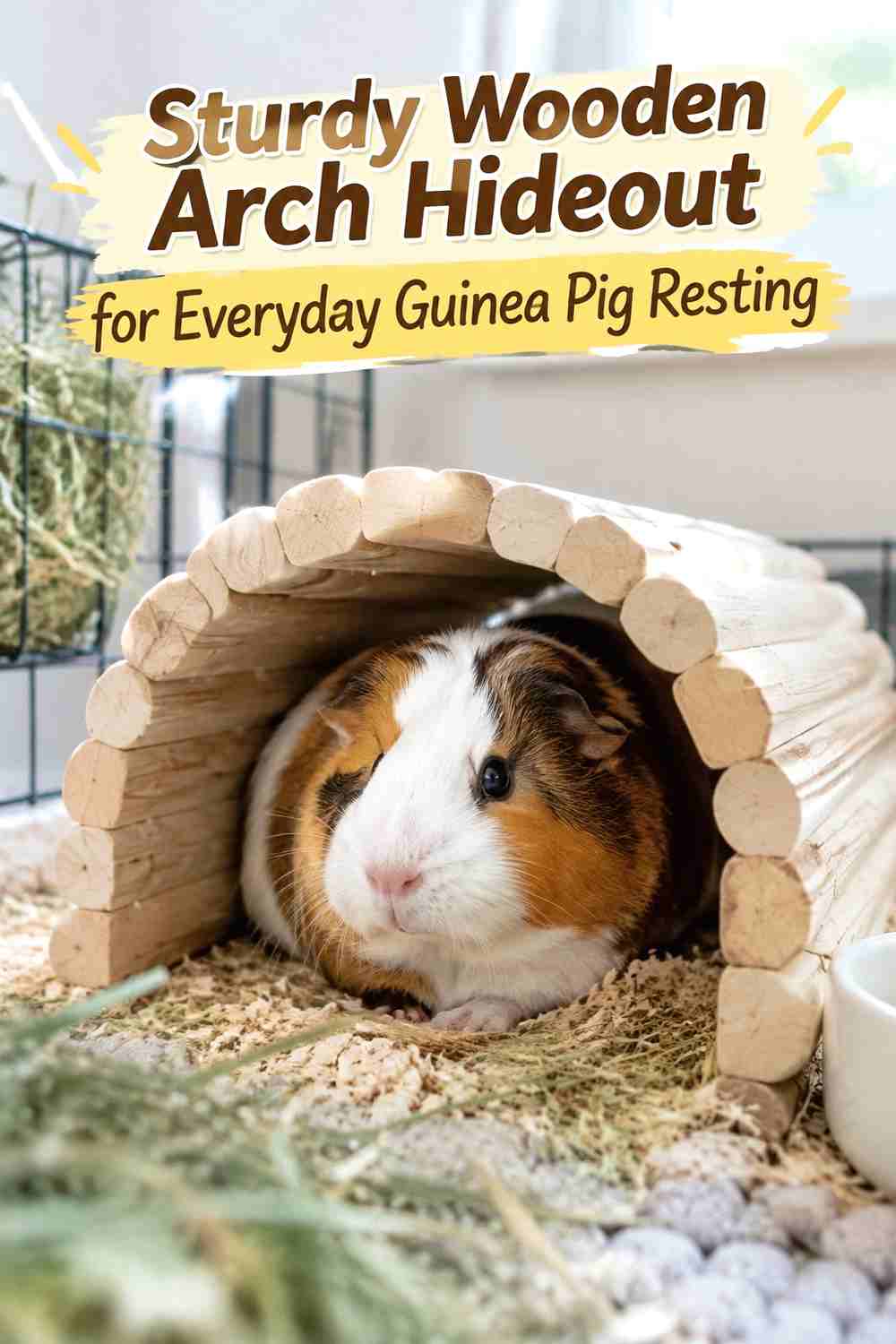
2. Sturdy Wooden Arch Hideout For Everyday Guinea Pig Resting
You May Also Like



A sturdy wooden arch creates a simple tunnel-like retreat with open ends and a solid roof. Place it on a flat section of bedding where your guinea pig can walk through comfortably without squeezing past sharp corners or unstable pieces. The open design makes it easy to check the interior and gives the animal more than one direction for entering or leaving.
Choose an unfinished, pet-appropriate wooden structure without exposed nails, staples, splinters, paint flakes, or decorative hardware. Because guinea pigs may chew accessible edges, inspect the arch often and smooth or replace damaged pieces when needed. Avoid placing heavy objects on top unless the structure was specifically designed to support them safely.
Why It Works
An arch combines shelter with an open traffic route, which can make it easier to fit into an active enclosure.
Use & Maintenance
Brush away bedding and hay from underneath so moisture and debris do not remain hidden around the base.
3. Two Door Cardboard Box Hideout For Easy Guinea Pig Enrichment

A plain cardboard box becomes an inexpensive guinea pig hideout when you add two generously sized doorways on different sides. The second opening gives the guinea pig another route through the shelter, while the cardboard provides a lightweight setup that can be rearranged easily during enclosure changes.
Use clean, plain cardboard with tape, staples, plastic windows, handles, and loose labels removed. Cut openings smoothly so no narrow flaps or sharp edges remain. Since cardboard quickly absorbs moisture and may be chewed, treat this as a temporary hideout rather than a permanent structure. Replace it once it becomes damp, heavily shredded, or difficult to keep clean.
Best For
Cardboard works well for low-cost rotation, temporary floor-time setups, and guinea pigs that enjoy exploring changing layouts.
Pro Tip
Place the box where both doorways stay open rather than pushing one entrance tightly against a wall.
4. Woven Grass Hut Hideout For Natural Guinea Pig Chewing
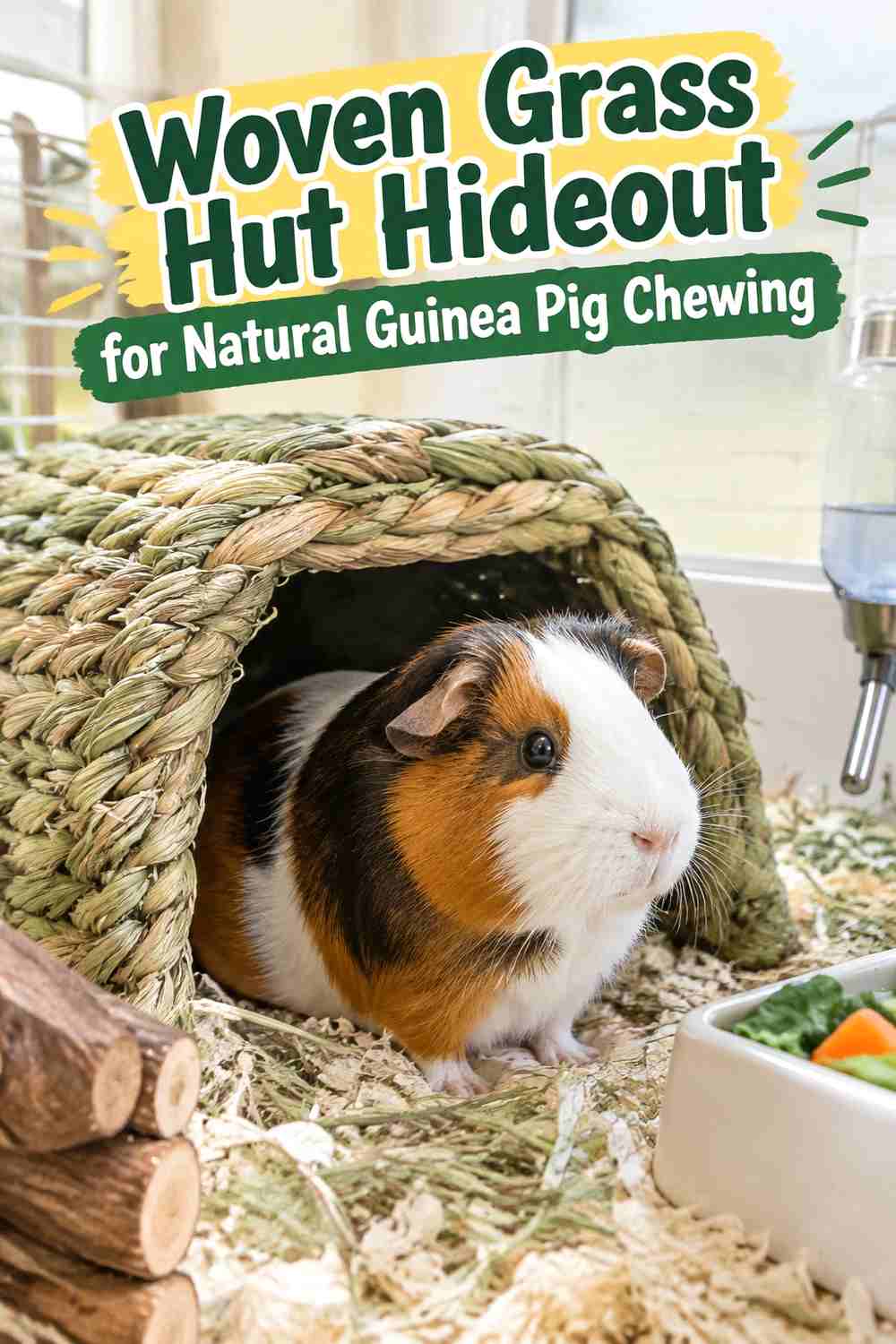
A woven grass hut combines a covered retreat with a texture that some guinea pigs may investigate and chew. Choose a roomy hut with a stable base and an entrance large enough for the guinea pig to move through comfortably. Position it away from crowded corners so the doorway remains easy to approach.
Because woven shelters can gradually loosen as they are chewed, inspect the hut frequently for sharp ends, collapsing walls, long strands, or pieces that have become unstable. Remove it once the structure no longer holds its shape safely. Hay and bedding can also become caught between woven sections, so regular shaking and spot cleaning help keep debris from building up.
Pet Type & Life Stage
Choose the size according to the individual guinea pig rather than assuming one hut will comfortably fit every adult.
Use & Maintenance
Rotate or replace the hut as wear develops instead of waiting until it begins falling apart inside the enclosure.
5. Corner Canopy Hideout For Small Guinea Pig Enclosures

A corner canopy turns unused enclosure space into a sheltered resting area without placing another large house in the center. Stretch a small piece of suitable washable fabric over a secure low frame in one corner, leaving the front and at least one side open for easy access and visibility.
The canopy should stay firmly attached without loose cords, clips, or dangling fasteners within chewing reach. Keep it high enough that the guinea pig can sit and turn naturally but low enough to maintain the cozy covered effect. Because this shelter shares a wall with the enclosure, check the corner underneath for hidden moisture, food pieces, and bedding that may be overlooked during quick cleanups.
Space & Placement
This design is especially useful when you want to preserve an open path across the middle of a compact enclosure.
Comfort & Safety
Avoid fabric that sags heavily onto the guinea pig or restricts the entrance when it shifts.
6. Washable Fleece Tunnel Hideout For Cozy Guinea Pig Naps

A washable fleece tunnel provides a soft covered passage that can double as a nap spot. Choose a tunnel that stays open on its own rather than collapsing flat, and place it along the enclosure edge where your guinea pig can enter from either side without blocking another important resource.
The washable construction makes this hideout practical for animals that frequently soil favorite resting areas. Keep a second tunnel or another shelter available while one is being washed so the enclosure does not suddenly lose all covered spaces. Check seams, internal supports, and fleece surfaces for chewing or damage before returning the tunnel after cleaning.
Best For
Fleece tunnels suit indoor setups where soft washable accessories are easy to rotate and launder.
Cleaning Notes
Shake out loose hay first, then wash according to the fabric’s care needs and allow the tunnel to dry fully before reuse.
7. Low Platform Hideout For Space Saving Guinea Pig Enclosures

A low platform can create two useful zones at once: a shaded hideout underneath and a simple raised surface above. The lower space should be tall and wide enough for the guinea pig to move freely, while the platform itself needs a stable, non-slip design that does not wobble or shift during normal use.
Keep the platform genuinely low and provide easy access if the upper surface is intended for use. Avoid steep ramps, narrow ledges, or elevated arrangements that encourage awkward jumping. The underside should also remain visible enough for routine checks because hay, droppings, and damp bedding can collect in sheltered areas without being noticed immediately.
Space & Placement
This option works well when enclosure floor space is limited and each piece of furniture needs to serve more than one purpose.
Cleaning Notes
Lift or move the platform during regular cleaning so the floor underneath does not become a forgotten spot.
8. Fabric Cube Hideout With Soft Liner For Guinea Pigs

A fabric cube creates a soft enclosed retreat with a defined doorway and a removable liner underfoot. Choose a cube large enough for the guinea pig to turn comfortably rather than squeezing into a tightly fitted decorative bed. A flat washable pad inside can make routine cleaning easier than washing the entire cube after every small mess.
Place the cube on a stable section of the enclosure where the doorway stays fully open. Inspect seams, stuffing, zippers, and decorative details carefully, particularly if your guinea pig chews fabric. Any exposed filling or damaged fastener is a reason to remove the cube. Fabric shelters also need regular laundering because their enclosed shape can trap hay, fur, and moisture.
Best For
This hideout can suit guinea pigs that enjoy more enclosed resting spots and owners who prefer soft washable accessories.
Pro Tip
Keep a spare liner nearby so you can replace a damp pad without removing the whole hideout.
9. Ceramic Tunnel Hideout For Easy Clean Guinea Pig Resting
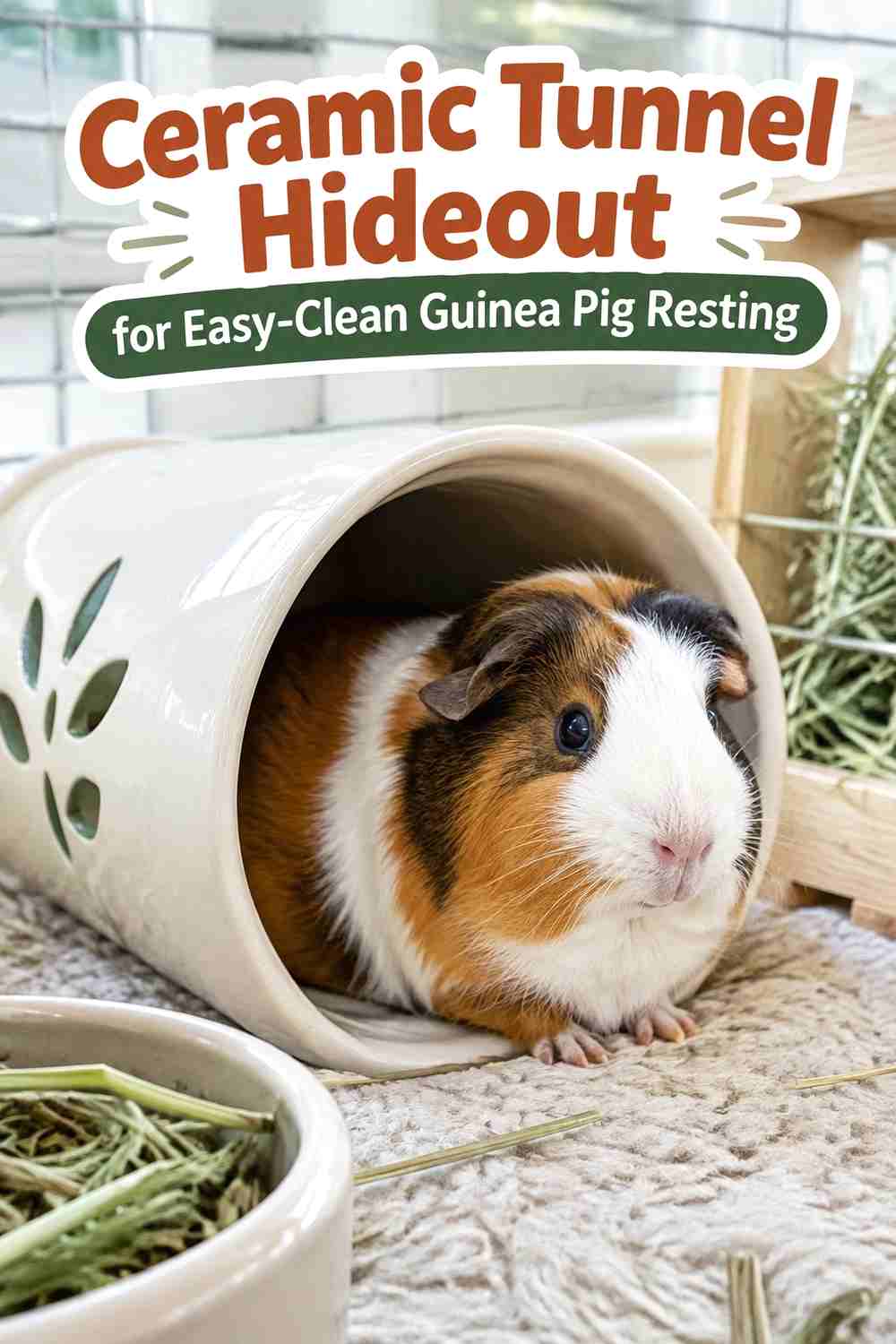
A ceramic tunnel provides a solid, smooth-sided hideout that is simple to wipe clean. Use a low, wide tunnel with rounded edges and enough interior room for comfortable movement. Its weight can help it stay in place, but that same weight means it should sit securely on a flat surface where it cannot tip or fall onto the guinea pig.
Check the ceramic carefully for chips, cracks, or sharp damaged areas before each reuse. Unlike soft bedding-based hideouts, the hard surface does not provide cushioning, so place it over the normal enclosure floor or bedding rather than treating it as a complete sleeping setup by itself. Keep both ends unobstructed when possible.
Why It Works
A non-porous surface can simplify spot cleaning when your guinea pig frequently soils favorite shelters.
Use & Maintenance
Wash and dry the tunnel as needed, and replace it if cracks or chipped edges appear.
10. Modular Panel Hideout For Flexible Guinea Pig Play Areas

A modular panel hideout uses several secure low panels to form a simple covered nook or short passage that can be rearranged as the enclosure changes. This makes it useful for owners who frequently adjust floor-time layouts or want a shelter that can become wider, shorter, or more open without buying another hideout.
Arrange the panels so they cannot collapse inward, separate unexpectedly, or create narrow gaps where a guinea pig could become stuck. The finished shelter should have clear entrances and enough room to turn naturally. Keep connectors and fastening pieces outside chewing reach whenever possible. Because modular setups can shift during cleaning, check stability again each time the structure is rebuilt.
Best For
This approach suits changing layouts, temporary play areas, and owners who want one shelter to serve several configurations.
Pro Tip
Photograph a successful arrangement before dismantling it so you can recreate the same stable setup later.
11. Double Entrance Hideout For Guinea Pig Pairs And Groups
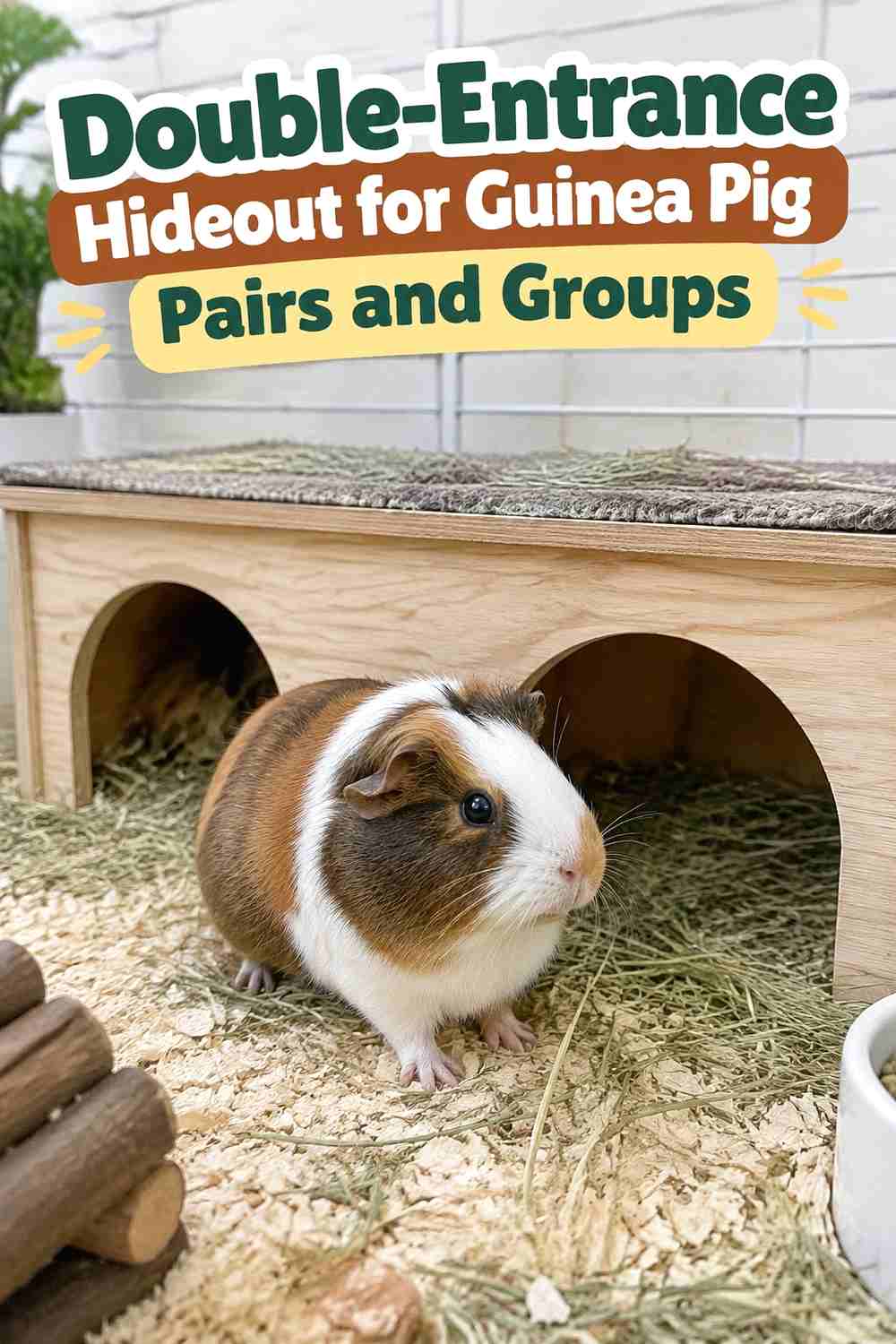
A double-entrance hideout gives guinea pigs more than one route into and out of the shelter. This can be especially useful in shared enclosures because one animal is less likely to be left facing a single blocked doorway. Choose a roomy structure with two clearly separated openings and enough interior space for normal turning and resting.
Even with multiple entrances, provide more than one hiding option when several guinea pigs share the enclosure rather than expecting every animal to use the same shelter. Watch how the group actually uses the space and adjust placement if one doorway repeatedly becomes crowded. Stable wooden, fabric, cardboard, or other suitable designs can work as long as the material and construction match your guinea pigs’ chewing habits.
Space & Placement
Leave clear travel paths around both entrances instead of placing the hideout tightly between other furniture.
Best For
This design is particularly practical in multi-guinea-pig layouts where easy movement between resting and open areas matters.
12. Rotating Seasonal Hideout Station For Curious Guinea Pigs
You May Also Like




A rotating hideout station keeps the same enclosure area useful while allowing you to swap between different safe shelter styles. You might alternate a fleece tunnel, cardboard house, wooden arch, or washable cube depending on cleaning needs, room conditions, and what your guinea pig currently uses most.
The goal is practical variety rather than constant change. Introduce one replacement at a time and watch whether your guinea pig enters, ignores, chews, or avoids it before deciding whether it deserves a place in the regular rotation. Keep at least one familiar shelter available during changes so the whole enclosure does not become unfamiliar at once. Store cleaned backup hideouts somewhere dry between uses.
Why It Works
Rotation lets you match shelter type to cleaning schedules, available space, and changing preferences without overcrowding the enclosure.
Pro Tip
Keep only a few successful hideouts in rotation and remove designs your guinea pig consistently avoids.
How to Choose the Right Idea
Start with your guinea pig’s size, personality, and chewing habits. A guinea pig that frequently chews fabric may be better suited to sturdy wood, cardboard, grass, or another appropriate material, while a guinea pig that enjoys soft resting areas may use fleece tunnels and cubes more readily.
Next, look at enclosure space. Large houses can reduce open floor area, so corner canopies, low platforms, arches, and tunnels may work better in tighter layouts. In shared enclosures, consider shelters with more than one entrance and provide enough separate hiding choices so animals are not forced to share one enclosed spot.
Cleaning should influence the decision too. Fabric requires laundering, cardboard needs regular replacement, woven shelters need wear checks, and solid surfaces may be easier to wipe. Whatever you choose, prioritize stability, comfortable entrances, clear movement paths, and routine inspection.
Final Thoughts
A useful guinea pig hideout should feel sheltered without becoming cramped, unstable, or difficult to maintain. Choose one or two styles that fit your enclosure first, then adjust the mix based on how your guinea pigs actually use the space.
FAQs
1. How many hideouts should guinea pigs have?
Provide enough sheltered options for the guinea pigs sharing the enclosure so they are not forced to rely on one retreat. The exact arrangement depends on enclosure size and how the animals use the available spaces.
2. Are hideouts with two entrances better for guinea pigs?
Two entrances can be useful, especially in shared enclosures, because they provide another route through the shelter. Single-entrance hideouts can still work when placement and social dynamics make them suitable.
3. Can I make a guinea pig hideout from cardboard?
Yes, clean plain cardboard can work as a temporary hideout. Remove tape, staples, plastic, loose labels, and other unsuitable pieces, and replace the box once it becomes damp or heavily damaged.
4. How often should fabric guinea pig hideouts be washed?
Wash them whenever they become damp, soiled, or noticeably dirty rather than relying on a fixed schedule. Keeping a spare liner or second shelter can make cleaning rotations easier.
5. Should I change my guinea pig’s hideouts regularly?
You can rotate hideouts for cleaning or variety, but frequent complete changes are unnecessary. Keeping at least one familiar shelter during layout changes can make the transition simpler.
CTA
Save your favorite guinea pig hideout ideas and explore more practical enclosure setups for comfortable, organized everyday routines.
