A naturalistic hamster enclosure can combine deep bedding, hidden routes, digging areas, varied textures, and foraging opportunities without sacrificing everyday cleaning or safety.
Save This Idea on Pinterest

14 Hamster Natural Habitat Ideas
Save to PinterestHamster natural habitat ideas work best when they recreate useful behaviors rather than simply making an enclosure look rustic. Burrowing, hiding, exploring covered routes, digging, gathering nesting material, and searching for food can all shape a more functional setup.
The ideas below are designed for pet hamsters living indoors, not as exact copies of wild habitat. You can combine several according to species, body size, enclosure space, chewing habits, cleaning routine, and the amount of open floor area your hamster needs.
Quick List
- Deep Bedding Burrow Zone for Natural Hamster Digging
- Multi-Chamber Wooden Hide for Secure Hamster Nesting
- Cork Log Tunnel for Natural Hamster Exploration
- Sand Bath Corner for Natural Hamster Grooming Behavior
- Scatter-Foraging Floor Zone for Natural Hamster Food Searching
- Soft Paper Nesting Pocket for Natural Hamster Burrow Building
- Low Wooden Bridge Path for Natural Hamster Exploration
- Mixed-Texture Dig Box for Natural Hamster Enrichment
- Natural Chew Branch Station for Busy Hamster Evenings
- Root-Style Tunnel Maze for Natural Hamster Movement
- Burrow Entrance Starter for Deep-Bedding Hamster Habitats
- Dried Forage Patch for Natural Hamster Searching Behavior
- Low Stone-Look Platform for Natural Hamster Habitat Texture
- Layered Naturalistic Habitat Layout for Active Indoor Hamsters
1. Deep Bedding Burrow Zone For Natural Hamster Digging

A deep bedding zone gives your hamster a generous area for digging, tunneling, nesting, and reshaping the enclosure. Instead of spreading the same shallow layer everywhere, build one deeper section where bedding can hold pathways more effectively and give the hamster room to create a private underground area.
Use a suitable low-dust bedding that can maintain some structure when packed gently. Keep heavy accessories on stable supports rather than placing them loosely on top of deep bedding where digging could undermine them. Leave part of the enclosure more open so food, water, the wheel, and frequently cleaned areas remain easy to access. Watch where your hamster naturally begins tunnels before repeatedly rearranging the zone.
Why It Works
Digging changes the environment through the hamster’s own activity, making this idea more functional than purely decorative natural-themed accessories.
Cleaning Notes
Spot-clean accessible dirty areas while avoiding unnecessary destruction of established clean tunnels and nesting spaces.
2. Multi Chamber Wooden Hide For Secure Hamster Nesting
You May Also Like



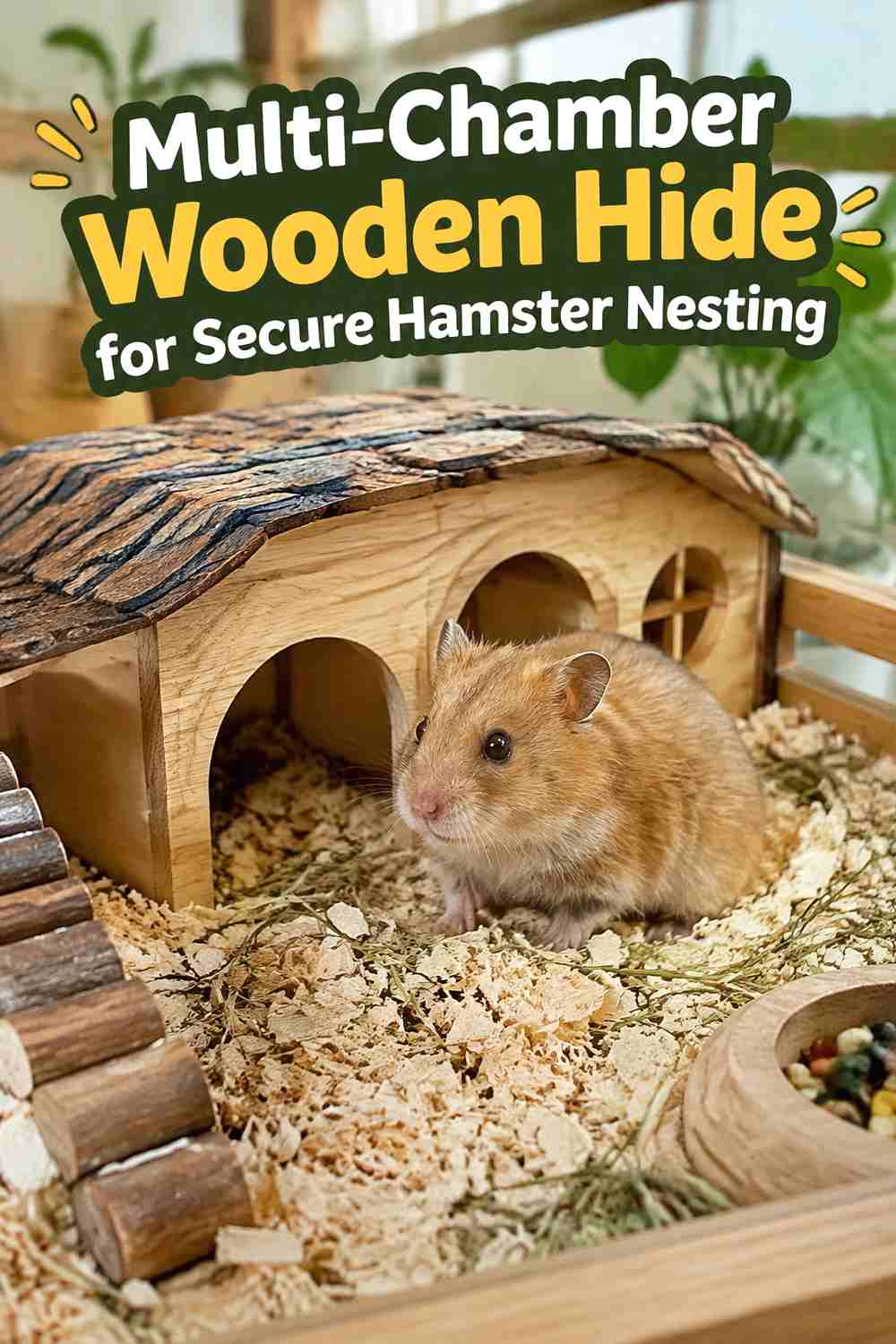
A multi-chamber wooden hide creates several connected rooms that can imitate the separated spaces a hamster may prefer for sleeping, storing material, or simply retreating from the open enclosure. Place it partly beneath bedding or against a deeper substrate area so the entrances connect naturally with the surrounding habitat.
Choose a sturdy, appropriately sized hide with smooth edges and no exposed hardware, splinters, coatings, or tight openings. A removable roof can make routine checks easier without forcing you to dismantle the entire enclosure. Avoid burying the hide so completely that ventilation, inspection, or safe access becomes difficult. Let your hamster decide which chamber becomes the main nest instead of filling every compartment yourself.
Best For
This idea suits naturalistic layouts where you want a permanent sheltered base connected to burrowing and exploration areas.
Use & Maintenance
Check the chambers periodically for damp bedding, spoiled food, or heavy soiling while keeping disruption to a minimum.
3. Cork Log Tunnel For Natural Hamster Exploration
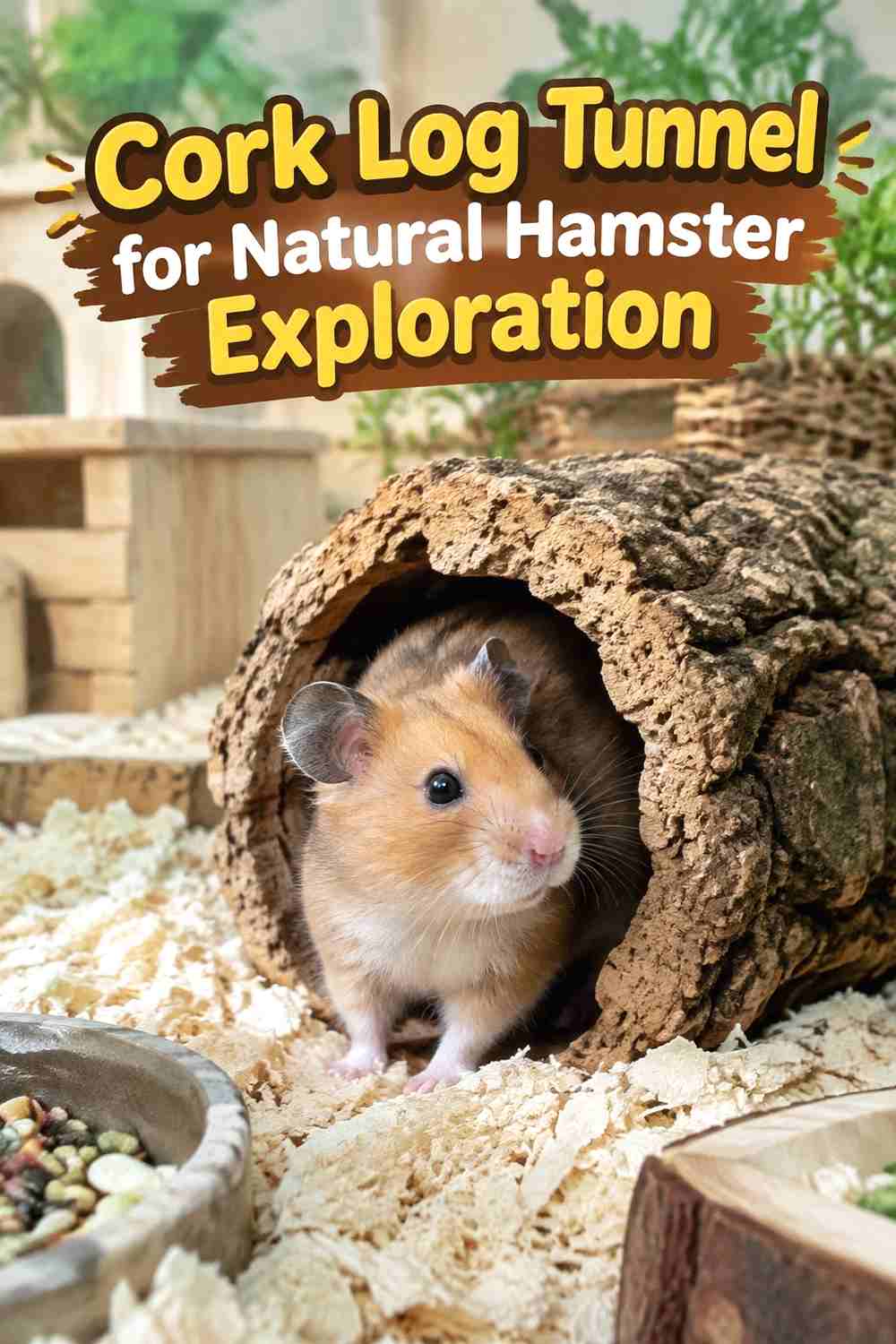
A cork log tunnel adds a rough natural texture and a covered route through the enclosure. Lay it horizontally across the bedding or partly sink it into the substrate so your hamster can travel through, climb gently over, or investigate the textured surface without encountering a large drop.
Choose a piece with an opening comfortably wider than your hamster’s body and inspect the inside for sharp fragments or narrow sections before use. The log should sit securely rather than rolling when pushed. Positioning one end near a hide or burrow zone can make it feel like part of a connected route instead of an isolated decoration. Cork also collects bedding and food debris, so lift it periodically for cleaning.
Why It Works
The combination of shelter, texture, and movement makes one accessory useful in several different ways without overcrowding the enclosure.
Comfort & Safety
Replace damaged pieces if chewing creates sharp edges or weak sections that no longer sit securely.
4. Sand Bath Corner For Natural Hamster Grooming Behavior
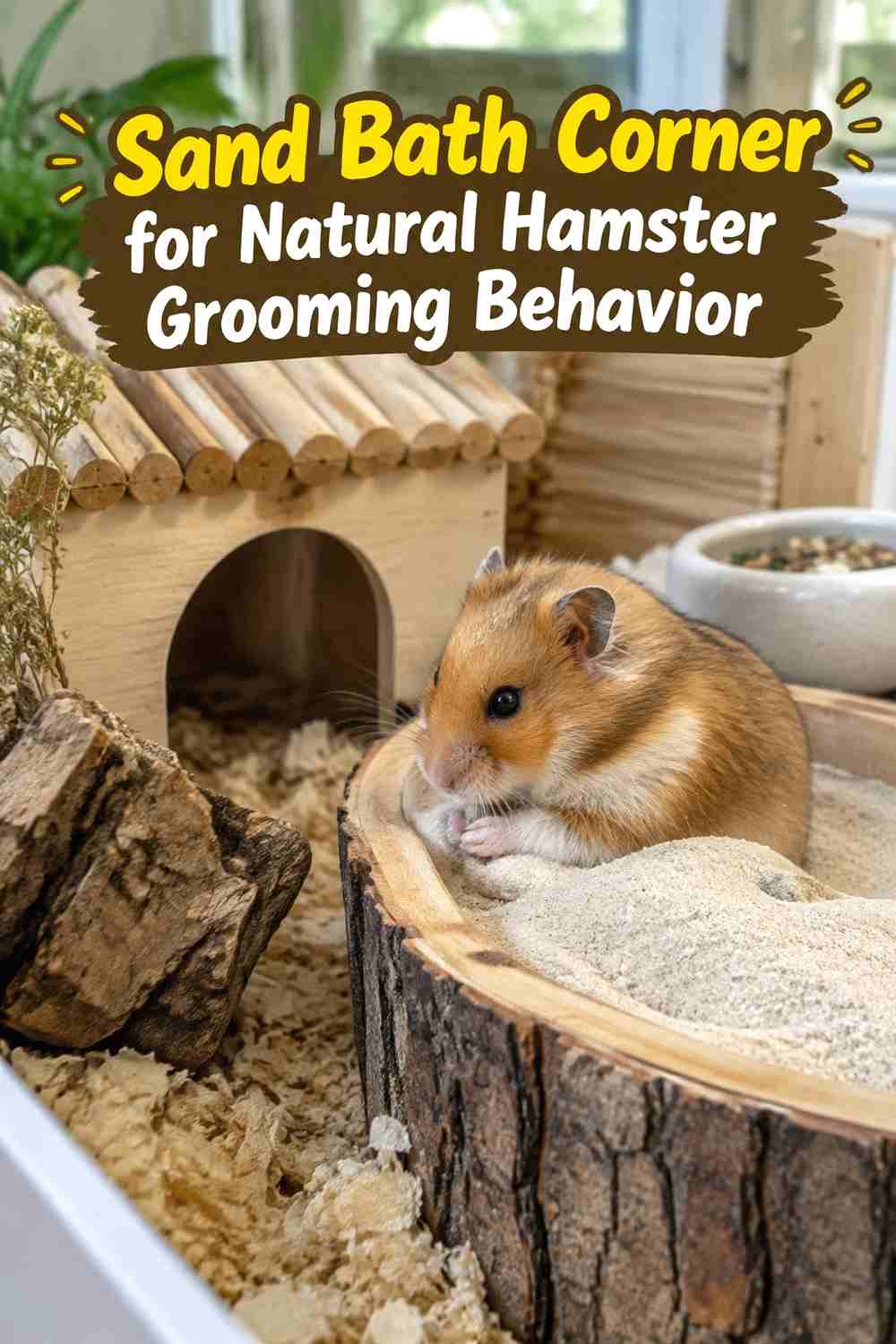
A dedicated sand bath corner gives your hamster a separate texture for rolling, digging, and normal grooming behavior. Use a broad, stable container that allows the hamster to turn around comfortably without tipping the dish or scattering most of the contents into nearby bedding.
Choose hamster-appropriate sand rather than dusty bathing powders, and position the container on a firm surface so burrowing cannot make it lean or collapse. A partly sheltered location can make the area feel less exposed while still allowing you to monitor cleanliness. Some hamsters also use sand areas as toilet spots, which can make routine spot cleaning easier. Keep the sand zone separate from damp items and water spills.
Space & Placement
A corner location can contain scattered sand better while preserving the center of the enclosure for movement.
Cleaning Notes
Sift or replace soiled sand as needed and wash the container whenever residue begins to build up.
5. Scatter Foraging Floor Zone For Natural Hamster Food Searching
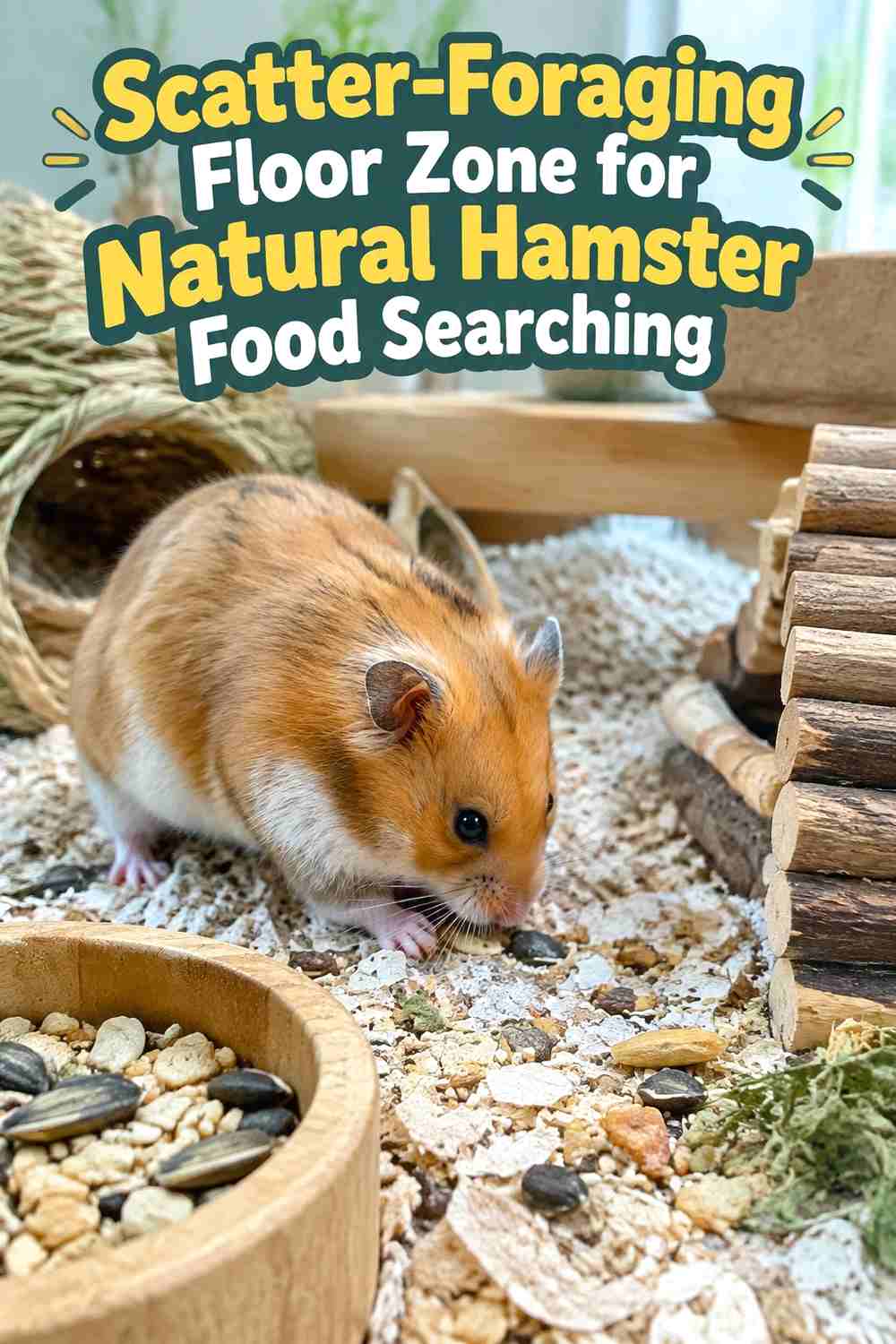
A scatter-foraging zone turns part of the enclosure floor into a searching area rather than placing every suitable dry food item in one obvious bowl. Spread part of the hamster’s regular dry food across clean bedding or around safe enclosure features so the hamster has to move, sniff, and investigate to find it.
Keep the setup simple enough that you can monitor what is being eaten and avoid placing food where moisture or heavy soiling commonly collects. Scatter feeding should remain part of the normal feeding routine rather than becoming an excuse to add excessive extras. You can vary the location occasionally without constantly rearranging the whole habitat.
Why It Works
Searching across several small areas encourages more movement and investigation than repeatedly visiting one feeding point.
Use & Maintenance
Check likely food-storing areas during cleaning and remove anything that has become damp, spoiled, or heavily soiled.
6. Soft Paper Nesting Pocket For Natural Hamster Burrow Building

A soft paper nesting pocket provides loose material your hamster can collect and carry into a preferred sleeping area. Place small amounts of plain, suitable paper nesting material in an open section of the enclosure rather than packing it directly inside the nest yourself.
This gives the hamster control over where the material goes and how the sleeping space is arranged. Avoid stringy, fluffy, or fibrous nesting products that can wrap around limbs or become difficult to separate. The pocket can simply be a shallow open area beside a burrow zone or hide, making it easy to replenish without disturbing the established nest. If unused material becomes damp or dirty, replace it instead of piling fresh paper on top.
Best For
This works well for hamsters that regularly transport bedding and actively rebuild their sleeping area.
Pro Tip
Offer manageable amounts at a time so you can see whether your hamster actually uses the material before adding more.
7. Low Wooden Bridge Path For Natural Hamster Exploration

A low wooden bridge can create a gently changing route between bedding zones, tunnels, hides, or feeding areas. Keep the bridge close to the substrate so it feels like a textured pathway rather than a high climbing structure. Hamsters are ground-focused animals, so the goal is exploration rather than height.
Choose a solid bridge with narrow gaps, smooth edges, and secure placement. Bedding can be built up around the sides to soften the transition and reduce exposed drops. Avoid steep arches or unstable bendable bridges that can shift when the hamster walks underneath. Used thoughtfully, one low bridge can also divide different substrate zones without placing a tall wall across the enclosure.
Space & Placement
Position the bridge where it connects two useful areas instead of placing it only as decoration.
Comfort & Safety
Recheck stability after major burrowing because digging can change the support underneath nearby accessories.
8. Mixed Texture Dig Box For Natural Hamster Enrichment

A mixed-texture dig box adds a distinct digging experience without replacing the main bedding area. Fill a stable container with an appropriate hamster-safe digging substrate that feels noticeably different from the surrounding bedding, then partly sink the box so entry remains easy.
Keep the material dry, low in dust, and free from additives or unfamiliar decorative pieces. The container should be large enough for your hamster to turn and dig rather than serving as a tiny sample cup. Some hamsters immediately investigate a new texture, while others may ignore it for several days. Give the area time before deciding it has failed, and avoid changing several enclosure features at once.
Why It Works
A dedicated dig box creates another texture and activity zone without making the entire enclosure harder to clean.
Cleaning Notes
Remove food caches, wet material, and heavily soiled substrate instead of automatically replacing the whole box after every minor use.
9. Natural Chew Branch Station For Busy Hamster Evenings

A natural chew branch station groups suitable untreated wooden chew items in one easy-to-check area. Place a few stable pieces near a frequently traveled route so your hamster can investigate, carry, gnaw, or move around them during active periods.
Only use wood known to be suitable for small pets, and avoid branches collected from unknown, treated, sprayed, painted, moldy, or contaminated sources. The pieces should be large enough that they do not become tiny loose hazards and should lie securely rather than creating unstable climbing points. Keeping them together also makes wear easier to monitor than scattering many small chew pieces throughout deep bedding.
Best For
This idea suits naturalistic enclosures where you want chewable textures without filling every zone with loose accessories.
Use & Maintenance
Remove pieces that become heavily soiled, splintered, damp, or difficult to inspect safely.
10. Root Style Tunnel Maze For Natural Hamster Movement
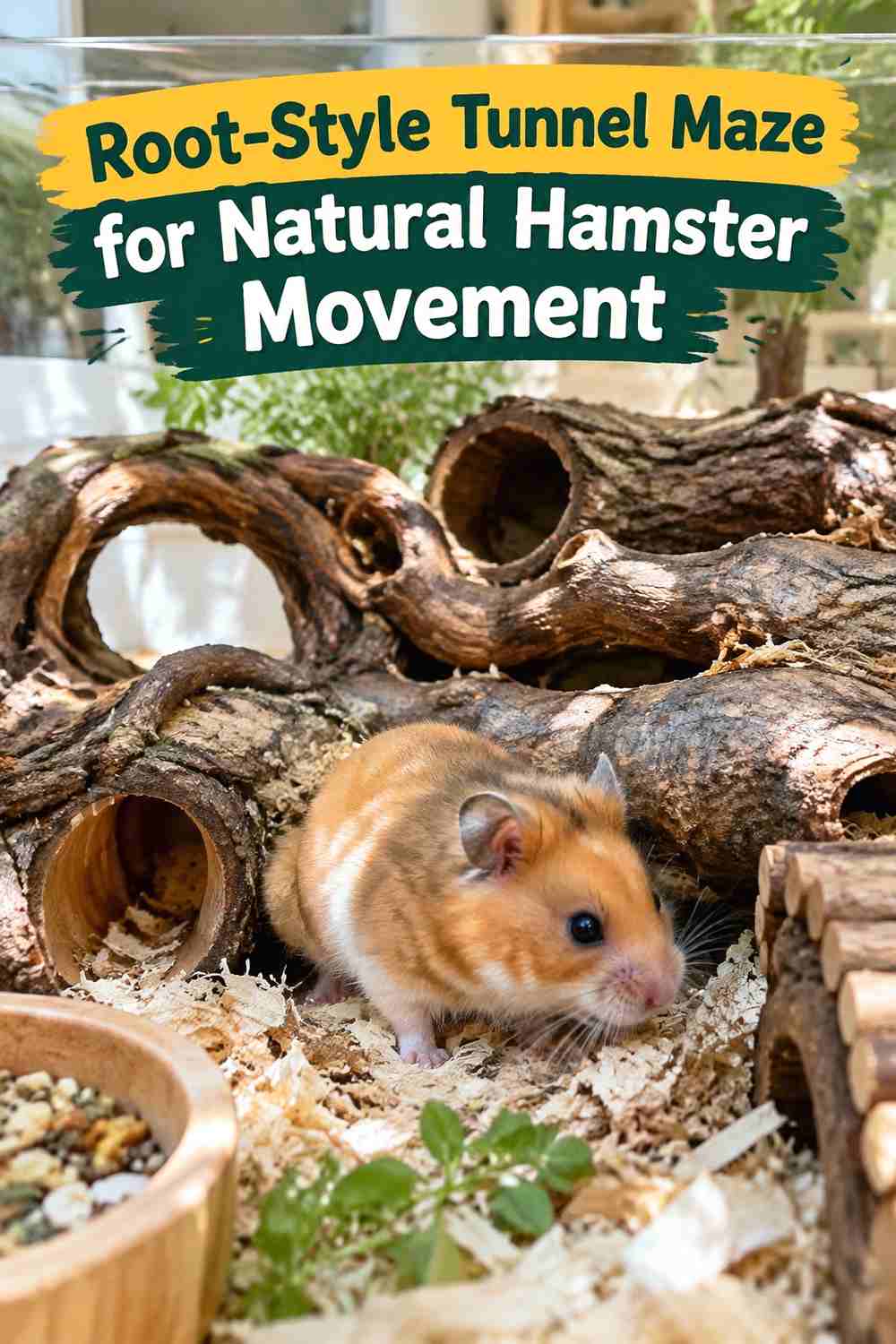
A root-style tunnel maze uses several low tunnels and covered passages to create connected routes across the enclosure. Combine cork pieces, sturdy tubes, or other hamster-appropriate tunnels so the animal can move between open and sheltered areas without relying on one straight pathway.
Keep every tunnel wide enough for comfortable passage and avoid long enclosed runs that are difficult to inspect. The maze should remain simple enough that you can lift individual pieces during cleaning without dismantling the whole habitat. Partially covering some sections with bedding can make the layout feel more integrated, while leaving other sections visible helps you monitor use. Avoid creating dead ends in tight spaces where access is limited.
Why It Works
A connected route lets the hamster choose between exposed and covered movement while exploring several parts of the enclosure.
Pro Tip
Change only one tunnel connection at a time if you want variety without completely resetting familiar routes.
11. Burrow Entrance Starter For Deep Bedding Hamster Habitats
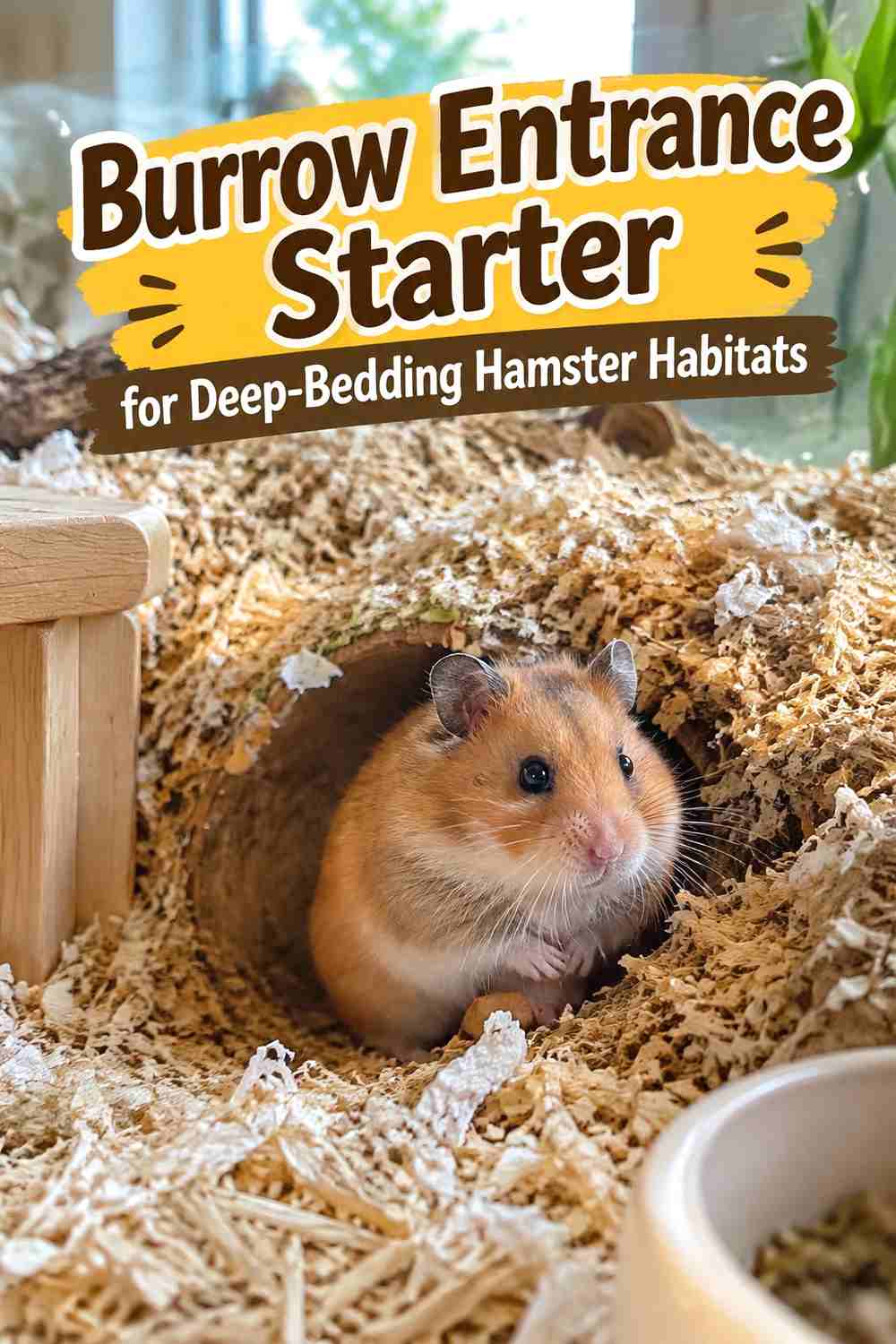
A burrow entrance starter gives your hamster an obvious beginning point for tunneling into deep bedding. Create a short, stable tunnel opening at the edge of the deepest substrate zone and let the hamster decide whether to extend, ignore, or reshape it.
The starter should not force the entire burrow layout or create an inaccessible chamber. Keep the entrance wide, smooth, and easy to inspect, and support any solid structure independently so it cannot collapse if bedding is moved underneath. This idea can be especially useful when fresh bedding is first added and the surface seems too open. Once the hamster begins modifying the area, resist the urge to keep restoring the entrance to its original appearance.
Best For
This works well in deep-bedding setups where you want to encourage exploration without constructing a complete artificial tunnel system.
Comfort & Safety
Do not place heavy decorations directly above unsupported burrow areas.
12. Dried Forage Patch For Natural Hamster Searching Behavior

A dried forage patch creates a small textured area where suitable hamster-safe dried plant material can be scattered among bedding or around a low shelter. The goal is to make the enclosure more interesting to investigate, not to turn it into a decorative garden.
Use only materials specifically appropriate for hamsters and keep the patch dry and easy to inspect. Avoid unknown wild plants, treated flowers, scented decorative mixes, or anything collected from areas that may have been sprayed. Keep the amount modest so you can see whether your hamster actually investigates the patch and so leftover material does not disappear unnoticed beneath bedding.
Why It Works
A forage patch adds scent, texture, and searching opportunities to one defined area without changing the entire enclosure.
Use & Maintenance
Remove damp, dirty, or stale material during routine checks and refresh only what your hamster is actually using.
13. Low Stone Look Platform For Natural Hamster Habitat Texture

A low stone-look platform adds a firm, smooth texture among softer bedding, cork, and wood. Use a stable pet-safe ceramic or stone-style surface placed directly on a secure base, where your hamster can walk across it, sit briefly, or use it as a firm spot near a feeding or sand area.
The platform should be broad, flat, and low rather than functioning as a climbing ledge. Avoid sharp edges, loose stacked stones, or decorative arrangements that can shift when bedding is moved. Because hard surfaces are easy to wipe, this type of platform can also provide a practical base for a bowl or other small accessory that might otherwise tilt on deep substrate.
Space & Placement
Place it near the edge of a deep bedding zone so it provides contrast without taking over valuable digging space.
Cleaning Notes
Lift and wipe underneath it regularly because bedding and food particles can collect around the edges.
14. Layered Naturalistic Habitat Layout For Active Indoor Hamsters
You May Also Like



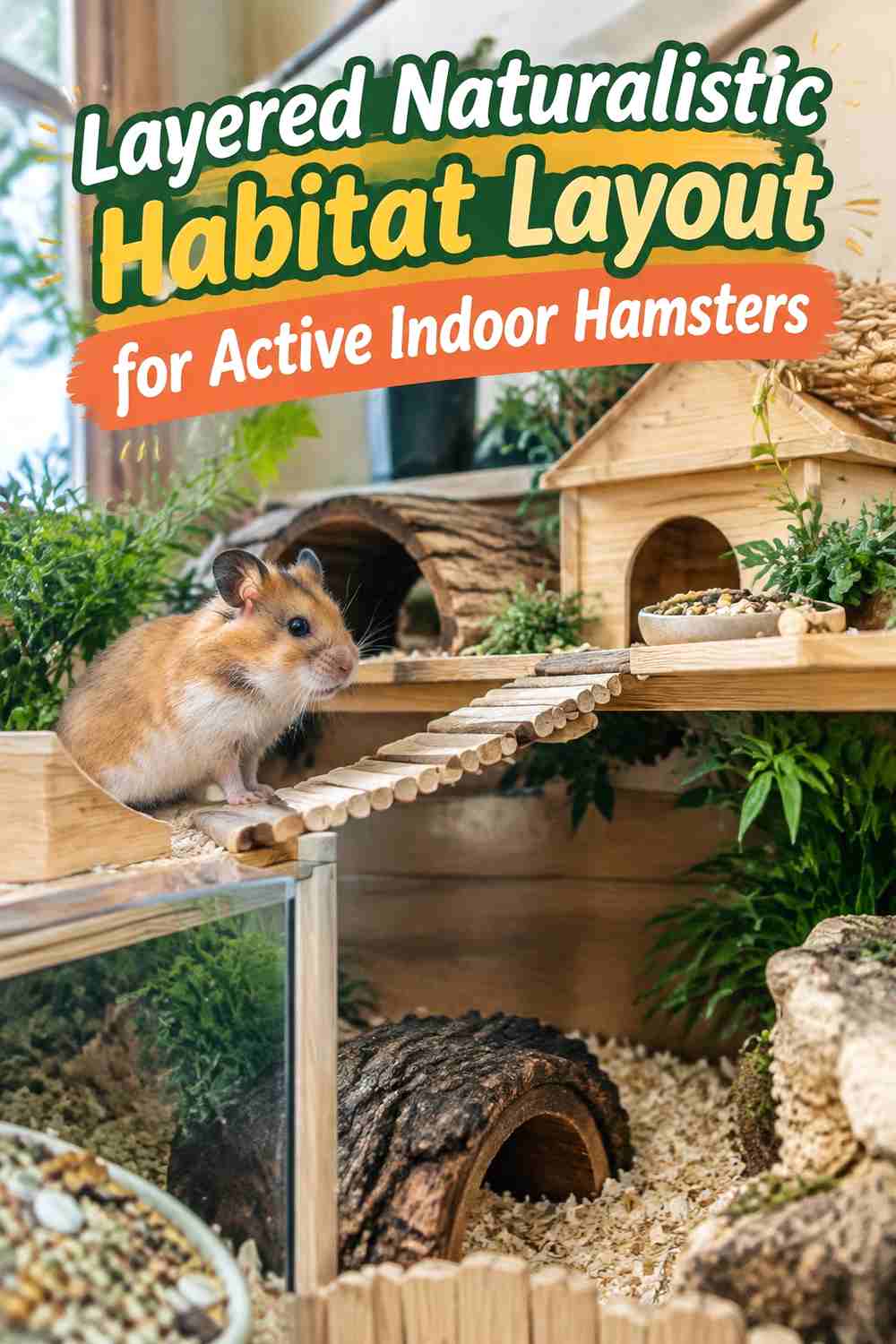
A layered naturalistic habitat combines several functional zones instead of relying on one centerpiece. You might place deep bedding and a multi-chamber hide on one side, a sand area and firm platform on another, then connect them with low tunnels, cork, forage spots, and open travel paths.
The key is balance. Natural-looking accessories should not make the enclosure so crowded that the hamster loses usable floor space or you cannot clean and inspect important areas. Keep heavier pieces securely supported, preserve easy access to water and the wheel, and leave enough open room for normal movement. Build the setup gradually so you can see which features your hamster actually uses.
Why It Works
Different zones allow burrowing, hiding, digging, grooming, foraging, and exploration within one coherent enclosure.
Pro Tip
Start with a few functional layers and add complexity only when the layout remains easy to maintain and your hamster continues using the available space comfortably.
How to Choose the Right Idea
Choose habitat features according to your hamster’s species, body size, activity patterns, chewing habits, and enclosure dimensions. A larger hamster may need wider tunnel entrances and roomier hides, while a smaller hamster may interact comfortably with more compact structures.
Prioritize behaviors before appearance. Deep bedding supports burrowing, sand provides a different grooming and digging zone, tunnels create covered movement, and forage areas encourage searching. Decorative natural textures are most useful when they also serve a practical purpose.
Think about maintenance as well. Deep bedding should still allow access to important areas, heavy accessories need secure support, fabric-free natural layouts may simplify some cleaning routines, and food or forage zones should remain easy to inspect. Avoid filling every open space. A naturalistic enclosure should offer choices while preserving safe movement and straightforward daily care.
Final Thoughts
The most useful hamster natural habitat ideas recreate opportunities to dig, hide, forage, travel through covered spaces, and choose between different textures. Start with deep bedding and a secure hide, then add a few complementary zones based on the behaviors your hamster actually shows.
FAQs
1. Does a natural hamster habitat need to look exactly like the wild?
No. A home enclosure is better designed around useful natural behaviors than an exact visual copy of wild terrain. Burrowing, hiding, digging, foraging, and exploring are more important than decorative realism.
2. Can I use items collected outdoors in a hamster enclosure?
It is safer to avoid unknown branches, plants, rocks, or other materials that may carry chemicals, pests, mold, sharp edges, or unsuitable substances. Use items known to be appropriate for small pets.
3. How can I make a hamster enclosure look natural without overcrowding it?
Choose a limited palette of bedding, wood, cork, sand, and neutral accessories, then leave visible open routes between activity zones. Function should come before filling every empty space.
4. Should natural hamster habitats include deep bedding?
A substantial digging area is one of the most useful naturalistic features because it gives the hamster space to create tunnels and nesting areas. Keep heavy accessories independently supported around deep substrate.
5. How often should I rearrange a naturalistic hamster enclosure?
Avoid frequent complete resets simply for visual variety. Small changes to forage locations, tunnels, or enrichment can provide novelty while familiar hides, burrows, and essential resources remain predictable.
CTA
Save your favorite hamster natural habitat ideas and explore more practical ways to create an enriching, organized indoor enclosure.
