A well-planned parakeet toy wall can turn unused vertical space into a colorful area for climbing, chewing, exploring, resting, and supervised play.
Save This Idea on Pinterest
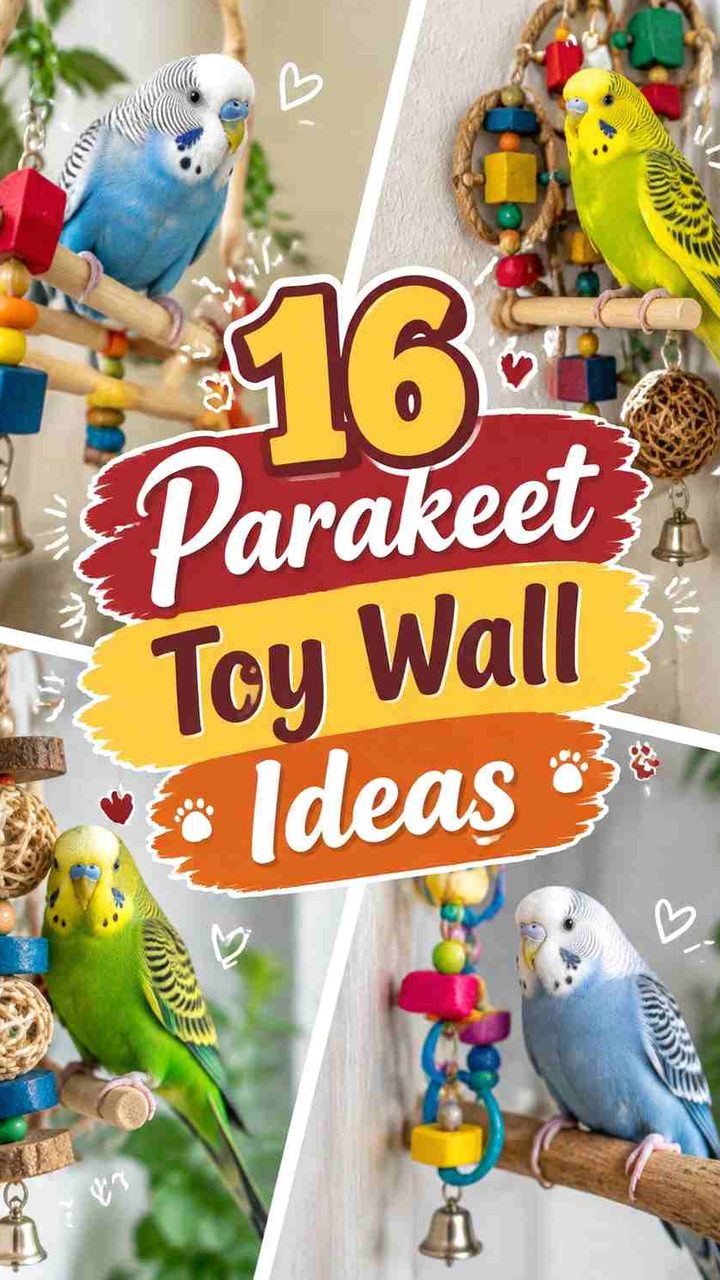
16 Parakeet Toy Wall Ideas
Save to PinterestParakeet toy walls work best when every perch, toy, and activity has a clear purpose instead of simply filling the wall with decorations. Good layouts provide stable landing spots, easy routes between activities, safe chewing materials, and enough open space for a bird to move comfortably.
These ideas range from natural branch walls and shredding stations to compact corner setups, foraging panels, and multi-perch designs. Compare available wall space, your parakeet’s confidence, chewing style, cleaning needs, and whether the setup is intended for one bird or a pair.
Quick List
- Natural Branch Climbing Toy Wall for Active Parakeets
- Seagrass Mat Foraging Wall for Curious Parakeets
- Low Cork Perch Wall for Gentle Parakeet Exploration
- Rotating Hanging Toy Wall for Busy Indoor Parakeets
- Paper Shred Station Wall for Parakeet Enrichment
- Ladder and Swing Activity Wall for Playful Parakeets
- Foraging Pocket Toy Wall for Curious Indoor Parakeets
- Wood Block Chew Wall for Active Parakeet Play
- Low Platform Toy Wall for Safe Parakeet Climbing
- Cardboard Activity Wall for Budget Parakeet Enrichment
- Multi-Perch Rest and Play Wall for Indoor Parakeets
- Window-Side Toy Wall for Bright Parakeet Play Areas
- Corner Toy Wall for Small Parakeet Rooms
- Double-Perch Activity Wall for Paired Parakeets
- Seasonal Toy Rotation Wall for Curious Parakeets
- Modular Natural Texture Wall for Parakeet Enrichment
1. Natural Branch Climbing Toy Wall For Active Parakeets
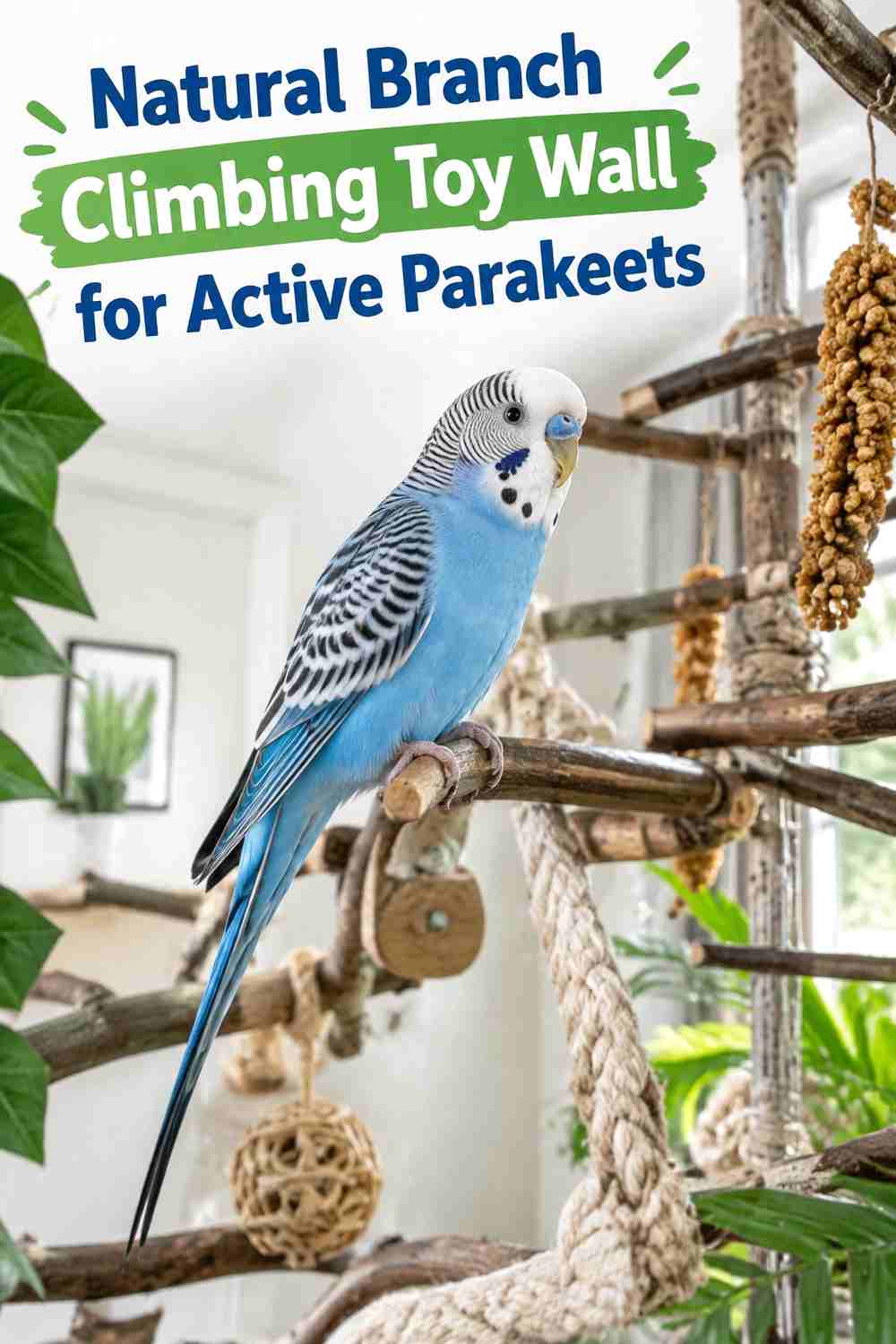
A natural branch climbing wall uses several securely mounted bird-appropriate branches to create a simple route across the play area. Arrange them at different horizontal positions so your parakeet can step, hop, and make short flights between stable landing points rather than navigating a steep vertical obstacle course. A few branch diameters and textures can also make the wall more interesting underfoot.
Choose clean, bird-safe branches and mount them with secure hardware that the bird cannot loosen or access dangerously. Keep enough distance between perches for wings and tails to move freely. The wall should remain easy for you to inspect, wipe, and rearrange when a branch becomes worn or heavily soiled.
Space & Placement
Use a quiet wall away from doors, ceiling fans, cooking areas, and other household hazards.
Pro Tip
Begin with only a few obvious routes and add complexity after your parakeet confidently uses the basic layout.
2. Seagrass Mat Foraging Wall For Curious Parakeets
You May Also Like

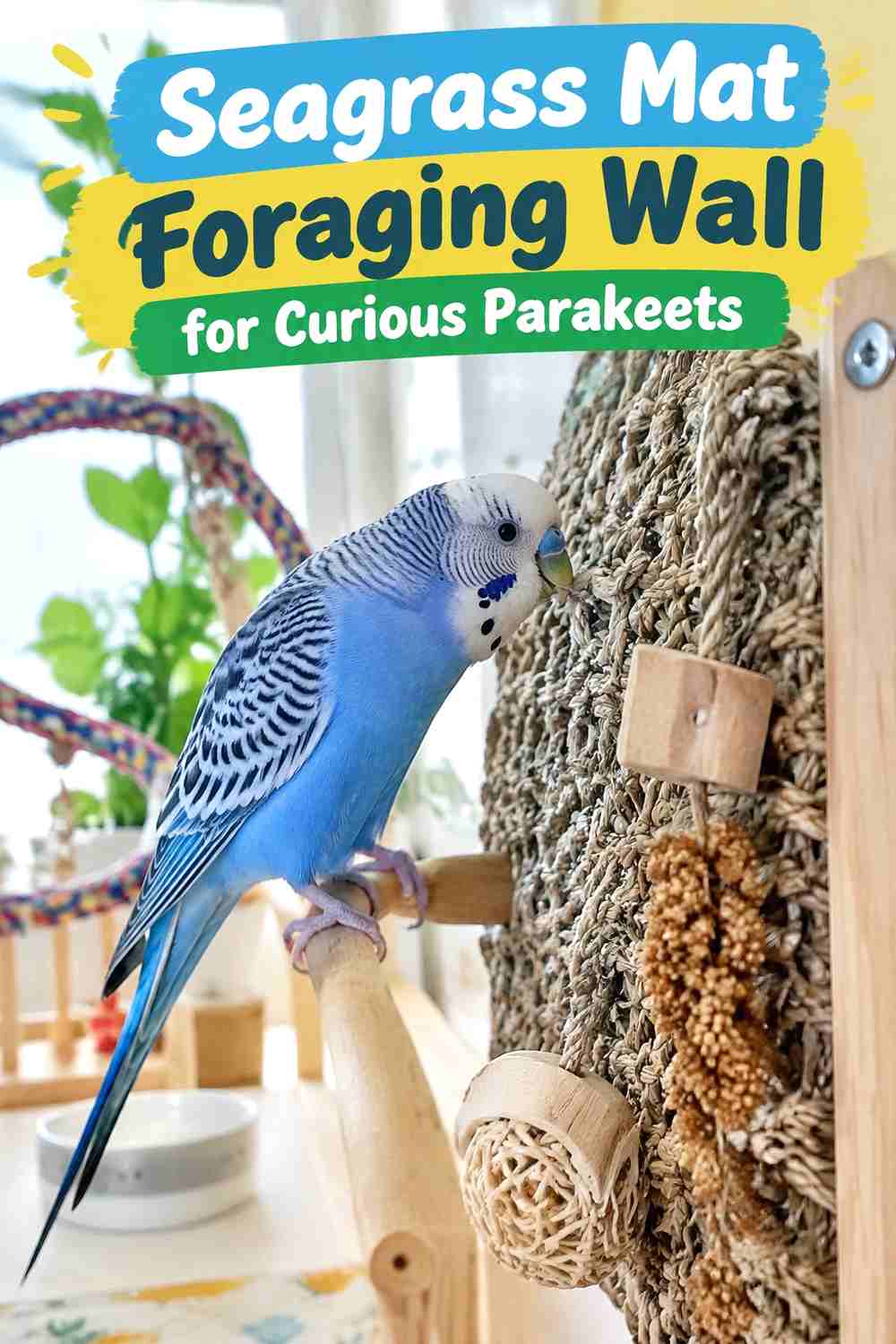
A seagrass mat foraging wall turns a flat vertical surface into a textured area for climbing, investigating, and simple supervised foraging. Secure a bird-appropriate woven mat to a stable backing, then attach a few lightweight paper pieces, safe chew items, or suitable foraging materials where your parakeet can reach them from nearby perches.
Avoid overloading the mat with dangling objects. The bird should be able to see clear footholds and move without becoming surrounded by cords, loops, or clutter. Inspect woven fibers often because chewing can create loose strands or weakened sections. Mount the mat where removed pieces cannot fall into food or water containers.
Why It Works
One panel can offer climbing texture and changing activities without covering the entire wall with permanent fixtures.
Use & Maintenance
Replace damaged sections and refresh only a few attached activities at a time so the wall remains easy to inspect.
3. Low Cork Perch Wall For Gentle Parakeet Exploration
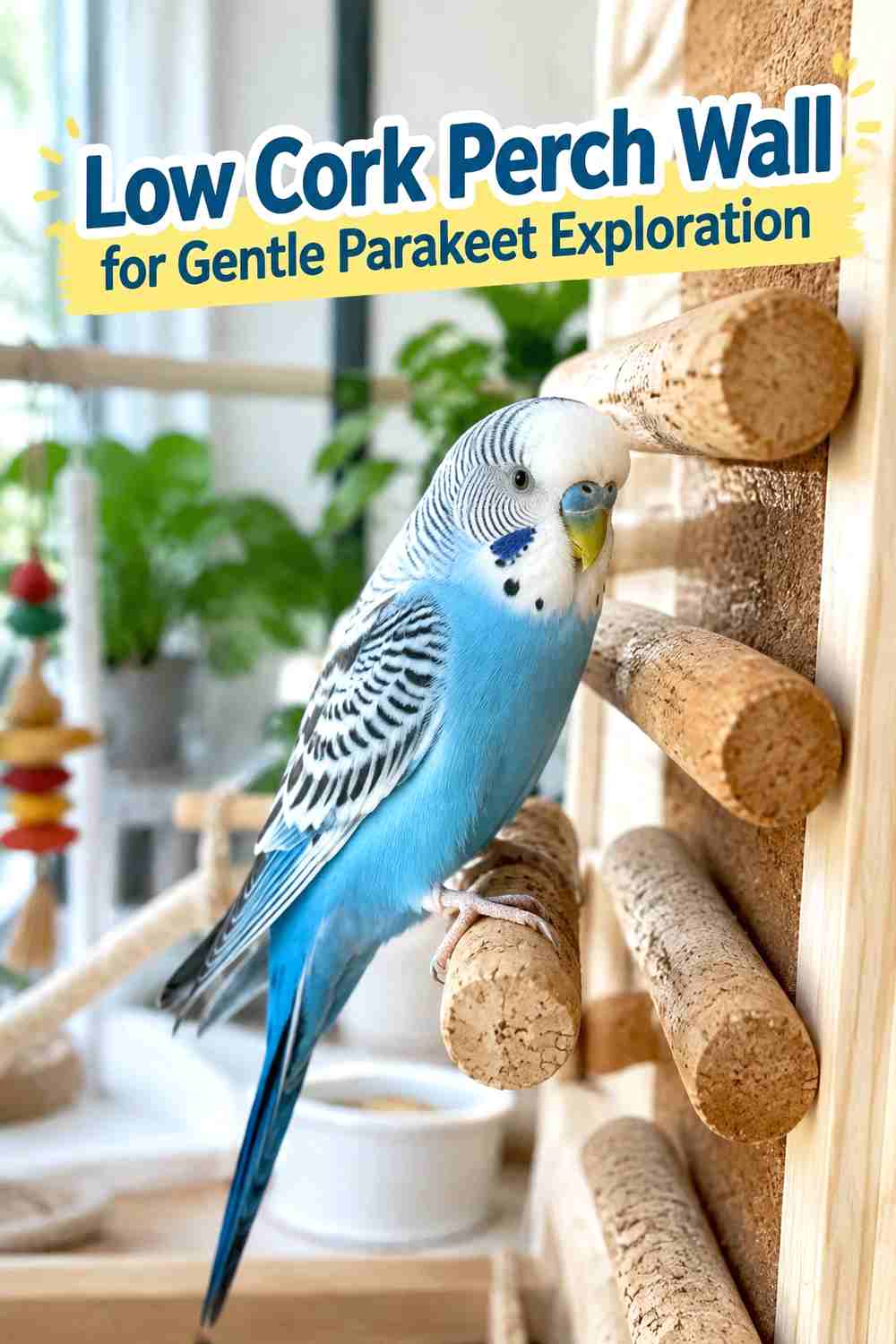
A low cork perch wall creates a softer-looking exploration area with broad textured landing points. Use securely mounted cork pieces or bird-safe cork platforms close enough together that a cautious parakeet can move between them without committing to long flights. This makes the setup useful for birds that are still learning to use an out-of-cage play wall.
Keep every perch stable and large enough for comfortable footing. Cork can collect droppings and shredded debris in small crevices, so choose pieces you can remove for cleaning and inspection. Avoid deep holes or broken sections where toes could become caught. Pair the cork with one familiar toy rather than introducing several new textures at once.
Best For
This layout suits cautious birds that prefer short steps and predictable landing places while exploring a new play area.
Cleaning Notes
Brush debris from textured surfaces frequently and remove any piece that becomes damaged or difficult to clean thoroughly.
4. Rotating Hanging Toy Wall For Busy Indoor Parakeets
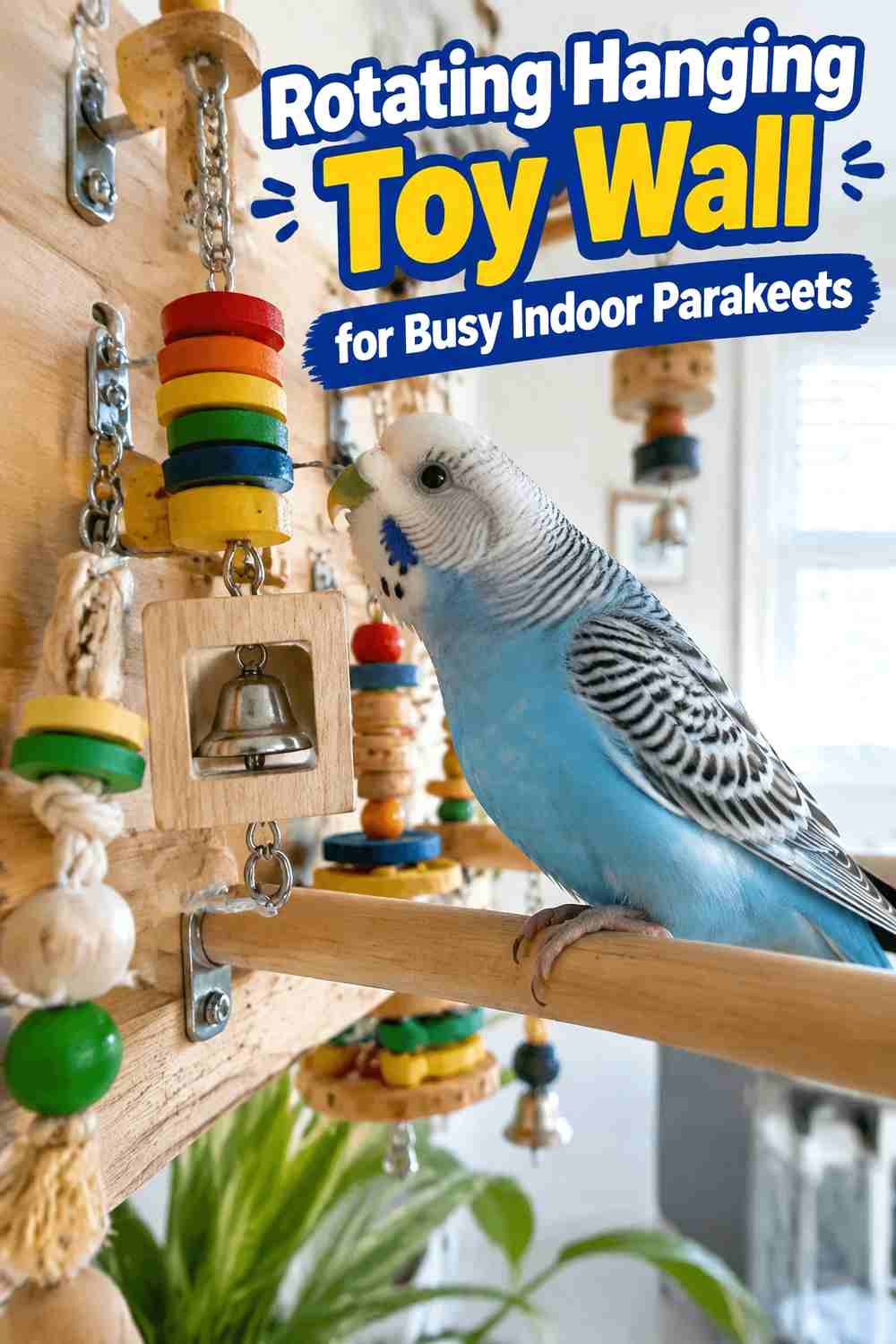
A rotating hanging toy wall uses a few secure attachment points so you can change activities without rebuilding the entire setup. Keep permanent perches in place, then rotate lightweight shredding, chewing, or manipulation toys through selected positions. The result is a familiar wall with small amounts of novelty.
Limit the number of hanging toys so your parakeet still has clear flight and climbing routes. Check every connector, chain, clip, and hanging section for wear, sharp edges, unsafe gaps, or loose fibers before use. New toys do not need to appear all at once; introducing one change at a time makes it easier to see what the bird actually enjoys.
Why It Works
Rotation keeps the wall flexible and reduces clutter while allowing favorite perches and landing points to remain predictable.
Pro Tip
Store clean backup toys in groups so you can make quick swaps without leaving damaged items in place.
5. Paper Shred Station Wall For Parakeet Enrichment
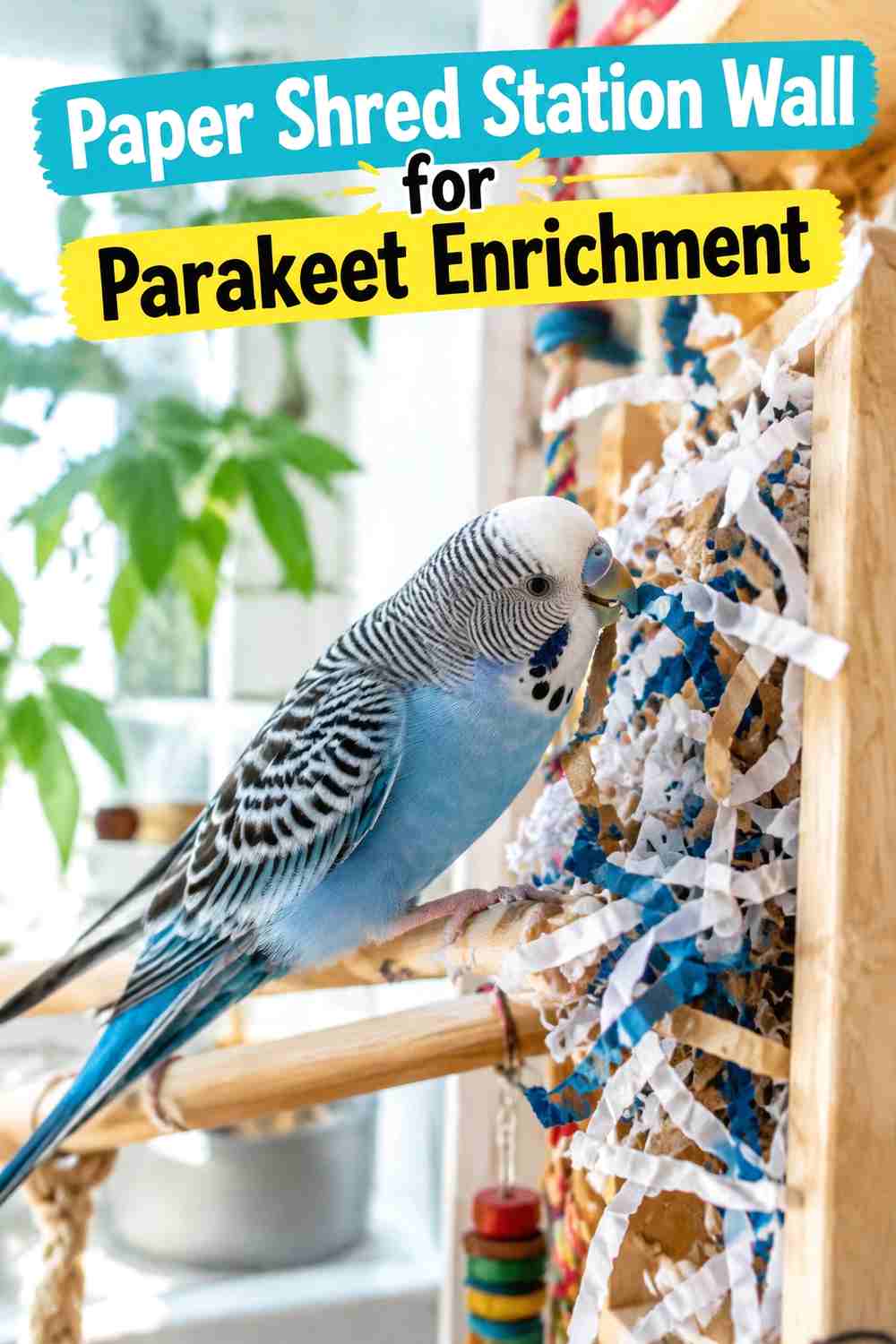
A paper shred station gives a parakeet a dedicated place to pull, tear, and manipulate simple paper materials. Attach plain bird-appropriate paper pieces to a secure holder beside a stable perch so the bird can work on the material without hanging awkwardly from it.
Keep the paper free from staples, tape, adhesives, glossy coatings, and loose strings. Start with a modest amount rather than filling the wall with paper, because shredded pieces can quickly create floor mess and hide damaged hardware. This station is easiest to manage when it sits above a washable mat or easy-clean floor area. Remove wet or heavily soiled paper promptly.
Best For
This idea is useful for parakeets that enjoy shredding lightweight materials and owners who want an activity that is simple to refresh.
Cleaning Notes
Collect loose scraps frequently so the play area remains easy to inspect and does not become buried under shredded material.
6. Ladder And Swing Activity Wall For Playful Parakeets
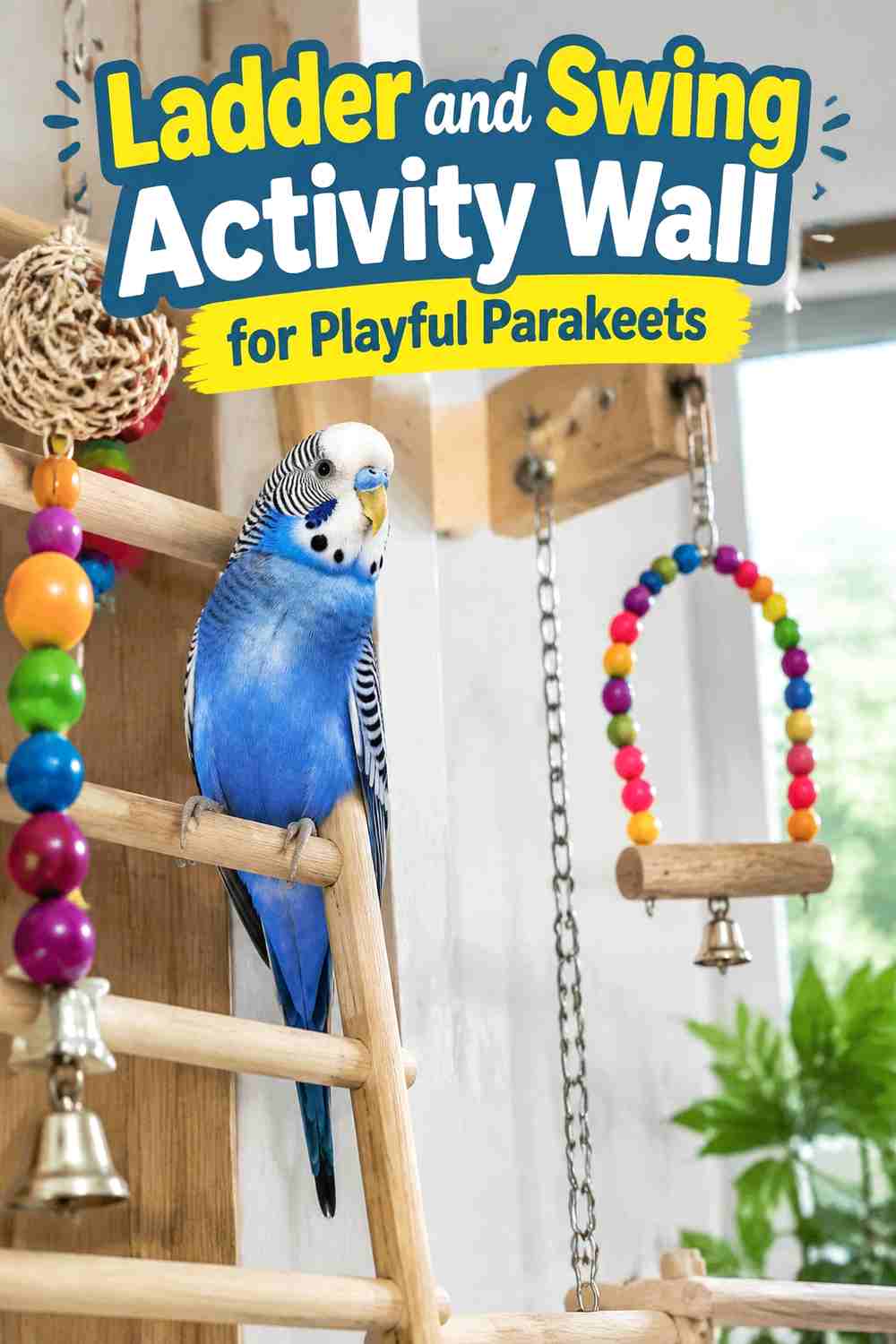
A ladder and swing wall combines stable climbing with controlled movement. Mount a short bird-safe ladder between two secure perches, then place a properly sized swing nearby so the parakeet can choose between climbing, balancing, and resting. Leave clear space around the swing so it can move without striking the wall or another toy.
The ladder should not create narrow gaps that could trap toes, and all rungs should remain firm. Check swing attachments for wear and make sure hanging parts do not form unsafe loops. Place a solid perch close to the moving element so the bird has an easy landing spot before and after using it.
Space & Placement
This setup works best on a section of wall with enough open clearance for the swing and short flights between fixed perches.
Comfort & Safety
Avoid placing moving toys directly above fragile objects, food dishes, or areas where a startled bird could collide with clutter.
7. Foraging Pocket Toy Wall For Curious Indoor Parakeets
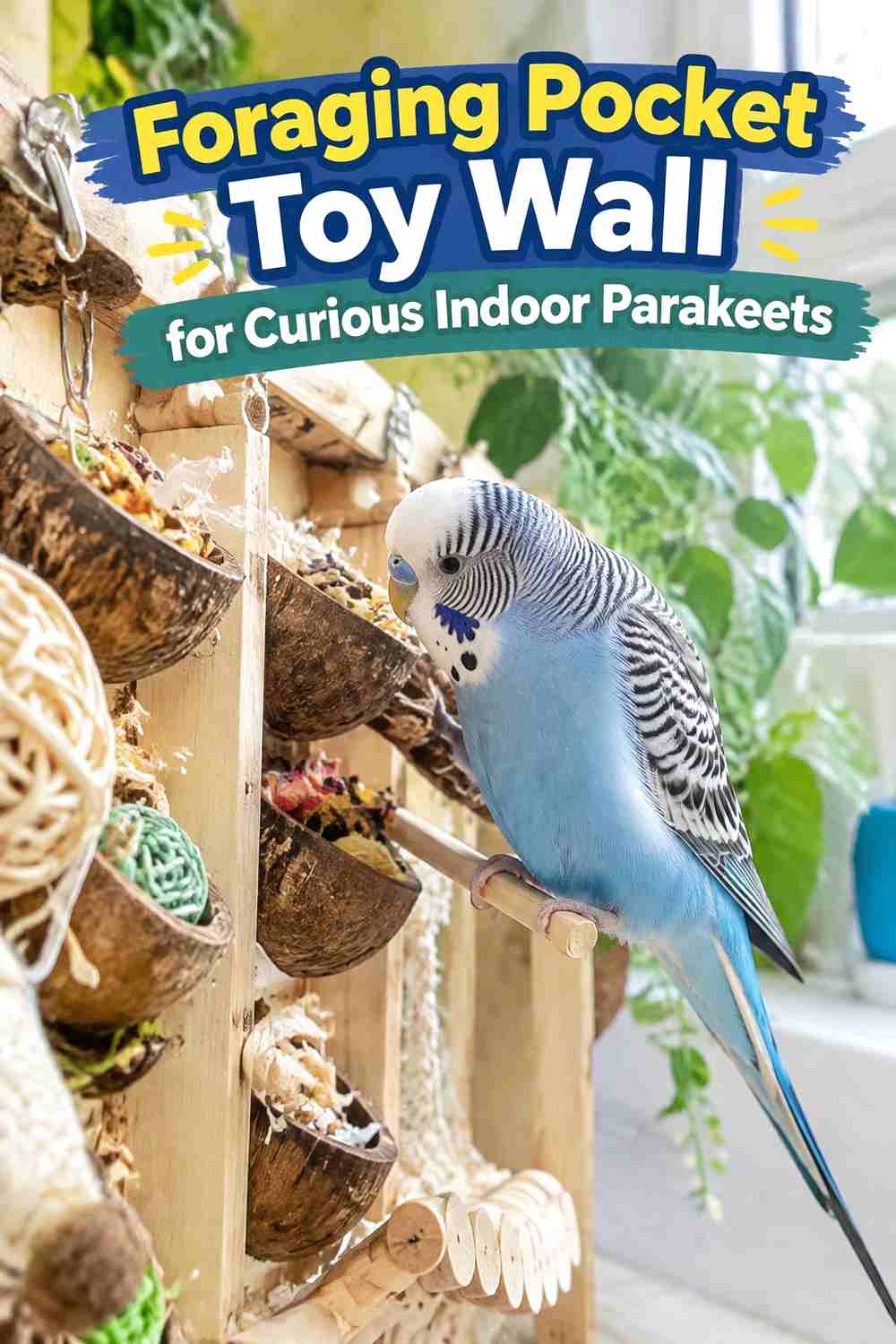
A foraging pocket wall adds small search-and-discover activities to a vertical play space. Use several shallow bird-safe holders or paper pockets attached near stable perches, then place tiny amounts of familiar suitable food or simple chewable materials inside selected pockets.
Keep the challenge easy at first. Partly visible contents help a parakeet understand the activity without becoming frustrated by a complicated puzzle. Pockets should be open enough that the bird cannot become trapped or tangled while reaching inside. Avoid soft fabric pockets with loose threads or deep folds that are difficult to inspect. Clean or replace each holder when it becomes soiled.
Why It Works
Separating the wall into several small search points encourages movement between perches instead of concentrating all activity in one location.
Pro Tip
Use only a few active pockets at once and vary their locations gradually rather than filling every holder every day.
8. Wood Block Chew Wall For Active Parakeet Play
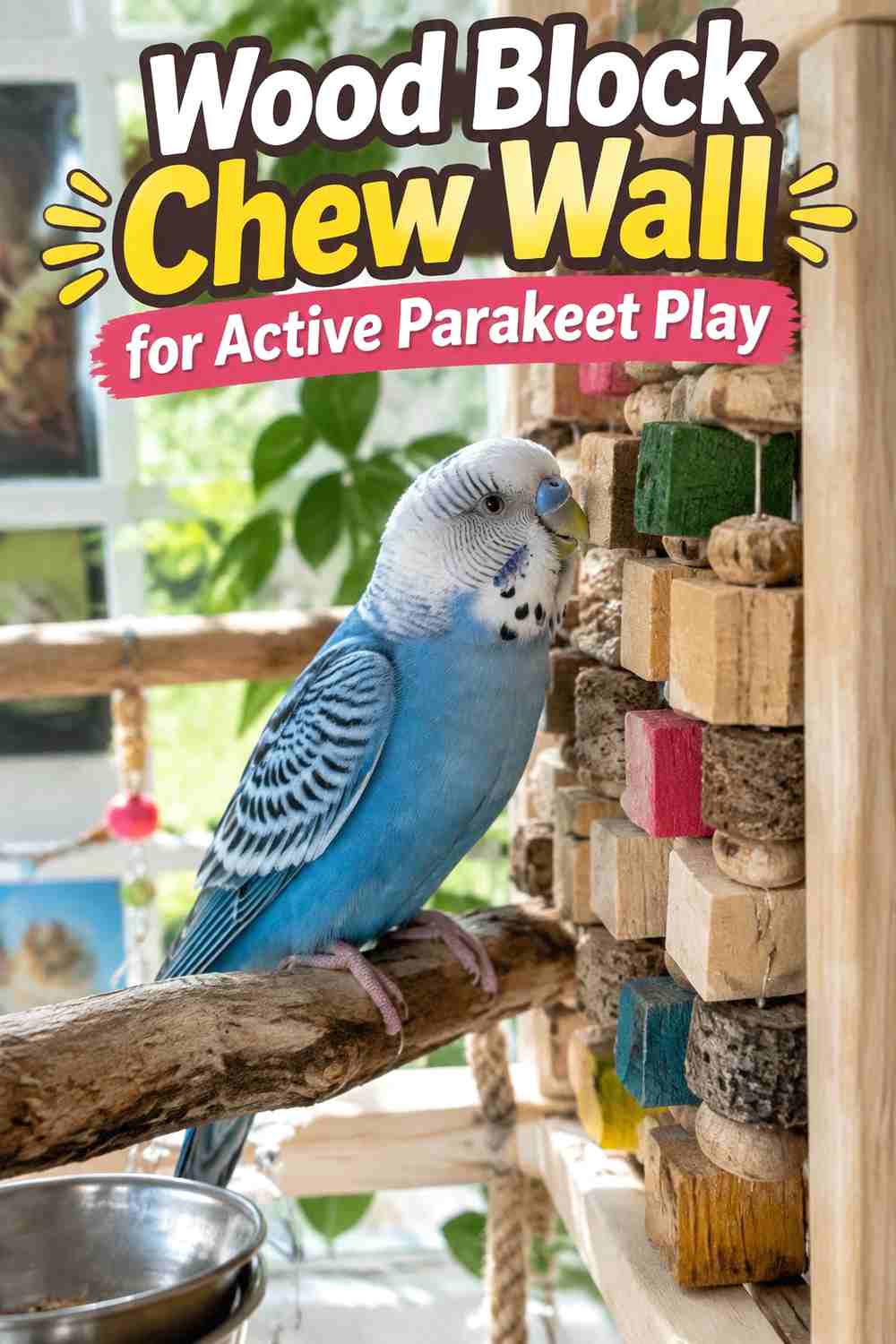
A wood block chew wall provides several sturdy chewing points anchored around a pair of reliable perches. Use bird-appropriate untreated wood pieces in different shapes and textures, keeping the arrangement open enough that your parakeet can reach each block without squeezing between toys.
Choose blocks and hardware designed for birds, and inspect all edges as chewing changes their shape. Remove pieces that become sharply splintered or leave exposed connectors. A chew wall can create a lot of small debris, so place it where the floor underneath is easy to sweep or wipe. Avoid attaching so many blocks that the wall becomes visually crowded and difficult to monitor.
Best For
This setup suits parakeets that spend time chewing and manipulating solid toys during supervised out-of-cage activity.
Use & Maintenance
Rotate heavily used blocks out for replacement while leaving a few familiar pieces in place to keep the area recognizable.
9. Low Platform Toy Wall For Safe Parakeet Climbing
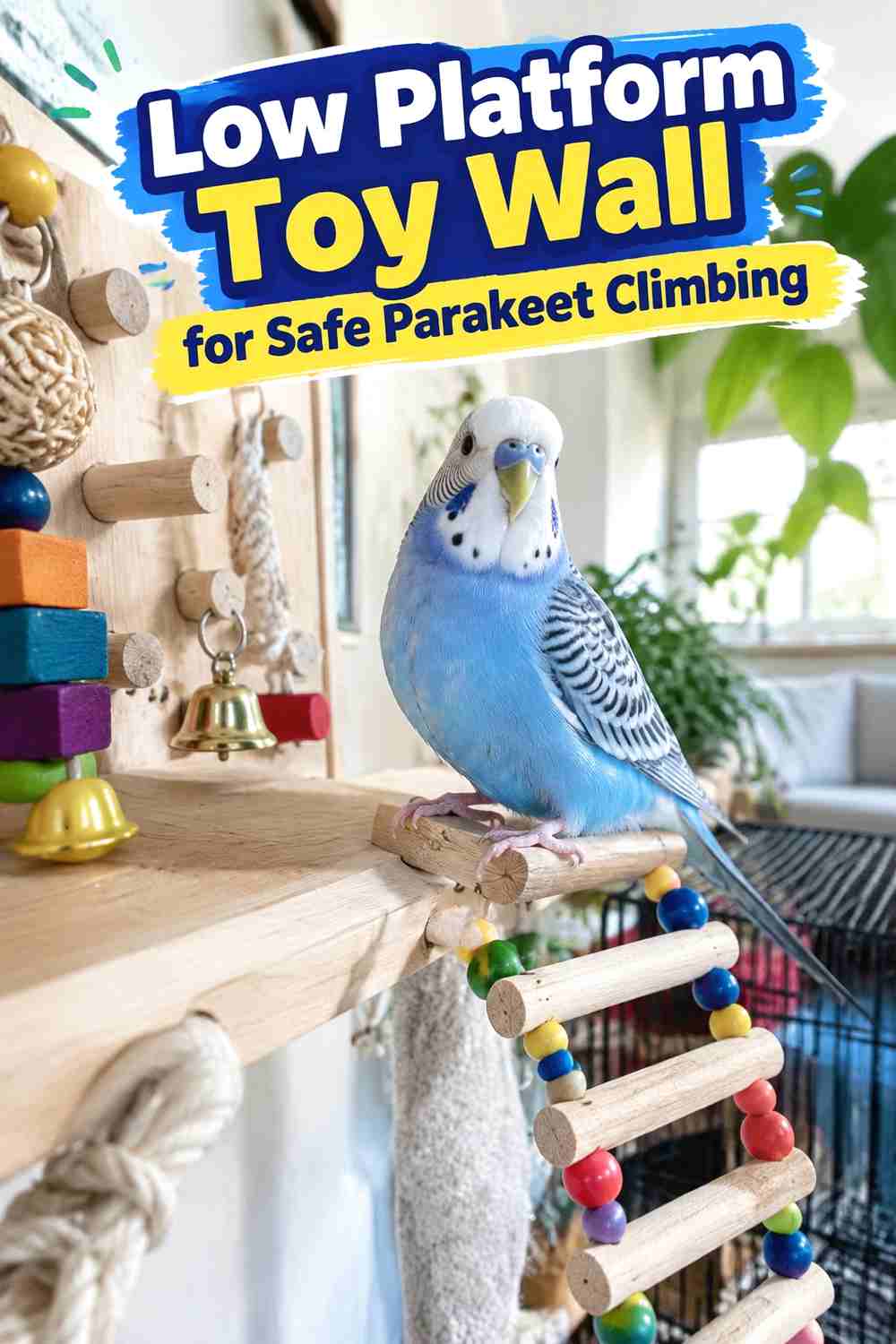
A low platform toy wall uses broad, stable ledges rather than narrow perches as the main movement route. Arrange several small bird-safe platforms at modest heights with comfortable spacing, then attach one or two simple toys near selected landing areas.
Platforms can be helpful for birds that appreciate a wider place to pause, turn, or inspect an activity. They must be firmly mounted and free from slippery finishes, sharp corners, or exposed fasteners. Avoid creating high ledges with long drops beneath them, especially if the wall is being introduced to a less confident bird. Keep the route simple enough that every platform can be cleaned without removing half the setup.
Pet Type & Life Stage
A broad landing surface may suit younger, older, or less confident parakeets, but individual mobility and preferences still matter.
Cleaning Notes
Wipe platform surfaces regularly because flat ledges tend to collect more debris than narrow perches.
10. Cardboard Activity Wall For Budget Parakeet Enrichment
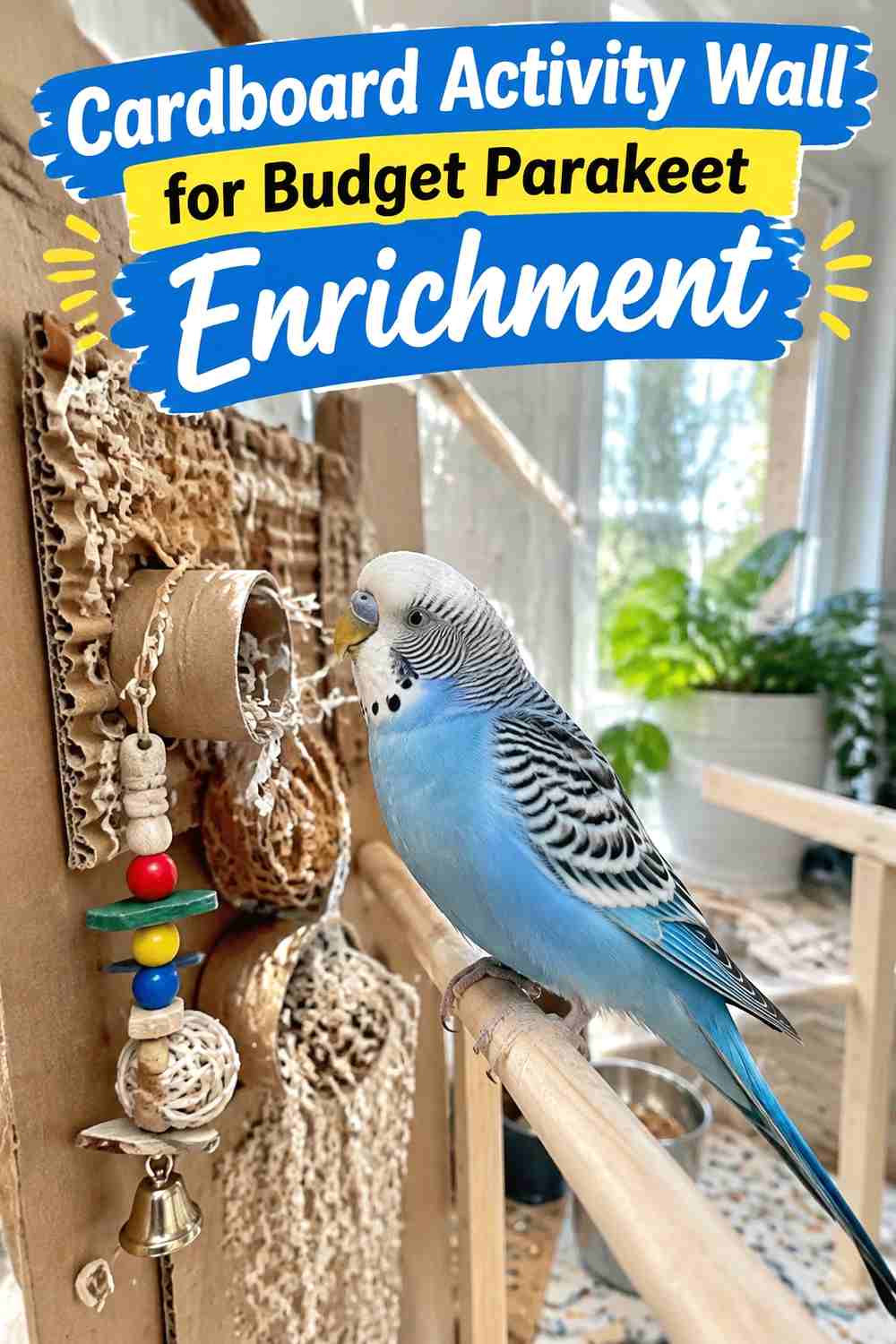
A cardboard activity wall uses clean plain cardboard to create temporary shredding panels, simple flaps, and lightweight exploration pieces. Attach the cardboard to a safe backing near permanent perches so your parakeet can pull and chew without relying on the cardboard itself for structural support.
Remove tape, staples, glossy coatings, plastic windows, and other unsuitable packaging parts before use. Because cardboard is temporary, inspect it often and replace sections once they become wet, heavily soiled, or weakened. Avoid elaborate shapes with narrow holes or dangling strips that could create awkward gaps. The strength of this idea is its flexibility: you can change the shredding layout without changing the secure wall structure underneath.
Best For
Cardboard works well for owners who want inexpensive rotation materials around a permanent set of safe perches.
Pro Tip
Change only one cardboard feature at a time so you can identify which shapes and placements your parakeet actually uses.
11. Multi Perch Rest And Play Wall For Indoor Parakeets
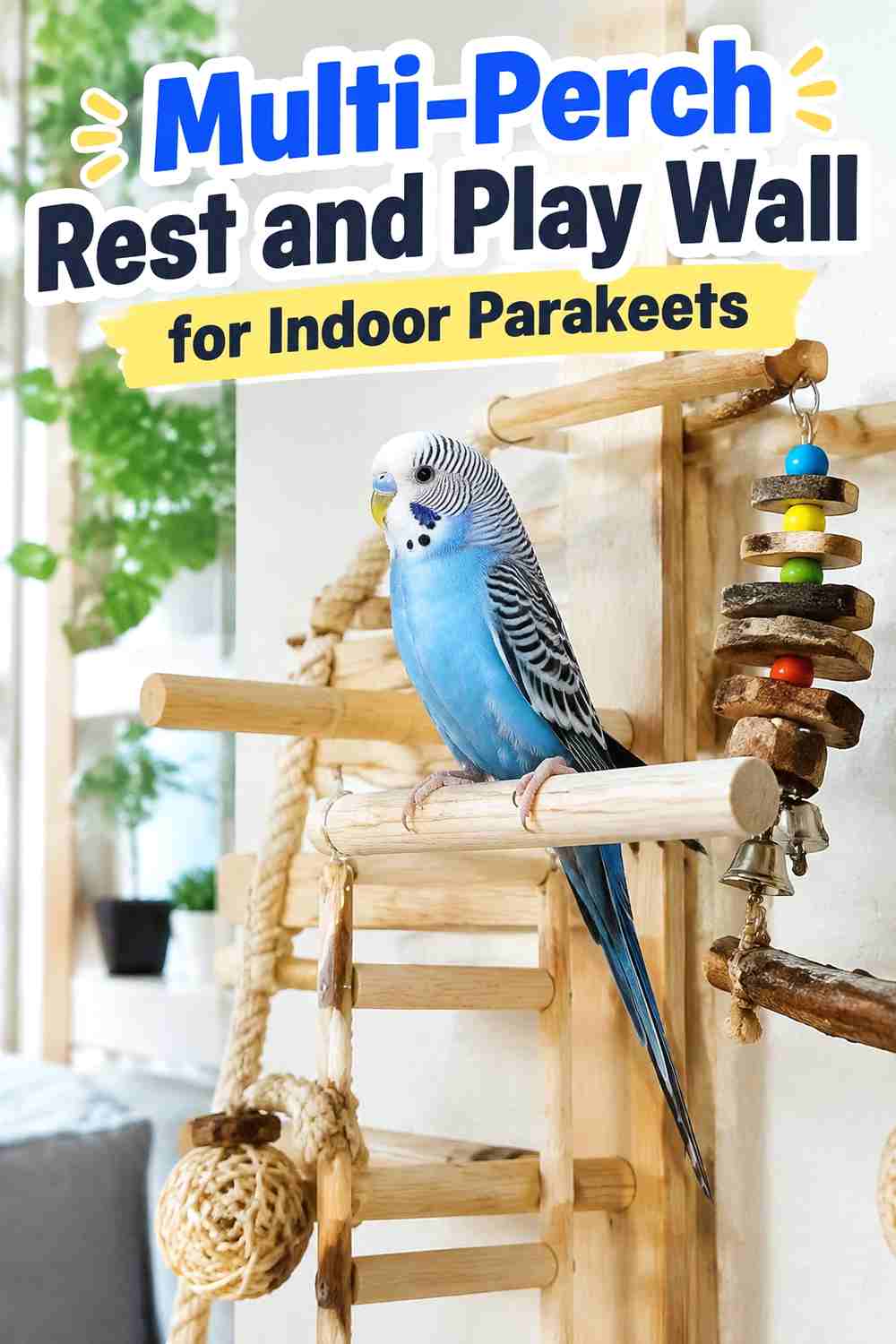
A multi-perch rest and play wall balances activity with comfortable stopping points. Arrange several bird-safe perches across the wall, including open landing areas beside toys rather than attaching an activity to every perch. This gives your parakeet places to pause, preen, watch the room, and decide where to move next.
Vary perch texture and diameter within an appropriate range, but keep each perch stable and positioned so droppings from an upper perch do not constantly soil a lower one. Leave enough clearance for tails and wing movement. A toy wall feels more usable when the bird can choose quiet perches as well as active stations instead of being surrounded by stimulation everywhere.
Why It Works
The design creates a complete play area rather than a collection of toys competing for attention.
Space & Placement
Keep the central route relatively open and place busier activities toward the sides where they will not block short flights.
12. Window Side Toy Wall For Bright Parakeet Play Areas
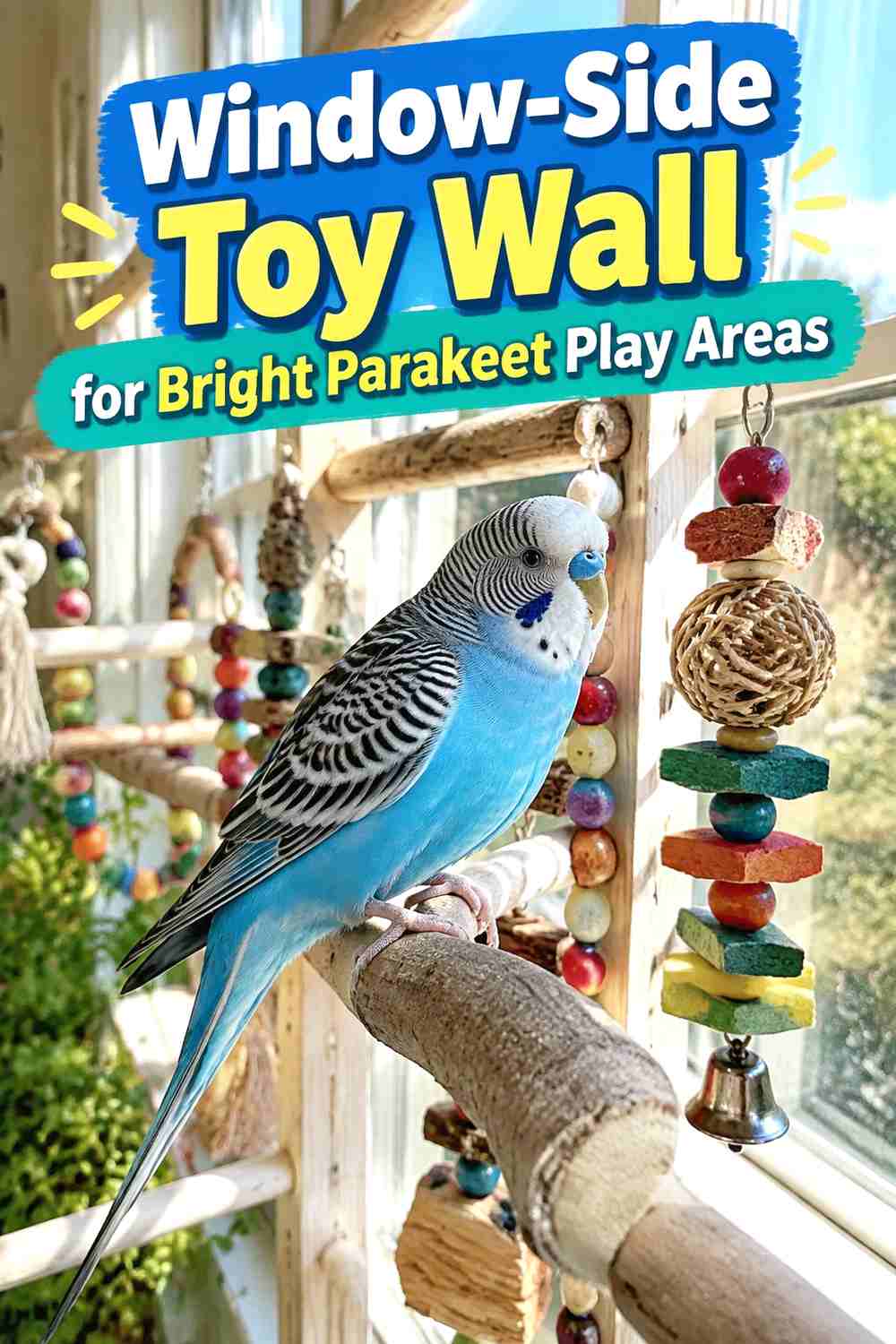
A window-side toy wall can provide an appealing daytime play location when it is positioned beside, rather than directly against, a safe closed window. Place stable perches and a few toys where the bird receives bright natural room light while still having shaded areas and easy routes away from the window.
Avoid direct drafts, intense heat, unsecured windows, dangling blind cords, and access to screens or hardware that could be damaged. The play wall should not depend on the glass as a landing surface. Watch how sunlight moves through the room because a comfortable location in the morning can become too warm later. Keep one familiar perch slightly farther from the window.
Best For
This setup suits rooms where a safe window area offers visual interest without exposing the parakeet to outdoor access or household hazards.
Comfort & Safety
Use curtains or blinds only when cords, loops, and moving parts are completely inaccessible to the bird.
13. Corner Toy Wall For Small Parakeet Rooms
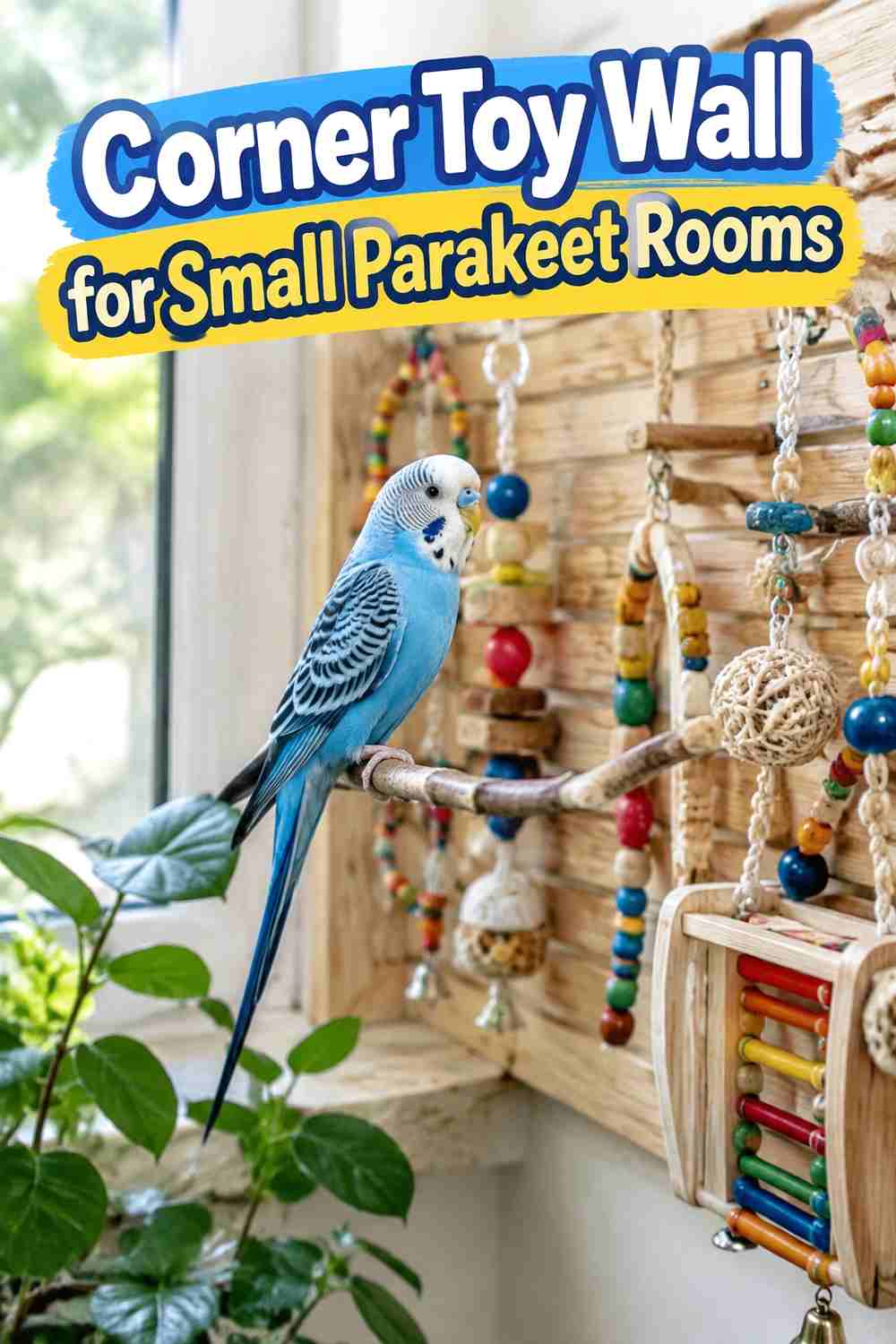
A corner toy wall concentrates enrichment into a compact section of the room while preserving open space elsewhere. Use the two adjoining walls to create a simple L-shaped arrangement with a perch on each side, one small climbing feature, and a limited number of toys.
Keep the corner open enough that the parakeet can turn and fly out easily instead of creating a cramped pocket surrounded by hanging objects. Perches should not point directly into each other or leave the bird facing the wall at close range. A washable floor mat beneath the corner can simplify cleanup without adding bulky furniture. Vertical storage for spare toys should remain outside chewing reach.
Space & Placement
This layout is useful in bedrooms, offices, and compact bird areas where a full-width play wall would dominate the room.
Pro Tip
Use one wall primarily for landing and resting and the second for activities to keep the compact setup visually clear.
14. Double Perch Activity Wall For Paired Parakeets
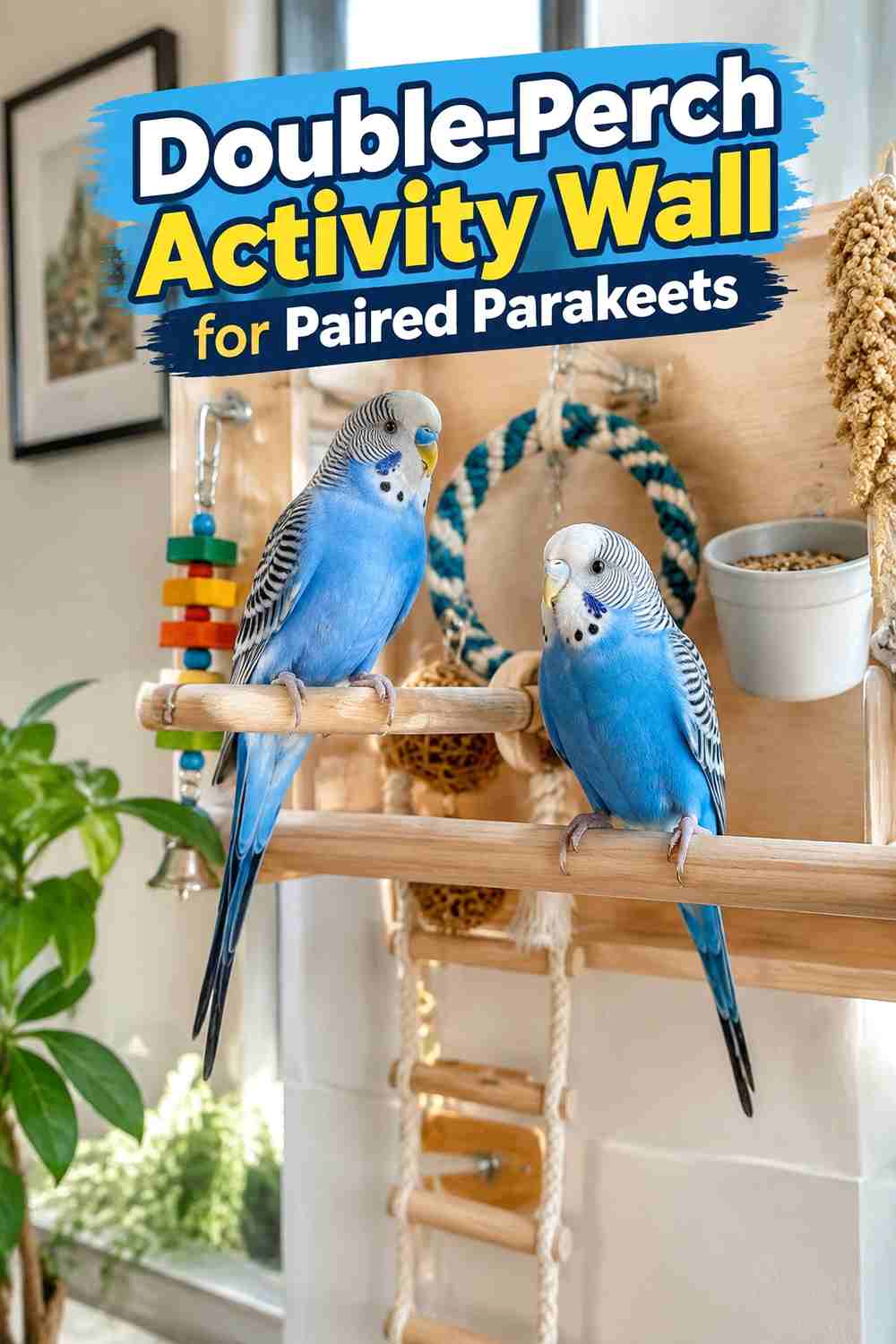
A double-perch activity wall gives two parakeets more than one comfortable place to land near the same enrichment zone. Install parallel or offset perches with enough separation that each bird can use the wall without being forced into constant close contact, then duplicate a few popular activity types when practical.
Avoid designing the wall around a single prized perch or toy that both birds must share. Separate landing spots and multiple routes can reduce crowding and make observation easier. Watch how the pair actually uses the setup; one bird may prefer the highest perch while the other chooses a quieter side. Adjust spacing rather than assuming they will always play together.
Best For
This design suits compatible pairs using a shared supervised play area where duplicate resources can reduce unnecessary competition.
Space & Placement
Provide open exits on both sides so one bird can move away without having to pass directly through the other bird’s position.
15. Seasonal Toy Rotation Wall For Curious Parakeets
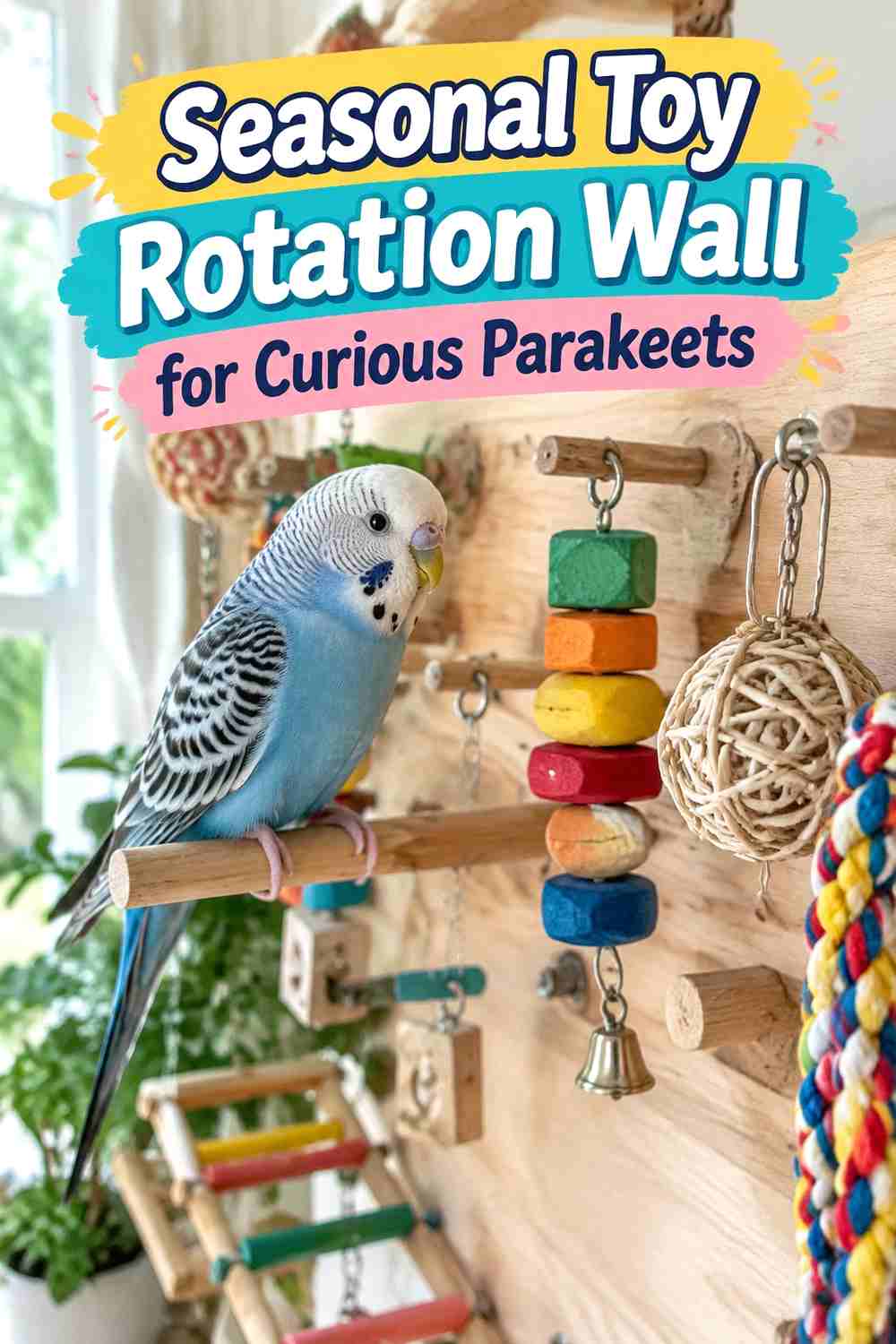
A seasonal toy rotation wall changes colors, textures, or simple activity themes while keeping the underlying perch layout familiar. The season can influence safe visual details—such as paper shapes or color combinations—without turning the play wall into a costume display or filling it with unfamiliar decorations.
Keep permanent landing points in the same places and rotate only a few toys at a time. Every seasonal item should still meet the same practical standards as an everyday bird toy: suitable materials, secure attachment, no unsafe loose threads, and no tiny decorative pieces that can detach. Skip glitter, scented decorations, artificial snow, and fragile ornaments designed for human décor rather than birds.
Why It Works
Small visual changes can refresh the wall while predictable perches help keep the environment recognizable.
Use & Maintenance
Store reusable bird-safe items clean and dry between rotations, and discard anything that becomes damaged or difficult to inspect.
16. Modular Natural Texture Wall For Parakeet Enrichment
You May Also Like
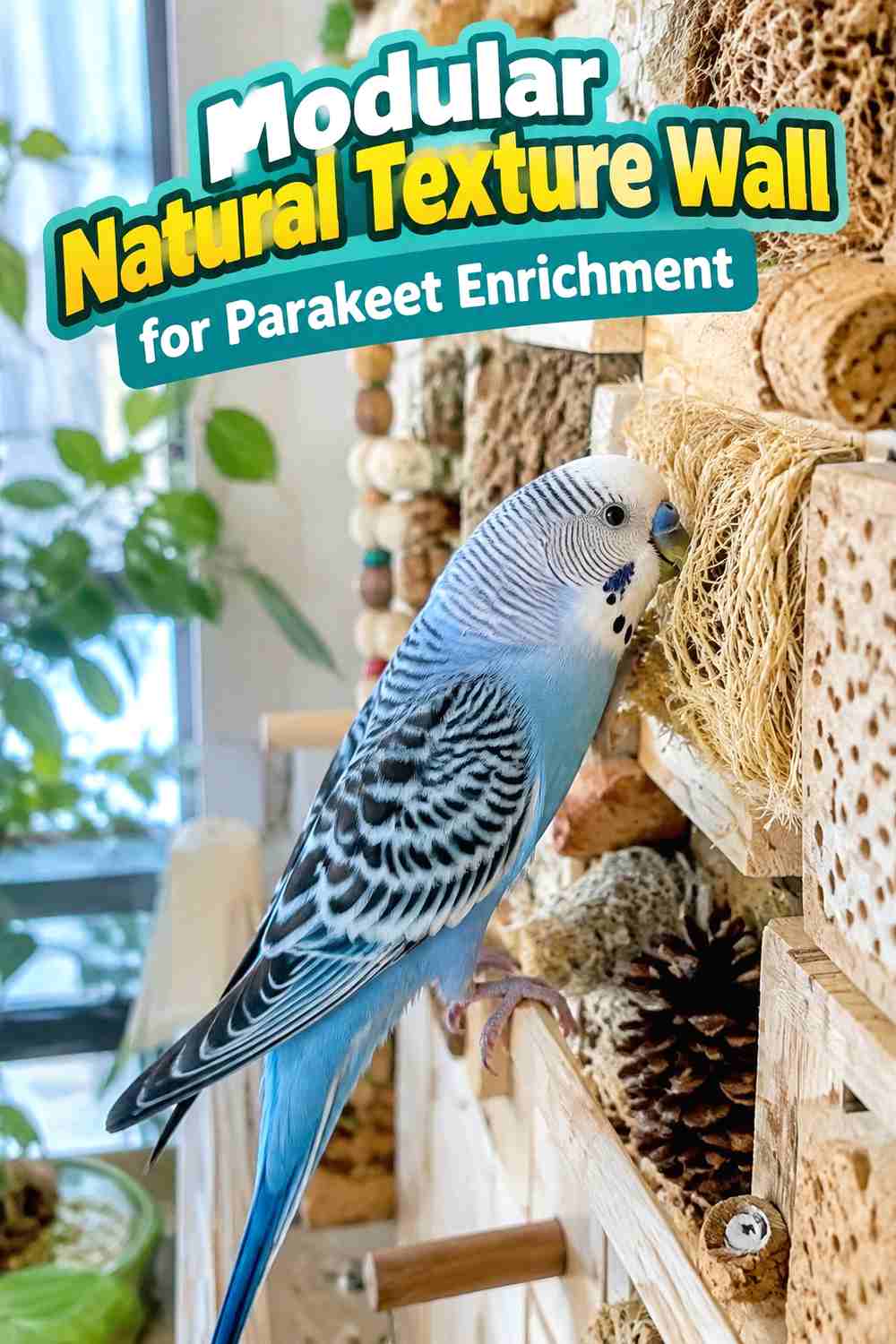
A modular natural texture wall combines removable wood, cork, woven panels, and stable perches on one secure backing. Each section serves a different purpose: a cork landing area, a chewable wood station, a textured climbing panel, and an open perch for resting or watching the room.
The modular format makes it easier to replace one worn component without rebuilding the entire wall. Keep every attachment point secure and inaccessible where possible, and avoid layering materials so densely that damage is hidden underneath. Natural appearance should never replace practical function; every component needs to be cleanable, inspectable, and suitable for bird use. Leave open wall space between modules to create clear movement routes.
Why It Works
Multiple textures provide variety while the removable sections simplify rotation and maintenance.
Pro Tip
Build the wall gradually, keeping the modules your parakeet uses most and removing decorative pieces that add clutter without useful activity.
How to Choose the Right Idea
Start with your parakeet’s confidence, activity level, chewing preferences, and experience outside the cage. A bold, active bird may quickly use ladders, swings, and foraging panels, while a cautious parakeet may prefer a simpler wall with stable perches and short distances between landing points.
Available space matters too. Corner walls and compact platform layouts can work well in smaller rooms, while wider walls allow separate areas for resting, chewing, climbing, and foraging. Paired birds benefit from multiple landing spots and duplicated resources rather than being expected to share one favorite perch.
Maintenance should influence the final design. Paper and cardboard need frequent replacement, woven materials require fiber checks, and flat platforms collect more debris than narrow perches. Whatever style you choose, keep hardware secure, flight paths clear, and each component easy to inspect.
Final Thoughts
A useful parakeet toy wall should create clear choices for landing, climbing, chewing, foraging, and resting without becoming crowded. Begin with secure perches and one or two activities, then expand the wall according to what your bird actually uses.
FAQs
1. Where should a parakeet toy wall be placed?
Choose a bird-safe indoor wall away from cooking areas, ceiling fans, open doors, exposed cords, strong drafts, and other hazards. The bird should also have clear flight routes to and from the play area.
2. How many toys should go on a parakeet toy wall?
There is no fixed number. Use enough to provide different activities while leaving clear landing areas and movement routes. A few well-spaced toys are usually easier to inspect and rotate than a crowded wall.
3. Can two parakeets share one toy wall?
Yes, but provide multiple perches, clear exits, and more than one attractive activity area. Watch how the birds interact and add duplicate resources if one repeatedly blocks the other.
4. How often should wall toys be rotated?
Rotate individual toys when interest drops, an item needs cleaning, or you want to introduce a different activity. Keeping some familiar perches and toys in place can make changes less disruptive.
5. What should I check when cleaning a parakeet toy wall?
Look for loose hardware, frayed fibers, sharp edges, damaged wood, heavily chewed connectors, trapped debris, and soiled surfaces. Replace damaged components rather than returning questionable items to the wall.
CTA
Save your favorite parakeet toy wall ideas and explore more practical ways to create an engaging indoor bird play space.
