Give your pet bird more ways to perch, climb, forage, shred, and interact with you using play stands designed around practical indoor routines. Bird play stands can create useful out-of-cage activity areas without turning an entire room into a complicated bird zone. The most practical designs combine stable footing, bird-appropriate perch sizes, easy access, safe enrichment, and enough open space for a bird to move naturally. These 14 ideas include compact tabletop stands, climbing layouts, foraging stations, training perches, social setups, and easy-clean options. Some suit smaller birds and limited rooms, while others need more floor space or supervision. Choose a layout that matches your bird’s size, confidence, chewing habits, activity level, and how much time you can spend resetting toys and cleaning around the stand.
Save This Idea on Pinterest
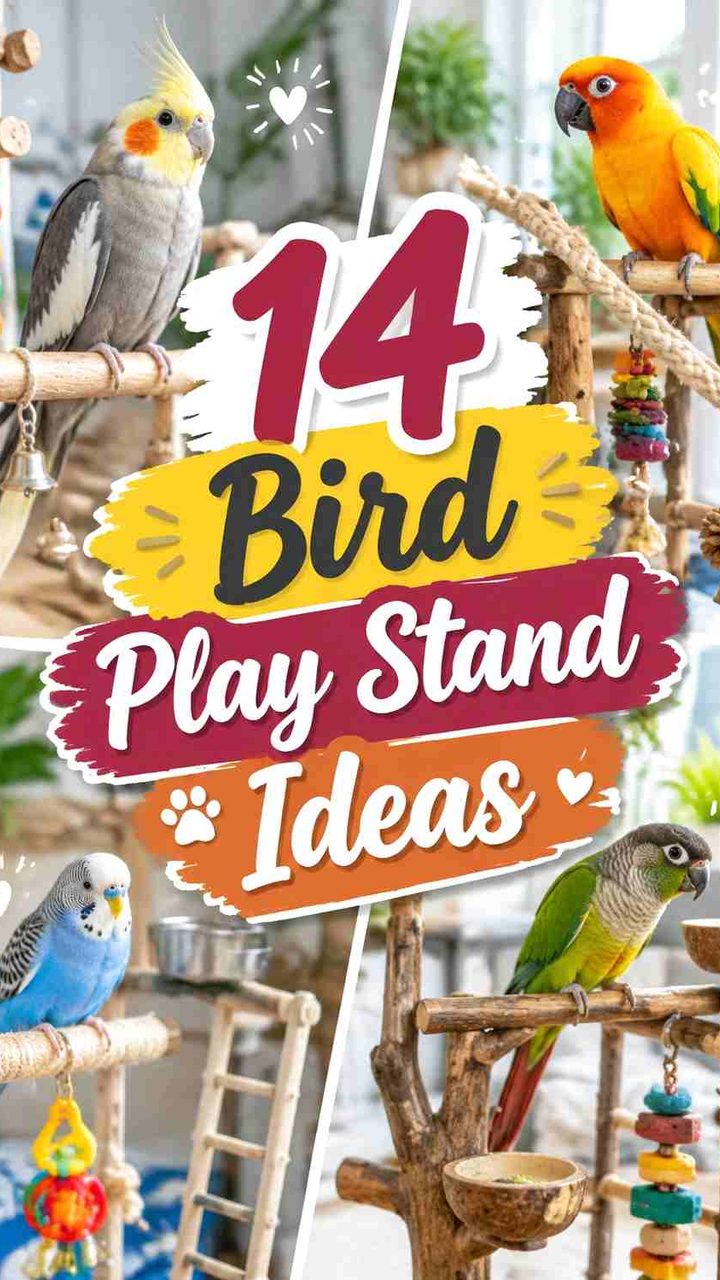
14 Bird Play Stand Ideas
Save to PinterestQuick List
- Natural Branch Climbing Play Stand for Active Pet Birds
- Tabletop Multi-Perch Play Stand for Small Indoor Birds
- Foraging Tray Play Stand for Curious Pet Birds
- Rope-Free Chewing Play Stand for Shredding Pet Birds
- Ladder Climbing Play Stand for Energetic Pet Birds
- Swing and Perch Play Stand for Playful Cockatiels
- Window-Side Viewing Play Stand for Indoor Pet Birds
- Compact Corner Play Stand for Small Bird Rooms
- Training Perch Play Stand for Hands-On Bird Sessions
- Multi-Level Natural Wood Play Stand for Pet Birds
- Hanging Toy Rotation Play Stand for Curious Pet Birds
- Easy-Clean Floor Play Stand for Messy Pet Birds
- Dual-Perch Social Play Stand for Bonded Pet Birds
- Portable Room-to-Room Play Stand for Companion Birds
1. Natural Branch Climbing Play Stand For Active Pet Birds
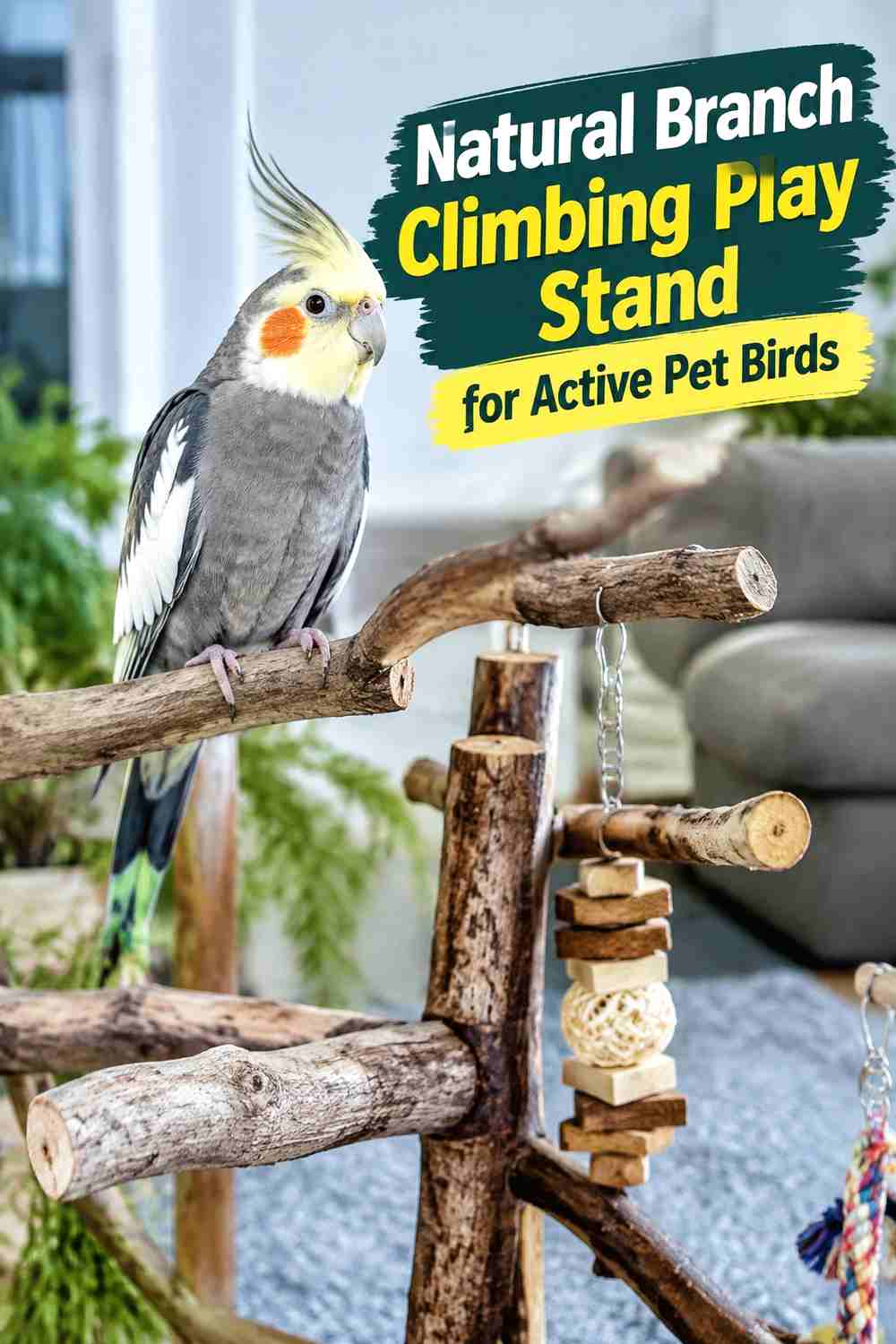
Build the main structure around several stable natural-style perches positioned at different heights and angles so an active bird can climb between them instead of remaining on one horizontal bar. Keep the gaps short enough for comfortable stepping, and use bird-appropriate branches with secure connections and varied diameters. A low branch can act as the easy starting point, while higher perches give confident birds more choices. Avoid making every surface crowded with toys; open climbing routes are part of the enrichment. Place the stand where accidental falls have a clear landing area below. Check branches and attachment points regularly because chewing and repeated movement can loosen a setup over time.
Setup Notes
Arrange the strongest branches first, then add smaller connecting perches. Every branch should stay stable when the bird lands, climbs, or changes direction.
Best For
This setup works well for confident birds that actively climb and move between perches rather than spending most play-stand time in one spot.
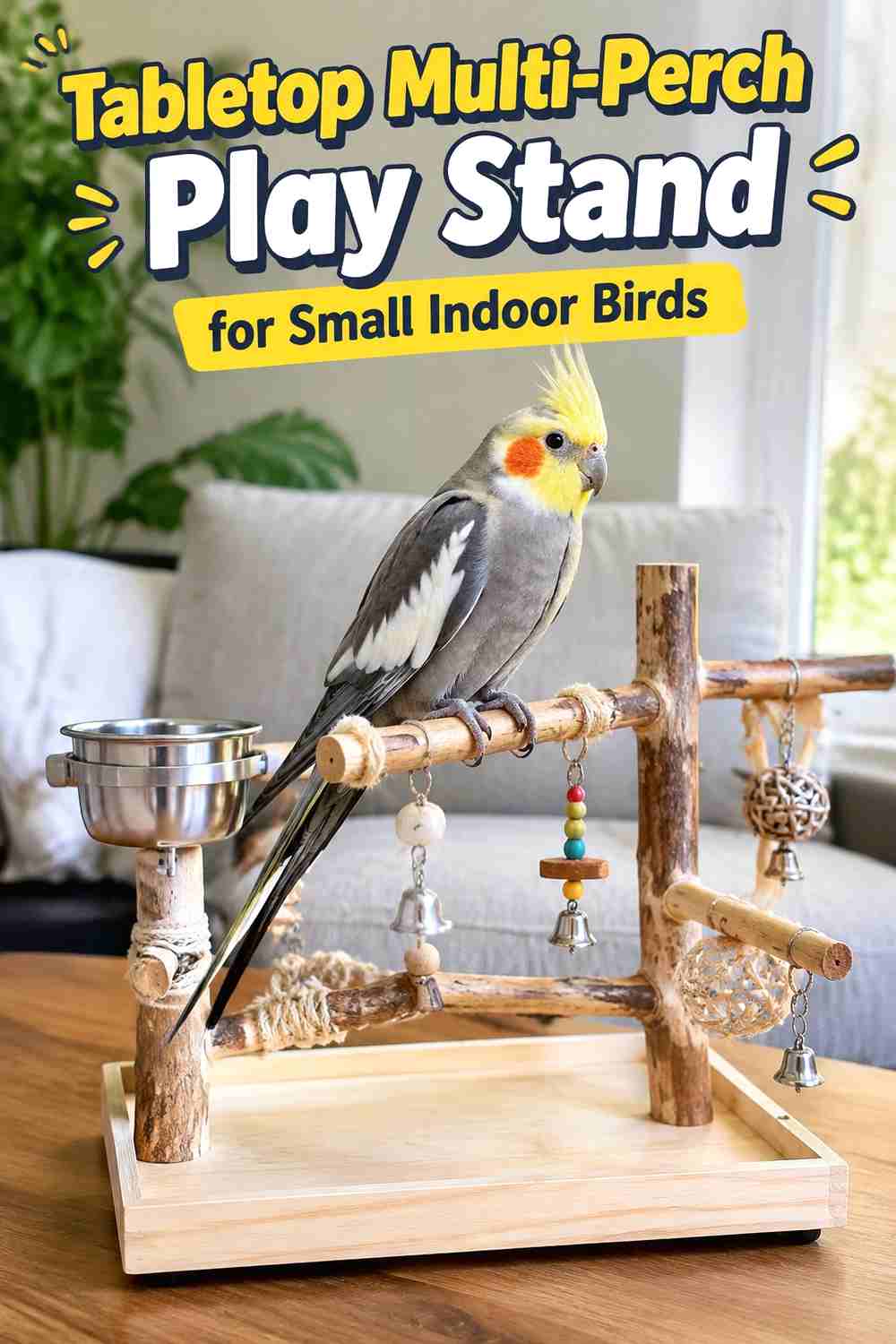
2. Tabletop Multi Perch Play Stand For Small Indoor Birds
You May Also Like


A tabletop multi-perch stand keeps enrichment compact by placing several short perches, a small platform, and one or two lightweight activities on a stable base. It can be useful for cockatiels, budgies, and other appropriately sized birds when a full floor stand would take up too much room. Keep the overall height moderate so the stand remains balanced, and position perches far enough apart that the bird can turn without brushing against every accessory. A removable tray underneath makes seed hulls, paper pieces, and droppings easier to manage. Use the stand only on a broad, steady table or counter where it cannot slide toward an edge.
Space & Placement
Choose a surface wider than the play stand’s base and keep it away from hot appliances, open doors, kitchen hazards, and unstable furniture.
Pro Tip
Leave one perch relatively uncluttered. Birds often benefit from having a simple observation spot between climbing, chewing, or foraging activities.
3. Foraging Tray Play Stand For Curious Pet Birds
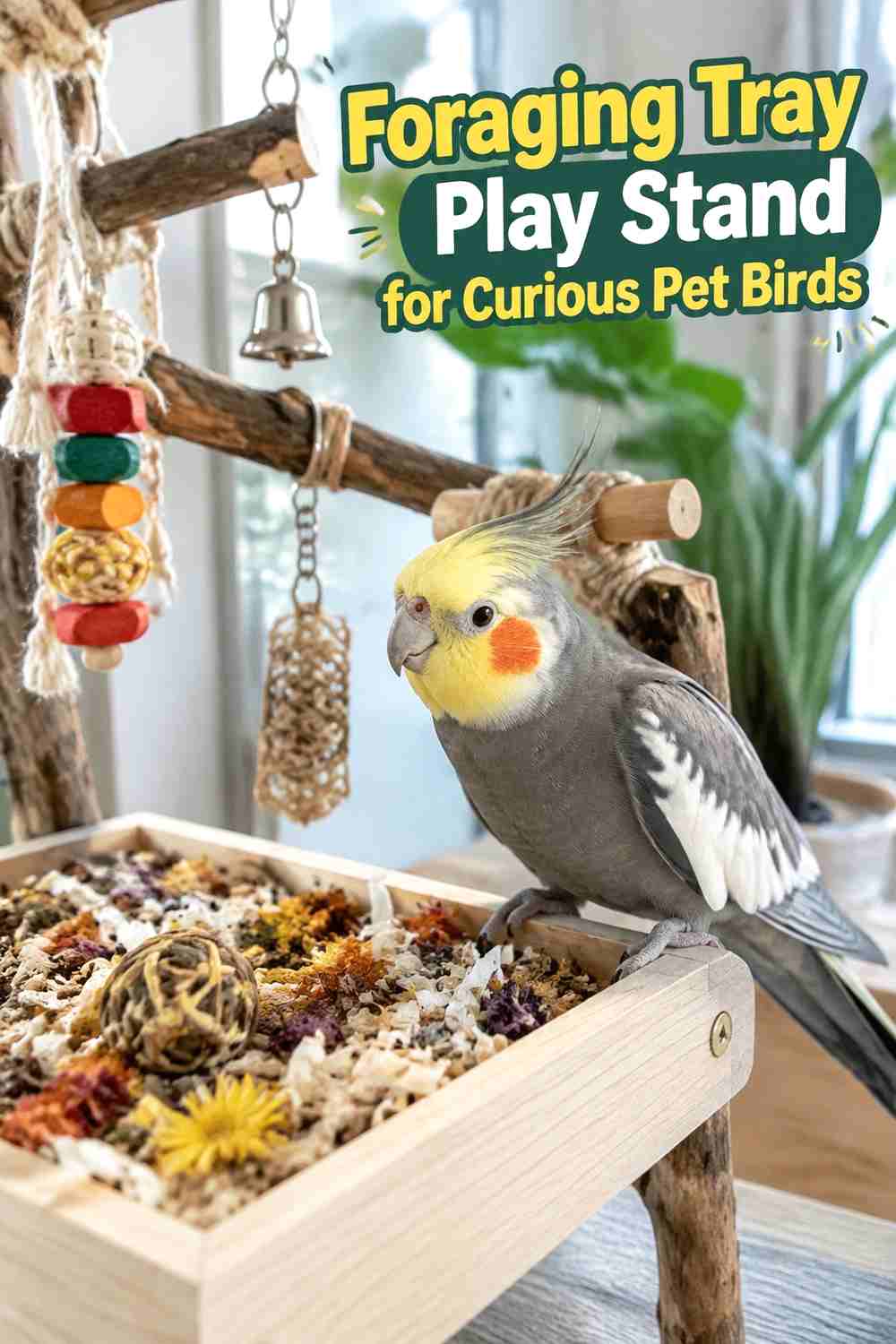
Add a shallow foraging tray to a stable play stand so a curious bird can search through safe paper pieces and bird-appropriate forage rather than simply waiting at a food cup. Keep the tray broad and shallow, with the contents easy to see during the first few sessions. Start by placing familiar food near the surface before gradually making the search slightly less obvious. The tray should attach securely or sit on a platform where it cannot tip when the bird lands on the edge. Avoid tiny loose objects that could be swallowed accidentally. Remove damp paper, old food, and heavily shredded material after use so the tray remains clean and easy to inspect.
Use & Maintenance
Reset the tray with clean material rather than continually adding new forage on top of old debris. Check corners where small food pieces can become hidden.
Why It Works
The bird has to look, move, and manipulate lightweight material to find familiar items, creating activity without requiring a complicated mechanical puzzle.
4. Rope Free Chewing Play Stand For Shredding Pet Birds

Create a shredding-focused stand using stable wood perches and securely attached bird-appropriate chew items instead of fabric ropes. Plain shreddable paper, suitable soft wood pieces, and bird-safe woven materials can give an enthusiastic chewer several textures to investigate. Space the items so the bird can reach them comfortably without becoming surrounded by hanging material. A broad tray below helps catch the inevitable fragments and makes it easier to see when something has been destroyed enough to replace. Inspect every attachment point before use and remove damaged pieces that develop sharp edges or loose components. The stand should still include an open perch where the bird can rest without constantly touching a toy.
Best For
This idea suits birds that naturally spend playtime shredding and chewing rather than repeatedly climbing or swinging.
Cleaning Notes
Clear loose fragments frequently so the base remains easy to inspect. Replacing one worn item is usually more manageable than filling the stand with many chew toys at once.
5. Ladder Climbing Play Stand For Energetic Pet Birds
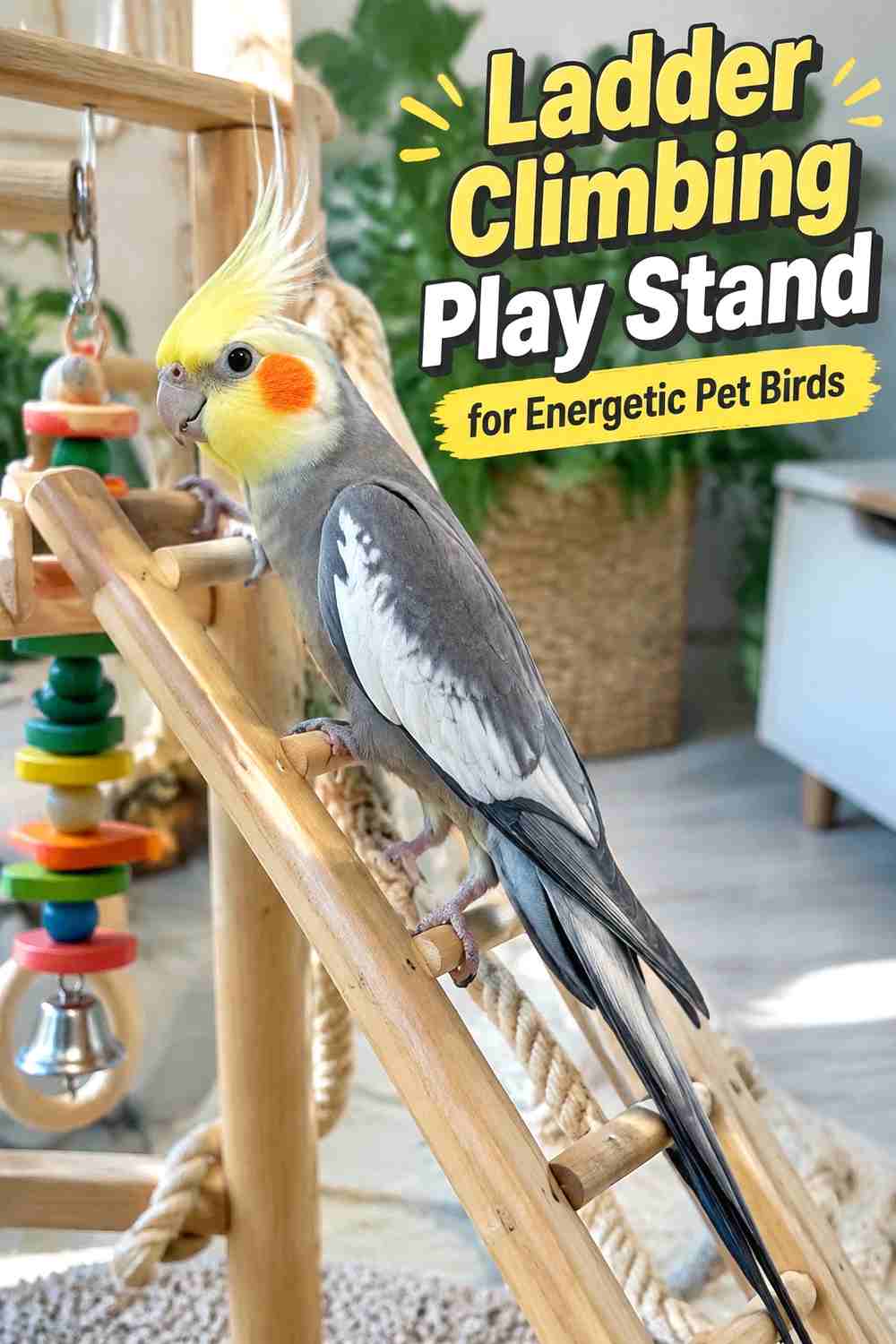
Use a securely mounted bird ladder to connect two stable perch levels and create an obvious climbing route through the play stand. The ladder should have appropriately sized rungs, comfortable spacing, and firm attachment points at both ends so it does not twist when the bird climbs. Position the lower end where the bird can approach easily rather than forcing a jump onto the first rung. You can place a favorite perch near the top as a simple destination. Keep hanging toys away from the ladder path so feet and wings have clear space. Watch how your bird uses the route and lower the angle if the climb seems awkward or overly steep.
Setup Notes
Test the ladder by gently moving it before each session. It should not swing, detach, or shift when moderate pressure is placed on the rungs.
Pet Type & Life Stage
Confident, active birds may enjoy steeper routes, while younger, older, or less agile birds may do better with a lower angle and shorter distance between platforms.
6. Swing And Perch Play Stand For Playful Cockatiels
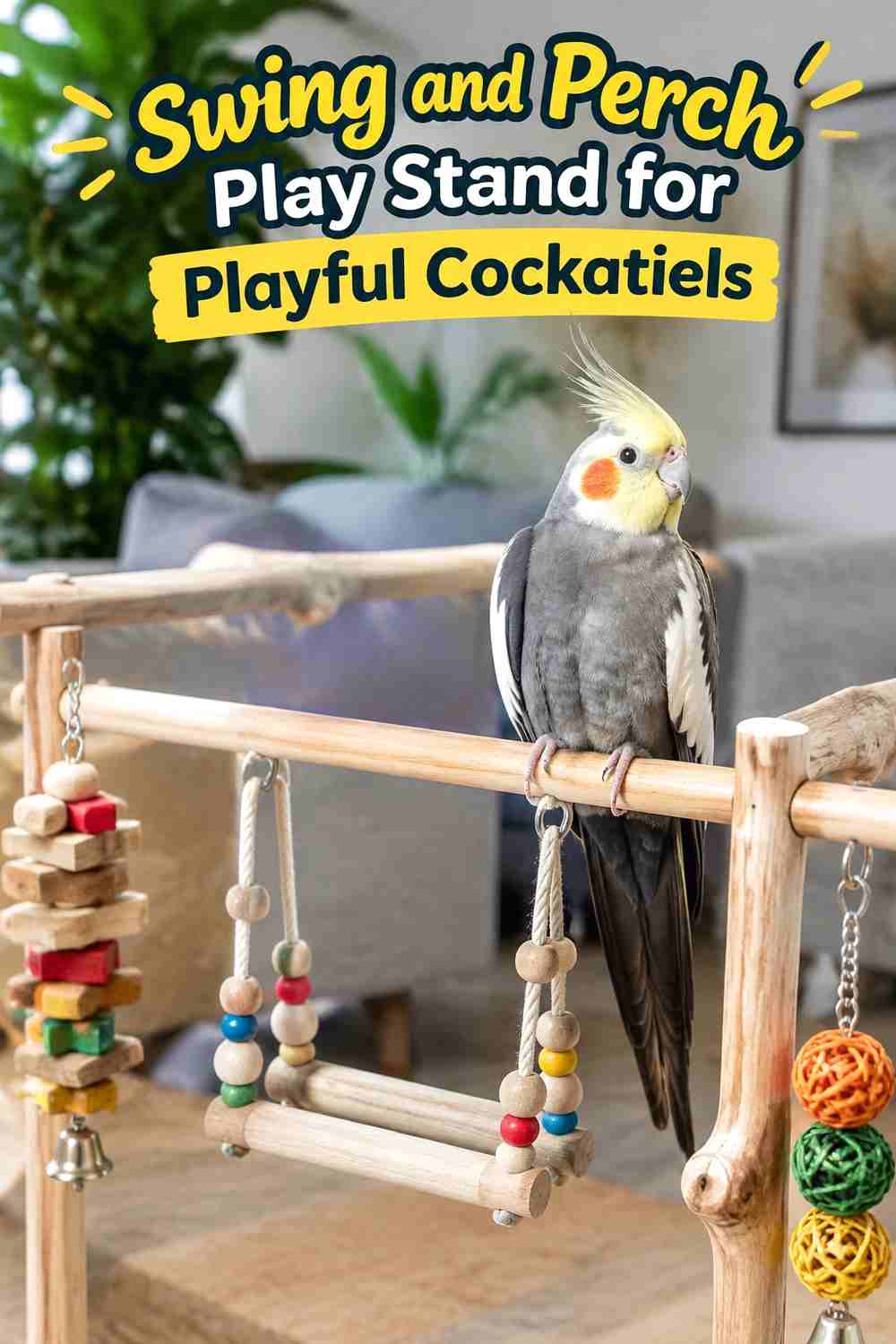
Combine one secure swing with two or three fixed perches to give a playful cockatiel both moving and stationary places to spend time. Position the swing where it can move freely without striking another branch, toy, wall, or the stand itself. Keep a stable perch beside it so the bird can investigate before stepping onto the moving surface. The swing should be sized for the bird’s feet and body rather than being oversized for visual effect. Avoid filling the area with multiple moving accessories that make the entire stand unstable. Inspect connectors regularly, especially if the cockatiel chews nearby parts. A removable tray underneath simplifies cleanup from seed hulls and shredded toy pieces.
Comfort & Safety
The bird should always have a fixed perch available. A moving swing should be an optional activity, not the only comfortable place to stand.
Pro Tip
Introduce the swing in a neutral position and allow the cockatiel to approach voluntarily rather than placing the bird directly onto an unfamiliar moving perch.
7. Window Side Viewing Play Stand For Indoor Pet Birds
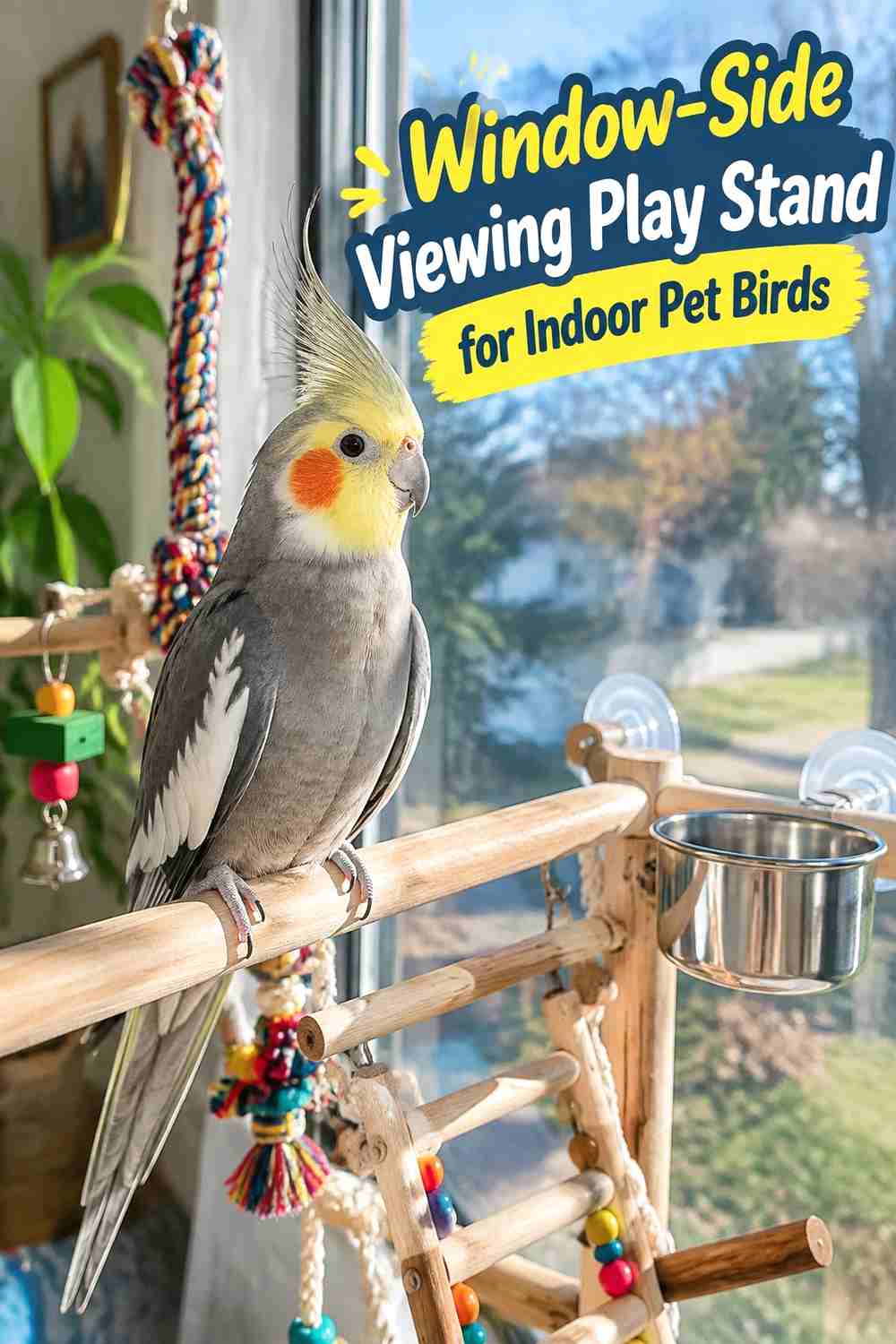
Place a simple perch-focused play stand near a secure, closed window to create an indoor observation spot with natural daylight and outdoor visual activity. Keep enough distance from the glass that the bird cannot repeatedly strike or chew window fittings, and avoid placing the stand in strong direct sun for long periods. A higher observation perch and a lower retreat perch give the bird options without making the stand complicated. Curtains, blinds, cords, and nearby houseplants should remain out of reach. Because outside movement can excite or startle some birds, observe your pet’s response and relocate the stand if the window creates persistent agitation rather than relaxed interest.
Space & Placement
Use a location away from drafts, open windows, loose blind cords, and heavy foot traffic. The base should remain stable even if the bird reacts suddenly to outdoor movement.
Best For
This setup may suit birds that calmly watch outdoor activity and enjoy sitting near bright natural light while remaining safely inside.
8. Compact Corner Play Stand For Small Bird Rooms
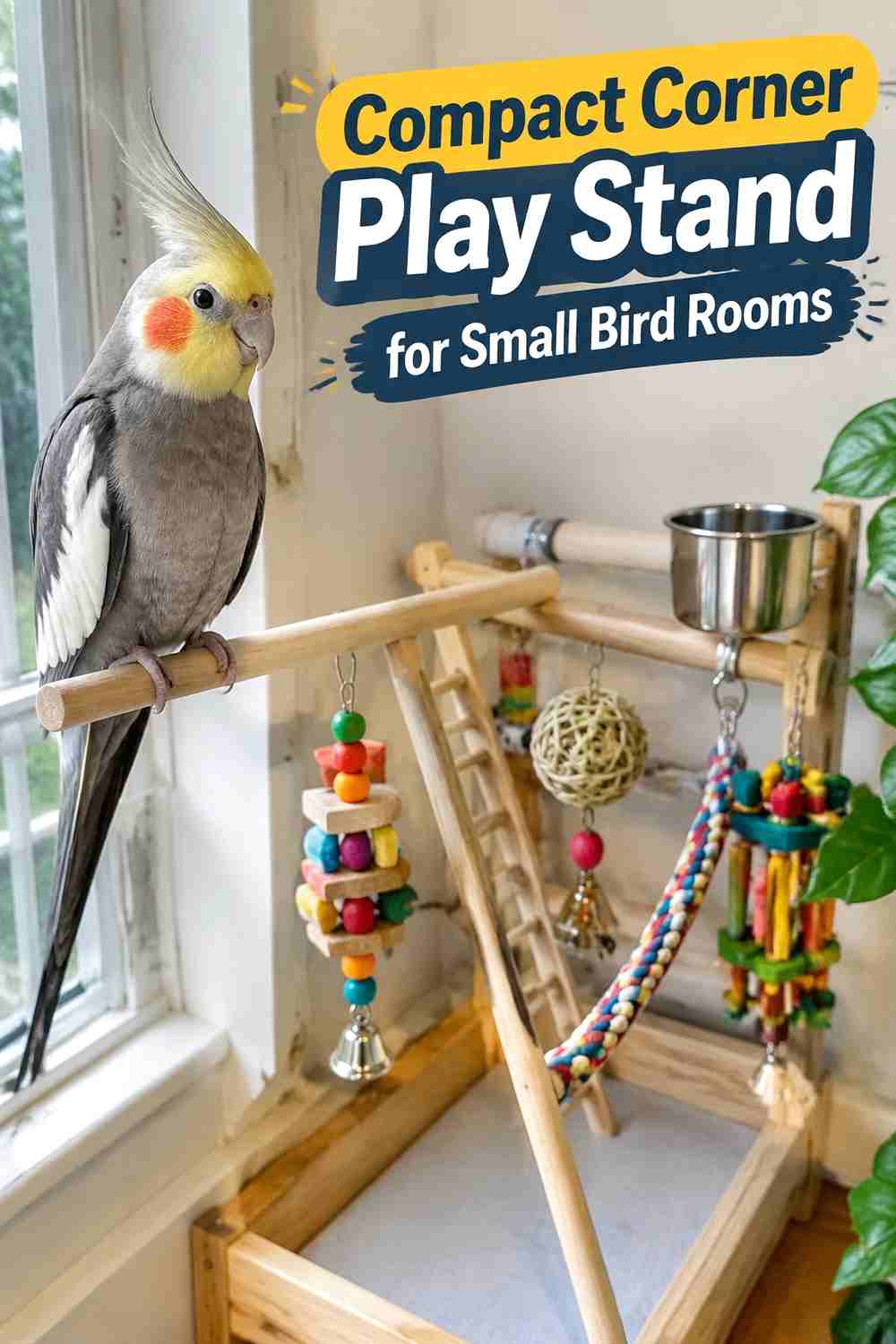
A compact corner stand uses vertical space instead of a wide footprint, making it practical for bird rooms or apartments where open floor area is limited. Choose a stable base and stack only a few useful features: a lower access perch, one middle activity level, and a comfortable upper perch. Keep the stand far enough from walls that droppings and shredded material are easy to clean, and do not let toys become wedged between the structure and the wall. A small removable tray or washable floor mat underneath helps control debris. Avoid making the stand excessively tall just to save space; stability and easy access matter more than squeezing in another level.
Space & Placement
Measure the full reach of the bird, not just the footprint of the stand. Nearby shelves, cords, frames, and furniture can become chew targets if positioned too close.
Use & Maintenance
Keep accessories limited and rotate them rather than permanently attaching many items. A less cluttered compact stand is easier to clean and supervise.
9. Training Perch Play Stand For Hands On Bird Sessions
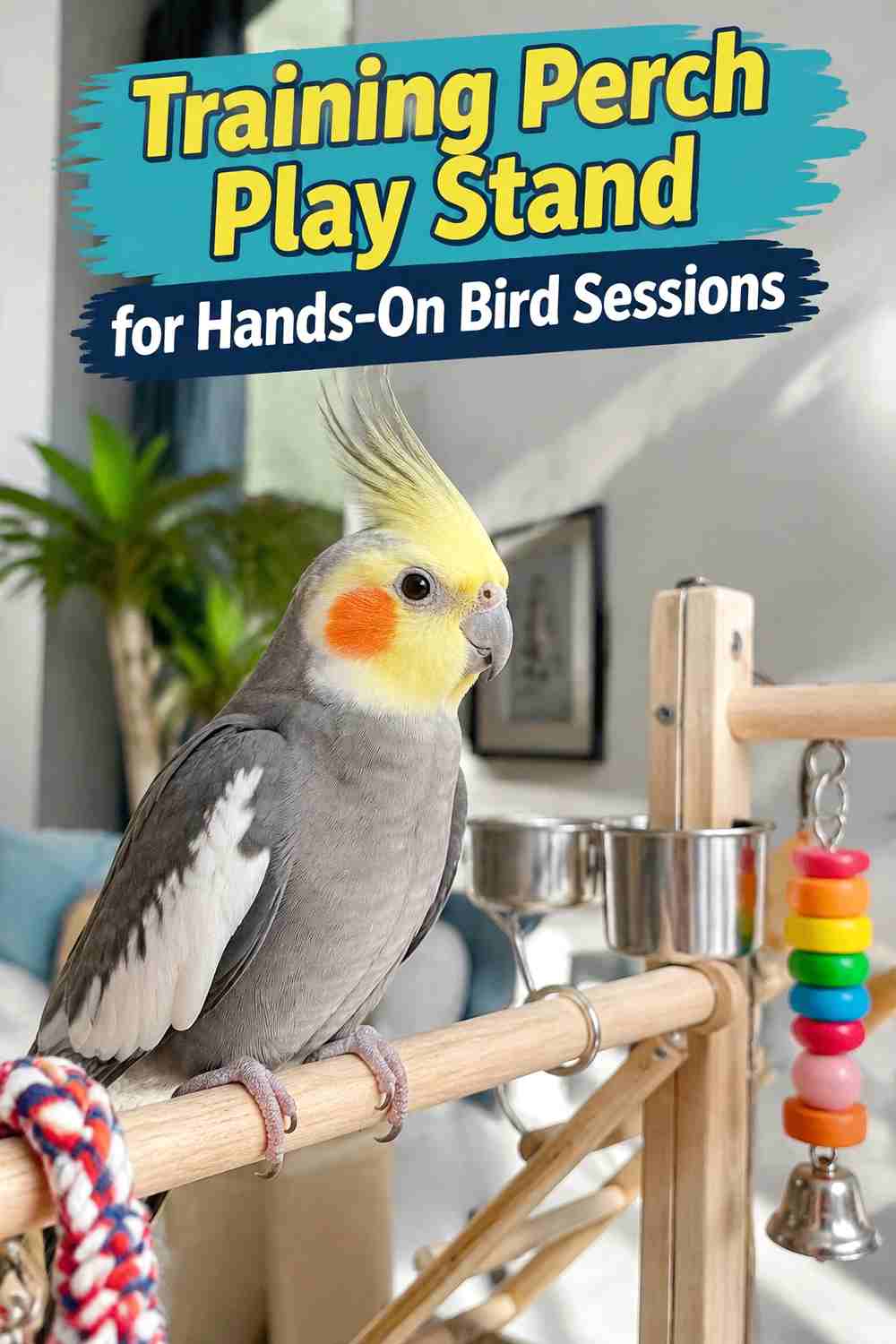
Design a training-focused play stand around one clear primary perch with enough open space for step-up practice, target work, or other simple hands-on sessions. Keep distracting toys to one side so the bird can focus when you are interacting and relax when training is finished. A second perch slightly lower can provide an easy transition point without creating a complicated climbing structure. Position the stand where you can approach calmly from the front rather than reaching awkwardly over furniture. Use familiar rewards appropriate for your bird’s normal routine, and keep sessions voluntary and manageable. The base should remain steady when the bird steps on, turns around, or reaches toward your hand.
Why It Works
A simple, predictable station gives the bird a consistent place for interaction without requiring the entire cage or room to become the training area.
Pro Tip
Keep the main training perch visually clear. Too many dangling toys can make it harder for both you and the bird to use the space consistently.
10. Multi Level Natural Wood Play Stand For Pet Birds

A multi-level natural wood stand creates several distinct zones by combining low, middle, and upper perches with short climbing routes between them. Use stable bird-appropriate branches with varied diameters so the structure offers different footing without relying on identical dowel perches. Keep the highest areas comfortably below the point where cleaning or retrieving the bird becomes difficult. Each level should have a clear landing spot and enough room for the bird to turn naturally. Instead of placing a toy everywhere, dedicate one level to chewing or foraging and leave another mostly open. Inspect the wood regularly for splinters, heavy chewing damage, loose joints, and areas that are difficult to clean.
Setup Notes
Build from the base upward and test stability at every level. A visually impressive tall stand is not useful if movement at the top makes the entire structure wobble.
Use & Maintenance
Wipe accessible surfaces regularly and replace heavily damaged removable branches rather than waiting until a worn perch becomes unstable.
11. Hanging Toy Rotation Play Stand For Curious Pet Birds
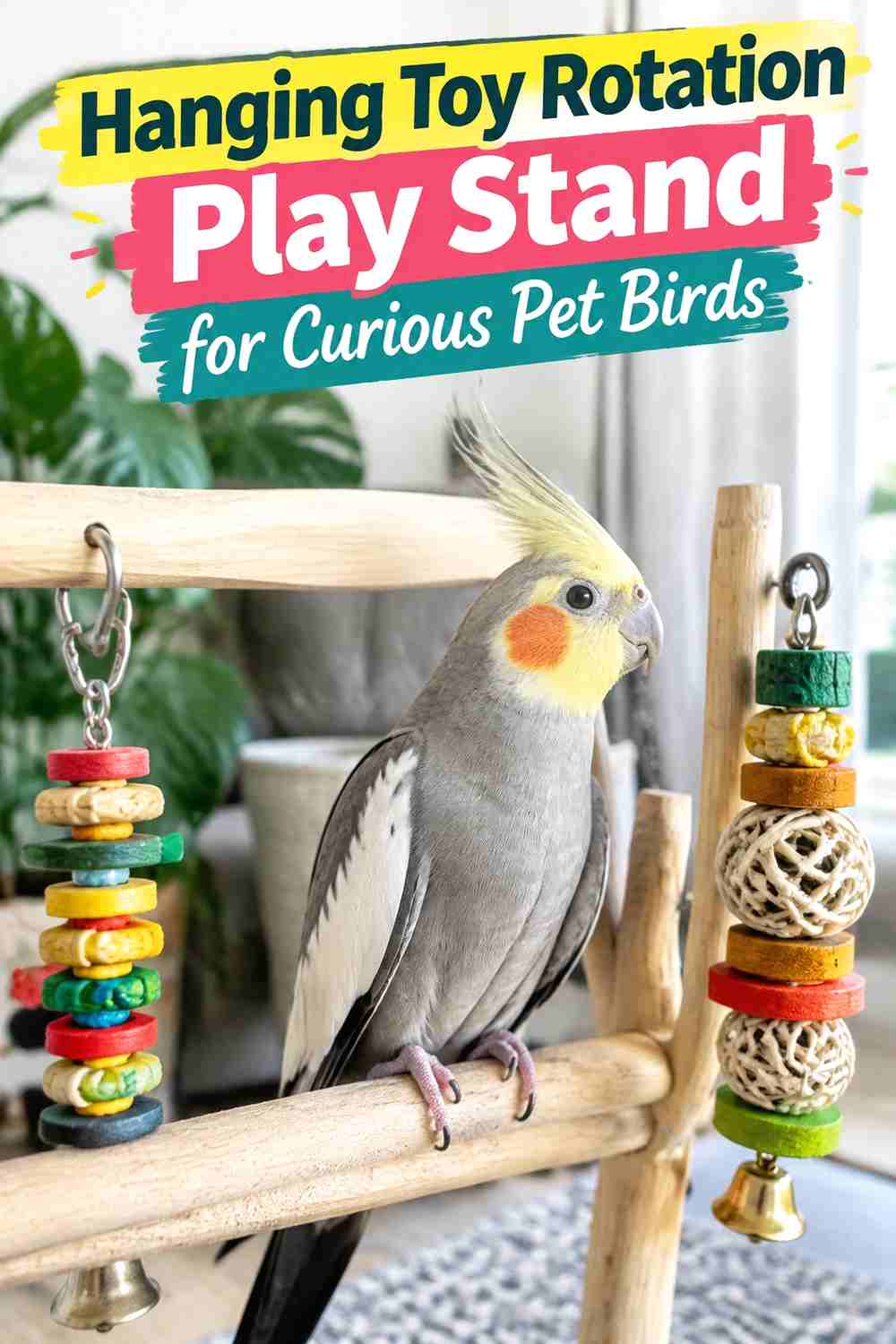
Add two or three secure hanging points to a play stand so you can rotate bird-appropriate toys without changing the whole structure. Keep only a small number attached at one time, leaving clear flying, climbing, and perching space around them. Different sessions might feature a shredding item, a lightweight foraging toy, or another familiar activity your bird already uses safely. Check hanging components for loose parts, open connectors, frayed material, or places where toes could become caught. Remove worn toys promptly instead of allowing damaged accessories to remain because the bird still seems interested. Rotation works best when the stand retains a familiar base layout while just one activity changes.
Use & Maintenance
Inspect every hanging point during toy changes. Cleaning the attachment area at the same time prevents debris from building up around hooks and branches.
Comfort & Safety
Keep strings, fibers, and dangling components short and well maintained. Remove any item that begins to fray or develops an obvious entanglement risk.
12. Easy Clean Floor Play Stand For Messy Pet Birds

Build an easy-clean stand around a broad removable tray or washable floor mat that extends beyond the main perches. This catches seed hulls, shredded paper, droppings, and food pieces before they spread across the room. Keep toys and feeding activities directly above the protected area whenever practical, and choose perch positions that can be reached for routine wiping without dismantling the whole stand. Smooth, accessible base surfaces are easier to maintain than decorative corners that collect debris. The stand itself should remain sturdy and bird-friendly rather than sacrificing function for easy cleaning. A simple layout can be especially helpful for birds that enthusiastically shred toys or scatter food during enrichment.
Cleaning Notes
Remove loose debris first, then clean the tray or mat using a method appropriate for your bird setup. Allow cleaned surfaces to dry before returning them to use.
Best For
This design works well in shared living spaces where keeping feathers, paper fragments, and food debris contained is a major practical concern.
13. Dual Perch Social Play Stand For Bonded Pet Birds
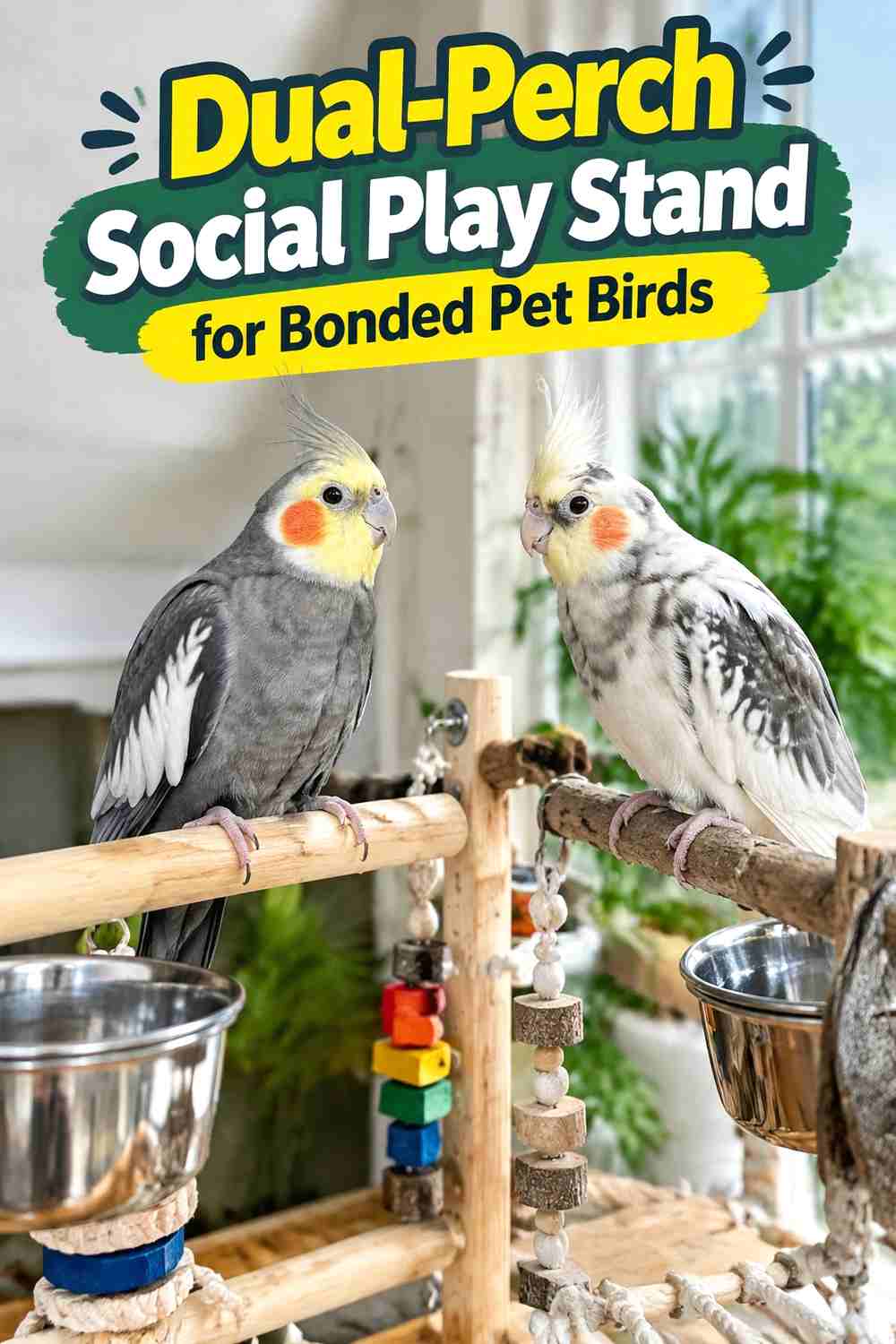
Create a social play stand with at least two comfortable primary perches so bonded birds can share the area without being forced onto the same branch. Position the perches at similar heights when possible so one bird does not automatically control the only preferred high spot. Provide more than one route between levels and avoid dead-end corners where one bird could block the other. Duplicate a favorite activity if competition appears around a single toy or forage tray. Even bonded birds may want different amounts of space, so watch whether both animals can rest and move freely. Clean shared perches regularly and check that chewing has not loosened any central support.
Space & Placement
Leave enough distance between the main perches for both birds to turn and move without constant contact. Crowding can make an otherwise attractive stand difficult to share.
Pro Tip
Duplicate high-value resources rather than assuming bonded birds will always take turns with one preferred perch, toy, or foraging spot.
14. Portable Room To Room Play Stand For Companion Birds
You May Also Like

A portable play stand keeps the layout simple enough to move between safe rooms while still giving a companion bird a familiar perch, activity spot, and cleanup tray. Choose a stable stand with a balanced base and comfortable handles or wheels that lock securely before the bird uses it. Move the stand only when the bird is safely positioned according to your normal routine; do not roll a wobbly setup around with loose toys swinging in every direction. Keep accessories lightweight and limit the number of hanging pieces. Before using the stand in a different room, check for fans, open doors, hot surfaces, cords, other pets, and unfamiliar hazards within reach.
Best For
This setup suits households that want one familiar out-of-cage station available in several bird-safe rooms instead of maintaining multiple full-size stands.
Use & Maintenance
Inspect the locking mechanism, base, and removable tray whenever the stand changes location. Reposition toys after moving if they have shifted into awkward or unstable positions.
How to Choose the Right Idea
Start with your bird’s species, body size, confidence, activity level, chewing habits, and preferred way of moving. A bird that climbs constantly may get more use from branches and ladders, while a strong shredder may prefer a simpler stand with replaceable chew activities. Smaller or less confident birds may benefit from shorter distances between stable perches instead of a tall multi-level design. Room layout matters too. Measure nearby walls, furniture, cords, windows, and walking paths so the bird cannot reach hazards from the outermost perch. Think about cleaning before adding accessories, because food, droppings, feathers, and shredded materials naturally collect below active stands. Multi-bird homes should provide enough perches and routes to reduce forced sharing, while portable stands should prioritize a stable base and secure movement.
Final Thoughts
The most useful bird play stand is not necessarily the tallest or busiest one. A stable structure with comfortable perches, a few well-chosen activities, clear movement routes, and easy cleanup can provide plenty of practical variety. Start with the features your bird already enjoys, then rotate or add activities gradually as you learn how the stand is actually being used.
FAQs
1. What should a bird play stand include?
A practical stand usually needs stable perches, secure footing, clear movement routes, and one or two appropriate activities such as foraging, climbing, shredding, or training. The exact setup should match the bird’s size and behavior.
2. Where should I place a bird play stand?
Choose a stable indoor location away from open windows, ceiling fans, hot surfaces, loose cords, unsafe plants, and other hazards. Leave enough space around the stand for natural movement and routine cleaning.
3. How many toys should go on a bird play stand?
There is no need to cover every branch with toys. A few well-spaced activities can leave more room for climbing, resting, and turning. Rotating toys can add variety without creating clutter.
4. Can two birds share the same play stand?
Bonded or compatible birds may use the same stand, but provide multiple comfortable perches, more than one route through the setup, and duplicate popular resources when needed. Avoid forcing birds to share one preferred spot.
5. How often should I clean a bird play stand?
Check it regularly and remove droppings, old food, shredded debris, and damaged materials as they appear. Removable trays and accessible perches can make routine cleaning much easier. Save these 14 bird play stand ideas for your next enrichment update, and explore more practical ways to make your bird’s daily routine varied, usable, and easy to maintain.
