Give your hamster a new place to burrow, forage, and explore with easy dig boxes using practical textures and simple habitat-friendly setups. Hamster dig boxes create a separate area where a hamster can push, tunnel, investigate, and search through different materials. The best setup depends on your hamster’s size, confidence, chewing habits, available habitat space, and how easily you can keep the material clean and dry. These 12 ideas range from familiar paper bedding to sand, dry coconut fiber, cardboard, and multi-texture arrangements. Some work well as permanent habitat features, while others are better for supervised enrichment sessions. Keep each setup stable, use pet-appropriate materials, and introduce new textures gradually rather than filling the enclosure with several unfamiliar substrates at once.
Save This Idea on Pinterest

12 Hamster Dig Box Ideas
Save to PinterestQuick List
- Deep Paper Bedding Dig Box Idea for Syrian Hamsters
- Aspen Shaving Dig Box for Natural Hamster Exploring
- Dry Coconut Fiber Soil Dig Box for Hamsters
- Hamster-Safe Sand Dig Box for Burrowing and Rolling
- Cork Granule Dig Box Enrichment for Curious Hamsters
- Soft Shredded Paper Dig Box for Small Hamsters
- Layered Hay and Paper Dig Box for Hamsters
- Buried Cardboard Tube Dig Box Adventure for Hamsters
- Forage Sprinkle Dig Box Game for Food-Motivated Hamsters
- Multi-Texture Split Dig Box for Indoor Hamster Enrichment
- Cardboard Chip Dig Box for Chewing and Exploring Hamsters
- Large Supervised Exploration Dig Bin for Active Hamsters
1. Deep Paper Bedding Dig Box Idea For Syrian Hamsters
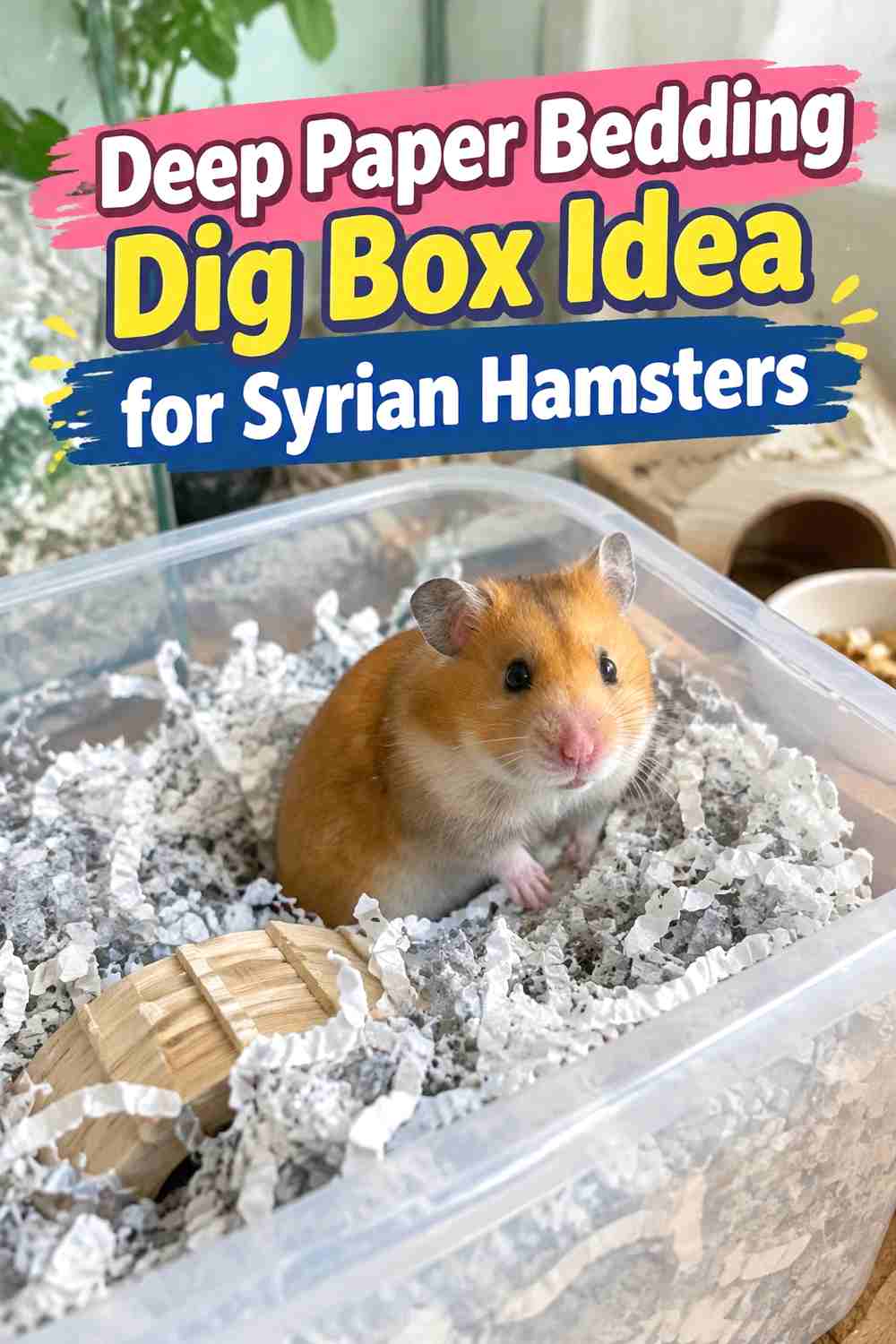
Fill a sturdy, open container with a generous layer of soft paper-based hamster bedding so a Syrian hamster can push into it, rearrange it, and make shallow tunnels. This is one of the easiest dig-box ideas because the texture is already familiar to many hamsters and is lightweight enough to move without much resistance. Choose a container with stable sides and an entrance your hamster can reach comfortably. Compress part of the bedding slightly while leaving the upper layer loose to create different digging resistance. Check underneath for damp or soiled patches during routine cleaning. If your hamster begins using the box mainly as a sleeping area, that is still useful information about the type of space it prefers.
Setup Notes
Use unscented, low-dust paper bedding intended for small pets. Position the box where your hamster can enter without climbing over a tall or slippery edge.
Use & Maintenance
Spot-clean soiled sections rather than replacing all clean bedding unnecessarily. Top up the box when repeated digging flattens the material significantly.
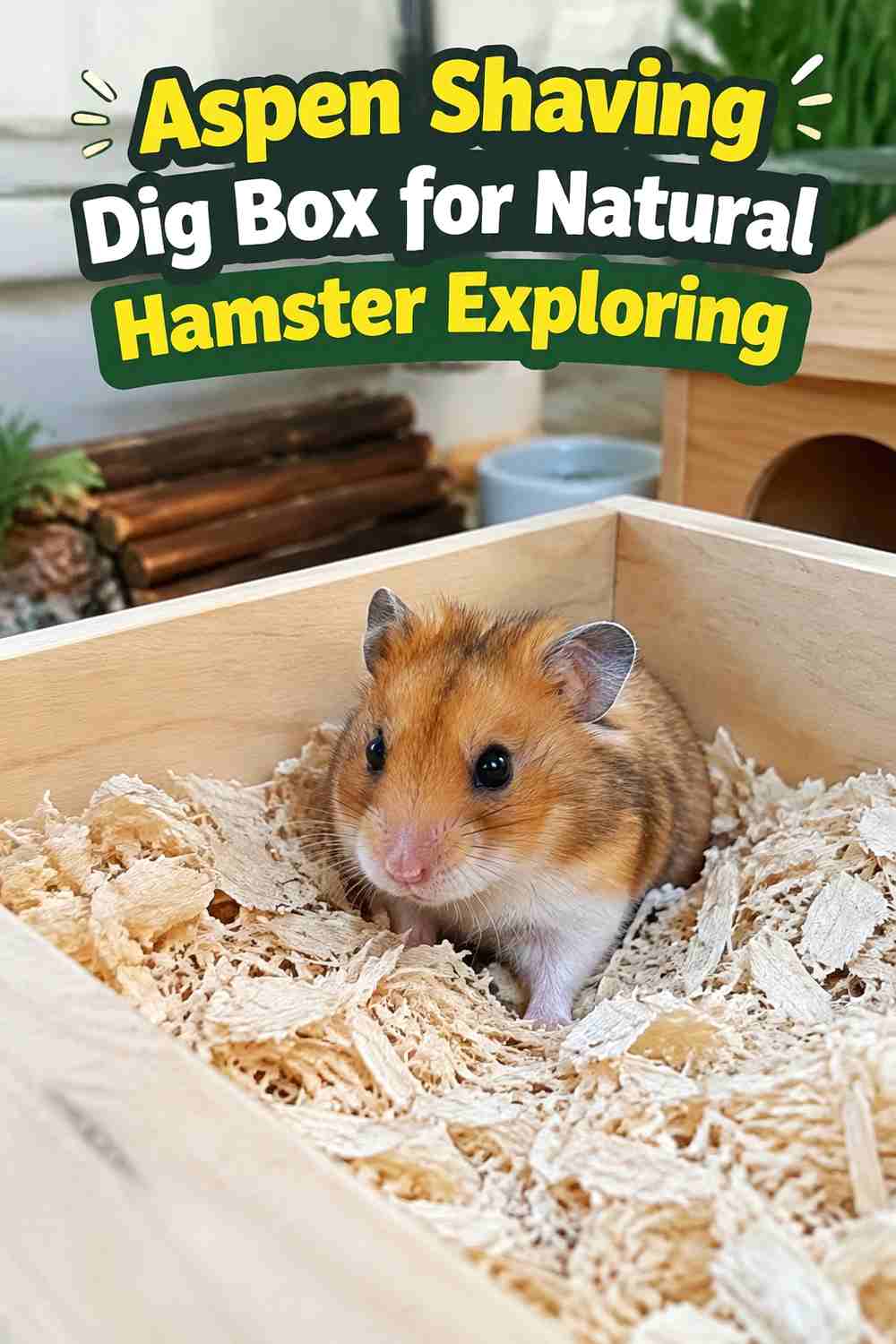
2. Aspen Shaving Dig Box For Natural Hamster Exploring
You May Also Like



An aspen shaving dig box gives your hamster a firmer, rustling texture that feels different from soft paper bedding. Fill a stable container with clean aspen shavings suitable for small animals and let the hamster explore by pushing, sniffing, and digging through the material. This works especially well when the main enclosure already uses paper bedding because the contrasting texture makes the box easy to distinguish. Keep the material loose rather than densely packed, and avoid strongly aromatic wood products or unknown wood scraps. A small cardboard tunnel placed beside the box can make the entrance more inviting. Remove wet sections promptly, and replace shavings that become dusty, heavily soiled, or mixed with spoiled food.
Best For
This setup suits hamsters that enjoy moving loose substrate but seem less interested in very soft paper. It can also add useful texture variety without taking over the entire enclosure.
Cleaning Notes
Sift out obvious debris during routine checks and replace dirty areas as needed. Keep the container dry so moisture does not collect beneath the shavings.
3. Dry Coconut Fiber Soil Dig Box For Hamsters
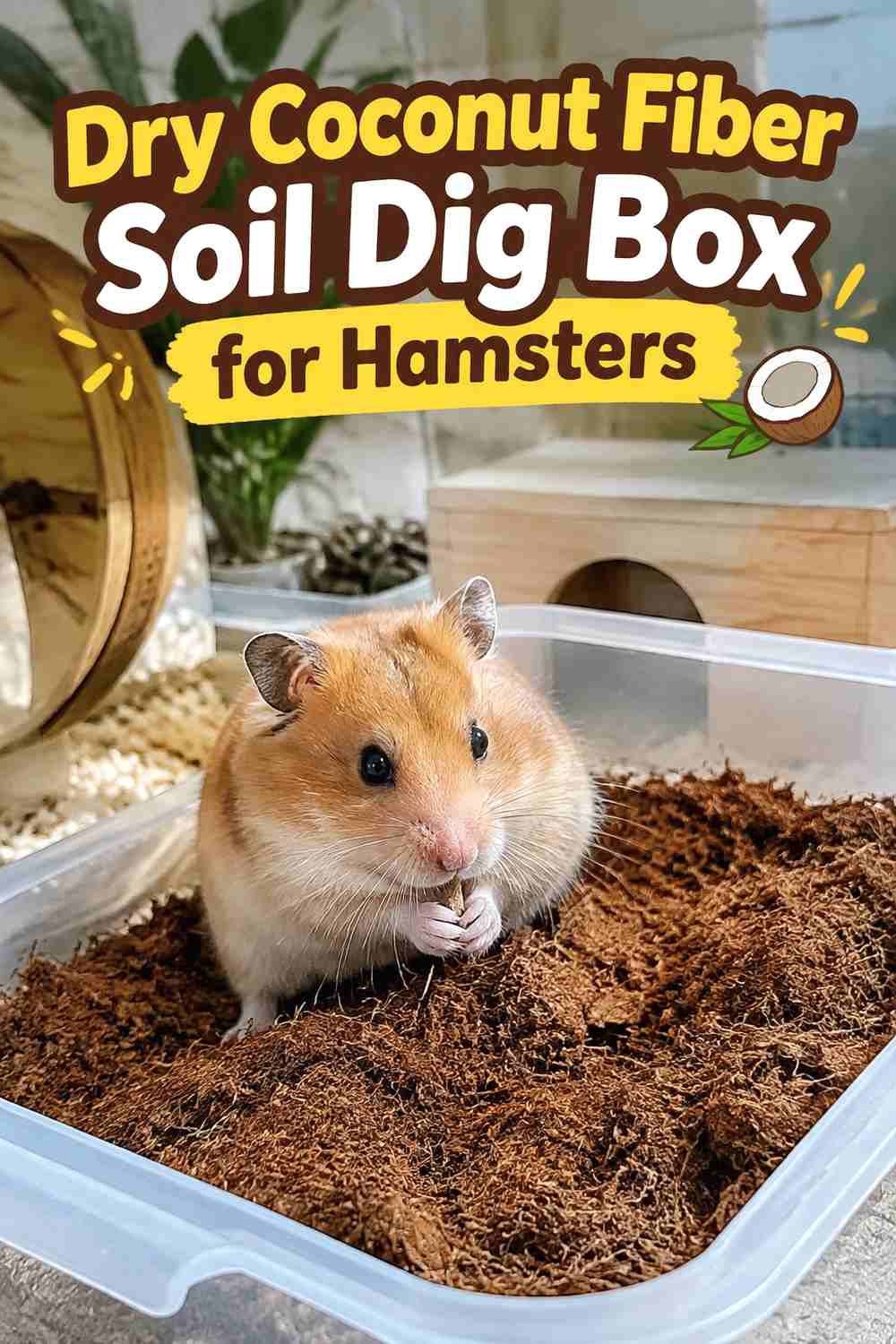
Dry coconut fiber creates a soil-like digging texture that can make a hamster enrichment area feel noticeably different from standard bedding. Use plain, additive-free coconut fiber prepared for animal use and allow it to dry thoroughly before placing it in the habitat. The material should feel loose and crumbly rather than wet or muddy. Put it in a deep-sided, stable container because enthusiastic digging can send loose fiber over the edge. This idea is especially useful as a supervised or periodically offered texture box instead of a replacement for normal bedding. Check the material frequently for moisture, buried food, or contamination, and discard it if it becomes damp or difficult to keep clean.
Setup Notes
Break apart compacted clumps before use and keep the surface loose. A broad entrance helps prevent the hamster from dragging large amounts of fiber into surrounding bedding.
Comfort & Safety
Avoid using the substrate wet simply to make tunnels hold their shape. A dry setup is easier to monitor and reduces messy moisture inside the habitat.
4. Hamster Safe Sand Dig Box For Burrowing And Rolling
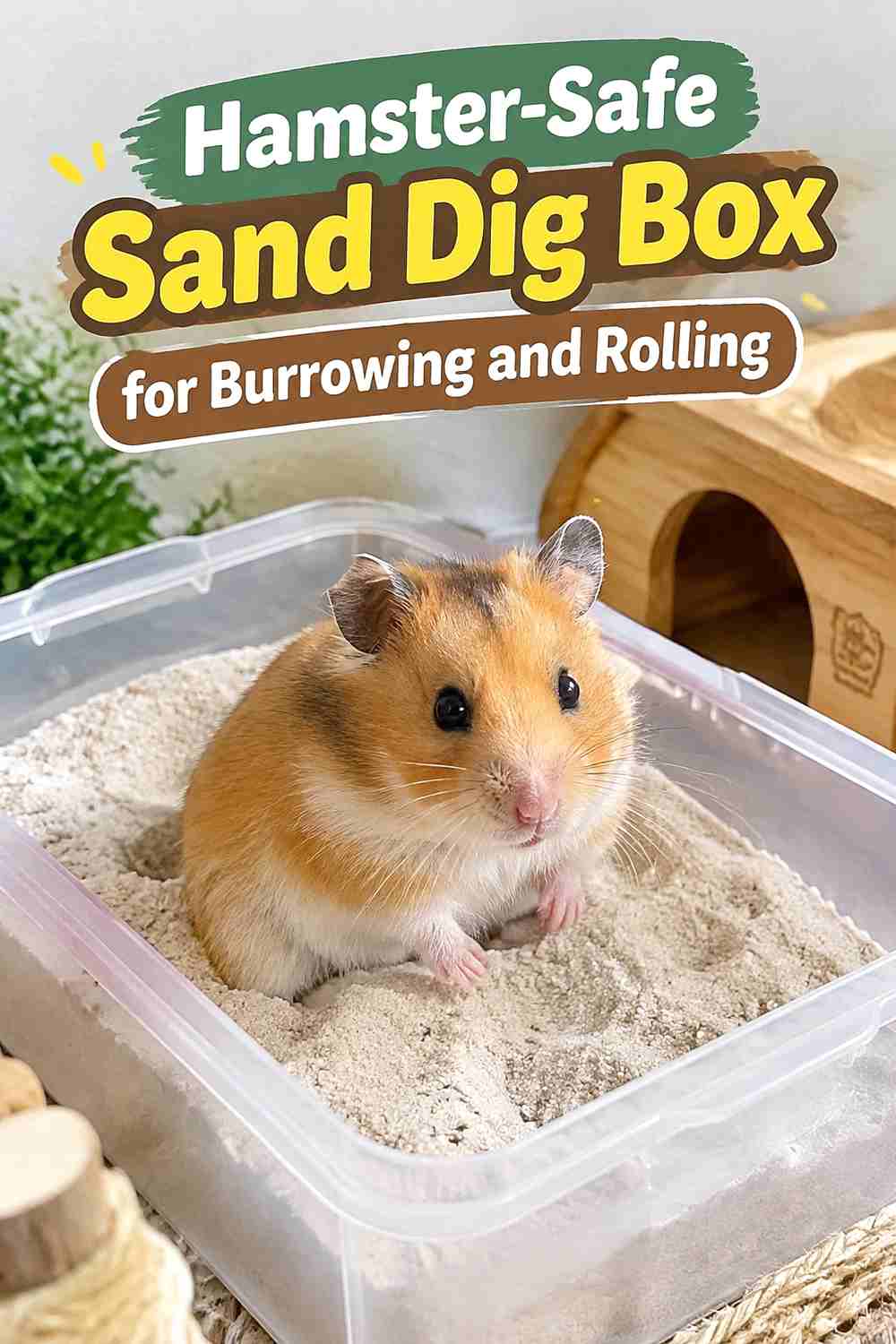
A wide sand dig box gives a hamster space to paw, roll, scrape, and investigate a loose mineral texture. Choose sand intended for appropriate small-pet use rather than very fine dust, and place it in a heavy container that will not shift while the hamster digs. A larger surface area is often more useful than a tiny decorative dish because it allows the hamster to turn around and move naturally. Keep the sand away from water sources so it stays dry, and remove soiled sections regularly. Some hamsters will dig deeply while others mainly roll or sit in the sand. Either behavior can make the box a useful part of the enclosure.
Space & Placement
Set the container on a stable platform or solid enclosure base rather than on loose bedding where a heavy dish could shift or sink unevenly.
Cleaning Notes
Scoop out obvious waste and food debris during regular checks. Replace the sand when it becomes difficult to keep clean or develops persistent moisture.
5. Cork Granule Dig Box Enrichment For Curious Hamsters

A cork granule dig box provides a lightweight, springy texture that feels very different from paper, sand, or wood shavings. Use clean cork material intended for animal habitat use and add enough to a low, stable container for your hamster to push around without disappearing into an unstable pile. The irregular pieces can encourage sniffing and pawing, especially when a few familiar food pieces are lightly scattered near the surface. Keep the first introduction simple so you can see whether your hamster enjoys the texture or avoids it. Check the cork for contamination, dampness, or excessive breakdown, and remove pieces that become sharp or otherwise unsuitable after repeated use.
Best For
This works well as a secondary texture station for a hamster that already explores confidently. It does not need to replace the animal’s main digging or burrowing bedding.
Pro Tip
Start with a shallow layer. Add more only after you know the hamster moves through the material comfortably and does not become frustrated by the unfamiliar footing.
6. Soft Shredded Paper Dig Box For Small Hamsters
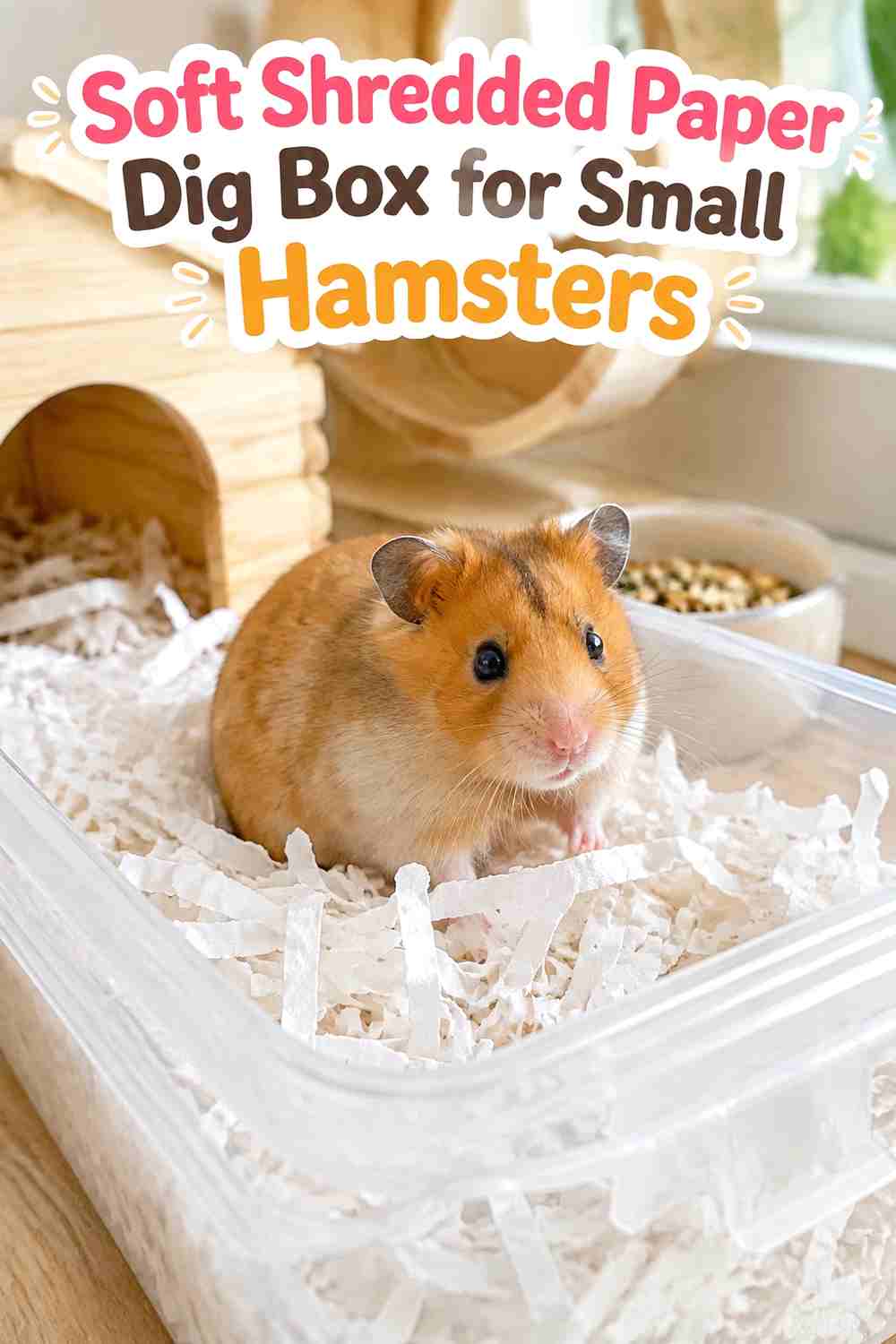
Fill a shallow tray with soft strips of plain paper to create a lightweight dig box that is easy for a small hamster to rearrange. Unlike compact paper bedding, loose strips shift quickly when the hamster noses underneath them, creating a simple search-and-burrow activity without a heavy substrate. Use plain, soft paper without staples, tape, glossy coatings, or strongly printed surfaces, and tear it into manageable pieces rather than tiny confetti. The tray should stay stable if your hamster leans against the edge. A little familiar nesting material mixed through the box can encourage exploration. Replace paper that becomes damp, soiled, or packed down from repeated use.
Pet Type & Life Stage
A shallow version may suit smaller dwarf hamsters or cautious animals because they can explore from the surface without climbing into a deep container.
Use & Maintenance
Fluff the strips during routine checks and remove hidden food before it spoils. The entire fill is inexpensive to replace when it becomes too messy to sort.
7. Layered Hay And Paper Dig Box For Hamsters
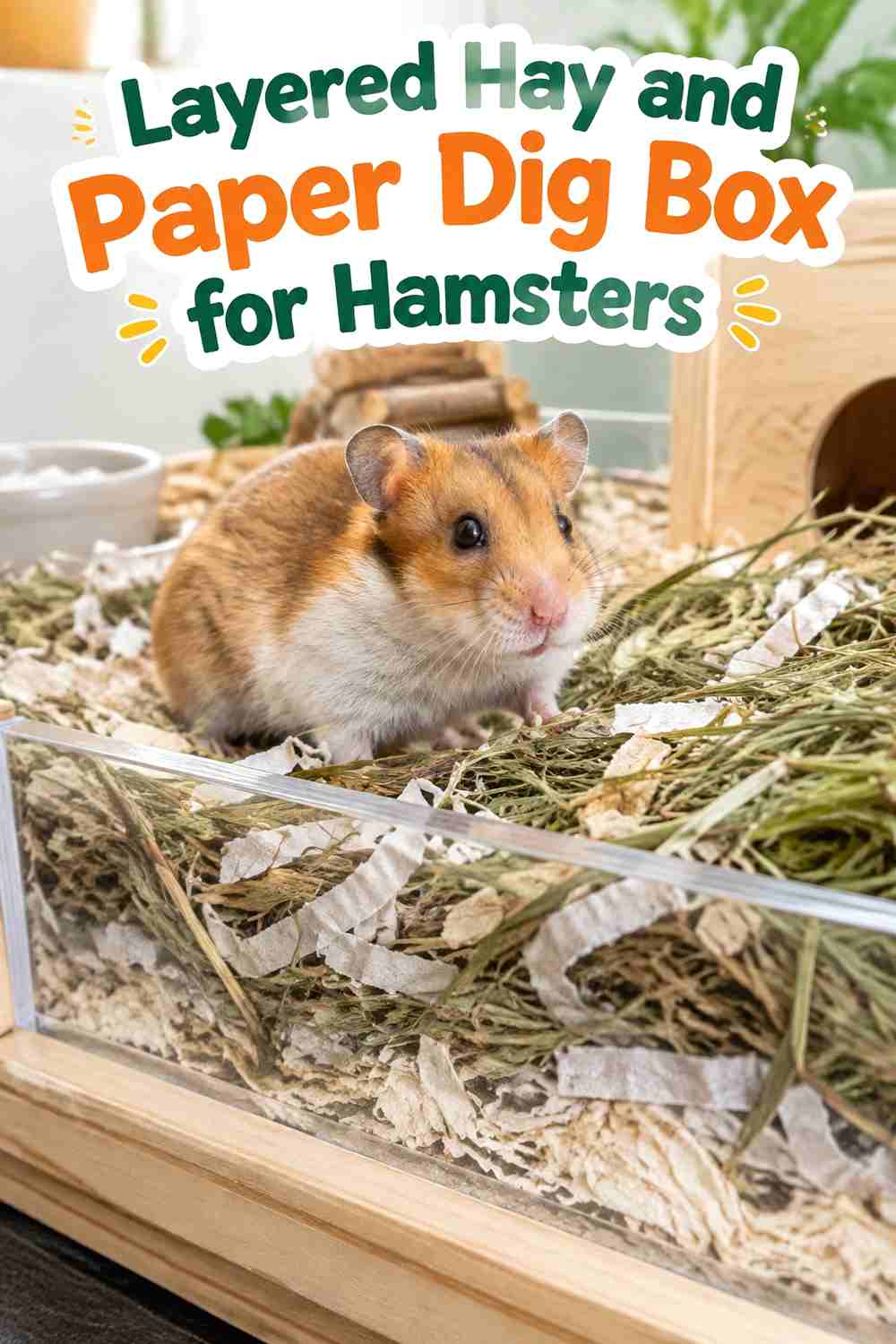
Create a layered dig box by alternating soft paper bedding with small amounts of clean, soft hay, giving the hamster two textures to pull apart and investigate. Keep paper bedding as the main material and use hay loosely so the box does not become stiff or difficult to move through. The hamster may push underneath the layers, carry pieces elsewhere, or uncover small pockets while exploring. Choose hay without sharp, rigid stems and remove any strands that look unusually coarse. This setup can become messy outside the container, so placing it away from the water area makes cleanup easier. Check regularly for stored food and replace damp or heavily soiled material.
Why It Works
The changing texture makes the hamster work through slightly different layers instead of digging through one uniform substrate from top to bottom.
Comfort & Safety
Keep the box loose and open rather than tightly stuffing hay into tunnels. Your hamster should always be able to move out of the material easily.
8. Buried Cardboard Tube Dig Box Adventure For Hamsters
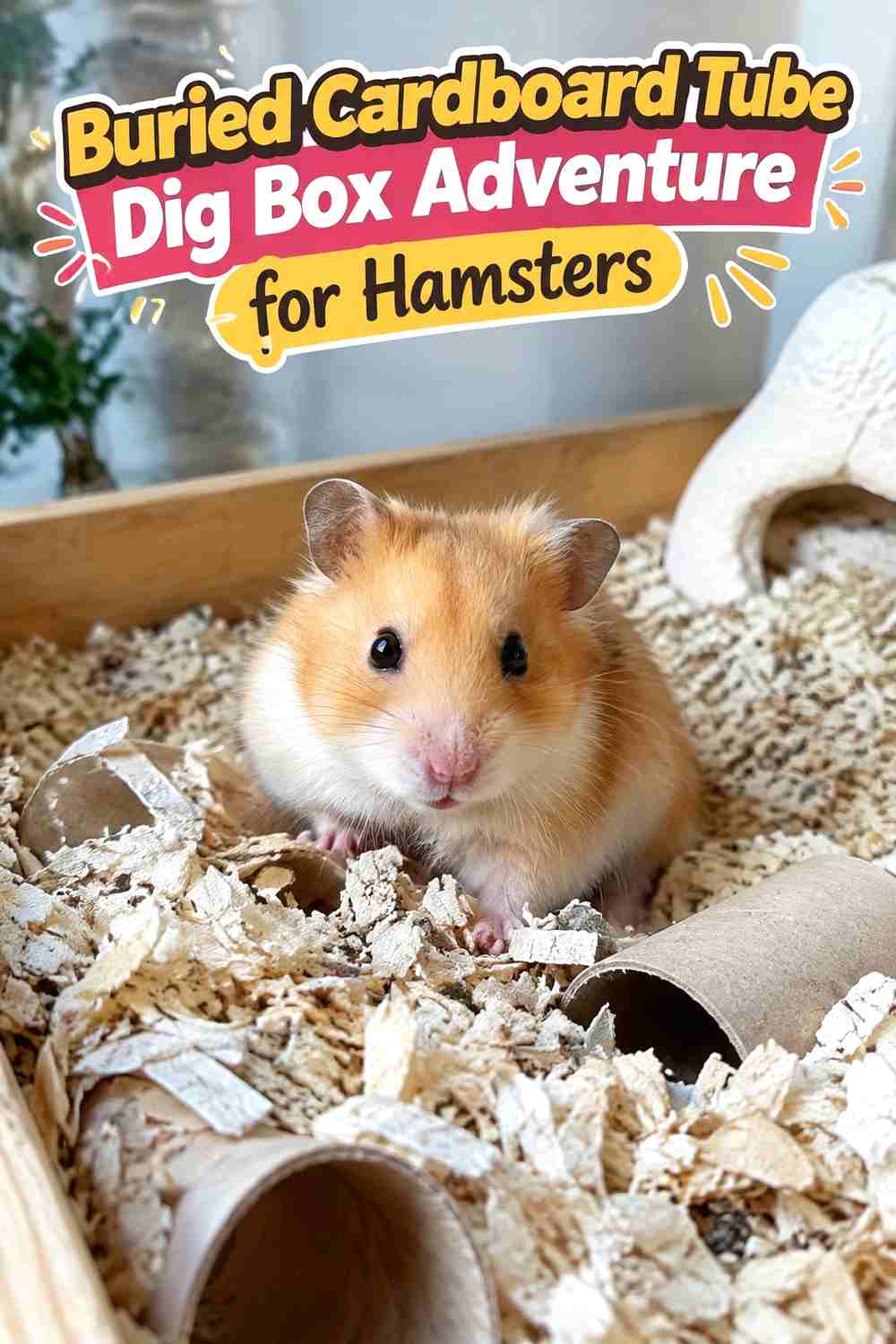
Half-bury a wide cardboard tube inside a paper-bedding dig box to create a hidden passage your hamster can uncover and enter. Leave both ends accessible so the tube never becomes a dead-end trap, and choose a diameter that gives the hamster plenty of room to turn or pass through without squeezing. Cover only part of the tube at first so your hamster can immediately recognize the entrance. As it becomes familiar, you can change the angle or bury a little more of the outside. Plain cardboard is easy to replace when it becomes heavily chewed. Check the tube daily for wet sections, collapsed edges, stored food, or damage that reduces the usable opening.
Setup Notes
Anchor the tube with bedding around the sides rather than placing a heavy object on top. Avoid tape, staples, or plastic coatings anywhere your hamster can reach.
Pro Tip
Move the tunnel slightly during resets instead of adding several tubes at once. A small layout change can create a fresh route without making the dig box crowded.
9. Forage Sprinkle Dig Box Game For Food Motivated Hamsters

Turn a familiar dig box into a foraging activity by scattering part of your hamster’s normal dry food through the upper layer instead of placing everything in one visible spot. The hamster must sniff, paw, and move substrate to locate pieces, adding purpose to the digging behavior. Start with most food near the surface so the task is easy, then hide a few pieces slightly deeper after your hamster understands the game. Use the normal feeding routine rather than automatically adding extra treats. Paper bedding, aspen, or another appropriate loose substrate can work for this setup. Check the box later for uneaten food, especially anything that should not remain buried for long periods.
Best For
This idea suits hamsters that immediately investigate food scents and enjoy searching through bedding. Timid animals may prefer a few visible pieces around the edges first.
Use & Maintenance
Change the hiding locations rather than increasing the amount of food. Routine variation can keep the activity interesting without making the puzzle unnecessarily difficult.
10. Multi Texture Split Dig Box For Indoor Hamster Enrichment
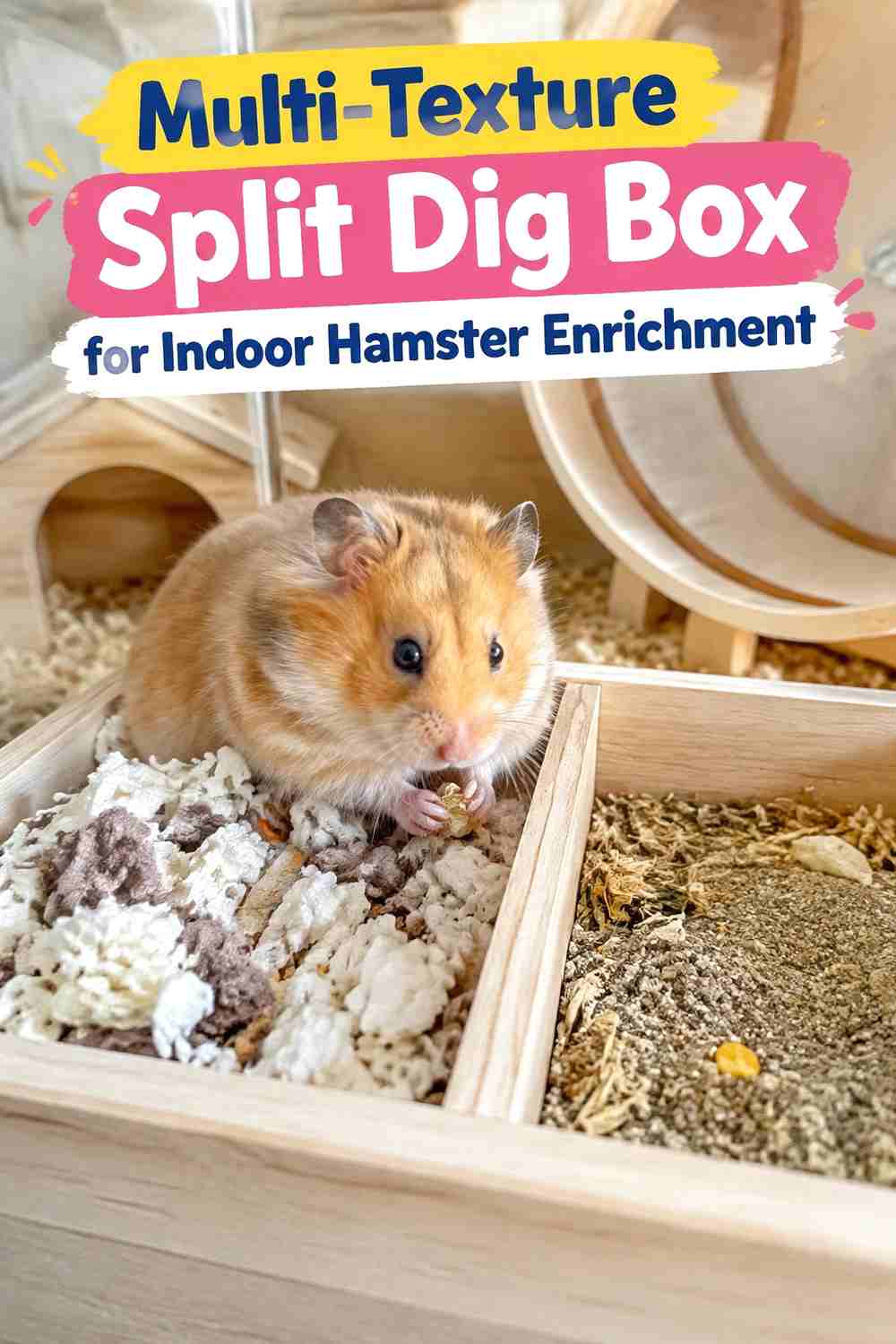
Divide a wide container into two or three simple texture zones so your hamster can choose what it wants to investigate. For example, one section might contain paper bedding, another clean aspen, and a third appropriate cork material. Use low dividers or separate shallow containers placed beside each other rather than creating steep internal walls. The goal is choice, not an obstacle course. Watch where your hamster spends time before deciding which material deserves more space. This setup is also helpful for comparing cleanup needs because some substrates scatter or hold debris differently. Keep each section dry and remove mixed, dirty material when separating it is no longer practical.
Why It Works
The hamster controls the experience by moving between contrasting textures. That makes the box useful even when the animal shows a strong preference for only one section.
Space & Placement
Use this idea only if the habitat has enough room to keep essential bedding, shelter, food, water, and movement areas comfortably accessible alongside the dig box.
11. Cardboard Chip Dig Box For Chewing And Exploring Hamsters
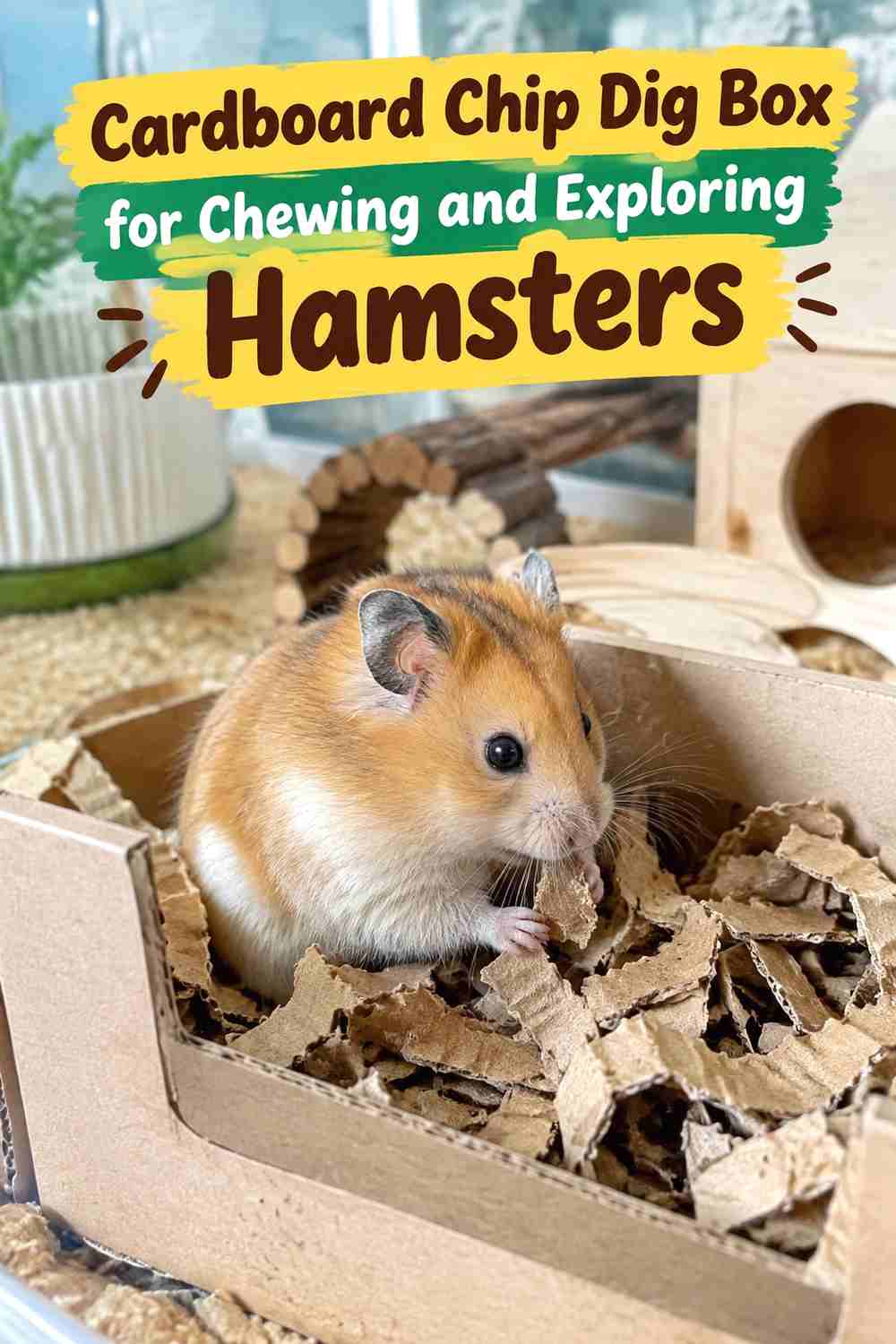
Cut plain corrugated cardboard into broad, irregular pieces and loosely fill a shallow box to make a lightweight exploration area. The hamster can push pieces aside, investigate gaps, and chew appropriate plain cardboard while moving through the pile. Keep every piece large enough to remain easy to see and remove, and avoid tiny confetti that mixes permanently into the main bedding. Do not use cardboard with tape, staples, glossy coatings, strong odors, or unknown residues. Because cardboard absorbs moisture, treat this as a replaceable enrichment setup rather than a long-term substrate. Remove any section that becomes wet, heavily soiled, or broken into sharp, damaged edges.
Setup Notes
Mix a small amount of paper bedding through the cardboard if the pieces slide too easily. A stable base makes the surface feel less unpredictable under the hamster’s feet.
Cleaning Notes
Inspect the pile frequently because food and waste can disappear between cardboard layers. Replacing the entire fill is often simpler than trying to clean individual pieces.
12. Large Supervised Exploration Dig Bin For Active Hamsters
You May Also Like



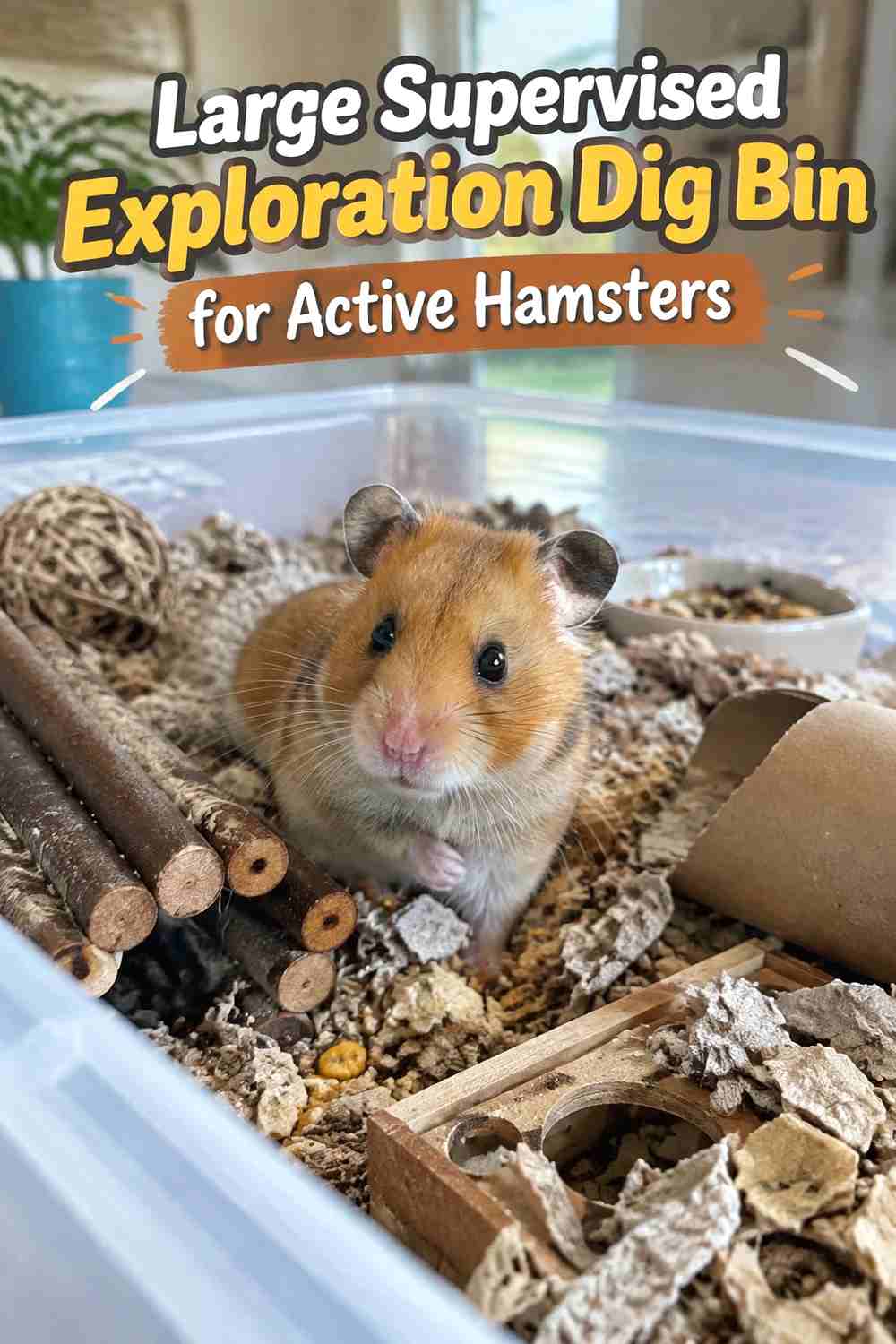
Use a larger, secure bin during supervised playtime to give an active hamster more space for digging than a permanent habitat box may allow. Fill part of the bin with familiar paper bedding and add one or two contrasting zones such as aspen, a cardboard tunnel, or a shallow forage patch. Keep everything at ground level and provide a familiar hide so the open space does not feel overly exposed. The walls must be high and secure enough to prevent escape, but the bin still needs good airflow and direct supervision. After each session, check for damp material, buried food, and damaged cardboard before storing or resetting the enrichment area.
Best For
This setup is useful when the permanent enclosure does not have room for several separate enrichment textures at once. It also makes rotating materials much easier.
Comfort & Safety
Keep the play area escape-proof and free from cords, gaps, unstable objects, and other hazards. Never rely on an open play bin without active supervision.
How to Choose the Right Idea
Choose a dig box based first on your hamster’s size, confidence, normal digging behavior, and the space available in its enclosure. Deep paper bedding is a simple starting point for a hamster that already enjoys burrowing, while sand, cork, aspen, or dry coconut fiber can provide contrasting textures for more confident explorers. Also consider how much material your hamster scatters and how easily you can check the box for moisture, stored food, or waste. Heavy containers should sit on stable surfaces, lightweight substrates may need higher sides, and disposable cardboard or paper setups should be replaced when dirty rather than kept indefinitely. Introduce unfamiliar materials gradually and keep essential resources easy to reach. Enrichment should add useful choice without crowding the hamster’s main living space.
Final Thoughts
A good hamster dig box can be as simple as deep paper bedding or as varied as a supervised multi-texture bin. Start with one safe, manageable setup, notice which textures your hamster actually uses, and build future enrichment around those preferences. Regular cleaning and occasional small changes usually matter more than filling the habitat with many different boxes at once.
FAQs
1. What can I put in a hamster dig box?
Common options include suitable paper bedding, aspen shavings, appropriate sand, dry additive-free coconut fiber, cork material, plain shredded paper, and safe cardboard. Choose materials intended or suitable for small-animal use and keep them clean and dry.
2. How deep should a hamster dig box be?
The useful depth depends on the material, container, hamster size, and purpose. A surface for rolling or light pawing can be shallow, while a bedding-based box designed for burrowing needs more depth and a stable container.
3. Can a hamster dig box stay in the enclosure all the time?
Some boxes can remain in the enclosure if they stay clean, dry, stable, and do not crowd essential resources. Messier or less familiar substrates may be easier to offer during supervised enrichment sessions.
4. Why does my hamster ignore its new dig box?
The material may be unfamiliar, the container may feel difficult to enter, or the hamster may simply prefer another texture. Start with a shallow layer, add familiar bedding, or place a small amount of normal forage near the surface.
5. How do I keep a hamster dig box clean?
Check it regularly for urine, buried food, damp material, and waste. Spot-clean reusable substrates when practical and replace disposable paper or cardboard when it becomes too dirty to sort effectively. Save these 12 hamster dig box ideas for your next habitat refresh, and explore more simple enrichment setups for keeping your hamster’s routine varied and practical.
