Turn simple household materials into engaging cat activities with easy puzzles, hideouts, scent searches, batting games, scratching spots, and rotating indoor play setups.
Save This Idea on Pinterest

13 DIY Cat Enrichment Ideas
Save to PinterestDIY cat enrichment works best when the activity gives your cat something specific to investigate, chase, scratch, search, or solve. The setup does not need to be elaborate, but it should match your cat’s confidence, play style, food motivation, and tendency to chew or shred materials.
These 13 ideas use familiar items such as cardboard boxes, paper bags, towels, blankets, and sturdy household containers. Start each activity at an easy level, supervise anything involving paper, cardboard, fabric, or food, and remove damaged materials before they become tempting to swallow. Rotate successful activities rather than leaving every setup available all the time.
Quick List
- Easy Cardboard Treat Puzzle for Curious Indoor Cats
- DIY Paper Bag Hideout for Playful Indoor Cats
- Homemade Toilet Roll Treat Puzzle for Bored Cats
- DIY Cardboard Box Maze for Curious Indoor Cats
- Simple Towel Treat Search Game for Indoor Cats
- DIY Muffin Tin Puzzle Game for Food-Motivated Cats
- Homemade Paper Ball Batting Game for Active Cats
- DIY Blanket Tunnel Hideout for Playful Indoor Cats
- Easy Cardboard Scratcher Station for Indoor Cat Enrichment
- DIY Low Window Watch Rest Spot for Curious Cats
- DIY Familiar-Scent Exploration Box for Curious Indoor Cats
- DIY Toy Rotation Basket for Bored Indoor Cats
- Simple Cardboard Treasure Hunt for Multi-Cat Homes
1. Easy Cardboard Treat Puzzle For Curious Indoor Cats

A cardboard treat puzzle turns a shallow box into a simple search activity by hiding a few pieces of your cat’s regular food among loosely arranged cardboard dividers. Start with several pieces fully visible so your cat quickly understands that exploring the box leads to a reward. Once the game feels familiar, place some pieces behind short cardboard sections or inside open compartments that can be reached with a paw. Keep every opening wide enough that paws cannot become trapped, and remove tape, staples, string, and torn edges before use. Cats that chew and swallow cardboard may need a sturdier puzzle instead. Discard the box once it becomes damp, heavily shredded, or difficult to clean.
Setup Notes
Place the puzzle on a non-slip floor where your cat can approach it from more than one side.
Pro Tip
Change the divider arrangement occasionally instead of increasing difficulty every time.
2. Diy Paper Bag Hideout For Playful Indoor Cats

You May Also Like


A plain paper shopping bag can become an easy temporary hideout for cats that enjoy diving into crinkly spaces. Remove the handles completely, lay the bag on its side, and open the mouth wide so the cat has a clear entrance and exit. You can place a familiar toy near the opening to encourage investigation without pushing your cat inside. The bag works best on a dry floor where it cannot slide under furniture during play. Some cats will nap inside, while others prefer pouncing on the sides or hiding briefly before jumping out. Supervise the activity and retire the bag when it becomes torn, wet, or shredded enough to create loose pieces.
Best For
This setup suits confident cats that already enjoy boxes, tunnels, and other enclosed play spaces.
Comfort & Safety
Never use plastic bags, bags with intact handles, or paper bags containing staples, cords, or leftover packaging.
3. Homemade Toilet Roll Treat Puzzle For Bored Cats

Empty cardboard toilet rolls can create a compact food-search puzzle when several clean tubes are placed upright inside a shallow box. Drop a few pieces of your cat’s usual food into selected tubes and leave others empty so your cat has to sniff and investigate rather than simply eat from an open dish. For the first session, use fewer tubes and make several rewards easy to reach. Add more only when your cat understands the activity. Keep the tubes loose enough that paws can enter and withdraw comfortably, and do not tape them together where adhesive could become exposed. Remove the setup if your cat focuses on chewing or swallowing the cardboard instead of searching.
Setup Notes
A low-sided box helps keep the tubes together without creating a deep container your cat must climb into.
Cleaning Notes
Replace food-stained or crushed tubes rather than trying to reuse damaged cardboard indefinitely.
4. Diy Cardboard Box Maze For Curious Indoor Cats
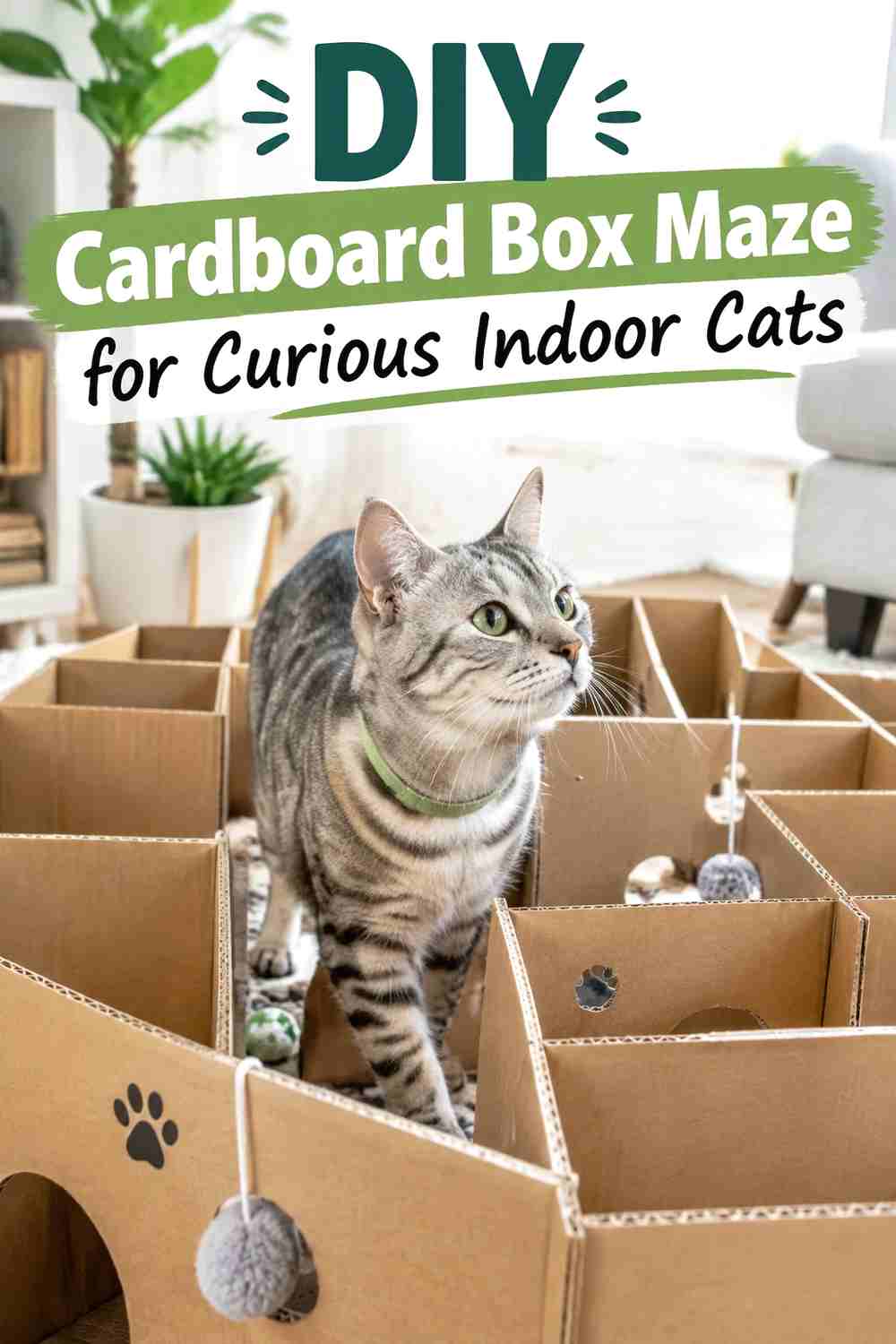
A cardboard box maze uses several open boxes to create short passages, hiding spots, and alternate routes through one safe indoor area. Arrange boxes on their sides with large openings, leaving multiple exits so your cat never feels trapped. Start with two or three boxes rather than building a complicated structure immediately. You can place a favorite toy or a few pieces of regular food in different sections to encourage exploration. Keep every box stable on the floor and remove staples, tape loops, sharp cut edges, and loose packing material. Avoid tall stacks or elevated tunnels that could collapse. When the maze is finished, flatten and store usable boxes or recycle damaged ones.
Space & Placement
Set up the maze away from stairs, doorways, breakable objects, and busy household traffic.
Pro Tip
Rearranging the same boxes into a new floor-level layout can make the activity feel different without adding more materials.
5. Simple Towel Treat Search Game For Indoor Cats
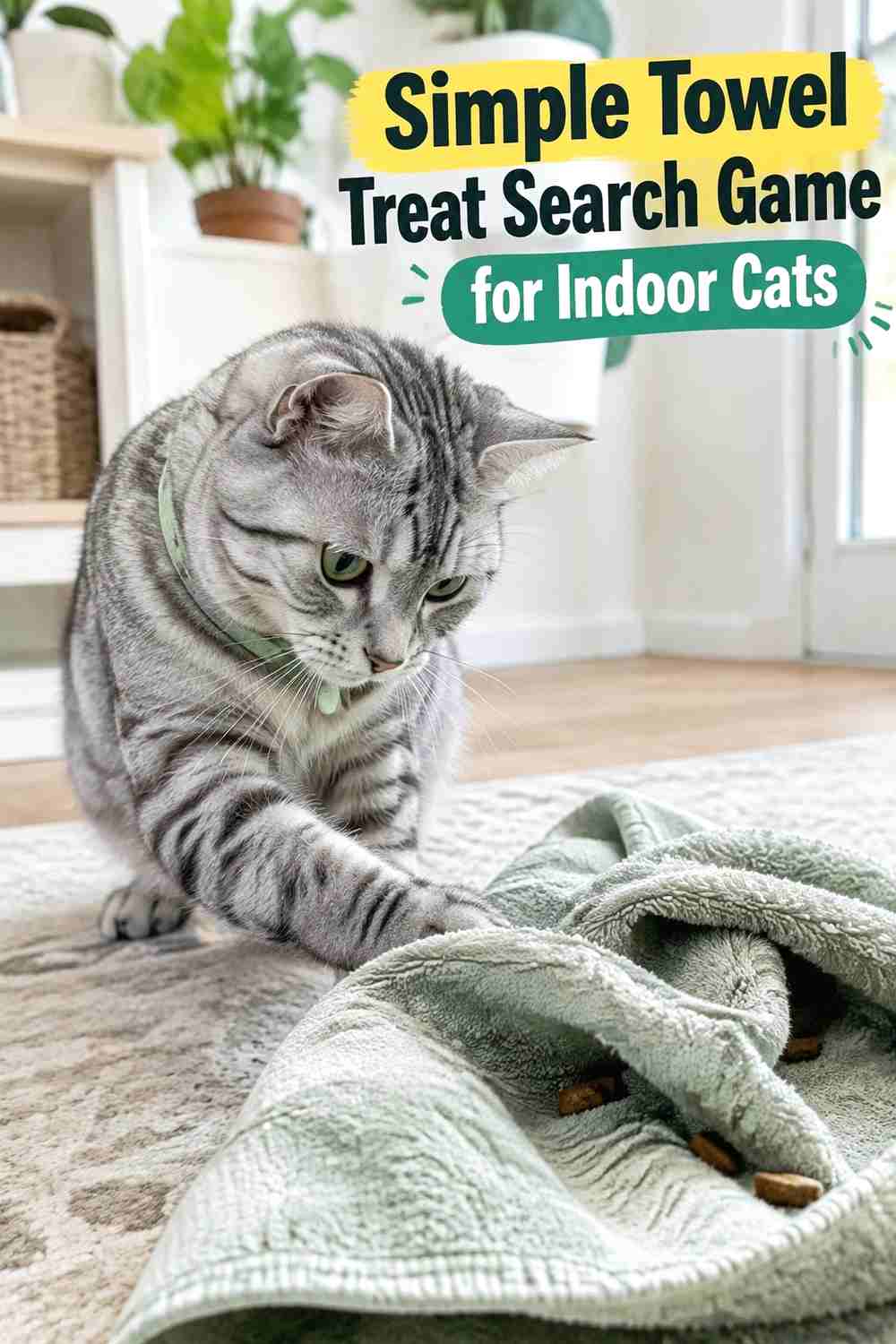
A towel search game creates an easy scent activity using a clean towel and a few pieces of your cat’s normal food. Lay the towel flat, place several pieces across the surface, then make one or two loose folds so some remain partly visible. Let your cat sniff, paw, and nose through the fabric at its own pace. Once the game is familiar, you can create slightly deeper folds while keeping the towel loose enough to move easily. Choose a towel without frayed edges or loops that catch claws, and supervise cats that chew fabric. This activity packs away quickly and works well in small rooms because it requires almost no permanent floor space.
Setup Notes
Begin with very shallow folds so your cat experiences several easy finds before encountering anything more challenging.
Cleaning Notes
Shake out crumbs after each session and wash the towel before reuse if food residue has soaked into the fabric.
6. Diy Muffin Tin Puzzle Game For Food Motivated Cats

A muffin tin can become a simple puzzle by placing small amounts of your cat’s usual food in several wells and leaving others empty. Begin with every reward uncovered so your cat can investigate the tray easily. Later, cover a few wells with large lightweight cat-safe toys that cannot be swallowed, allowing your cat to move them aside with a paw or nose. Set the tin on a non-slip mat so it does not scrape or slide across the floor. This activity works best for cats interested in food and object manipulation. If your cat starts biting the tray, carrying the covers away, or becoming frustrated, simplify the puzzle or switch to a different enrichment style.
Best For
Food-motivated cats that enjoy pawing at objects may find this puzzle especially engaging.
Comfort & Safety
Avoid small balls, loose parts, or covers that could fit completely inside your cat’s mouth.
7. Homemade Paper Ball Batting Game For Active Cats
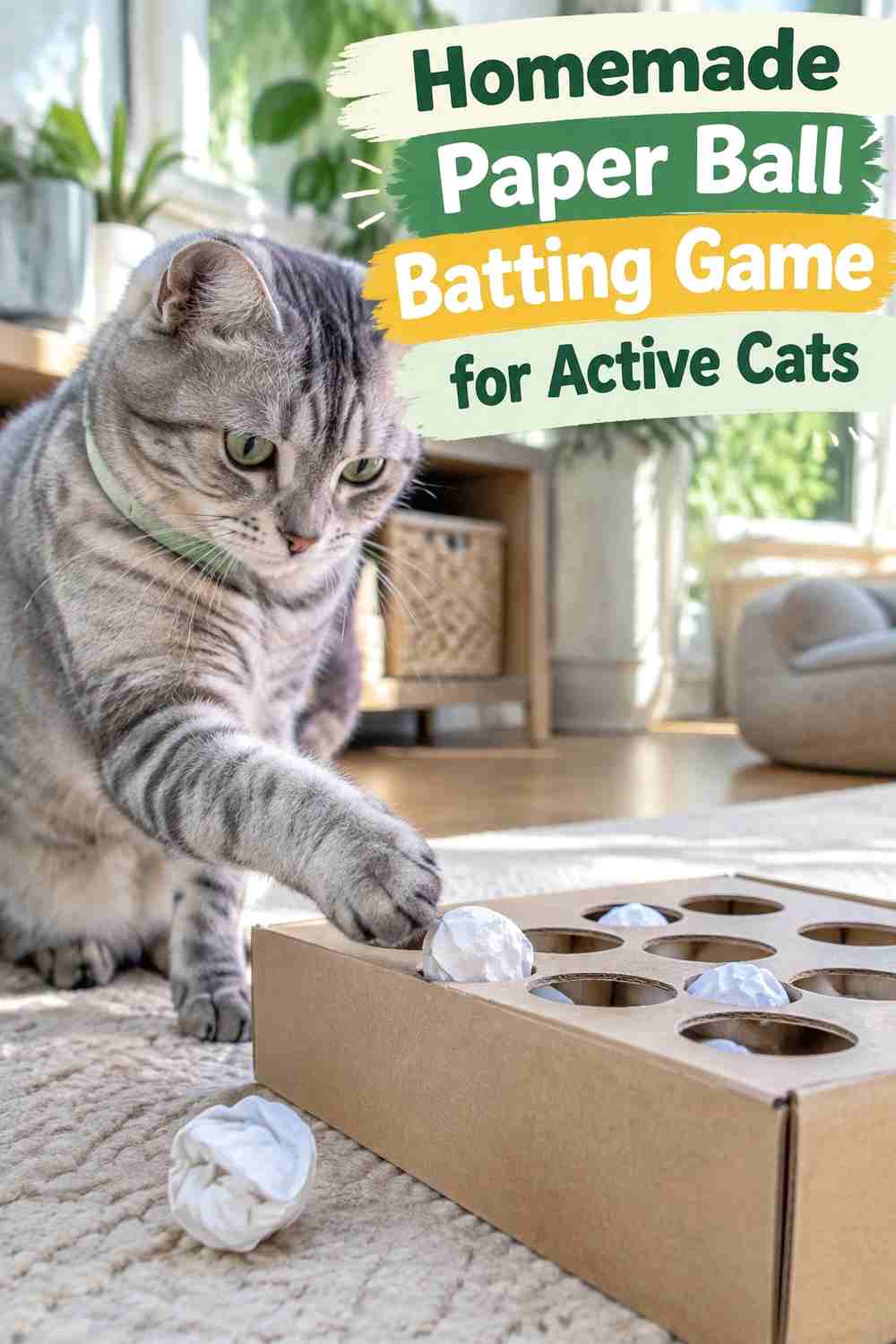
A paper ball batting game gives active cats a lightweight object to chase, tap, and redirect across a clear floor. Crumple a clean sheet of plain paper into a loose ball large enough that it cannot be swallowed easily, then roll it gently across the room instead of throwing it toward your cat. Many cats enjoy changing direction quickly as the uneven paper shape moves. Keep the play area free from cords, breakable objects, and narrow gaps where the ball can become trapped. Replace the ball when it becomes soggy or heavily shredded. Cats that immediately tear and eat paper are better suited to a sturdy commercial toy rather than a homemade paper option.
Best For
This game suits cats that enjoy short bursts of chasing and batting more than stationary puzzles.
Pro Tip
Use one ball at a time so the activity stays focused and cleanup remains simple.
8. Diy Blanket Tunnel Hideout For Playful Indoor Cats
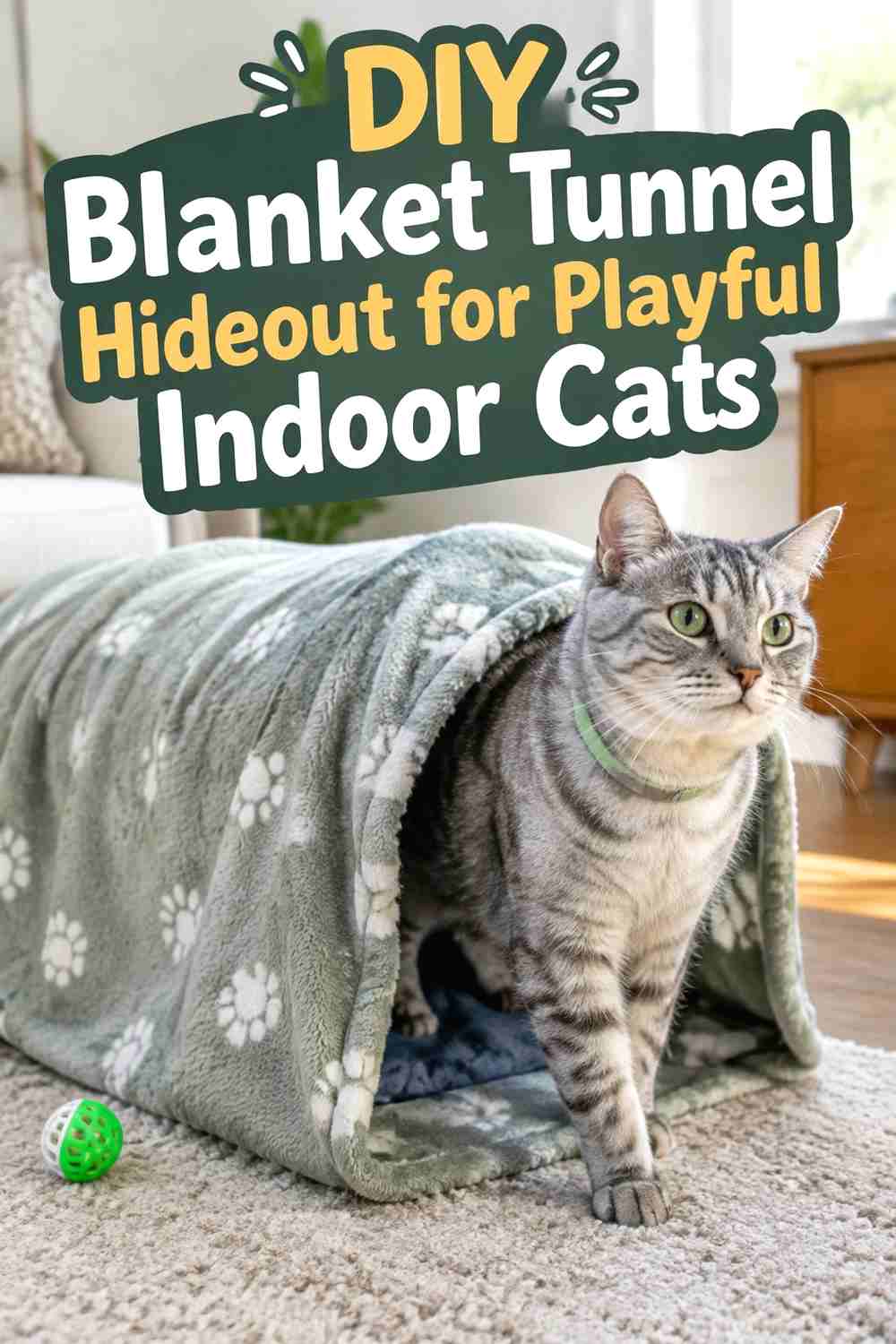
A blanket tunnel creates a soft hide-and-pounce space using a lightweight blanket draped over a stable row of chairs or another secure, low structure. Leave both ends fully open and make sure the blanket cannot collapse tightly around the cat. Place a familiar toy near one entrance or gently move the toy past the opening to encourage stalking and pouncing. Keep the structure low to the floor and avoid loose cords, clips, pins, or heavy objects holding the blanket in place. Some cats may prefer simply resting in the shaded tunnel rather than playing. When the session ends, fold everything away so the setup does not become a permanent obstacle in the room.
Comfort & Safety
Use only stable supports that will not tip if your cat brushes against them during play.
Space & Placement
Choose a quiet open floor area where your cat can enter, exit, and circle the tunnel without running into furniture.
9. Easy Cardboard Scratcher Station For Indoor Cat Enrichment
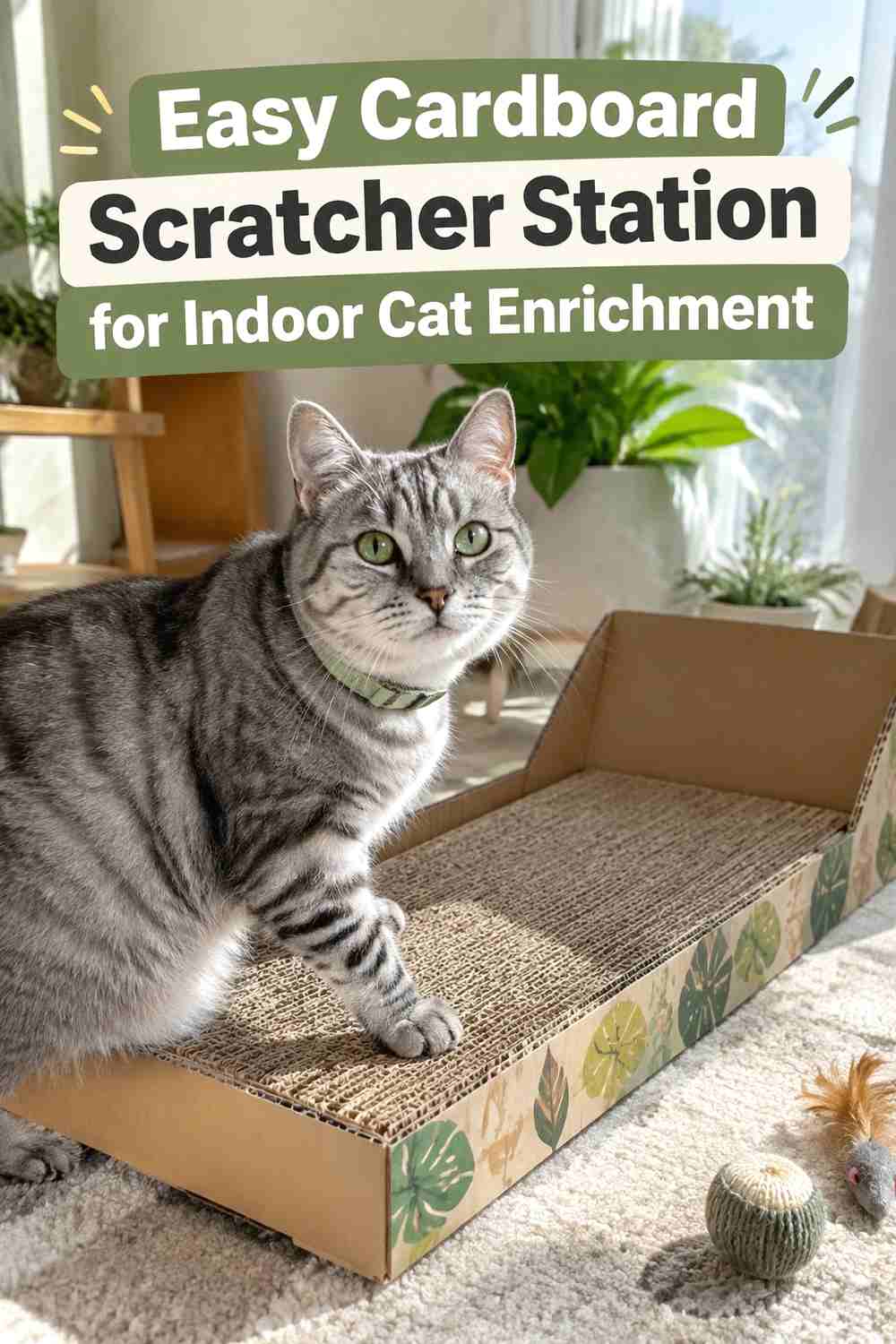
A homemade cardboard scratcher station provides a horizontal surface for cats that enjoy scratching flat materials. Layer clean corrugated cardboard strips snugly inside a shallow, sturdy box so the exposed edges create a textured scratching surface. The cardboard should fit firmly enough that pieces do not scatter when your cat paws at it. Place the station near an existing scratching area, favorite resting place, or room entrance where your cat naturally stretches and scratches. Avoid exposed glue, staples, tape, or sharp cut edges. Some cats will use cardboard enthusiastically, while others prefer sisal or vertical posts. Replace the insert when it becomes flattened, damp, or shredded into loose pieces.
Best For
This design is particularly useful for cats that already scratch rugs, flat cardboard, or other horizontal surfaces.
Cleaning Notes
Vacuum loose cardboard flakes around the station and replace worn sections before they break apart extensively.
10. Diy Low Window Watch Rest Spot For Curious Cats
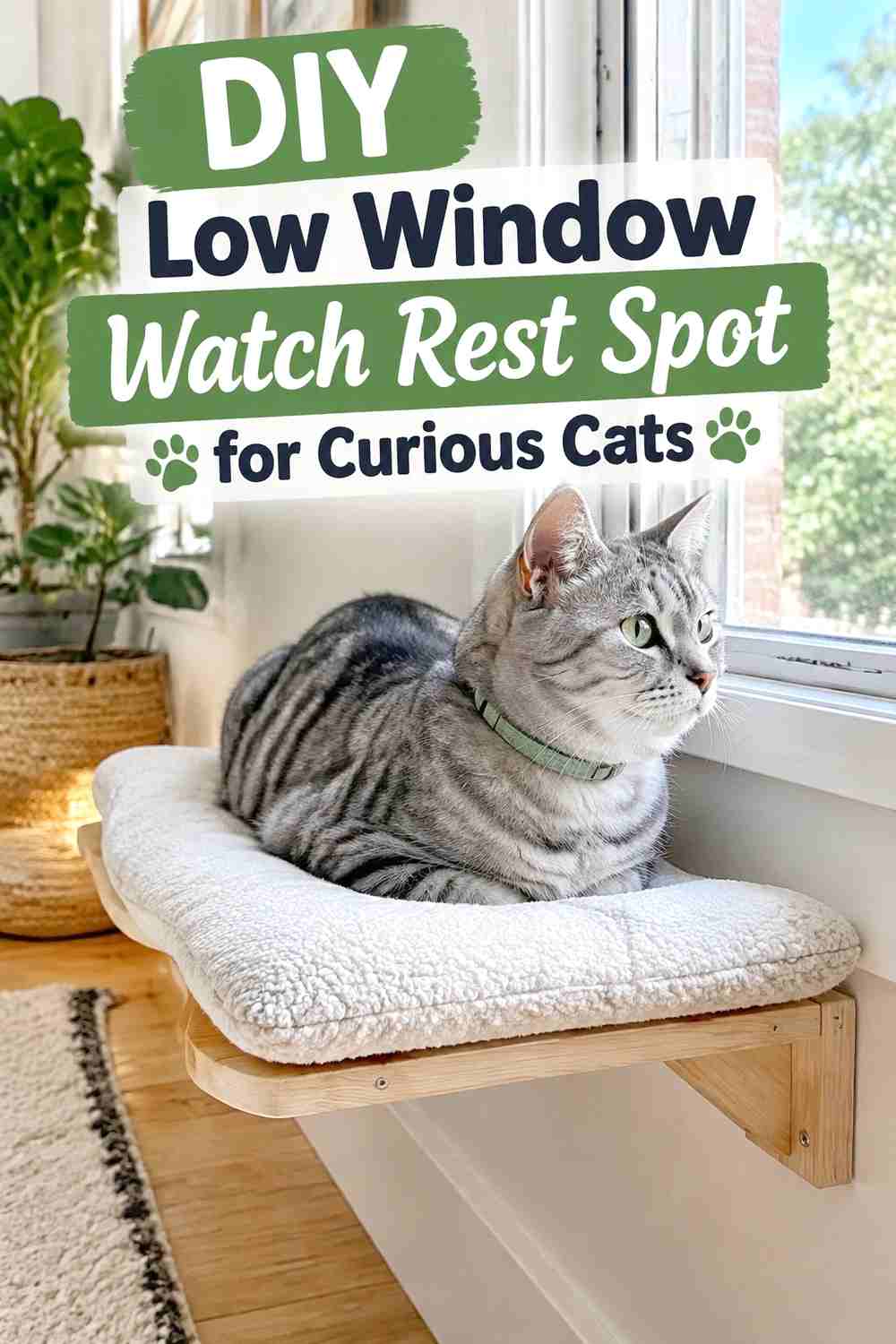
A low window watch spot gives curious cats a comfortable place to observe outdoor movement without relying on a high or unstable homemade perch. Position a broad, sturdy bench, low shelf, or other furniture designed to hold weight beside a securely closed window, then add a non-slip washable mat on top. The resting surface should be wide enough for your cat to turn and lie down without approaching the edge. Keep nearby blind cords secured and avoid stacking furniture to create extra height. Monitor direct sunlight so the area does not become uncomfortably warm. Less agile cats may prefer the same setup at floor level with a bed positioned beside the window.
Space & Placement
Choose a stable piece of furniture with an easy route up and down rather than creating a narrow improvised ledge.
Comfort & Safety
Keep windows securely closed or properly screened and remove fragile decor from the resting surface.
11. Diy Familiar Scent Exploration Box For Curious Indoor Cats
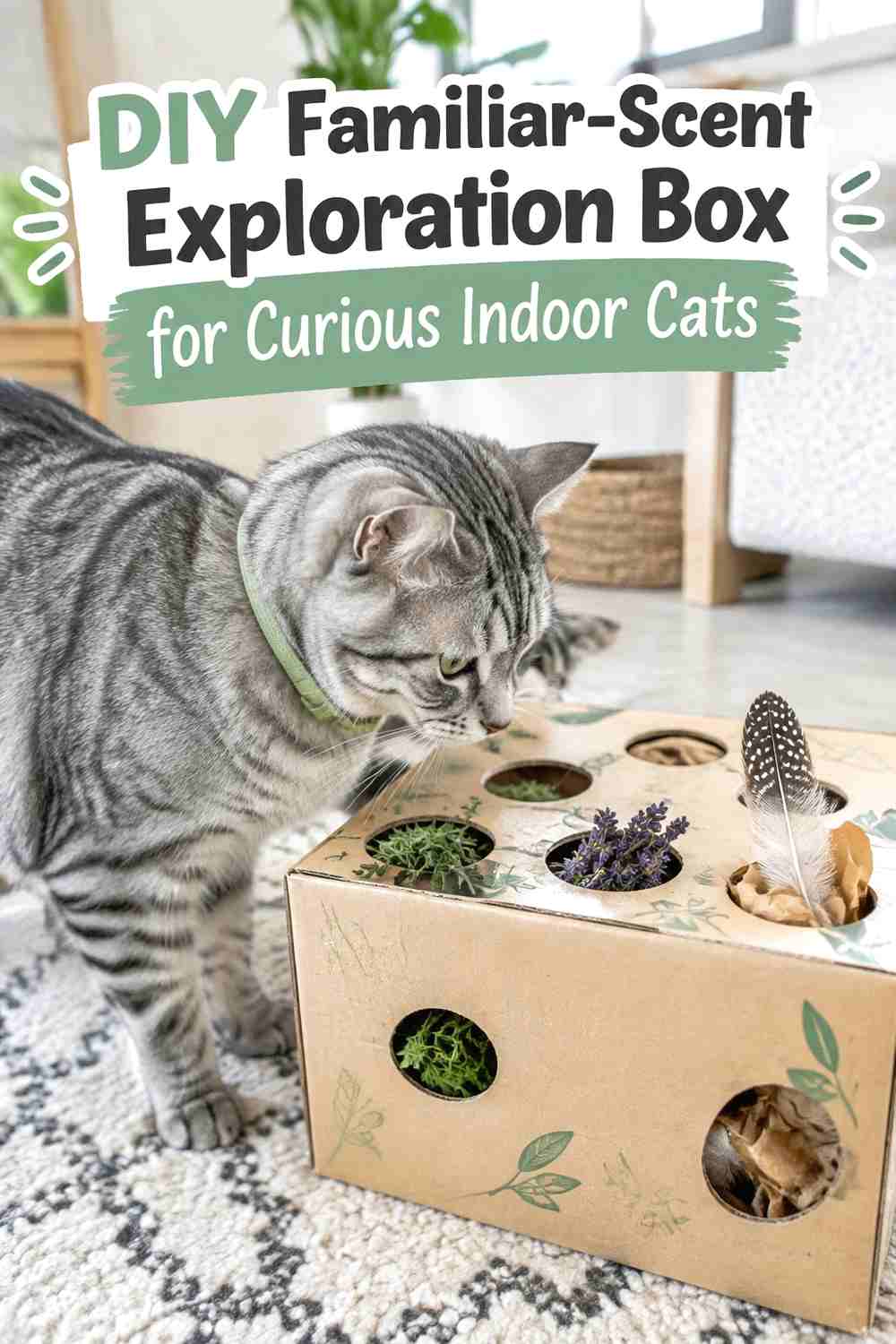
A familiar-scent exploration box encourages sniffing by combining several safe household materials with different everyday smells and textures. Use a shallow cardboard box and add items such as a clean cotton cloth, plain paper, a familiar toy, and a piece of untreated cardboard. Arrange everything loosely so your cat can sniff, paw, and move items without becoming trapped. Avoid essential oils, scented cleaners, perfumes, toxic plants, and unfamiliar substances simply for the sake of creating stronger smells. The activity should rely on safe, recognizable household scents rather than concentrated fragrance. Rotate one or two objects between sessions so the box changes gradually instead of becoming completely unfamiliar each time.
Setup Notes
Introduce the box in a quiet room and allow your cat to approach voluntarily rather than placing them inside.
Use & Maintenance
Remove damaged or dirty materials after each session and store reusable items in a clean, dry place.
12. Diy Toy Rotation Basket For Bored Indoor Cats
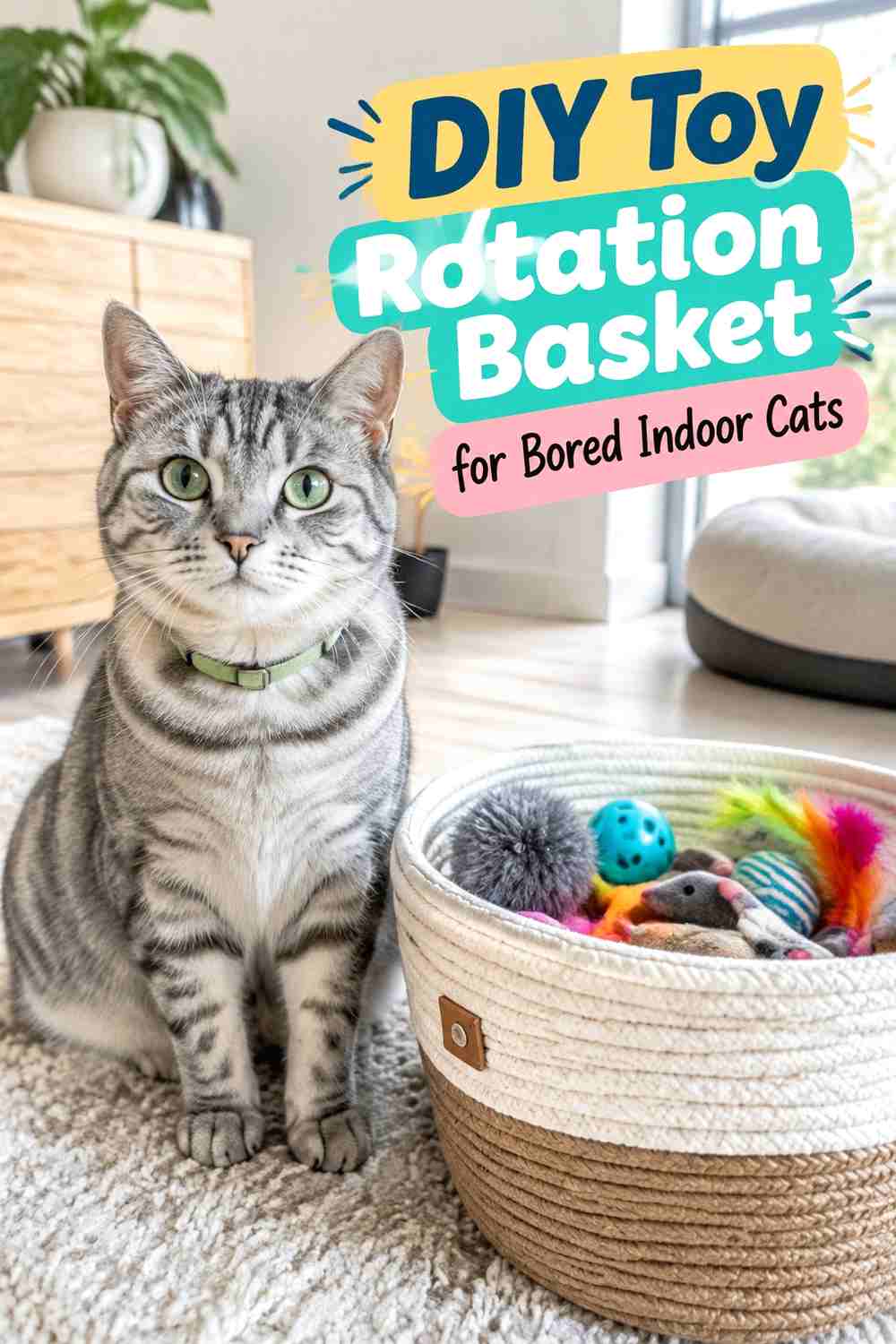
A toy rotation basket keeps enrichment varied by making only a small selection of toys available at one time. Gather your cat’s safe toys, inspect them for damage, then divide them into a few small groups rather than leaving everything scattered around the home. Keep one group accessible and store the others in a closed container your cat cannot open. After interest drops, swap several toys rather than buying something new immediately. Mix different play styles when possible, such as a ball, kicker toy, soft mouse, and sturdy puzzle. Strings, ribbons, feather wands, and toys with detachable pieces should be stored securely and used only with appropriate supervision rather than left out continuously.
Use & Maintenance
Inspect toys during each rotation and discard anything with exposed stuffing, loose parts, damaged seams, or fraying material.
Pro Tip
Keep one favorite toy available while changing the rest so every rotation still includes something familiar.
13. Simple Cardboard Treasure Hunt For Multi Cat Homes
You May Also Like



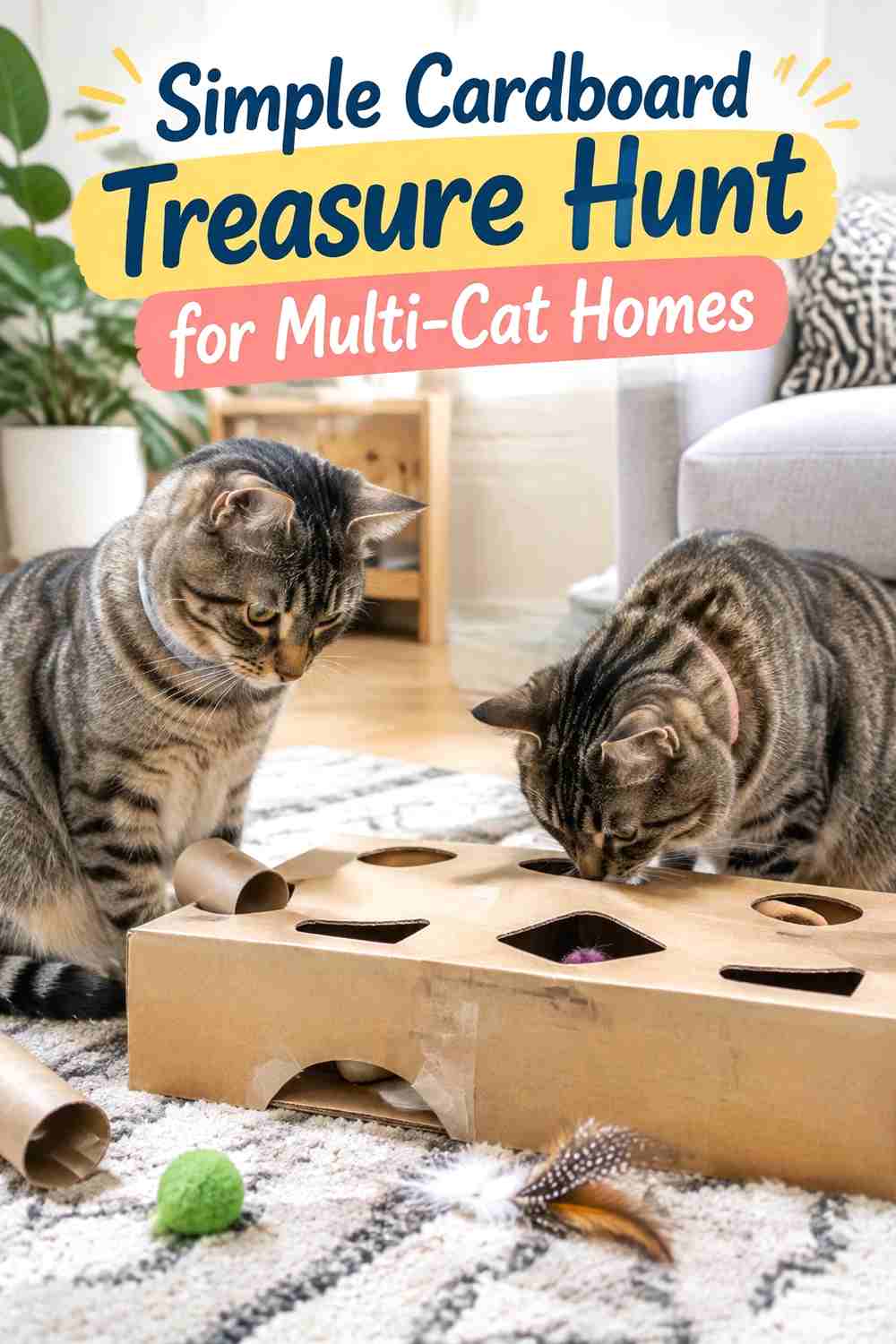
A cardboard treasure hunt gives multiple cats several separate places to sniff and search instead of forcing everyone around one puzzle. Arrange a few shallow open boxes with space between them, then place small amounts of each cat’s normal food or familiar toys in different boxes. Make the first round easy so each cat can discover something without competing over a single difficult hiding place. Supervise the activity and watch whether one cat repeatedly blocks access or takes over several boxes. If that happens, increase spacing or run separate sessions. Remove tape, staples, plastic packaging, and badly damaged cardboard before play, and avoid expecting cats to share closely just because the enrichment setup is communal.
Space & Placement
Spread boxes across a larger room so cats have more than one approach and exit route.
Pro Tip
Duplicate popular resources whenever possible so one especially appealing box does not become the focus of competition.
How to Choose the Right Idea
Start with the kind of activity your cat already seeks out. Cats that enjoy pawing and problem-solving may prefer the muffin tin, toilet roll, or cardboard treat puzzles. Cats that hide and ambush may enjoy paper bags, blanket tunnels, or box mazes, while active chasers may be happier with the paper ball game.
Also consider chewing habits, confidence, age, mobility, available floor space, and how much supervision you can provide. Cardboard, paper, towels, and blankets are inexpensive but are not suitable for every cat, particularly cats that swallow torn material.
Keep DIY enrichment simple enough to inspect and clean. Use stable setups, remove damaged materials promptly, and rotate a few successful activities instead of creating permanent clutter throughout the home.
Final Thoughts
DIY cat enrichment can be inexpensive, flexible, and easy to change when you focus on simple activities with a clear purpose. A box can become a maze, a towel can become a search game, and a few familiar toys can feel different when they return after a rotation.
Choose one idea that matches your cat’s normal play style, introduce it at an easy level, and keep the setups your cat actually enjoys.
FAQs
1. How often should I change DIY cat enrichment activities?
Rotate activities when your cat begins losing interest rather than following a strict schedule. Bringing back a familiar setup after a break can make it interesting again.
2. Is cardboard safe for DIY cat enrichment?
Cardboard can work for supervised activities if it is clean and free from staples, tape loops, sharp edges, and packaging. Remove it if your cat starts swallowing pieces.
3. What is an easy DIY enrichment idea for a kitten?
Use very simple floor-level setups such as a large paper ball, shallow cardboard box, or loosely folded towel search. Avoid small swallowable parts and complicated obstacles.
4. What should I do if my cat ignores a homemade puzzle?
Make the puzzle easier or try a different enrichment style. Some cats prefer chasing, hiding, scratching, or watching over food-based problem-solving.
5. Can several cats use the same DIY enrichment setup?
They can, but provide multiple stations and enough spacing to avoid forced sharing. Separate sessions may work better if one cat consistently controls access to the activity.
CTA
Save these DIY cat enrichment ideas and rotate a few favorites to keep indoor play simple, practical, and interesting.
