Give your indoor cat a comfortable window perch with shelf ideas designed for sunbathing, bird-watching, small rooms, senior access, and multi-cat homes.
Save This Idea on Pinterest

11 Cat Window Shelf Ideas
Save to PinterestCat window shelves create elevated resting spots without taking up much floor space, but the best setup depends on your cat’s size, confidence, age, and climbing habits. A stable shelf with good traction and an easy route up and down is more useful than a narrow decorative ledge that looks stylish but feels awkward to use.
These 11 ideas include wide lounging shelves, corner setups, senior-friendly perches, multi-level layouts, compact apartment options, and removable rental-friendly designs. Consider window security, shelf stability, landing space, sun exposure, cleaning, and how comfortably your cat can reach the perch before choosing a layout.
Quick List
- Wide Window Shelf Perch for Relaxed Indoor Cats
- Floating Corner Window Shelf for Small Cat Rooms
- Low Window Shelf Setup for Senior Indoor Cats
- Double-Level Window Shelves for Curious Climbing Cats
- Cushioned Window Shelf for Cats Who Love Sunbathing
- Narrow Apartment Window Shelf for Space-Saving Cat Perching
- Deep Window Shelf with Side Rails for Large Cats
- Easy-Clean Window Shelf for Long-Haired Indoor Cats
- Quiet Bedroom Window Shelf for Shy Indoor Cats
- Multi-Cat Window Shelf Setup with Separate Perching Levels
- Removable Rental-Friendly Window Shelf for Apartment Cats
1. Wide Window Shelf Perch For Relaxed Indoor Cats

A wide window shelf gives an indoor cat enough room to sit, stretch, turn, and settle into a relaxed lounging position while watching activity outside. Install the shelf beside or below a secure window using supports appropriate for the wall and the expected load, then add a nonslip surface so paws do not slide during takeoff or landing. Keep the approach open instead of surrounding the perch with tall furniture or fragile décor. This design works especially well for cats that spend long periods watching birds, people, or changing outdoor light. Make sure the window remains securely closed or appropriately protected and that blind cords or curtain ties stay completely out of reach.
Comfort & Safety
The shelf should feel solid when the cat steps onto it. Avoid flexible boards, narrow ledges, or surfaces that shift under weight.
2. Floating Corner Window Shelf For Small Cat Rooms

You May Also Like


A corner window shelf uses otherwise awkward wall space to give a cat an elevated perch without occupying the center of a small room. Position the shelf near the window but leave enough clearance for the cat to turn comfortably rather than wedging the perch tightly between two walls. A nearby chair, lower shelf, or stable cat step can provide an easier route up if the window is high. Choose a surface with good traction and keep the shelf free of plants, lamps, and decorative objects that could be knocked down. Corner designs work best when the cat can approach from more than one angle instead of having to make a difficult jump into a confined space.
Space & Placement
Use the corner to save floor space, but keep the landing zone below clear. Avoid placing the perch over fragile furniture or sharp-edged objects.
3. Low Window Shelf Setup For Senior Indoor Cats

A low window shelf can give senior cats access to outdoor views without requiring a high jump. Position the perch near a lower window or create a short, predictable route using a stable step, low bench, or another secure surface. The shelf should have dependable traction and enough depth for comfortable sitting or lying down. Keep furniture placement consistent so the route stays familiar, and avoid making the cat cross slippery flooring immediately before jumping. Not every older cat has mobility problems, so adjust the setup to the individual rather than age alone. If your cat suddenly stops jumping, appears painful, or has new mobility changes, contact a veterinarian.
Pet Type & Life Stage
This setup may suit older cats or any cat that prefers shorter climbs and easier access to resting places.
4. Double Level Window Shelves For Curious Climbing Cats
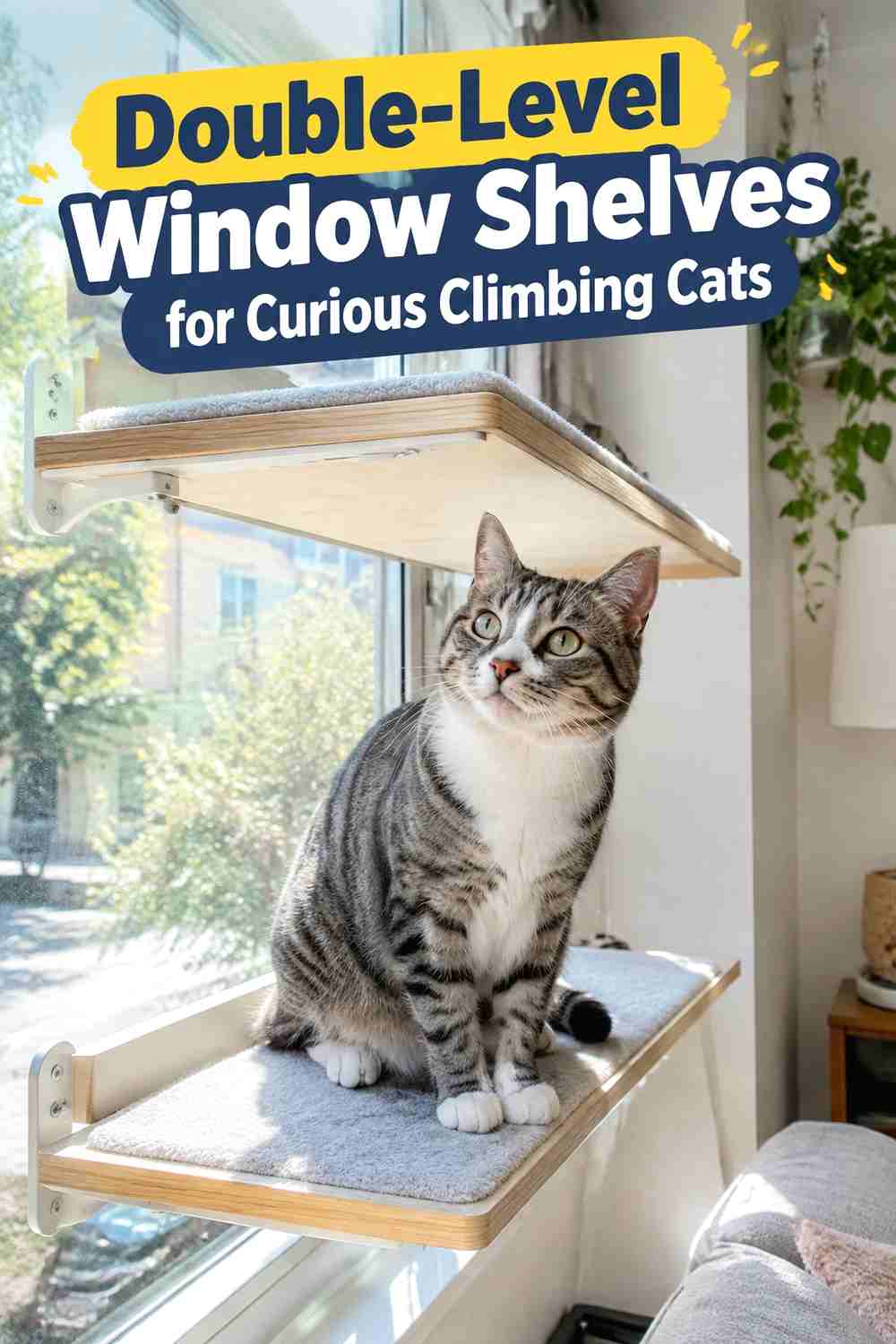
Double-level window shelves create a small vertical route for cats that enjoy climbing and changing viewing height. Place the lower shelf where the cat can reach it comfortably, then position the upper perch with enough horizontal offset to create a usable landing area rather than a straight difficult jump. Both shelves should be stable, nonslip, and large enough for the cat to turn around. Keep the spacing appropriate for your individual cat’s size and confidence instead of copying a decorative wall layout. This arrangement adds variety without covering the whole wall in platforms, and the two levels can also let a cat choose between a more sheltered lower perch and a brighter upper view.
Setup Notes
Test the route visually before installation. The cat should have a clear path up and down without needing to leap around curtains, furniture, or window hardware.
5. Cushioned Window Shelf For Cats Who Love Sunbathing
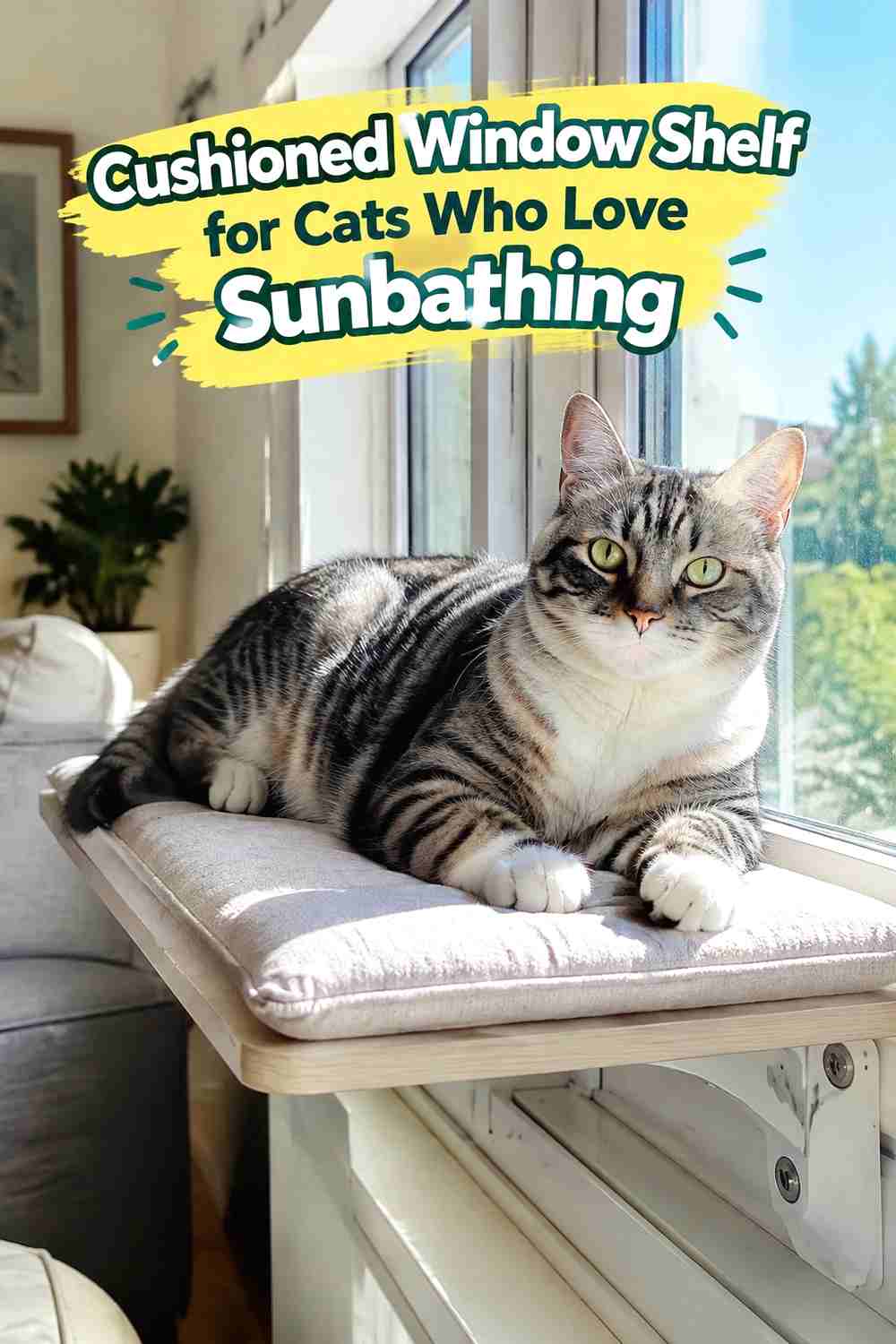
A cushioned window shelf turns a sunny window into a more comfortable lounging spot for cats that seek warm patches of daylight. Use a thin removable pad with a nonslip underside so the cushion stays flat instead of bunching when the cat jumps onto the shelf. Choose washable fabric because window perches quickly collect fur, dust, and skin oils. Watch how the sun moves through the day; a pleasant morning spot can become much warmer later, so your cat should always be free to leave and choose a cooler resting area. Keep the window secure, remove dangling cords, and avoid placing heat-trapping blankets against hot glass.
Use & Maintenance
Wash the cushion regularly and check underneath for trapped fur or moisture. A removable pad makes seasonal adjustments much easier.
6. Narrow Apartment Window Shelf For Space Saving Cat Perching

A narrow apartment window shelf can provide useful vertical territory without taking over a compact room, but it still needs enough depth for safe sitting and turning. Install it along a low-traffic wall beside the window rather than projecting into a busy walkway. Pair the perch with a stable access point such as a nearby cat tree, bench, or lower platform so your cat does not need to launch from across the room. Keep the styling minimal and avoid storing books, plants, or décor on the same shelf. In small apartments, one well-placed perch is often more practical than several cramped ledges competing for wall space.
Pro Tip
Prioritize usable depth over a barely visible profile. A slightly deeper shelf that your cat uses comfortably is more valuable than a thinner decorative ledge.
7. Deep Window Shelf With Side Rails For Large Cats

A deeper window shelf gives a larger cat more space to shift position, stretch, and settle without feeling close to the edge. Low side rails or raised borders can visually define the perch, but they should remain smooth and low enough that the cat can enter and exit freely. Use strong supports suited to the shelf and wall rather than relying on decorative brackets chosen only for appearance. Add a nonslip top surface and make sure the landing route is generous enough for a larger body. This design can also suit cats that prefer lying lengthwise while watching outdoors. Keep the window securely managed and leave enough clearance around the shelf for comfortable turning.
Comfort & Safety
Do not rely on side rails to compensate for an unstable shelf. Structural stability, usable depth, and traction remain the main priorities.
8. Easy Clean Window Shelf For Long Haired Indoor Cats

An easy-clean window shelf uses smooth, wipeable materials and removable fabric so accumulated fur does not become difficult to manage. Start with a sealed shelf surface and add one washable nonslip pad instead of thick layered bedding that traps loose hair. Position the perch where you can reach it easily with a vacuum attachment or cloth without moving heavy furniture. Long-haired cats may leave noticeable fur along edges and window trim, so a simple design with fewer seams is easier to maintain. Check corners for dust and hair buildup during routine cleaning, and wash the removable pad before it becomes heavily matted with fur.
Cleaning Notes
Choose removable pieces that can be cleaned separately. Keeping the shelf uncluttered makes quick vacuuming and wiping much easier.
9. Quiet Bedroom Window Shelf For Shy Indoor Cats

A bedroom window shelf can give a shy or easily distracted cat a quieter observation point away from the busiest household areas. Place the shelf near a secure window in a room the cat already uses comfortably, with an easy route from a bed, cat tree, or lower platform. Keep the setup simple and avoid placing speakers, swinging décor, or frequently opened doors beside the perch. A soft nonslip pad can make the space more inviting without turning it into a bulky bed. If outdoor activity makes the cat tense or repeatedly hide, move the perch farther from the glass or choose a calmer window instead of assuming every cat enjoys a busy view.
Best For
This setup may suit cats that prefer quieter rooms and predictable resting areas rather than high-traffic living spaces.
10. Multi Cat Window Shelf Setup With Separate Perching Levels

A multi-cat window setup gives several cats separate places to watch outside instead of expecting them to share one narrow perch. Use two or more stable shelves with enough spacing that each cat can settle without blocking another cat’s route. Include more than one way up and down when possible so one cat cannot easily trap another on a high platform. Shelf sizes may need to vary if the cats differ greatly in body size or mobility. Watch how the cats actually use the area and add distance if one repeatedly crowds or displaces another. Separate resources are often more practical than forcing close sharing simply because the window is popular.
Setup Notes
Arrange perches so cats can see and leave each level easily. Avoid creating a single narrow access route that becomes a bottleneck.
11. Removable Rental Friendly Window Shelf For Apartment Cats
You May Also Like




A removable rental-friendly shelf can create a window perch without turning the setup into a permanent wall project. Choose a commercially designed removable or sill-supported system that is appropriate for the window and your cat’s size, and follow its installation instructions carefully rather than improvising with weak adhesive or unstable furniture. Test the perch for movement before allowing full access and add a nonslip surface if needed. Keep the area beneath it clear and inspect attachment points regularly. This type of setup works best for renters who may need to relocate the perch later while still giving the cat a predictable window-viewing spot.
Use & Maintenance
Recheck the mounting system after moving, cleaning, or adjusting the shelf. Stop using it immediately if any part loosens or shifts.
How to Choose the Right Idea
Start with your cat’s size, age, confidence, and normal climbing style. Agile cats may enjoy staggered levels, while senior or less confident cats often benefit from lower shelves and shorter access routes. Larger cats need more usable depth and stronger support than small cats.
Next, consider the window and room layout. Small apartments may suit one compact shelf, while wider windows can support deeper lounging perches or multiple levels. Keep blinds, curtain cords, plants, lamps, and fragile objects away from landing areas.
Finally, prioritize stability over appearance. Every shelf should provide secure footing, a practical route up and down, and a safe window environment. If several cats share the space, provide enough separate perching options to reduce crowding rather than expecting them to compete for one narrow ledge.
Final Thoughts
A useful cat window shelf should give your cat a comfortable view without creating a difficult jump or unstable resting surface. The best designs combine reliable support, good traction, enough lounging space, and an easy route back down.
Start with the window your cat already visits most often, then choose a shelf style that matches the available wall space and your cat’s climbing confidence. Add extra levels or cushions only when they make the perch genuinely easier or more comfortable to use.
FAQs
1. How deep should a cat window shelf be?
It should be deep enough for your individual cat to sit, turn, and lie comfortably without balancing at the edge. Larger cats generally need more usable surface area than smaller cats.
2. Are window shelves suitable for senior cats?
They can be when access is easy. Lower placement, stable steps, nonslip surfaces, and predictable furniture layouts can make a window perch more practical for some senior cats.
3. Can two cats share one window shelf?
Some cats will, but separate perches are often more practical. Multiple shelves reduce crowding and give each cat a place to rest without being displaced by another.
4. How can I make a cat window shelf safer?
Use strong supports, dependable traction, secure windows, clear landing areas, and an easy route up and down. Keep curtain cords and fragile objects away from the perch.
5. What is a good rental-friendly window shelf option?
Look for a removable system designed specifically for secure window or sill use and follow the manufacturer’s installation limits. Avoid improvised adhesive-only setups that can shift under a cat’s weight.
CTA
Save your favorite cat window shelf idea and create a secure, comfortable perch where your cat can relax, watch outside, and enjoy more vertical space.
