A small room does not leave much floor space for a sprawling cat tree, separate scratching post, bed, and play zone. The walls, however, can provide another layer of usable territory without crowding the walking area.
Save This Idea on Pinterest

12 Cat Wall Ideas for Small Rooms That Save Floor Space
Save to PinterestThe best cat wall ideas for small rooms do more than add isolated shelves. They create a route: a low place to get started, comfortable steps between levels, one or two destinations worth reaching, and a safe way back down.
You do not need to cover an entire wall. A compact setup occupying the space above a sofa, desk, dresser, or other low furniture can give a cat room to climb, observe, scratch, and rest while leaving most of the floor untouched.
Before choosing a design, measure the wall and watch how your cat already moves through the room. A confident adult cat may enjoy higher routes and longer gaps, while a kitten, senior cat, or cat with limited mobility generally needs lower platforms and shorter transitions.
Start With a Route Your Cat Can Actually Use
It is tempting to arrange cat shelves based mainly on how they look. For the cat, the connections between them matter more.
A practical wall layout should include:
- A low, obvious starting point.
- Platforms large enough for secure footing.
- Manageable horizontal and vertical gaps.
- At least one comfortable resting destination.
- A predictable route down instead of a large jump to the floor.
- Clear space around doors, ceiling fans, televisions, shelves, and breakable objects.
Wall-mounted cat furniture also needs dependable installation. Follow the mounting instructions and weight limits for the exact components you use, and secure them to suitable structural support or appropriate wall hardware. Do not assume an adhesive strip can safely support the force of a jumping cat.
With that foundation in place, these 12 layouts can make a surprisingly small wall useful.
Space-Saving Routes for Climbing
1. Build a Staggered Shelf Staircase
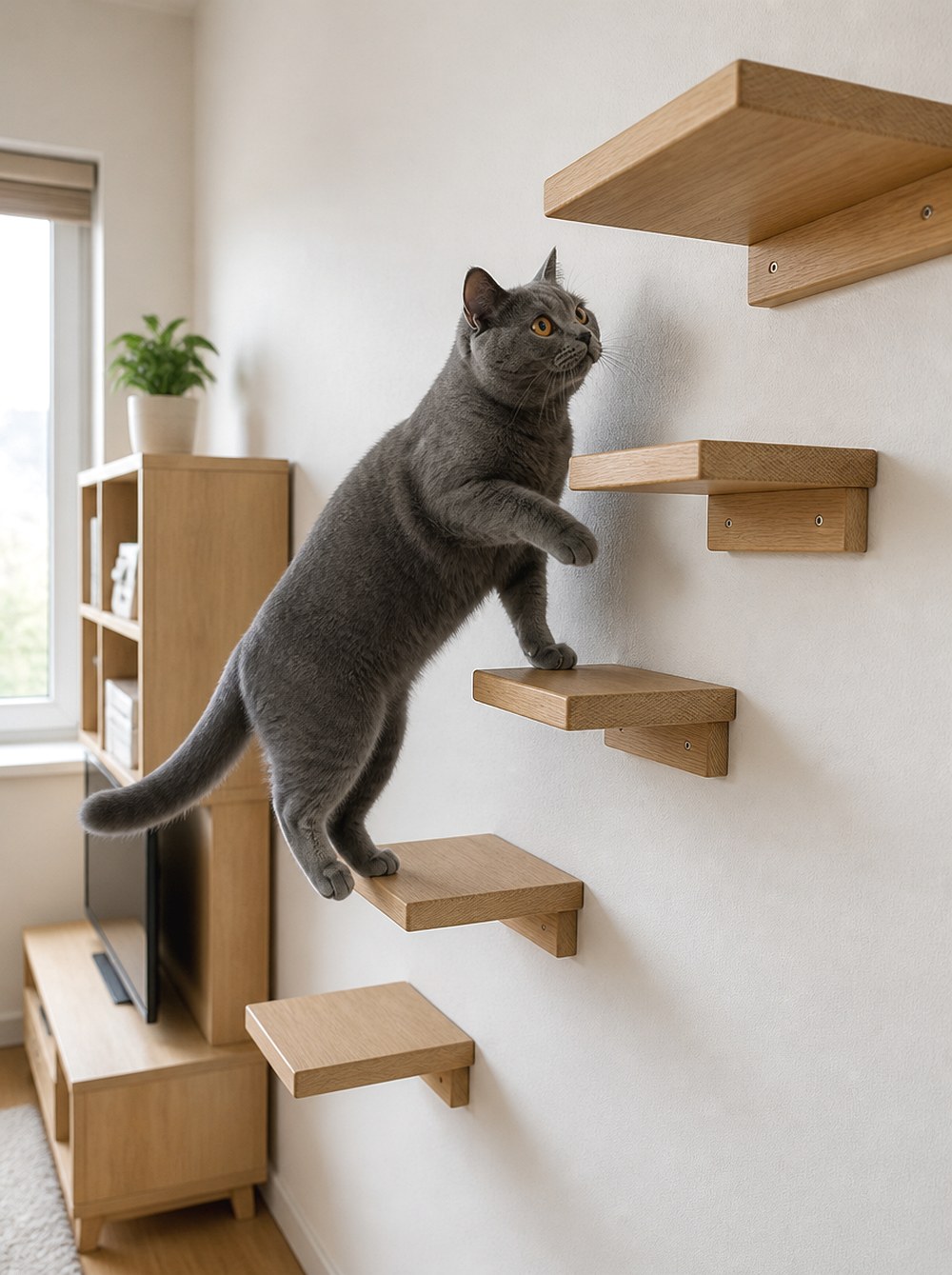
A staggered row of compact shelves is one of the most adaptable arrangements for a narrow wall. Instead of mounting several platforms directly above one another, alternate them slightly left and right so the cat can climb diagonally.
Start the first step at a comfortable jumping height. Continue upward toward a larger resting shelf rather than ending the route abruptly at the highest small step.
This configuration works especially well beside a dresser or other low piece of furniture that can serve as an additional starting point, provided the furniture itself is stable.
Keep each platform wide and deep enough for the individual cat to land securely. Avoid placing decorative objects on the route; the shelves should belong to the cat rather than doubling as display storage.
2. Turn an Empty Corner Into Climbing Steps
Corners often remain unused because conventional furniture does not fit them well. Small cat platforms can turn that awkward strip of wall into a vertical route.
Place alternating steps across the two adjoining walls so the cat changes direction while climbing. The corner arrangement can fit into a much narrower footprint than a long horizontal shelf system.
A wider platform at the top gives the route a destination and makes turning around easier. The shelves should not force the cat to twist sharply in mid-jump.
This idea is especially useful when your longest walls are already occupied by furniture.

You May Also Like



3. Create a Short Route Above a Desk
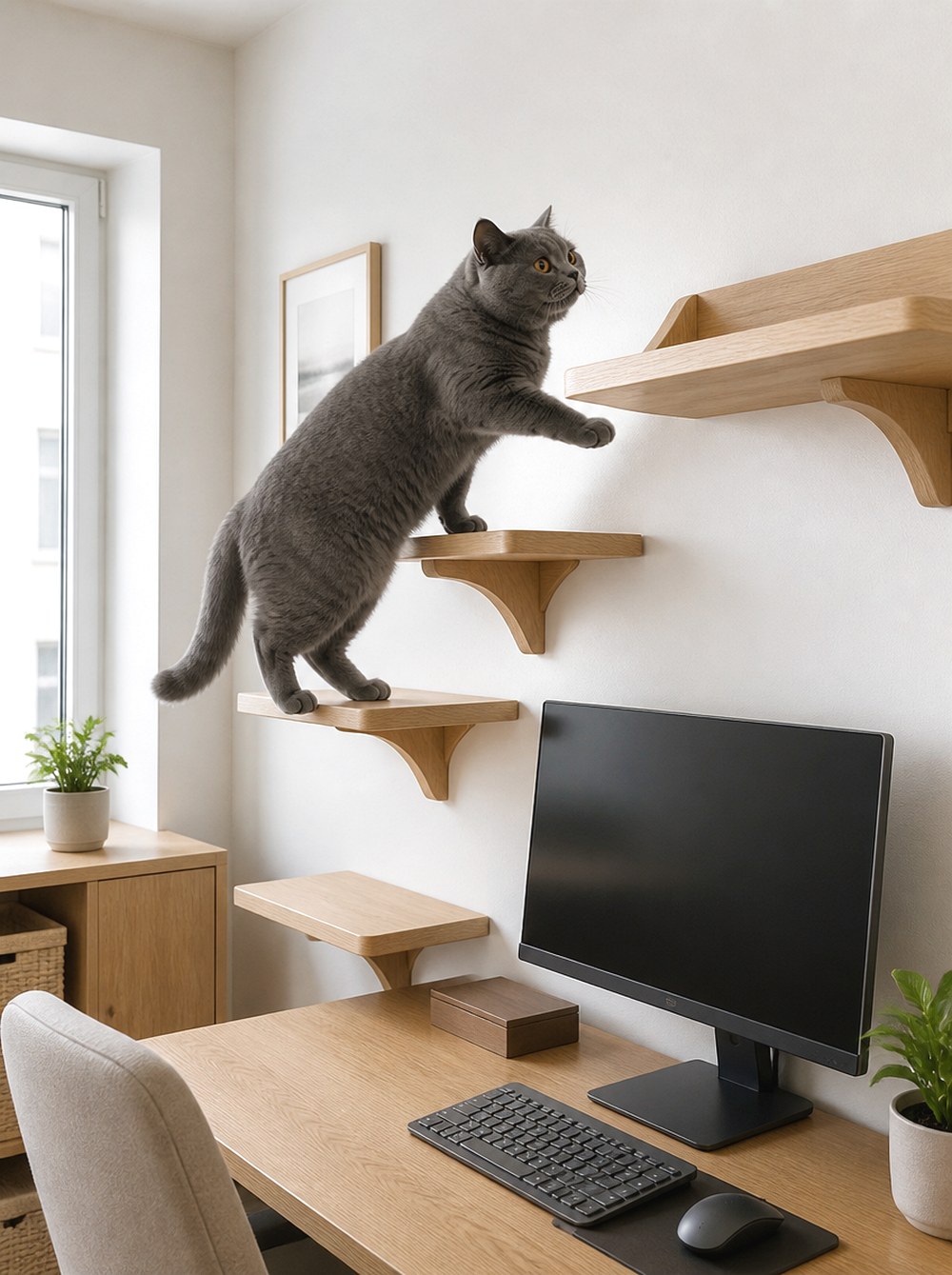
The wall above a desk can provide climbing space without consuming another section of the room. Instead of covering the entire wall, use two or three stepping shelves leading to a broad perch positioned above and slightly to one side of the work surface.
Keep the route clear of computer cables, lamps, monitors, and anything the cat could knock down. A cat should also have a way to enter and leave the route without jumping directly onto delicate equipment.
This arrangement can be a good choice when the room functions as both an office and a pet space.
4. Run a Catwalk Along the Upper Wall
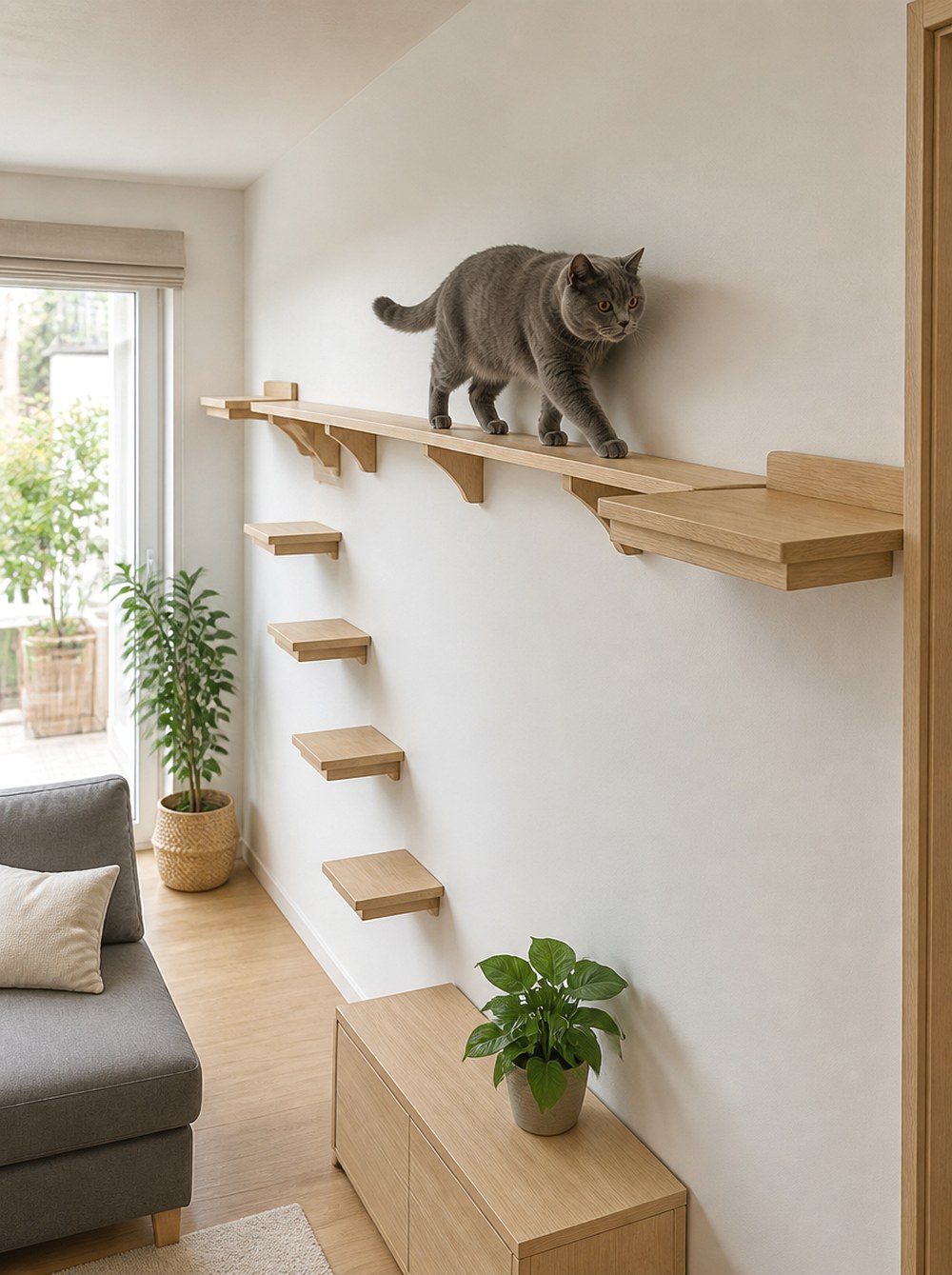
When lower wall space is limited, a narrow catwalk can use the strip of wall closer to the ceiling. It works best as part of a complete route rather than as a single shelf that requires one enormous jump.
Connect the walkway to several lower steps at one end and provide another substantial landing or descent route at the other.
A high catwalk should have enough usable depth for the cat to walk and turn comfortably. In a very small room, running it above a low bookcase or sofa can preserve every inch of floor space.
Do not place a high route where a fall could land the cat on a sharp furniture edge or fragile object.
Give the Wall a Destination
5. Add a Wide Lookout Shelf
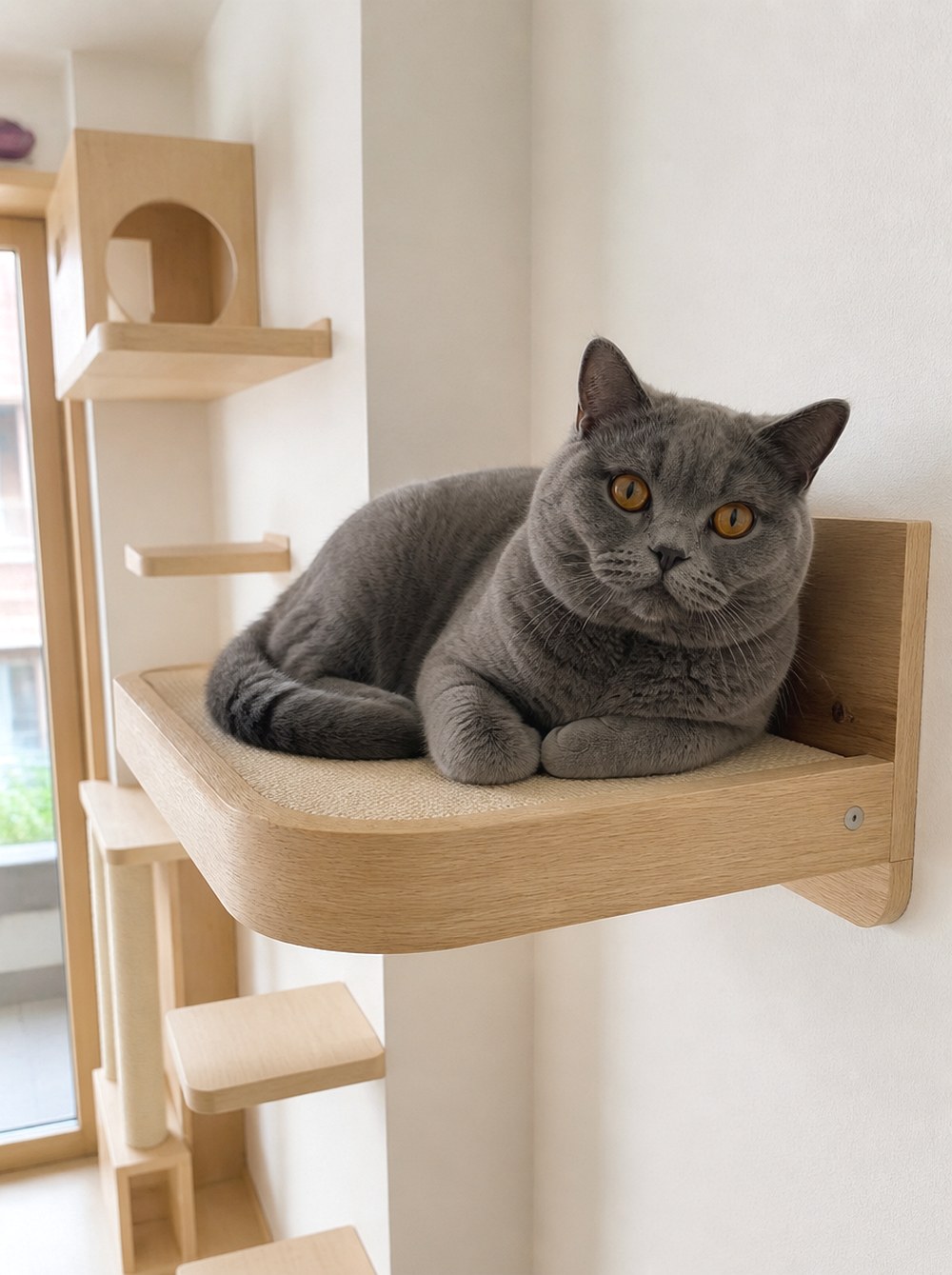
Not every platform needs to be another step. A wide lookout shelf gives the cat somewhere to stop, sit, stretch out, and watch the room.
Position it where the cat can observe household activity without being directly over a doorway or another busy passage. A broad shelf at the end of a climbing route is more useful than a tiny high platform with nowhere comfortable to settle.
If you add a pad, use one designed to remain securely in place rather than a loose cushion that can slide during a jump.
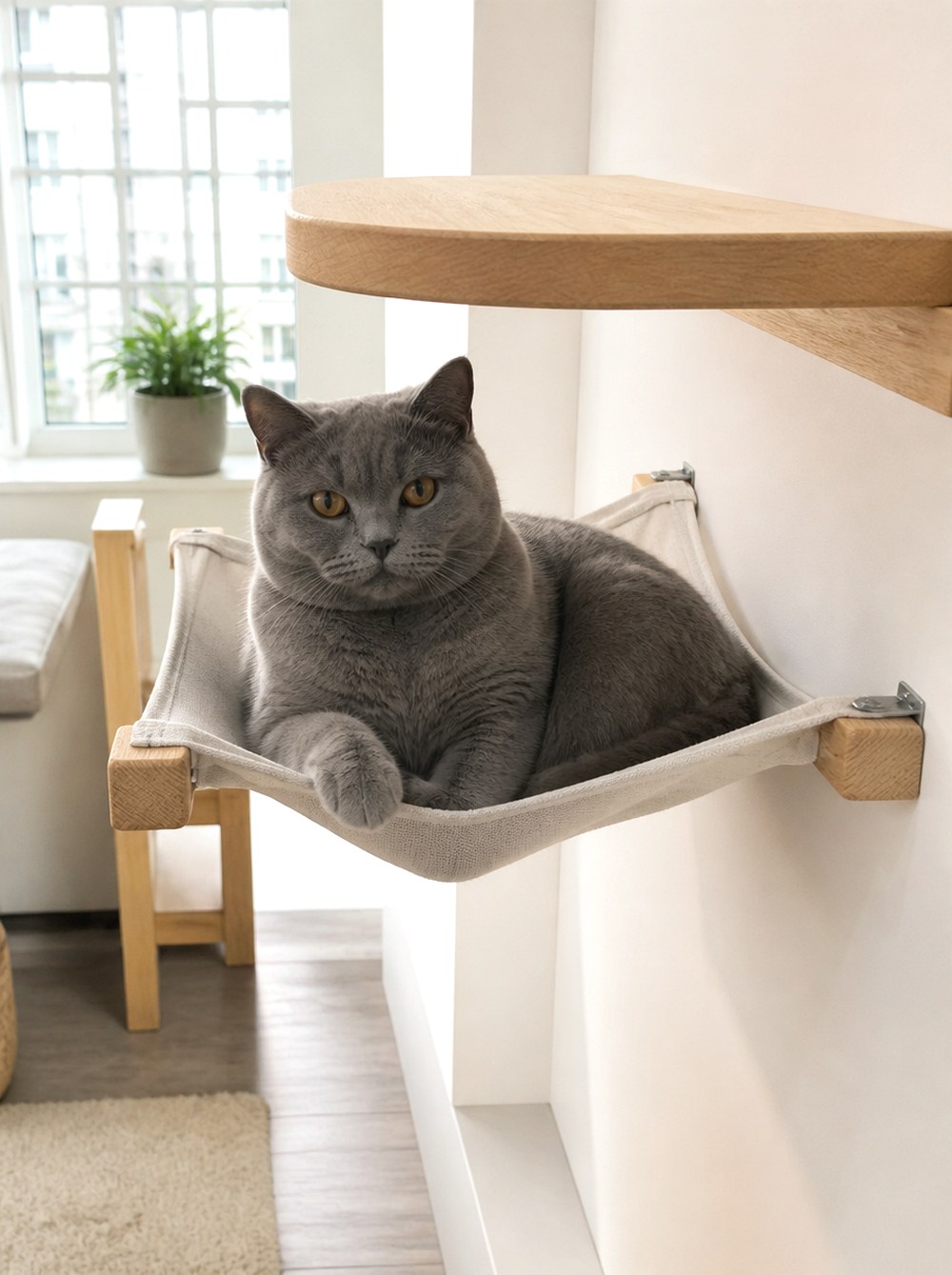
6. Mount a Wall Hammock Between Two Platforms
A wall-mounted cat hammock adds a soft resting spot without placing another bed on the floor. It can also make a shelf route feel more varied because the cat moves from a rigid platform to a supported fabric surface.
Place the hammock where the cat can step onto it from a stable shelf rather than making a difficult leap into moving fabric.
Check the fabric, seams, frame, and mounting points regularly. Replace the hammock if material becomes torn, stretched, or damaged.
For a small room, one hammock between two climbing platforms can serve as both a destination and part of the route.
7. Make a Wall Cubby for a More Sheltered Rest
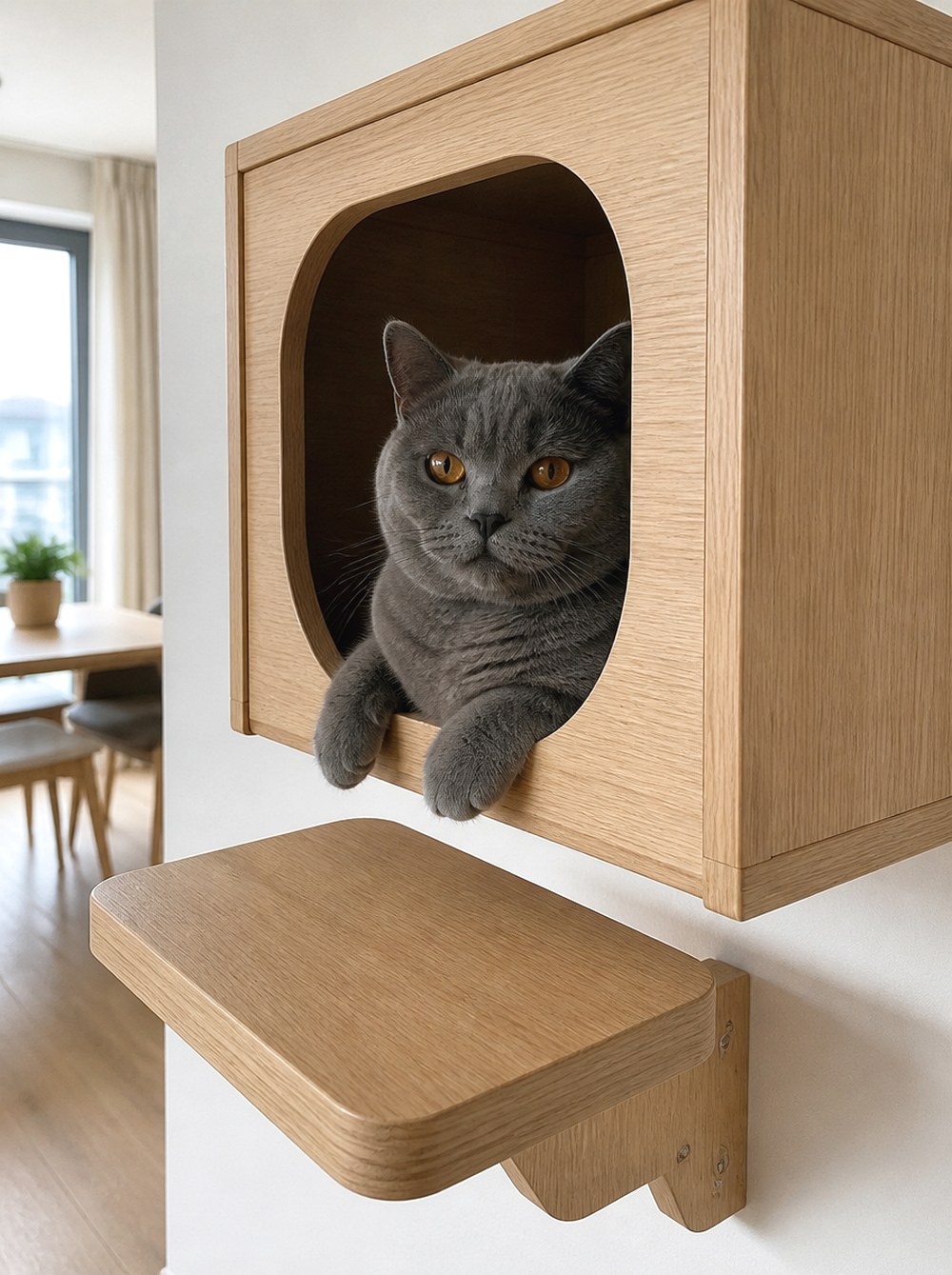
Some cats prefer a partially enclosed resting place instead of an exposed shelf. A securely mounted box-style cubby creates a small hideaway without adding furniture to the floor.
Choose an opening large enough for comfortable entry and an interior that lets the cat reposition naturally. The structure should have smooth finished edges, ventilation, and mounting suitable for its full loaded weight.
Place a step just below or beside the opening so the cat does not need to launch directly into the cubby from a distance.
The result can be especially useful in a studio or bedroom where one wall has to handle both climbing and quiet resting space.
8. Connect the Wall Route to a Window Perch
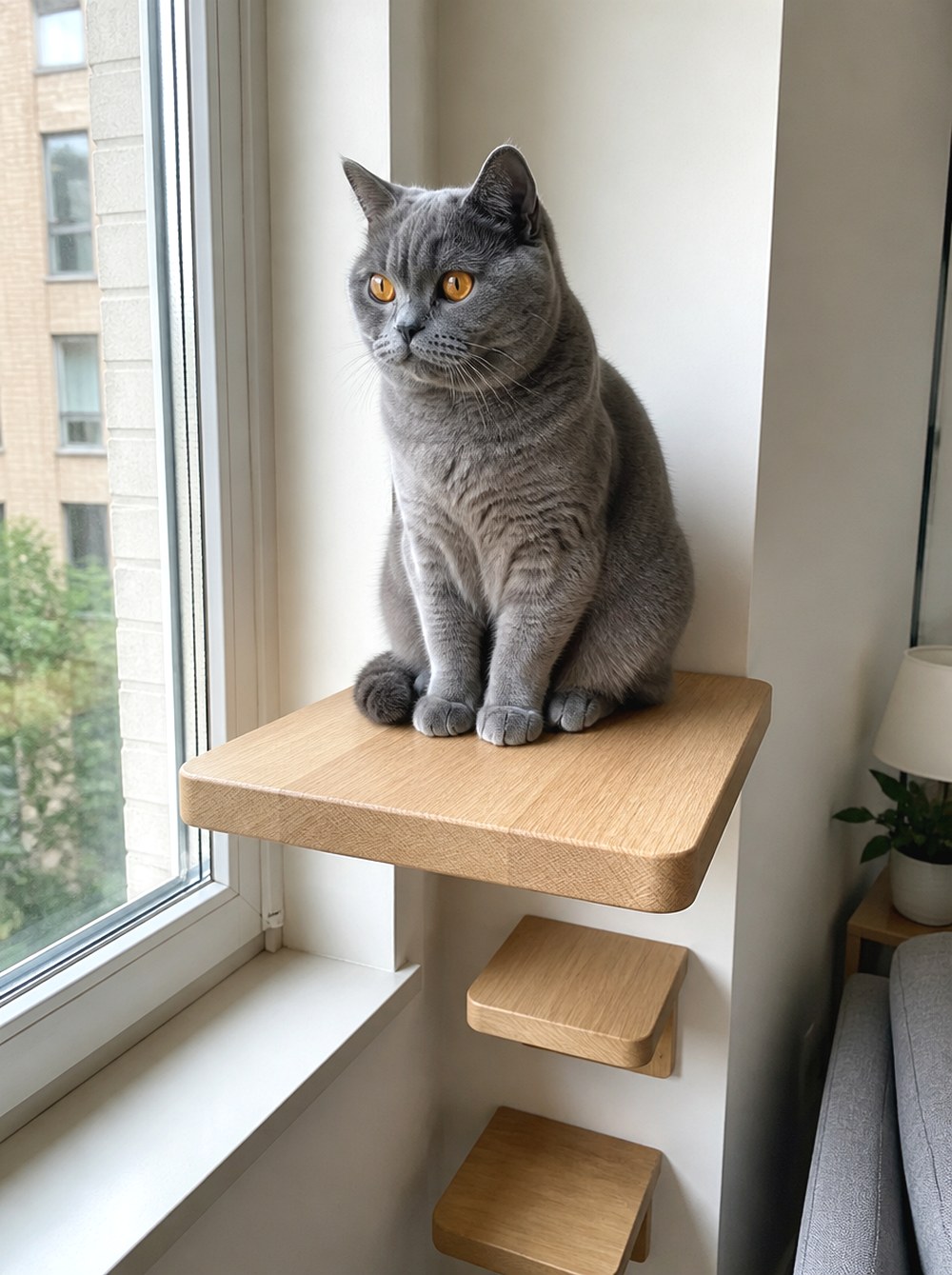
A window gives the cat wall a natural destination. Instead of installing a perch in isolation, connect it to one or two wall steps so the cat has a deliberate route to the viewing area.
Keep blind cords, curtain ties, and similar loops completely inaccessible. The window itself should be securely closed or fitted with an appropriate secure barrier; an ordinary insect screen should not be treated as fall protection.
The perch should not interfere with opening the window or require the cat to balance on a narrow sill.
In a room with a good outdoor view, this arrangement can make a relatively small wall setup much more engaging.
Use the Wall for More Than Resting
9. Install a Vertical Scratching Panel
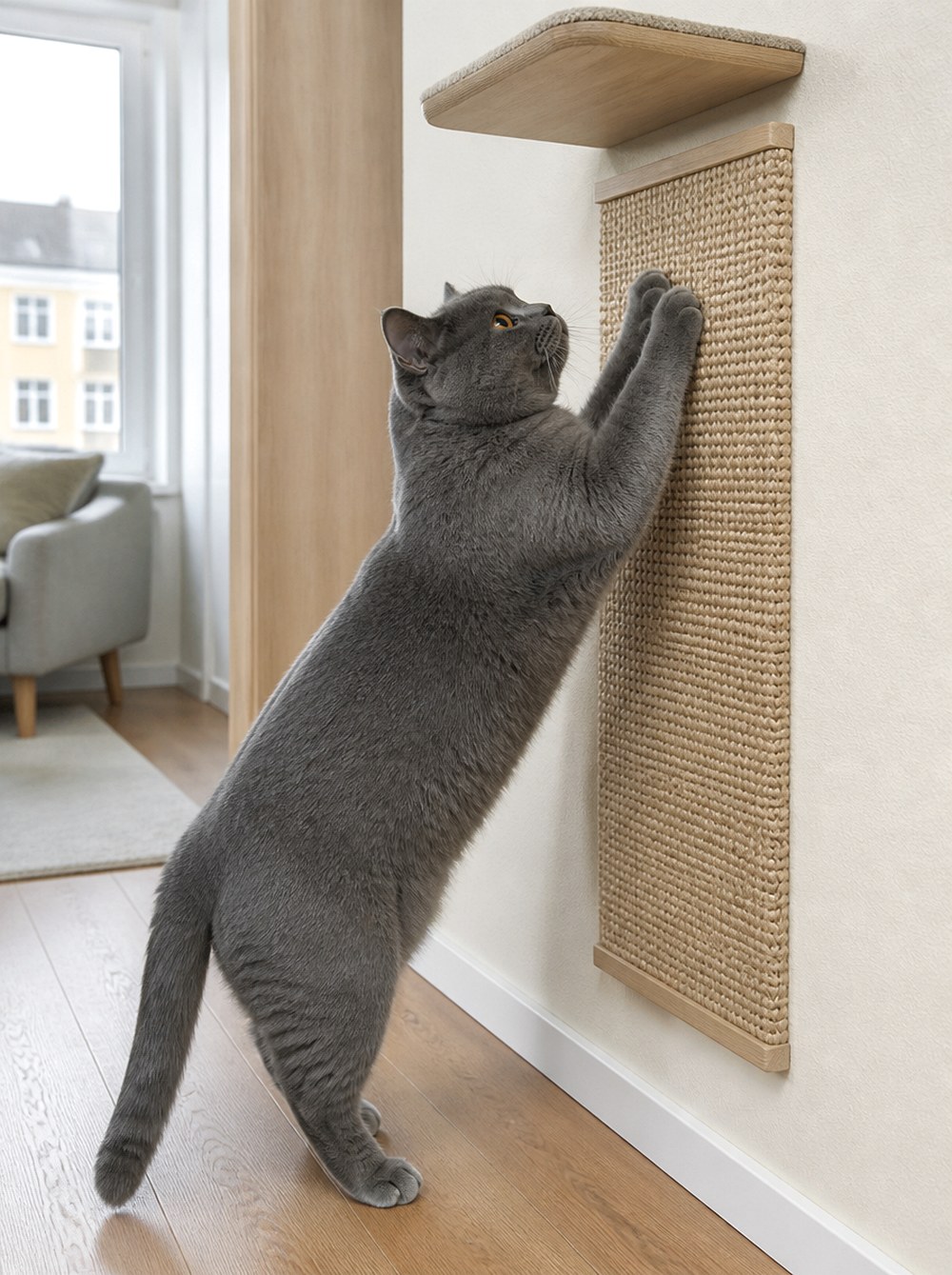
A wall-mounted scratching surface can replace a floor-standing scratcher when floor space is scarce.
Mount it low enough that the cat can plant the hind feet securely and stretch upward while scratching. It should remain rigid under pulling force rather than swinging or shifting.
Positioning the panel near the start of a climbing route can create a compact activity zone: scratch below, then climb above.
Material condition matters. Trim or replace damaged components according to the product or material design rather than leaving loose strands or pieces that could be pulled free.
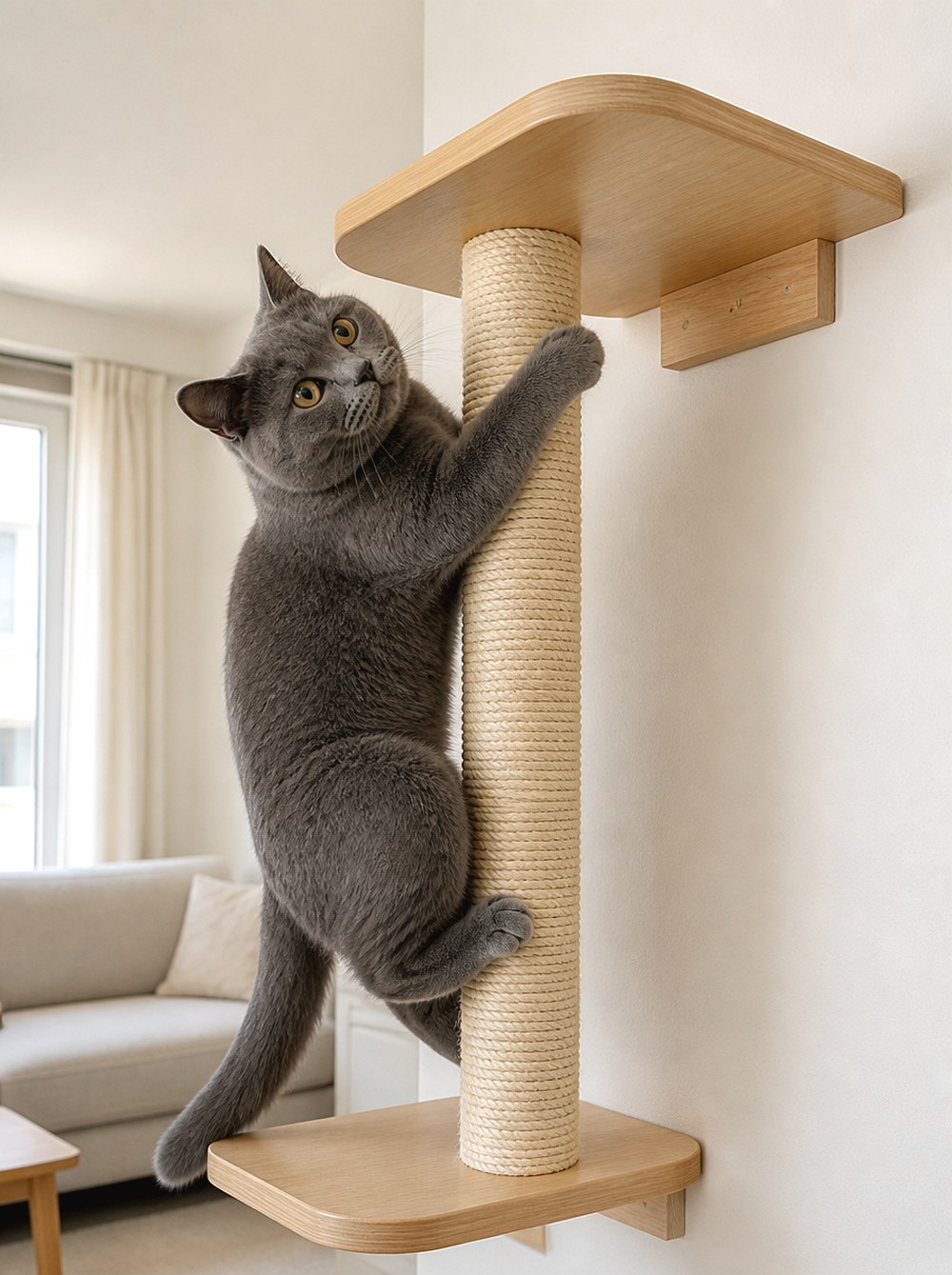
10. Add a Wall-Mounted Climbing Column
A tall scratching or climbing column gives the cat a more vertical movement option than ordinary steps. A securely constructed sisal-covered column can occupy a narrow slice of wall while connecting a low platform to a higher one.
This idea suits cats that already enjoy climbing and gripping textured surfaces. It is less appropriate as the only route for a cat that needs broad, closely spaced steps.
The top of the column should lead somewhere useful. A cat should not reach the highest point and discover there is no stable platform for transferring its weight.
Inspect the covering regularly and address significant wear before loose material becomes a snagging or chewing concern.
11. Bridge the Space Above a Doorway
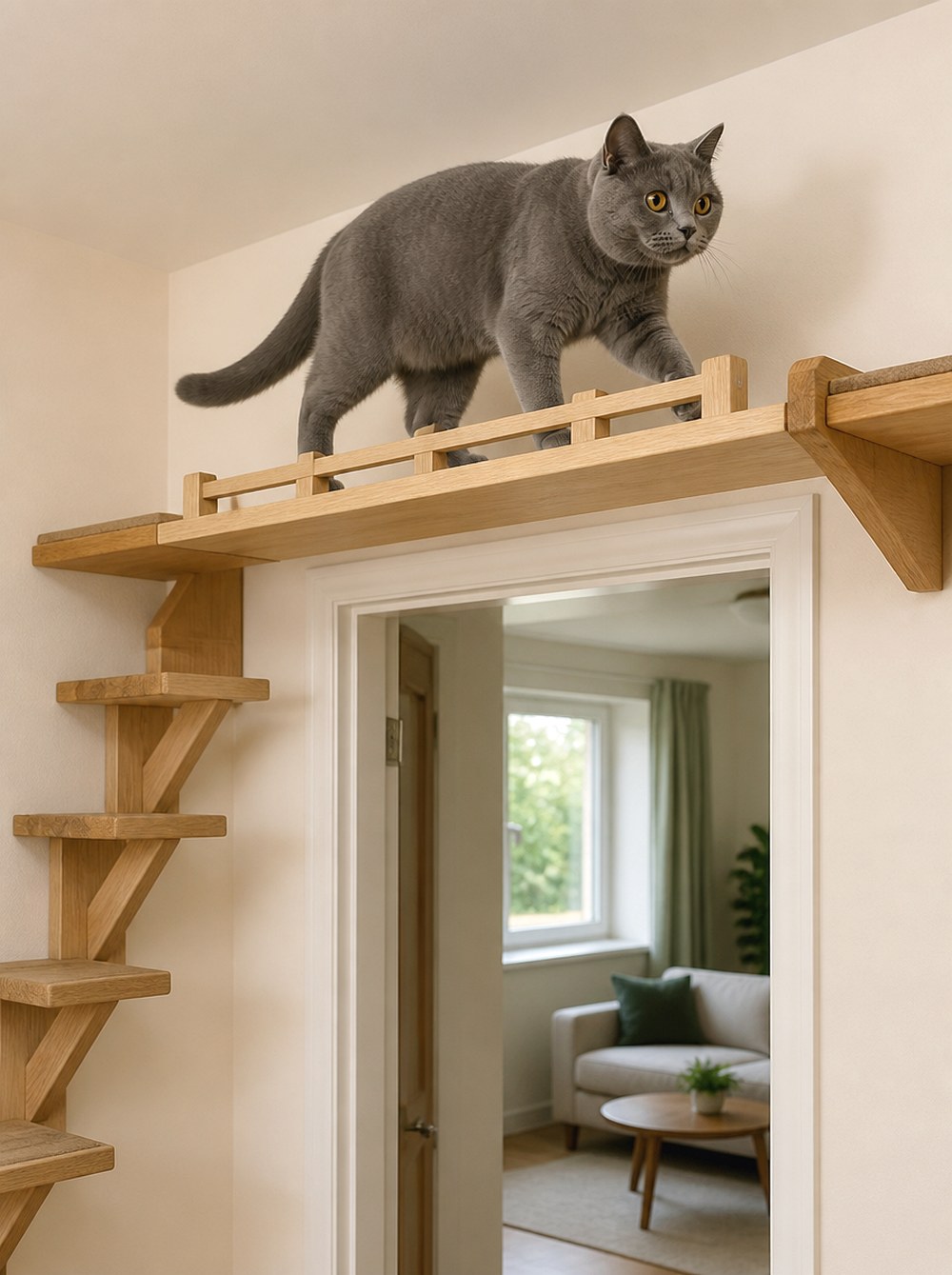
The wall area above a doorway is often completely unused. In the right room, a secure platform or short bridge across that area can connect two sections of a cat route.
Access is the important part. Build steps up one side and a practical continuation or descent on the other rather than making the bridge a dead end.
Maintain clearance around the door and make sure the structure cannot interfere with normal operation. The cat should not need to balance on the door itself or jump from the top edge of a moving door.
Because this is a high-positioned setup, careful installation and appropriate load support are especially important.
12. Build One Compact Multi-Level Wall Zone
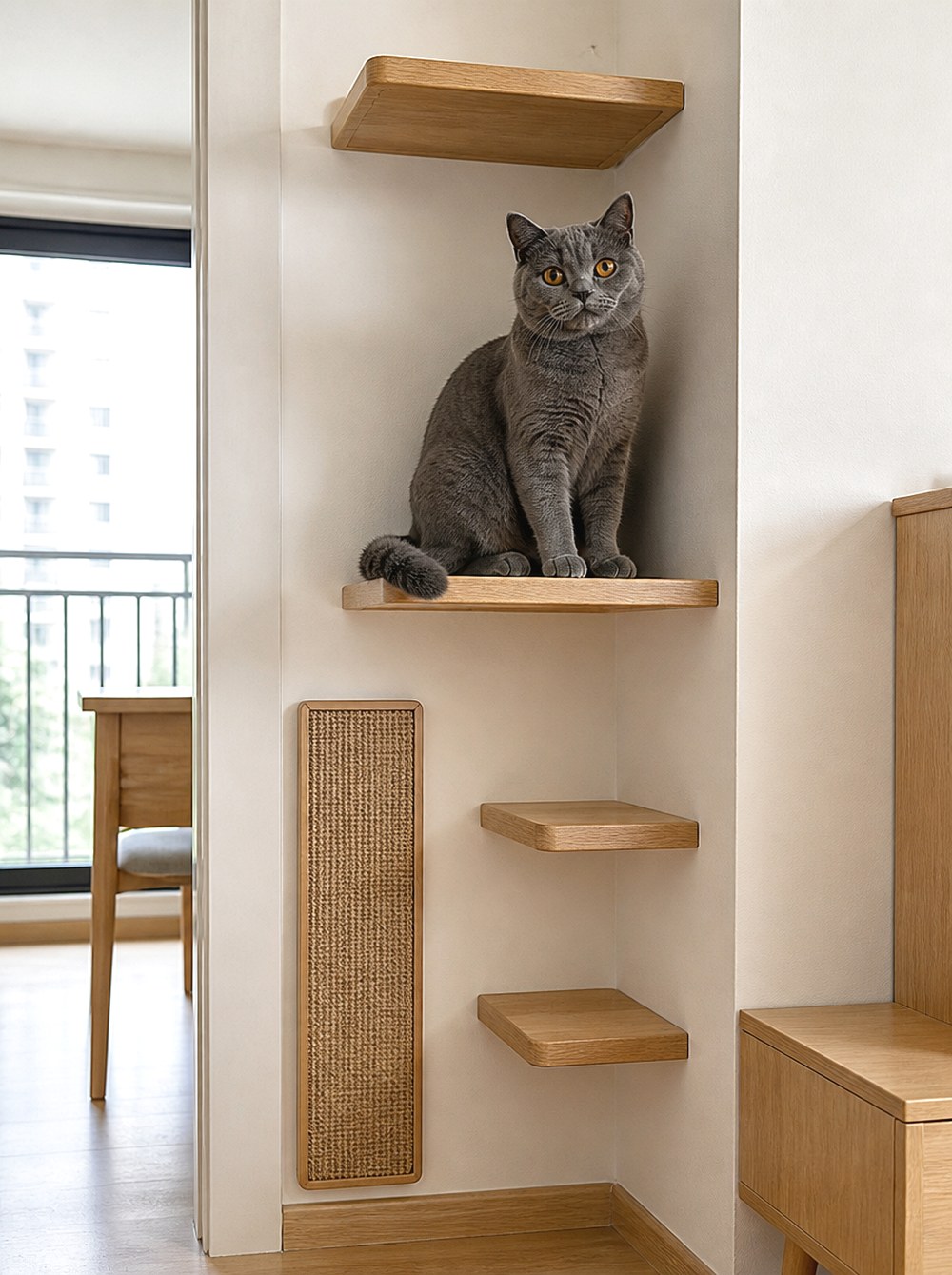
If you have only a narrow section of usable wall, combine several functions in one deliberately planned vertical strip.
For example, a compact zone might have a scratching panel near floor level, two climbing steps, a medium landing shelf, and one roomy resting platform at the top. Each component has a different purpose, but all of them share the same small footprint.
This works better than squeezing unrelated cat furniture into several corners of the room.
Keep the layout visually open. Adding more components is not automatically better; the cat still needs clear landing areas and enough room to turn around.
A modular setup also gives you the option of beginning with three or four pieces and expanding the route later if your cat uses it confidently.
You May Also Like


How to Choose the Best Layout for Your Room
You do not need all 12 ideas. In most small rooms, a restrained combination works better.
If you have a tall, narrow section of wall, start with staggered steps, a scratching panel, and one upper resting shelf.
If you have an unused corner, corner steps can provide the climbing route while a hammock or cubby creates the destination.
If most of your walls are occupied by desks, sofas, or low storage, use the wall above that furniture carefully, keeping electronics, cords, and fragile objects outside the cat’s route.
If you have a good window, make the window perch the destination and build only the number of steps needed to reach it comfortably.
For a confident climber, a higher catwalk or climbing column may add useful vertical territory. For a kitten, senior cat, or cat with reduced mobility, prioritize wider platforms, shorter gaps, lower heights, and easier routes in both directions.
Measure More Than the Empty Wall
Before drilling any holes, mark the approximate platform positions with removable painter’s tape. Then look at the whole route from a cat’s perspective.
Check whether the cat will have room to:
- Launch without colliding with nearby furniture.
- Land with all four paws on the next surface.
- Turn around on destination platforms.
- Move between levels without extreme jumps.
- Descend without relying on one large drop.
- Avoid cords, lamps, shelves, doors, and breakable items.
Also consider what is underneath higher portions of the route. A clear landing area is preferable to a desk corner, glass table, or other hard obstruction.
A Small Wall Can Be Enough
A useful cat wall does not have to resemble an indoor playground. One scratching area, two or three well-placed climbing platforms, and a comfortable destination can transform a small vertical strip into territory your cat can actually use.
Choose the destination first, then design the safest and most comfortable route to reach it. That approach usually produces a cleaner room and a more practical setup than mounting shelves wherever empty wall happens to be available.
If your cat suddenly becomes reluctant to jump or climb, seems painful, weak, unsteady, or shows another abrupt change in normal behavior, skip the climbing setup and speak with a veterinarian rather than assuming the problem is the wall layout.
