Make cat road trips more manageable with secure carrier setups, organized supplies, easy cleanup, and quieter routines for stops, overnight stays, and arrival.
Save This Idea on Pinterest

15 Cat Road Trip Setup Ideas
Save to PinterestCat road trip setups should prioritize secure transportation and predictable access to the essentials your cat may need along the way. A sturdy carrier, comfortable liner, water supplies, cleanup gear, identification, and a plan for stops can make the vehicle much easier to manage.
These ideas cover short and long drives, overnight stays, multi-cat travel, and destination arrival. Keep cats securely contained while the vehicle is moving, avoid opening a carrier in unsecured outdoor areas, and adjust the trip around your individual cat’s age, temperament, travel experience, and comfort.
Quick List
- Secure Back-Seat Carrier Setup for Cat Road Trips
- Washable Carrier Liner Setup for Messy Cat Road Trips
- Familiar Blanket Carrier Setup for a Comfortable Traveling Cat
- Partial Carrier Cover Setup for Calmer Cat Road Travel
- Compact Water Break Kit for Long Cat Road Trips
- Portable Litter Box Setup for Cat Road Trip Stops
- Easy Cleanup Caddy Setup for Cat Road Trip Messes
- Carrier ID Label Setup for Safer Cat Road Travel
- Quiet Rest Stop Routine for Cats on Road Trips
- Familiar Scent Cloth Setup for a Traveling Cat Carrier
- Temperature-Conscious Car Setup for Comfortable Cat Road Trips
- Separate Carrier Setup for Multi-Cat Road Trip Travel
- Simple Hotel Room Setup for Overnight Cat Road Trips
- Emergency Supply Tote Setup for Cat Road Trip Essentials
- Quiet Arrival Room Setup After a Long Cat Road Trip
1. Secure Back Seat Carrier Setup For Cat Road Trips
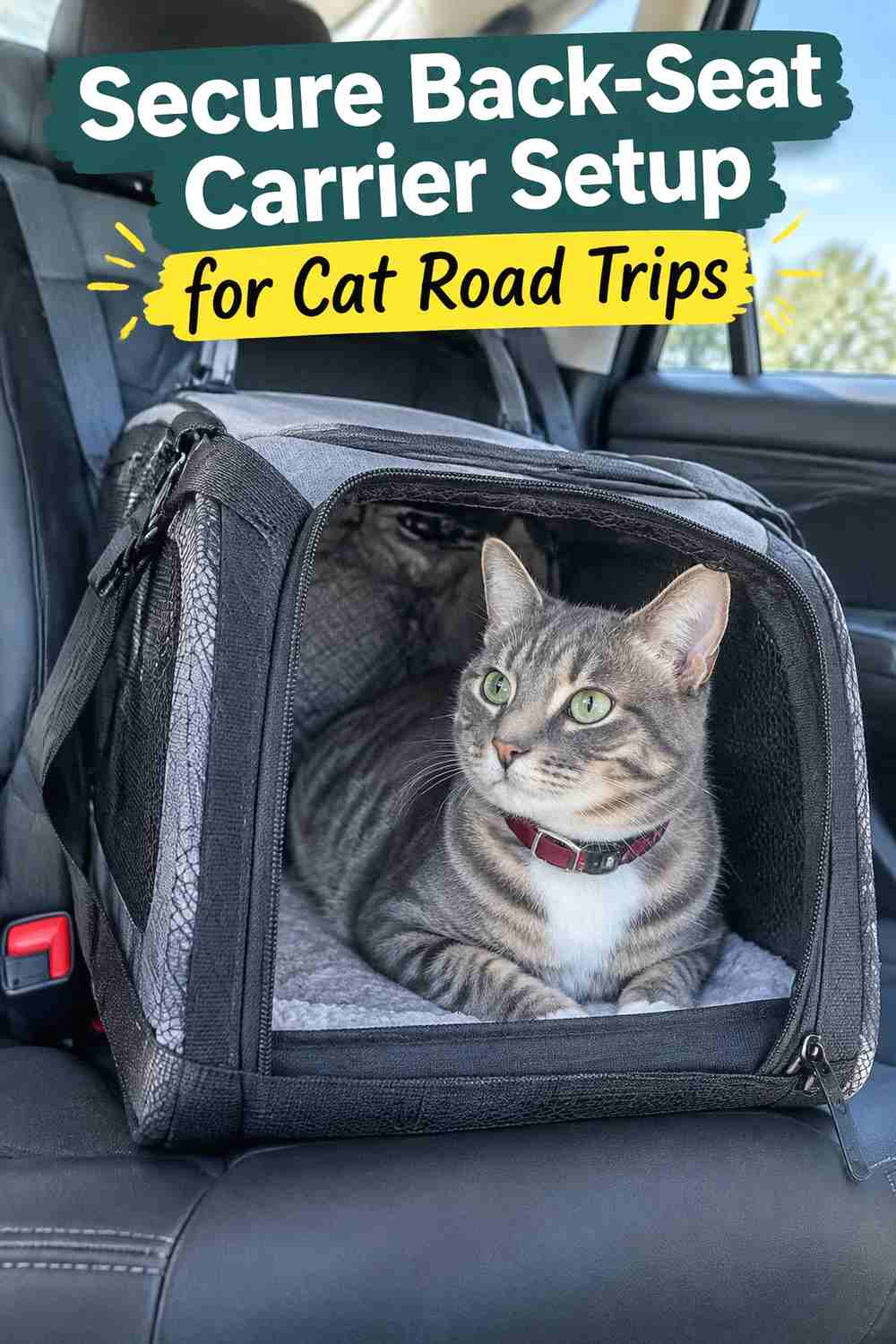
A secure back-seat carrier setup keeps your cat contained while the vehicle is moving and prevents free roaming around pedals, doors, and passengers. Choose a sturdy carrier large enough for the cat to sit, turn, and lie down naturally, then position it according to the carrier and vehicle restraint instructions so it cannot slide around during normal driving. Keep ventilation openings clear rather than wedging bags around the sides. Place the carrier before bringing the cat to the vehicle so loading stays simple. Avoid opening it while doors or windows are unsecured. A stable carrier location also lets you keep water, cleanup supplies, and luggage organized without constantly rearranging the cat’s travel space.
Setup Notes
Test the empty carrier placement first and make sure it stays level without blocking important vehicle controls or vents.
Comfort & Safety
Cats should remain securely contained while the car is moving rather than traveling loose on a seat or lap.
2. Washable Carrier Liner Setup For Messy Cat Road Trips

You May Also Like


A washable carrier liner makes road-trip cleanup much easier if your cat sheds heavily, tracks litter, spills water, or has an accident during travel. Choose a flat absorbent liner or washable pad that fits the carrier floor without bunching around the cat’s paws. Pack at least one clean replacement where you can reach it without unloading the whole car. During a secure stop, a soiled liner can be removed and sealed in a separate bag until it can be washed. Avoid thick bedding that reduces usable carrier space or traps excessive heat. Check the liner after longer stretches of travel and replace it when damp or heavily soiled rather than leaving the cat sitting on an uncomfortable surface.
Cleaning Notes
Pack spare liners and a separate waterproof bag for used bedding so clean supplies stay separated from dirty ones.
Pro Tip
Pre-fit each replacement liner at home so you know it will lie flat inside the carrier.
3. Familiar Blanket Carrier Setup For A Comfortable Traveling Cat

A familiar lightweight blanket can make the carrier feel more recognizable without filling it with bulky bedding. Choose a blanket your cat already rests on and fold it into a thin layer that leaves plenty of room to change position. Familiar fabric may be easier to accept than introducing new scented bedding on travel day. Keep the blanket dry, flat, and away from ventilation openings, and remove it if your cat starts chewing loose threads or burrowing underneath in a way that restricts movement. Pack a second washable blanket for longer trips in case the first becomes dirty. The goal is a comfortable surface with familiar scent, not an overstuffed nest that reduces airflow.
Best For
Cats that regularly settle on familiar blankets or bedding at home.
Use & Maintenance
Wash travel blankets after the trip and inspect edges for pulled threads before using them again.
4. Partial Carrier Cover Setup For Calmer Cat Road Travel

A partial carrier cover can reduce some visual activity for a cat that becomes unsettled by passing traffic, people, or constant movement outside the carrier. Drape a lightweight breathable cloth over part of the carrier while keeping ventilation openings clearly exposed. Do not wrap the carrier completely or use heavy fabric that traps warmth. Watch your cat’s behavior because some cats relax with a little visual screening while others prefer being able to see their surroundings. Secure the cloth so it does not slip inside the carrier or fall onto the floor. The cover should be easy to remove during stops if the vehicle becomes warmer or your cat appears more comfortable without it.
Best For
Cats that tend to settle more easily when some surrounding visual stimulation is reduced.
Comfort & Safety
Airflow takes priority over creating a darker carrier, so keep vents open and monitor the cabin temperature.
5. Compact Water Break Kit For Long Cat Road Trips

A compact water kit keeps drinking supplies organized for longer drives without leaving an open bowl inside the moving vehicle. Pack fresh water, a small stable bowl, a towel, and a resealable bag or container for damp items. Offer water during appropriate secure stops based on your cat’s normal routine and the length and conditions of the trip. Use a closed vehicle or another escape-proof indoor space before opening the carrier. Some cats may not drink much while traveling, while others will accept water during quieter breaks. Do not force drinking or create a wet carrier by leaving an unstable full bowl beside the cat during motion. Clean the bowl before refilling it.
Setup Notes
Keep the water kit near the carrier rather than buried beneath luggage so it is easy to reach at stops.
Cleaning Notes
Pack a small towel specifically for spills and dry the bowl before storing it again.
6. Portable Litter Box Setup For Cat Road Trip Stops

A portable litter box can be useful on longer drives when you have a secure place to offer your cat a bathroom break. Use a low, stable travel box with the litter your cat already recognizes and store it in a sealed container between uses. Set the box up only inside a fully closed vehicle, secure hotel room, or other escape-proof indoor space before opening the carrier. Some cats will use it quickly, while others may wait until arrival. Never open a carrier beside the road or in an unsecured parking area simply to offer litter access. Carry waste bags, a small scoop, and a mat or towel so scattered litter can be contained before you continue driving.
Best For
Longer journeys and overnight trips where predictable access to a familiar litter setup is useful.
Cleaning Notes
Remove waste promptly and reseal litter supplies so odor and loose granules stay contained.
7. Easy Cleanup Caddy Setup For Cat Road Trip Messes
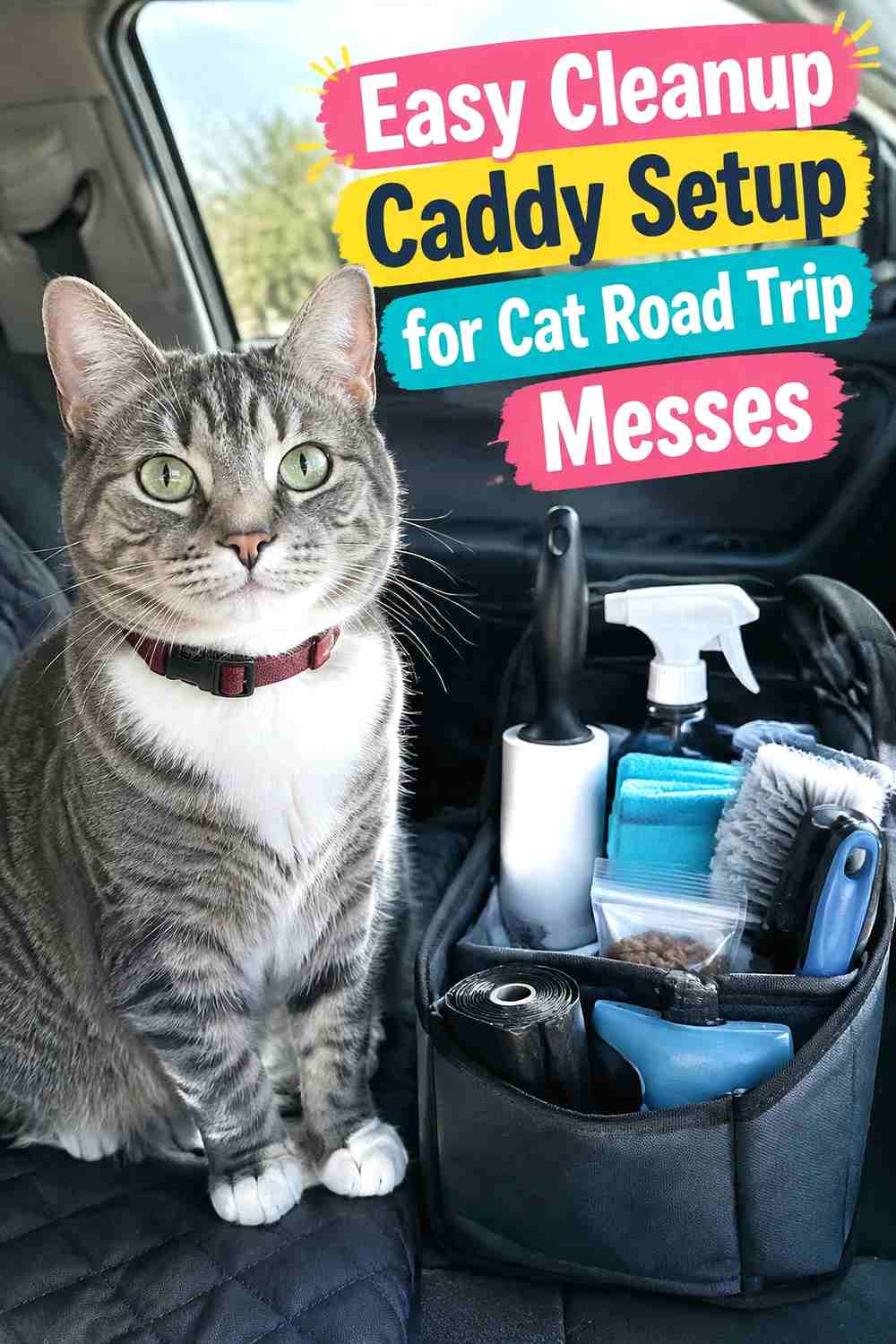
A dedicated cleanup caddy keeps the most useful supplies together when a road-trip mess happens. Pack paper towels or washable cloths, spare carrier liners, waste bags, litter cleanup supplies, and other cat-safe cleaning essentials in one clearly marked container. Store the caddy where an adult can reach it without unpacking luggage beside the road. Separate clean items from anything already used, and keep cleaning products closed and completely out of the cat’s reach. A simple kit is more useful than carrying many products you may never need. During cleanup, move slowly and keep the carrier secure so opening car doors or shifting bags does not create an escape opportunity.
Why It Works
One organized container reduces the amount of searching and unpacking required during an already inconvenient mess.
Space & Placement
Keep it accessible but secured so the container does not slide through the cabin during driving.
8. Carrier Id Label Setup For Safer Cat Road Travel
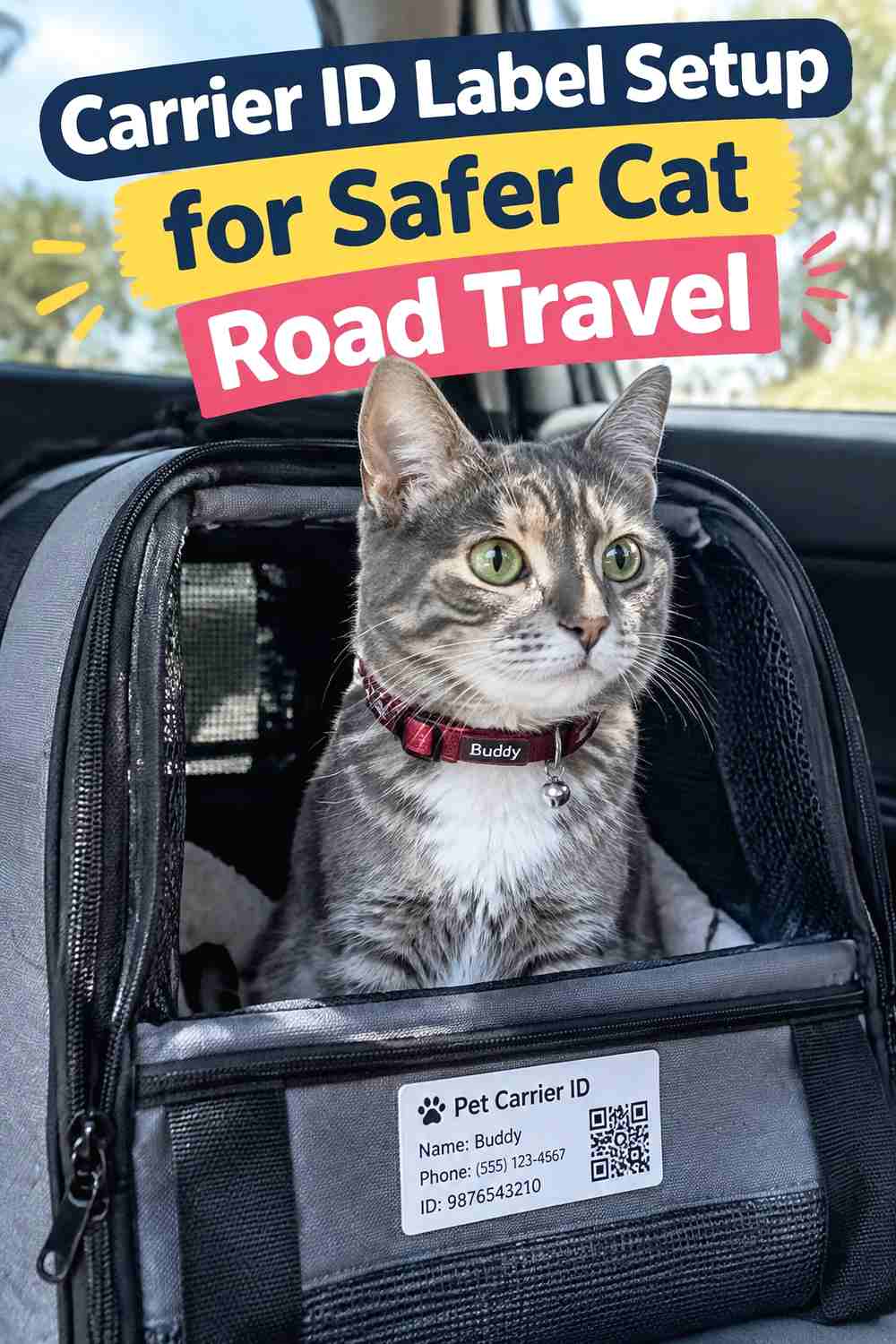
A clear carrier ID label adds useful contact information directly to the cat’s travel setup. Attach a secure label to the outside of the carrier with the cat’s name, owner contact information, and another practical contact detail you want available during travel. Keep the label flat so it does not dangle where the cat can reach it through ventilation openings. Check that identification on the cat is also current before departure. Avoid displaying more personal information than necessary if the carrier will be visible in public areas. Photograph the carrier and important travel details before leaving so you have a quick reference on your phone. Replace any label that becomes torn, wet, or difficult to read.
Setup Notes
Place the label where it is easy for a person to see but does not block ventilation or carrier latches.
Pro Tip
Review phone numbers and identification details during trip preparation instead of assuming older labels are still current.
9. Quiet Rest Stop Routine For Cats On Road Trips
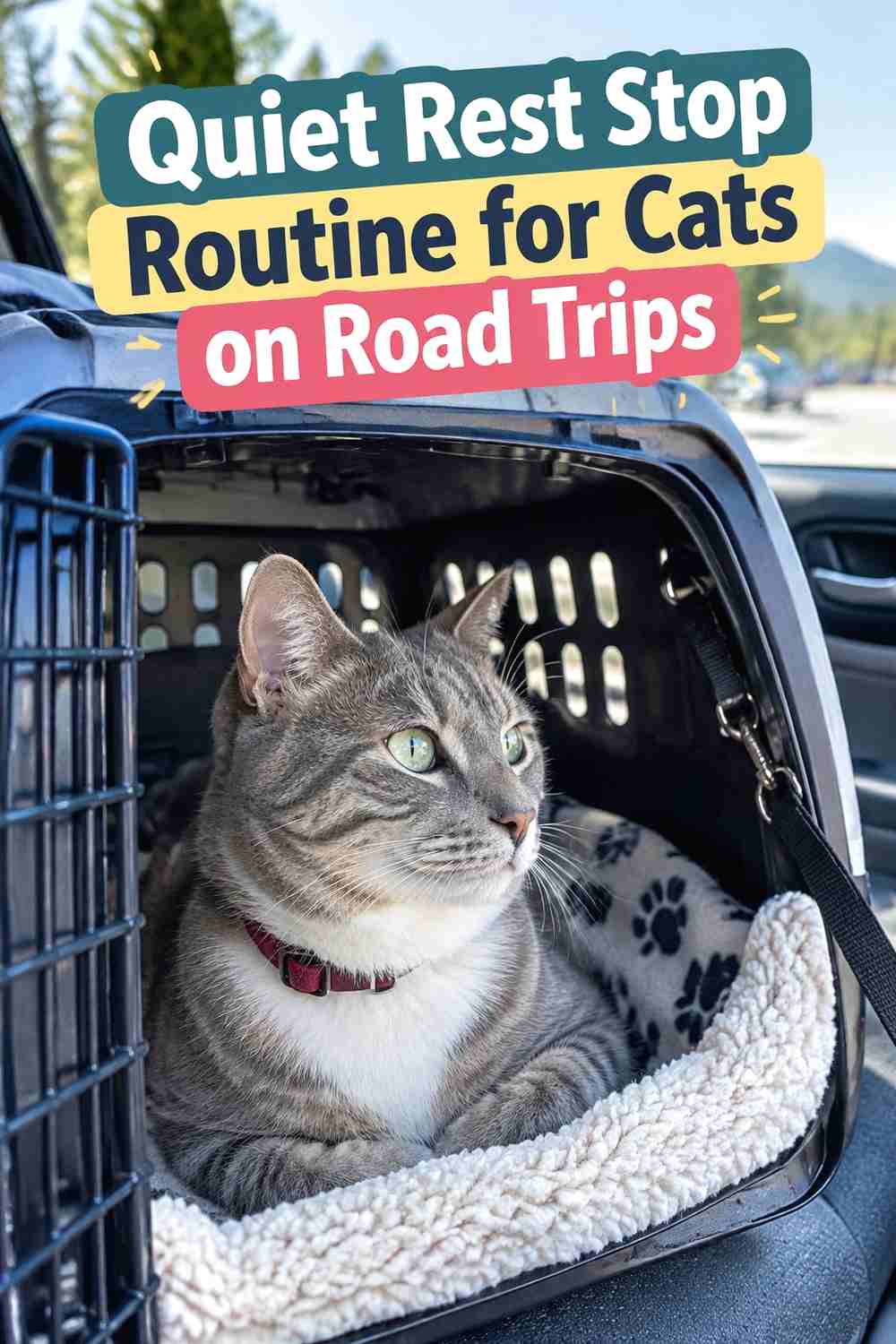
A quiet rest stop routine gives you a predictable way to check your cat and travel supplies without turning every break into a major transition. Park securely, keep the vehicle closed, and first check the carrier, cabin temperature, liner, and your cat’s general comfort. Longer trips may also provide an opportunity to offer water or a litter box if you can do so inside an escape-proof space. Avoid repeatedly removing a cat from the carrier simply because the car has stopped. Busy parking lots, fuel stations, and roadside areas contain unfamiliar sounds and escape risks. Keeping the break routine simple can also make it easier to notice whether anything actually needs attention before continuing the trip.
Why It Works
A repeatable checklist reduces unnecessary carrier opening and keeps essential tasks organized.
Comfort & Safety
Never rely on an open car door or held collar as a secure barrier during a stop.
10. Familiar Scent Cloth Setup For A Traveling Cat Carrier

A small familiar scent cloth can add a recognizable home smell without taking up much carrier space. Use a clean piece of bedding or soft cloth the cat has already rested on and place it flat beneath or beside the cat. Skip perfumes, essential oils, strongly scented laundry products, or added fragrances; the point is familiarity, not introducing a new smell. Choose fabric without fringe, loose strings, or decorative attachments that could be chewed. If the cloth becomes wet or heavily soiled, replace it with a clean familiar item from your travel bag. This setup is especially useful when you want some home scent in the carrier but do not have room for a full blanket.
Best For
Cats that regularly choose particular bedding or household fabrics for resting.
Pro Tip
Prepare two familiar cloths before travel so there is a clean replacement available if needed.
11. Temperature Conscious Car Setup For Comfortable Cat Road Trips

A temperature-conscious setup keeps the carrier away from direct sun, blocked air vents, and areas of the vehicle that become noticeably hotter or colder than the passenger space. Position the carrier where cabin air can circulate around it without aiming an intense vent directly at the cat. Use window shades when appropriate without covering the carrier itself, and check the cat and carrier environment during stops. Never leave a cat unattended in a parked vehicle where temperatures can change quickly. Heavy carrier covers and thick bedding can also trap warmth, so adjust them according to conditions. Plan the vehicle layout before departure so luggage does not later get stacked around ventilation openings.
Space & Placement
Leave open space around carrier vents and keep the carrier away from direct prolonged sunlight.
Comfort & Safety
If your cat shows concerning signs such as breathing difficulty or unusual weakness, seek veterinary help rather than continuing the trip as normal.
12. Separate Carrier Setup For Multi Cat Road Trip Travel

Separate secure carriers give multiple cats their own travel space instead of forcing them to share a confined carrier for hours. Choose appropriately sized carriers and secure each one individually so neither can slide into the other during driving. Familiar cats may enjoy being positioned where they can see or smell one another, while others settle better with a little visual separation. Pack separate liners and clearly labeled supplies to make cleanup easier. During stops, manage one carrier at a time rather than opening several simultaneously. Even cats that share beds peacefully at home can respond differently to travel, noise, and confinement, so individual spaces provide more flexibility if one cat needs a quieter setup.
Best For
Multi-cat households taking longer drives, relocations, or overnight road trips.
Pro Tip
Label each carrier and supply bag so medications, bedding, or other individual items do not get mixed up.
13. Simple Hotel Room Setup For Overnight Cat Road Trips

A simple hotel room setup gives a traveling cat one controlled indoor space for litter, water, rest, and carrier access overnight. Before opening the carrier, close the room door, check windows, block unsafe hiding gaps when practical, and remove loose cords or fragile items from reach. Set up the litter box and water first, then place the carrier in a quiet corner and open it only after the room is secure. Let the cat emerge at its own pace rather than pulling it out. Keep housekeeping access controlled while the cat is loose in the room. A familiar blanket or bed can make one corner more recognizable without filling the temporary space with unnecessary equipment.
Setup Notes
Prepare the entire room before releasing the cat so doors do not need to keep opening during setup.
Space & Placement
Keep food, water, litter, and resting areas reasonably separated within the available room.
14. Emergency Supply Tote Setup For Cat Road Trip Essentials

An emergency supply tote keeps important cat items separate from everyday luggage so they remain accessible if travel plans change. Pack spare food your cat already eats, water supplies, extra liners, litter essentials, waste bags, identification information, and any prescribed medication according to veterinary instructions. Include copies of relevant records when your route or destination makes them useful. Keep the tote clearly labeled and avoid burying it under suitcases. Do not add unfamiliar supplements or medications simply because you are traveling. Check expiration dates and quantities before departure, especially on longer journeys. The tote can stay packed between trips if you review the contents before every use and replace anything old or damaged.
Why It Works
Keeping essential cat supplies separate makes unexpected delays or overnight changes much easier to manage.
Use & Maintenance
Review the tote before each trip rather than assuming supplies left from a previous journey are still usable.
15. Quiet Arrival Room Setup After A Long Cat Road Trip
You May Also Like



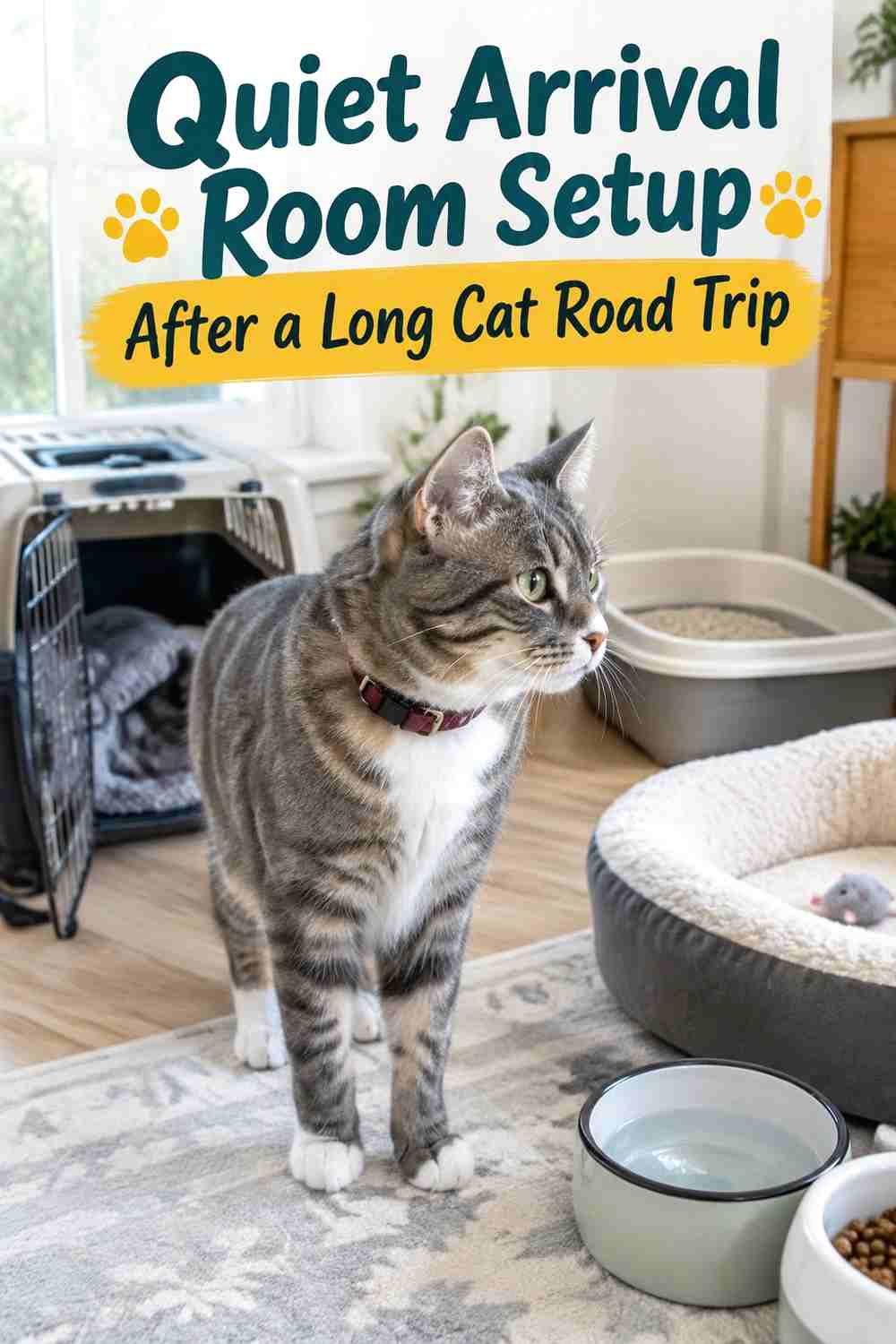
A quiet arrival room creates a controlled transition between the car and an unfamiliar destination. Before bringing the carrier inside, prepare a closed room with water, litter, a resting spot, and the cat’s familiar blanket or scent cloth. Check doors, windows, cords, plants, and possible hiding hazards before opening the carrier. Once everything is secure, place the carrier on the floor and let the cat come out when ready. Avoid immediately carrying the cat around the whole house, introducing several people, or opening multiple rooms at once. After a long drive, a smaller predictable area can make supplies easier to find and gives you time to check that the cat is settling normally.
Best For
Vacation rentals, relocations, family visits, and any destination that is unfamiliar to the cat.
Comfort & Safety
Expand access gradually based on the individual cat and the safety of the new environment.
How to Choose the Right Idea
Start with trip length, your cat’s travel experience, and how many stops or overnight stays the route requires. Every trip needs a secure carrier setup, but a short drive may only require a comfortable liner and cleanup supplies, while a full-day journey may also call for water, litter, spare bedding, and a larger emergency tote.
Consider how your cat responds to visual stimulation and unfamiliar spaces. Some cats may settle with a partial carrier cover or familiar cloth, while others prefer an unobstructed view. Multi-cat households should plan individual carrier spaces and enough separate supplies for each animal.
Vehicle organization matters too. Keep ventilation clear, secure loose luggage, and place water, liners, litter supplies, and cleanup gear where adults can reach them without disrupting the cat. For overnight travel, prepare the hotel or destination room completely before opening the carrier.
Final Thoughts
A practical cat road trip setup is less about adding travel gadgets and more about keeping the basics secure, clean, accessible, and predictable. Start with a well-positioned carrier, then add only the supplies your route and cat genuinely need. Planning rest stops and arrival spaces in advance can also prevent rushed decisions when you are already on the road.
FAQs
1. Can my cat ride loose in the car during a road trip?
A secure travel carrier is the safer setup while the vehicle is moving. A loose cat can interfere with the driver, reach open doors, or be injured during sudden movement.
2. Should I open my cat’s carrier at every rest stop?
Not necessarily. Check your cat and supplies first. Only open the carrier inside a fully secure, escape-proof space when there is a practical reason to do so.
3. How do I handle litter box breaks during a cat road trip?
For longer trips, carry a portable box and familiar litter. Offer access only inside a closed vehicle, secure room, or other escape-proof indoor environment.
4. Is it better for two cats to share one carrier?
Separate appropriately sized carriers generally provide each cat with its own secure space and make it easier to adjust bedding, positioning, or visual separation during travel.
5. What should I set up first when arriving at a hotel or destination?
Prepare a secure room with closed doors and windows, litter, water, and a resting area before opening the carrier. Let your cat leave the carrier at their own pace.
Save these cat road trip setup ideas and build a travel system that keeps your carrier, supplies, stops, and arrival routine simple and organized.
