Turn unused space between shelves into a practical cat climbing route with secure bridges, resting platforms, easy access points, and comfortable elevated perches.
Save This Idea on Pinterest

13 Cat Bookshelf Bridge Ideas
Save to PinterestCat bookshelf bridges can extend vertical territory through rooms that already contain tall storage, but the bridge needs to function as a genuine cat walkway rather than decorative shelving. Stability, traction, usable landing space, and clear routes up and down should come before appearance.
These 13 ideas include straight bridges, low senior-friendly routes, corner layouts, window connections, wide platforms, multi-cat passing zones, rental-friendly options, and quiet resting spots. Before adding any bridge, make sure the supporting furniture and wall-mounted components are properly secured and suitable for your cat’s size and movement style.
Quick List
- Straight Bookshelf Bridge Between Two Cat Climbing Towers
- Carpeted Bookshelf Bridge for Confident Indoor Cats
- Low Bookshelf Bridge Setup for Senior Indoor Cats
- Corner Bookshelf Bridge for Small Cat Rooms
- Window-to-Bookshelf Bridge for Curious Indoor Cats
- Wide Bookshelf Bridge with Side Rails for Large Cats
- Staggered Bookshelf Bridge Route for Active Climbing Cats
- Multi-Cat Bookshelf Bridge with Separate Passing Platforms
- Floating Bookshelf Bridge for Minimalist Cat Rooms
- Easy-Clean Bookshelf Bridge for Long-Haired Indoor Cats
- Reading Nook Bookshelf Bridge with Quiet Cat Perches
- Rental-Friendly Bookshelf Bridge with Removable Cat Walkway
- Bookshelf Bridge with Hidden Rest Cubby for Shy Cats
1. Straight Bookshelf Bridge Between Two Cat Climbing Towers
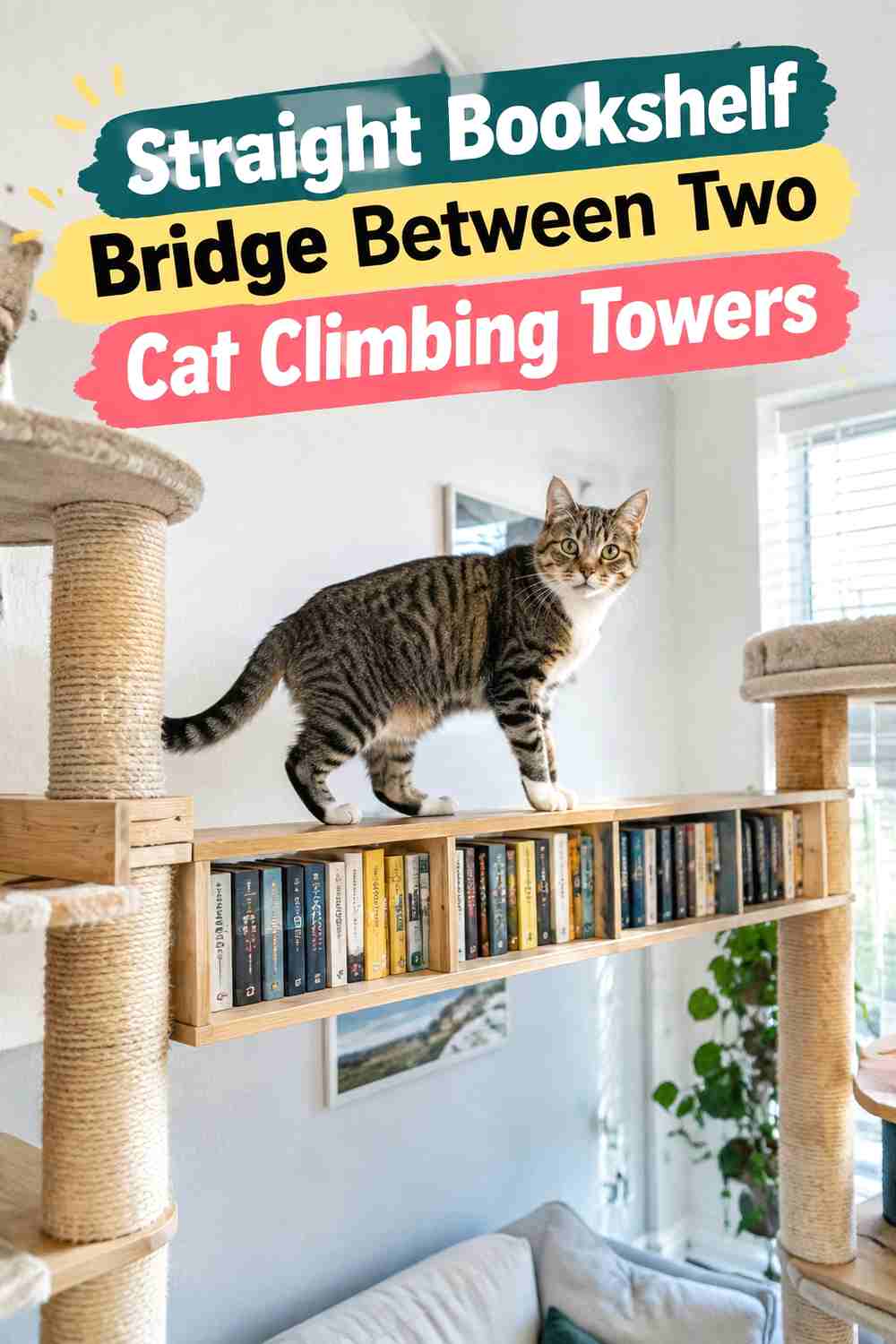
A straight bookshelf bridge creates a simple elevated route between two secure vertical cat areas without requiring a complicated sequence of jumps. Position a stable walkway between anchored bookcases, cat towers, or wall-supported platforms so your cat can cross in a natural forward path. Add a textured top surface for traction and leave generous landing space at both ends. The bridge should not rest loosely on stacks of books or unstable furniture that can shift when the cat runs across. Keep breakable objects away from the approach zones and provide another route down from each side. This setup works especially well for cats that already use both high areas confidently.
Comfort & Safety
Check the entire route for movement before introducing your cat. Both supports should remain stable when weight shifts from one end of the bridge to the other.
2. Carpeted Bookshelf Bridge For Confident Indoor Cats

You May Also Like


A carpeted bookshelf bridge adds extra paw grip for cats that already enjoy moving confidently between elevated surfaces. Cover the top with a tightly secured low-pile carpet, washable runner, or other traction material that will not curl or slide during quick turns. Keep the bridge broad enough for normal walking rather than creating a narrow balance beam. The carpeting should stop short of exposed edges where loose fibers could be pulled or chewed. This design can make a longer crossing feel more comfortable, particularly when nearby shelves have smooth painted finishes. Vacuum the surface regularly and inspect attachment points for fraying so the traction layer remains helpful instead of becoming another loose object.
Use & Maintenance
Replace the covering when edges lift or fibers become heavily worn. Keep mounting hardware hidden or inaccessible to paws.
3. Low Bookshelf Bridge Setup For Senior Indoor Cats

A low bookshelf bridge gives some senior cats access to elevated territory without asking them to reach a ceiling-height route. Connect lower shelves or stable furniture at a modest height and provide short, predictable steps leading onto the bridge. Use dependable traction and keep landing areas wide enough for slower turns. Avoid layouts that require your cat to jump across gaps before reaching the walkway. Furniture positions should stay consistent so the route remains familiar, especially if your cat prefers predictable access. Senior cats vary greatly in mobility, so watch how easily your cat climbs, turns, and descends. New reluctance to jump, signs of pain, or sudden mobility changes should be discussed with a veterinarian.
Pet Type & Life Stage
This setup may suit older cats that still enjoy raised resting spots but prefer shorter climbs and easier transitions.
4. Corner Bookshelf Bridge For Small Cat Rooms
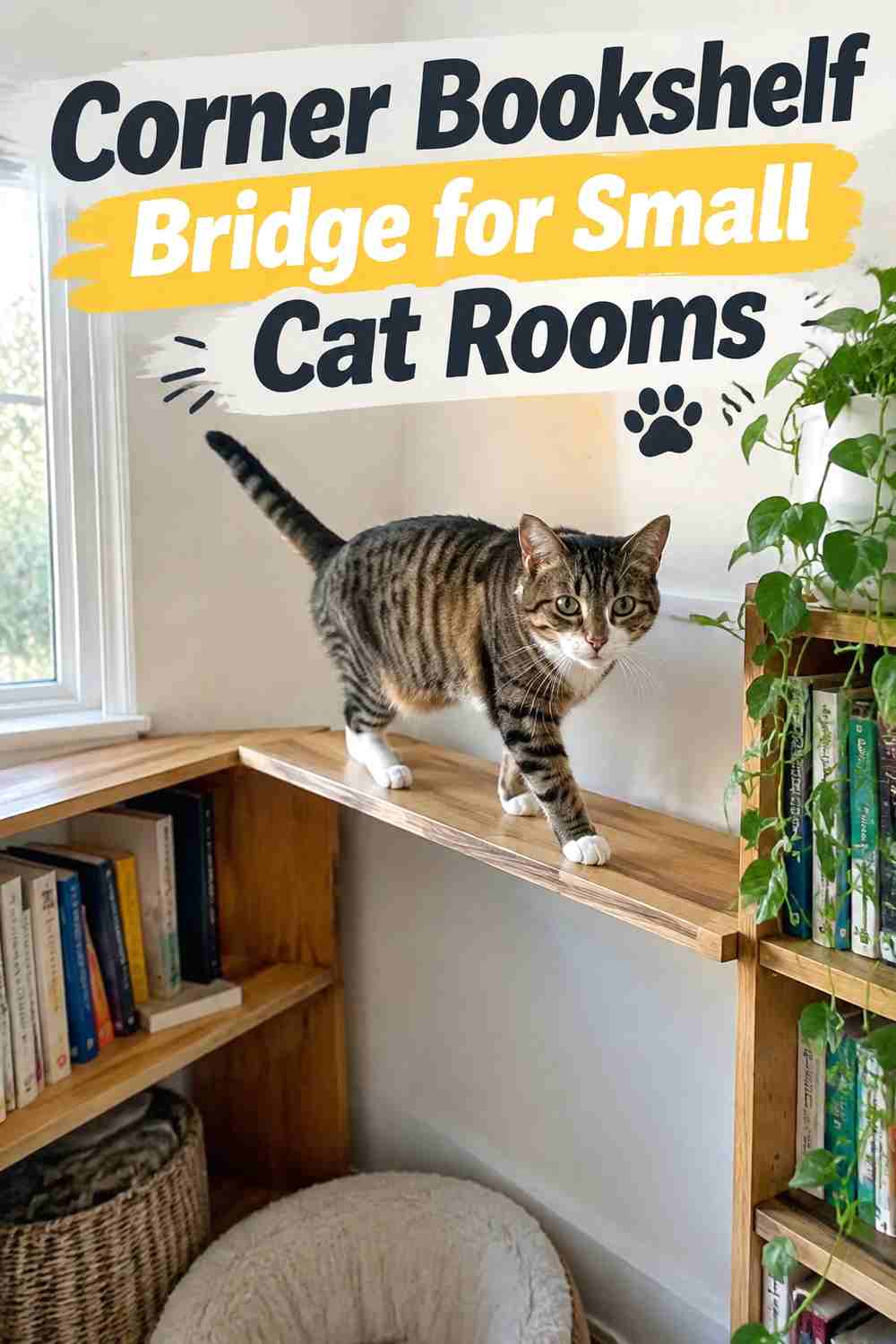
A corner bookshelf bridge uses the meeting point between two walls to build vertical movement without crossing the center of a compact room. Connect sturdy shelves or anchored furniture around the corner with a stable turning platform so your cat can change direction without balancing on a narrow edge. The corner platform should be large enough to pause on, because many cats stop and look around before continuing. Keep books, lamps, plants, and decorative objects away from the route. This layout can preserve valuable floor space while adding useful climbing territory, but avoid packing too many shelves into one tight corner. Your cat should still have clear visual and physical access back down.
Space & Placement
Keep the floor below free of fragile furniture or sharp objects, and make sure the corner turn is wider than the connecting walkway.
5. Window To Bookshelf Bridge For Curious Indoor Cats

A window-to-bookshelf bridge combines elevated climbing with a viewing destination by connecting a stable bookshelf route to a secure window perch. The bridge should end at a roomy shelf or perch beside the window, not on a narrow sill that leaves little turning space. Add traction along the approach and keep blinds, curtain cords, plants, and decorative items outside the travel path. The window itself should remain securely closed or appropriately protected. This setup can be especially engaging for cats that already spend time watching birds, people, or outdoor movement from nearby furniture. If outside activity makes your cat tense or overstimulated, use a quieter window rather than assuming every view is relaxing.
Setup Notes
Make the window perch a destination with enough room to lie down, rather than treating the bridge as a route to a tiny ledge.
6. Wide Bookshelf Bridge With Side Rails For Large Cats

A wide bookshelf bridge gives a larger cat more usable surface for walking, turning, and pausing between elevated areas. Choose a broad stable platform with a nonslip top and low smooth side rails that visually define the edges without trapping the cat. The rails should never be used to compensate for weak supports or an overly narrow walkway. Make sure both landing platforms can accommodate the cat’s full body comfortably, especially if the cat tends to turn around before crossing. Large cats can create more movement when launching or stopping, so the supporting furniture and wall components need dependable anchoring. Keep heavy books and objects away from bridge connections.
Comfort & Safety
Structural support and usable width matter more than decorative rails. Test for wobble after cleaning, rearranging furniture, or moving bookshelves.
7. Staggered Bookshelf Bridge Route For Active Climbing Cats
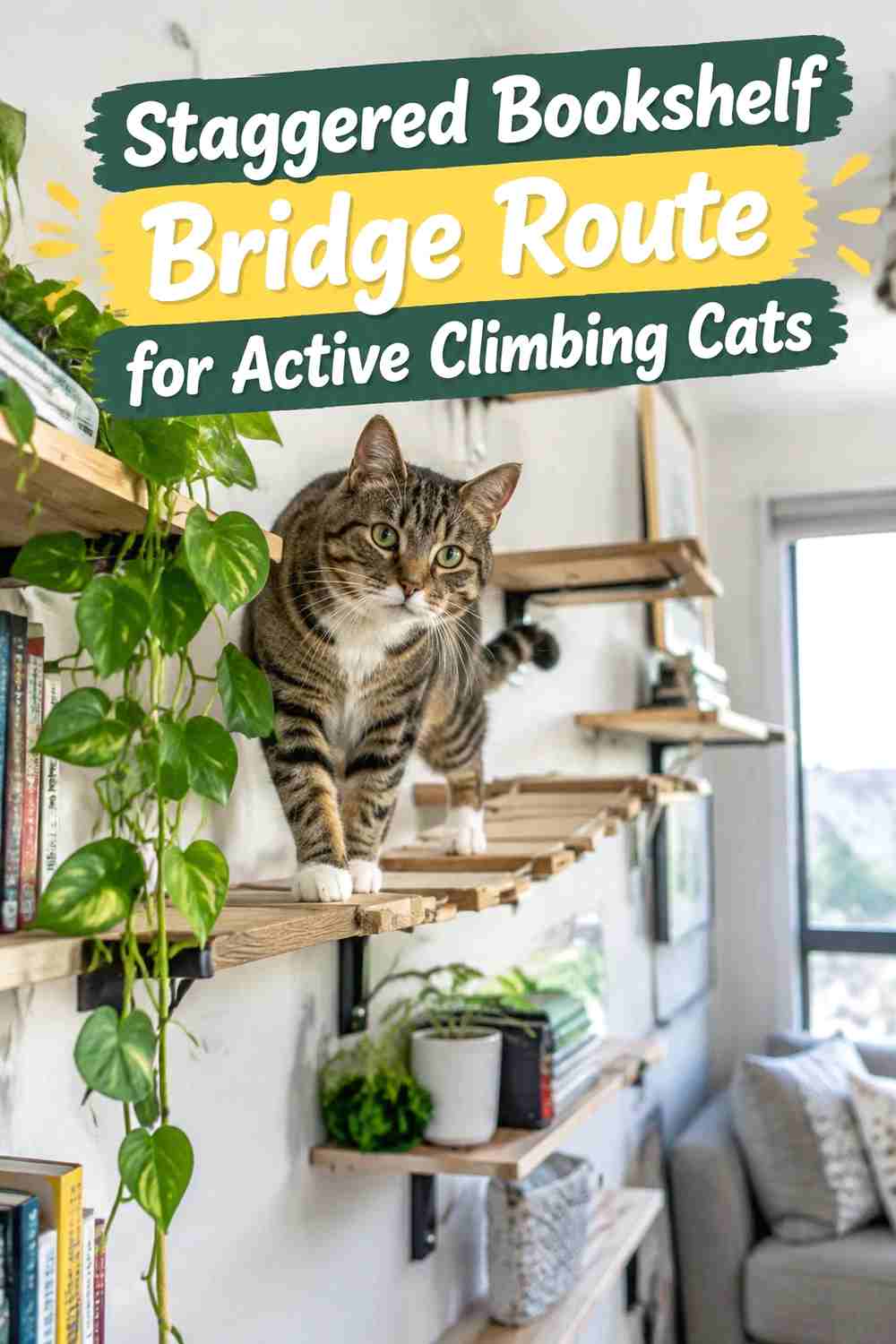
A staggered bridge route gives an active cat several connected levels instead of one straight crossing. Use secure platforms that rise or shift gradually between bookshelves, with each landing large enough for all four paws and a comfortable turn. Arrange the route so your cat can see the next step clearly rather than jumping around blind corners or decorative objects. This setup can create more movement in a room without covering every wall in shelves, but it should still include an easy descent option. Avoid extreme height changes or long gaps simply to make the route more challenging. The goal is usable climbing variety, not an obstacle course that forces risky leaps.
Why It Works
Different levels give confident climbers more choices while still allowing each section to function as a stable resting or turning point.
8. Multi Cat Bookshelf Bridge With Separate Passing Platforms
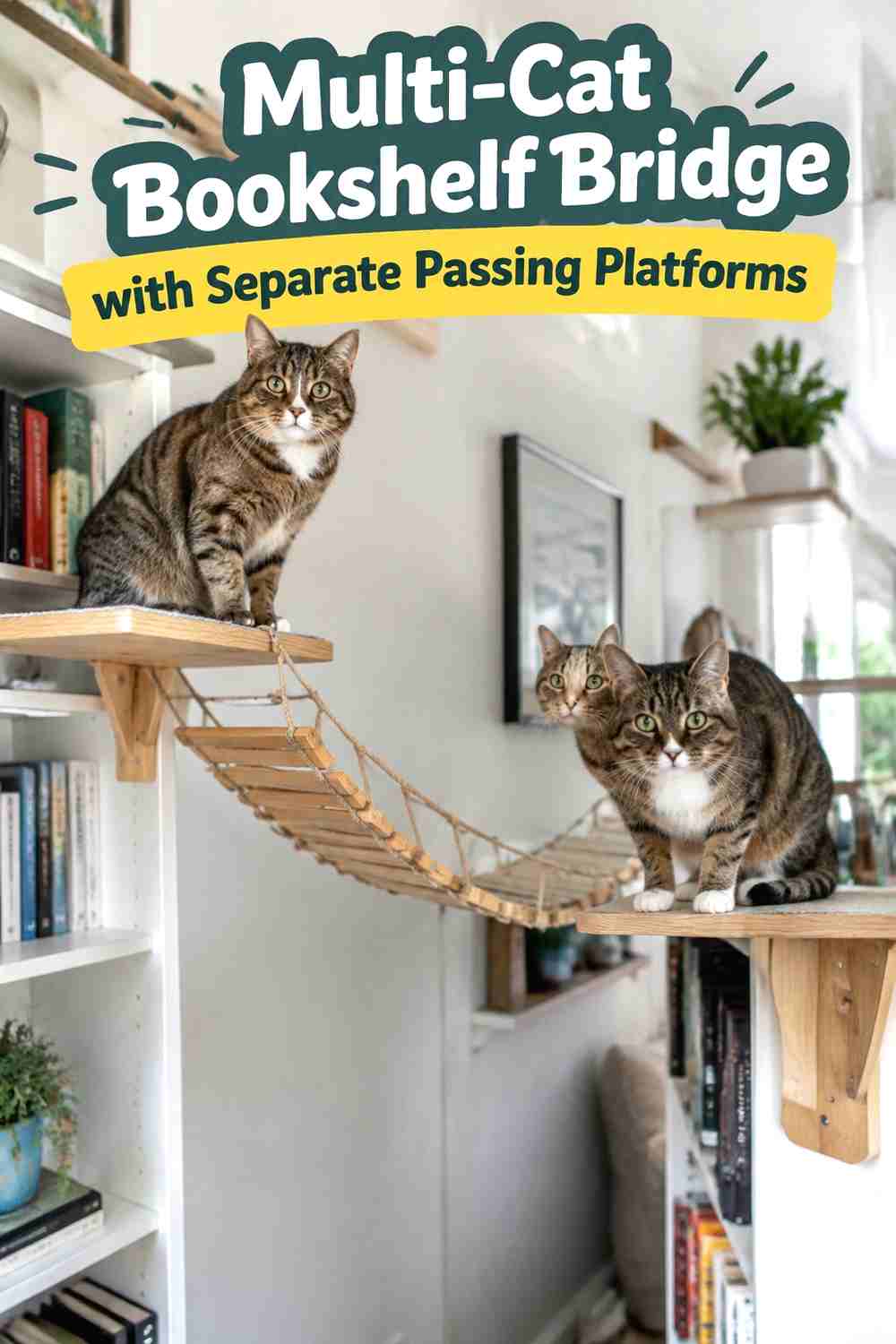
A multi-cat bookshelf bridge needs wider pause points so cats are not forced to squeeze past each other on a narrow walkway. Add separate platforms near both ends and, where practical, a wider midpoint that allows one cat to stop while another continues. More than one access route can also reduce bottlenecks and prevent a confident cat from controlling the only way down. Watch how the cats actually use the bridge; some may share comfortably, while others need more distance or completely separate routes. Keep resting beds and other valuable resources off the narrowest part of the crossing. Every bridge section should remain stable even when two cats move across the structure at the same time.
Setup Notes
Provide multiple destinations rather than making one bridge the only elevated resource in the room. This gives cats more choice and reduces forced sharing.
9. Floating Bookshelf Bridge For Minimalist Cat Rooms

A floating-style bridge can blend into a minimalist room while still giving a cat a practical elevated pathway. Use properly supported shelves or bridge sections with concealed-looking hardware only when the actual mounting remains strong and suitable for the wall. Keep the surfaces visually simple, but add discreet traction so the clean design does not become slippery. One or two generous landing platforms often look better and work better than a long row of tiny ledges. Avoid decorating the cat route with plants, picture frames, or books that reduce usable walking space. This design is most successful when the bridge looks minimal because the layout is uncluttered, not because the cat’s platform is unusually narrow.
Pro Tip
Choose traction in a color close to the shelf finish if you want a cleaner visual look without sacrificing paw grip.
10. Easy Clean Bookshelf Bridge For Long Haired Indoor Cats

An easy-clean bookshelf bridge uses smooth sealed surfaces and removable traction pieces so fur does not collect permanently in seams and rough fabric. Add washable nonslip pads only where the cat actually walks or rests, leaving the surrounding platform simple enough to vacuum or wipe. Long-haired cats can leave noticeable fur along bridge edges and corners, so make sure you can reach the entire structure without moving heavy furniture. Avoid thick shag coverings that trap hair and are difficult to inspect underneath. Regular cleaning is also a good time to check brackets, connections, and landing areas for movement or wear. Keep brushes and other grooming tools stored elsewhere rather than cluttering the bridge route.
Cleaning Notes
Vacuum loose fur first, then remove washable pads for deeper cleaning. Let every fabric surface dry fully before returning it to the elevated walkway.
11. Reading Nook Bookshelf Bridge With Quiet Cat Perches
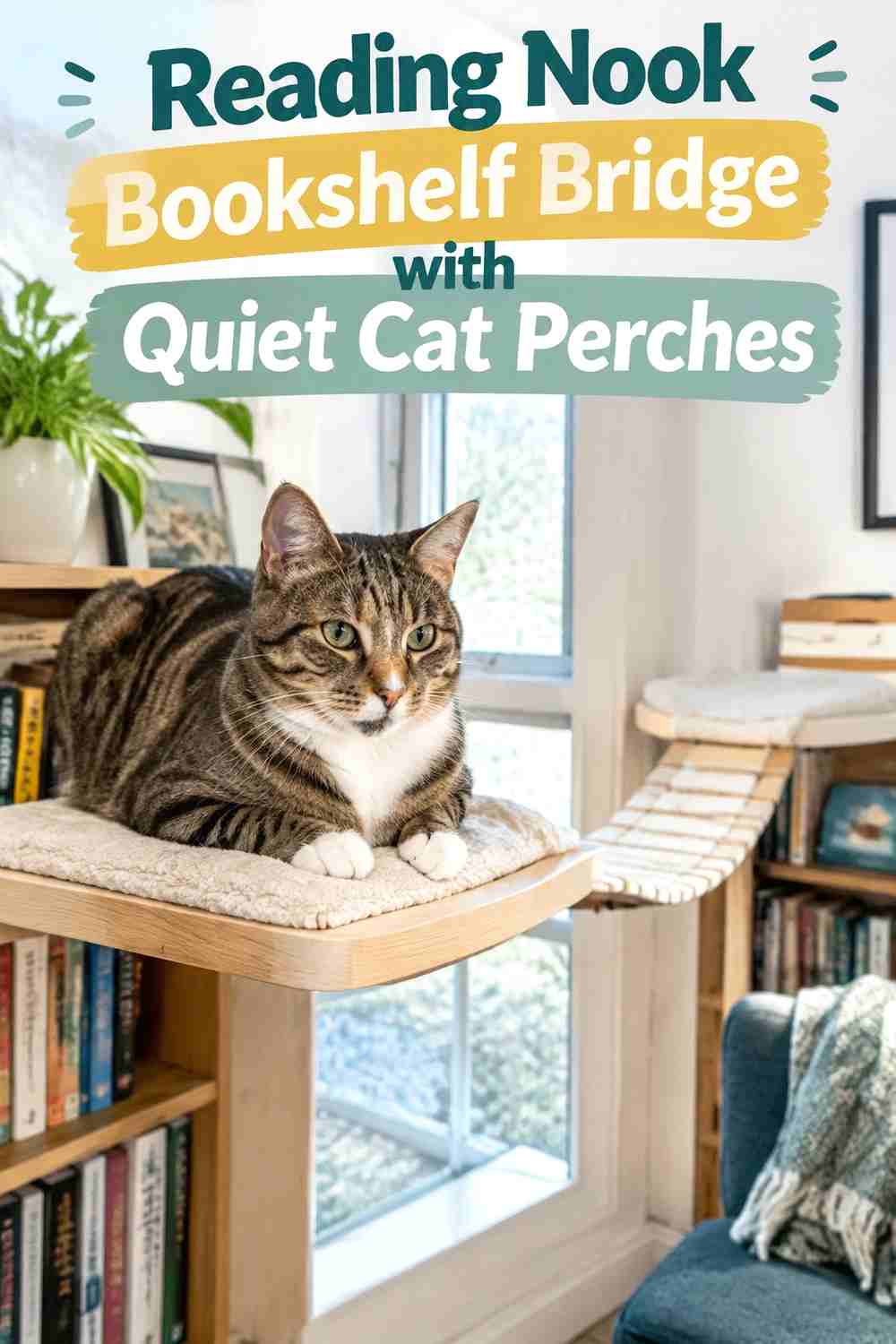
A reading-nook bookshelf bridge combines human book storage with a quieter elevated route for a cat that likes staying nearby without sitting directly on furniture. Connect two secure shelving areas with a stable walkway, then add a wider resting platform above or beside the reading chair. Keep the bridge itself clear of stacked books so your cat does not need to step around unstable objects. A thin washable pad can make the rest perch more comfortable without creating bulky bedding overhead. Position lamps and cords where paws cannot reach them from the bridge. This setup works particularly well when the room remains calm and predictable, giving the cat an observation point without requiring constant interaction.
Best For
This idea may suit cats that prefer quietly sharing a room with people while still keeping some elevated personal space.
12. Rental Friendly Bookshelf Bridge With Removable Cat Walkway
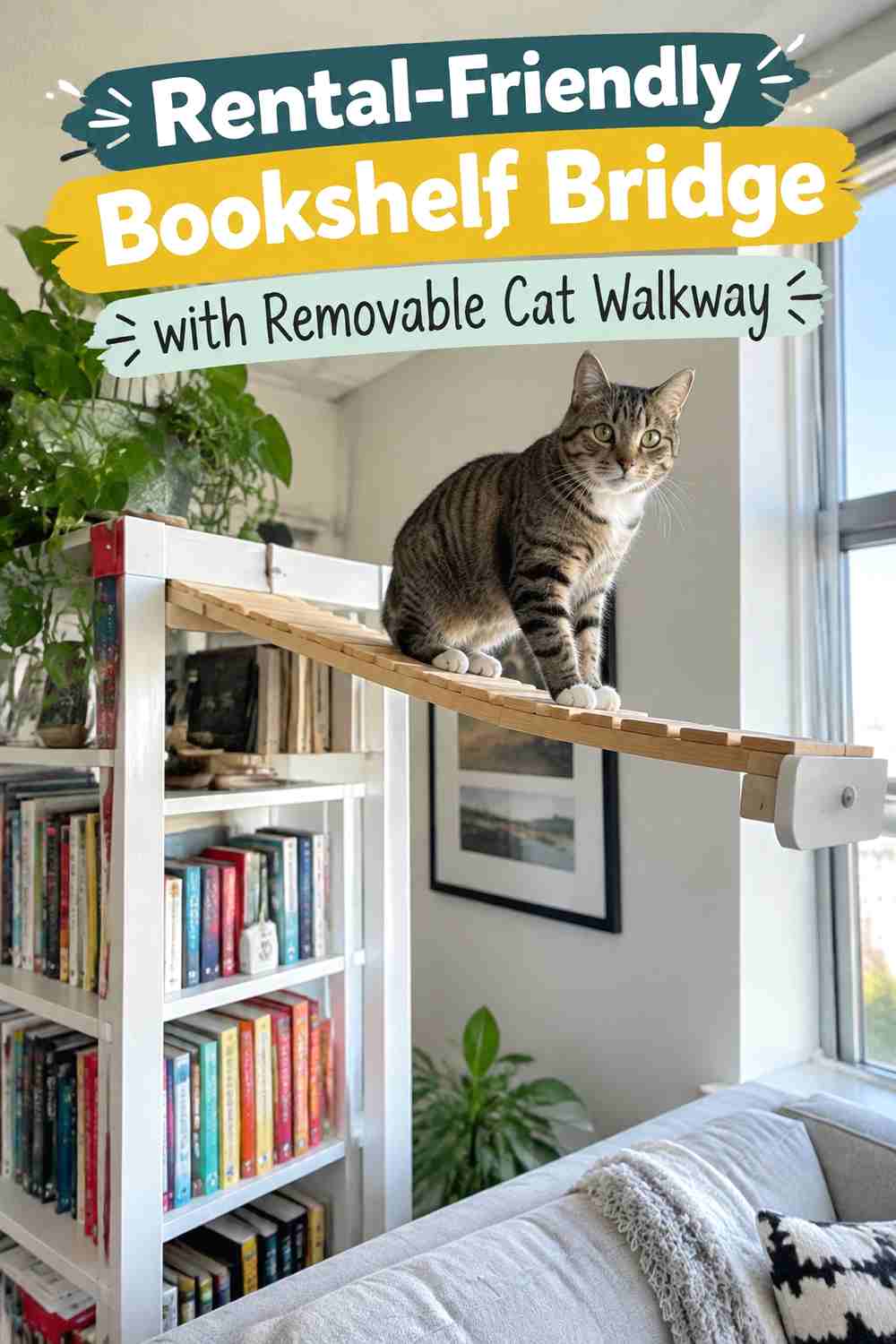
A rental-friendly bridge uses removable, freestanding, or purpose-designed components without depending on improvised adhesive supports. One option is a secure walkway connecting two properly stabilized shelving units, provided the furniture itself is appropriate for the cat’s movement and cannot tip. Another is a removable cat-climbing system specifically designed to mount and release according to its instructions. Do not assume tension, adhesive strips, or loose boards are safe simply because they avoid wall holes. The bridge should still pass the same stability test as a permanent setup. Keep access routes simple and inspect all connections after moving or reassembling the system.
Use & Maintenance
Recheck every removable attachment after relocation. Stop using the bridge immediately if any platform shifts, twists, or separates from its support.
13. Bookshelf Bridge With Hidden Rest Cubby For Shy Cats
You May Also Like




A bookshelf bridge with a nearby rest cubby gives a shy cat the option to move above the room and then retreat into a more sheltered resting spot. Place the cubby beside a wide bridge landing rather than directly in the narrow crossing so the entrance stays easy to access. The hideaway should have stable flooring, good ventilation, and enough interior room for the cat to turn comfortably. Keep the route quiet and avoid positioning the cubby over speakers, busy doorways, or frequently moved furniture. If more than one cat shares the room, provide additional exits or alternative resting spots so another cat cannot easily block access to the hidden space.
Best For
This layout can suit cats that enjoy elevated observation but also prefer a partially enclosed retreat when household activity becomes busy.
How to Choose the Right Idea
Start with your cat’s body size, age, climbing confidence, and preferred height. Active cats may enjoy staggered routes, while senior or hesitant cats often benefit from lower platforms and short transitions. Large cats need more bridge width, deeper landings, and stronger support than small cats.
Next, evaluate the furniture and walls. A cat bridge should never depend on an unstable bookcase, loose board, or stack of books. Anchor furniture where appropriate, use secure supports, provide nonslip surfaces, and keep fragile objects away from landing zones.
For multi-cat homes, consider traffic flow as well as height. Separate passing platforms, multiple exits, and extra resting areas can reduce crowding. Finally, choose a design you can inspect and clean easily so loose hardware, worn traction, and accumulating fur are noticed before they become problems.
Final Thoughts
A cat bookshelf bridge works best when it feels like a real route rather than a decorative ledge. Stable supports, comfortable width, traction, generous landings, and an easy way down should guide the design.
Start with the two elevated areas your cat already uses most often and connect them only if the route feels natural. Additional levels, cubbies, or window perches can come later once you see how confidently your cat uses the basic bridge.
FAQs
1. Can I build a cat bridge between two bookshelves?
Yes, if both supporting structures are stable and the bridge is securely attached or supported. Do not rest a loose board on books or unsecured furniture that can shift when your cat crosses.
2. How wide should a cat bookshelf bridge be?
It should provide enough usable space for your individual cat to walk naturally without balancing at the edge. Large cats and multi-cat routes generally need more width and larger landing platforms.
3. Do cat bridges need traction?
Traction is useful, especially on painted wood, laminate, or other smooth surfaces. Secure low-pile carpet, washable nonslip pads, or another firmly attached material can help paws grip the route.
4. Are bookshelf bridges suitable for senior cats?
They can be if they are kept lower and reached through short, stable steps or platforms. Avoid forcing large jumps, slippery landings, or narrow elevated crossings.
5. How can I make a bookshelf bridge work for multiple cats?
Provide wider passing platforms, more than one access route, and separate resting destinations. Avoid creating one narrow elevated path that another cat can easily block.
CTA
Save your favorite cat bookshelf bridge idea and plan a secure elevated route that gives your cat more comfortable climbing, resting, and observation space.
