Turn a slow indoor day into a more interesting routine with simple games, scent work, puzzles, and search activities your dog can explore at home.
Save This Idea on Pinterest

11 Indoor Enrichment Ideas for Dogs
Save to PinterestBored dogs can benefit from indoor activities that give them something purposeful to sniff, search, solve, lick, retrieve, or investigate. The best setup depends on your dog’s size, play style, patience, food motivation, and how much owner involvement the activity requires.
These 11 ideas range from simple snuffle and search games to interactive hide-and-seek, toy rotation, and a small obstacle course. Most can be adapted for apartments or larger homes, and several use everyday items you may already have. Rotate activities rather than presenting everything at once, and simplify any game if your dog starts losing interest or becoming frustrated.
Quick List
- Easy Indoor Snuffle Mat Enrichment for Bored Dogs
- Rolled Towel Treat Search Game for Bored Indoor Dogs
- Supervised Cardboard Box Treasure Hunt for Bored Dogs
- Simple Muffin Tin Treat Puzzle for Bored Indoor Dogs
- Frozen Lick Mat Activity for Quiet Indoor Dog Enrichment
- Indoor Hide-and-Seek Game for Bored Dogs and Owners
- Rotating Toy Basket Surprise for Bored Indoor Dogs
- Easy Living Room Obstacle Course for Bored Dogs
- Hallway Scent Trail Find-It Game for Bored Dogs
- Name-the-Toy Retrieval Game for Bored Indoor Dogs
- Blanket Toy Dig-and-Search Game for Bored Dogs
1. Easy Indoor Snuffle Mat Enrichment For Bored Dogs
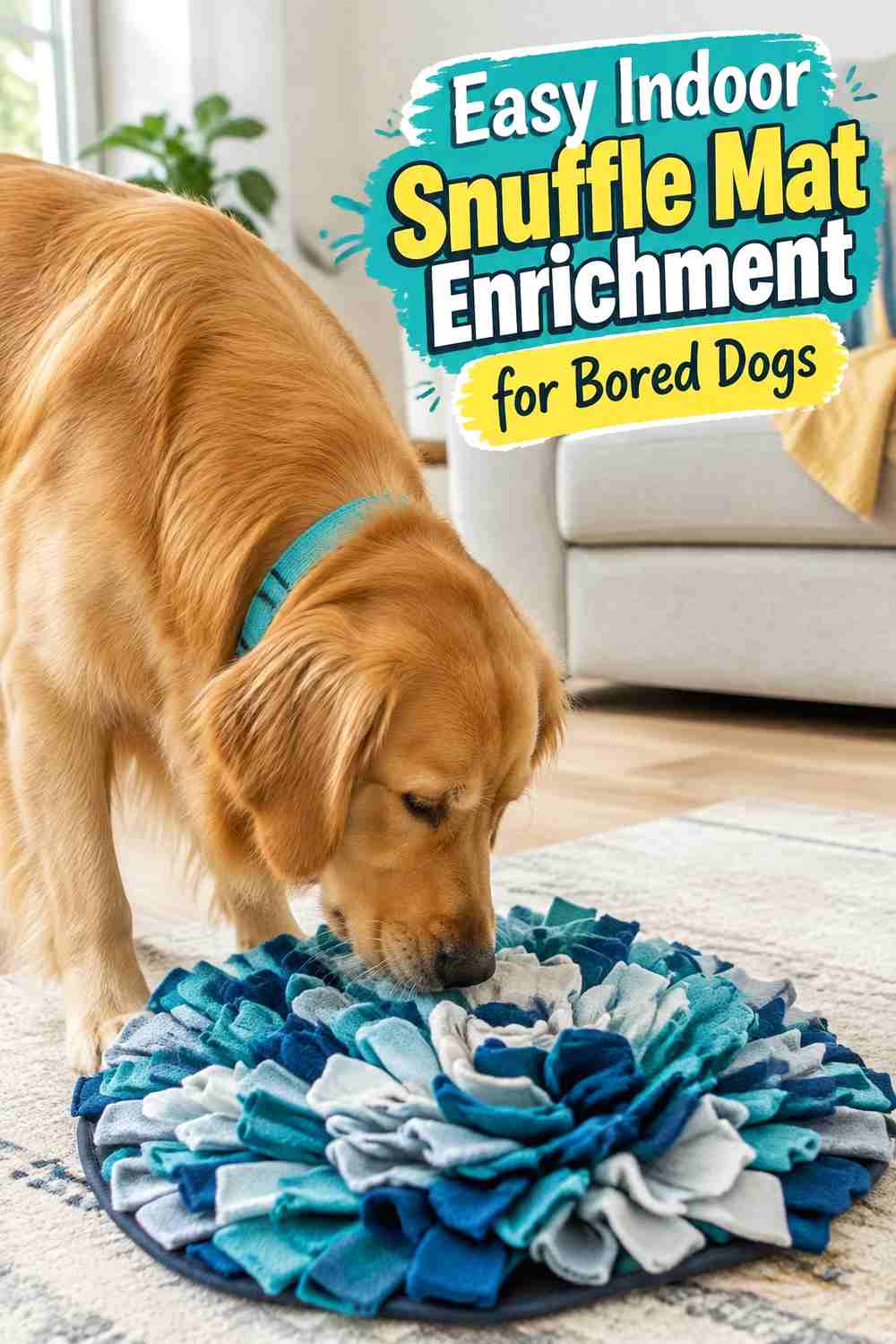
A snuffle mat turns a small amount of your dog’s usual food or suitable treats into a nose-led search activity. Scatter pieces through the fabric folds instead of placing everything on top, then let your dog work through the mat at a comfortable pace.
Start with several easy-to-find pieces so the game is immediately understandable. Once your dog searches confidently, tuck some pieces slightly deeper without making every reward difficult to reach. Place the mat on a non-slip floor away from heavy household traffic. Dogs that chew or pull fabric may need close supervision or a different puzzle style. Shake out crumbs after use and store the mat between sessions so it stays interesting.
Setup Notes
Introduce the mat when your dog is alert but not overly excited. A clear, uncluttered area makes it easier for the dog to focus on searching.
Cleaning Notes
Check the manufacturer’s cleaning instructions and remove food residue regularly, especially if moist treats have been used.
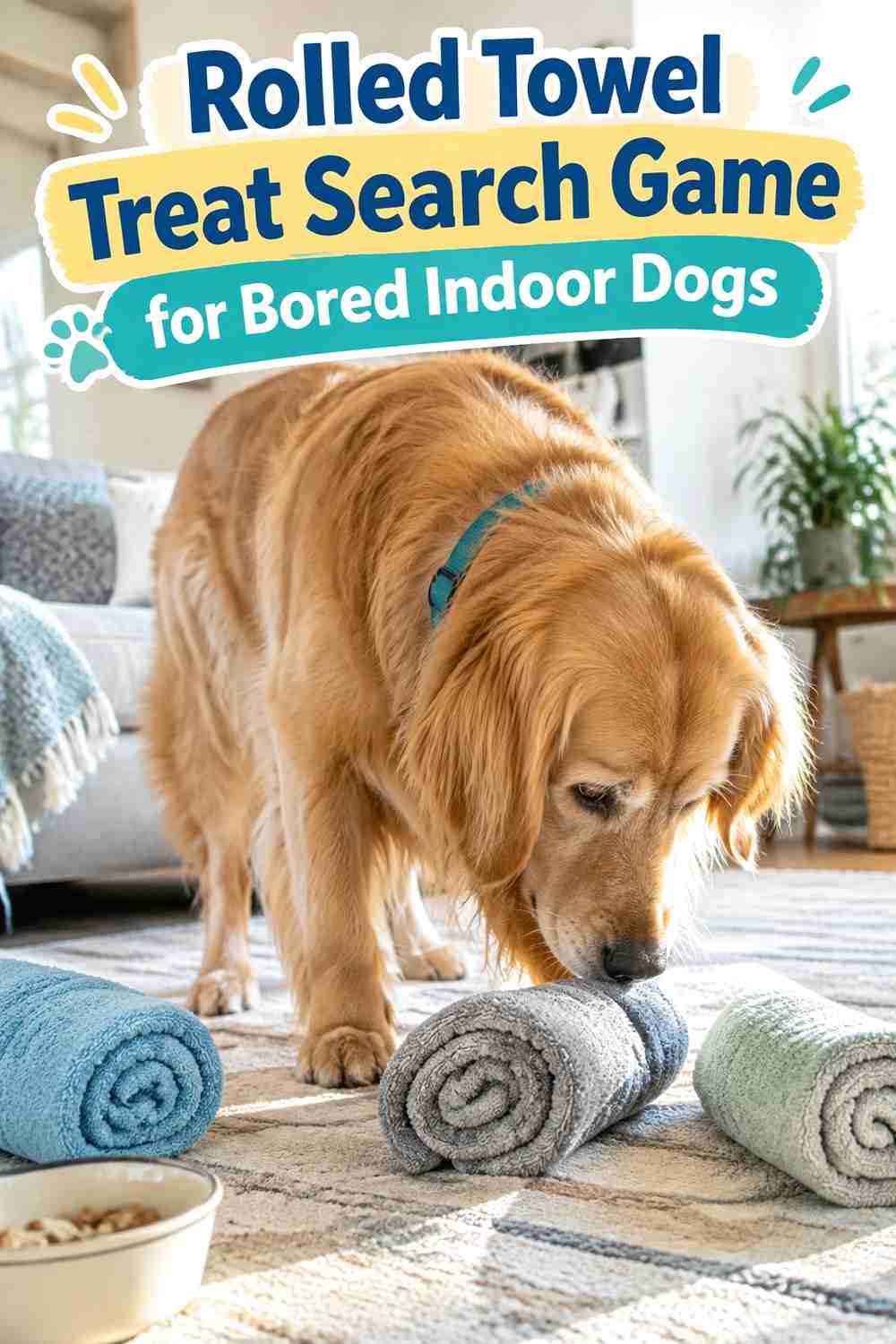
2. Rolled Towel Treat Search Game For Bored Indoor Dogs
You May Also Like



A rolled towel search creates a simple scent puzzle using a clean towel and a few pieces of your dog’s regular food or suitable treats. Lay the towel flat, space the pieces along its length, and loosely roll it so your dog has to sniff and nudge the fabric open.
Keep the first version loose enough that rewards appear quickly. Dogs that understand the game can try a slightly tighter roll or a gentle fold, but the goal is exploration rather than frustration. Use an older towel that you do not mind washing, and place it on a dry floor with good traction. This activity is best supervised because some dogs may switch from unrolling the towel to chewing or tearing it.
Setup Notes
Avoid knots or complicated folds at first. A simple roll gives the dog a clear path from sniffing to finding a reward.
Comfort & Safety
Remove the towel if your dog begins swallowing fabric, pulling off threads, or guarding the setup instead of calmly searching.
3. Supervised Cardboard Box Treasure Hunt For Bored Dogs

A cardboard box treasure hunt gives a curious dog a safe place to sniff, investigate, and uncover hidden rewards. Use a clean, shallow box and loosely arrange crumpled plain paper, a familiar toy, and a few pieces of suitable food so the dog can search through the layers.
For a first attempt, leave several rewards visible near the top. Later, hide them farther beneath loose paper or add a second open box nearby. Remove tape, staples, labels, plastic packing material, and anything sharp before setting up the game. This activity works especially well for dogs that enjoy using their nose and paws, but it should remain supervised because some dogs prefer shredding or eating cardboard instead of searching.
Setup Notes
Set the box on an easy-clean floor and keep the contents loose rather than tightly packed.
Use & Maintenance
Discard soggy, heavily chewed, or damaged cardboard after the session instead of storing it for repeated use.
4. Simple Muffin Tin Treat Puzzle For Bored Indoor Dogs

A muffin tin can become a straightforward indoor puzzle when a few wells contain suitable treats and others are lightly covered with dog-safe toys too large for your dog to swallow. Your dog uses its nose and paws to investigate the tin and work out how to reach each reward.
Begin with most rewards uncovered so the puzzle is easy to understand. Once your dog is comfortable, cover only a few wells rather than making the entire tray difficult. Place the tin on a rug or non-slip mat to reduce sliding and noise. Choose sturdy cover toys that match your dog’s size and chewing habits. If the dog becomes focused on biting the metal tray or carrying it away, switch to a purpose-made puzzle instead.
Setup Notes
A heavy, stable muffin tin is easier to use than a lightweight tray that skids across the floor.
Comfort & Safety
Supervise closely and avoid small balls, removable parts, or anything that could fit fully inside your dog’s mouth.
5. Frozen Lick Mat Activity For Quiet Indoor Dog Enrichment
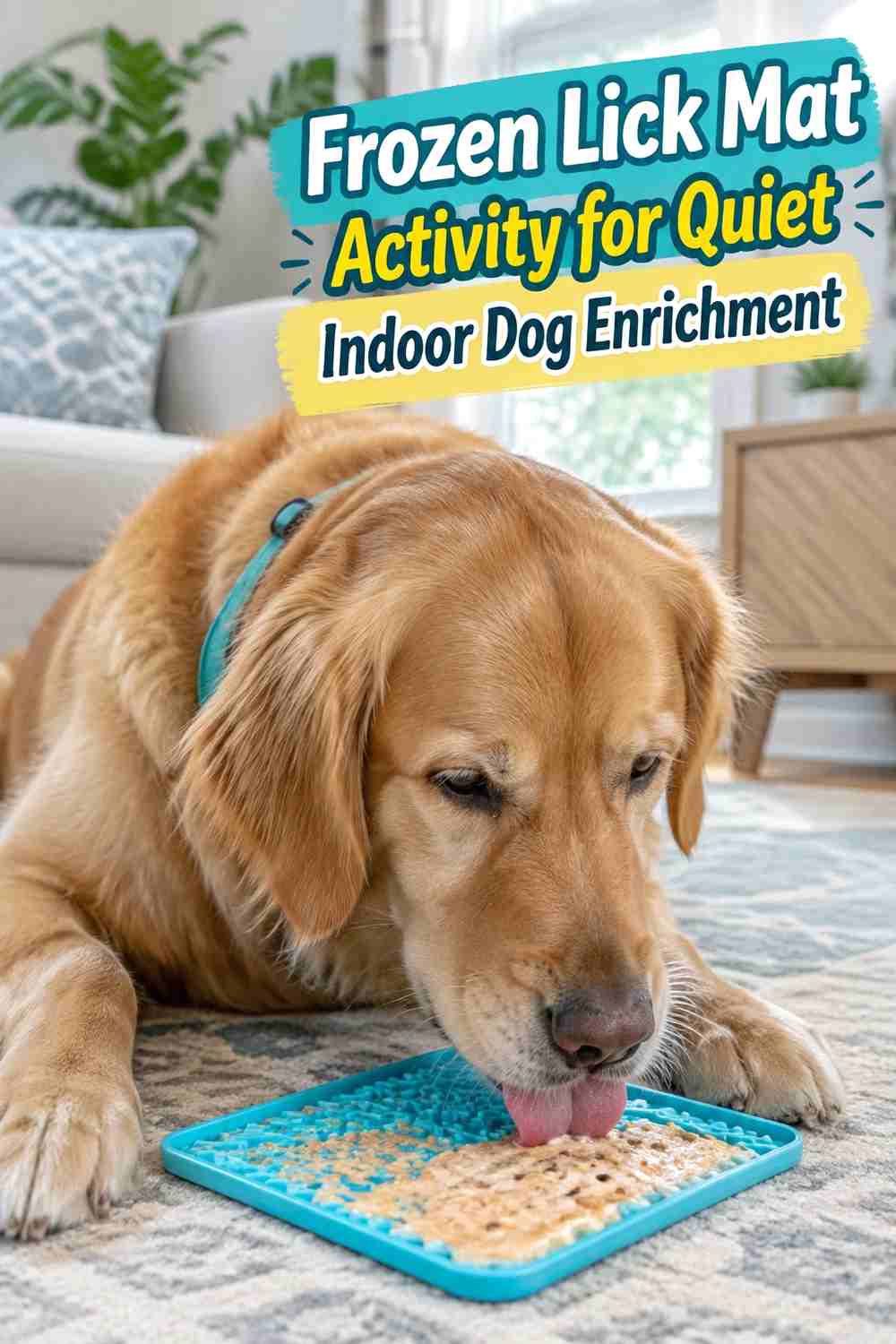
A frozen lick mat provides a slower, quieter indoor activity for dogs that enjoy licking food from textured surfaces. Spread a thin layer of a dog-appropriate food your pet already tolerates across the mat, freeze it, and offer it on a washable floor where the mat can stay flat.
A thinner layer usually keeps the setup manageable and simplifies cleanup. You can also use the mat unfrozen when introducing it so your dog understands how to interact with the surface. This idea suits low-key enrichment periods when you want something less active than chasing or searching. It is not a good unsupervised option for dogs that chew silicone or try to pull pieces off the mat.
Use & Maintenance
Rinse the mat promptly after use so food does not dry inside the textured grooves.
Cleaning Notes
Use a mat designed for pets and follow its cleaning instructions, checking regularly for cracks, torn edges, or bite damage.
6. Indoor Hide And Seek Game For Bored Dogs And Owners

Indoor hide-and-seek turns familiar rooms into an interactive search game involving both dog and owner. Ask your dog to remain with another household member, or briefly step out of sight, then hide somewhere easy and call the dog once to begin the search.
Start with obvious locations such as partly behind a doorway or beside a sofa. As your dog understands the game, choose slightly less visible spots while keeping the route safe and accessible. Praise the dog when it finds you, then reset for another short round. Avoid hiding where your dog must jump over furniture, squeeze through clutter, or race on slippery floors. Ending after a few successful searches can keep the activity fresh.
Best For
This game works well for dogs that enjoy social interaction and already respond comfortably to their name or a familiar recall cue.
Pro Tip
Change rooms between rounds rather than making each hiding place dramatically harder.
7. Rotating Toy Basket Surprise For Bored Indoor Dogs
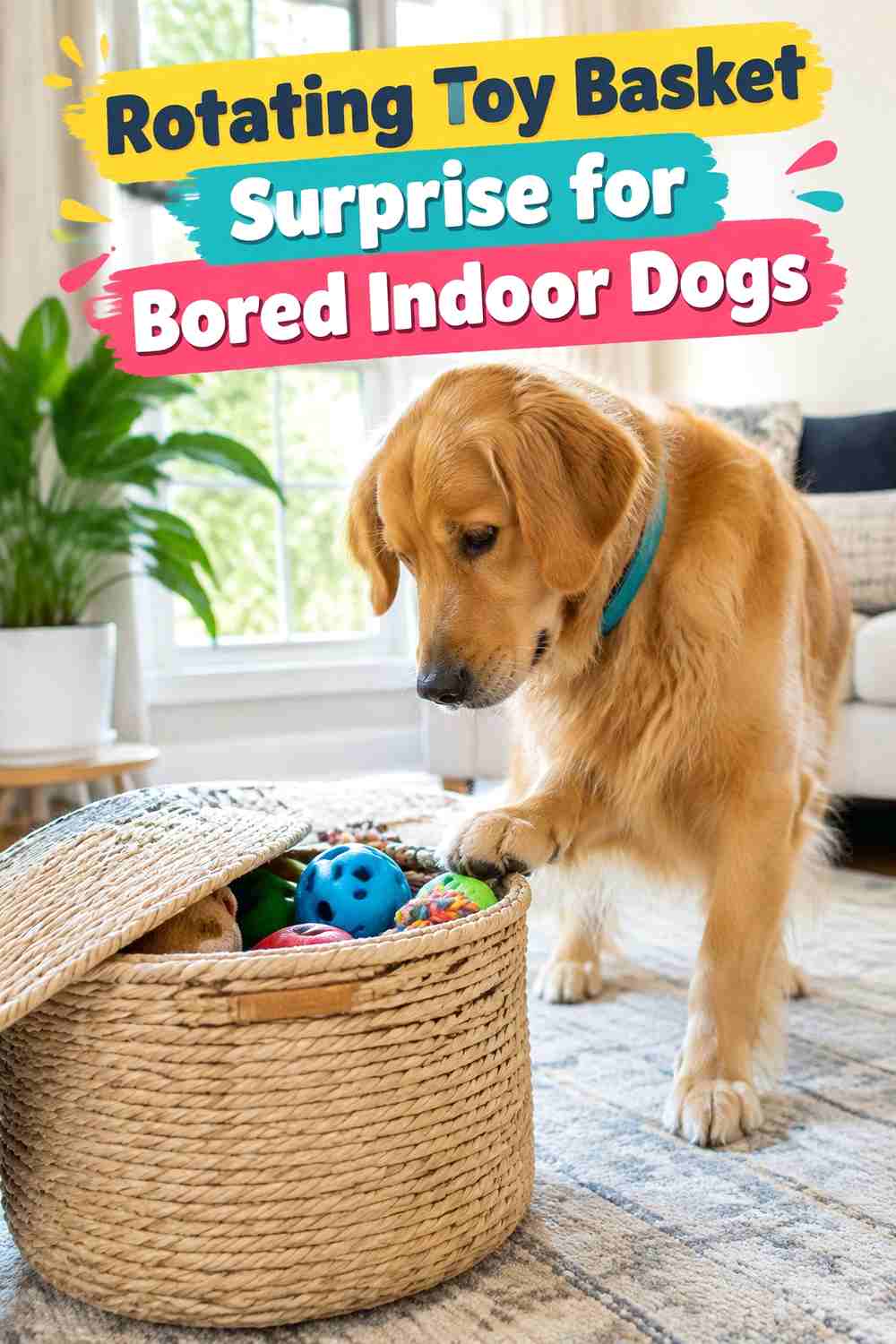
A rotating toy basket makes familiar toys feel less predictable by keeping only a small selection available at one time. Instead of leaving every toy on the floor all week, place several safe favorites in storage and bring out a different mix for each rotation.
Include different play styles when possible, such as a soft toy, a sturdy chew-compatible toy, and an interactive item. Watch which toys your dog chooses instead of assuming every option is equally interesting. Rotation can also make cleanup easier because fewer toys are scattered around the room. Inspect each item before returning it to the basket, particularly toys with seams, squeakers, rope ends, or worn surfaces. Retire damaged items rather than putting them back into circulation.
Use & Maintenance
Rotate based on your dog’s interest rather than a rigid schedule. Some favorites may remain appealing longer than others.
Pro Tip
Store the reserve basket out of reach so the reappearance of those toys feels noticeably different from everyday access.
8. Easy Living Room Obstacle Course For Bored Dogs

A simple living room obstacle course gives dogs a new way to move through familiar indoor space without requiring elaborate equipment. Arrange safe, stable objects so your dog can walk around a chair, step across a flat mat, pass between two cushions, or follow you around a wide turn.
Keep everything low and easy to navigate. The purpose is controlled exploration, not high jumping or fast agility. Guide your dog slowly with your voice, a toy, or a suitable reward, and remove any section that causes hesitation. Clear nearby lamps, cords, unstable furniture, and breakable objects before starting. Dogs with limited mobility or uncertain footing may do better with a simplified route that focuses on walking around objects rather than stepping over them.
Space & Placement
Choose one open section of the room and leave a clear exit path so the dog never feels boxed into the course.
Comfort & Safety
Use non-slip surfaces and avoid unstable stools, sharp edges, raised jumps, or anything that could collapse if bumped.
9. Hallway Scent Trail Find It Game For Bored Dogs

A hallway scent trail creates a focused nose-work game by placing a short sequence of suitable food rewards along an easy indoor route. Begin with pieces close enough together that your dog can follow the trail naturally, then place a slightly more interesting find at the end.
Let the dog work with its nose instead of pointing out every piece. Once the idea is familiar, widen the gaps or add one gentle turn into another room. Keep the trail on a clean floor and avoid placing food beneath furniture where the dog could become stuck or knock something over. This game can be adjusted easily for available space, making it useful when outdoor plans are limited but your dog still wants something purposeful to investigate.
Setup Notes
Start the trail where your dog can immediately see or smell the first reward, then make later sections less obvious.
Best For
Dogs that enjoy sniffing and searching often need very little equipment for this activity beyond a clear indoor route.
10. Name The Toy Retrieval Game For Bored Indoor Dogs

A name-the-toy retrieval game turns ordinary toys into a more thoughtful indoor activity. Choose one familiar toy, use the same simple name for it each time, and encourage your dog to find or bring that item from a small group.
Begin with only two clearly different toys so the choice is manageable. Ask for the familiar item, then reward or praise the correct interaction. If your dog guesses repeatedly, simplify the game rather than repeating the cue many times. Some dogs will learn individual toy names readily, while others may enjoy the search without making consistent distinctions. Either response can still provide useful interaction. Keep sessions brief and use toys your dog already handles safely.
Pet Type & Life Stage
This idea can suit adult dogs and older puppies that already enjoy retrieving, carrying, or choosing between toys.
Pro Tip
Use toys that differ in shape and texture at first; very similar items can make the early game unnecessarily confusing.
11. Blanket Toy Dig And Search Game For Bored Dogs
You May Also Like




A blanket dig-and-search game gives dogs a soft, supervised outlet for nosing, pawing, and uncovering a hidden toy. Spread a sturdy blanket on the floor, place a favorite toy beneath a loose fold, and leave part of the toy visible so your dog can work out where it is.
After a few successful finds, hide the toy more completely or use two loose folds in different areas. Avoid tightly wrapping the toy or creating knots that trap paws or claws. This game works best with dogs that enjoy burrowing or digging motions without immediately shredding fabric. Choose a washable blanket with no loose fringe, and stop the activity if your dog begins tearing or swallowing material rather than searching.
Comfort & Safety
Keep the blanket flat enough that the dog can move away easily and supervise throughout the activity.
Cleaning Notes
Shake out hair and crumbs after play, then wash the blanket as needed before storing it with other enrichment supplies.
How to Choose the Right Idea
Match indoor enrichment to the way your dog naturally likes to interact. A dog that constantly sniffs outdoors may enjoy the snuffle mat, scent trail, or cardboard treasure hunt, while a dog that seeks social attention may prefer hide-and-seek or toy retrieval.
Also consider energy level, size, age, chewing habits, available floor space, and how much supervision you can provide. Food-based puzzles need easy cleanup and should fit naturally into your dog’s normal feeding routine rather than becoming an endless source of extras. Dogs that chew fabric or cardboard may need sturdier alternatives.
Start with an easy version of any activity. If your dog walks away, becomes frustrated, or starts destroying the setup, simplify it or choose a different enrichment style. Rotating two or three successful ideas is usually more practical than keeping every activity available all the time.
Final Thoughts
Indoor enrichment does not need to involve complicated equipment. A familiar towel, a few rotated toys, a simple scent search, or a short game with you can make an indoor routine more varied.
Choose one idea that matches your dog’s usual interests, introduce it at an easy level, and watch how your dog responds. The most useful enrichment is something your dog understands, enjoys, and can use safely in your home.
FAQs
1. How often should I change my dog’s indoor enrichment activities?
Change or rotate activities when your dog begins losing interest rather than following a fixed schedule. Keeping several options in reserve can make familiar games feel fresh again.
2. What if my dog does not understand a puzzle right away?
Make the first version much easier. Leave rewards partly visible, loosen folds, reduce the number of choices, or demonstrate the starting point without solving the entire activity for your dog.
3. Can indoor enrichment work in a small apartment?
Yes. Compact activities such as snuffle mats, rolled towels, toy retrieval, lick mats, and short scent trails require little floor space and can be packed away after use.
4. Are homemade enrichment activities safe for dogs that chew everything?
Some homemade ideas may not suit strong chewers. Fabric, cardboard, and household-object games require supervision, and a sturdy purpose-made alternative may be more appropriate for dogs that immediately destroy materials.
5. How do I know when my dog is finished with an enrichment activity?
Watch for walking away, repeatedly looking elsewhere, abandoning the search, or changing from purposeful play to destructive chewing. Ending while the dog is still comfortable can make future sessions easier to restart.
CTA
Save these indoor enrichment ideas and rotate your dog’s favorites whenever you need a practical way to make time at home more interesting.
