Turn an ordinary towel into 11 easy dog enrichment games with treat searches, gentle unrolling, scent hunts, and adjustable indoor challenges. Towel roll dog enrichment gives dogs a simple way to sniff, search, nudge, and problem-solve using an item most homes already have. These ideas range from loose beginner rolls to layered searches that require more persistence and nose work. The best setup depends on how your dog approaches fabric, food, and puzzles. Keep early attempts easy, use clean towels without loose threads, and supervise each activity so a search game does not turn into fabric chewing or swallowing.
Save This Idea on Pinterest

11 Towel Roll Dog Enrichment Ideas
Save to PinterestQuick List
- Loose Towel Roll Treat Search for Beginner Dogs
- Accordion-Fold Towel Sniffing Puzzle for Indoor Dogs
- Towel Burrito Unrolling Treat Game for Curious Dogs
- Double-Layer Towel Roll Puzzle for Food-Motivated Dogs
- Twisted Towel Treat Trail for Nose-Driven Dogs
- Towel Roll Tunnel Treat Puzzle for Medium Dogs
- Towel Roll Treat Pockets for Small-Space Dog Enrichment
- Crisscross Towel Roll Search Game for Playful Dogs
- Long Towel Treat Spiral Puzzle for Patient Dogs
- Towel Roll Basket Search for Rainy-Day Dogs
- Multi-Roll Towel Scent Hunt for Experienced Dogs
1. Loose Towel Roll Treat Search For Beginner Dogs

A loose towel roll is one of the simplest ways to introduce a dog to fabric-based enrichment. Lay a clean towel flat, place several treats in a line across it, and roll the towel loosely so rewards appear at different points as your dog nudges it open. Leave the first edge slightly unrolled so the scent and goal are obvious. Dogs can use their nose or paws to move the fabric without needing to understand a complicated puzzle. If your dog loses interest, make the roll looser rather than adding more treats. Keep the activity on the floor, and remove the towel once all rewards are found if your dog tends to chew fabric.
Setup Notes
A bath or hand towel can work depending on your dog’s size. Avoid towels with frayed edges, decorative tassels, or loose threads.
Best For
This beginner version suits dogs that are new to homemade enrichment or become frustrated when food is hidden too deeply.
2. Accordion Fold Towel Sniffing Puzzle For Indoor Dogs
You May Also Like


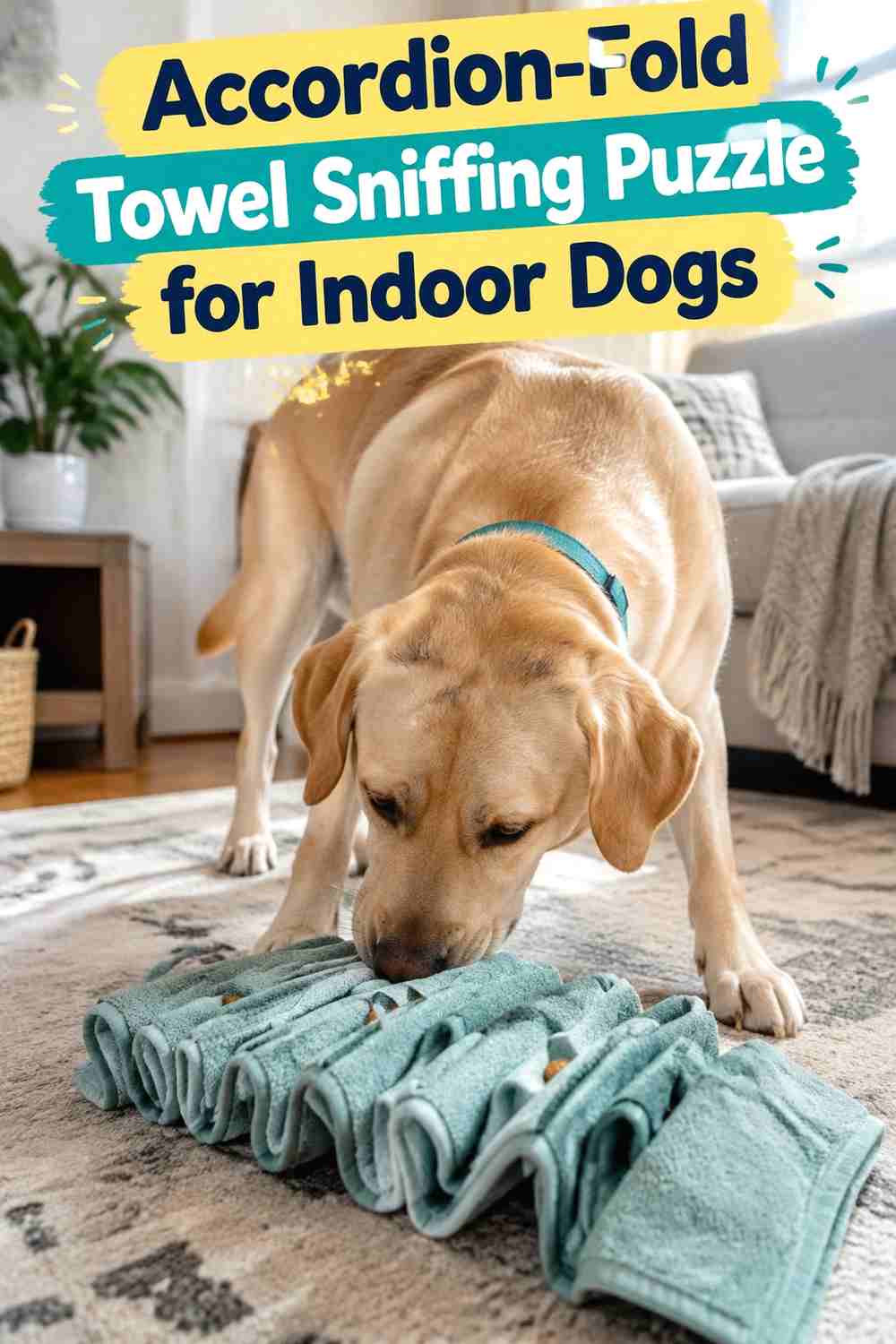
Instead of rolling the towel into one cylinder, fold it back and forth like an accordion and place treats between selected layers. The shallow folds create several scent pockets that an indoor dog can investigate without moving far across the room. Start with broad, loose folds and leave a few treats partly visible. Once your dog understands the setup, make the folds slightly narrower or hide rewards in fewer sections so sniffing becomes more important. Place the towel on a non-slip rug or mat if energetic pawing makes it slide. This puzzle is easy to reset between rounds, but it should stay a supervised activity for dogs that like grabbing and shaking fabric.
Why It Works
The alternating folds create multiple search points while allowing the dog to open the puzzle gradually instead of tackling one tight roll.
Cleaning Notes
Shake out crumbs after each session and wash the towel regularly, especially when soft or oily treats leave residue.
3. Towel Burrito Unrolling Treat Game For Curious Dogs

The towel burrito game creates a longer unrolling challenge by placing treats at intervals from one end of the towel to the other. Spread the towel flat, add a few rewards across its length, and roll from one end into a loose cylinder. Set it down with the easiest treat near the exposed edge so your dog discovers what happens when the roll moves. Curious dogs often learn to push the cylinder forward with the nose and follow the newly exposed sections. Keep the roll loose enough that it opens with gentle effort. If your dog simply picks up the entire towel, flatten the setup slightly or hold the far edge briefly while the first section is explored.
Pro Tip
Space rewards unevenly so your dog needs to keep sniffing instead of assuming every turn of the towel contains food.
Comfort & Safety
Avoid tightly securing the roll with bands, string, clips, or ties. The towel should open freely without added fasteners.
4. Double Layer Towel Roll Puzzle For Food Motivated Dogs
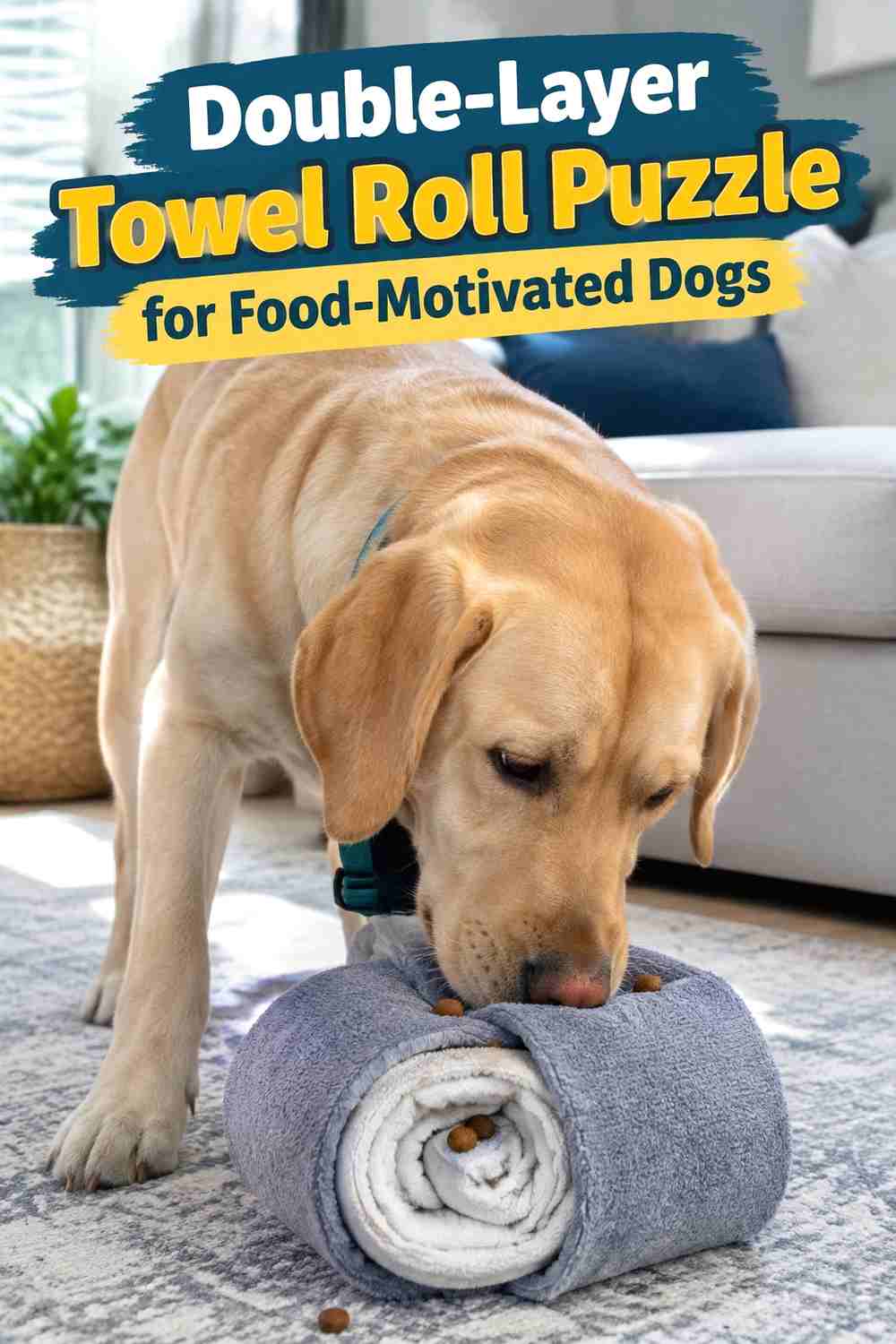
A double-layer towel roll adds difficulty by combining two clean towels into one search. Lay the first towel flat, scatter a few treats across it, place a second towel on top, and add several more rewards before loosely rolling both layers together. A food-motivated dog must investigate the outer roll and then separate or shift the inner layers to reach everything. Introduce this only after your dog handles a single towel comfortably, because two layers can be noticeably harder to move. Keep the towels lightly rolled rather than compressed into a tight cylinder. If your dog becomes frantic, separate the layers and return to one towel for a simpler search.
Best For
This version works well for dogs that already understand unrolling games and stay persistent without aggressively tearing the fabric.
Use & Maintenance
Count the treats before starting so you know when the search is complete, then shake out and store both towels dry.
5. Twisted Towel Treat Trail For Nose Driven Dogs
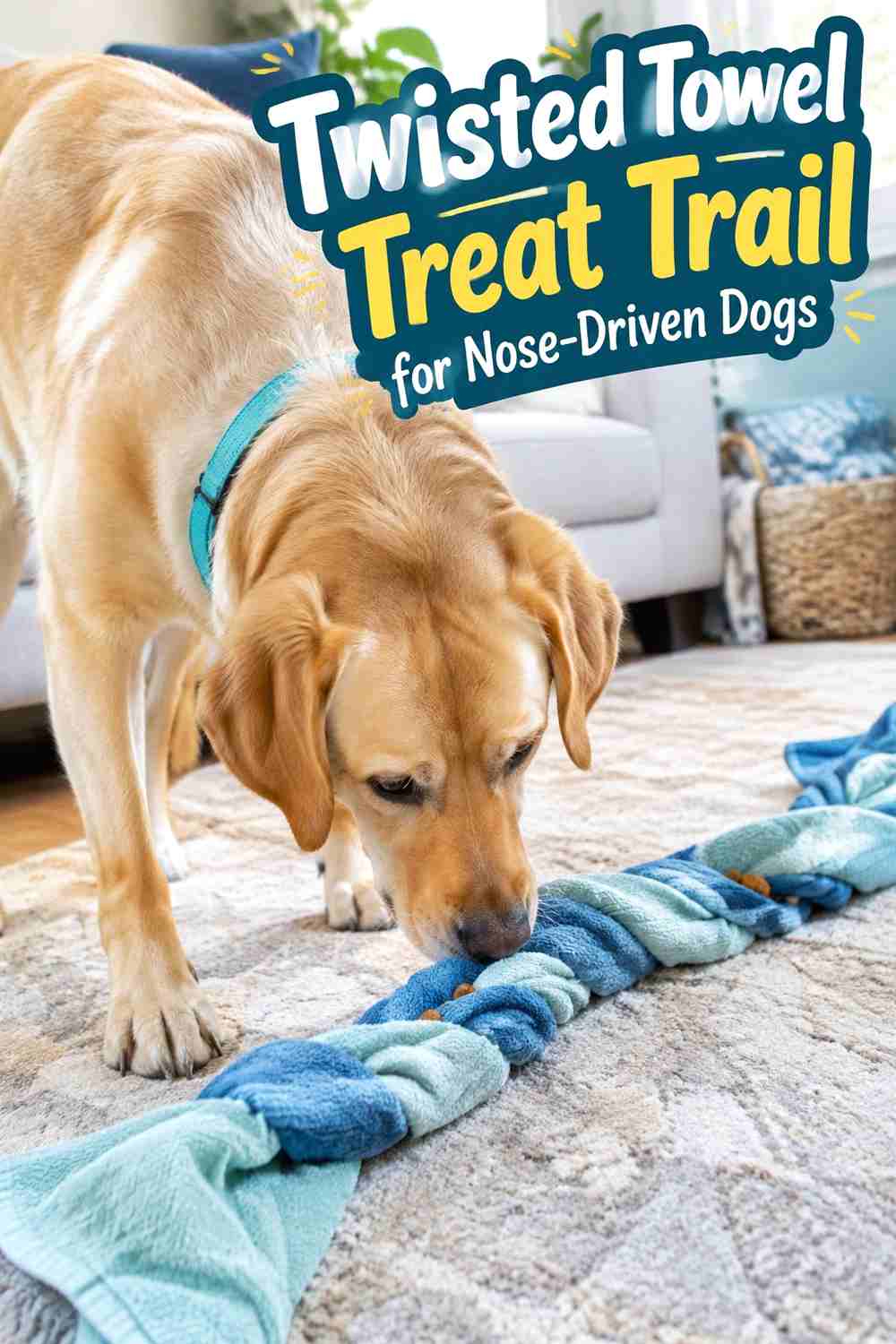
A twisted towel creates a winding treat trail with shallow creases that encourage focused sniffing. Lay a long towel on the floor, scatter treats along its center, then gently twist sections in alternating directions without tying knots. The result should look like a loose fabric rope with plenty of accessible folds. Place one reward near the starting end so your dog can follow the scent along the towel. For a harder version, leave some twisted sections empty and hide treats only in selected creases. Nose-driven dogs may spend more time checking each section than they would with a standard roll. Stop the activity if twisting encourages your dog to tug or shake the towel instead of searching.
Setup Notes
Keep every twist loose enough to separate with a nose or paw. Hard knots can make food unnecessarily difficult to reach.
Space & Placement
A hallway or clear strip of floor works well because the towel can stay extended instead of bunching around furniture.
6. Towel Roll Tunnel Treat Puzzle For Medium Dogs
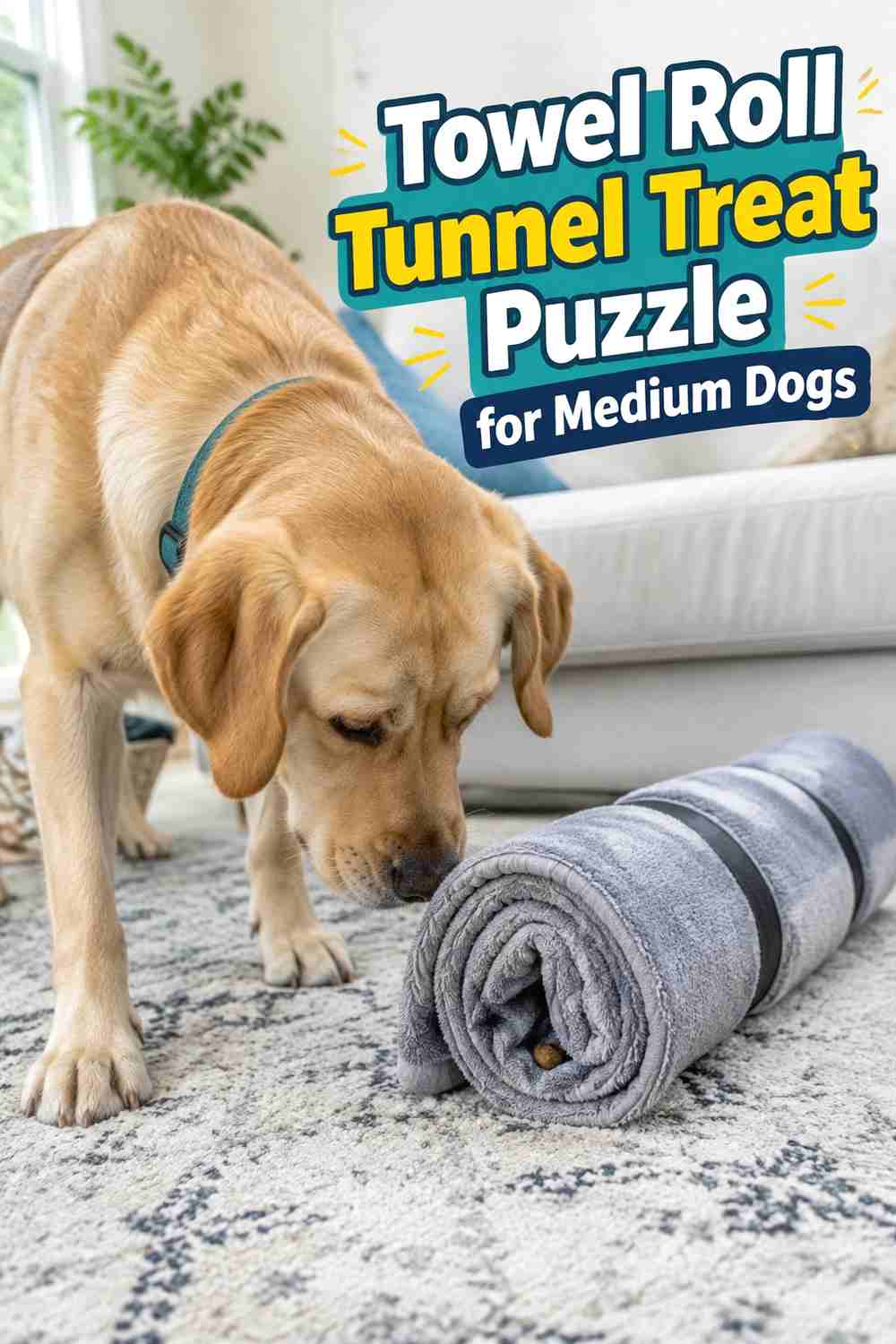
Create a low towel tunnel by rolling both long edges of a bath towel inward while leaving a narrow open channel through the center. Place treats at several points inside that channel so your dog must sniff along the gap and nudge the rolled sides apart to reach them. Begin with a wide center opening where the rewards are easy to see. As your dog becomes familiar with the game, roll the sides slightly farther inward to narrow the search path. Medium dogs can often work comfortably over a full-size bath towel without the setup feeling cramped. Keep the rolls soft and flexible, and reset them if enthusiastic pawing bunches the towel into a tight pile.
Why It Works
The open center gives the dog a clear starting route while the rolled edges create gentle barriers that can be pushed aside.
Pro Tip
Alternate visible and hidden rewards along the channel to help beginners continue moving from one section to the next.
7. Towel Roll Treat Pockets For Small Space Dog Enrichment
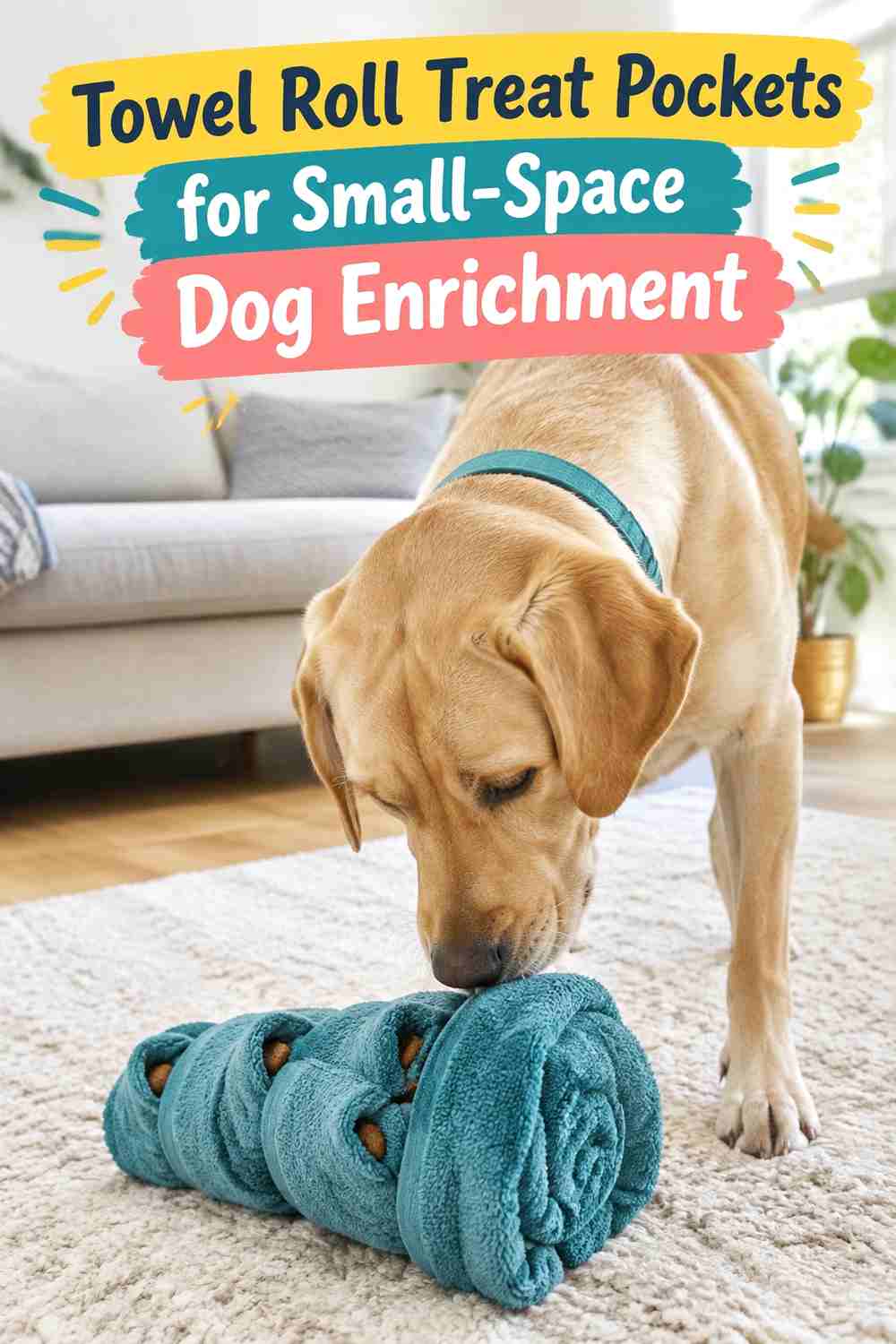
Towel roll treat pockets create several compact hiding spots without requiring much floor space. Roll a towel a few inches, place a treat along the new fold, roll again, and repeat so rewards sit between separate layers instead of along one continuous line. Set the finished roll beside a wall or on a small washable mat where your dog can work from one position. The layered pockets encourage sniffing and careful nudging rather than chasing a puzzle across the room. Make the first pockets shallow and easy to open. For dogs that already understand the activity, leave some layers empty. Unroll the towel completely afterward to check for crumbs before folding it away.
Best For
This setup can suit apartments, compact rooms, or dogs that prefer stationary food searches over rolling objects around the floor.
Cleaning Notes
Choose a machine-washable towel and avoid damp treats if you want the fabric to stay easier to clean between sessions.
8. Crisscross Towel Roll Search Game For Playful Dogs

Two loosely rolled towels arranged in a crisscross shape create four directions for a playful dog to investigate. Hide treats at several points inside each roll, then overlap the towels lightly at their centers without tying them together. Place an easy reward near one exposed end so your dog gets a clear starting point. As the rolls move, different sections open and change position, making the setup less predictable than a straight towel puzzle. Dogs that enjoy pawing may shift the entire arrangement while searching, so use an open floor area away from fragile objects. If the crossed center becomes too difficult, separate the towels and let your dog finish each roll independently.
Space & Placement
Give your dog enough room to approach the cross from several sides. A rug can help keep both rolls from sliding too quickly.
Comfort & Safety
Supervise closely if your dog enjoys grabbing fabric, because two moving towels can encourage tugging instead of deliberate searching.
9. Long Towel Treat Spiral Puzzle For Patient Dogs
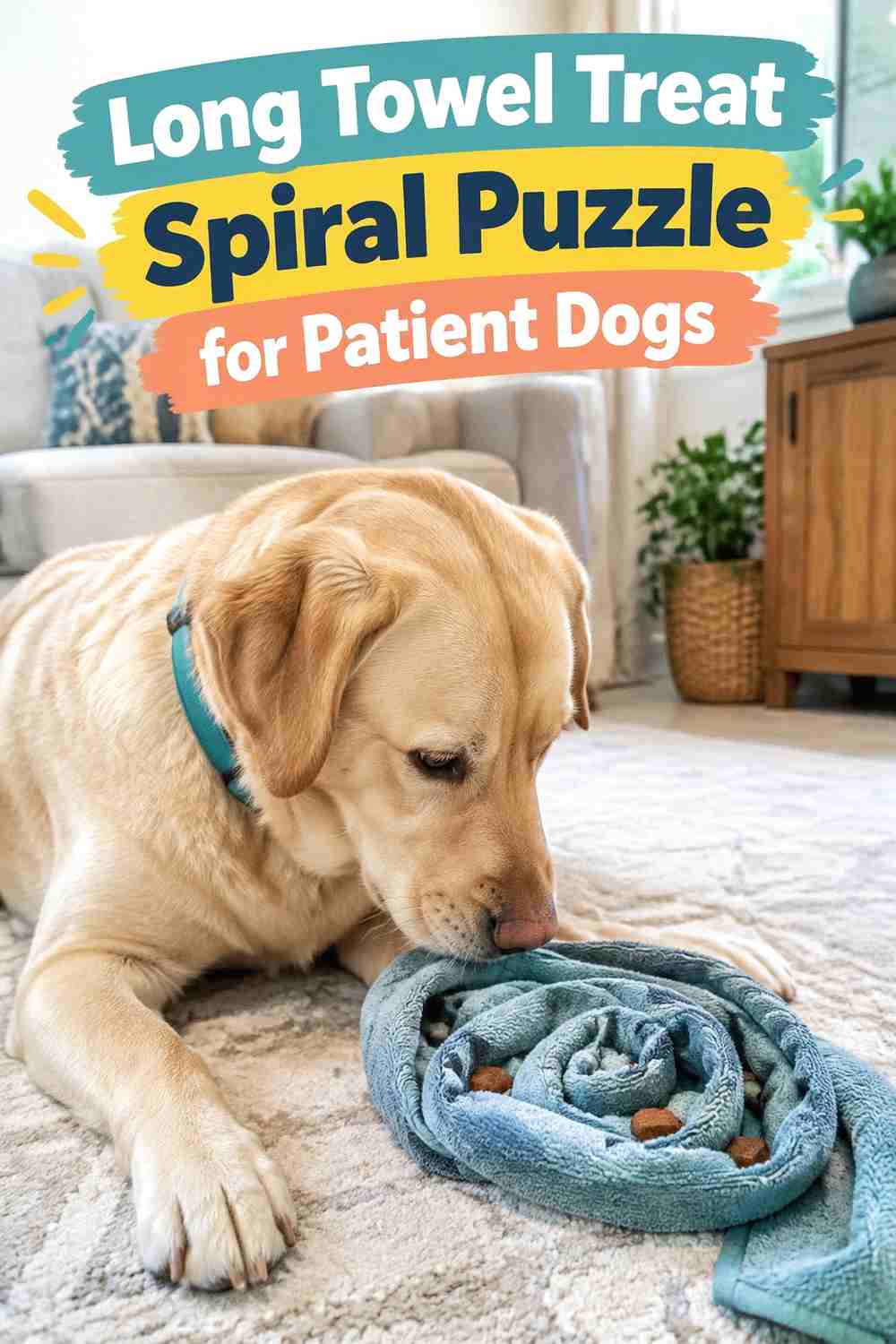
A long towel can be shaped into a flat spiral that gives patient dogs a slower, section-by-section search. Roll the towel loosely lengthwise, curve the resulting roll into a wide spiral on the floor, and tuck treats into selected openings along the outer and inner curves. Keep the first reward near the outside edge so your dog can begin without immediately disturbing the entire shape. As the search continues, the spiral will naturally loosen and change form. Dogs that already enjoy scent games can try versions with more empty sections between rewards. Avoid packing the spiral tightly, since the goal is gentle investigation rather than forcing the dog to pull apart a dense bundle.
Best For
This puzzle may suit dogs that work methodically and remain interested even when every sniff does not immediately produce a reward.
Use & Maintenance
Straighten the towel after each session and check the rolled edges for trapped crumbs before washing or storing it.
10. Towel Roll Basket Search For Rainy Day Dogs
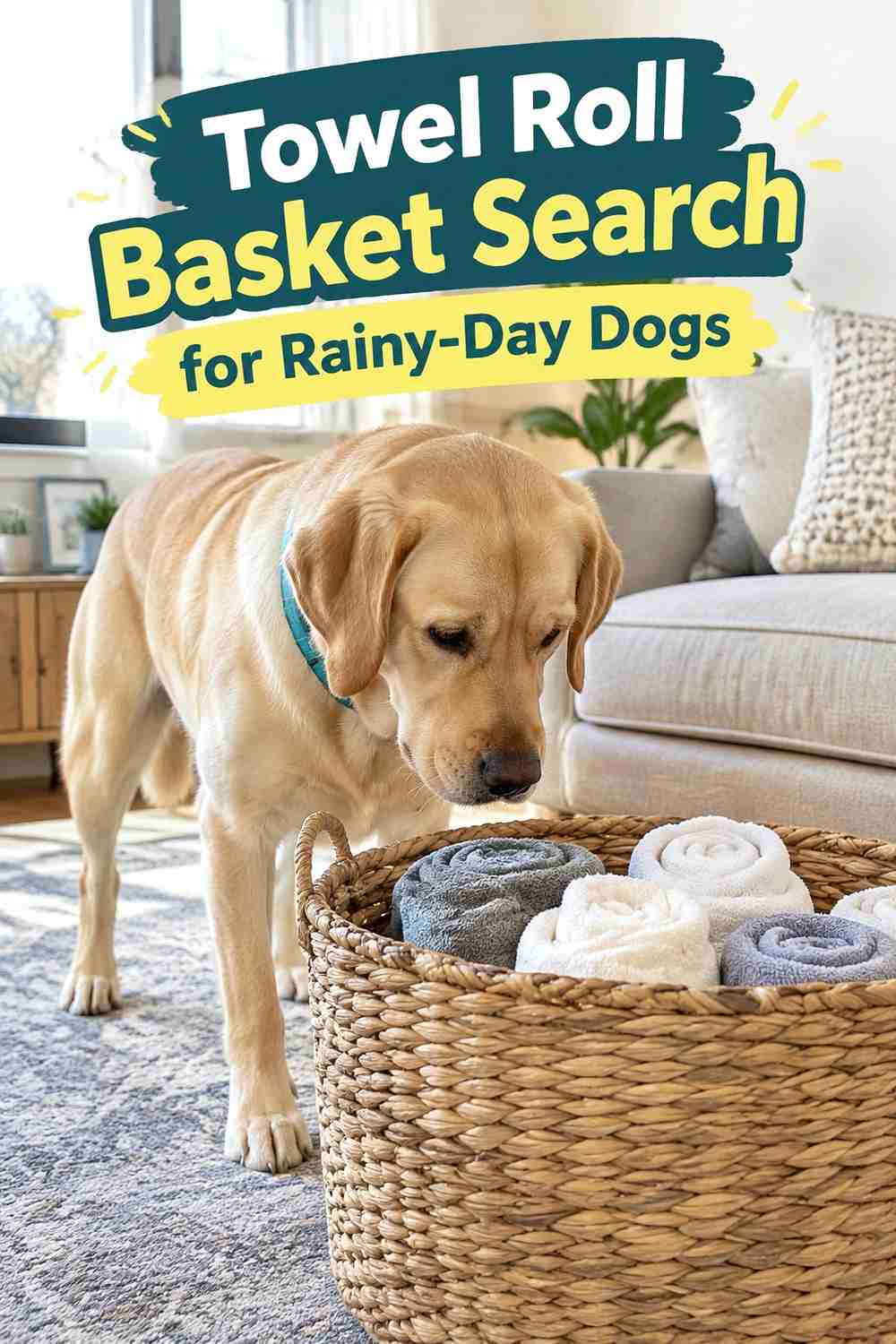
A shallow basket filled with several loose towel rolls creates a compact rainy-day search that keeps the activity contained. Roll two or three clean towels separately, hide a few treats in selected folds, and place the rolls side by side inside a sturdy open basket. Your dog can sniff across the top, nudge the rolls, and investigate which sections hold rewards. Start with treats near the exposed edges rather than burying them at the bottom. The basket should stay stable and low enough for comfortable access without tipping. If your dog tries to chew or carry the basket, remove it and place the towel rolls directly on the floor instead.
Space & Placement
Use an open basket with smooth edges and enough room for the towels to shift naturally as your dog searches.
Pro Tip
Change which roll contains most of the treats each session so your dog cannot solve the game by checking the same position first.
11. Multi Roll Towel Scent Hunt For Experienced Dogs
You May Also Like



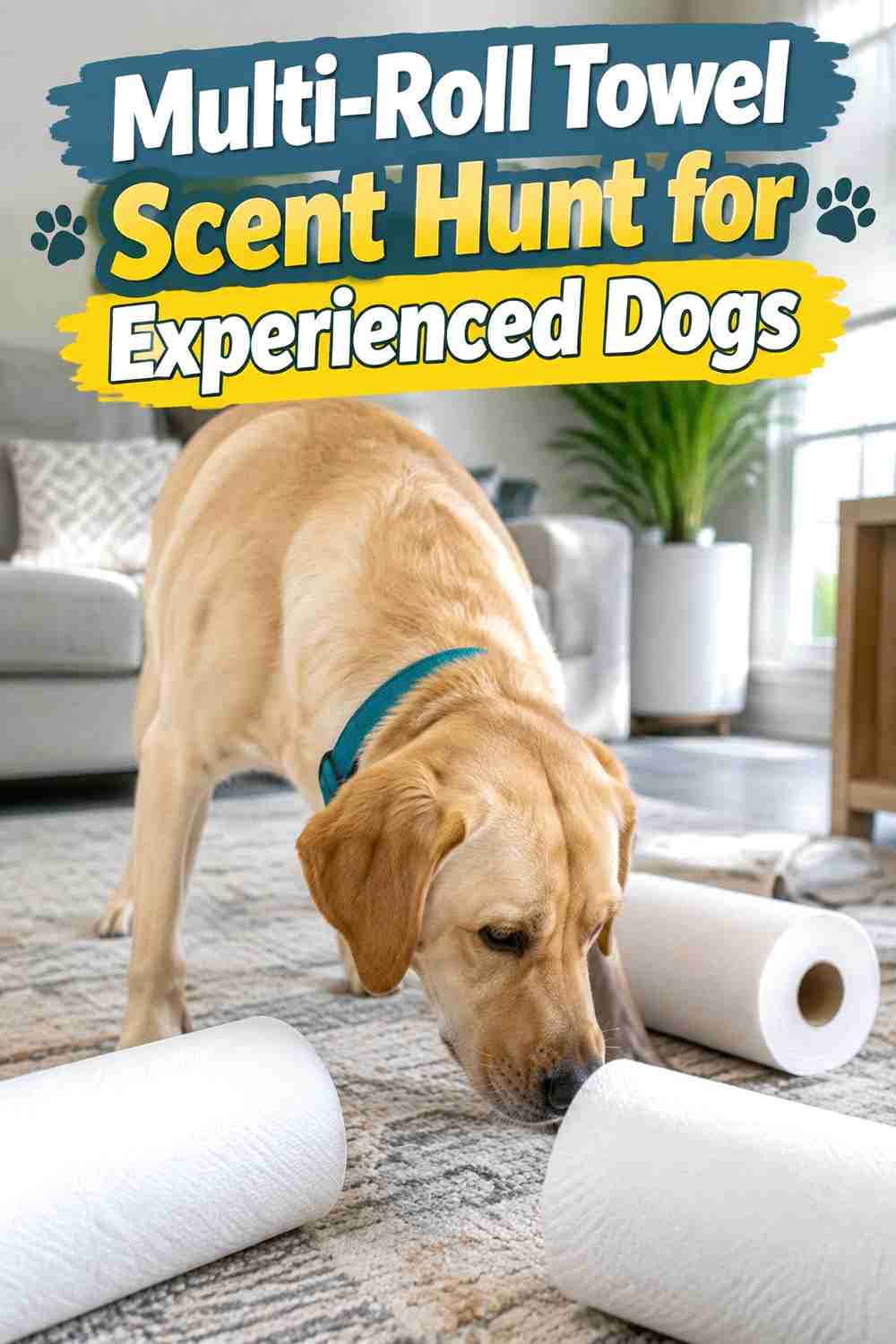
A multi-roll scent hunt spreads several towel puzzles around one safe room, giving experienced dogs a larger search area. Prepare three or more loose towel rolls, place treats inside only some of them, and position the rolls several feet apart in visible floor-level locations. Release your dog from one starting point and allow sniffing to determine which rolls are worth opening. Begin with rewards in most rolls, then gradually include more empty ones as your dog becomes confident with the format. This setup combines room searching with towel manipulation, making it more involved than one stationary puzzle. Keep every roll accessible and avoid hiding towels behind furniture where your dog might become stuck or knock something over.
Best For
This variation is better for dogs that already understand towel puzzles and can calmly search multiple locations without becoming frustrated.
Pro Tip
Move the rolls to different safe floor positions between sessions so location memory does not replace the scent-searching part of the game.
How to Choose the Right Idea
Start with your dog’s experience level. A loose single roll or accordion fold gives beginners easy access to rewards, while double layers, spirals, baskets, and multi-roll searches add more decisions and longer search paths. Temperament matters too. Dogs that carefully sniff fabric may enjoy layered pockets or twists, while dogs that enthusiastically paw objects may do better with broad rolls that are easy to reset. If your dog immediately grabs, shakes, tears, or eats towels, fabric-based enrichment may not be a good match. Consider your available space and cleanup routine. Stationary rolls and layered pockets work well in smaller rooms, while crisscross and multi-roll hunts benefit from more open floor space. Use washable towels, inspect them for damage, and keep the difficulty low enough that your dog continues searching rather than becoming frustrated.
Final Thoughts
Towel roll enrichment is easy to vary without buying a different puzzle for every session. Begin with a loose roll, notice whether your dog prefers sniffing, pawing, or unrolling, and use that behavior to choose the next setup. Simple adjustments to folds, layers, placement, and treat locations can make the same towels feel different while keeping the activity understandable and practical.
FAQs
1. What kind of towel works best for dog enrichment?
A clean, washable towel without tassels, loose threads, holes, or decorative attachments is a practical choice. Select a size that gives your dog enough fabric to investigate without creating an oversized pile.
2. Should I roll the towel tightly for a harder puzzle?
No. Difficulty is better increased with extra layers, empty sections, or different treat locations. A very tight roll can create unnecessary frustration and encourage rough pulling.
3. Can puppies try towel roll enrichment?
Puppies can try simple, closely supervised versions if they interact gently with fabric. Begin with a loose roll and easy-to-find rewards, and stop if the puppy starts chewing or swallowing towel fibers.
4. What if my dog picks up the entire towel instead of unrolling it?
Make the puzzle flatter and looser, expose one or two rewards, or place part of the towel under your hand briefly while your dog discovers the first treat. Avoid forcing your dog to solve it a particular way.
5. How do I keep towel enrichment from getting repetitive?
Change one feature at a time. Switch between rolls, accordion folds, spirals, layered pockets, baskets, or room searches, and vary which sections contain rewards rather than making every session harder.
CTA
Save your favorite towel roll dog enrichment ideas and rotate a few simple setups whenever you want to add variety to an indoor routine.
