A tidy rabbit play space can still keep favorite chew toys, tunnels, balls, and enrichment pieces close enough for easy everyday rotation.
Save This Idea on Pinterest
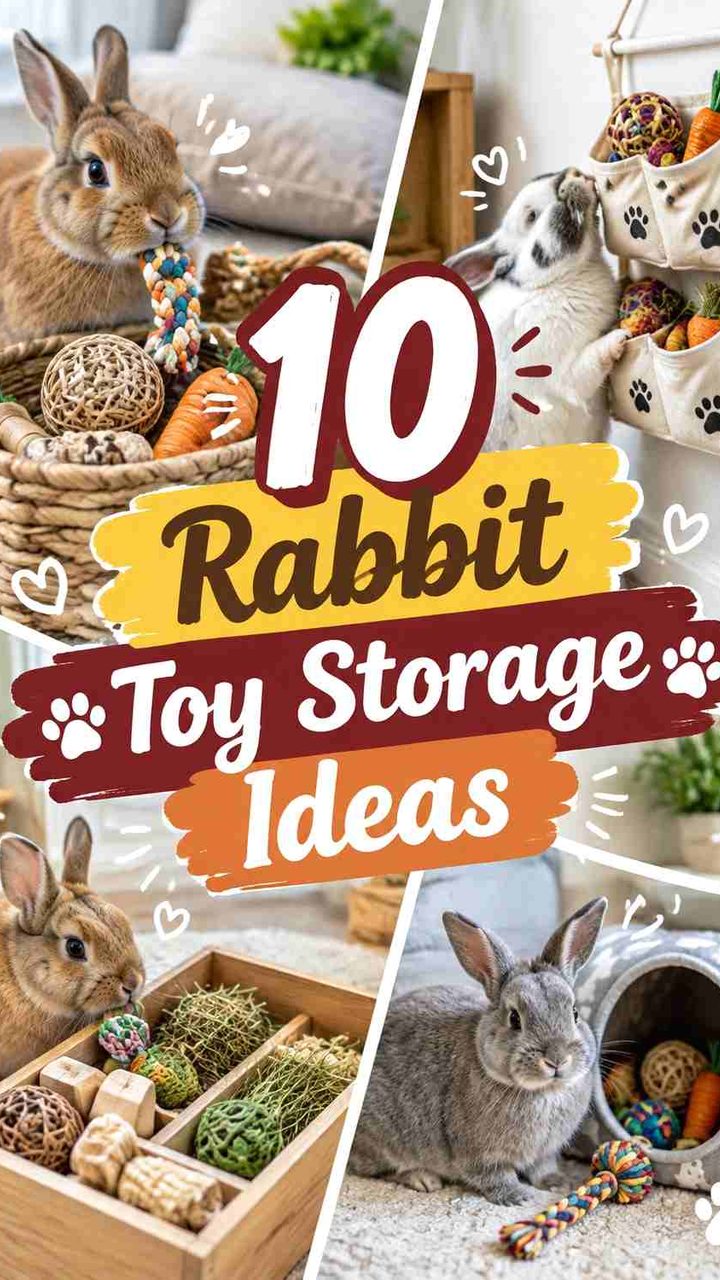
10 Rabbit Toy Storage Ideas
Save to PinterestRabbit toy storage works best when it keeps the play area uncluttered without making daily toy changes inconvenient. Some toys can stay within easy reach, while extras, replacements, and messier enrichment pieces may be better stored away from the rabbit.
These ideas cover open baskets, hidden bins, carts, shelves, drawers, and closed storage for different room sizes and routines. When comparing them, consider how much your rabbit chews, which items need frequent access, how easily the storage cleans, and whether your rabbit can safely reach the container itself.
Quick List
- Low Open Basket Toy Storage for Easy Rabbit Access
- Lidded Bench Storage for Rabbit Toys and Playroom Clutter
- Rolling Cart Organizer for Rotating Rabbit Toys and Supplies
- Wall-Mounted Cube Storage for Rabbit Toys Above Play Areas
- Clear Labeled Bins for Sorting Rabbit Toys by Type
- Slim Drawer Unit for Small Rabbit Toy Collections
- Under-Console Bins for Hidden Rabbit Toy Storage
- Open Shelf Toy Rotation Station for Indoor Rabbits
- Divided Caddy for Small Rabbit Toys and Enrichment Pieces
- Closed Cabinet Storage for Backup Rabbit Toys and Supplies
1. Low Open Basket Toy Storage For Easy Rabbit Access
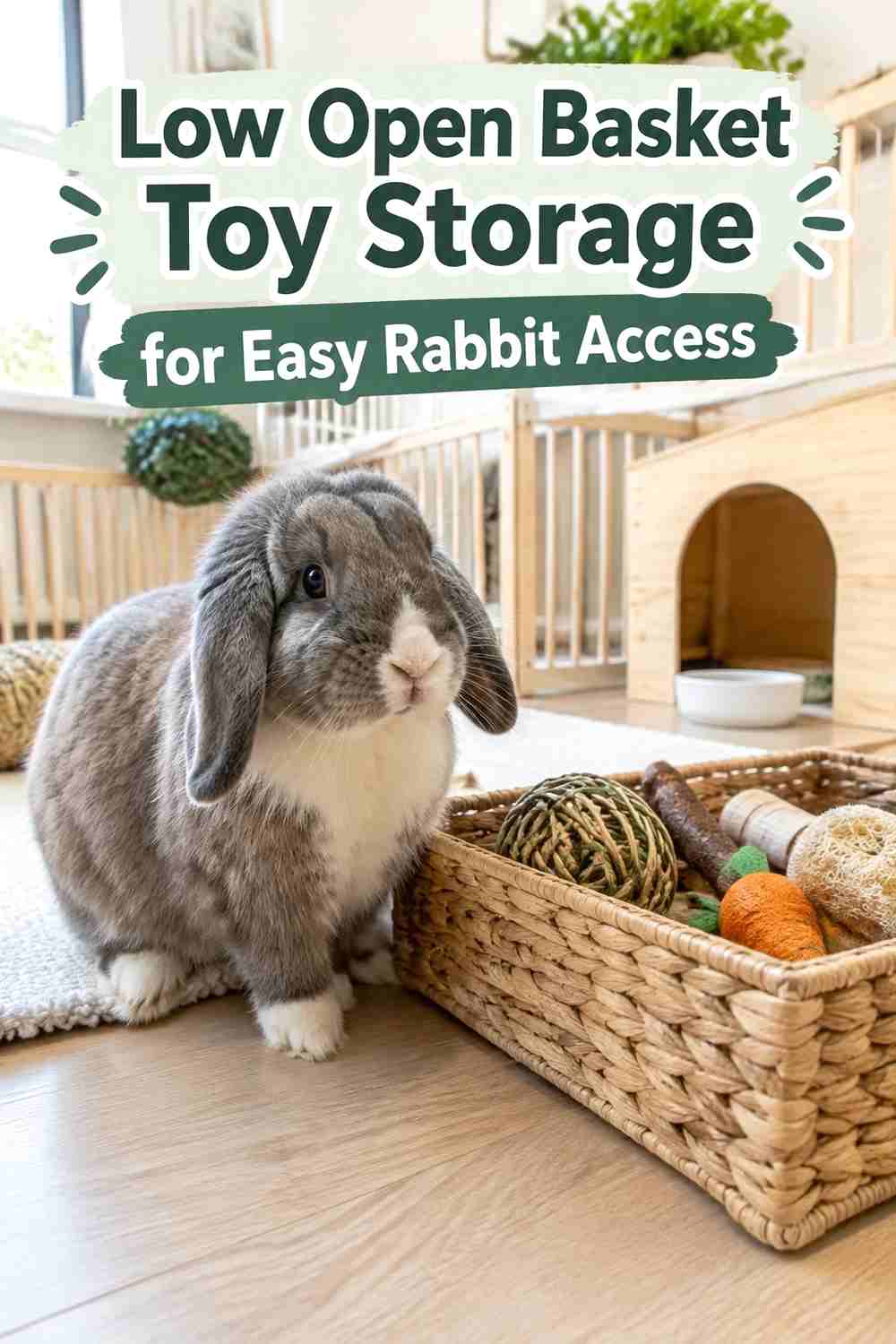
A low open basket creates a simple home for the rabbit toys you use most often. Place it beside the play area so lightweight toss toys, cardboard pieces, larger chew items, or similar everyday favorites can be gathered quickly after playtime. An open design also makes it easy to see when a toy is worn or needs replacing.
Choose the basket material carefully if your rabbit can reach it. A rabbit that regularly chews containers may do better with owner-managed storage rather than unrestricted access to plastic, painted, coated, or fabric baskets. Keep the basket stable and avoid filling it so high that toys spill into walking paths.
Best For
This setup suits owners who rotate a small group of toys frequently and want cleanup to take only a minute or two.
Use & Maintenance
Remove worn pieces during each reset, shake out hay or debris, and wash or wipe the container as appropriate for its material.
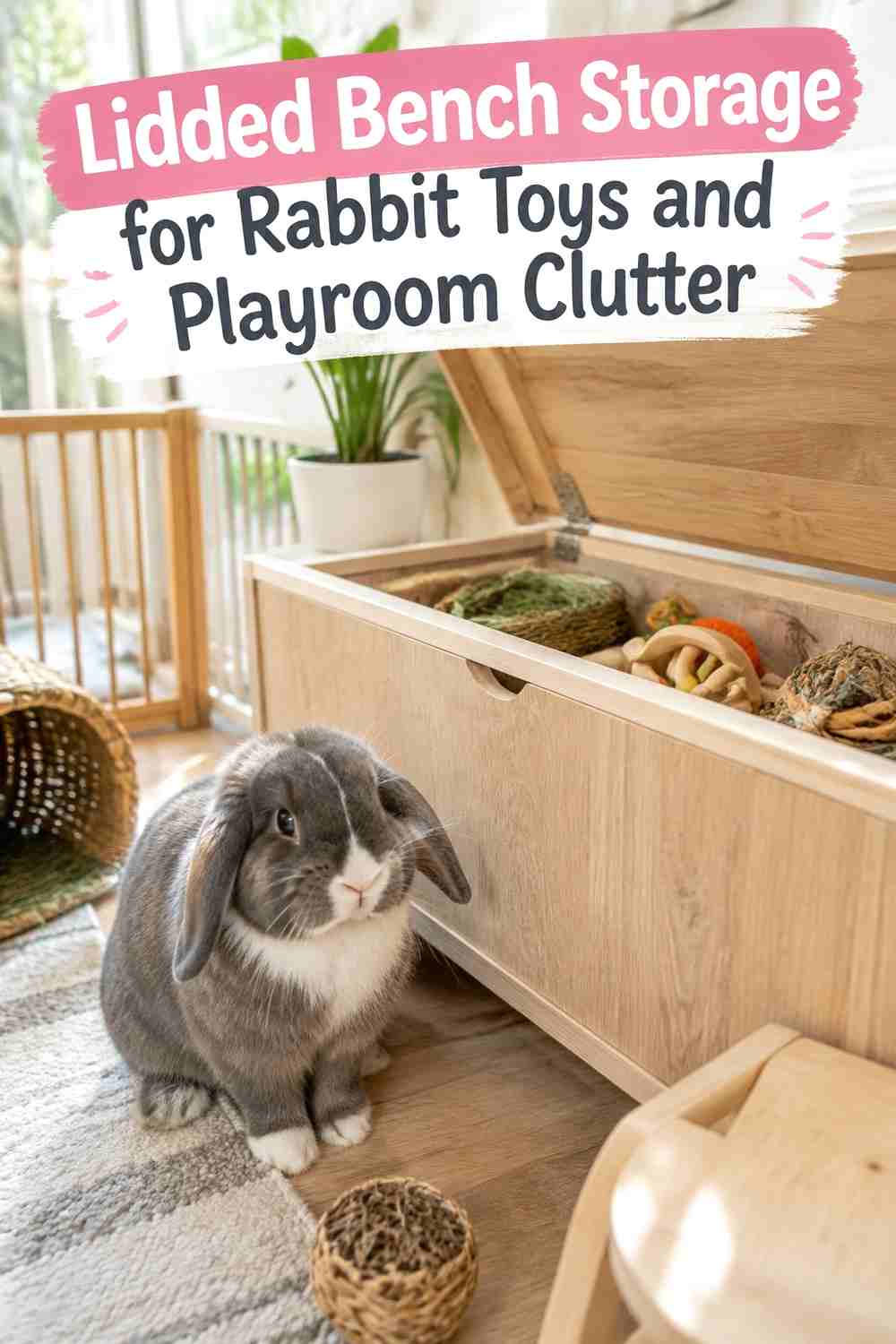
2. Lidded Bench Storage For Rabbit Toys And Playroom Clutter
You May Also Like



A lidded storage bench hides larger rabbit toys and backup enrichment items while keeping the room looking organized. It can hold folded tunnels, spare mats, unopened toy supplies, and bulkier items that do not need to stay beside the rabbit all day. The enclosed design is especially useful in shared living rooms where visible pet storage can quickly make the space feel crowded.
Place the bench outside the rabbit’s chewing area, and make sure it is stable rather than something the rabbit can push, tip, or climb into when open. Avoid lids that could unexpectedly fall while you are reaching inside. Organizing the interior with a few broad categories keeps the deep compartment from becoming an unsorted pile.
Space & Placement
Position the bench along a wall where opening the lid will not block the rabbit’s exercise area or interfere with gates and pens.
Pro Tip
Keep the most frequently used toys near the top so daily rotation does not require emptying the entire bench.
3. Rolling Cart Organizer For Rotating Rabbit Toys And Supplies
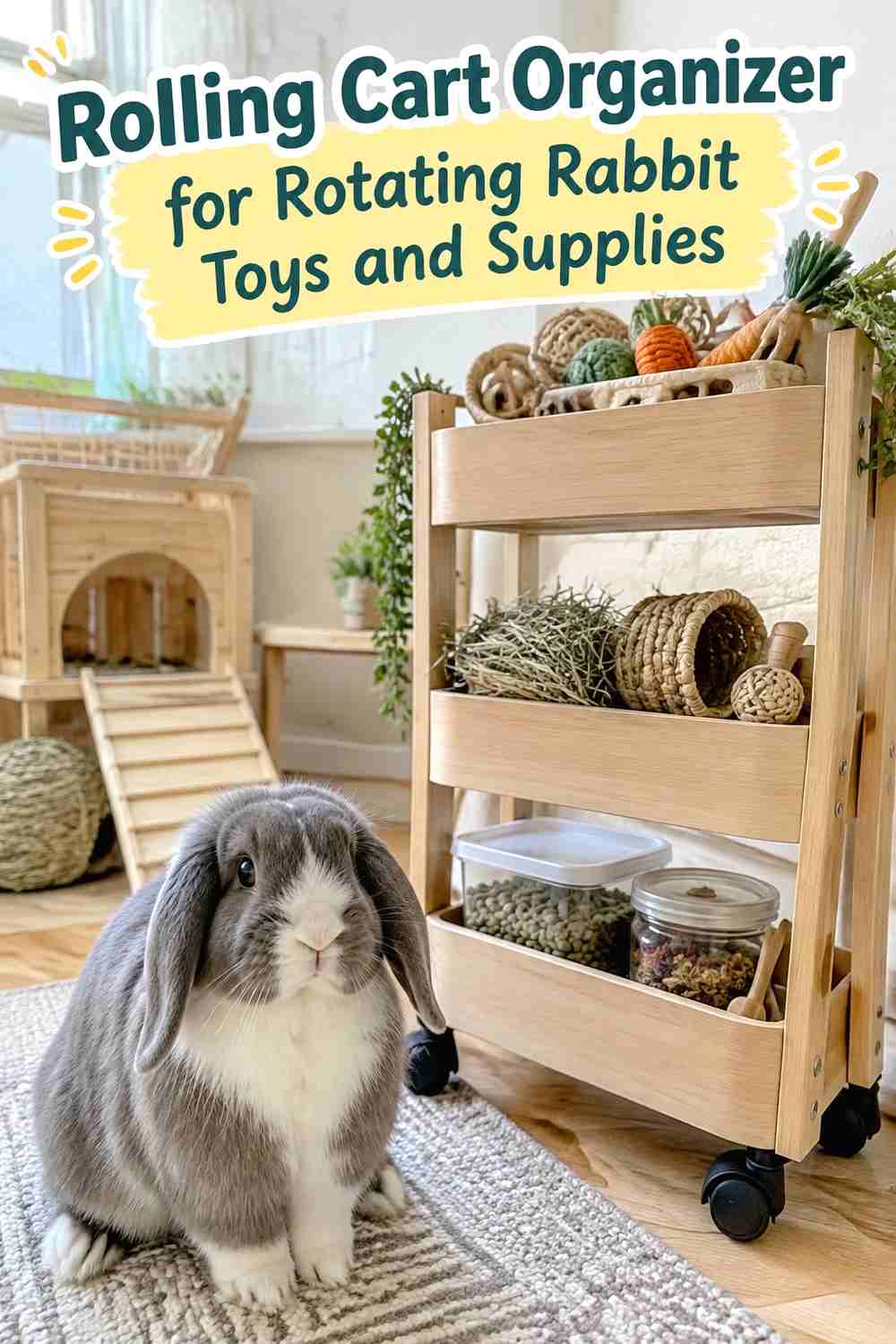
A rolling cart turns rabbit toy storage into a movable rotation station. Use separate tiers for current toys, enrichment supplies, and clean backup items, then roll the cart near the play area when you are setting up activities. Afterward, it can move back to a utility corner or another owner-only area.
This arrangement is useful when rabbit activities happen in more than one room because the supplies travel together rather than being carried piece by piece. Choose a cart that stands firmly on the floor, and lock the wheels if the model includes brakes. Keep anything chewable, swallowable, or otherwise unsuitable for unsupervised access on shelves the rabbit cannot reach.
Best For
A cart works especially well for owners who rotate several kinds of toys throughout the week or maintain more than one rabbit play zone.
Use & Maintenance
Periodically empty each tier, remove loose hay and debris, and return only toys that are clean and still in usable condition.
4. Wall Mounted Cube Storage For Rabbit Toys Above Play Areas
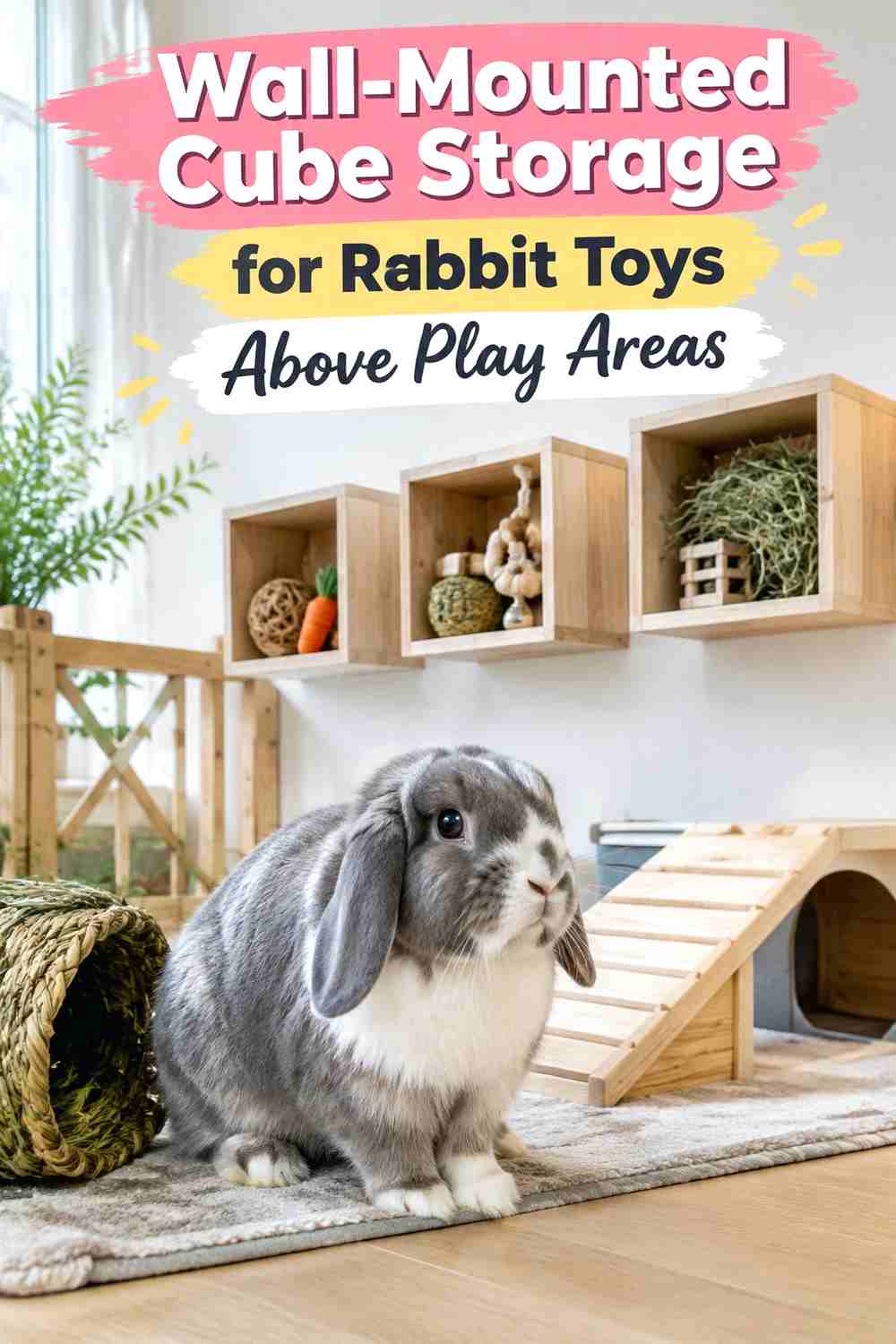
Wall-mounted cubes use vertical space to store rabbit toys without taking up valuable floor room. Install them above or beside the play zone for items the owner needs frequently but the rabbit should not directly access, such as backup toys, folded enrichment mats, or replacement supplies.
The cubes should be securely mounted for the wall type and positioned so stored items cannot fall into the rabbit’s area. Keep them away from any furniture or platforms that could give the rabbit an unintended climbing route. Open cubes make contents easy to spot, while small removable bins inside the cubes can keep loose pieces together and simplify cleaning.
Space & Placement
This arrangement is useful in apartments, rabbit rooms, and compact corners where adding another floor-standing organizer would reduce usable exercise space.
Comfort & Safety
Do not place heavy objects directly above resting spots, litter areas, food stations, or places where the rabbit spends long periods.
5. Clear Labeled Bins For Sorting Rabbit Toys By Type
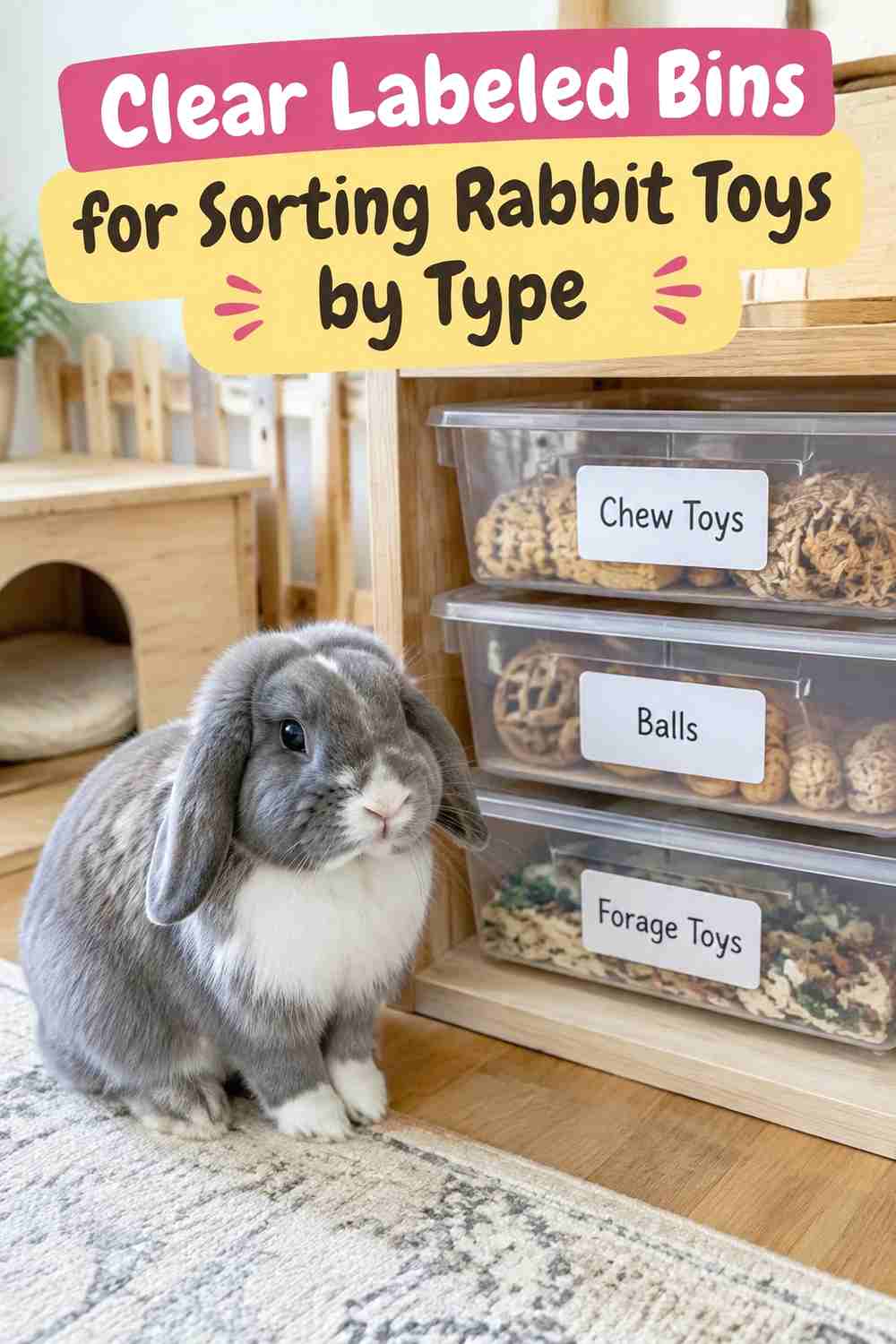
Clear labeled bins make it easy to separate rabbit toys into practical groups such as chew toys, toss toys, puzzle pieces, tunnel accessories, and unopened replacements. Because the contents remain visible, you can find what you need without pulling every container from the shelf.
Use bins mainly as owner-access storage and place them beyond chewing reach, especially if they are plastic. Broad categories usually work better than creating a separate container for every small toy because the system stays easier to maintain. Labels can also help other household members return items to the right place after cleaning or playtime. Leave enough space in each bin to see the contents rather than packing toys tightly together.
Why It Works
Sorting makes toy rotation more deliberate because you can choose different activity types instead of repeatedly reaching for whatever happens to be on top.
Cleaning Notes
Empty bins occasionally to remove hay, fur, cardboard crumbs, and worn toy fragments that collect at the bottom.
6. Slim Drawer Unit For Small Rabbit Toy Collections
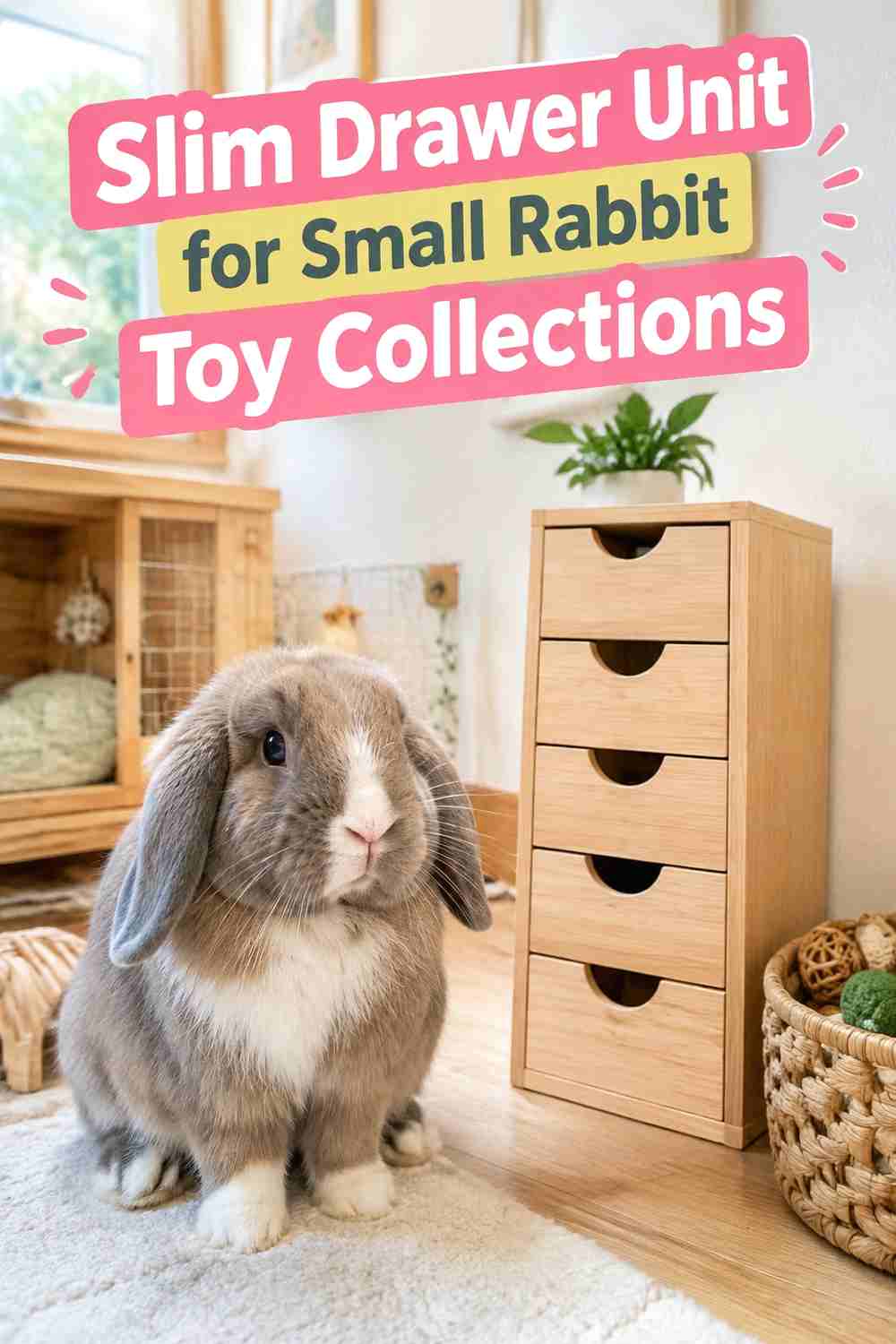
A slim drawer unit keeps a modest rabbit toy collection organized without claiming much floor space. Dedicate one drawer to everyday toys, another to enrichment accessories, and another to clean backups or seasonal items. Closing the drawers keeps visual clutter down while still giving you quick access during playtime.
This option fits especially well beside a desk, console, or other owner-use furniture near the rabbit area. Choose a stable unit that does not wobble when drawers open, and keep the exterior beyond chewing reach if it is made from plastic, painted wood, or another material your rabbit might damage. Shallow drawers are usually easier to manage because toys remain visible instead of disappearing beneath several layers.
Best For
Slim drawers suit small homes where a full cabinet or wide storage bench would take up too much room.
Pro Tip
Use the top drawer for the toys you rotate most frequently so everyday setup stays quick and predictable.
7. Under Console Bins For Hidden Rabbit Toy Storage
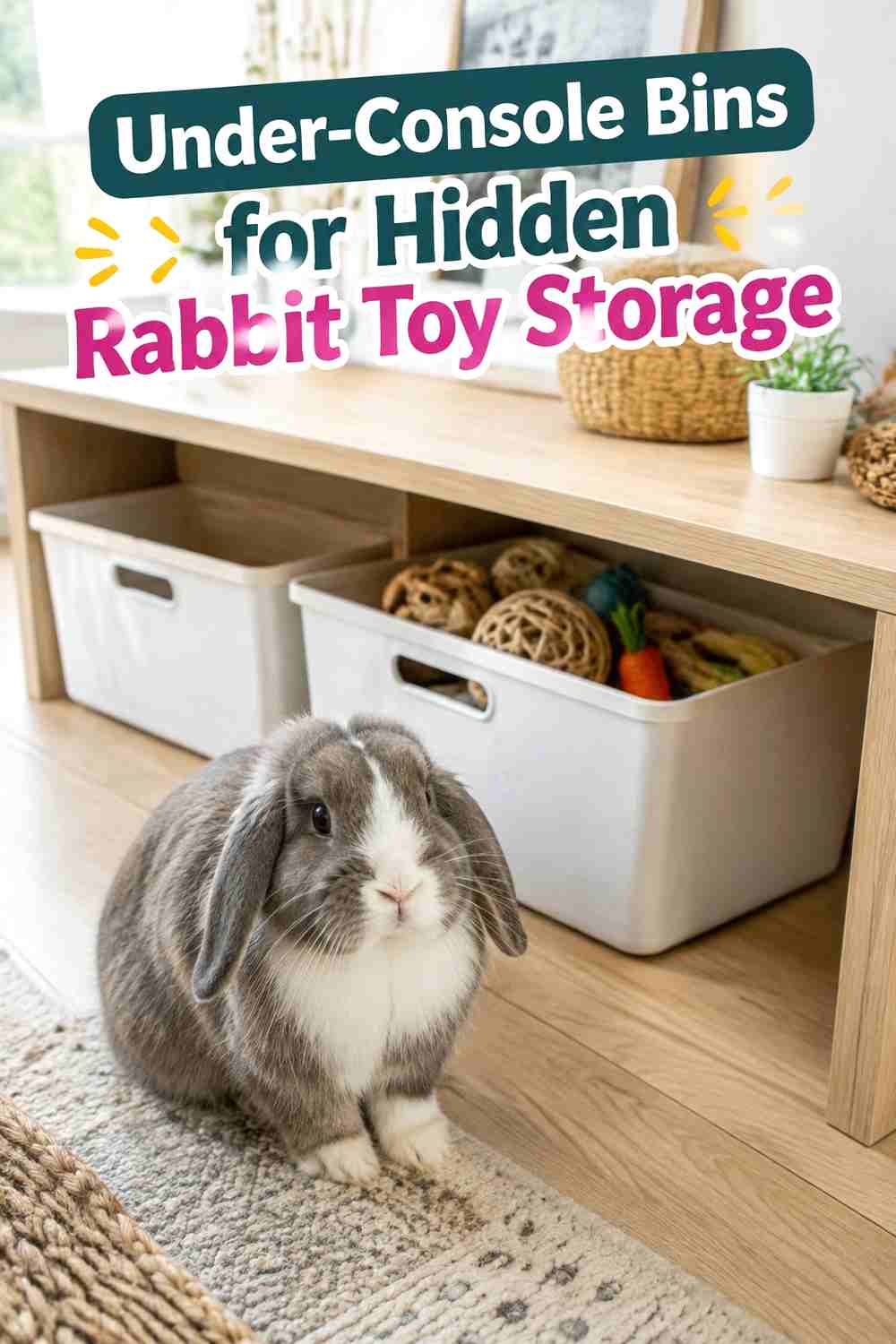
Under-console bins turn otherwise unused furniture space into discreet rabbit toy storage. Slide matching containers beneath a sturdy console table to hold tunnels, larger toys, spare enrichment materials, or items that are temporarily out of rotation. The toys remain nearby without creating a pile along the edge of the rabbit’s play zone.
Measure the available space before choosing containers so they slide in and out easily rather than scraping or becoming wedged. If the rabbit can reach beneath the console, use storage that stays fully outside the accessible area or block access appropriately; chewable bin edges should not become unintended toys. Containers with handles make frequent rotation easier, especially when storing bulky pieces.
Space & Placement
This system works well in living rooms where rabbit supplies need to blend into existing furniture instead of occupying a separate storage station.
Use & Maintenance
Avoid pushing dusty or hay-covered toys directly into hidden bins. Shake or wipe them first so debris does not accumulate unnoticed.
8. Open Shelf Toy Rotation Station For Indoor Rabbits
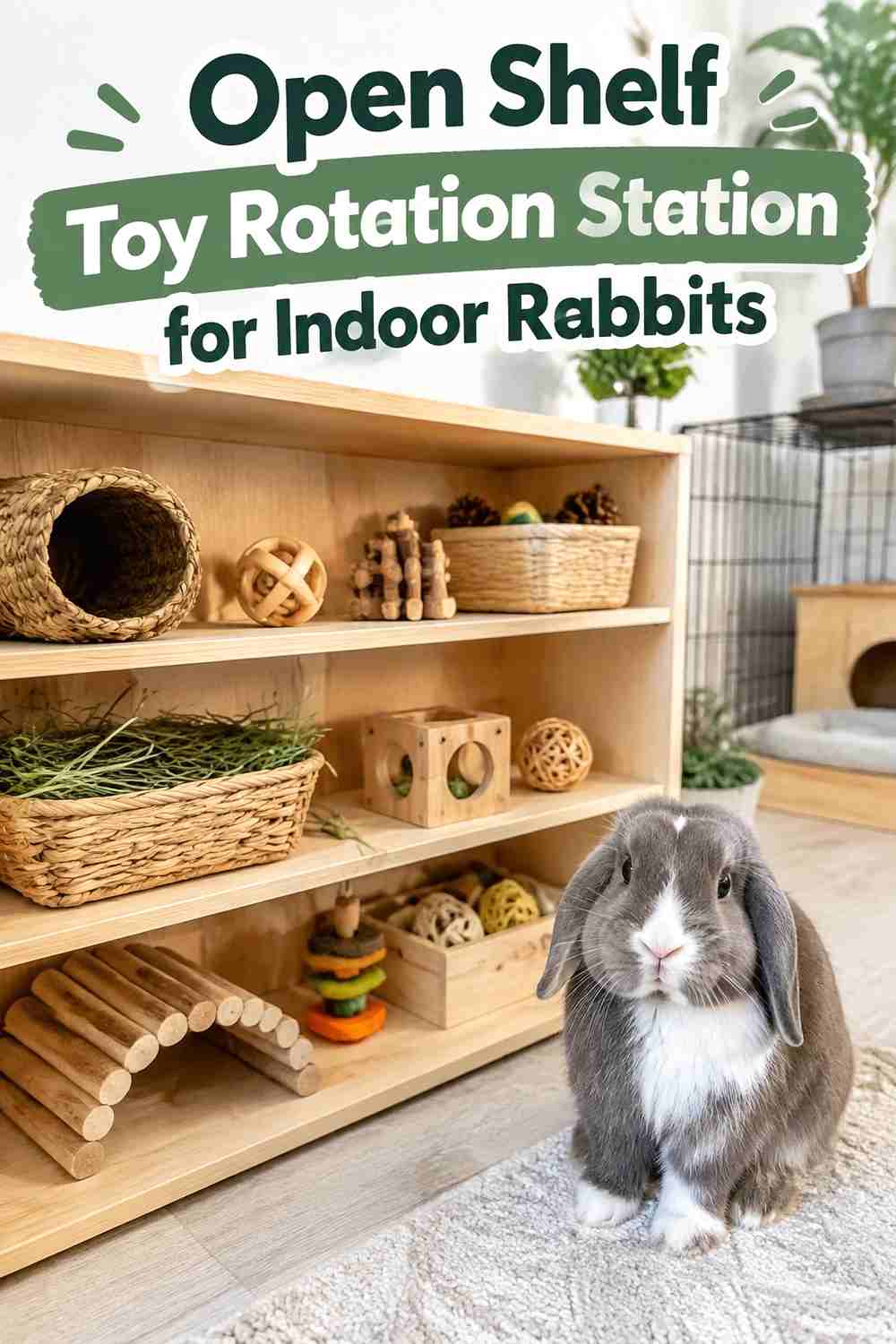
An open shelf can become a dedicated rabbit toy rotation station with one section for active toys and another for items resting between uses. The visible arrangement helps you notice when the same few toys have stayed out too long and makes it easier to swap activities without searching through closed containers.
Place the shelf outside the rabbit’s direct access unless the entire unit and everything on it are suitable for contact. A stable unit against the wall is preferable to lightweight shelving that can shift or tip. Small baskets or trays on the shelves can keep loose toys contained while still preserving the open, easy-to-scan layout. Avoid stacking items precariously near the edges.
Why It Works
Seeing the available choices can make rotation easier for the owner and prevent forgotten toys from remaining buried in storage for months.
Pro Tip
Keep only a manageable selection visible and move the rest into backup storage so the shelf remains organized rather than becoming another clutter zone.
9. Divided Caddy For Small Rabbit Toys And Enrichment Pieces
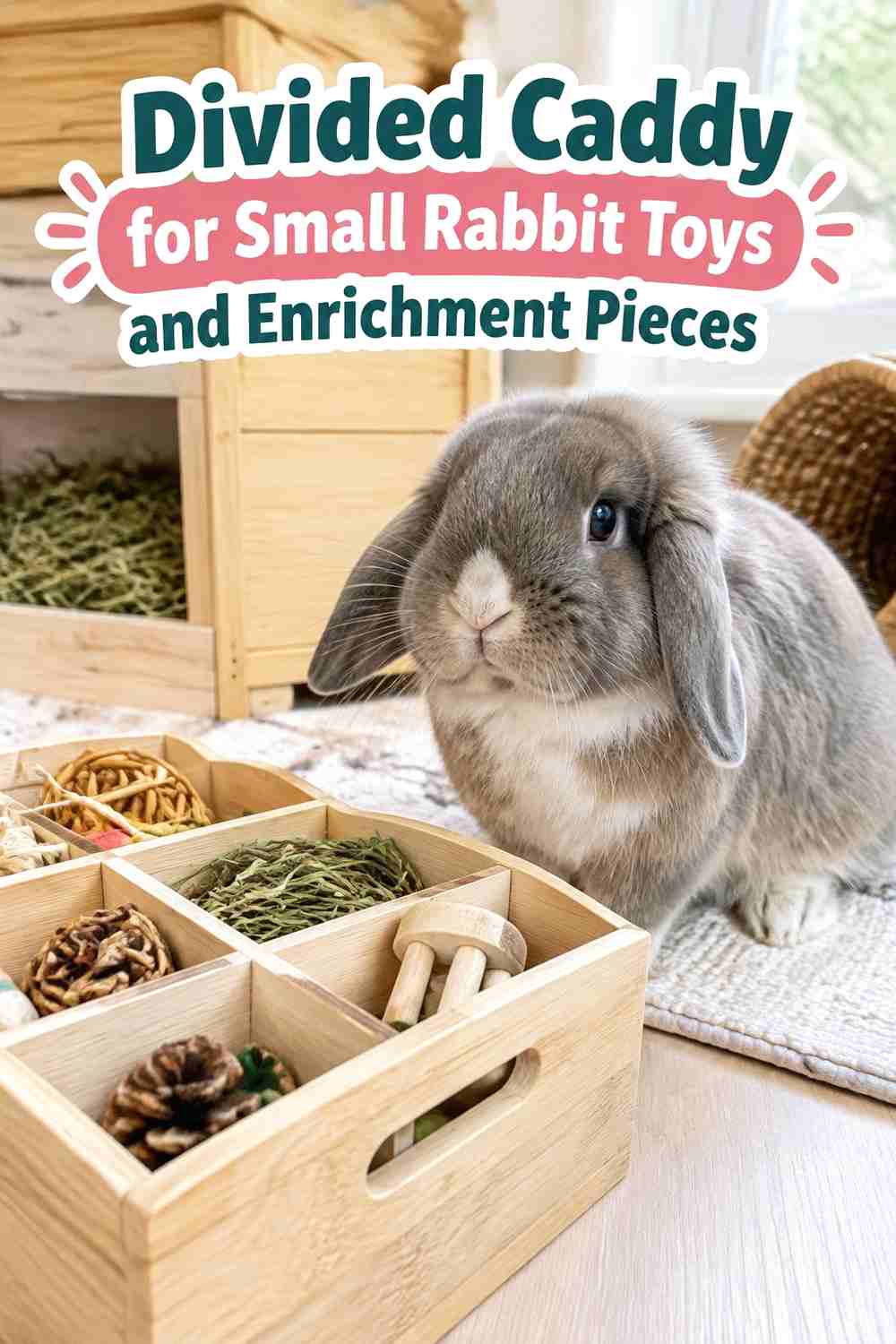
A divided caddy keeps small rabbit toys and enrichment components grouped in one portable container. Separate compartments can hold lightweight toss toys, larger puzzle pieces, clean cardboard components, and other items that tend to disappear inside bigger baskets. Carry the caddy to the play space when setting up an activity, then return it to owner-only storage afterward.
Choose compartments large enough that items can be lifted out easily rather than jammed together. Avoid using the caddy for tiny pieces that could become unsafe if dropped unnoticed in the rabbit area. A washable or wipeable design is useful because hay dust and debris often collect around frequently handled enrichment supplies.
Best For
This approach suits organized toy rotations, small collections, and households that set up enrichment in different rooms.
Cleaning Notes
Check the corners and dividers during cleanup because small fragments can collect there even when the caddy looks tidy from above.
10. Closed Cabinet Storage For Backup Rabbit Toys And Supplies
You May Also Like



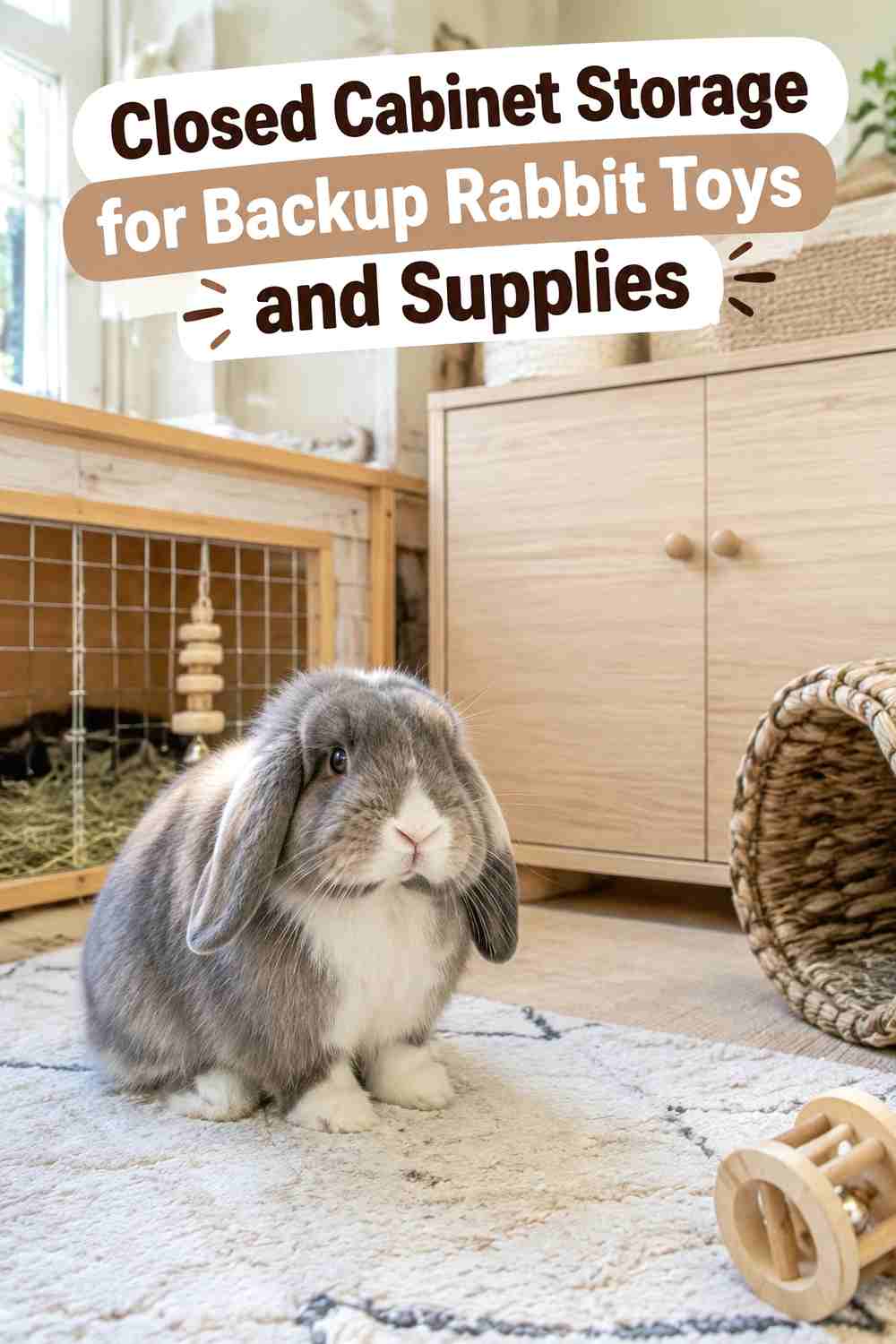
A closed cabinet provides secure, out-of-the-way storage for backup rabbit toys, replacement enrichment items, folded tunnels, and supplies that should stay outside the play area. It works especially well for keeping the rabbit room visually calm while preserving a larger rotation behind doors.
Organize the cabinet so frequently used toys stay at an easy height and less-used supplies occupy upper or lower shelves. Containers inside the cabinet can prevent loose items from spreading across every shelf. Keep cleaners, medicines, sharp tools, cords, and other household materials separate from rabbit toy storage rather than mixing everything together. The cabinet itself should close reliably and stand securely.
Best For
Closed storage is useful for rabbits that investigate or chew exposed containers, as well as owners who keep more toys than they want visible at once.
Use & Maintenance
Review the cabinet occasionally and discard worn pieces instead of allowing unusable toys to accumulate behind closed doors.
How to Choose the Right Idea
Start with how your rabbit uses the room. A rabbit that explores and chews every reachable object may need most toy storage placed outside the accessible area, while a calmer rabbit may be able to use a carefully chosen low basket with supervision. Floor space matters too: wall cubes, slim drawers, and under-console bins can work well when the exercise area should stay as open as possible.
Consider how often you rotate toys. Open shelves, caddies, and rolling carts make frequent swaps convenient, while cabinets and benches are better for larger backup collections. Cleaning also matters because rabbit toys can bring hay, fur, cardboard crumbs, and other debris into storage.
Whatever style you choose, keep the system simple enough to maintain. Stable furniture, easy access for the owner, clear categories, and regular checks for damaged toys usually matter more than creating a complicated organization system.
Final Thoughts
The best rabbit toy storage keeps play space clear while making useful toys easy for you to find and rotate. Start with the amount of storage you actually need, then choose a setup that fits your rabbit’s chewing habits, your available space, and your cleanup routine.
FAQs
1. Should rabbits have direct access to their toy storage?
Not necessarily. A few suitable toys can remain accessible, but many storage containers are better kept in owner-only areas, especially if the rabbit tends to chew plastic, fabric, painted surfaces, or other container materials.
2. How should I organize a large rabbit toy collection?
Divide toys into broad categories such as current toys, chew items, interactive enrichment, larger play pieces, and backups. Keeping categories simple makes the system easier to maintain.
3. How often should rabbit toys be rotated?
There is no single required schedule. Rotate toys when interest drops, when you want to introduce a different activity, or when the play area becomes overcrowded. A smaller active selection is often easier to manage than putting everything out at once.
4. What should I do with damaged rabbit toys?
Remove toys when they develop loose pieces, sharp edges, excessive wear, or other damage that makes continued use questionable. Regular storage cleanouts make these problems easier to notice.
5. What rabbit toy storage works best in a small apartment?
Slim drawer units, wall-mounted cubes, under-console bins, portable caddies, and compact carts can preserve more open floor space than large benches or wide cabinets. Choose the option that fits your layout without narrowing the rabbit’s usable play area.
CTA
Save your favorite rabbit toy storage ideas and explore more practical ways to keep your bunny’s everyday space organized and easy to use.
