Give your indoor rabbit more ways to dig, forage, hide, chew, explore, and observe with enrichment corners that are simple enough to rotate and clean.
Save This Idea on Pinterest

15 Rabbit Enrichment Corner Ideas
Save to PinterestRabbit enrichment corners work best when they support natural activity without filling the enclosure or room with clutter. A cardboard tunnel, digging box, low platform, foraging station, or chew area can each provide a different type of activity while leaving plenty of open floor space.
These 15 ideas suit secure indoor rabbit areas and can be adjusted for size, confidence, mobility, and chewing habits. Use rabbit-appropriate materials, supervise unfamiliar setups, remove damaged or soiled pieces promptly, and keep cords, plastic packaging, adhesives, sharp objects, and small swallowable parts away from the enrichment zone.
Quick List
- Cardboard Tunnel Hideaway Enrichment Corner for Indoor Rabbits
- Shredded Paper Digging Box for Curious Indoor Rabbits
- Hay Foraging Box Enrichment Corner for Busy Rabbits
- Rabbit-Safe Chew Basket for an Easy Enrichment Corner
- Low Platform Lookout Corner for Confident Indoor Rabbits
- Cardboard Maze Enrichment Corner for Exploring Pet Rabbits
- Paper Tube Foraging Station for Indoor Rabbit Enrichment
- Quiet Covered Hideout Corner for Shy Indoor Rabbits
- Rotating Toy Basket for Fresh Rabbit Enrichment Choices
- Stable Puzzle Feeder Corner for Food-Motivated Rabbits
- Texture Exploration Zone for Curious Indoor Pet Rabbits
- Open Floor Toss-Toy Corner for Playful Indoor Rabbits
- Multi-Level Step Corner for Active Indoor Pet Rabbits
- Window-View Rest Corner for Calm Indoor Pet Rabbits
- Combined Dig-Chew-Forage Corner for Busy Indoor Rabbits
1. Cardboard Tunnel Hideaway Enrichment Corner For Indoor Rabbits
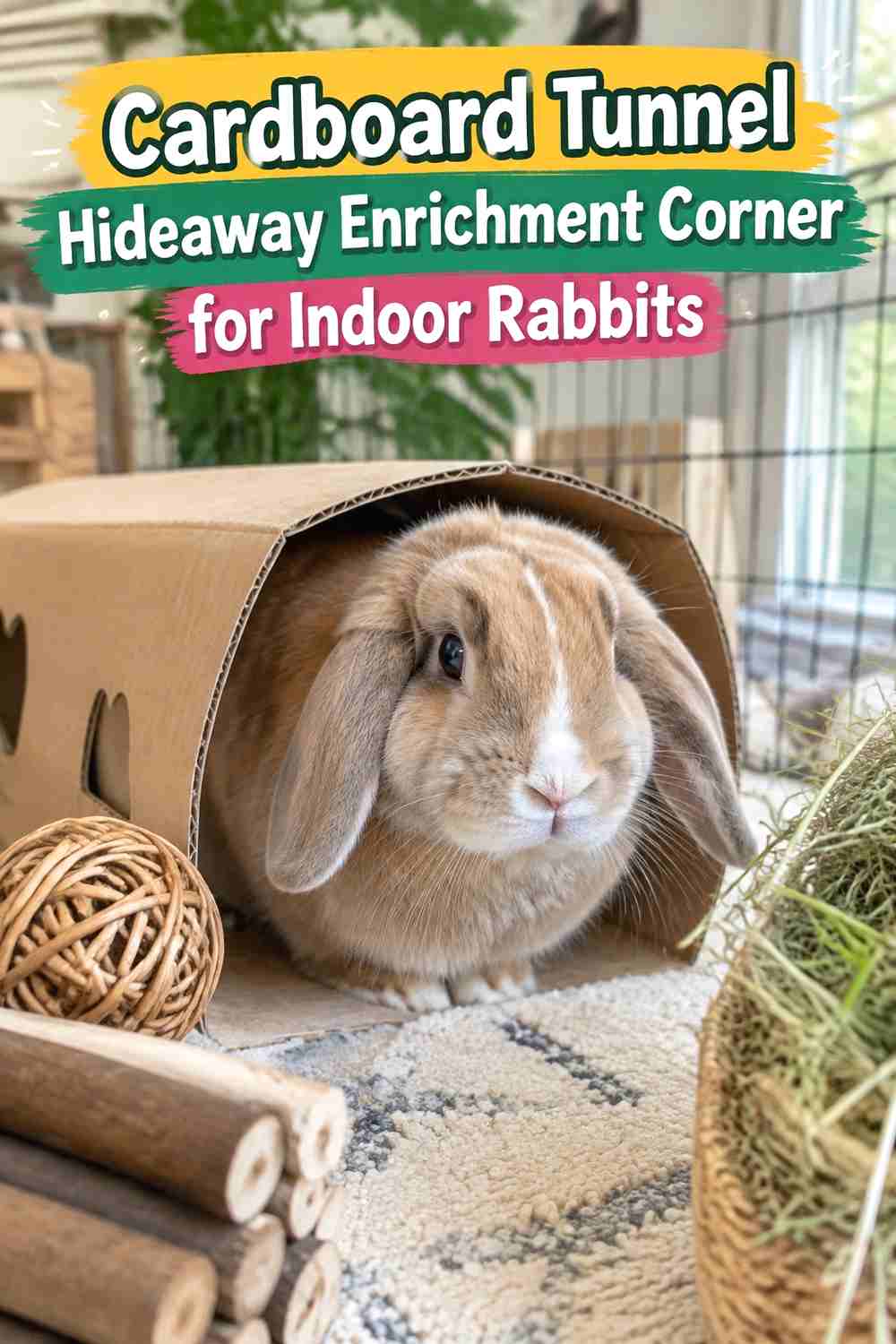
A cardboard tunnel corner gives an indoor rabbit a simple route for hiding, passing through, and investigating from both ends. Choose a sturdy rabbit-sized tunnel or clean cardboard box with openings large enough for easy entry and turning, then place it along a wall without blocking the main floor route. Remove tape, staples, glossy coatings, and loose packaging before use. You can leave one side partly open so your rabbit has more than one exit rather than creating a dead end. Expect some chewing and replace the cardboard when it becomes heavily torn, damp, or difficult to keep clean. Moving the tunnel slightly during rotation can make the familiar object feel different without introducing a completely new setup.
Space & Placement
Keep both entrances clear and leave enough floor room for your rabbit to approach from different directions.
2. Shredded Paper Digging Box For Curious Indoor Rabbits

You May Also Like



A digging box creates a contained place for rabbits that enjoy pawing, pushing, and rearranging loose material. Use a sturdy low-sided box that your rabbit can step into comfortably and fill it with plain shredded paper or another rabbit-appropriate digging material. Avoid glossy paper, plastic filler, staples, strings, or heavily printed packaging. Start with a shallow layer so you can see how your rabbit interacts with the box before adding more. Some rabbits will dig vigorously, while others simply nose through the material. Place the box on an easy-clean floor or washable mat because pieces will escape during play. Replace damp or soiled paper promptly instead of repeatedly topping up the old material.
Best For
Curious rabbits that naturally dig at bedding, blankets, cardboard, or corners of their enclosure.
Cleaning Notes
Shake out reusable boxes regularly and refresh the digging material before it becomes dusty or messy.
3. Hay Foraging Box Enrichment Corner For Busy Rabbits
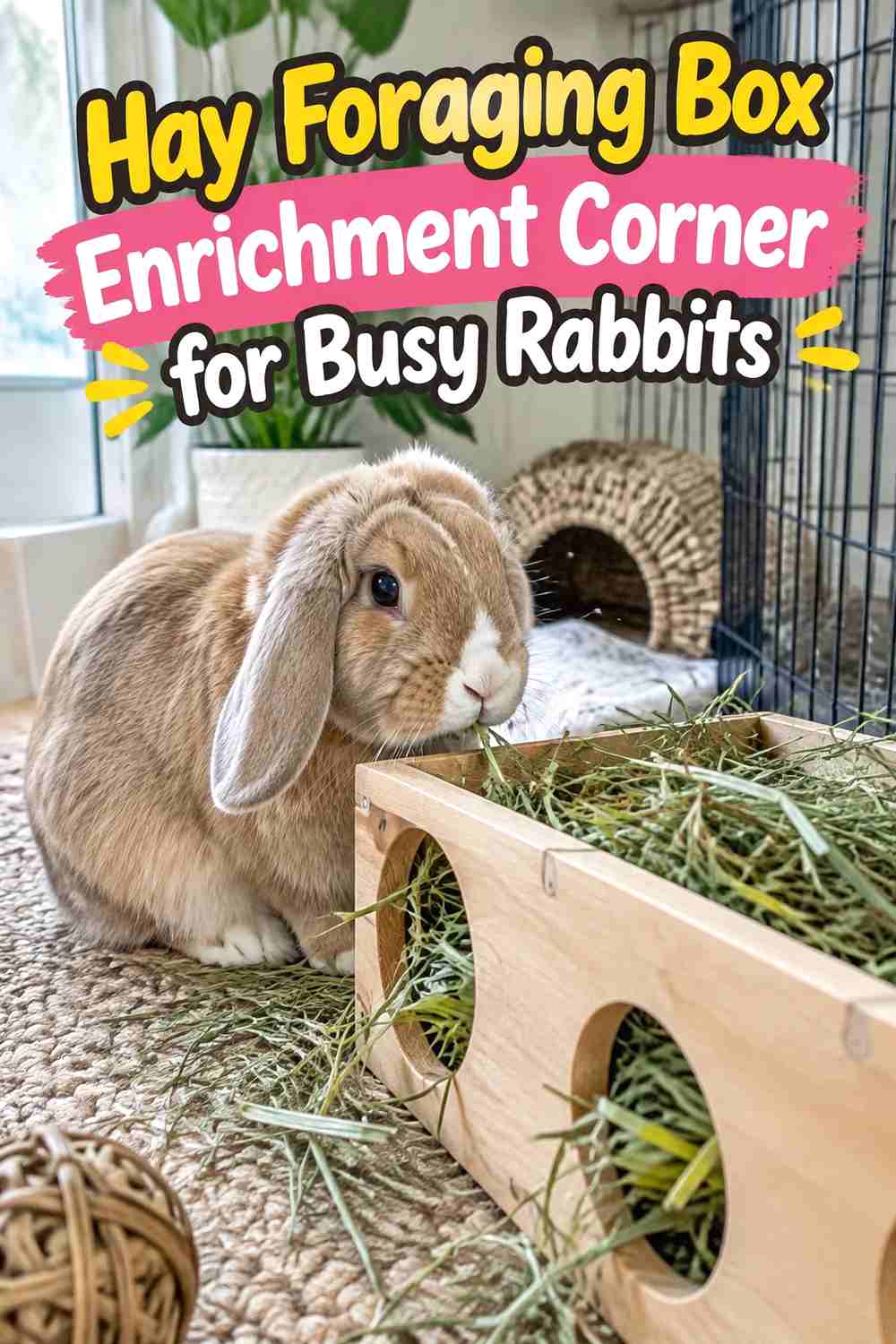
A hay foraging box turns a familiar part of the rabbit’s routine into a simple searching activity. Use a clean cardboard box or shallow tray and loosely arrange the rabbit’s usual hay so they can nose, pull, and move through it without becoming trapped in deep material. The box should stay open and easy to enter, with no tape, plastic lining, or narrow holes around the head. Keep the setup separate from damp flooring and replace hay that becomes soiled rather than leaving it in the enrichment corner indefinitely. You can occasionally reposition the box or add a safe cardboard divider to vary the search pattern while keeping the activity easy and recognizable.
Why It Works
The setup adds movement and searching to an item the rabbit already encounters in daily care.
4. Rabbit Safe Chew Basket For An Easy Enrichment Corner
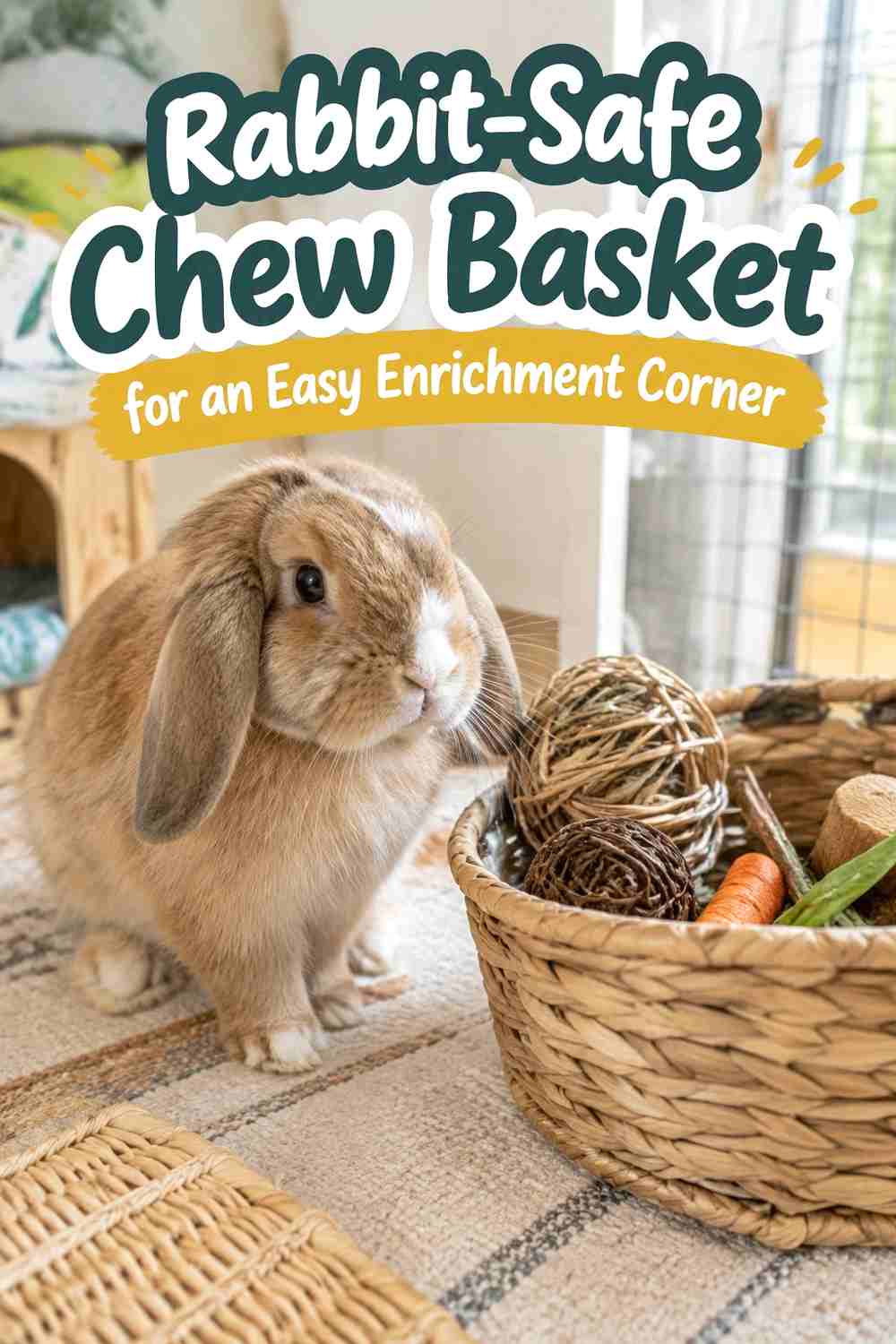
A chew basket keeps several rabbit-appropriate chewing options in one predictable part of the room. Use a sturdy low container and add a small rotation of items specifically intended for rabbits, such as safe chew toys or plain cardboard pieces. Avoid painted decorations, glued craft materials, unknown wood, small detachable parts, and anything that splinters sharply. Rather than filling the basket, offer only a few pieces so you can notice what your rabbit actually prefers. Inspect them regularly because enthusiastic chewing can quickly change an item’s shape or condition. If the rabbit begins chewing the basket itself, make sure the container material is also appropriate or switch to a simpler floor-level arrangement.
Use & Maintenance
Remove heavily damaged, wet, or soiled chew items instead of leaving them mixed with clean ones.
Pro Tip
Rotate one or two items at a time rather than replacing the entire basket, which keeps the setup familiar while adding variety.
5. Low Platform Lookout Corner For Confident Indoor Rabbits
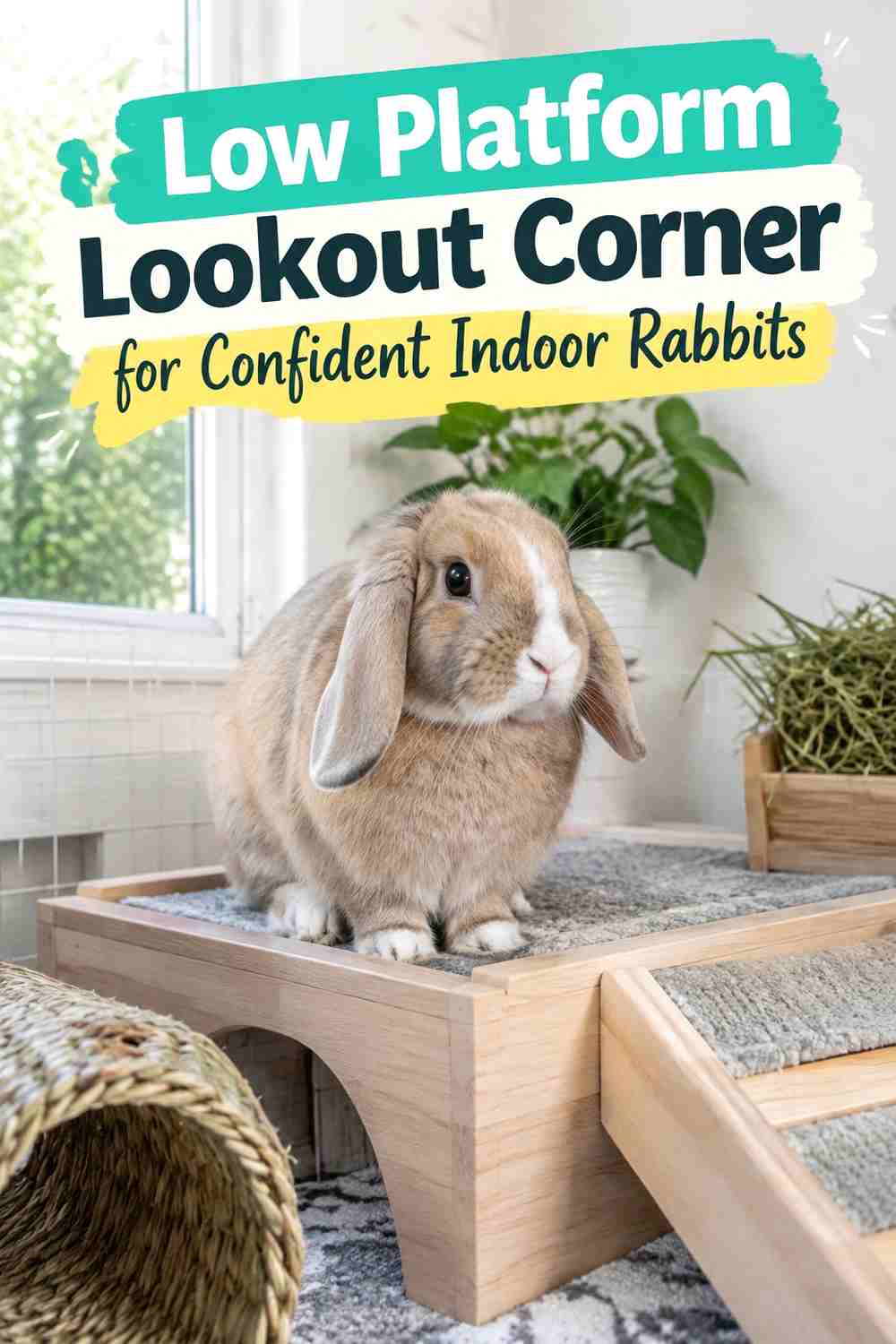
A low lookout platform gives a confident rabbit a slightly raised place to observe the room without creating a risky climbing setup. Choose a broad, stable platform with a nonslip top and low enough access that your rabbit can step or hop on and off comfortably. Place it against a wall with clear floor space around the landing area, and avoid stacking boxes or furniture to create extra height. Some rabbits may rest on top while others use the platform as part of a short exploration route. Check the surface regularly for chewing damage, slippery wear, or movement. Rabbits with reduced mobility may prefer a completely floor-level alternative instead of being encouraged onto a raised surface.
Pet Type & Life Stage
This idea best suits rabbits that already move confidently over small changes in floor height.
Comfort & Safety
The platform should not wobble, tip, or require a large jump to enter or leave.
6. Cardboard Maze Enrichment Corner For Exploring Pet Rabbits
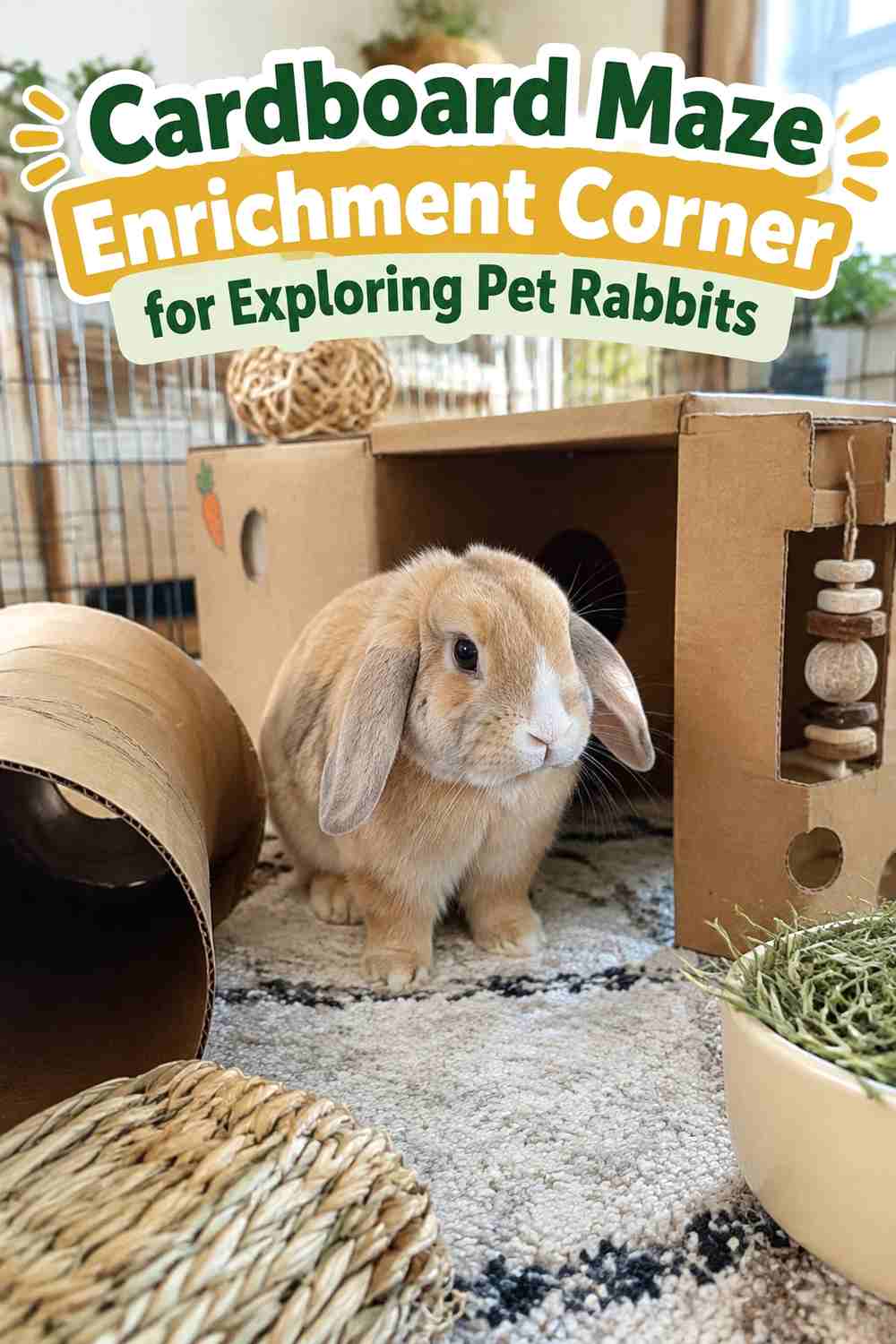
A simple cardboard maze can turn one corner into an exploration route without requiring permanent construction. Use several clean boxes with generous doorways and arrange them so your rabbit can move through, around, and out of the setup easily. Keep the route short at first and provide more than one exit rather than building long enclosed passages. Remove tape, staples, plastic coatings, and loose labels before use. Rearranging one or two boxes occasionally creates a new path without overwhelming the rabbit with constant change. Because cardboard will be chewed and soiled, treat the maze as replaceable enrichment rather than furniture. Leave plenty of open floor space beside it for normal movement.
Setup Notes
Test every opening with your rabbit’s body size in mind so there are no tight gaps or narrow head holes.
7. Paper Tube Foraging Station For Indoor Rabbit Enrichment
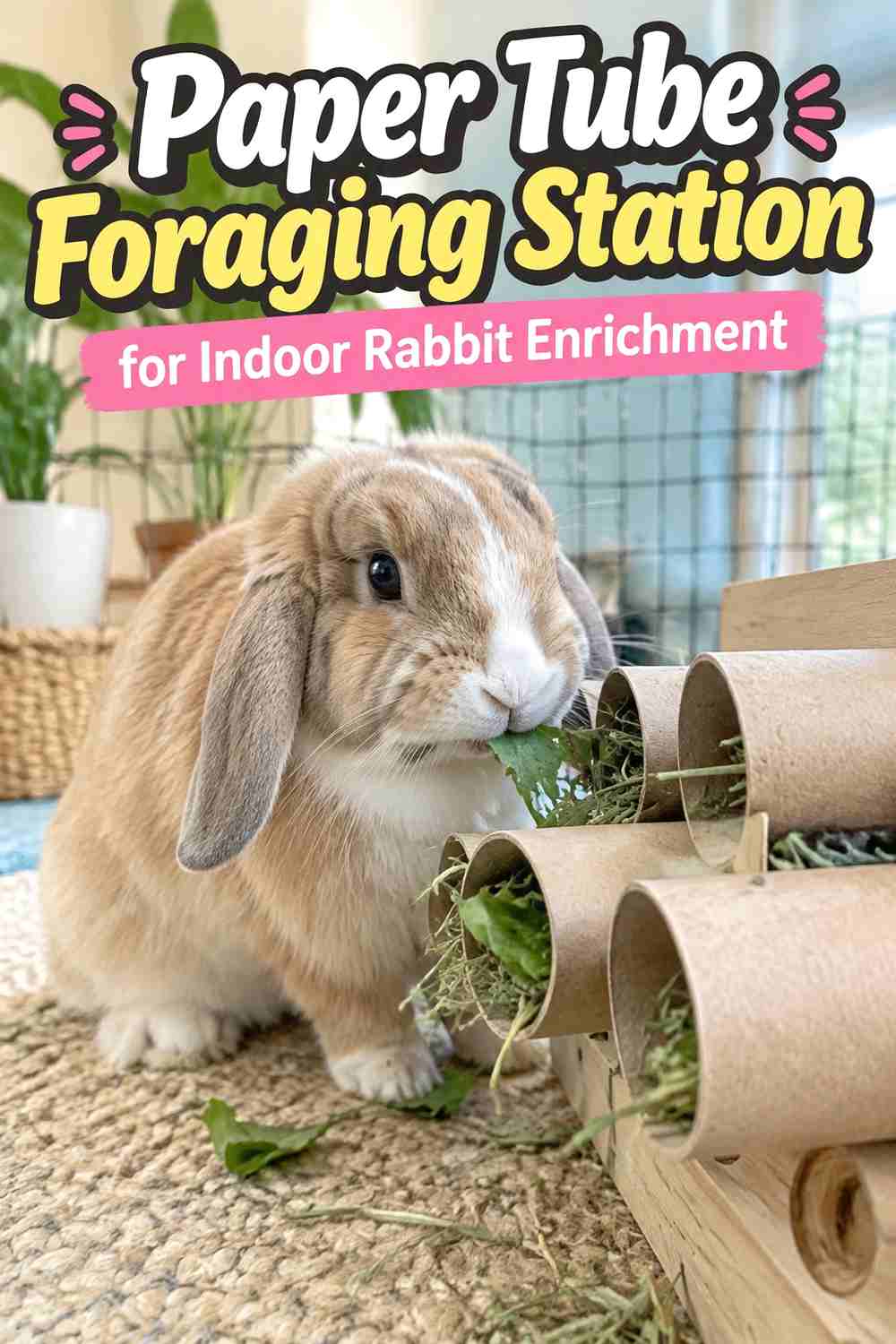
A paper tube foraging station provides a small problem-solving activity using simple rabbit-appropriate materials. Use clean plain cardboard tubes that are wide enough to prevent the rabbit’s head from becoming trapped, and loosely place familiar hay or approved food from the rabbit’s normal routine inside. Avoid tightly packing the tubes or folding ends into hard, complicated closures. Arrange several tubes in a shallow box so they stay contained while the rabbit noses, rolls, or pulls at them. Supervise the first sessions to see whether your rabbit forages or simply tears the cardboard apart. Replace tubes once they become wet, heavily crushed, or dirty rather than repeatedly refilling worn pieces.
Best For
Rabbits that enjoy moving objects, investigating cardboard, and searching through simple feeding enrichment.
Cleaning Notes
Discard damp tubes promptly and wipe the holding tray before setting up the activity again.
8. Quiet Covered Hideout Corner For Shy Indoor Rabbits

A covered hideout corner gives a rabbit an enrichment choice based on privacy rather than active play. Use a sturdy rabbit-sized shelter with at least two comfortable openings so your rabbit can enter and leave without feeling blocked. Place it in a quieter section of the room where people are not constantly walking past, and keep the interior simple with a flat familiar surface rather than bulky fabric. The hideout can also become an observation point if one opening faces the rest of the room. Avoid repeatedly reaching inside or pulling the rabbit out during normal use. Check the structure for chewing damage and move it only occasionally, since part of its value comes from being a predictable retreat.
Best For
Rabbits that enjoy sheltered spaces or prefer observing activity from partially covered areas.
9. Rotating Toy Basket For Fresh Rabbit Enrichment Choices

A rotating toy basket helps keep enrichment varied without covering the floor with every toy you own. Choose a few rabbit-appropriate items with different purposes, such as a chew item, toss toy, cardboard object, and simple foraging piece, then store the remaining toys elsewhere. After several days, swap one or two items instead of replacing everything at once. This makes it easier to notice which activities your rabbit returns to and which ones are ignored. Keep the active basket low and stable, or present the toys directly on the floor if your rabbit chews the container. Inspect each item during rotation so worn, dirty, or damaged toys do not quietly cycle back into use.
Why It Works
Rotation adds novelty while preventing the enrichment corner from becoming crowded and difficult to clean.
Use & Maintenance
Keep a small reserve of clean toys and retire items that no longer remain in safe usable condition.
10. Stable Puzzle Feeder Corner For Food Motivated Rabbits
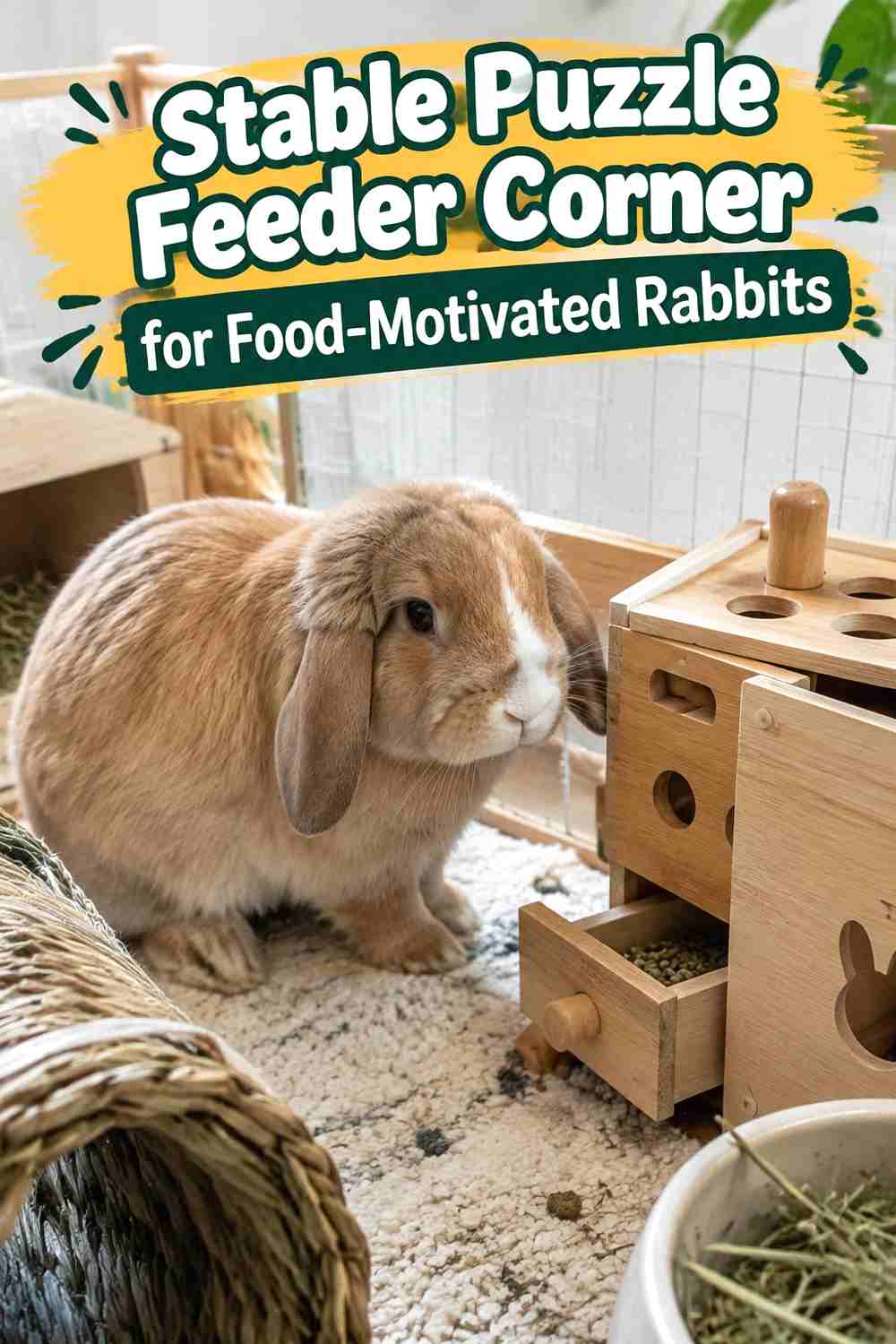
A stable puzzle feeder can add gentle problem-solving for rabbits that are motivated by their usual food. Choose a commercial rabbit-appropriate design with parts large enough to use safely and place it on a nonslip floor so it does not slide across the room. Start with an easy setting and use food already included in the rabbit’s normal routine rather than adding extra treats just to fill the toy. The goal is successful searching, not making the task difficult. Watch for frustration, chewing of unsuitable components, or loss of interest. Remove the feeder once the activity is finished and clean away crumbs before resetting it for another session.
Best For
Rabbits that already investigate movable objects and remain interested in food-based activities.
Pro Tip
Make the puzzle easier again if your rabbit starts abandoning it instead of continuing to explore.
11. Texture Exploration Zone For Curious Indoor Pet Rabbits

A texture exploration zone creates a small floor area with a few different stable surfaces for your rabbit to investigate. Use simple materials such as flat cardboard, plain paper sheets, and the familiar solid flooring already present in the room rather than loose gravel, sharp pieces, or heavily textured craft materials. Arrange the surfaces side by side so your rabbit can choose where to stand, paw, sniff, or rest. Keep everything flat enough that edges do not catch feet, and remove any material that becomes soggy or heavily shredded. This idea works best as a temporary enrichment layout that can be changed occasionally without altering the rabbit’s entire living area.
Space & Placement
Keep the zone away from water bowls and litter areas so paper and cardboard stay dry.
12. Open Floor Toss Toy Corner For Playful Indoor Rabbits
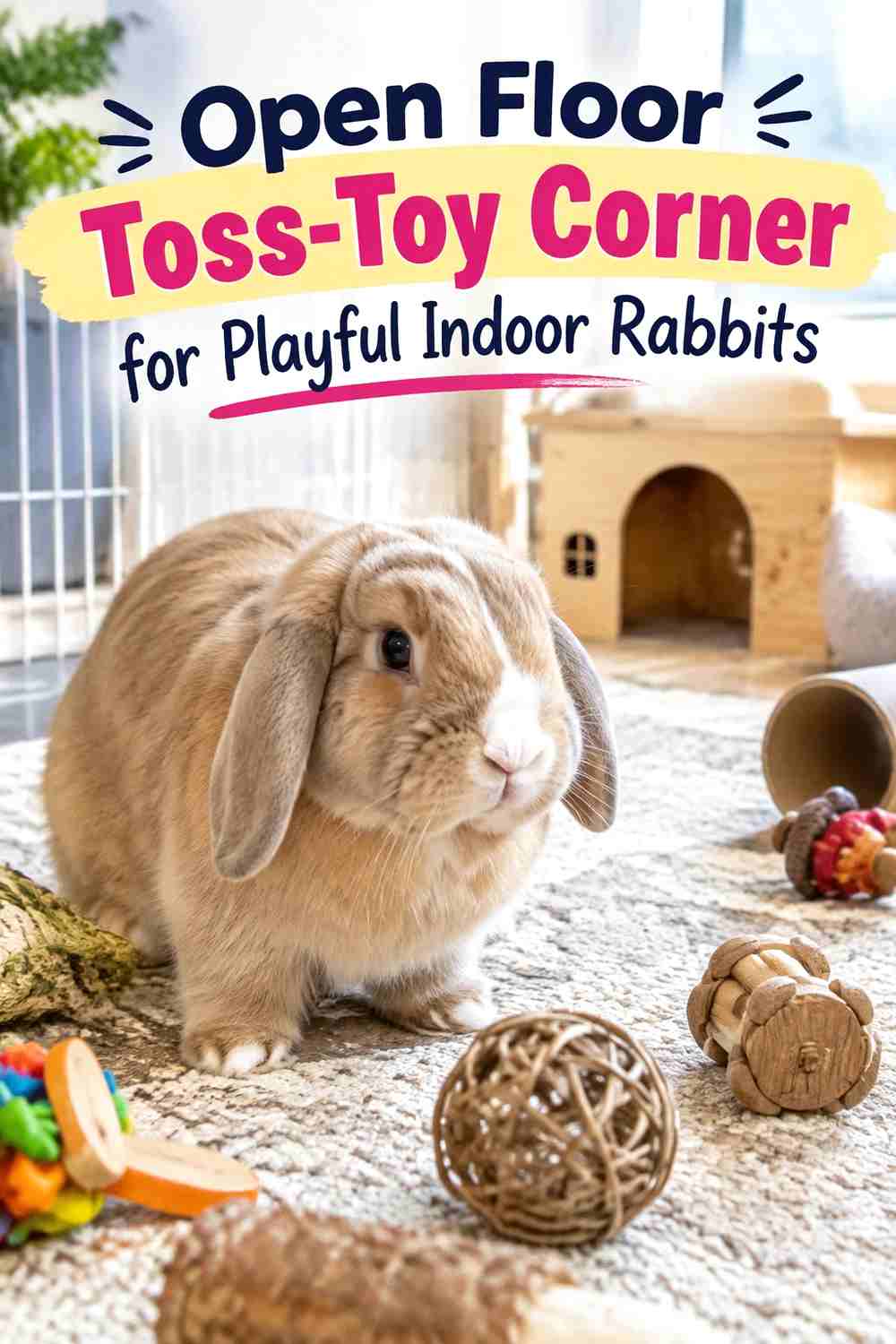
An open toss-toy corner gives playful rabbits room to push, nudge, pick up, and move lightweight rabbit-safe toys. Choose a clear section of nonslip floor and offer only a few appropriately sized items so the rabbit can move around them freely. Avoid toys with bells, sharp edges, tiny removable pieces, strings, or unknown materials. Some rabbits may enthusiastically rearrange objects while others interact only briefly, so do not crowd the space in an attempt to create more interest. Rotate toys periodically and keep the corner free from furniture legs, electrical cords, and storage clutter. This setup is particularly easy to reset because there is no permanent structure to clean or maintain.
Best For
Rabbits that naturally push bowls, move toys, or rearrange lightweight objects in their environment.
13. Multi Level Step Corner For Active Indoor Pet Rabbits

A multi-level step corner adds gentle movement for active rabbits using broad, low, stable platforms rather than tall climbing structures. Arrange two or three levels with easy transitions and enough surface area for secure footing. Each platform should stay firmly in place when the rabbit hops up or down, and the lowest route should remain available for easy access. Avoid narrow ledges, slick finishes, or unstable stacked boxes. This idea can make a larger indoor area more interesting while keeping the overall height modest. Watch how your rabbit uses the route and remove a level if jumps look hesitant or awkward. Older rabbits or rabbits with mobility changes may be better suited to floor-level enrichment.
Comfort & Safety
Use nonslip surfaces and clear every landing area of hard or sharp obstacles.
14. Window View Rest Corner For Calm Indoor Pet Rabbits

A window-view rest corner can provide quiet visual enrichment for a rabbit that enjoys watching household or outdoor activity. Set up a stable floor-level mat, low platform, or hideout several feet from a securely closed window, allowing the rabbit to approach or leave freely. Keep direct hot sunlight, dangling blind cords, houseplants, and drafts away from the space. Some rabbits may spend time watching movement outside, while others simply use the corner as a daytime resting spot. The setup should remain calm rather than exposing the rabbit to constant startling activity. If outside movement appears to make your rabbit restless, shift the rest area farther from the glass or choose a quieter wall.
Best For
Calm rabbits that naturally pause near windows or other observation points.
15. Combined Dig Chew Forage Corner For Busy Indoor Rabbits
You May Also Like



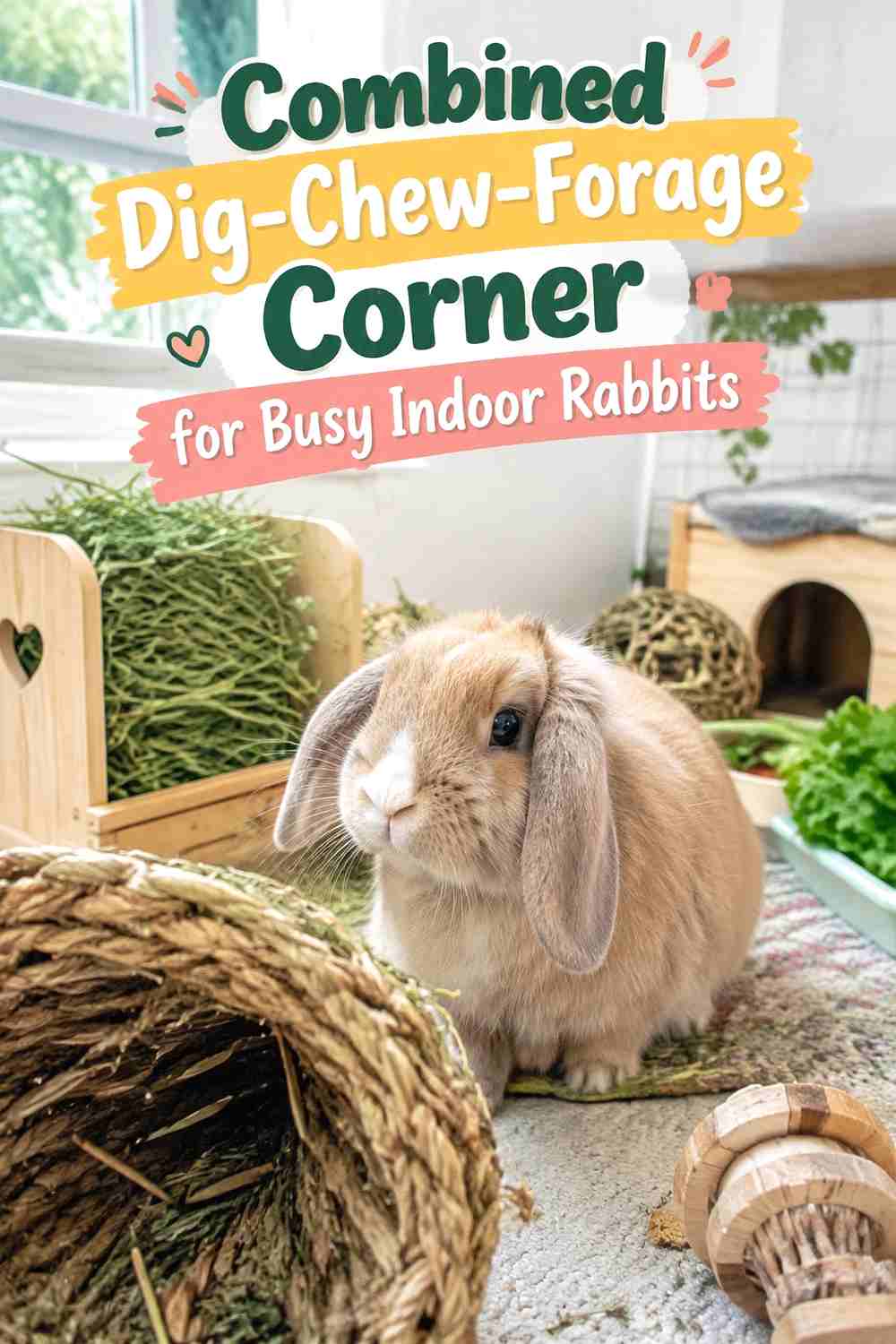
A combined enrichment corner works well when you have enough room to offer several activities without crowding them together. Divide one area into three simple zones: a digging box, a small chew selection, and a basic foraging activity using familiar food or hay. Leave open floor between the zones so your rabbit can choose one activity and move away without stepping over everything else. Keep each component easy to remove for cleaning, and avoid introducing all-new materials at the same time. If one activity becomes messy or is ignored, simplify the corner rather than adding more objects. Rotating only one zone at a time can keep the setup interesting while preserving a predictable overall layout.
Space & Placement
This setup needs enough room for clear separation between activities and normal movement around them.
Pro Tip
Watch which zone your rabbit chooses most often and use that preference to guide future rotations.
How to Choose the Right Idea
Start with the behaviors your rabbit already shows. Rabbits that dig at bedding or corners may enjoy a digging box, while rabbits that repeatedly chew cardboard may prefer a dedicated chew area. Curious rabbits that investigate objects can try foraging tubes, puzzle feeders, mazes, or toss toys.
Space and mobility matter too. Keep platforms low, landings clear, and pathways wide enough for natural movement. Senior rabbits or rabbits with reduced mobility may be more comfortable with floor-level hideouts, foraging, and chew activities instead of multi-level setups.
Cleaning should also influence your choice. Cardboard and paper activities need regular replacement, while reusable trays and platforms should be easy to wipe. In multi-rabbit homes, provide enough space and resources so rabbits are not forced to compete for one hideout or favorite enrichment item.
Final Thoughts
A good rabbit enrichment corner does not need dozens of toys. Start with one activity that matches your rabbit’s natural interests, leave plenty of open floor space, and rotate simple options over time. Digging, hiding, chewing, foraging, exploring, and observing can all become useful enrichment when the setup stays safe and easy to maintain.
FAQs
1. How many enrichment items should I put in a rabbit corner?
Start with a few distinct options rather than filling the area. Enough open space should remain for your rabbit to move, turn, rest, and leave the enrichment zone easily.
2. Can cardboard be used for rabbit enrichment?
Plain clean cardboard can be useful for tunnels, boxes, mazes, and simple foraging setups. Remove tape, staples, plastic coatings, and heavily damaged pieces.
3. How often should I rotate rabbit enrichment toys?
There is no fixed schedule. Swap one or two items when interest drops while keeping some familiar objects available so the entire environment does not change at once.
4. What enrichment works well for a rabbit that does not climb?
Try digging boxes, chew areas, cardboard tunnels, foraging activities, toss toys, or quiet observation corners that stay entirely at floor level.
5. How do I keep a rabbit enrichment corner easy to clean?
Use removable boxes, trays, washable mats, and a limited number of toys. Replace soiled paper or cardboard promptly and keep water and litter areas separate when practical.
Save your favorite rabbit enrichment corner ideas and start with the activity that best matches how your rabbit already likes to explore.
