A great puppy playdate mixes playful moments, easy exploration, and quiet breaks so young dogs can enjoy company without constant high-energy wrestling. Puppy playdates work best when the activities suit the puppies’ size, confidence, energy, and familiarity with each other. A lively pair may enjoy toy games and a simple obstacle course, while cautious puppies may be more comfortable walking side by side or spending time together without direct play. The 10 ideas below include indoor and outdoor options, active games, calmer activities, and setups that are easy to adjust. Keep interactions supervised, provide separate resources when needed, and give either puppy space when enthusiasm turns into avoidance, persistent chasing, or difficulty settling. For young puppies, also follow your veterinarian’s guidance about vaccination status and appropriate contact environments.
Save This Idea on Pinterest

10 Fun Puppy Playdate Ideas
Save to PinterestQuick List
- Gentle Backyard Toy Swap Playdate for Curious Puppies
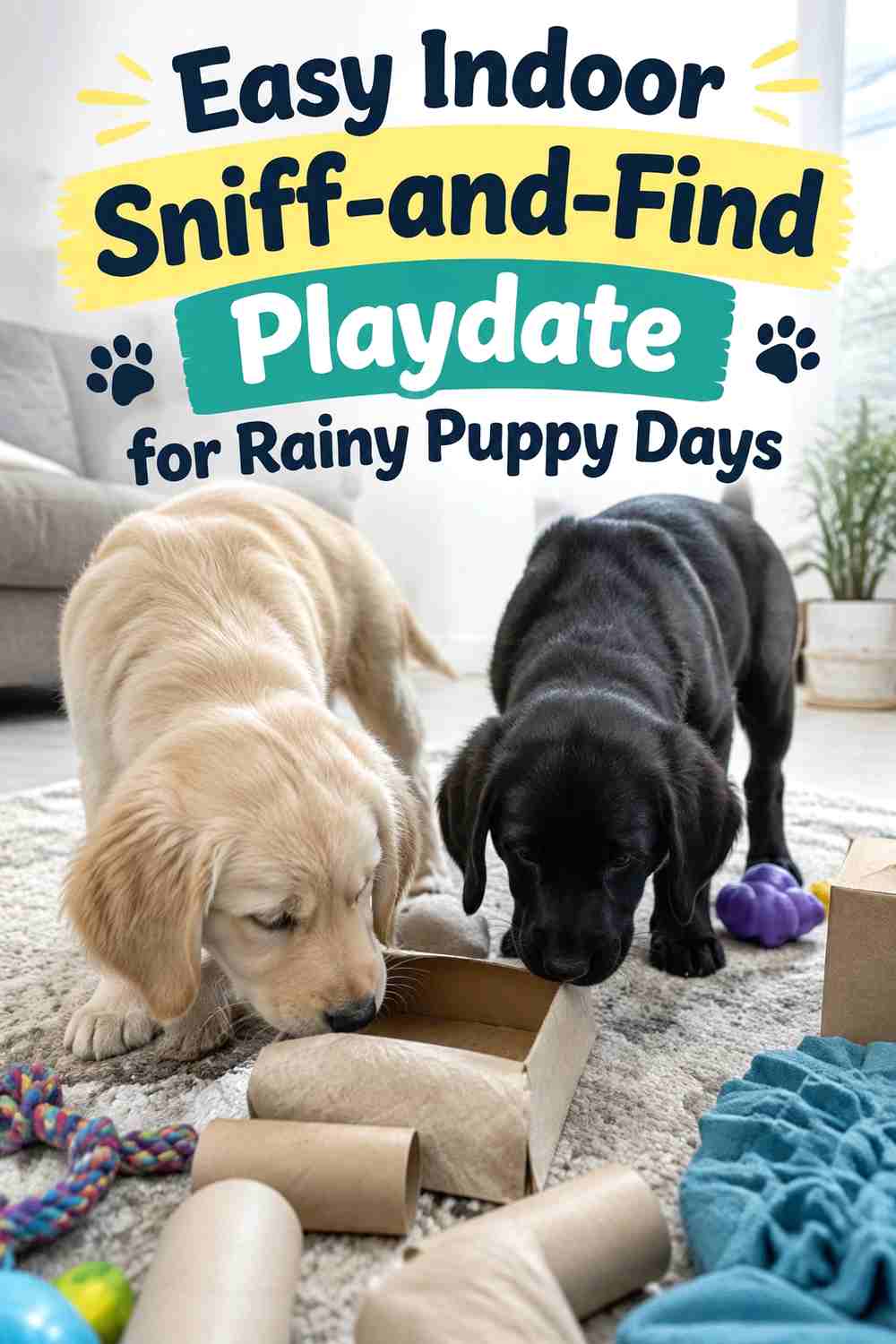
- Easy Indoor Sniff-and-Find Playdate for Rainy Puppy Days
- Calm Parallel Walk Playdate for Shy Young Puppies
- Puppy Splash Mat Playdate for Warm Summer Afternoons
- Cozy Blanket Fort Playdate for Small Indoor Puppies
- Supervised Tug-and-Trade Playdate for Energetic Puppies
- Mini Obstacle Course Playdate for Confident Growing Puppies
- Frozen Treat Lick Mat Playdate for Calm Puppy Breaks
- Quiet Porch Social Playdate for Easily Overwhelmed Puppies
- Rotating Toy Station Playdate for Multi-Puppy Fun
1. Gentle Backyard Toy Swap Playdate For Curious Puppies
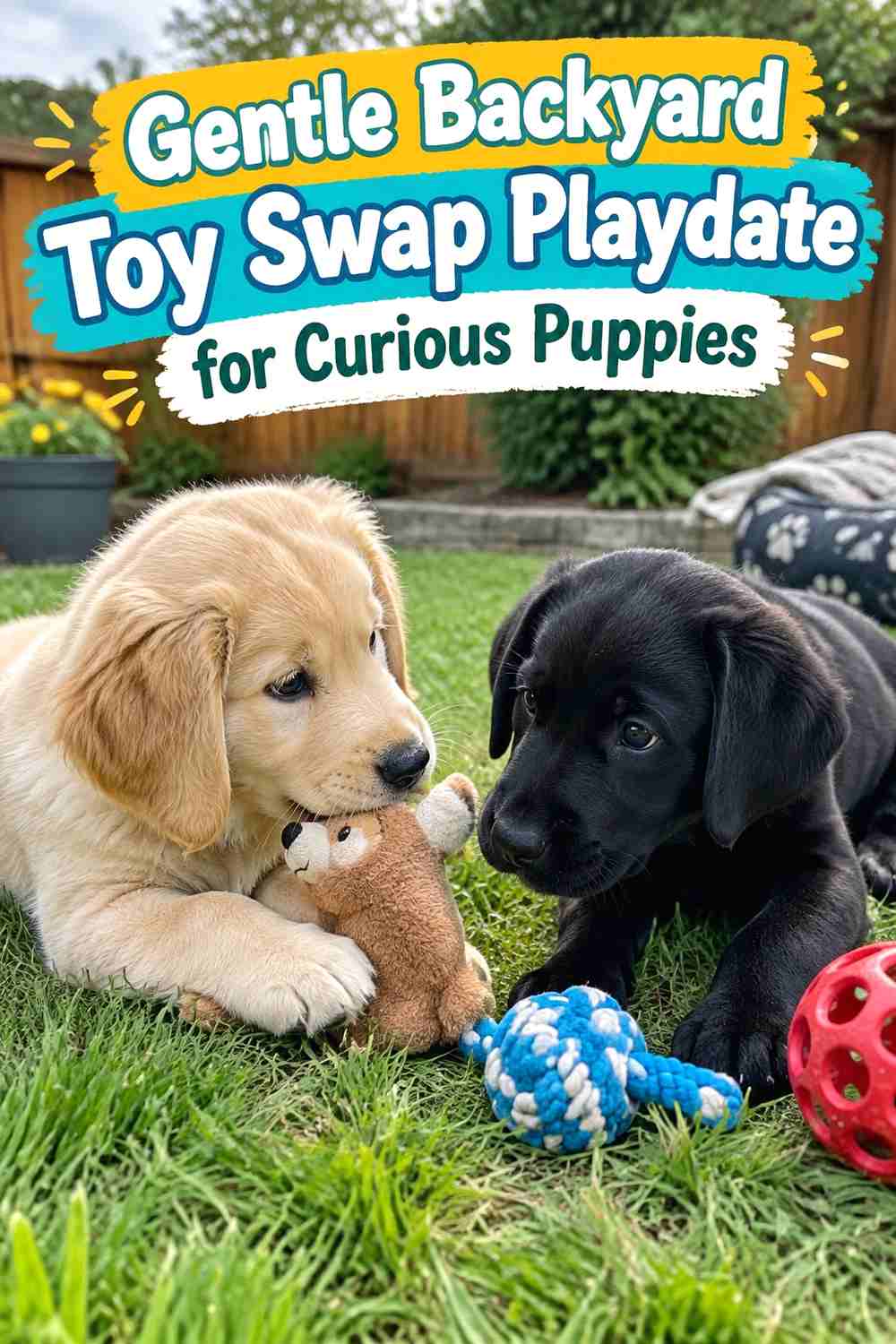
Turn a secure backyard into a relaxed toy-swap playdate by placing several puppy-safe toys around an open area instead of expecting both puppies to share one favorite object. Let them investigate at their own pace, occasionally moving or exchanging toys to renew interest. Soft balls, sturdy puppy toys, and larger easy-to-carry items can create variety without cluttering the space. Keep water and a quiet resting spot nearby, and remove anything either puppy starts tearing apart. This setup suits curious puppies that enjoy exploring as much as chasing. If one puppy repeatedly guards an item or follows the other to steal toys, increase the distance between resources or switch to a less competitive activity.
Setup Notes
Start with more toys than puppies and spread them apart. A clear yard makes it easier to notice whether both puppies are participating comfortably or one is constantly being crowded.
Comfort & Safety
Use a fully secure area and supervise the entire session. Remove damaged toys promptly, and avoid forcing puppies to surrender objects directly to each other.
2. Easy Indoor Sniff And Find Playdate For Rainy Puppy Days
You May Also Like


An indoor sniff-and-find game gives puppies something interesting to do together when wet weather makes outdoor play inconvenient. Place a few puppy-safe toys or familiar objects in easy-to-find spots around one uncluttered room, then let both puppies wander, sniff, and investigate. Keep the first round simple so the activity feels exploratory rather than frustrating. You can reset the room with different hiding spots once interest drops, but avoid tiny objects or anything that could be swallowed. This playdate works especially well for puppies whose play styles differ because they can explore independently while sharing the same space. Keep doors, cords, houseplants, shoes, and breakable items out of reach before beginning.
Space & Placement
Use one puppy-proofed room rather than the whole house. Open floor space and easy hiding locations behind sturdy furniture or beside baskets are simpler to supervise and reset.
Pro Tip
Finish while both puppies are still interested. Several easy discoveries usually work better than making the hiding places progressively difficult.
3. Calm Parallel Walk Playdate For Shy Young Puppies
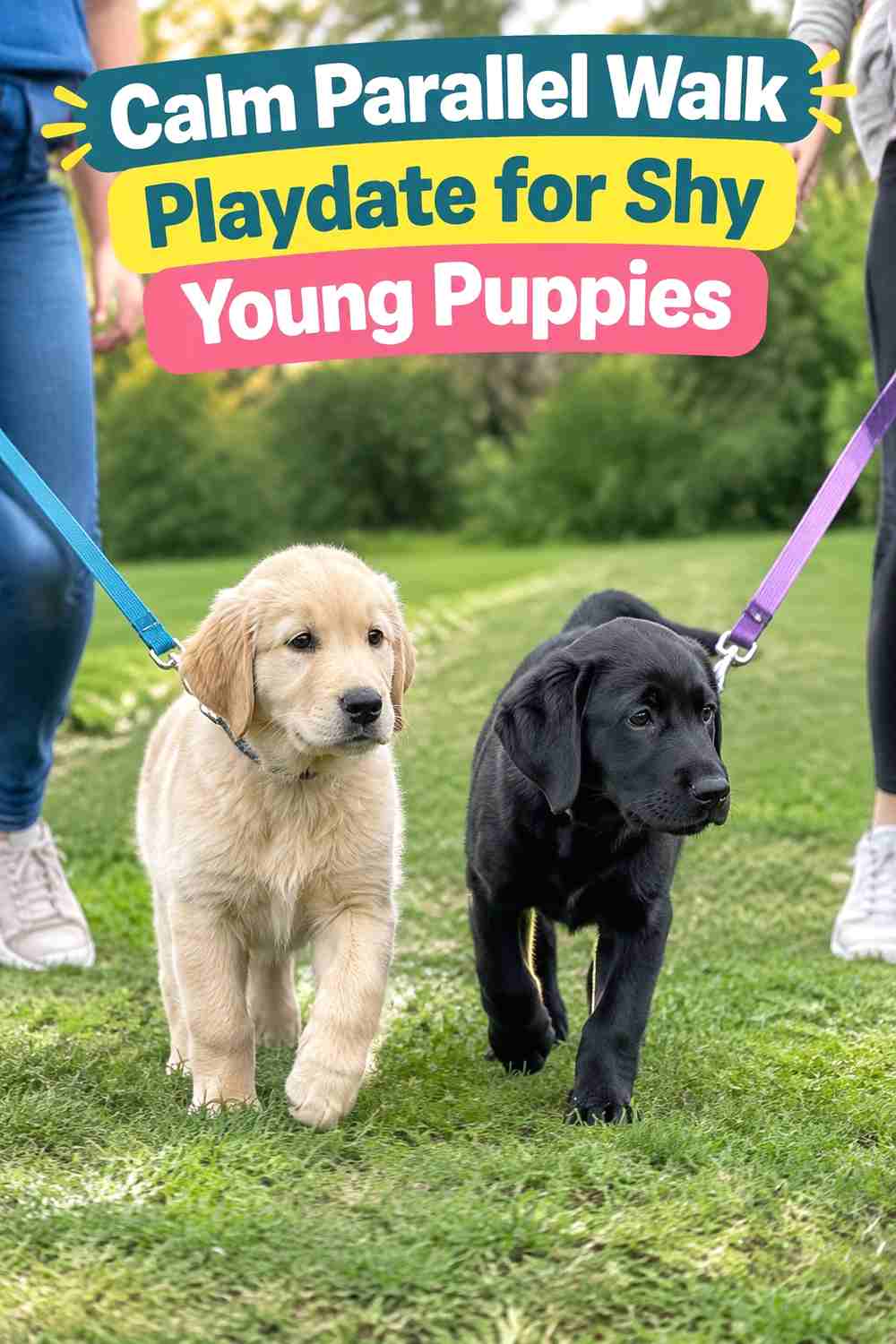
A parallel walk lets shy young puppies spend time near each other without requiring immediate face-to-face play. Each puppy walks with its own handler, starting with enough space that both can move naturally and look around instead of focusing constantly on the other dog. Follow a quiet route and gradually allow the distance to decrease only if both puppies remain comfortable. This setup can be useful when direct greetings feel too intense or when you want a gentler beginning before another shared activity. Keep the pace easy and allow sniffing breaks. Avoid busy paths, crowded dog areas, or situations where the puppies are repeatedly pulled toward each other for introductions.
Best For
This idea suits puppies that are cautious, easily distracted, or still learning how to relax around unfamiliar dogs. It can also be a useful opening activity before backyard play.
Comfort & Safety
Use comfortable, secure walking equipment and choose an environment appropriate for the puppies’ age and health status. Follow veterinary guidance for outdoor exposure if vaccinations are still in progress.
4. Puppy Splash Mat Playdate For Warm Summer Afternoons
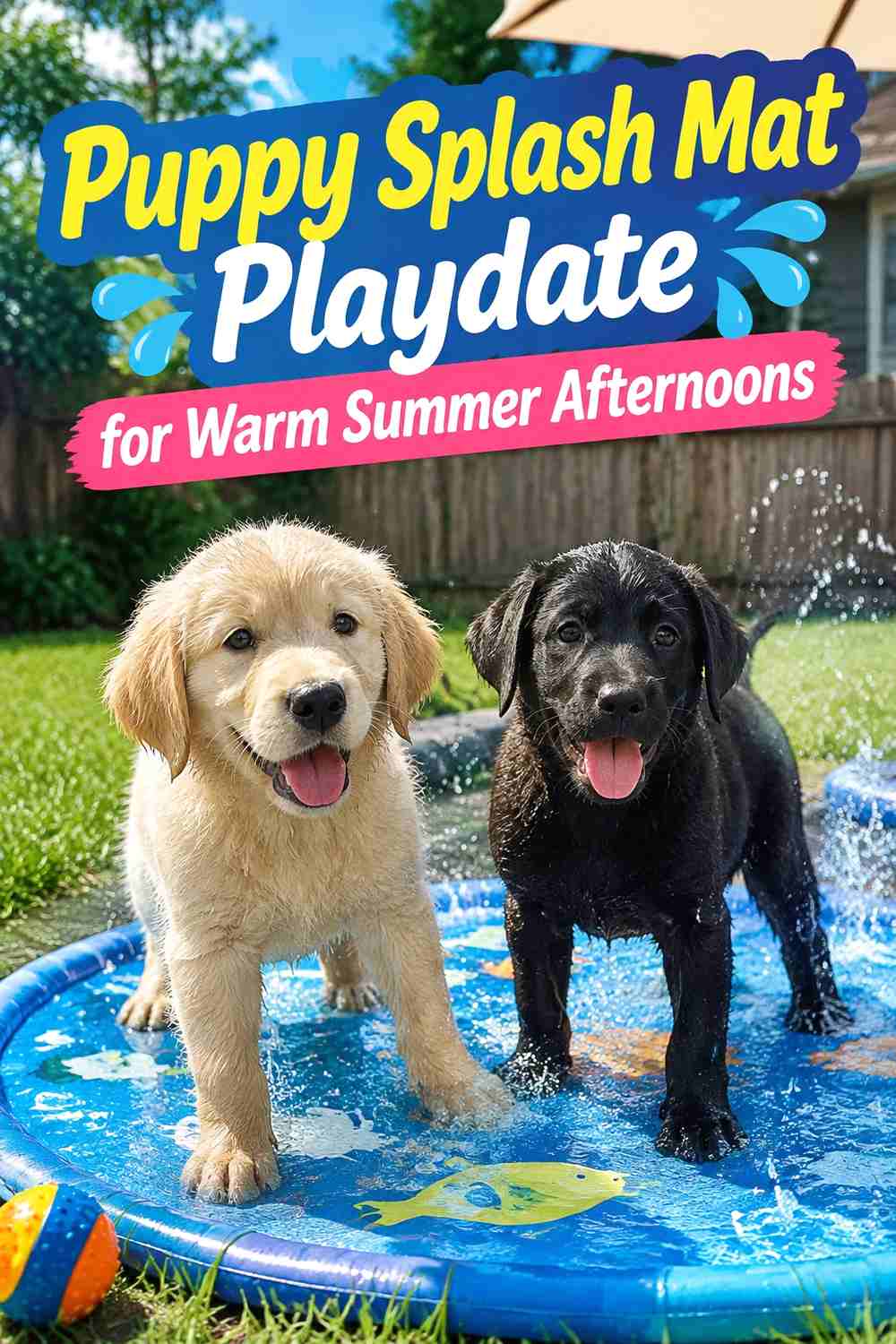
A shallow splash mat can turn a warm-weather puppy playdate into a simple water activity without requiring deep water or complicated equipment. Place the mat on a stable, shaded outdoor surface and let the puppies approach it voluntarily. Some may step straight into the water, while others prefer circling, pawing at the edge, or watching their friend first. Keep nearby running areas uncluttered because wet puppies can become excited quickly. Fresh drinking water and a dry resting spot should stay available even when the splash mat is in use. If either puppy seems uninterested, let it play nearby instead of repeatedly placing it on the mat. Empty and clean the mat after use.
Setup Notes
Use shallow water and position the mat where puppies can enter and leave easily. Keep hoses, loose cords, and extra garden equipment outside the play area.
Use & Maintenance
Refresh dirty water as needed, then drain, rinse, and dry the mat before storage to prevent it from becoming a messy leftover play zone.
5. Cozy Blanket Fort Playdate For Small Indoor Puppies
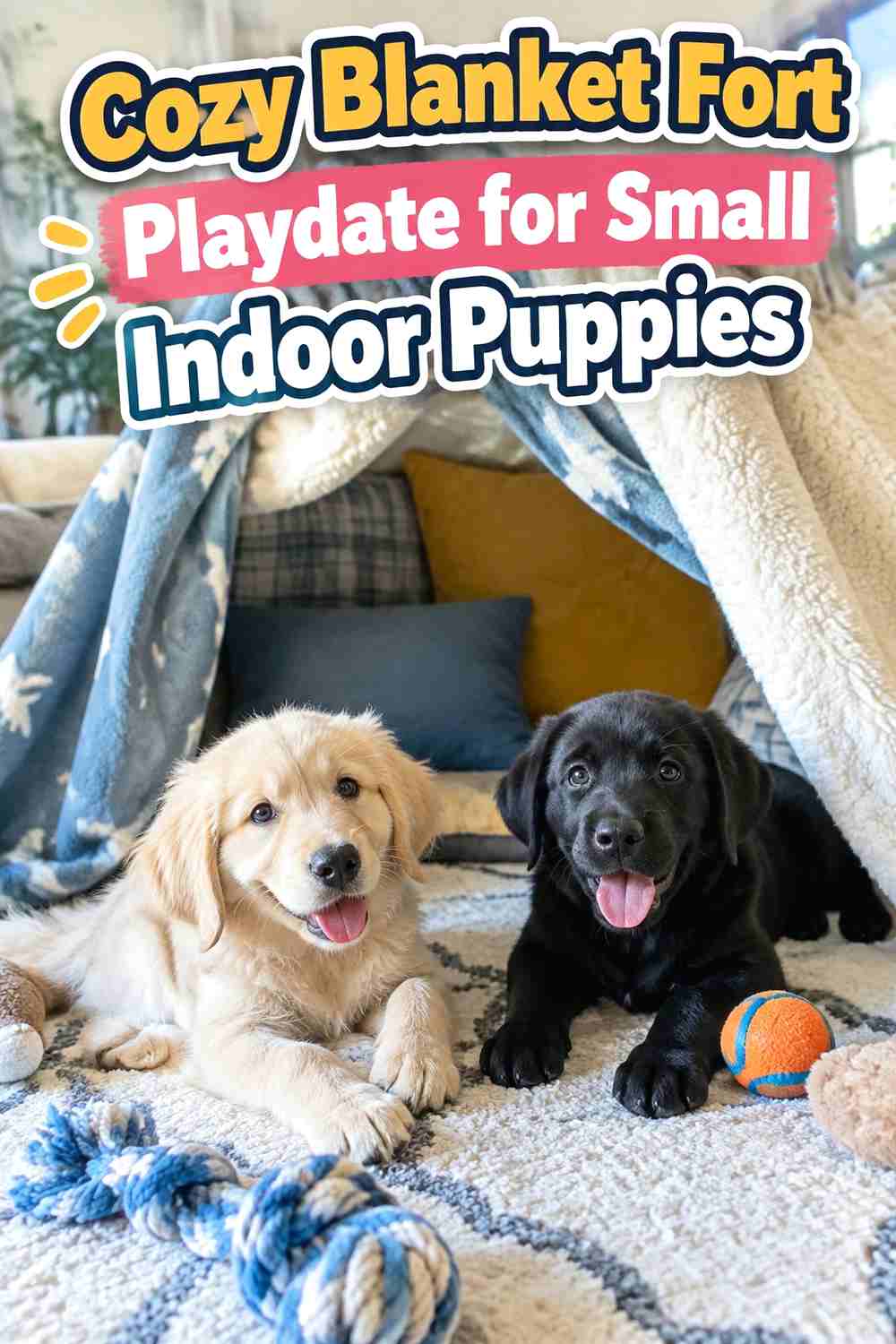
Create a low, open blanket fort where small puppies can crawl through, rest, and investigate together during an indoor playdate. Drape a lightweight blanket over stable furniture with wide exits on more than one side, keeping the structure low enough that there is no dangerous climbing opportunity. Add a washable mat or flat puppy bed underneath and leave some surrounding floor space open for normal play. The fort can become an interesting exploration zone without requiring constant chasing or wrestling. It works best for puppies that enjoy tunnels, enclosed spaces, or short bursts of play followed by rest. Remove the blankets if either puppy begins chewing, pulling, or becoming tangled in the fabric.
Space & Placement
Set the fort away from stairs, electrical cords, and busy walkways. Multiple open exits help prevent one puppy from blocking the other inside.
Cleaning Notes
Choose machine-washable blankets and shake out loose fur or debris after the playdate. Wash any fabric that becomes damp, muddy, or heavily mouthed.
6. Supervised Tug And Trade Playdate For Energetic Puppies
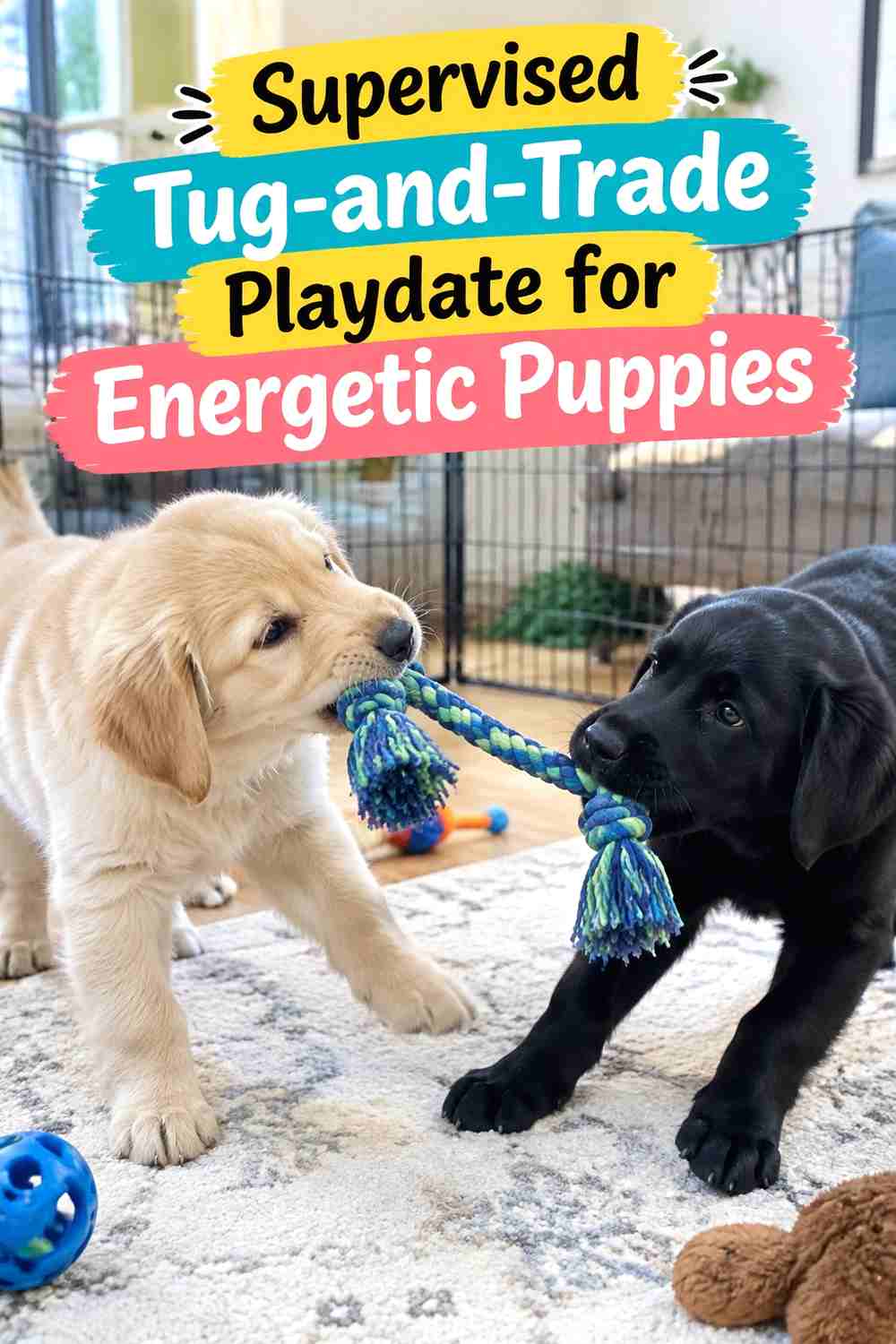
A tug-and-trade playdate gives energetic puppies an interactive game while allowing owners to manage excitement instead of relying on nonstop puppy-to-puppy wrestling. Use several sturdy, appropriately sized tug toys and alternate short tug sessions with simple toy swaps or pauses. The puppies can play separately with their handlers, interact around the same activity, or briefly engage with each other when their play remains loose and comfortable. Keep extra toys ready so one object does not become the focus of competition. Stop or redirect the game if either puppy becomes possessive, overwhelmed, or unable to disengage. Inspect tug toys during the session and remove anything that starts fraying or breaking apart.
Best For
This setup can suit active puppies that enjoy grabbing and carrying toys but benefit from structured pauses between bursts of excitement.
Use & Maintenance
Rotate clean tug toys rather than leaving one prized item available throughout the entire visit. Wash or replace heavily soiled and damaged toys according to their material.
7. Mini Obstacle Course Playdate For Confident Growing Puppies
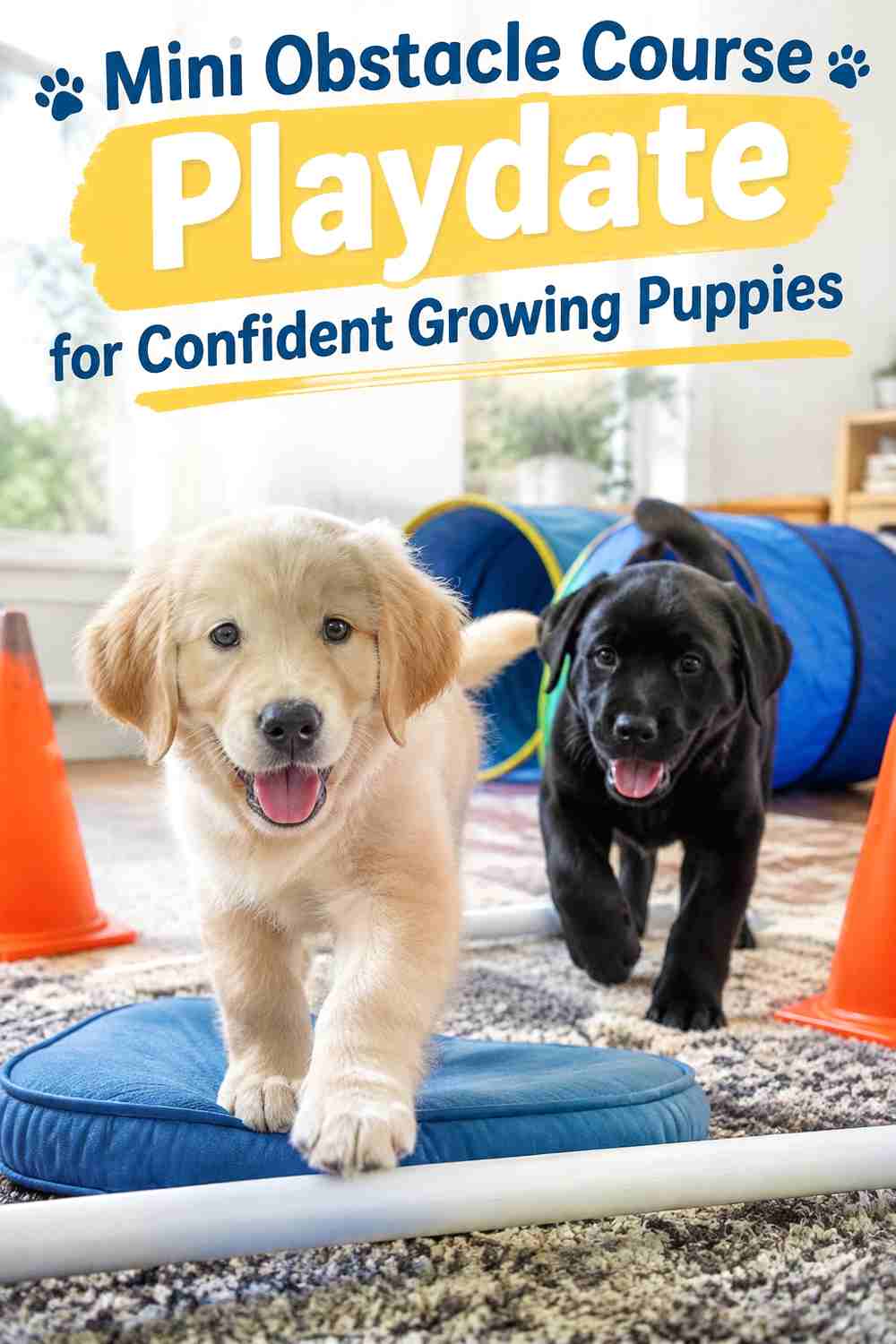
Build a mini obstacle course using simple ground-level challenges that encourage confident puppies to explore rather than jump from risky heights. A wide cardboard tunnel, a stable mat with a different texture, spaced floor markers, and a low walk-around barrier can create several stations without turning the room into a complicated agility setup. Let each puppy investigate independently and choose its own route. Owners can move through the course with the puppies and reset stations when interest fades. Keep everything stable, roomy, and easy to exit. Avoid slippery surfaces, narrow gaps, unstable boxes, or high jumps, especially while puppies are still growing. The goal is playful exploration, not speed or performance.
Setup Notes
Arrange only a few stations at once and leave clear paths between them. Test every object by hand before the puppies enter the area to make sure it cannot tip or collapse easily.
Pro Tip
Change one station between rounds instead of rebuilding the entire course. A small adjustment can make the setup feel new without overwhelming the puppies.
8. Frozen Treat Lick Mat Playdate For Calm Puppy Breaks

Separate lick mats can create a quiet break during an otherwise active puppy playdate. Place one mat for each puppy well apart from the other and use only a food or treat that is already appropriate for that individual puppy. A chilled or frozen preparation can make the activity last longer, but the goal is simply to provide a calmer independent moment rather than encourage competition. Supervise closely and pick the mats up as soon as the puppies finish so they do not become chew toys. This idea is especially useful after energetic outdoor play or before owners want the puppies to settle. Puppies that guard food should have greater separation or enjoy their break in different spaces.
Space & Placement
Choose easy-clean flooring and create enough distance that neither puppy needs to approach the other puppy’s mat. Separate rooms may be more appropriate when food causes tension.
Cleaning Notes
Wash the mats promptly after use and check grooves and edges for leftover food or chewing damage before storing them.
9. Quiet Porch Social Playdate For Easily Overwhelmed Puppies
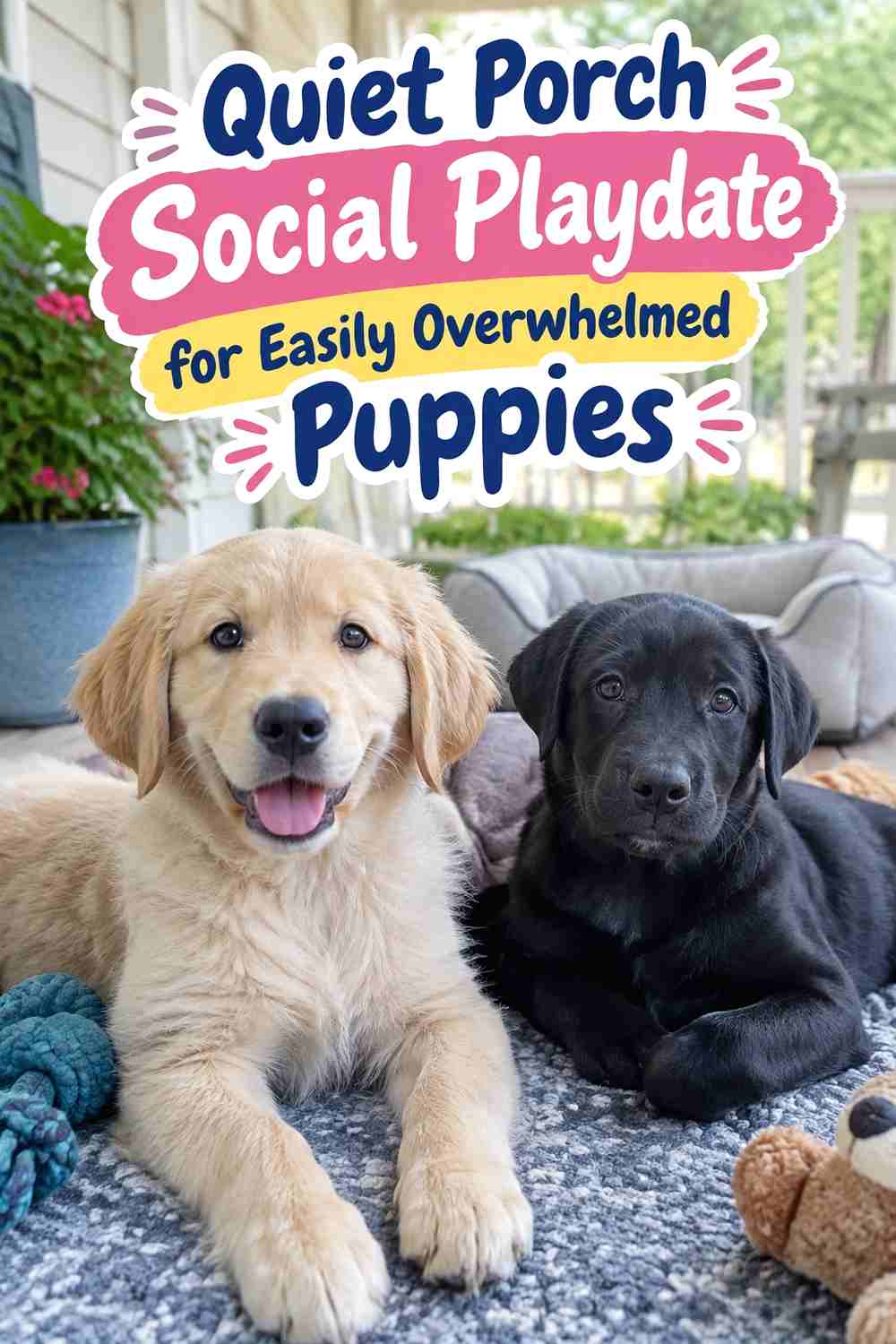
A quiet porch social gives easily overwhelmed puppies the chance to spend time together without turning every meeting into active play. Set up two comfortable resting areas on a secure covered porch or similarly calm space, keeping enough distance that each puppy has its own spot. Owners can sit nearby while the puppies watch, sniff the air, investigate a toy, or simply relax in each other’s presence. This low-pressure setup can work after a short walk or before a more active activity. Keep foot traffic, loud music, excited visitors, and unnecessary toys to a minimum. If either puppy repeatedly retreats, hides, or tries to leave, increase the distance or end the interaction instead of encouraging closer contact.
Best For
This option can suit cautious puppies, puppies meeting for the first few times, or pairs with very different energy levels that need an easier shared activity.
Comfort & Safety
Make sure the porch is securely enclosed or otherwise prevents accidental escape. Provide shade, comfortable footing, separate water access, and a clear route away from the other puppy.
10. Rotating Toy Station Playdate For Multi Puppy Fun
You May Also Like



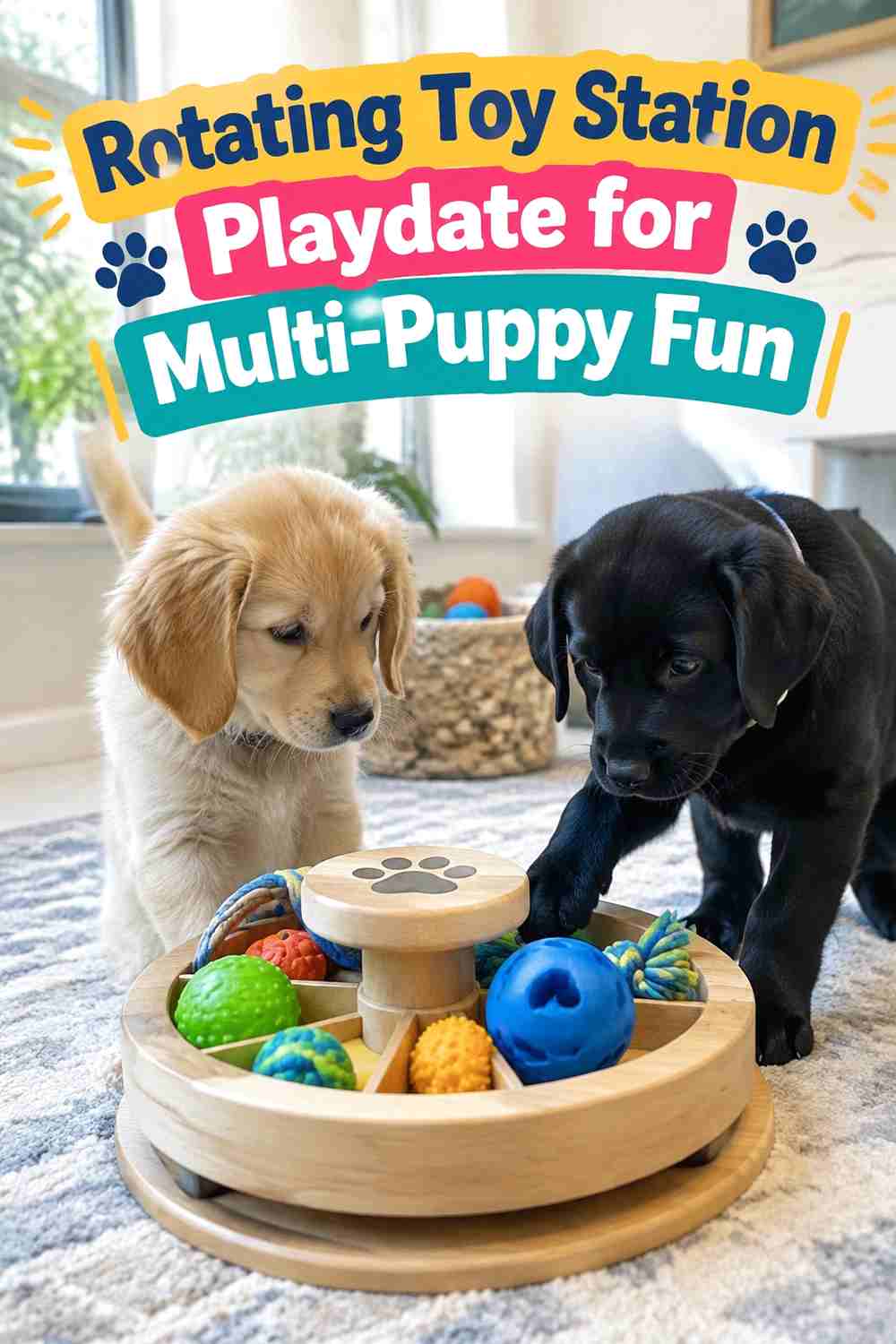
A rotating toy station keeps a multi-puppy playdate varied without covering the floor in every toy you own. Create two or three small play zones, such as a soft-toy area, a rolling-toy area, and a simple exploration area with sturdy puppy-safe objects. Let the puppies move between stations naturally, then remove and replace a station once interest fades. Having multiple resources reduces pressure to crowd around one exciting toy and makes it easier to see which activities each puppy actually prefers. Keep especially valuable toys out if they trigger competition. The station approach also simplifies cleanup because only a limited selection is available at once. Inspect everything between rotations and remove damaged pieces immediately.
Use & Maintenance
Keep the next set of toys in a closed container outside the play area. Swapping a few items at a time maintains novelty while making the final cleanup much easier.
Pet Type & Life Stage
Use toys suitable for each puppy’s size and chewing habits. When puppies differ greatly in size or play style, separate stations and closer supervision can make the setup more comfortable.
How to Choose the Right Idea
Choose a puppy playdate activity based on how the puppies actually interact rather than assuming every young dog wants energetic wrestling. Confident, active puppies may enjoy splash mats, tug games, or simple obstacle stations, while shy or easily overwhelmed puppies may do better with parallel walks and quiet porch time. Size and play style matter too. A large, bouncy puppy paired with a much smaller puppy may need more owner-led activities and additional space so the smaller dog is not constantly knocked over or chased. For indoor playdates, consider flooring, available room, chew hazards, cleanup, and whether each puppy has somewhere to step away. Food, favorite toys, and confined spaces can add unnecessary competition for some puppies, so duplicate resources or separate activity zones when appropriate. Keep sessions flexible enough to switch activities when either puppy loses interest or becomes overstimulated. Health and vaccination circumstances also matter for young puppies, particularly when choosing public or shared outdoor spaces; follow guidance from your veterinarian for your puppy’s situation. These practical, pet-centered adjustments align with the Daily Pet Routine content standard of matching setup, supervision, life stage, maintenance, and safety to the exact activity.
Final Thoughts
The best puppy playdate does not need a complicated schedule. Pick one activity that suits both puppies, add an easy break option, and keep enough space for either dog to disengage comfortably. A successful visit can include active play, quiet exploration, and plenty of ordinary downtime.
FAQs
1. How can I tell if puppies need a break during a playdate?
Watch for repeated attempts to move away, hiding, persistent chasing, difficulty settling, or one puppy continually overwhelming the other. Separate them calmly and give each puppy its own quiet space before deciding whether to resume.
2. Do puppy playdates always need toys?
No. Parallel walks, relaxed porch visits, and simple supervised exploration can all work without toys. For some puppies, fewer objects actually make the interaction easier to manage.
3. What if one puppy wants to play more than the other?
Choose activities that let them participate independently, such as sniffing games or separate toy stations. Do not rely on the quieter puppy to entertain the more energetic one.
4. Can puppies have playdates indoors?
Yes, provided the space is puppy-proofed, easy to supervise, and large enough for both puppies to move away from each other. Remove cords, small objects, unsafe plants, breakables, and other chew hazards first.
5. Should puppies share food or treats during a playdate?
Separate food-based activities are generally easier to manage. Give each puppy its own space and resource, and avoid encouraging them to eat from the same mat, bowl, or high-value food item.
CTA
Save these puppy playdate ideas for your next visit, and explore more practical puppy routines and enrichment ideas from DailyPetRoutine.com.
