Create a welcoming pet Friendsgiving with comfortable rest zones, organized supplies, simple fall décor, easy cleanup, and enough personal space for every guest.
Save This Idea on Pinterest

16 Pet Friendsgiving Setup Ideas
Save to PinterestPet Friendsgiving setups work best when the gathering is planned around how dogs and cats actually use a shared home. Visiting pets may need separate resting areas, water access, clear walking routes, and quiet places away from food, guests, and unfamiliar animals.
These 16 ideas cover lounges, entry stations, photo corners, toy storage, senior-friendly access, porch spaces, treats, cleanup, and separate retreats. You can use only the options that fit your gathering. Pet size, temperament, familiarity with other animals, household layout, and owner supervision should shape the setup more than creating a perfectly coordinated party scene.
Quick List
- Pet Friendsgiving Lounge with Separate Cozy Resting Beds
- Guest Pet Welcome Station with Leash Hooks and Towels
- Shared Friendsgiving Water Station with Spaced Pet Bowls
- Friendsgiving Pet Photo Corner with Simple Autumn Backdrop
- Small-Space Pet Friendsgiving Lounge with Vertical Fall Decor
- Senior-Friendly Friendsgiving Pet Rest Zone with Easy Access
- Quiet Friendsgiving Retreat for Shy Dogs and Cats
- Covered Porch Pet Friendsgiving Lounge with Washable Mats
- Friendsgiving Pet Toy Basket with Simple Activity Rotation
- Easy-Clean Friendsgiving Pet Zone for Busy Holiday Homes
- Table-Side Pet Rest Area Away from Friendsgiving Food
- Multi-Pet Friendsgiving Nook with Individual Name Mats
- Pet-Safe Friendsgiving Treat Station with Sealed Labeled Containers
- Entryway Friendsgiving Cleanup Station for Visiting Pets
- Separate Crate-and-Bed Retreats for Visiting Dogs and Cats
- Host Supply Station for Organized Pet Friendsgiving Gatherings
1. Pet Friendsgiving Lounge With Separate Cozy Resting Beds
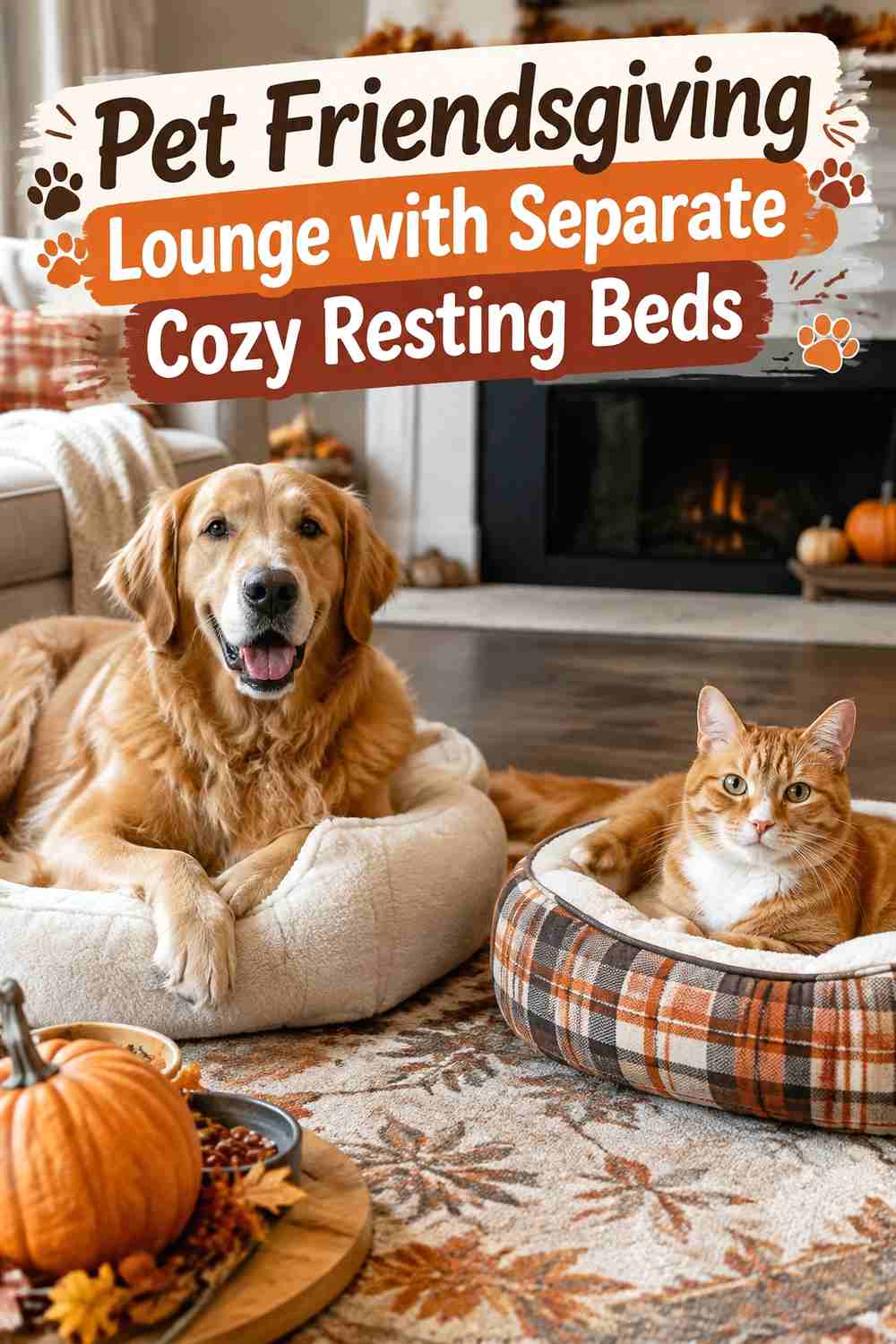
A Pet Friendsgiving lounge works best when every animal has a clearly defined resting place instead of being expected to pile onto one shared bed. Arrange separate dog beds, cat cushions, or familiar blankets around the edge of the gathering room, leaving comfortable space between them and preserving an open center walkway. Matching fall-colored covers can make the area feel coordinated without forcing pets to share resources. Encourage owners to bring familiar bedding when that helps a visiting pet settle more easily. Keep food, high-value toys, and loose decorations away from the lounge if those items create competition. The goal is to give pets places to step away from social activity while still staying near their people.
Setup Notes
Place beds before guests arrive so the room layout is predictable. Keep at least one quieter resting option in another area for pets that want more distance.
2. Guest Pet Welcome Station With Leash Hooks And Towels

You May Also Like



A guest pet welcome station gives visiting owners one obvious place to put leashes, harnesses, towels, and other arrival gear. Use secure wall hooks or closed storage near the entrance, then keep a few clean towels ready for damp paws or coats. Labeling a basket for each guest can prevent leads, collars, and small supplies from becoming mixed together during the gathering. Keep the floor around the door clear so pets are not stepping through bags and coats while entering. This setup is especially useful when several households arrive within a short period. Avoid leaving dangling leashes within chewing reach, and keep medicines, cleaners, or small accessories somewhere completely separate from the guest station.
Use & Maintenance
Reset the entry after each arrival by hanging gear and moving bags away from the walkway. Damp items should have their own drying location.
3. Shared Friendsgiving Water Station With Spaced Pet Bowls
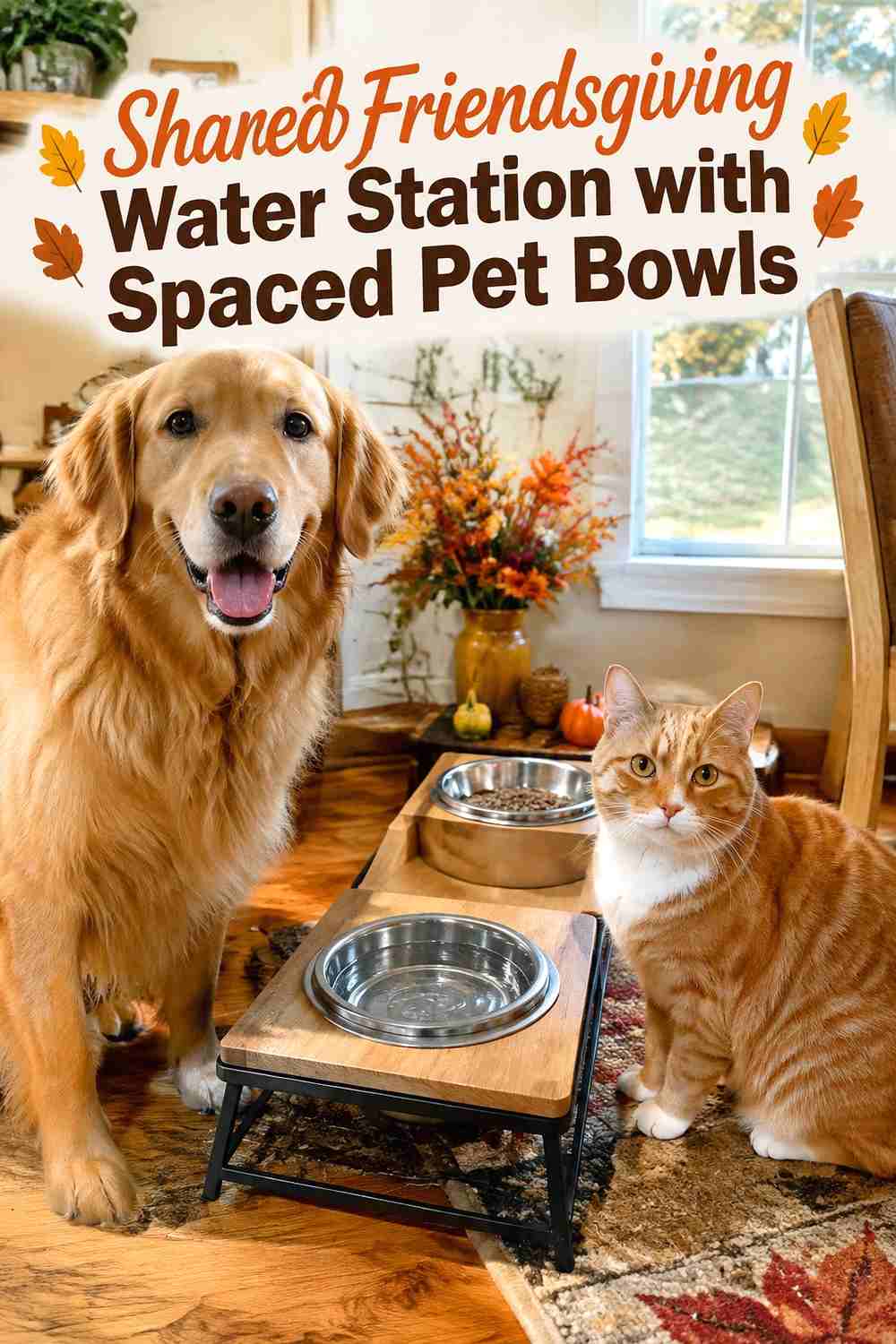
A shared Friendsgiving water station can work well when individual bowls are spaced far enough apart that pets are not forced to drink nose-to-nose. Place bowls along a quiet wall or in separate corners rather than clustering them beside the dining table. Use stable, easy-clean mats underneath to catch splashes and keep the surrounding floor less slippery. In some multi-pet households, completely separate water locations may be more comfortable than one shared station, so follow the pets’ normal habits where possible. Refresh the water during the gathering and keep the area free from human drinks, fallen food, and party décor. Visiting owners can also bring a familiar bowl if their pet is more comfortable using their usual setup.
Space & Placement
Keep water away from doorways and crowded feeding areas. Each pet should be able to approach and leave without being blocked by another animal.
4. Friendsgiving Pet Photo Corner With Simple Autumn Backdrop

A Friendsgiving pet photo corner can create seasonal pictures without turning the gathering into a long posing session. Use one secure plaid, leaf, or neutral autumn backdrop and place a non-slip mat several feet in front when space allows. A pumpkin or stable basket to one side can add color while leaving the actual posing area open. Photograph pets individually or in compatible groups rather than assuming every visiting animal will enjoy sitting together. Natural window light keeps the setup simple and avoids extra cords. Let pets approach voluntarily, take a few quick photos, and move on if attention fades. Skip costumes when a pet dislikes them; the fall setting alone can provide enough Friendsgiving character.
Pro Tip
Set the camera angle and backdrop before bringing pets into the area. A prepared scene helps keep each photo turn short.
5. Small Space Pet Friendsgiving Lounge With Vertical Fall Decor

A small-space Pet Friendsgiving lounge keeps most decorations off the floor so beds, carriers, and people still fit comfortably. Use a secure fall wreath, flat wall sign, or elevated seasonal display for visual interest, then place one or two compact pet beds against quiet walls. Keep the center of the room open rather than filling it with baskets, pumpkins, and floor props. This approach works well in apartments where even a small amount of clutter can make visiting pets feel boxed in. Ask guests to store carriers and bags in a designated spot instead of leaving them around resting areas. If several pets are attending, use additional rooms or staggered quiet spaces rather than trying to fit every resource into one tight lounge.
Space & Placement
Protect doorways and escape routes first. In small homes, usable pet space matters more than adding another decorative element.
6. Senior Friendly Friendsgiving Pet Rest Zone With Easy Access
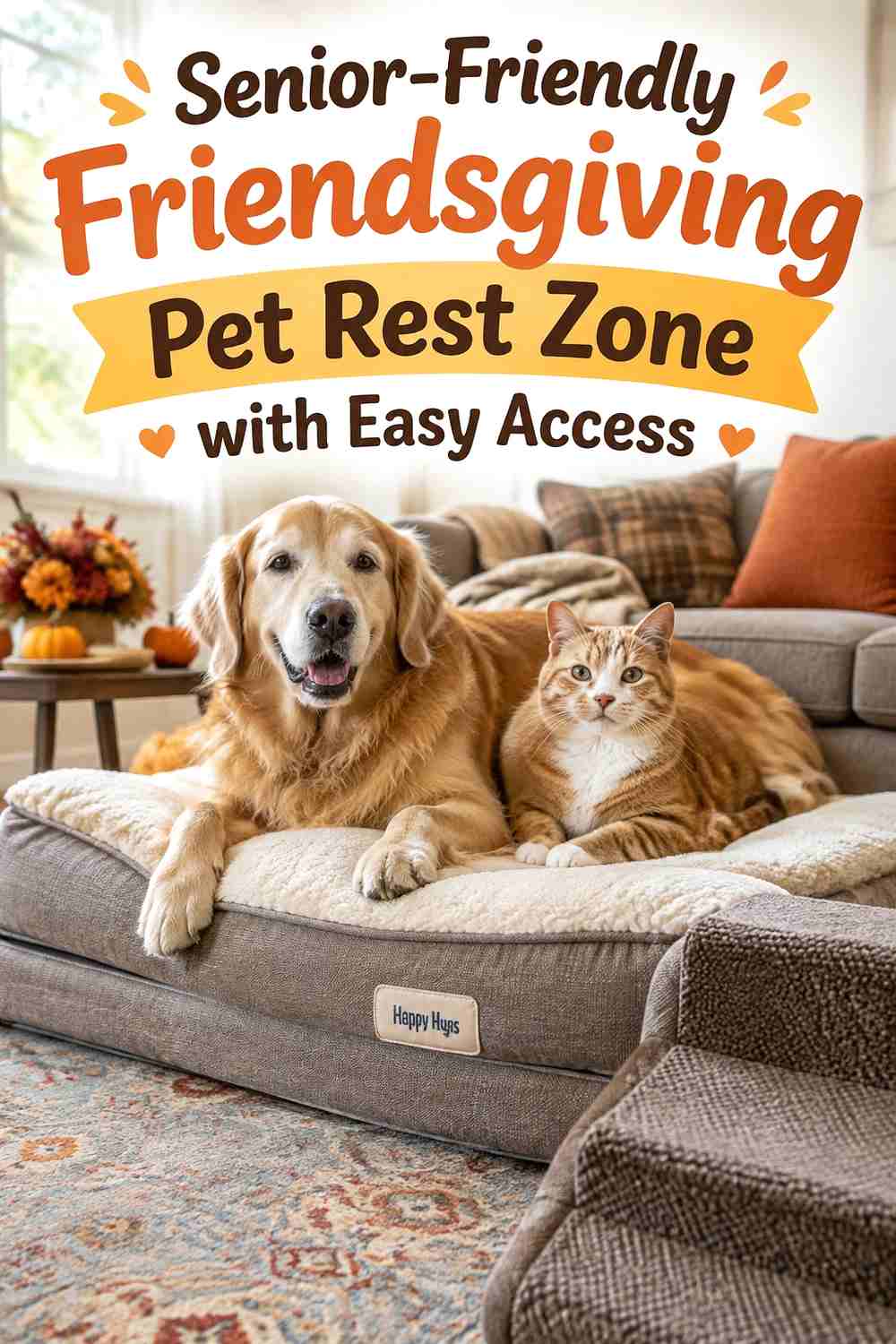
A senior-friendly Friendsgiving rest zone uses low beds, stable footing, and a predictable route through the gathering area. Place a supportive floor-level bed or easy-entry cushion near family activity but outside the busiest traffic path. Keep stools, bags, decorative baskets, and other obstacles away from the approach, and use stable non-slip surfaces on slick flooring where helpful. Avoid repeatedly moving the senior pet’s bed as guests arrive because a consistent layout can be easier to navigate. Some older pets prefer a quieter room rather than staying in the main gathering area, so provide both options when possible. Base the setup on the individual pet’s normal mobility and comfort instead of assuming every senior animal needs the same arrangement.
Pet Type & Life Stage
This setup can also suit large pets or animals of any age that prefer floor-level access and a less crowded route through the room.
7. Quiet Friendsgiving Retreat For Shy Dogs And Cats

A quiet Friendsgiving retreat gives shy dogs and cats somewhere to step away from unfamiliar people, pets, sounds, and activity. Choose a calm bedroom, office, or protected corner and add familiar bedding, water, and the pet’s usual comfort items. Keep the room free from party bags, coats, and temporary storage so it remains a genuine retreat. Dogs and cats should not be repeatedly brought back into the main gathering for greetings or photos if they clearly prefer the quiet space. When multiple shy pets attend, separate retreats may be more appropriate than placing unfamiliar animals together. The setup should allow easy owner access while reducing unnecessary traffic from other guests throughout the event.
Comfort & Safety
Keep the retreat door and access arrangement appropriate for the pets present, and make sure essential resources remain easy to reach without crowding.
8. Covered Porch Pet Friendsgiving Lounge With Washable Mats
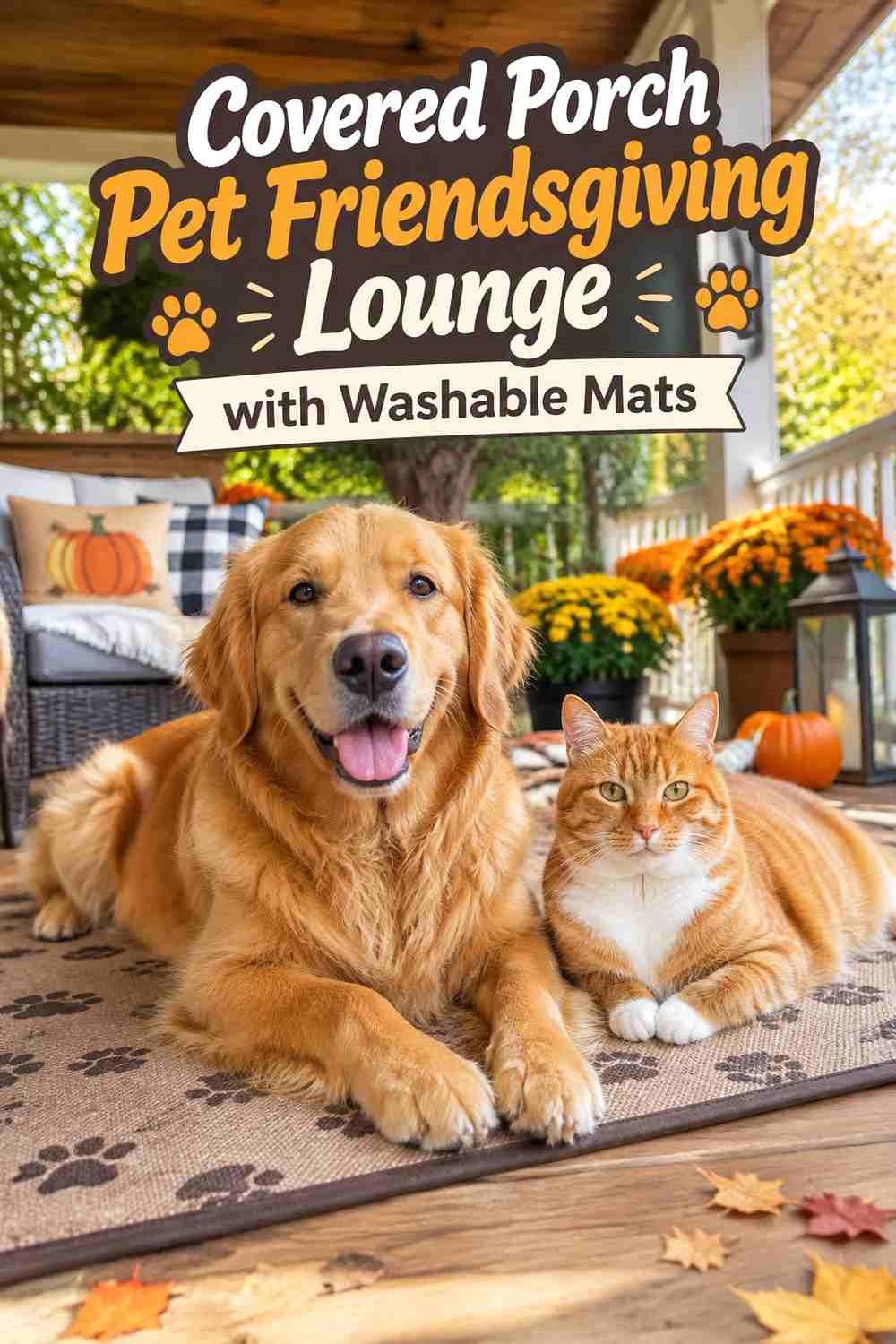
A covered porch Pet Friendsgiving lounge can provide extra breathing room when autumn weather is mild and the space is secure. Use washable outdoor mats or pet beds under the sheltered section and keep pumpkins or seasonal décor along the perimeter rather than blocking the doorway. Make sure pets remain appropriately supervised and have an easy route back indoors. This setup is especially useful for dogs that enjoy being outside for short periods while the main room is busy, but it should not become an unsupervised holding area. Cats require a secure environment rather than an open porch. Check surfaces for wet leaves, slippery spots, and cold drafts before using the area, and bring pets inside when conditions become uncomfortable.
Best For
This option suits homes with a secure covered outdoor area and pets already comfortable using it under owner supervision.
9. Friendsgiving Pet Toy Basket With Simple Activity Rotation

A Friendsgiving pet toy basket keeps play options organized without scattering every toy across a busy gathering room. Store a small selection of familiar items in a sturdy basket, then rotate them during the day instead of putting everything out at once. Use separate toys for pets that do not comfortably share and avoid placing highly valued items in the middle of a mixed group. Some enrichment activities may require individual supervision or quieter spaces, so match the activity to the pet and setting. Remove damaged pieces promptly and put toys away when play ends. This setup is most useful when it gives owners an easy way to offer structured breaks rather than creating a pile that encourages competition.
Use & Maintenance
Inspect toys before guests arrive and again after active play. Keep unused items stored so the floor remains clear and easier to monitor.
10. Easy Clean Friendsgiving Pet Zone For Busy Holiday Homes

An easy-clean Friendsgiving pet zone uses washable bedding, simple mats, and uncluttered floors so fur, crumbs, paw marks, and small spills can be handled quickly. Place removable covers on pet beds, use easy-to-wipe bowl mats, and avoid delicate floor décor that has to be moved every time something needs cleaning. Keep a small cleanup kit in a closed or elevated cabinet nearby rather than leaving cleaners within pet reach. This idea works especially well when several visiting animals will move between the yard, porch, and indoor spaces. Do quick resets during natural breaks in the gathering instead of allowing clutter to accumulate. A practical pet zone can still look seasonal through washable fall fabrics and a few secure decorations.
Cleaning Notes
Keep clean spare covers available and separate damp or dirty textiles from fresh bedding. Clear food spills promptly so pets do not investigate leftovers.
11. Table Side Pet Rest Area Away From Friendsgiving Food

A table-side pet rest area lets social pets stay near their owners without placing beds directly beneath the dining table or beside serving dishes. Set up a mat or bed several feet away from the main meal area, ideally along a wall where the pet can see the room without being in the path of chairs and servers. Keep human food, dropped scraps, and serving utensils out of the pet zone. If guests want to give treats, use only the pet’s usual appropriate options and let the owner manage them. This setup works best for pets that can relax around food and people. If a pet becomes fixated on the table, move the resting area farther away or use a quieter room.
Space & Placement
Keep enough distance for people to move chairs and carry plates without stepping over the pet or crowding the resting bed.
12. Multi Pet Friendsgiving Nook With Individual Name Mats
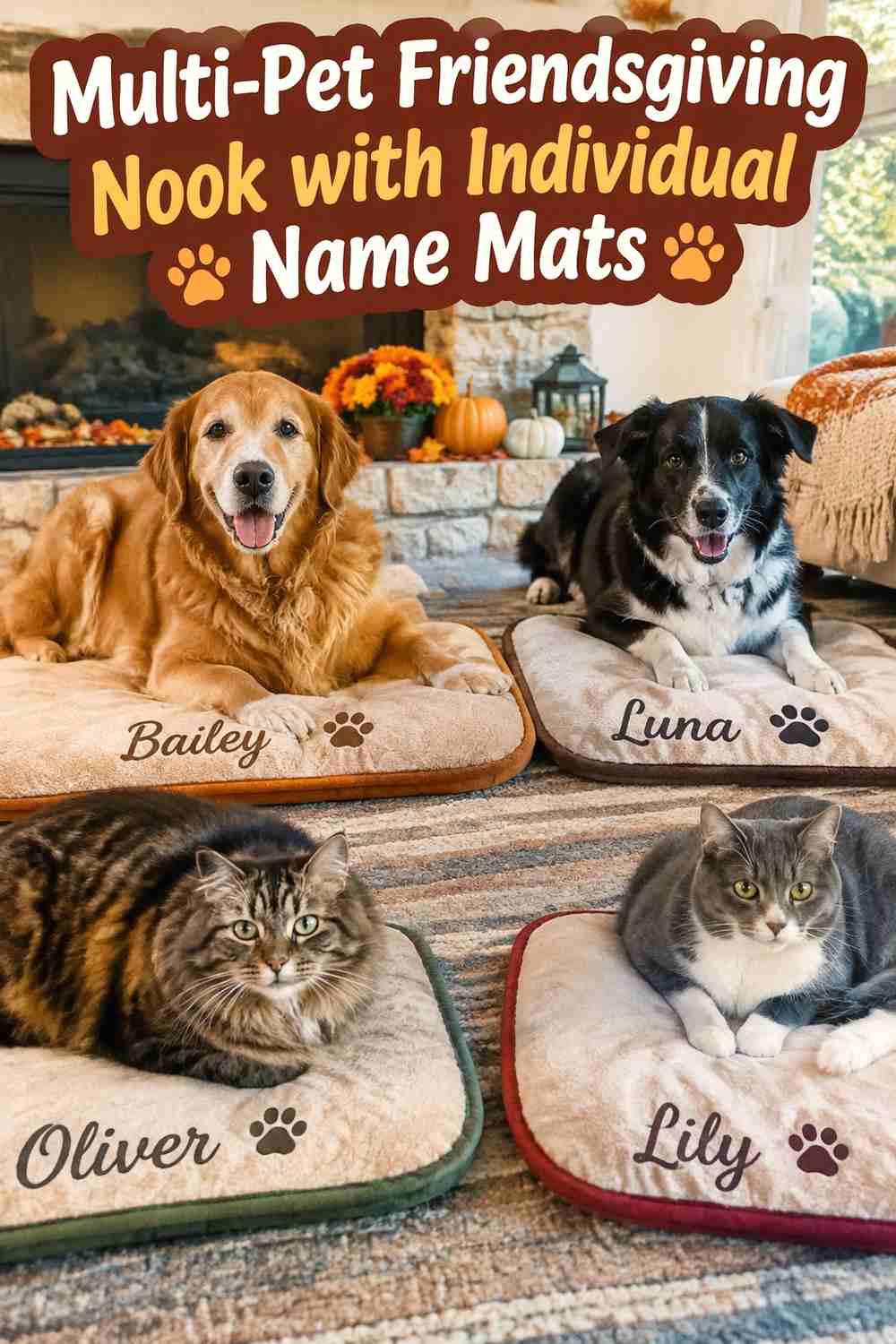
A multi-pet Friendsgiving nook uses individual name mats or clearly separated bedding so owners can quickly see which space belongs to each animal. Arrange the mats along the edge of the room with enough distance for dogs and cats to settle without touching one another. Name tags can be attached to nearby baskets or wall labels rather than placed where pets can chew them. This setup is especially useful for gatherings with several familiar animals because it organizes bedding without requiring identical preferences. One pet may prefer a flat mat while another uses a bolster or cave bed. Let pets choose distance and avoid repeatedly returning them to assigned spots if another location is more comfortable.
Setup Notes
Use the labels for organization, not forced seating. Keep additional resting options available if pets naturally rearrange themselves during the gathering.
13. Pet Safe Friendsgiving Treat Station With Sealed Labeled Containers

A Pet-Safe Friendsgiving treat station keeps appropriate pet treats organized and prevents them from being confused with human party food. Store each pet’s usual treats in sealed, clearly labeled containers on an elevated counter or secure shelf, and keep different pets’ supplies separate when needed. Avoid creating an open self-serve station where visiting animals can reach food without supervision. If a pet follows a restricted or medically important diet, the owner should manage what is offered rather than using shared treats. Keep original product information available when useful and do not introduce unfamiliar snacks just because they match the Friendsgiving theme. Simple fall labels or a tray can make the station festive without compromising storage.
Use & Maintenance
Return lids after every use and wipe crumbs from the surface regularly. Keep human desserts and pet treats on clearly separate stations.
14. Entryway Friendsgiving Cleanup Station For Visiting Pets

An entryway Friendsgiving cleanup station helps manage muddy paws, damp coats, and outdoor debris before visiting pets move farther into the home. Place a washable mat just inside the door and keep clean towels, waste bags, and other routine supplies in a secure nearby organizer. Leave enough floor room for owners to handle leashes without standing among shoes and guest bags. If several pets arrive close together, let them enter in an orderly way rather than crowding the doorway. Damp towels should have a separate drying location instead of being piled near clean supplies. This setup is especially practical during late-fall weather when rain, leaves, and mud can quickly spread through the main gathering spaces.
Cleaning Notes
Check the entry periodically and remove damp leaves, wet towels, and tracked-in debris before the floor becomes slippery or cluttered.
15. Separate Crate And Bed Retreats For Visiting Dogs And Cats

Separate crate-and-bed retreats give visiting dogs and cats individual places to rest without expecting unfamiliar species or personalities to share one quiet area. A dog that already uses a crate comfortably can have its familiar setup in a low-traffic room, while a cat may prefer a cave bed, carrier, or separate bedroom with appropriate resources. Do not introduce confinement methods solely for the gathering if the pet is unfamiliar with them. Keep retreats apart when animals need more distance, and let owners manage their own pet’s normal routine. This arrangement is especially useful during meal service or busy guest arrivals when the main room becomes crowded. Rest areas should remain calm, familiar, and free from party storage.
Best For
This setup suits gatherings where visiting pets have different comfort levels, species-specific needs, or established quiet-time routines.
16. Host Supply Station For Organized Pet Friendsgiving Gatherings
You May Also Like



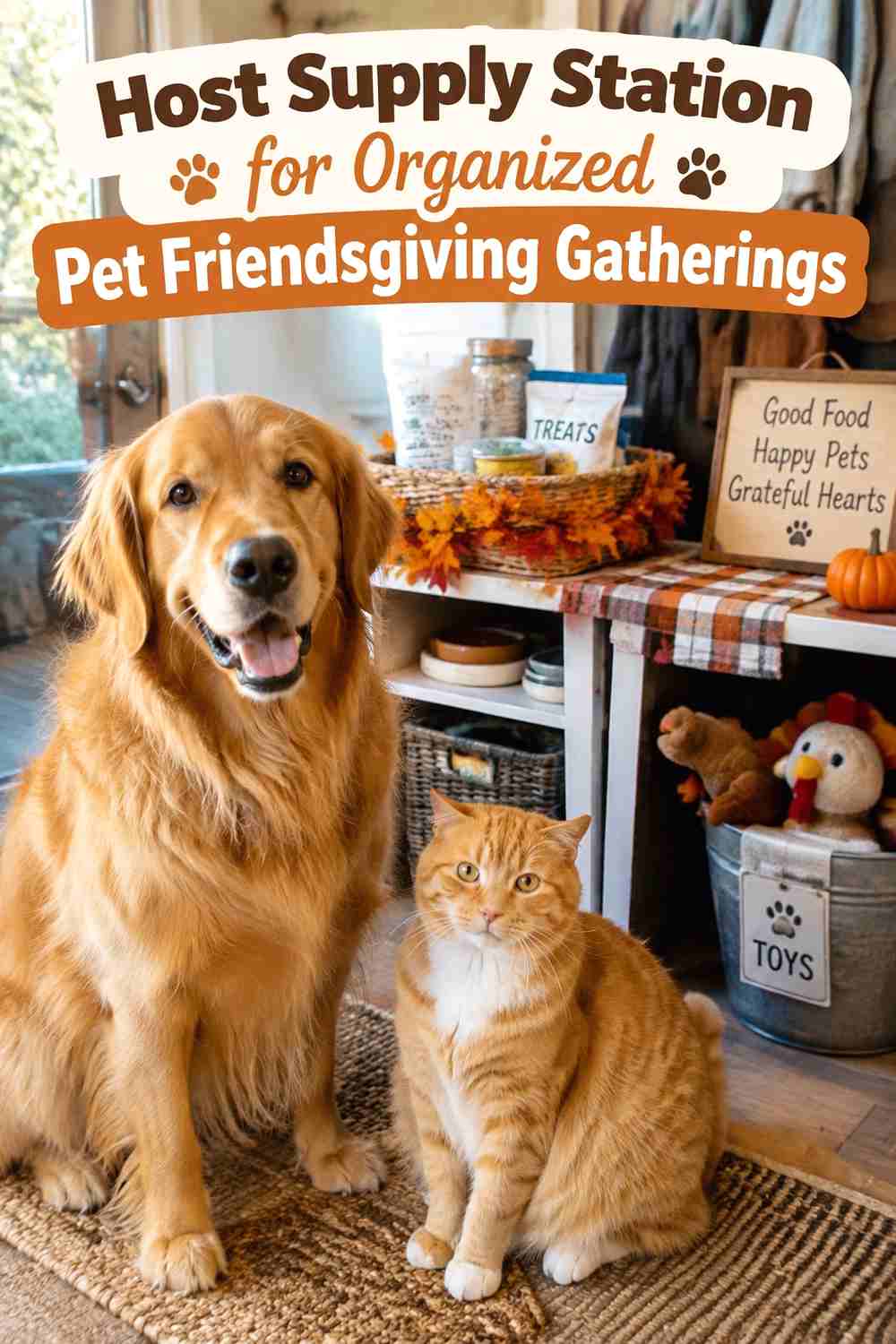
A host supply station keeps shared practical items organized without mixing them into food, décor, or pet resting areas. Use a secure cabinet, shelf, or labeled organizer for clean towels, spare waste bags, lint rollers, extra washable covers, and other basic supplies you may need during the gathering. Keep cleaners, medicines, small tools, and anything unsafe in separate inaccessible storage. The station can sit near the mudroom or entry so owners know where to find routine items without searching through the house. This idea is particularly useful for larger Friendsgiving gatherings because it makes small problems easier to handle without disrupting the event. Keep the station simple and restock it before guests arrive.
Pro Tip
Group supplies by use—arrival, cleanup, and bedding—so you can find what you need quickly without opening multiple baskets or cabinets.
How to Choose the Right Idea
Start with the number and type of pets attending. A gathering with one visiting dog may only need an extra bed and entry station, while several dogs and cats may benefit from separate rest zones, water locations, quiet retreats, and individually organized supplies.
Temperament matters as much as space. Social pets may enjoy staying near the gathering, while shy animals need meaningful distance from visitors and other pets. Senior pets may require lower beds and clearer walking routes. Do not assume unfamiliar pets will share bowls, beds, toys, or close quarters comfortably.
Your home layout should guide the rest. Small spaces benefit from vertical décor and compact bedding, while larger homes can create separate lounges, photo areas, and quiet rooms. Prioritize supervision, clear pathways, easy cleanup, and familiar routines over making every pet participate in the same Friendsgiving activity.
Final Thoughts
A successful Pet Friendsgiving setup gives animals more choices, not more obligations. Separate beds, clear routes, water access, quiet retreats, and organized supplies can make the gathering easier for both pets and people. Choose only the ideas that fit your home and guest list, and simplify the plan whenever décor or activities begin competing with comfort and usable space.
FAQs
1. Should visiting pets meet as soon as they arrive for Friendsgiving?
Not necessarily. Introductions should match the animals’ normal comfort and owner plans. Some pets may need slower, separate, or highly supervised interaction rather than an immediate group greeting.
2. How many pet beds should I provide for a Friendsgiving gathering?
Provide enough separate resting options that pets are not forced to share. Additional quiet beds in other rooms can be useful when animals want more distance.
3. Can visiting dogs and cats share the same Friendsgiving space?
Some familiar dogs and cats may be comfortable together, while others need separate areas. Base the setup on the individual animals and avoid forced close contact.
4. How should I handle pet treats during Friendsgiving?
Keep treats sealed, labeled, and controlled by owners. Avoid open self-serve bowls and do not assume every visiting pet can eat the same products.
5. What is the most useful setup for a small Pet Friendsgiving?
Start with separate compact beds, a clear entryway, spaced water access, and one quiet retreat. Use wall décor instead of floor decorations to preserve limited space.
CTA
Save your favorite Pet Friendsgiving setup ideas and create a gathering with comfortable spaces, organized supplies, and plenty of room for every pet to relax.
