Give indoor guinea pigs more to explore with simple forage boxes, tunnels, puzzles, and floor-time activities that fit easily into everyday care. Guinea pig enrichment works best when activities let your pet investigate, forage, hide, chew, or explore without making the setup unnecessarily complicated. These ideas use practical materials and ground-level arrangements that can fit into an enclosure, playpen, or supervised floor-time routine. You will find options for food-based searching, cardboard exploration, chewable objects, changing layouts, and shared activities for bonded pairs. Start with easy versions, watch how your guinea pig responds, and adjust the difficulty, placement, or materials rather than assuming every pet will enjoy the same activity.
Save This Idea on Pinterest

10 Guinea Pig Enrichment Ideas
Save to PinterestQuick List
- Easy Hay Forage Box Enrichment Idea for Guinea Pigs
- Cardboard Tunnel Maze Enrichment for Curious Indoor Guinea Pigs
- Hay-Stuffed Paper Bag Foraging Game for Guinea Pigs
- Scatter-Feeding Herb Search Enrichment for Active Guinea Pigs
- Shredded Paper Dig Box Enrichment for Guinea Pigs
- Changing Hideout Layout Enrichment for Indoor Guinea Pigs
- Willow Ball Roll-and-Nibble Enrichment for Guinea Pigs
- Side-by-Side Hay Search Game for Bonded Guinea Pig Pairs
- Cardboard Egg Carton Foraging Puzzle for Guinea Pigs
- Supervised Floor-Time Discovery Zone for Guinea Pigs
1. Easy Hay Forage Box Enrichment Idea For Guinea Pigs
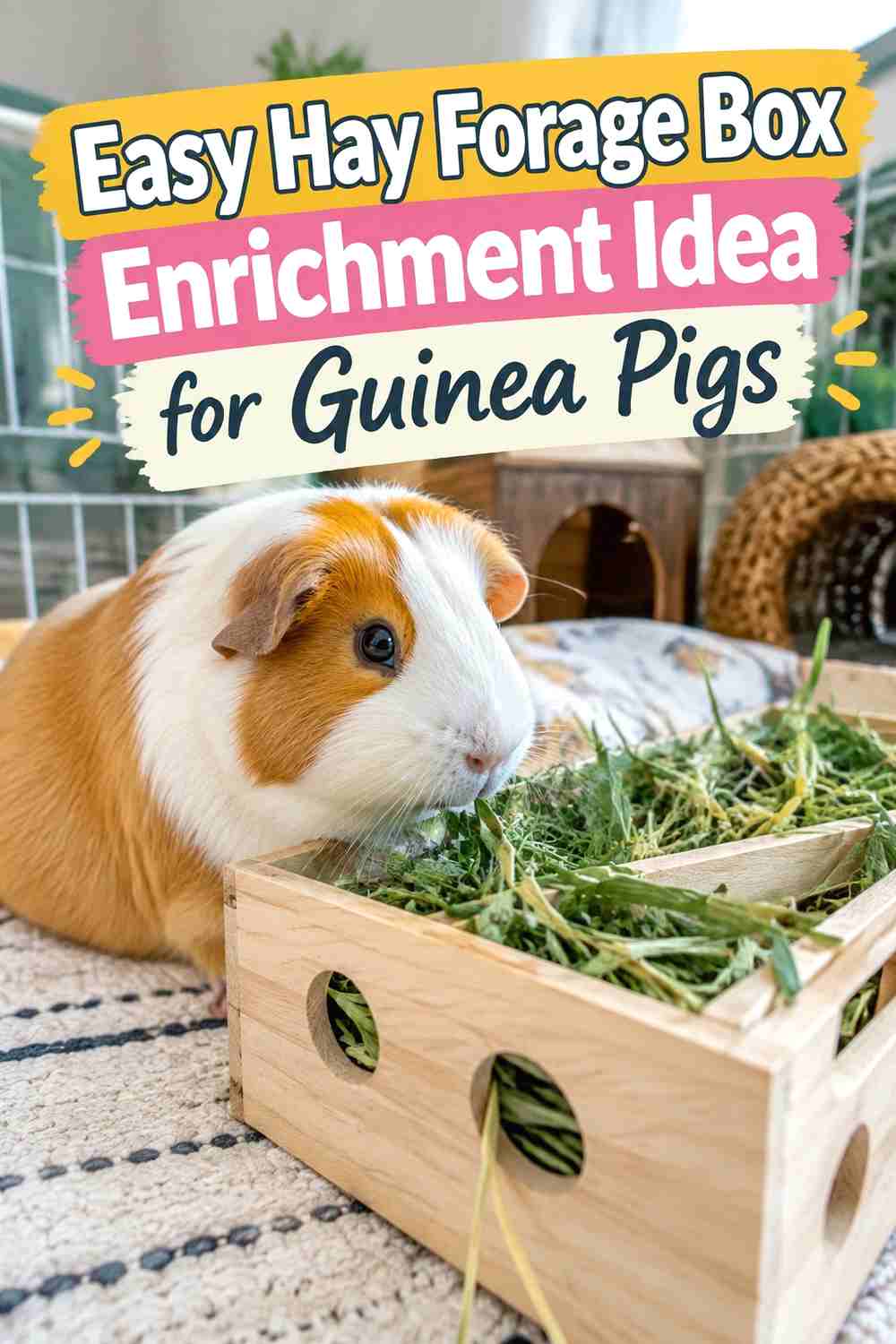
Turn a shallow cardboard box into an easy hay forage area by loosely filling it with clean hay and tucking a few familiar food pieces among the strands. The guinea pig can nose through, pull hay aside, and search at its own pace without a complicated puzzle. Use a box with low sides so entry is simple, especially for smaller or less confident pets. Keep the fill loose rather than packed, and place the box on a washable surface because hay will scatter. Remove damp or soiled cardboard promptly. If your guinea pig loses interest, change where a few hidden pieces sit instead of making the search dramatically harder.
Setup Notes
Choose a plain box without staples, tape, glossy coatings, or sharp torn edges. It should stay flat when your guinea pig steps against it rather than tipping or sliding across the floor.
Use & Maintenance
Reset the box by fluffing the hay and changing a few hiding spots. Replace the cardboard when it becomes damp, dirty, or too heavily chewed to hold its shape.
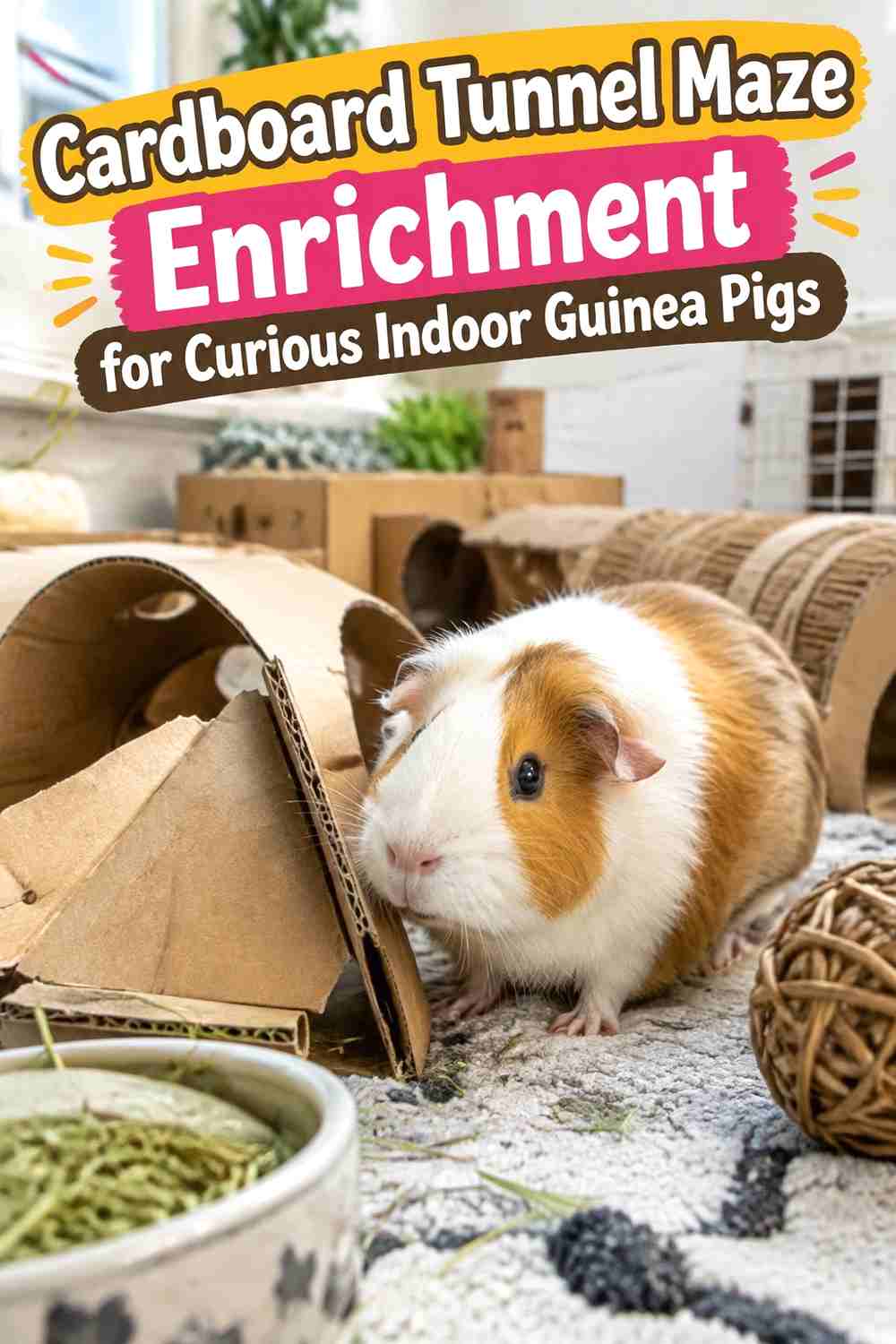
2. Cardboard Tunnel Maze Enrichment For Curious Indoor Guinea Pigs
You May Also Like


Arrange several wide cardboard tunnels into a simple ground-level maze with more than one entrance and exit. The guinea pig can move through the passages, pause inside, or choose a different route, making the setup useful for curious indoor exploration. Keep every tunnel stable, roomy, and open enough that the pet cannot become wedged. Avoid steep turns, elevated sections, or narrow openings. Place the maze in a familiar play area and leave clear space around it so the guinea pig never feels trapped. Rotate only one or two tunnel positions at a time; a completely new layout can be less inviting for a cautious pet.
Space & Placement
A playpen or blocked-off floor area works well because you can spread the tunnels out rather than creating cramped passages. Keep familiar hiding and resting areas nearby.
Pro Tip
Watch which route your guinea pig naturally prefers. Moving one tunnel at the next session can add novelty without rebuilding the entire maze.
3. Hay Stuffed Paper Bag Foraging Game For Guinea Pigs
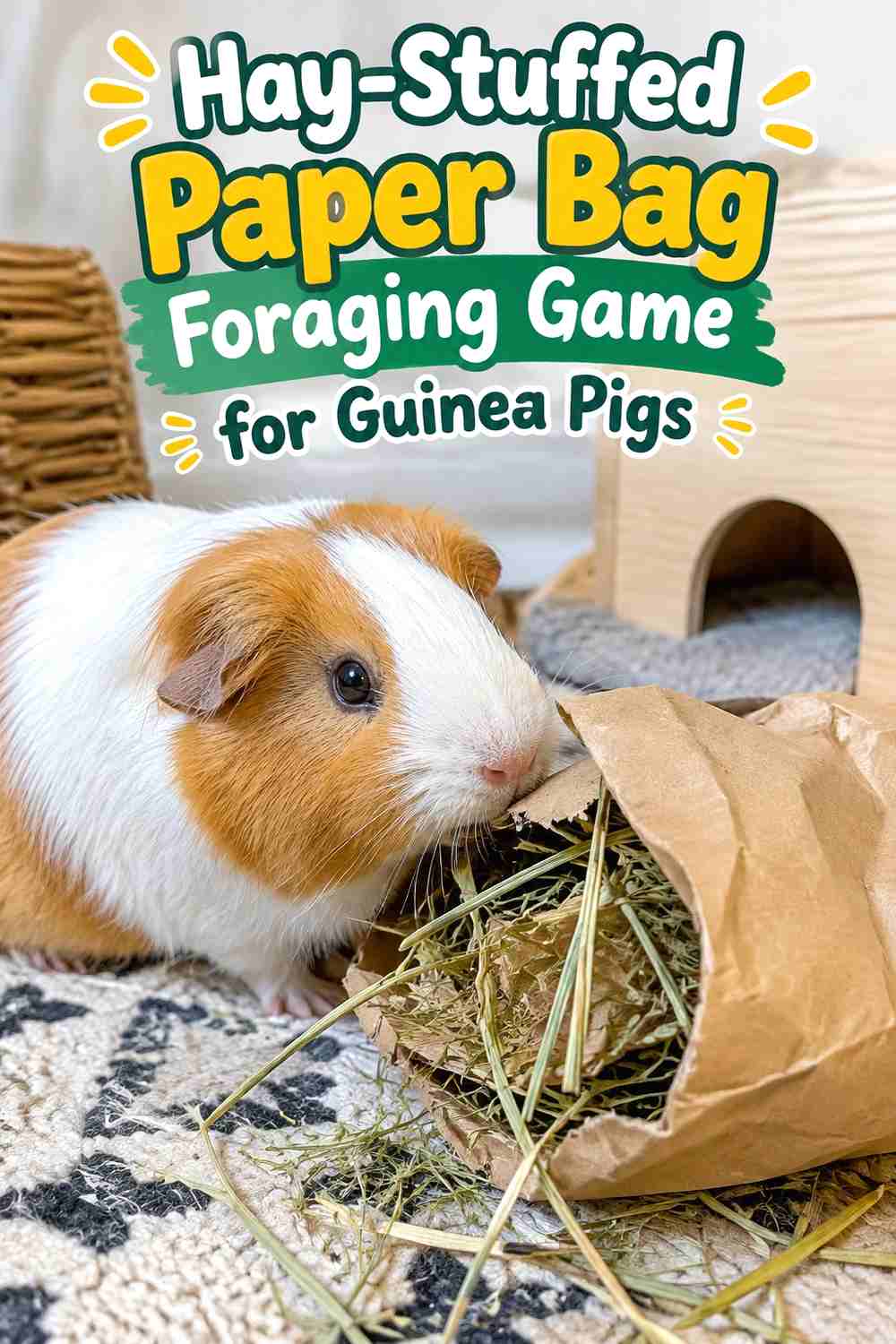
Use a plain paper bag with the handles removed as a lightweight foraging activity by adding loose hay and a small amount of familiar food inside. Leave the opening wide so the guinea pig can investigate without squeezing into a tight space. The crinkly paper, hay scent, and hidden pieces create several simple textures and search cues at once. Place the bag flat on the floor and supervise, especially if your pet likes to chew paper aggressively. Discard the bag when it becomes wet, heavily chewed, or soiled. For an easier version, leave most of the hay visible near the opening before placing anything farther inside.
Comfort & Safety
Never use a bag with handles, plastic lining, tape, staples, or a narrow opening. The guinea pig should be able to approach and back away without becoming enclosed.
Cleaning Notes
Treat the bag as a short-term enrichment item rather than permanent enclosure furniture. Paper absorbs moisture quickly, so replace it instead of trying to clean and reuse it.
4. Scatter Feeding Herb Search Enrichment For Active Guinea Pigs
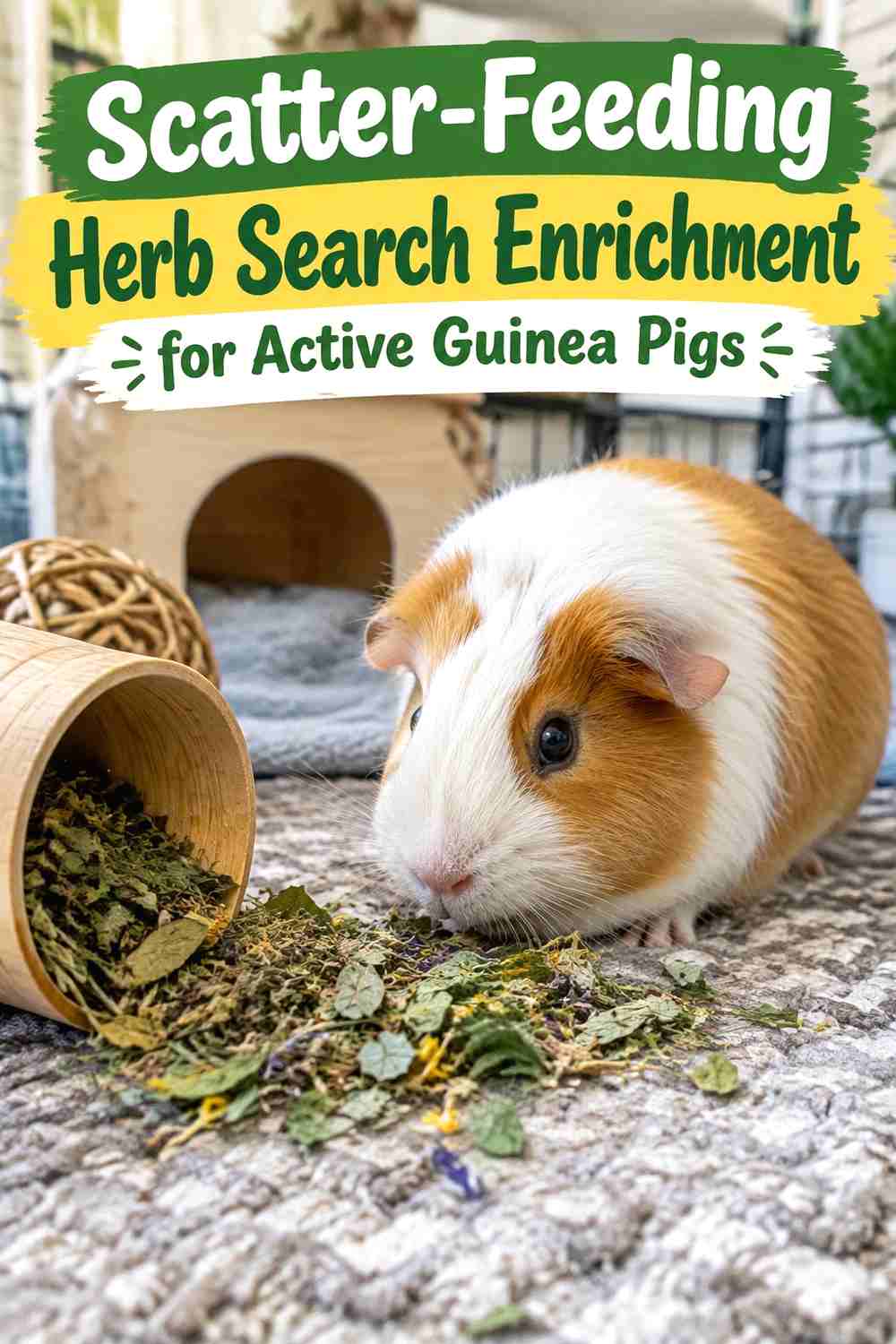
Spread tiny amounts of a familiar, guinea-pig-appropriate herb or leafy food across several easy-to-reach spots so your pet has to walk, sniff, and search instead of finding everything in one bowl. Use the pet’s normal food rather than adding extra treats just for enrichment. Keep the search area clean, level, and free of hidden gaps where food can spoil. Start with obvious placements beside tunnels or hideouts, then make later searches slightly less predictable. This works especially well during supervised floor time. Pick up wilted leftovers afterward, and avoid using unfamiliar foods simply to make the activity more challenging.
Best For
This idea can suit guinea pigs that readily move around a play area and enjoy food searching. More hesitant pets may do better with only two or three clearly visible locations at first.
Use & Maintenance
Change the placement rather than the food quantity to create variety. Check under hideouts and along edges afterward so forgotten fresh food does not remain in the area.
5. Shredded Paper Dig Box Enrichment For Guinea Pigs
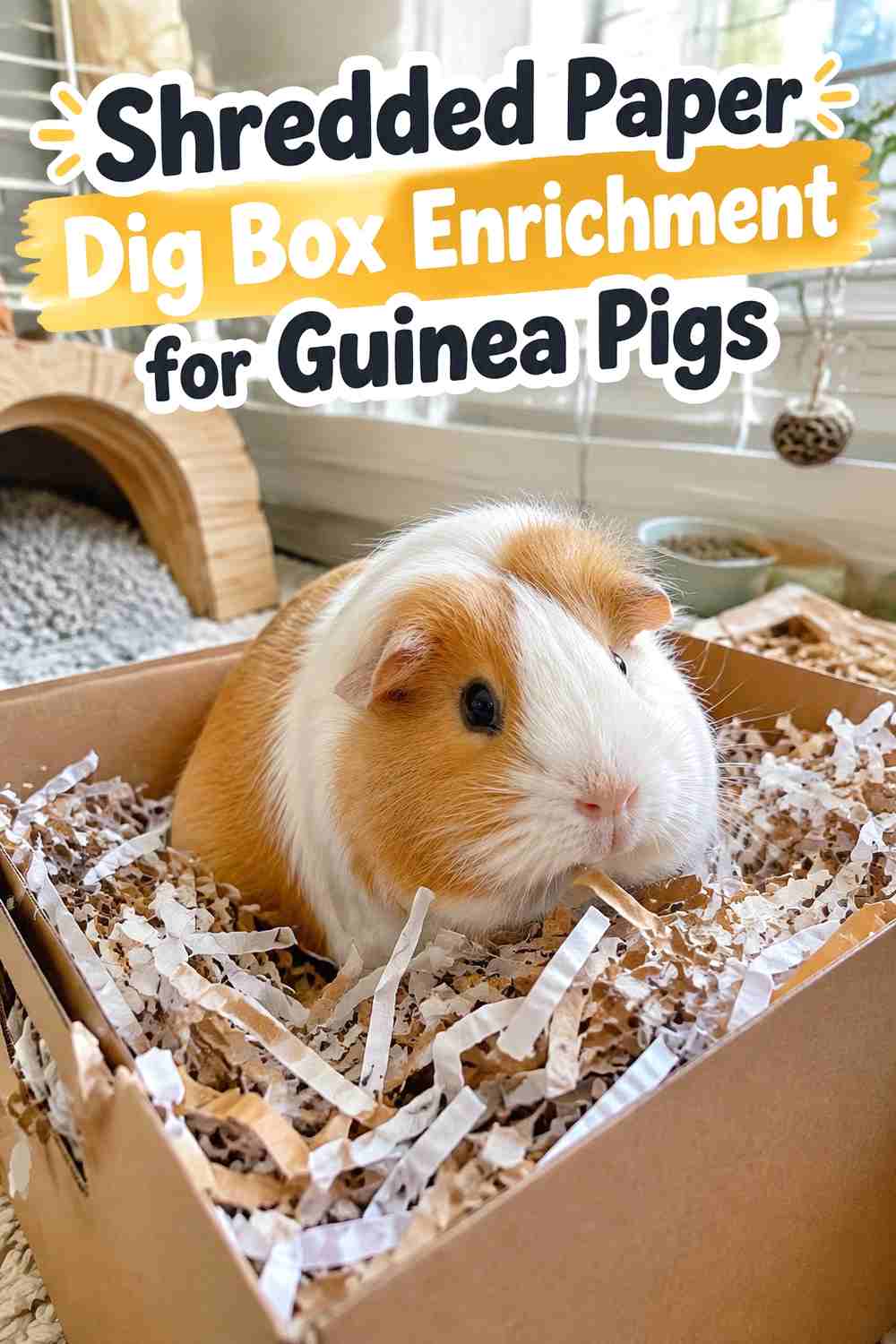
Create a shallow dig box with clean, soft, dust-free paper strips that a guinea pig can nose through and push aside. Hide small tufts of hay near the surface so the activity stays easy to understand and does not require deep digging. Choose a broad, low container that cannot tip, and avoid shredded material with staples, glossy coatings, strong inks, or tiny hard pieces. Some guinea pigs may explore the box eagerly, while others prefer to stand beside it and forage from the edge. Keep the setup supervised, replace any damp paper, and remove the box if your pet begins eating large amounts of the paper instead of exploring it.
Setup Notes
Keep the paper layer loose and shallow so the guinea pig remains visible and can leave easily. A low-sided cardboard tray or stable container is easier to access than a deep box.
Cleaning Notes
Shake out loose hay after each session and replace paper that becomes damp or dirty. A fully disposable fill makes this activity easier to reset without complicated cleaning.
6. Changing Hideout Layout Enrichment For Indoor Guinea Pigs
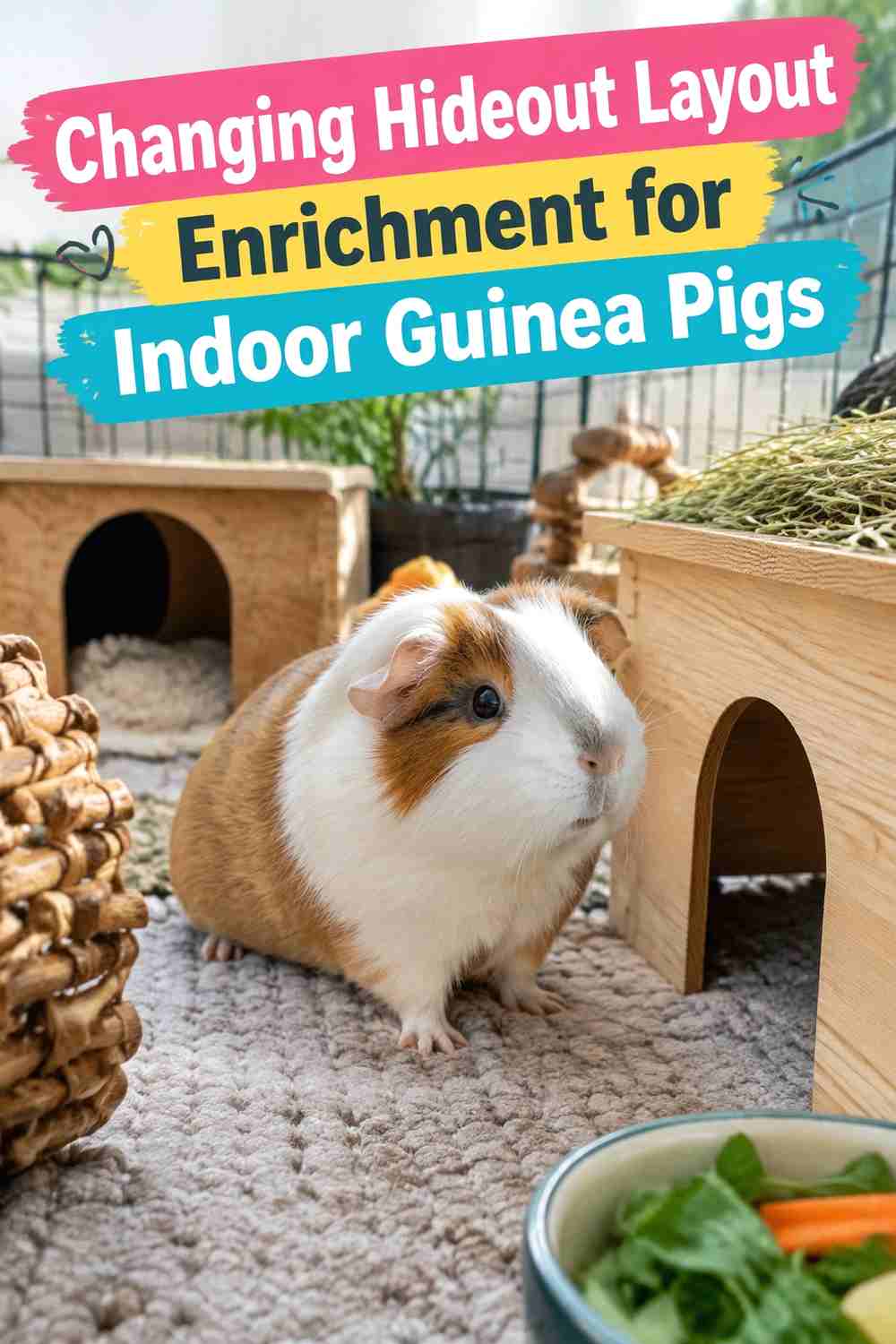
Refresh a familiar play area by changing the positions of sturdy hideouts, open-ended shelters, and tunnels while keeping the overall space easy to navigate. This gives an indoor guinea pig new routes and viewpoints without introducing a completely unfamiliar environment. Always provide more than one clear path between important areas, and never create dead ends where one guinea pig could block another. Move only a few pieces per session so shy pets can still recognize the setup. Keep food, water, and resting resources easy to find. If the new layout causes hesitation, return one favorite hideout to its usual place and simplify the route.
Why It Works
The enrichment comes from exploring a changed environment rather than adding another toy. Even familiar objects can feel different when entrances, pathways, and resting spots are rearranged.
Pet Type & Life Stage
For cautious, older, or less mobile guinea pigs, make smaller changes and keep important resources in predictable locations. Novelty should not make basic movement difficult.
7. Willow Ball Roll And Nibble Enrichment For Guinea Pigs

Offer a guinea-pig-safe willow ball as a simple object to nudge, sniff, and nibble during supervised enrichment time. Place it on a flat surface with enough room for the guinea pig to approach from different sides rather than wedging it tightly beside a wall. The activity is low effort and may suit pets that are less interested in complex food puzzles. Check the ball often for sharp broken pieces, loose fasteners, glue, paint, or other materials that do not belong in a chew toy. Remove it once it becomes ragged or unstable. Rotating it with other safe chew items can keep the object from becoming background clutter.
Best For
This low-complexity activity is useful when you want enrichment that does not depend on hiding food or constructing a larger play area.
Use & Maintenance
Inspect the ball before each session. Replace it when the woven pieces become sharp, unstable, or damaged enough that the object no longer rolls or holds together safely.
8. Side By Side Hay Search Game For Bonded Guinea Pig Pairs

Set up two or more small hay-search spots for a bonded guinea pig pair so both pets can forage at the same time without being forced to crowd one pile. Place the stations a comfortable distance apart and make each one easy to access from more than one direction. You can use low trays, open boxes, or loose hay piles on a clean surface. This creates shared activity while still giving each guinea pig choice and space. Watch the pair’s body language and add another station if one pet repeatedly blocks the other. Keep the hay familiar, remove soiled material, and avoid turning the search into competition.
Space & Placement
Spread stations far enough apart that both guinea pigs have room to investigate independently. Avoid corners where one pet could accidentally block the only exit.
Pro Tip
Duplicate simple resources when needed. Providing an extra search spot is often more practical than expecting bonded guinea pigs to use one enrichment station at exactly the same time.
9. Cardboard Egg Carton Foraging Puzzle For Guinea Pigs

Turn a plain cardboard egg carton into a simple foraging puzzle by placing hay in several open cups and leaving the lid fully open or removed. The guinea pig can investigate different pockets without having to lift heavy parts or push through tight openings. Use clean, plain cardboard with no plastic windows, staples, tape, or glossy coatings. Keep the first session very easy by leaving most hay visible, then vary which cups contain the most interesting pieces. Supervise chewing and discard the carton once it becomes damp, soft, or heavily damaged. This is a useful low-cost option when you want a disposable activity that is quick to reset.
Setup Notes
Set the carton flat on the floor and make sure it cannot fold closed around the guinea pig. Removing the lid entirely can make the activity simpler and easier to supervise.
Best For
This puzzle suits owners who want a quick homemade option without many materials. It can also be simplified easily for guinea pigs that give up on difficult food puzzles.
10. Supervised Floor Time Discovery Zone For Guinea Pigs
You May Also Like


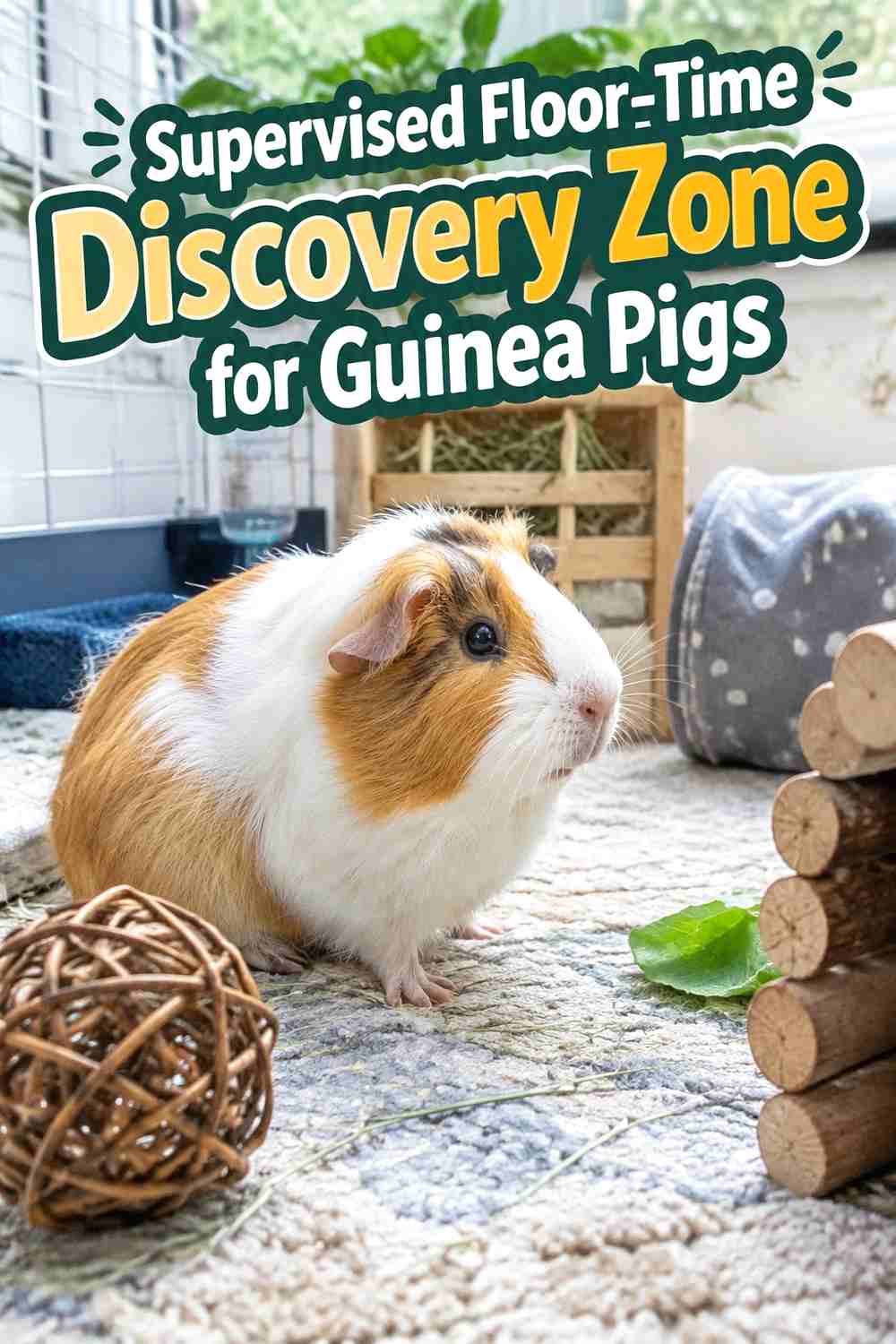
Create a supervised floor-time discovery zone with a few low-risk stations such as an open tunnel, a hay pile, a sturdy hideout, and one simple forage activity. Spacing the stations around the area encourages gentle movement and gives the guinea pig choices about what to explore first. Use a secure, blocked-off room or pen with no cords, tight gaps, unstable furniture, or other hazards within reach. Keep the layout ground-level and easy to cross. Start with a short, familiar route rather than filling the whole space with objects. Afterward, remove food scraps and soiled paper or cardboard so the area is ready for the next session.
Comfort & Safety
Block access behind furniture, under appliances, and around electrical cords before bringing the guinea pig into the space. Provide an easy-to-find hideout rather than leaving the animal exposed in a large open area.
Use & Maintenance
Rotate one or two stations between sessions instead of changing everything at once. A simple, clean layout is easier to supervise and can be more useful than a crowded play zone.
How to Choose the Right Idea
Start with your guinea pig’s temperament and normal behavior. A confident explorer may enjoy tunnels, changing layouts, and supervised floor-time stations, while a cautious guinea pig may respond better to an easy forage box or familiar hideout arrangement. Older or less mobile pets generally benefit from low-entry, ground-level activities without steep surfaces or difficult obstacles. Also consider cleanup, available space, chewing habits, and whether you have one guinea pig or a bonded pair. Food-search activities need prompt cleanup, disposable cardboard should be checked for damage, and multi-guinea-pig setups should provide enough space and duplicate resources to reduce crowding. Favor simple, species-appropriate setups that are easy to supervise, clean, and adjust rather than novelty for novelty’s sake.
Final Thoughts
The best guinea pig enrichment does not need to be elaborate. Start with one simple activity your pet can understand, observe whether it encourages comfortable exploration, and rotate in other ideas gradually. Foraging, tunnels, chewable items, layout changes, and supervised floor time can provide useful variety without overcrowding the guinea pig’s everyday space.
FAQs
1. How often should I change guinea pig enrichment activities?
You can rotate activities when your guinea pig begins ignoring them or when a setup needs cleaning or replacement. Small changes are often enough; there is no need to rebuild the entire environment constantly.
2. Can I make guinea pig enrichment from cardboard?
Plain cardboard can work well for tunnels, forage boxes, hideouts, and simple puzzles. Avoid staples, tape, glossy coatings, plastic pieces, and damaged sections with sharp edges, and replace cardboard when it becomes wet or heavily chewed.
3. What if my guinea pig ignores a new enrichment idea?
Make the activity easier and more familiar. Place hay near the entrance, keep a favorite hideout nearby, or introduce only one new object at a time. Some guinea pigs simply prefer certain enrichment styles over others.
4. Are food-based enrichment activities suitable for guinea pigs?
They can be useful when they incorporate foods already appropriate for the guinea pig’s normal routine. Use the activity to change how familiar food is presented rather than automatically adding extra treats.
5. Can bonded guinea pigs use the same enrichment setup?
Yes, but shared setups should offer enough room, multiple exits, and duplicate stations when necessary. Avoid arrangements that force both guinea pigs into one narrow tunnel, one forage pile, or a dead-end space.
CTA
Save these 10 guinea pig enrichment ideas for your next play-area refresh, and share your favorites with another guinea pig owner.
