Bring carnival-inspired color and playful shapes into your pet’s routine with a FunHaus playroom that stays practical, spacious, and easy to reset.
Save This Idea on Pinterest

13 FunHaus Pet Playroom Ideas
Save to PinterestFunHaus interiors are associated with bold stripes, bright color, sculptural silhouettes, and circus-inspired whimsy, making the trend a natural starting point for a playful pet room. For pets, however, the strongest version puts those visual elements on walls, storage, washable textiles, and stable furniture rather than filling the floor with decorative clutter.
These 13 ideas combine the FunHaus look with actual playroom functions: climbing, sniffing, puzzles, tunnels, toy rotation, rest, and open movement. Dogs and cats need different activities, so treat the aesthetic as the visual framework and select each zone according to the species, size, age, confidence, and behavior of the pets using the room.
Quick List
- Bold Striped Activity Wall for FunHaus Pet Playrooms
- Curved Tunnel Zone for Playful FunHaus Indoor Pets
- Primary Color Toy Storage for Organized FunHaus Pet Rooms
- Checkerboard Snuffle Corner for FunHaus Dog Enrichment Sessions
- Sculptural Cat Climbing Wall for Colorful FunHaus Playrooms
- Wavy Floor Path for FunHaus Pet Enrichment Play
- Circus-Inspired Rest Pod for Post-Play Pet Breaks
- Color-Block Puzzle Station for Curious FunHaus Indoor Pets
- Round Window Lounge for a Bright FunHaus Pet Room
- Graphic Toy Rotation Wall for Clutter-Free FunHaus Playrooms
- Soft Modular Play Blocks for Flexible FunHaus Pet Rooms
- Easy-Clean Colorful Flooring for Busy FunHaus Pet Playrooms
- Small-Space FunHaus Playroom for Dogs and Indoor Cats
1. Curved Tunnel Zone For Playful Funhaus Indoor Pets
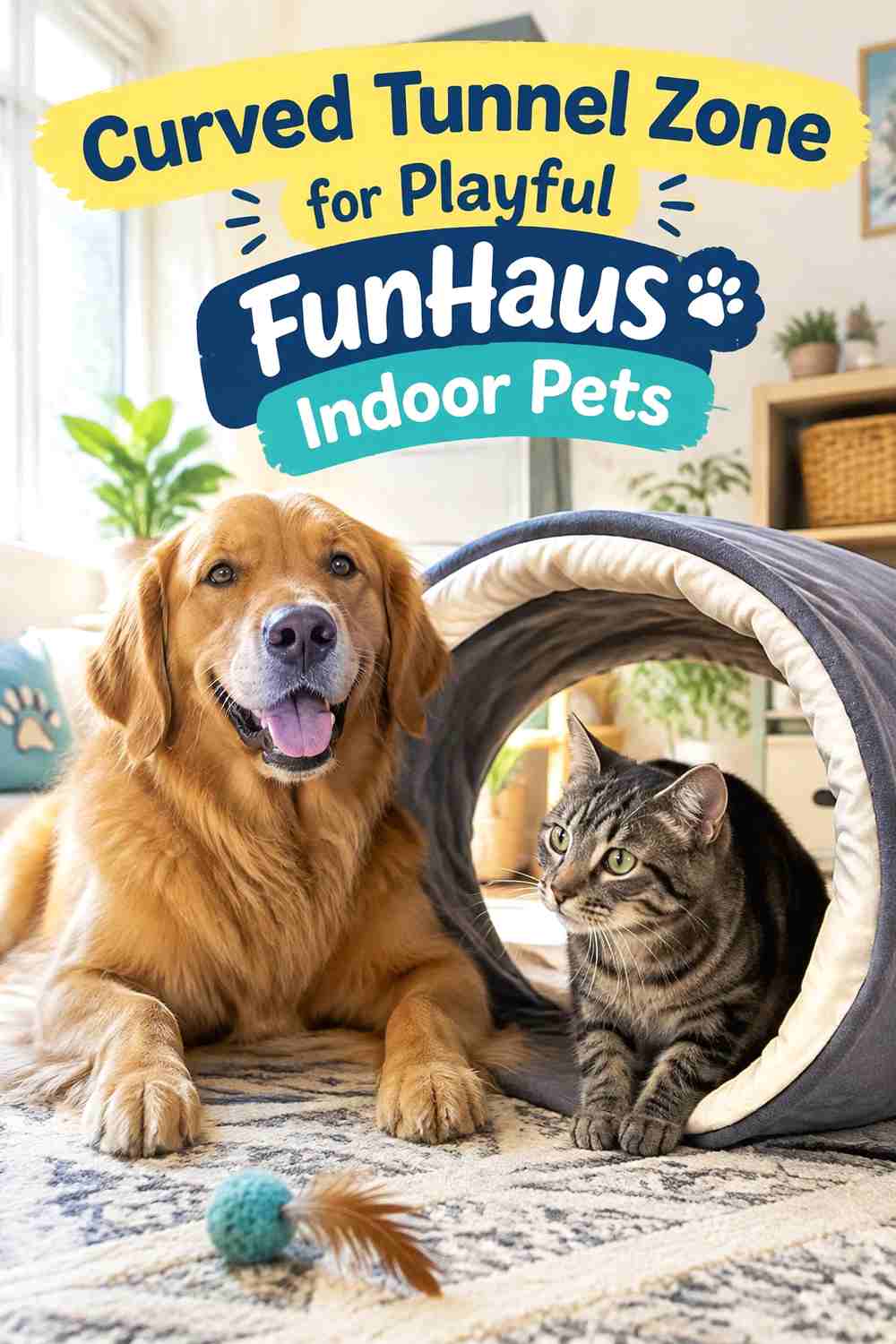
Use curved tunnels and rounded hide structures to bring sculptural FunHaus shapes into the room while creating a practical exploration zone. Cats may enjoy collapsible tunnels or open-ended hideouts, while dogs can use appropriately sized floor tunnels during supervised enrichment if they are comfortable entering them. Keep all passages wide enough for easy movement and provide openings at both ends rather than creating tight dead ends. Arrange only two or three pieces at a time so the room still has open circulation. Bright primary colors can make the tunnel zone a focal point without adding extra decor. Rotate the arrangement occasionally instead of continuously adding more equipment.
Best For
This setup suits curious pets that willingly investigate tunnels and enclosed play structures.
Use & Maintenance
Vacuum inside tunnels regularly and remove any fabric structure that develops loose wires, tears, or damaged seams.
2. Primary Color Toy Storage For Organized Funhaus Pet Rooms

You May Also Like



Make toy storage part of the FunHaus design with red, blue, and yellow bins arranged inside sturdy shelving or closed cabinetry. Keep only the current toy rotation visible while storing backups, grooming supplies, and small accessories behind secure doors. Low open bins can work for larger dog or cat toys when the pet does not chew the container itself. Rounded handles and curved cabinet fronts can reinforce the playful style without adding useless ornaments. Label bins by activity—chew, chase, puzzle, washable, or rotation—so resets stay quick. The colorful storage becomes a design feature while preventing toys from covering the room’s central movement area.
Setup Notes
Secure tall shelves properly and keep heavy containers on lower levels rather than overhead.
Pro Tip
A limited toy rotation can make the playroom feel fresher without buying new items or increasing clutter.
3. Checkerboard Snuffle Corner For Funhaus Dog Enrichment Sessions
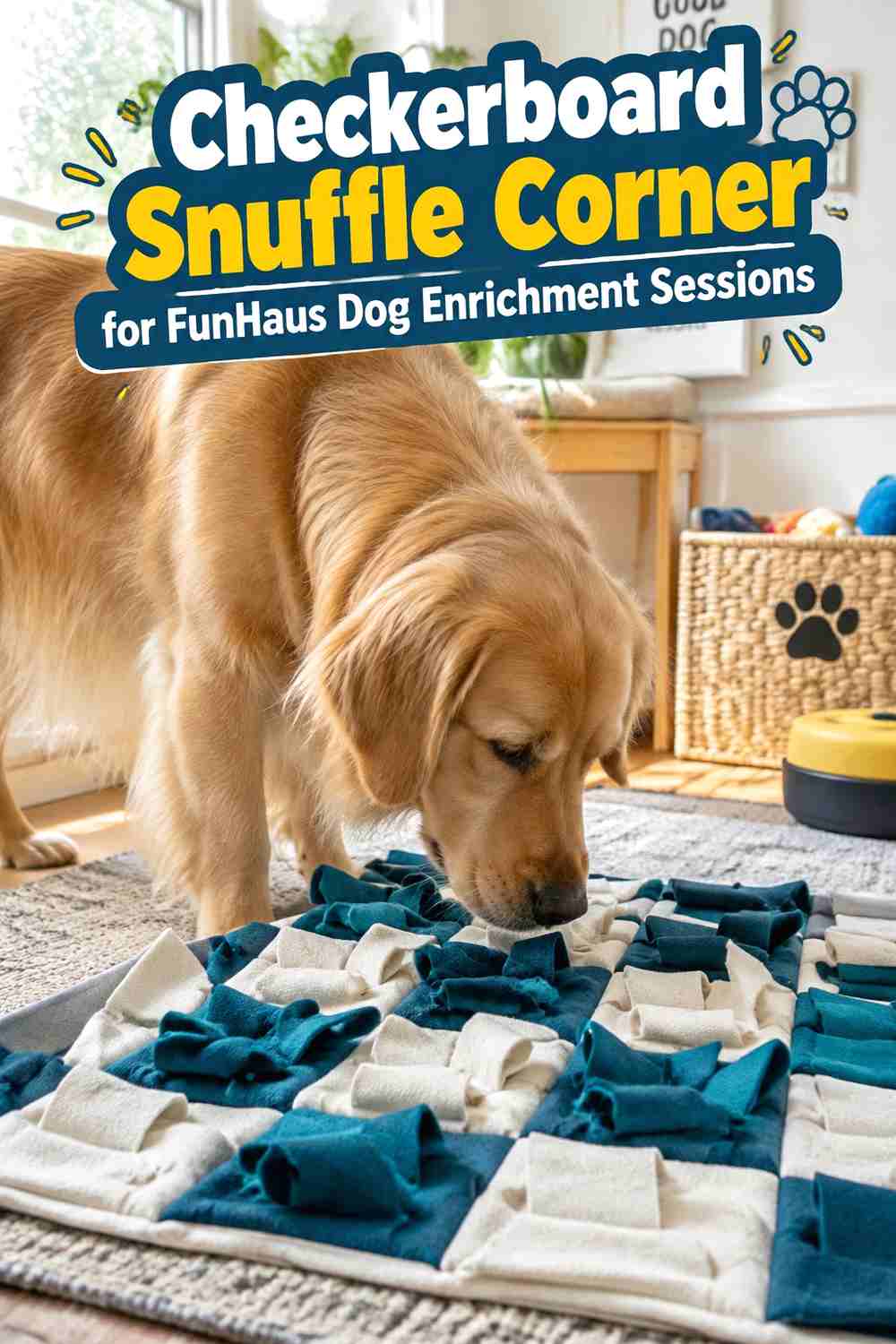
Define a dog enrichment corner with a bold checkerboard wall panel or washable floor mat and use the area for supervised sniffing activities. A snuffle mat, simple food-search game, or familiar puzzle can sit at the center during sessions, then return to storage afterward. Keep the checkerboard pattern decorative rather than creating a slippery hard floor purely for visual effect. Use part of the dog’s normal routine food when appropriate instead of automatically adding extra treats. Leave enough space around the activity for natural standing, turning, and sniffing. Cleaning should be straightforward because food-based enrichment can leave crumbs and saliva behind.
Best For
This zone works well for dogs that enjoy scent-based food searches and owner-guided enrichment.
Cleaning Notes
Shake out or wash enrichment mats as needed and wipe the surrounding floor after food-based sessions.
4. Sculptural Cat Climbing Wall For Colorful Funhaus Playrooms

Install a secure cat climbing wall with rounded shelves, curved platforms, and bold color-block panels to combine practical vertical enrichment with FunHaus styling. Platforms should have traction, stable mounting, and sensible spacing so the cat can move between levels without difficult leaps. Create more than one route where room size allows, and include a lower option for less confident or older cats. Keep decorative sculptures, plants, and breakable objects off the climbing path. A few red, blue, or yellow shelves against a calmer wall can provide plenty of visual impact while leaving the floor open for other play activities.
Space & Placement
Plan landing areas and access routes before choosing colors or shapes.
Comfort & Safety
Check platform stability regularly and adjust the route if your cat begins avoiding a particular jump or landing.
5. Wavy Floor Path For Funhaus Pet Enrichment Play

Create a wavy visual path across part of the room with nonslip floor mats or painted-look washable flooring, then use the path as a loose guide for short enrichment stations. A dog might move between a sniffing spot and toy station, while a cat could follow the route between a tunnel, scratcher, and low perch. The wave itself is decorative; pets should never be expected to follow it perfectly. Keep the route broad and remove obstacles that force awkward turns. Using just two contrasting colors gives the room FunHaus energy without making the floor visually chaotic or harder to monitor for debris.
Why It Works
The room gains a playful graphic element while the path helps owners organize activity zones.
Pro Tip
Keep the route flexible and change the activities along it rather than redesigning the flooring whenever you want variety.
6. Circus Inspired Rest Pod For Post Play Pet Breaks
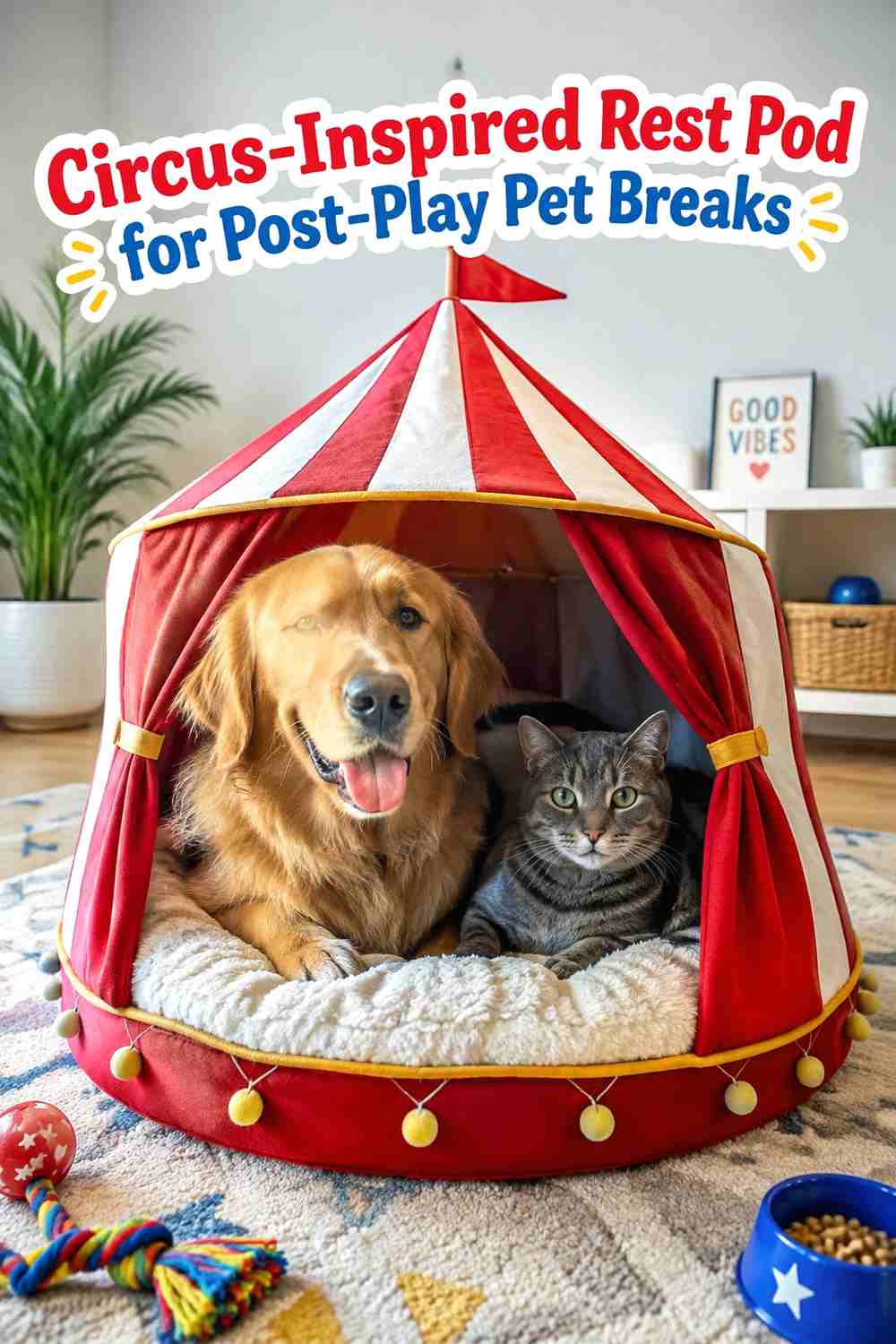
Balance the active room with a quiet rest pod using a rounded bed, curved open-front hide, or softly enclosed sleeping nook in circus-inspired colors. The space should remain easy to enter and leave, with washable bedding and enough room for the pet’s normal sleeping posture. Place it away from the busiest tunnel or puzzle station so an animal can disengage from play without leaving the room entirely. Red-and-cream stripes or a single bright curved frame can carry the FunHaus style without covering the bed in decorative details. In multi-pet rooms, provide separate resting choices rather than assuming every pet wants to share one pod.
Comfort & Safety
Avoid fully enclosed decorative structures with poor ventilation or awkward entry openings.
Best For
This is useful for pets that alternate between active play and quiet observation during indoor sessions.
7. Color Block Puzzle Station For Curious Funhaus Indoor Pets

Use a color-block backdrop to define a puzzle station where species-appropriate enrichment can be offered and removed after each session. Dogs might use food puzzles or simple manipulation toys, while cats may prefer treat puzzles, rolling toys, or small search activities. Place puzzles on a washable nonslip mat so they do not slide continuously during use. Keep spare puzzles in closed storage rather than leaving a dozen options scattered around the room. Bright blocks of red, yellow, blue, or green give the station a strong FunHaus identity while the practical setup stays simple. Adjust difficulty if the pet repeatedly walks away or becomes frustrated.
Use & Maintenance
Wash food-contact toys thoroughly and allow them to dry before returning them to storage.
Pro Tip
Rotate puzzle type or placement before increasing difficulty; novelty does not have to mean making the activity harder.
8. Round Window Lounge For A Bright Funhaus Pet Room
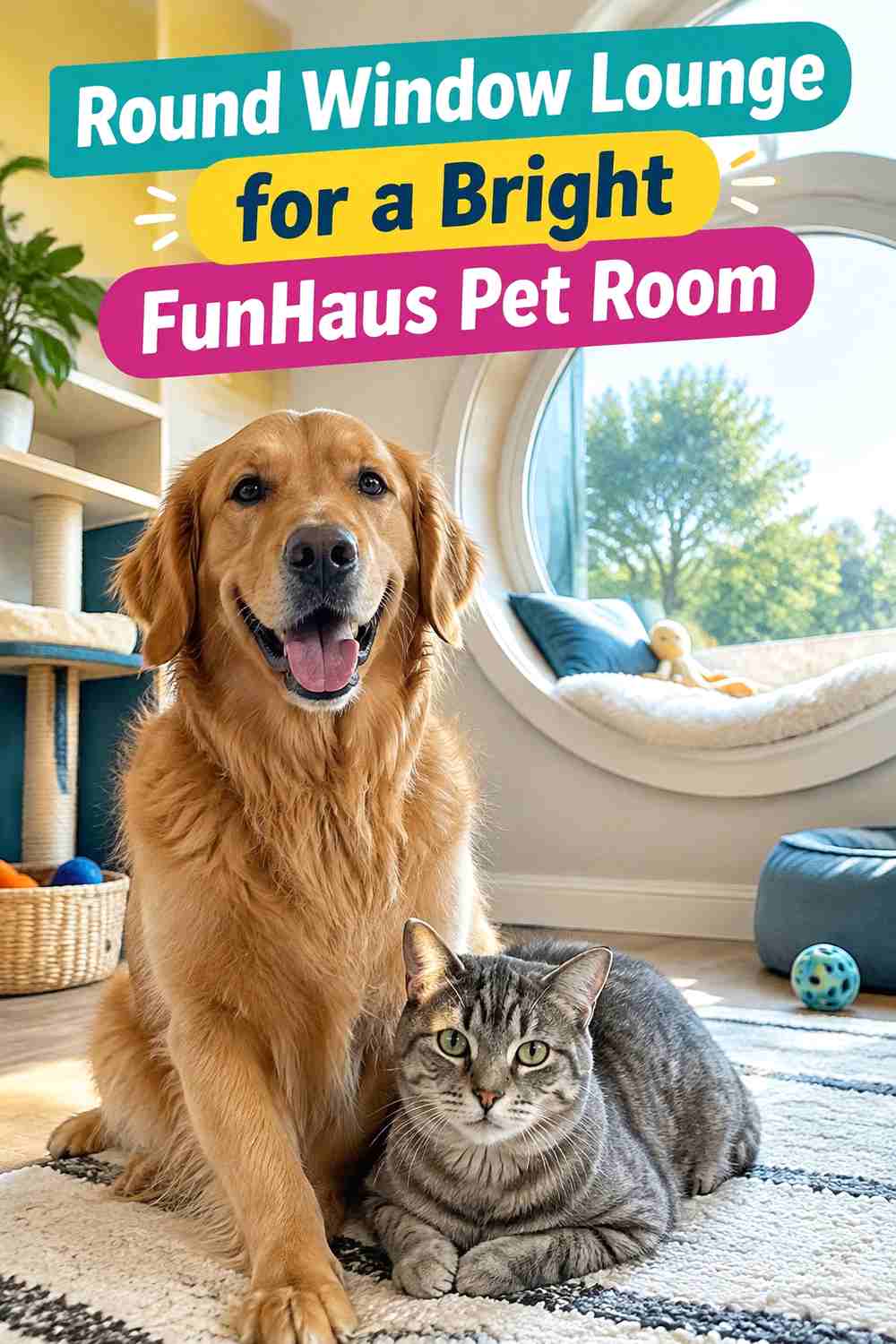
Build a window lounge around a rounded bed, circular mat, or curved bench cushion in one bright statement color. Keep the actual window secure and the resting platform large enough for the pet to turn or stretch comfortably. Cats may appreciate an elevated perch, while dogs may prefer a low bench or floor bed with a clear outdoor view. Keep blind cords, plants, and fragile decor outside reach. A circular yellow or blue cushion can provide the sculptural FunHaus look without requiring extra objects around the window. If direct sun becomes strong, make sure pets can move freely to another shaded resting spot.
Space & Placement
Preserve a clear route between the main room and window lounge.
Comfort & Safety
Check for drafts, strong heat, and stable support before making the lounge a regular part of the playroom.
9. Graphic Toy Rotation Wall For Clutter Free Funhaus Playrooms

Use a graphic wall with colorful labels, oversized shapes, or painted arches behind closed toy cabinets to make rotation storage feel intentional. Keep current toys in one accessible bin and backups inside the cabinet so the room never becomes overloaded. You can organize activities by day, pet, or play type without displaying every object at once. Large visual symbols or contrasting cabinet doors bring in the FunHaus aesthetic while practical storage reduces cleanup time. Keep small toy parts, batteries, grooming tools, and damaged items behind secure doors. A clear central floor is especially valuable in playrooms where dogs and cats move quickly between zones.
Setup Notes
Place cabinets where open doors will not block the main pet pathway.
Why It Works
The room stays playful visually while the physical environment remains controlled and easy to reset.
10. Soft Modular Play Blocks For Flexible Funhaus Pet Rooms
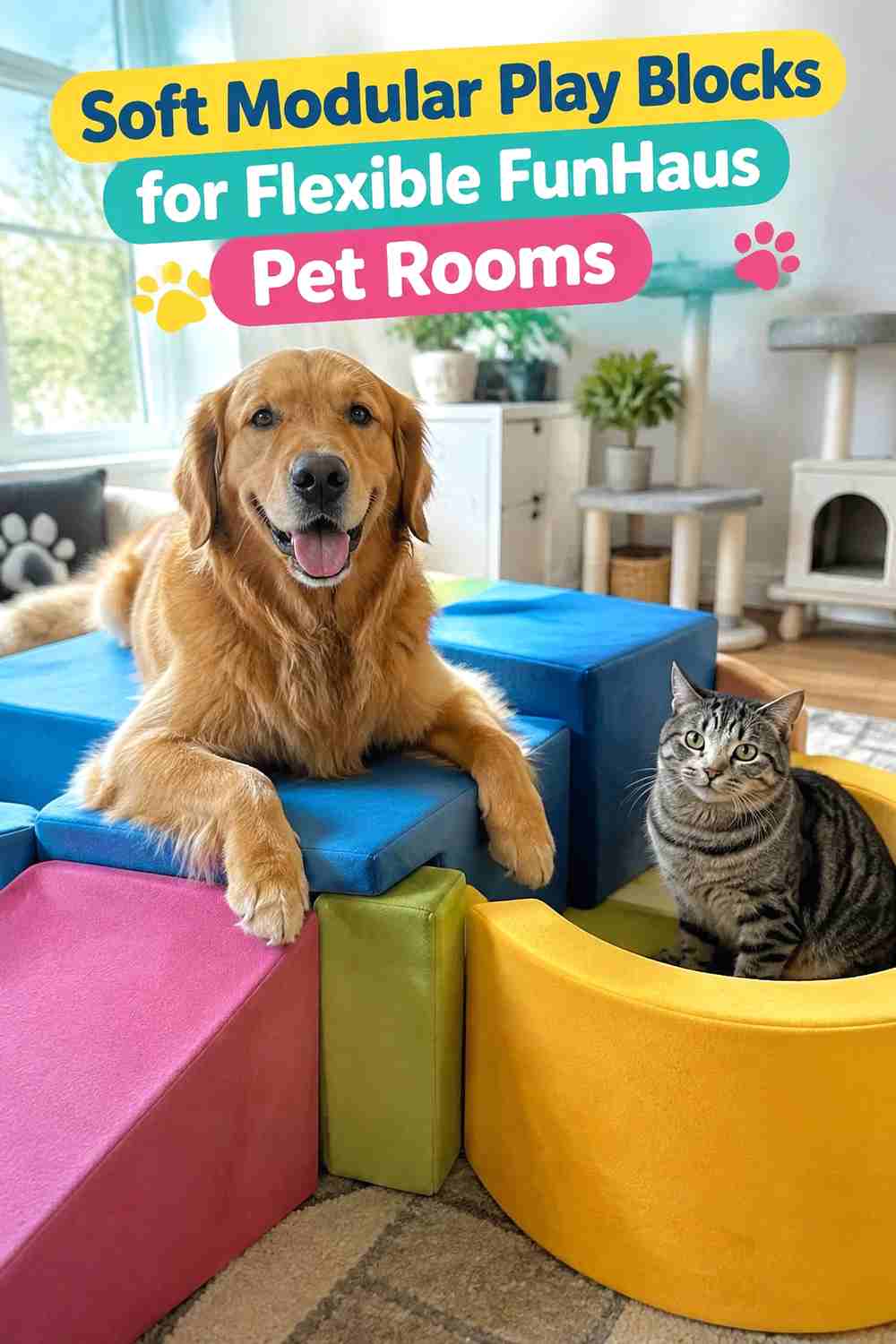
Use low, stable foam or upholstered modular shapes to create flexible platforms for appropriate supervised pet play. Broad rounded blocks can define pathways, low resting platforms, or owner-guided activity stations without permanent construction. Choose pet-appropriate materials with durable washable covers and enough stability that blocks do not slide when approached. Keep heights conservative and avoid stacking pieces into unstable towers. Some dogs may simply walk around them, while confident cats may use low blocks as stepping surfaces. Bright primary colors and rounded silhouettes make the pieces strongly FunHaus, but the room should still retain plenty of open floor when the blocks are not in use.
Best For
This idea suits households that want to change the playroom layout without installing permanent fixtures.
Use & Maintenance
Inspect seams and covers for chewing damage and store unnecessary pieces rather than crowding every session with the full set.
11. Easy Clean Colorful Flooring For Busy Funhaus Pet Playrooms
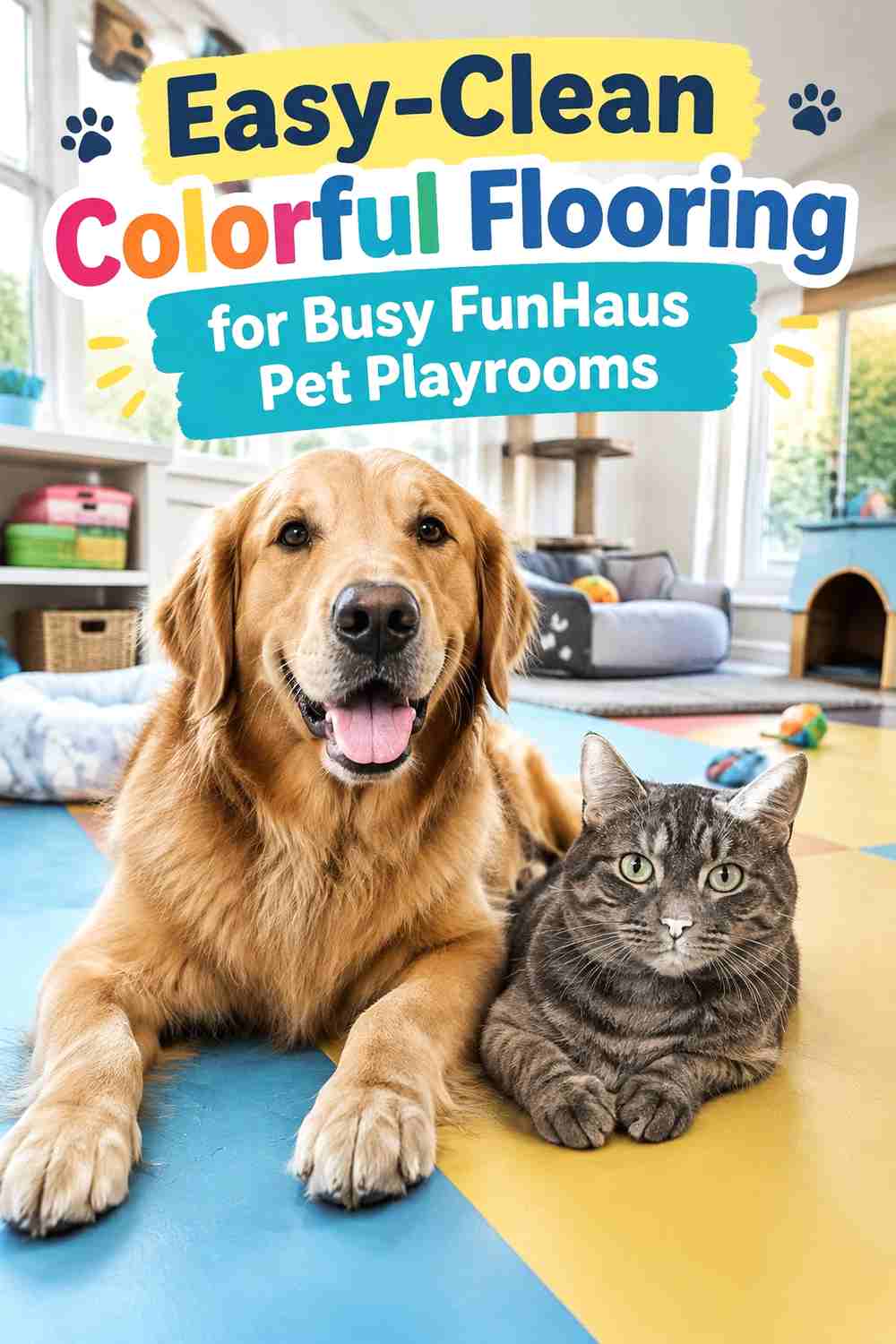
Bring FunHaus color to the floor with washable, nonslip surfaces arranged in broad color blocks or simple graphic patterns. Choose traction and cleanup performance before visual drama, especially in areas where dogs run, cats jump down, or food puzzles are used. A washable rug, low-profile mat system, or suitable easy-clean floor can define play and rest zones without creating raised edges that catch paws. Avoid overly slick finishes simply because they look glossy. Limiting the palette to two or three strong colors makes the room energetic without hiding dirt, damaged toy pieces, or spills.
Cleaning Notes
Lift removable mats periodically to clean underneath and check for trapped moisture or debris.
Comfort & Safety
If a surface causes slipping during normal movement, replace it rather than relying on pets to adjust their gait.
12. Small Space Funhaus Playroom For Dogs And Indoor Cats
You May Also Like



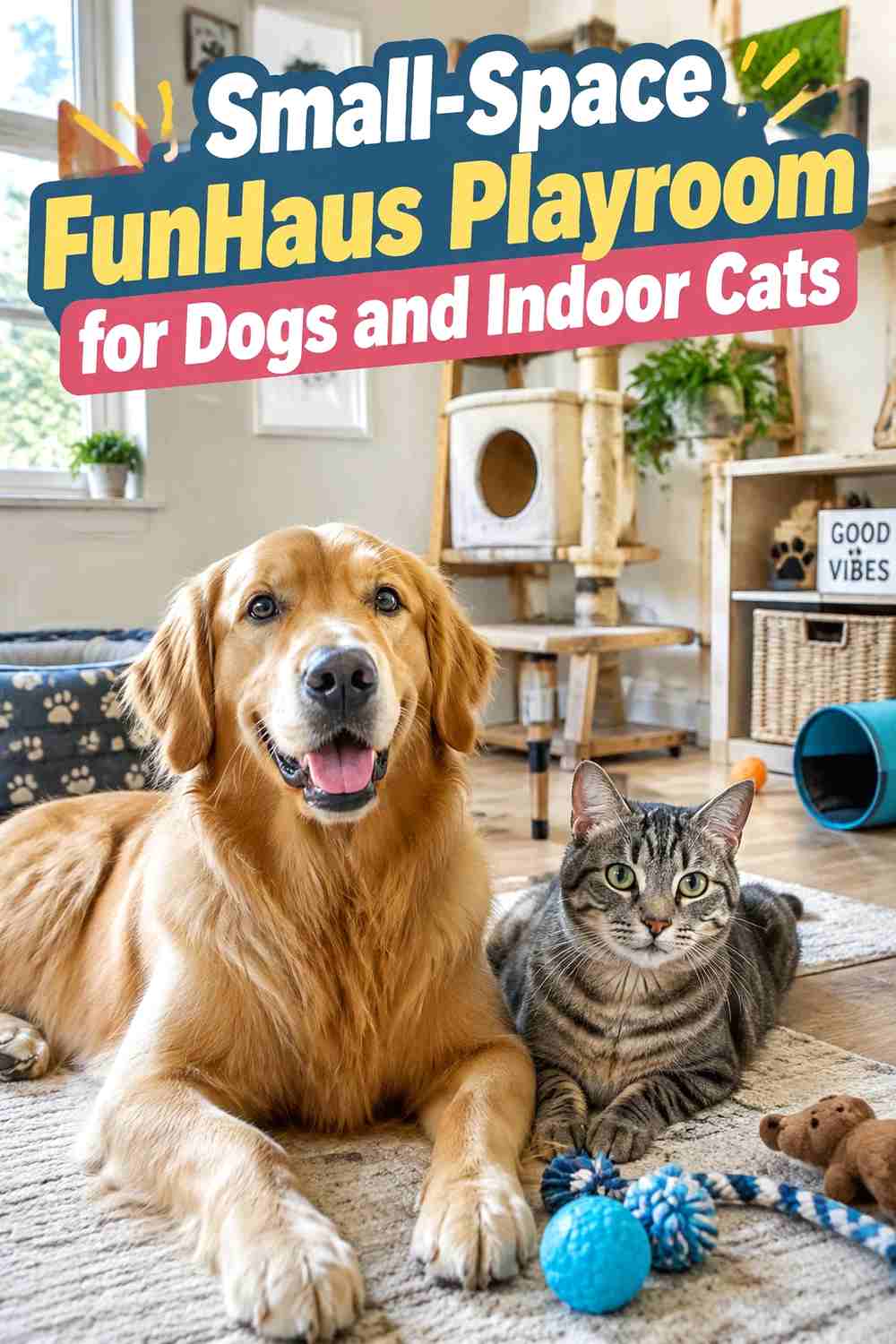
Create a compact FunHaus playroom by using one striped accent wall, vertical storage, a small enrichment station, and species-specific zones rather than trying to fit every playful feature into the room. A cat can use a securely mounted climbing shelf while a dog gets an open floor mat for puzzles or sniffing activities. Add one rounded shared visual element, such as a curved cabinet or circular rug, to reinforce the style without reducing movement space. Store backup toys elsewhere and keep only the current rotation in the room. In a small footprint, the best FunHaus effect comes from bold surfaces and shapes rather than piles of decorative objects.
Space & Placement
Measure the remaining open floor after beds, storage, and pet equipment are installed.
Pro Tip
Choose one bold pattern and two strong colors, then let practical pet features provide the rest of the room’s personality.
How to Choose the Right Idea
Start with species, size, age, confidence, energy, and the type of enrichment your pets already enjoy. Dogs may get more value from sniffing, puzzle, and open-floor zones, while cats often benefit from climbing, perching, tunnels, and vertical observation points. Multi-pet playrooms need duplicate rest resources and enough separation that animals are not forced to share every activity.
Then bring in the FunHaus style through bold stripes, vivid color blocks, sculptural curves, and graphic storage instead of filling the floor with decorative objects. Current coverage of the trend emphasizes its circus-inspired color, pattern, and playful shapes, balanced so the room remains livable. Choose washable surfaces, stable equipment, secure wall mounting, and layouts that remain easy to supervise and clean.
Final Thoughts
A FunHaus pet playroom should be entertaining to look at and genuinely useful to pets. Start with one bold visual feature, then build practical zones for the activities your pets actually use. Bright color and playful curves can deliver the style while open pathways, safe equipment, toy rotation, and easy-clean surfaces keep the room functional.
FAQs
1. What makes a pet playroom look FunHaus?
Bold stripes, vivid colors, graphic patterns, curved shapes, and playful circus-inspired details capture the style. Use them on walls, storage, washable mats, and functional furniture rather than relying on loose decor.
2. Can dogs and cats share a FunHaus pet playroom?
Compatible dogs and cats can share the room, but each species should have appropriate activities and separate rest options. A shared color scheme does not mean every resource needs to be shared.
3. How do I keep a colorful pet playroom from becoming cluttered?
Limit the visible toy rotation, use closed storage, and choose one dominant pattern. Bold walls and furniture can create plenty of visual energy while the floor remains relatively open.
4. What flooring works best for a FunHaus pet playroom?
Choose a nonslip, washable surface appropriate for your pets. Color blocking or a simple graphic mat can provide the FunHaus look without sacrificing traction or cleanup.
5. How can I create a FunHaus playroom in a small space?
Use a striped or color-block accent wall, vertical storage, one compact activity zone, and species-appropriate wall features. Keep the central floor open instead of adding multiple decorative pieces.
Save these 13 FunHaus pet playroom ideas for your next colorful pet-space makeover, and share your favorite playful setup with another pet owner.
