Turn unused space beneath your staircase into a comfortable dog retreat with practical bedding, storage, lighting, cleaning, and layout ideas for everyday use.
Save This Idea on Pinterest
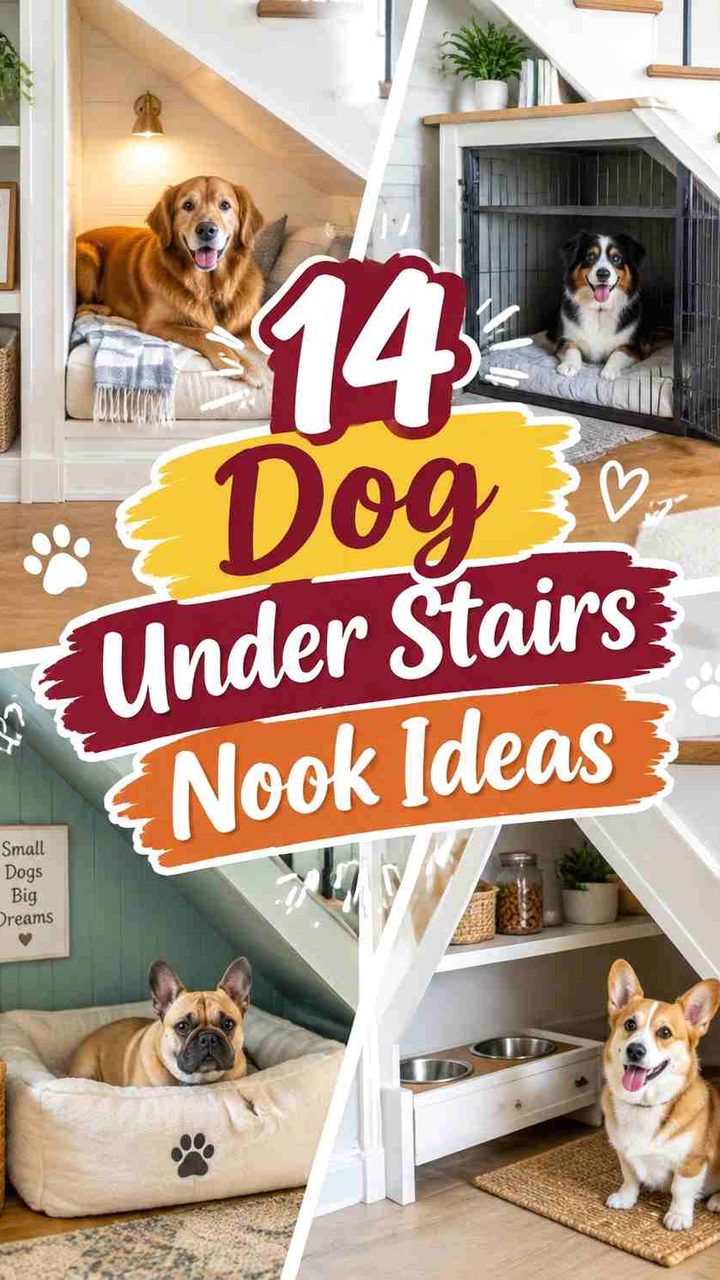
14 Dog Under Stairs Nook Ideas
Save to PinterestDog under stairs nooks can work well when the space is open enough for comfortable movement, airflow, and easy access. Instead of filling the triangular area with décor, start with the way your dog normally rests—stretched out, curled up, near people, or in a quieter protected corner.
These 14 ideas include built-in beds, low senior-friendly layouts, large-dog mats, multi-dog zones, toy storage, soft lighting, and easy-clean designs. Before setting up the nook, make sure it does not block vents, electrical panels, storage access, or household walkways, and avoid exposed cords or low objects your dog could bump.
Quick List
- Cozy Built-In Dog Bed Nook Under the Stairs
- Open Under-Stairs Dog Nook with Washable Floor Mat
- Small-Dog Under-Stairs Retreat with Soft Bolster Bed
- Large-Dog Under-Stairs Nook with Extended Resting Mat
- Senior-Friendly Under-Stairs Dog Nook with Low Entry
- Multi-Dog Under-Stairs Nook with Separate Resting Zones
- Easy-Clean Under-Stairs Dog Nook with Removable Covers
- Under-Stairs Dog Nook with Hidden Toy Storage
- Quiet Under-Stairs Dog Retreat Away from Household Traffic
- Minimalist Under-Stairs Dog Nook with Neutral Bedding
- Under-Stairs Dog Nook with Safe Soft Lighting
- Entryway Under-Stairs Dog Nook with Leash Storage
- Reading Corner Under-Stairs Dog Nook Beside Bookshelves
- Open-Front Under-Stairs Dog Nook with Airy Layout
1. Cozy Built In Dog Bed Nook Under The Stairs
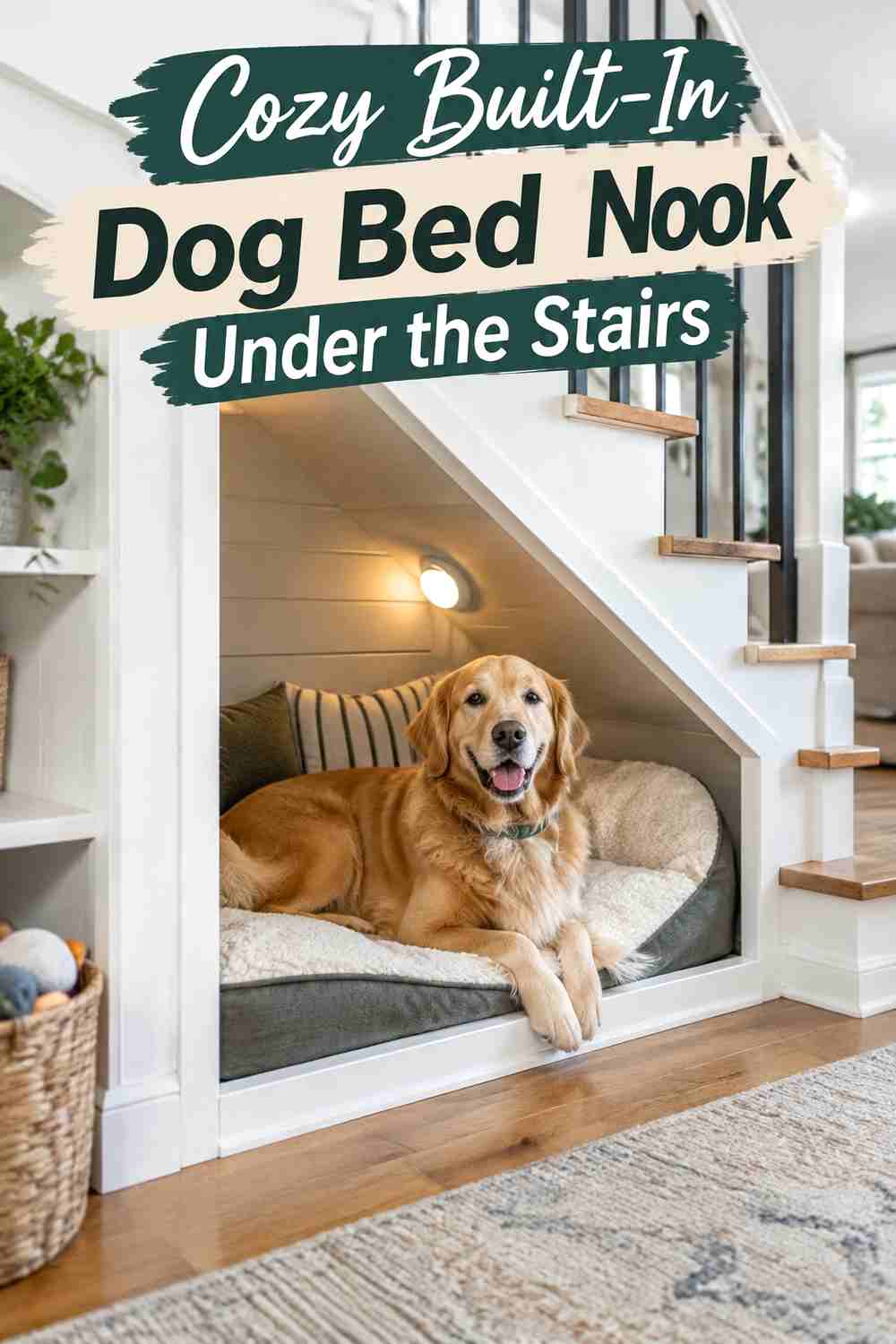
A cozy built-in dog bed nook turns the deepest usable section beneath a staircase into a defined resting area without adding another freestanding bed to the room. Fit a supportive cushion or mattress into a low platform or finished alcove, leaving enough open space for your dog to enter, turn, and lie in a normal position. Use removable bedding rather than attaching fabric permanently to the structure so cleaning stays manageable. Keep the entrance wide and avoid enclosing the nook so tightly that it feels stuffy. If the under-stairs area contains utilities or access panels, preserve full access instead of building over them. A simple finished wall and fitted bed can make the nook feel intentional without unnecessary decoration.
Setup Notes
Check the usable height from the dog’s perspective, especially near the sloping ceiling, and keep sharp corners or protruding hardware outside the resting area.
2. Open Under Stairs Dog Nook With Washable Floor Mat
You May Also Like



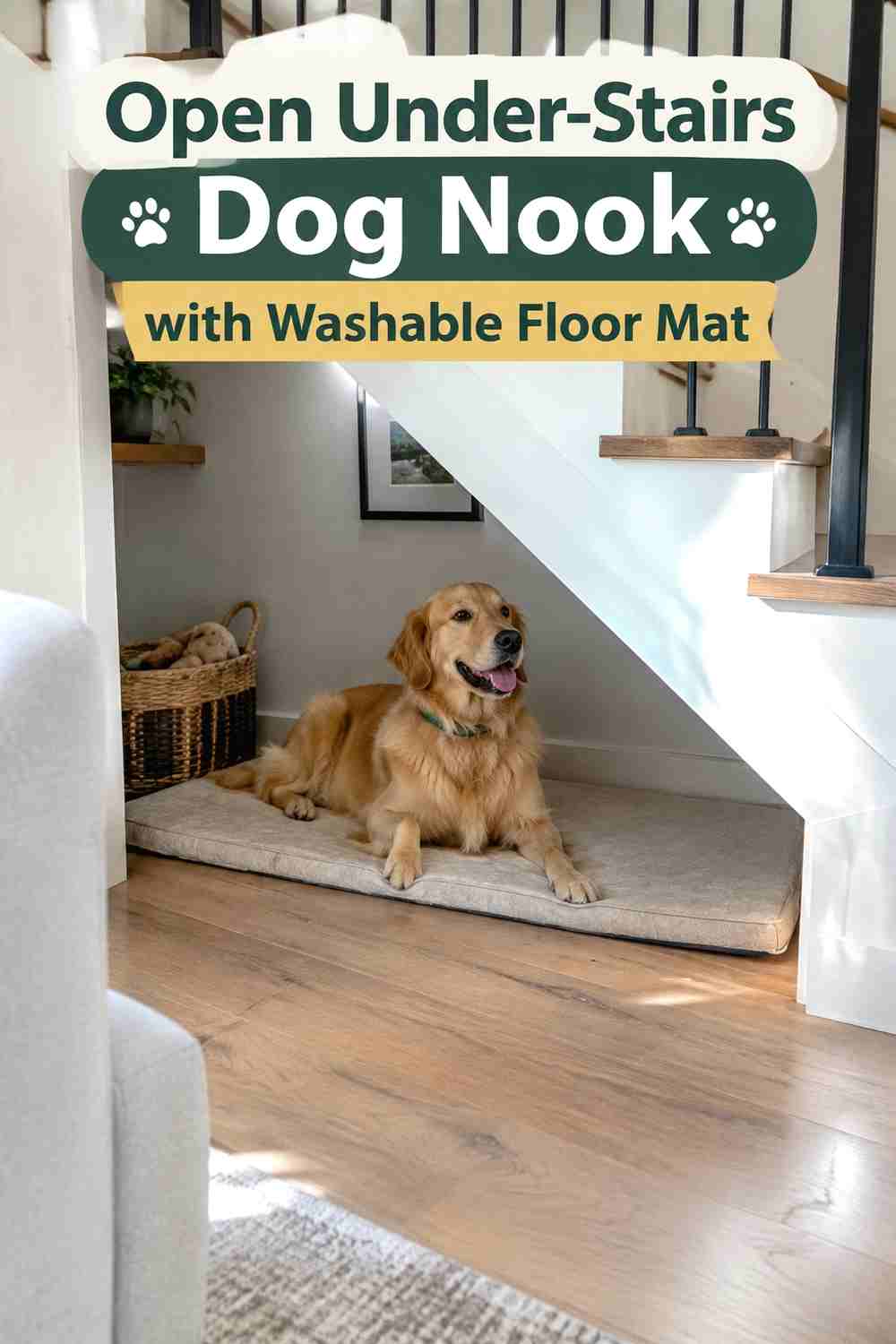
An open under-stairs nook with a washable floor mat is one of the simplest ways to use the space without permanent construction. Choose a broad, non-slip mat or low padded bed that fits the open section where your dog can stand and turn comfortably. Because the front remains completely open, the nook is easy to vacuum and may feel less enclosed for dogs that prefer watching the room. A washable cover in a neutral or warm color can help the area blend with surrounding furniture. Keep baskets, shoes, and household storage from gradually spreading into the dog’s floor space. This setup is especially practical for renters or anyone who wants a reversible arrangement that can change with the dog’s needs.
Cleaning Notes
Lift the mat regularly to vacuum fur and check for dust collecting along the wall and stair edges.
3. Small Dog Under Stairs Retreat With Soft Bolster Bed
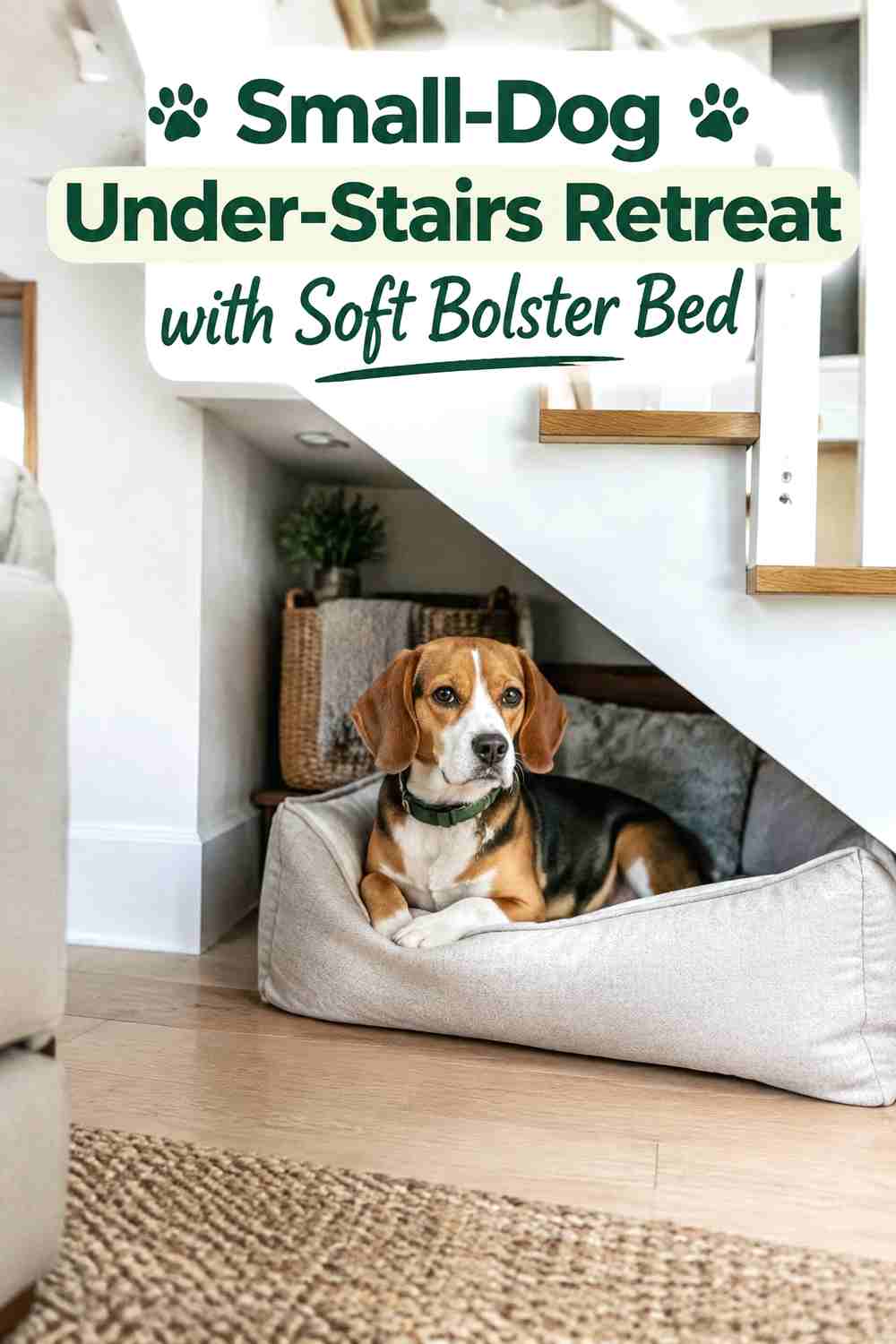
A small-dog under-stairs retreat can use the lower portion of the space efficiently without making the nook feel oversized. Place a soft bolster bed where the ceiling height still allows the dog to sit, stand, and turn comfortably, then leave the surrounding floor clear. Small dogs that naturally enjoy protected resting spots may appreciate the slight enclosure created by the staircase, especially when the opening faces a familiar living area. Avoid surrounding the bed with decorative baskets or pillows that shrink the usable space. A washable bed cover is helpful because dust and fur can collect quickly in corners. If your dog prefers more visibility, position the bed closer to the open front instead of pushing it into the deepest point.
Best For
This layout suits small dogs that already choose covered beds, corners, or tucked-away resting places while still wanting an easy view of the room.
4. Large Dog Under Stairs Nook With Extended Resting Mat
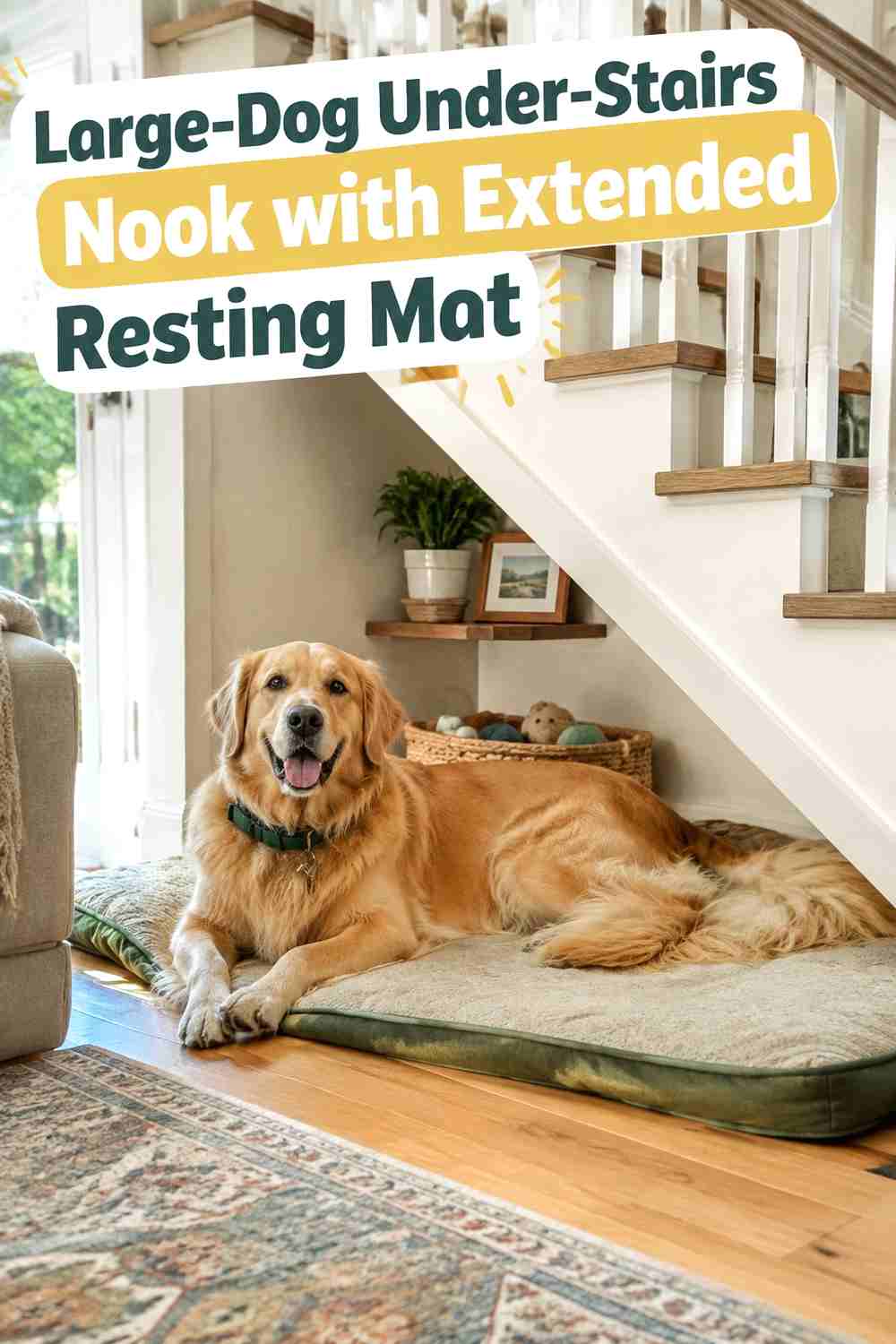
A large-dog under-stairs nook needs enough length and open floor area for the dog’s full resting position, not just enough space for a compact bed. Use a long, supportive mat that extends toward the higher portion of the staircase so the dog can stretch without pressing against the sloped wall. Keep the front completely open and avoid building narrow side panels that make turning awkward. This setup can work well for retrievers, shepherds, and other larger dogs when the staircase has a broad footprint. If your dog cannot stand comfortably in the deeper section, use that area only for storage and keep the resting mat farther forward. Function matters more than filling every inch beneath the stairs.
Space & Placement
Watch where your dog naturally places the head and shoulders, then orient the bed so the tallest part of the body stays under the higher ceiling.
5. Senior Friendly Under Stairs Dog Nook With Low Entry
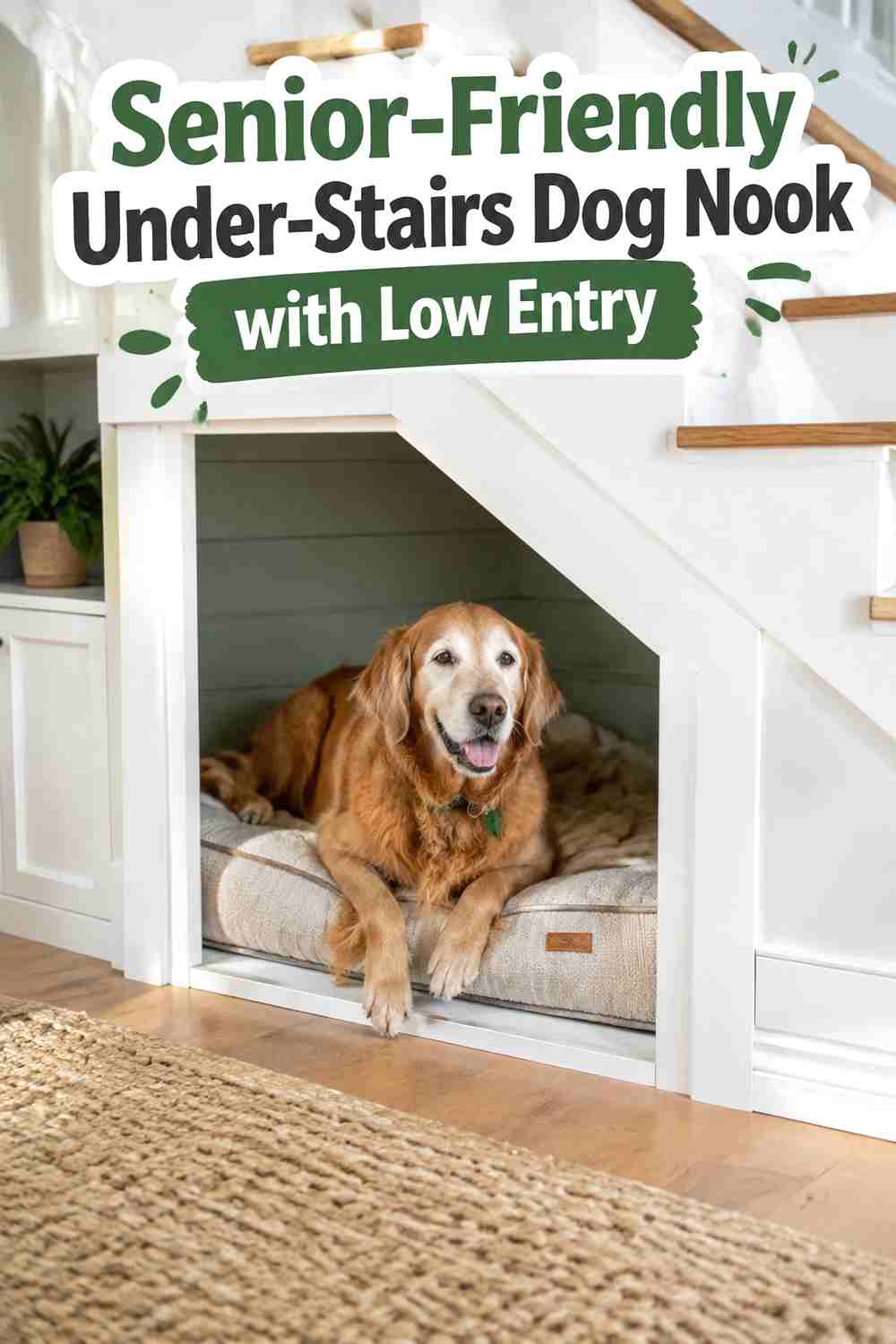
A senior-friendly under-stairs nook should have a completely low entry with no raised threshold to step over. Use a supportive floor-level bed or thin platform and place a non-slip mat along the approach if surrounding flooring is smooth. Keep the route into the nook straight and free from baskets, shoes, or decorative furniture. The front edge should remain easy to see in normal room lighting so the dog does not need to negotiate an unfamiliar dark opening. Senior dogs vary widely in mobility, so choose the depth and bed style according to how your dog already moves at home. If turning inside the nook looks awkward, pull the bed forward or use a wider section instead.
Comfort & Safety
Avoid requiring jumping or crouching to reach the bed. Consistent access and stable footing are more useful than adding extra built-in features.
6. Multi Dog Under Stairs Nook With Separate Resting Zones
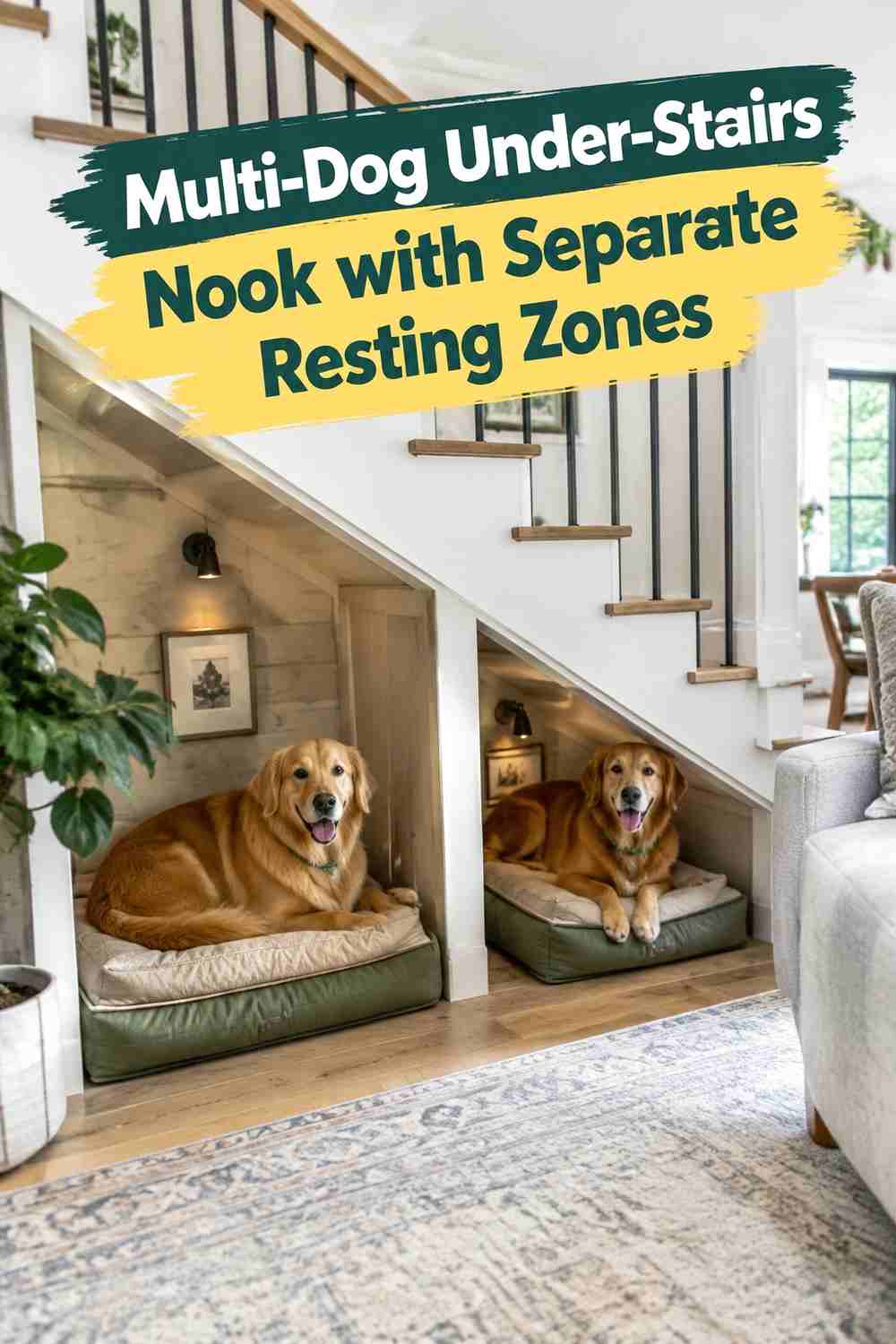
A multi-dog under-stairs nook works best when each dog has a separate mat or bed rather than one large shared cushion. Arrange the beds side by side only if the space is wide enough for comfortable personal distance, or place one slightly farther forward where the ceiling is higher. Keep clear exit routes so one dog does not have to climb over another to leave. Matching covers can make the area look coordinated without turning it into forced shared seating. This setup is most practical for dogs already comfortable resting near each other. If one dog regularly blocks or claims the entire nook, provide another appealing bed elsewhere rather than expecting both pets to use the same confined space.
Setup Notes
Duplicate resting resources and let the dogs choose where to settle. Individual comfort matters more than making the nook look symmetrical.
7. Easy Clean Under Stairs Dog Nook With Removable Covers
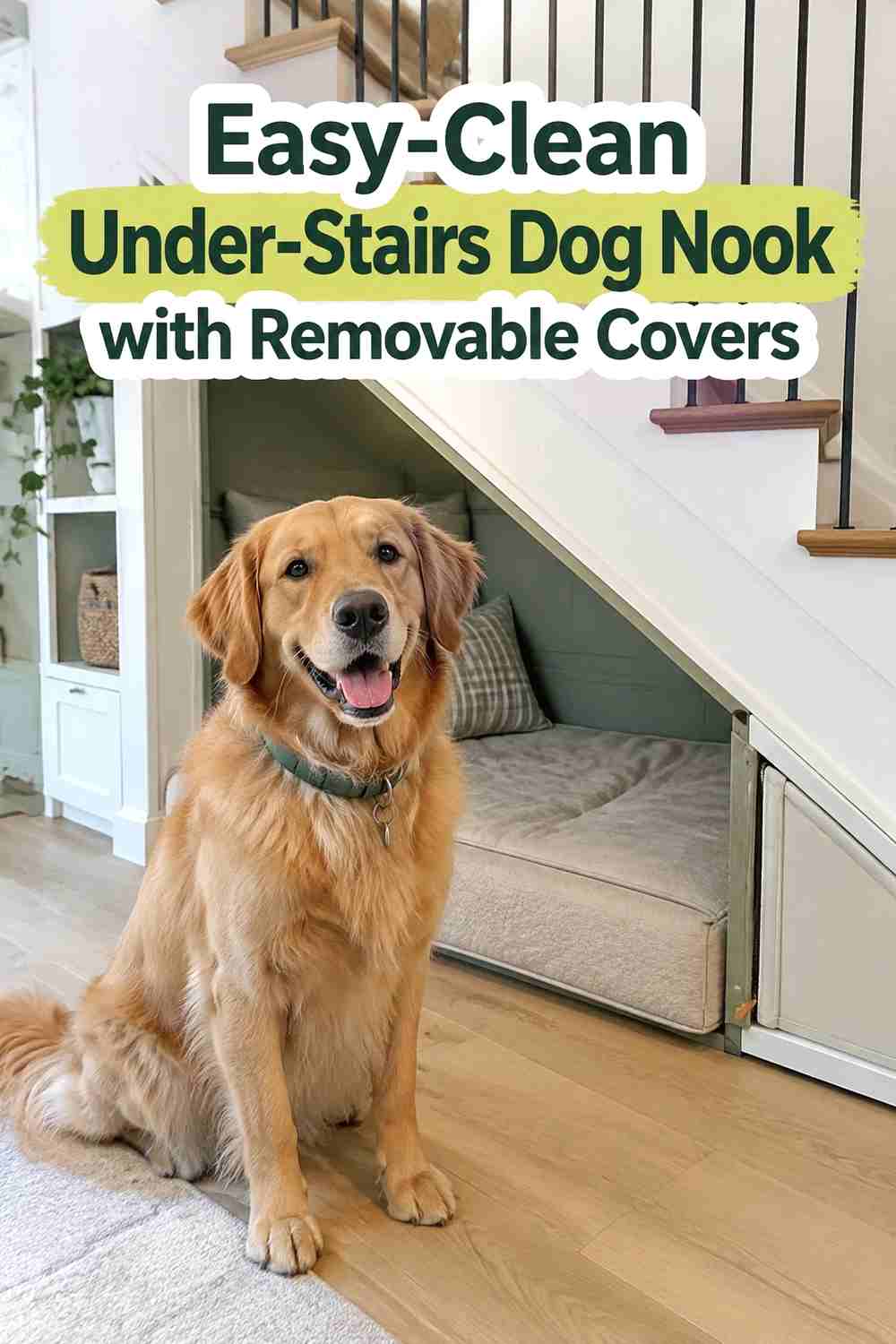
An easy-clean under-stairs nook uses removable bedding covers and uncluttered flooring so regular maintenance does not require dismantling the whole setup. Choose a bed with a washable outer cover, keep decorative fabric to a minimum, and leave enough clearance around the edges for a vacuum attachment. A smooth wall finish can also make fur and dust easier to notice and remove. Avoid permanently attaching thick upholstery to the walls or floor unless it can be cleaned effectively. This design is especially useful for shedding dogs or pets that come inside with dusty paws. Keeping only one or two washable textiles in the nook also makes it easier to replace bedding quickly while another cover is being cleaned.
Cleaning Notes
Vacuum corners and stair edges regularly, and check beneath the bed for trapped hair, moisture, or debris before replacing the clean cover.
8. Under Stairs Dog Nook With Hidden Toy Storage
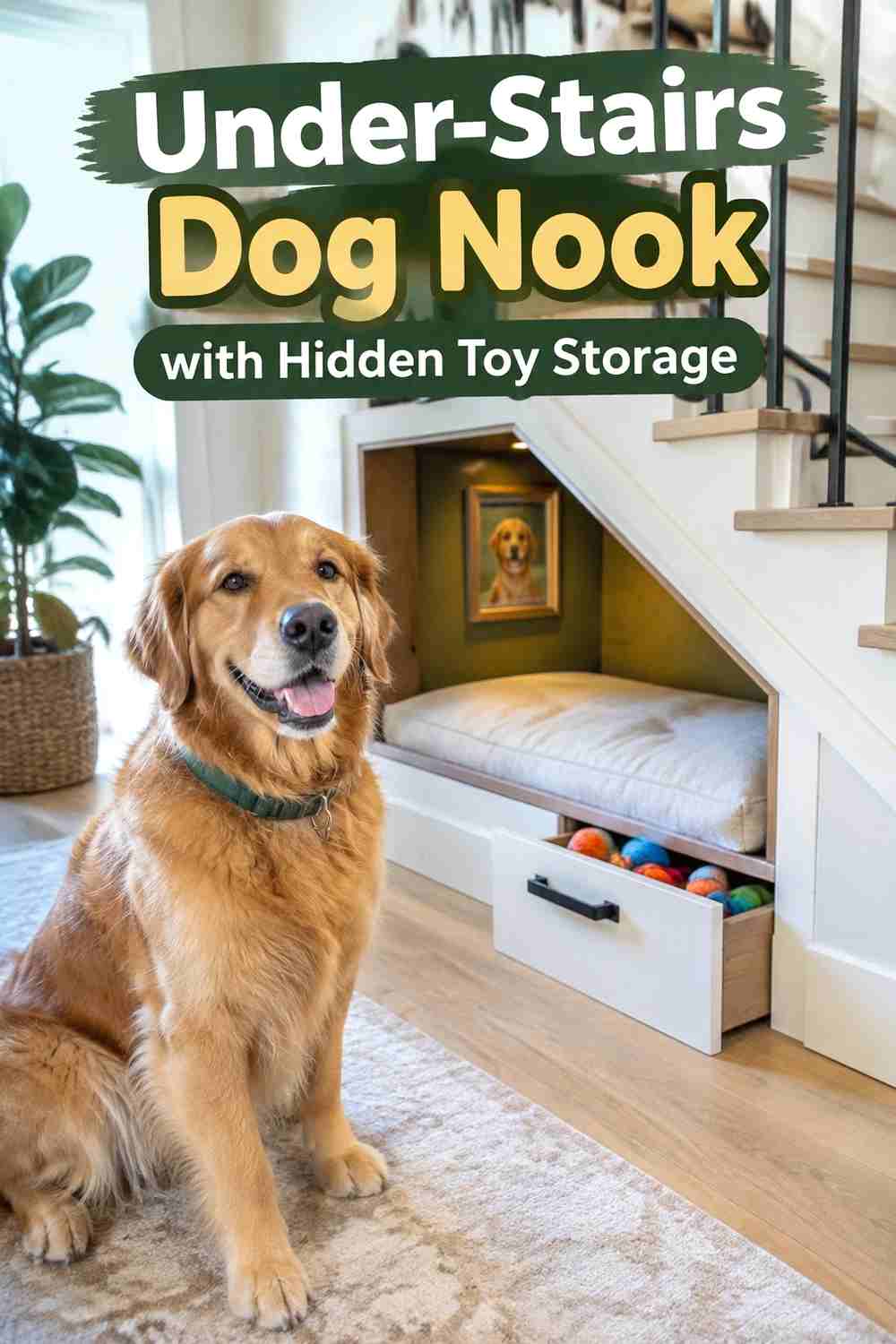
An under-stairs dog nook with hidden toy storage keeps everyday play items close without filling the resting area with loose objects. Use a closed drawer, cabinet, or sturdy pull-out bin beside the bed rather than placing a toy basket directly where the dog sleeps. This allows you to rotate familiar toys while keeping the floor clear for comfortable movement. Store string-like, fabric, or damaged toys appropriately and supervise items that require it. The storage section should not block the dog’s entrance or reduce airflow around the bed. If your dog is likely to nose open cabinets, choose a secure closure. This setup works particularly well when the nook is part of a living room and owners want pet supplies nearby but visually contained.
Use & Maintenance
Keep only a reasonable toy rotation in the nook and inspect stored items before putting them back after play.
9. Quiet Under Stairs Dog Retreat Away From Household Traffic
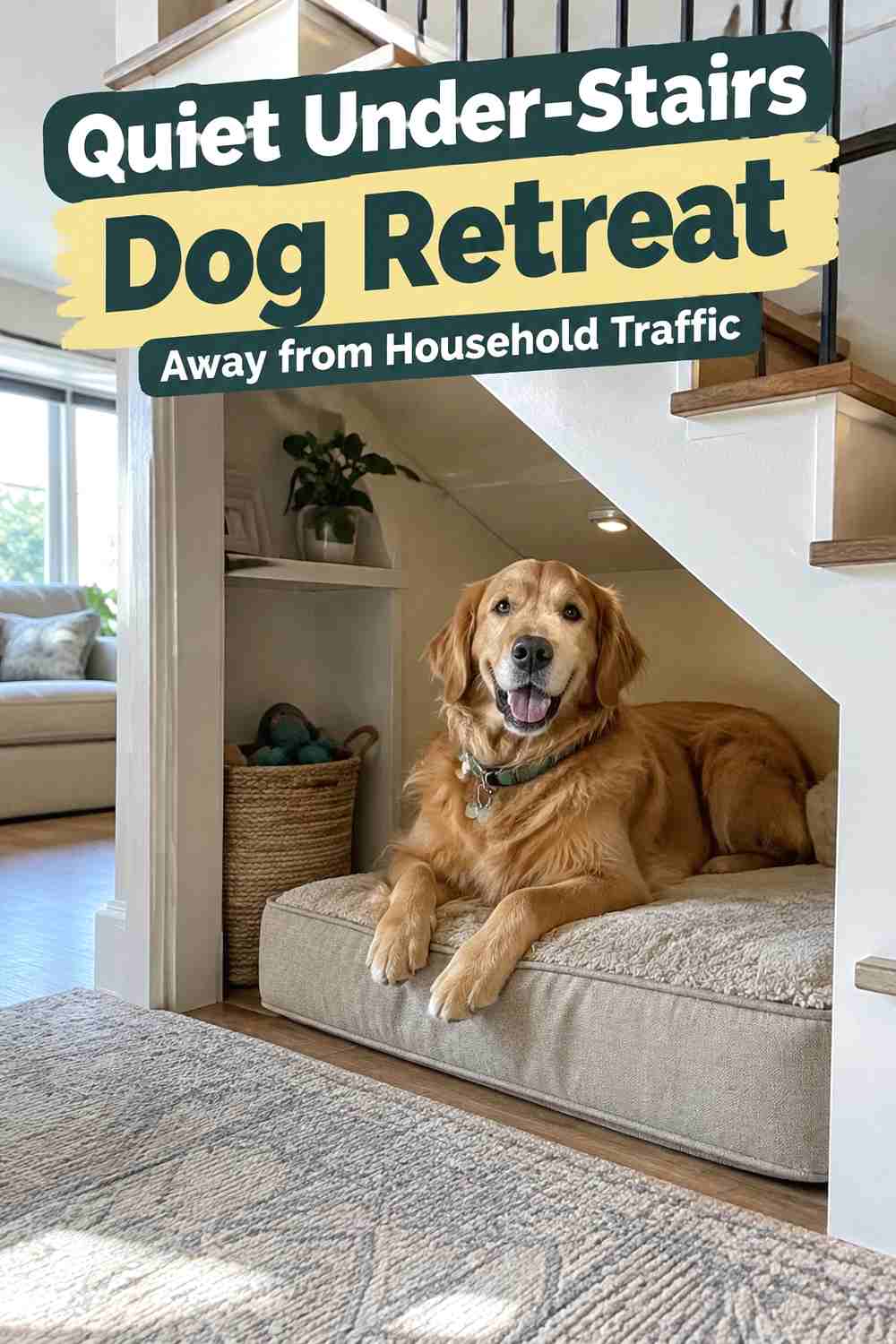
A quiet under-stairs retreat can give a dog somewhere calm to rest without being completely separated from the household. Choose the side of the staircase that faces away from the busiest walkway and place a familiar bed near the open front. Keep the surrounding area free from vacuum storage, shoes, bags, and frequently opened cabinets so the nook stays predictable. This idea may suit dogs that prefer watching family activity from a little distance rather than resting in the center of the room. Do not treat the nook as a place to send the dog whenever guests arrive; it should remain an optional resting space the dog can enter and leave freely.
Best For
This layout suits dogs that naturally choose corners or low-traffic areas but still like remaining within sight or hearing of familiar people.
10. Minimalist Under Stairs Dog Nook With Neutral Bedding
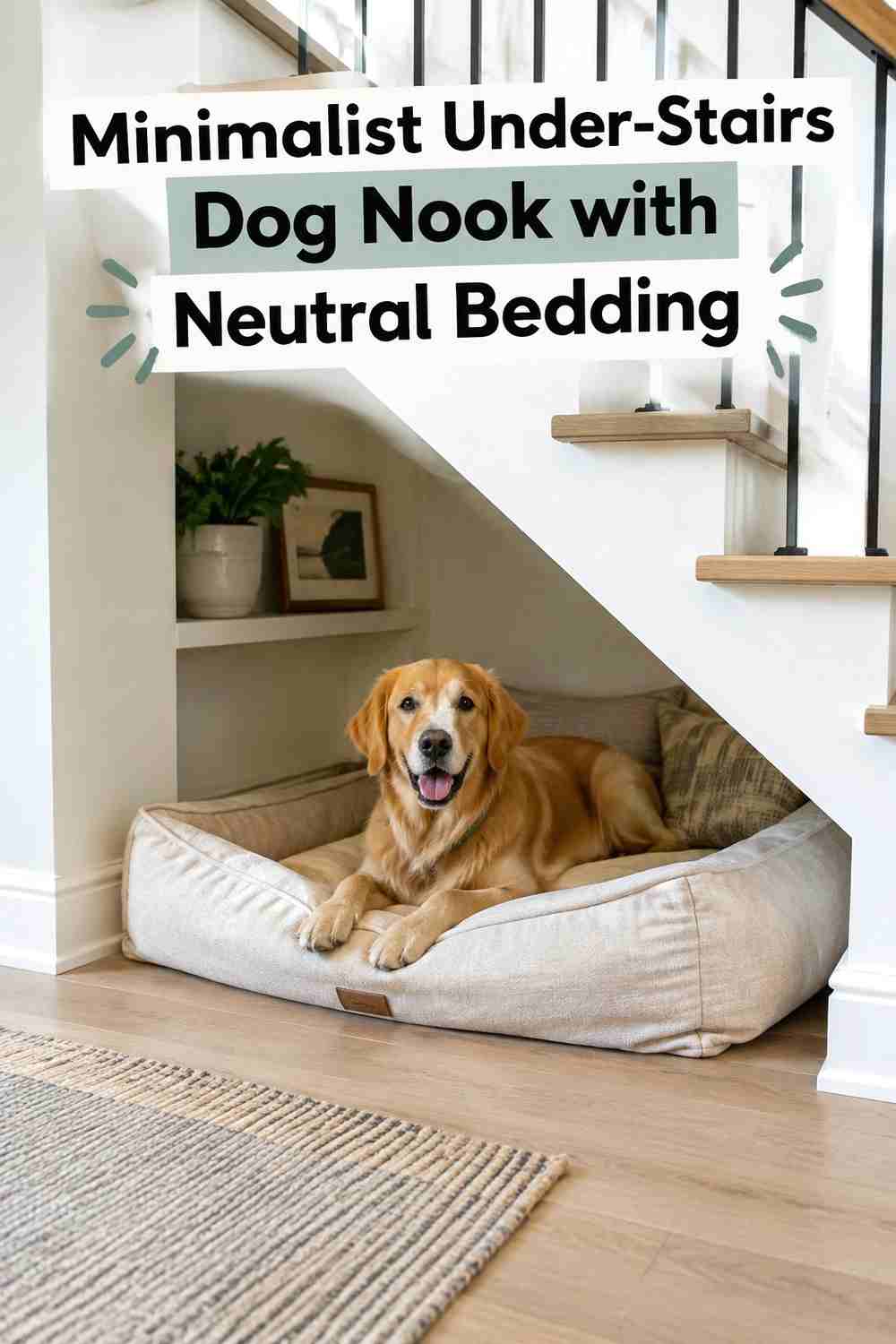
A minimalist under-stairs dog nook keeps the design focused on one comfortable bed and plenty of open space. Choose neutral bedding in cream, taupe, gray, or muted green and skip decorative baskets, wall signs, or multiple pillows around the dog. The simple layout helps the unusual shape beneath the stairs look intentional while keeping cleaning straightforward. This approach is especially practical for chew-happy dogs because fewer low accessories mean fewer tempting objects near the resting area. If you want visual interest, use paint or wall finish rather than loose décor at pet level. Keep the dog’s water and toys in their usual locations unless moving them into the nook clearly improves the routine.
Why It Works
A restrained setup preserves movement space and makes the bed the obvious purpose of the nook instead of turning the area into general household storage.
11. Under Stairs Dog Nook With Safe Soft Lighting
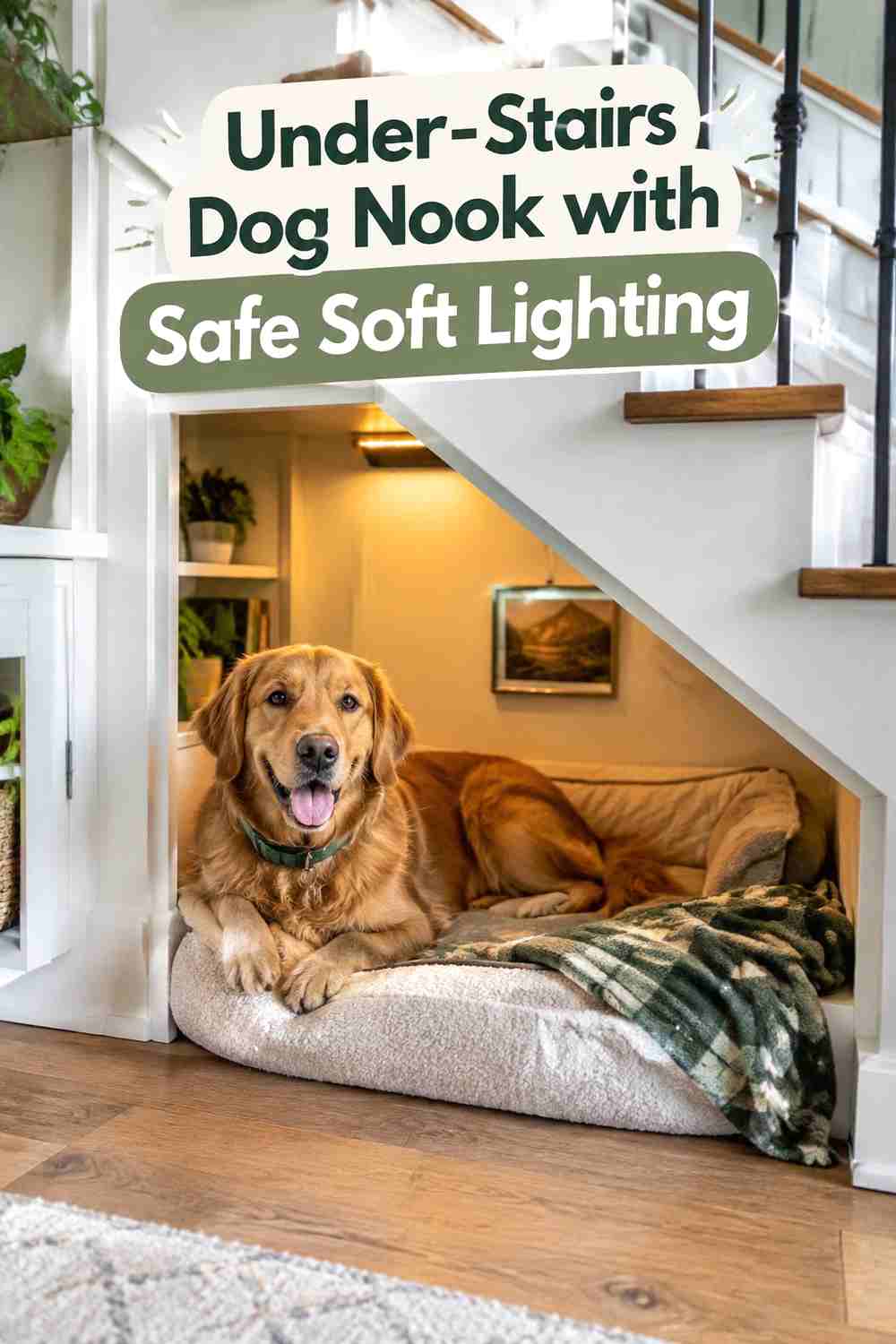
An under-stairs dog nook with soft lighting can feel more usable in spaces that become dim even during the day. Use existing room lighting or a securely installed low-heat fixture positioned outside chewing and bumping reach. Route all electrical cords away from the dog and avoid loose string lights, floor lamps, or exposed wiring inside the resting area. The light only needs to make the entrance and floor easy to see; the nook does not need to be brightly illuminated. This idea can be especially useful when the staircase sits in a hallway with limited natural light. If professional electrical work is required, preserve access to switches, wiring, and other household systems rather than covering them with built-in dog features.
Comfort & Safety
Choose steady, indirect lighting and keep electrical components inaccessible. Avoid open flames or unstable lamps anywhere near the nook.
12. Entryway Under Stairs Dog Nook With Leash Storage
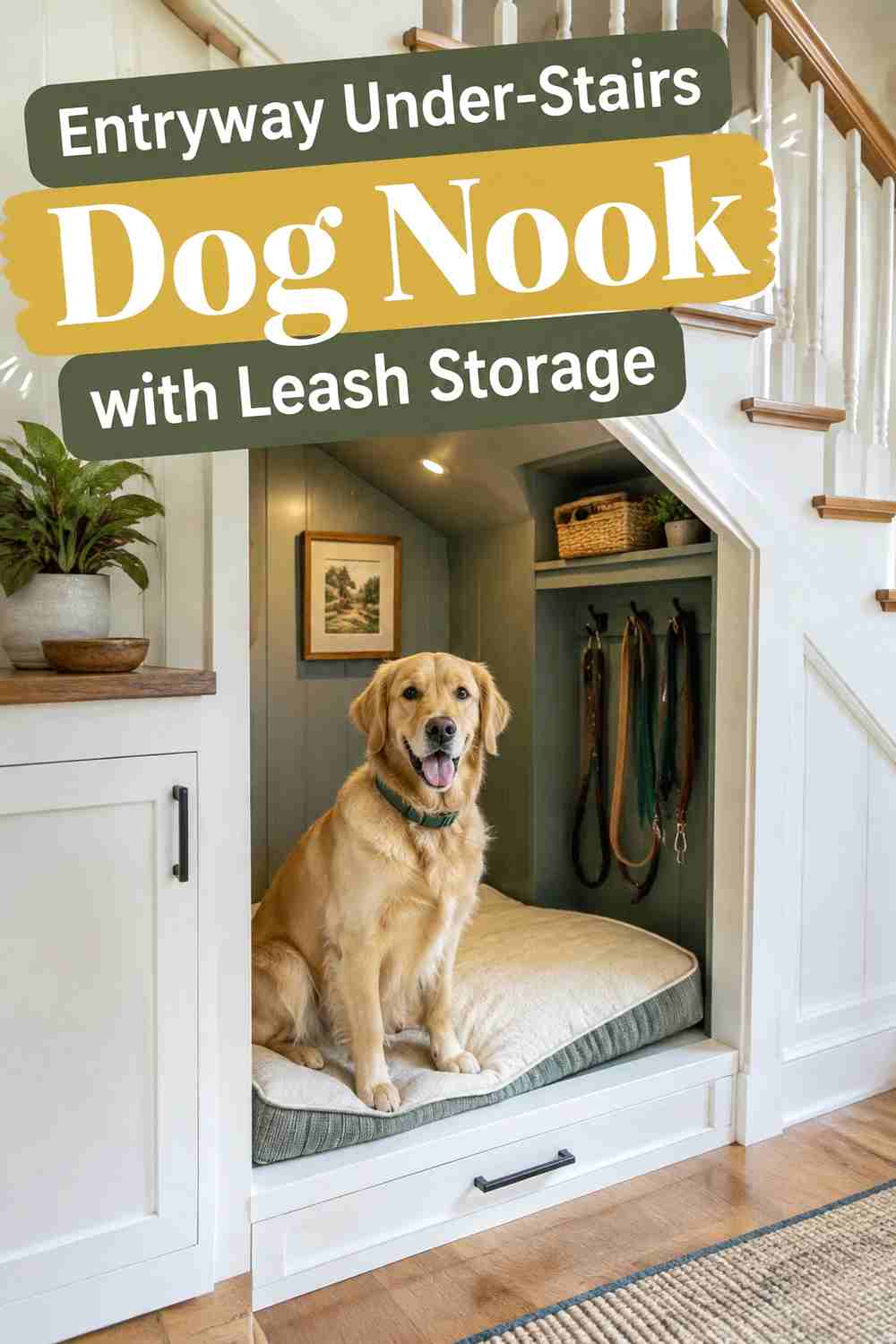
An entryway under-stairs dog nook can combine a resting bed with organized walking gear when the staircase sits near the main door. Keep the bed on the floor beneath the higher part of the stairs and mount leash or harness hooks on a nearby vertical wall at adult reach. This gives the dog a comfortable waiting spot without allowing straps to hang into the resting area. Keep shoes, bags, and wet-weather gear on a separate shelf so the nook does not become an overflow drop zone. Damp leashes or harnesses should dry before being stored beside clean bedding. This setup is especially useful for households that want dog routines concentrated near the entrance while maintaining a tidy floor plan.
Space & Placement
Preserve the door swing and clear walking route. The dog should be able to leave the nook without passing through hanging gear or crowded footwear.
13. Reading Corner Under Stairs Dog Nook Beside Bookshelves
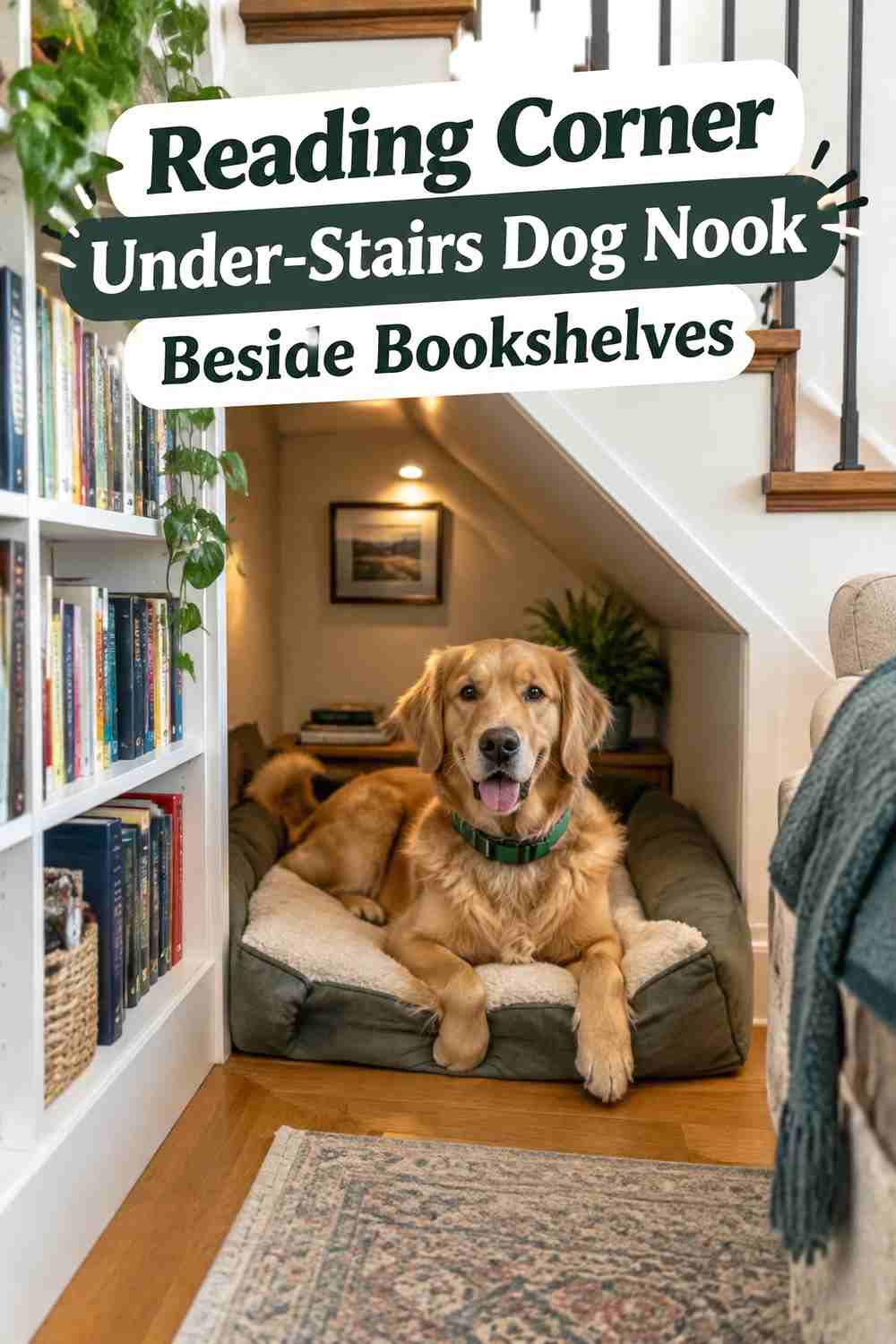
A reading-corner under-stairs dog nook places your dog close to a chair or bookshelf so quiet evening routines can be shared without using the same furniture. Fit a low bed beneath the staircase and keep books on shelving beside or above the usable resting area rather than stacking them around the dog. A simple washable cushion in a warm neutral tone can connect the nook visually with the reading space. Keep mugs, lamps, charging cords, and bookmarks away from the dog’s entrance. This arrangement works well for social dogs that often settle near their person during reading or relaxing. Avoid heavy books or décor positioned where they could fall into the nook if bumped.
Why It Works
The dog gets a defined resting spot close to household activity while the human seating and reading supplies remain separate and easy to use.
14. Open Front Under Stairs Dog Nook With Airy Layout
You May Also Like



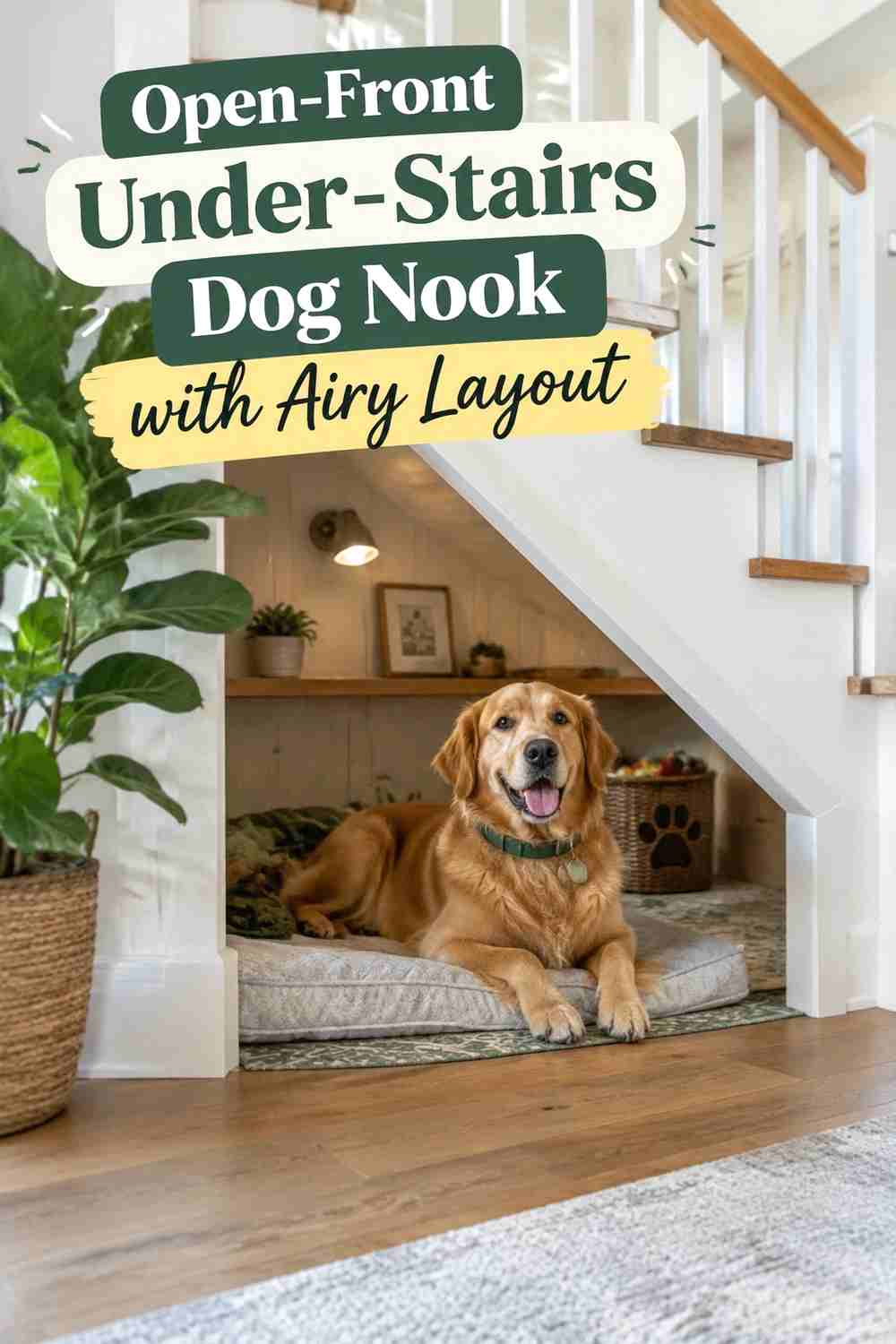
An open-front under-stairs dog nook keeps the entire entrance unobstructed so the space feels less enclosed and air can circulate easily. Use one supportive bed positioned where ceiling height remains comfortable, then leave the front and sides as open as the staircase design allows. This layout is useful for dogs that enjoy tucked-away spots but dislike enclosed cave beds or narrow openings. Avoid curtains, fabric panels, or decorative screens that restrict airflow or create chewing opportunities. Keep vents, access panels, and household systems uncovered. A simple wall color, clean flooring, and one washable bed are enough to make the nook feel finished while preserving visibility and easy movement.
Comfort & Safety
Watch how warm the space becomes during normal household use and move the bed if the nook feels stuffy, cramped, or difficult to access.
How to Choose the Right Idea
Start with the actual dimensions and shape beneath your stairs. A small dog may be comfortable farther into a low alcove, while a large dog usually needs the higher, wider section to stand, turn, and stretch naturally. Senior dogs benefit from low entries, stable footing, and straightforward access.
Next, think about what else the area needs to do. A living-room nook may work well with toy storage or a reading corner, while an entryway space may benefit from leash storage and easy-clean bedding. Multi-dog homes need separate resting options and clear exits.
Finally, check airflow, lighting, maintenance, and household access. Do not block vents, wiring, utility panels, or storage doors. Keep exposed cords and loose décor away from the dog, use washable bedding, and preserve an open route in and out.
Final Thoughts
A good under-stairs dog nook should feel like useful living space, not leftover storage with a pet bed squeezed into it. Start with enough room for natural movement, add supportive washable bedding, and keep the layout open enough for cleaning and airflow. Storage, lighting, and décor should only be added when they improve the space without reducing comfort.
FAQs
1. Is an under-stairs space suitable for a dog bed?
It can be if the area has enough height, floor space, airflow, and clear access for your dog to stand, turn, and rest comfortably. Avoid cramped or poorly ventilated spaces.
2. What should I put in an under-stairs dog nook?
A supportive washable bed or mat is the main essential. Optional additions can include secure toy storage, soft lighting, or nearby leash storage if they do not reduce usable space.
3. How can I make an under-stairs nook work for a large dog?
Use the higher portion of the staircase and choose an extended mat that allows the dog to stretch fully. Keep the front open and avoid narrow built-in walls.
4. What is a good under-stairs setup for a senior dog?
Choose a floor-level bed, non-slip approach, low entry, and clear path without steps or obstacles. Adjust the layout according to your individual dog’s normal mobility.
5. Should an under-stairs dog nook be enclosed?
It does not need to be. An open-front design often provides easier access, better visibility, and simpler airflow. If you add built-in features, avoid creating a cramped or poorly ventilated compartment.
CTA
Save your favorite dog under stairs nook ideas and turn unused staircase space into a comfortable, practical retreat that fits your dog’s everyday routine.
