Give every dog toy a clear home with simple labels that make sorting, rotation, cleanup, and everyday play easier to manage.
Save This Idea on Pinterest
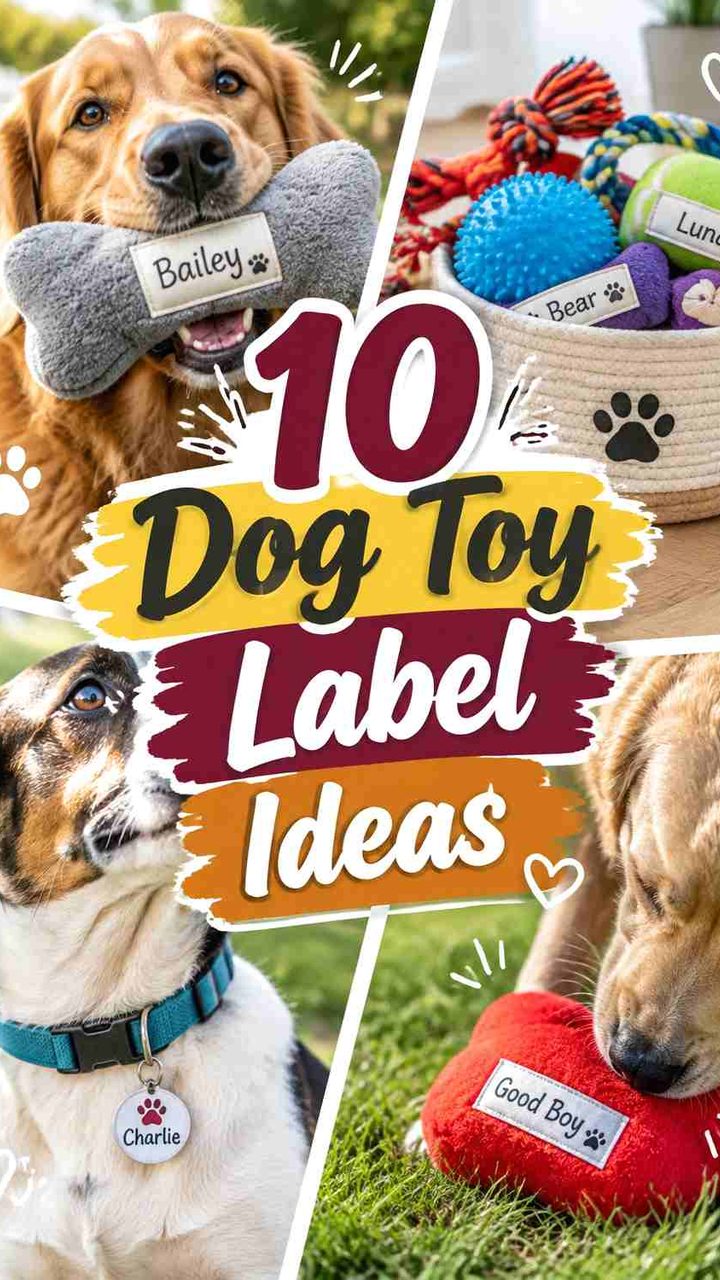
10 Dog Toy Label Ideas
Save to PinterestDog toy labels are most useful when they match the way you actually sort and use toys. Instead of creating dozens of tiny categories, clear labels can separate chew toys, fetch gear, puzzles, plush toys, outdoor items, and toys waiting in rotation.
These ideas work with baskets, shelves, drawers, cabinets, or bins and can be adapted for small homes or larger toy collections. Choose labels that are easy for people in the household to understand, simple to wipe clean, and attached securely where a curious dog cannot chew or pull them loose.
Quick List
- Everyday Dog Toy Bin Label for Daily Favorites
- Chew Toy Label for Tough Dog Toy Storage
- Fetch Toy Label for Balls and Outdoor Dog Toys
- Puzzle Toy Label for Dog Enrichment Game Storage
- Plush Toy Label for Soft Dog Toy Baskets
- Tug Toy Label for Ropes and Interactive Dog Toys
- Clean Toy Label for Freshly Washed Dog Toys
- Toy Rotation Label for Stored Dog Play Favorites
- Outdoor Toy Label for Yard and Walk Dog Gear
- Name Label System for Multi-Dog Toy Storage
1. Everyday Dog Toy Bin Label For Daily Favorites
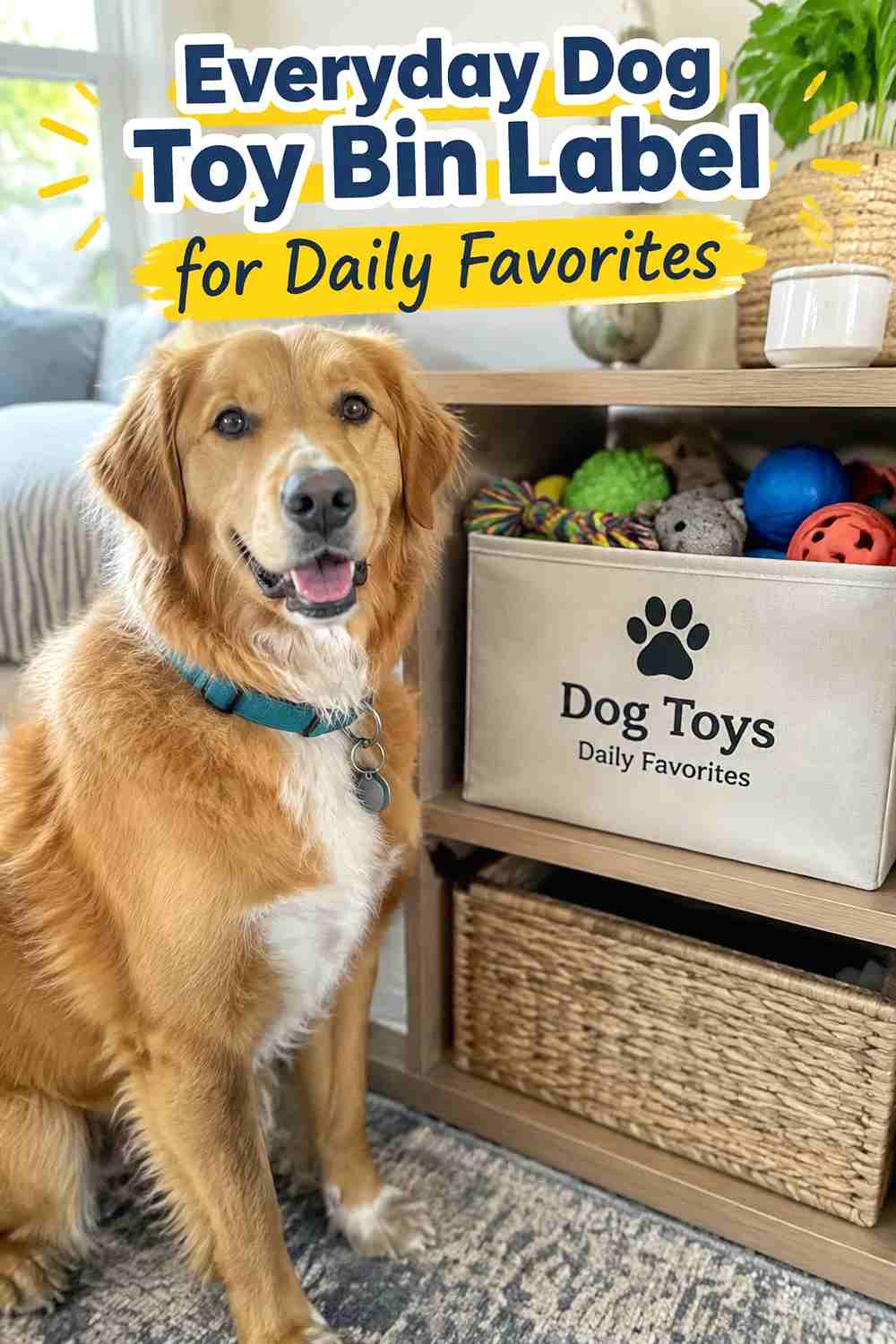
An everyday dog toy label works well on the basket that holds the toys your dog reaches for most often. Keep this category intentionally small so the bin stays easy to reset instead of becoming the place where every toy eventually lands. Balls, one favorite plush toy, a safe chew, and another frequently used item can all live here if they fit comfortably. Use a large, easy-to-read label on the front of the container so family members know where daily toys belong after play. Periodically empty the basket to remove hair, crumbs, and damaged toys. This setup is especially useful when the rest of the collection is stored in rotation and only a few options stay available.
Use & Maintenance
Review the bin regularly and move rarely used toys back into rotation storage so the everyday category stays useful.
2. Chew Toy Label For Tough Dog Toy Storage
You May Also Like

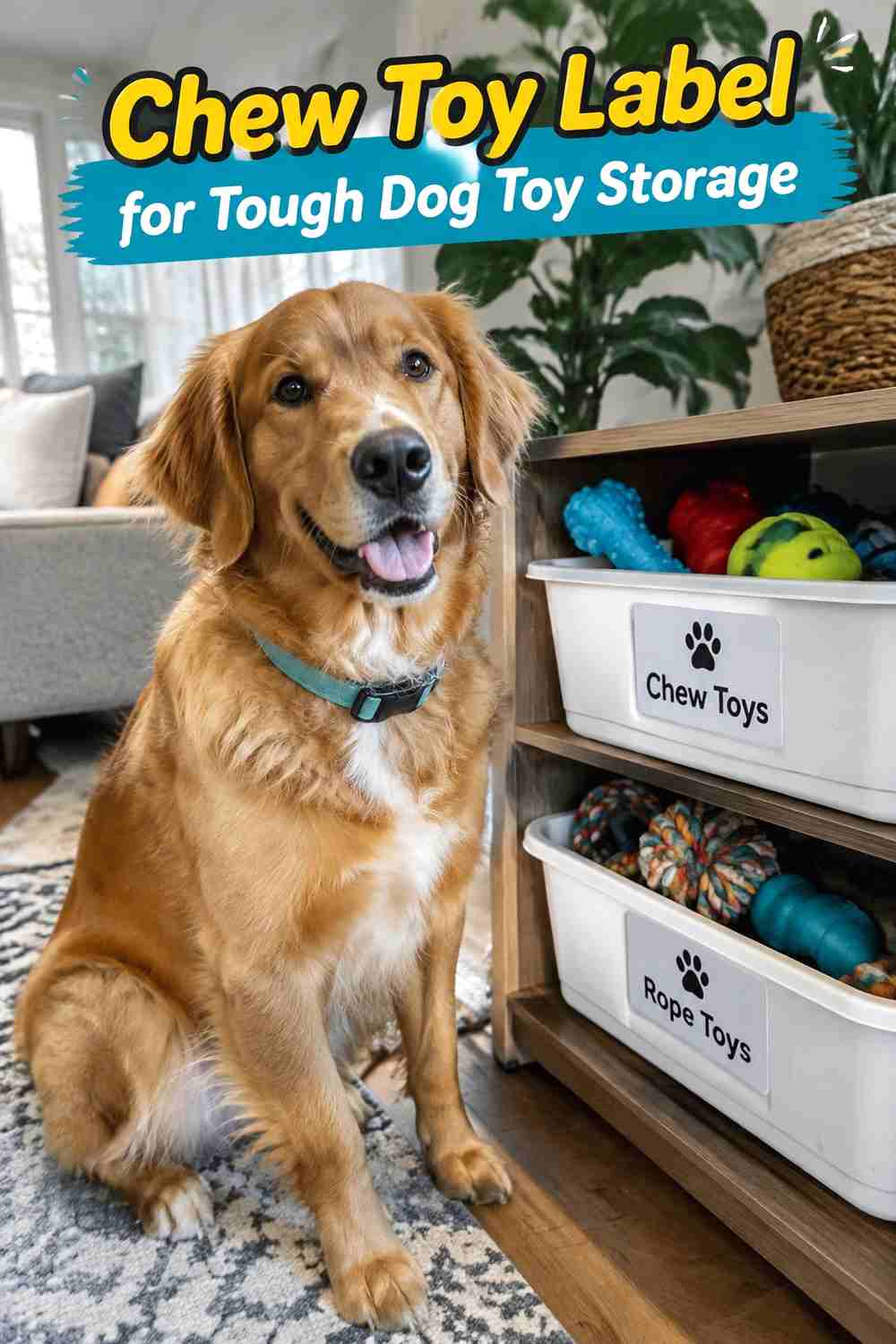
A chew toy label creates a dedicated place for durable toys intended for supervised or routine chewing. Use the category for items that are still in good condition rather than mixing them with plush toys, fetch balls, or damaged pieces waiting to be discarded. A shallow basket makes inspection easier because cracks, worn edges, or missing sections are more visible than they would be in a deep bin. Keep the label simple and place it on the outside of the container where it cannot be easily pulled off. This system helps owners quickly find an appropriate chew option without searching through unrelated toys, while also making it easier to notice when the category needs cleaning or thinning out.
Comfort & Safety
Inspect chew toys before returning them to storage and remove anything that has broken into unsafe pieces or is no longer suitable for your dog.
3. Fetch Toy Label For Balls And Outdoor Dog Toys
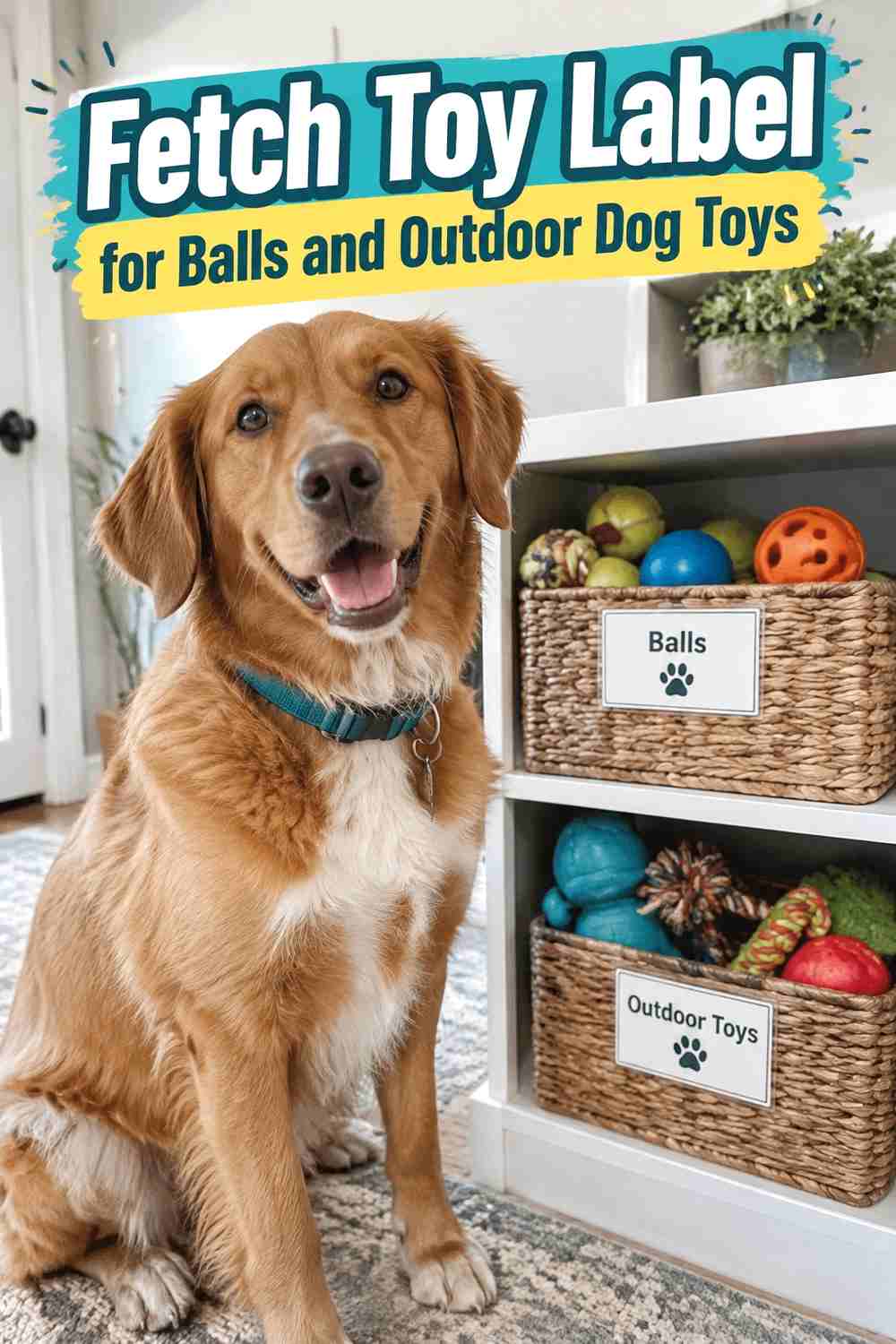
A fetch toy label keeps balls, launch-compatible toys, and other retrieving favorites together so outdoor play is easier to set up. Use a washable basket or bin near the door if these toys regularly go into the yard, park, or walking bag. Let wet or muddy items dry before placing them back into closed storage, and keep especially dirty outdoor toys separate from clean indoor plush toys. The label can include a simple ball icon for quick recognition if several family members help with cleanup. Avoid overfilling the bin with nearly identical toys; a smaller working selection is easier to inspect and carry. This category is especially practical for dogs that play fetch frequently and have gear that moves between indoors and outside.
Cleaning Notes
Shake off dirt and clean washable toys as needed, then let them dry fully before returning them to the labeled container.
4. Puzzle Toy Label For Dog Enrichment Game Storage
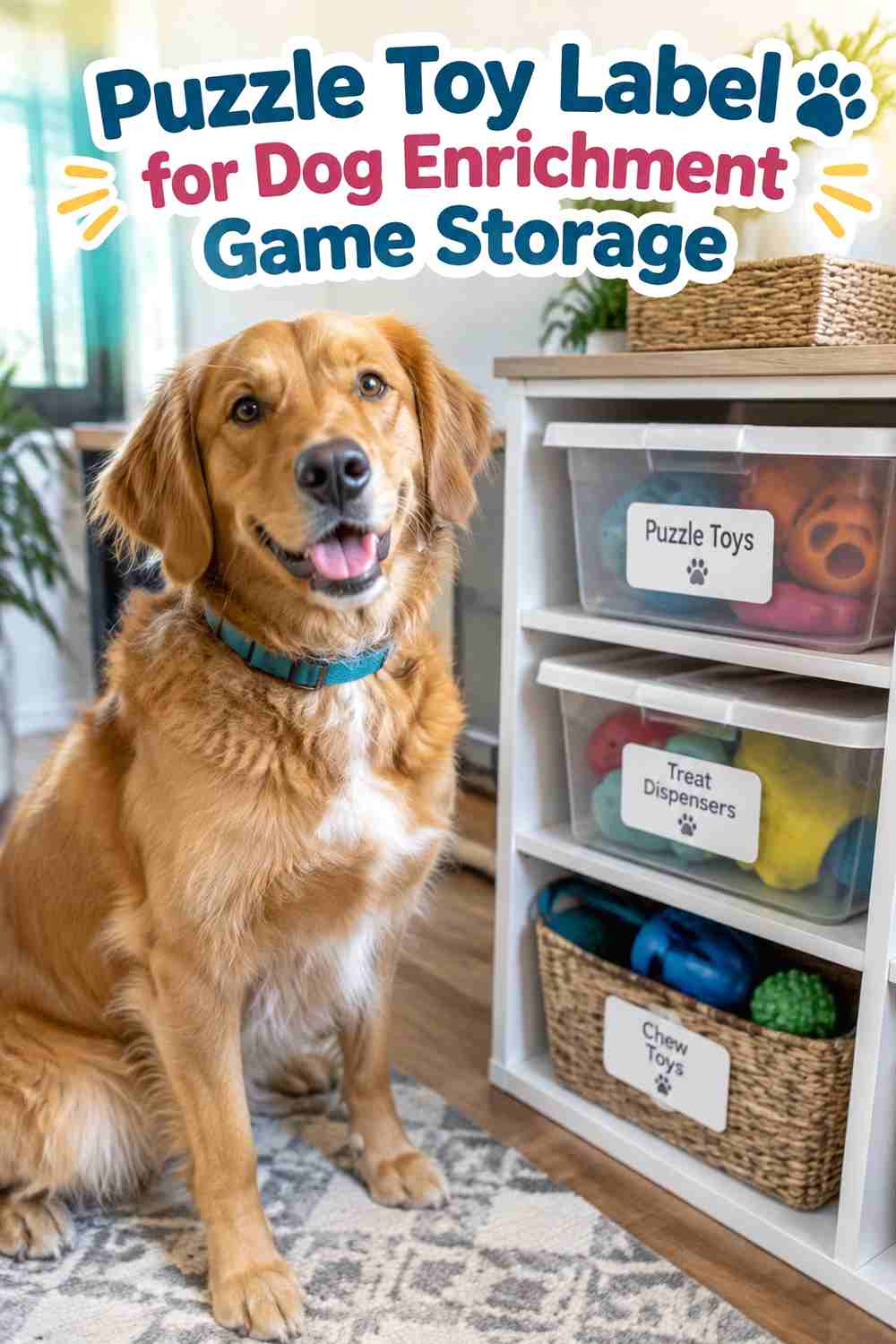
A puzzle toy label separates enrichment games from ordinary play toys and helps keep removable pieces together. Store sliding boards, treat puzzles, wobble toys, and similar activities in a cabinet or bin that is easy for an adult to reach but not available for unsupervised chewing. Small inserts can go into labeled pouches or containers placed beside the matching puzzle. Food-based puzzles should be cleaned and dried thoroughly before storage so residue does not collect in grooves or compartments. This label works especially well in homes where puzzle toys are rotated rather than left out all day. Keeping them together also makes it easier to choose a different challenge without searching through baskets of balls and plush toys.
Pro Tip
Add a small container labeled “Puzzle Parts” for removable pieces so they do not disappear underneath larger games.
5. Plush Toy Label For Soft Dog Toy Baskets
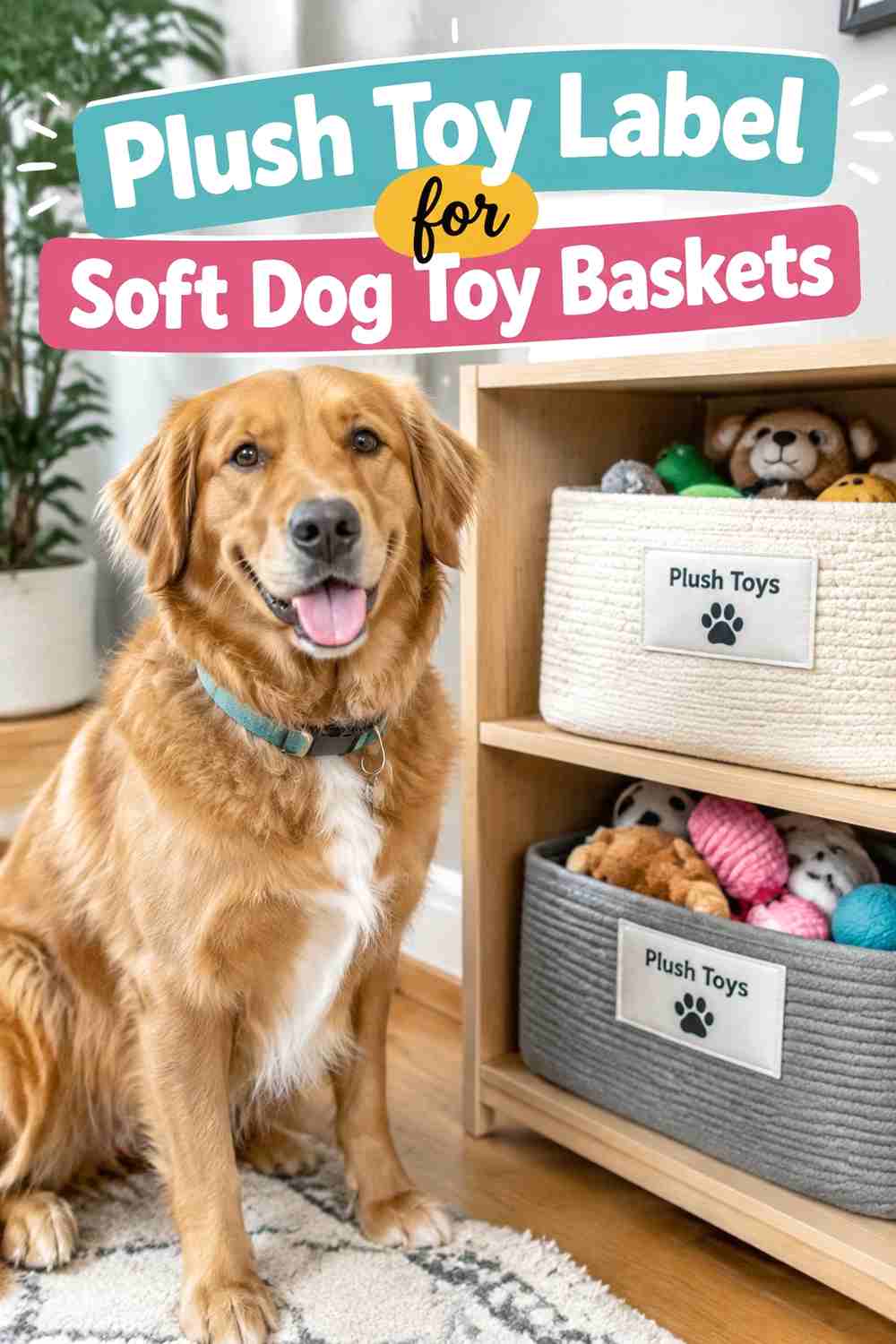
A plush toy label gives soft toys their own basket, keeping them separate from dirty outdoor gear and heavier chew items. Choose a container wide enough that toys can be placed in loosely rather than compressed into the bottom, which makes it easier to inspect seams and find favorites. Wash plush toys according to their care instructions and return them only when fully dry. If your dog tears fabric or removes stuffing, keep plush toys supervised and remove damaged pieces promptly instead of returning them to the basket. This category works well in living rooms or bedrooms because soft toys are lightweight and easy to reset after play. A washable fabric or plastic bin can also simplify routine cleaning.
Use & Maintenance
Empty the basket periodically to check stitching, squeakers, loose fabric, and accumulated hair before putting safe toys back.
6. Tug Toy Label For Ropes And Interactive Dog Toys
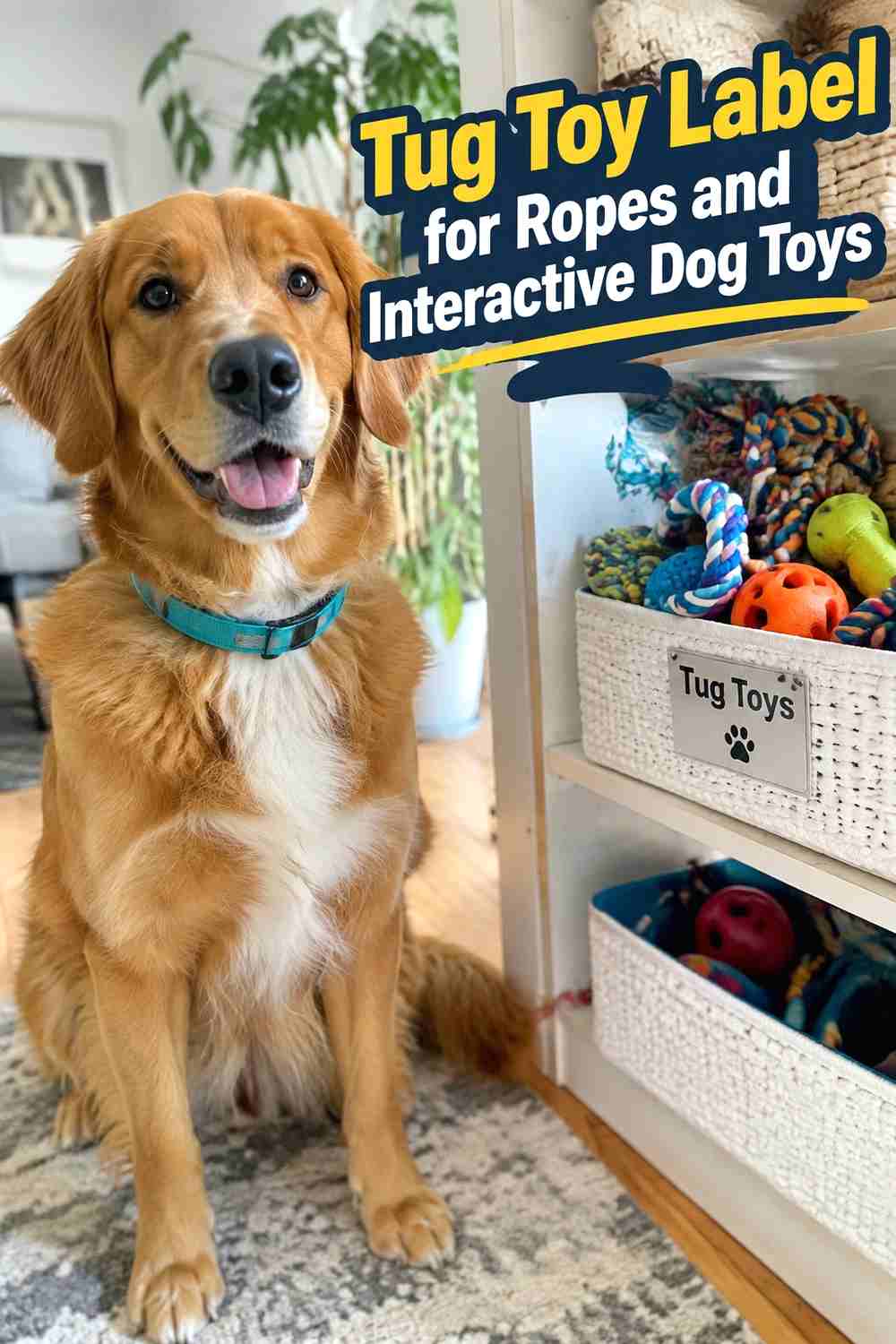
A tug toy label helps organize ropes, handles, and interactive toys that are most useful during play with an owner. Store them separately from toys the dog uses independently so it is easy to grab the right item for a short tug session. Hang sturdy fabric tug toys from a secure adult-access hook or place them loosely in a labeled basket to prevent knots from becoming tangled with other toys. Check ropes and seams regularly because frayed fibers can accumulate with repeated use. This category can also hold long-handled interactive toys if they fit safely inside the storage area. Keeping tug toys together supports quicker cleanup and makes it easier to retire worn items before the basket becomes cluttered.
Best For
This label is useful for dogs with several owner-led play toys that would otherwise become tangled with balls or plush items.
7. Clean Toy Label For Freshly Washed Dog Toys
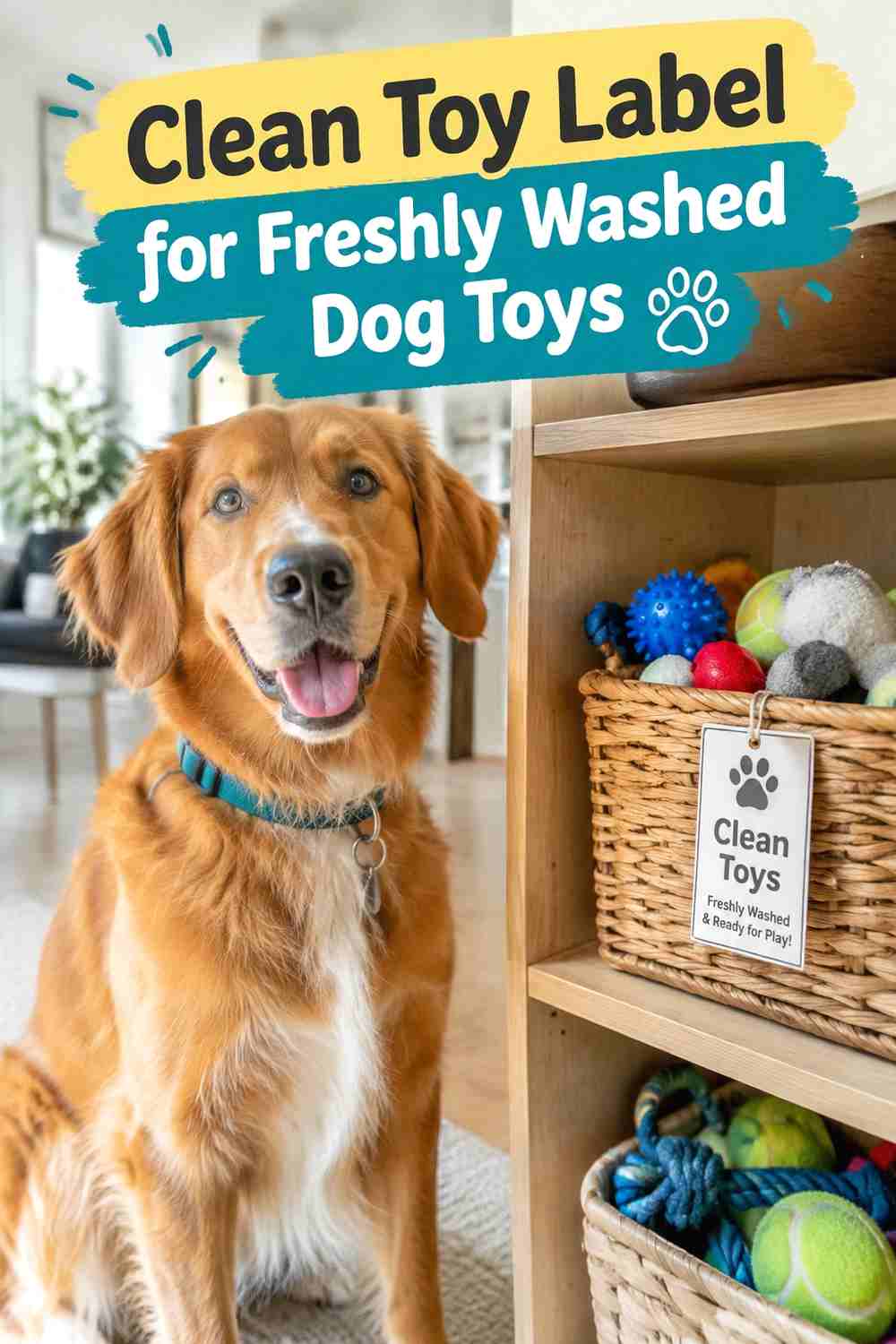
A clean toy label creates a temporary holding area for toys that have already been washed and dried but have not yet returned to their regular bins. This can be especially useful when you clean several toy categories at once and want to keep fresh items separate from toys still waiting to be washed. Use a clean basket or shelf that stays dry and free from muddy gear, grooming tools, or household cleaners. Do not place damp toys here simply because they have been rinsed; let them dry completely first. Once the regular storage bins are clean, redistribute the toys and empty the clean section. This label works best as part of a simple reset routine rather than as permanent long-term storage.
Cleaning Notes
Wipe the clean-toy container before each reset so dust, hair, and old crumbs are not transferred back onto freshly washed toys.
8. Toy Rotation Label For Stored Dog Play Favorites
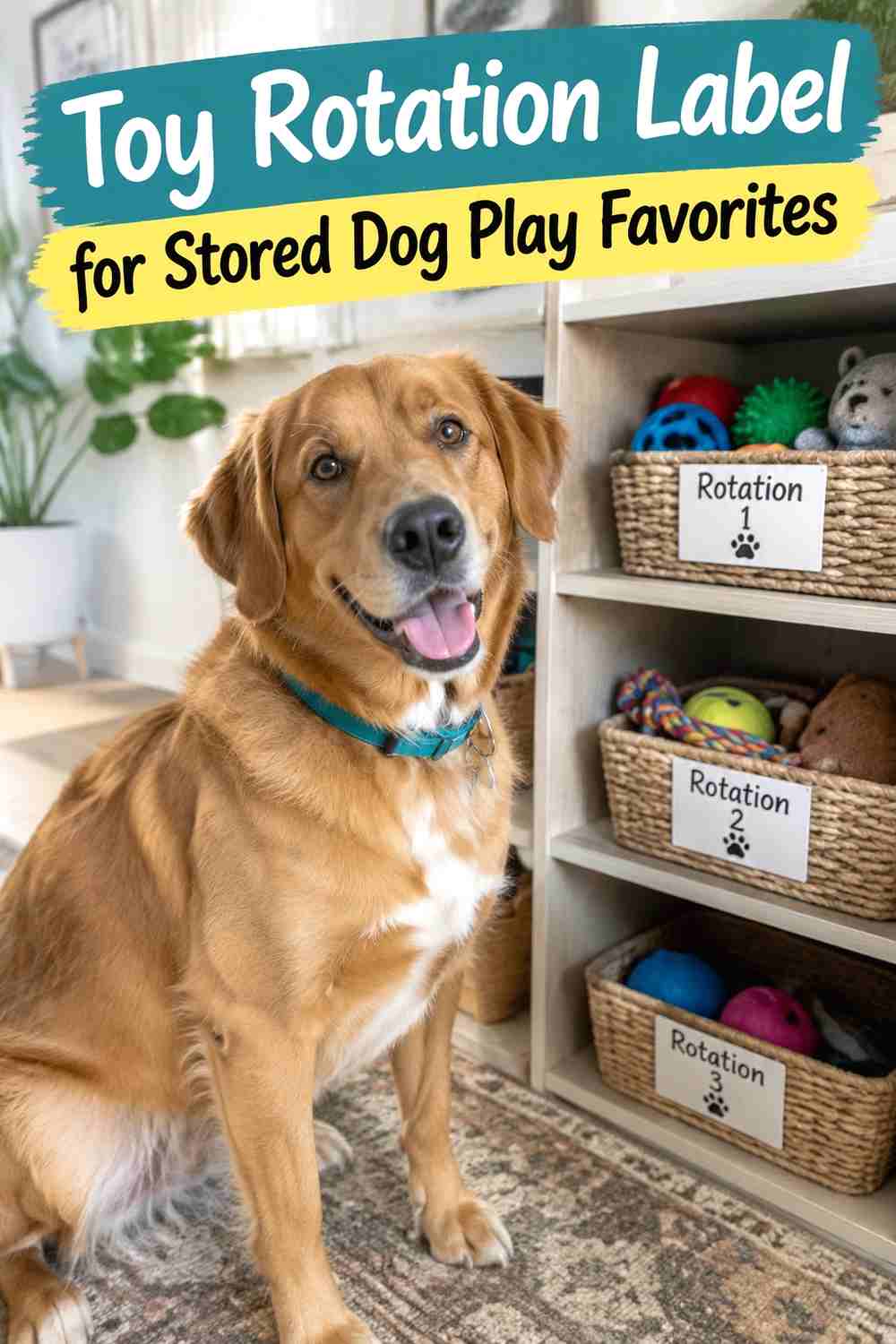
A toy rotation label identifies the bin that holds safe toys temporarily taken out of everyday use. Fill it with a balanced mix of balls, plush toys, chews, and enrichment items rather than storing an entire category at once. When the everyday basket starts feeling repetitive, swap a few toys instead of buying more immediately. Keep the rotation bin somewhere dry and outside the dog’s unsupervised reach so stored items actually feel different when they return. Inspect toys during every exchange and remove anything damaged or no longer useful. This label is particularly helpful for larger toy collections because it reduces floor clutter while still making existing options easy to reintroduce.
Pro Tip
Keep a little empty space in the rotation bin so returning toys do not turn the container into an overpacked pile.
9. Outdoor Toy Label For Yard And Walk Dog Gear
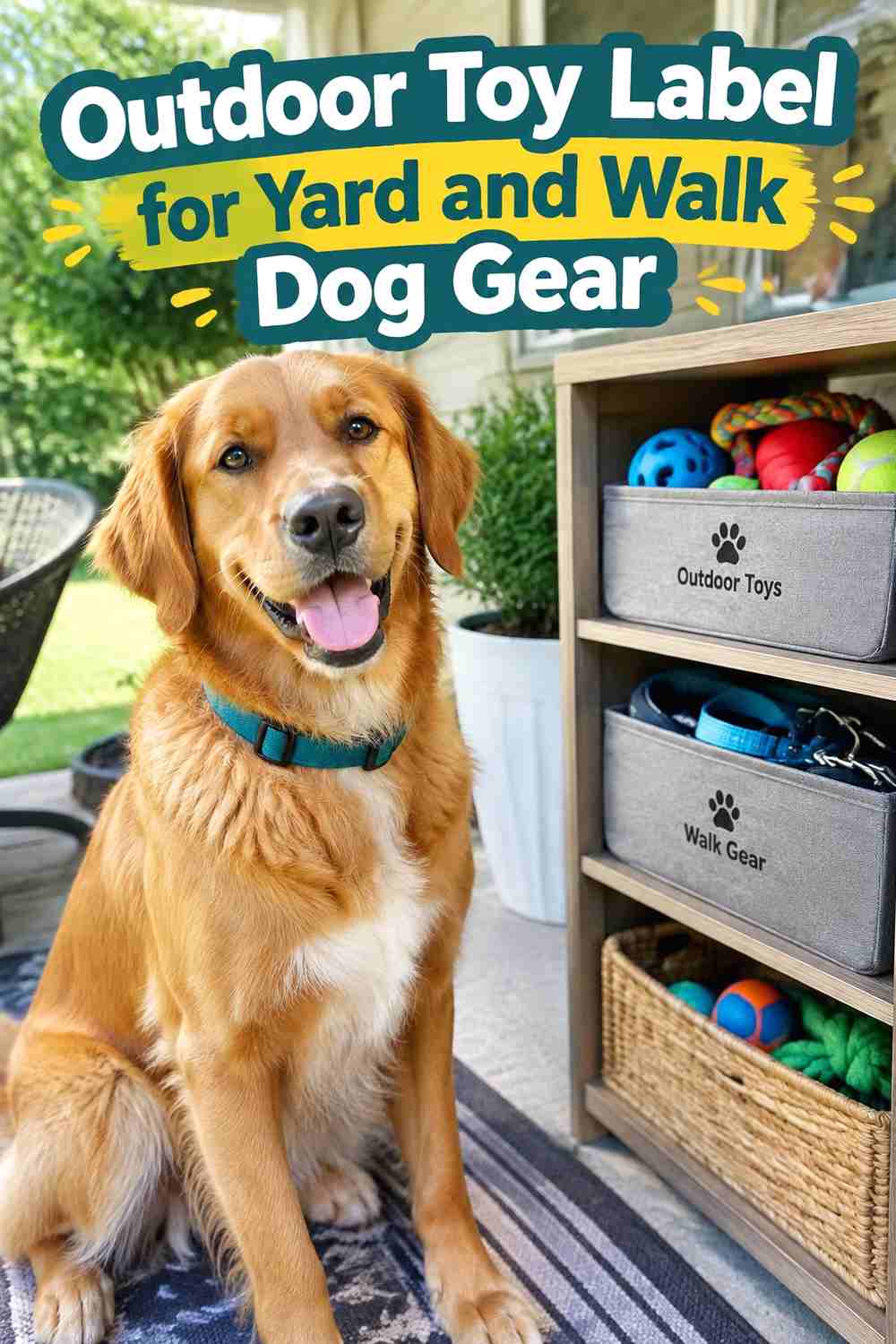
An outdoor toy label separates toys that regularly collect grass, dirt, sand, or moisture from cleaner indoor items. Use the container for yard balls, outdoor tug toys, portable fetch gear, and other items that frequently leave the house. Position the bin near a mudroom, garage entry, or another easy-clean area rather than beside bedding or food storage. Let toys dry before placing them into an enclosed bin, and use a washable container if muddy gear is common. The category can also make pre-walk or yard-play preparation faster because outdoor toys stay together instead of being scattered through indoor baskets. Remove anything that becomes cracked, heavily worn, or difficult to clean.
Space & Placement
Keep the bin near the exit you normally use for outdoor play, but place it where the dog cannot raid dirty toys unsupervised.
10. Name Label System For Multi Dog Toy Storage
You May Also Like



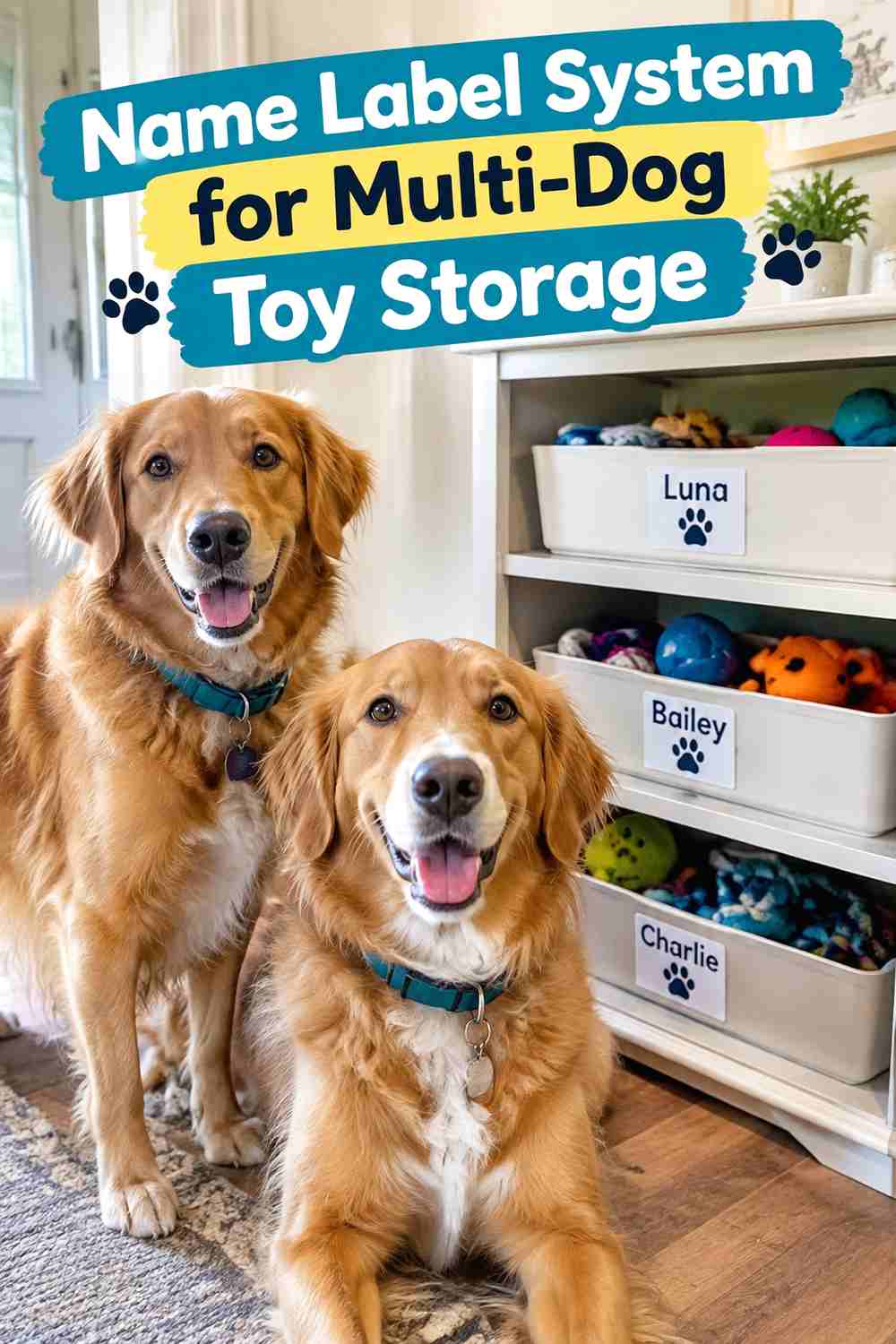
A name label system gives each dog a separate toy basket when sharing every item does not work well for the household. Label containers clearly with each dog’s name and use them for favorite plush toys, appropriately sized chews, individual puzzle pieces, or other items that need to stay separate. Shared toys can go in a third neutral bin so the system does not force every object into one dog’s category. This setup is especially useful when dogs differ in size, play style, chewing habits, or toy preferences. Do not assume labeled baskets will prevent dogs from taking one another’s toys; supervision and appropriate resource management still matter. The labels mainly help people organize, clean, and return items consistently.
Best For
Multi-dog homes with different toy sizes, individual favorites, or separate enrichment routines can benefit most from this system.
How to Choose the Right Idea
Start with how your dog’s toys are actually used. If the collection is small, broad labels such as “Everyday,” “Outdoor,” and “Puzzle Toys” may be enough. Larger collections benefit from clearer categories such as plush, tug, fetch, chew, and rotation.
Think about cleaning as well as organization. Muddy outdoor toys should not share a bin with clean plush toys, while washed toys need to dry before going into enclosed storage. Puzzle pieces and small accessories may need their own labeled container inside a larger category.
Your dog’s habits matter too. Keep labels, clips, tags, and containers outside unsupervised chewing range if your dog investigates storage. Multi-dog households may benefit from name labels where toys differ by size or individual use.
Finally, choose labels that are easy to read and easy to replace. A simple system that everyone follows is more useful than dozens of decorative categories that make cleanup complicated.
Final Thoughts
Good dog toy labels should make cleanup quicker and toy rotation easier. Start with only the categories you genuinely use, then add another label only when a bin becomes difficult to manage.
A small, consistent system can keep dog toys cleaner, easier to inspect, and much simpler to return after play.
FAQs
1. What are the best basic labels for dog toy storage?
For many homes, “Everyday Toys,” “Chew Toys,” “Puzzle Toys,” “Outdoor Toys,” and “Toy Rotation” cover the most useful categories without creating unnecessary complexity.
2. Should dog toy labels include pictures?
They can. Simple icons such as a ball, rope, or puzzle shape can make categories quicker to recognize, especially when multiple family members help with cleanup.
3. How should labels be attached to dog toy bins?
Use a secure method suited to the container and keep removable tags, clips, or small hardware outside the dog’s reach. Avoid anything your dog is likely to chew or pull off.
4. Should dirty dog toys have a separate label?
A temporary “Wash” or “Dirty Toys” container can be useful if toys regularly come back muddy. Keep it separate from clean storage and wash the container itself as needed.
5. How many dog toy categories are practical?
Use only enough categories to make sorting easier. Small collections may need three or four labels, while larger collections can support more specific groups without becoming confusing.
CTA
Save your favorite label ideas and create a dog toy storage system that is faster to sort, easier to clean, and simpler to maintain.
