Turn favorite dog photos into a personal home feature with gallery layouts that make portraits, milestones, adventures, and everyday memories easy to enjoy.
Save This Idea on Pinterest

17 Dog Portrait Gallery Ideas
Save to PinterestDog portrait galleries can fill an empty wall while giving favorite photos a more intentional place in the home. The best arrangement depends on the number and orientation of your pictures, available wall space, interior style, and how often you want to change the display.
These ideas range from orderly grids and minimalist three-frame layouts to stair galleries, puppy timelines, seasonal rotations, multi-dog collections, and protected displays. Choose a layout that fits your actual photo collection rather than filling a wall simply for size, and mount frames securely where your dog cannot bump or reach them.
Quick List
- Classic Grid Wall for Framed Dog Portraits
- Staircase Dog Portrait Gallery for Empty Wall Space
- Black-and-White Dog Portrait Gallery for Modern Homes
- Colorful Dog Portrait Gallery for Playful Home Decor
- Mixed Frame Dog Portrait Gallery with Personal Keepsakes
- Minimal Three-Frame Dog Portrait Gallery for Small Spaces
- Multi-Dog Portrait Gallery with Separate Photo Sections
- Puppy-to-Adult Timeline Dog Portrait Gallery Wall
- Seasonal Dog Portrait Gallery with Rotating Photo Frames
- Dog Adventure Portrait Gallery for Travel and Outdoor Photos
- Oversized Statement Portrait Gallery for Your Favorite Dog Photo
- Picture Ledge Dog Portrait Gallery for Easy Photo Swaps
- Matching Wood Frame Dog Portrait Gallery for Warm Interiors
- Dog Portrait Gallery with Name Plaques and Photo Labels
- Corner Dog Portrait Gallery for Compact Home Displays
- Glass-Front Dog Portrait Gallery for Protected Photo Displays
- Dog Portrait and Paw Print Gallery for Personal Memories
1. Classic Grid Wall For Framed Dog Portraits
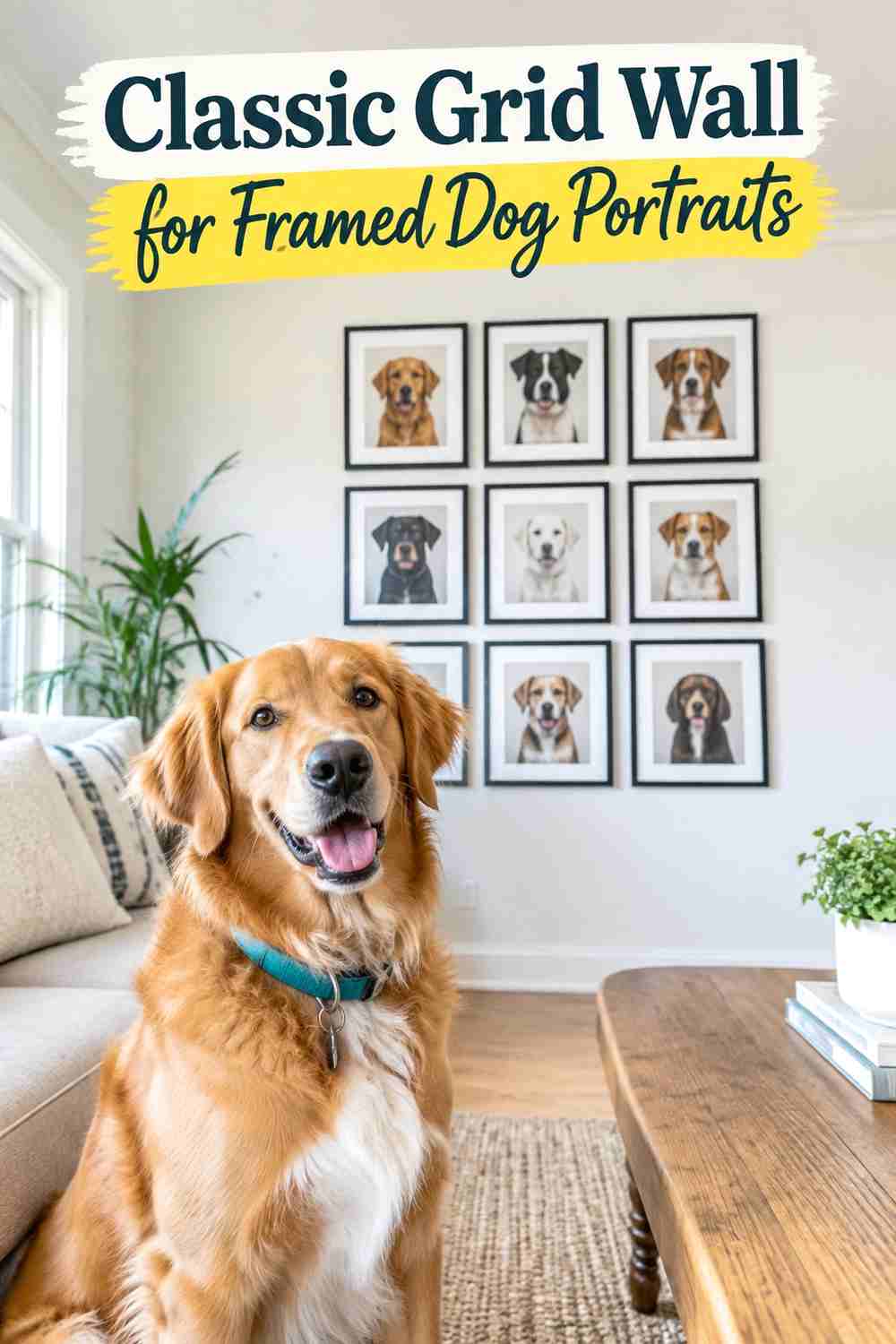
A classic grid wall arranges dog portraits in equal rows and columns for a clean, balanced look. Choose photos with similar framing or crop them to matching proportions so the display feels connected even when the images show different moments. Matching frames make the strongest grid effect, while consistent spacing keeps the arrangement from looking uneven. Lay the full design out on the floor before mounting anything so you can check scale and photo order. This setup works well above a console, in a hallway, or on a wide living room wall. Keep the lowest row above the dog’s reach and use secure mounting hardware suited to the wall and frame weight.
Setup Notes
Start from the center of the planned gallery and work outward rather than trying to align every frame from one side.
2. Staircase Dog Portrait Gallery For Empty Wall Space
You May Also Like



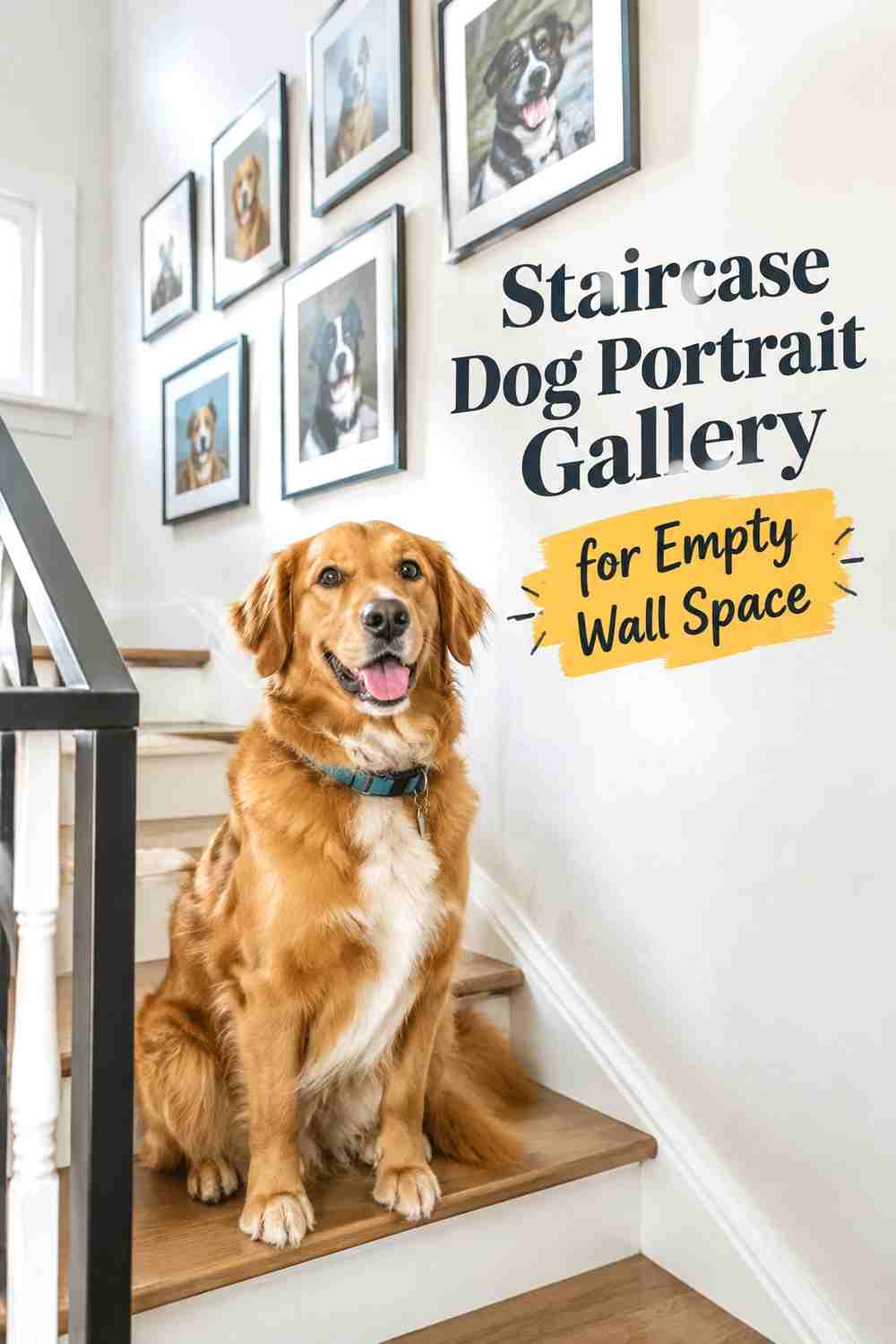
A staircase gallery uses the rising wall beside the steps to display dog portraits in a layout that follows the direction of the stairs. Select a mix of horizontal and vertical photos, then arrange them around an imaginary upward line so the collection feels intentional instead of scattered. Keep frames far enough from handrails and walking space that they are not bumped as people move past. This layout works especially well for larger collections because the wall naturally provides room to expand over time. Use consistent frame colors or matting if the photographs themselves vary widely. Before hanging, test the composition with paper templates so the finished arrangement feels balanced from both the bottom and top of the staircase.
Space & Placement
Keep frames securely mounted and avoid creating protruding edges in narrow stairways where people or pets pass frequently.
3. Black And White Dog Portrait Gallery For Modern Homes
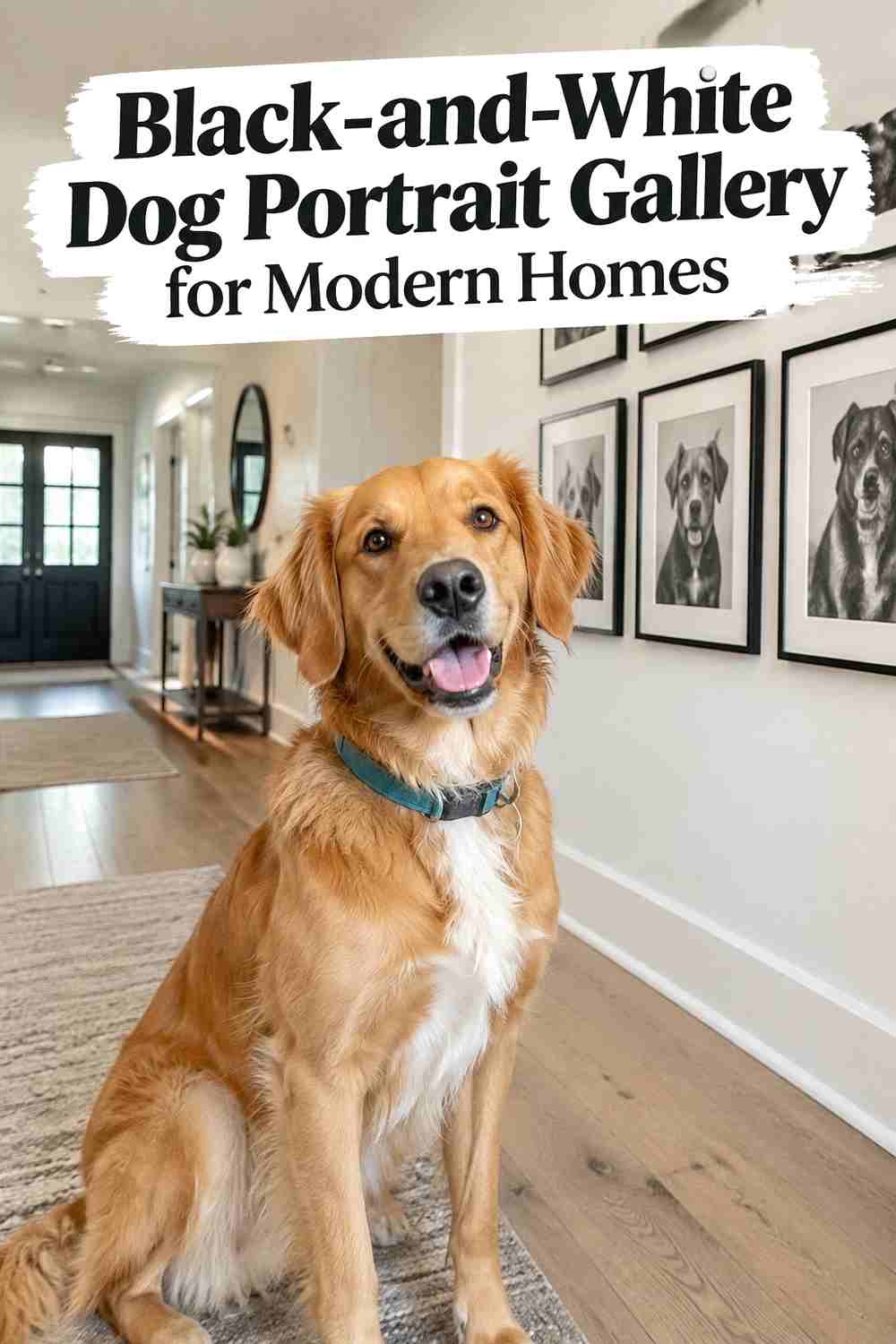
A black-and-white portrait gallery creates a cohesive look even when dog photos were taken in different places or seasons. Convert a carefully selected set of images to similar monochrome tones, then pair them with simple black, white, or neutral frames. Close-up faces, sitting portraits, and quiet candid photos tend to work especially well because texture and expression remain prominent without competing colors. Keep the number of images manageable so the visual effect stays calm rather than busy. This idea fits modern, minimalist, and neutral interiors where colorful photographs might feel disconnected from the room. Hang the gallery away from strong direct sunlight if you want printed images to retain their appearance for longer.
Best For
Choose this approach when your favorite photos have very different backgrounds but you want them to feel like one coordinated collection.
4. Colorful Dog Portrait Gallery For Playful Home Decor

A colorful dog portrait gallery uses bright backgrounds, outdoor scenes, bandanas, toys, and expressive images to create a lively focal wall. Choose a loose color palette that appears across several photographs so the display still feels connected. White or natural frames can keep bold images from competing with one another, while more colorful frames can work when the wall itself is simple. Mix close-ups with full-body portraits to add visual rhythm rather than using the same pose repeatedly. This style works well in family rooms, home offices, playrooms, or pet corners where a cheerful look fits naturally. Keep decorative extras minimal so the dog portraits remain the main feature instead of becoming lost among signs and ornaments.
Pro Tip
Repeat two or three colors across different photos rather than trying to match every image perfectly.
5. Mixed Frame Dog Portrait Gallery With Personal Keepsakes
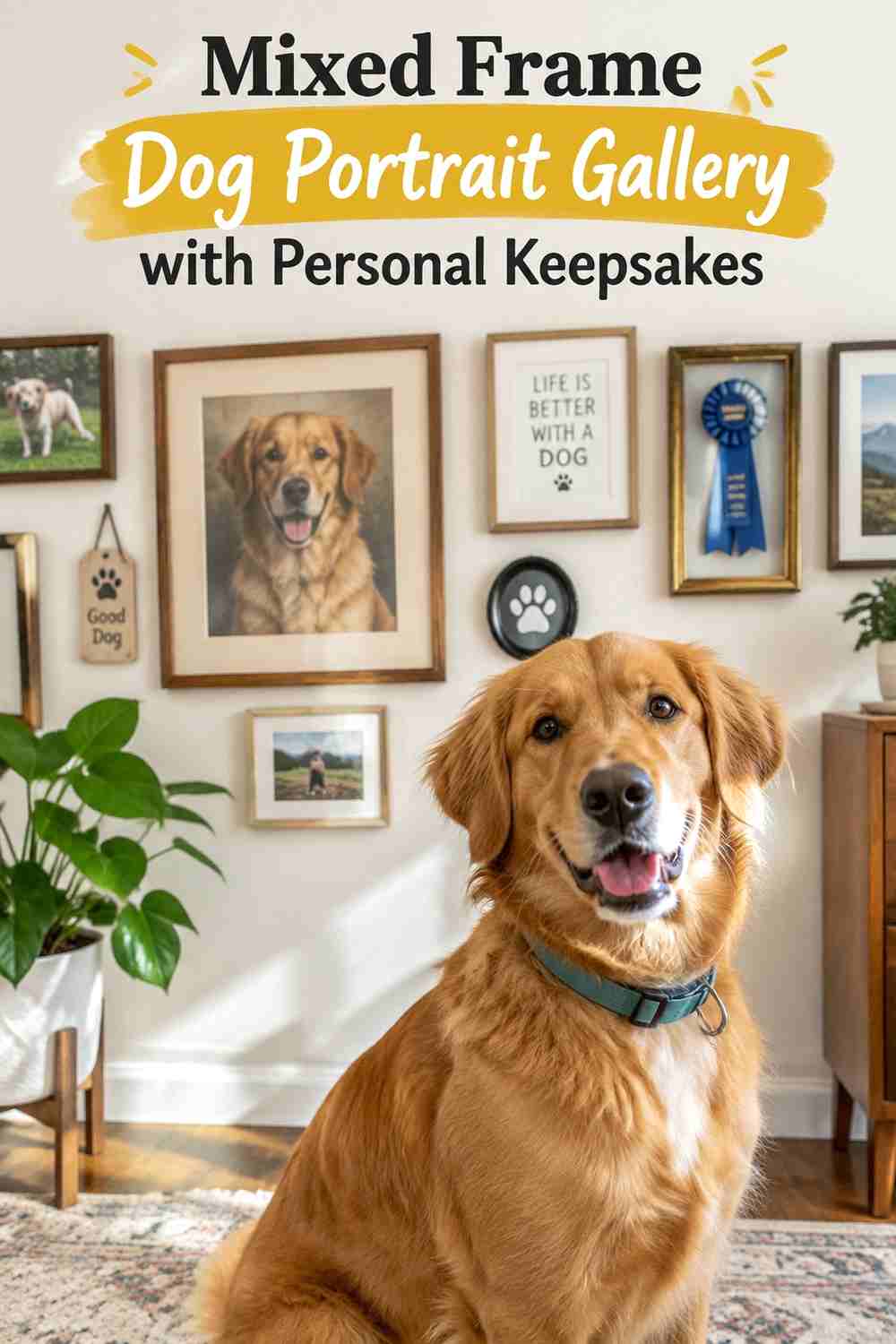
A mixed-frame gallery combines dog portraits with a few small keepsakes for a more personal, collected look. Use different frame sizes and finishes, then add one or two lightweight items such as a framed bandana corner, name plaque, or protected tag display. Keep sentimental objects enclosed or securely mounted so small pieces cannot fall where the dog could reach them. Begin with the largest portrait as the visual anchor, then arrange smaller frames around it with consistent gaps. This setup works best when the mix feels deliberate rather than crowded, so leave some open wall space between groups. It suits owners who want the gallery to tell a broader story instead of displaying photographs alone.
Setup Notes
Limit keepsakes to items that add meaning to specific photos and store the rest separately rather than attaching everything to the wall.
6. Minimal Three Frame Dog Portrait Gallery For Small Spaces
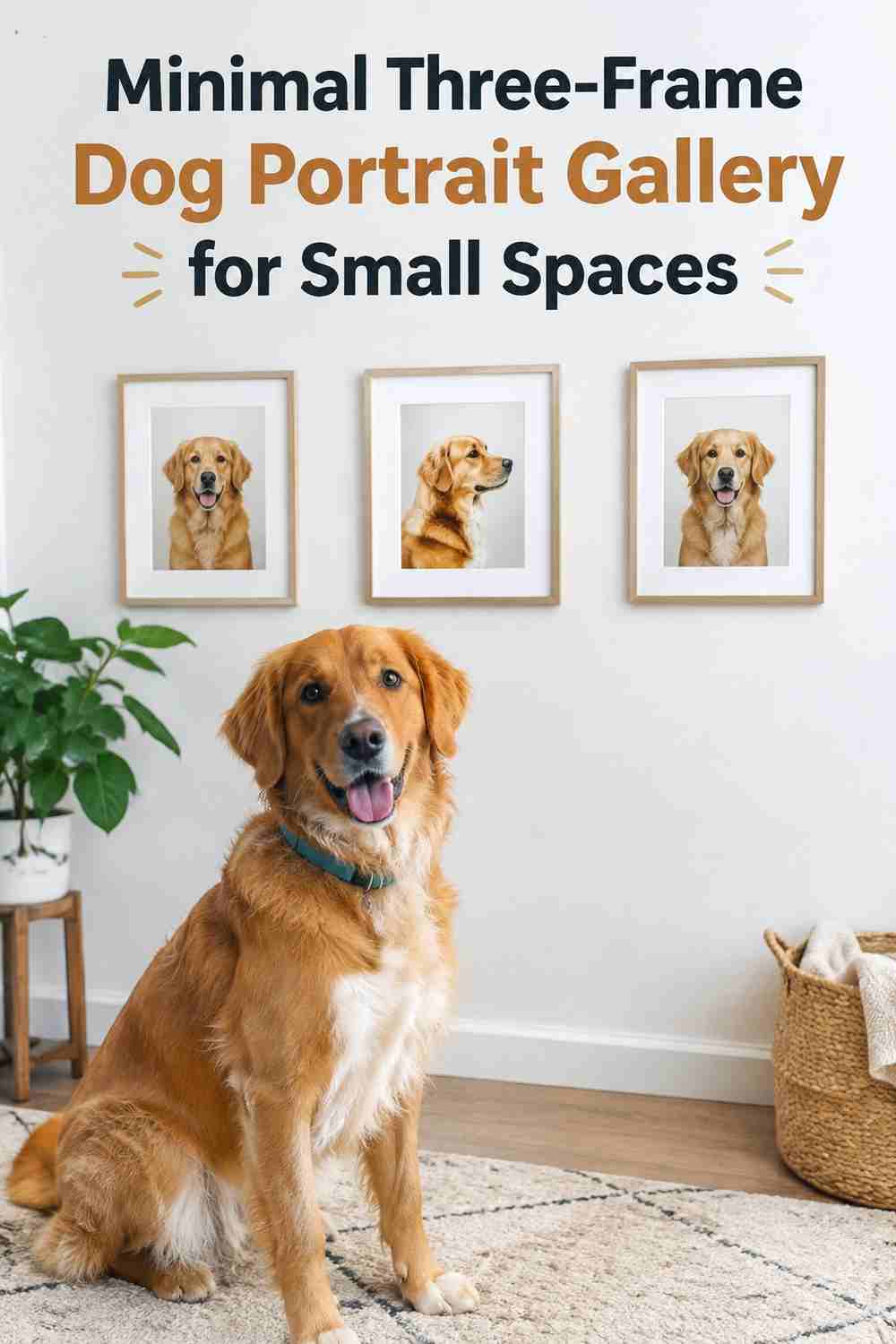
A three-frame gallery creates a polished dog portrait display without needing a large wall. Choose three images that work together, such as one close-up, one full-body portrait, and one favorite candid moment. Use matching frame sizes and place them in a straight horizontal row, vertical stack, or compact arrangement depending on the available wall. This idea works particularly well above a small desk, narrow console, bedside table, or apartment entry area. Keeping the photo count low makes print quality and image choice more important, so select clear pictures that remain visually strong at the chosen size. Leave enough space around the arrangement so the trio feels purposeful rather than squeezed between furniture.
Best For
This layout suits renters, apartments, and anyone who wants a dog gallery without turning an entire wall into a photo display.
7. Multi Dog Portrait Gallery With Separate Photo Sections
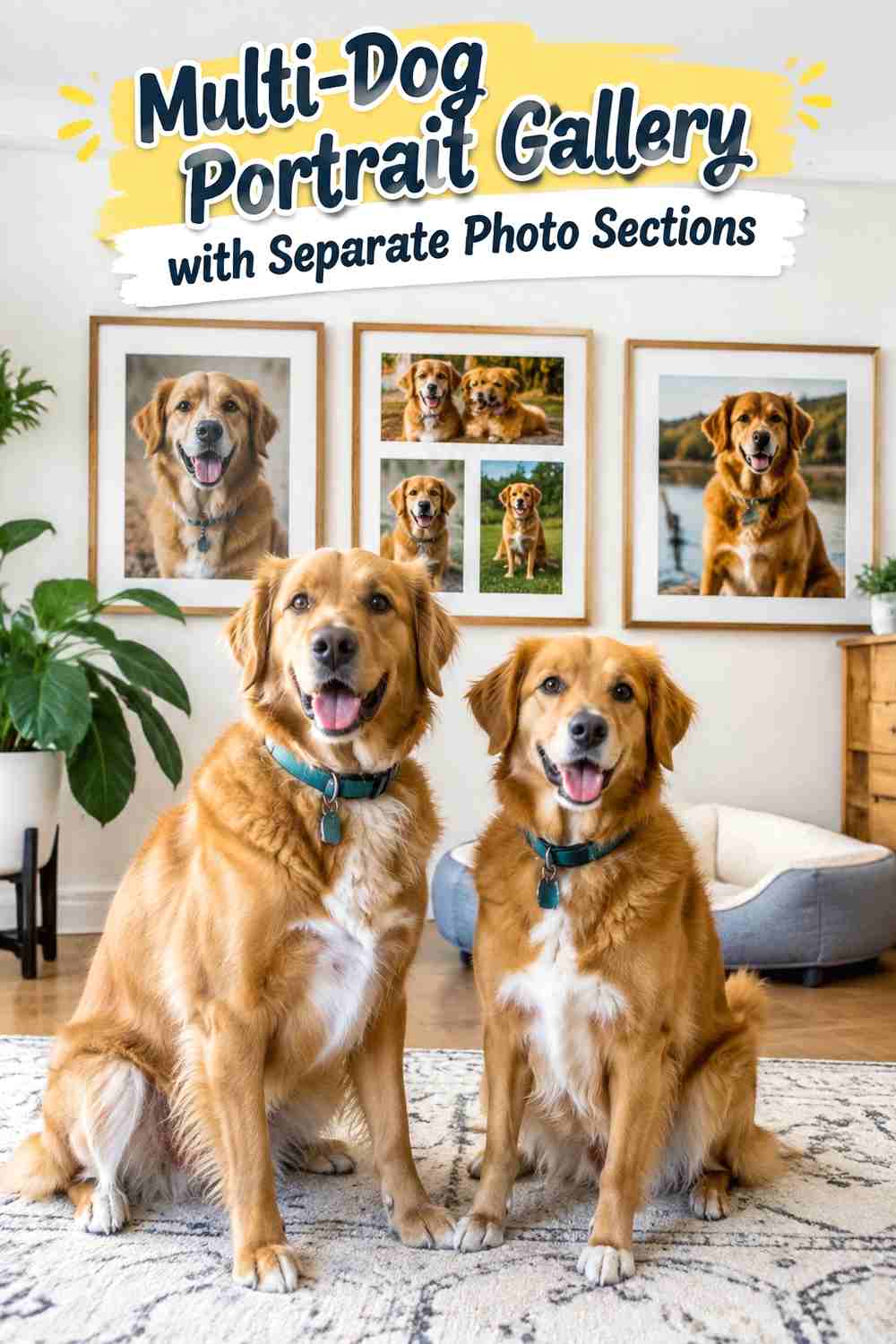
A multi-dog gallery gives each dog a clearly defined part of the wall while keeping the full collection visually connected. Assign each dog a row, column, or small cluster of frames and use matching frame styles across every section. Include a similar mix for each dog, such as one portrait, one candid photo, and one favorite activity image, so no section feels visually overloaded. A small name plaque can help distinguish areas when several dogs have similar coloring. Leave room for future photos rather than filling every gap immediately. This approach works well in multi-dog homes because it keeps individual memories organized while still creating one shared family display.
Pro Tip
Use the same frame sizes for each dog’s section if you want the gallery to remain balanced as new photos are added.
8. Puppy To Adult Timeline Dog Portrait Gallery Wall
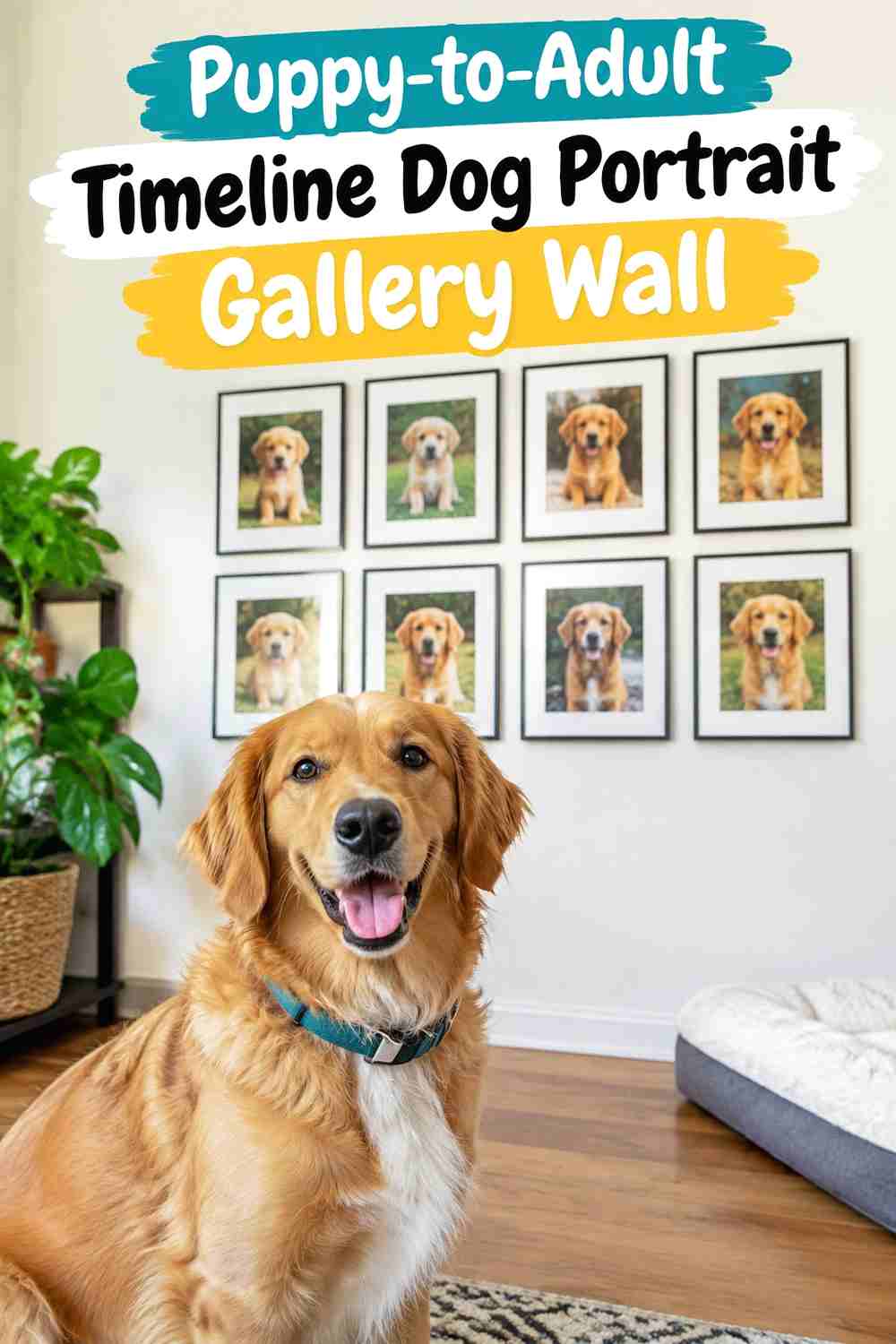
A puppy-to-adult timeline arranges photographs in chronological order so the gallery shows how your dog has changed over time. Start with an early puppy or adoption photo, then add images from later milestones such as growth stages, birthdays, training achievements, or mature adulthood. Matching frames help keep the timeline clear even when photo quality changes from year to year. Small date cards can add context without requiring long captions. Arrange the sequence horizontally when wall width allows, or use two neat rows if the collection is larger. This idea works especially well for dogs you have photographed consistently over the years and can continue growing as new milestones happen.
Use & Maintenance
Leave one or two planned spaces at the end of the sequence so future portraits can be added without rebuilding the entire layout.
9. Seasonal Dog Portrait Gallery With Rotating Photo Frames
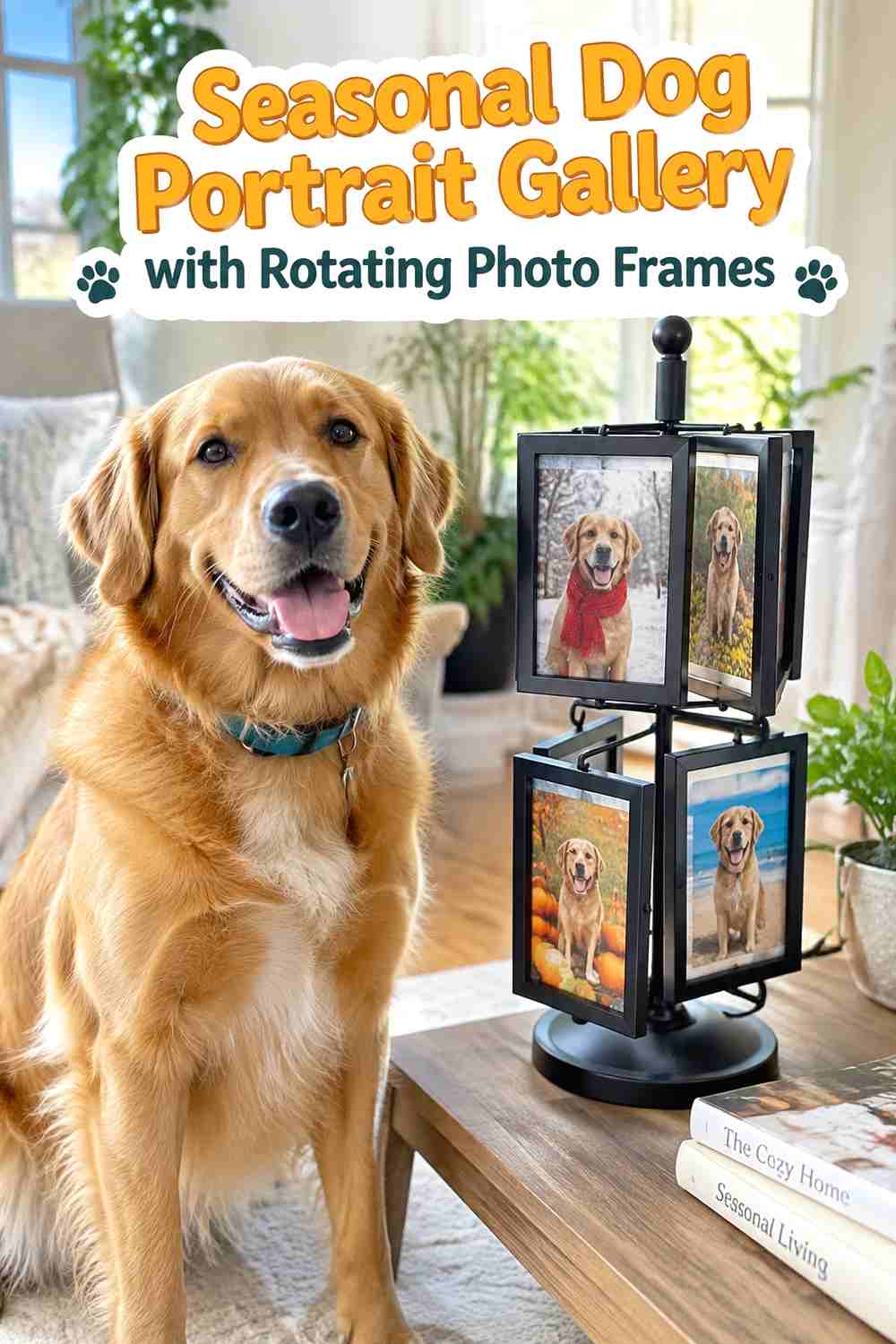
A seasonal dog portrait gallery uses the same frames throughout the year while changing the photos inside. Display spring walks, summer outings, autumn leaves, winter portraits, birthdays, or holiday photos when they feel timely, then store off-season prints in labeled envelopes or a photo box. Choose frames that open easily so swapping images does not become a complicated project. This system works especially well for owners who take many themed pictures but do not want dozens of frames permanently covering the wall. Keep a few evergreen portraits in the arrangement so the display still feels personal between seasonal changes. Store removed photographs flat, dry, and away from direct sunlight or moisture.
Why It Works
One fixed layout gives you variety without requiring new holes, shelves, or wall space every time you want a different look.
10. Dog Adventure Portrait Gallery For Travel And Outdoor Photos
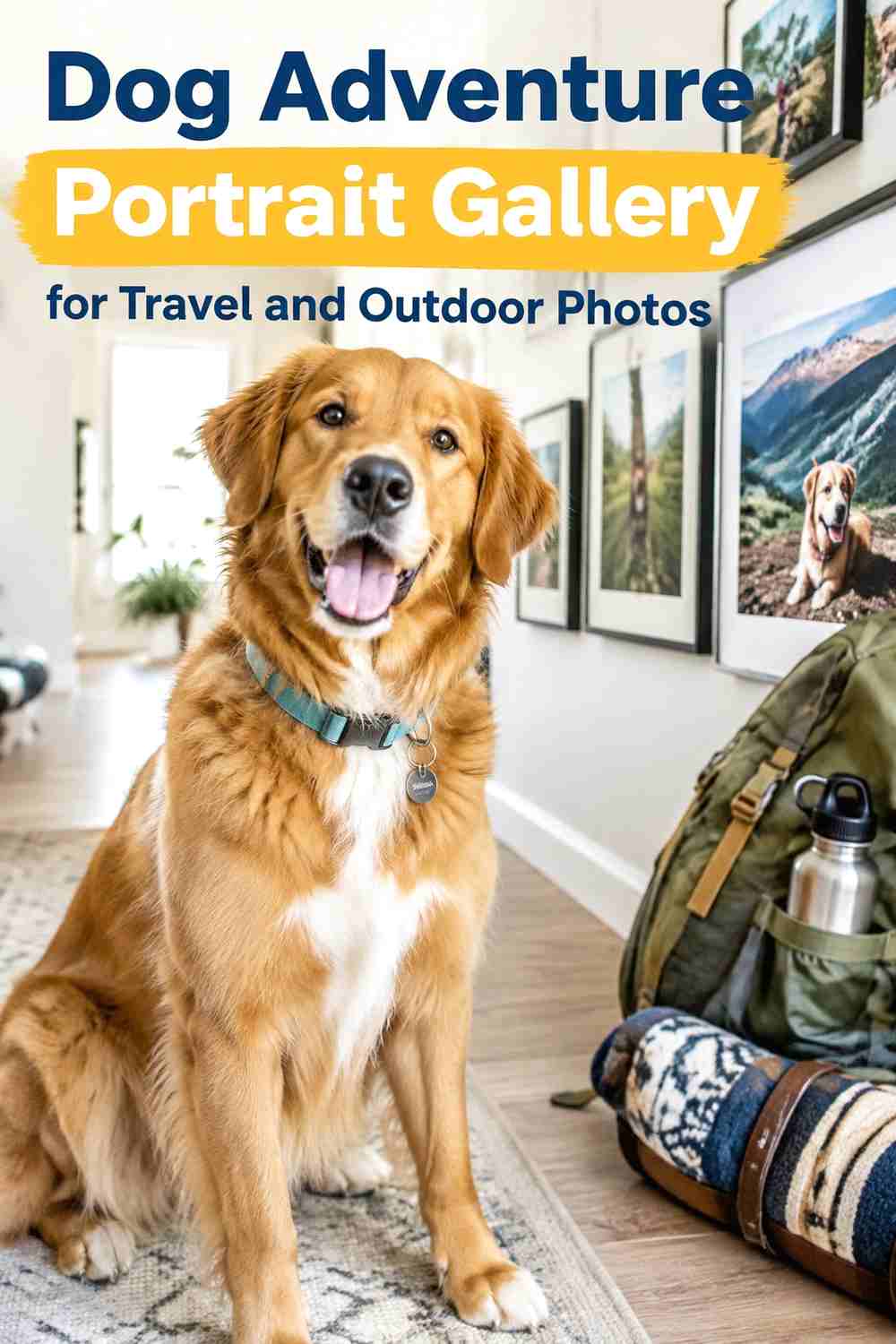
An adventure gallery groups portraits from hikes, road trips, beaches, parks, camping weekends, and other outings into one story-focused display. Choose photographs that show both your dog and enough background to make each location recognizable. Keep frame finishes consistent so varied landscapes do not make the wall feel chaotic. A small map print or labeled destination card can add context, but avoid covering the gallery with loose souvenirs. Organize the photos chronologically, by destination, or by activity depending on what best fits your collection. This idea works especially well in hallways, offices, or family rooms where a wider gallery can grow over time as new trips happen.
Pro Tip
Mix scenic wide shots with closer portraits so the gallery feels varied without losing focus on your dog.
11. Oversized Statement Portrait Gallery For Your Favorite Dog Photo
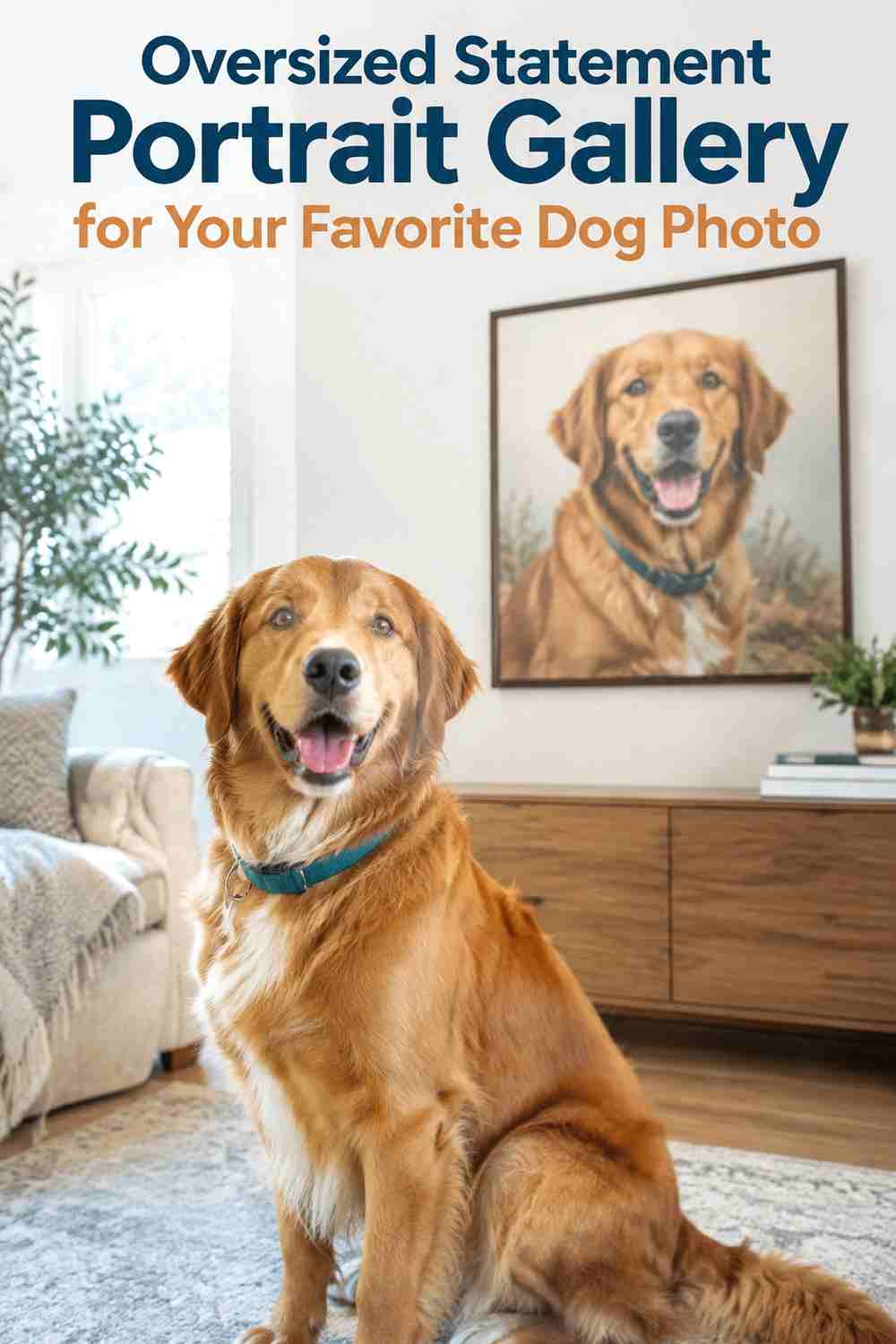
An oversized statement gallery starts with one large dog portrait as the focal point and uses only a few smaller images around it. Choose a sharp, high-quality photo that still looks clear at the intended print size, preferably with a simple background and strong eye contact or natural posture. Position the large portrait first, then add two to four smaller supporting photographs with generous spacing. This layout works well above a sofa, console, or wide wall where many small frames might feel visually busy. Keep nearby decorations minimal so the main image remains dominant. Because larger frames are heavier, use secure mounting hardware designed for the wall type and total frame weight.
Space & Placement
Check the arrangement from across the room before mounting smaller frames so the main portrait remains visually dominant.
12. Picture Ledge Dog Portrait Gallery For Easy Photo Swaps
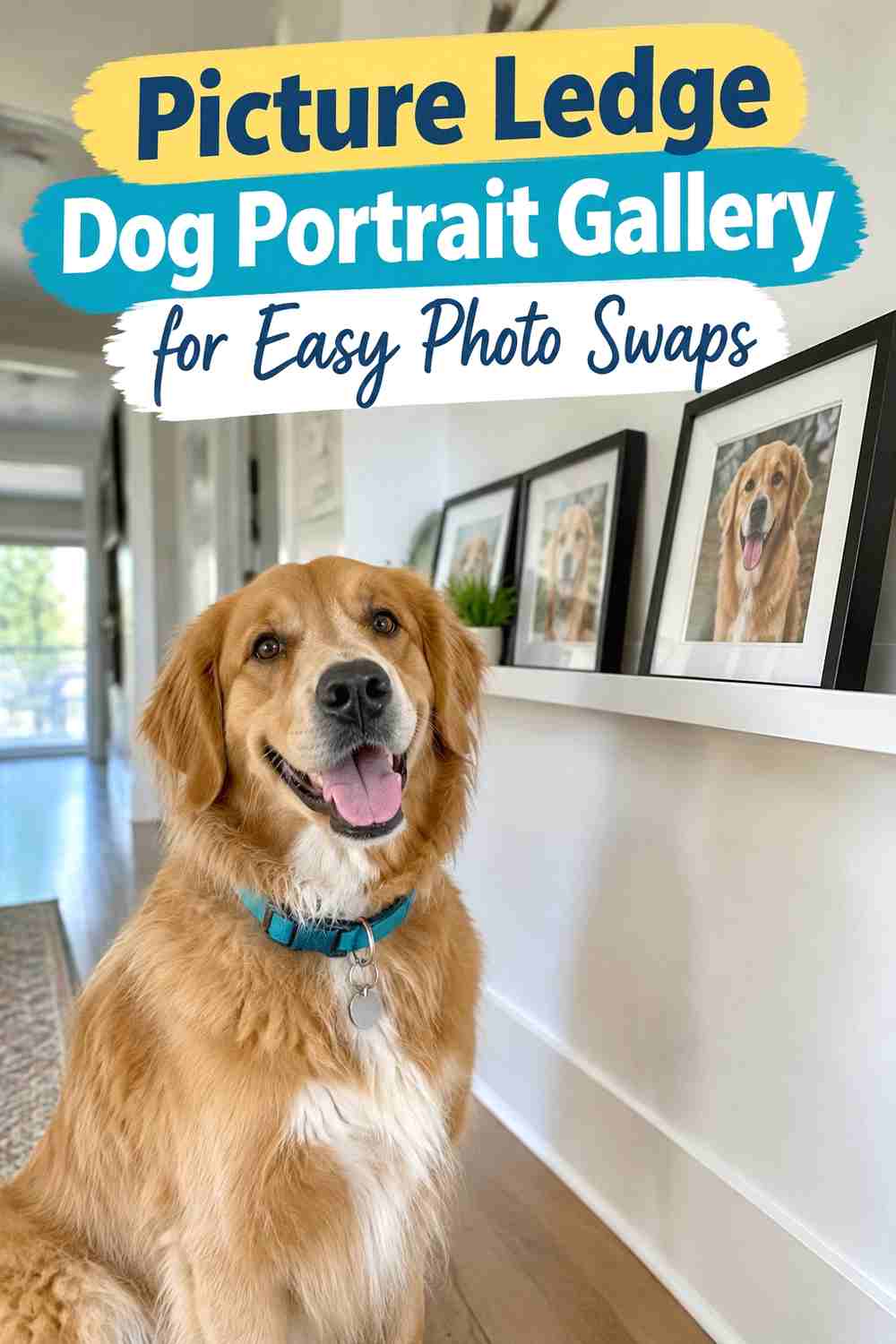
A picture ledge gallery lets framed dog portraits rest on shallow shelves instead of requiring every frame to be individually mounted. Layer several frame sizes with the tallest toward the back, keeping enough of each photograph visible to avoid a cluttered stack. The ledge makes it easy to rotate new photos, seasonal portraits, or updated prints without creating more wall holes. Choose a securely mounted ledge with a raised front edge designed to help keep frames in place. Position it above the dog’s reach and avoid placing it over a bed, crate, or feeding area. This setup works particularly well for owners who frequently update photos and prefer a casual, flexible gallery.
Use & Maintenance
Dust behind overlapping frames periodically and remove any frame that becomes unstable, cracked, or too crowded on the ledge.
13. Matching Wood Frame Dog Portrait Gallery For Warm Interiors
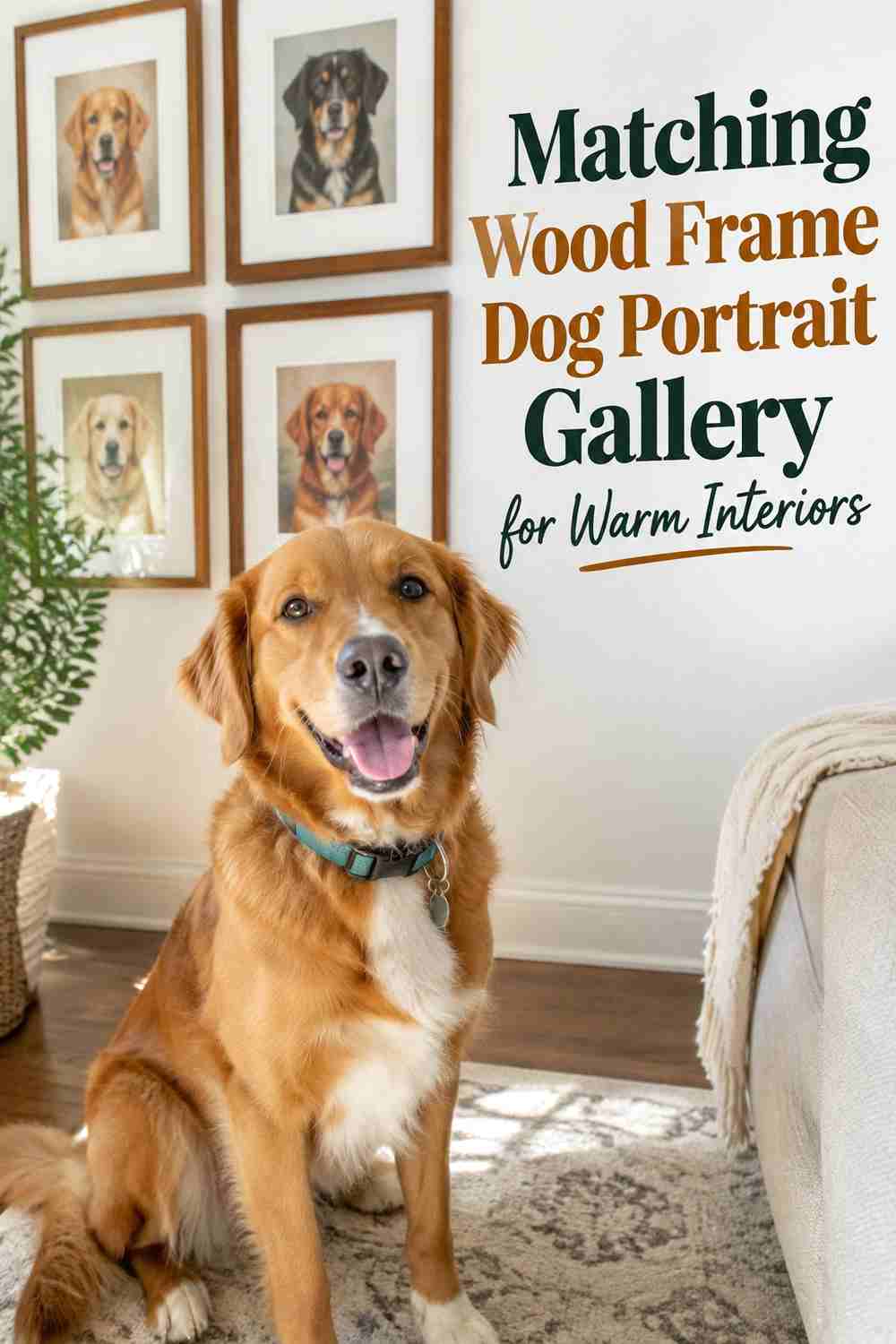
Matching wood frames give dog portraits a warm, coordinated look that works especially well with neutral, rustic, Scandinavian, or natural interiors. Choose one wood tone that complements nearby furniture, then use consistent mats or photo proportions to tie the images together. Outdoor portraits, soft natural-light photos, and earthy backgrounds fit particularly well with this style. Arrange the frames as a grid for a structured look or use a looser cluster if the sizes vary. Avoid mixing too many different wood finishes within one small gallery, which can make the wall feel less intentional. This approach is easy to expand later if you purchase additional frames in the same finish.
Best For
Use this style when you want the dog portraits to blend naturally into existing home decor rather than look like a separate pet-themed feature.
14. Dog Portrait Gallery With Name Plaques And Photo Labels
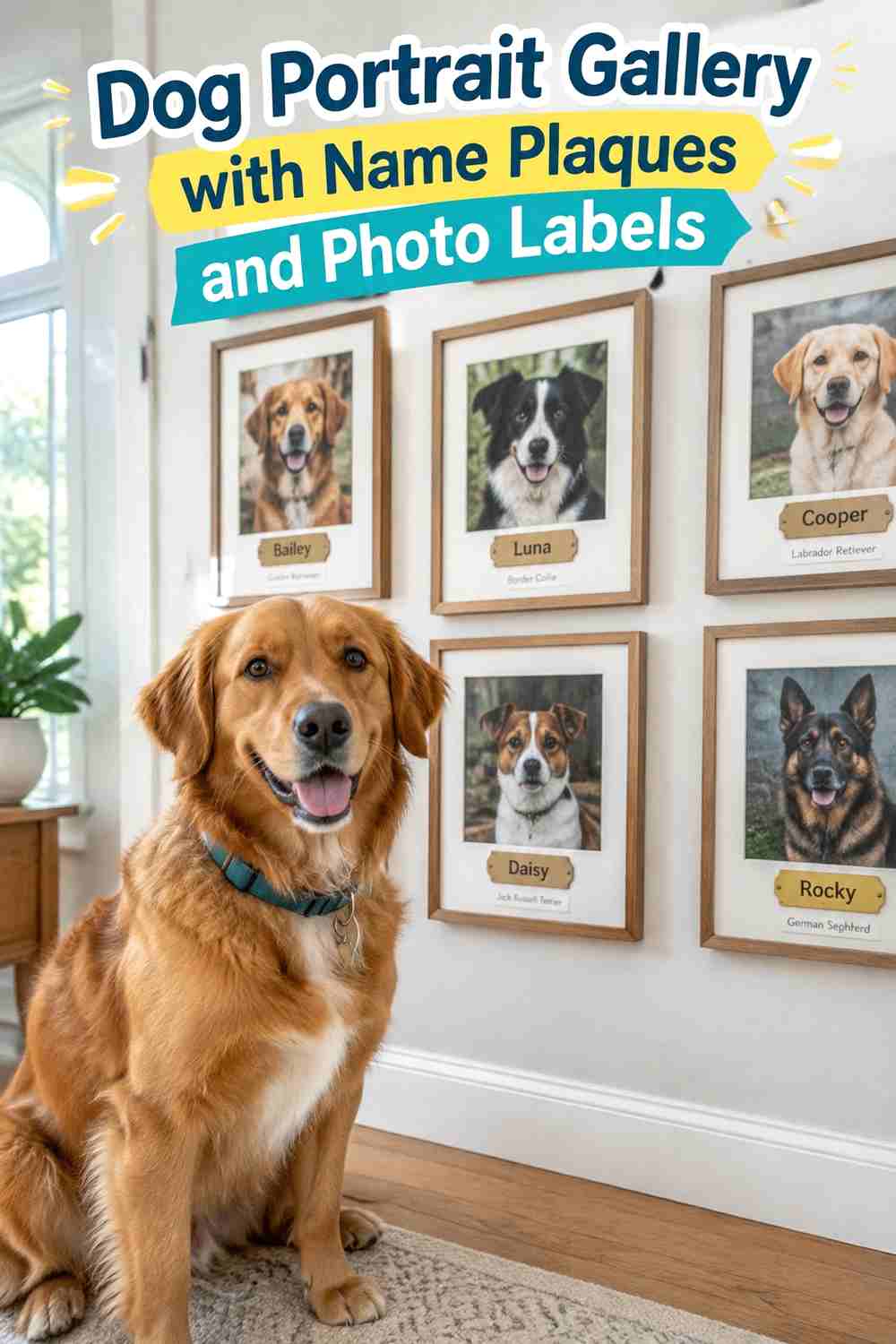
A labeled portrait gallery adds short identification details beneath or beside each dog photo. Use simple name plaques, dates, locations, or one- or two-word captions rather than long text that competes with the images. This approach works particularly well for multi-dog families, milestone galleries, or collections that include dogs from different generations. Keep label size and typography consistent so the display remains cohesive. Secure every plaque firmly and avoid small loose signs placed on narrow ledges where they could fall. The labels can make meaningful details easier to remember without requiring a separate scrapbook. Plan the photo and text spacing together before mounting anything so the wall does not become crowded.
Setup Notes
Choose concise information that adds context to each portrait and keep longer stories in albums or digital photo collections.
15. Corner Dog Portrait Gallery For Compact Home Displays
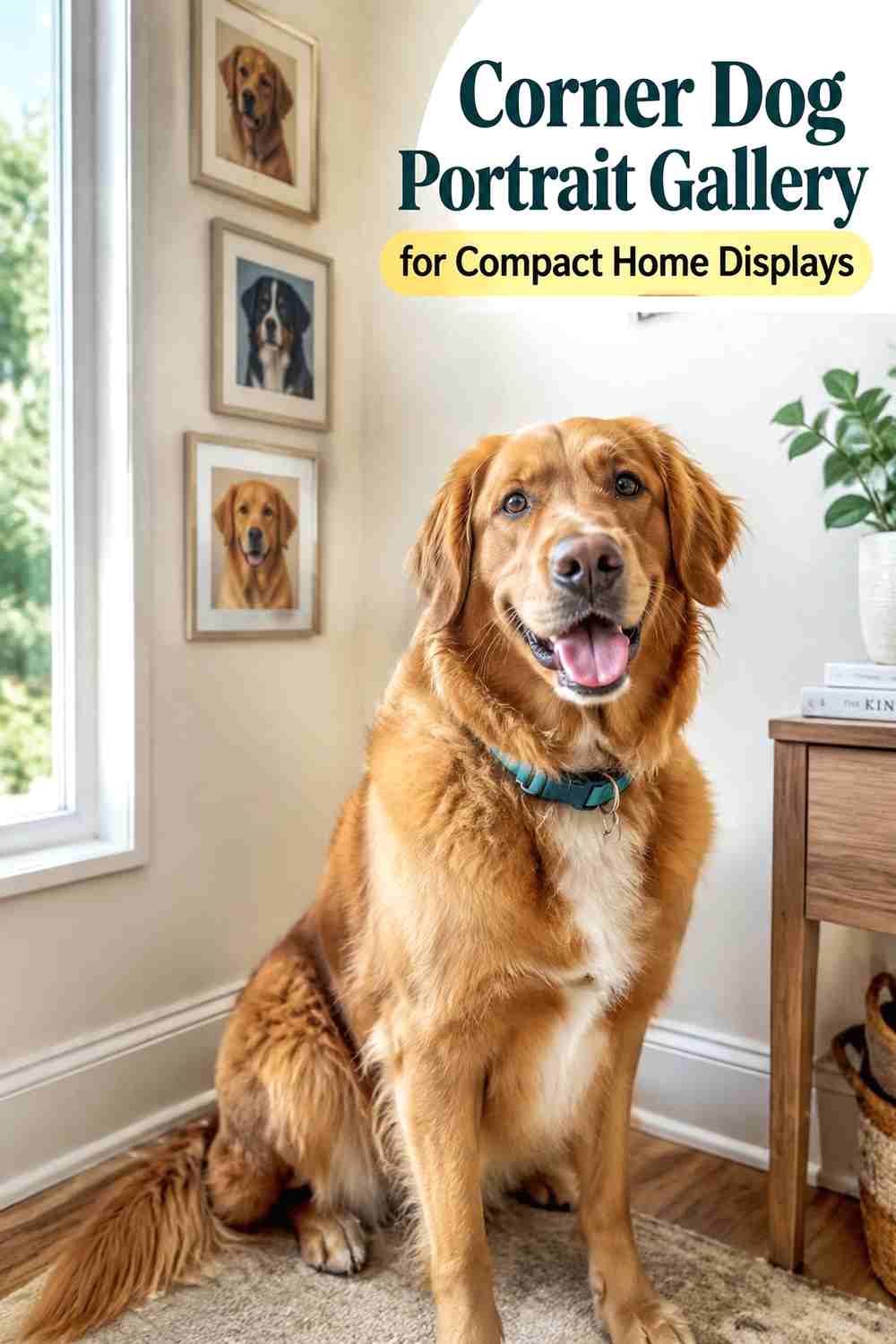
A corner portrait gallery uses two adjoining walls to create a dog photo display without requiring one large uninterrupted surface. Hang a few frames on each side of the corner, keeping similar spacing and frame finishes so the arrangement reads as one collection. This setup works well in apartments, narrow hallways, home offices, or reading areas where broad walls are already occupied. Use smaller to medium-sized frames rather than oversized pieces that overwhelm the corner. Keep lower frames safely beyond the dog’s reach and avoid positioning fragile pieces where doors or furniture could hit them. A corner gallery can also grow gradually, making it practical when your photo collection is still developing.
Space & Placement
View the arrangement from both directions before mounting frames because a corner gallery needs to look balanced from more than one angle.
16. Glass Front Dog Portrait Gallery For Protected Photo Displays
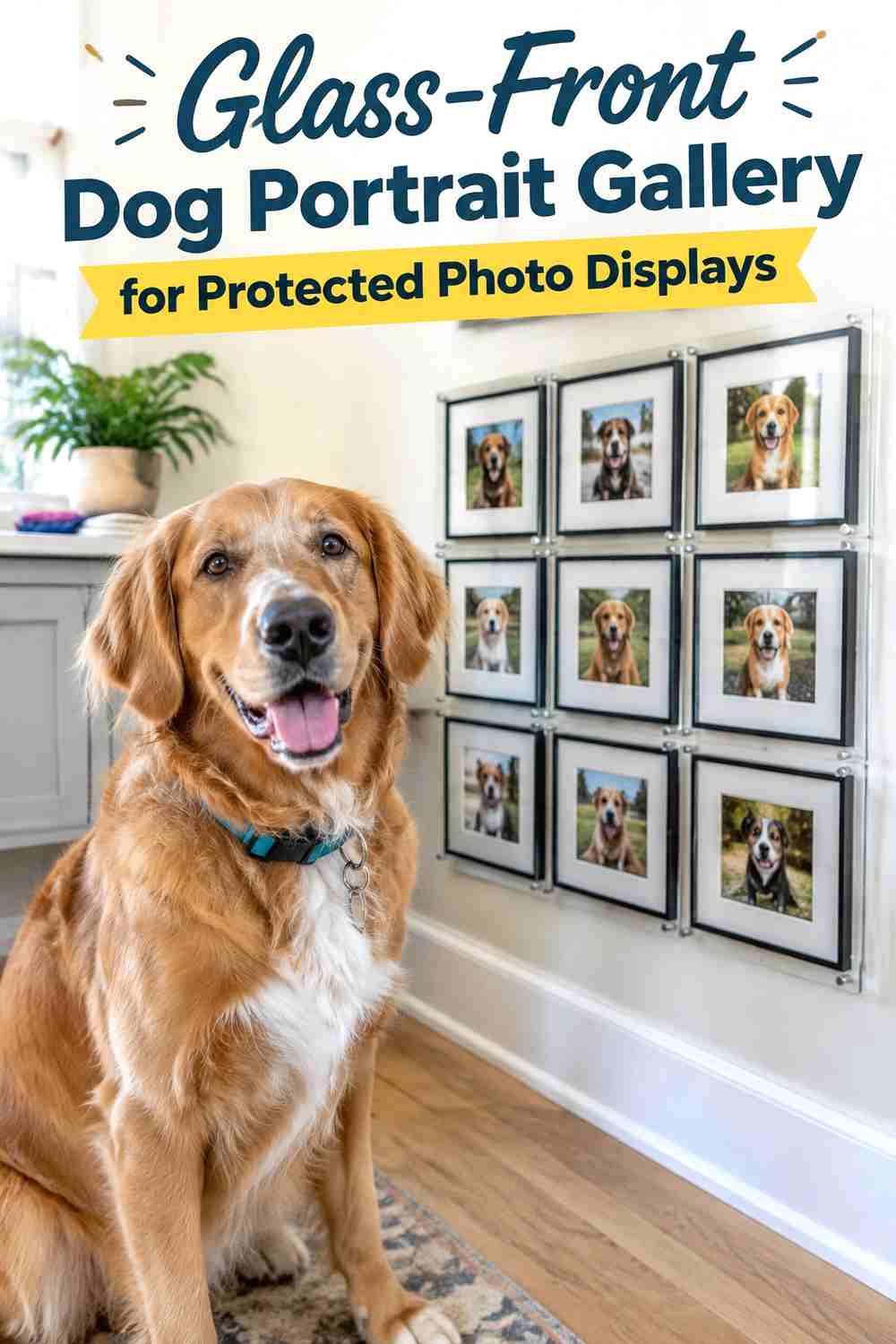
A glass-front portrait gallery protects printed dog photos from dust, fingerprints, and frequent handling while keeping the collection easy to see. Use enclosed frames or a shallow glass-front display cabinet with secure doors, arranging photographs in a simple grid or layered format inside. This option works well for older prints, professionally made portraits, or meaningful photos you do not want repeatedly exposed during cleaning. Keep the display away from damp areas and strong direct sunlight where photographs may deteriorate over time. If the unit is freestanding, stabilize it appropriately so it cannot tip. This setup suits homes where sentimental prints deserve more protection than an open ledge or unframed wall display provides.
Cleaning Notes
Clean protective fronts with methods appropriate for the frame material and avoid spraying cleaner directly toward photographs or paper mats.
17. Dog Portrait And Paw Print Gallery For Personal Memories
You May Also Like



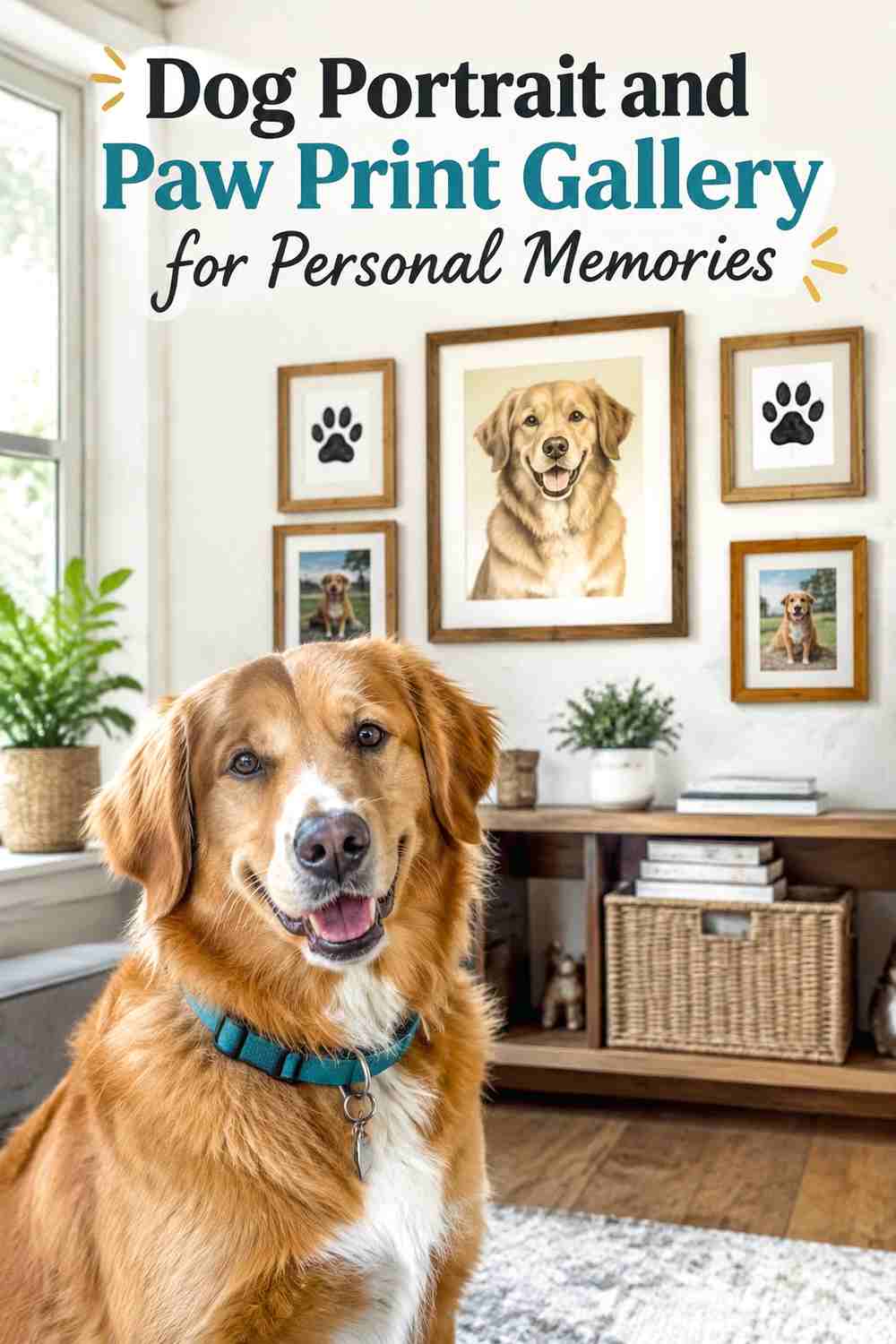
A portrait and paw print gallery combines photographs with one or two framed paw impressions for a more personal memory wall. Use a central portrait as the visual anchor, then place the paw print, name card, and a few supporting photos around it. Keep impressions protected behind a frame once they are finished and fully dry, and avoid using loose craft materials in areas pets can reach. Matching frames or mats help different keepsakes feel like part of the same collection. This arrangement works especially well for milestone displays, adoption memories, or long-term family photo walls. Keep the number of non-photo pieces limited so the dog portraits remain the main visual focus.
Pro Tip
Photograph the finished paw print before framing it so you also have a digital copy if the physical keepsake is ever damaged.
How to Choose the Right Idea
Start with the photos you already have rather than choosing a large gallery layout first. A few strong portraits may suit a minimal three-frame arrangement or one oversized statement piece, while a larger archive can support timelines, staircase walls, ledges, or multi-dog sections.
Consider your home style and available wall space. Matching grids work well in structured rooms, wood frames suit warmer interiors, and picture ledges offer more flexibility when you enjoy changing photos frequently. Corners and narrow stair walls can make use of space that might otherwise stay empty.
Photo orientation matters too. Mixing vertical and horizontal images is easier in organic galleries, while grids usually look cleaner when proportions match.
Finally, mount everything securely. Keep frames above your dog’s reach, avoid unstable displays over beds or crates, and protect older or sentimental prints from moisture, dust, and strong direct sunlight.
Final Thoughts
A strong dog portrait gallery is built around a clear photo story rather than the number of frames on the wall. Start with your best images, choose one layout style, and leave enough open space for each portrait to stand out.
If you take new photos often, choose a flexible system such as picture ledges or rotating frames so the gallery can evolve without becoming overcrowded.
FAQs
1. How many photos should go in a dog portrait gallery?
There is no fixed number. Three strong portraits can create a complete small gallery, while larger walls can hold more if spacing, frame style, and photo proportions remain visually balanced.
2. What frame style works best for dog portraits?
Choose frames that complement your home and the photographs. Matching black, white, or wood frames create a cohesive look, while mixed frames can work when the overall arrangement is carefully planned.
3. Where is the best place for a dog portrait gallery?
Living rooms, hallways, stair walls, offices, and entry areas can all work. Choose a dry wall with suitable viewing space and mount frames securely above your dog’s reach.
4. How can I make different dog photos look cohesive?
Use consistent frame colors, similar mats, matching crops, or a shared editing style such as black and white. Repeating one visual element can connect photos taken at different times.
5. How do I update a dog gallery without rehanging everything?
Use picture ledges, easy-open frames, or a seasonal rotation system. These options let you replace photographs while keeping the main wall layout unchanged.
CTA
Save your favorite gallery layout and turn your best dog portraits into a personal home display that is easy to enjoy and update.
