Turn favorite dog photos into meaningful home decor with gallery wall layouts that work in living rooms, hallways, entryways, staircases, and small apartments.
Save This Idea on Pinterest

13 Dog Photo Gallery Wall Ideas
Save to PinterestDog photo gallery walls work best when the display fits both your photo collection and the room around it. A clean grid can make everyday portraits feel polished, while mixed frames, candid photos, or a growing timeline create a more relaxed and personal look.
These 13 ideas cover structured, flexible, seasonal, compact, multi-dog, and memorial arrangements. Think about available wall space, frame weight, furniture placement, print size, lighting, and how often you want to change the display. Secure frames properly and avoid placing unstable decor where an active dog could bump furniture beneath it.
Quick List
- Classic Grid Dog Photo Gallery Wall for Living Rooms
- Staircase Dog Photo Gallery Wall With Growing-Up Moments
- Black-and-White Dog Portrait Wall for Modern Homes
- Floating Ledge Dog Photo Display for Flexible Styling
- Small Apartment Dog Photo Wall Above a Console
- Candid Dog Adventure Gallery Wall for Family Spaces
- Puppy-to-Adult Dog Timeline Gallery Wall for Hallways
- Matching Frame Dog Portrait Wall for Clean Decor
- Mixed-Size Dog Photo Wall for Cozy Eclectic Rooms
- Seasonal Dog Photo Gallery Wall With Rotating Prints
- Multi-Dog Family Gallery Wall With Individual Portraits
- Memorial Dog Photo Gallery Wall With Simple Keepsakes
- Entryway Dog Photo Wall for Welcoming Pet-Focused Decor
1. Classic Grid Dog Photo Gallery Wall For Living Rooms

A classic grid turns a collection of favorite dog portraits into a clean, balanced focal point above a sofa, console, or other living-room furniture. Choose photos with similar cropping and use identical frame sizes so the repeated shape creates the structure rather than relying on complicated decoration. A mix of close-up portraits, sitting poses, and a few wider scenes can keep the wall interesting while preserving consistency. Lay the arrangement on the floor first and check spacing before installing anything. The grid works particularly well when you want the dog photos to feel intentional and integrated with the room rather than scattered across several surfaces. Keep the overall width proportionate to the furniture below.
Setup Notes
Use paper templates or careful measurements before hanging the frames. Secure each frame appropriately for the wall type so the clean alignment stays intact.
2. Staircase Dog Photo Gallery Wall With Growing Up Moments
You May Also Like



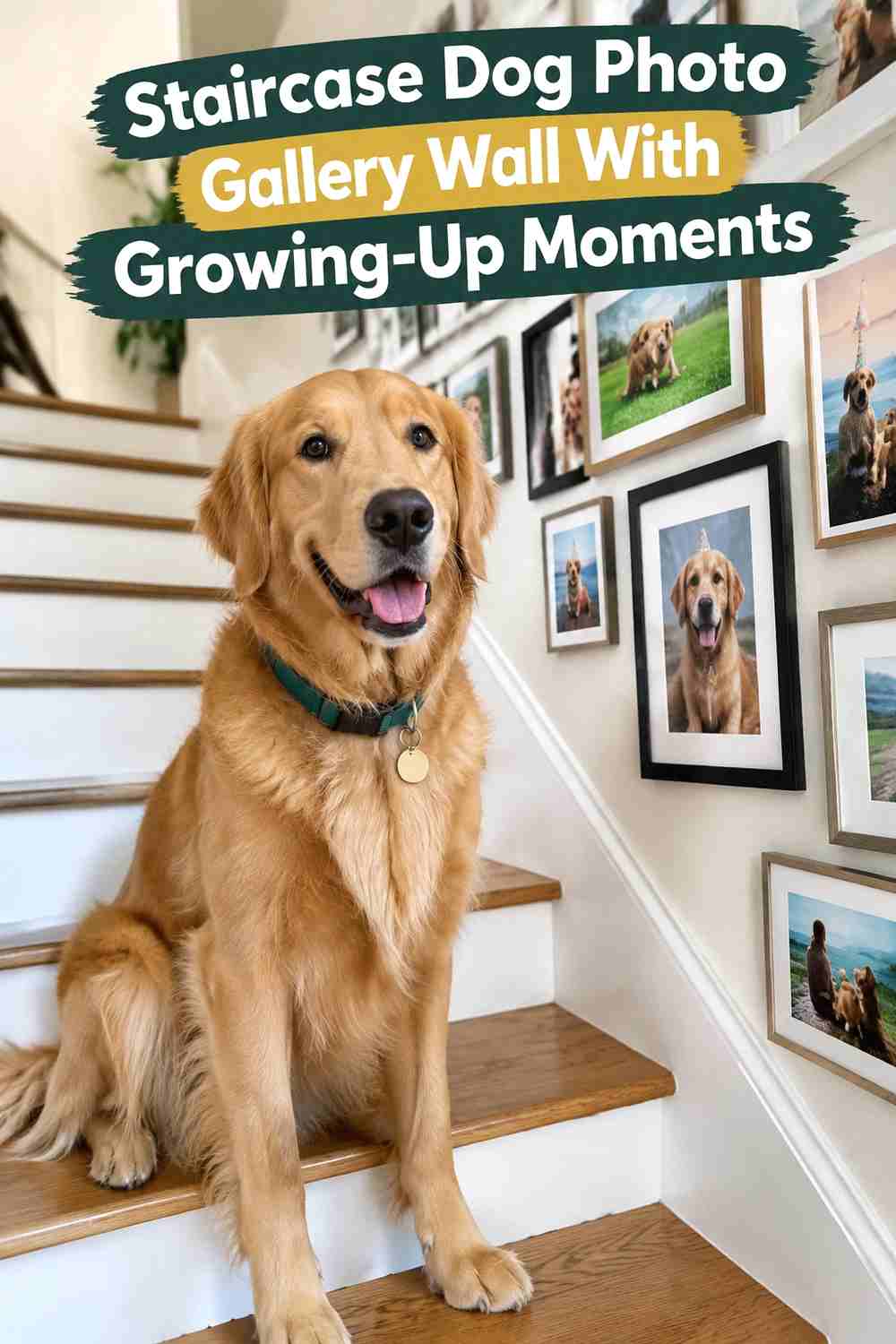
A staircase gallery can tell your dog’s story as the photos move upward along the wall. Start with puppy or early-life images near the lower end, then progress through favorite stages, adventures, birthdays, or everyday moments as the display rises. Frames do not need to follow every stair exactly, but keeping a consistent visual line helps the arrangement feel connected. Use photos with enough contrast and clear subjects because staircase walls are usually viewed while moving rather than from one fixed position. Avoid extending frames into areas where hands, bags, or furniture may bump them. This layout works especially well when you have many meaningful photos but no single large wall available for one concentrated display.
Space & Placement
Keep frames comfortably away from the stair rail and normal shoulder height. Test the arrangement from both the bottom and top of the staircase before final installation.
3. Black And White Dog Portrait Wall For Modern Homes

A black-and-white gallery gives dog portraits a consistent look even when the original photos were taken in different rooms, seasons, or years. Select images with expressive eyes, clear silhouettes, and varied poses, then convert or print them in a similar monochrome style. Matching simple frames can keep the wall modern, while generous white mats add breathing room around each portrait. This approach is useful when colorful backgrounds compete with your home decor or when you want several unrelated photos to feel like one collection. Include a mix of close-ups and full-body shots rather than repeating nearly identical head portraits. Before printing large sizes, check that each image remains sharp enough for the intended frame.
Best For
This style works particularly well in neutral living rooms, offices, hallways, and bedrooms where a colorful gallery might feel visually busy.
4. Floating Ledge Dog Photo Display For Flexible Styling
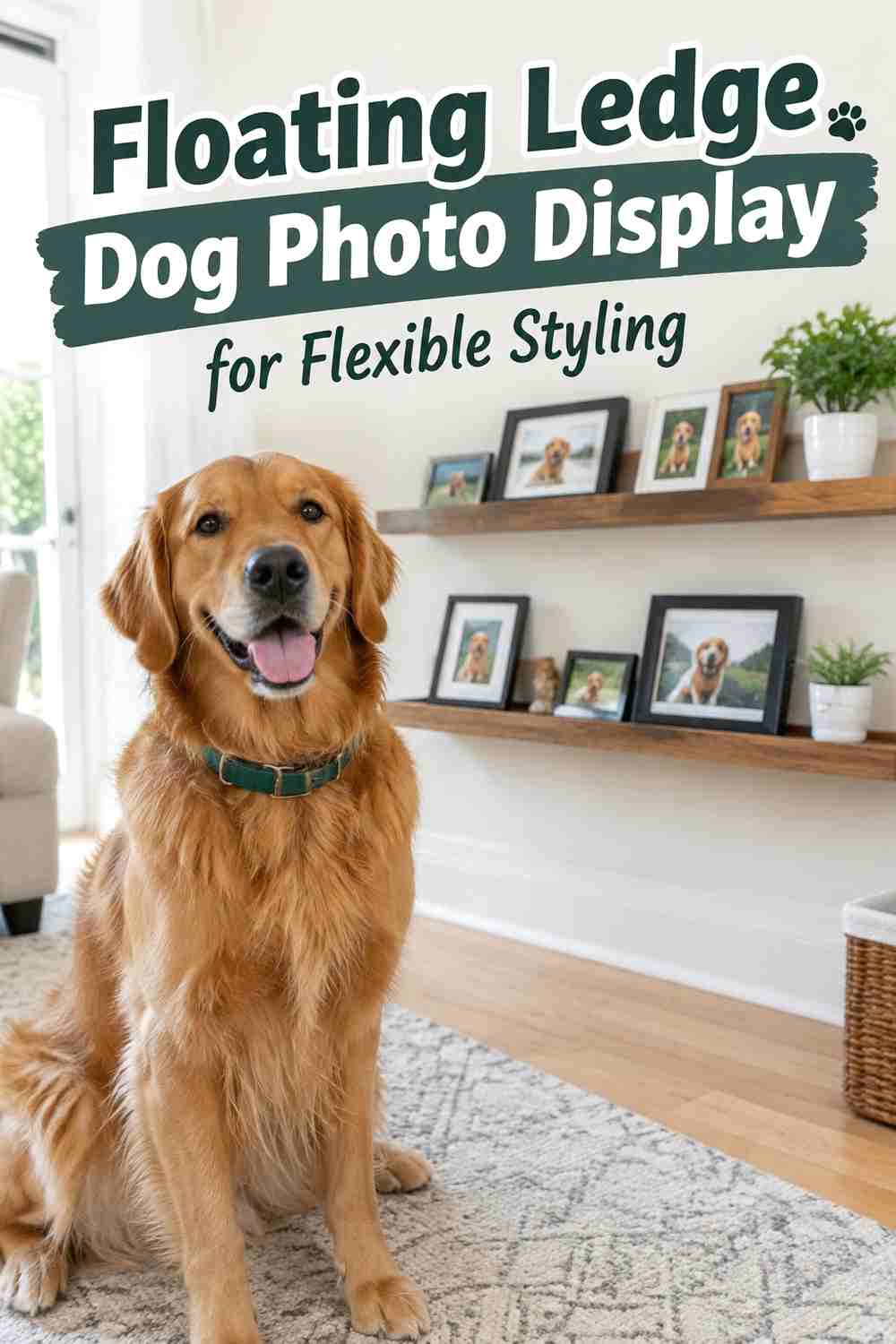
A floating picture ledge lets you build a dog photo gallery without fixing every frame in one permanent position. Lean several framed prints along the ledge, overlapping edges slightly while keeping important parts of each photo visible. Combine one larger anchor portrait with a few smaller candid images so the arrangement has an obvious focal point. This setup is useful when you regularly print new photos or like changing the display for seasons and milestones. Keep decorative extras minimal so the dog photography remains the main feature. The ledge itself should be securely installed and deep enough to support the frames safely rather than relying on unstable balancing.
Use & Maintenance
Dust behind overlapping frames and periodically check that nothing has shifted toward the edge. Rotate one or two prints at a time instead of restyling the entire ledge constantly.
5. Small Apartment Dog Photo Wall Above A Console

In a small apartment, the wall above a narrow console can hold a compact dog gallery without using additional floor space. Build the arrangement around one medium-size favorite portrait, then add a few smaller frames that stay within the width of the furniture below. Limiting the number of prints helps the display feel intentional rather than crowded in a tight room. Choose photos with simple backgrounds or consistent editing so the wall does not compete with keys, lamps, or everyday objects on the console. Keep the surface below mostly clear to give the photos visual space. If the console is near a walkway, mount frames securely rather than leaning them where they could be bumped.
Space & Placement
Leave enough separation between the tabletop and lowest frame for practical use of the console. A vertically arranged gallery can make better use of narrow walls.
6. Candid Dog Adventure Gallery Wall For Family Spaces
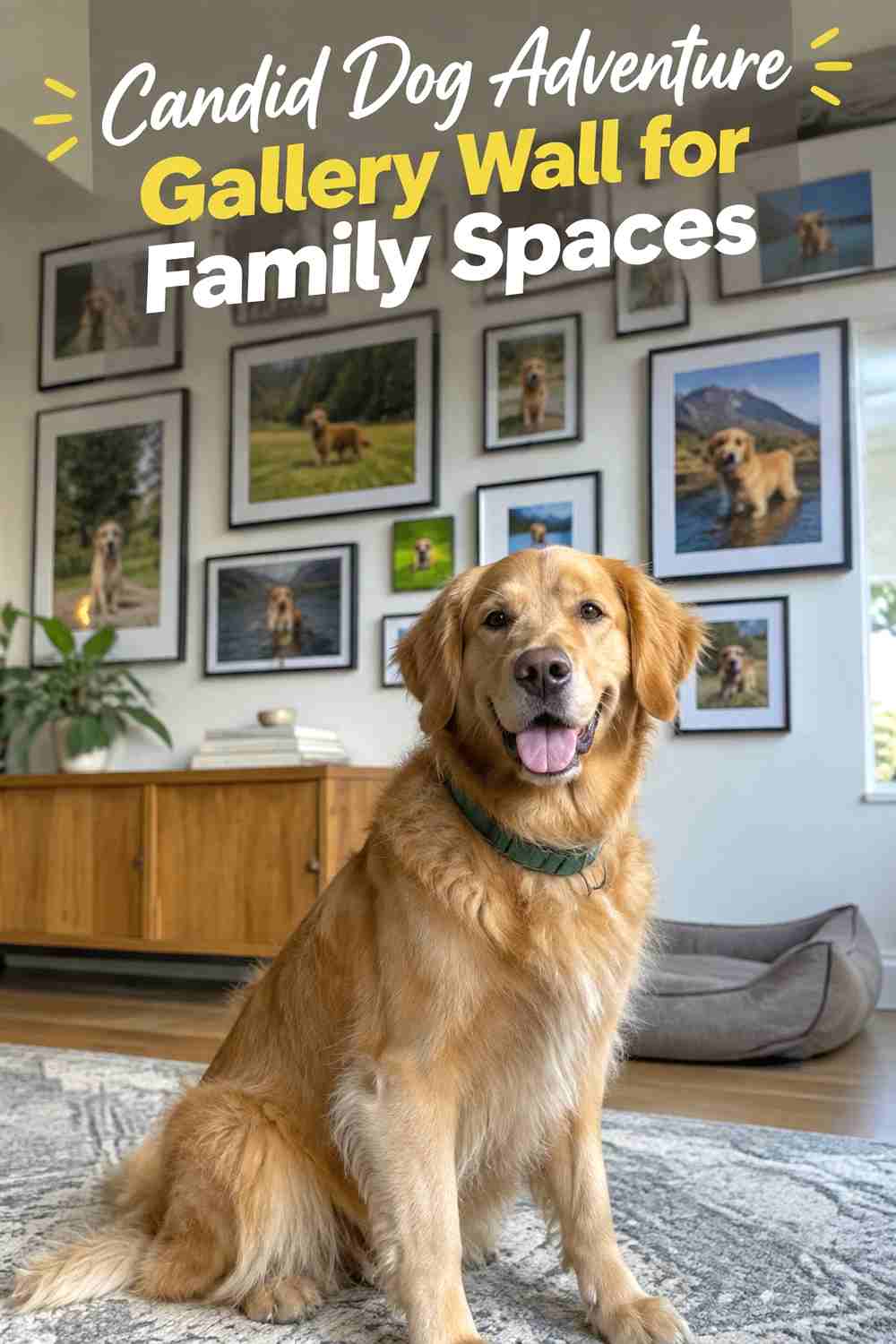
Build an adventure gallery from candid photos of your dog walking, exploring, playing outside, riding along on trips, or relaxing after an outing. The charm comes from real moments rather than formal poses, so include movement, different settings, and wider environmental shots alongside a few close portraits. A mix of landscape and portrait frames can suit this relaxed style, especially in family rooms where the display can feel informal and lived-in. Choose images that remain visually clear when printed instead of trying to include every favorite phone snapshot. Group similar adventures loosely, or mix them across the wall to create variety. Keep fragile keepsakes off low surfaces beneath the gallery if your dog moves energetically through the room.
Why It Works
Candid photography gives the wall more narrative variety than a series of posed portraits. It also makes ordinary walks and trips feel worth preserving alongside major milestones.
7. Puppy To Adult Dog Timeline Gallery Wall For Hallways
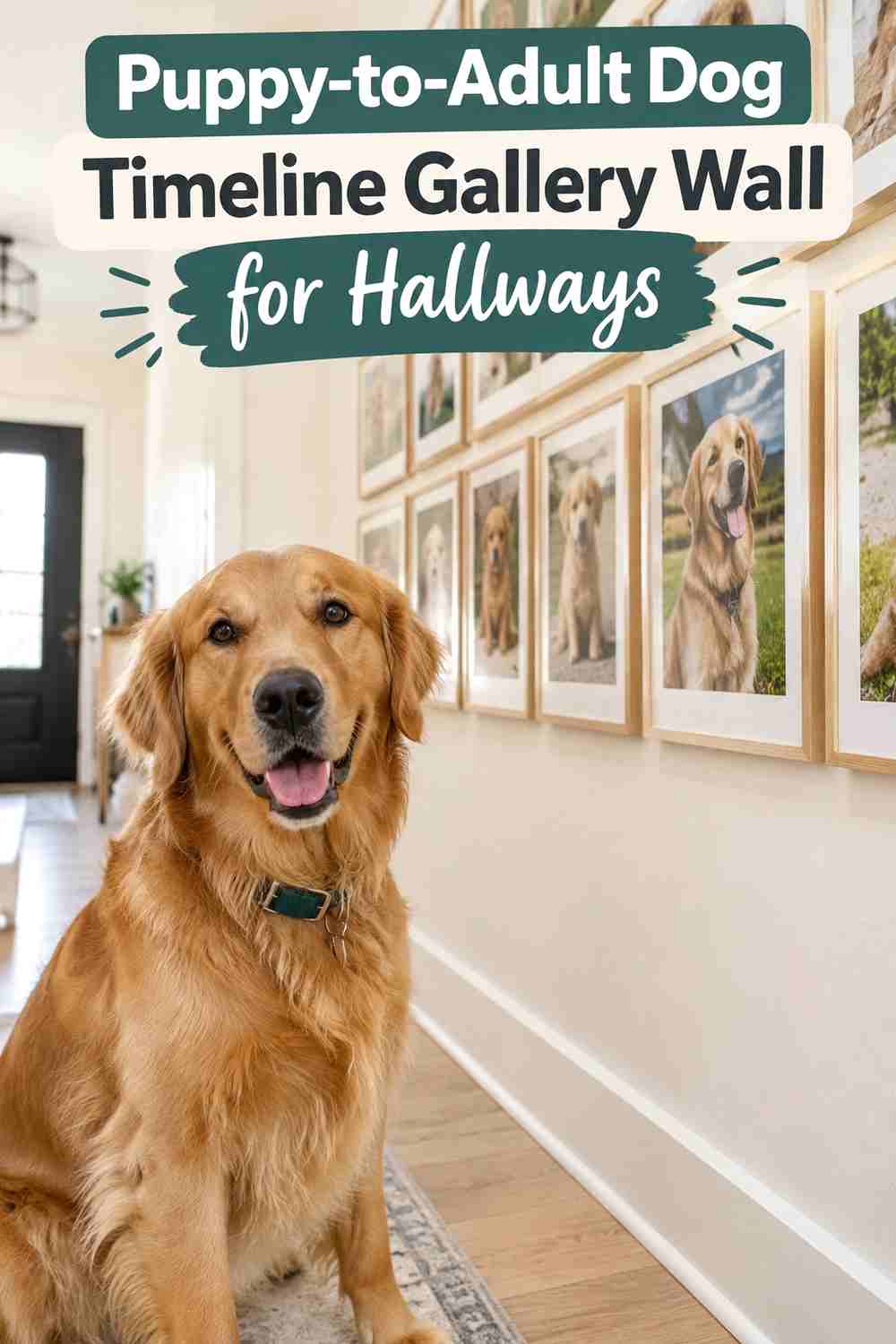
A puppy-to-adult timeline creates a simple visual record of how your dog changed over time. Choose one strong image from several meaningful stages, then arrange them chronologically along a hallway wall. Consistent frame sizes make growth differences easier to notice, while small captions or dates can help distinguish stages without overwhelming the display. Include everyday moments as well as special occasions so the timeline feels personal rather than like a formal photo archive. A hallway works well because viewers naturally move past the images in sequence. Leave enough space between frames that each stage can be viewed individually, and avoid making the timeline so long that later photos wrap awkwardly around doors or corners.
Pro Tip
Keep a little empty wall space at the end if you expect to add future photos. Planning for growth prevents the timeline from becoming cramped later.
8. Matching Frame Dog Portrait Wall For Clean Decor
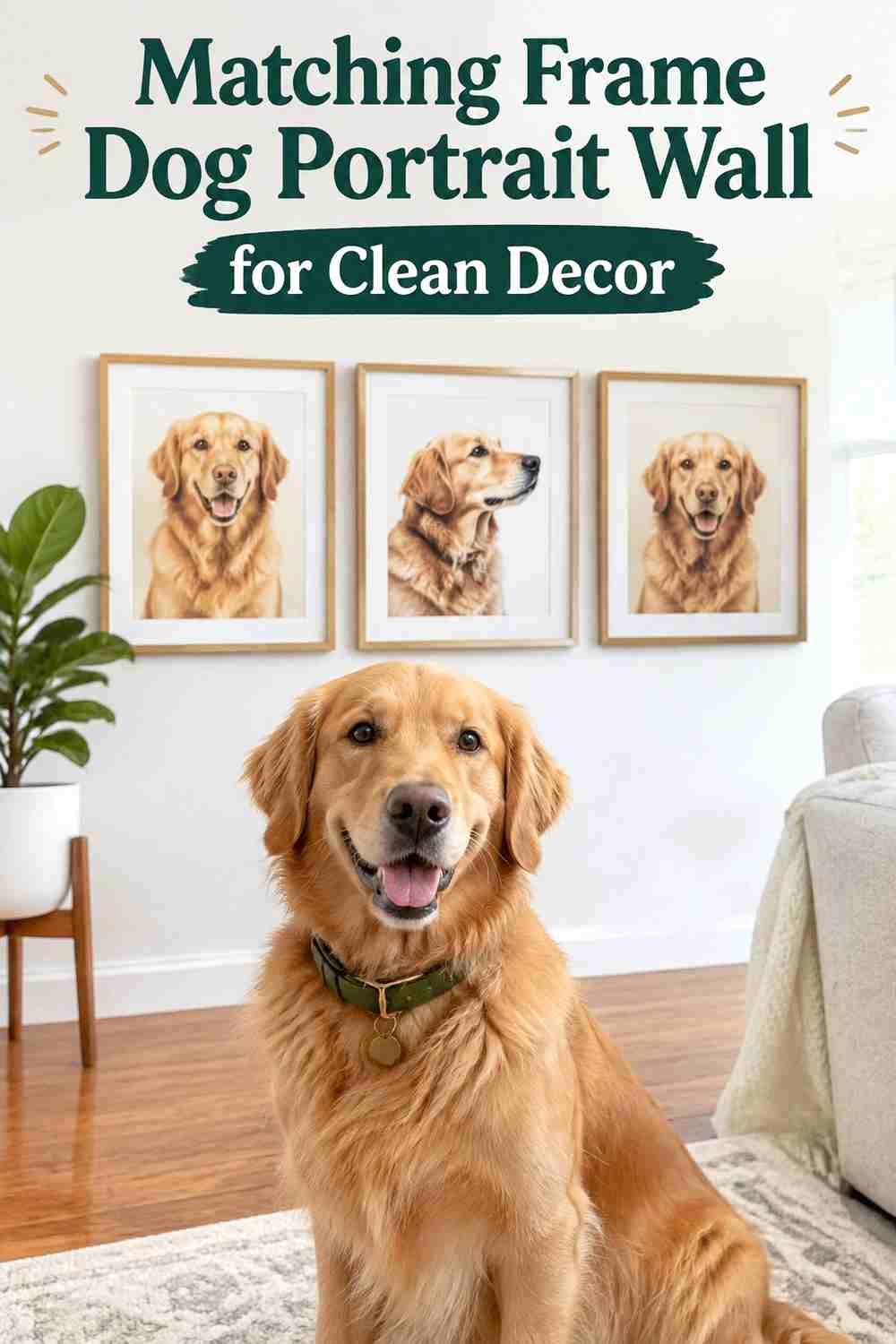
Matching frames create a polished dog portrait wall when you want the photography to stand out more than the display hardware. Choose one frame finish and repeat it across every photo, even if the image sizes vary slightly. Keeping mat colors consistent can make photos taken in different lighting conditions look more coordinated. Use a thoughtful mixture of sitting poses, profile shots, close-ups, and relaxed everyday portraits so the content still has variety. This method works in rooms where other decor already has strong colors or patterns because the repeated framing keeps the gallery visually calm. Measure the full arrangement before hanging so equal frame styles do not end up feeling randomly scattered across the wall.
Best For
Matching frames suit streamlined living rooms, offices, bedrooms, and hallways where a controlled visual rhythm works better than mixed vintage or eclectic framing.
9. Mixed Size Dog Photo Wall For Cozy Eclectic Rooms

A mixed-size gallery combines large dog portraits with smaller snapshots to create a relaxed, collected-over-time look. Start with one or two large images as anchors, then build outward using smaller frames with varied orientations. Keep a consistent element—such as similar frame tones, matching mats, or repeated photo editing—so the wall still feels connected despite the different sizes. This style is useful when your favorite photos have different crops and resolutions because not every image has to be enlarged equally. Lay everything out on the floor before hanging and maintain reasonably consistent gaps between frames. Avoid adding so many decorative objects that the dog photos become secondary to signs, ornaments, or filler pieces.
Setup Notes
Build around the strongest image first instead of beginning at one corner. This makes it easier to balance smaller frames around the main portrait.
10. Seasonal Dog Photo Gallery Wall With Rotating Prints
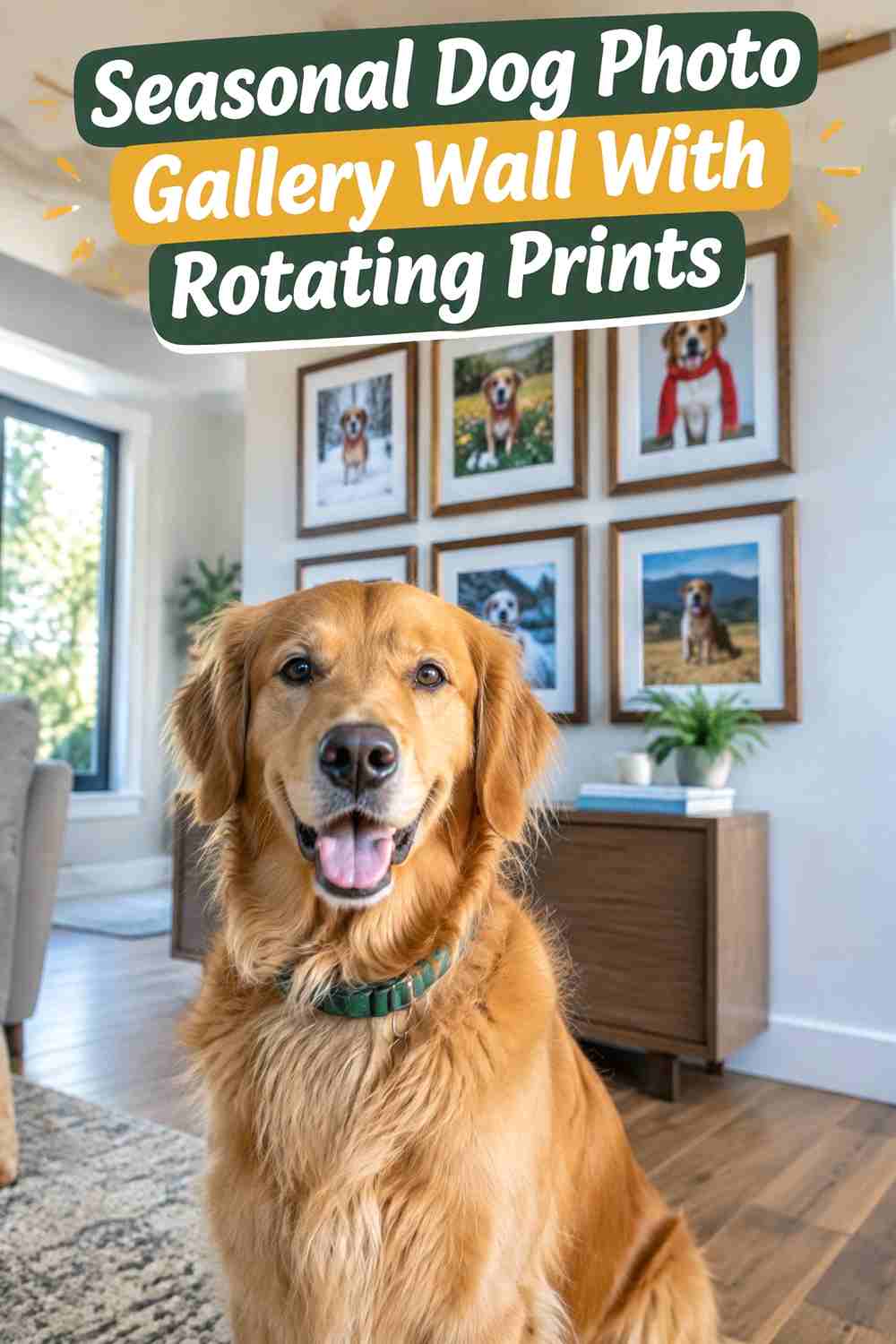
A seasonal gallery uses the same frames while rotating dog photos throughout the year. Keep the basic wall arrangement permanent, then swap in snowy walks, spring outings, summer adventures, fall leaves, birthdays, or holiday portraits as they become relevant. This gives the display a fresh look without repeatedly measuring and rehanging hardware. Store off-season prints flat in labeled sleeves or folders so they stay protected and easy to find. Choose a few evergreen portraits that remain on the wall year-round to prevent each update from feeling like a complete redesign. This system works best with frames that open easily and are sturdy enough for repeated print changes without damaging the backs or mounting hardware.
Use & Maintenance
Set a simple rotation schedule based on seasons you actually photograph. There is no need to change every frame; replacing two or three prints can refresh the wall.
11. Multi Dog Family Gallery Wall With Individual Portraits

A multi-dog gallery gives each dog individual space while still presenting everyone as one family collection. Start with one clear portrait of each dog, then add a few shared photos showing them naturally together if those images are meaningful. Equal-size individual frames can keep the display balanced when dogs have very different colors, sizes, or photo styles. Avoid giving one dog most of the visual space simply because more photos are available; a planned structure helps the wall feel cohesive. This arrangement is especially useful in households where each dog has a distinct personality or history worth representing separately. Keep names or captions subtle if you include them so the photography remains the focus.
Pro Tip
Use the same background, crop style, or frame size for the primary individual portraits. Shared candid images can then add variety around that consistent core.
12. Memorial Dog Photo Gallery Wall With Simple Keepsakes
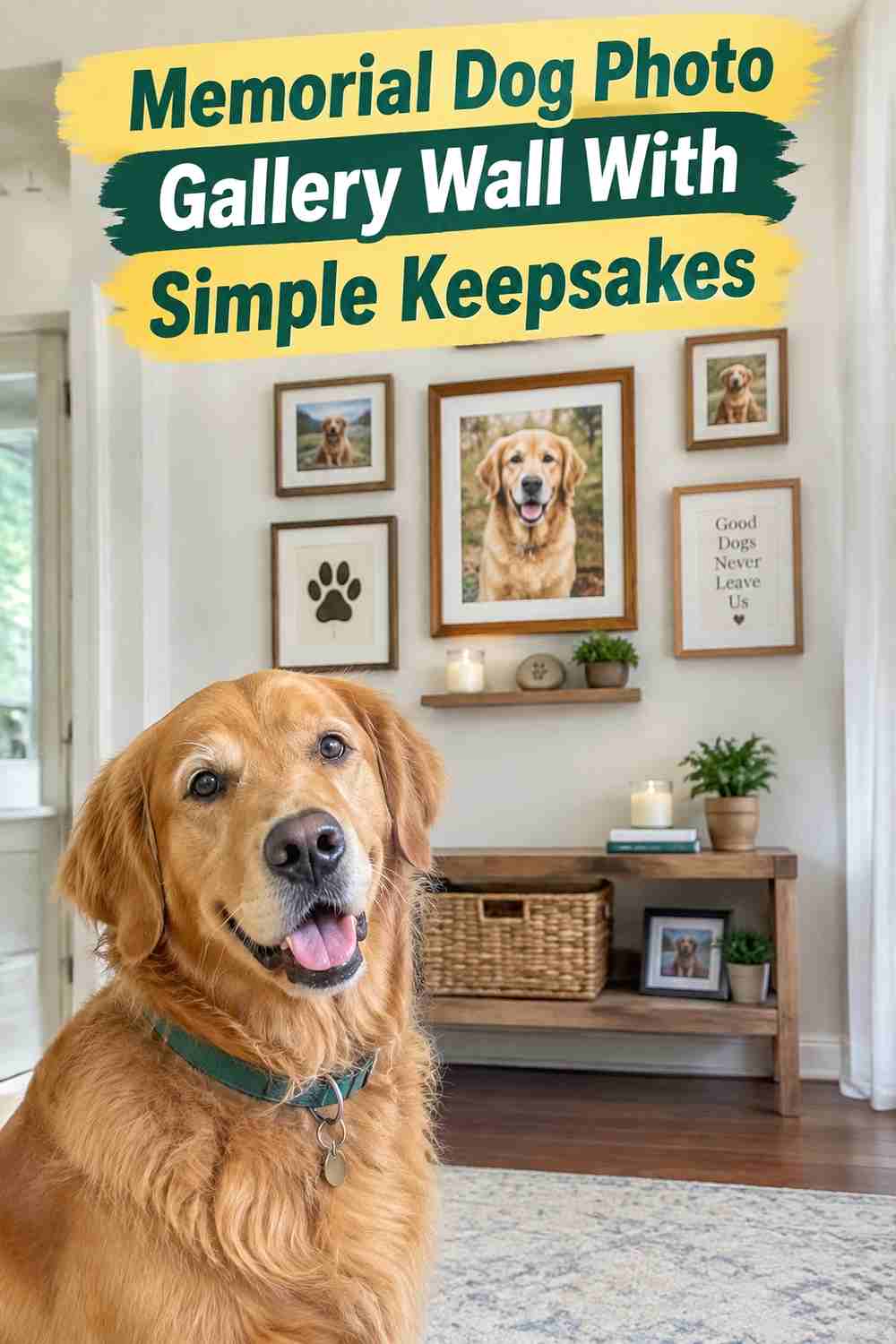
A memorial gallery can honor a dog with a small, focused collection of meaningful photos rather than filling an entire wall. Choose a favorite portrait, one or two everyday moments, and perhaps a simple keepsake such as a name tag displayed securely in a shadow box. Keeping the arrangement restrained can make each item easier to appreciate. Place the gallery somewhere that feels comfortable to your household, whether that is a quiet hallway, reading corner, or family room. There is no need to follow a particular memorial style; clean frames and familiar images may feel more personal than elaborate decorations. If keepsakes are fragile or valuable, mount them securely and keep them away from areas where pets or children can reach them.
Space & Placement
Choose a location that feels natural rather than highly exposed if you prefer a quieter display. Soft lighting can help photographs remain visible without making the wall overly dramatic.
13. Entryway Dog Photo Wall For Welcoming Pet Focused Decor
You May Also Like




An entryway dog photo wall gives visitors an immediate glimpse of your pet-centered home without crowding the floor with extra decor. Use a compact grouping of three to five favorite photos above a bench, narrow table, or empty wall section. Mix one strong portrait with a few playful or everyday images so the display feels friendly rather than formal. Because entryways often contain coats, bags, shoes, and leashes, keep the gallery itself visually simple and leave enough clear space around each frame. Mount everything securely, especially in narrow halls where people regularly pass close to the wall. Choosing consistent frames or print tones can help the dog photos feel organized even when the surrounding entryway is busy.
Best For
This idea suits homes where the entrance has unused wall space but limited room for additional furniture. It also works well as a small first gallery before creating a larger display elsewhere.
How to Choose the Right Idea
Start with your available wall shape and the number of photos you genuinely want to display. Wide living-room walls suit grids or mixed-size arrangements, while hallways and staircases work naturally with timelines and progressive layouts. Small apartments often benefit from compact groupings, vertical arrangements, or picture ledges that avoid extra furniture.
Next, consider how often you want the display to change. Matching frames and fixed grids are low-maintenance, while ledges and seasonal galleries are easier to update.
Finally, match the style to your photography. Formal portraits look strong in clean grids or monochrome collections, while candid adventures suit looser arrangements. Whatever layout you choose, use secure hanging hardware, stable frames, and enough open space that the wall feels curated rather than crowded.
Final Thoughts
A memorable dog photo gallery wall does not require dozens of prints. A small collection of well-chosen images can tell more of your dog’s story than a crowded display.
Choose a layout that fits your room first, then select photos that work together visually or emotionally. Once the main structure is in place, you can add new images gradually instead of rebuilding the entire wall.
FAQs
1. How many dog photos should go on a gallery wall?
There is no fixed number. A compact wall may look complete with three to five photos, while a larger staircase or living-room gallery can support more. Leave enough space for each image to remain readable.
2. Should all dog gallery wall frames match?
They do not have to. Matching frames create a clean, coordinated look, while mixed frames feel more relaxed and eclectic. Keeping one common element helps mixed arrangements stay cohesive.
3. Where is the best place for a dog photo gallery wall?
Living rooms, hallways, staircases, entryways, bedrooms, and home offices can all work. Choose a wall with enough viewing space and avoid locations where frames are likely to be bumped.
4. How can I make phone photos look good in a gallery wall?
Choose sharp images with clear subjects and crop them thoughtfully before printing. Smaller print sizes often work better for phone photos that lose detail when enlarged.
5. How can I update a dog gallery wall without rehanging everything?
Use picture ledges or frames that open easily from the front or back. Keeping the same frame layout and swapping only the prints makes seasonal or milestone updates much simpler.
CTA
Save these dog photo gallery wall ideas for your next home decor project, and start with the layout that best fits your favorite dog photos and available wall space.
