Create a practical dog-friendly corner in your kitchen with smart feeding, storage, water, and resting setups that blend naturally into everyday home routines.
Save This Idea on Pinterest

12 Dog Kitchen Nook Ideas
Save to PinterestA dog kitchen nook can keep bowls, food, feeding supplies, or a nearby resting spot organized without letting pet gear spread across the room. These ideas include compact under-counter stations, pantry storage, window-side beds, multi-dog layouts, easy-clean feeding zones, and built-in solutions for smaller kitchens.
The best setup depends on your dog’s size, feeding routine, available floor space, and kitchen traffic. Feeding and rest areas should stay away from hot appliances and busy cooking paths, while food storage should remain secure and dry. Choose a nook that makes bowls, surfaces, and supplies easy to clean without interfering with normal kitchen use.
Quick List
- Under-Counter Dog Feeding Nook for Small Kitchens
- Kitchen Island Dog Feeding Nook with Hidden Bowl Storage
- Corner Dog Water Nook for Easy Kitchen Cleanup
- Pantry-Side Dog Feeding Nook with Food Storage
- Window-Side Dog Rest Nook Beside the Kitchen
- Built-In Bench Dog Bed Nook for Quiet Kitchen Corners
- Pull-Out Drawer Dog Feeding Nook for Hidden Bowls
- Multi-Dog Kitchen Nook with Separate Feeding Stations
- Wall-Shelf Dog Kitchen Nook for Organized Feeding Supplies
- Easy-Clean Tile Dog Kitchen Nook for Messy Meals
- Minimalist Dog Kitchen Nook with Matching Bowls and Mat
- Compact Cabinet Dog Nook for Food, Bowls, and Treats
1. Under Counter Dog Feeding Nook For Small Kitchens

An under-counter feeding nook uses an open section of lower cabinetry to give dog bowls a defined home without taking up extra floor space. Place a stable washable mat inside the nook and leave enough width for your dog to stand comfortably while eating or drinking. The opening should remain clear rather than being squeezed between trash storage, cleaning supplies, or hot appliances. If the cabinetry has a deep recess, make sure bowls are still easy for you to remove and wash. This design works especially well when planning new cabinetry, but an existing open lower shelf can sometimes serve the same purpose. Keep the nook uncluttered so spilled food and water are easy to notice and clean.
Best For
This arrangement suits small kitchens where a freestanding feeding station would reduce walking space or create a tripping point.
Cleaning Notes
Use removable bowls and a washable mat so crumbs and water can be cleared without reaching awkwardly into the cabinet.
2. Kitchen Island Dog Feeding Nook With Hidden Bowl Storage

You May Also Like


A kitchen island feeding nook turns one unused end of the island into a dedicated dog zone while keeping bowls away from the main cooking path. Create an open recessed section for feeding and use a nearby drawer or cabinet for clean spare bowls, mats, or feeding accessories. Keeping storage closed makes the visible nook easier to maintain without surrounding the dog with clutter. Position the station on the side of the island least affected by stools, foot traffic, and food preparation. The recess should give your dog enough room to approach and leave naturally rather than feeling boxed in. Wipe spills promptly so water does not sit against cabinet panels or flooring.
Space & Placement
Choose the quiet end of the island rather than the side facing the stove, dishwasher, or busiest walkway.
Pro Tip
Keep only bowls in the open nook and move extra supplies behind cabinet doors for a cleaner visual result.
3. Corner Dog Water Nook For Easy Kitchen Cleanup

A corner water nook gives your dog’s water bowl a consistent location while containing drips in one easy-clean part of the kitchen. Choose a quiet corner with durable flooring and place the bowl on a broad nonslip mat that extends beyond the bowl edges. This helps catch splashes from enthusiastic drinkers without requiring a large feeding station. The location should remain accessible to your dog without being directly beside a swinging door, trash bin, or frequently opened cabinet. Avoid tucking the bowl so tightly into the corner that cleaning behind it becomes difficult. Refresh the water and wash the bowl as part of your normal routine rather than allowing the nook to become permanent unattended storage.
Best For
This setup works well when you want the water area separate from food storage or the dog’s main meal location.
Cleaning Notes
Lift the mat regularly so moisture and crumbs do not stay trapped underneath where they are harder to notice.
4. Pantry Side Dog Feeding Nook With Food Storage

A pantry-side feeding nook keeps daily meals close to the dog food supply without putting the feeding zone inside the main food-preparation area. Place bowls on an easy-clean mat beside or just outside the pantry and dedicate a secure nearby cabinet to dog food and feeding accessories. Keeping food behind closed doors prevents the nook itself from becoming crowded with bags, scoops, and containers. Follow the storage instructions on the food packaging and keep supplies away from excess moisture or heat. The nook should remain clear enough for your dog to eat without people repeatedly stepping around or over the bowls. If pantry traffic is heavy, position the station to one side rather than directly in front of the door.
Setup Notes
Keep the active food supply at an easy adult reach while securing it so your dog cannot open or investigate the storage area.
Why It Works
Placing feeding beside storage reduces unnecessary trips across the kitchen while keeping the actual meal area simple.
5. Window Side Dog Rest Nook Beside The Kitchen

A window-side rest nook gives your dog a comfortable place to settle near the kitchen without lying in the main cooking or walking path. Position a properly sized washable bed beside a secure window where the dog can rest while still being near household activity. Keep the nook away from oven doors, rolling carts, pantry entrances, and other places where people frequently move. Check how much direct sun reaches the area during different parts of the day, since a pleasant morning spot may become too warm later. The window itself should be secure, and cords or dangling blind controls should remain out of reach. Choose bedding that can be removed easily for washing.
Best For
This idea suits dogs that like staying close to family activity but already settle comfortably when given their own defined resting place.
Comfort & Safety
Make sure the bed does not block an exit route and move it if heat, drafts, or household traffic make the location uncomfortable.
6. Built In Bench Dog Bed Nook For Quiet Kitchen Corners

A built-in bench dog bed nook uses the open space beneath a fixed kitchen or breakfast-area bench as a sheltered resting zone. Fit a removable washable bed inside the opening and keep enough headroom for your dog to enter, turn, lie down, and leave without squeezing. The nook works best under a stationary bench away from chair legs, appliance doors, and busy meal-preparation areas. Avoid storing loose household items behind the bed where the dog can reach them. Because enclosed spaces collect fur and crumbs easily, choose a cushion that can be lifted out so the floor underneath remains accessible for cleaning. Dogs that dislike enclosed resting spots may prefer an open bed nearby instead.
Space & Placement
Use a bench section that does not reduce your dog’s exit path when people are sitting or moving around the table.
Cleaning Notes
Vacuum beneath the cushion regularly and wipe the bench surfaces where fur and kitchen dust tend to collect.
7. Pull Out Drawer Dog Feeding Nook For Hidden Bowls

A pull-out feeding drawer hides dog bowls when they are not being used and creates a defined station when fully extended. The drawer or platform needs to be designed for the load, remain stable when open, and sit low enough for comfortable access. Bowls should fit securely rather than sliding each time the dog eats or drinks. This setup can be useful when floor space is tight, but the station should never be pushed closed while your dog is still using it. Remove bowls for routine washing instead of treating the drawer as permanent food storage. If water is kept in the pull-out station, make sure your dog still has appropriate access rather than losing water access simply because the kitchen needs to look tidy.
Best For
This layout suits compact kitchens where owners want meal-time bowls out of the walkway between uses.
Use & Maintenance
Check drawer runners and bowl inserts regularly for trapped crumbs, moisture, movement, or hardware that has started loosening.
8. Multi Dog Kitchen Nook With Separate Feeding Stations

A multi-dog kitchen nook uses clearly separated bowl areas so each dog has its own place during meals. Position the stations with enough distance between them that dogs are not forced to crowd around one shared mat, and use separate bowls appropriate to each dog. A cabinet or shelf above the area can hold labeled supplies, but food should remain secured rather than accessible from the floor. If the dogs prefer more space or show tension around food, separate feeding locations in different parts of the home may be a better fit than one decorative shared nook. The design should support individual access and easy cleanup instead of prioritizing symmetry at the expense of comfort.
Best For
This arrangement can suit multi-dog homes where the dogs already eat comfortably in the same general area without being forced to share bowls.
Setup Notes
Use individual mats or clearly spaced sections so bowls remain easy to identify, remove, and clean after meals.
9. Wall Shelf Dog Kitchen Nook For Organized Feeding Supplies
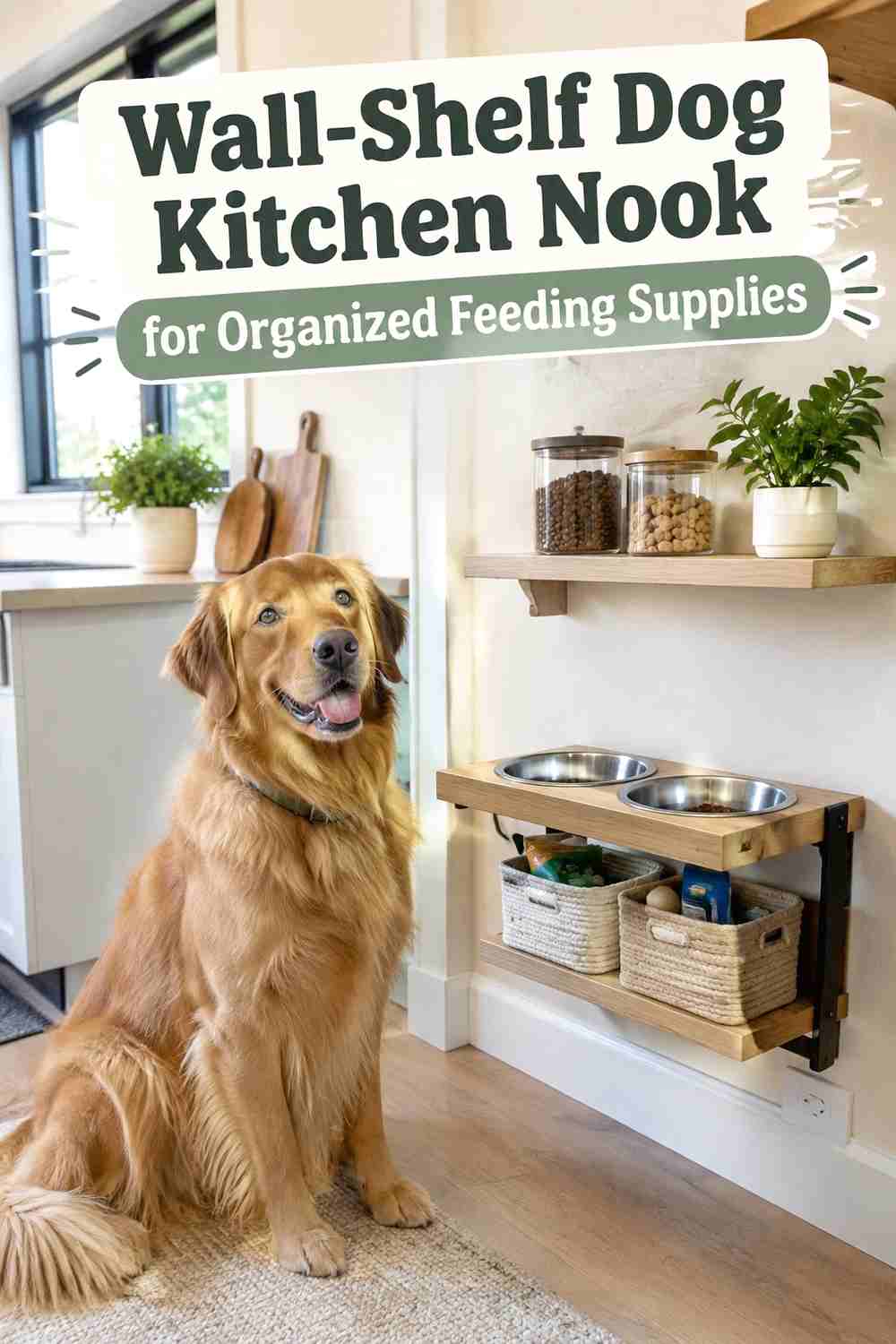
A wall-shelf dog kitchen nook keeps lightweight feeding supplies organized above a simple bowl station without using additional floor cabinetry. Install a securely anchored shelf and use it for clean mats, spare bowls, or labeled containers that are appropriate to store there. Keep heavy food bags lower down in secure storage rather than loading them onto a high shelf. The feeding area below should remain open and easy to wipe, with no cords or dangling accessories within the dog’s reach. This layout can work especially well on a short blank wall that is too narrow for another cabinet. Avoid placing the shelf directly above bowls if items could fall when they are removed.
Space & Placement
Mount the shelf at comfortable adult reach while maintaining clear separation from the dog’s head and normal feeding space.
Pro Tip
Use one or two containers rather than filling the entire shelf so daily supplies remain visible and easy to return.
10. Easy Clean Tile Dog Kitchen Nook For Messy Meals
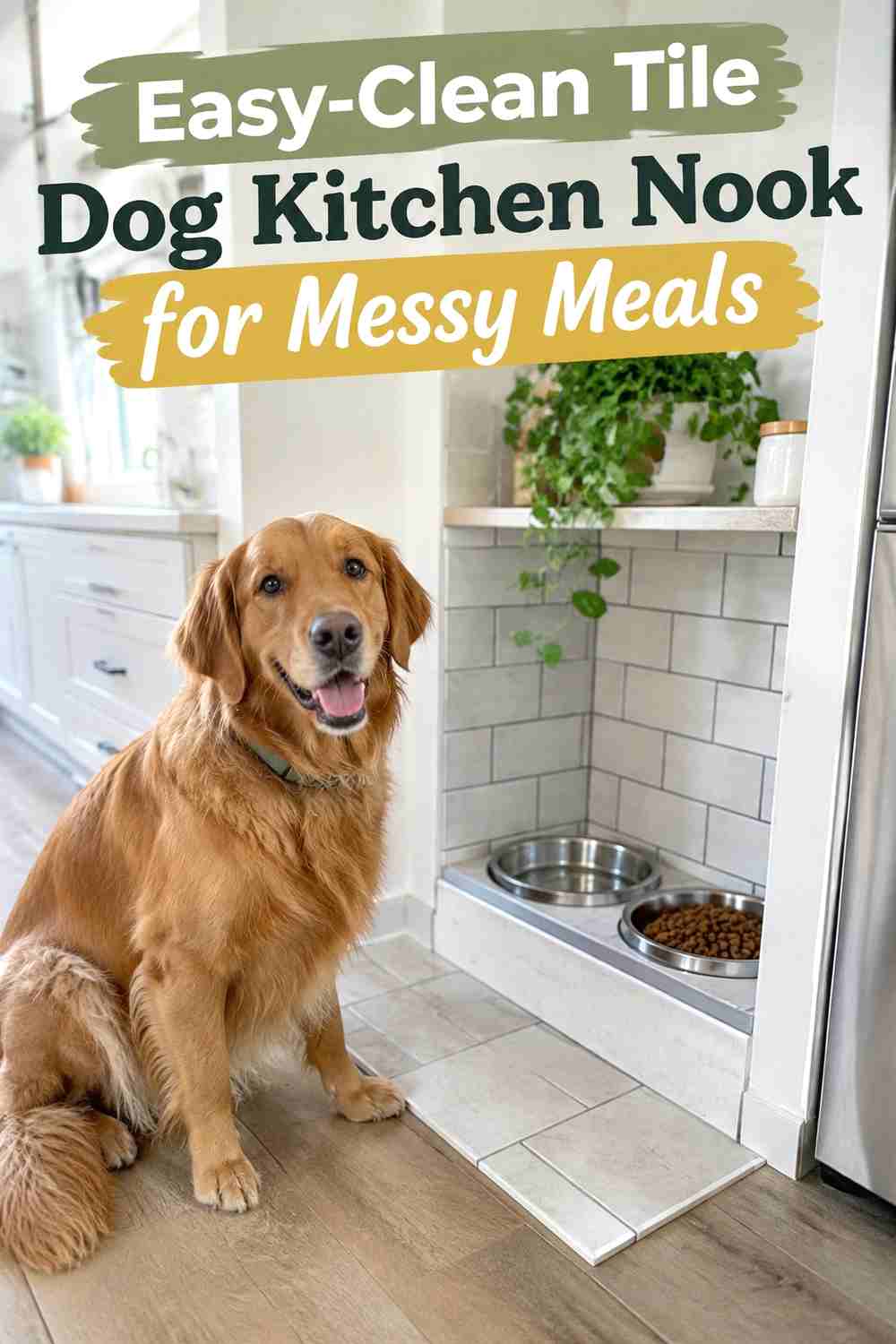
An easy-clean tile nook creates a practical feeding zone for dogs that splash water, scatter crumbs, or leave noticeable mess around their bowls. Use durable flooring already present in the kitchen or create the nook in an area with a washable surface, then add a nonslip feeding mat to contain everyday spills. A washable wall surface or simple backsplash behind the bowls can make wiping splashes easier without turning the nook into an elaborate renovation. Keep grout lines, corners, and the underside of the mat part of the cleaning routine because moisture and food debris can settle there. Choose bowl placement that leaves enough space for your dog without putting the station in a major walkway.
Best For
This idea is practical for enthusiastic eaters and drinkers or households that prioritize quick cleanup over decorative storage.
Cleaning Notes
Lift bowls and mats during cleaning rather than wiping only the visible area around them.
11. Minimalist Dog Kitchen Nook With Matching Bowls And Mat

A minimalist dog kitchen nook uses just a pair of coordinated bowls, one washable mat, and a clean wall area to create a finished look without extra pet-themed décor. Choose colors or materials that repeat the kitchen cabinetry, hardware, or flooring so the station blends naturally into the room. The visual simplicity also makes daily maintenance easier because there are fewer baskets, signs, and accessories to move while cleaning. Bowl size and stability should suit your dog rather than being selected only for appearance. Place the mat far enough from cabinets that spills can be wiped around all edges, and keep the station out of tight walking paths.
Why It Works
Limiting the setup to essential items keeps the dog nook visually calm while making dirt, water, and misplaced supplies easier to notice.
Pro Tip
Use matching colors rather than perfectly identical materials so you can still choose bowls and mats for function first.
12. Compact Cabinet Dog Nook For Food Bowls And Treats
You May Also Like




A compact cabinet nook keeps dog food, clean bowls, and treats in one organized kitchen zone while leaving the visible feeding area uncluttered. Use the lower cabinet for the main food supply, a shallow shelf or drawer for bowls and a scoop, and a separate secured container for treats. Keep food in accordance with its package storage instructions and avoid sharing the cabinet with cleaners, medicines, or other household products. Heavy supplies belong lower down where they are easier to handle. If the cabinet sits beside the feeding mat, wipe spills before they reach the base or door edges. A secure closure is useful for dogs that investigate cabinets when they smell food.
Best For
This layout suits owners who want most feeding supplies in one compact area rather than distributed between several kitchen cupboards.
Use & Maintenance
Review the cabinet during food changes, wiping crumbs and removing empty packages before restocking the shelves.
How to Choose the Right Idea
Start with what you actually need from a dog kitchen nook. If feeding organization is the priority, an under-counter station, pantry-side setup, compact cabinet, or island nook may work best. If your dog mainly needs a safe place to stay near you while you cook, a window-side bed or built-in bench nook may be more useful.
Measure available floor and wall space before adding furniture or cabinetry. Small kitchens benefit from recessed, vertical, and pull-out designs, while larger rooms can support separate feeding and rest zones.
Also consider cleanup, household traffic, and your dog’s behavior. Keep bowls away from busy cooking paths, place food in secure dry storage, and avoid forcing a dog to rest or eat in a cramped corner. Multi-dog households should prioritize individual space over a perfectly symmetrical setup.
Final Thoughts
A good dog kitchen nook should make the room easier to use for both people and pets. It can organize feeding supplies, contain everyday mess, or give your dog a comfortable place nearby without putting a bed in the middle of kitchen traffic.
Choose the simplest nook that solves your main problem first, then add storage or decorative details only when they improve the routine.
FAQs
1. Where should I put a dog nook in the kitchen?
Choose a quieter edge or corner away from hot appliances, main preparation areas, and heavily used walkways. The dog should be able to approach and leave comfortably.
2. Can a dog kitchen nook include both a bed and feeding bowls?
It can, but separate the resting surface from food and water enough to keep bedding dry and make cleaning easier. In many kitchens, separate nearby zones work better.
3. What works best for a small kitchen?
Under-counter feeding areas, narrow cabinets, pull-out stations, and compact wall storage use existing vertical or recessed space without adding bulky furniture.
4. How can I keep a dog feeding nook clean?
Use removable washable bowls and mats, wipe spills promptly, and clean underneath mats and around cabinet edges where water and crumbs can collect.
5. How should I set up a kitchen nook for multiple dogs?
Give dogs separate bowls and enough personal space during meals. If sharing one kitchen area creates crowding or tension, use separate feeding locations instead.
CTA
Save these dog kitchen nook ideas and choose a setup that makes feeding, storage, cleanup, or quiet rest fit more naturally into your kitchen.
