Make daily feeding easier with dog food storage cabinets that keep bags, scoops, bowls, and backup supplies organized, protected, and close to where you use them.
Save This Idea on Pinterest
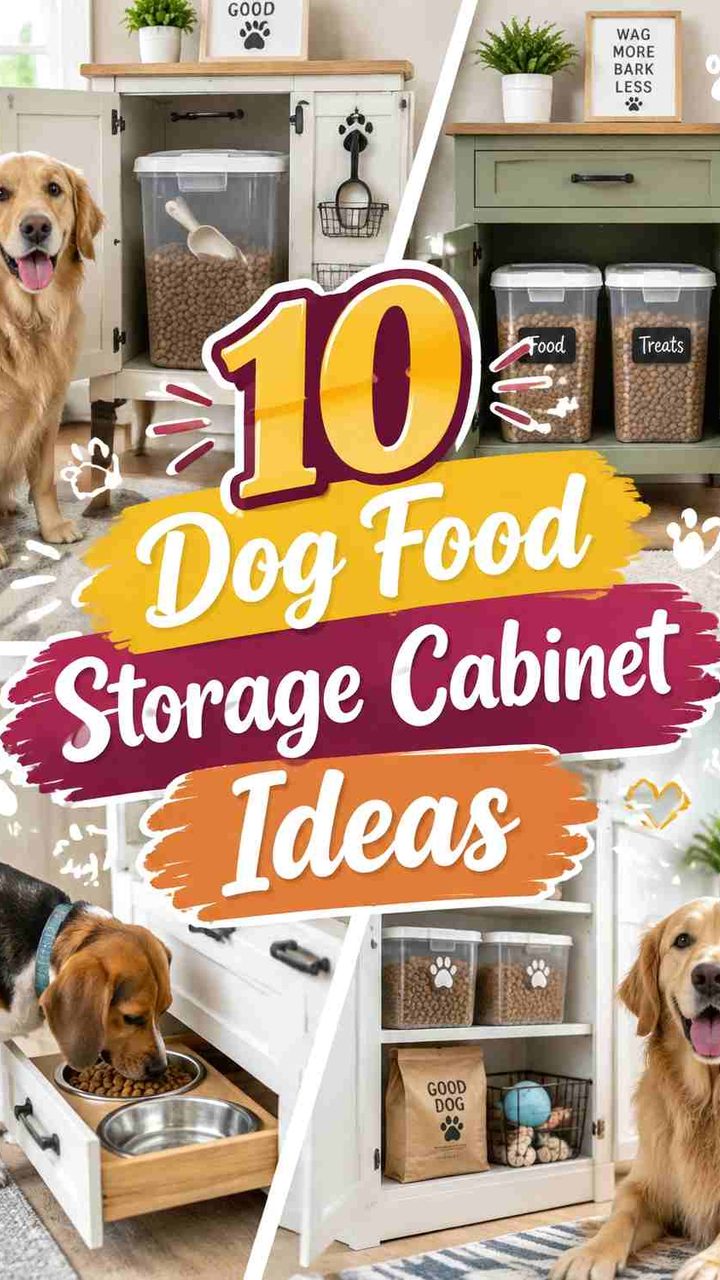
10 Dog Food Storage Cabinet Ideas
Save to PinterestDog food storage cabinets can reduce pantry clutter while giving everyday feeding supplies a dedicated place. These ideas include pull-out bins, narrow cabinets, drawers, rolling storage, multi-dog sections, feeding stations, and separate areas for unopened backup bags.
Choose a cabinet based on the size of your food packaging, available floor space, and how often you need access. Follow the storage directions on your dog food packaging, keep food away from excess heat and moisture, and prevent pets from opening the cabinet themselves. A useful setup should also make containers and surrounding surfaces easy to clean.
Quick List
- Pull-Out Bin Dog Food Cabinet for Easy Daily Scooping
- Bag-in-Bin Dog Food Cabinet for Cleaner Pantry Storage
- Drawer-and-Scoop Dog Food Cabinet for Organized Feeding
- Tall Pantry Dog Food Cabinet for Bulk Storage
- Narrow Vertical Dog Food Cabinet for Small Kitchens
- Labeled Multi-Dog Food Cabinet with Separate Storage
- Rolling Dog Food Cabinet for Flexible Feeding Areas
- Mudroom Bench Dog Food Cabinet for Hidden Storage
- Feeding Station Cabinet with Dog Food and Bowl Storage
- Backup Bag Dog Food Cabinet for Reserve Supply
1. Pull Out Bin Dog Food Cabinet For Easy Daily Scooping

A pull-out bin cabinet keeps the current dog food supply low, accessible, and easy to reach without digging through a pantry. Install a sturdy pull-out shelf or drawer that can support the filled storage container, then place the food inside according to its package storage directions. Keeping the original bag inside a suitable larger bin can make labels, lot information, and feeding instructions easy to retain. Position the scoop in a separate clean holder rather than leaving it buried in food. The pull-out mechanism should move smoothly without tipping when extended. Wipe crumbs from the drawer regularly, and keep the cabinet securely closed if your dog is interested in opening doors or investigating food smells.
Setup Notes
Measure both the cabinet opening and the full food package before choosing a bin so the drawer can close without crushing or folding the container awkwardly.
Best For
This layout works well for everyday feeding stations where owners want quick access without leaving a large food container visible in the room.
2. Bag In Bin Dog Food Cabinet For Cleaner Pantry Storage
You May Also Like


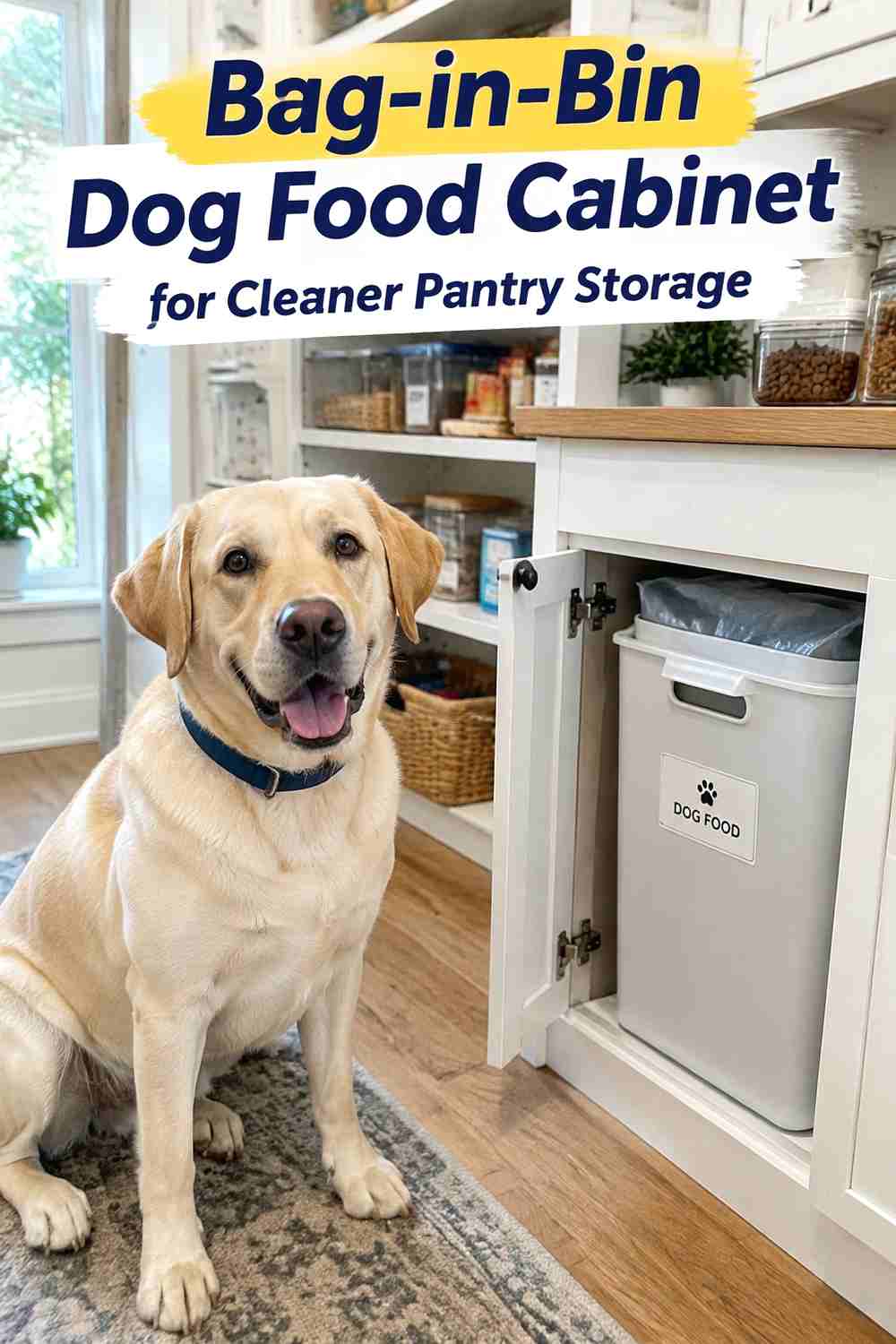
A bag-in-bin cabinet keeps the dog food package contained inside a larger lidded bin while hiding the whole setup behind cabinet doors. This can reduce loose crumbs around the pantry while keeping the original packaging available for storage directions, product information, and identifying details. Choose a clean bin that comfortably accommodates the bag rather than forcing it into a container that is too small. The cabinet should stay dry and away from heat-producing appliances or damp utility areas. Keep the scoop in a washable cup or nearby drawer so it does not become buried or greasy. When changing bags, clear out crumbs and clean the outer storage bin before adding the next package.
Why It Works
The outer bin creates a cleaner storage zone while the original package keeps important product information together with the food.
Use & Maintenance
Check the cabinet floor occasionally for spilled kibble, moisture, or pests instead of assuming a closed door keeps the area maintenance-free.
3. Drawer And Scoop Dog Food Cabinet For Organized Feeding
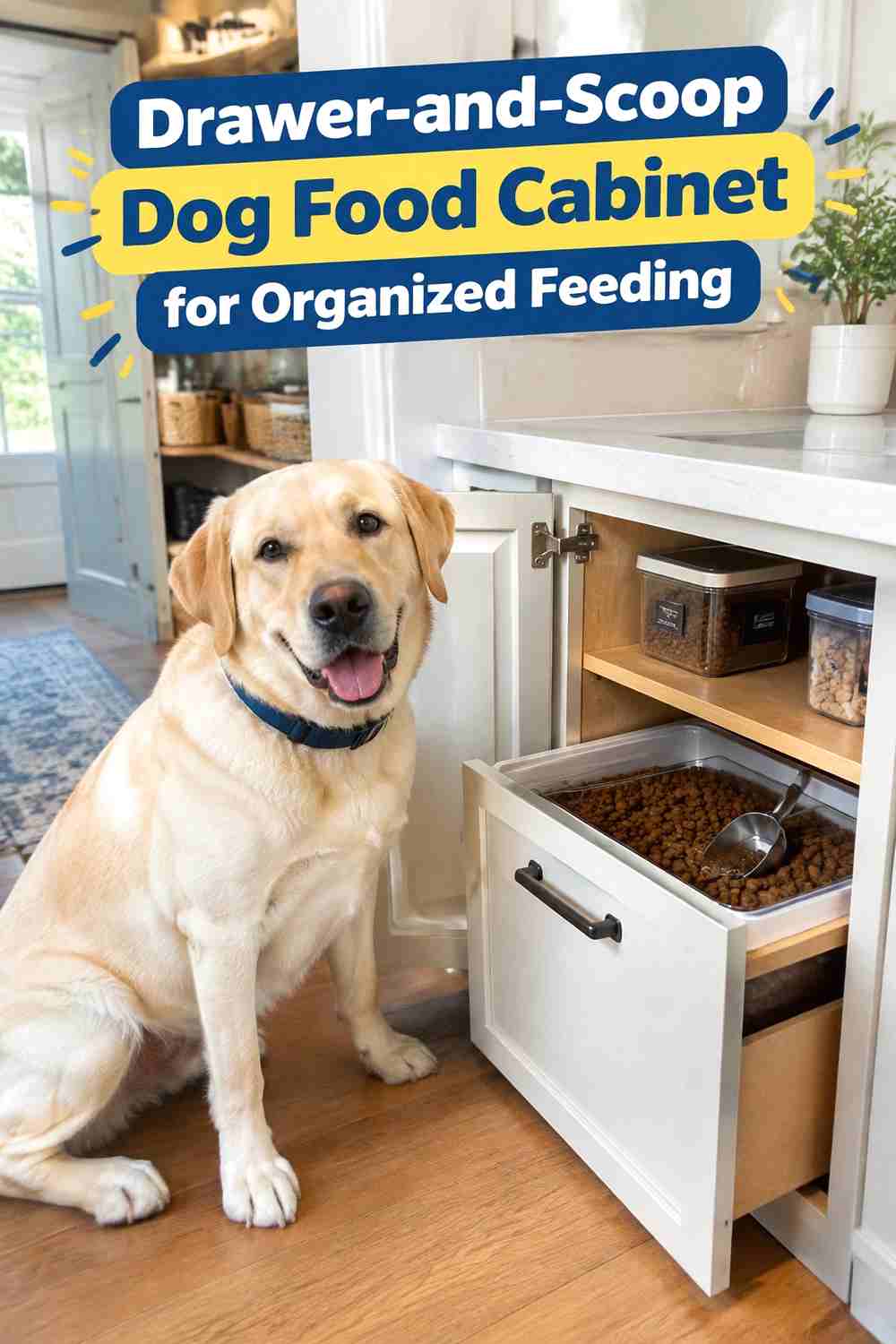
A drawer-and-scoop cabinet separates food storage from the small tools used during daily feeding. Keep the main dog food container in the lower cabinet and dedicate a shallow drawer above it to the scoop, measuring cup, bowl mat, and other simple feeding accessories. This prevents the scoop from disappearing inside the food container and keeps loose supplies from spreading across the counter. Use drawer dividers if several small items tend to slide together. Avoid storing medications, cleaners, or unrelated household objects in the same feeding drawer. After handling food, return only clean and dry tools to storage. The lower cabinet should close securely so your dog cannot nose the door open when food smells are tempting.
Best For
This idea suits owners who want the food and everyday feeding tools together but prefer everything hidden behind standard kitchen cabinetry.
Cleaning Notes
Remove the drawer organizer periodically and wipe underneath it, since food dust and crumbs can collect in corners that are easy to miss.
4. Tall Pantry Dog Food Cabinet For Bulk Storage
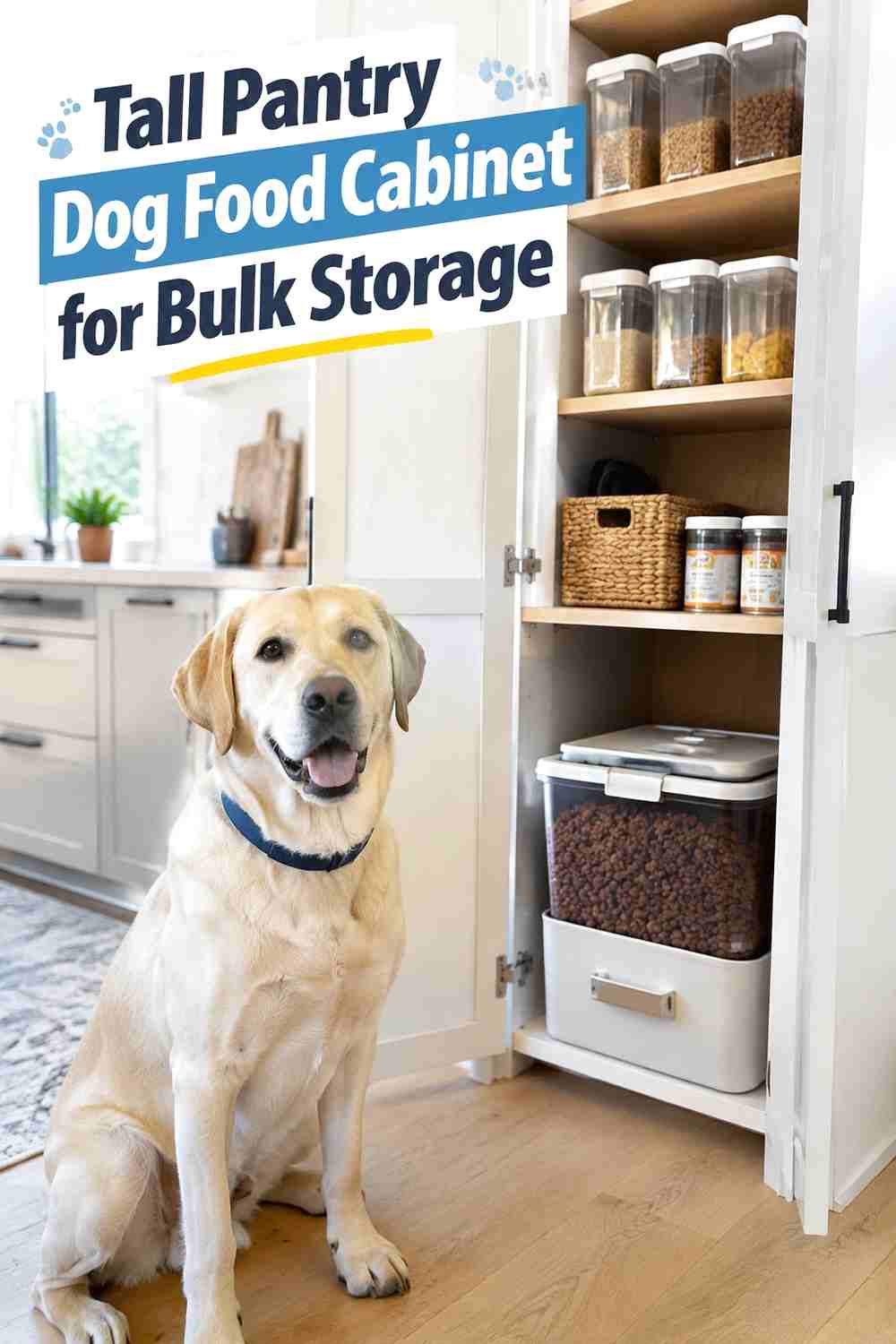
A tall pantry cabinet creates vertical storage for a current dog food bag, smaller feeding supplies, and unopened reserve items without spreading everything across several cupboards. Keep the heaviest food container on a lower shelf where it is easier to lift and less likely to fall. Upper shelves can hold lightweight items such as clean bowls, mats, or sealed accessories. Avoid stacking heavy bags overhead or packing shelves so tightly that packages tear when removed. Adjustable shelves make it easier to accommodate changing bag sizes over time. Keep the cabinet dry, reasonably cool, and securely closed, following the food manufacturer’s storage directions rather than assuming every product should be handled the same way.
Space & Placement
A tall narrow pantry can make good use of vertical space beside existing kitchen or mudroom cabinetry without adding a wide footprint.
Pro Tip
Leave one shelf partly open so you have room for a different package size without reorganizing the entire cabinet.
5. Narrow Vertical Dog Food Cabinet For Small Kitchens
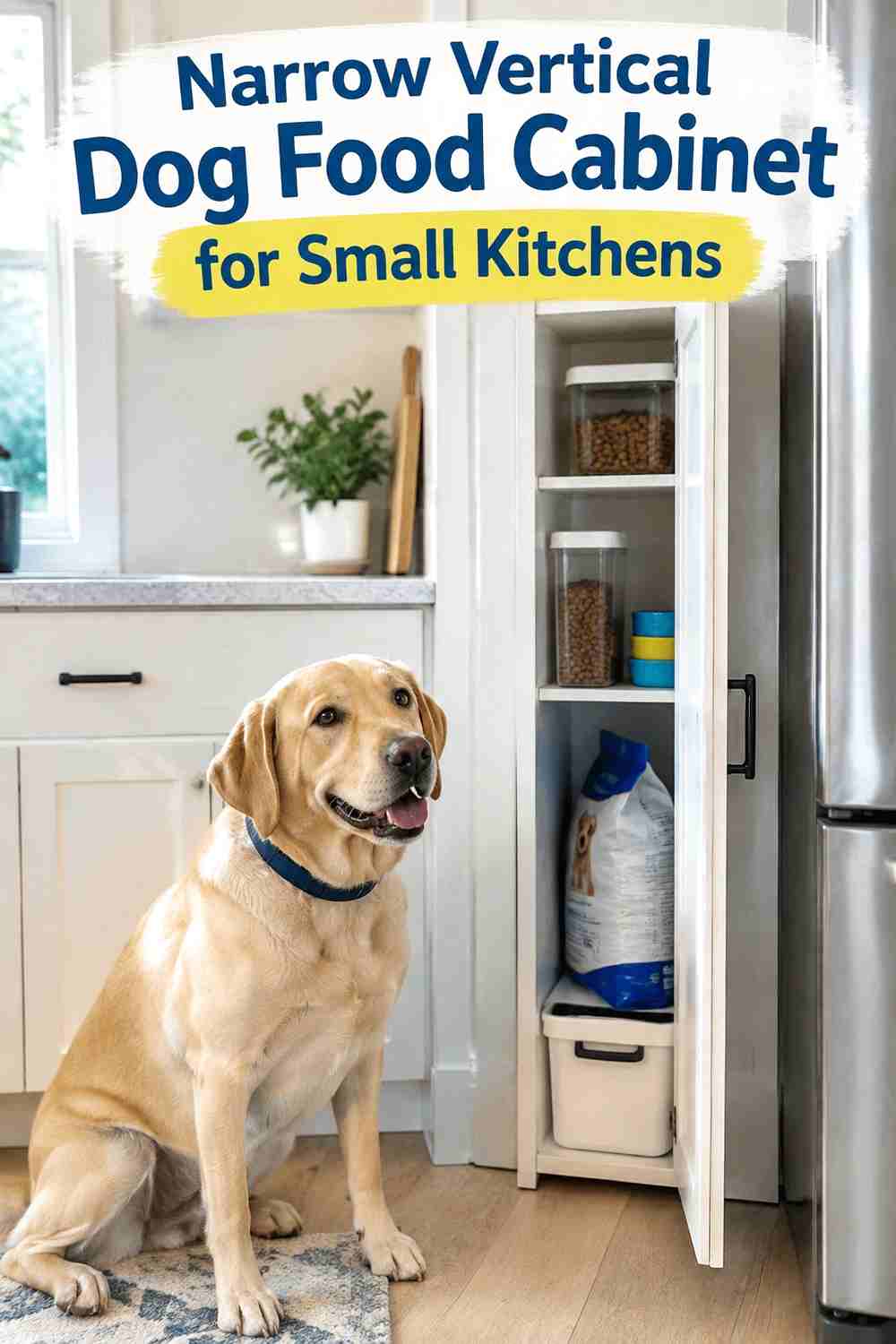
A narrow vertical cabinet turns a slim strip of unused kitchen or pantry space into dedicated dog food storage. Use the bottom section for the main food container and add compact shelves above for a scoop, folded feeding mat, or clean backup bowls. Because the cabinet is narrow, avoid overloading upper shelves or choosing containers that must be wedged tightly into place. A door-mounted organizer can add storage only if it does not interfere with the food package or prevent the door from closing properly. Keep frequently used items at comfortable reach and reserve the highest shelf for lightweight extras. This arrangement can reduce floor clutter in apartments where freestanding food bins would take up valuable walking space.
Best For
Small kitchens, apartments, and compact mudrooms can use this layout when vertical space is available but wide cabinetry is not.
Setup Notes
Measure the door swing and interior depth carefully so the cabinet remains easy to use even in a tight room.
6. Labeled Multi Dog Food Cabinet With Separate Storage

A labeled multi-dog food cabinet gives each dog a separate storage section when different foods or feeding supplies need to stay clearly identified. Assign one shelf, bin, or drawer to each dog and use simple name labels that are easy for everyone in the household to read. Keep original food packaging or identifying information with each supply so similar-looking foods are not accidentally mixed. Separate scoops can also be stored with their corresponding food when that makes the routine clearer. Avoid forcing several large bags into one cramped compartment, since torn packaging and spilled food can quickly defeat the organization system. Keep the entire cabinet secured if any dog can open doors or drawers.
Best For
This setup is useful in multi-dog households where pets use different foods, bowl sizes, or feeding accessories and accidental mix-ups would create confusion.
Pro Tip
Use matching bins with clearly different labels rather than relying only on container color, which may be harder to distinguish during a rushed feeding routine.
7. Rolling Dog Food Cabinet For Flexible Feeding Areas
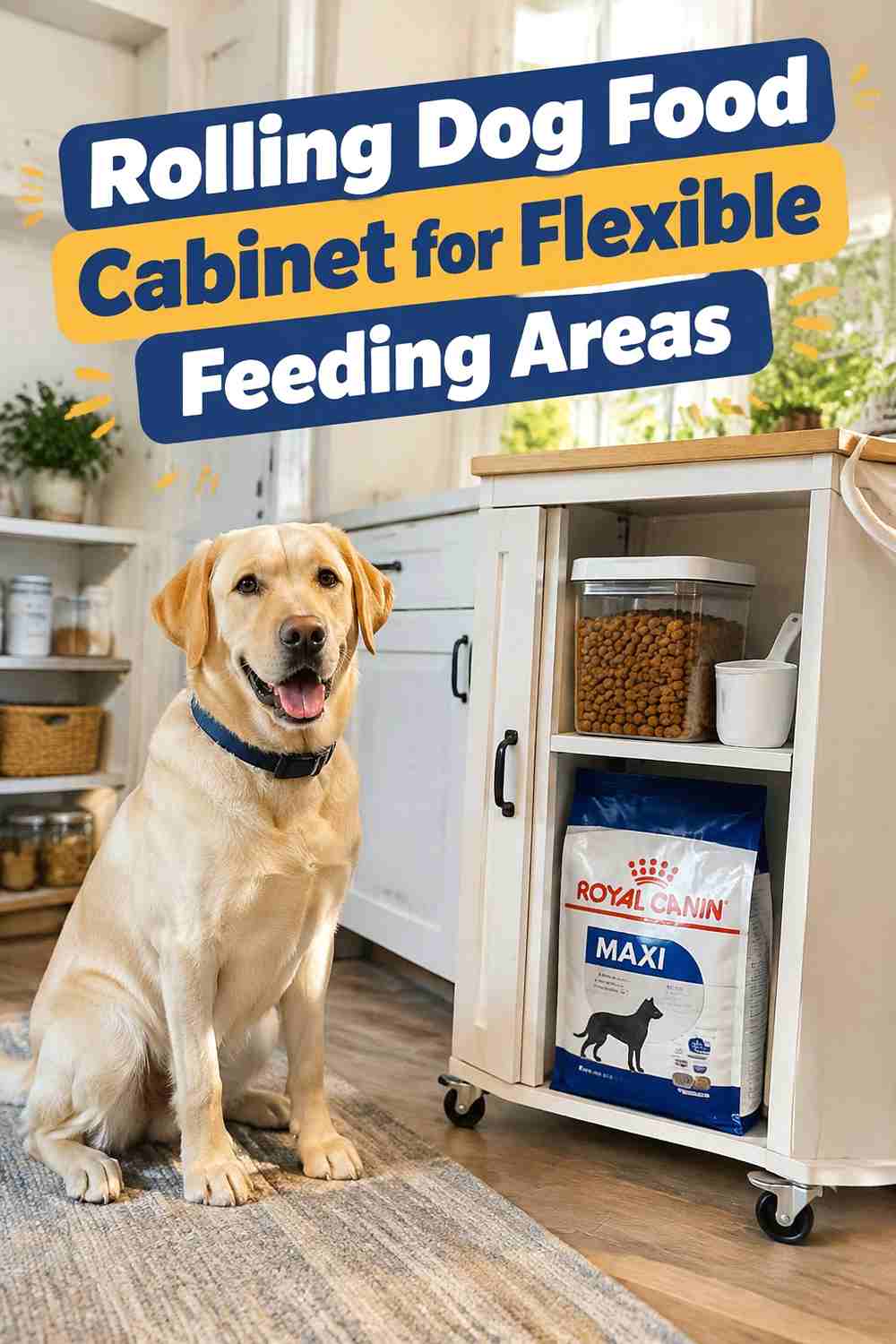
A rolling dog food cabinet lets the feeding supply move between a kitchen, pantry, mudroom, or another practical location without carrying a heavy container each time. Choose a sturdy cabinet with locking wheels, a secure door, and enough interior space for the food package plus basic accessories. Park it on a level surface and lock the wheels before opening the cabinet or scooping food. Avoid leaving it near heaters, damp areas, or direct outdoor exposure simply because the unit is movable. A shallow top drawer can hold the scoop while the lower compartment carries the heavier food supply. Make sure the cabinet cannot be tipped or opened by an enthusiastic dog investigating the smell.
Best For
This option works well in homes where feeding and food storage happen in different areas or where permanent cabinetry is limited.
Use & Maintenance
Clean the wheels and cabinet base occasionally, especially if the unit moves between food-prep areas and mudroom or entryway floors.
8. Mudroom Bench Dog Food Cabinet For Hidden Storage

A mudroom bench cabinet hides dog food beneath a useful seating surface while keeping the supply close to an everyday pet-care zone. Dedicate one enclosed compartment to food and keep shoes, wet towels, and outdoor gear in separate sections so dirt and moisture do not migrate into the feeding supply. A lidded container or properly stored original bag can sit inside the lower cabinet, while the bench above remains clear for normal use. Choose doors or drawers that close securely if your dog spends time in the mudroom. This setup works best in a dry, temperature-stable indoor mudroom rather than an exposed porch or garage area where storage conditions may fluctuate.
Space & Placement
Keep food storage away from wet boot trays, dripping coats, and cleaning supplies even when all of those items share the same larger mudroom.
Why It Works
Using the space beneath a bench combines hidden storage with furniture the room already needs, reducing the need for another freestanding bin.
9. Feeding Station Cabinet With Dog Food And Bowl Storage

A feeding station cabinet keeps the main dog food supply, clean bowls, and feeding accessories together in one defined area. Store the food in a lower enclosed compartment and use a separate shelf or drawer for clean dry bowls, a scoop, and washable mats. Keeping bowls away from the food container itself makes it easier to remove and clean them without disturbing the entire cabinet. If the feeding area sits beside the cabinet, wipe splashes promptly so moisture does not collect around doors or baseboards. Avoid keeping cleaning chemicals or medications alongside food supplies. The cabinet should remain securely closed between meals, particularly for dogs that investigate food storage or can open simple doors.
Setup Notes
Arrange the cabinet according to the order you use items: scoop and bowl within easy reach, with heavier food storage lower down.
Cleaning Notes
Wipe food dust from shelves and clean bowl-storage areas regularly so dried residue and crumbs do not build up inside the station.
10. Backup Bag Dog Food Cabinet For Reserve Supply
You May Also Like



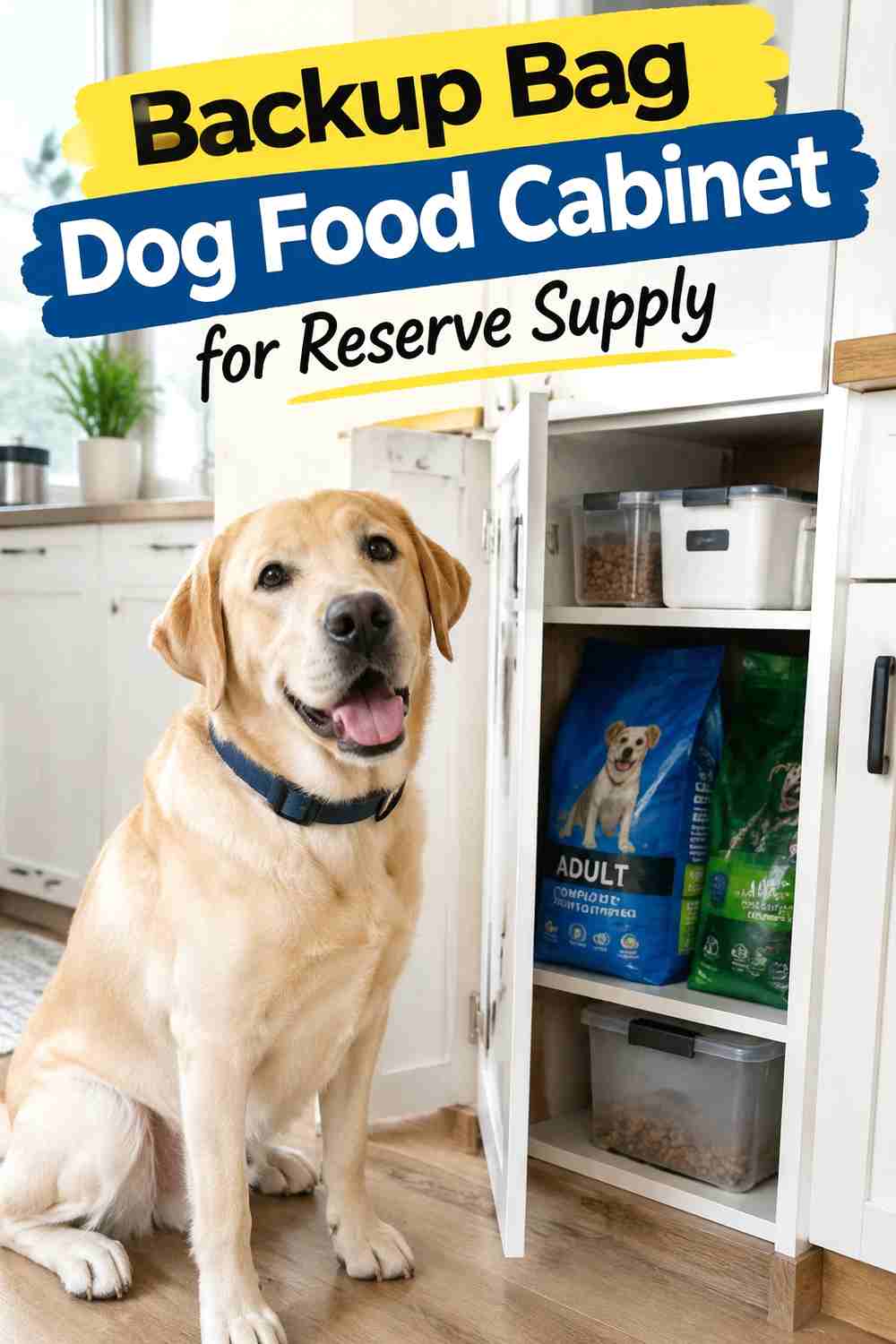
A backup bag cabinet gives unopened dog food a dedicated reserve area separate from the package currently in use. Choose a dry, secure cabinet where the bag can remain upright or supported without being crushed by household items. Keeping reserve food separate makes it easier to see when you are running low while preventing multiple opened bags from accumulating. Follow the package instructions for storage and keep identifying labels and date information intact. Arrange older appropriate stock where it will be used before newer purchases rather than continuously pushing bags to the back. Avoid storing reserve food beside cleaners, garden products, or anything that could leak or contaminate the surrounding storage area.
Best For
This setup suits households that routinely keep one unopened backup bag and want it protected without crowding the everyday feeding cabinet.
Use & Maintenance
When the reserve bag becomes the active supply, wipe the cabinet and replace it deliberately rather than letting several forgotten bags collect over time.
How to Choose the Right Idea
Start with the size of your usual dog food package and the amount of storage space available. Large bags need strong lower cabinets or pull-out systems, while smaller packages can fit narrow pantry units, drawers, or compact feeding stations.
Think about your daily routine. If food is served in the kitchen, keeping the scoop and bowls nearby can save repeated trips. If feeding supplies live in a mudroom, choose a dry cabinet away from wet outdoor gear. Multi-dog households may need clearly separated shelves or bins so different foods stay easy to identify.
Also consider access and cleaning. Doors should close securely, heavy supplies should stay low, and the cabinet should be easy to vacuum or wipe. Follow the food packaging directions for storage rather than choosing a container based only on appearance.
Final Thoughts
A useful dog food storage cabinet should make feeding simpler while keeping the supply dry, organized, easy to identify, and protected from curious pets.
Start with the space closest to your normal feeding routine, then choose a cabinet layout that gives the food, scoop, bowls, and backup supply clear places without creating unnecessary clutter.
FAQs
1. Where is the best place for a dog food storage cabinet?
A dry indoor kitchen, pantry, mudroom, or feeding area can work well if the location stays away from excessive heat, moisture, and household chemicals.
2. Should dog food stay in its original bag inside a cabinet?
Keeping the original packaging can preserve storage directions and identifying information. If using another container, follow the food manufacturer’s storage guidance and keep relevant package information available.
3. How can I organize dog food for multiple dogs?
Give each dog a clearly labeled bin, shelf, or cabinet section and keep the identifying packaging with the correct food. Separate scoops can make the routine even clearer.
4. What cabinet style works best for a small kitchen?
A narrow vertical cabinet, deep drawer, or compact pull-out unit uses existing vertical or under-counter space without adding another large container to the floor.
5. How often should I clean a dog food storage cabinet?
Clean spills and crumbs when they appear and inspect the cabinet during bag changes. Wash or wipe reusable containers according to their care instructions before refilling them.
CTA
Save these dog food storage cabinet ideas and choose a setup that makes everyday feeding cleaner, more organized, and easier to manage.
